 Login

Mothers’ Intrusive Thoughts Are Mostly Benign. Lindsay Clancy’s Case Is an Exception.
Experts say that after childbirth, intrusive thoughts are common and mostly benign. Lindsay Clancy’s story provides a disturbing exception.

 Scientists have uncovered two surprising forces that help guide how the human brain forms before birth. Before birth, the human brain is shaped in large part by an unusual class of stem cells known as radial glia. These cells help determine which brain cells are produced, when they appear, and how the cerebral cortex, the [...]
 Alzheimer’s may begin to unravel the brain when a small group of neurons switches on a receptor it was never meant to use, triggering damage that spreads from synapses to memories. Alzheimer’s disease is often defined by amyloid plaques and tau tangles, but those hallmarks are part of a much wider breakdown. Neurons become overactive, [...]
 Children with ADHD showed more erratic pupil responses, a pattern that shifted with medication.

As far as completely pointless ways to kill time on your phone, this is certainly one of the weirdest on record.
Behold the all-new invention of so-called “dopamine sites” — digital domains where you can browse and hunt for deals on nonexistent wares and services. Clothes, food delivery, you name it: you can pretend-shop for it all.
You don’t actually buy anything, crucially. You’re just pretending to have money to buy the things you want. It’s window-shopping reimagined for the age of doomscrolling.
But it’s also a little more than that. These cleverly-built sites simulate the experience down to checking out and “tracking” your shipment or delivery, and their absurdly realistic rituals can help people become more conscious of their spending habits. Supposedly.
The trend, according to the New York Times, originated in South Korea this spring, when Park Seohyun, a 21-year-old mechanical engineering student in Seoul, created a fake food-delivery site called “Food Never Arrives.” (It’s now an app).
Originally intended as a joke, she says, it lets you not only order nonexistent food, but provides you an estimate of the money and calories you saved by skipping on the real thing.
In a wintry economic climate, it became an unexpected hit.
“People began sharing it online and discussing whether it actually helped them resist ordering food,” Park told the NYT.
A wave of imitators followed. This summer marked the launch of “FakeHaul,” a dopamine site built by a Microsoft engineer that convincingly imitates shopping on Temu. Two developers in India inspired by Park’s site, Purvansh Parmar and Anshul Sharma, created “Food Never Comes,” which simulates food deliveries but provides real recipes for the food you didn’t actually order. Parmar and Sharma told the newspaper that their site had more than 2.7 million views since launching in June.
Whether these dopamine sites provide anything more than fleeting, empty pleasures is something experts are more skeptical about. Ravi Dhar, director of the Yale Center for Customer Insights, told the NYT that the “element of looking forward brings a lot of the pleasure, and we often crash after an event or feel let down.” Lingguo Xu, a behavioral economist studying anticipatory utility, warned that the dopamine tricks could quickly get old. And by simulating consumption, you risk developing “stronger cravings.”
Some take the original idea beyond getting high on simulated shopping. Ko Seojin, another South Korean developer, created a website for taking virtual smoke breaks called Damta World. You click to start smoking an animated cigarette, which starts burning on screen. You can “whisper” disappearing messages to other smokers on break, while a counter keeps track of the number of cigarette butts that have been tossed on the office rooftop each day.
Ko told the NYT that 150,000 people visit each month, and she says that some users have become real-life friends after meeting on the website. Those friendships, we hope, are something that’ll last longer than any fake-shopping dopamine hit.
More on your brain on tech: Psychologist Says AI Is Causing Never-Before-Seen Types of Mental Disorder
The post Bizarre New Websites Are Designed Specifically to Spark Dopamine in Your Brain appeared first on Futurism.


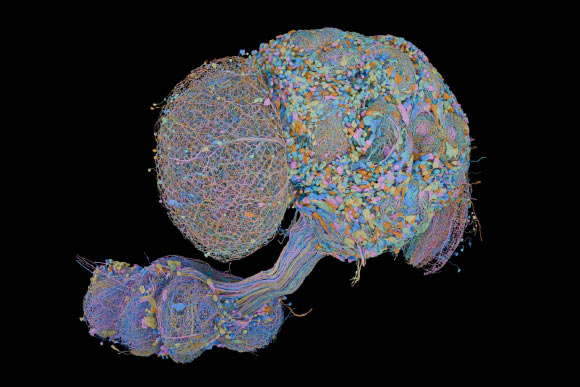
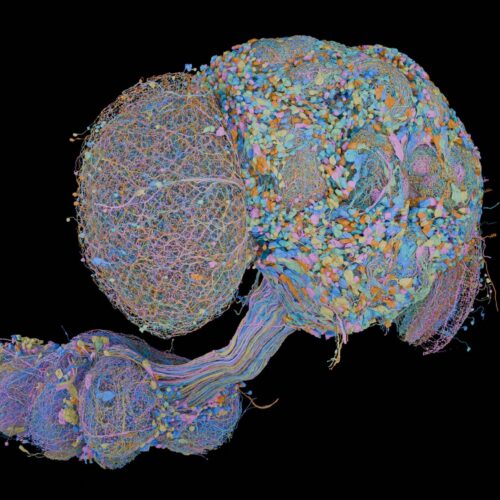
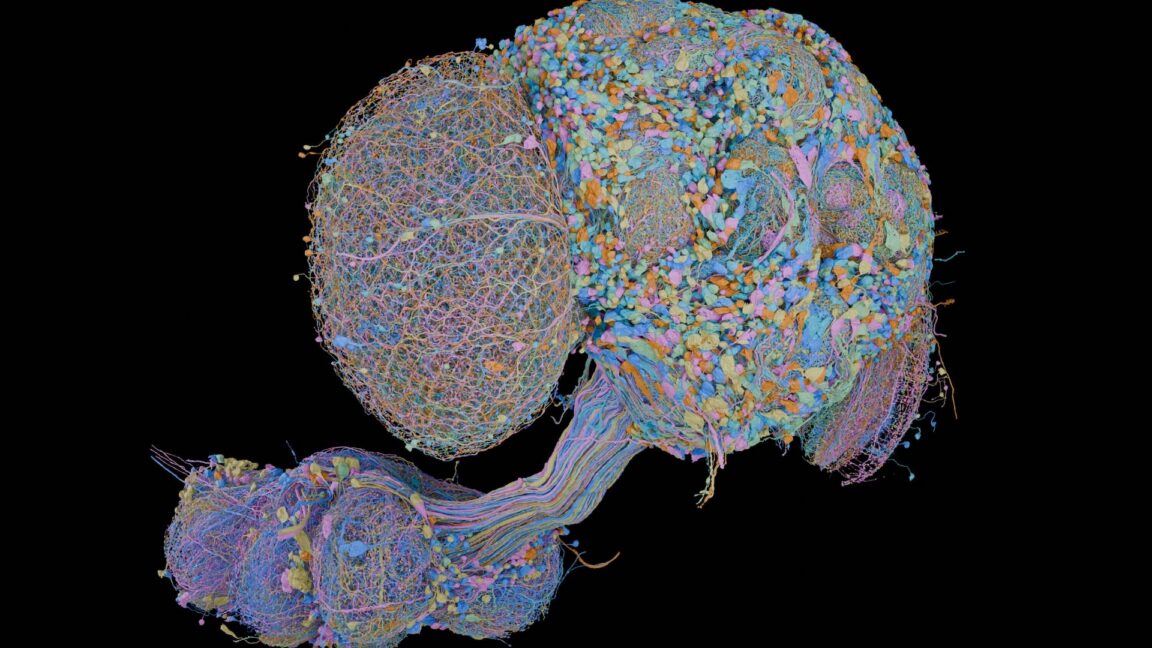
After nearly two decades of work, scientists have completed a wiring diagram of the central nervous system of an adult male fruit fly (Drosophila melanogaster).
The post Researchers Unveil Complete Fruit Fly Connectome appeared first on Sci.News: Breaking Science News.
 Depression in later life may be an early warning from the brain, appearing years before Alzheimer’s begins to affect memory and thinking A new study in JNeurosci found that faster accumulation of tau, a protein closely tied to Alzheimer’s, was associated with worsening depressive symptoms in older adults who remained cognitively healthy. Teodora Markova of [...]
On Friday, researchers announced the completion of a map of every neuron in the brain of a male fruit fly. The "connectome" provides a tool that can accelerate neurobiology research. But it also provides an opportunity to do some science on its own, as the connectome of a female Drosophila had been completed earlier this year. The work also provided the team behind it the opportunity to refine tools that are likely to be applied to ever-more complex nervous systems, including (potentially) those of vertebrates.
The new work involved a collaboration between biologists at the Howard Hughes Medical Institute's Janelia Research Campus and computer scientists at Google—both acknowledge that neither could have done the project without the other. Preparation of an entire brain for imaging at the necessary resolution requires a distinct set of skills, as does interpreting what those images indicate. But building a complete picture of the hundreds of millions of synapses in a brain as small as the fruit fly's is a task that can't be achieved by humans in a manageable amount of time.
The people behind the effort expect that in the long term, the effort will be worth it, as the connectome could give neurobiologists a valuable tool for understanding how the brain works.
© Philip Hubbard/HHMI Janelia
A University of St. Andrews-led research team has proposed that the red wavelengths of flickering light emitted by early human ancestors’ campfires helped reprogram the human brain to boost social and verbal communication, leading to modern language and storytelling behaviors found only in humans.
The team, which included researchers from Dartmouth College, said the study builds on earlier theories linking fire and language to the extra hours it added to the day.
However, their findings suggest that the biological changes caused by fire use may have enabled complex language as much as fire-associated behavioral changes, accelerating the evolution of verbal communication away from the ape-like systems still used by modern apes toward more complex, “uniquely human” interactions.
Catherine Hobaiter, a Professor of the School of Psychology and Neuroscience at the University of St Andrews and the lead author of a paper detailing the team’s idea, said she has always been fascinated by the origins of language.
“What was the first word?” the professor asked. “The first story?”
Unfortunately, Professor Hobaiter noted, many questions about the origin of humanity’s complex and diverse forms of verbal communication remain unanswered.
Some earlier research has explored a possible link between the first spoken words and the advent of controlled fire use. However, the team notes that most studies have focused primarily on the extra hours of practical light added to the end of each day.
Curious whether other biological mechanisms also contributed to the evolution of language and complex storytelling behavior, Professor Hobaiter and colleagues examined the effects of sitting around a campfire to see whether the emitted light could reprogram the human brain.
First, the team noted that one potential catalyst emitted by firelight that could help reprogram the human brain for complex language is the color of the light wavelengths emitted by campfires. Specifically, Hobaiter and colleagues noted that campfire light emits almost no blue wavelengths but instead mostly in the visible red spectrum.
Many modern studies have focused on the potentially adverse effects of exposure to blue light wavelengths from modern technology on sleep patterns and overall health. Conversely, the paper’s authors described the red wavelengths emitted from fire as ‘uniquely suited’ for human socializing, “allowing an extension to the day without negatively impacting sleep.”
Another component of firelight the study authors suggest could have reprogrammed the human brain for speech is the way a campfire behaves. Unlike a modern, steady light source, the authors noted that firelight “flickers.”
Hobaiter and colleagues said that neurons in the human brain synchronize firing patterns with external flickering lights. For example, flickering lights in movies and TV shows often come with warnings against possible neurological effects on vulnerable viewers. The research team said this mechanism might also help synchronize the behavior of those seated around the campfire, resulting in a much deeper feeling of connection.
Finally, the researchers noted that firelight emits infrared wavelengths, which may have also contributed to helping firelight reprogram the human brain for complex verbal communication.
When discussing the potential impact of their proposal, study co-author Nathaniel Dominy, the Charles Hansen Professor of Anthropology at Dartmouth College, said many of the chemical properties have been well researched. However, Professor Dominy also notes that understanding the properties of light that capture our attention and focus, thereby instilling “harmony and cooperation,” has received far less attention.
“Measuring these features is an exciting part of this project,” the study author added.
Professor Hobaiter agreed, while also noting the conundrum scientists face when explaining why humans speak, when “decades of research with other species has shown us that you don’t need language to learn from each other, to organize where and when to forage, to learn cultural knowledge about tools and songs, to co-ordinate hunting, or navigate social politics.”
“While other species share all these skills, there is a fundamental puzzle: we struggle to find evidence of key differences between human and ape communication,” Professor Hobaiter explained. “And yet, we are surrounded by evidence of human distinctiveness. For all their incredible, rich communication and cultures, no other ape is inventing algebra, writing King Lear, or heading out into interstellar space.”
“So, it’s especially exciting to be able to generate testable predictions, to be able to ask if, at the end of the day, we are the storytelling ape,” the professor added.
The paper “Firelight and the Origins of Spoken Language” was published in Proceedings of the Royal Society.
Christopher Plain has spent the last six years as Associate News Editor and Head Science Reporter at The Debrief. Follow and connect with him on X, learn about his novels at plainfiction.com, or email him at christopher@thedebrief.org.
The Federal Bureau of Investigation looks almost unrecognizable under director Kash Patel’s leadership.
The agency’s head has been embroiled in a seemingly endless list of controversies, from allegations of excessive drinking to buying up location data on everyday American citizens to furthering of harebrained conspiracies.
Patel lacked virtually any degree of relevant working experience for the job before the Senate confirmed him — and now, the agency is opening the doors for even more highly questionable hirings.
As inside sources told CBS News, the FBI has quietly lowered standards of its background checks for potential federal agents and other personnel. The bureau is now officially looking the other way when it comes to prostitution, for instance — as long as recruits didn’t hire sex workers over three times.
Even more eyebrow-raising is that the FBI is even allowing the consideration of candidates who engaged in bestiality or animal cruelty, according to CBS‘ sources. However, any such incidents would’ve had to have taken place before the candidate turned 18.
The broadcaster’s sources also said there was no distinction between candidates who were forced into sexual activity with animals or if they did so willingly. An FBI spokesperson claimed that eligibility requirements were limited to a “narrow set of circumstances, such as in cases where a person was sexually abused with animals as a child.”
Experts, however, were appalled at the news, arguing that the FBI is undermining its responsibility in vetting applicants by changing background check standards.
“Bestiality is clearly a potential indication of a more serious emotional issue, and even in a circumstance where it is not, the pool of candidates should be extensive enough that the criteria should certainly not be eliminated,” former FBI agent James Davidson told CBS.
Before the changes, which were reportedly implemented earlier this summer, the FBI’s webpage was clear about automatically disqualifying special agents who engaged in “prostitution or bestiality.”
Both current and former FBI employees told the CBS that the bureau could now be hiring “people with questionable backgrounds,” allowing them to undermine the integrity of the service. Others warned that the news was evidence of a major “recruiting problem.”
Considering the fact that the agency is being helmed by a personality as controversial as Patel, these changes shouldn’t come as too much of a shock.
While he hasn’t personally acknowledged the latest changes, Patel has frequently called for new hiring standards at the bureau, arguing that “we are losing too many qualified candidates to the rigors of the requirements from yesteryear” in a July interview with former FBI agent John Nantz.
Patel’s motivation for lowering standards could be to bring in his closest associates. As ProPublica reported in November, his personal assistant didn’t clear their polygraph test and required a waiver, claims the FBI has since denied.
More on Patel: The Head of the FBI Just Admitted Something Moderately Horrifying
The post FBI Now Allowing History of Bestiality Among New Recruits appeared first on Futurism.
New research from Indiana University suggests that when your brain makes a decision, it may not actually “make” it in the way neuroscientists have traditionally assumed.
Conventionally, decision-making has been described as a sequence: you have options to consider, you choose one, and then you act. However, neuroscientist Tom James argues that this sequence may not accurately reflect what actually happens in the brain.
Traditional models suggest that the brain has centralized processes responsible for making decisions. James argues that what people experience as “decision-making” may instead arise from ongoing interactions among perception, movement, the body, and the environment. If correct, this perspective could significantly change how scientists understand human behavior.
James describes one traditional approach to cognition as the “sandwich model”: sensory systems take in information, cognitive processes evaluate it and determine what to do, and motor systems then carry out the chosen action.
The problem, James argues, is that while scientists can identify many of the physical mechanisms involved in sensation and movement, it is much harder to locate a central point in the brain where a “decision” actually occurs.
Instead, James proposes thinking in terms of “action selection,” in which sensory, sensorimotor, and motor processes continually interact to produce behavior. But does that mean humans don’t actually make decisions?
“Of course they do. We use this language all the time, and it’s very helpful in terms of describing behavior,” James said in a statement. “The leap, I think, is to say that the brain works by having decision-making or control processes. It produces behavior that is well described in that way. But it doesn’t need a process that does that to make it look that way.”
In his view, “decision-making” may therefore be a useful way of describing human behavior rather than something the brain accomplishes through a specific, centralized process or system.
“As mental phenomena, they are defined on too abstract a level for the goals of cognitive neuroscience,” adds James.
Bridging neuroscience and philosophy, James draws on a physicalist framework associated with philosopher Daniel Dennett. Consider an object’s center of mass: it helps us describe and predict how the object behaves, but it isn’t a separate physical component causing the object to move.
James suggests decisions may work similarly. We can say someone “decided” to pick up a glass, but that does not necessarily mean there is a central location in the brain where that decision was made. Instead, the action could emerge from multiple brain and bodily processes working together.
As an analogy, James describes a robot programmed to follow a wall. Someone watching it might interpret its movements as a series of decisions, yet the robot does not require a centralized decision-making system. Instead, its sensors continually interact with its surroundings to guide its behavior.
James suggests that aspects of human behavior could be understood in much the same way.
James’s argument also addresses a longstanding philosophical problem. If the brain contains a central system that observes information and decides how we should act, what controls that controller?
This resembles what Dennett famously called the “Cartesian Theater”: the idea of an internal observer somehow watching and interpreting what happens inside the brain. But proposing such an observer only pushes the problem back another step—who, then, observes the observer?
Rather than placing a hypothetical decision-maker somewhere inside the brain, James argues that researchers should focus on the interacting physical systems that produce behavior.
That could mean studying cognition as something that emerges through the ongoing relationship between the brain, body, and environment, rather than as a sequence of isolated stages.
The feeling that “I made a decision” may remain perfectly real and useful as a description of human experience, even if there is no single place or process in the brain where that decision occurs. From James’s perspective, what we call a decision may instead be the outcome of interactions among the brain, body, and surrounding world.
This study can be found in the Journal of Cognitive Neuroscience.
Chrissy Newton is a PR professional and the founder of VOCAB Communications. She currently appears on The Discovery Channel and Max and hosts the Rebelliously Curious podcast, which can be found on YouTube and on all audio podcast streaming platforms. Follow her on X: @ChrissyNewton, Instagram: @BeingChrissyNewton, and chrissynewton.com. To contact Chrissy with a story, please email chrissy @ thedebrief.org.
