Login

The Ezra Klein Show: The A.I. Revolt Is Here
The A.I. giants weren’t prepared for this.

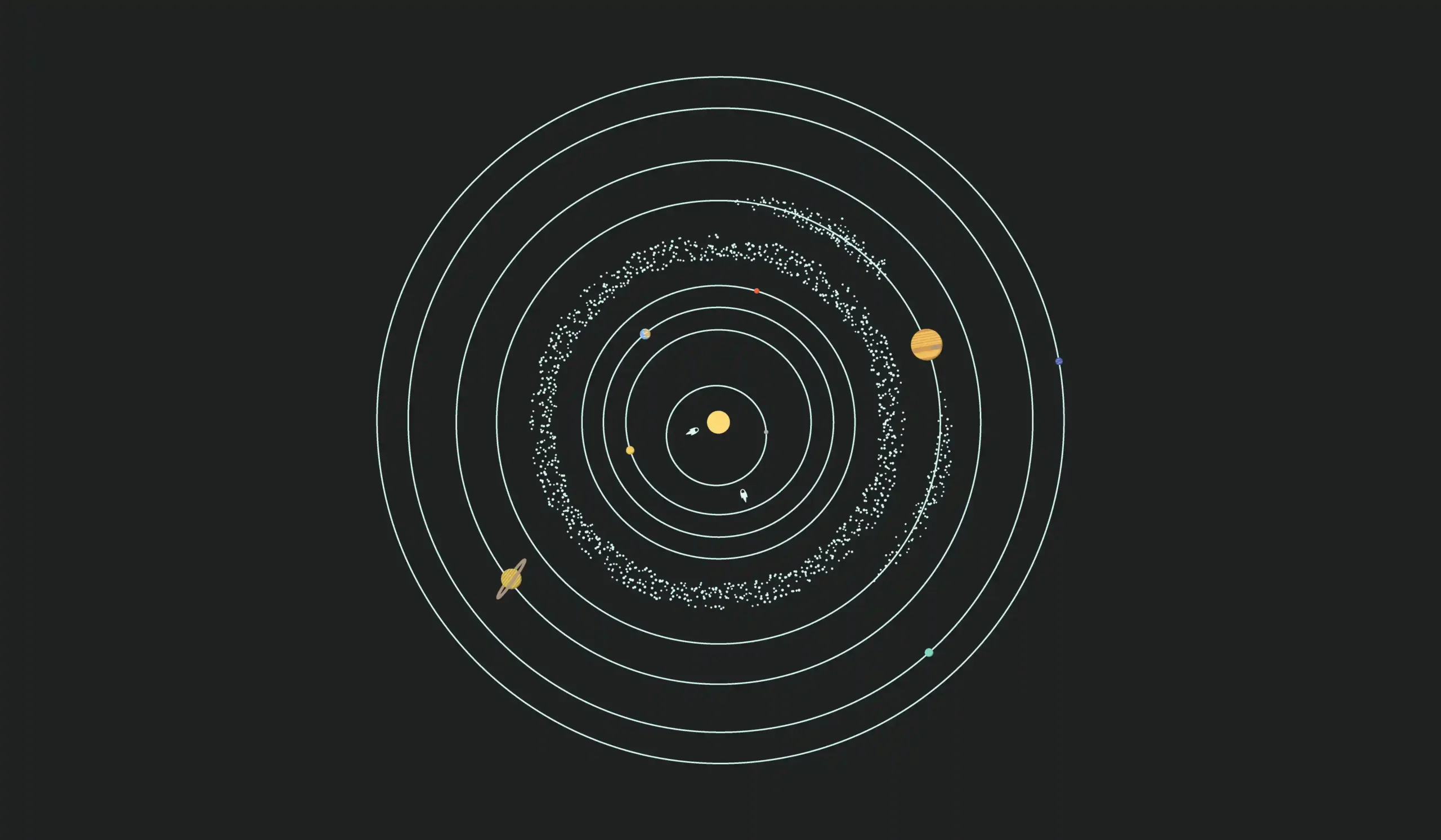
Look up at the night sky and it is easy to imagine a few bright worlds hanging in an empty blackness. But what are we really looking at when we say “the Solar System”? It is a family shaped by one star’s gravity, built from the same ancient disk of gas and dust, and still […]
The post What Is the Solar System? How Our Cosmic Neighborhood Took Shape appeared first on Curiosmos.





If you were a Windows user of the 90s and 2000s, you might remember defragmenting hard drives, a sort of hocus-pocus Windows maintenance maneuver that had legitimate function where it would gather files spread across a drive and put them in a tidier order to make reading them faster. While someone with a lot of ... Read More
The post Use a Goofy Windows 98 Disk Defragmenter Simulator as a Prank appeared first on OS X Daily.
Continuing on our journey through retro classic computing experiences, here’s another fun one reborn for retro gamers in the modern MacOS era: Chonkcraft. Remember Warcraft 2, the award-winning classic real-time strategy game from Blizzard circa 1995? You’d play as Orcs or Humans, build a village and an army, and then command that army through battles ... Read More
The post Play Warcraft 2 on MacOS with Chonkcraft appeared first on OS X Daily.
If you’re a longtime Mac user you might recall the popular After Dark screensaver series of Classic Mac OS, which featured a fun range of screen saver options including the infamous Flying Toasters, Mowing Man, Boris the Cat, Bad Dog, Bouncing Ball, Art Critic, Nightlines, and many more. Many of these screensavers were just plain ... Read More
The post Run After Dark Screensavers on Modern MacOS with Afterglow appeared first on OS X Daily.
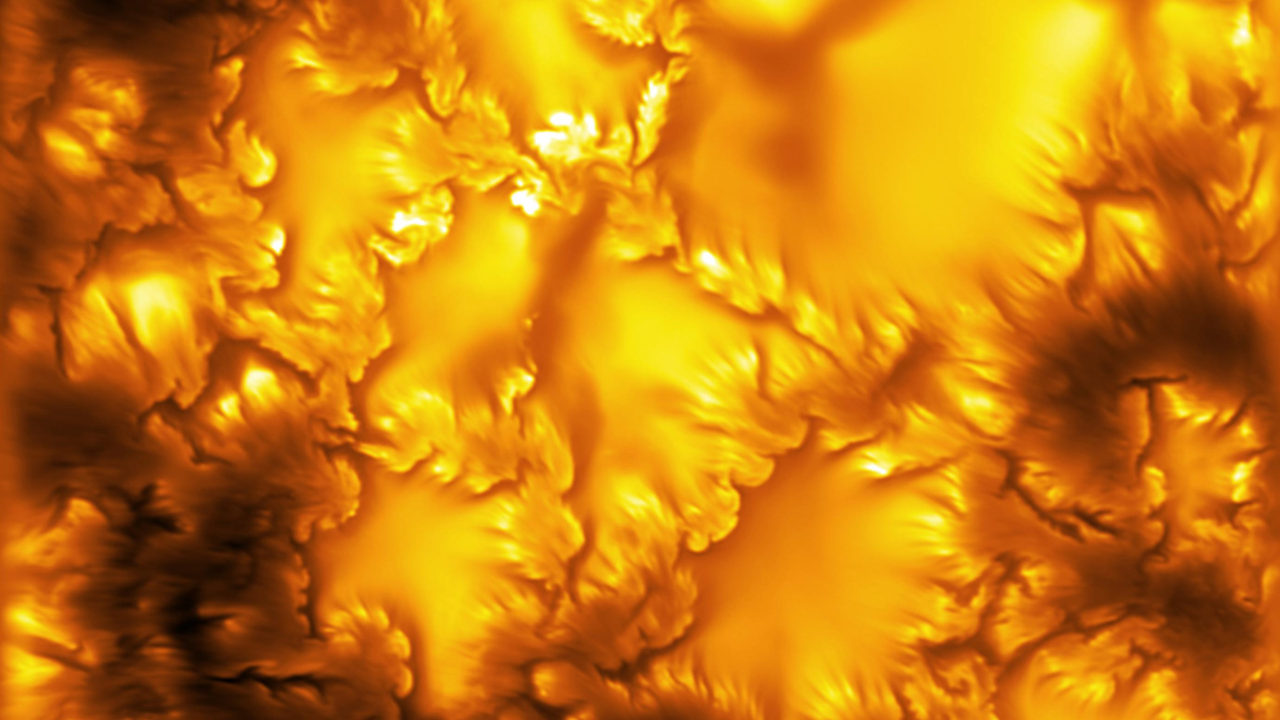
The sharpest images ever taken of the Sun’s surface reveal ribbons of solar plasma curling into tight, wave-like vortices near the edge of a sunspot — a pattern never before seen on our star. The experiment behind the discovery was designed to push the technical limits of a new camera system, not hunt for newContinue reading "World’s largest solar telescope reveals the Sun’s hidden texture"
The post World’s largest solar telescope reveals the Sun’s hidden texture appeared first on Astronomy Magazine.
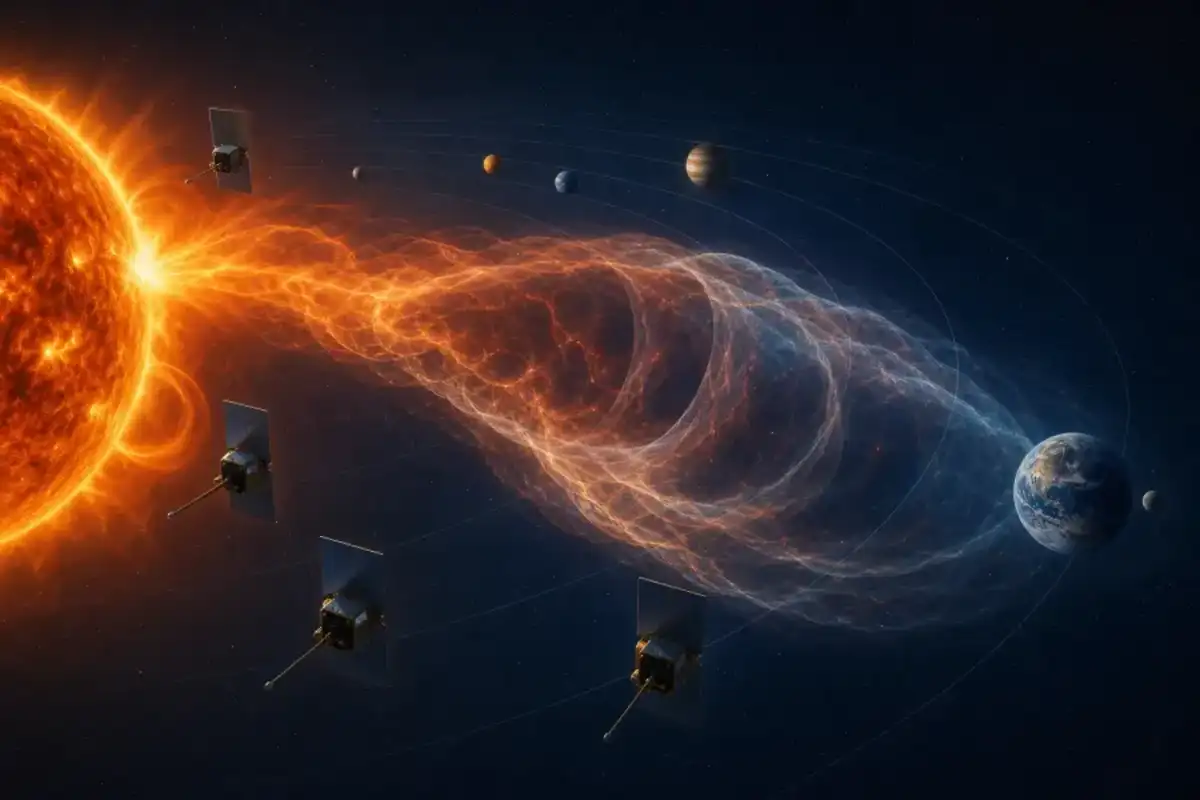
Forecasting a solar storm is a little like watching a wave leave a distant coast and trying to guess when it will reach the beach. Scientists can see a coronal mass ejection (CME) leave the Sun, but its speed and shape can change as it crosses space. By the time it reaches Earth, the warning […]
The post NASA’s PUNCH Mission Cut Solar-Storm Arrival Uncertainty to 30 Minutes appeared first on Curiosmos.
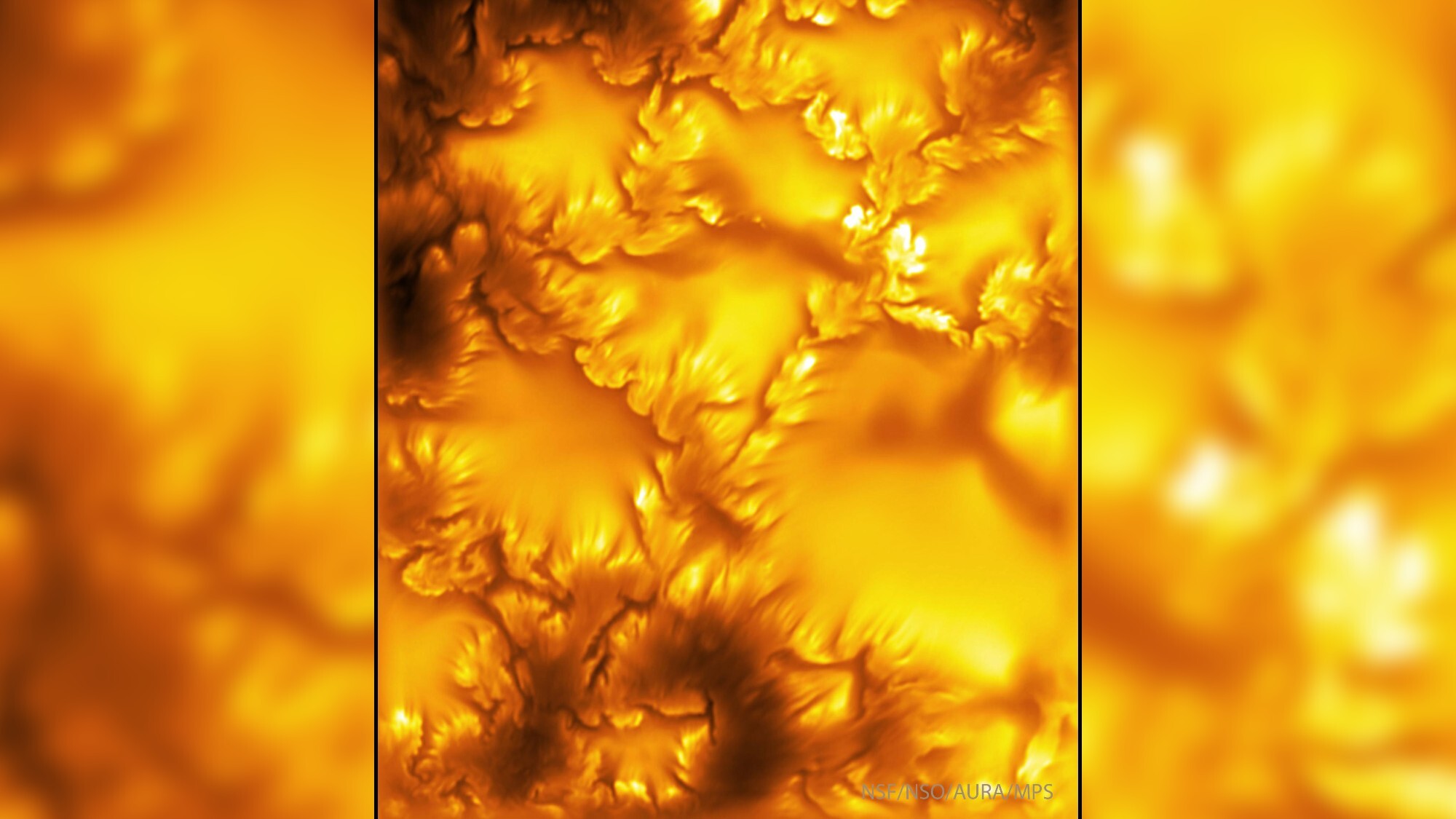
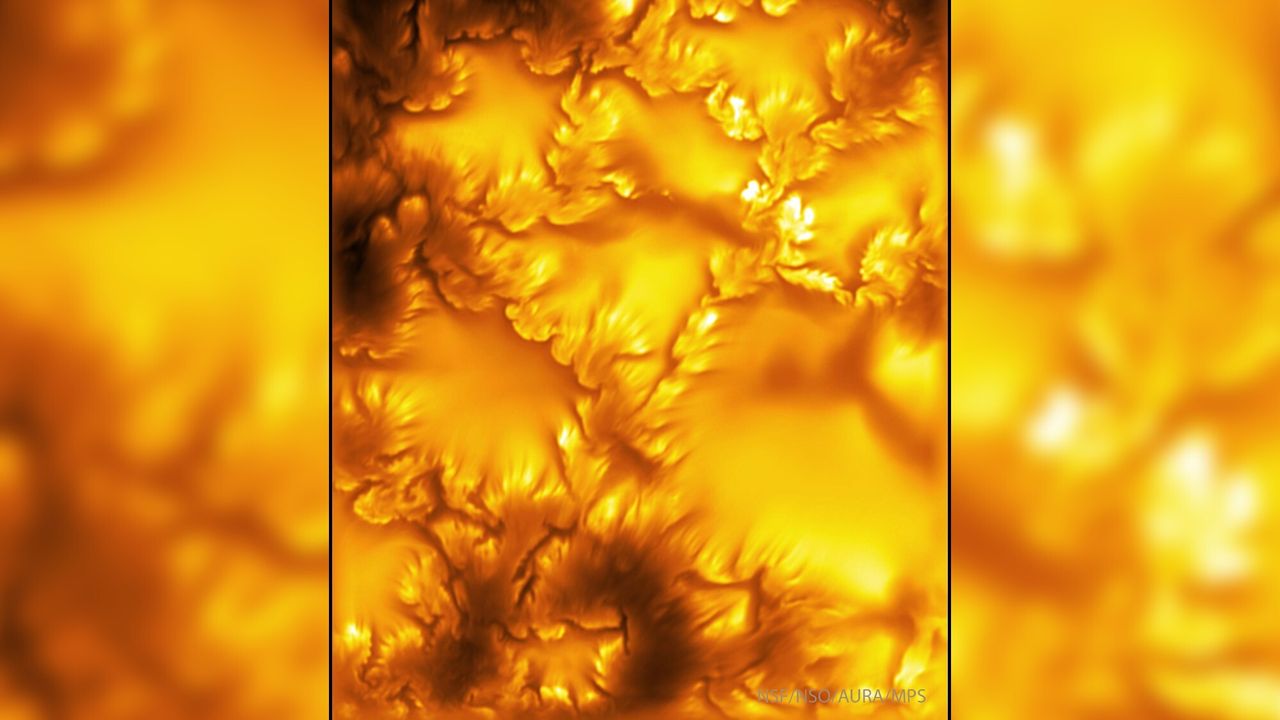
Scientists have captured the sharpest image ever of our sun's surface. This view has revealed incredible new details about the inner mechanisms driving stellar activity.
An international team of researchers using the U.S. National Science Foundation's Inouye Solar Telescope has captured the highest-resolution view of the sun's surface.
In analyzing observations from this telescope, the team, made up of researchers from the National Solar Observatory, the NSF NCR High Altitude Observatory and the German Max Planck Institut für Sonnensystemforschung, discovered strange patterns on the sun's surface. The whirling patterns, they found, are actually evidence of what's called Kelvin-Helmholtz instability (KHI), or instability that happens when there is a change in velocity of fluids.
This image is groundbreaking. Capturing the highest-resolution view of the sun's surface is a massive accomplishment, and in the time-lapse video above, you can even see the fluid dynamics on the surface of the sun in motion.
But this view is much more than a beautiful, high-resolution image. These observations have revealed swirls on the sun's surface at the edges of the magnetic areas, allowing the team to identify KHI on the sun's surface. This fluid instability has long been suspected on the sun, but these observations are the first time they have ever been directly seen like this.
“We believe that the discovery of Kelvin-Helmholtz Instability in the solar photosphere, backed up by analysis of numerical simulations, is a major step forward in our understanding of the dynamics and evolution of solar and stellar plasma, and will serve as a basis for future discoveries," David Boboltz, the deputy director at the National Solar Observatory, said in a statement.
A paper describing these findings was published recently in the journal Nature.
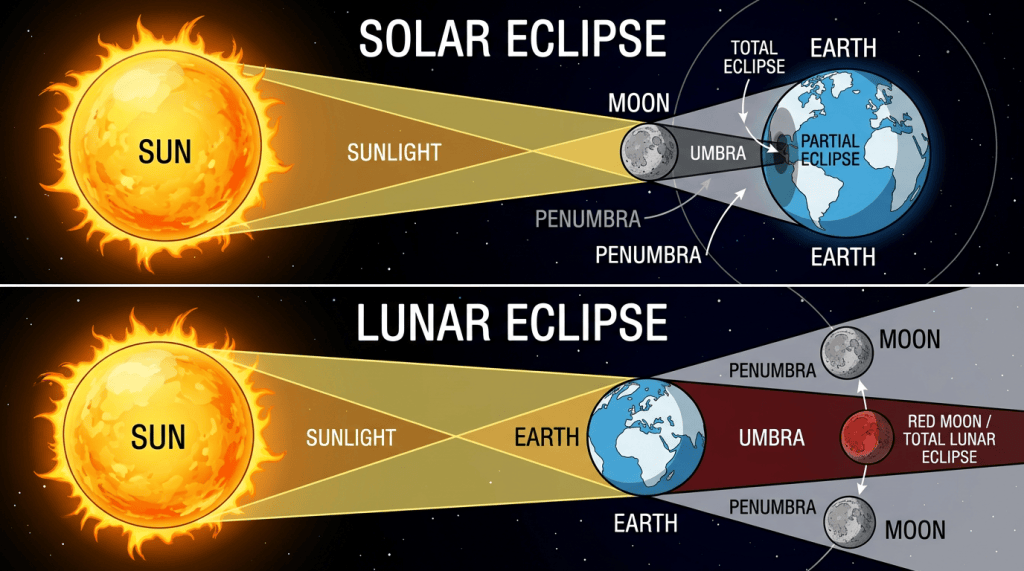
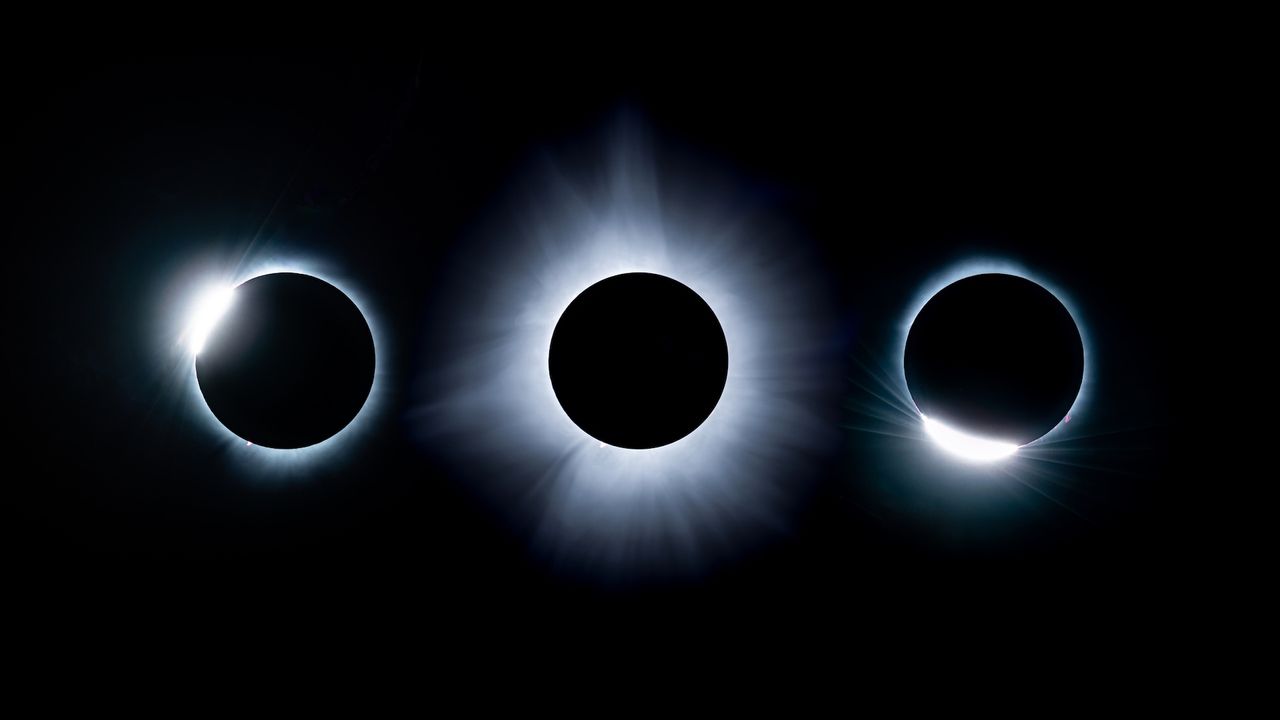
Millions of people across Europe and North America will witness a solar eclipse on Wednesday, Aug. 12, but the event will vary greatly depending on the location. A narrow corridor stretching from Greenland to northeastern Spain will experience a total solar eclipse, much of Europe will enjoy a deep partial eclipse, and parts of North America will see a smaller partial eclipse.
Want to know what you can expect to see from where you are? Here's an overview of the event from various locations, along with the exact viewing times for the Aug. 12 solar eclipse.
Remember, it's important to wear certified solar eclipse glasses during all partial phases of the eclipse. Totality — when the sun's face is completely blocked by the moon — is the only time it's safe to remove your eclipse glasses. (It’s not too late to order last-minute eclipse glasses if you don’t have a pair on hand.)
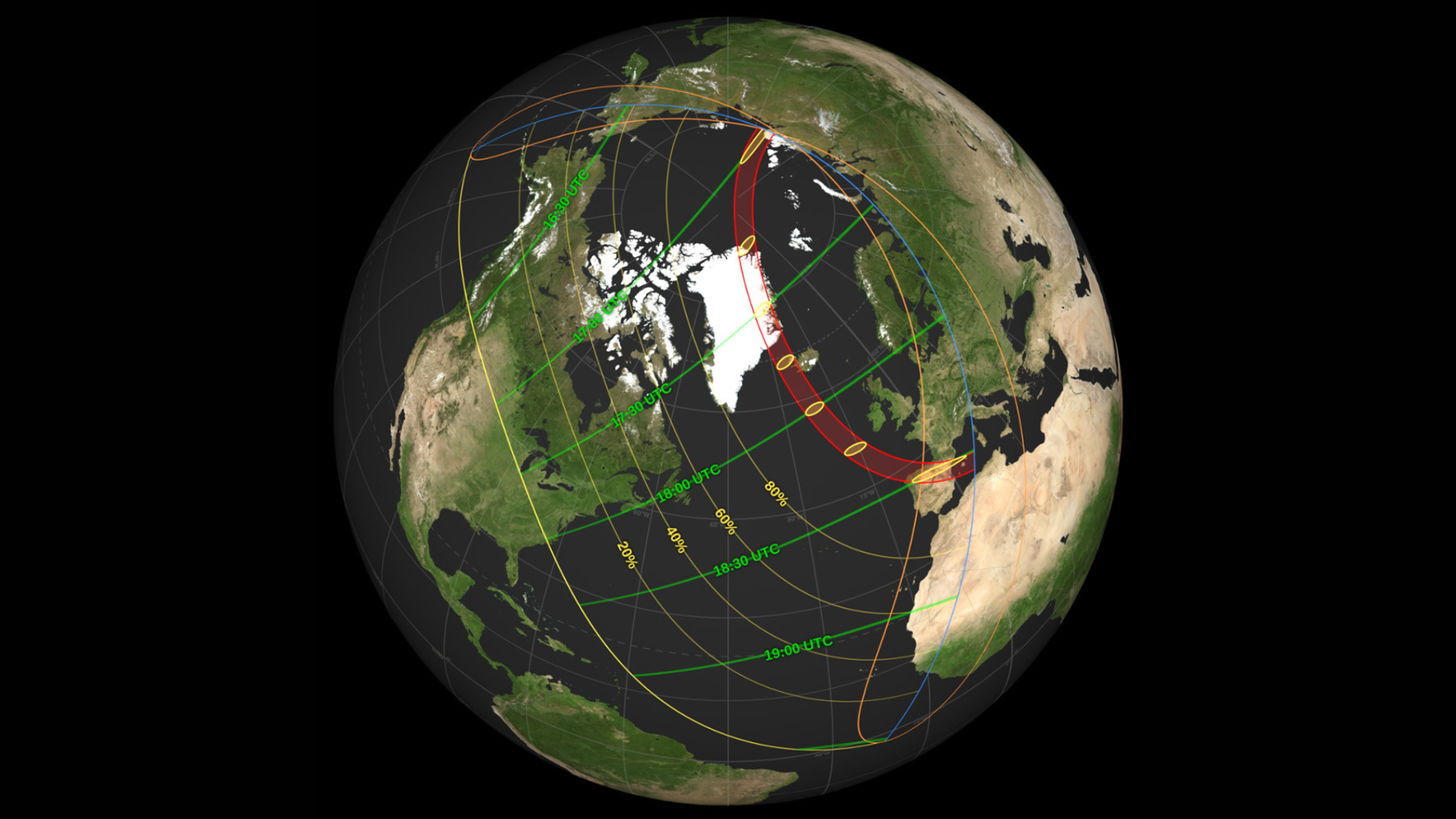
If you're fortunate enough to be inside the 180-mile-wide (290 kilometers) path of totality — the path of the dark shadow of the moon — in eastern Greenland, western Iceland or northeastern Spain, you'll experience the moon completely covering the sun for up to 2 minutes, 18 seconds. The sky will darken to twilight, bright stars and planets may appear in the daytime sky, and the sun's spectacular corona (its wispy outer atmosphere) will become visible. Here’s a handy guide to all the gear you’ll need to get the most out of totality.
The closer you are to the centerline of the path, the longer totality will last. But the most important consideration is to stay within the boundaries of the path, because it has a hard edge. Madrid, for example, is barely outside the path and will see a 99.99% partial eclipse — and no totality whatsoever. The partial phases last an hour on each side of totality.
Here's when totality will occur in various locations for the Aug. 12 total solar eclipse:
Viewers in North America will see a modest partial eclipse, with the biggest eclipse seen from northern and eastern Canada, Alaska and the northeastern U.S. The farther northeast you are, the deeper the eclipse will appear. Eclipse glasses are essential at every stage of the two-hour event, because there will be no totality. Here are the times of maximum eclipse in various locations:
If you want to watch totality from outside the path, there are many live stream options available, including planned streams from NASA and the European Space Agency.
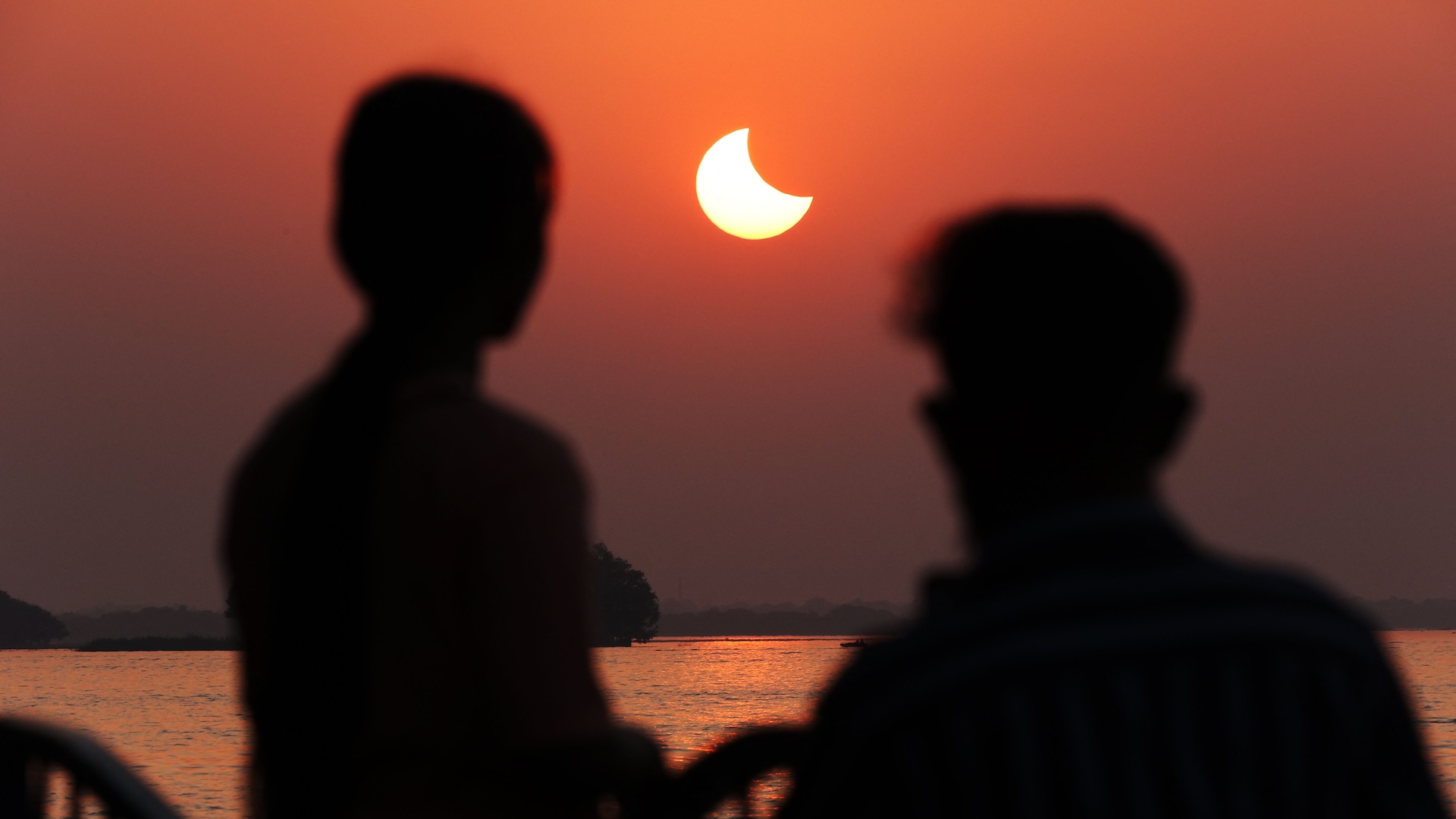
Most of Europe and far northwestern Africa will see a spectacular deep partial eclipse, with more than 90% of the sun covered in many western cities. Although the eclipse will never become total, it will still be an impressive sight, though solar eclipse glasses will be required throughout the event. Here are the times of maximum eclipse in some major cities:
To check exactly what you'll see and when, enter your location on an interactive map of the eclipse, which will give you a schedule for when the eclipse begins, peaks and ends where you are.
Do jogo que desafia as regras absurdas das passwords ao simulador que deixa lançar asteroides sobre qualquer cidade, passando pela viagem ao fundo do oceano e pela ferramenta para gastar a fortuna de Bill Gates, o neal.fun é uma das colecções de experiências interactivas mais originais da web.
The post Neal.fun: o site onde um programador criou alguns dos passatempos mais criativos e viciantes da internet appeared first on Tek Notícias.
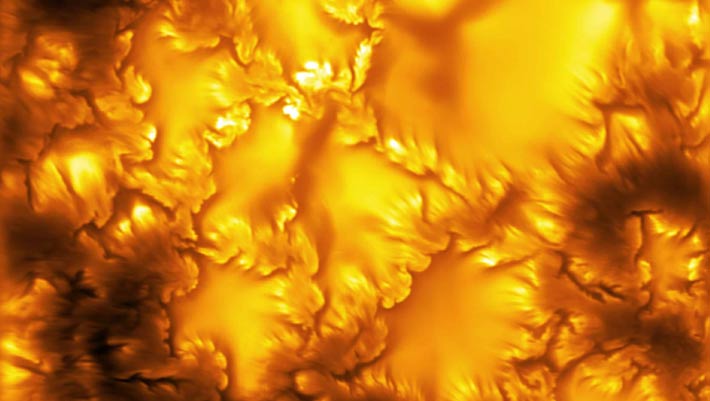
Astronomers using the 4-m Daniel K. Inouye Solar Telescope in Hawaii have detected tiny plasma vortices on the Sun’s surface (photosphere) for the first time, revealing a long-suspected process that could transport energy into the million-degree corona.
The post Inouye Solar Telescope Discovers Hidden Plasma Vortices on Sun appeared first on Sci.News: Breaking Science News.
Wherever two fluids slide past each other at different speeds, the boundary between them buckles, then curls, then rolls up into vortexes. It’s called the Kelvin-Helmholtz instability, and the physics behind it was worked out in the late 1860s. We know this instability explains why wind causes ripples on the surface of water and clouds shear into a row of curves.
For decades scientists argued the same thing must be happening with plasma on the surface of the Sun, and yet nobody had been able to confirm it. Now, a team led by David Kuridze and Friedrich Wöger of the National Solar Observatory reports that Kelvin-Helmholtz instabilities are not just visible on the Sun, but they’re ubiquitous. Their new study proposes that this may change the way we think about how heat, mass, and magnetic energy move through the Sun's atmosphere.
The reason plasma whirlpools on the Sun stayed hidden for so long is rather trivial: They are very small. Their scale sits below what telescopes with mirrors smaller than 2 meters can resolve. For most of the history of solar physics, that has ruled out every telescope on Earth. This changed when the US National Science Foundation opened the Daniel K. Inouye Solar Telescope, a 4-meter instrument in Hawaii and the largest solar telescope in the world. The telescope entered its operational phase back in November 2021.
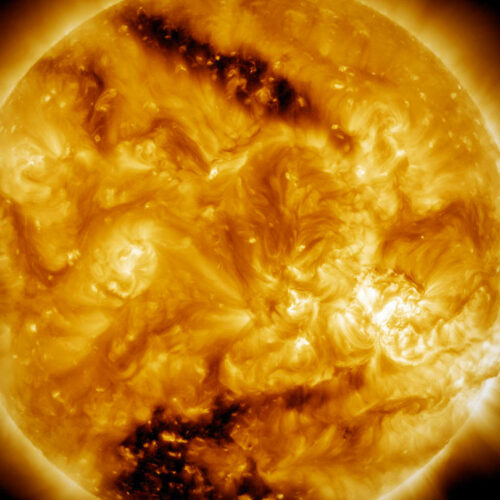
© NASA/Goddard/SDO
Wherever two fluids slide past each other at different speeds, the boundary between them buckles, then curls, then rolls up into vortexes. It’s called the Kelvin-Helmholtz instability, and the physics behind it was worked out in the late 1860s. We know this instability explains why wind causes ripples on the surface of water and clouds shear into a row of curves.
For decades scientists argued the same thing must be happening with plasma on the surface of the Sun, and yet nobody had been able to confirm it. Now, a team led by David Kuridze and Friedrich Wöger of the National Solar Observatory reports that Kelvin-Helmholtz instabilities are not just visible on the Sun, but they’re ubiquitous. Their new study proposes that this may change the way we think about how heat, mass, and magnetic energy move through the Sun's atmosphere.
The reason plasma whirlpools on the Sun stayed hidden for so long is rather trivial: They are very small. Their scale sits below what telescopes with mirrors smaller than 2 meters can resolve. For most of the history of solar physics, that has ruled out every telescope on Earth. This changed when the US National Science Foundation opened the Daniel K. Inouye Solar Telescope, a 4-meter instrument in Hawaii and the largest solar telescope in the world. The telescope entered its operational phase back in November 2021.
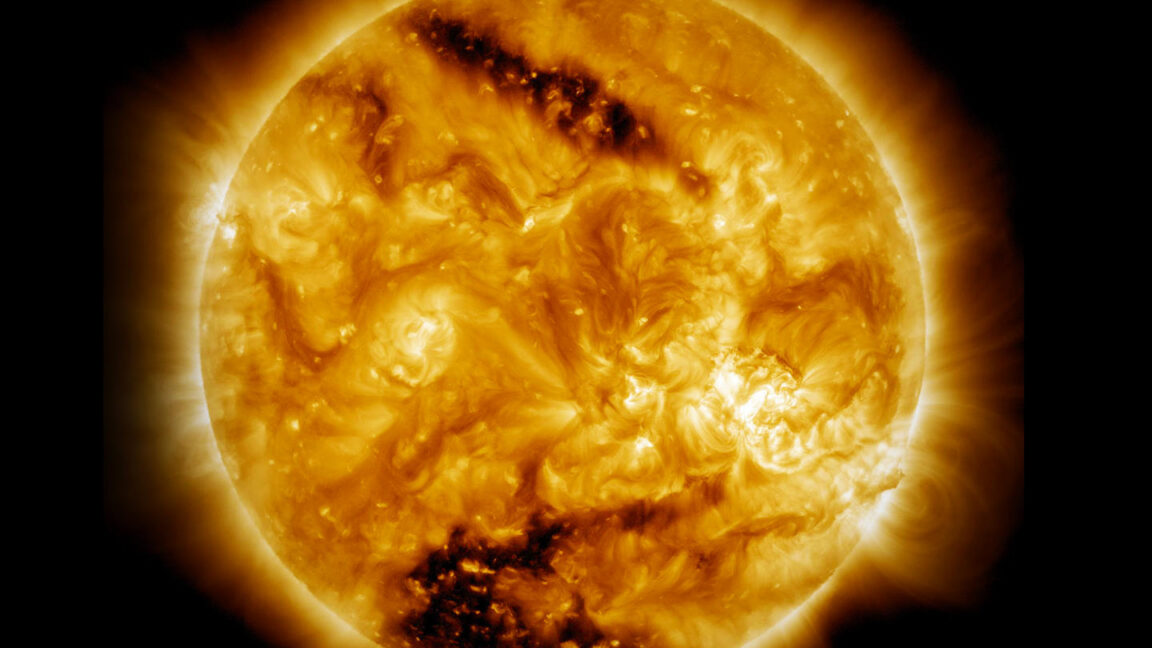
© NASA/Goddard/SDO
New images captured by the world's most powerful solar telescope have revealed something that was hiding in plain sight on the sun for 150 years: thousands of tiny whirlpools twisting across our star's surface. The ultra-detailed observations could help to explain some of the sun's most violent behavior as well as hint at the answer to a long-standing solar mystery.
The new time-lapse footage offers the first direct proof of a long-predicted phenomenon called Kelvin-Helmholtz instability. The effect itself isn't new to science; it's named for physicists Lord Kelvin and Hermann von Helmholtz, who described it in the 19th century. The physicists found that whenever two fluids slide past each other at different speeds, the friction between them, or shear, rolls into spiraling patterns. However, this is the first time this effect has been seen on the sun, where that shear plays out between neighboring streams of solar plasma.
Researchers captured the swirls using the U.S. National Science Foundation's Daniel K. Inouye Solar Telescope in Hawaii and then compared the images against computer simulations of the sun's visible surface, called the photosphere. The findings were published Aug. 5 in the journal Nature.
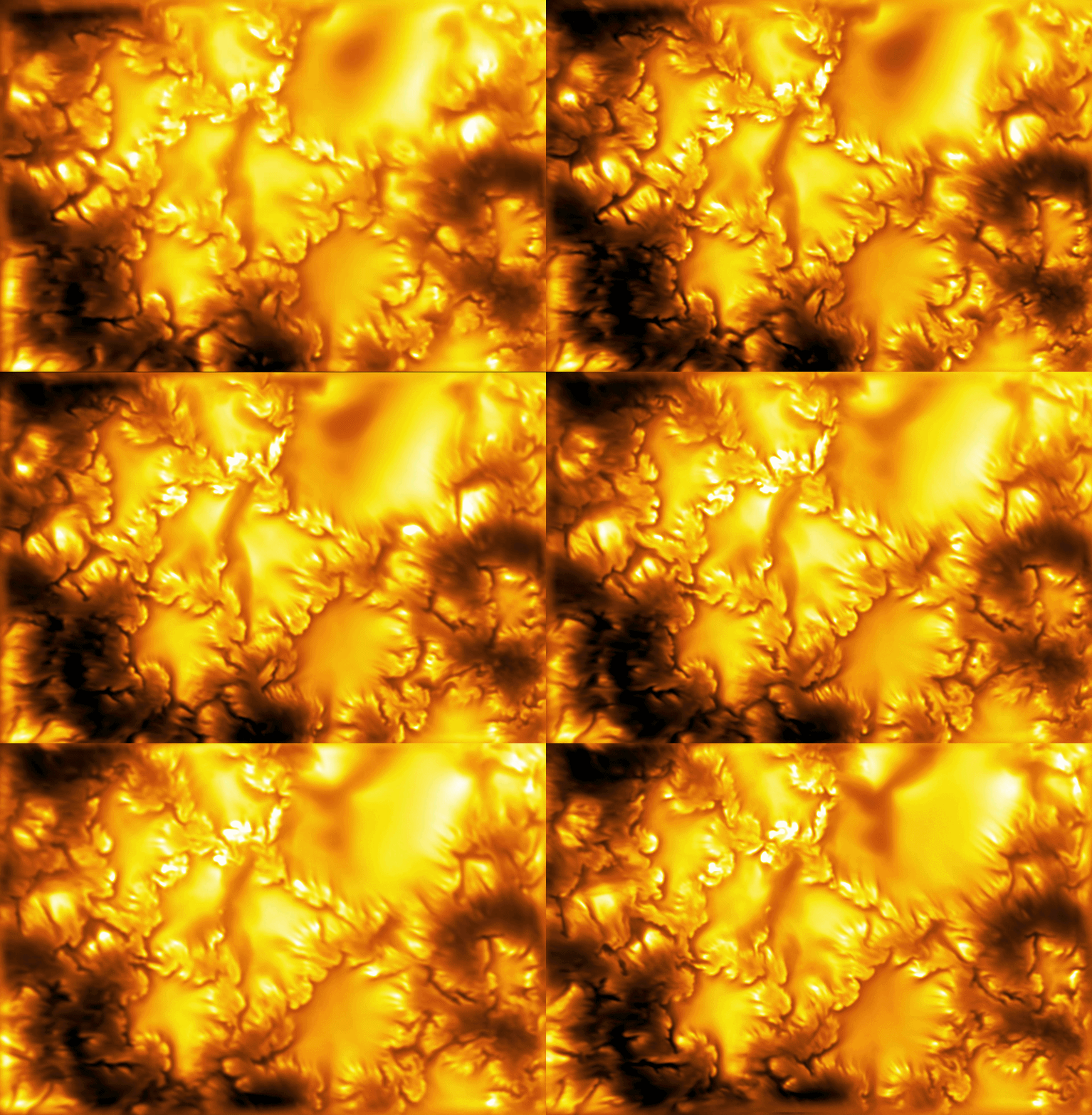
The resulting time-lapse footage from the telescope is unlike anything solar physicists have captured before. It shows dozens of tiny vortices clustering along the edges of magnetic regions, some accompanied by delicate, dark stripes known as striations, according to a statement from the National Science Foundation. The telescope's resolution is sharp enough to pick out structures just tens of miles across — a scale so fine that the vortices had gone completely undetected until now.
When the researchers lined the images up against their simulations, the match was close enough — down to the average spacing between vortices — to confirm that they'd finally caught the instability in action.
Beyond the impressive visuals, researchers think these swirls may serve an important function. By constantly twisting and mixing the sun's magnetic-field lines, these vortices may play a part in building up the energy behind solar flares and coronal mass ejections.
The effect also might help to explain the long-standing mystery of why the sun's outer atmosphere, or corona, reaches temperatures of around 2 million degrees Fahrenheit (around 1 million degrees Celsius) while its surface remains hundreds of thousands of degrees cooler, Thomas Rimmele, chief technologist at the National Solar Observatory, said in the statement.
The team now plans to use computer programs to automatically track these vortices across future observations. This will help them measure exactly how much these swirls contribute to heating the corona and driving the explosive space weather that can disrupt satellites, communications and power grids on Earth.
See how much you know about the sun with our sun quiz!