❌

Reading view

Giant-nucleus cells emerge as early cancer markers in new study

For more than four decades, pathologists have glimpsed something unsettling under the microscope in the earliest stages of certain cancers: cells with nuclei far larger than they should be, swollen and distorted, lurking in tissue that otherwise appears on the verge of catastrophe. These so-called giant-nucleus cells, or karyomegalic cells, were first spotted in the 1980s in animal experiments involving iron-induced oxidative stress, yet their biological identity and their role in the genesis of cancer remained stubbornly obscure. Now, a team of researchers in Japan has provided the most detailed portrait of these cells to date, and their findings suggest that the enormous nuclei may be far more than a curiosity—they could be the founding population of early cancer, visible before any tumor exists, and potentially useful as a predictor of patient outcomes.

The study, led by Shinya Toyokuni, professor emeritus at Nagoya University Graduate School of Medicine, together with assistant professor Yingyi Kong and colleagues, was published in Redox Biology. The work addresses a deceptively simple question: when iron overload kills most cells in a tissue through oxidative damage, who survives, and what do the survivors become? Iron is an essential micronutrient, but in excess it is a potent carcinogen. Its chemistry is both the reason we need it and the reason it can harm us. Iron catalyzes the formation of hydroxyl radicals from hydrogen peroxide through the Fenton reaction, and these radicals shred DNA, oxidize lipids, and damage proteins. When the damage is severe enough, a form of programmed cell death called ferroptosis is triggered—an iron-dependent demise characterized by lipid peroxidation cascades that rupture the cell membrane. Ferroptosis has become one of the hottest topics in cancer biology precisely because it links iron metabolism, oxidative stress, and cell fate in a single mechanism.

Toyokuni’s team reasoned that if ferroptosis sweeps through iron-damaged tissue, the cells that escape it must be exceptional in some way, and those exceptions might be the seed of malignancy. To find out, they turned to a well-established animal model in which ferric nitrilotriacetate, a carcinogenic iron compound, is injected into rats, delivering a bolus of iron to the kidneys. The compound accumulates in the proximal tubules, where it catalyzes oxidative damage and, over months, produces renal cell carcinoma. In the experiments, the researchers collected kidney tissue before the injection and again one and three weeks afterward. Crucially, they also included a second experimental group: rats carrying a single mutated copy of the BRCA1 gene, the same gene that, when mutated in humans, dramatically raises the risk of breast and ovarian cancers and is associated with renal carcinoma in certain contexts.

The methodological heart of the study lies in its marriage of two technologies. The first is spatial transcriptomics, a technique that maps gene activity across individual cells within a tissue section while preserving the tissue’s original architecture—so researchers can see not only which genes are active but where in the tissue those transcriptional programs are operating. The second is computational nuclear morphometry, which quantifies the size, shape, and density of cell nuclei in the same samples. By overlaying the two datasets, the team could link the physical appearance of each cell—above all, the size of its nucleus—to its underlying transcriptional state. This integration is important because morphological atypia has long been the currency of diagnostic pathology, but connecting that atypia to molecular signatures at single-cell resolution is a recent capability.

What emerged within a week of iron administration was striking. Giant-nucleus cells appeared in the damaged kidneys, and these cells were not simply wounded cells awaiting death. They showed elevated expression of potent oncogenes, including Myc and Met, and they had acquired resistance to ferroptosis—the very cell death pathway that was eliminating their neighbors. In other words, the extreme oxidative environment had functioned as a brutal selective pressure, and the cells best adapted to survive it had activated a program that resembles, in miniature, the hallmark machinery of cancer. The enrichment of Myc, a transcription factor that drives cell growth and proliferation, and Met, a receptor tyrosine kinase involved in invasive growth, paints a picture of cells that are not merely enduring damage but reorganizing themselves around it.

The BRCA1 connection proved equally consequential. BRCA1 is best known as a guardian of the genome, a scaffold for the homologous recombination machinery that repairs double-strand DNA breaks. In the BRCA1-mutant rats, giant-nucleus cells emerged with distinctly different biological profiles from those in wild-type animals. The interpretation the researchers offer is that BRCA1 deficiency cripples DNA repair, so more of the damaged cells that would otherwise die or be repaired instead survive in their injured, genome-compromised state—becoming precancerous giant-nucleus cells. Electron microscopy and cellular respiration measurements reinforced this idea at the subcellular level: cells from BRCA1-mutant rats showed mitochondrial remodeling, with impaired iron handling and compromised respiratory function. Mitochondria, long appreciated as power plants, are also central regulators of ferroptosis and iron metabolism, and their disarray in the mutant animals may be both a consequence of BRCA1 loss and a driver of the abnormal iron biology that feeds karyomegaly.

Using their combined gene-expression and nuclear-shape data, the researchers went further and classified the giant-nucleus cells into six distinct types. One type possessed extremely large nuclei and gene signatures of stress-induced growth arrest—cells that appear to have locked themselves into a senescent-like state, consistent with profiles reported in earlier studies. Another type, found more frequently in BRCA1-mutant kidneys, showed heightened activity of cancer-related genes alongside elongated nuclei, a combination the authors interpret as a potential precancerous state. The taxonomy matters because it reframes giant-nucleus cells from a single enigmatic category into a spectrum, some members of which may be harmless or even protective while others carry genuine malignant potential.

One of the most provocative findings concerns the cells surrounding the giants. Even morphologically normal cells near giant-nucleus cells exhibited gene expression changes that appear to promote survival, suggesting that the karyomegalic cells remodel their local microenvironment in ways that extend beyond their own borders. In BRCA1-mutant kidneys, the team also documented a substantial increase in stromal cells—non-cancerous supportive cells including immune and connective tissue elements—around the damaged regions. The local tissue environment, the tumor niche in the language of modern oncology, was being reshaped long before any tumor could be called a tumor. This raises the possibility that a single conspicuous cell, easily identified by its nucleus under a conventional microscope, could serve as a sentinel for a whole neighborhood of incipient malignancy.

The leap from rat kidneys to human medicine came through two complementary analyses. First, the researchers mined TCGA-KIRC, a large public database of kidney cancer patients, asking whether tumors carrying gene-expression patterns resembling the cancer-prone giant-nucleus cells were associated with different clinical trajectories. They were: patients whose tumors shared the gene patterns of the cancer-prone giant-nucleus cells had shorter survival times, while those with patterns resembling the healthier giant-nucleus cell types had better outcomes. Not all giant-nucleus cells, in other words, are created equal, and the transcriptional fingerprints defined in the rat model appear to carry prognostic weight in human disease. Second, in a small pilot study, the team examined breast tissue from seven individuals with inherited BRCA1 mutations and fifteen without, observing abnormal nuclear features similar to those in the animal model in the mutation carriers. While the sample size is modest, the parallel hints that karyomegaly may be a cross-tissue marker of BRCA1-linked precancerous change.

The broader implications run in two directions. Clinically, the promise is that giant-nucleus cells, being easy to spot under the microscope, could function as early indicators of cancer—visible warnings in tissue that would otherwise be classified as merely damaged or inflamed. The TCGA survival data suggest that their gene-expression signatures might even stratify patients by risk once a tumor has formed. Scientifically, the study offers a concrete mechanism connecting an environmental exposome factor—iron-catalyzed oxidative stress—to a defined, transcriptionally characterized precancerous population, with ferroptosis resistance as the pivot. It also implies testable therapeutic hypotheses: if blocking mitochondrial remodeling or reversing ferroptosis resistance could prevent the persistence of the precancerous cells, early intervention might stop cancer before it starts. Toyokuni and his colleagues are careful to note that long-term studies will be needed to determine how giant-nucleus cells actually progress into tumor cells, whether such interventions can work, and whether nuclear shape combined with gene patterns can be validated as a diagnostic in larger patient cohorts. But the central message is already legible: some of the earliest chapters of cancer may be written in cells that have grown too large to be ignored.

Subject of Research: Animals

Article Title: Iron-catalyzed oxidative stress reveals an exposome-related ferroptosis-resistant karyomegalic niche in BRCA1-linked renal carcinogenesis.

Article References: Kong, Y., Shiraki, Y., Furuhashi, K., Maruyama, S., Imaoka, T., Enomoto, A., & Toyokuni, S. (2026). Iron-catalyzed oxidative stress reveals an exposome-related ferroptosis-resistant karyomegalic niche in BRCA1-linked renal carcinogenesis. Redox Biology, 95, Article 104293. https://doi.org/10.1016/j.redox.2026.104293

Image Credits: AI Generated

DOI: 10.1016/j.redox.2026.104293

Keywords: giant-nucleus cells, karyomegaly, ferroptosis, BRCA1, iron-catalyzed oxidative stress, spatial transcriptomics, renal carcinogenesis, mitochondrial remodeling, nuclear morphometry, precancerous cells, TCGA-KIRC, Nagoya University

  •  

Exceptionally Preserved Bird Feathers Found in 66-Million-Year-Old Dinosaur Coprolite

While some dinosaurs are thought to have had ‘fuzzy’ or ‘downy’ feathers (shown in this illustration as the yellow spikes on a Nanotyrannus’ neck), ancient birds (such as the one in the Nanotyrannus’ mouth) were more likely to have had feathers that look similar to the birds of today. Image credit: Andrey Atuchin.

Paleontologists in Montana have discovered remarkably preserved feathers of an ancient aquatic bird inside a fossilized dinosaur dropping, offering rare insight into why certain birds survived the asteroid strike that wiped out the dinosaurs 66 million years ago.

The post Exceptionally Preserved Bird Feathers Found in 66-Million-Year-Old Dinosaur Coprolite appeared first on Sci.News: Breaking Science News.

  •  

Paleontologists Discover First-Ever Adult Tyrannosaurus rex Trackway

The Tyrannosaurus rex trackway in the Hell Creek Formation in North Dakota, the United States. Image credit: Kent Hups.

Paleontologists in North Dakota have unearthed a set of 66.5-million-year-old fossilized footprints that can be confidently attributed to a full-grown Tyrannosaurus rex.

The post Paleontologists Discover First-Ever Adult Tyrannosaurus rex Trackway appeared first on Sci.News: Breaking Science News.

  •  

Unique zipper reaction converts perfluoroalkyl chains via defluorination and borylation

In a development that could reshape how chemists recycle one of the most persistent classes of synthetic molecules ever made, researchers have reported a new catalytic strategy that strips fluorine atoms from perfluoroalkyl chains in a controlled, sequential fashion while installing a single boron group at the chain’s terminus. The work, published in Nature Communications, introduces what the authors call zipper polydefluorination-monoborylation, a transformation that walks down a perfluoroalkyl skeleton and removes multiple fluorine atoms in a stepwise cascade before capping the partially defluorinated product with a boron substituent. The achievement addresses a longstanding challenge in fluorine chemistry: while carbon-fluorine bonds are prized in materials and pharmaceuticals for their extraordinary stability, that same stability makes them notoriously difficult to break selectively, leaving chemists with few tools for converting perfluorinated waste streams into useful building blocks.

Perfluoroalkyl substances, often grouped under the umbrella of PFAS chemistry, owe their remarkable properties to the strength of the carbon-fluorine bond, which at roughly 485 kilojoules per mole in fully fluorinated chains ranks among the strongest single bonds that carbon forms. This bond strength, combined with the sheer electronegativity of fluorine, means that perfluoroalkyl groups resist oxidation, hydrolysis, and thermal degradation under nearly all conventional conditions. As a consequence, perfluorinated chains accumulate in the environment and resist standard degradation pathways, prompting intensive research into defluorination methods ranging from photocatalytic single-electron transfer to reductive hydrodefluorination with metal hydrides. Yet most existing approaches suffer from a common limitation: they either remove fluorine indiscriminately, collapsing the entire chain to a mixture of products, or they remove only a single fluorine atom, offering little control over the degree of defluorination. The new study demonstrates a way to achieve the best of both worlds, delivering multi-fluorine removal in a predictable pattern while simultaneously introducing a versatile functional handle.

The conceptual heart of the method lies in what the authors describe as a zipper mechanism. Rather than removing fluorine atoms at random positions along the chain, the reaction initiates at a defined site and then propagates along the perfluoroalkyl backbone one carbon at a time, much as a zipper opens tooth by tooth. At each step along the chain, a fluorine atom is expelled and replaced in sequence, with the reaction front advancing until a thermodynamic or kinetic stopping point is reached. The monoborylation component of the process ensures that once the zipper has run its course, the resulting olefinic or anionic intermediate is intercepted by a boron reagent, furnishing a product in which the boron group occupies a predictable position derived from the original perfluoroalkyl terminus. Organoboron compounds are among the most valuable intermediates in modern synthetic chemistry, serving as partners in Suzuki-Miyaura cross-coupling and as precursors to alcohols, amines, and halides, so their installation at a defluorination site effectively converts a chemical dead end into a synthetic launching pad.

Mechanistically, the transformation draws on the characteristic reactivity of organoboron reagents toward geminal difluoroalkenes, the partially defluorinated intermediates that arise when consecutive fluorine atoms are eliminated from a perfluoroalkyl chain. Perfluoroalkyl chains, when subjected to strong bases or reductive conditions, can undergo sequential beta-fluoride elimination events, each generating a more highly unsaturated species. The boron reagent in the reported system engages these unsaturated intermediates through addition pathways that install boron at the terminal carbon while generating a carbanionic center adjacent to the remaining difluoromethylene unit. That newly formed carbanion is perfectly positioned to expel another fluoride ion, regenerating an unsaturated handle one carbon further down the chain and setting up the next iteration of the cycle. This intimate coupling of borylation and defluorination is what gives the reaction its chain-walking character: each borylation event creates the conditions for the next defluorination event, and the process ripples along the chain until the fluorine reservoir is exhausted or the reagents are consumed.

The practical significance of the work becomes apparent when one considers the fate of the fluorine atoms themselves. In the zipper process, fluorine is released as fluoride ion, which under the reaction conditions is sequestered by silicon-containing trapping agents to form robust silicon-fluorine bonds. Fluorosilicates of this kind are stable, isolable, and, importantly, compatible with industrial processes for recycling fluorine back into hydrofluoric acid, the feedstock from which essentially all synthetic organofluorine compounds are made. In this sense, the method does more than transform perfluoroalkyl chains into borylated products; it also lays the groundwork for closing the fluorine cycle, recovering the fluorine content of persistent molecules in a form that can be fed back into the chemical economy. With global concern over PFAS contamination intensifying and regulatory pressure on fluorinated chemicals mounting, technologies that enable fluorine recovery rather than dilution into the environment carry considerable weight.

From a synthetic chemistry standpoint, the products of the reaction open multiple downstream avenues. Because the boron substituent is installed at a defined position on a partially fluorinated alkyl or alkenyl framework, the resulting molecules retain a programmable mixture of carbon-fluorine bonds and carbon-boron functionality. The remaining fluorine atoms can tune the lipophilicity, metabolic stability, and dipole moment of the scaffold, properties that are actively exploited in medicinal chemistry when designing fluorinated drug candidates. Meanwhile, the boron group serves as a convertible handle, allowing the defluorinated carbon center to be joined to aromatic rings through cross-coupling, oxidized to alcohols, or aminated in homologation reactions. In effect, the method converts a chemically inert perfluoroalkyl group, useful mainly as a passive coating or tail, into a functionalized partial-fluoro skeleton that can participate in the full toolkit of carbon-carbon and carbon-heteroatom bond formation.

The reported study also sheds light on the factors governing how far the zipper travels along a given chain. Chain length, the nature of the substituent anchoring the perfluoroalkyl group, and the stoichiometry of the base and boron reagent all influence the number of fluorine atoms removed and the distribution of products obtained. Through systematic variation of these parameters and careful analysis of the reaction mixtures by nuclear magnetic resonance spectroscopy and mass spectrometry, the authors map out the scope of the transformation across a range of perfluoroalkyl substrates, from short perfluoroethyl groups to longer chains approaching those found in commercial fluorosurfactants. Control experiments interrogating individual elementary steps support the proposed sequential elimination-addition mechanism and rule out alternative pathways involving radical fragmentation or random beta-scission, underscoring the unusually high degree of positional control the method achieves.

Beyond its immediate synthetic utility, the work contributes to a growing body of research aimed at taming the carbon-fluorine bond through the strategy of defluorinative functionalization. Over the past decade, chemists have developed an impressive repertoire of reactions that replace fluorine in perfluoroalkyl and fluoroarene substrates with groups ranging from hydrogen to sulfur, nitrogen, and carbon substituents. What distinguishes the zipper approach is its multiplicity and its directionality: instead of a single substitution event at a single site, the reaction performs many substitutions in a choreographed sequence along a chain, effectively treating the perfluoroalkyl group as a one-dimensional lattice to be patterned at will. This conceptual reframing, from defluorination as bond-breaking to defluorination as programmable editing, may inspire analogous strategies for other polyfluorinated motifs, including perfluoroarenes and perfluoropolyethers, two additional classes of highly persistent fluorinated materials.

Challenges remain before such chemistry can move from the laboratory bench to environmental remediation at scale. The reaction conditions reported rely on strong bases and moisture-sensitive boron reagents handled under inert atmosphere, and the substrates studied are discrete, soluble perfluoroalkyl compounds rather than the polymeric or adsorbed PFAS species that dominate environmental contamination. Scaling the chemistry will require sourcing boron reagents economically, managing the large quantities of fluoride generated, and integrating the transformation with upstream methods for extracting perfluoroalkyl pollutants from water and soil. Nevertheless, the demonstration that a perfluoroalkyl chain can be unzipped in a controlled manner, with fluorine captured in recyclable form and a valuable boron handle installed, establishes a credible chemical pathway toward defluorination that is both productive and selective, a combination that has eluded the field for decades.

As policymakers and scientists grapple with the legacy of fluorine chemistry, work of this kind illustrates a middle path between the wholesale abandonment of fluorinated molecules and their indefinite persistence in the biosphere. The fluorine atom confers properties that industry and medicine continue to depend upon, and the ability to disassemble fluorinated architectures on demand, recovering both the carbon skeleton as a functionalized building block and the fluorine content as a recyclable salt, points toward a more circular future for organofluorine chemistry. The zipper polydefluorination-monoborylation strategy reported in Nature Communications is an early but striking example of that vision made concrete at the molecular level, and it is likely to prompt rapid efforts to extend the concept across the breadth of persistent fluorinated chemicals.

Subject of Research: Controlled sequential defluorination of perfluoroalkyl chains coupled with terminal borylation (zipper polydefluorination-monoborylation)

Article Title: Zipper polydefluorination-monoborylation of perfluoroalkyl chains

Article References: Albers, S. L., Harzendorf, J. K., Deliaval, M., Köllmann, J., & Streuff, J. (2026). Zipper polydefluorination-monoborylation of perfluoroalkyl chains. Nature Communications, 17(1), Article 9502. https://doi.org/10.1038/s41467-026-77437-9

Image Credits: AI Generated

DOI: 10.1038/s41467-026-77437-9

Keywords: perfluoroalkyl chains, defluorination, polydefluorinative borylation, organoboron compounds, carbon-fluorine bond activation, PFAS degradation, fluorine recycling, geminal difluoroalkenes, cross-coupling, sustainable chemistry

  •  

Earth May Not Be a Cosmic Fluke, New Simulations Suggest

Exoplanet Ross 128 b Is Not Like EarthSolar system simulations starting from varied initial conditions suggest that Earth-like planets can emerge naturally from planet formation. Computer simulations of planetary systems can now begin from thousands of different starting conditions, allowing researchers to explore how worlds might emerge without assuming the final outcome. Over the past three decades, these models have advanced from [...]
  •  

IA et devoirs : cette peur pousse des parents à payer, même lorsqu’ils doutent de ses bénéfices

Avec l’intelligence artificielle qui s’invite désormais dans les devoirs des collégiens et lycéens, de nombreuses familles font face à un dilemme : faut-il en limiter l’usage ou, au contraire, permettre à son enfant de suivre le mouvement ? Une étude révèle à quel point les pratiques des autres...

  •  

115-Million-Year-Old Dinosaur Fossil Recovered from Deep Drill Core in China

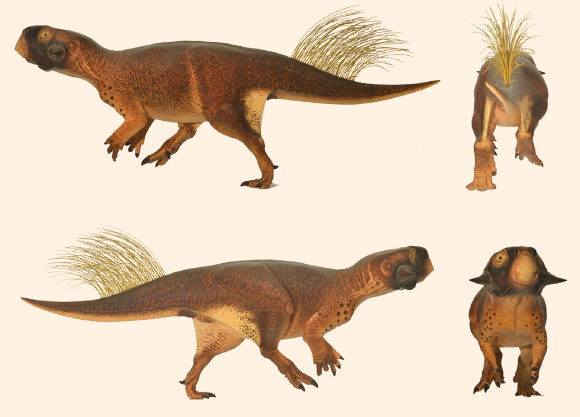
Model of Psittacosaurus sp. based on skin and pigmentation patterns on the specimen from the Senckenberg Museum, Germany. Image credit: Jakob Vinther et al.

Scientists have identified the first dinosaur fossil from a remote western section of the Bayan Gobi Formation in China’s Inner Mongolia, extending the known geographic range of dinosaur fossils in this important Early Cretaceous rock unit.

The post 115-Million-Year-Old Dinosaur Fossil Recovered from Deep Drill Core in China appeared first on Sci.News: Breaking Science News.

  •  

Hubble Spots ‘Superbubble’ in Large Magellanic Cloud

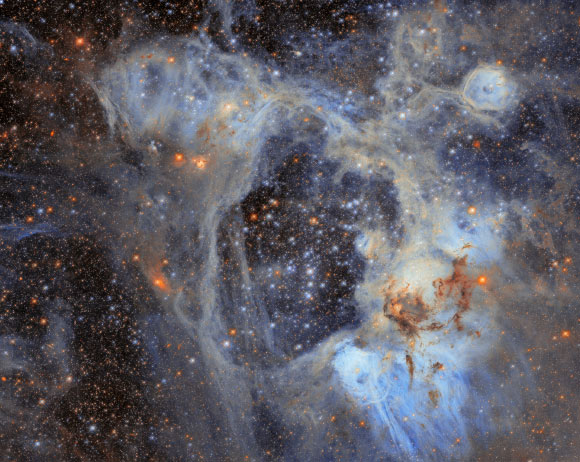
This Hubble image shows the emission nebula LHA 120-N44. Image credit: NASA / ESA / Hubble / D. Gouliermis.

A new images from the NASA/ESA Hubble Space Telescope reveals LHA 120-N44, a striking nebula located roughly 160,000 light-years away in the Large Magellanic Cloud, a satellite galaxy of the Milky Way.

The post Hubble Spots ‘Superbubble’ in Large Magellanic Cloud appeared first on Sci.News: Breaking Science News.

  •  

Why digital transformations still fail

The consulting firms told us this would be different. They arrived with slick slide decks, expensive vendor packages, and promises to revolutionize how we do business. Their message was clear: Digital transformation was no longer optional; it was existential. Companies that failed to adapt would be left behind and crushed by more agile competitors with cloud-native architecture and data-driven strategies.

That was back in 2020, when Boston Consulting Group released research showing that 70% of digital transformations failed to meet their objectives. The consulting industry rushed to publish its frameworks, maturity models, and proprietary methodologies. Enterprise IT organizations spent millions on these programs, hoping to finally bridge the gap between technological capability and business value.

Several years on, I can say that little has changed. If anything, the issue has worsened.

The damage that was done

Most digital transformations didn’t just fail to deliver ROI; they actively damaged the organizations that undertook them. Technical debt accumulated as companies deployed monolithic cloud platforms that were neither modular nor scalable. Business misalignment became endemic as transformations focused on technology for its own sake rather than on solving actual business problems. Organizations found themselves locked into expensive vendor relationships that failed to deliver on their promises.

I’ve spoken with dozens of enterprise CIOs and CTOs over the past several years, and the stories are remarkably consistent. Transformations that were supposed to take six months stretched to two years. Budgets estimated at a few million exploded to six, eight, even twelve times the original projection. The consulting firms had excellent PowerPoint skills, but when it came to implementation, the results were consistently disappointing.

The damage wasn’t just financial. Organizations lost confidence in their IT capabilities. Talented people left because they were tired of being managed by consultants who couldn’t code their way out of a paper bag. Business stakeholders grew cynical about technology initiatives, having been burned too often by projects that promised transformation but delivered chaos.

Why the consulting models failed

Let’s be direct about what happened. The consulting industry discovered that digital transformation was highly profitable. They could sell their methodologies, vendor partnerships, and “best practices” frameworks, and charge premium fees for implementation support. The problem was that these frameworks were largely one-size-fits-all approaches disguised as bespoke solutions.

A major global bank doesn’t have the same requirements as a regional healthcare provider, yet both were sold the same transformation playbook. The consulting firms had invested too heavily in their methodologies to admit that the real answer might be to start with business requirements and work backward toward technology. Instead, they assembled prepackaged solutions optimized for vendor partnerships rather than clients’ actual needs.

The talent problem was equally severe. The consulting firms could certainly talk about digital transformation; they had excellent slides and compelling narratives. But when it came to implementation, the skill gaps were glaring. These organizations assembled solutions by following playbooks rather than understanding how the technology components actually fit together. The result was systems that were overengineered, overprovisioned, and ultimately underperforming.

Cloud computing was supposed to be the great enabler, but many organizations misunderstood and misapplied it. Organizations lifted and shifted their existing problems along with their existing architecture. Monolithic applications running on expensive virtual machines became the new normal, with organizations paying cloud costs that far exceeded their on-premises expenses, yet achieving none of the scalability benefits the cloud was supposed to deliver.

What we still need to learn

As we grapple with the next wave of technology transformation—this time centered on artificial intelligence—the lessons from digital transformation failures should be front and center. The first and most important lesson is brutally simple: Focus on business needs first. I know this sounds obvious, but I guarantee you that every failed digital transformation project lost sight of its core business requirements. They built technology for technology’s sake without understanding the problems they were trying to solve.

Too many transformations focused on individual business units rather than enterprisewide strategies. The result was a collection of systems that couldn’t work together cohesively. Isolated solutions felt like progress but actually made integration harder and created new dependencies that hadn’t existed before.

Organizations also need to invest in serious training for their people. I’m not talking about sending IT staff to vendor certification programs that teach them to pass tests on proprietary platforms. I mean fundamental architectural education that helps people understand how to assemble technology effectively.

We face a massive shortage of AI, cloud, and security architects, as well as other technical leaders who can design solutions that work. Rather than addressing this gap, organizations are placing unqualified people in these roles and hoping for the best. It’s past time to invest in education.

The case for simplicity

Here’s something that also should be obvious but clearly isn’t: You can solve the same business problem with $1 million or $20 million, depending on the sophistication of the IT organization building the solution. Both designs will work reasonably well, but one solution costs 20 times more because it is overbuilt and overengineered.

Organizations are adding AI to everything under the sun, even when simpler solutions would work just as well. They’re overprovisioning cloud resources because they lack the architectural discipline to rightsize their infrastructure. They’re building systems designed for scale they’ll never reach, complexity they don’t need, and features no one requested.

The path forward requires a minimalist approach. Build systems that are good enough for their intended purpose. Focus on requirements rather than capabilities. Resist the temptation to adopt every new technology just because it’s available.

Digital transformation didn’t fail because the technology was flawed. It failed because we forgot that technology exists to serve the business, not the other way around. To succeed with AI, we need to remember that fundamental truth. And remember the consulting industry’s tendency to sell us expensive solutions to problems we don’t have.

  •  

Why is Earth’s crust layered?

Since the formation of the Earth 4.2 billion years ago, hot rock from the interior of the planet has cooled off and developed crystals that accumulated over millions of years, forming surface rocks with a layered composition, referred to as continental crust. Geologic evidence of how continental crust formed comes from large, ancient crustal blocks, called cratons. Cratons have existed for billions of years and form the cores of continents. 

Scientists have shown that the upper 10 to 15 kilometers (6 to 9 miles) of continental crust contains high concentrations of elements like uranium and thorium that decay and release heat over time, referred to as radiogenic elements. However, the lower 20 kilometers (12 miles) of crust has very few radiogenic elements. The cause of this planetary-scale differentiation is highly questioned, as geoscientists don’t know what formation processes could produce this unique characteristic. 

Earlier researchers suggested that changes in the concentration of radiogenic elements could occur when tectonic plates collide. Plate collision induces temperatures in the lower crust high enough to melt minerals that contain uranium and thorium, like zircon and monazite. The newly melted minerals form magma, which then rises and crystallizes in the upper crust. To test whether this process formed the layered continental crust, researchers Andrew J. Smye and Peter B. Keleman incorporated geochemical data from studies worldwide into a mathematical model comparing how concentrations of radiogenic elements vary under different temperatures. 

The team separated their global analyses into 2 categories of rocks that were buried deep in the crust and subjected to intense pressures and temperatures, via a process known as metamorphism. The first category included rocks formed from the accumulation of eroded grains buried in the deep crust that are subjected to high pressures and temperatures, called metasedimentary rocks. The second category included rocks formed when magma rises from the deep Earth and solidifies before experiencing high pressures and temperatures, called metaigneous rocks.

The researchers analyzed 3 subcategories from each of the 2 types of deep-crustal rocks. The first was rocks that experienced no intense pressure or temperature, the second was rocks subjected to 650 to 900°C (about 1,200 to 1,650°F), and the third was rocks subjected to 900 to 1,100°C (about 1,650 to 2,000°F). The researchers modeled the geochemistry of the 3 rock types at different temperatures to determine whether ultra-high-temperature metamorphism could cause crustal differentiation of radiogenic elements.

Smye and Keleman found that monazite doesn’t melt in either metasedimentary or metaigneous rocks at temperatures below 900°C, as indicated by the relatively high thorium content in these deep-crustal rocks. Alternatively, they found that above 900°C, uranium and thorium concentrations decreased in metasedimentary rocks, suggesting that minerals like zircon and monazite were melting. The melted minerals enter magma and rise into the upper crust, leaving behind metasedimentary rocks depleted in radiogenic elements by around 0.10 ppm.  

The team concluded that the enrichment of uranium and thorium in the upper continental crust requires temperatures greater than 900°C to initiate the melting of zircon and monazite in the lower crust. Temperatures above 900°C are linked to the movement and collision of continental plates. This result suggests that evidence of Earth’s differentiation has been preserved for more than 3 billion years, spanning most of the planet’s geological history. Since stable continental crust formed, uranium and thorium enrichment in the upper crust has consistently recorded layering produced by ultra-high temperature metamorphism.

The post Why is Earth’s crust layered? appeared first on Sciworthy.

  •  

Primordial Planetesimals from the Guts of Population III Stars

Protoplanetary Disk

While previous investigations of planet formation across the universe’s history suggest that planets trickled into the picture, a recent study has found that primordial planetesimals could have formed much earlier from the insides of the first stars in the universe.

First Stars, First Planets?

When the first stars flickered on, the universe was filled with pristine gas, containing only hydrogen, helium, and a little lithium. This gas, though great at making massive stars known as Population III (Pop III) stars, was not yet enriched with the heavy elements necessary for planet formation and, of course, life. Past studies have suggested that planet formation in the universe was gradual, taking several billion years to peak after billions of stars created and spilled the needed metals into the universe. However, local pockets of enriched gas from Pop III stars could have created the right conditions for planet formation earlier in the universe’s history.

Pop III stars burned bright and fast, exploding violently in pair-instability supernovae that completely shredded the progenitor, ejecting over 100 solar masses of metals into their previously pristine surroundings. Cosmological simulations suggest that oxygen from these supernovae could have produced significant water fractions within the dense cores of the supernova remnant. This may have set the stage for planet formation in water-rich disks around subsequent generations of stars as early as 150–200 million years after the Big Bang — does numerical modeling support this planet formation hypothesis?

Protoplanetary disk growth

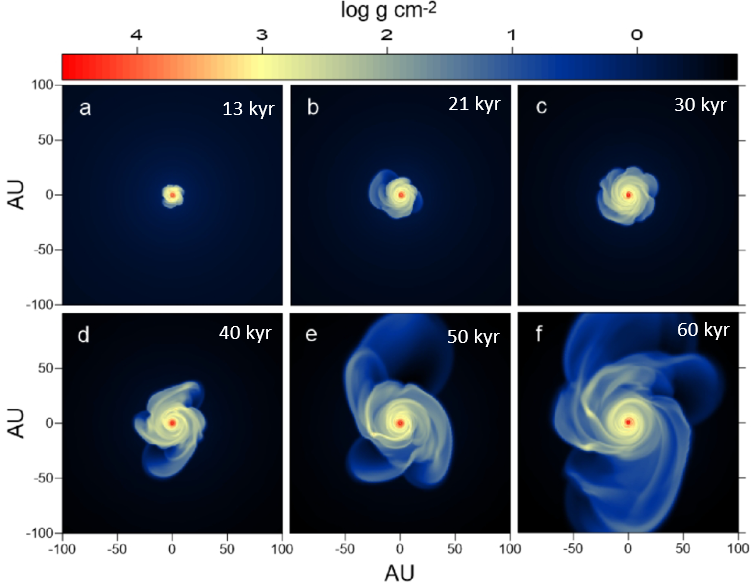
Simulation snapshots showing the formation and evolution of the protoplanetary disk for 13, 21, 30, 40, 50, and 60 thousands of years after protostellar birth. Click to enlarge. [Modified from Vorobyov et al 2026]

Primordial Planetesimals in Simulated Water-Rich Disks

To test if these water-rich dense cores within Pop III supernova remnants could form planetesimals, the building blocks of terrestrial planets, Eduard I. Vorobyov (University of Innsbruck; Southern Federal University) and collaborators performed numerical simulations tracing the collapse of one such gas core into a protoplanetary disk around a protostar. The simulations begin from the gravitational collapse of a 1-solar-mass gas cloud core, with a protostar emerging 24 thousand years after the initial cloud collapse. As the protostar’s gravity pulled in material from its surroundings, a rotating disk formed around the growing star.

Protoplanetary disk evolution and planetesimal growth

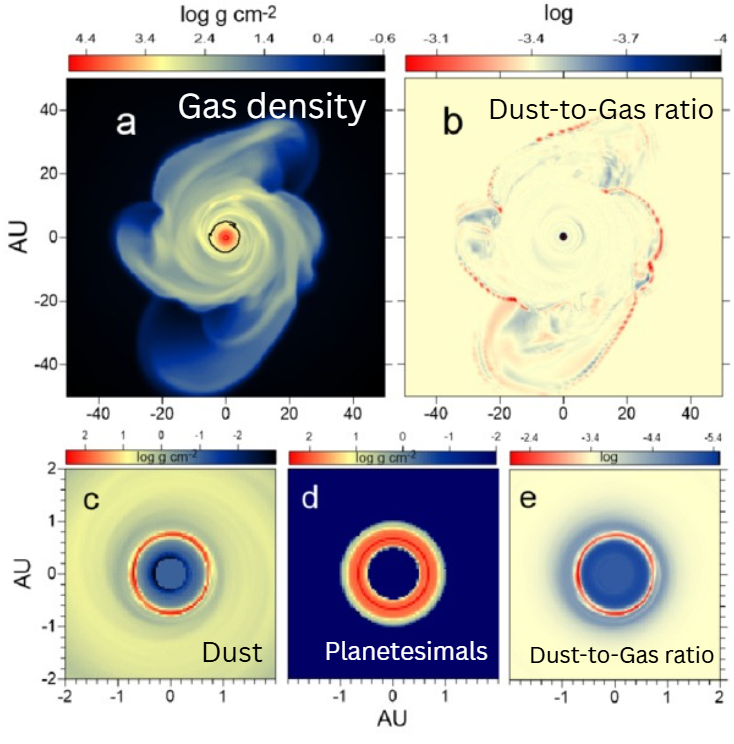
Simulation snapshot 40 thousand years after the formation of the protostar showing the gas, dust, and planetesimal surface densities and the dust-to-gas ratio. Click to enlarge. [Modified from Vorobyov et al 2026]

Tracking the gas and dust evolution in the disk, the authors found that several Earth masses of planetesimals formed within 0.5–1.0 au of the 0.4-solar-mass protostar. While the simulations did not trace the disk all the way to planet formation (this requires complex multi-body modeling and lots of computing power), enough planetesimals formed to create a Mars- or Earth-mass planet in the future. Luckily, unlike their live-fast and die-young predecessors, low-mass stars born from Pop III supernova remnants would still be burning hydrogen in their cores today, and ancient metal-poor stars in the Milky Way’s halo may be home to the universe’s first planets that could be detected in future exoplanet surveys. This study showed, for the first time, that water-rich protoplanetary disks with planetesimals could pop up billions of years earlier than previously thought, changing our understanding of planet formation in the universe.

Citation

“Planet Formation at Cosmic Dawn: Planetesimals in H2O-rich Disks around Low-mass Stars,” Eduard I. Vorobyov et al 2026 ApJL 1007 L51. doi:10.3847/2041-8213/ae907c

The post Primordial Planetesimals from the Guts of Population III Stars appeared first on AAS Nova.

  •  

Gemini North Telescope Captures Stunning Portrait of Merging Spiral Galaxies

This image of NGC 7253 was captured by the Gemini North telescope on Maunakea, one half of the International Gemini Observatory. Image credit: International Gemini Observatory / NOIRLab / NSF / AURA / J. Miller & M. Rodriguez, International Gemini Observatory & NSF’s NOIRLab / T.A. Rector, University of Alaska Anchorage & NSF’s NOIRLab / D. de Martin & M. Zamani, NSF’s NOIRLab.

A new image from the Gemini North telescope on Maunakea in Hawai’i offers the sharpest look yet at a striking pair of interacting spiral galaxies, cataloged as NGC 7253.

The post Gemini North Telescope Captures Stunning Portrait of Merging Spiral Galaxies appeared first on Sci.News: Breaking Science News.

  •  
  •  

New Survey Suggests Gen Z Are More Likely to Believe in Aliens—How UFO Media May Be Shaping a Generation

Growing news coverage of UFOs is influencing people’s views about extraterrestrial life, particularly among younger Americans, according to a new survey. 

According to the survey’s findings, more than a third of respondents—and particularly younger adults—say recent reporting on unexplained aerial phenomena has strengthened their belief that aliens exist.

Connecting data from over 2,000 Americans, the survey found that 37% say recent news coverage about UFOs has increased their belief in extraterrestrial life (ET). Meanwhile, 54% say their views have not changed, and just 10% report that the coverage has made them less likely to believe in ET. The survey was conducted by Talker Research between July 1 and July 6, 2026. 

Gen Z Data 

According to the survey’s findings, more than half of Gen Z respondents—54%—said recent UAP news has increased their belief in ET. That figure drops to 45% among millennials, 36% among Gen X, and 23% among baby boomers.

These results arrive amid an increasingly mainstream conversation surrounding government hearings, military UAP reports, whistleblowers, broadcast and online news coverage, and podcasts. Such exposure may be helping shape how Gen Z views what is possible and whether intelligent life exists elsewhere in the cosmos.

Looking at the results through a gender lens, 34% of men say UFO news coverage has made them more likely to accept that we are not alone in the universe, compared with 33% of women.

Media and Entertainment Culture Feedback Loops 

Historically, widely publicized UFO reports have helped shape the language and imagery Western society uses to describe unexplained aerial phenomena. One famous example occurred in 1947, when pilot and businessman Kenneth Arnold reported seeing unusual objects flying near Mount Rainier, an incident that received widespread media coverage.

The idea behind such a cultural feedback loop is relatively straightforward: someone sees something outside their normal understanding of reality and reports it. Media and entertainment then pick up the concept and expand upon it, creating their own interpretations of what extraterrestrial beings or UFOs might look like. Audiences absorb those representations, which may subsequently influence how some people perceive, remember, or describe their own unusual experiences. Those accounts can then return to popular culture, potentially reinforcing the cycle.

This doesn’t necessarily mean that what a person saw wasn’t anomalous. Instead, it suggests that media and entertainment may influence how people interpret or describe what they experience.

A 2025 paper in Evolutionary Human Sciences deconstructs a “two-way feedback loop between behavior and beliefs.” The framework suggests that existing beliefs influence behavior; people then observe that behavior, and the observed behavior influences what people believe others think/do. Finally, those beliefs influence subsequent behavior.

The new survey also considered the potential influence of popular culture. More than half of respondents (54%) believed alien movies and television make Americans more likely to believe in the existence of intelligent extraterrestrial life; 27% saw no connection between entertainment and belief, while 8% believed such programming actually makes people less likely to believe.

UFOs as a Belief System and Common Misconceptions 

An additional consideration when reading this survey is whether UFOs themselves should be characterized as a belief system. The subject is also an area of study examined by researchers from a range of disciplines, including psychology, philosophy, physics, anthropology, neuroscience, and others.

Many academics would argue that categorizing UFOs solely as a belief system risks pigeonholing the subject as a form of religion rather than recognizing it as an area of study. A belief system, by contrast, is a framework of ideas through which people interpret reality according to a particular set of assumptions or principles.

Jeffrey Kripal, J. Newton Rayzor Professor of Religion at Rice University’s Department of Religion, addressed related questions in his March 2026 keynote, “Mind-Manifesting Shock: Comparing Psychedelic and Abduction Experiences, Religion and Psychedelics: Critical Cross-Cultural, Cross-Disciplinary Approaches,” at the Center for the Study of Religion at Ohio State University.

“We are often ‘believing backwards,’ taking comfort in someone else’s altered states, or in the present ‘explanations’ of this or that neuroscience or physics,” Kripal said at the time.

In other words, when people experience something anomalous and ask why it happened or what the experience might mean, they may immediately reach backward for an existing framework through which to interpret it.

In an email to The Debrief, Kripal adds, “I think the existing frameworks of religion and science ‘explain’ to people what happens, though they do not.”

The Debrief also reached out to Matthew Halsted, Associate Professor of Biblical Studies and Executive Team/Registrar at Eternity College, and asked how he would classify UAP—as an area of belief or a subject of study—and why.

“When it comes to ‘UAP,’ we have to see it as a two-sided coin,” Halsted told The Debrief. “On one side, we have the phenomenon itself (the actual sighting of the thing in the sky); on the other side of the coin, we have the public narrative (how we as people, and our respective governments, talk about reported sightings).”

Halsted adds, “The UAP topic (the ‘coin’) creates a lot of questions for the public, which inevitably gives rise to some sort of belief system. Some walk away believing it’s all nonsense, while others believe there’s something real about this whole thing.”

Halsted’s view, therefore, appears more nuanced than simply classifying UAP as a belief system: the topic can generate belief systems and competing interpretations around reported phenomena, but the subject itself extends beyond a simple question of belief versus nonbelief.

National Security Considerations

When asked how they would react if extraterrestrial life were definitively confirmed, 38% of Americans said their first response would be curiosity, more than twice the 17% who said they would be fearful. Men were also more likely than women to say they would be excited by such a discovery, at 20% compared with 11%.

Perhaps more strikingly, 60% of participants believed that governments know more about UFOs than they have disclosed to date.

The bigger question is whether participants believe society is prepared to accept confirmation that extraterrestrial life exists. Forty-five percent believe society would be prepared if governments confirmed the existence of alien life, while 55% say society would not be adequately prepared to comprehend the implications.

“It’s clear that the public—across age groups—is clamoring for greater UAP transparency,” said Christopher Mellon, a former Deputy Assistant Secretary of Defense for Intelligence and current Chairman of the Board with the Disclosure Foundation, which also conducted a recent survey on the subject in June. According to Mellon, the survey found that “more than 84% of Americans want greater transparency, regardless of whether they consider themselves believers, skeptics, or unsure. And a recent Talker Research poll found that 54% of Gen Z say recent news stories have increased their belief in UAP.”

“We believe the best way to meet that demand is with more, and better, information,” Mellon told The Debrief. “That means giving the public access to higher-quality imagery, radar data, and other evidence that can help people assess the phenomenon for themselves. The Disclosure Foundation is working closely with Congress and the Administration on a near-daily basis to improve both the quality and quantity of UAP data being released to the public. If better data does exist, continued secrecy only fuels more speculation and questions.”

The modern public discussion surrounding UAP changed significantly following reporting in 2017 that appeared in The New York Times and other outlets, which revealed the existence of a Pentagon program that had investigated what the U.S. military now calls unidentified anomalous phenomena. Since that time, former officials—including Mellon—have pushed for action regarding the national security implications of unidentified objects operating in restricted airspace.

An era of misinformation and disinformation? 

The survey’s findings are compelling, but they leave another important factor largely unaddressed: not simply how information is perceived, but how easily misinformation and disinformation can proliferate in an era of online news, podcasts with inconsistent fact-checking standards, questionable or compromised sources, and clickbait headlines engineered to capture attention.

The issue, then, is not merely what a generation believes, but how people decide what is real and what is not. Within today’s fragmented information environment, audiences increasingly face the difficult task of distinguishing credible evidence from speculation, honest mistakes from misinformation, and legitimate reporting from deliberate deception.

None of this means that the broader UFO enigma can simply be dismissed. Rather, it underscores an additional challenge surrounding the subject: misleading or demonstrably false claims can now reach large audiences very quickly.

Addressing that problem will require better media literacy, stronger sourcing and fact-checking standards, and greater attention to the often-blurred distinction between evidence and interpretation. Ultimately, younger generations coming of age amid an unprecedented volume of digital information will have to navigate those distinctions for themselves. How successfully they learn to do so may have consequences extending far beyond what they believe about UFOs—shaping how they understand science, institutions, current events, and reality itself.

This is why it’s critically important that we understand UAP as accurately as possible. Whether information is being communicated between family members, friends, researchers, journalists, or policymakers, distinguishing established facts from interpretations and unverified claims gives people a better foundation for understanding the world around them and making informed decisions.

This survey suggests that UFOs are no longer confined to a subculture or counterculture; the topic has entered the mainstream. The question now is what that shift will mean for the future.

Chrissy Newton is a PR professional and the founder of VOCAB Communications. She currently appears on The Discovery Channel and Max and hosts the Rebelliously Curious podcast, which can be found on YouTube and on all audio podcast streaming platforms. Follow her on X: @ChrissyNewton, Instagram: @BeingChrissyNewton, and chrissynewton.com. To contact Chrissy with a story, please email chrissy @ thedebrief.org.

  •  

James Webb Space Telescope Discovery Reveals Hidden Stars Massively Expanding Early Galaxies

James Webb Space Telescope (JWST) data have revealed hidden stars that astronomers say are unexpectedly increasing the mass of early galaxies.

JWST‘s ability to see deep into the cosmos gives astronomers insight into the early universe and challenges prior expectations of what they would find there. Now,  an international team led by astronomers from the Netherlands’ Leiden University recently reported the discovery of new stars in a paper published in Nature Astronomy.

With the discovery of these many previously unknown small stars, the researchers say astronomers may need to reconsider the expected mass of these early galaxies, as JWST reveals unexpected levels of development shortly after the Big Bang.

James Webb Space Telescope Observations

For their new work, the astronomers focused on nine massive galaxies in the early universe that had completed their main star-formation period. They combined JWST data with earlier observations from the Very Large Telescope in Chile, operated by the European Southern Observatory.

Spectroscopy is a crucial element of JWST data, breaking light down into separate spectra that allow astronomers to study stars and even planetary atmospheres across extreme distances. However, the smaller, fainter stars revealed in this new research can be much harder to detect than the brighter, more powerful ones. 

“If a galaxy were a city, the brightest stars would be the skyscrapers you can immediately see from far away,” said first author Chloe Cheng. “Our models show that behind the brightest stars there is a much larger population of small stars, like houses among the skyscrapers. This means that the galaxy as a whole is much more massive than previous estimates suggested.”

Stellar Birth

Working with data limited by the sensitivity of tools, researchers previously were unable to see as many smaller stellar objects. Researchers then assumed a similar ratio of small to large stars across the universe, which these new findings are now challenging.

Instead, they found ancient massive galaxies filled with many more small stars than previously expected, and far more than in our own Milky Way galaxy today, which is a smaller galaxy. The mass differences produced by this glut of tiny stars increased the expected mass of the galaxy under 1.5 billion years old by fourfold. 

“Measurements like these were simply not possible until recently,” explained co-author Martje Slob. “We needed not only a telescope capable of collecting enough light, but also exceptionally high-quality spectra and new analysis techniques. Only then could we reliably distinguish the subtle features of small stars from the light of much brighter stars.”

JWST Discoveries

Launched almost five years ago, JWST has continually defied what astronomers expected to find in the ancient universe. It turns out that the universe shortly after the Big Bang was more massive and had undergone more development than previously considered possible. The new findings add to those ongoing discoveries.

“This result shows that much more mass than we thought is hidden in small stars,” said study lead Professor Mariska Kriek. “It has implications for many areas of astronomy. Small stars often have planets orbiting them, so if there were many more small stars in the early Universe than we thought, there may also have been more planets.”

To follow up on this exciting discovery, the team plans to look even further back into the universe’s past in future observations that will study some of the universe’s very earliest stars.

The paper, “Hidden Mass in Early Galaxies Revealed by Bottom-Heavy Initial Mass Functions,” appeared in Nature Astronomy on August 18, 2026.

Ryan Whalen covers science and technology for The Debrief. He holds an MA in History and a Master of Library and Information Science with a certificate in Data Science. He can be contacted at ryan@thedebrief.org.

  •  

Scientists Just Analyzed More Than 100 UAP Videos Released by the Pentagon’s ‘PURSUE’ Program—This is What They Learned

An analysis of dozens of strange objects captured in official U.S. government videos has revealed new insights—and challenges—involving the study ofunidentified anomalous phenomena (UAP).

Since May 8, 2026, the U.S. Department of War has released more than 100 videos that reportedly capture evidence of unknown objects in U.S. airspace and near American military operations around the world.

Now, a preprint paper by researchers Jacob Haqq-Misra of Blue Marble Space and Ravi Kopparapu of NASA’s Goddard Space Flight Center examined 112 videos released this year under the Presidential Unsealing and Reporting System for UAP Encounters (PURSUE).

The researchers, both of whom serve on the UAP Science Advisory Council to the U.S. government, say their study highlights significant limitations on analysis of the purported UAP videos due to missing or redacted sensor data, which prevents civilian researchers from having enough of the tools necessary to determine whether seemingly fast-moving objects in the videos actually display anomalous velocities.

Kopparapu and Haqq-Misra’s new study, which has not yet undergone peer review, highlights a fundamental problem that has impeded analytical efforts involving UAP videos collected by U.S. military personnel: that the apparent speed of an object suggested by its movement across a camera’s field of view is not necessarily an accurate indication of its real physical velocity.

In an email to The Debrief, Haqq-Misra explained that while the new study is among the first to explore the limitations on what can be discerned about these objects based on analysis of the current batch of PURSUE releases, the underlying problem is not a new one for researchers tackling the UAP problem.

“I think our conclusion will come as no surprise to people in the aviation, aerospace, and intelligence communities who have already been closely following UAP disclosure,” Haqq-Misra told The Debrief, though expressing that the conclusions he and Kopparapu present “may not be fully appreciated in the broader public discussion.”

“I get lots of questions from friends, family, and other scientists about my opinion of the government ‘UAP disclosure’ data,” Haqq-Misra said. “A lot of people haven’t even looked at the data and may assume that there is more available than we really are getting.”

In terms of what data has been made available to the public since May, Haqq-Misra says the limitations are obvious.

“Most of the useful quantities are redacted,” he said. “It is also not immediately obvious that what appears to be a fast-moving object in an infrared sensor video might be a mundane object (like a bird) much closer to the camera.”

Analyzing the DOW’s ‘PURSUE’ UAP Videos

The videos Haqq-Misra and Kopparapu analyzed, all of which are currently available at the U.S. Department of War website, were acquired by targeting pods and other turret-mounted camera systems aboard military aircraft or similar government platforms. The collection includes infrared and electro-optical imagery, much of it showing unidentified objects either crossing the camera’s field of view or being actively tracked by the sensor.

Haqq-Misra and Kopparapu reviewed all 112 videos to determine what kinematic information could be extracted from them. At its simplest, analysts can measure how quickly an object moves across a video in pixels per frame. However, the problem arises when it comes to converting that apparent motion into an actual velocity—a process that requires several additional pieces of information.

In an email to The Debrief, Kopparapu, who expressed that his views are based on his own independent analysis and do not reflect those of NASA, said there was one primary form of data that, if it were to accompany future video releases, could make them far more useful to scientists working to understand the performance characteristics of the objects they convey.

“Based on our preliminary mathematical analysis, perhaps the single most important missing quantity is the range; the distance between the object and the observing platform, ideally measured over time,” Kopparapu told The Debrief. “Without range, something moving rapidly across the image could be a small nearby object moving relatively slowly or a much larger, distant object moving extremely fast.”

Additional information Kopparapu says would be very useful would include details about the camera’s field of view, as well as “the motion of the observing platform and viewing geometry.”

In their recent paper, Kopparapu and Haqq-Misra detail the specific measurements that would be required to determine an object’s velocity. However, Kopparapu expressed to The Debrief that “Some apparent anomalies could even arise from sensor or imaging effects,” adding that without the additional data outlined above, “there is simply not much more that can be concluded scientifically.”

Haqq-Misra told The Debrief that one of the goals of the UAP Science Advisory Council is to make recommendations about what kinds of data future PURSUE releases might be able to include that would enable independent scientists to conduct more accurate and meaningful kinematic analyses. 

“We are hopeful that our recommendations based on analyses of sensor videos like these will lead to additional release of data that may even help us resolve some cases,” Haqq-Misra told The Debrief, echoing Kopparapu’s sentiments about the importance of having access to information about the object’s range from the camera system at the time the video was captured.

“Knowing the distance from the camera to the object is essential,” Haqq-Misra said. “This information might be under the redacted black boxes of some of the videos, so unredacted videos would be best.”

UAP Transparency vs National Security

The question of whether information currently redacted from government UAP videos can be safely released to scientists without compromising U.S. national security—as well as how much of that data should be released—remains a sticking point between Pentagon officials and the broader scientific community.

For researchers like Haqq-Misra, one solution might involve having some form of verifiable U.S. government record that certifies certain portions of the redacted information, without necessarily conveying that in the videos themselves in ways that could compromise sensitive information about the systems used to obtain the footage.

“Even just telling us the distance on an official government document would help!” Haqq-Misra told The Debrief.

“The flight trajectory of the aircraft with the observing camera is another important piece of data,” Haqq-Misra added. “In some cases, this data may simply be lost, but if flight logs exist for any of these cases, that would also help.

Although Haqq-Misra adds that technical information about the specific cameras used to capture a given video would “make the data even more useful,” the U.S. Department of War regulates much of this technical data under strict security classification, export control, and Controlled Unclassified Information (CUI) policies. Such restrictions are imposed to protect critical capabilities like sensor resolution, focal lengths, tracking algorithms, and other capabilities or technical properties that might potentially be exploited by foreign adversaries if they were revealed publicly.

While U.S. military concerns over the release of such information is often warranted, without access to it, the nature of how some military systems operate can make it difficult—if not impossible—to make meaningful determinations about the objects detected.

One example includes objects that are being actively tracked while they are filmed. By its design, a targeting system can move its camera to keep an object near the center of the frame, making the subject’s apparent movement approach zero, even if it is traveling rapidly through the environment. The resulting imagery can create the illusion of a stationary object and becomes unhelpful without access to additional information about the object’s movement.

GOFAST: A Case Study in Transparency?

Another example where the appearance of an object’s movement on video can differ significantly from its actual speed appears in the well-known Navy “GOFAST” video. Haqq-Misra and Kopparapu note that this footage was once widely interpreted as evidence of an object moving at extraordinary speed near the ocean surface. However, subsequent analysis using available telemetry showed that much of its apparent motion resulted from parallax generated by the observing aircraft, with its calculated motion ultimately being consistent with wind-borne drift—in other words, the object was most likely a balloon.

The important difference between the GOFAST video and those included in recent PURSUE releases, the researchers note, comes down to the amount of additional information that was available.

“In the GOFAST case, sufficient information was available to constrain the object’s motion relative to the observer and assess it in relation to reported wind conditions,” Haqq-Misra and Kopparapu write in their recent study. Notably, following its initial unauthorized release in 2017 along with two other historical U.S. Navy videos of alleged UAP, the Pentagon eventually determined that GOFAST did not reveal any sensitive information that compromised U.S. national security.

“After a thorough review, the department has determined that the authorized release of these unclassified videos does not reveal any sensitive capabilities or systems, and does not impinge on any subsequent investigations of military air space incursions by unidentified aerial phenomena,” an April 2020 Pentagon statement read. Seemingly, this case would appear to demonstrate that in at least some cases, enough additional information could remain unredacted in future UAP video releases to allow similar technical determinations to be made.

DOW-UAP-PR113: Anomalous Appearance, but Limited Information

Another example Kopparapu and Haqq-Misra look at in their paper involves a video in the recent PURSUE releases designated DOW-UAP-PR113, which features an infrared video reportedly recorded over the western United States in 1996.

The footage depicts what appears to be a compact dark object (or possibly two moving in very close proximity) rapidly crossing the camera’s field of view. Based on Kopparapu and Haqq-Misra’s measurements, the object travels approximately 142 pixels per frame, equivalent to roughly 2.2 frame widths per second, and remains directly visible for only about one-tenth of a second.

UAP DoW
Still frame from the PURSUE “DOW-UAP-PR113” video, featuring an enlarged view of the camera field where the UAP appears, as conveyed in the original footage (Image Credit: U.S. Department of War)

One thing that makes the video unique among the PURSUE releases is the presence of markings in the imagery, which the researchers say allows them at least a limited ability to reconstruct an approximate angular scale and horizontal field of view. However, like in other cases, too little information is present to be able to make a complete determination about the object’s motion and capabilities.

For Kopparapu, circumstances like these demonstrate why he advises against drawing conclusions based on what can often appear to be remarkable speed or other capabilities in the PURSUE videos, yet without ruling them out necessarily as being mundane.

“With such limited data, I would urge people to avoid both extraordinary conclusions and outright dismissal,” Kopparapu told The Debrief. “Something can look extremely anomalous when we are seeing only a small part of the information needed to understand it.”

What the PURSUE Videos Can—and Cannot—Tell Scientists

Fundamentally, Haqq-Misra and Kopparapu believe that the videos currently made available under the PURSUE initiative cannot demonstrate—nor can they necessarily be used to exclude—the presence of anomalous kinematics displayed by the alleged UAP they contain.

This issue extends beyond just the PURSUE releases, however, since similar limitations can arise even with imagery captured by conventional cameras, whose technical capabilities are easily discernible. For instance, a single camera primarily measures angles, meaning some aspects of an object’s three-dimensional motion simply cannot be reconstructed based on that imagery alone.

To overcome such problems, Haqq-Misra and Kopparapu point to the use of multi-sensor approaches by independent research efforts.

In terms of what kinds of scientific observations might constitute a “genuine” UAP in future detections, Haqq-Misra says he and his colleagues with the UAP Science Advisory Council are already providing recommendations for the kinds of sensor platforms that could be leveraged to capture better UAP imagery and other data in the future.

“We have already provided recommendations for sensors that could be deployed to collect better quality data for understanding these objects,” Haqq-Misra told The Debrief. “An ideal observatory would be a multi-modal and multi-site observatory, leveraging video observations from infrared to visible and including other modalities such as radio, radar, and audio data collection.”

“The Galileo Project at Harvard is an example of a privately funded effort following this experimental design,” he adds.

Overall, the researchers say that while based on their analysis “the PURSUE sensor videos in their present form cannot fully resolve unidentified cases or conclusively indicate anomalous velocities,” the new research presents a meaningful early step toward identifying future strategies that may help researchers obtain better, more useful data.

“Reality takes time,” Kopparapu told The Debrief, “but fallacy does not.”

“Careful scientific investigation, accompanied by access to the underlying data, is the only reliable way to make progress on these cases,” he adds.

Kopparapu and Haqq-Misra’s recent paper, “Limits on Velocity Recovery from the PURSUE Sensor Videos,” appeared on the arXiv.org preprint server.

Micah Hanks is the Editor-in-Chief and Co-Founder of The Debrief. A longtime reporter on science, defense, and technology with a focus on space and astronomy, he can be reached at micah@thedebrief.org. Follow him on X @MicahHanks, and at micahhanks.com.

  •  
❌