Ancient meteorite minerals reveal a surprisingly strong magnetic field from the solar system’s first 200,000 years. About 4.6 billion years ago, before the Sun and planets existed in their familiar forms, the solar system was a vast cloud of gas and dust. Within a few million years, this “solar nebula” collapsed and flattened into a [...]
Wrinkles on the surface of Mercury have revealed that the closest planet to the sun is shrinking faster than scientists thought.
New research suggests that Mercury is shrinking between 10% and 30% faster than had been previously estimated. The team behind this research calculated that the planet has lost nearly 12 miles (19 kilometers) of its total diameter since it formed.
The researchers think that the extremity of this shrinking has gone unnoticed previously because bombardment from space rocks over time has created craters that obscured the evidence of this process.
Scientists say determining the extent of the shrinking of Mercury is key to investigating the composition of the planet's interior.
"More shrinking means Mercury could have a larger metal core, less light elements like silicon mixed into the metal core, or a higher starting temperature," team leader Gaku Nishiyama, of the German Aerospace Center (DLR) Institute of Space Research said in a statement.
Mercury's rocky past
Like all rocky planets in the solar system, Mercury was formed 4.5 billion years ago during a violent and turbulent time in the solar system's history, as rocks and asteroids collided with each other and were bound together.
These impacts generated heat, which Mercury has been losing ever since. As the interior of Mercury cooled, it also shrank. This caused geological wrinkles in the form of scarps and ridges to develop in the rocky outer layers of Mercury.
This cooling should result in Mercury shrinking in a roughly uniform way, and that would make these shortening structures common across the planet. However, asteroid impacts throughout its history have not only created craters that obscure signs of its geological history, but have also spread debris across the surface of Mercury. This makes wrinkles tougher to spot among the accumulation of billions of years' worth of geological features.
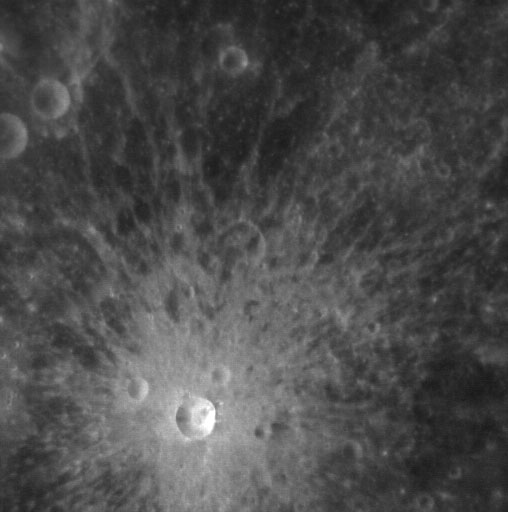
NASA's Messenger spacecraft spots an apparently fresh crater on Mercury during its early orbits on March 29, 2011. (Image credit: NASA/JHUAPL/CIW)
The team combined previous maps of Mercury's geology with new observations of the entire planet's surface roughness. They found the roughest terrain of Mercury featured the fewest wrinkles.
"It made us think that there's a process obscuring shortening structures," said Nishiyama, who thinks that impact debris in the roughest regions of Mercury is covering shrinking wrinkles.
The team then used the ridges and scarps in regions less affected by the dispersal of debris to estimate the amount of contraction. This indicated that missing features in rough areas could amount to 10% to 30% extra shrinkage over the 4.5 billion-year lifetime of Mercury. That amounts to a total change in diameter of up to 14.5 miles (23 kilometers) rather than the currently estimated 2.5 to 10 miles (4 to 16 kilometers).
"30% is a little bit surprising, but the corrected amount of contraction actually makes sense to me," Nishiyama said.
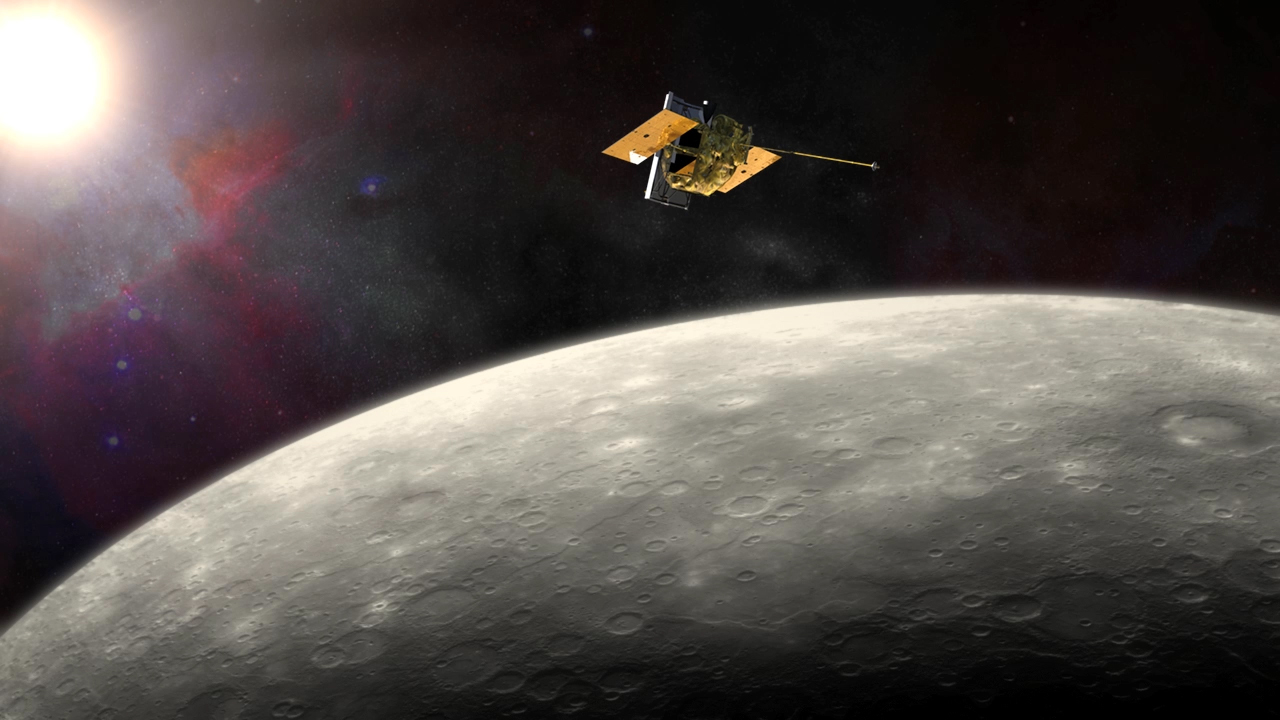
An illustration of NASA's MESSENGER probe over the surface of Mercury (Image credit: NASA/JHU-APL)
There may be more surprises in store. Nishiyama believes that the updated figures could still be an underestimate. This estimate is based on data collected by NASA's MESSENGER probe, which ended in 2015. MESSENGER could only distinguish features larger than around 3 miles (5 kilometers) across.
In November 2026, the BepiColombo mission will start conducting scans of Mercury's surface in much higher resolution than this, and that could reveal even more shrinkage features.
In order to survive, the first humans to reach Mars will immediately need a safe and reliable place to set up shop. But building on Earth’s neighbor is immensely more challenging than construction projects at home. The Martian surface is a practically airless vacuum, constantly bombarded with radiation, and regularly reaches temperatures as low as -81 degrees Fahrenheit.
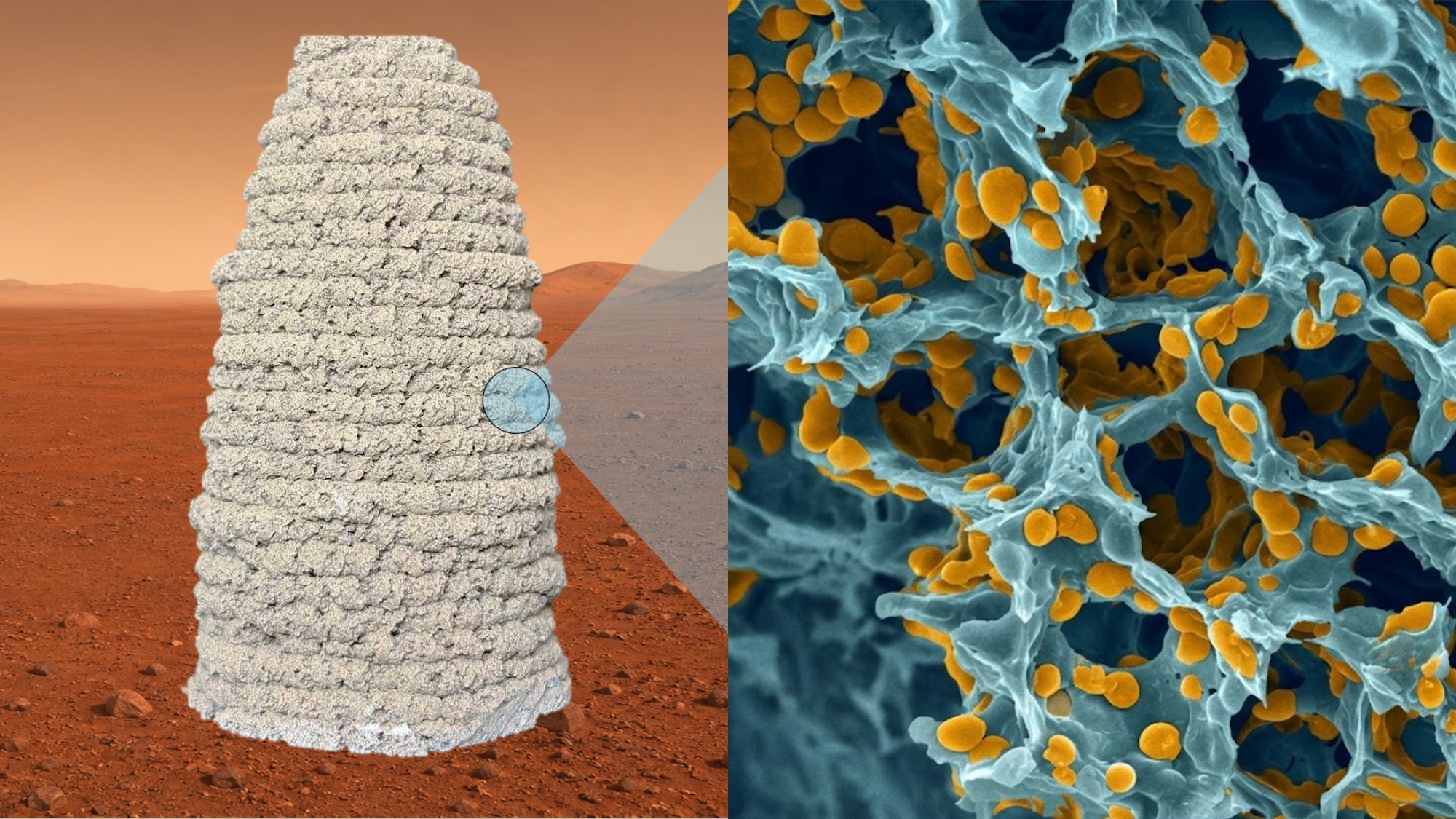
However, there is a very specific process on Earth that approximates similar conditions to the Red Planet: freeze-drying. According to researchers at The Hong Kong University of Science and Technology, the same method used to preserve perishable foods could also inspire sturdy and even recyclable 3D-printed houses on Mars. The secret ingredients? Everyday gelatin and yeast. The novel approach is detailed in a study published today in the journal Chem Circularity.
“My inspiration came from freeze-dried fruits that become harder. So I asked myself if we can take advantage of that and make some materials,” Jishen Qiu, a study co-author and civil engineer, said in a statement.
The combination of materials are simple: sand and an adhesive binder. Since gluing tiny rocks together requires specialized stickiness, Qiu’s team invented a new concoction from gelatin and lab engineered yeast. When mixed, the yeast microbes become coated with adhesive proteins similar to those used by mussels to anchor on stones underwater. The goop is then extruded through a 3D printer nozzle into an extremely cold, low-pressure environment, where it solidifies as the water instantly freezes and converts from ice to vapor. The final result is a light, porous, foam-like material that remains very resilient.
“This is actually strong enough to build a one- or two-story building on Earth—whose gravity is three times that of Mars,” explained Qiu. “So, you can probably easily build a multistory building on Mars with the material.”
Qiu and his collaborators know they must first start small before expanding to Martian neighborhoods. Their prototype domes are only about the size of a wine cork at this point, but their compressive strength is comparable to low-grade concrete.
Engineers have experimented with 3D-printed structures to use on the moon and Mars for years, but many of these still require steps like melting down rocks or lunar regolith. These methods usually require a lot of extra energy, which may limit their utility. Qiu’s technique requires comparatively little energy, although he admits it’s still unclear if yeasts can withstand life on Mars. That said, the team’s early results are a promising step towards simple, efficient, and sturdy buildings beyond Earth. If nothing else, yeast also lends itself to trial-and-error.
“As long as there’s one yeast that’s still alive, you can grow them again,” added Qiu.
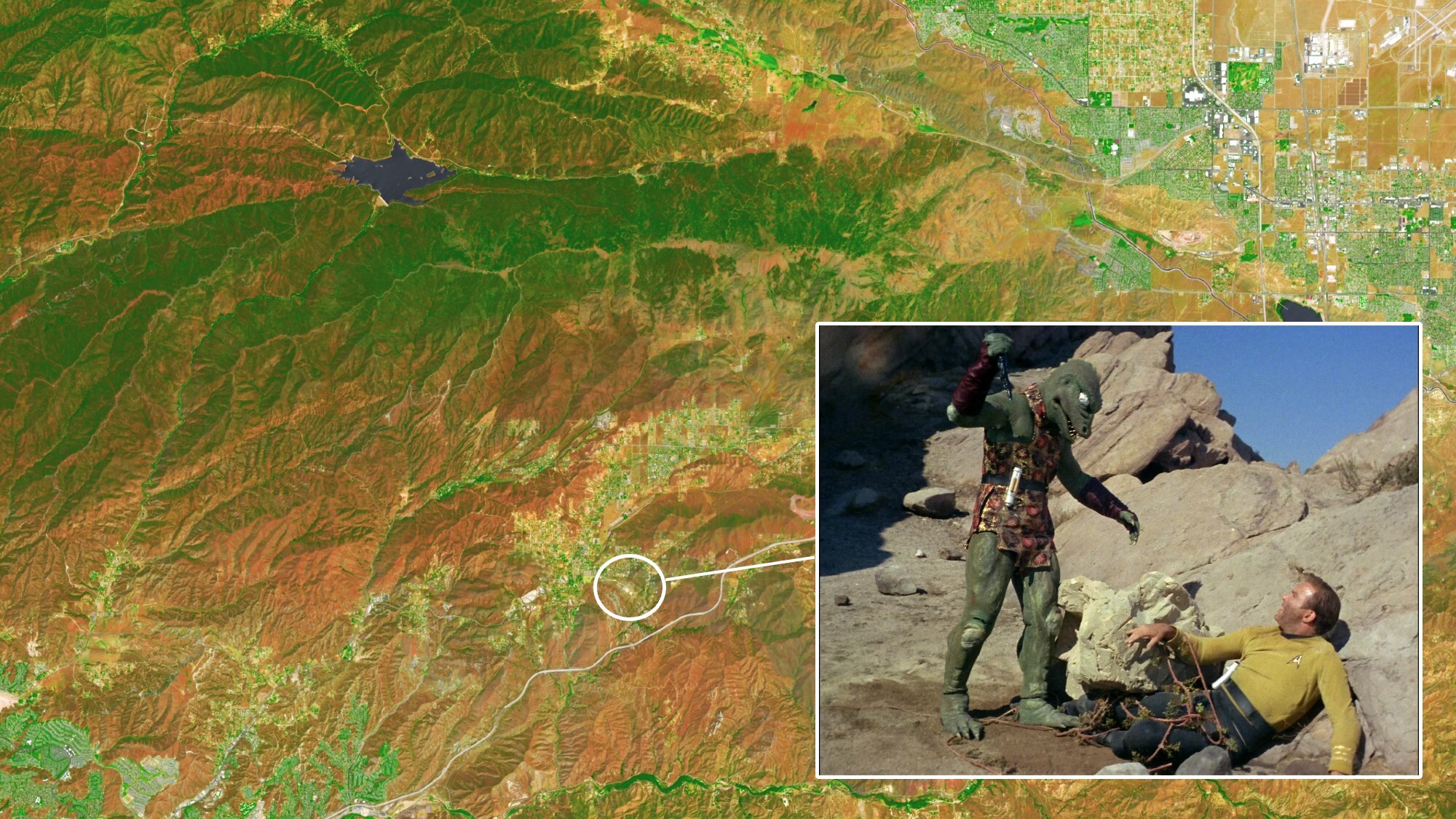
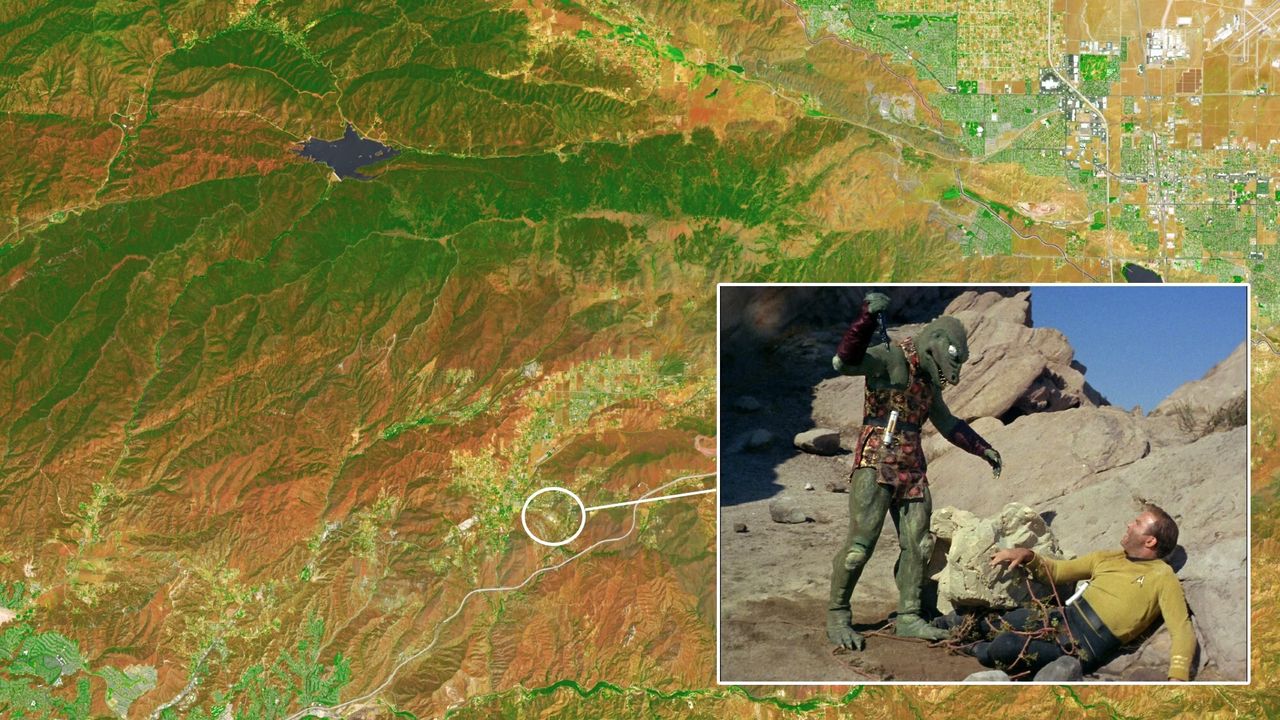
This new satellite image shows Vasquez Rocks in southern California, where Captain Kirk once faced off against the Gorn. (Image credit: NASA Earth Observatory/Michala Garrison/CBS via Getty Images)
Decades ago, Captain Kirk faced off against the Gorn on the uncharted desert planet Metron. But as we can see in new satellite imagery from NASA, that mysterious rocky world can actually be found right here on Earth in California.
What is it?
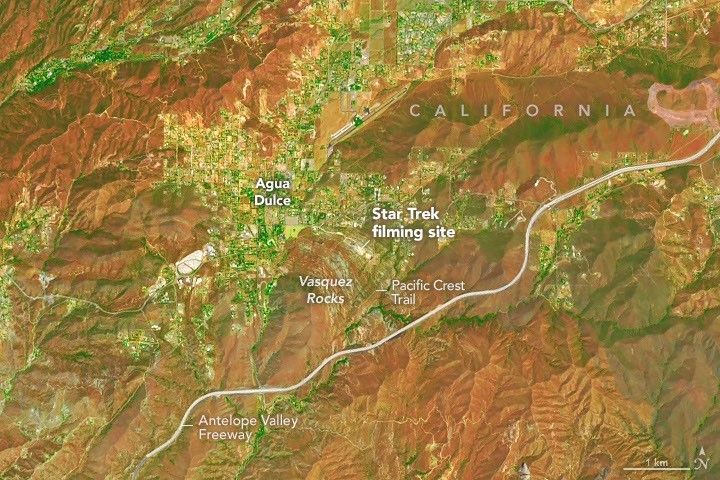
In this new image captured by the Operational Land Imager (OLI) on NASA's Landsat 9 satellite, you can see the wide variety of rock and vegetation in the area around Vasquez Rocks Natural Area County Park in southern California.
The 25-million-year-old Vasquez Rocks is a magnificent natural area with an incredible range of unique, large rocks jutting out of the ground. In this false-color image, you can see the area in shortwave-infrared and near-infrared wavelengths that show the differences in vegetation across the landscape.
And this location hides some amazing history. Not only is Vasquez Rocks home to incredible rock formations and desert vegetation, it is also where Captain Kirk fought the Gorn in Star Trek the Original Series. It's not a surprise the series chose this location for its infamous fight scene (among many other Trek scenes), as the massive, sun-bleached boulders pointing to the sky and barren landscape give it a distinctly alien feel.
A satellite view of the are around Vasquez Rocks. (Image credit: NASA Earth Observatory/Michala Garrison)
Why is it incredible?
While the rocky landscape of Vasquez Rocks is firmly fixed here on Earth, it has consistently made history as the backdrop to a whole host of iconic science fiction moments.
Indeed, Star Trek is one as Vasquez Rocks has been used for filming in a whole host of Trek episodes. It was even Spock's home world of Vulcan in the films Star Trek IV: The Voyage Home and Star Trek (2009).
But beyond Star Trek, the site has been used for filming sci-fi classics like Galaxy Quest, Battlestar Galactica and Planet of the Apes in addition to a whole host of cowboy movies and more.
It turns out that right here on Earth, we can find perfectly good alien worlds.
Look up at the night sky and it is easy to imagine a few bright worlds hanging in an empty blackness. But what are we really looking at when we say “the Solar System”? It is a family shaped by one star’s gravity, built from the same ancient disk of gas and dust, and still […]
For the first time, astronomers combined Hubble and Webb space telescopes to hunt down some of the smallest, faintest objects ever spotted in the outer Solar System.
Solar system simulations starting from varied initial conditions suggest that Earth-like planets can emerge naturally from planet formation. Computer simulations of planetary systems can now begin from thousands of different starting conditions, allowing researchers to explore how worlds might emerge without assuming the final outcome. Over the past three decades, these models have advanced from [...]
For the first time, astronomers have pointed NASA’s two flagship space telescopes at the same patch of sky beyond Neptune and let them work as a team. Hubble handled the visible light. Webb handled the infrared. Together, they picked out 27 previously unknown trans-Neptunian objects, or TNOs — small, icy bodies that drift in the […]
Dr. Delia Santiago-Materese wants things to get complex
From terrestrial animals to experiments in microgravity and Martian clouds, this NASA program scientist’s career path links diverse challenges. Today, she supports a mission to Saturn’s moon Titan, a world teeming with organic molecules that could hold valuable clues about the origin of life.
When novelty is your hobby, you already have a large part of the recipe for a career full of challenges. That is why Dr. Delia Santiago-Materese describes her path within NASA as “meandering.” Her diverse roles have taken her to low Earth orbit, to the clouds of Mars, and to the surroundings of Jupiter. Now, they are also bringing her closer to the surface of Titan, an intriguing moon of Saturn. Woven together by her exploring spirit and a perennial curiosity, all these experiences have one point in common: life.
Today, Santiago-Materese is part of the Planetary Science Division at NASA Headquarters in Washington. The main decoration in her office is a model of Jupiter, larger than a basketball, resting next to a scale model of the spacecraft exploring it, Juno. Small black and red pins with the inscription “Dragonfly” rest in the center of a round table. Several framed diplomas cover a wall. From here, Santiago-Materese does “a little bit of everything” on any given workday as a program scientist for the Juno and Dragonfly missions, and for the Discovery program, which features a portfolio of several missions in our cosmic neighborhood.
This medley of roles is no coincidence. Santiago-Materese describes herself as someone who does not pursue a single goal, but rather diverse interests that she discovers along the way. “I am always looking for something new to add to my experiences,” she says, “because I think I also get bored easily.”
Santiago-Materese holds her model of Jupiter, just outside her office. As a program scientist for Juno—a mission studying this planet—for Dragonfly, and for the Discovery program, she guides these projects by promoting leadership based on kindness and respect: “Every person brings something unique.”
NASA/Noelia González
The daughter of a military family, Santiago-Materese was born in Spain by coincidence. Her roots are actually on another continent: her mother is Mexican-American and her father is Puerto Rican. From her time in Spain, she only keeps some baby photos; she lived part of her life in Texas and then in California, which she considers her home—despite having spent her childhood summers in San Sebastián, Puerto Rico. It was in the Golden State where she first imagined herself as a veterinarian and decided to study Biological Sciences. And it was during her studies at Stanford University, “just around the corner” from NASA’s Ames Research Center in California’s Silicon Valley, that Santiago-Materese discovered astrobiology.
This elective course brought her closer to a discipline that, to some extent, was in its infancy. Today, NASA’s Astrobiology Program investigates life in the universe on many levels: how it began, how it evolved here on Earth, and where it might exist elsewhere. And that was how Santiago-Materese realized that biology and space were not two isolated things, she recounts.
Rodents, Insects, and Martian Clouds
After finishing her studies, Santiago-Materese completed a one-year internship at the San Francisco Zoo. But the unknown that astrobiology presents continued to intrigue her, so she went back to one of her professors to inquire more about it. She asked around and found someone at Lockheed Martin, a company that often contracts with NASA on space projects. They were looking for people for a new project studying the nutrition of the food bars for rodents traveling to space aboard the space shuttle.
Santiago-Materese has applied that formula ever since: identifying what truly interests her and finding the right person to ask questions. If people “don’t know what you’re interested in, they can’t help you,” she explains. After experience with the Space Shuttle Program, including managing databases for science payloads aboard the space shuttle, she went on to work with the International Space Station, which was then beginning its legacy of over 25 years in Earth orbit. She supported the development of biological experiments in microgravity, this time with fruit flies. But Santiago-Materese wanted to keep moving farther from Earth and investigate future space destinations.
This curiosity led her to the Martian sky. As part of her graduate studies at the University of California, Santa Cruz, Santiago-Materese investigated the Martian atmosphere, focusing on ice in the clouds and the development of climate models for the Red Planet. She earned her master’s degree and would later return to complete her doctorate under the NASA Pathways program, which is one of the agency’s primary early-career hiring pathways. She would defend her thesis six months after giving birth to her first daughter (one of the achievements she is most proud of, she says). That is why, although she loves the “weird” planets of the outer solar system, she is “more of a Mars person,” by training.
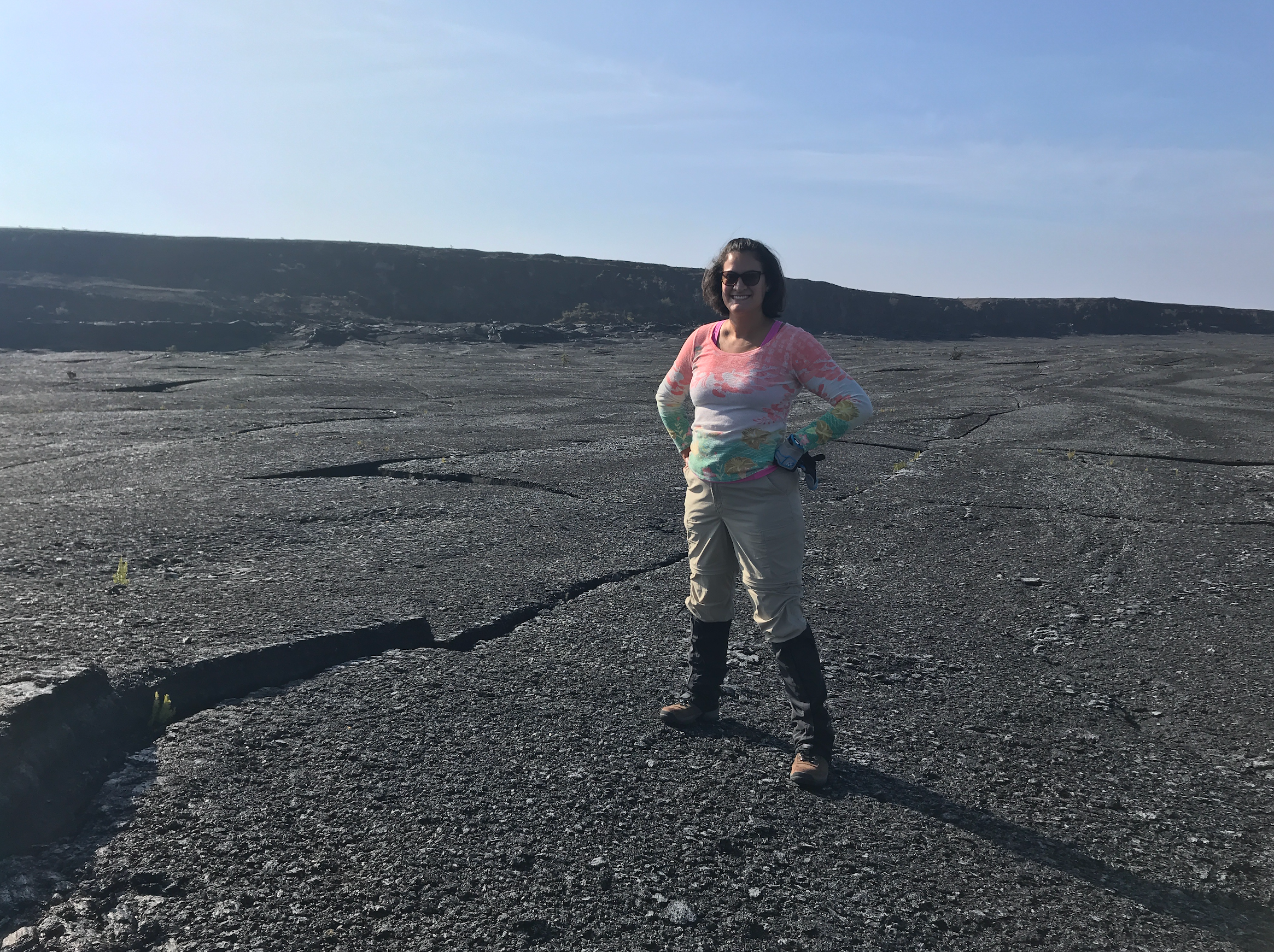
During her NASA career, Santiago-Materese traveled to Hawaii to investigate a planetary analog, a type of terrestrial environment that has very similar characteristics to those we might find on other worlds.
Image credit: Delia Santiago-Materese
At NASA Ames, Santiago-Materese held various roles, ranging from social media and open science to lunar sciences. She then became a program officer for the Solar System Workings program in the Planetary Science Division at NASA Headquarters as part of a detail, or temporary assignment. And then, she took off for Maryland along with her family.
Enabling Science
Santiago-Materese sums up her current role as a program scientist as the “science liaison” between NASA Headquarters and a mission. “When you do program scientist work, you might not be specialized or an expert in the exact science, but you need to be able to understand it and talk about it, to understand its importance,” she explains. “In general, we are supporting other people so they can do science.” In this endeavor, being someone who “gets more energy from working with people” is useful… and necessary: “You are having conversations all day long” with colleagues from different disciplines— from science and engineering to finance.
The Juno mission, in orbit around Jupiter since 2016, and Dragonfly, which is scheduled to launch no earlier than July 2028, are part of NASA’s New Frontiers program. Santiago-Materese also oversees the array of missions in the Discovery program, which includes ongoing science missions like Psyche and Lucy—heading to different asteroids—and future missions to Venus.
For Santiago-Materese, sharing her unconventional path can be valuable for students and youth in general, especially those who are unsure of what they want to do. “Your dream job,” she says, “you might not know it exists, or maybe it doesn’t exist today.” Beyond that, this zigzagging path has led her to accumulate experiences and relationships with different people, which she treasures even as she sets off for her next destination.
An Alien World
About two years out from Dragonfly’s launch, it is no surprise that this robotic mission takes up much of Santiago-Materese’s time. “Dragonfly feels like a combination of all my different experiences over time,” she reflects. And it signifies, to some extent, a return to her roots: it is an astrobiology mission. Although not designed to detect life, Dragonfly will investigate prebiotic chemistry: the chemical processes that could have led to the emergence of life on Earth.
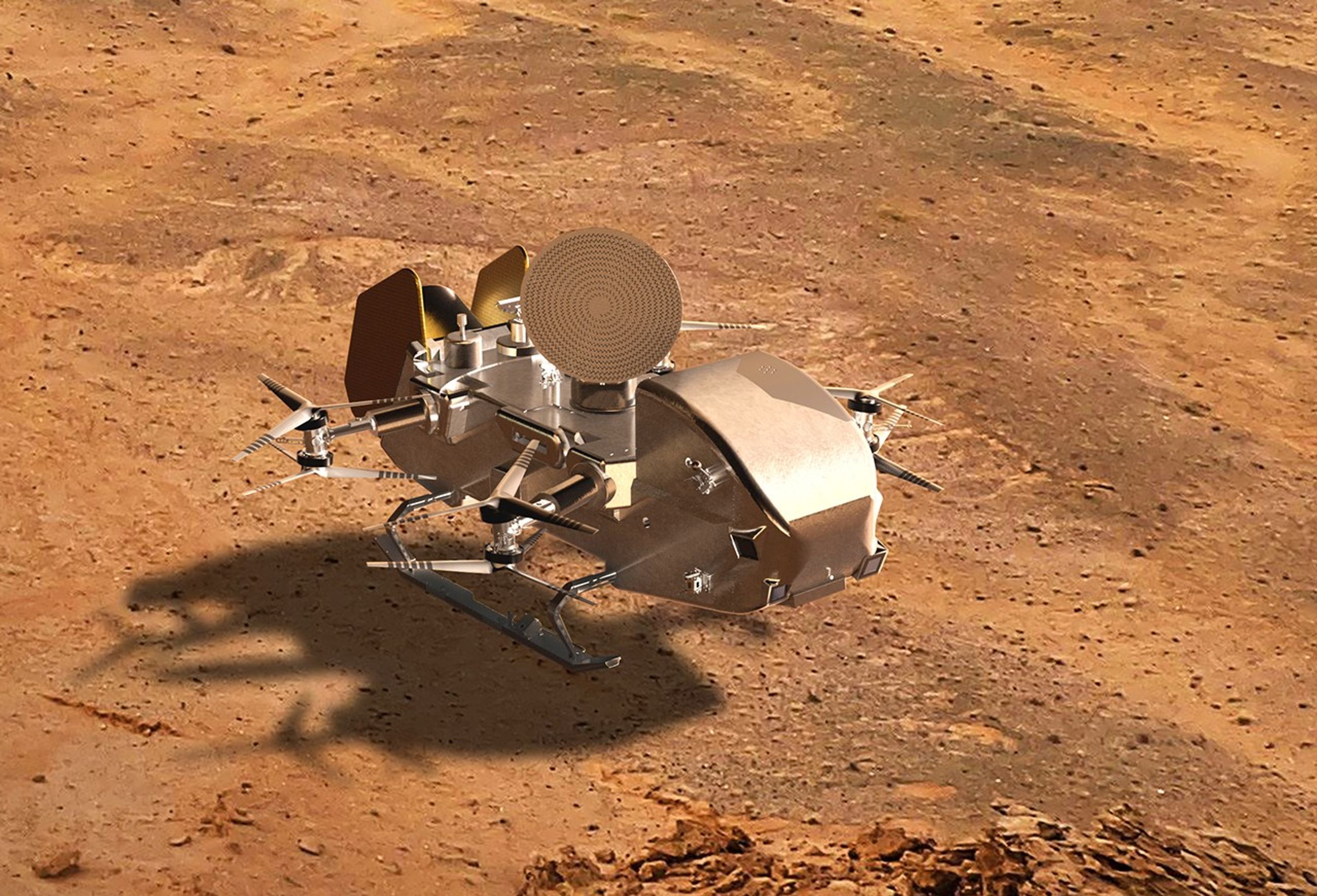
Digital concept of NASA’s Dragonfly lander on the surface of Saturn’s moon Titan.
NASA/Johns Hopkins APL/Steve Gribben
Dragonfly will embark on a journey of about six years to the surface of Titan. The spacecraft will carry an array of science instruments and will be the first NASA science mission to explore another world by flying from location to location. This car-sized rotorcraft will touch down at various geological sites of interest to analyze the moon’s composition and its habitability potential.
When it arrives at Titan, it will encounter a landscape that is strange and familiar at the same time: it could be a window into Earth’s remote past. This frozen world has a thick atmosphere and clouds drifting across the sky; dunes, lakes, rivers, canyons and mountains. Titan even has a process equivalent to our water cycle. However, on Titan, it is not water that flows but hydrocarbons, primarily methane and ethane. “It’s a more methane-based chemistry, so it is very alien, and that is what I really love about Titan,” says Santiago-Materese. And on this moon, organic molecules abound.
These molecules contain carbon and are used by all known forms of life. They are fundamental to understanding the origin of life, as they can be produced by both biological and non-biological processes. On Titan, these organic molecules fall to the surface and form dense deposits over its bedrock of water ice. Scientists believe that the complex chemistry precursor to life could be triggered there if provided with a little liquid water, such as that generated by an asteroid impact.
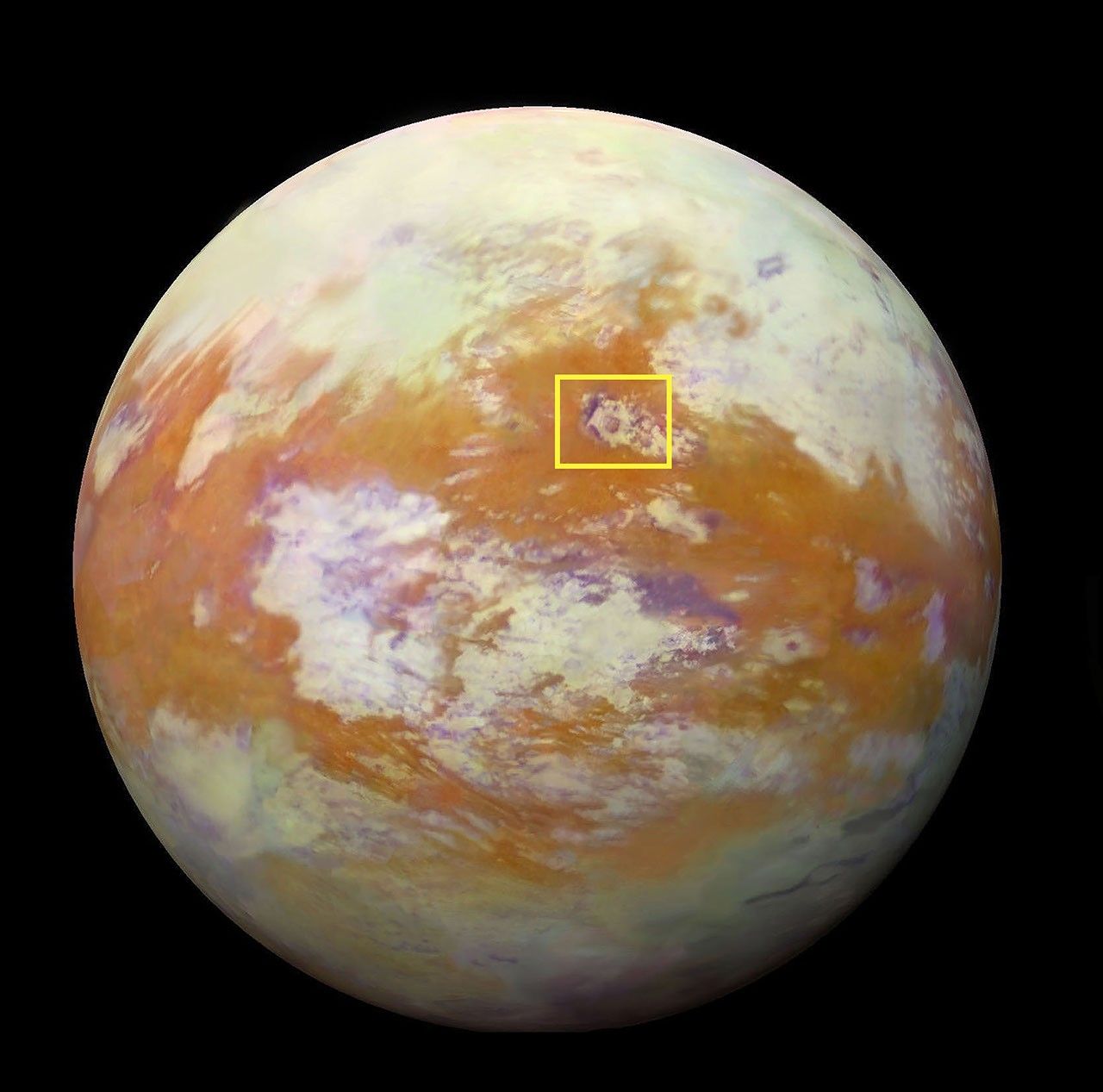
Selk Crater, an 80-kilometer (50-mile) diameter impact site highlighted in this infrared image of Titan, is a key destination for Dragonfly. The rotorcraft will touch down near Selk and explore various sites, analyzing the surface chemistry to investigate the frozen remains of what could have been prebiotic chemistry in development.
NASA/JPL-Caltech/University of Nantes/University of Arizona
Santiago-Materese is especially excited about what the Dragonfly Mass Spectrometer (DraMS) instrument will help discover. DraMS, designed and built at NASA’s Goddard Space Flight Center in Greenbelt, Maryland, will analyze samples from Titan’s surface. “The more complex things get, the more interesting things happen,” she says. “So I’m curious: just how complex do the molecules get? Will we find any interesting patterns?”
But in science, every time you ask a question, a new one arises. Dragonfly will try to answer several of them. “When you have a planet with complex chemistry but not life, what happens? What is there before life?” the program scientist wonders.
Titan, a valuable natural laboratory, “is going to completely change our understanding of what another world can be like,” she anticipates. In addition to what the scientific community expects to discover thanks to Dragonfly, Santiago-Materese is interested in the potential unexpected findings. “There are very defined science goals, but a lot of it is exploratory work,” she explains. “It is kind of nice to know that there is a big range [of possibilities], that we could be very surprised.”
By Noelia González, NASA’s Goddard Space Flight Center, Greenbelt, Maryland
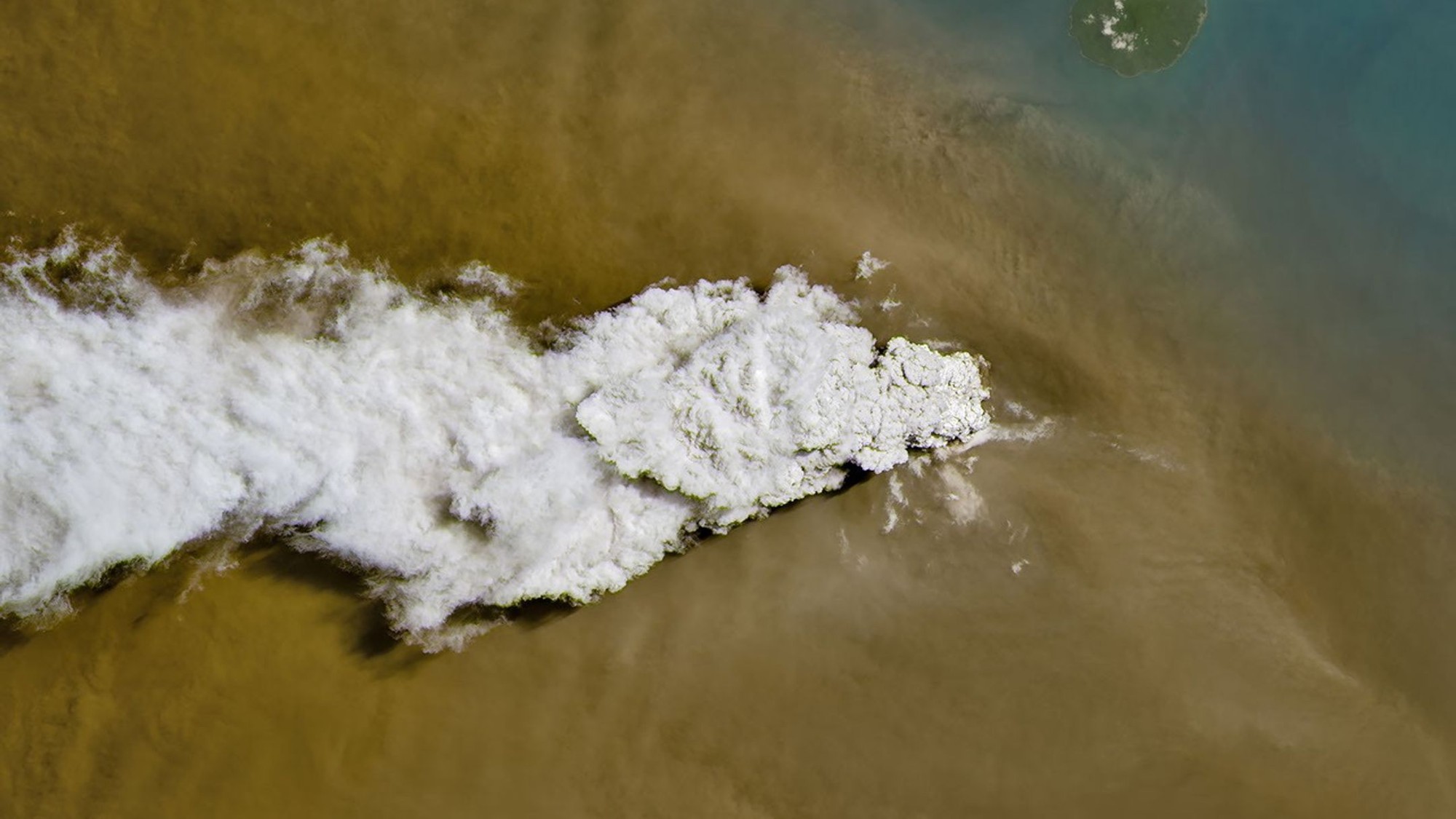
The Anak Krakatau volcano began erupting on Sept. 4, 2026, as seen here on Sept. 5 by the Landsat 8 satellite jointly operated between NASA and the U.S. Geological Survey (USGS) (Image credit: NASA Earth Observatory/Michala Garrison)
A volcano on an Indonesian archipelago began erupting on Sept. 4, and satellites in orbit have been watching closely.
What is it?
The volcano Anak Krakatau started spitting out ash and lava on Sept. 4. On an archipelago between Sumatra and Java, the island volcano's sudden eruption grounded flights, closed schools and even stopped fishing in the area.
The volcano launched ash into the air and into the city of Jakarta and the Lampung province during a 25-hour-long eruption. But even following this eruption, Anak Krakatau remained active throughout the weekend. In fact, the volcano is still so active that it could erupt again soon.
But it wasn't just people on Earth watching the volcano erupt this past weekend. The Landsat 8 satellite, operated by NASA and the U.S. Geological Survey (USGS), spotted a white plume of volcanic gas billowing into the atmosphere all the way from space. The white plumes of gas are thought to mainly contain water vapor, carbon dioxide and sulfur dioxide, while ash and debris make up the brown clouds surrounding the plumes.
Why is it incredible?
While Anak Krakatau simmers after this most recent eruption, this event isn't a major shock, as the volcano sits in what is known as the "Ring of Fire." This "ring" (a loose term, as it's not exactly a ring) snakes about 25,000 miles (40,000 kilometers) around the Pacific Ocean and includes over 750 volcanoes, some dormant and some active.
In fact, in Indonesia alone there are 500 volcanoes, and 127 of them are active, including Anak Krakatau. And this volcano has a particularly interesting story: It emerged from the sea in 1927, rising from the caldera formed by the 1883 eruption of Krakatau (also known as Krakotoa), which was one of the most famous and destructive volcanic events in history. (Anak Krakatau means "child of Krakatau" in the Indonesian language.)
While not all geologists agree on the exact margins of the Ring of Fire, it rests on a string of tectonic plates and has existed for over 35 million years. And not only is this ring home to hundreds of volcanoes, it's also a hot spot for earthquakes.
China is making progress on its Tianwen 3 Mars sample return mission, which aims to bring back to Earth roughly 500 grams (17.6 ounces) of Red Planet collectibles in 2031.
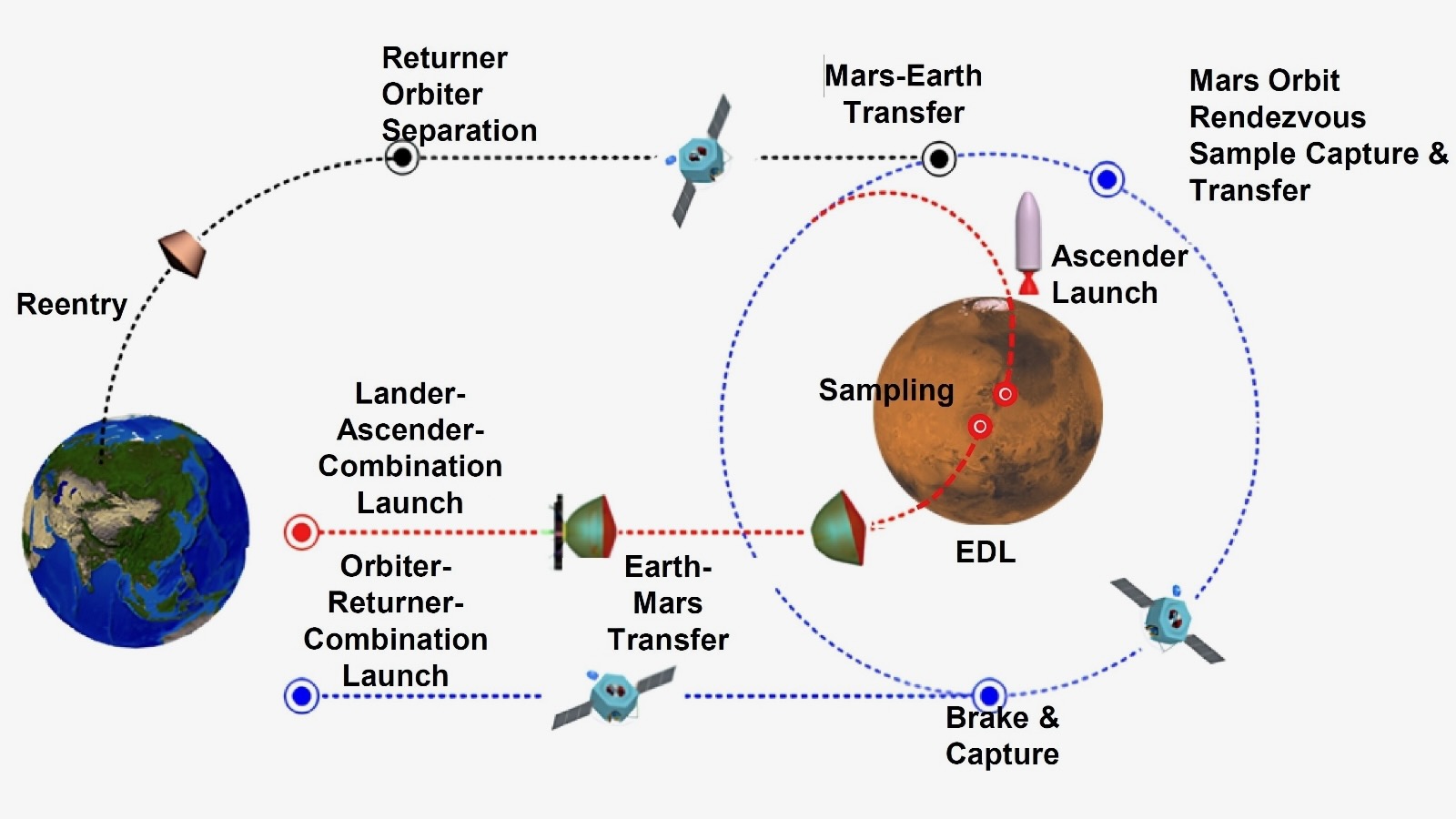
According to the China National Space Administration, the Tianwen 3 mission will have a lander, an ascender, a service capsule, an orbiter and an Earth reentry module.
If all goes to plan, Tianwen 3 will launch in 2028 on two Long March 5 heavy-lift rockets from the Wenchang Space Launch Site on the island of Hainan, China's southernmost province.
Sputnik moment
"The Tianwen 3 mission is progressing smoothly, with intensified efforts being made to overcome technical challenges," Hou Zengqian, the mission's chief scientist, recently told CCTV, a state-run Chinese broadcaster.
"The probe equipment has entered the prototype development phase, and scientifically, many scientist teams from across the country are working together to tackle the challenges in accordance with the mission's scientific objectives," Hou added.
Meanwhile, NASA's plans for hauling Mars samples to Earth are murky at the moment. So China appears to be in the lead to notch a major space milestone.
"If accurate, this represents a Sputnik moment," said former NASA "Mars Czar" Scott Hubbard, referring to the reported Tianwen 3 progress.
"China will not only grab the headlines but may be the first to find evidence of life on another planet," Hubbard, who also previously directed NASA's Ames Research Center in Silicon Valley, told Space.com.
Diagram of China's Tianwen 3 Mars sample return mission. (Image credit: The University of Hong Kong/Zengqian Hou, et al.)
Top scientific priority
"The Tianwen 3 mission will look for microbial traces potentially similar to early forms of life on Earth, while also taking into consideration the possibility of unknown forms of life that may have emerged through Mars' unique evolutionary history, providing crucial evidence to answer this major scientific question," Hou told the state-run Xinhua news agency in a recent interview.
Searching for potential signs of life on Mars is the top scientific goal of the Tianwen 3 mission, Hou said on Sept. 3 during the 2026 International Deep Space Exploration Conference on, which was held in Hefei, the capital of eastern China's Anhui Province.
Landing site
China's Mars sample-return trek will be launched "around 2028" on two Long March 5 rockets departing from the Wenchang Space Launch Site in China's southernmost island province of Hainan. (Launch windows for Mars missions come around just once every 26 months. The next one opens in November-December of this year, and the one after that, which Tianwen 3 apparently is targeting, runs from December 2028 to January 2029.)
Hou also said China expects to finalize the landing site for the mission by the end of 2026, with Chinese specialists advancing work on a next-generation geological map of Mars in its entirety.
If everything goes according to plan, the mission will collect samples from the Martian surface and then send them back to Earth around 2031.
"Regardless of whether signs of life are found, the returned Martian samples will have irreplaceable scientific value," Hou said.
Tackle the challenges
Hou added that analyses of the returned samples at microscopic, molecular and isotopic scales could deepen our understanding of Mars' geology and environment, as well as the evolution of habitability and the conditions under which life may originate.
According to Hou, Mars sample return is an extremely complex project, with landing-site selection, planetary protection and contamination control, and the identification of potential signs of life among its key challenges.
Chinese Mars researchers are selecting candidate landing sites for the mission based on factors that include geological age, history of water activity, habitability and the potential for preserving biosignatures.
Planetary protection lab
Xinhuareported last month that a "planetary protection laboratory" is to be built in the first phase of Hefei's Deep-Space Science City in east China's Anhui Province, citing the Deep Space Exploration Laboratory (DSEL).
"The planetary protection laboratory will implement a two-way protection system that guards both the returning Martian samples and Earth's biosphere," Xinhua reports.
The lab's tasks encompass sample sterilization, unsealing, processing and biological risk assessment. "The facility is designed to support the implementation of major deep-space missions and to enable scientific research on Martian samples," added Xinhua.
China "will follow the planetary protection policies of the Committee on Space Research, to prevent biological contamination of Mars by terrestrial organisms and to protect Earth from any potential extraterrestrial life forms that may be carried back in the samples," said Li Hang, director of the development planning department at DSEL, according to Xinhua.
You can view a video about China's Mars sample return plans here.
Picture a moonless night, far from any city. Look straight at the point in the sky opposite the Sun — the antisolar point, where the Sun would appear if you could see it through the Earth. There, faintly, you might make out an oval-shaped glow, 8 to 10 degrees across. For scale, that’s roughly the […]
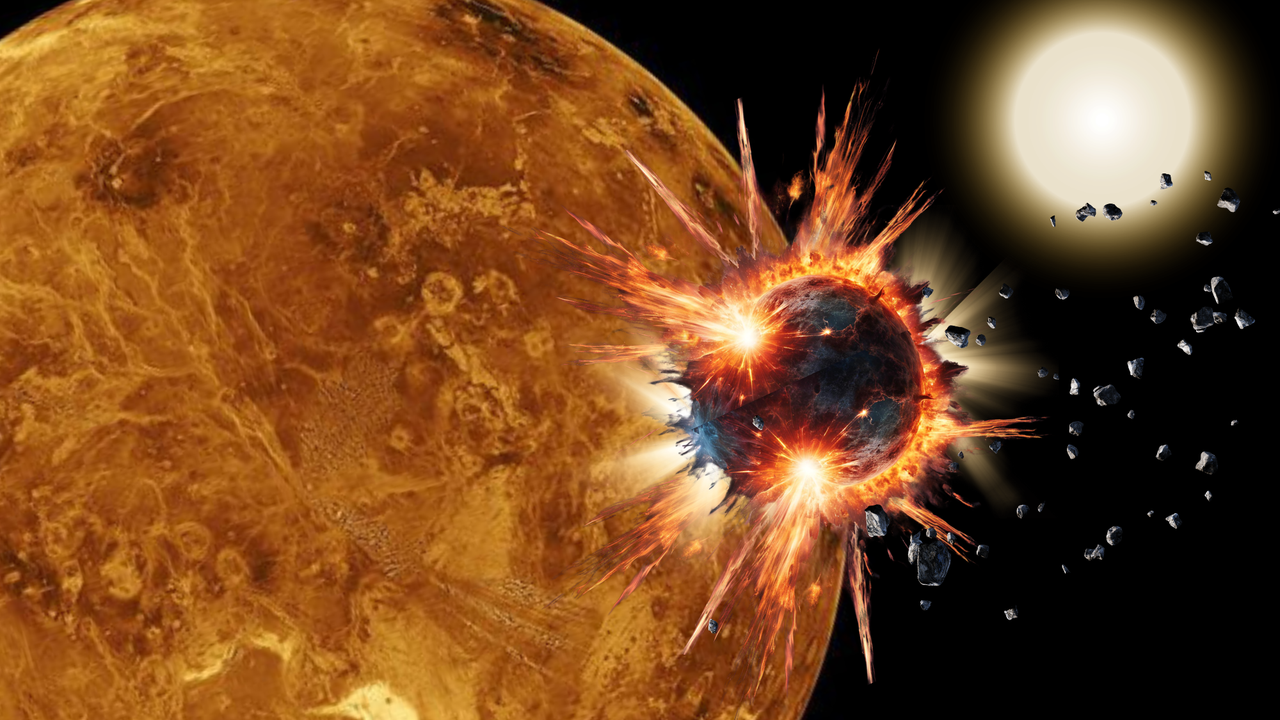
Scientists may finally know why Venus, Earth's twin, lacks a moon, finding that the hottest planet in the solar system may have consumed its own natural satellite.
Venus is often referred to as Earth's twin due to its size, mass, rocky composition, and distance from the sun, but there are some glaring differences between the two planets. Aside from Venus' blisteringly hot temperature, which could melt lead, incredible surface pressure, violent high-speed winds, and clouds of sulfuric acid, one of the key differences between Earth and Venus can be seen from afar. While our planet has a constant companion in the form of the moon, Venus lacks a moon of its own. In fact, the only solar system planets lacking moons are Venus, the second planet from the sun, and Mercury, the closest planet to the sun.
One question that scientists have puzzled over for years is whether Venus always lacked a moon, or if the hottest planet in the solar system once had a natural satellite and somehow lost it. Now, a team of researchers may have arrived at an answer, determining the fate that would have befallen a hypothetical moon orbiting Venus.
"I have always had a fascination with moon formation and evolution in the solar system, and particularly with Venus since my research is centered around its evolution and potential for past habitability," team leader Stephen R. Kane of the University of California, Riverside told Space.com. "Venus is Earth's twin, and both are nearly identical in size, mass, and composition. However, Earth has a large moon, and Venus has no moon at all, not even a small captured satellite.
"Venus undoubtedly experienced large impacts, just as Earth has, and so has had as much, if not more, opportunity to form a moon similar to what we see in our own skies."
Kane and colleagues constructed a simulation to test their ideas of what could have become of the Venusian moon.
"The work involved going back to fundamental physics and creating the simulation from the ground up, which I validated by ensuring I could reproduce the evolution of the Earth-moon system," Kane said. "The moment I realized that our model provided a complete explanation for Venus not having a moon was an exciting one!"
Did Venus consume its own moon?
The team modelled a gravitational tug-of-war between Venus, a hypothetical moon, and the sun, following this forward over billions of years.
"This is the same physics that governs our own moon, which is slowly drifting away from Earth. We ran the calculations across a wide range of possibilities for how fast Venus was spinning and how massive its moon might have been, using two independent mathematical descriptions of how tides work," Kane explained.
The researcher said that this was done so the conclusions reached wouldn't hinge on one set of assumptions. They found in most cases a Venusian moon would not drift safely outward the way ours does. Instead, the modelling showed that a moon orbiting Venus would eventually reverse its course and spiral inward, causing it to be torn apart by the planet's gravity.
Kane and colleagues found that possessing an intimidating size wouldn't guarantee a Venusian moon's survival, either.
"An interesting aspect is that a heavier moon is destroyed faster, since a massive moon would drain Venus's spin so efficiently that it hastens its destruction," Kane added.
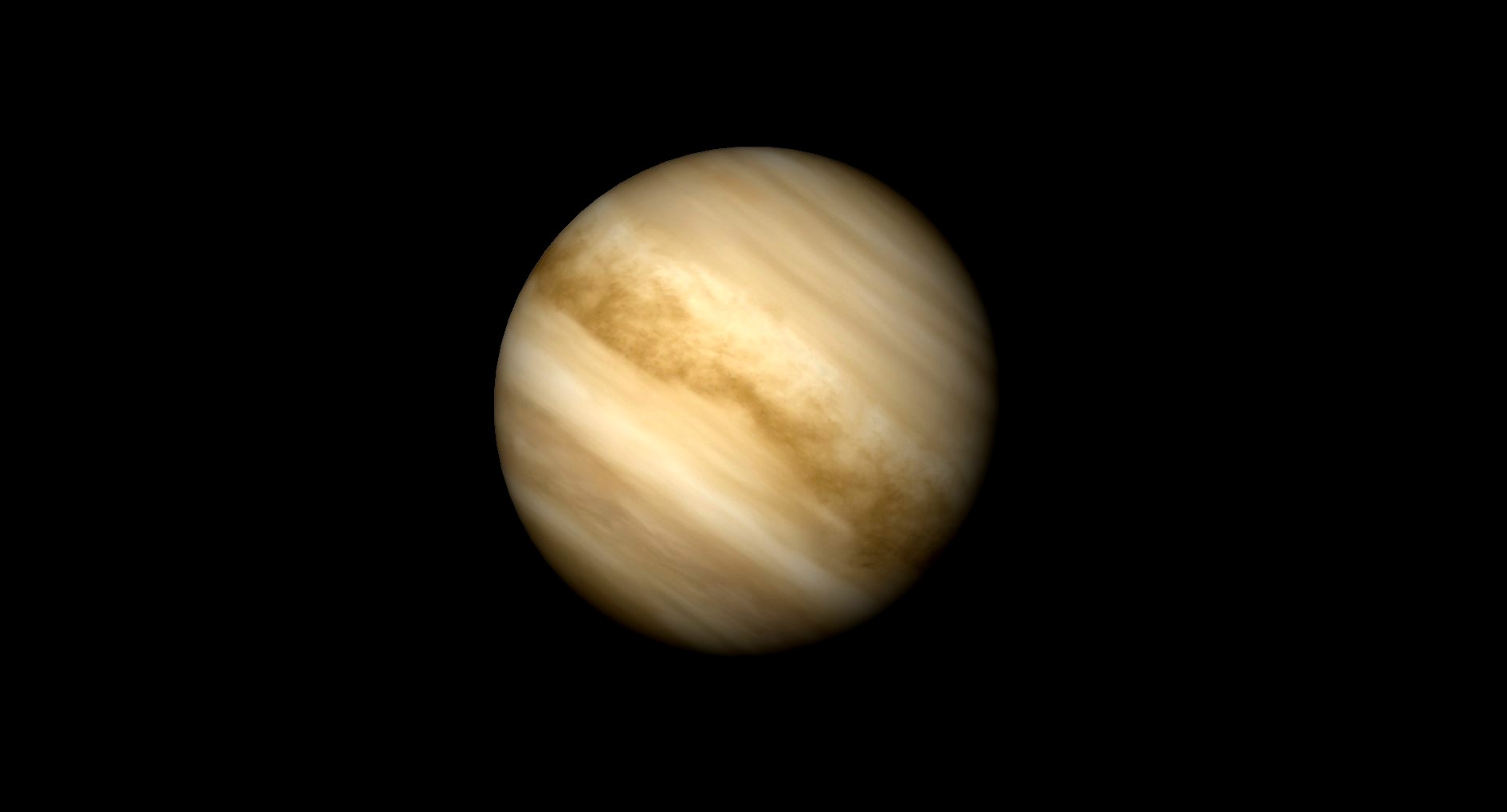
Venus as seen from Earth may look peaceful, but up close, it is a hellish world that may have destroyed its own moon. (Image credit: Starry Night)
But are there any circumstances under which a Venusian moon could have survived?
"Survival came down to two main things: Venus had to be spinning fast when the moon formed, with a day shorter than about 12 hours, and the moon couldn't be too massive, up to roughly the mass of our own moon," team leader Stephen R. Kane of the University of California, Riverside told Space.com. "In that narrow window, the moon migrates outward and stabilizes, much as Earth's did. Outside that range, the moon is unfortunately doomed to be consumed by Venus.
"So a surviving moon would have had to be modest in size, orbiting a rapidly spinning early Venus, which are conditions that don't match what we think early Venus was actually like."
We may never conclusively know if Venus has indeed destroyed its own moon, as Kane thinks that collecting direct evidence from astronomical observations will be very difficult.
"Finding direct observational evidence is pretty tough. A moon lost billions of years ago would leave little to no direct trace we can point a telescope at today, so we can't observe the event itself," Kane said. "However, there are indirect avenues. For example, if a moon was destroyed and its debris rained down on Venus, it could have left a chemical fingerprint in the planet's surface or atmosphere, and upcoming missions to Venus, including NASA's DAVINCI (Deep Atmosphere Venus Investigation of Noble gases, Chemistry, and Imaging) probe, will measure atmospheric composition in detail."
If missions such as DAVINCI could help us develop a better understanding of the Venusian interior, then this would also improve the models such as the one used in this research. That is because the outcomes of such models depend on properties of Venus's interior, which aren't currently well understood.
"There's a broader test beyond our solar system because our results predict that slowly rotating, Venus-like planets around other stars should generically lack large moons, so as astronomers begin searching for moons around exoplanets, that's a prediction that can eventually be checked against real data," Kane said.
An artist's depiction of the DAVINCI probe nearing the surface of Venus. (Image credit: NASA's Goddard Space Flight Center)
Kane and colleagues don't intend to rest on their laurels while further data from Venus or even Venus-like exoplanets are delivered. They have plenty to work on in the meantime.
"There are numerous implications of our work that I would like to explore further. These include the compositional and atmospheric effects of a Venusian moon consumption event that may be testable now," Kane concluded. I would also like to explore similar effects for Mercury and Mars, and conduct further studies on exoplanet cases where such moon collision scenarios may have occurred."
The team's research is available as a pre-peer-reviewed paper on the repository site arXiv.
A cubic meter of lunar soil might be one of our best bets for finding physical proof that another advanced civilization once existed somewhere in the Milky Way, according to a new paper to be published in the International Journal of Astrobiology.
The moon could have formed in a matter of hours following the giant impact between Earth and a Mars-size protoplanet early in the history of the solar system. The theory comes from new simulations that take into account how the internal temperature of young protoplanets affected their geologic properties and therefore the collisions they experienced.
This giant impact scenario has become the leading theory of how the moon formed, thanks in particular to work done by planetary scientist Robin Canup. Since 2001, she has conducted and refined numerous computer simulations that describe how a Mars-size body called Theia collided at an angle just right to throw debris into orbit around the proto-Earth.
Now other researchers are getting in on the act. Adeene Denton of the South-west Research Institute led a team who performed some of the most detailed simulations of the collision yet, taking into account more of the geologic properties of the colliding worlds.
"Models have evolved to include material strength, something that's really important when you're studying collisions between smaller bodies like asteroids or for my previous paper about the formation of the Pluto–Charon system," said Denton in a statement. "We weren't sure it would matter for the moon or not. When we did the simulations, we found it actually matters quite a bit."
It turns out that warmer bodies are weaker than colder ones. After the planets formed, they were still hot inside from their formation, which would have affected their material strength. Given that the moon-forming impact occurred not long after the solar system's formation, this would have affected the collision with Theia — but to what degree depends on exactly when the collision occurred and how much Theia had cooled.
As Theia smashed into Earth, it was utterly destroyed. While much of what was left of Theia's shattered iron core sank into the Earth, a large ring of debris wrapped around Earth to form the moon.
The main effect of the temperature being warmer in the outer few hundred miles of Theia was that it would have affected its ability to deform upon impact and absorb the momentum of the collision. This, in turn, would have affected how debris was strewn around Earth to form the moon. Therefore, by including varying temperatures and material strengths in the simulations, Denton's team was able to get a better look at how the collision and the resulting formation of our moon played out.
Previous simulations have shown two possible scenarios. One is that the ring of debris hung around for a substantial amount of time, allowing the moon to accrete from it gradually. The other scenario, first depicted in NASA-led simulations in 2022, implies that the moon came together from this debris in a matter of hours.
Now, Denton's models potentially bolster this startling possibility.
If Theia was colder, meaning that the impact occurred a little later in the history of the solar system, perhaps 100 to 150 million years after the birth of the planets, then the ring of debris would have formed in such a way as to allow the moon to accrete gradually. And because it was stronger, more of Theia would have survived intact to merge with Earth.
On the other hand, a warmer Theia that impacted Earth less than 60 million years after the planets' formation, would create a scenario where the moon could form very quickly while Theia itself would be obliterated.
"Depending on how hot the Earth and Theia are prior to the collision, the impact can destroy Theia and produce this massive disk of debris that eventually forms the moon," said Denton. "But when I used the same parameters as original impact modeling – down to the equal temperature structures inside both bodies — within around five hours, an intact moon emerged."
That would have been quite a day in the history of our planet, acquiring a new moon and an almighty headache all at once.
"These surprising and exciting new results imply a potential connection between the physical properties of the moon today, including perhaps its volatile content, and the thermal state of the Earth and Theia at the time of the giant impact," said the Southwest Research Institute's Robin Canup, who was not involved in this study. "This in turn might help scientists better constrain when the moon-forming event occurred."
In both scenarios, the moon appears to be made mostly from Theia's mantle material, with just a little bit of Earth's mantle mixed in. This latter finding is surprising, given the similarities between the moon's composition and Earth's mantle. However, research has shown that there's clearly more to the story because despite the similarities there are also some puzzling differences in the levels of isotopes that cannot be easily explained by current simulations, including Denton's.
The simulations could have repercussions in the search for exomoons. If the moon did form in a matter of hours, then searching for exomoon-forming disks around terrestrial exoplanets might be a fruitless endeavor because such disks would be so short-lived. Moon-forming disks around gas giant exoplanets would be a different matter, however, because those disks do not form from impacts, but rather from material leftover from assembling those planets.
We are a planet-based species: With a few notable (astronaut) exceptions, everyone who has ever lived remained glued to our spinning Earth, which now houses 8.3 billion people.
That's the gravity of the situation. But we're also a world of floods, typhoons, earthquakes, heat and cold calamities, volcanic eruptions and even encounters with sun-caused auroras and bruises from incoming asteroids.
It's quite a world worth watching — and for decades that's what spacecraft have been doing. But what do they view and who's on the other end of the space-based telescopes capturing our daily doings, faults and all, down here on terra firma?
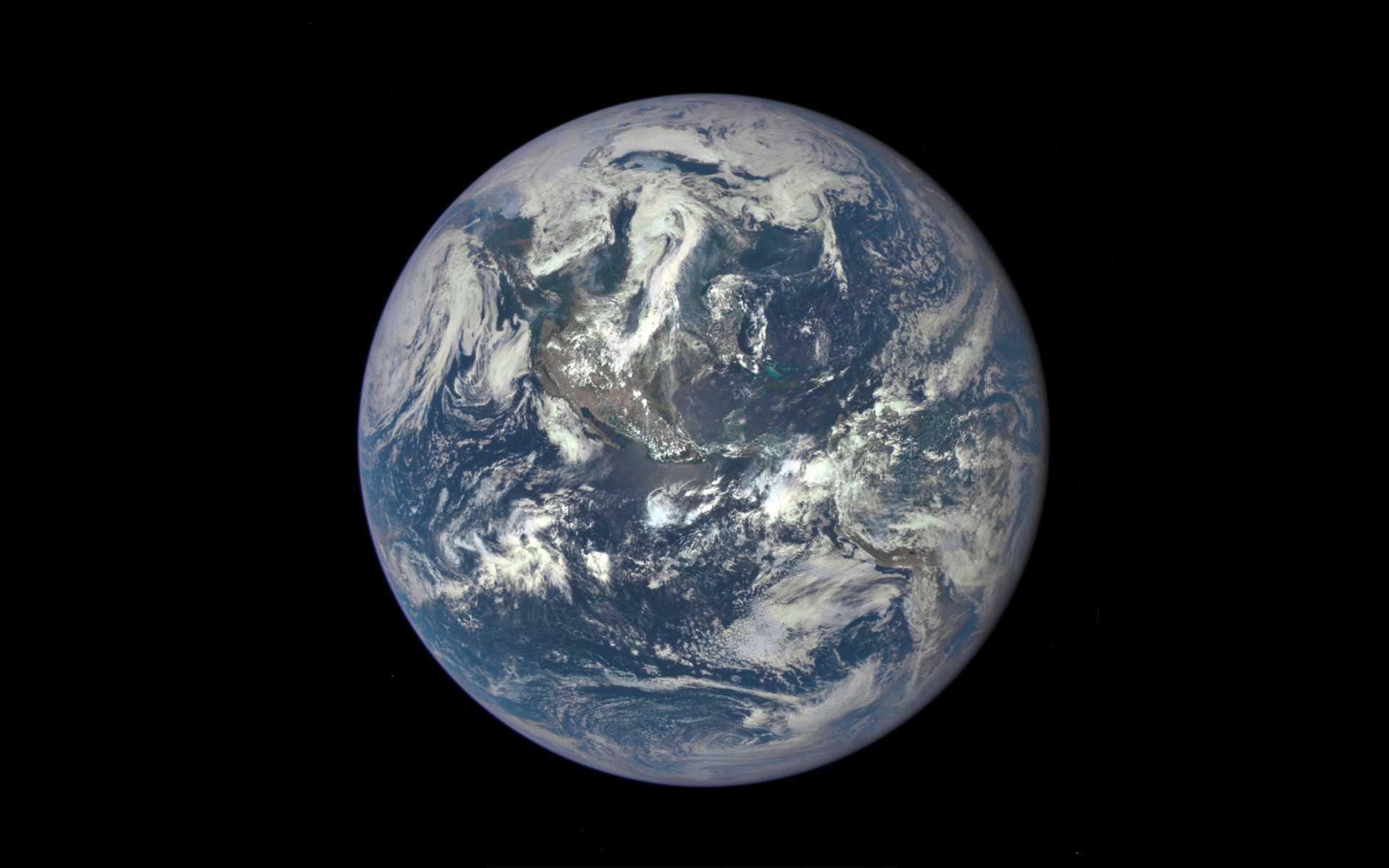
The U.S. government's Deep Space Climate Observatory (DSCOVR) satellite captured its first view of the entire sunlit side of Earth from one million miles away on July 6, 2015. (Image credit: NASA)
Privacy, security and trust
Recently, the Organization for Economic Co-operation and Development (OECD), a group based in Paris, published a report on the expanding access to satellite Earth-observation data, spotlighting what it means for privacy, security and trust.
"Advances in optical systems, photonics, cloud computing and artificial intelligence [AI] have democratized both the quality and accessibility of satellite data. However, this convergence of technologies also carries risks, including for national security and privacy," states the report, which was authored by the OECD's Marit Undseth and Claire Jolly.
Broadening access to advanced satellite data also creates new challenges, states the report, such as one of the key characteristics of Earth observation — its dual-use nature. "The same satellites used to track illegal fishing can often also detect military troop movements," the authors write.
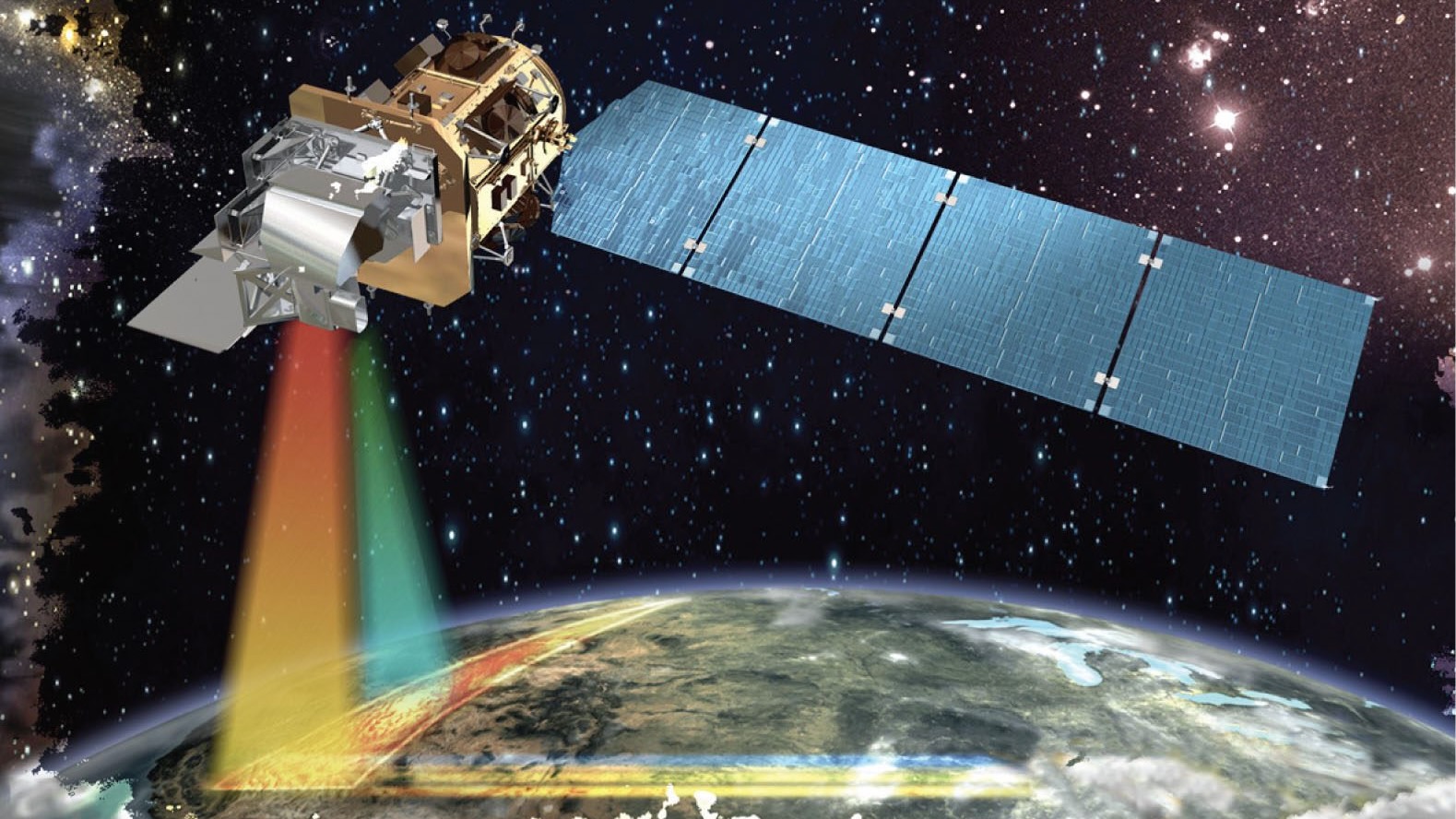
Illustration of a USGS-NASA Landsat remote-sensing satellite studying Earth. Government satellites the Landsat line were once the only craft doing such work. (Image credit: NASA)
New concerns
The OCED report notes that Earth-observation data and the technological convergence with artificial intelligence raise new concerns about national security, privacy and the ethical use of these data.
In fact, the report points to the growing hazard of fake or incorrectly used satellite imagery. "As part of the growing trend of digital disinformation, the trust in satellite data can be eroded by fake, misinterpreted or intentionally misrepresented imagery," it states.
Space.com asked leading remote-sensing specialists what's being done, what's being learned and what we should worry about.
Sovereignty and cost efficiency
Viktor Stoyanov is the chief operating officer of Smart Solutions at Space42, where he oversees the business unit's operational and financial performance.
Space42 is a United Arab Emirates-based space technology company that integrates satellite communications, geospatial analytics and AI capabilities. The group runs the Foresight Earth Observation constellation of synthetic aperture radar (SAR) satellites.
Space.com asked Stoyanov about the growing international use of remote-sensing data.
"Governments increasingly expect Earth-observation systems to deliver both sovereignty and cost efficiency, two goals that were long seen as mutually exclusive, as sovereignty typically meant heavy in-country investment in duplicative research and development and capital infrastructure," he responded.
Dual use
Stoyanov said Space42's focus is to combine those two outcomes.
"We believe that can only be achieved through international cooperation. Our Foresight constellation reflects this model, as the first sovereign dual-use synthetic aperture radar constellation in the region," Stoyanov said.
The satellites were manufactured in partnership with ICEYE in Finland, with critical integration and testing completed in the organization's facility in Abu Dhabi.
"The Abu Dhabi facility was built in cost-cautious and scalable manner, so that it can satisfy current sovereignty requirements commensurate with the constellation size, with the ability to expand the facility and meet demand of future programs," Stoyanov said.
Through cloud, dust and darkness
What new in-orbit technologies are being applied to Earth observation?
"The biggest shift in recent years has been the move from few, large, general-purpose platforms to constellations of small, specialized satellites and synthetic aperture radar," said Stoyanov.
"SAR satellites image through cloud, dust and darkness, which matters enormously for our region and for any customer who needs consistency regardless of timing and weather," he added.
Looking ahead, Stoyanov said that the short lifespan of satellites in low Earth orbit is an opportunity to ensure that each replenishment cycle becomes an upgrade cycle.
"As we plan to maintain and expand our fleet, we will continuously seek to deploy technical improvements across various performance metrics of the system — resolution, latency, satellite life, for example," said Stoyanov.
Artificial intelligence
A SAR constellation generates far more imagery than analysts can review manually within the allocated time, Stoyanov said. So the value lies in what can be extracted from it, not in the pixels themselves.
AI is therefore becoming increasingly important as a sorting tool for remote-sensing data, Stoyanov said. It is now the only practical way to work, for three reasons: volume, speed and accuracy.
Customers responding to a flood, a maritime incident or a supply-chain disruption need an answer in minutes, not a report next week — "decision-grade intelligence within minutes," explained Stoyanov.
On the topic of accuracy, while trained analysts are excellent at interpretation and large-object classification — like buildings and sea vessels — there are changes that the eye can easily miss. "Algorithms comparing each new pass against the historical baseline — they catch those consistently, without fatigue," said Stoyanov.
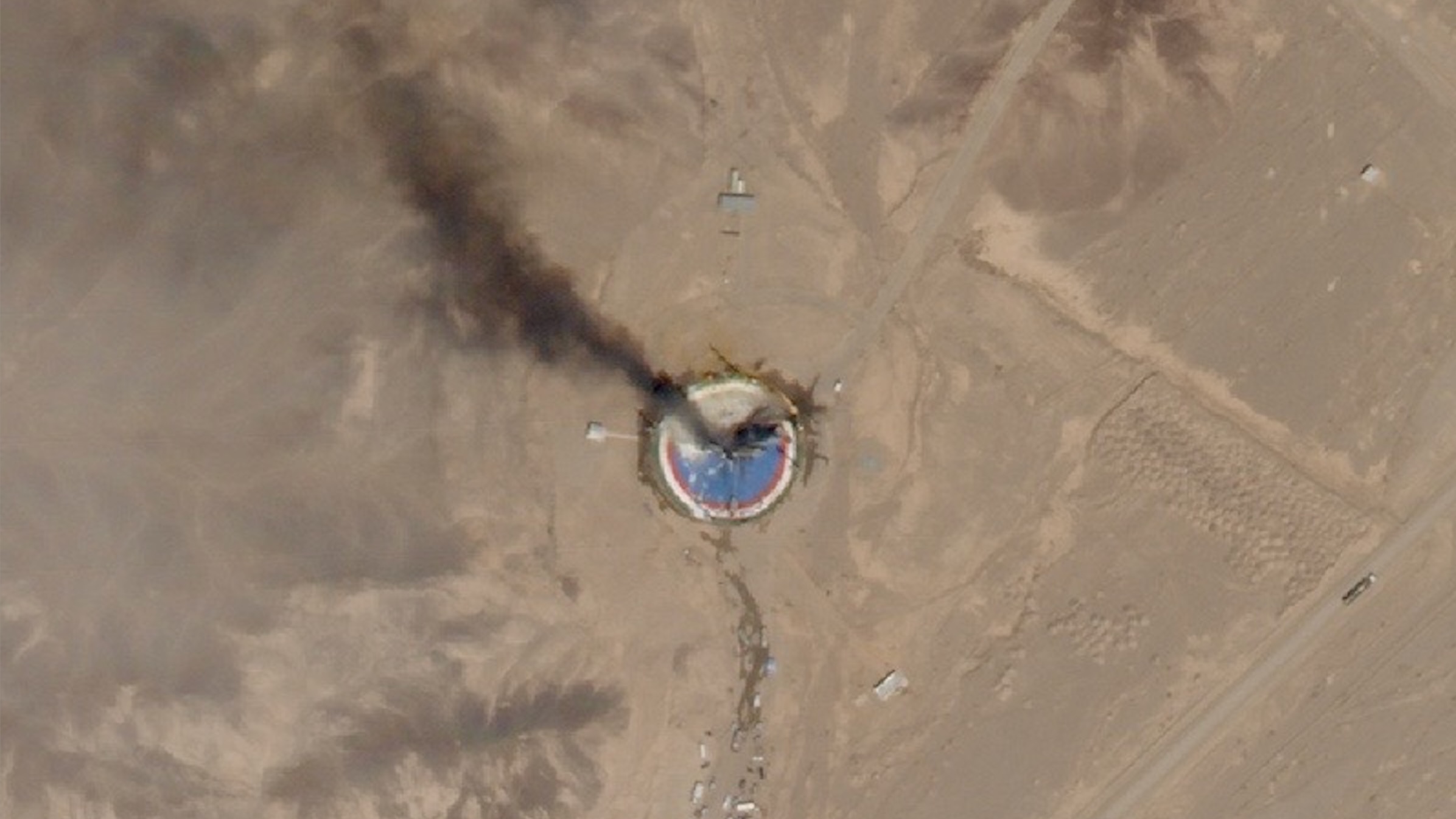
A SkySat Earth-observation satellite operated by the California company Planet spotted the wreckage of a failed launch out of Iran's Imam Khomeini Space Center on Aug. 29, 2019. (Image credit: Planet Labs, Inc.)
Hybrid model
Francis Doumet is the CEO and co-founder of Metaspectral, a company based in Vancouver, British Columbia, that builds AI technology to rapidly analyze hyperspectral imagery.
Doumet views collaboration between different national space agencies as "extensive and, somewhat uniquely, very open." Missions are frequently carried out through "shared funding, instruments, expertise and ground infrastructure," he said, with the resulting scientific data made available internationally.
Commercial imagery is less openly distributed because it is commercially licensed and may have security implications, Doumet said, but it is increasingly enabling international cooperation in the defense sector.
For example, the U.S. Space Force's Tactical Surveillance, Reconnaissance and Tracking (TacSRT) program combines commercial satellite imagery and analytics from American companies and allied nations to rapidly respond to operational requests, Doumet said.
"This has shaped the Earth-observation sector into a hybrid model," said Doumet. Governments and allies share requirements and intelligence, he explained, while commercial operators supply imagery and analytics "at a speed and scale that would be difficult or impossible for a single nation to produce alone."
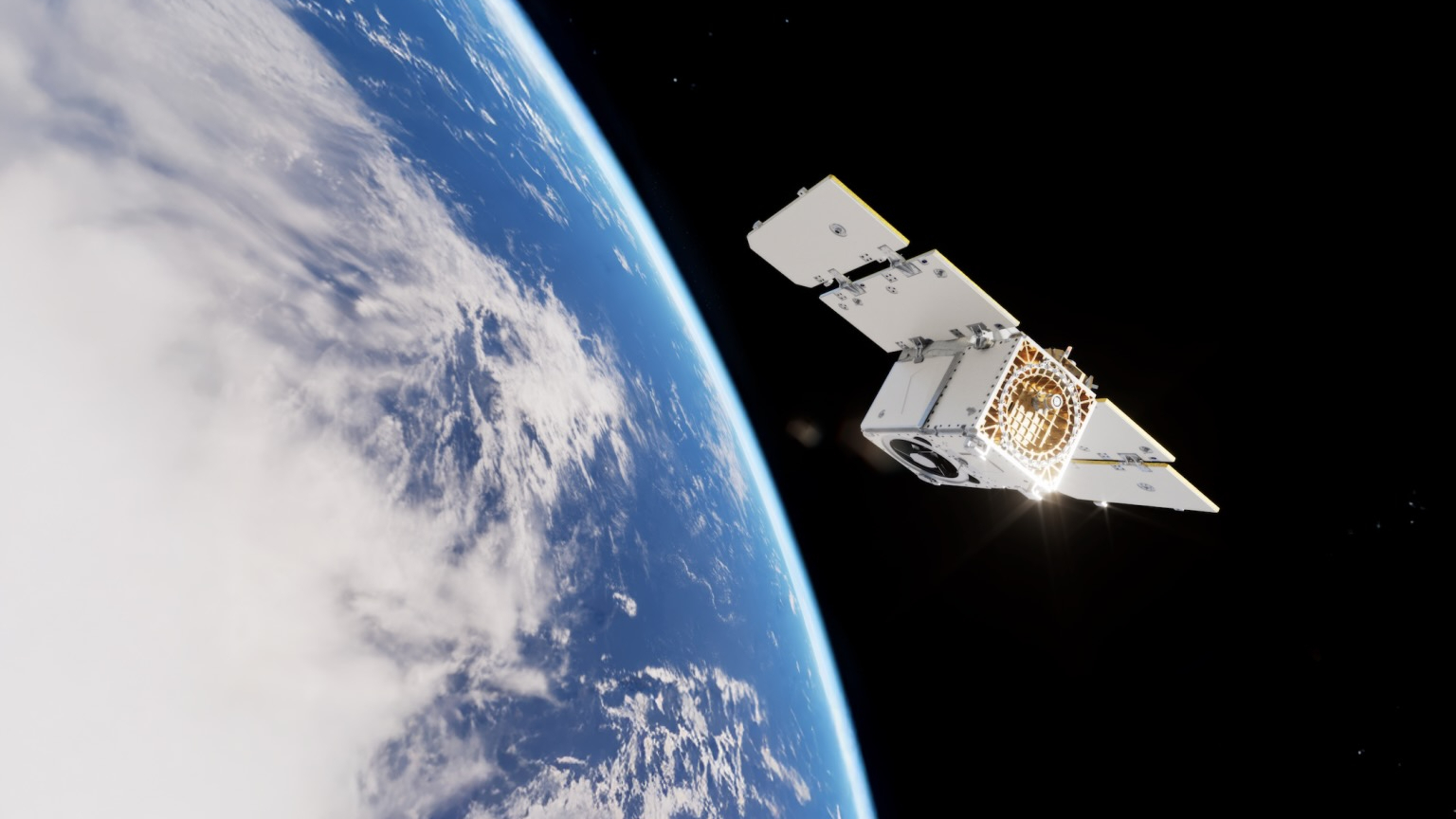
Artist's illustration of Planet's Pelican-2 Earth-observing satellite in orbit. (Image credit: Planet Labs PBC)
Hyperspectral sensors
The improvement in the spatial resolution of hyperspectral sensors is an important advance in Earth observation, Doumet pointed out.
Better sensors, high-speed compression and improved communications, such as optical links, are now narrowing a "resolution gap." Onboard AI is equally transformative, he added.
"Satellites can analyze imagery in real time, identify relevant signatures and transmit alerts or compact intelligence products instead of waiting to download an entire hyperspectral data cube," Doumet explained.
Spectral fingerprints
Angie Crews is a principal research associate with the University of Colorado, Boulder's Center for National Security Initiatives.
"There has been a tremendous growth in the commercial remote-sensing industry," Crews told Space.com, noting that this field had previously been government-based. "It's now possible for these commercial companies to deploy entire constellations of Earth-observing satellites, which fundamentally changes the architecture in place."
Crews pointed to the hyperspectral nature of Earth remote sensing — taking the "spectral fingerprints" of what's occurring on Earth.
"It's impressive how the industry is moving forward with some of these capabilities," she said.
Balancing act
"There are some tremendous benefits as well as some things that we need to think about" when it comes to the new direction that Earth observation is taking, Crews said. Remote-sensing data can be inherently dual use, she added.
"Overall, I think we're seeing some enormous benefits from our increasingly capable commercial remote-sensing systems. But it does raise some security and governance questions," said Crews.
It's a balancing act to manage, according to Crews. How best to secure the information for national security purposes versus not putting the squeeze on innovation exhibited by the private Earth-observation firms?
Meaningful information
Shifting to her teaching role at the University of Colorado, Boulder, Crews told Space.com that one of the things that's especially important is to train students in the remote-sensing field to think beyond any single sensor or dataset.
"The next generation needs to understand how different sensing technologies work and also how to work with very large datasets and extract meaningful information using AI and machine learning," Crews said.
"We also need to train the students on critical thinking and ensure they are aware of the limitations of AI. The underlying physics need to be understood and the results need to be validated so that the students use and interpret the results appropriately," she concluded.
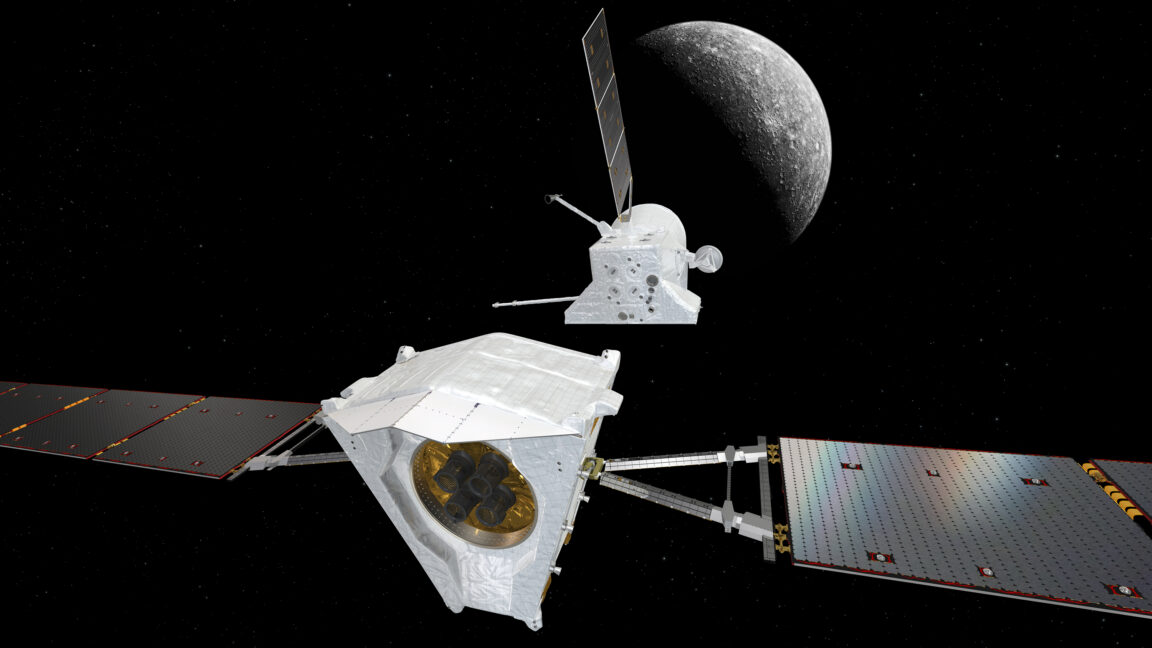
After nearly eight years and billions of kilometers of travel, BepiColombo -- a science mission led by ESA in close collaboration with JAXA -- has begun its long-awaited arrival at the smallest and innermost planet in our Solar System.
The BepiColombo mission cleared a major milestone this week in the final stretch of an eight-year interplanetary voyage to Mercury, the hard-to-reach, scorching hot iron world at the Solar System's innermost frontier.
The robotic science mission, with a price tag of nearly $2 billion, is led by the European Space Agency with contributions from Japan and the United States. Since its launch in 2018, BepiColombo has spiraled closer to the Sun using a combination of plasma propulsion and a series of flybys of Earth, Venus, and Mercury. The maneuvers changed the spacecraft's velocity and steered it toward a final encounter with Mercury later this year.
Next time it reaches Mercury, BepiColombo will be traveling at just the right speed for the planet's gravity to capture the spacecraft into orbit. Scientists working on interplanetary missions are accustomed to long waits for scientific payoffs. It took nearly 10 years for NASA's New Horizons spacecraft to travel from Earth to Pluto. It turns out traveling to fleet-footed Mercury and then entering orbit requires more energy, or delta-v, than sending a probe to fly by Pluto.
New research suggests that dust from meteorites contains a "fossil record" dating back to the formation of the sun. The research reveals that magnetism played a far greater role in the birth of the solar system than had previously been suspected.
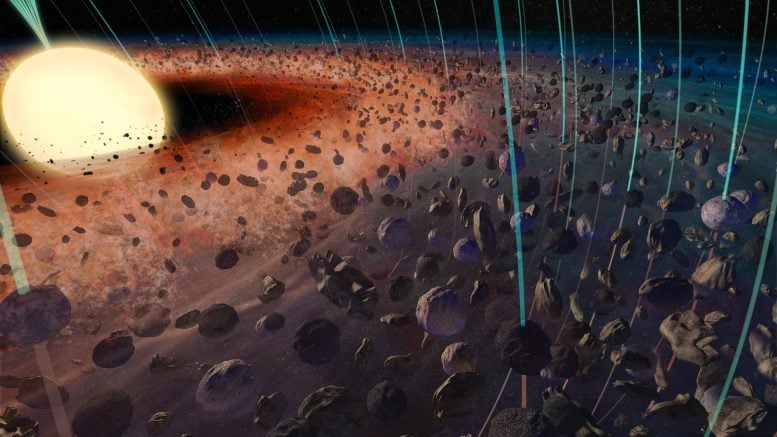
Around 4.6 billion years ago, the solar system was a cloud of gas and dust, known as a solar nebula. Over the next few million years, this cloud began to flatten, forming a donut-shaped ring or torus with a budding star gathering mass at its core. Eventually, planets would form within this so-called protoplanetary disk.
Scientists have always theorized that gravity was the main sculptor during this early era. But the new study suggests that gravity had major assistance from magnetism. The signature of this additional cosmic artist was found within grains of dust sealed in DOM 08006, a meteorite recovered from Antarctica in 2008.
The grains found by the team are calcium-aluminum-rich inclusions (CAIs), which are thought to have formed during the first 200,000 years of the solar system. That potentially makes them the oldest samples of solar system material ever seen.
"We know they are the oldest things we have of the early solar system," team leader Cauê Borlina of Purdue University said in a statement. "But CAIs are very complex and are not all the same, even within a 1-millimeter piece of the meteorite. So we have to carefully identify what types they are."
These CAIs indicated that there was a magnetic field in the proto-solar system even during its solar nebula phase. This magnetic field would have been stronger than Earth's magnetosphere and, as such, would have influenced the flattening of the solar nebula.
"This transition, from a spherical cloud to a protoplanetary disk, is one of the most significant events in all of solar system history," team member Benjamin Weiss, of the Massachusetts Institute of Technology (MIT), said in the same statement. "It has long been theorized that gravity caused this, but our measurements show magnetism likely played a role."
A new spin on early solar system magnetism
In the newly forming solar system, a magnetic field would have been generated when charged particles were sent spinning through the collapsing cloud of gas and dust that birthed the sun. This plasma would then have sustained that field.
As such, that magnetism must have affected the material in the solar nebula that would become the solar system. For that reason, the team reasoned that the strength of this field should be "locked in" to materials from the time as remanent magnetization. This matter could make its way to Earth in meteorites.
In fact, the same scientists who conducted this research previously found evidence of a magnetic field that existed 2 million years into the formation of the solar system, baked into meteorites. That's an impressive and important find, because this magnetic field would have helped planets like Earth form — but the sun was already around by that point. Thus, the team was after an earlier magnetic field, one that predated our star.
"Nowadays, people don’t debate whether magnetism is present when planets are forming. But the debate is around the very early solar system, before planets are forming, when there’s just a disk," Borlina said. "That's where the debate still resides, and that’s where we’re operating now."
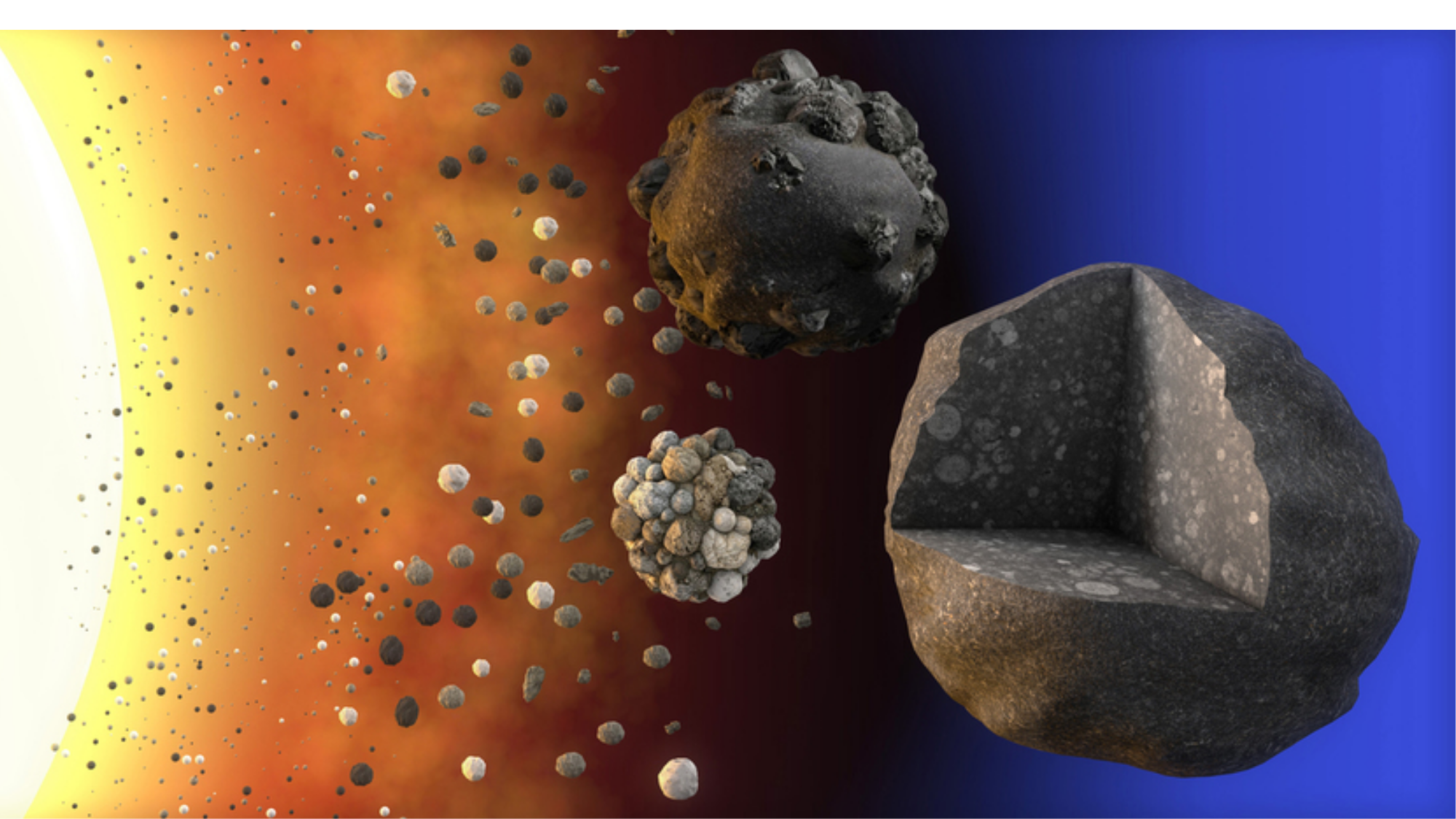
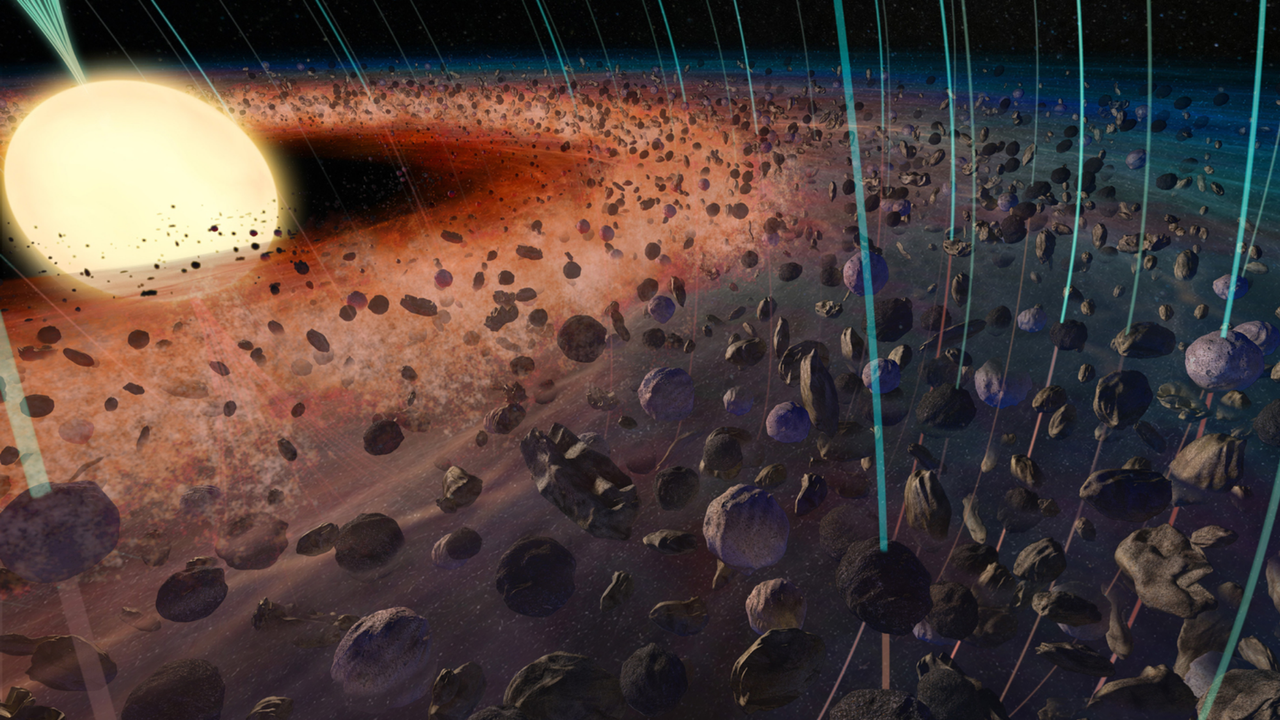
Early solar system material takes shape under the influence of magnetism. (Image credit: Hernan Canellas)
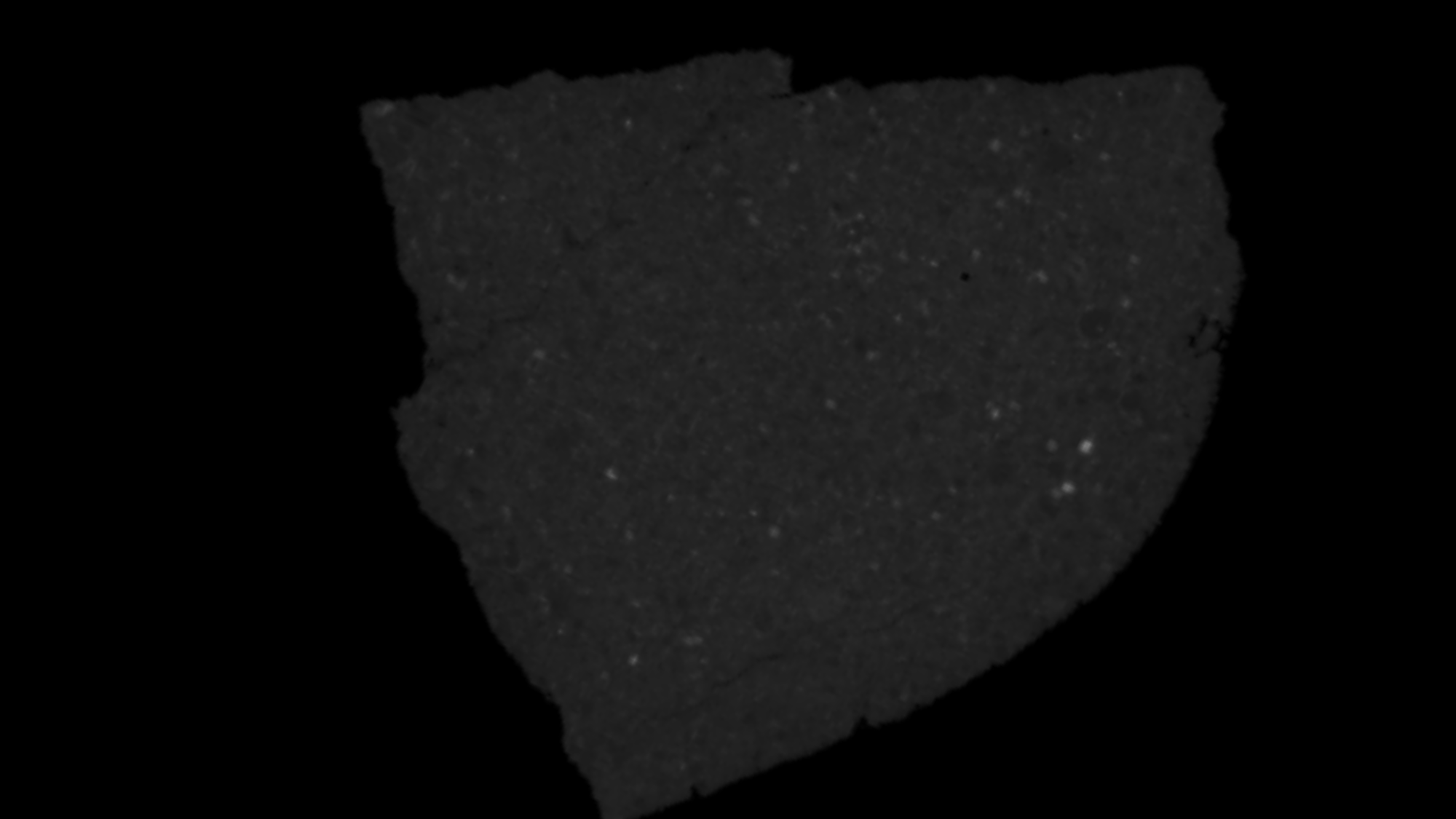
DOM 08006 is one of the most unspoiled or "primitive" meteorites ever discovered, retaining and preserving materials, including CAIs, as they were when the sun was forming.
"Other meteorites went through many different processes over this 4.5 billion-year history," said Weiss. "They were formed in the solar nebula, then added to bodies with water, then got destroyed, moved to the asteroid belt, and then landed here. But somehow, DOM has experienced less alteration than any other meteorite."
If a magnetic field existed during the earliest stage of the solar system, it should be observable in the matter that makes up DOM 08006.
The team was able to isolate and identify a handful of CAIs that contained inherently magnetic minerals such as iron, which they tested to measure any magnetism they had retained.
An X-ray image of the Antarctic meteorite DOM 08006, which was discovered in 2008. (Image credit: NASA)
Studying these grains, the researchers found evidence of a magnetic field 12 times stronger than that of Earth. They think this magnetic field may have played a crucial role in the evolution of the solar system.
"We think these kinds of magnetic fields were helping to move gas from the protoplanetary disk inward toward this central star, the sun,” Borlina said. "Gravity is also playing a role. But we are now showing that, if you want to fully understand how the sun and planets formed, you should include magnetic fields in the ingredients that make them."
The new study was published Aug. 7 in the journal Proceedings of the National Academy of Sciences.
Astronomers have witnessed a small, icy body that orbits the sun out beyond Jupiter transforming into a comet, providing a missing link between comets and inert bodies called centaurs.
The object in question is called 450P/LONEOS and is named after the Lowell Observatory survey that found it back in 2004. It is a centaur, which is a breed of inactive body that orbits the sun between Jupiter and Neptune. These objects are thought to have wandered in from the Kuiper Belt beyond Pluto, their paths perhaps perturbed by distant gravitational interactions with the gas giant planets, or even a nudge from a passing star.
Because a given centaur's orbit crosses the path of at least one of Jupiter, Saturn, Uranus and Neptune, a centaur's orbit is unstable over millions of years. Consequently, the giant planets can push them even closer to the sun or kick them out of the solar system entirely.
It has long been suspected that those pushed closer to the sun turn into what are called Jupiter-family comets, which are comets with orbital periods around the sun of less than 20 years and which are influenced by the gravity of Jupiter.
To date, no one has ever seen a centaur turn into a Jupiter-family comet. The orbital period of 450P is currently 22 years, so it isn't a Jupiter-family comet yet, but astronomers led by planetary scientist Charles Schambeau of the University of Central Florida have been observing the onset of comet-like behavior on the centaur. In particular, using the Gemini North telescope in Hawaii they have seen the formation of a cloud of gas and dust called a coma around the solid nucleus of 450P, with this coma brightening in the period between 2019 and 2024, when 450P arrived at perihelion (the closest point to the sun in its orbit).
Should 450P keep up this comet-like behavior and receive one more gravitational nudge from one of the giant planets, then it could finally become a Jupiter-family comet.
"Studying objects like 450P helps us connect different stages of small-body evolution," said Schambeau in a statement. "Centaurs are likely related to trans-Neptunian objects, and some will eventually become short-period comets. By studying their activity, surface properties and volatile [substances with low boiling or sublimation points such as water and carbon dioxide] composition, we can learn how comet nuclei change as they move inward through the solar system, how long they preserve primitive ices and what physical processes turn an otherwise quiet icy body into an active comet."
Using the James Webb Space Telescope (JWST), Schambeau's team analyzed 450P's coma, finding carbon dioxide gas and suggestions of particles of crystalline ice and dust.
Its transition from a centaur into a comet is thought to have resulted from 450P having a date with destiny. By tracking back its orbit to before its 2004 discovery, astronomers found that 450P had come within 2.9 million miles (4.6 million kilometers) of Saturn in 1992. That's pretty close on solar-system scales. The object's gravitational interaction with the ringed planet caused 450P's orbit to significantly shorten so that its perihelion is now at 5.4 astronomical units 506 million miles, or 813 million km), which is only slightly beyond the orbit of Jupiter at 5.2 astronomical units.
Its last perihelion was in August 2024 and, by getting closer to the sun, 450P received substantially more heat than it has in the past.
"That increased solar heating can warm the surface and the subsurface layers of the nucleus," said Schambeau. "As those layers heat up, volatile ices or trapped gases can be released, which can drag dust away from the surface and produce a coma."
The significance of the JWST's discovery of carbon dioxide gas in 450P's burgeoning coma, coupled with the complete absence of water vapor, tells us that it is carbon-dioxide driving the activity on 450P.
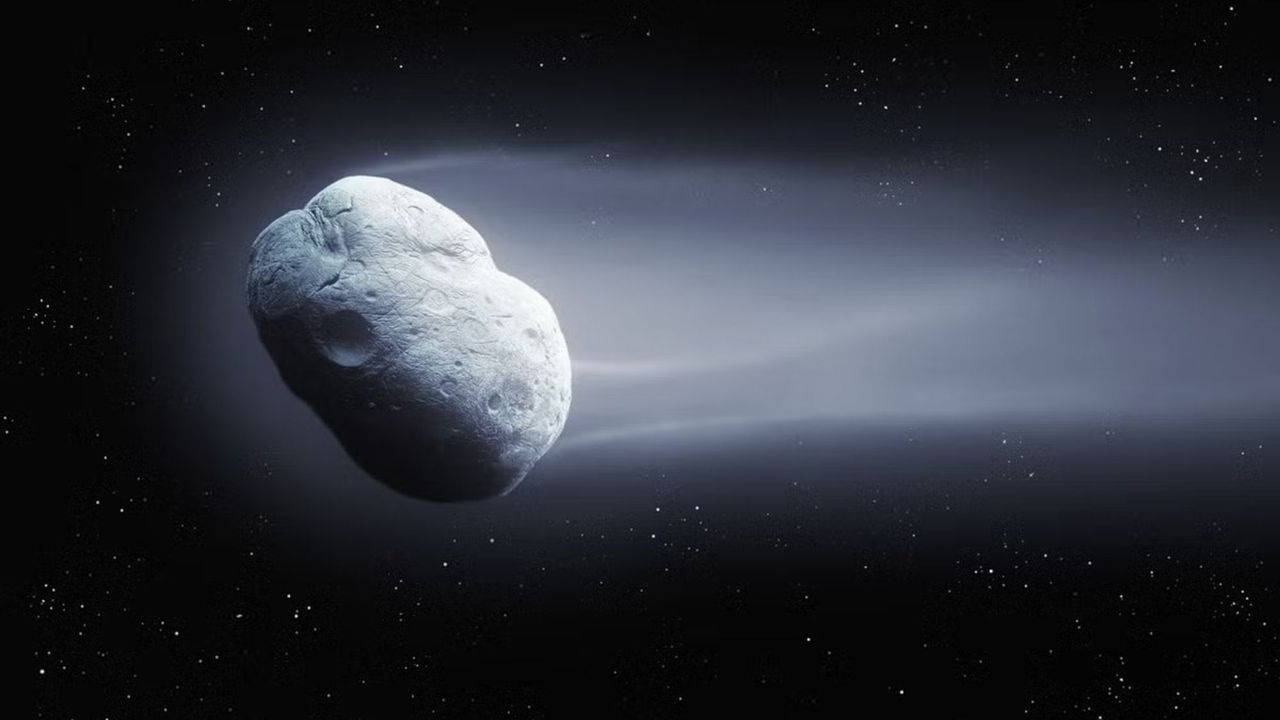
This NASA animation depicts a comet as it enters the inner solar system, with light from the sun warming the comet to create its coma and tail. (Image credit: NASA/JPL-Caltech)
"At 450P's distance from the sun, the nucleus is too cold for normal water-ice sublimation to be the main activity source, so detecting carbon dioxide gives us an important clue about what is powering the coma," said Schambeau.
While there is no water vapor, JWST has picked up hints of solid particles of crystalline water-ice.
"The possible crystalline water-ice is also interesting because it suggests that some of the ice in the coma has experienced heating or physical processing, rather than remaining completely unchanged since formation," said Schambeau.
On pristine cometary bodies and Kuiper Belt objects, ice is usually in an amorphous state, meaning the frozen water molecules are not structured or arranged in any particular way, giving the ice a porous composition that allows it to trap pockets of gas. As 450P nears the sun, the extra warmth that it receives causes the amorphous ice to morph into crystalline ice that has a more regular structure. During the transformation the gases escape, dragging dust and ice particles off the surface with them. Therefore, the presence of crystalline ice is telling us that 450P is in the process of being thermally altered from its pristine state that quite possibly harkens back to the birth of the solar system 4.5 billion years ago.
Only a very small fraction of Centaurs have ever shown signs of activity, which makes 450P's recent perihelion a very important one to have studied because it is a rare example of an early stage in a centaur's transition into a comet.
"Centaurs are scientifically important because they are thought to be transitional objects that originated further out in the solar system and are slowly evolving toward becoming Jupiter-family comets," said Schambeau. "In that sense, they give us a way to study relatively primitive material from the outer solar system while it is beginning to respond to stronger solar heating."
The findings have been accepted for future publication in the Planetary Science Journal and is currently available on the arXiv pre-print archive.

 Login

 Ancient meteorite minerals reveal a surprisingly strong magnetic field from the solar system’s first 200,000 years. About 4.6 billion years ago, before the Sun and planets existed in their familiar forms, the solar system was a vast cloud of gas and dust. Within a few million years, this “solar nebula” collapsed and flattened into a [...]