❌

Reading view

Researchers Unveil Complete Fruit Fly Connectome

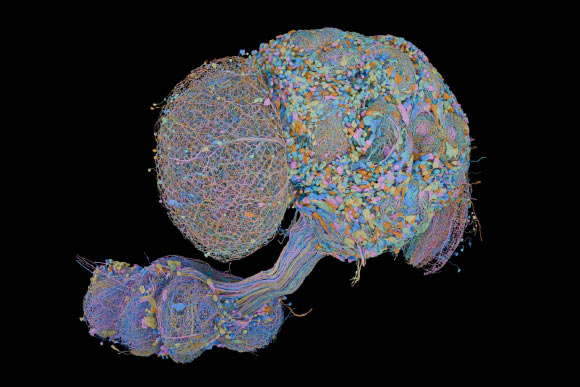
The wiring diagram of the central nervous system of an adult male fruit fly will help researchers better understand how the brain enables complex action, from sensory perception to behavior. Image credit: FlyEM Project Team, HHMI’s Janelia Research Campus / Cambridge Connectomics Group / Google Research / Philip Hubbard, HHMI Janelia Research Campus.

After nearly two decades of work, scientists have completed a wiring diagram of the central nervous system of an adult male fruit fly (Drosophila melanogaster).

The post Researchers Unveil Complete Fruit Fly Connectome appeared first on Sci.News: Breaking Science News.

  •  

A 'wholistic' view of cellular communication across an entire animal

It can't be heard, but different parts of the human body are in constant conversation, communicating to keep the entire system running efficiently. For biologists, being able to listen in on this discussion is a long-sought-after goal. Over the years, researchers have caught snippets of these exchanges, but the complete dialogue has remained out of reach.

  •  

‘Birds Supporting Birds’ connects the Philadelphia Eagles with migrating seabirds

As the 2026-2027 NFL season kicks off, the Philadelphia Eagles are giving new meaning to their signature “Fly, Eagles, Fly” fight song. The football team is partnering with the National Marine Sanctuary Foundation for Birds Supporting Birds, an initiative to support seabirds off the coast of Massachusetts (and in New England Patriots’ territory) this fall. 

The team is supporting NOAA’s Stellwagen Bank National Marine Sanctuary Shearwater Tagging Project, an ongoing initiative dedicated to studying the great shearwater (Ardenna gravis) and their migration. Great shearwaters are large, white-and-grey seabirds known for their epic journeys. They travel thousands of miles every year from their remote South Atlantic breeding grounds up to the cooler North Atlantic waters during the nonbreeding season. According to the National Marine Sanctuary Foundation, they fly the equivalent of over 200,000 football fields across the Atlantic Ocean every single year.

Birds Supporting Birds will help support researchers in Stellwagen Bank, an 842-square-mile marine sanctuary east of Boston, to tag great shearwaters and track their migratory routes across the Atlantic. 

“The Eagles are directly funding researchers to attach lightweight, solar-powered satellite transmitters to great shearwaters,” Joel R. Johnson, President and CEO of the National Marine Sanctuary Foundation, tells Popular Science. “These tags track the birds’ migration patterns around the Eastern Seaboard and down to the Southern Atlantic Ocean in real time.”

Lovingly known as “The Birds” by their incredibly devoted fanbase, the football team is leveraging their platform to bring attention to ocean conservation and highlight environmental stewardship. 

A major 2015 study found that the Gulf of Maine is warming faster than 99 percent of the ocean due to climate change. While the water has slightly cooled since 2021, a report published by NOAA in July found that the environment in the Gulf of Maine still remains unstable. These changes in ocean temperature, currents, and other conditions can impact the seabirds’ food supply. 

Great shearwaters are reliable indicators of an ecosystem’s health, who rely on small fish called sand lance in their diets. Whales, dolphins, bluefin tuna (Thunnus thynnus), and other key Gulf of Maine species also rely on these fish belonging to the family Ammodytidae in their diets. By studying great shearwaters and their health, researchers can better understand what is happening in the local ecosystem as a whole. 

Researchers at Stellwagen Bank National Marine Sanctuary used satellite tracking technology in 2013. These tags are lightweight and attached to the birds with degradable thread. They have small solar panels so scientists can monitor the birds’ routes over extended periods. 

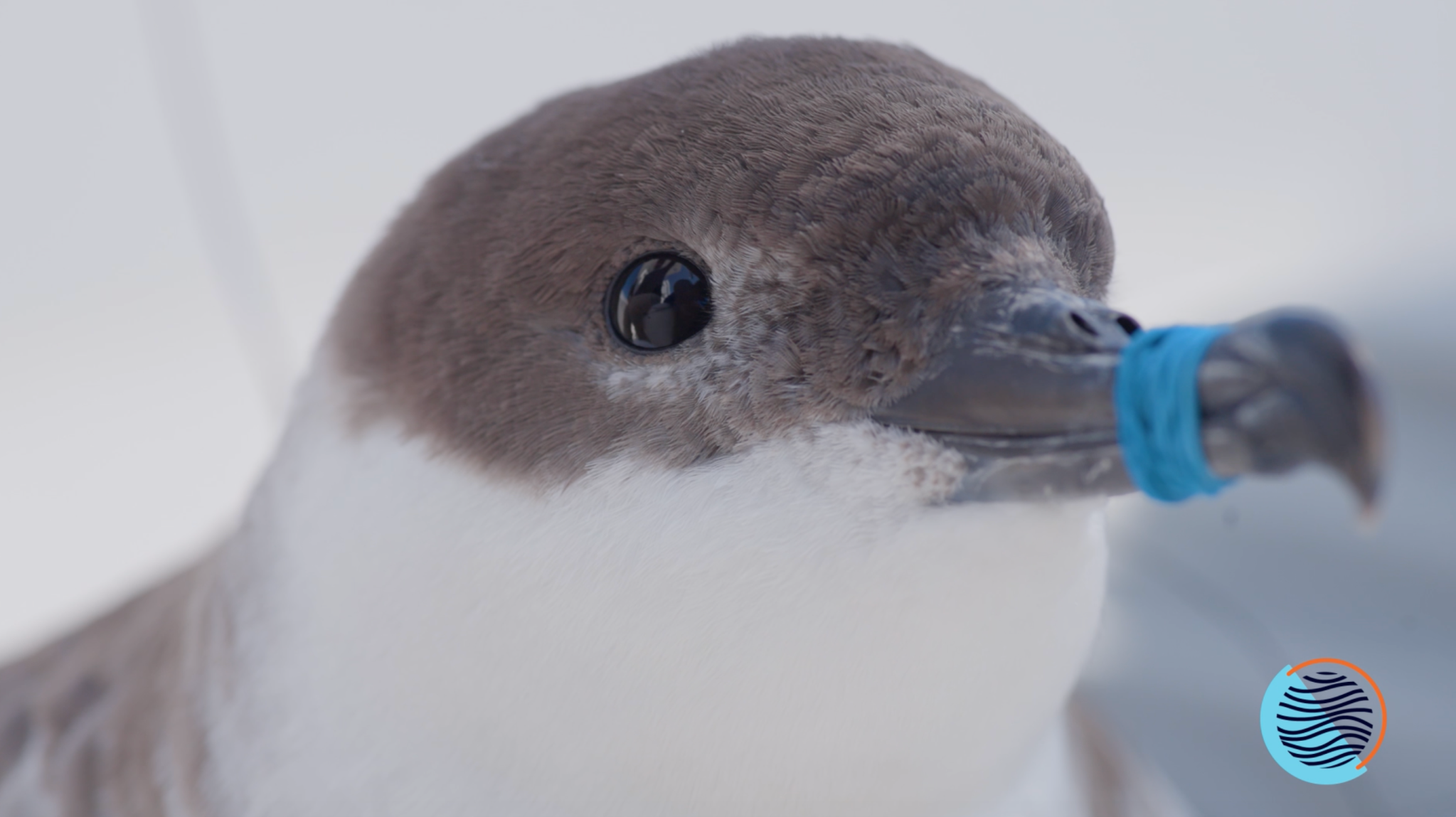
Researchers have now deployed tags on Phil, Franklin, Hoagie, and Liberty, four great shearwaters with very Philly-appropriate names.

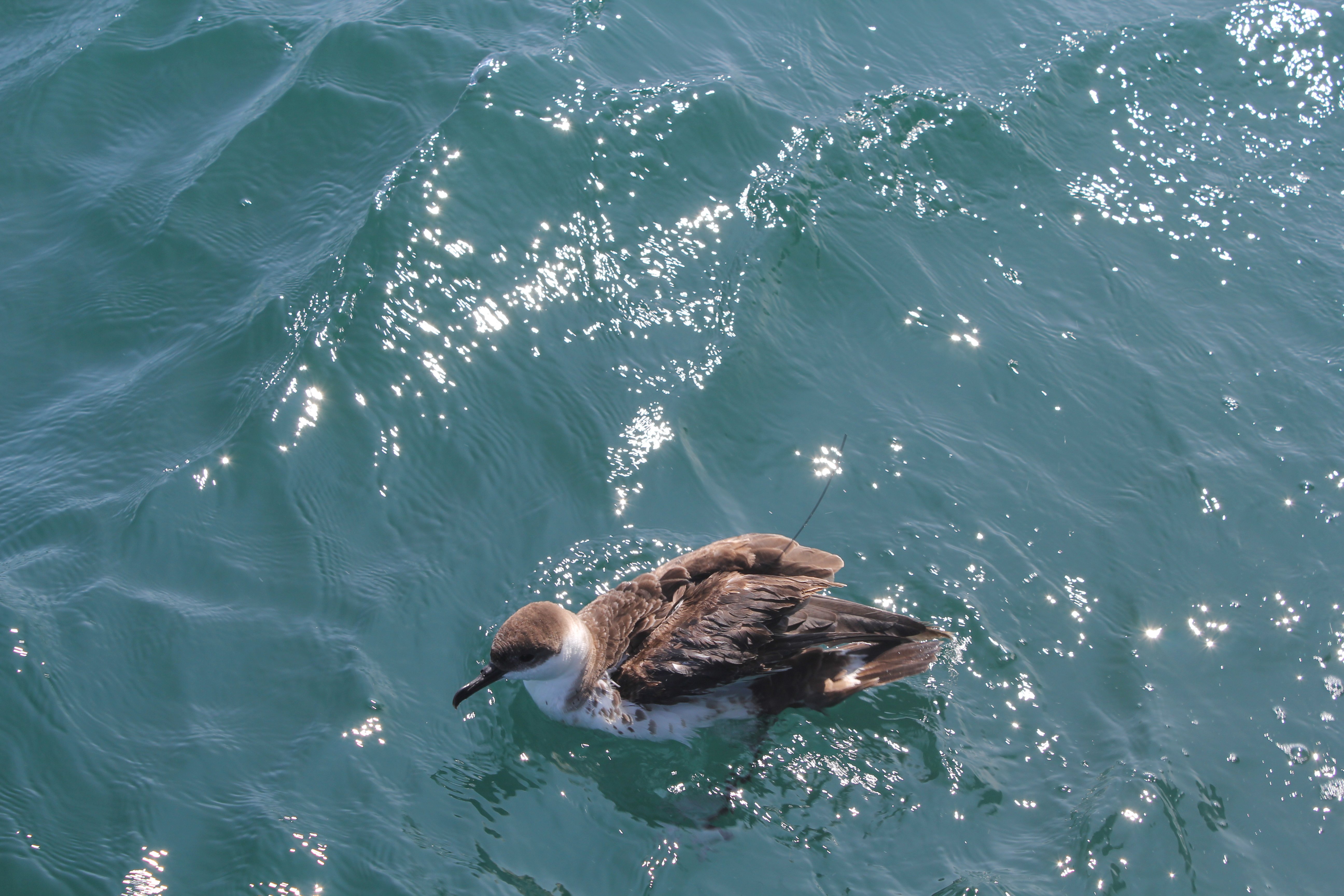
a bird wearing a small tracker on its feathers sits on the ocean
Great shearwaters can help scientists understand an ecosystem’s health. Image: National Marine Sanctuary Foundation.

“We are thrilled to invite the public to follow Phil, Franklin, Hoagie, and Liberty in real time on our interactive maps and social channels, bringing everyone along on our shared mission to protect our ocean waters and marine life,” says Johnson, who lists bald eagles (Haliaeetus leucocephalus), great blue herons (Ardea herodias), and great shearwaters among his favorite birds. 

Live interactive maps will be available soon on the Stellwagen Bank National Marine Sanctuary and National Marine Sanctuary Foundation’s website, so you can follow the great shearwater’s epic journey, while the Eagles (or your favorite team) compete on the gridiron.

The post ‘Birds Supporting Birds’ connects the Philadelphia Eagles with migrating seabirds appeared first on Popular Science.

  •  

Classic sitcom ‘Friends’ helps grad student endure 104 brain scans

The science of getting Z’s has progressed rapidly in recent years. A growing body of research links poor sleep to increased risk of cognitive decline, a higher likelihood of Alzheimer’s disease, and even greater chances of developing heart problems. At the same time, wearables, like smart rings and watches, are transforming the way everyday people view sleep, turning their resting hours into rich datasets to pore over, sometimes to unhealthy obsessive levels. 

What’s still less understood, is how the subtle, everyday fluctuations in sleep quality that come from simply living a normal life can alter brain chemistry. People don’t live in controlled lab settings, and even the most avid bio-optimizer still has nights where quality sleep takes a backseat. Actually understanding how someone’s day-to-day sleep patterns affect their brain chemistry would require putting them in an MRI machine and collecting data over and over again, over long stretches of time to get a more holistic view. 

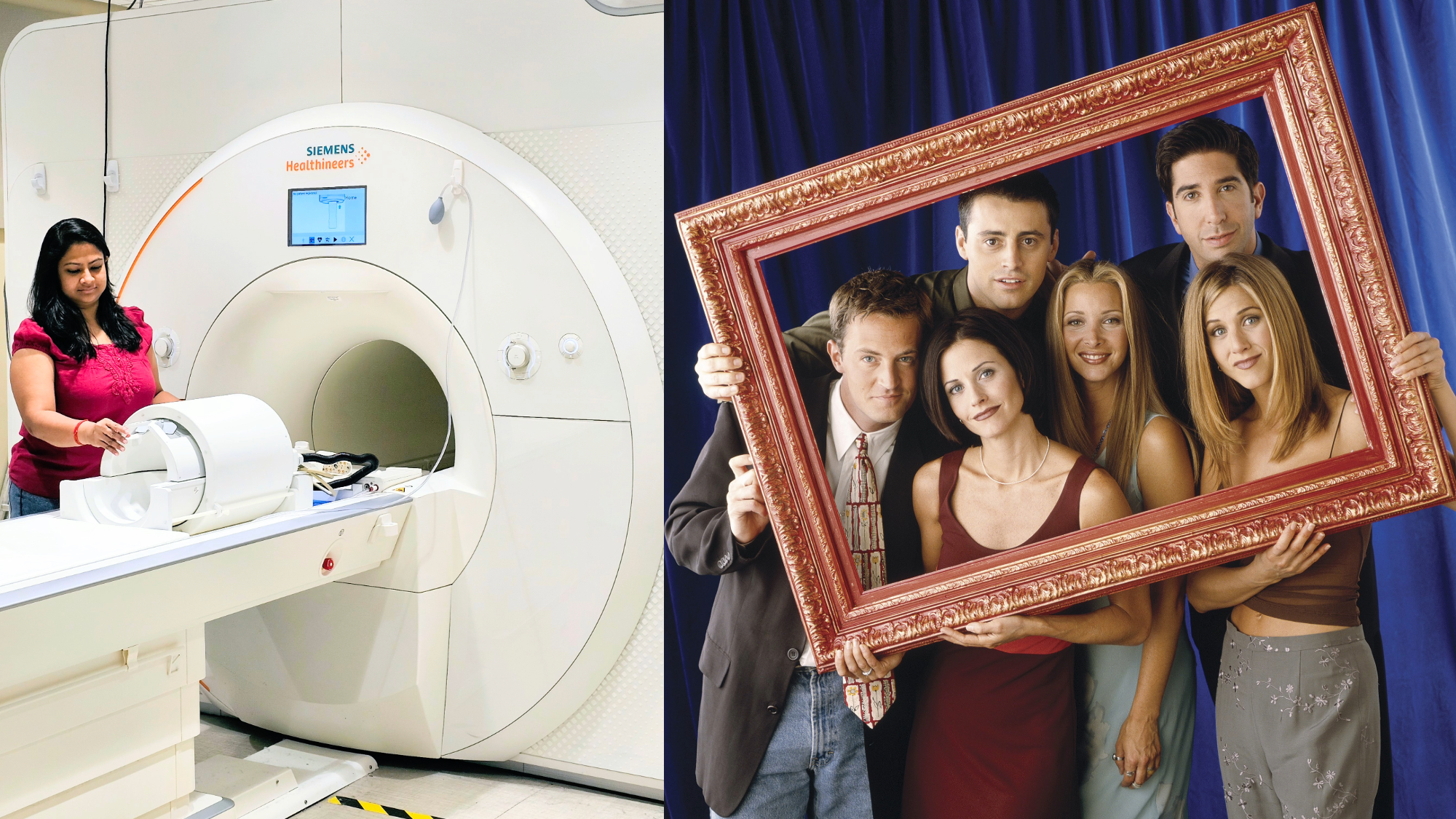
That’s exactly what Auburn University electrical and computer engineering graduate student Joshita Majumdar signed up for. Over 76 weeks, Majumdar slipped into the university’s 7-Tesla MRI scanner 104 times. That’s a level of commitment that would make even a stalwart Zen meditator fidget with frustrated boredom. Thankfully, Majumdar had a special companion to accompany her during the loud, cramped, 90-minute sessions: the hit television sitcom Friends.

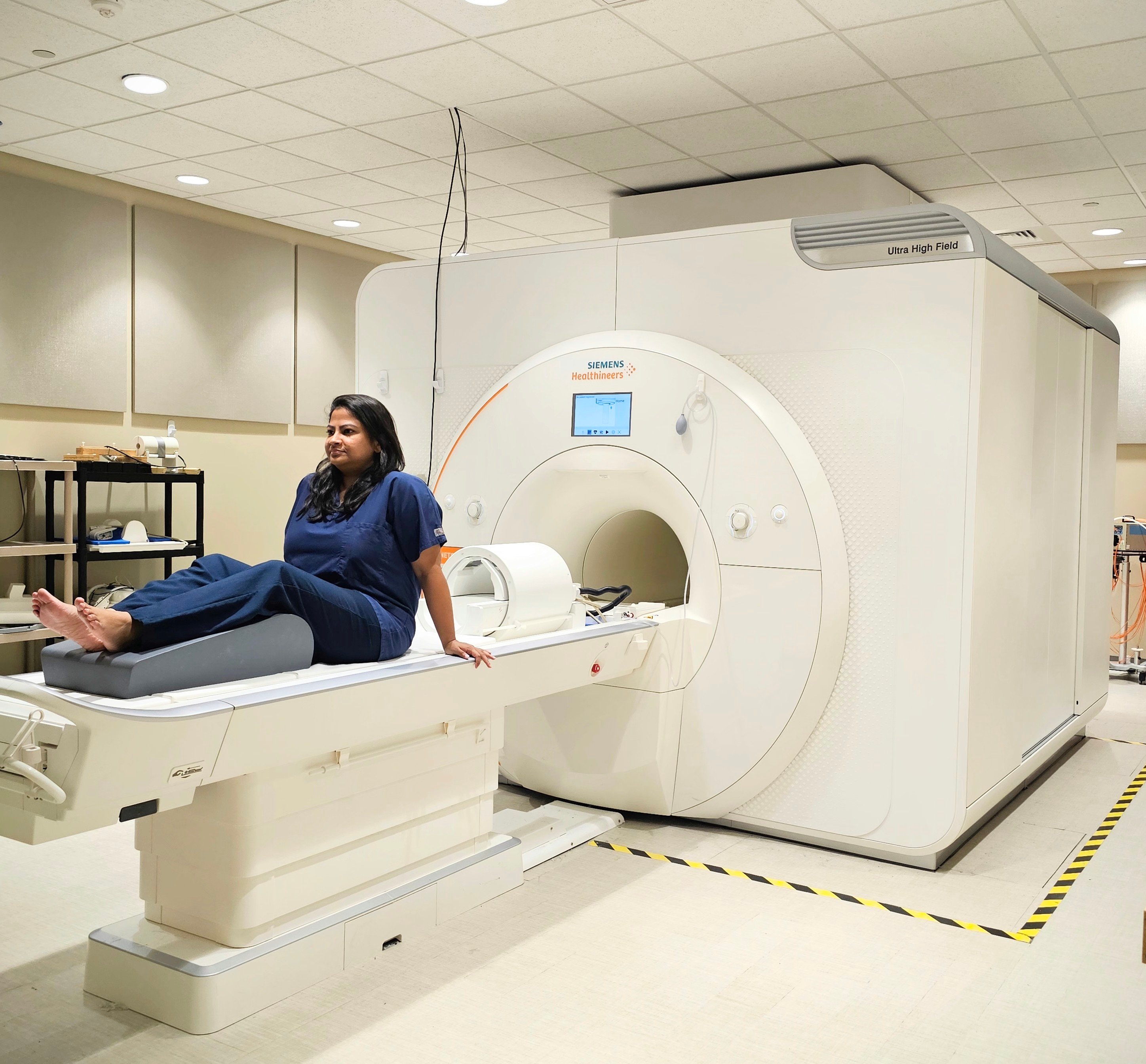
a woman wearing blue scrubs sits outside of an MRI machiene
Over 76 weeks, Joshita Majumdar went into Auburn University’s  7-Tesla MRI scanner 104 times. Image: Joshita Majumdar/Auburn University.

Majumdar recalls how a screen in the machine would cycle through four 10-minute videos of the staple from the 90’s and early 2000’s, each made up of several different scenes clipped together. The idea was twofold. Majumdar needed something playing during the sessions that would keep her from getting bored, and Friends just happens to be her self-described “guilty pleasure.” It was also one of the first shows she connected with as an international student adjusting to her early days in the United States, so some scenes strike particularly nostalgic, emotional notes. And like any great sitcom, Friends runs the gamut from numbing brain-rot to tear-jerking sentimentality. That’s potentially a great backdrop for a study analyzing changes in brain chemistry.  

“If you’re happy, you watch Friends. If you’re sad, you watch Friends,” Majumdar tells Popular Science. “So all times [are] a good time to watch Friends, right?”

Past studies have looked at the way sleep variability affects brain chemistry, but many of those involve intentionally depriving the subject of sleep. This longer-term approach takes a more subtle approach that should better reflect the nuances of everyday life. 

“This is a person living her life, going through normal ups and downs and we are seeing how brain chemistry responds to that,” Majumdar’s advisor and Auburn University Electrical and Computer Engineering Professor Gopikrishna Deshpande said.  “That’s what makes this dataset so powerful. It’s not artificial. It’s not forced. It’s real.”

The journey to 104 brain scans 

Majumdar grew up in Kolkata, West Bengal, India, and moved to the U.S. in 2016 to pursue a master’s degree in engineering at the University of Georgia, with an emphasis on mechanical engineering. Early on, she became interested in how different environmental factors affect brain function. And while she was busy pushing forward with her rigorous academic work, she also dealt with occasional homesickness, living in a new country thousands of miles away from friends and relatives. 

Around that same time, Majumdar says she started watching Friends to see what all the fuss was about. People around her seemed obsessed with the show, but she hadn’t seen it, and initially didn’t really understand the hype. Eventually, she went back to the show with fresh eyes and everything clicked. The sarcastic Chandler Bing (Matthew Perry) and affable actor Joey Tribbiani (Matt LeBlanc) are among her favorite characters.

“I gave it another try, and then I was like, oh no, this is fun,” Majumdar said. “And then it became a guilty pleasure.” 

When it came time to pick a test subject for this new, lengthy MRI study, Majumdar says Dr. Deshpande asked her if she’d be up for volunteering. Majumdar has some experience with MRI machines from past projects, enough to know that she wasn’t prohibitively claustrophobic or bothered by the machine’s loud industrial noises. Still, nothing she’d done before this could compare to the endurance and commitment it would take to see this through. The team decided not to commit to a set number of scans at the onset, and took it day by day to see how much the grad student could handle. 

“We said, like, ‘Okay, we’ll take one day at a time, one week at a time, and see how far we can pull it through,” Majumdar explained. 

Don’t sleep on Friends  

Majumdar was the one who pitched playing Friends episodes in the machine. She compiled four 10-minute videos, each made up of different scenes from various episodes. The material ran the gamut in tone, with the goal of eliciting a range of brain responses. One particularly strategic choice was to include clips of episodes aired around Thanksgiving. These fan-favorites tend lean heavily on themes of family, friendship, and camaraderie. Friends, in other words, was meant to roughly simulate the backdrop for Majumdar’s everyday life brain state. 

“In a task-based MRI, we are giving a particular stimulus, so we kind of have an idea what we are trying to activate in the brain,”  Majumdar said. “But in a naturalistic run, it’’s kind of like you’re putting yourself into a real-world situation.” 

a still image from an episode of the show friends. a woman with blonde hair stands next to a bench while a woman with a black hat and green shirt, woman with a blue new york giants sweatshirt, man with a red jersey, man with a blue sweatshirt, and man with a black sweatshirt and blue hat on backwards sit on a bench above fall leaves
“The One with the Football” (Season 3, Episode 9) is one of 10 Thanksgiving episodes of Friends. Pictured (left to right) Lisa Kudrow as Phoebe Buffay, Jennifer Aniston as Rachel Green, Courteney Cox Arquette as Monica Geller, Matt LeBlanc as Joey Tribbiani, David Schwimmer as Ross Geller, and Matthew Perry as Chandler Bing. The show ran from 1994 to 2004. Image: Gary Null/NBCU Photo Bank.

But that wasn’t all. Every session, the team would also play a roughly four-minute music video to the song “Love You Zindagi,” from the 2016 Bollywood film Dear Zindagi. Similar to the Thanksgiving episodes, this video was thoughtfully selected for its depiction of friends and family. It also helps remind Majumdar of home. 

“I have left my friends and family back in India,” Majumdar said. “So depending upon what my emotions are on that day, I used to really connect to it differently each day.”

Majumdar and her colleagues quickly settled into a routine for their MRI odyssey. She would come to the university’s neuroimaging center on Tuesdays and Thursdays, typically around 7:30 in the evening. She had the choice of that later time slot or first thing in the morning, but chose the former because she says she isn’t really a morning person. That choice came with some trade-offs, though. 

Early on, she discovered that eating a meal immediately before entering the machine made her feel dizzy. After one fraught experience, she made a point of giving herself a gap of 90 minutes to two hours after eating before going into the scanner. Coming in later at night, especially after a long day of PhD work, also meant she sometimes had to fight the urge to fall asleep. Even though she was stuck in the machine for 90 minutes at a time, the tests required that she keep her eyes open for the vast majority of it. That struggle is partly what makes subsequent findings all the more interesting. 

“Sometimes I was a little bit sleepy, but that’s part of it,” Majumdar said. “And that’s the thing that we wanted to bring out through this research: that you are in a very natural setting. You’re not in a kind of a forced experiment where you are either sleep-deprived or put under some conditions that might evoke a different brain response. We really wanted to look at the real-world condition where I’m just living my life, and in parallel I’m getting scanned and seeing how the brain chemistry responds to it.”

In addition to sitting in the MRI machine, Majumdar logged everything she ate and wore a sleep-tracking ring. With all of that data, the team was able to match each night’s sleep metrics with the next day’s scan and compare patterns over time. Though there’s still data being combed through, they’ve already found an important connection: across the 104 sessions collected over 76 weeks, nights with less deep sleep and more light sleep tended to be followed by higher glutamate levels the next day. Glutamate is an amino acid that acts as a kind of chemical messenger in the brain. In a previous university blog post, Majumdar compared this finding to the brain flushing out byproducts that build up during active, wakeful moments, allowing for a more restful night’s sleep.

“You wake up with a fresh mind,” she said. “But if that process is blocked, it’s going to hamper you the next day.”

Joshita Majumdar (right) a graduate student in the Department of Electrical and Computer Engineering, and Gopikrishna Deshpande (left), the Godbold Professor in the Department of Electrical and Computer Engineering, used equipment at the Auburn University Neuroimaging Center, including the 7-Tesla MRI scanner, to study glutamate levels in the brain. Image: Auburn University.

But is she sick of sipping coffee at Central Perk?

Majumdar’s work in this area has only just begun. Moving forward, she and her colleagues hope to bring on more study participants  to make the dataset even richer, though they’ll likely make adjustments so that each participant doesn’t have to go in for scans quite as often as she did. 

Eventually, she says she also hopes to use AI and other tools to try and extract the feelings and emotions experienced during those MRI sessions (and during certain Friends’ moments) to get a better sense of what’s happening in the brain when certain feelings are evoked. 

Miraculously, even after watching the show in a cramped, rumbling tube for 18 months, Majumdar says she still isn’t sick of Friends. When asked if she can still watch the silly sitcom without getting bored, Majumdar responds with an emphatic, 

“Yes, definitely.”

The post Classic sitcom ‘Friends’ helps grad student endure 104 brain scans appeared first on Popular Science.

  •  

Dr. Delia Santiago-Materese

Dr. Delia Santiago-Materese in her office. A model of Jupiter and the Juno spacecraft rest on a shelf on the left.

Dr. Delia Santiago-Materese

Program Scientist

Dr. Delia Santiago-Materese wants things to get complex

From terrestrial animals to experiments in microgravity and Martian clouds, this NASA program scientist’s career path links diverse challenges. Today, she supports a mission to Saturn’s moon Titan, a world teeming with organic molecules that could hold valuable clues about the origin of life.

When novelty is your hobby, you already have a large part of the recipe for a career full of challenges. That is why Dr. Delia Santiago-Materese describes her path within NASA as “meandering.” Her diverse roles have taken her to low Earth orbit, to the clouds of Mars, and to the surroundings of Jupiter. Now, they are also bringing her closer to the surface of Titan, an intriguing moon of Saturn. Woven together by her exploring spirit and a perennial curiosity, all these experiences have one point in common: life.

Today, Santiago-Materese is part of the Planetary Science Division at NASA Headquarters in Washington. The main decoration in her office is a model of Jupiter, larger than a basketball, resting next to a scale model of the spacecraft exploring it, Juno. Small black and red pins with the inscription “Dragonfly” rest in the center of a round table. Several framed diplomas cover a wall. From here, Santiago-Materese does “a little bit of everything” on any given workday as a program scientist for the Juno and Dragonfly missions, and for the Discovery program, which features a portfolio of several missions in our cosmic neighborhood.

This medley of roles is no coincidence. Santiago-Materese describes herself as someone who does not pursue a single goal, but rather diverse interests that she discovers along the way. “I am always looking for something new to add to my experiences,” she says, “because I think I also get bored easily.”

Dr. Delia Santiago-Materese outside of her office, holding a model of Jupiter.
Santiago-Materese holds her model of Jupiter, just outside her office. As a program scientist for Juno—a mission studying this planet—for Dragonfly, and for the Discovery program, she guides these projects by promoting leadership based on kindness and respect: “Every person brings something unique.”
NASA/Noelia González

The daughter of a military family, Santiago-Materese was born in Spain by coincidence. Her roots are actually on another continent: her mother is Mexican-American and her father is Puerto Rican. From her time in Spain, she only keeps some baby photos; she lived part of her life in Texas and then in California, which she considers her home—despite having spent her childhood summers in San Sebastián, Puerto Rico. It was in the Golden State where she first imagined herself as a veterinarian and decided to study Biological Sciences. And it was during her studies at Stanford University, “just around the corner” from NASA’s Ames Research Center in California’s Silicon Valley, that Santiago-Materese discovered astrobiology.

This elective course brought her closer to a discipline that, to some extent, was in its infancy. Today, NASA’s Astrobiology Program investigates life in the universe on many levels: how it began, how it evolved here on Earth, and where it might exist elsewhere. And that was how Santiago-Materese realized that biology and space were not two isolated things, she recounts.

Rodents, Insects, and Martian Clouds

After finishing her studies, Santiago-Materese completed a one-year internship at the San Francisco Zoo. But the unknown that astrobiology presents continued to intrigue her, so she went back to one of her professors to inquire more about it. She asked around and found someone at Lockheed Martin, a company that often contracts with NASA on space projects. They were looking for people for a new project studying the nutrition of the food bars for rodents traveling to space aboard the space shuttle.

Santiago-Materese has applied that formula ever since: identifying what truly interests her and finding the right person to ask questions. If people “don’t know what you’re interested in, they can’t help you,” she explains. After experience with the Space Shuttle Program, including managing databases for science payloads aboard the space shuttle, she went on to work with the International Space Station, which was then beginning its legacy of over 25 years in Earth orbit. She supported the development of biological experiments in microgravity, this time with fruit flies. But Santiago-Materese wanted to keep moving farther from Earth and investigate future space destinations.

This curiosity led her to the Martian sky. As part of her graduate studies at the University of California, Santa Cruz, Santiago-Materese investigated the Martian atmosphere, focusing on ice in the clouds and the development of climate models for the Red Planet. She earned her master’s degree and would later return to complete her doctorate under the NASA Pathways program, which is one of the agency’s primary early-career hiring pathways. She would defend her thesis six months after giving birth to her first daughter (one of the achievements she is most proud of, she says). That is why, although she loves the “weird” planets of the outer solar system, she is “more of a Mars person,” by training.

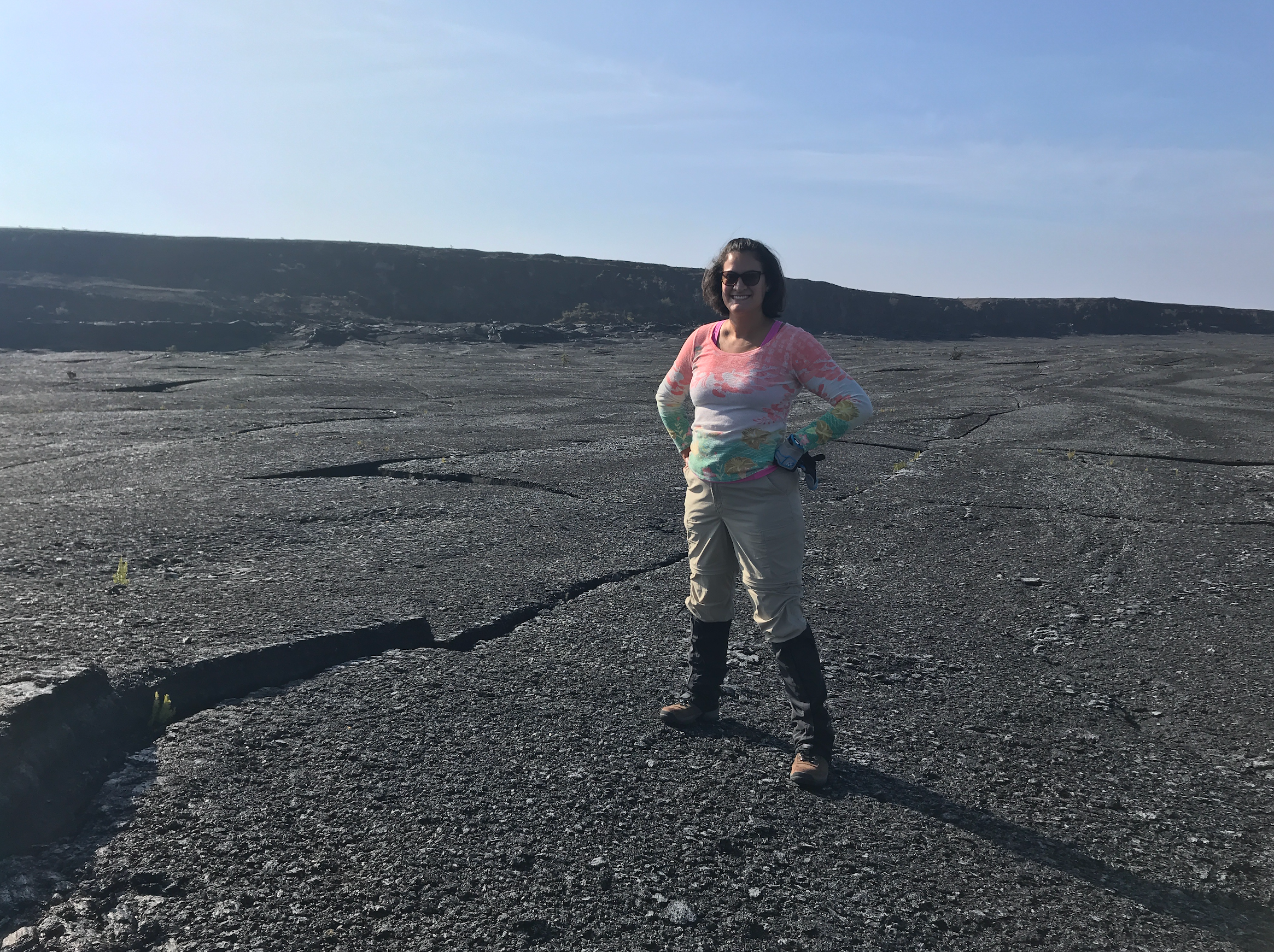
Dr. Santiago-Materese on a rocky surface in Hawaii.
During her NASA career, Santiago-Materese traveled to Hawaii to investigate a planetary analog, a type of terrestrial environment that has very similar characteristics to those we might find on other worlds.
Image credit: Delia Santiago-Materese

At NASA Ames, Santiago-Materese held various roles, ranging from social media and open science to lunar sciences. She then became a program officer for the Solar System Workings program in the Planetary Science Division at NASA Headquarters as part of a detail, or temporary assignment. And then, she took off for Maryland along with her family.

Enabling Science

Santiago-Materese sums up her current role as a program scientist as the “science liaison” between NASA Headquarters and a mission. “When you do program scientist work, you might not be specialized or an expert in the exact science, but you need to be able to understand it and talk about it, to understand its importance,” she explains. “In general, we are supporting other people so they can do science.” In this endeavor, being someone who “gets more energy from working with people” is useful… and necessary: “You are having conversations all day long” with colleagues from different disciplines— from science and engineering to finance.

The Juno mission, in orbit around Jupiter since 2016, and Dragonfly, which is scheduled to launch no earlier than July 2028, are part of NASA’s New Frontiers program. Santiago-Materese also oversees the array of missions in the Discovery program, which includes ongoing science missions like Psyche and Lucy—heading to different asteroids—and future missions to Venus.

For Santiago-Materese, sharing her unconventional path can be valuable for students and youth in general, especially those who are unsure of what they want to do. “Your dream job,” she says, “you might not know it exists, or maybe it doesn’t exist today.” Beyond that, this zigzagging path has led her to accumulate experiences and relationships with different people, which she treasures even as she sets off for her next destination.

An Alien World

About two years out from Dragonfly’s launch, it is no surprise that this robotic mission takes up much of Santiago-Materese’s time. “Dragonfly feels like a combination of all my different experiences over time,” she reflects. And it signifies, to some extent, a return to her roots: it is an astrobiology mission. Although not designed to detect life, Dragonfly will investigate prebiotic chemistry: the chemical processes that could have led to the emergence of life on Earth.

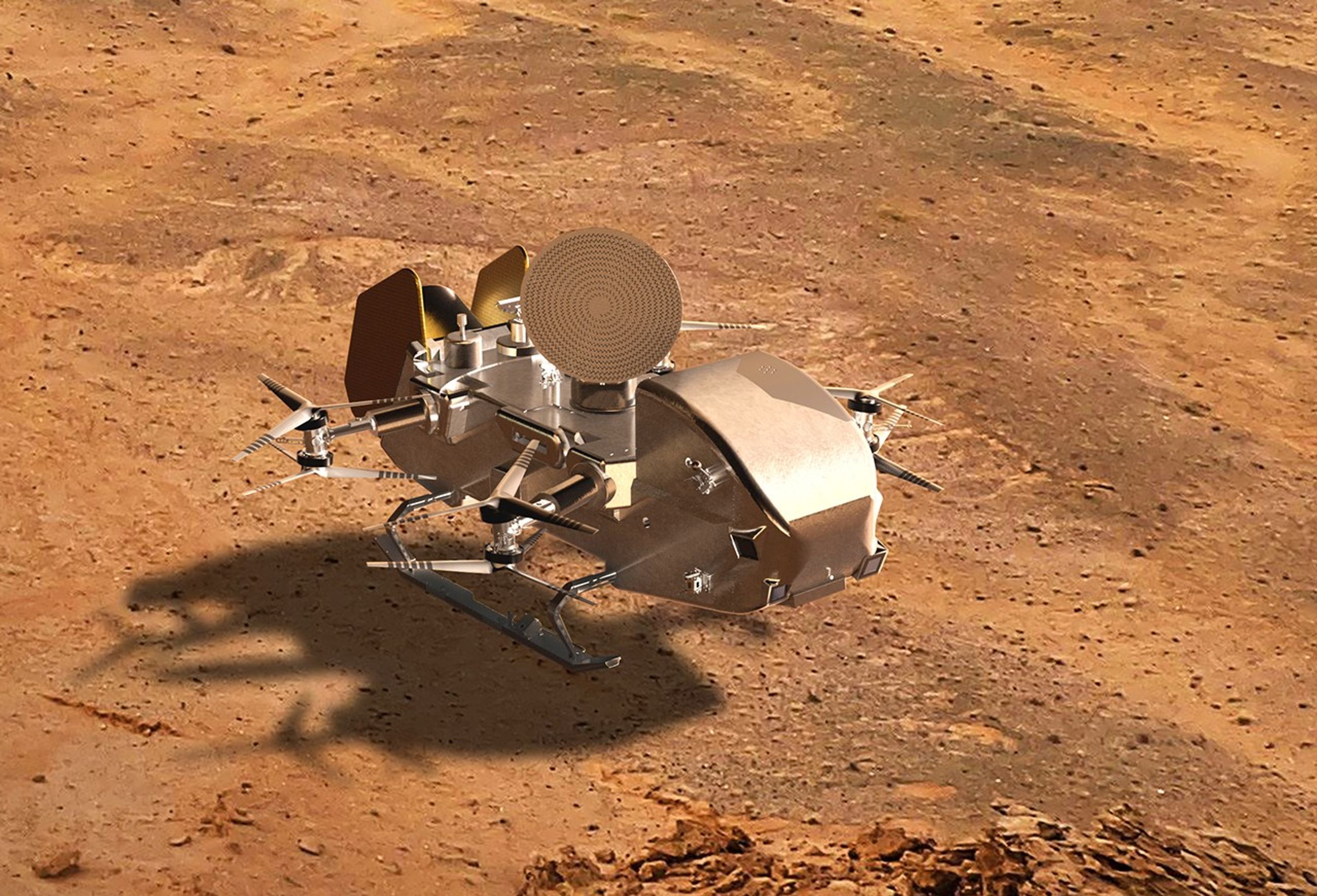
Artist's concept of NASA's Dragonfly on the surface of Saturn's moon Titan.
Digital concept of NASA’s Dragonfly lander on the surface of Saturn’s moon Titan.
NASA/Johns Hopkins APL/Steve Gribben

Dragonfly will embark on a journey of about six years to the surface of Titan. The spacecraft will carry an array of science instruments and will be the first NASA science mission to explore another world by flying from location to location. This car-sized rotorcraft will touch down at various geological sites of interest to analyze the moon’s composition and its habitability potential.

When it arrives at Titan, it will encounter a landscape that is strange and familiar at the same time: it could be a window into Earth’s remote past. This frozen world has a thick atmosphere and clouds drifting across the sky; dunes, lakes, rivers, canyons and mountains. Titan even has a process equivalent to our water cycle. However, on Titan, it is not water that flows but hydrocarbons, primarily methane and ethane. “It’s a more methane-based chemistry, so it is very alien, and that is what I really love about Titan,” says Santiago-Materese. And on this moon, organic molecules abound.

These molecules contain carbon and are used by all known forms of life. They are fundamental to understanding the origin of life, as they can be produced by both biological and non-biological processes. On Titan, these organic molecules fall to the surface and form dense deposits over its bedrock of water ice. Scientists believe that the complex chemistry precursor to life could be triggered there if provided with a little liquid water, such as that generated by an asteroid impact.

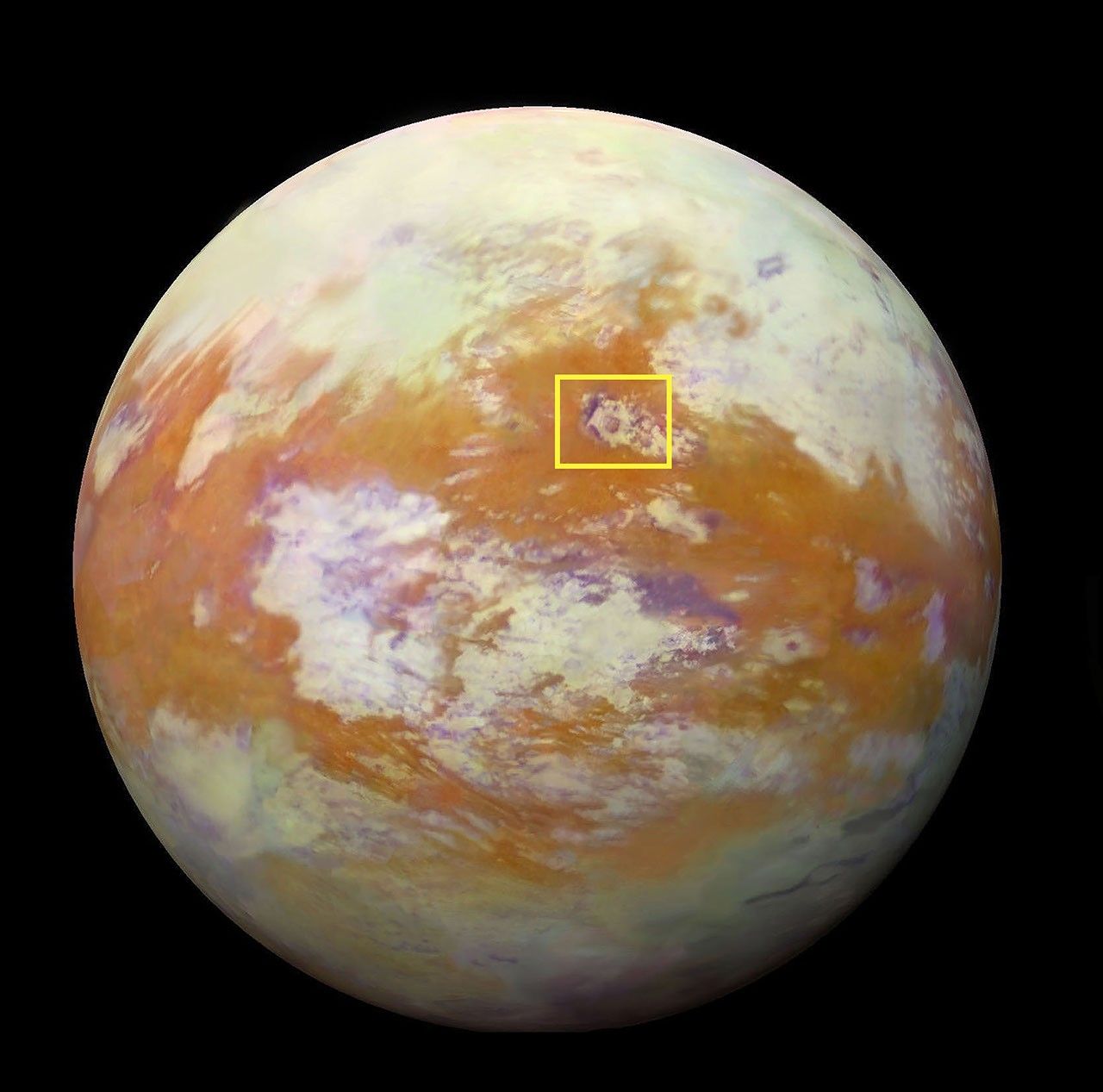
Selk crater, a 50-mile-wide impact site highlighted on this infrared image of Titan.
Selk Crater, an 80-kilometer (50-mile) diameter impact site highlighted in this infrared image of Titan, is a key destination for Dragonfly. The rotorcraft will touch down near Selk and explore various sites, analyzing the surface chemistry to investigate the frozen remains of what could have been prebiotic chemistry in development.
NASA/JPL-Caltech/University of Nantes/University of Arizona

Santiago-Materese is especially excited about what the Dragonfly Mass Spectrometer (DraMS) instrument will help discover. DraMS, designed and built at NASA’s Goddard Space Flight Center in Greenbelt, Maryland, will analyze samples from Titan’s surface. “The more complex things get, the more interesting things happen,” she says. “So I’m curious: just how complex do the molecules get? Will we find any interesting patterns?”

But in science, every time you ask a question, a new one arises. Dragonfly will try to answer several of them. “When you have a planet with complex chemistry but not life, what happens? What is there before life?” the program scientist wonders.

Titan, a valuable natural laboratory, “is going to completely change our understanding of what another world can be like,” she anticipates. In addition to what the scientific community expects to discover thanks to Dragonfly, Santiago-Materese is interested in the potential unexpected findings. “There are very defined science goals, but a lot of it is exploratory work,” she explains. “It is kind of nice to know that there is a big range [of possibilities], that we could be very surprised.”

By Noelia González, NASA’s Goddard Space Flight Center, Greenbelt, Maryland

Lee esta historia en español aquí.

The post Dr. Delia Santiago-Materese appeared first on NASA Science.

  •  

Biologists find a hidden weak spot in how bacteria build the tails they use to move

New research from Indiana University has uncovered a previously unknown vulnerability in how bacteria build the whip-like tails they use to move. The researchers found that building these tails can put stress on the protective wall surrounding a bacterial cell and uncovered systems bacteria use to keep that stress from becoming destructive.

  •  

Local microbes persist in wine despite commercial yeast

A new study has demonstrated that regional microbial imprints can remain detectable under commercial winemaking conditions. The research, appearing in Applied and Environmental Microbiology, shows that inoculated fermentations do not "override" native microbial diversity and that vineyard management and environmental conditions affect wine quality. The study helps explain why wines from different regions taste distinct even when made with similar techniques and supports regional flavors and branding.

  •  

Scientists Discover Bacteria Growing Microscopic “Electrical Wires” With Extraordinary Conductivity

For more than a decade, scientists have known that strange bacteria living in aquatic mud can conduct electricity along distances thousands of times longer than a single bacterial cell. Such long-range electrical conduction should be extraordinarily difficult for a living organism, and how they accomplish the feat has remained a biological mystery.

Now, researchers say they have found the wiring. Inside so-called cable bacteria, scientists have discovered an elaborate network of nickel-rich nanoribbons arranged into what amounts to a naturally grown electrical cable.

The structure is unlike the conventional machinery biology normally uses to move electrons and may represent the first known example of a metal-organic framework produced by a living organism.

What surprised lead study author Dr. Filip Meysman, a professor at the University of Antwerp in Belgium, most was not how alien the structure looked, but how familiar it was.

“It had a very familiar feeling: a braided wire consisting of thin individual wires surrounded by a protective shell layer,” Meysman told The Debrief. “This is very similar to the power cords that we use to charge our smartphones, only the cable bacterial version is 20,000 times smaller in size. Evolution came up with this design 600 million years earlier than electrical engineers.”

Meysman’s comparison is not simply rhetorical. Molecular-clock estimates suggest the cable bacteria lineage may have diverged roughly 560 million years ago, although when their unusual electrical capabilities evolved is still unknown.

Published in Nature Communications, the findings could eventually provide researchers with a biological blueprint for creating flexible, biodegradable electronics that organisms effectively manufacture themselves.

Cable bacteria first attracted scientific attention because of their outstanding ability to move electrons over centimeter-scale distances. The multicellular organisms live in sediments where different layers offer different chemical resources. Cells buried deeper can harvest electrons from sulfide, while cells closer to oxygen-rich water dispose of them.

The result is an organism that successfully separates parts of its metabolism across space, with electrical current passing along the filament connecting them.

Scientists eventually identified dozens of parallel fibers running through the bacteria’s outer layers as the likely electrical pathways. Measurements later showed conductivity reaching levels unusual for any biological material and, in some experiments, comparable to materials used in electronic inks. The new study notes previously reported conductivity values reaching up to 500 siemens per centimeter.

But knowing where the current traveled was not the same as knowing how it traveled.

Most biological electron conduction relies on proteins containing metal-bearing cofactors, commonly iron-containing structures such as hemes or iron-sulfur clusters. Electrons typically move between those sites in a sequence of molecular transfers often described as “hopping.”

Previous research showed that cable bacteria did not fit neatly into that model. Their conducting fibers were associated with sulfur-bound nickel rather than the usual iron cofactors. At the same time, theoretical work suggested electron movement was too fast to be explained by conventional non-adiabatic hopping alone.

The mystery deepened in 2024, when some of the same researchers examined cable bacteria at temperatures approaching that of liquid helium and found that their electrical behavior matched an unusually efficient multistep hopping mechanism. But even then, the extraordinary conductivity challenged standard models of electrons simply hopping between isolated molecular sites.

The new structural work may help explain why.

Rather than a series of small, separated metal cofactors, the researchers have now found an extended nickel-organic structure running through the conductive fibers.

Using electron microscopy, X-ray fluorescence, Raman spectroscopy, electron paramagnetic resonance, X-ray absorption spectroscopy, and computer modeling, the team found that each conductive fiber contains roughly 11 extraordinarily thin nanoribbons, about 1.4 nanometers across.

Those ribbons pass through the center of the fiber and are built from repeating nickel bis-dithiolene complexes, which the researchers call NiBiD. Nickel atoms are linked through sulfur-containing organic molecules, creating planar units that appear to stack into an extended, highly ordered electrical pathway.

That arrangement may explain the extraordinary conductivity. Rather than electrons simply jumping between isolated metal centers, the stacked structure creates extensive electronic interaction and delocalization, allowing charge to spread across overlapping molecular networks. In that sense, the bacterial wire begins to resemble an organic electronic material more than a conventional biological electron-transfer chain.

The arrangement also appears mechanically well-suited to the bacteria’s lifestyle.

Cable bacteria move through sediment and can bend sharply while maintaining electrical contact between cells. A single rigid conducting strand could be vulnerable to damage. Multiple intertwined nanoribbons, however, offer something closer to braided copper wire: strength, flexibility, and redundancy at the same time.

The discovery also appears to broaden scientists’ understanding of what biology can manufacture.

Metal-organic frameworks, or MOFs, are structures in which organic molecules link together metal centers into larger networks. Chemists have spent years designing them for uses ranging from gas storage and chemical separation to catalysis and electronics.

Until now, the researchers say, no one had observed a metal-organic framework configuration naturally constructed inside a living organism.

Cable bacteria appear to have arrived at the idea on their own, and this natural version appears to conduct electricity exceptionally well.

Previous electrical conductivity measurements of cable bacteria used the entire cross-section of their conductive fibers. But the new structural work indicates that the current is concentrated within a much smaller network of nanoribbons.

Recalculating conductivity based on the estimated dimensions of those conducting channels, the researchers found that an individual nanoribbon could have a conductivity of roughly 150 to 15,000 siemens per centimeter.

That range, the researchers say, ranks among the highest reported for any metal-organic structure. The upper figure remains an estimate, however, instead of a direct measurement of a single nanoribbon.

“We need to be able to isolate the individual nanoribbons from the cable bacteria and connect them electrically with electrodes,” Dr. Meysman explained. “This would provide the direct proof of the high conductivity. We are currently working on such nanoscale electrical measurements.”

Doing so would let researchers determine whether the extraordinary conductivity predicted for an individual nanoribbon holds up experimentally.

If it does, the technological implications could extend well beyond understanding an unusual microbe.

Researchers have long been interested in bio-based electronics because living systems can manufacture sophisticated materials through self-assembly while operating under relatively mild conditions. Biological materials can also be flexible and potentially biodegradable.

Their weakness has usually been electrical performance. Cable bacteria suggest nature may have found a way around that tradeoff.

Scientists still do not know exactly how cable bacteria biosynthesize the nickel-organic framework, and parts of the nanoribbon architecture remain unresolved.

But evolution has already solved one problem materials scientists would like to reproduce: how to build a highly conductive, flexible electrical pathway largely from organic components under biological conditions.

Dr. Meysman says one especially promising possibility is flexible printed electronics, where conductive inks are deposited onto surfaces to create circuits, sensors, and other electronic components.

“The material produced by the bacteria provides a flexible and conductive material, and so flexible printed electronics—conductive inks—emerges as a promising application domain,” Dr. Meysman said.

“The challenge is to demonstrate that the biomaterial can be made in a cost-effective fashion,” Meysman added, “and that it has the same—or even better—properties than the electronic ink materials currently in use.”

Ultimately, for hundreds of millions of years, bacteria buried in mud may have been growing microscopic power cables.

Scientists are only now beginning to understand how they work.

The study, “Highly efficient long-range conduction through a biosynthetic nickel-organic framework,” appeared in Nature Communications.

Tim McMillan is a retired law enforcement executive, investigative reporter and co-founder of The Debrief. His writing typically focuses on defense, national security, the Intelligence Community and topics related to psychology. You can follow Tim on Twitter: @LtTimMcMillan.  Tim can be reached by email: tim@thedebrief.org or through encrypted email: LtTimMcMillan@protonmail.com 

  •  

New data flips the narrative on how lions and hyenas interact in the wild

In The Lion King, the hyenas Shenzi, Banzai, and Ed were at the evil lion Scar’s every beck and call. And while the Disney team probably didn’t spend an extensive amount of time observing lions and hyenas interacting in the wild while making the beloved movie, a zoologist and her colleagues just did—and they found something unexpected.

The long-standing assumption about the relationship between the carnivores involves hyenas following lions for their food scraps. However, male African lions (Panthera leo) are the ones going after spotted hyenas (Crocuta crocuta), who move away from the big cats. These new findings are detailed in a  study published today in the journal Frontiers in Ethology.

Nancy Barker, an ecologist at the University of KwaZulu-Natal in South Africa and lead author of the study, observed lions actively tracking hyenas while she was studying brown hyenas (Parahyaena brunnea). 

“When I shared my observations with other leading researchers, I was often told that I had the relationship backwards: that hyenas are the ones tracking lions, primarily for scavenging opportunities, and that what I had seen was simply a series of chance encounters,” Barker said in a statement “I felt there was more to the story.”

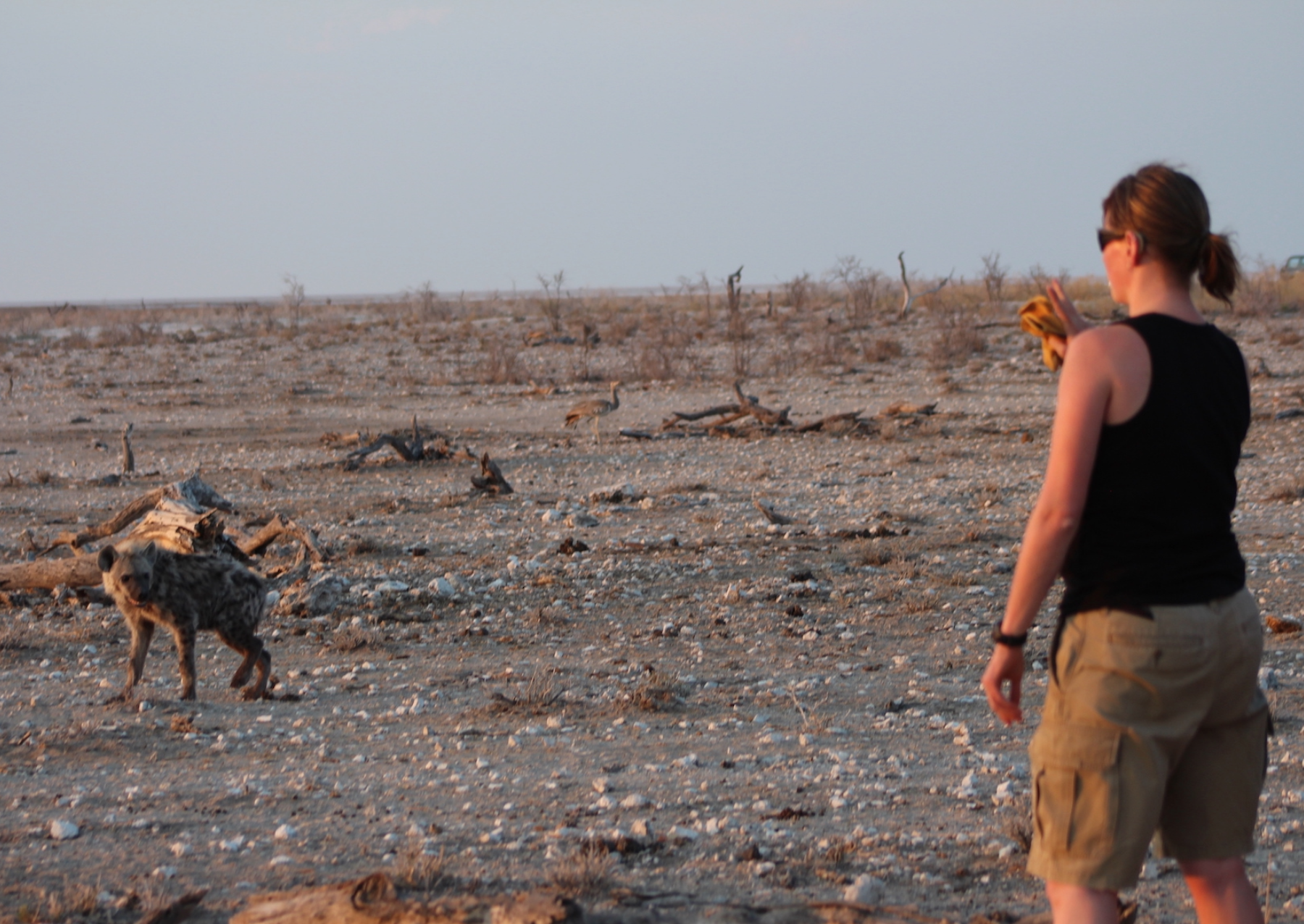
a young hyena looks at a woman
A young spotted hyena at Etosha National Park scopes Barker out. At the time, Barker was setting up a bait station to immobilize and collar the matriarch of the hyena clan. Image: Dr. Nancy Barker.

Barker then put GPS-collars on socially high-ranking African lions and spotted hyenas at Namibia’s Etosha National Park, as well as lions in Linyanti Conservancy in northern Botswana and northeastern Namibia, and  Chobe National Park in Botswana.. The study included data from 17 lions and 14 hyenas collected across four years. 

The collars mapped the animals’ movement by capturing a location snapshot every five minutes during their peak activity hours, and Barker also maintained camera traps and conducted behavioral observations for context. Barker identified 23 pairs of simultaneously tracked animals from the GPS collar data, including 10 lion-hyena pairs. Her team classified the direction of every paired animal’s movements, consequently revealing and studying thousands of interactions.

“Our GPS collar data shows that African lions and spotted hyenas leave a clear, measurable signature in the way they move around one another,” said Barker. “Spotted hyenas consistently move away from lions, while male lions tend to move toward hyenas.” 

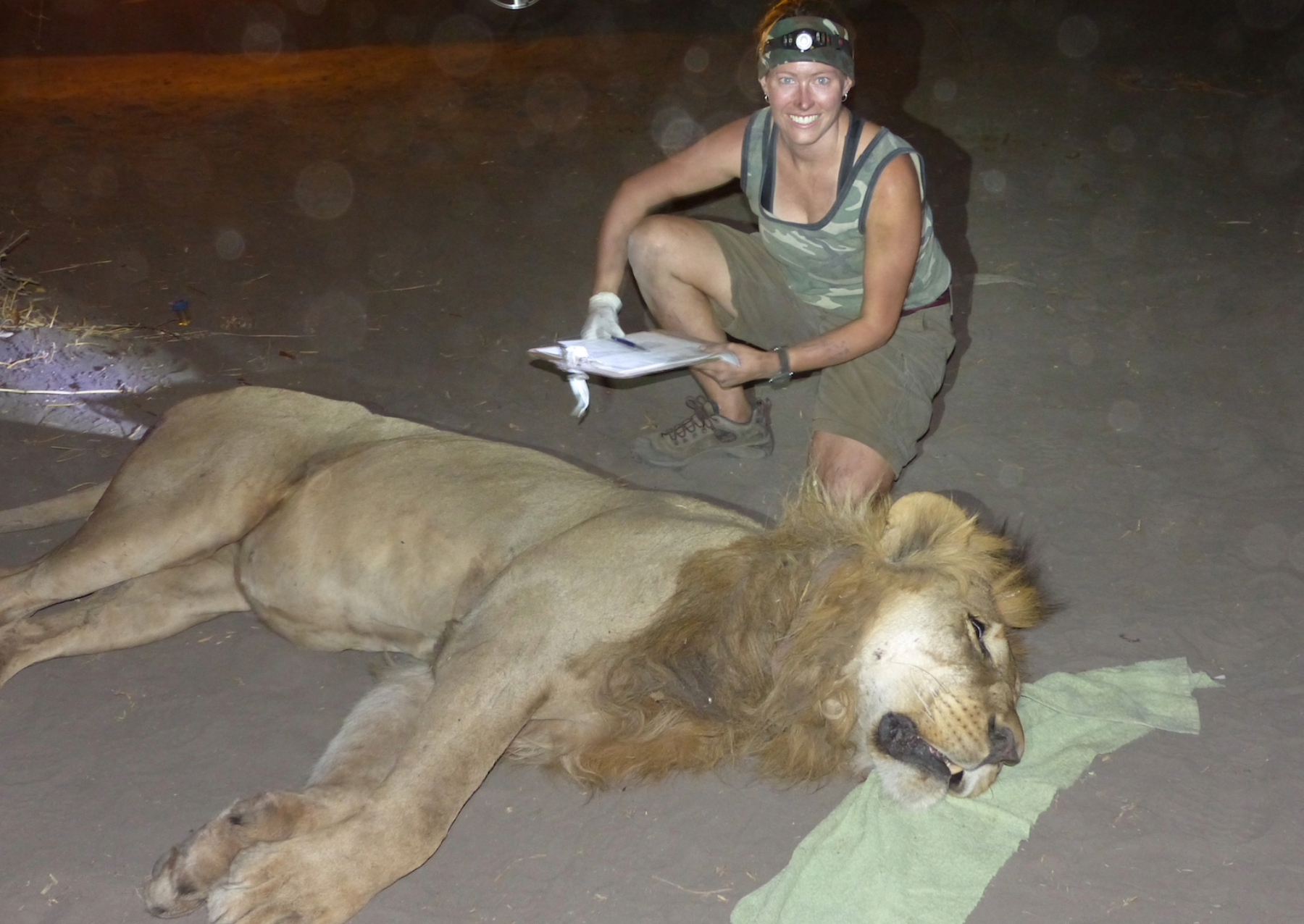
a woman wearing a headlamp kneels by a sedated lion
Dr. Nancy Barker with an immobilized adult male lion from a pride in the Chobe-Linyanti floodplains. Barker took morphological measurements, identification photographs, and blood, tissue and faecal samples before fitting each collar. Image: Dr. Nancy Barker.

Female lions, on the other hand, weren’t as consistent. Barker’s observations revealed that lionesses’ reactions to hyenas were based on which other pride (a group of lions) members were around, though more data is necessary to bolster this determination. 

Because the study includes a limited amount of data, Barker says that some of the findings should be viewed more as trends instead of firm scientific conclusions.  

“I would love to extend this approach to other members of the carnivore guild, to understand how the entire community negotiates space and risk,” she said. “Ultimately, I want to connect these movement patterns to what matters most for the animals: their survival and reproduction.”

The post New data flips the narrative on how lions and hyenas interact in the wild appeared first on Popular Science.

  •  

MIT Engineers Create a Living Circuit Board From Bacteria

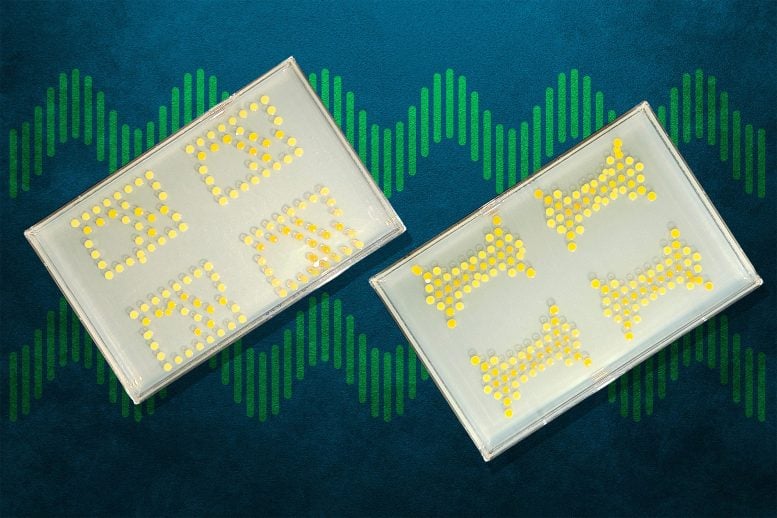
MIT Living TransistorsMIT researchers have engineered bacteria to behave like transistors, making it possible to build living “circuit boards” that can be printed onto growth material in a Petri dish. In conventional electronics, transistors act as switches that control whether electrical current flows. In the biological system developed at MIT, engineered bacteria perform a similar role by [...]
  •  

New Owl Species Discovered in Peru

The Jalca horned owl (Bubo jalca). Image credit: López-Lanús et al.

A horned owl living in a narrow strip of high-Andean grassland in northern Peru is a species new to science, according to a paper published in July 2026 in the journal Audiornis.

The post New Owl Species Discovered in Peru appeared first on Sci.News: Breaking Science News.

  •  

Could Scoop of Moon Dust Reveal Alien Technology?

Meteoroids bombarded the Earth-Moon system 800 million years ago. Image credit: Murayama, Osaka University.

A cubic meter of lunar soil might be one of our best bets for finding physical proof that another advanced civilization once existed somewhere in the Milky Way, according to a new paper to be published in the International Journal of Astrobiology.

The post Could Scoop of Moon Dust Reveal Alien Technology? appeared first on Sci.News: Breaking Science News.

  •  

Why September 9 is the most common birthday

If it feels like you are wishing people a happy birthday more often than usual once September begins, it is not in your head. September is the most common birth month of the whole year, and one day stands above them all—September 9. 

In 2016, statistics organization FiveThirtyEight and data journalist Matt Styles analyzed data on the average number of births per year from 1994 to 2014. In that 10-year-period, September tops the with nine out of the 10 most common birthdays falling on September. Based on this analysis, the ninth day of the ninth month is the most popular birthday.

The reasons behind this surge of September babies are likely couples spending more time indoors during the colder months of the year and holiday season. Some people tend to work less as the holidays approach, so there is more time to party-hop, drink a few more cocktails than usual, and the rest is clear. Pregnancies are supposed to last 38 weeks from conception, so babies born on September 9 would have likely been conceived on December 17. 

DateAverage Number of Daily Births
September 9 12,344
September 1912,285
September 1212,282
September 1712,201
September 1012,190
September 2012,162
July 712,147
September 1512,126
September 1612,114
September 1812,112

Source: birthdayrank.com

For a September 19 birthday, conception date should technically be December 27. All of those September 22 to 26 babies are generally conceived around New Years Eve and New Years Day. December is also a romantic season in general. According to data collected from the wedding planning website The Knot, December is the most popular month to get engaged globally.

Some other hypotheses behind this surge in cold weather conceptions are that the shorter days may affect hormones and that sperm may be less potent in the warmer summer months. 

As far as rare birthdays go, Leap Day (February 29) is the clear winner, but the rest of the rare birthdays are those on major holidays. This is likely because scheduled inductions and C-sections are avoided on days like Christmas (December 25) and Fourth of July. 

To see how common your birthday is, plug it into birthdayrank.com.

The post Why September 9 is the most common birthday appeared first on Popular Science.

  •  

A New Organism’s “Alien” Reproduction, Levitation and Dark Matter, and Genetic Evidence of an Ancient Killer

cells

This week in stories we’re covering at The Debrief… Scientists say they have discovered an organism whose behavior mirrors the reproductive horror depicted in the “Alien” films. Elsewhere, physicists report that a recent levitation experiment could signal a breakthrough in the search for dark matter. Also, new genetic evidence of an ancient killer has surfaced in ancient medieval texts. And finally, a 15,000-year-old cave discovery in Ireland could push back evidence of the first humans on the island by 5,000 years.

Here’s a look at all the stories we’re tracking right now at The Debrief: 


  •  

Scientists Bring a Galápagos Plant Back From the Brink of Extinction

Aerial View of Playa Tortuga NegraThe Galápagos snapdragon, once close to disappearing, is showing encouraging signs of recovery through a long-term partnership between the Charles Darwin Foundation and the Galápagos National Park Directorate. For decades, the Galápagos snapdragon was known from little more than a specimen pressed into an herbarium collection. It had been gathered near Caleta Tagus in 1962, [...]
  •  

Scientists Discover a Bacterial Molecule That “Disarms” a Dangerous Fungus

Fluffy Spores Moldy Fungus FoodA bacterial molecule called gladiolin can disarm invasive Candida albicans and strengthen the effects of a major antifungal drug. Candida albicans usually lives harmlessly in the human body, but under the wrong conditions it can transform into an invasive form capable of damaging tissue and causing life-threatening infection. Researchers from Monash University and the University [...]
  •  
❌