Imagine walking through a World War I excavation site—not wading through mud-filled trenches, but navigating a digital landscape rich with history, artifacts and human stories.
Imagine walking through a World War I excavation site—not wading through mud-filled trenches, but navigating a digital landscape rich with history, artifacts and human stories.
An important Egyptiantomb from the Fifth Dynasty of the Old Kingdom has been discovered in the Saqqara necropolis by a Spanish-Egyptian archaeological mission.
Josep Cervelló, an Egyptology professor at the Autonomous University of Barcelona, led the work, which was coordinated with the Egyptian Supreme Council of Antiquities to investigate the unique tomb in the Saqqara region southwest of Cairo.
The tomb did not belong to a Pharaoh, but was commissioned by a high-ranking official named Yunmen, who served during the reign of Djedkare Isesi. Strangely, the structure features two funerary chapels: one of which is dedicated to the Iti, Yunmen’s father, who held a lower rank than his son.
The discovery may offer a new context for the intersection of spirituality and social mobility in ancient Egypt.
Egyptian Tombs
We now see the Saqqara necropolis primarily as the remains of a dead culture, filled with long-forgotten tombs. While often portrayed as settings for horror stories, the Spanish-Egyptian archeological team viewed them differently, seeing them as places used by a vibrant community, where the living constantly came to leave offerings and work on funerary monuments.
The recent work is part of the continuing exploration of Egyptian sites discovered by archaeologists in the 19th century. To this day, archaeologists continue to seize on hints in the works of their forebears over a century ago to explore ancient Egypt’s impressive remains. Auguste Mariette, a French archaeologist, first discovered the site, identified as containing a large tomb complex, but no detailed exploration or documentation had been done.
Instead of just a place for corpses to lie, an Egyptian necropolis was a major urban feature. Credit: EFE/Egyptian Ministry of Antiquities
Life In the Necropolis
Egyptian mastabas were a unique style of tomb, and in some ways were like modern cemeteries: they were frequently visited places where the lost were mourned and remembered. For this reason, the team was also very interested in the tomb complex’s topography, rather than just its beautiful decoration. They studied the tomb as an urban location, investigating how ancient people moved through it and whether they worshipped outdoors or inside.
Exploring the bustle of urban life in the necropolis netted the team their first indication of Yunmen’s tomb, alongside hints at two more located nearby. In follow-up excavations, the archaeologists are planning to explore the remaining pair.
The tomb’s interior details were extremely well preserved, revealing intricate designs. Credit: EFE/Egyptian Ministry of Antiquities
Moving in Ancient Egyptian Society
The tomb’s physical structure intrigues archaeologists, as it is a rare example of a building with two funerary chapels. Fortunately, the 4,400-year-old tomb is remarkably well preserved, with vibrant color and fine details observable in the wall reliefs. Archaeologists can still clearly make out tiny donkeys and other animals in the wall art. Elsewhere, some elements of the texts adorning the walls follow common formulas—yet even these are customized to the official role and personality of the owners.
Archaeologists interpreting the mastaba believe it reflects social advancement. Yunmen achieved a higher social status than his father, Iti. Yet on the journey to the afterlife, Iti was not forgotten; Yunmen ensured his father received a tomb of similar opulence, so the son’s prestige would apply retroactively to the father in death.
“We still need to fully examine it, but one possibility is that the official originally came from that outlying province, arrived at the court, and settled in Memphis—Egypt’s capital at the time—while his son became an official in the central state administration and was the one who built the tomb,” Cervelló said in a press release.
It remains to be seen what the other two mastabas identified by the team will reveal, whether they will provide more evidence for our traditional understanding of Egyptian culture or add more nuance to our view of these ancient people.
Ryan Whalen covers science and technology for The Debrief. He holds an MA in History and a Master of Library and Information Science with a certificate in Data Science. He can be contacted at ryan@thedebrief.org, and follow him on Twitter @mdntwvlf.
Cannibalism was sometimes on the Neolithic menu, as numerous archaeological discoveries have revealed. But while ancient human bones show the practice took place, far less evidence exists about the forms it may have taken or why people occasionally consumed one another. Was it to stave off hunger during times of desperation? Did different tribes eat their defeated enemies? Or was cannibalism part of complex rituals?
Cannibalism was sometimes on the Neolithic menu, as numerous archaeological discoveries have revealed. But while ancient human bones show the practice took place, far less evidence exists about the forms it may have taken or why people occasionally consumed one another. Was it to stave off hunger during times of desperation? Did different tribes eat their defeated enemies? Or was cannibalism part of complex rituals?
A team from the University of York and Curtin University, in Australia, has settled one of the most persistent puzzles in British archaeology: the exact origin of the towering standing stones known as the Devil’s Arrows, near Boroughbridge, in North Yorkshire. High-resolution geological analysis of microscopic minerals has confirmed that the three surviving pillars — […]
Long before anyone built a kiln on purpose, the ground itself may have shown people how. A new study argues that a wave of prehistoric wildfires in the southern Levant, more than 9,000 years ago, scorched the region so thoroughly that it left behind naturally baked clay — and that Neolithic communities, watching the aftermath, […]
New research has revealed that ancient builders deliberately transported enormous 25-tonne stones across at least 18 kilometers (11 miles) to build Britain's tallest surviving prehistoric stone row—the iconic Devil's Arrows.
A new study suggests that a period of intense fires and landscape upheaval in the ancient southern Levant may have helped create the conditions that led Neolithic communities to discover how fire could transform clay.
Melons produce many seeds, making the melon shape a traditional symbol of fertility and prosperity in Chinese culture. But the historical debate about how melons made their way to modern tables is as long and twisted as the vines they grow on.
High in the central tower of Angkor Wat, an ancient Cambodian temple, paintings depict horseback riders and a traditional musical ensemble. Thousands of visitors pass these images daily without noticing them because they are faded to the point of invisibility.
Cannibalism is understandably frowned upon today,but humans haven’t always been so adverse to the idea of eating our own. Across Europe, multiple archaeological sites indicate at least some Neolithic communities routinely consumed unlucky victims as far back as 5000 BCE. But inside three caves in present-day Spain, ancient skeletal remains vividly illustrate that prehistoric groups never adopted a “one-size-fits-all” approach to their cannibalism. As researchers explained in a study recently published in the Journal of Archaeological Science, a range of methods and motivations for cannibalism existed among Neolithic peoples prior to the Bronze Age.
“For decades, prehistoric cannibalism has tended to be interpreted as a single type of behavior,” Antonio Rodríguez-Hidalgo, a study co-author and archaeologist at the Institute of Archaeology of Mérida, explained in a statement. “Our work shows that it is not possible to speak of a single form of ‘Neolithic cannibalism’, because similar archaeological evidence may conceal very different social realities.”
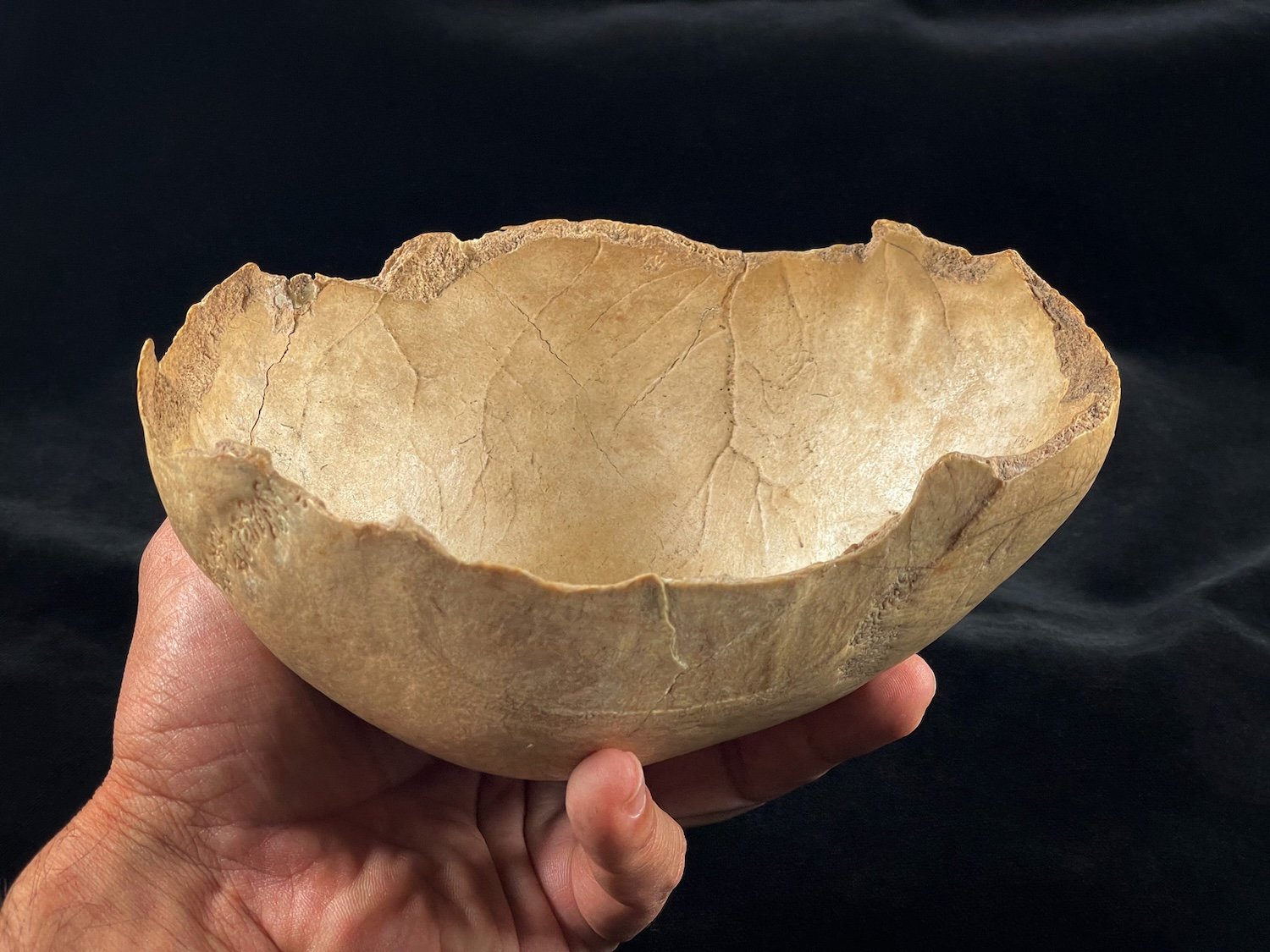
At least two Neolithic human skulls were fashioned into cups at Carigüela cave in Granada. Credit: Antonio Rodríguez- Hidalgo / IAM-CSIC Antonio Rodríguez-Hidalgo
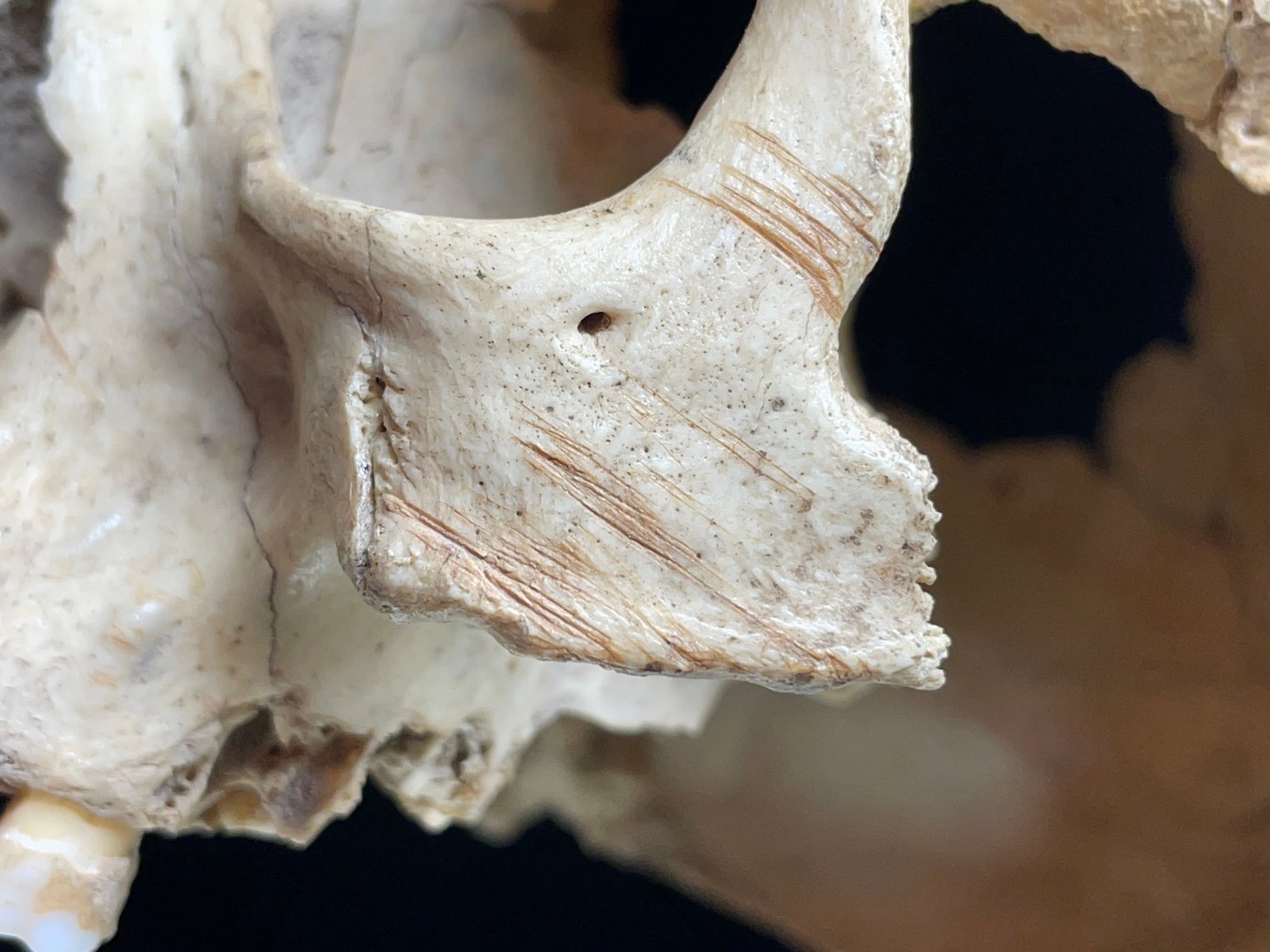
The latest evidence originated inside Malalmuerzo, Carigüela, and Majolicas,a trio of caves located in the Grenada region of southern Spain. Archaeologists first discovered the Neolithic gathering spots over 50 years ago, and the caverns have since become famous examples of prehistoric cannibalism. Rodríguez-Hidalgo’s team re-examined almost 1,000 bones excavated from the caves, then combined their observations with statistical analysis and machine learning programs to classify the various types of damage exhibited on every fragment. These markings included fractures, cuts, blunt impacts, and even teeth marks. They also determined each subject’s estimated age based on skeletal and dental development.
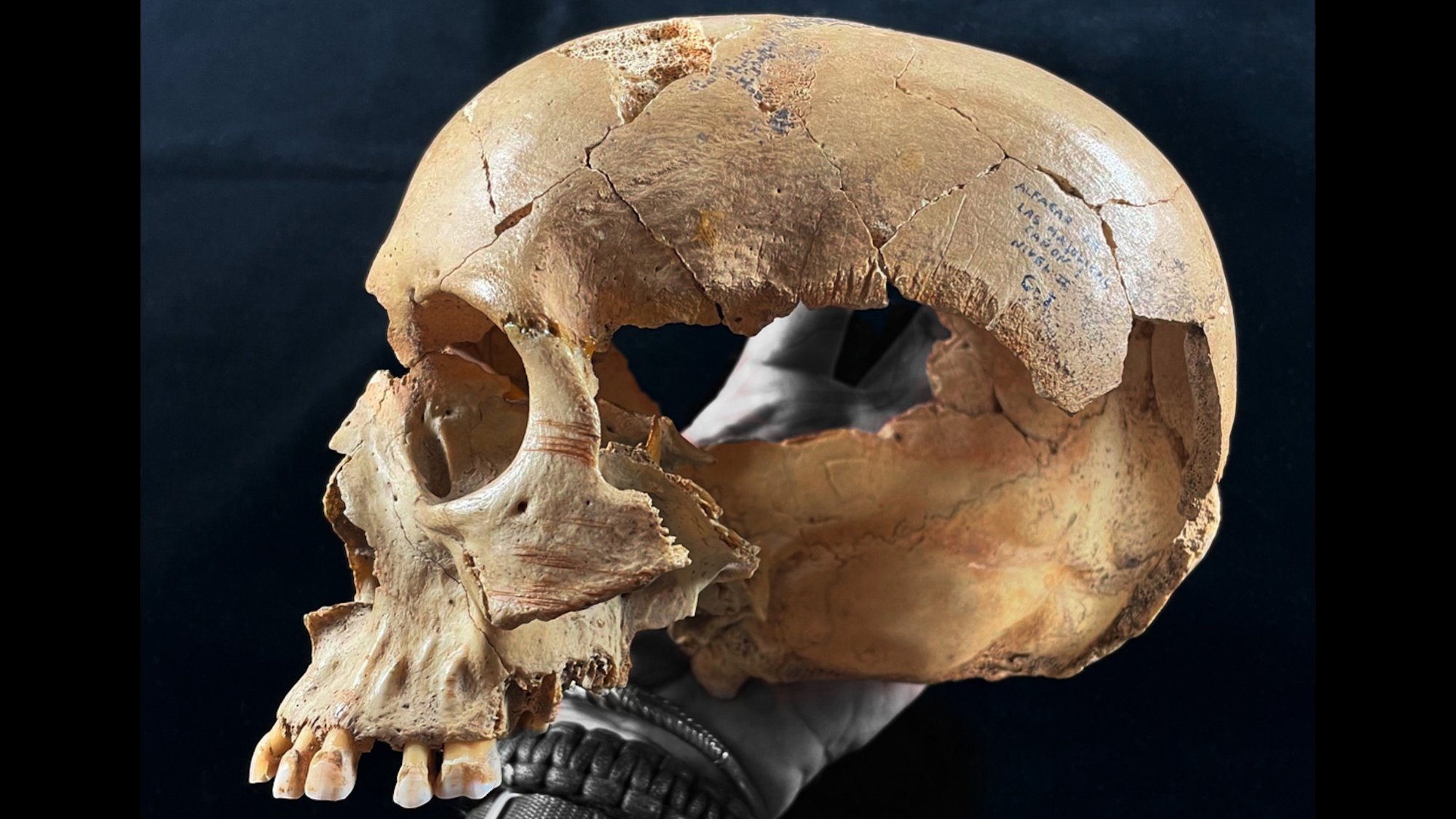
Although many bones show similar butchering techniques and boiling preparations, each cave’s specimens highlighted different practices and contexts. At Malalmuerzo, it appears that a single, brutal act of collective violence involving victims across many age groups took place about 5000 BCE. However, the remains at Carigüela span multiple Neolithic time periods, and even include a pair of skulls fashioned into drinking cups. The most recent cannibalism occurred in Majolicas around 3800 BCE, but doesn’t appear directly tied to violence. Instead, some of the bones are stained red—likely using a rare mineral called cinnabar—which points to ritualistic or funerary motives.
Cut marks are visible on the zygomatic bone of an adult skull from Majolicas cave. Credit: Antonio Rodríguez-Hidalgo / IAM-CSIC
Combined with other archaeological findings, it now appears that cannibalism during the European Neolithic historically occurred in three eras:the late sixth millennium BCE, the middle fifth millennium BCE, and the end of the third millennium BCE. Although traceable to these periods, it still remains unclear why the communities engaged in the practices and rituals.
“We cannot say that all these episodes had a common cause, but we can say that throughout the Neolithic… there was a context of conflict and/or manipulation of human remains,” added archaeologist and study co-author Palmira Saladié.
Bear baiting in England became more popular after the Norman Conquest in 1066, new research shows. The study by Cardiff University and the University of Nottingham brings together archaeological analysis of bear bones and archival records to show the prevalence of the animals in England and northern France during medieval times. The study is published in the journal Society & Animals.
At the foot of Mount Aragatsotn, in the Armenian highlands, sits the site of Aruch — a castle that was never just a castle. Between the 12th and 13th centuries, it housed a high-status residence, complete with stone-slab floors and cisterns. Over time, though, that elite space was carved up into smaller rooms, and holes […]
Deep inside Ojo Guareña, one of the largest cave systems in Europe, in the northern Spanish province of Burgos, archaeologists have spent eleven consecutive summers digging through a single Neanderthal layer. This year’s season, which wrapped up in late August 2026, pushed the excavated area of that layer — known as level 4D — to […]
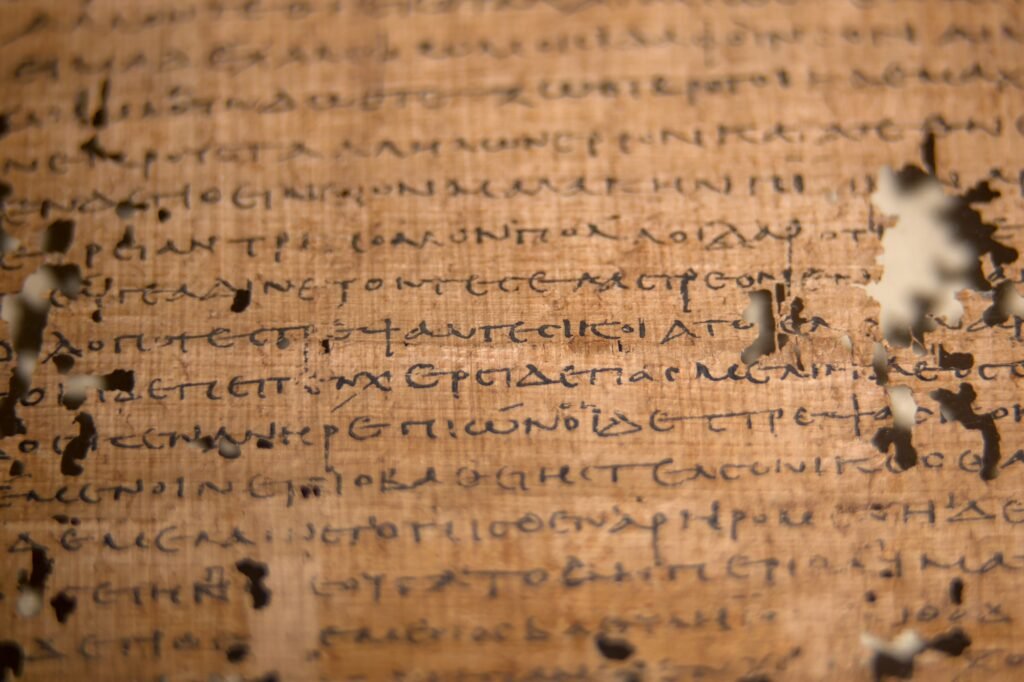
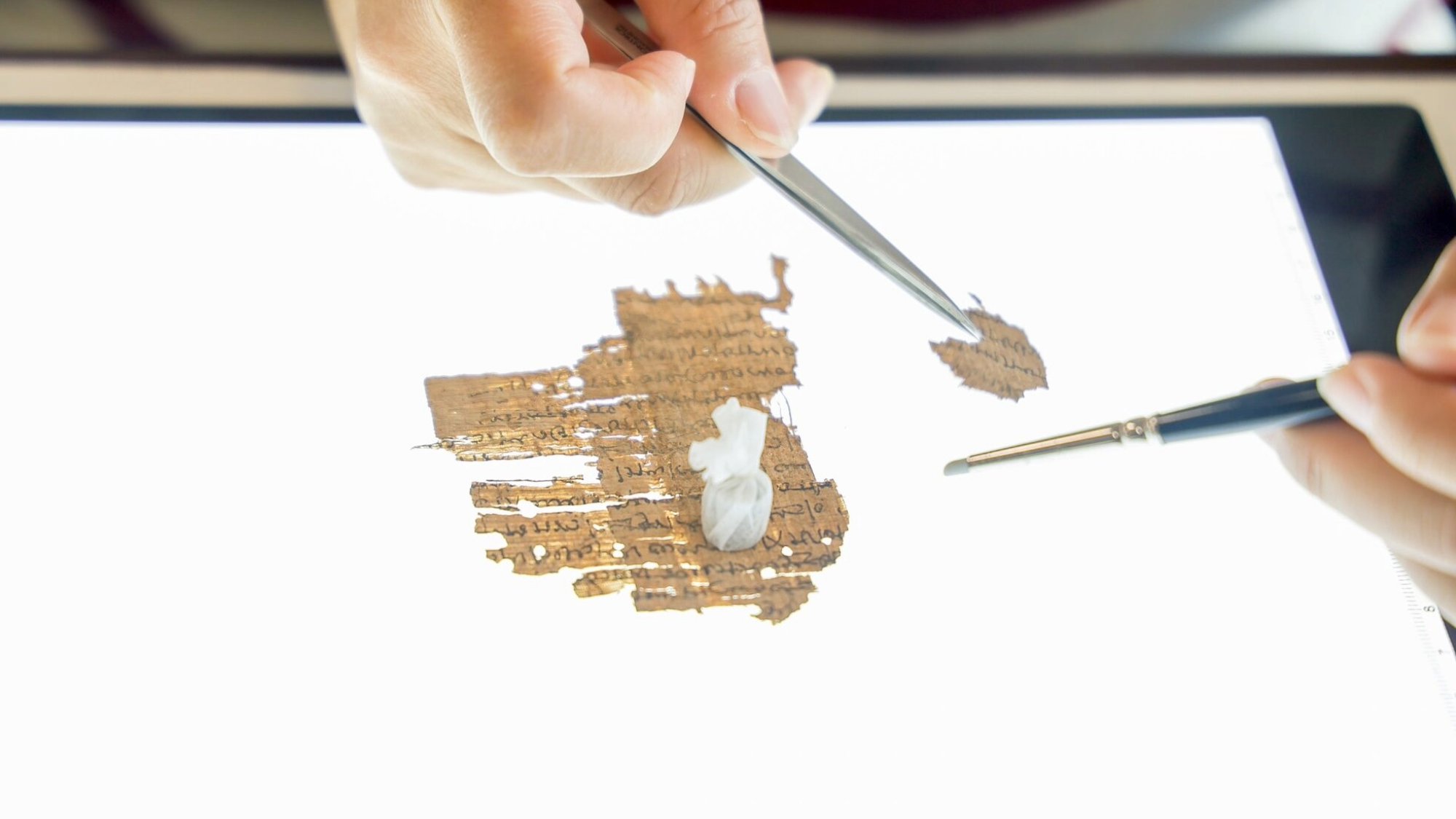
They’re called cornflakes. These overlooked scraps of papyri (texts written on paper made from the papyrus plant) carry partial snapshots of ancient worlds.
For archeologists, cornflakes deserve care and attention as much as their complete cousins do—and that’s exactly what took place this summer, at the University of Michigan’s (U-M) Papyrus Conservation Summer Seminar. An international group of nine researchers acquired and practiced the latest papyrus preservation techniques on papyrus fragments held at the University of Michigan in Ann Arbor.
Close up of papyrus, Homer, Iliad, Book XVIII. Image: Jeremy Marble, University of Michigan News
“Most of them [the researchers] came to Ann Arbor with zero papyrus experience, but the group ended up conserving more than 150 big and small papyri in just two weeks,” Giuliano Sidro, curator of the U-M papyrology collection, said in a statement.
The university’s papyrology collection is the largest collection of ancient papyri in the Western Hemisphere. texts and documents dating back to sometime around 1000 BCE to 1000 CE, including personal letters, school primers, and sales contracts are all preserved within its walls.
One of the researchers worked on a fragment of a copy of “Against Ctesiphon,” a famous speech from an Athenian orator Aeschines delivered in 330 BCE. Another researcher connected a U-M cornflake to one from his home collection in Milan.
The seminar was led by Marieka Kaye, director of preservation services for physical collections at the U-M Library. According to the team, Kaye and Sidro’s collaboration at U-M is a unique dynamic. Usually, conservators and papyrologists work sequentially and independently, not together. The conservator restores and preserves the papyri, and then the papyrologist studies the pieces. When the two can join forces, it also helps the seminar participants understand the material they’re handling in real time.
“The papyrologist can read the texts and guide the conservator’s hand in placing complex, fragmentary puzzles, while the conservator not only makes papyri accessible and readable but also offers a material perspective that can inform, or even correct, a papyrologist’s assessment of a text,” Sidro explained.
When the French Egyptologist Auguste Mariette surveyed the necropolis at Saqqara in the mid-19th century, he catalogued hundreds of mastaba tombs and marked one more on his map that he never got around to excavating. It stayed there, noted but untouched, for more than 160 years. A joint Spanish-Egyptian mission has now finished what Mariette […]
 Login





 Hidden for centuries, the hoard reveals a Viking world where silver crossed borders, and its weight could matter more than its shape.




 Ancient Irish cave art may reveal a lost Ice Age route from Wales.

 Protein traces reveal practical workshop recipes and a connection to the god Ptah.
