❌

Reading view

The Sons of MΓ­l: The Science Behind the Irish Legend That Traces the Origins of the Celts to Northern Spain

In 2006, geneticist Bryan Sykes, Professor of Human Genetics at the University of Oxford, published the results of a study that had taken him a decade to complete. His team had collected and analyzed the mitochondrial DNA and Y chromosome of 10,000 volunteers from England, Scotland, Wales, and Ireland, with the aim of reconstructing the […]

  •  

Arkansas researchers map genetic neighborhoods to identify disease-causing bacteria

Scientists in Arkansas have developed a machine-learning approach that can identify potentially disease-causing strains of a poultry bacterium by analyzing not only which genes are present, but also how those genes are arranged across the genome. The method focuses on the β€œgenetic neighborhoods” surrounding genes, offering a new way to distinguish harmful strains of Enterococcus cecorum from closely related strains that do not cause disease.

E. cecorum is commonly found in poultry environments, and many of its strains are harmless. However, pathogenic strains can cause arthritis, bone infections and lameness, creating serious animal-welfare problems and economic losses for poultry producers. Because pathogenic and nonpathogenic strains can share many of the same genes, identifying the genetic features associated with disease has been challenging.

The research team, led by Aranyak Goswami of the Arkansas Agricultural Experiment Station’s Center for Agricultural Data Analytics, examined the organization of genes within genomic islands. These are segments of DNA that bacteria often acquire from other microorganisms through horizontal gene transfer. Genomic islands can carry genes involved in antibiotic resistance, bacterial survival, movement of DNA and virulence, making them important regions for understanding how pathogens emerge.

Rather than treating the bacterial genome as a simple list of genetic components, the researchers analyzed it as a structured map. They investigated which genes occurred near one another, the order in which they appeared and the way groups of neighboring genes formed recurring units known as genomic-island cassettes. This architecture provided information that could be missed when genes are examined individually.

β€œThe machine-learning model recognizes patterns in gene order much like it recognizes patterns in language,” Goswami said. In the same way that a language model can learn that certain words frequently appear together, the computational system learned that particular combinations and arrangements of bacterial genes were associated with pathogenic strains. The approach therefore captures relationships among genes rather than relying only on the presence or absence of individual DNA sequences.

For the proof-of-concept study, the researchers analyzed the genomes of 145 E. cecorum strains isolated from poultry. The dataset included 95 nonpathogenic strains and 50 pathogenic strains capable of causing illness. The analysis found that disease-associated strains were more likely to contain genomic islands enriched in genes linked to antimicrobial resistance and the transfer of genetic material between bacteria.

Those findings do not mean that every bacterium carrying such genes will necessarily cause disease. Instead, the researchers describe the system as an exploratory classification and research tool. It identifies patterns that may help scientists investigate why some bacterial lineages become harmful, while also providing clues about how resistance and virulence traits move through bacterial populations.

Current monitoring methods for E. cecorum often depend on culturing the bacterium or screening for specific genes. Such techniques remain valuable, but they may overlook broader genomic relationships. The new pipeline could complement these approaches by evaluating the wider context in which genes occur. Additional testing with larger and more geographically diverse datasets will be necessary before the method can be used for routine flock surveillance or diagnostic decision-making.

The researchers believe the strategy could eventually be adapted to other bacterial species affecting animals, humans, wildlife and plants. Goswami’s team is beginning to examine Enterococcus faecalis, a close relative of E. cecorum and a frequent cause of hospital-acquired infections in humans. They also plan to apply the pipeline to Escherichia coli and other bacteria to study how nonpathogenic lineages acquire the genomic configurations associated with disease. The study, published in Frontiers in Microbiology, demonstrates how machine learning and comparative genomics can reveal hidden signals in bacterial DNA and may help researchers track the evolution of emerging pathogens.

Subject of Research: Animals

Article Title: Genomic-island cassette architecture provides interpretable signal for exploratory classification of poultry-associated Enterococcus cecorum lineages

News Publication Date: 7-Jul-2026

Web References: https://doi.org/10.3389/fmicb.2026.1882753

References: Frontiers in Microbiology, DOI: 10.3389/fmicb.2026.1882753

Image Credits: UA University Relations photo by Chieko Hara

Keywords: artificial intelligence, machine learning, deep learning, computational biology, bacterial pathogens, Enterococcus cecorum, genomic islands, genomic architecture, antibiotic resistance, poultry disease, pathogen surveillance, comparative genomics

  •  

Scientists Discover a Hidden Cell Signal That May Explain Congenital Heart Defects

Illustration of Cellular Disease MechanismResearchers at the University of Copenhagen found that a signaling mechanism in the cells’ β€˜antennae’ may help explain why some fetuses develop disease in both the heart and other organs. About two of every 100 babies worldwide are born with congenital heart disease, but the biological processes responsible for these conditions are not fully understood. [...]
  •  

A Vegan Diet May Begin Changing Gene Activity in Just 4 Weeks

Cutting Vegetables Vegan DietChanging what you eat may begin reshaping how your genes behave in as little as a few weeks, even though your DNA itself remains unchanged. In a randomized clinical trial, researchers found that healthy adults who followed a vegan diet for one month developed changes in chemical markers attached to their DNA. Compared with participants [...]
  •  

Why Low-Carb Diets Send Some People’s Cholesterol Soaring

Blood Cells CholesterolA study suggests that genetic factors may explain why LDL cholesterol rises sharply in some people who follow a low-carbohydrate, high-fat diet. Two people can follow the same low-carbohydrate diet and experience very different changes in cholesterol. One may see little difference, while the other develops a sharp increase in low-density lipoprotein (LDL) cholesterol. New [...]
  •  

Neanderthal Gene Still Shapes Muscle and Jaws in Some Living Humans

Velazquez-Arcelay et al. found that genetic material from Neanderthal ancestors may have contributed to the propensity of some people today to be early risers, the sort of people who are more comfortable getting up and going to bed earlier. Image credit: Holger Neumann / Neanderthal Museum.

Neanderthals vanished roughly 42,000 years ago, but a piece of their biology appears to be quietly at work in some people today, according to a new study led by scientists from the Max Planck Institute for Evolutionary Anthropology.

The post Neanderthal Gene Still Shapes Muscle and Jaws in Some Living Humans appeared first on Sci.News: Breaking Science News.

  •  

Safety fears as scientists make first viruses designed by AI

Researchers say breakthrough offers hope for new medicines but also raises urgent biosecurity questions

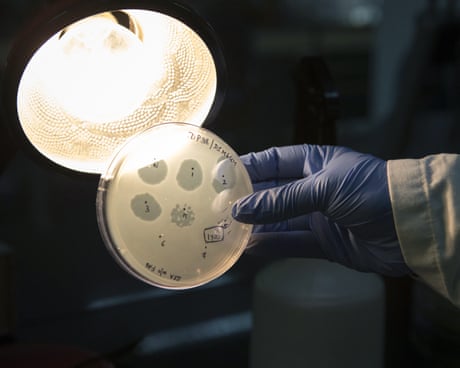
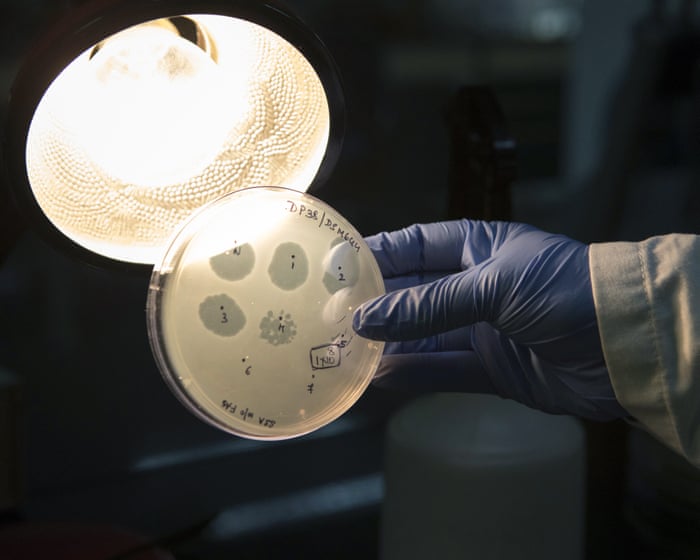
Scientists have made the first viruses designed by artificial intelligence in a milestone that raises hopes for new medicines but also concerns over how to ensure the technology remains safe.

The viruses are specific kinds known as bacteriophages, which only infect bacteria and are used around the world to treat patients with persistent infections. In lab tests, a cocktail of the AI-designed viruses killed E coli bugs that were resistant to natural bacteriophages.

Continue reading...

Β© Photograph: Samyukta Lakshmi/Bloomberg/Getty Images

Β© Photograph: Samyukta Lakshmi/Bloomberg/Getty Images

Β© Photograph: Samyukta Lakshmi/Bloomberg/Getty Images

  •  

Scientists Find Traces of Two Unknown Archaic Hominins in Human DNA

An archaic hominin. Image credit: Ninara / CC BY 2.0.

New research led by the University of California, Berkeley reveals that beyond Neanderthals and Denisovans, humans interbred with two mysterious β€˜ghost’ lineages: one in Africa more than 50,000 years ago, another in Eurasia over 1.7 million years ago.

The post Scientists Find Traces of Two Unknown Archaic Hominins in Human DNA appeared first on Sci.News: Breaking Science News.

  •  

Study Finds a Surprising Link Between Gut Microbes and Aging

Intestinal Gut Bacteria MicrobiomeCertain gut bacteria were linked to slower or faster biological aging. The communities of bacteria living in the gut may carry clues about how rapidly the body is aging. Researchers at the University of Hawaiʻi at Mānoa found that certain microbial patterns were associated with faster or slower biological aging, adding to evidence that gut [...]
  •  

A Single Faulty Gene Copy Can Unravel the Heart’s DNA

DNA Molecule Glowing Genetic DiseaseBy studying a gene associated with congenital heart defects, scientists uncovered a mechanism showing how small reductions in protein levels can disrupt DNA’s three-dimensional structure and lead to disease. A baby can inherit one healthy copy of TBX5 and still develop serious heart defects if the other copy does not work. That genetic imbalance is [...]
  •  

Scientists Reveal Hidden DNA Traces in the Shroud of Turin

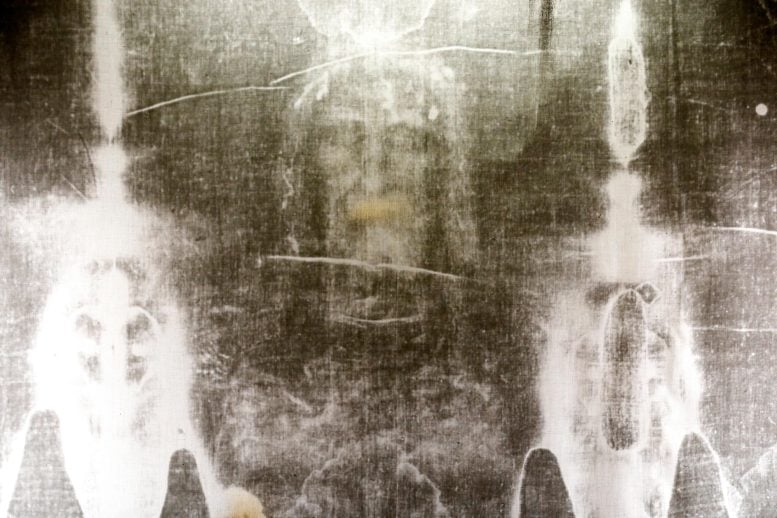
Shroud of Turin Jesus ChristNew research has revealed the complex biological history preserved in DNA traces on the Shroud of Turin. Fibers taken from the Shroud of Turin nearly five decades ago still contain a complex record of biological material accumulated over centuries. In research published in Scientific Reports, scientists applied advanced genomic sequencing (rigorous PCR-free next-generation metagenomic sequencing) [...]
  •  

Not just Neanderthals: Ghost lineage in Africa left its mark on our DNA

When the history of our ancestry is written, the fact that we've interbred with some of our closest relatives, the Neanderthals and Denisovans, will have a central role. And it will be tempting to write it as a very tidy story: Once we got genomes from these other groups, it was possible to identify the sequences in our genomes that we shared with them.

But in reality, as scientists started poking large enough collections of data, there were regular hints of some strange ancestry in our genomes. It was hard to pin down, though, at least in part because the 2 percent on average of Neanderthal DNA found in many populations does not guarantee that any two individuals will have the same 2 percent. So having the genomes of those two groups made sense of some things researchers had already been seeing.

But knowing what we do about Neanderthal and Denisovan DNA is now allowing researchers to answer a somewhat different question: Is there anything else? Using recently developed analytical techniques, they find evidence of a third lineage that we apparently interbred with before any modern humans left Africa. Again, there were hints of this earlier, but so far, there's been no genome from a modern human relative to help us understand the detailsβ€”the source of this DNA remains a "ghost lineage."

Read full article

Comments

Β© BSIP

  •  

Not just Neanderthals: Ghost lineage in Africa left its mark on our DNA

When the history of our ancestry is written, the fact that we've interbred with some of our closest relatives, the Neanderthals and Denisovans, will have a central role. And it will be tempting to write it as a very tidy story: Once we got genomes from these other groups, it was possible to identify the sequences in our genomes that we shared with them.

But in reality, as scientists started poking large enough collections of data, there were regular hints of some strange ancestry in our genomes. It was hard to pin down, though, at least in part because the 2 percent on average of Neanderthal DNA found in many populations does not guarantee that any two individuals will have the same 2 percent. So having the genomes of those two groups made sense of some things researchers had already been seeing.

But knowing what we do about Neanderthal and Denisovan DNA is now allowing researchers to answer a somewhat different question: Is there anything else? Using recently developed analytical techniques, they find evidence of a third lineage that we apparently interbred with before any modern humans left Africa. Again, there were hints of this earlier, but so far, there has been no genome from a modern human relative to help us understand the detailsβ€”the source of this DNA remains a "ghost lineage."

Read full article

Comments

Β© BSIP

  •  
❌