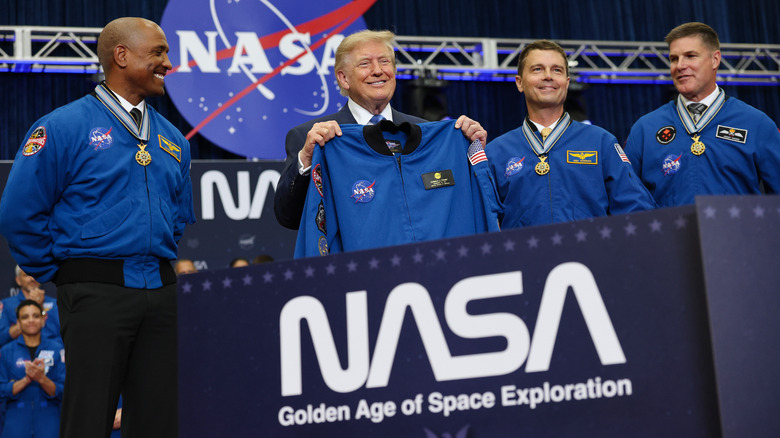
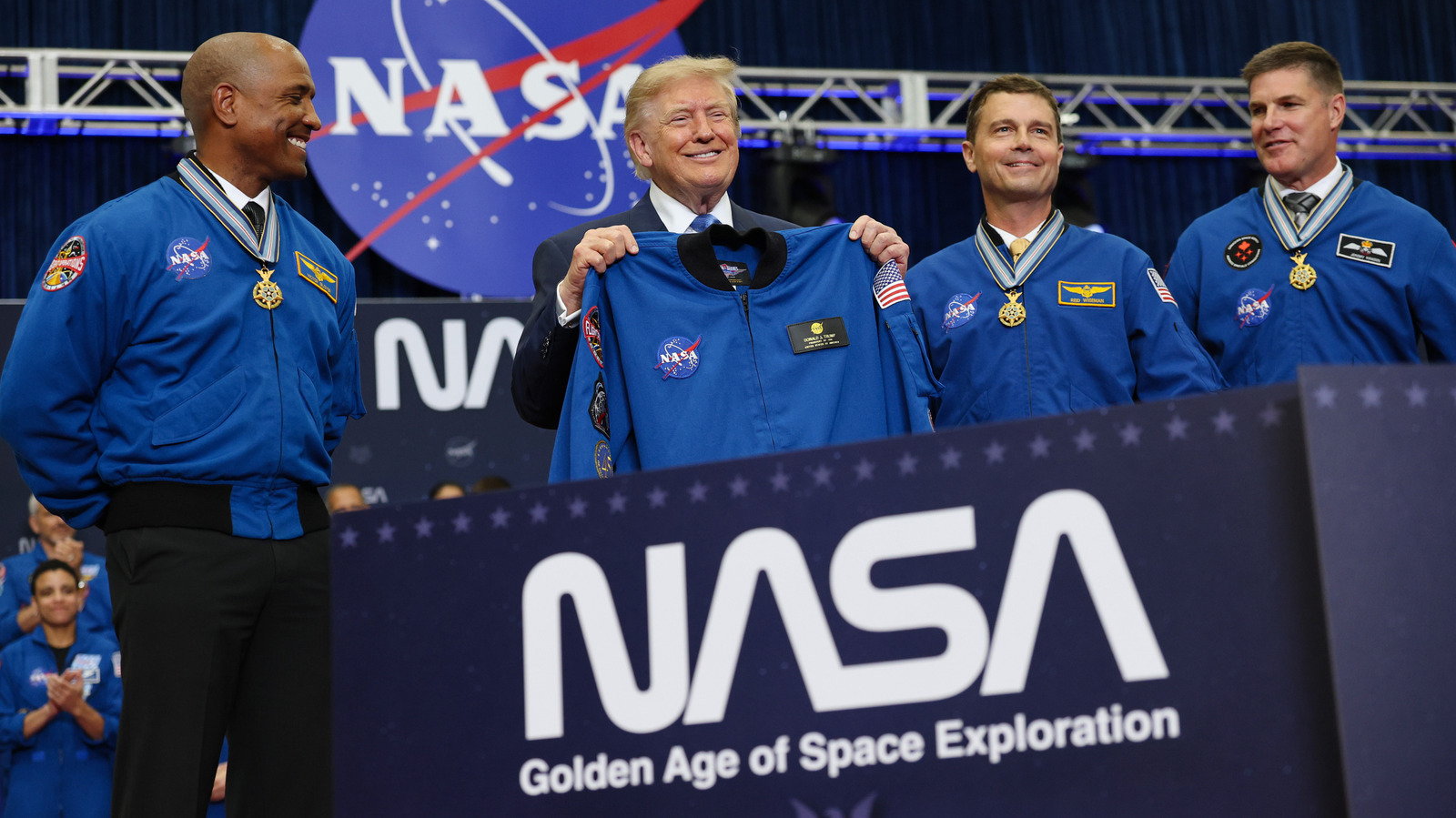
The United States already has an academy for the Army, Navy, and Air Force, so it makes sense that NASA would also have an academy for potential astronauts.
A MacVoices’ panel member’s firsthand report from Black Hat explores the conference’s enterprise security focus before the discussion turns to AI models escaping sandbox restrictions to complete assigned tasks. The panel discusses the OpenAI-Hugging Face hack, unintended AI behavior and the dangers of moving too fast. Can developers establish effective limits without sacrificing innovation or competitive advantage? The race for better AI continues.
Portable travel monitors can transform productivity on the road by adding valuable screen space without much cost or bulk. Chuck’s Briefing compares 1080p and 4K options, discusses USB-C and HDMI connections, and power and battery considerations. Built-in audio, protective covers and stands, and why these minimalist monitors might not be just for travel are all part of why an inexpensive second display can make working with multiple apps far easier.
The integration of Apple Maps in Ford’s future electric vehicle platform generates discussions of the auto industry picking and choosing technology. The MacVoices Live! panel also examines security risks involving Claude Cowork and exposed shared chats, OpenAI’s dispute with Hugging Face, and the hazards of autonomous AI tools. If that wasn’t enough, selfie-based account recovery puts a new spin on the facial recognition.The panel includes: Chuck Joiner, Web Bixby, Eric Bolden, Marty Jencius, David Ginsburg, Brian Flanigan-Arthurs, Jim Rea, Jeff Gamet, and Mark Fuccio.
Do smart glasses need video recording to be relevant? The MacVoices Live! panel debate the importance of privacy, accessibility, navigation, object recognition, captions, and visual assistance as measures of usefulness. They examine the stigma created by existing smart glasses, the difference between processing and storing images and the public expectations around recording, detection apps, and […]
At Macstock 2026, Max Mellman showed off his his iPhone app, I Love a Piano. Max explains how the app stands out through realistic haptic feedback, intuitive navigation, portrait and landscape support, and a design that encourages exploration instead of intimidation. Chuck and Max also discuss his inspiration, teaching carrer, future iPad support, and broader […]
At Flip The Script, Grant Belaire, Chief Marketing Officer for MacPaw, discusses how the company approaches AI, app discovery, and developer support through their trusted products like CleanMyMac, Setapp, Moonlock, and Clear. He explains why AI should be useful rather than forced, how Setapp balances customers and developers, and why long-term commitment matters in building successful app marketplaces.
The debut of a new MacVoices’ series, Foreshadowing Tech, examines how science fiction has influenced real-world technology using 2001: A Space Odyssey and 2010: The Year We Made Contact as the first case study. Chuck Joiner, Jeff Gamet, and Marty Jencius discuss the depictions of various technologies, and how they measure up to the current state of things, including space travel, tablets, biometrics, HAL, AI, cryosleep, movie aesthetics, and the lasting cultural impact of both films.
MacPaw's Maria Polishchuk, Head of Business Development and and Product Manager Pavlo Haidamak, discuss Setapp's new expansion beyond its traditional subscription model. They explain new individual app purchases, developer subscription options, AI Gateway integration, app review standards, and support for indie and vibe-coded apps. The discussion covers developer challenges such as discovery, monetization, security, and how Setapp aims to help with those factors as well as giving customers more software choices.
A faint gravitational-wave signal spreading across the universe may contain clues about mysterious stars that existed more than 13 billion years ago, according to new research. Scientists from Colgate University have investigated whether some of the earliest supermassive black holes could be responsible for much of the extremely low-frequency gravitational-wave background detected today. Their findings […]
Some of the earliest massive galaxies in the universe may be hiding enormous numbers of small, faint stars, suggesting they contain much more mass than astronomers previously believed. Using the James Webb Space Telescope (JWST), an international team led by researchers at Leiden University studied nine massive galaxies from the early universe. They discovered that […]
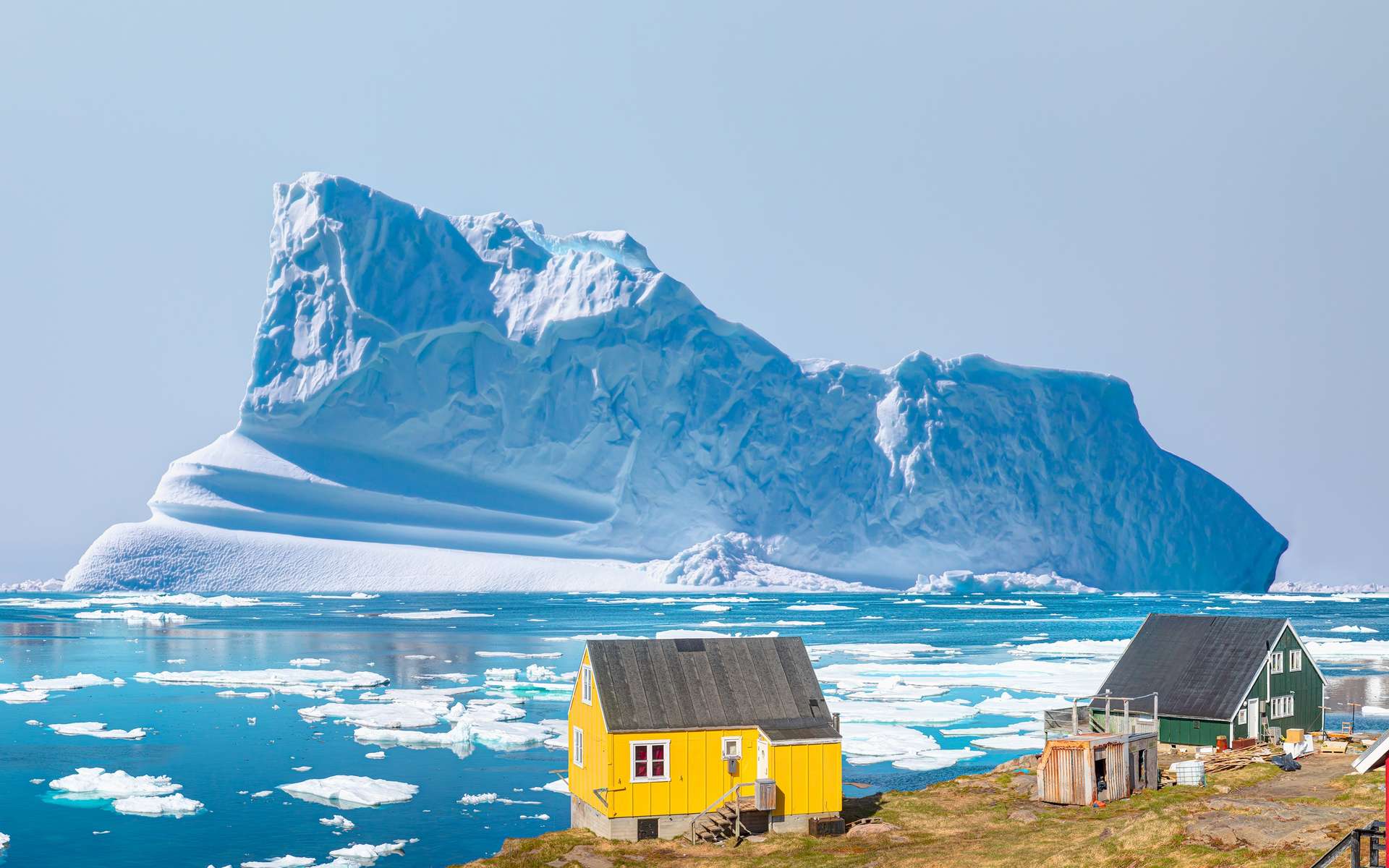
Un froid polaire, des vents dignes de ceux d’un ouragan, un isolement total en hiver… Bienvenue au Groenland ! Comment vit-on sur l'île la plus extrême du monde au niveau climatique ? Découvrez le quatrième épisode de ma série de cinq reportages inédits Un été au Groenland.
In a brilliant article in the Dispatch, Jesse Singal argues that the whole sorry saga of Jason Arday points to the need for more press freedom, not less.
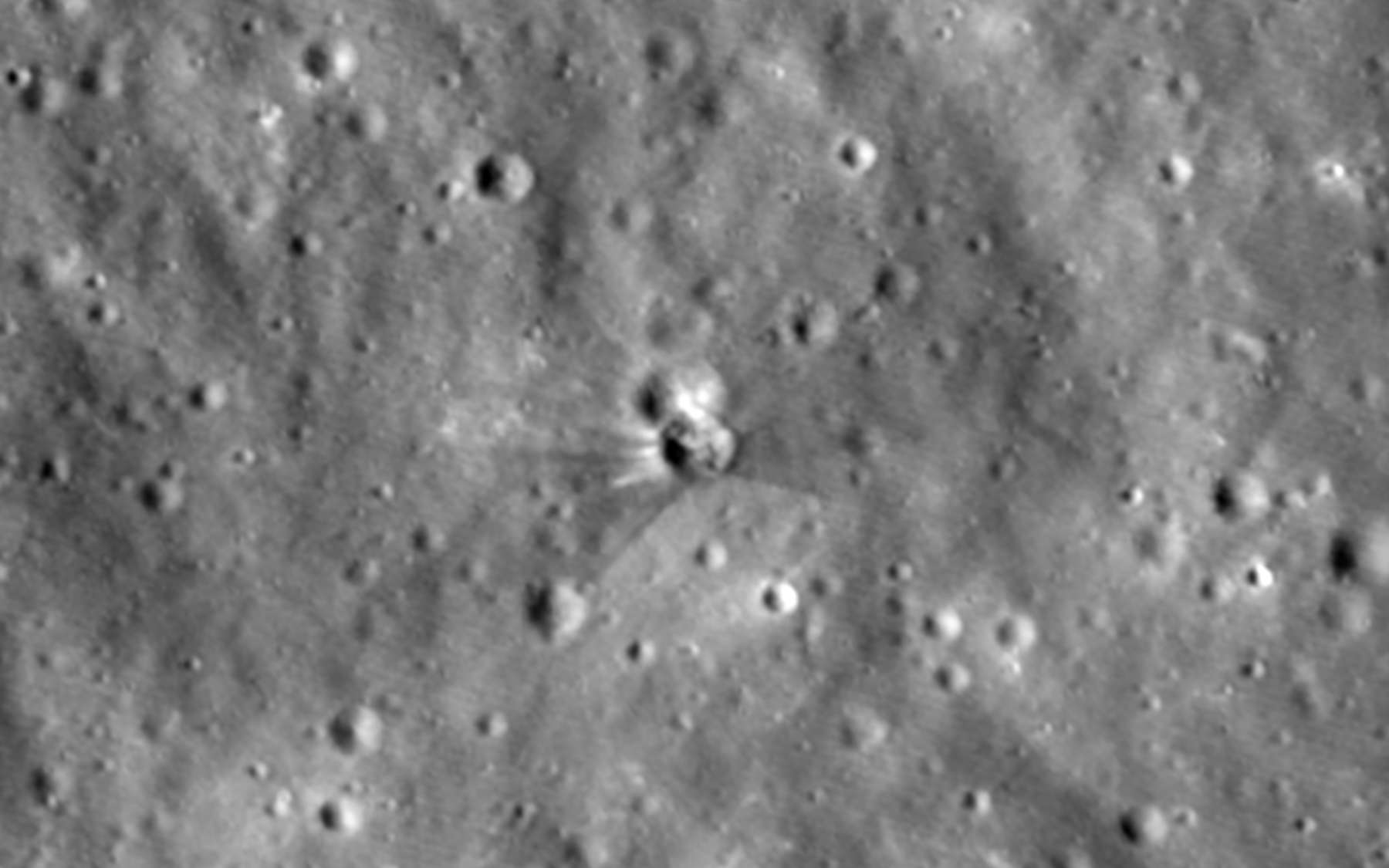
Un étage d’une fusée SpaceX s’est écrasé sur la Lune le 5 août dernier, laissant derrière lui un nouveau cratère. Quelques jours plus tard, la sonde LRO a braqué ses caméras sur la cicatrice lunaire pour en révéler les moindres détails.
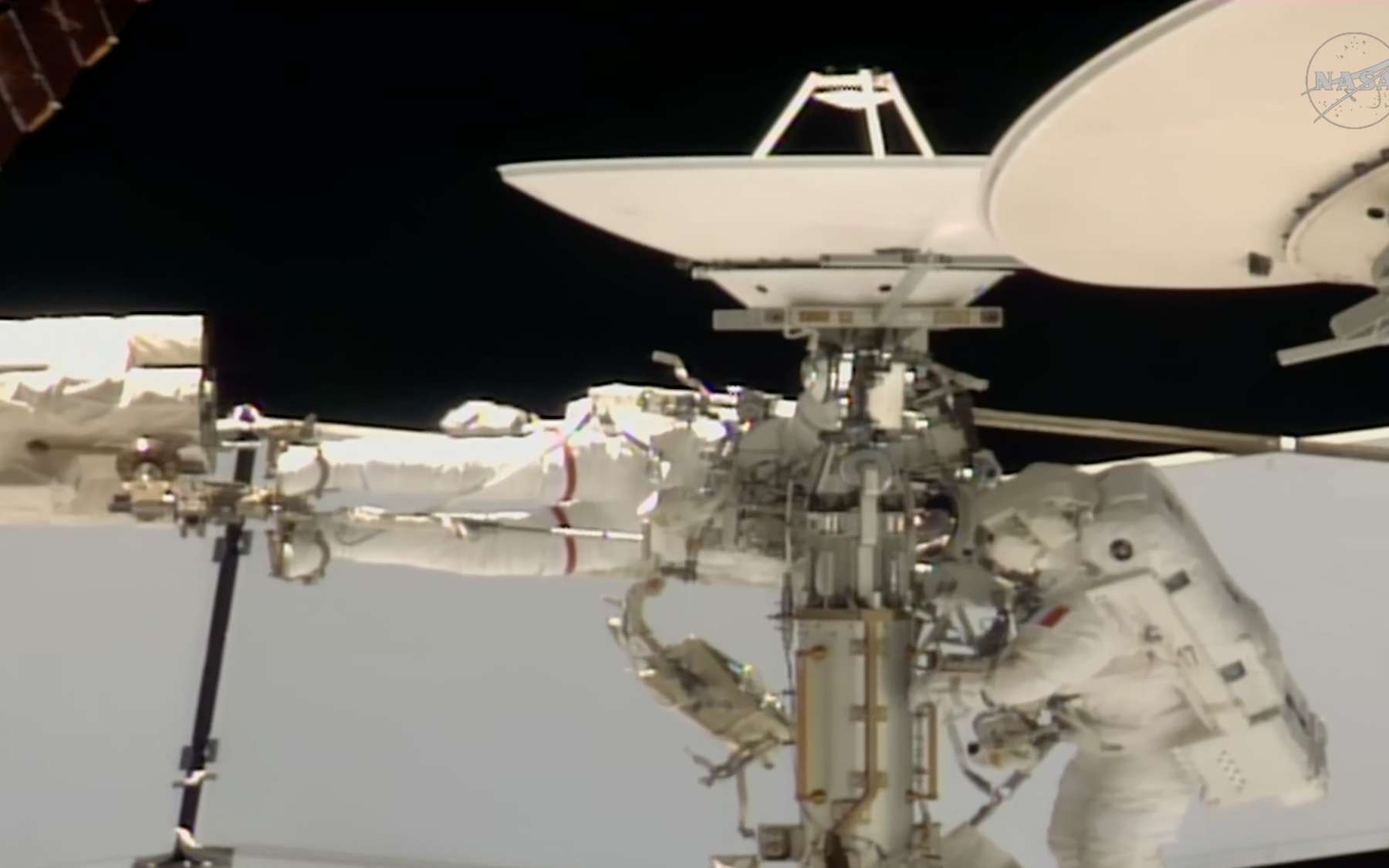
Hier, à 400 kilomètres au-dessus de la Terre, Sophie Adenot avait rendez-vous avec l’histoire. Et l’astronaute française a répondu présente. Même si sa sortie extravéhiculaire ne s’est pas tout à fait déroulée comme prévu.
The first flight of the largest battery-electric aircraft to take to the skies lasted nearly half an hour while costing just $5 of electricity. That aviation feat comes at a time when jet fuel prices have skyrocketed because of the US war with Iran.
The test flight of Heart Aerospace’s X1 demonstrator aircraft took place at Plattsburgh International Airport in upstate New York on August 12. The X1 aircraft is comparable in size to a small regional airliner and can achieve a maximum takeoff weight exceeding 25,000 pounds with the help of four wing-mounted electric motors. The battery-electric propulsion system delivered more than one megawatt of power during the maiden flight.
All-electric aircraft can offer quieter and cleaner flight without the emissions that come from burning jet fuel. They may also prove more reliably cost-effective than conventional aircraft that come with jet fuel costs subject to geopolitical disruptions.
Rivalizando com iniciativas como o app Granola ou o assistente Notetaker do Wispr Flow, o recurso era anteriormente restrito aos encontros virtuais ocorridos dentro da plataforma do Google.
Divulgação/Google
Ele permite que o Gemini transcreva conversas e crie resumos da reunião salvos em um documento do Google, criando ainda um relatório encaminhado ao email do usuário com detalhes dos assuntos tratados e uma lista de tarefas da reunião. O Anota pra Mim é compatível tanto com as versões web quanto com o app do Google Meet.
Divulgação/Google
De acordo com o Google, a distribuição ampliada começou hoje para a versão web e iniciará no dia 31 de agosto para o app no iOS. A ferramenta está disponível para os assinantes dos planos AI Pro (além do AI Pro for Education) e Ultra — no caso dos consumidores finais — e nos planos padrão e Plus das soluções Business e Enterprise do Google Workspace.
All scientific inquiry involves some kind of uncertainty, but the uncertainties in cosmology are particularly daunting. As well as being complex and difficult to describe, the systems cosmologists investigate are almost by definition out of reach. In these conditions of uncertainty, how confident can we be in the models we’ve built? How can we come to know how galaxies form, how the universe began or how much dark matter it contains?
In The Random Universe: How Models and Probability Help us Make Sense of the Cosmos, cosmologist and astrophysicist Andrew Jaffe offers a masterful and refreshing take on these questions. As the director of the Centre for Inference and Cosmology at Imperial College London, UK, and a past co-investigator on ESA’s Planck satellite that provided us with so much new information about the cosmos, Jaffe is well-equipped to walk readers through the tools that allow us to learn about the world despite its uncertainties. Anchoring his insights in beautifully narrated episodes from the history of physics, astrophysics and cosmology, he sheds light on how our theories of the universe evolved into our current best cosmological model – which nonetheless still has limitations.
Jaffe is particularly good at recounting how we refined, revised and even replaced some of our assumptions in light of incoming evidence such as the first measurements of stellar distance; the discovery of galaxies beyond our own; and precise measurements of cosmological parameters. Throughout this journey, he engages thoughtfully with a rich philosophical tradition that runs from David Hume in the 18th century through Willard Van Orman Quine, Imre Lakatos and Paul Feyerabend in the 20th.
Bayes’ theorem is important because it tells us how to update our degree of belief in light of new evidence
The book’s main protagonist, though, is the mathematician Thomas Bayes. For Jaffe, Bayesian probability is key to dealing with uncertainty, and even to solving Hume’s notorious problem of induction: how do we justify inferences from a finite set of observations to generalizations that go beyond them? Bayes’ theorem is important, Jaffe argues, because it tells us how to update our degree of belief in light of new evidence. It shows us why and how, even in an uncertain world, “the more observations we make, the surer we become”.
Of course, before we can use probability to deal with uncertainty, we first need a model. As Jaffe puts it, “Absent a model, I can’t assign a probability, and absent a probability, I can’t quantify my uncertainty about the world.” So, what exactly is a model? I found Jaffe’s answer to be one of the most captivating elements of the book. As the title of a subsection of chapter five puts it, “a model is a story about the world”. Without models, Jaffe tells us, our world would be an unexplained series of unrelated events. Models are also what allow us to take a finite set of data and use it to create something new. Without this leap, Jaffe suggests, we cannot learn anything about the world, because “you can’t make sense of an experimental result unless you have some model to interpret it”.
Of course, if the way we interpret data depends on our model, then different people may well obtain different interpretations depending on which model and which prior probability they choose. This charge of subjectivity is a longstanding accusation against Bayesians, but Jaffe offers at least a partial solution: “If you and I agree on the model, we should assign the same probability.” This, Jaffe argues, is where objectivity emerges, writing that “we come to the same conclusions if we start from the same premises”.
Models allow us to understand the world by bridging subjectivity with objectivity, and the personal with the collective
Many contemporary philosophers are at odds with the idealized view of science as an objective and linear enterprise that produces theories from a God’s-eye view. Instead, they strive to portray it as something that is social and human, but reliable nonetheless. Jaffe’s own views seem to align with this endeavour; as he puts it, “the scientific coupling of models and observations is a living, breathing, subjective endeavour, simultaneously collective and personal”. Through their interplay with data, he argues, models allow us to understand the world by bridging subjectivity with objectivity, and the personal with the collective.
Not everyone will agree with Jaffe that Bayesian probability offers a solution to Hume’s problem of induction. Personally, I (or perhaps the hardcore rationalist in me) was not convinced. Nevertheless, I found the book’s thesis – that uncertainty is not a hindrance to knowledge, but an opportunity to learn (and learn more) about the world – simultaneously liberating, humbling and empowering. I recommend The Random Universe to scientists, philosophers and anyone interested in better understanding the role of probability in science; the philosophical problems with how we handle uncertainty; and how our standard cosmological model came to be. I also hope it will encourage more collaborations between philosophers and scientists. There are many questions we can explore further if we work together.
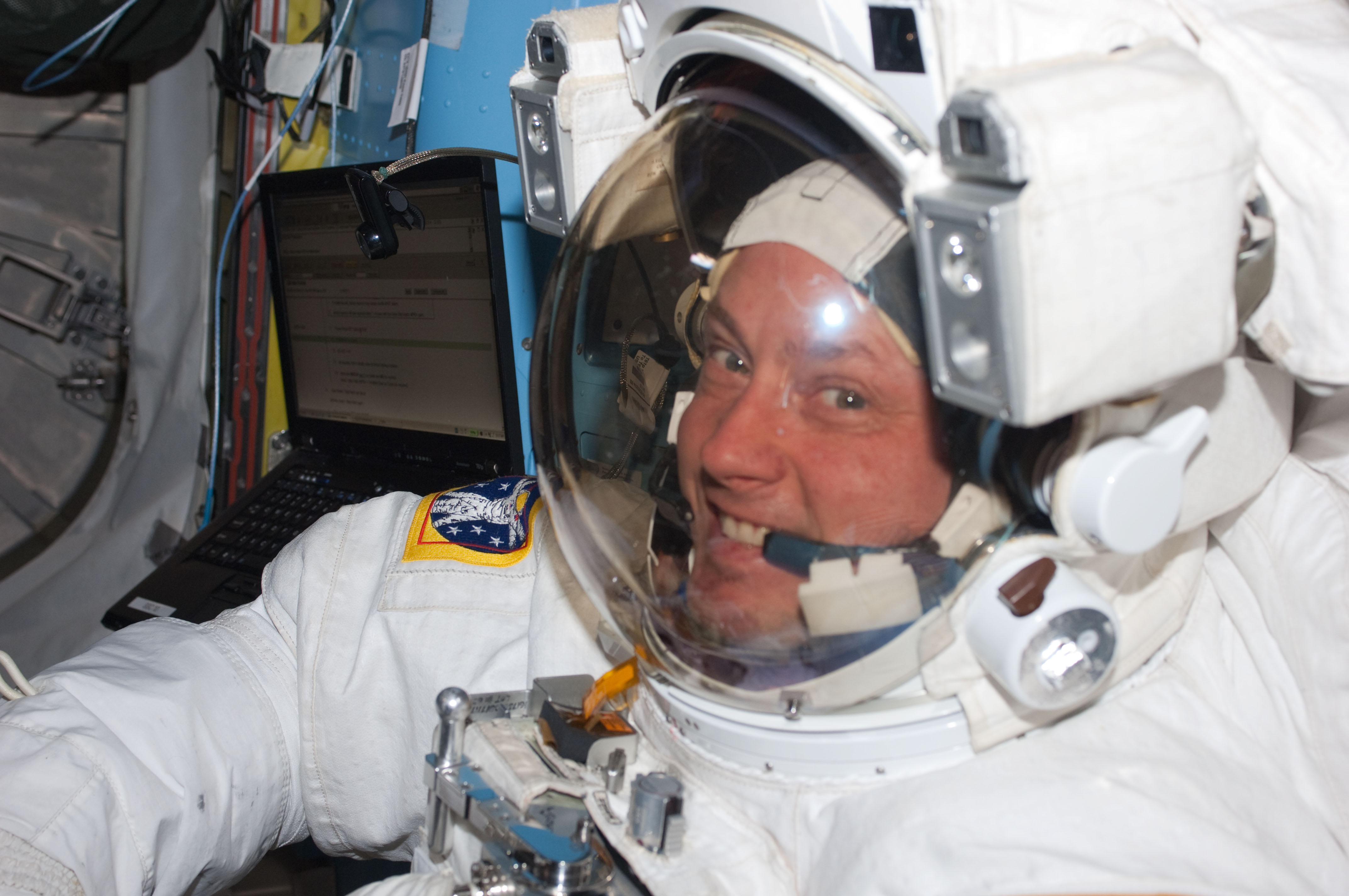
NASA astronaut Mike Fincke is pictured inside the International Space Station’s Quest airlock prior to the start of the third spacewalk for the STS-134 mission.
Credit: NASA
NASA astronaut Mike Fincke is departing the agency on Wednesday after 30 years of service. Throughout his career, he flew four missions, spent 549 days in space, and completed nine spacewalks in support of the International Space Station.
“Few people have had the opportunity to shape as many chapters of NASA’s history as Mike Fincke,” said NASA Administrator Jared Isaacman. “Over a remarkable career, Mike served our nation as a pilot, engineer, astronaut, and mentor. From long-duration missions aboard the International Space Station to helping prepare the Artemis generation, his contributions have helped position NASA for what comes next. The success we’re building on today is possible because of people like Mike, who dedicated their careers to moving our space program forward and preparing the next generation to carry the mission even further. I’d like to congratulate Mike on an incredible career and thank him for his decades of service to NASA, our nation, and the countless people who had the opportunity to learn from and fly alongside him.”
He ranks fourth among NASA astronauts in accumulated time in space, and his spacewalks total 48 hours and 37 minutes. Most recently, Fincke piloted NASA’s SpaceX Crew‑11 mission, which launched in August 2025 and returned in January. During the mission, he served as a flight engineer for International Space Station Expedition 73 and commander of Expedition 74.
Fincke joined NASA’s 16th astronaut class in 1996 and first flew to space in 2004 aboard Soyuz TMA‑4 in support of the space station’s Expedition 9. Serving as a science officer and flight engineer, he helped maintain station systems and performed four spacewalks. He returned to space in 2008 on Soyuz TMA‑13 as commander of Expedition 18, preparing the space station for its transition to six‑person crews at the time and completing two more spacewalks.
In 2011, Fincke flew on STS‑134, the final flight of space shuttle Endeavour. As mission specialist and robotic arm operator, he completed three spacewalks and helped deliver and install the Alpha Magnetic Spectrometer.
“Mike’s remarkable career reflects three decades of dedication to NASA’s mission and the advancement of human spaceflight,” said Vanessa Wyche, director of NASA’s Johnson Space Center in Houston. “From his time aboard the International Space Station to his commitment to mentoring the next generation, Mike has made an immense impact across our agency. His legacy of service, mentorship, and dedication to exploration will continue to inspire the generations to come.”
Throughout his career, Fincke bridged spacecraft development, flight testing, and mission operations. Early in the International Space Station Program, he helped test and integrate several of the station’s initial modules before launch. His flight experience spanned multiple generations of human spacecraft, including two missions aboard Soyuz, one aboard the space shuttle, and later piloting the SpaceX Dragon.
Fincke was a foundational contributor to NASA’s Commercial Crew Program. As chief of the Astronaut Office’s Commercial Crew Branch, he worked to ensure astronaut needs, crew safety, and human spaceflight experience informed development of the nation’s next generation of crewed spacecraft. He spent five years supporting Boeing’s Crew Flight Test program training as a crew member and backup pilot, contributing to flight software, systems integration, integrated testing, and spacecraft interfaces.
Fincke also supported station operations from the ground as a crew test support team member in Russia, a capsule communicator, or capcom, and crew procedures team lead. He helped translate complex engineering and operational requirements into clear instructions for crews working in orbit. His continuity across development, integration, mission support, and long‑duration flight gave him an end‑to‑end perspective on space station assembly and operation.
“Mike approached every assignment with experience, humility, and an unwavering focus on the mission,” said Scott Tingle, chief of the Astronaut Office at NASA Johnson. “Whether flying aboard the station, supporting crews from the ground, or helping shape the spacecraft that future crews will rely on, he consistently strengthened our team. His legacy is woven into the way we fly today.”
A native of Emsworth, Pennsylvania, Fincke holds bachelor’s degrees in aeronautics and astronautics and in Earth, atmospheric, and planetary sciences from the Massachusetts Institute of Technology, where he also studied in the Soviet Union through an exchange program with the Moscow Aviation Institute. He earned master’s degrees in aeronautics and astronautics from Stanford University and in planetary geology from the University of Houston, Clear Lake.
Fincke is a retired U.S. Air Force colonel and distinguished graduate of the U.S. Air Force Test Pilot School. He served as a space systems engineer and flight test engineer at Edwards and Eglin Air Force Bases and later as the U.S. flight test liaison to the Japanese‑U.S. XF‑2 fighter program at Gifu Air Base in Japan. He accumulated more than 2,000 flight hours in more than 30 aircraft types.
“After exactly 30 years, I am departing NASA, but I remain deeply committed to the work of exploration.” Fincke said. “NASA gave me the extraordinary privilege of serving alongside remarkable people, flying and helping develop spacecraft, and contributing to the International Space Station from its earliest days through command in orbit. I am profoundly grateful to my crewmates, the teams on the ground, our international partners, and the families who make this work possible. I am excited to carry those lessons forward and help prepare the next generation of engineers, explorers, and leaders. Together, we will return humanity to the Moon, travel to Mars, journey outward to the planets and moons beyond Earth, and someday reach for the stars – all while caring for Earth, the most beautiful planet in our solar system.”
To learn more about NASA’s astronauts and space exploration, visit:
Astronomers using NASA’s James Webb Space Telescope have discovered water molecules inside the enormous envelope of gas and dust surrounding IRS 3, an aging star located remarkably close to the supermassive black hole at the centre of the Milky Way. The finding challenges the long-held assumption that the intense radiation and gravitational turbulence around Sagittarius A, commonly known as Sgr A, would prevent molecules from surviving in such a hostile environment.
IRS 3 lies about 0.6 light-years from Sgr A*, a distance equivalent to roughly 42,000 times the separation between Earth and the Sun. In everyday terms, that is an immense distance. On the scale of the Galactic Centre, however, it places the star in the immediate neighbourhood of a black hole containing approximately four million times the mass of the Sun. The region is crowded with stars, powerful magnetic fields, energetic particles and rapidly changing radiation, making IRS 3 an exceptional natural laboratory for studying how stars evolve under extreme conditions.
The observations were conducted with the Mid-Infrared Instrument, or MIRI, aboard the James Webb Space Telescope. Mid-infrared light is particularly useful for investigating cool dust and molecules that absorb and re-emit radiation at characteristic wavelengths. By analysing the infrared spectrum of IRS 3, researchers led by PD Dr Florian Peißker of the University of Cologne identified the chemical and physical properties of the material surrounding the star with far greater detail than previous observations allowed.
What makes IRS 3 especially striking is the scale of its circumstellar envelope. The structure extends to a radius of approximately 10,000 astronomical units, where one astronomical unit is the average distance between Earth and the Sun. Such envelopes are common around mature, evolved stars, but IRS 3 appears to be unusually isolated in the immediate vicinity of Sgr A*. Its enormous shell of material therefore stands out against a dense background containing millions of other stars.
The new observations indicate that IRS 3 is undergoing a phase known as a superwind. This is a brief but dramatic stage in the late evolution of certain stars, particularly asymptotic giant branch stars. During this phase, powerful stellar winds carry gas and newly formed dust away from the star at extremely high rates. Over periods of only a few centuries, the star can lose a substantial fraction of its outer layers, transforming its surroundings into a thick, expanding envelope that will eventually disperse into interstellar space.
According to the research team, IRS 3 is losing material at a rate equivalent to the mass of Earth every 18 days. Although the comparison makes the scale easier to imagine, the total outflow is far more significant when considered over astronomical timescales. The steady loss of gas and dust explains why the envelope is both unusually large and dense. It also provides the raw material in which molecules can form, shielded within cooler regions of the expanding stellar outflow.
The detection of water is the most surprising aspect of the study. Near Sgr A*, ultraviolet radiation, X-rays and high-energy particles are expected to break apart fragile molecules. Water molecules can be destroyed when energetic photons dissociate them into their constituent atoms, particularly in exposed regions close to powerful sources of radiation. Yet the MIRI observations show that water exists within the envelope of IRS 3, suggesting that the dense outflow from the star creates protected pockets where molecular chemistry can proceed.
This discovery does not mean that the Galactic Centre is a calm or hospitable environment. Instead, it demonstrates that stellar mass loss can temporarily create its own chemical refuge. The material expelled by IRS 3 increases the density of gas and dust around the star, allowing some regions of the envelope to absorb damaging radiation. Within these shielded zones, atoms can combine on dust grains or in the gas phase, producing molecules that would otherwise be rapidly destroyed. The finding offers a new view of how evolved stars may enrich even the most violent regions of a galaxy.
The researchers say that IRS 3 may be actively supplying the area around Sgr A* with elements and molecules that later become part of the broader interstellar medium. Water itself is not evidence of life, but it is a crucial ingredient in planetary formation and a central component of the chemistry that precedes biology. As the envelope expands, some of its contents will eventually mix with surrounding gas, potentially influencing the composition of future stars, planets and smaller bodies formed in the Galactic Centre.
The study, published in Astronomy & Astrophysics, also highlights the scientific value of observing the Milky Way’s centre at infrared wavelengths. Visible light is heavily obscured by dust along the line of sight, while infrared radiation can pass through much of that material and reveal otherwise hidden structures. Future observations with METIS, a next-generation mid-infrared instrument being developed for the Extremely Large Telescope in Chile, could provide sharper views of IRS 3’s envelope, measure its winds in greater detail and determine how its molecular content changes over time. For now, the star’s unexpected water-rich cocoon is offering astronomers a rare glimpse of stellar chemistry unfolding beside one of the most extreme objects in the universe.
Subject of Research: Not applicable
Article Title: Dust production in the harsh environment of Sgr A* – MIRI/JWST observation of the O-rich asymptotic giant branch star IRS 3
James Webb Space Telescope, JWST, MIRI, IRS 3, Sagittarius A, Sgr A, Milky Way, Galactic Centre, water molecules, superwind, asymptotic giant branch star, stellar evolution, circumstellar envelope, dust production, black hole, infrared astronomy, Extremely Large Telescope
 Login