Mathematics shows that every electoral system must compromise among proportionality, local representation, and parliament size. Denmark’s 2022 national election came down to a single seat, even though its proportional voting system was designed to make party representation closely match the vote. That outcome points to a deeper mathematical problem: no electoral system can always preserve [...]
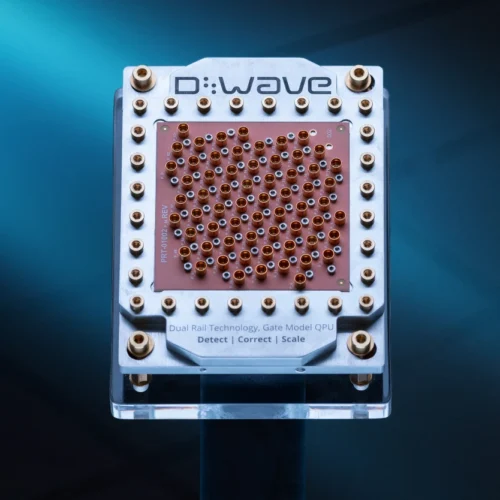
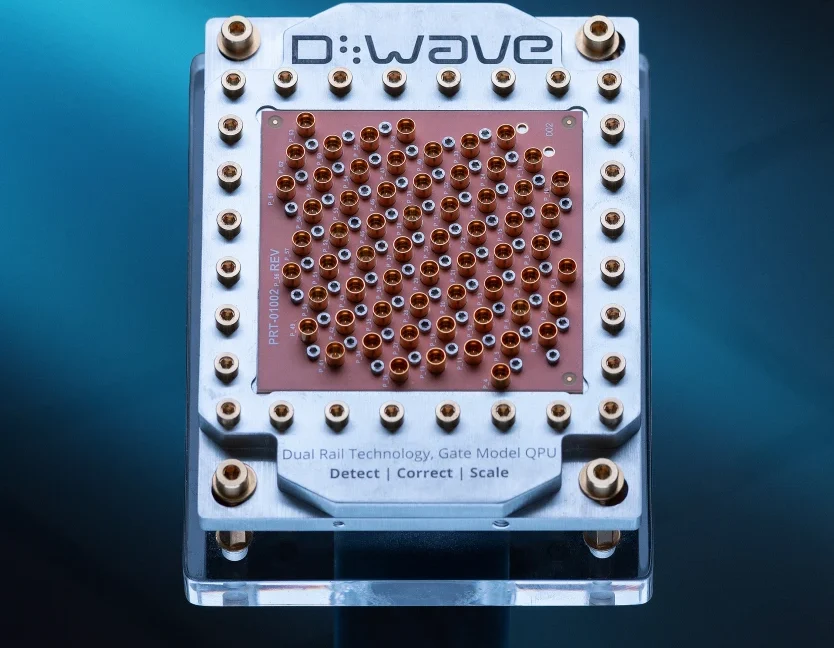
D-Wave is a bit of an oddity in the quantum computing space, having been founded back in the last century. And its initial offering wasn't a quantum computer like those being developed by IBM or Google. Instead, the company built what's now called a quantum annealer, a machine that isn't general-purpose but can solve a large class of optimization problems. While the hardware shares some similarities with the qubits used in gate-based quantum computers, it operates in a fundamentally different way.
But a few years back, D-Wave started working on gate-based hardware, apparently choosing a somewhat unusual qubit technology called fluxonium. And this year, the company acquired a startup called Quantum Circuits that spun out of Yale University and has been developing what's called a dual-rail qubit (the same technology used by Amazon), which promises to make most errors very easy to detect, simplifying error correction.
On Wednesday, the company is publishing a paper in Nature that describes a key step in validating this dual-rail technology, showing that two of the qubits can be entangled without altering their best feature: Most are a single type that is easy to detect.
I’ll just say it: What the hell is going on with AI “reasoning”? Sorry for the air quotes. That punctuational side-eye was more common in 2024, when the specially trained cousins of LLMs now known as “large reasoning models,” or LRMs, were still new. Nowadays it may seem downright churlish, though, given that a “general-purpose reasoning model” from OpenAI solved a famous open mathematical…
There are many algorithms for which it has been mathematically proven that a quantum computer can generate results that would take a classical computer an unreasonable amount of time to generate. Unfortunately, today's quantum computers either can't run those algorithms or can only run simplified versions that classical computers can also handle. This has left the field facing a challenging question: Can we demonstrate the promise of quantum computers on today's noisy, limited hardware?
That's a more difficult question than it may first appear. If you generate a result that's out of reach of today's regular computers, it may not be possible to verify that you got the right result. And given that today's quantum computers are somewhat error-prone, getting the wrong result is a distinct possibility. Further, in the absence of a mathematical proof of the capabilities of quantum hardware, it's possible that a better classical algorithm could outperform the quantum hardware.
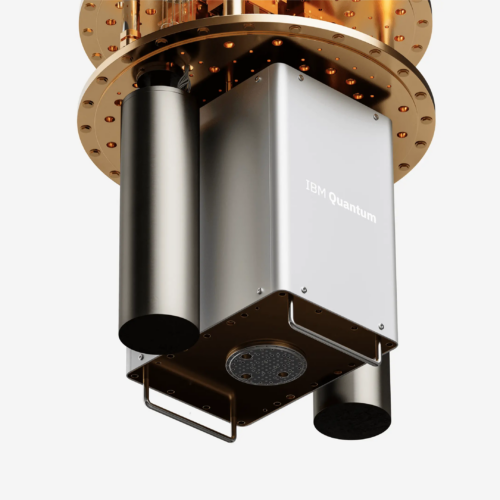
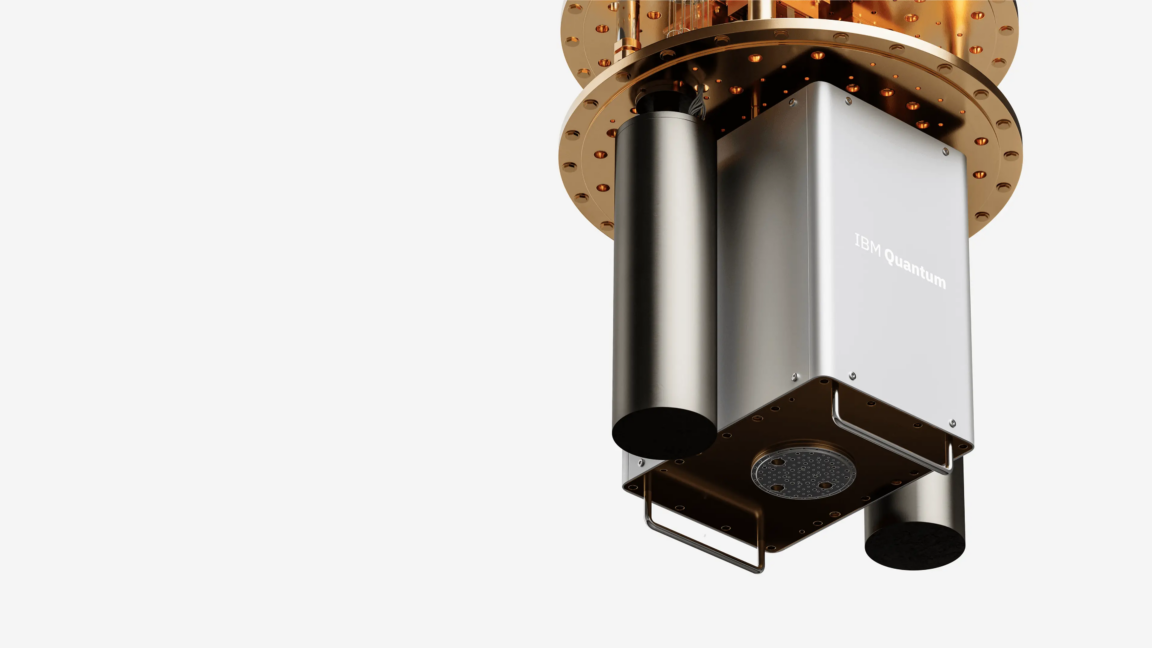
These issues inspired IBM to launch a quantum advantage tracker. On Thursday, the company announced three new entries that it says clearly show a quantum advantage, each using a different approach to overcoming errors and validating quantum results. "Trusted computing when you can do classical simulations is irrelevant," IBM's Jay Gambetta told Ars. "Trusted computing when you can't do classical simulations is a big deal."
If you follow quantum computing news for long enough, it can start to seem like any quantum system that can alternate between two well-separated energy states can be used as a qubit. Atoms, ions, photons, electrons, and manufactured devices all have their backers. One of the key things that attracts backers is the tech's ability to scale. We'll need a lot of high-quality qubits to start doing any complex computations, and the ability of any technology to get us there is the subject of debate.
So even as some technologies can now support thousands of qubits, some competitors are still working on a small handful of qubits—the companies behind them are convinced that they have the potential to scale more effectively.
One of those technologies involves quantum dots that hold a single electron. Their advantage is that we can manufacture them using the same tech we use to build traditional processors, an approach that has proven to be scalable. This week saw two new papers describing different ways of using quantum dots, one of which was appealing enough that IBM bought the company that developed it. Separately, another company has released a processor showing 100 individual electrons being held in diamond defects, technology that wasn't obvious could scale.
Many of today’s electronic devices — from the semiconductors in your cell phone to the photovoltaic cells in your solar panels — are built on thin-film substrates. The thin film is an electronically conductive material while the substrate is an inert material. Or is it?
Physicists and materials scientists have long assumed substrates do not react to electrical stimulus, but new research from the University of California San Diego Alex Frañó’s lab and a team of collaborators has shown that substrates are not inert after all. The discovery 1 has the potential to help engineers build the dense, three-dimensional, brain-inspired computer chips needed for more energy-efficient computing.
Source: Unsplash
In a human brain, a vast network of neurons works across different regions, enabling every thought and action we take. Yet thoughts that are quick and simple for humans — recognizing faces, differentiating a cat from a dog or solving a captcha — can be devilishly hard and energy-intensive for computers. Quantum materials may provide a solution.
It was this quest to develop new materials that led Frañó’s lab to study vanadium dioxide thin-film devices. When a voltage is applied to the thin film, an electric filament forms — something similar happens when the Earth and atmosphere create a voltage strong enough to result in lightning. The filament in the thin film drives the device’s electrical spiking, much like the signals in our neurons.
This reaction has been studied countless times in labs around the world, but Frañó’s lab was implementing a new technique, developed by graduate student Elliot Kisiel, called dark-field X-ray microscopy. Kisiel, who spent most of his graduate studies at Argonne National Laboratory and is now a Mayer Postdoctoral Fellow there, developed the tool to combine the best of two worlds: electron microscopy and X-ray diffraction.
“Dark-field X-ray microscopy gives us the ability to look at an entire device in one image, which not only greatly improves how fast we can perform these measurements, but also allows us to study the areas surrounding the devices with high fidelity,” he stated.
A changing substrate
Since the lenses for X-rays are often thick and, therefore, absorb most of the X-rays that pass through them, the team needed to look at something that provided more signal, which is why they decided to look at the substrate during some of their preliminary testing with this new technique.
What they saw was completely unexpected: not only was there a change in the thin film, but there was also a change in the substrate, showing for the first time that the two parts were sharing energy or “coupled.” This discovery went against everything scientists had assumed about substrates for decades.
Materials for a new age of computing
Thin films are so called because they are vanishingly thin — around 100 nanometers — while the substrates they sit on can be 10,000 times thicker. Despite their lopsided sizes, in this experiment, the thin film was able to push and pull on the substrate. Frañó likened the discovery to a tree on a mountaintop being able to move the entire mountain. Furthermore, the substrate also acted on the thin film, each pushing and pulling on the other.
They spent the next four years making sure what they saw wasn’t a fluke. They not only reproduced the results doing the research exactly as they had done it the first time, but they also reproduced the results when they changed certain aspects of the sample, such as the thickness and material of the substrate. They also tested their results using different instrumentation. Much of that work was done at Argonne, which has a synchrotron facility that produces high brilliance X-rays, and at Brookhaven National Laboratory, home to the world’s only all-electric ultrafast electron microscope, which is able to capture exactly how a working device behaves under realistic operating conditions.
It wasn’t a fluke.
“The assumption that substrates are inert needs to be rethought,” Frañó stated. “Going forward, we have to assume that the substrate is undergoing changes when the film is. This is a transformational notion that counters decades of previous supposition.”
This paper is a companion to a paper that was published last year in ACS Nano2. In that paper, they used dark-field X-ray microscopy to study the thin film, while this paper focuses on the substrate. Together they illustrate how one research result leads to the next research inquiry.
In Frañó’s case, the question he now asks himself is, “What can we do with this new substrate discovery? If a tree is moving the whole mountain, let’s find a way to capitalize on that.”
One idea is that the substrate can act as a medium that can couple materials on either end of the substrate. Currently, thin film devices are connected two-dimensionally, but if researchers could build on both sides of a substrate, it would allow for three-dimensionality, opening up the possibility of denser, more interconnected computer chips, and bringing us one step closer to the next generation of computing.
References
Elliot Kisiel et al. (2026) Dynamic asymmetric strain imprinted into substrates by an oxide thin film doi:10.1126/science.adt9347↩
Elliot Kisiel et al. (2025) High-Resolution Full-Field Structural Microscopy of the Voltage-Induced Filament Formation in VO2-Based Neuromorphic Devices. ACS Nano doi: 10.1021/acsnano.4c14696↩
What if a computer did not rely on electronic chips or tiny transistors, but instead used hundreds of microscopic particles moving through a liquid? That futuristic idea has now become a reality in a laboratory, where researchers have created a completely different kind of computer that performs calculations using the natural movement of tiny particles. […]
Giovanni Kanter goes to at least one art museum whenever he visits a new city. That’s on top of his regular exploration of galleries in New York, where the 25-year-old ICU nurse lives and studies. He typically discovers new artists and gallery openings through word of mouth, though he has recently started curating his social media feed to serve relevant content (he’s currently in what he terms a “surrealism phase”).
He was raised on visual art; he's the son of painter Marianne Gargour and nephew of mixed-media artist Heather Hutchison and painter-printmaker Mark Thomas Kanter. His “exposure-oriented education” featured childhood visits to galleries and shows in and around Dallas, where he grew up, and in France, where he spent time with his grandparents.
But Kanter is an exception. Many other young people have a less immersive artistic education, perhaps shaped by occasional school trips or family visits to museums. If they haven’t internalized an instinct for what Kanter calls “moving through the art and absorbing it,” the museum experience is central to how they learn about and understand art.
In theoretical computer science, the key to cracking tough problems is finding the right tools. Most researchers gravitate toward tools that match the problems they hope to solve, and some devote entire careers to mastering a few familiar techniques. But Shayan Oveis Gharan, a computer scientist at the University of Washington in Seattle, has never been content with the familiar.
Researchers have revealed a microscopic engine that can convert heat into useful work while operating at temperatures only fractions of a degree above absolute zero.
Tinier than a single grain of sand, the machine marks the first demonstration of what researchers call a cyclic quantum heat engine composed of superconducting circuits, the technology behind modern quantum computers.
The findings, led by Academy Professor Mikko Möttönen, were published in Nature Communications.
A Sand-Grain-Sized Quantum Heat Engine
The tiny device, developed by researchers at Aalto University in Finland, relies on a single superconducting qubit, which represents the quantum world equivalent of a classical computer bit.
By heating, cooling, and extracting energy through quantum variations of the cycles that provide power to conventional engines by thermodynamic means, researchers say the machine’s demonstration of producing energy, while extremely small, marks a breakthrough that could one day allow for the simplification of much larger-scale quantum computers.
In the image above, a microscopic image of the sample is shown along with an added circuit diagram of the microwave drive and readout lines (Image Credit: Möttönen, et al, Nature Communications)
A flux-tunable transmon qubit—one of the most common building blocks of superconducting quantum processors—lies at the heart of the innovation. But as opposed to relying on separate hot and cold reservoirs, the Möttönen and the Aalto University research team used a single quantum circuit refrigerator capable of performing both roles.
The team guided the system through a sort of quantum version of what is known as an Otto cycle (the same essential process most gasoline engines employ) by leveraging precise control of the refrigerator and the qubit’s energy levels.
“In our experiment, we built a nanofabricated heat engine using superconducting circuits and operated it in a cryostat near absolute zero,” said lead author Tuomas Uusnäkki. “At its heart is a transmon qubit, one of the basic building blocks of modern quantum technologies.”
Single Shot Measurements on Repeat
The team also used repeated single-shot measurements to track the qubit, observing as it completed several engine cycles. This helped them calculate precisely how much heat was absorbed, as well as the amount of work produced, and the machine’s overall efficiency.
The results, they say, closely matched theoretical predictions, and now help to confirm that the device functioned as a genuine cyclic quantum heat engine.
Although this is not the first quantum heat engine, and previous demonstrations have been achieved using trapped ions, ultracold atoms, and other quantum systems, the Aalto team says this is the first that operates using superconducting circuits, which could present new possibilities for the future of quantum computing.
As quantum computers grow, such technologies could be especially helpful, since today’s superconducting processors rely on extensive networks of microwave cables connecting room-temperature electronics with processors that operate near absolute zero—the lowest temperature theoretically attainable.
These networks of cabling not only take up space, but also add to costs, while adding to the overall heat and electrical noise in systems that can also introduce interference affecting fragile quantum states.
A Look at the Future of Quantum Computing
With future refinements of their technology, the Aalto team hopes versions of their tiny engine may be able to perform control functions directly within cryogenic quantum processors, thereby reducing the need for external wiring altogether.
“Finland’s Quantum Technology Strategy envisions a quantum computer with one thousand logical qubits by 2035, which probably means hundreds of thousands of physical qubits,” Möttönen said in a statement, describing future large-scale quantum computers.
“Doing that with current technology requires millions of microwave cables costing thousands of euros each,” he added.
“The cables also introduce noise into the system,” Möttönen said. “Using autonomous devices instead would mostly eliminate the need for those cables.”
Micah Hanks is the Editor-in-Chief and Co-Founder of The Debrief. A longtime reporter on science, defense, and technology with a focus on space and astronomy, he can be reached atmicah@thedebrief.org. Follow him on X @MicahHanks, and at micahhanks.com.
There are some obvious big picture issues that stand between us and useful quantum computing. Issues like whether we can make enough high-quality hardware qubits to connect into the error-corrected logical qubits we need, and how we generate the states needed to perform universal computation on those logical qubits. But there are also many less prominent challenges that will need to be solved before we can perform calculations.
One of those challenges, which only affects some types of hardware, is calibration. For devices we manufacture, like superconducting qubits, there are always subtle variations among individual qubits. (This is not true when we use something like an atom to hold the qubit, but the lasers that control them can drift.) As a result, this hardware is put through a process called calibration, where we test different frequencies and amplitudes of the microwave pulses that control them to find the combination that produces the lowest error rates, and then save those settings for use in calculations.
However, you can't perform the typical calibration process while you're doing calculations, which means drift becomes an issue for long and complicated algorithms. Google, though, has figured out that it's possible to do calibration using the same data that's used for error correction.
Researchers at the Massachusetts Institute of Technology (MIT) have developed an ultra-efficient computer chip that could help tiny robots and lightweight devices create detailed 3D maps of their surroundings while using very little energy. The new chip could allow small drones to fly through narrow spaces, such as air-conditioning ducts or industrial pipelines, to inspect […]
Artificial intelligence is becoming increasingly important in businesses, helping employees search through large amounts of documents and answer complex questions. However, one major problem still limits the use of AI in many industries: hallucinations. An AI hallucination happens when a system generates information that sounds convincing but is actually wrong. This can be a serious […]
Most of us experience data by looking at screens filled with charts, graphs and numbers. But what if you could actually feel your data instead of just seeing it? Researchers at the University of Adelaide have developed an experimental wearable glove called ThermoPhy that turns information into physical sensations. The glove uses heat, touch and […]
Researchers have developed a new artificial intelligence (AI) system that can predict robberies and other crimes more accurately than several existing methods. By studying where crimes happen, when they occur and broader social patterns, the system achieved an accuracy rate of 86.3% when forecasting robberies in several U.S. cities. Predicting crime is extremely challenging because […]
More than 1.5 billion people around the world are expected to watch the 2026 FIFA World Cup finals. With so many fans carefully watching every pass, tackle and goal, referees are under enormous pressure to make the right decisions. To help them, FIFA is using advanced artificial intelligence and computer vision technology to improve the […]
Artificial intelligence is increasingly being used to see and understand the world around us. From facial recognition on smartphones to self-driving cars and humanoid robots, computer vision has become one of the most important technologies in modern AI. Now, researchers from the Korea Advanced Institute of Science and Technology (KAIST), working with scientists from the […]
Researchers at Binghamton University have applied a 70-year-old theory of information to the viral word game Wordle, revealing how a carefully chosen first guess can dramatically improve a player’s chances of solving the puzzle.
Researchers at Oregon State University have developed a new light-sensitive electronic device that works more like the human brain. The innovation could lead to artificial intelligence systems that process information faster while using much less electricity. The new device, described in the journal Advanced Functional Materials, combines three important functions into a single component: it […]

 Login

 Mathematics shows that every electoral system must compromise among proportionality, local representation, and parliament size. Denmark’s 2022 national election came down to a single seat, even though its proportional voting system was designed to make party representation closely match the vote. That outcome points to a deeper mathematical problem: no electoral system can always preserve [...]