❌

Reading view

D-Wave shows off its new entry in quantum computing race

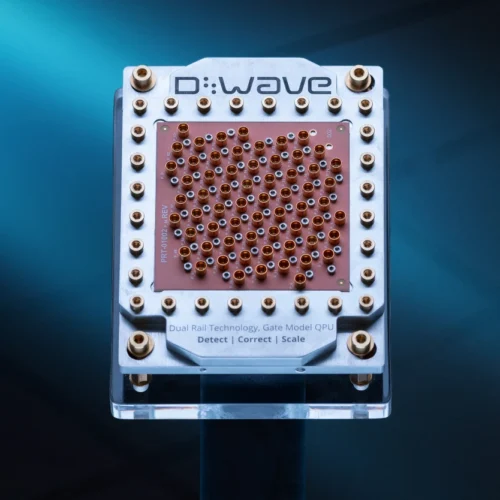
D-Wave is a bit of an oddity in the quantum computing space, having been founded back in the last century. And its initial offering wasn't a quantum computer like those being developed by IBM or Google. Instead, the company built what's now called a quantum annealer, a machine that isn't general-purpose but can solve a large class of optimization problems. While the hardware shares some similarities with the qubits used in gate-based quantum computers, it operates in a fundamentally different way.

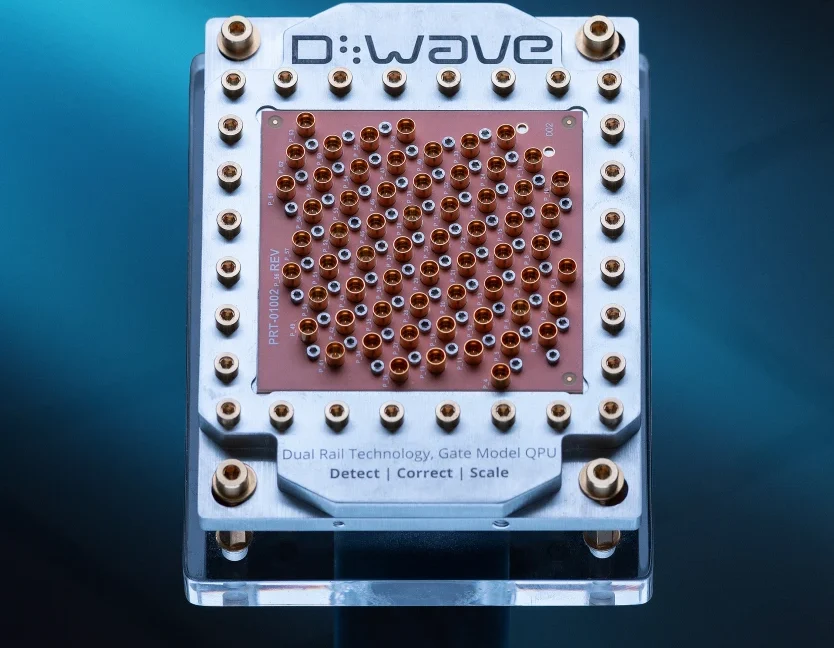
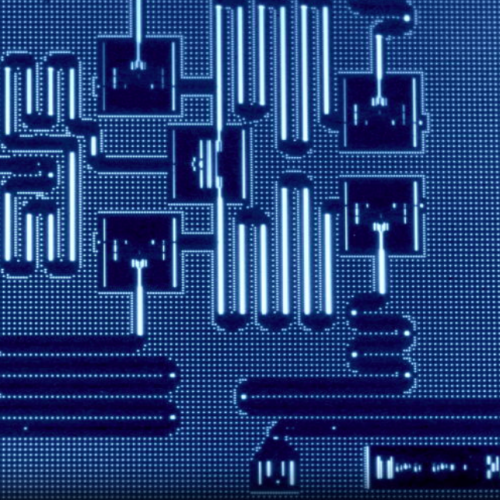
But a few years back, D-Wave started working on gate-based hardware, apparently choosing a somewhat unusual qubit technology called fluxonium. And this year, the company acquired a startup called Quantum Circuits that spun out of Yale University and has been developing what's called a dual-rail qubit (the same technology used by Amazon), which promises to make most errors very easy to detect, simplifying error correction.

On Wednesday, the company is publishing a paper in Nature that describes a key step in validating this dual-rail technology, showing that two of the qubits can be entangled without altering their best feature: Most are a single type that is easy to detect.

Read full article

Comments

© D-Wave

  •  

“Enough Heat to Sizzle Thin-Skinned Animals”: New Evidence Shows How a Dinosaur-Killing Meteor Set the World on Fire

New analysis of dust deposits left after the massive asteroid hit Earth around 66 million years ago suggests the event created a thick, worldwide dust blanket that drove heat down toward the planet’s surface, resulting in global wildfires.

The researchers behind the new study said the evidence for a post-impact dust blanket and resulting heat wave adds new fuel to the debate about what role, if any, the Chicxulub asteroid played in their extinction, by suggesting most unsheltered animals would have died instantly.

Scientists Debate Connection Between Asteroid Impact and Dinosaur Extinction

While scientists agree that a massive chunk of space rock slammed into Mexico’s Yucatan Peninsula 66 million years ago, they have continued to debate the event’s impact on the end of the dinosaurs‘ reign. Still, the timing of the two events, and the evidence for a mass extinction of animals incapable of seeking the necessary shelter to survive the asteroid’s impact, has led most to connect the two events to some degree.

Further studies of the impact have shown that the event’s immense heat and pressure vaporized a massive amount of rock, resulting in a huge cloud of dust and rock vapor high into the Earth’s atmosphere. As some of that dust condensed into tiny rock ‘spherules’ and slammed back into the surface, the friction between them and the air generated a corresponding heat pulse.

According to the authors of the new study, many theories suggested that this heat pulse acted like a planetary-wide broiler, including “radiating enough heat to sizzle thin-skinned animals without shelter,” but not enough for plants to suddenly burst into flames. The team said that this result temporarily caused researchers to move away from the idea that the immediate impact event caused the dinosaur’s extinction rather than a longer, more drawn-out event.

Now, after years of new ideas, the team said that a 2023 discovery once again changed the debate, leading to their new proposal.

Atmospheric Layer of ‘Post-Impact’ Dust Would Have Magnified Heat Wave 3.5 Times

According to the team’s statement, the 2023 discovery involved a layer of “extremely fine post-impact dust” that could have formed from rock vapor that did not condense into spherules.

“It reinvigorated my interest in what happened to the leftover vapor,” explained Brandon Johnson, a planetary scientist at Purdue University and lead author of the study detailing the new theory, “that’s where this work started.”

To determine what effect such a post-impact dust layer might have had on dinosaurs and other terrestrial animals, the team plugged the new data into previous simulations of the Chicxulub event. Johnson and colleagues especially wanted to know how the dust layer would boost Earth’s retention and release of heat energy generated by the falling rock spherules.

After running several simulations, the team determined that the dust layer would have increased the surface heat by 3.5 times compared to an event that only included the falling spherules. Unlike earlier models, this new version with the dust layer included showed that the heat pulse would have been enough to “kill animals and start spontaneous forest fires.”

“We’re in the realm where we might be essentially killing off everything within that first hour or two,” Johnson explained.

Notably, the researcher said his team’s concept is not unlike alternative extinction theories that credit a global post-impact winter for the eventual mass extinction of dinosaurs and other lifeforms.

“It seems counterintuitive,” Johnson said, “but actually it’s the same effect.”

The research compared the idea to how an insulated mug can keep hot coffee hot and iced coffee cold.

“Once the spherules finished falling and the fires petered out, massive dust clouds could have blocked warmth from the Sun for years to decades and caused a global winter,” the authors explained.

Results Could Help Unravel Why Some Animals Survived, and Others Didn’t

When discussing how the team’s findings might affect the ongoing debate about dinosaur extinction, Johnson said the work seems to offer strong support to the impact extinction theory.

“This work of ours supports this idea that it really is the impact that was devastating to terrestrial life and caused the mass extinction,” the researcher explained.

Although the team suspects that the global fires caused by the dust amplified the heat wave, they point out that a more complete geological record would likely be needed to provide confirmation. Alfio Alessandro Chiarenza, a paleontologist at University College London who was not involved with this study, said researchers could find a record of global wildfires, but “we just don’t have it so far.”

“It would be great to figure out which animals survived right at the impact and what their biological features were,” Chiarenza added. “This could finally tell us why some animals made it when others, like the dinosaurs, didn’t.”

The study “Heat and wildfires during the K-Pg mass extinction enhanced by fine dust” was published in the Journal of Geophysical Research: Biogeosciences.

Christopher Plain is a Science Fiction and Fantasy novelist and has spent the last six years as Associate News Editor and Head Science Writer at The Debrief. Follow and connect with him on X, learn about his books at plainfiction.com, or email him at christopher@thedebrief.org

  •  

No, There Weren’t “2,700 Heatwave Deaths Due to Climate Change”

No, there weren't "2,700 heatwave deaths due to climate change", says Ben Pile – a figure conjured by Met Office and Imperial College modelling. But nobody must be allowed to remember the warm days of 2026 fondly.

The post No, There Weren’t “2,700 Heatwave Deaths Due to Climate Change” appeared first on The Daily Sceptic.

  •  

8 Science-Backed Ways To Sleep Better in Hot Weather

Young Woman Good SleepStruggling to sleep in the heat? The good news is that a handful of easy cooling tricks can help your body stay comfortable and make hot nights far more bearable. When temperatures rise, sleep often suffers. Hot nights can make it harder to fall asleep, increase waking during the night, and leave people feeling less [...]
  •  

Whirlpool in Spacetime Around a Black Hole Merger Provides First Detection of this General Relativity Prediction

Hidden in the gravitational waves generated by the largest black hole collision ever detected, clues retrieved by Australian National University (ANU) researchers have helped them observe how black holes drag spacetime itself along with their spin.

As two black holes collide, they merge in a massive cosmic impact, forming a larger black hole and creating ripples in spacetime called gravitational waves. In the largest black hole merger observed, GW250114, the ANU team discovered a hidden direct wave for the first time, a feature expected by general relativity and revealed in a recent paper published in Nature.

Black Holes and Gravitational Waves

Some of the most intriguing objects in the universe, black holes have enormous power and effect on their surroundings, which scientists are still working to better understand. The gravitational waves produced by their collisions compress space as they travel, and highly sophisticated—and very precise—detectors are required to observe these waves, such as the United States’ Laser Interferometer Gravitational Wave Observatory (LIGO).

Since not even light can escape a black hole’s event horizon, gravitational waves’ ability to carry information about what lies just beyond the rim’s edge provides an important means of gaining perspective into one of a black hole’s most mysterious regions.

The most extreme black hole merger ever recorded, GW250114, came from a black hole perfectly positioned for Earth observers, allowing LIGO to capture faint signatures in the data. The team decoded the event’s direct wave, previously hidden in the data, revealing the black hole’s drag on spacetime.

Black Hole Frame Dragging

In his theory of relativity, Albert Einstein described black holes as producing a “frame dragging” effect in which they pull nearby spacetime with them as they rotate, like water circling a drain. Also, according to general relativity, the region where this frame-dragging occurs, just past the event horizon’s edge, should produce gravitational radiation that creates a direct wave, imprinting information about the cosmic whirlpool surrounding the black hole.

Event horizons have been essential to theoretical physics models for decades, but very little observational data on them has been collected due to the difficulty of observing light that close to a black hole. Although not a physical object and instead merely a boundary in spacetime, general relativity posits that the event horizon’s properties, such as gravitational strength and rotational speed, should be measurable. Therefore, having access to a data source so close to the black hole’s edge, as with a direct wave, is extremely valuable to understanding our universe.

Due to the extreme nature of the event and our prime viewing location on Earth, the extremely powerful gravitational wave produced by GW250114 was the perfect opportunity to hunt for a direct wave. Despite longstanding predictions of direct waves based on general relativity, this is the first time that one has ever been detected, providing new insight into how fast the black hole is spinning and the gravitational power of the event horizon.

Direct Wave Observation

The researchers employed a new technique to isolate the subtle direct wave in the data from the rest of the event. This first success proves the case for direct waves and how to detect them, opening an entirely new avenue for investigating black holes. By finally detecting these waves, the team provides future researchers with an essential technique for designing new tests of General Relativity, as direct waves, horizon rotations, and surface gravity should all be linked.

Scientists currently grapple with the apparent incompatibility between general relativity, which describes our universe at the macro scale, and quantum physics, which operates at the smallest scales of matter and energy.

Some of our most essential technologies, such as GPS, lasers, quantum computers, and semiconductors, are designed according to these theories and operate perfectly despite the seeming contradiction of how these two perspectives of our universe describe physical reality.

The difficulty of reconciling these ideas is one reason scientists are interested in distant black holes. The extreme conditions of spacetime at the edge of an event horizon may offer the best clues for finally reconciling these existing theories, or for upending them altogether in favor of something that more accurately describes the physical universe at all scales.

The paper, “GW250114 Reveals Signatures of Post-Merger Black-Hole Horizon,” appeared in Nature on June 24, 2026.

Ryan Whalen covers science and technology for The Debrief. He holds an MA in History and a Master of Library and Information Science with a certificate in Data Science. He can be contacted at ryan@thedebrief.org, and follow him on Twitter @mdntwvlf.

  •  

Solar Panels Overheat as Gas Power Stations Ordered to Fire Up

Solar panels are overheating amid soaring temperatures, leading to gas power stations across the UK being ordered to fire up production to make up the shortfall.

The post Solar Panels Overheat as Gas Power Stations Ordered to Fire Up appeared first on The Daily Sceptic.

  •  

German Public Health Authorities Dispense Lunatic Heatwave Advice Warning Against Air Conditioning

As a 'heat dome' settles over Western Europe, German public health authorities have begun dispensing lunatic heatwave advice, says Eugyppius, including, bizarrely, claiming air conditioning makes rooms warmer.

The post German Public Health Authorities Dispense Lunatic Heatwave Advice Warning Against Air Conditioning appeared first on The Daily Sceptic.

  •  

MicroTags Injected with COVID “Vaccines”

Dr. Youngmi Lee, a fertility specialist, disclosed on the Dr Jane Ruby show that a whistleblower from Bioteq, a Pfizer subsidiary, revealed a microchip injected into employees through Covid vaccines. Designed for surveillance, this technology, developed before 5G rollout, raises ethical concerns about consent and privacy.

  •  

US government takes $2 billion equity stake in nine quantum computing firms

The US government will take equity stakes worth a total of $2 billion in a slew of quantum computing companies, including a startup backed by a firm with links to the Trump family and one taken public by a Pentagon official.

The announcement by the commerce department that it had signed letters of intent with nine companies—including GlobalFoundries and IBM—sent shares in quantum specialists soaring on Thursday.

Both IBM, which is set to get $1 billion, and GlobalFoundries, which will receive $375 million, were up more than 6 percent in pre-market trading. D-Wave Quantum, an awardee that was taken public in 2022 by Emil Michael—now a top Pentagon official—was up more than 20 percent.

Read full article

Comments

© IBM

  •  
❌