A new research project at the New Jersey Institute of Technology is taking a closer look at a strange but important behavior in rubber-like materials: their properties can depend on what happened to them before. With a $125,000 New Directions grant from the American Chemical Society Petroleum Research Fund, chemical and materials engineering professor Gennady Gor and his students will investigate how petroleum-derived polymers absorb fluids, swell, contract and change their elasticity over time. The work could improve predictions of how elastomers perform in everything from industrial seals to oil and gas equipment.
Elastomers are polymers capable of undergoing large, reversible deformations. Silicone, neoprene and natural or synthetic rubber are familiar examples. Their molecular chains can stretch, rearrange and return toward their original configuration, giving these materials their characteristic flexibility. Yet exposure to liquids or vapors can dramatically alter that behavior. Hydrocarbon molecules may enter the polymer network, pushing molecular chains apart and causing the material to expand. At the same time, the absorbed fluid can change the polymer’s stiffness, strength and ability to recover its original shape.
Gor’s project focuses on a phenomenon known as hysteresis, in which a material’s current state depends not only on its present conditions but also on the path it took to reach them. For an elastomer, that means the material may respond differently when it is swelling than when it is shrinking, even if its size and surrounding environment are identical. The difference can arise from molecular rearrangements, delayed relaxation or changes in the interactions between polymer chains and absorbed molecules. Such path-dependent behavior is central to understanding why materials sometimes fail to return fully to their previous mechanical state.
The question is especially relevant for petroleum-related technologies. Elastomers are widely used as O-rings, gaskets and seals because they can deform to fill microscopic gaps and maintain a hermetic barrier. In oil and gas environments, however, these components may encounter complex mixtures of hydrocarbons under pressure and at elevated temperatures. If a seal swells excessively, softens or loses its ability to recover after repeated exposure, it can become unreliable. A better understanding of hysteresis could help engineers select materials and operating conditions that reduce leakage and extend component lifetimes.
The new study represents a shift for Gor’s Laboratory for Materials Interfaces. His previous research has largely examined porous adsorbent materials, which collect molecules on their internal surfaces. Elastomers are different: they do not need pores to take up substantial amounts of fluid. Instead, molecules diffuse into the polymer matrix and interact with its flexible chains. The resulting process is more like a sponge absorbing liquid, although the molecular mechanisms are governed by diffusion, thermodynamics and the elasticity of the polymer network.
Günel Nabiyeva, a fourth-year doctoral student, will lead much of the experimental effort with undergraduate chemical engineering student Elitsa Mileva and second-year doctoral student Supun Rangana. The team has already begun collecting data on how rubber deforms in the presence of liquids and vapors. For Mileva, who has spent considerable time reviewing the scientific literature, the grant will provide an opportunity to move deeper into laboratory work. Nabiyeva describes the project as a new system for the research group because the laboratory has not previously studied elastomers in this way.
The researchers will expose polymer samples to controlled concentrations of hydrocarbon vapors and track how the materials respond. Their measurements will combine swelling, fluid uptake and elasticity rather than treating these properties separately. This approach is essential because a polymer can gain mass and volume while simultaneously becoming softer or, under some conditions, displaying a more complicated mechanical response. Different hydrocarbons may produce different results because their molecular size, chemical structure and compatibility with the polymer influence how quickly they enter the material and how strongly they interact with its chains.
Rangana will contribute expertise in ultrasonic sensing, which can measure subtle changes without physically contacting or damaging the sample. Ultrasonic waves travel through a material in ways that depend on its density, structure and mechanical properties. By analyzing changes in wave transmission or reflection, scientists can detect variations in stiffness and internal condition with high precision. Coupling these measurements to vapor exposure could reveal how quickly elasticity changes as molecules enter the polymer and whether the material follows the same path during desorption as it did during absorption.
The team hopes its results will fill a gap in the fundamental understanding of polymer hysteresis. Although hysteresis is well known in many areas of physics and engineering, relatively few studies have examined how history-dependent elasticity develops in swollen elastomers. The new measurements may help distinguish reversible molecular motions from more persistent structural changes and improve models used to predict polymer performance. Ultimately, the researchers aim to make elastomer behavior less mysterious and more reliable, helping engineers design seals and flexible components that remain dependable across repeated cycles of chemical exposure, swelling and recovery.
Subject of Research: Elastomers, petroleum-derived polymers, polymer swelling, elasticity and hysteresis
Article Title: Ultrasonic Experiments Aim to Reveal Why Rubber Remembers Its History
As Waymo deploys more driverless cars to 15 U.S. cities and counting, its vehicles keep encountering new and unexpected situations that they have no script to handle.
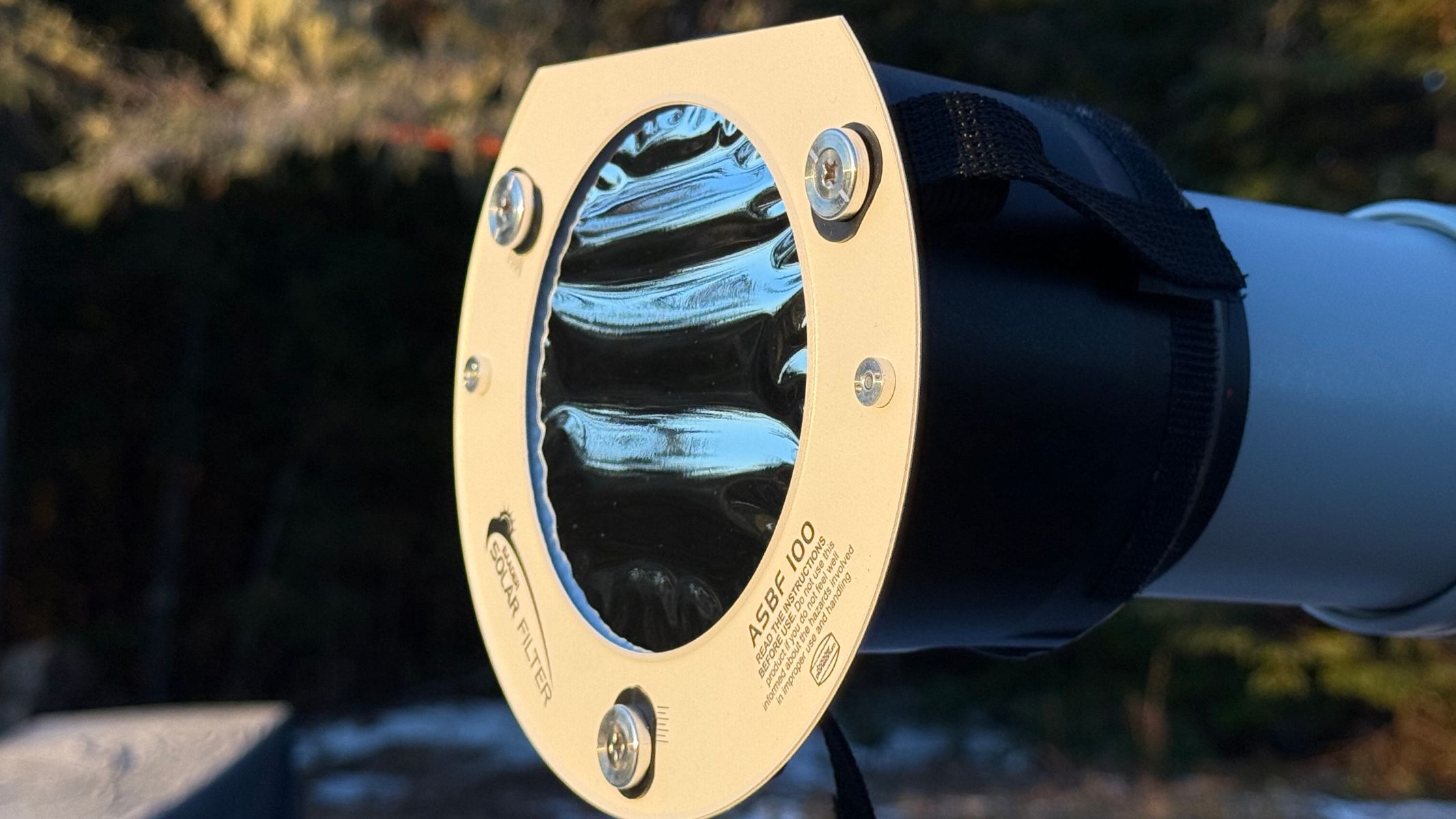
Baader AstroSolar Filter Film OD 5.0 is one of those "secret" astronomy products that looks almost too simple to be special. In its most familiar form, it’s a thin, silvery A3 or A4 sheet of metalized film that can be cut and mounted in cardboard, plastic or commercial filter cells. Surely it’s better to have a pre-made filter for your camera? Go to any solar eclipse, and you’ll get your answer: experienced eclipse photographers, solar observers and anyone wanting to safely point a camera or binoculars at the sun very often rely on Baader AstroSolar Filter Film OD 5.0.
Its popularity does not come from its ruggedness nor its out-of-the-box convenience. Whether bought as a loose sheet for making filters or as ready-made Baader solar filters for binoculars, camera lenses and telescopes, it enables super-sharp captures of sunspots on the sun, allowing much faster shutter speeds than some rival solar filter materials.
Although a brighter Baader AstroSolar Filter Film OD 3.8 Photo Film is also available (which is not designed for visual use), this review focuses on the Baader AstroSolar Filter Film OD 5.0, both as a practical DIY filter material and as the core of ready-made solar filters.
Baader AstroSolar Filter Film OD 5.0: Design
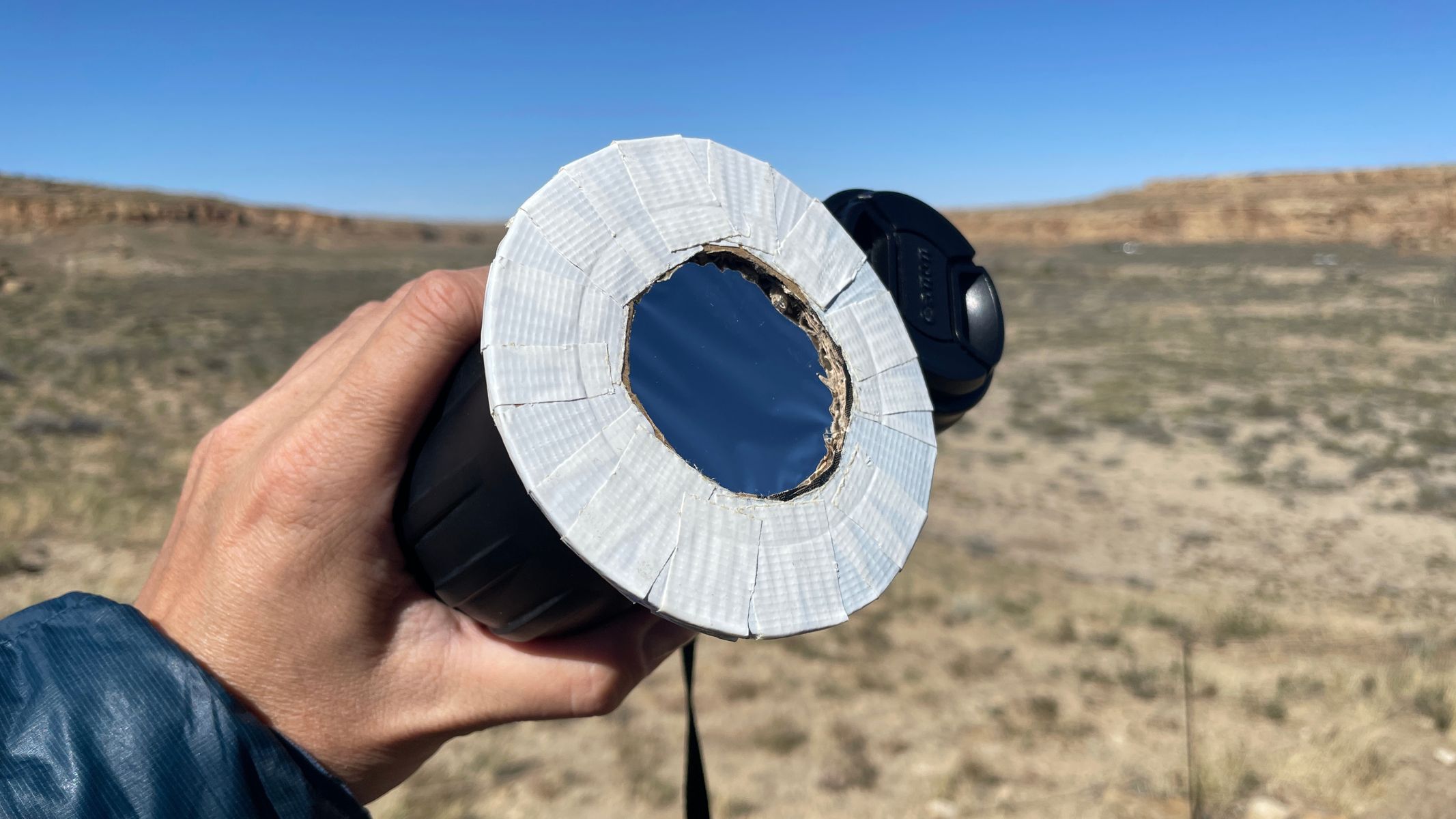
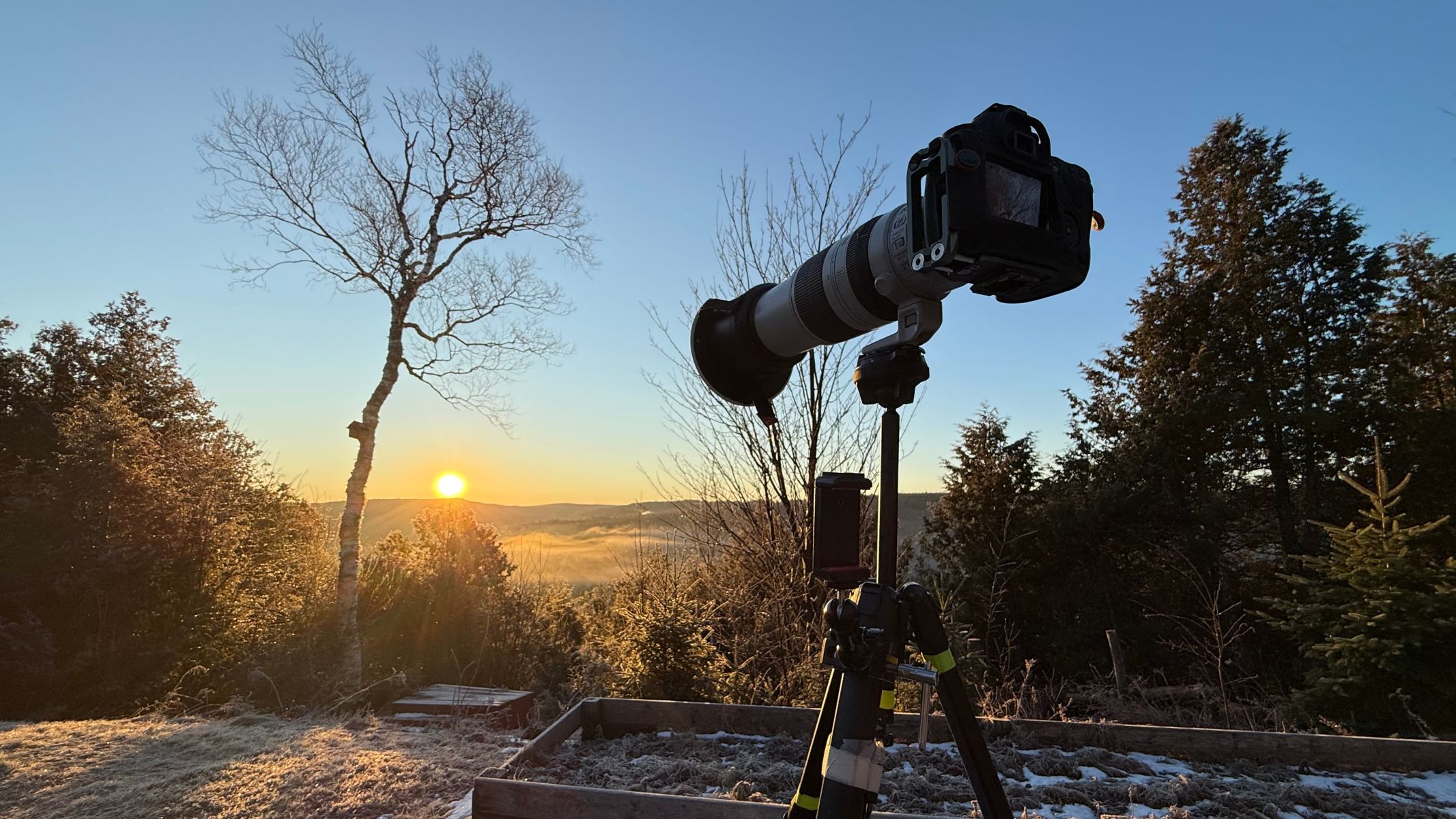
Baader AstroSolar Film can be used to make solar filters for all kinds of equipment.Jamie CarterBaader AstroSolar Film can be used for all kinds of solar images.Jamie Carter
Thin and delicate
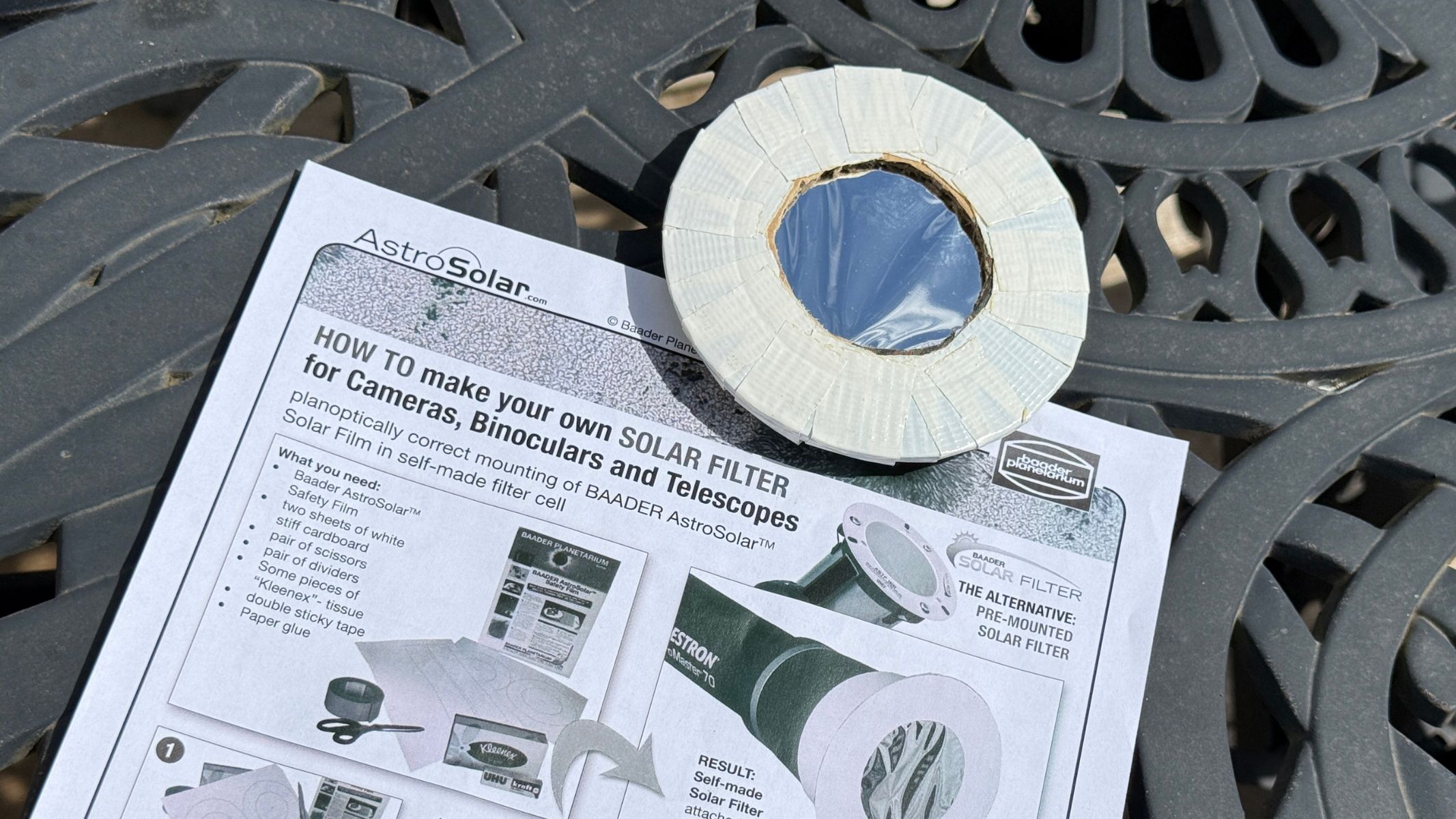
Perfect for crafting homemade solar filters
Available as A4 and A5 sheets and ready-made filters
The defining feature of Baader AstroSolar Filter Film is how little there is to it. The film is extremely thin — around 0.01 mm — and feels much more fragile than tougher solar polymer materials. That can be disconcerting the first time you handle it. It wrinkles easily, but should never be pulled tight. However, initial fears are misplaced because a good homemade solar filter does not require the film to be flat. In fact, it should be mounted slightly slack, because wrinkles and ripples in the filter material actually improve the image.
The real design advantage is that AstroSolar Film is hugely versatile and can be cut to suit almost anything. A single sheet can be used to make a front filter for a telephoto lens or two, as well as for a couple pairs of binoculars. Any filter must always go over the front of the optics, never behind them. For binoculars, make a filter for one objective lens for safe one-eyed viewing and securely cap the other.
Key specifications:
Product type: AstroSolar Safety Film OD 5.0 solar filter film Material: Metalized film Thickness: Around 0.01 mm Light reduction: OD 5.0 blocks 99.999% of visible sunlight Solar color: Neutral white Formats: Loose sheets and pre-made filters
They are, of course, neater and more durable than homemade cardboard versions, but the optical principle is exactly the same. Besides, the loose sheet version is more attractive if you have several lenses or binoculars to cover, or if you want to make a filter that precisely fits a specific lens hood.
Baader AstroSolar Filter Film OD 5.0: Performance
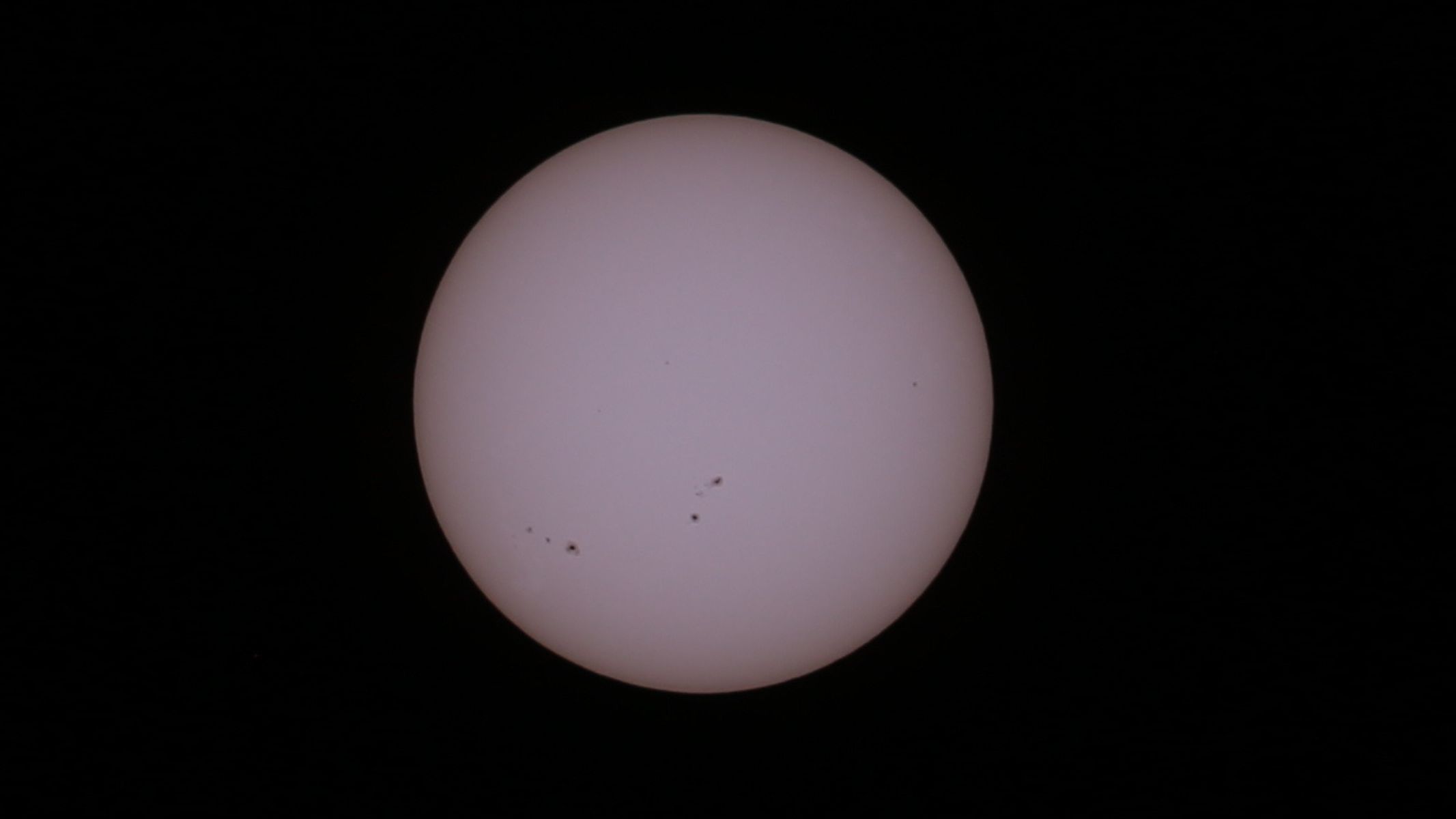
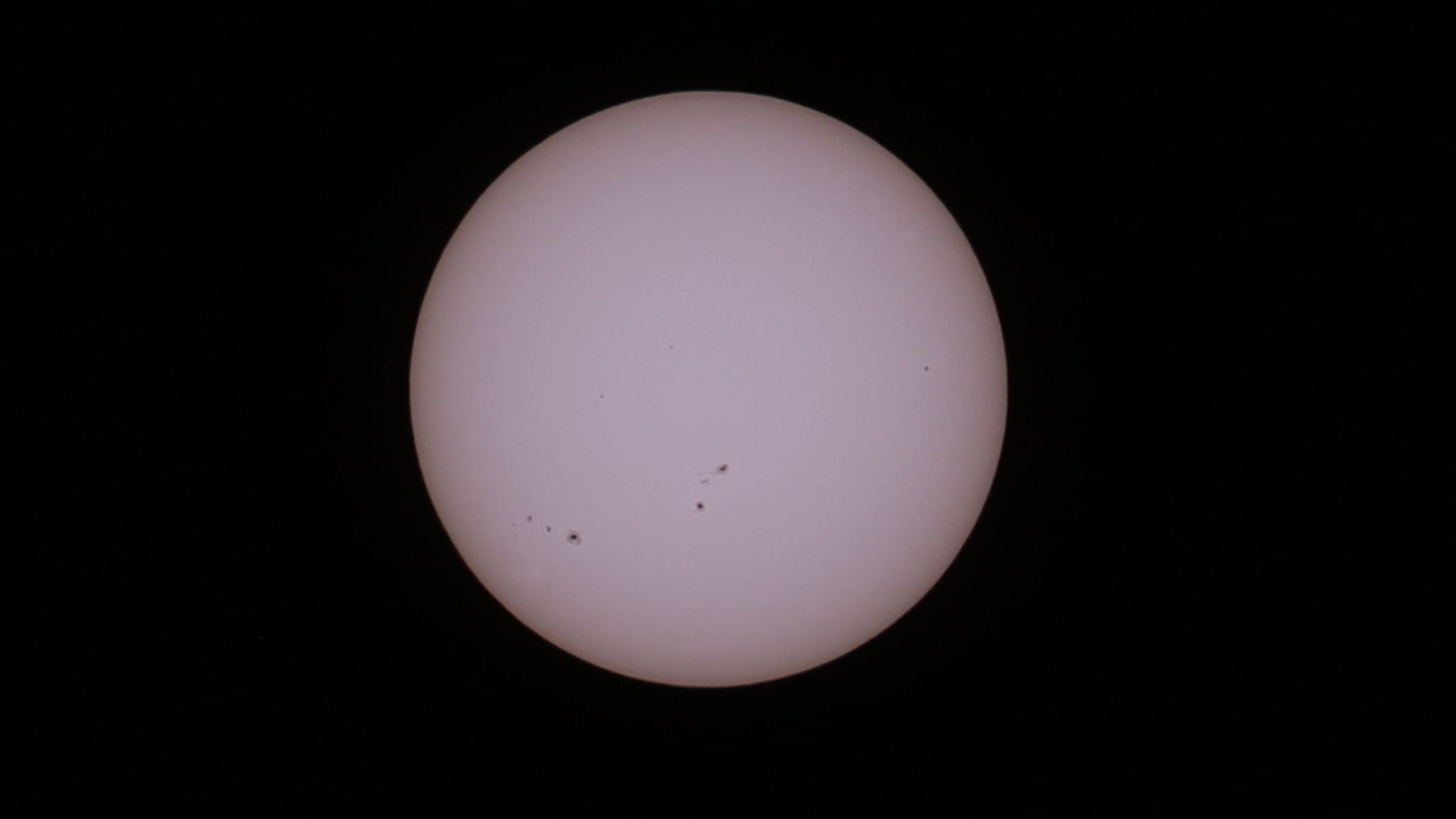
An image of a partial solar eclipse in 2023, taken using a Baader filter.Jamie CarterAstroSolar Film gives the sun a neutral white appearance.Jamie Carter
Sharp solar detail
Neutral white color
Suits cameras and binoculars
Although its versatility makes it unusual, making DIY solar filters won’t be for everyone. However, the main reason to choose Baader AstroSolar Filter Film is for its image quality. When used correctly, it produces a sharp, high-contrast, white-light view of the sun. Sunspots appear cleanly defined, the solar limb looks crisp and the image has a neutral white tone, rather than the deep orange produced by some polymer filters.
That white rendering will not be to everyone’s taste. Casual eclipse watchers often expect the sun to look orange through solar filters because that is how it often appears through eclipse glasses and some glass or polymer solar filters. Baader’s version is a lot more clinical. For photographers, however, that is an advantage. A neutral white solar disk is easy to warm up later in editing, while a heavily colored orange image gives a little less flexibility. It all depends on your point of view.
The sharpness advantage comes from the fact that it allows shorter exposures, something that becomes more obvious as the focal length increases. In a short-lens or wide-field composition, the sun is small, so differences between filter materials are less obvious.
On a 400mm, 500mm or 600mm lens, where sunspots and the edge of the solar disk matter more, Baader AstroSolar Film OD 5.0 shows why it has such a strong reputation among eclipse photographers. In our tests at 400m set to f/8 and ISO 100, we found that exposures of 1/800s and 1/1,000s achieved the best results.
An image of the sun using 1/2,000s exposure. Jamie CarterAn image of the sun using 1/1,000s exposure. Jamie CarterAn image of the sun using 1/800s exposure. Jamie CarterAn image of the sun using 1/250s exposure. Jamie Carter
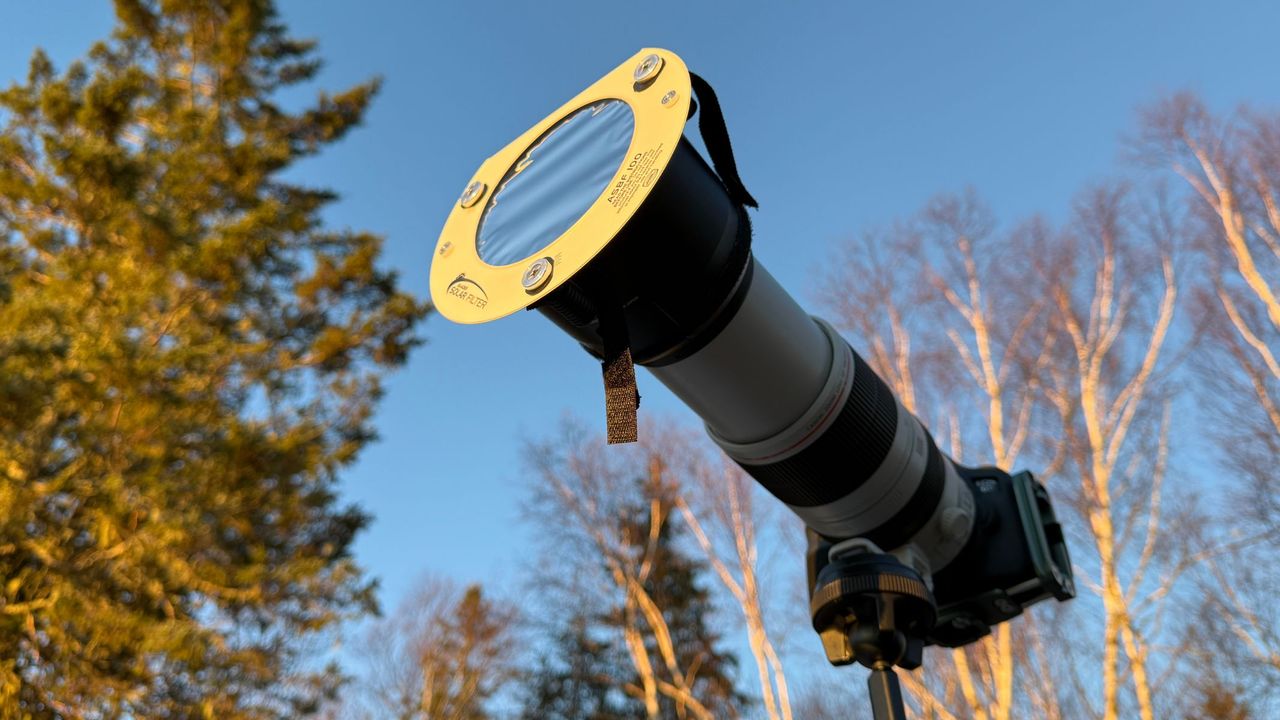
It also works well with binoculars. In fact, we’ve been traveling to watch solar eclipses using the same DIY solar filter fashioned from Baader AstroSolar Film OD 5.0 for a decade. Over the years, it’s been reinforced with plastic tape to extend its lifespan. It turns a pair of 10x50 binoculars into a safe solar-viewing instrument for the partial phases of an eclipse (just remember to cap the non-filtered lens).
The use of Baader AstroSolar Film is, of course, solely for capturing the partial phases of a solar eclipse, allowing safe imaging of the shrinking solar crescent. If you’re in the path of totality and about to watch a total solar eclipse, you’ll need to gently remove the filter when it gets dark.
That makes a homemade slip-on filter particularly attractive: it can be designed to slide off quickly, avoiding the fiddly delay of unscrewing a hot, threaded plastic or metal filter during the brief moments of totality. It’s wise to have an empty shirt pocket ready to take that filter for the few minutes of totality, which will keep it safe until the post-totality partial phases a few minutes later.
Baader AstroSolar Filter Film OD 5.0: Functionality
Homemade filters can be built from the A3 or A4 sheets of AstroSolar film.Jamie CarterReady-made Baader solar filters use the same core AstroSolar material.Jamie Carter
Easy to use for DIY projects
Works across many optical devices
Safety checks required
If you buy a solar filter that uses Baader AstroSolar Filter Film OD 5.0, you have an excellent product that requires care when traveling and storing. If you purchase it as a sheet of material, it requires some time and patience as well as cardboard, tape, glue and scissors to custom-build your own Baader AstroSolar Solar Filter for almost any optical device. That’s a huge advantage over many screw-in photographic filters, which only fit specific thread sizes.
As you’d expect, making a new solar filter for any new gear from an existing sheet of Baader AstroSolar Filter Film is much cheaper than investing in an all-new screw-in photographic filter.
The DIY construction is simple: two cardboard rings sandwich the film, then a short cardboard sleeve fits snugly over the lens hood, binocular objective or telescope tube. The result should be secure enough that it cannot fall off accidentally, but easy enough to remove deliberately. It’s a good idea to have some masking tape handy in your camera bag for added security, particularly if it’s windy and/or the sun is low on the horizon.
Whether your solar filter is pre-made or homemade, it’s important to inspect it before use, especially when using Baader AstroSolar Filter Film. Any holes, tears, or scratches are reasons to stop using the filter.
Should you buy Baader AstroSolar Filter Film?
Buy it if:
✅ You want to make your own solar filters.
✅ You need filters for camera lenses and binoculars.
✅ You want sharp, white-light solar images.
Don't buy it if:
❌ You want the simplest possible eclipse-viewing option.
❌ You don’t have the patience to craft your own solar filter.
❌ You prefer an orange solar image.
Baader AstroSolar Filter Film OD 5.0 is neither the most robust nor the quickest solution for casual eclipse viewing. Its delicate construction demands careful handling, storage and inspection before every use. For some users, a ready-made polymer or glass filter will be less stressful.
However, for photographers and binocular users, it’s hard to beat. It is light, sharp, adaptable and available in various forms for different solar imaging needs. Its greatest strength is that it allows you to create exactly the filter you need, whether that’s for a 400mm camera lens, one side of a pair of binoculars, a compact travel telescope or any other equipment.
Treat it gently and mount it securely, and Baader AstroSolar Filter Film remains one of the most useful solar filter materials available.
A new study published in the British Journal of Cancer is challenging the way lung-cancer risk is discussed among people who do not smoke conventional cigarettes. Researchers led by S. Vaja, J.L. Dickson and C. Horst examined the effects of cigar, cigarillo and pipe smoking, focusing on two questions with immediate public-health consequences: how these products influence the likelihood of developing lung cancer and whether their users are being identified as eligible for screening.
Lung-cancer prevention strategies have traditionally been built around cigarette consumption, especially the number of cigarette packs smoked per year. This measure, known as pack-years, combines smoking intensity and duration. One pack-year generally represents smoking 20 cigarettes a day for one year. Because cigars, cigarillos and pipes are used differently from cigarettes, their tobacco exposure is harder to convert into the same standardized measurement. That difference can leave regular users outside the systems designed to identify people at high risk.
The study addresses a persistent misconception: that alternative combustible tobacco products are inherently safer because they are not smoked in the same way as cigarettes. Cigar and pipe users may inhale less deeply or less frequently, but the smoke still contains carcinogenic compounds produced by burning tobacco. These include polycyclic aromatic hydrocarbons, tobacco-specific nitrosamines, volatile organic compounds and fine particulate matter. The precise dose entering the lungs can vary substantially, yet repeated exposure can still damage airway cells and contribute to mutations associated with cancer development.
Cigarillos occupy a particularly complicated position because they range from small, cigarette-like products to larger cigars that may be smoked over a longer period. Their nicotine content and smoke volume can also differ widely. Some users inhale cigarillo smoke deeply, while others do not. Pipes introduce another set of variables, including the duration of a smoking session, the amount of tobacco burned and the frequency with which the pipe is used. These differences make simple comparisons difficult, but they do not eliminate the biological hazards of combustion.
According to the research, the central concern is not only whether cigar, cigarillo and pipe smoking increases lung-cancer risk, but also whether current screening rules recognize that risk. Lung-cancer screening commonly relies on age and a history of cigarette smoking measured in pack-years. People who have smoked other combustible tobacco products may therefore be classified as having insufficient exposure, even when their cumulative tobacco use has been substantial. If risk is underestimated at the eligibility stage, some people could miss the opportunity to detect a tumour before symptoms appear.
Screening works by identifying disease at an earlier and more treatable stage, often using low-dose computed tomography, or LDCT. Unlike a conventional CT scan, LDCT uses a lower radiation dose to create detailed images of the lungs. Its effectiveness depends on selecting people whose probability of developing lung cancer is high enough to justify the benefits and potential harms of testing. Those harms include false-positive findings, unnecessary follow-up procedures, anxiety and cumulative radiation exposure. The challenge is to expand access without encouraging indiscriminate scanning.
The researchers’ analysis highlights why tobacco history needs to be recorded in greater detail. A questionnaire that asks only whether someone smokes cigarettes can overlook the frequency, duration and type of cigar, cigarillo or pipe use. It may also fail to capture former users whose exposure occurred years earlier. More comprehensive risk models could incorporate the number of products used, smoking intensity, years since quitting, inhalation patterns and additional factors such as age, occupational exposure, air pollution and family history.
The findings also carry a message for people who use these products socially or intermittently. Risk is not determined solely by whether smoking occurs every day. The biological impact depends on cumulative exposure, the composition of the product and how smoke is inhaled. Occasional use may carry less risk than heavy, long-term use, but “less” does not mean “none.” Combustible tobacco remains fundamentally different from non-combustible nicotine products because burning creates the toxic mixture responsible for much of the damage to the respiratory system.
The study does not suggest that every cigar or pipe smoker should automatically undergo a CT scan. Instead, it points to a gap between real-world tobacco exposure and the simplified categories used in many screening policies. The authors’ work could encourage clinicians and policymakers to assess alternative tobacco use more systematically and to investigate whether existing eligibility thresholds should be adapted. Any change would require careful validation, because screening recommendations must balance earlier diagnosis against the risks of testing people who are unlikely to benefit.
The broader lesson is that lung-cancer risk cannot be reduced to a single cigarette-based number. As smoking patterns evolve and tobacco products diversify, prevention programmes must keep pace with the ways people actually consume tobacco. The study by Vaja and colleagues adds evidence that cigar, cigarillo and pipe smoking deserve a more visible place in lung-health research and clinical risk assessment. For now, the clearest preventive message remains unchanged: avoiding all combustible tobacco products offers the strongest protection, while anyone with a history of substantial use should discuss their individual risk with a healthcare professional.
Subject of Research: The effects of cigar, cigarillo and pipe smoking on lung-cancer risk and eligibility for lung-cancer screening.
Article Title: The effect of cigar, cigarillo and pipe smoking on lung cancer risk and screening eligibility.
Article References: Vaja, S., Dickson, J.L., Horst, C. et al. “The effect of cigar, cigarillo and pipe smoking on lung cancer risk and screening eligibility.” British Journal of Cancer (2026). https://doi.org/10.1038/s41416-026-03578-9
Image Credits: AI Generated
DOI: 10.1038/s41416-026-03578-9
Keywords: lung cancer, cigar smoking, cigarillo smoking, pipe smoking, tobacco exposure, cancer screening, low-dose CT, smoking-related cancer, public health, epidemiology
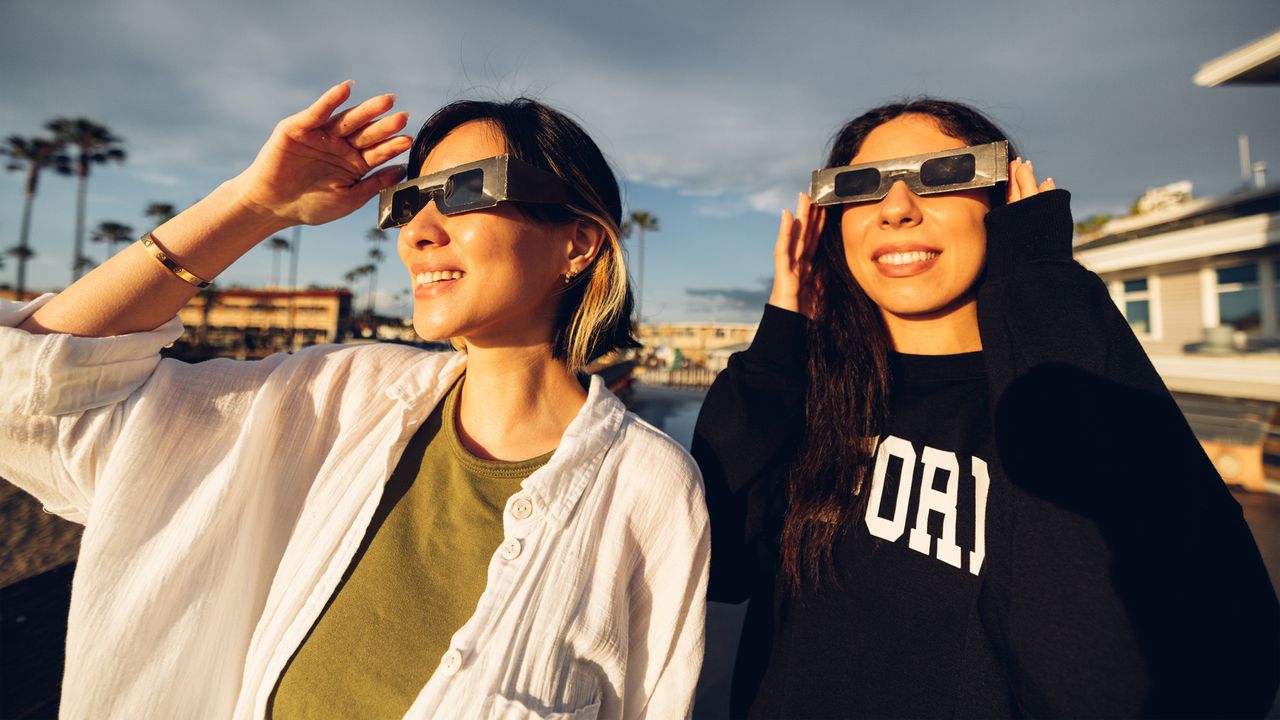
Even though August 12's solar eclipse won't be much to look at for observers in the U.S., it'll be even less impressive if you can't look at it at all. In order to see the partial phases, you MUST wear a pair of certified solar glasses or solar binoculars to view the sun safely.
The American Astronomical Society states, "ISO 12312-2 specifies the properties that a solar viewer should have in order to protect your eyes from injury and provide a comfortable view."
With the eclipse fast approaching, there is still time to pick up some last-minute solar viewing equipment, but some retailers are already selling out and won't be able to deliver before Wednesday, August 12.
Here are the best options you can still get hold of before the solar eclipse.
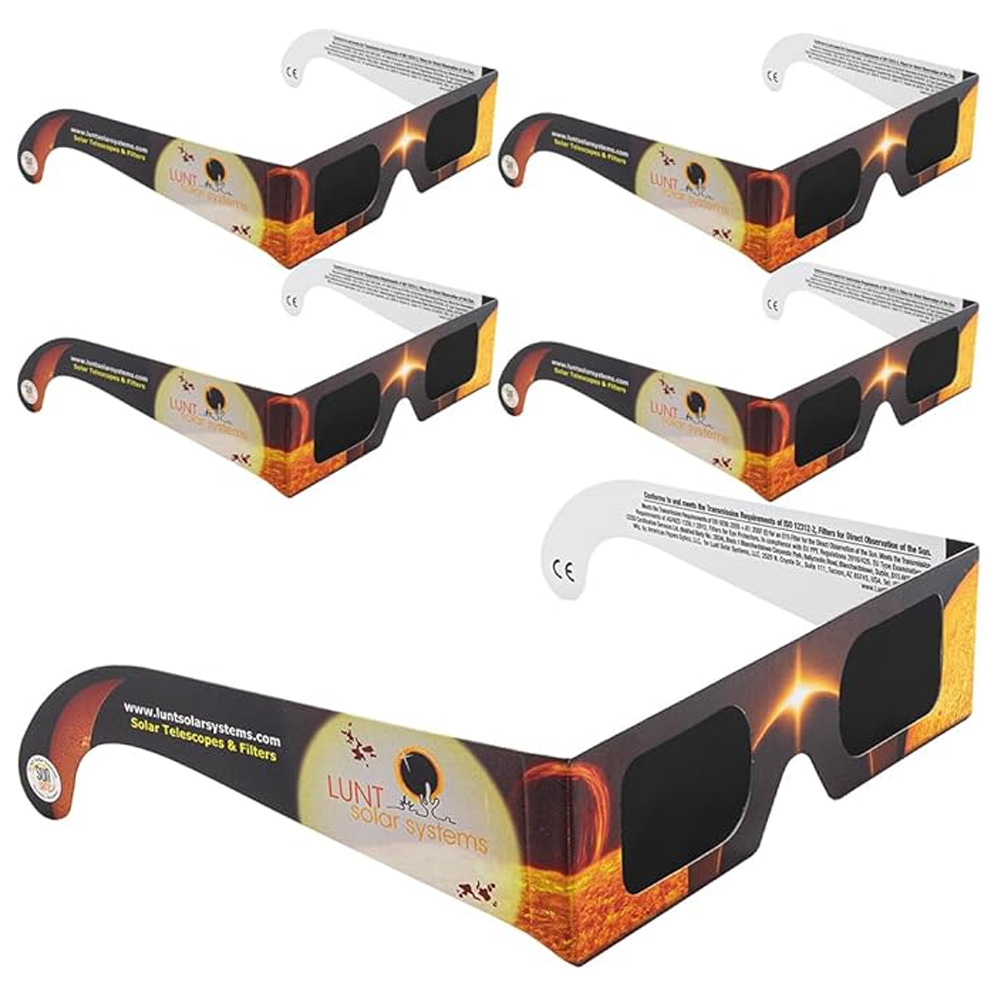
This 5-pack of solar eclipse glasses from Lunt is ideal for viewing parties, for the whole family to use or just to have spare pairs for future eclipses.
They're ISO 12312-2 certified and Prime members can get them on free next-day delivery.View Deal
This 2-pack of solar glasses from Soluna is super affordable, ISO 12312-2 certified and is even available for same-day delivery in some areas.View Deal
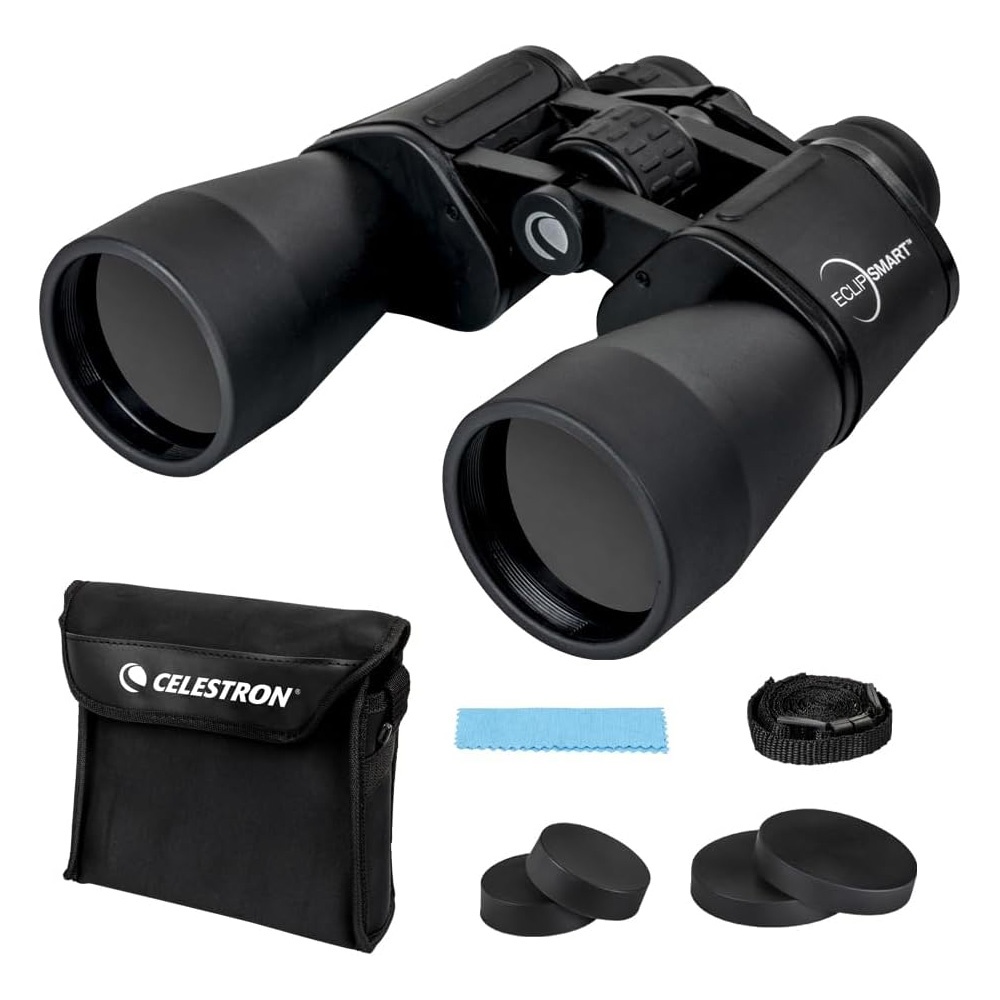
The Celestron EclipSmart 12x50 solar binoculars provide safe solar viewing with 12x magnification, and Prime members still have time to have them delivered before August 12.
But there's a rather large caveat here. Buying them mere days before a solar eclipse is arguably the worst possible time to purchase them, as this is when they're most expensive. For example, last October, they went down to $26.82. (Ah, capitalism).
So unless you plan on observing the sun all-year round, perhaps stick to the solar glasses for now and buy them in a few months when they're cheap so you're ready for the next one.View Deal
If you don't want to pay the inflated price for the solar binoculars, or you already have a pair of binoculars, these DayStar filters are a great option that fit on the front of the objective lenses to protect both your eyes and the lenses.
They come in various sizes, although they aren't suitable for objective lenses under 50mm.
While BHPhoto doesn't give exact shipping dates, you could still get them before the eclipse.View Deal
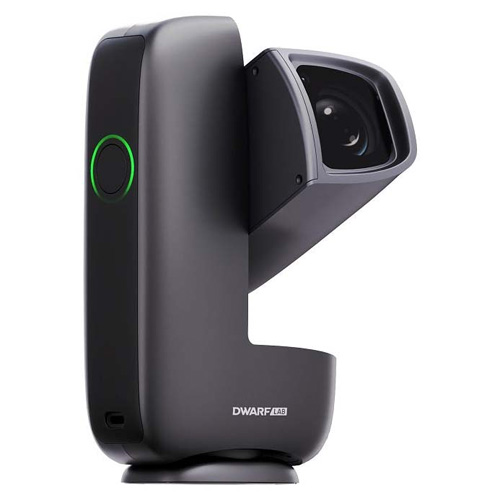
For the tech-nerds who want to take photos or a time-lapse of the eclipse, the Dwarf Mini is an affordable and portable smart telescope that comes with a solar filter and provides effortless solar imaging.
It was cheaper at the beginning of July, but it's still a great investment that you can use day and night all year round, so we wouldn't let the higher price put you off. Plus, it's still much more affordable than most, if not all, other smart telescopes.
Prime members can get same-day delivery (depending on location).
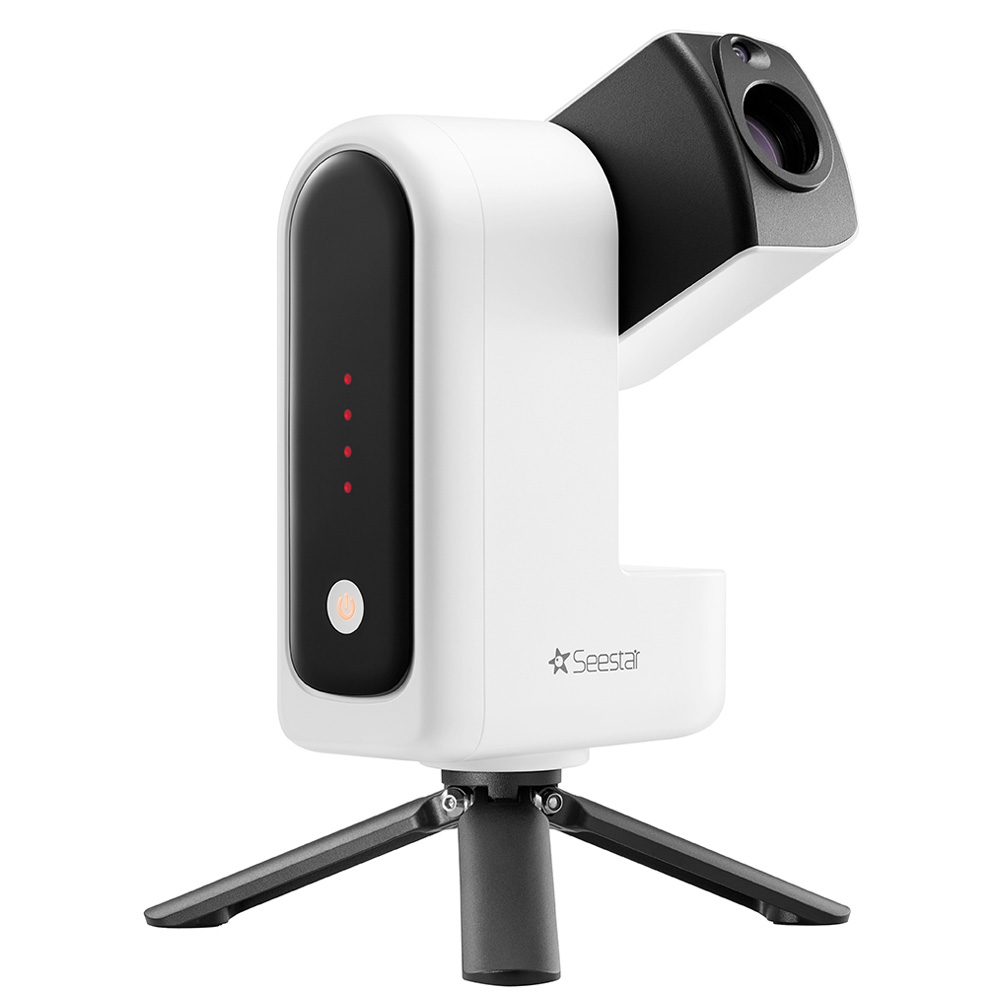
Now feels like the right time to grab a smart telescope, we reckon you can't get better than the ZWO SeeStar S30 Pro, and the included solar filter is ideal for capturing images or time-lapses of the eclipse. Plus, it produces absolutely stunning astro-images, too.
You can still get it before August 12 from BHPhoto, but we wouldn't wait too much longer.View Deal
These powerful, high-capacity portable batteries are the best ones when laptop charging is a priority. All have at least 20,000 mAh, enough to charge most laptops twice.
As gaming laptop prices continue to rise, it’s increasingly difficult to find affordable options that aren’t terrible. Here are your best options based on performance and cost.
The penalty, imposed by a state judge, is on top of a $375 million fine ordered by a jury that found Meta misled users about the safety of its platforms.
Apple lawsuit against OpenAI has reached its first major procedural challenge, with the ChatGPT developer asking a US federal judge to dismiss allegations that it acquired or used trade secrets taken by former Apple employees.
OpenAI submitted its 31-page dismissal motion on Wednesday in the US District Court for the Northern District of California. The filing argues that Apple has not adequately identified protectable trade secrets or alleged facts showing that OpenAI misappropriated confidential information.
Apple filed the case on July 10 against OpenAI, its io Products hardware operation, former Apple Vice President Tang Yew Tan, and former electrical engineer Chang Liu. The complaint accuses the defendants of obtaining information connected to Apple’s product development, manufacturing, components, testing, and supply chain operations.
The allegations have not been proven, and OpenAI denies possessing or seeking Apple’s trade secrets. US District Judge Edward Davila must now decide whether Apple’s complaint contains enough factual detail for the litigation to continue.
OpenAI Challenges the Apple Lawsuit
OpenAI’s motion focuses initially on how Apple described the information it claims was stolen. According to OpenAI, the complaint relies on generalized product-development categories without identifying the protected information with enough precision.
Trade secret plaintiffs face a difficult balance at the beginning of litigation. Apple must describe the protected material sufficiently to establish a plausible legal claim, but revealing the material publicly could expose the same information it is trying to protect.
Sensitive details can later be handled under seal or through a protective order. At the dismissal stage, however, Apple must still provide enough information for the court to distinguish genuine trade secrets from general engineering knowledge, employee experience, or skills acquired through years of work.
OpenAI argues that Apple has not crossed that threshold. Its motion says the complaint fails to establish ownership of a protectable trade secret and does not plausibly allege that OpenAI acquired, disclosed, or used such information.
The filing also disputes the commercial premise behind Apple’s accusations. OpenAI says it is developing products that are different from Apple’s hardware and has no need or desire to use the iPhone maker’s confidential material.
That position does not settle whether information was taken. A company can potentially misappropriate trade secrets even when its eventual product has a different design. The court’s immediate task is narrower: determining whether Apple has alleged facts that could support its claims if those facts are later proven.
Apple Park | Image Source: Google
Disputed Access to Apple Information
Apple’s complaint centers partly on Chang Liu, who spent eight years working as a senior system electrical engineer at the company before joining OpenAI in January 2026.
Apple alleges that Liu retained an Apple-issued computer and accessed confidential technical information after leaving. It claims he exploited residual authentication access on multiple occasions to obtain internal documents while already working for OpenAI.
OpenAI presents a different explanation. It says Apple employees contacted Liu after his departure and asked him to help locate files needed for ongoing Apple work. The company published redacted messages that it says support this account.
OpenAI argues that Apple’s systems and policies allowed personal and corporate information to become intermingled through iCloud accounts. Former employees, it says, could retain access to Apple files without requesting it or realizing that access remained active.
The motion maintains that Apple cannot treat the foreseeable effects of its own access-management practices as proof that former employees intentionally stole data. Apple, in contrast, alleges that its records document repeated access to restricted information rather than an accidental discovery of lingering permissions.
These competing accounts are likely to become central if the case enters discovery. Authentication logs, downloaded files, device records, internal communications, and employment timelines could establish whether access was deliberate, what information was obtained, and whether it reached anyone working on OpenAI products.
A dismissal motion normally tests whether the complaint states a legally sufficient claim. It is not a trial, and the judge is not expected to resolve every factual disagreement using competing evidence at this point.
Tang Tan and OpenAI’s Hardware Team
Apple separately accuses Tang Tan, OpenAI’s chief hardware officer, of seeking confidential information from Apple employees during recruiting conversations.
Tan spent more than 24 years at Apple and worked on products including the iPhone, Apple Watch, AirPods, and iPod. He later helped establish io Products with former Apple design chief Jony Ive and other collaborators. OpenAI acquired the hardware company as part of its effort to create a family of devices built around artificial intelligence.
Apple alleges that Tan used confidential project names, retained internal materials, and encouraged job candidates to discuss unreleased components or bring physical parts to interviews. OpenAI rejects the claim that these interactions formed a coordinated effort to collect Apple secrets.
OpenAI says Tan repeatedly instructed employees that confidential information from previous employers could not be brought into its organization. It also offers an alternative explanation for an Apple offboarding document found in his possession, arguing that Tan retained it to help incoming employees comply with Apple’s departure procedures.
Apple’s position is that the document and recruiting communications must be examined alongside the other alleged conduct. It describes the events as part of a connected campaign rather than isolated employment or administrative issues.
The dispute comes during intense competition for engineers capable of developing consumer AI hardware. Apple alleges that more than 400 former employees have moved to OpenAI, although hiring people from a competitor does not by itself establish trade secret misappropriation.
A company must generally connect recruitment to the acquisition, disclosure, or use of protected information. OpenAI is relying heavily on that distinction, presenting Apple’s lawsuit as an attempt to respond to employee departures and its difficulties competing for AI talent.
Image Credit: Getty Images
Apple Seeks Immediate Restrictions
OpenAI’s dismissal request arrives shortly after Apple asked the court for a preliminary injunction. Apple wants restrictions imposed while the lawsuit proceeds, arguing that it could suffer harm if its confidential information is used during OpenAI’s hardware development.
The requested relief would prevent OpenAI and the individual defendants from acquiring, accessing, using, or disclosing the alleged trade secrets. Apple has also requested expedited discovery and forensic examination of relevant devices and accounts.
OpenAI says those restrictions are unnecessary because it does not possess or want Apple’s protected information. It has described Apple’s request as based on false information and has offered to cooperate in addressing specific concerns.
The two companies also disagree over their communications before the lawsuit. Apple initially said its concerns had been raised with OpenAI months earlier. OpenAI responded that Apple’s outside lawyers contacted the wrong person after confusing names and incorrectly described a conversation with OpenAI’s general counsel.
OpenAI says Apple did not present the specific accusations before filing the case and that the companies had previously discussed resolving any access issues. Apple has since provided additional information in support of its injunction request, including allegations involving other former employees.
These disputes have moved beyond ordinary court filings. OpenAI published messages and emails on its website to support its version of events, calling Apple’s lawsuit aggressive and poorly investigated. Apple has primarily presented its account through formal legal submissions.
Judge Davila could dismiss some or all of Apple’s claims, deny the motion, or allow Apple to amend its complaint with more specific allegations. Even a dismissal would not necessarily end the case if permission to revise the complaint is granted.
The next scheduled public test is an October 1 hearing covering Apple’s preliminary injunction and request for early discovery. That proceeding may determine whether OpenAI faces immediate limits on its hardware work before the underlying trade secret claims receive a full evidentiary review.
Apple has asked a federal judge for a preliminary injunction that would stop OpenAI and two of its former employees from accessing, using, or disclosing what the iPhone maker claims are its confidential trade secrets, escalating a high-stakes legal battle over artificial intelligence and future consumer devices.
In a filing Monday in the U.S. District Court for the Northern District of California, Apple argued it faces “irreparable harm” without the order. The motion comes weeks after the company sued OpenAI, the two ex-employees now working for the ChatGPT maker, and OpenAI’s commercial arm io Products. Apple alleges the defendants misappropriated proprietary information to advance OpenAI’s push into consumer hardware.
The two former Apple staffers named are Chang Liu, previously a senior system electrical engineer, and Tang Yew Tan, who served as vice president of product design for the iPhone and Apple Watch. Apple is also seeking expedited discovery, including documents related to alleged access of its trade secrets, and depositions of Liu, Tan, OpenAI employee Yu-Ting Peng, an unnamed OpenAI worker who previously worked at Apple, and corporate representatives from OpenAI and io Products.
The lawsuit highlights growing rivalry between the two tech giants. Analysts have suggested OpenAI is developing its own phone or other AI-powered device that could operate without traditional apps or operating systems, potentially drawing users away from Apple’s dominant iPhone ecosystem. The legal action follows OpenAI’s successful defense against a separate challenge from Elon Musk’s xAI.
The case underscores intensifying competition in AI hardware, where control over key technical knowledge could shape the next generation of consumer gadgets. A ruling on the injunction request is pending.
MacDailyNews Take: OpenAI, the company behind ChatGPT, the AI for newbies who don’t know better alternatives exist, seems to be filled with traitors.
Please help support MacDailyNews — and enjoy subscriber-only articles, comments, chat, and more — by subscribing to our Substack: macdailynews.substack.com. Thank you!
OpenAI family of devices plans are no longer limited to an experimental gadget hidden inside a design studio. OpenAI President Greg Brockman has confirmed that the company’s first consumer device will begin a broader series intended to reconsider how people interact with artificial intelligence.
The confirmation gives OpenAI’s hardware strategy a clearer shape without revealing the first product itself. Brockman said the company is not ready to discuss the device in detail, but described it as the first in a series that will rethink what devices should be when AI can understand language, observe context and complete tasks.
That ambition extends well beyond placing the ChatGPT app on another piece of hardware. OpenAI wants to reduce the menus, buttons, model selectors and separate applications that currently stand between a person and an AI assistant.
For Apple, Google and other established platform owners, the implication is significant. ChatGPT currently reaches consumers through devices and operating systems controlled by other companies. An OpenAI-designed product would give the company direct control over the microphones, cameras, sensors, interface and account experience through which its models interact with people. 56000
OpenAI Family of Devices Begins With io
OpenAI’s move into consumer hardware accelerated in 2025 when it acquired io Products in a transaction valued at approximately $6.5 billion.
The startup had been founded by former Apple design chief Jony Ive alongside Scott Cannon, Evans Hankey and Tang Tan. Its team included hardware engineers, designers, manufacturing specialists and product developers, many of whom had spent years working together at Apple.
OpenAI and Ive had already been collaborating before the acquisition. Their early ideas developed into physical designs, convincing the partners that they needed a dedicated company capable of engineering and manufacturing complete products rather than another software prototype.
The io team officially merged with OpenAI in July 2025. Ive and his design collective LoveFrom remained independent while assuming extensive design and creative responsibilities across OpenAI.
The structure combines OpenAI’s models and software research with a group experienced in turning new interface concepts into mass-produced consumer products. Ive’s previous work helped shape the iMac, iPod, iPhone, iPad, Apple Watch and other devices that established Apple’s modern design identity.
OpenAI has continued recruiting hardware expertise from Apple. Paul Meade, who led hardware development for Apple Vision Pro and worked on the company’s smart-glasses efforts, reportedly joined OpenAI’s hardware organization in 2026.
OpenAI also placed product-development veteran Peter Welinder in a leadership role connected to the io division. The resulting organization is not structured like a small accessory project. It is being assembled to develop products, create manufacturing relationships and support more than one form factor.
Image Credit: Google
The First Device Remains Unannounced
OpenAI has not publicly confirmed the name, appearance, price or specifications of its first device. It has also not presented the product as a smartphone, pair of glasses, wearable pin or conventional smart speaker.
Recent reporting describes a portable, screen-free device designed primarily for use inside the home. The reported product resembles a compact speaker but includes a rechargeable battery, allowing it to move between rooms rather than remain attached to one location.
A camera and additional sensors would help the device understand its surroundings. Mechanical elements could allow parts of it to move, creating a more expressive physical presence than a stationary speaker waiting for a wake word.
The reported design would rely heavily on OpenAI’s latest voice technology. Instead of requiring a person to wait for the assistant to finish speaking, the system could listen and respond more naturally during overlapping conversation. Access to personal information, including messages or email when authorized, could give it enough context to handle requests rather than merely answer questions.
These details remain reported plans rather than announced specifications. OpenAI could change the hardware, features or release schedule before introducing the product.
The company is reportedly targeting a presentation during 2026 and a commercial release in 2027. Fortune separately reported that the initial design has been finalized, although development of the larger product family continues.
Why OpenAI Wants Hardware of Its Own
ChatGPT already operates across iPhone, iPad, Mac, Android and Windows devices. That wide distribution gives OpenAI access to an enormous audience without requiring it to manufacture screens, batteries or processors.
It also leaves crucial parts of the experience under the control of Apple, Google and Microsoft.
An operating system determines when ChatGPT can use a microphone, whether it can run continuously, how notifications appear and which applications it can control. Platform owners can limit background access, change default-assistant rules or promote their own AI systems more prominently.
Those restrictions matter more as ChatGPT develops from a chatbot into an agent. Answering a question inside an app requires relatively little control over the device. Completing a task across messages, calendars, files, cameras and connected appliances requires deeper access.
OpenAI hardware could be designed around those capabilities from the beginning. The assistant would not need to behave like one application among dozens because it could become the primary interface.
Brockman has described the current ChatGPT interface as too complicated, particularly as new models and tools add more controls. OpenAI’s objective is to make much of that interface disappear.
A successful device could allow someone to describe an outcome instead of opening several applications and completing each step manually. The user might ask the assistant to reorganize a day after a delayed flight, contact the relevant people and adjust reservations. The interface would be the request and the resulting confirmation rather than a sequence of taps.
A Family Creates More Context Than One Gadget
Calling the project a family of devices changes the strategy. One experimental product would need to prove its value independently. A coordinated group could distribute different sensors and functions across the places where people already live and work.
A home device could provide shared access in kitchens and living spaces. A personal wearable could preserve private conversations while moving outside. A future mobile product could handle visual information, navigation and communication without reproducing the application grid of a smartphone.
OpenAI is reportedly developing approximately five hardware concepts, with the screen-free home companion receiving priority. The company has also explored wearables and home robotics, although none of those later products has been announced.
The devices would become more useful if they shared the same ChatGPT identity, memory controls and task history. A request started at home could continue through another product without requiring the user to repeat the people involved, the desired result or the decisions already made.
That continuity is one of the strongest advantages Apple currently receives from controlling a complete ecosystem. An iPhone, Mac, Apple Watch, AirPods and HomePod can exchange information because Apple designs the devices, operating systems and cloud services together.
OpenAI appears to be pursuing a different center of gravity. Instead of making the operating system coordinate applications, it could make the AI assistant coordinate specialized devices.
Image Credit: Dado Ruvic/Reuters
ChatGPT Will Also Expand Through Other Companies’ Hardware
OpenAI’s hardware work does not mean the company intends to reserve ChatGPT for its own products.
Brockman has said OpenAI is interested in deeper integrations with smart glasses, wearables and other devices through its application programming interfaces. The company wants ChatGPT to become an interface available across hardware categories, including products manufactured by third parties.
That creates a two-track strategy. OpenAI can use its own devices to demonstrate the experience it considers ideal while allowing other manufacturers to connect their cameras, microphones and sensors to ChatGPT.
Third-party distribution would help OpenAI reach consumers who do not want another dedicated device. It would also reduce the risk of depending entirely on the success of one hardware launch.
The difficult part will be keeping those experiences consistent. A wearable may have limited battery capacity, a camera may require visible privacy controls, and a speaker may depend on cloud processing when a connection is available. OpenAI will need to define what its assistant can do reliably across products with very different technical limits.
Early AI Hardware Changed the Expectations
The first generation of dedicated AI gadgets established a warning for every company entering this market.
Humane’s AI Pin and the Rabbit R1 attracted attention by promising an alternative to application-based computing. Their launches also exposed problems involving response delays, battery life, incomplete features and tasks that remained easier on a smartphone.
Those products demonstrated that access to a language model does not automatically justify a new object. Consumers need to understand why they should carry, charge and maintain another device when ChatGPT, Gemini and other assistants already operate on phones.
OpenAI has several advantages those earlier companies lacked. It controls one of the most widely used AI services, operates the models behind the interface and has the resources to improve the software after launch. The io acquisition gives it experienced design and manufacturing leadership rather than requiring it to assemble a hardware organization gradually.
The standard will consequently be higher. A well-designed enclosure and natural voice will not be enough if the device cannot complete dependable tasks more efficiently than an iPhone or Android phone.
Apple’s Lawsuit Could Affect the Schedule
OpenAI’s expansion beyond Apple devices has also produced a direct legal confrontation with Apple.
Apple filed a federal lawsuit in July 2026 accusing OpenAI, io and former Apple employees of misappropriating confidential hardware information. The complaint alleges that trade secrets connected to unreleased products, engineering processes and suppliers were taken for the benefit of OpenAI’s hardware business.
OpenAI has denied having any interest in Apple’s trade secrets and said it was unaware of evidence giving the complaint merit. The allegations have not been decided by a court.
Apple is seeking restrictions on the use of its confidential information, along with the return of materials and financial damages. The case could require OpenAI to separate employees from parts of the project, replace suppliers or repeat engineering work if disputed information is found inside the development process.
It does not automatically establish that OpenAI’s reported product copies an Apple device. The first OpenAI design is described as substantially different from Apple’s current hardware, but the legal dispute could still affect when it can be manufactured or sold.
The First Product Will Define the Rules for the Rest
The most important details at OpenAI’s eventual hardware presentation may have little to do with the object’s shape.
A camera-equipped device that learns from activity inside a home will need unmistakable recording indicators, understandable data-retention controls and a simple method for temporarily disabling its sensors. Owners will need to know which information remains on the device, what reaches OpenAI’s servers and which memories can be reviewed or deleted.
OpenAI will also have to explain whether the product requires a paid ChatGPT subscription, how much it can do without an internet connection and whether multiple members of a household receive separate identities. Those choices will determine whether it behaves like a personal assistant, a shared appliance or a new subscription terminal.
Support for messages, calendars, music and connected appliances will require cooperation from outside companies. A device cannot replace frequent phone interactions if it remains unable to enter the services where those interactions occur.
The first model will therefore establish more than OpenAI’s industrial-design language. It will set the privacy, account, subscription and developer rules that every later member of the OpenAI family of devices inherits.

 Login