Animal testing has shaped modern drug development for decades, but its limitations become especially visible when scientists evaluate cancer immunotherapies. These treatments are designed to stimulate the immune system to recognize and destroy malignant cells, yet the same powerful immune activation can trigger life-threatening complications in patients. Researchers at the University of Rochester are developing a human-cell-based alternative: miniature tissue models known as organs-on-a-chip that could help predict these toxicities before experimental medicines reach clinical trials.
The work is being led through the university’s Translational Center for Barrier Microphysiological Systems, or TraCe-bMPS. The center is building drug-development tools around modular µSiM tissue chips, devices that contain ultrathin membranes populated with human cells. Unlike conventional laboratory cultures, these systems are engineered to reproduce key features of biological barriers, including the physical separation between tissues, controlled exposure to drugs, and measurable inflammatory responses. Their modular construction also allows the devices to be manufactured in large quantities with consistent dimensions and materials.
The platform is based primarily on acrylic components and incorporates membranes designed to mimic interfaces found in the human body. Such barriers regulate the movement of molecules and immune cells between compartments, making them central to drug absorption, toxicity, and inflammation. By assembling reproducible chips with human cells, researchers can study how a therapy affects a tissue under conditions that more closely approximate human biology than many animal models. The design also makes it possible to modify individual components for different organs or disease settings.
A major feature of the Rochester system is the integration of sensors directly into the chips. Developed in part through the work of biomedical engineering professor Benjamin Miller, these sensors can track barrier function and inflammatory signaling in real time. Instead of waiting until the end of an experiment to examine damaged cells, researchers can observe how a tissue responds as a drug is introduced. Changes in electrical or molecular signals may reveal that a barrier is becoming more permeable or that inflammatory pathways are being activated, providing an early warning of toxicity.
The immediate focus is on two severe complications associated with some cancer immunotherapies. Cytokine release syndrome, commonly called CRS, occurs when activated immune cells release large quantities of signaling proteins known as cytokines. The resulting systemic inflammation can cause fever, low blood pressure, breathing difficulties, and, in the most serious cases, organ failure. Immune effector cell-associated neurotoxicity syndrome, or ICANS, can affect the nervous system, producing confusion, seizures, impaired speech, or other neurological symptoms. Both conditions are difficult to predict reliably with animal testing because species differ in immune signaling networks and cell-surface receptors.
“The goal is to predict these toxicities from human cells on a chip, before a drug ever reaches a patient, and to do it without relying on animal models that have repeatedly failed to predict CRS in people,” says James McGrath, director of TraCe-bMPS and the William R. Kenan Jr. Professor of Biomedical Engineering. The approach does not simply attempt to reproduce a whole human body in miniature. Instead, it focuses on specific biological barriers and immune interactions that are directly relevant to the safety question being studied.
The project has now reached an important regulatory stage. The team was accepted into the US Food and Drug Administration’s Innovative Science and Technology Approaches for New Drugs, or ISTAND, pilot program. ISTAND is intended to help evaluate emerging methods that could improve drug development and eventually support regulatory decisions. Acceptance does not mean that the tissue-chip platform has already been approved for routine use, but it creates a formal pathway for the researchers to work with the FDA on defining the evidence needed for qualification.
The Rochester group is preparing a detailed qualification plan that will describe clinical considerations, timelines, data-sharing procedures, and statistical methods for evaluating the technology. If the platform ultimately receives FDA qualification, pharmaceutical companies could use its results as part of the evidence submitted in support of new drug applications. Such recognition would represent a significant step for organs-on-a-chip research, which has expanded rapidly but has only rarely progressed into formal regulatory programs.
The effort comes as US regulators seek alternatives to animal testing in preclinical safety studies. The FDA Modernization Act 2.0, enacted in 2022, opened the door for non-animal methods, while the agency’s 2025 roadmap outlined further efforts to reduce reliance on animal models. Researchers say pharmaceutical companies are showing strong interest because many immunotherapies are already in clinical development and carry risks of CRS or ICANS. The Rochester team collaborated with Graham Marsh of the Critical Path Institute and consulted with scientists at Pfizer about how the tool could fit into real-world drug development. If successful, the technology could give researchers a more human-relevant way to identify dangerous immune reactions early, helping developers eliminate unsafe candidates and refine promising treatments before patients are exposed.
Subject of Research: Human-cell tissue chips for predicting cancer immunotherapy toxicities.
Web References: University of Rochester; Translational Center for Barrier Microphysiological Systems; University of Rochester Biomedical Engineering; FDA ISTAND pilot program; FDA Modernization Act 2.0.
Image Credits: URochester photo / J. Adam Fenster.
A tiny microscope weighing just five grams could give neuroscientists an unprecedented view of how individual brain cells control behavior while animals move naturally. Researchers at the University of Colorado Anschutz Medical Campus and the University of Colorado Boulder have developed a head-mounted device that can both record neural activity and selectively activate individual neurons during movement. The technology could help scientists investigate how brain circuits generate behavior and how those circuits become disrupted in conditions such as Alzheimer’s disease, Parkinson’s disease and epilepsy.
The device, called Opto2P-FCM, combines two powerful techniques that have traditionally been difficult to use together in a freely moving animal. Two-photon microscopy provides detailed images of living brain tissue at cellular resolution, while optogenetics uses light-sensitive proteins to control selected neurons. By integrating both capabilities into a miniature instrument, the researchers can observe specific cells as they become active and then stimulate chosen neurons to test how they influence the surrounding network.
“These miniature microscopes have been increasingly used to study the neural basis of behavior in freely moving animals,” said Emily Gibson, PhD, associate professor of biomedical engineering at CU Anschutz and the study’s senior author. “This new microscope allows deeper penetration and higher resolution images in the brain. Importantly, it can also excite select neurons using optogenetics.”
For decades, conventional two-photon microscopes have been regarded as the gold standard for imaging neurons in living brains. These systems use infrared laser light to produce high-resolution images deep within tissue, allowing researchers to track calcium signals and other indicators of neural activity. However, conventional microscopes are generally large, stationary instruments. Animals must often remain immobilized beneath the objective, making it difficult to study brain activity during walking, exploration, social interaction or other natural behaviors.
Miniature microscopes have helped overcome that limitation by moving the imaging system onto the animal’s head. Yet reducing the size and weight of the equipment has often required compromises. Some compact systems provide lower-resolution images, while others can record neural activity but cannot stimulate precisely selected cells. The Colorado team designed Opto2P-FCM to address both problems through a dual-path optical architecture that separates imaging from stimulation.
In the imaging pathway, infrared light is directed through the brain to generate two-photon signals from fluorescent markers inside neurons. These markers can report changes in calcium concentration, which occur when neurons fire. The resulting signals are collected to create detailed images of neural activity at the level of individual cells. A separate optical pathway delivers patterned light for optogenetic stimulation, allowing researchers to activate specific neurons without disrupting the imaging beam or overwhelming the detectors.
This separation is technically important because imaging and stimulation place different demands on an optical system. High-resolution imaging requires precise focusing, efficient light collection and minimal optical distortion. Optogenetic activation, by contrast, requires intense, accurately positioned light capable of reaching the light-sensitive proteins expressed by selected neurons. Designing both functions into a device small enough to be carried by an animal required careful control of the alignment, geometry and weight of every optical component.
“This microscope is a game changer,” said Juliet Gopinath, PhD, professor of electrical, computer and energy engineering and physics at CU Boulder and a study co-author. “Being able to demonstrate a state-of-the-art instrument for both read-out and photo-stimulation of neurons is amazing.” The research team included engineers, physicists and neuroscientists who worked together to solve problems involving miniature lenses, mechanical tolerances, optical alignment and three-dimensional fabrication.
The device weighs approximately five grams, but its small size made construction unusually demanding. Mo Zohrabi, PhD, a senior research scientist at CU Boulder and co-first author, said the team initially thought such an instrument might be impossible to build because of the tight tolerances required by the optics and available 3D-printing technology. Gregory Futia, PhD, a senior research associate at CU Anschutz and co-first author, said that every component had to be designed and accounted for with extreme precision. Even slight misalignment could reduce image quality or prevent the stimulation beam from reaching the intended cells.
The researchers believe the platform could transform experiments designed to distinguish correlation from causation in the brain. Recording a neuron’s activity can show that it is associated with a behavior, but it does not prove that the cell helps produce that behavior. With optogenetic stimulation, scientists can activate a selected population and observe whether movement, decision-making or other actions change. At the same time, the microscope can record how neighboring neurons respond, providing a view of how local circuits coordinate activity.
The current Opto2P-FCM system is a prototype, and the researchers are working on future versions that could be smaller, lighter and faster. They also hope to expand the field of view so that more neurons can be monitored at once. Such improvements could make it possible to track larger networks over longer periods while animals engage in increasingly complex behaviors. By combining cellular-resolution observation with targeted manipulation in a freely moving subject, the technology may help reveal how healthy neural circuits operate and how neurological disease changes the communication between them.
Subject of Research: Miniature two-photon microscopy, optogenetics, neural circuits and brain activity during natural movement
Article Title: New Miniature Microscope Allows Scientists to Watch and Control Brain Cells During Natural Movement
References: Optica, “New Miniature Microscope Allows Scientists to Watch and Control Brain Cells During Natural Movement,” article publication date: Aug. 7, 2026
As data centers gobble up memory chips, other industries that need the components, including electronics companies like Apple and medical device makers, are asking for government help.
The iPhone X is a testament to device longevity, and durability. I gave mine to a family member when upgrading to an Xs Max in Late 2018, who held onto it all these years through a few different protective cases. Today I got it back where it’ll remain in my collection, after they upgraded to […]
TerraMaster’s F4-425 is a fast, versatile, four-bay storage, backup and media streaming NAS box that’s every bit as good as, if not better than similar units from QNAP and Synology. Especially as the company doesn’t gouge you for IP cam licenses.
Price When Reviewed
This value will show the geolocated pricing text for product undefined
Price comparison from over 24,000 stores worldwide
Product
Price
Price comparison from Backmarket
I’m always surprised how few people own a NAS (Network Attached Storage) box such as the highly capable F4-425 Pro reviewed here. NAS requires a bit more tech savvy than cloud services and storage, plus some upfront cost, but there’s one particular reason it’s worth it: complete and private control of the apps, services, and most importantly –the data you store on it.
Internet outage? Doesn’t affect your NAS. Online data breech? Doesn’t affect your NAS. Monthly payments? Only to your power company. Simply put, NAS is fantastic for data backup and streaming media about the house and can also serve as the engine for a home surveillance network.
We like NAS, and TerraMaster has quickly become one of our favorite consumer flavors thanks to excellent hardware and apps, a newly faster OS, and the lack of surcharges vendors such as QNAP and Synology hit you up with for things such as additional IP cam licenses.
That said, there was the occasional immaturity in the apps and operating system.
What are the F4-425 Pro’s features?
The F4-425 Pro is a silver and black hued, mostly metal, four-bay NAS box with quick swap, non-locking 3.5-inch drive trays. It measures approximately 7.1-inches wide by 8.6-inches deep, by 5.9-inches tall and weighs around 6.5 pounds bare. That will of course increase as you add drives.
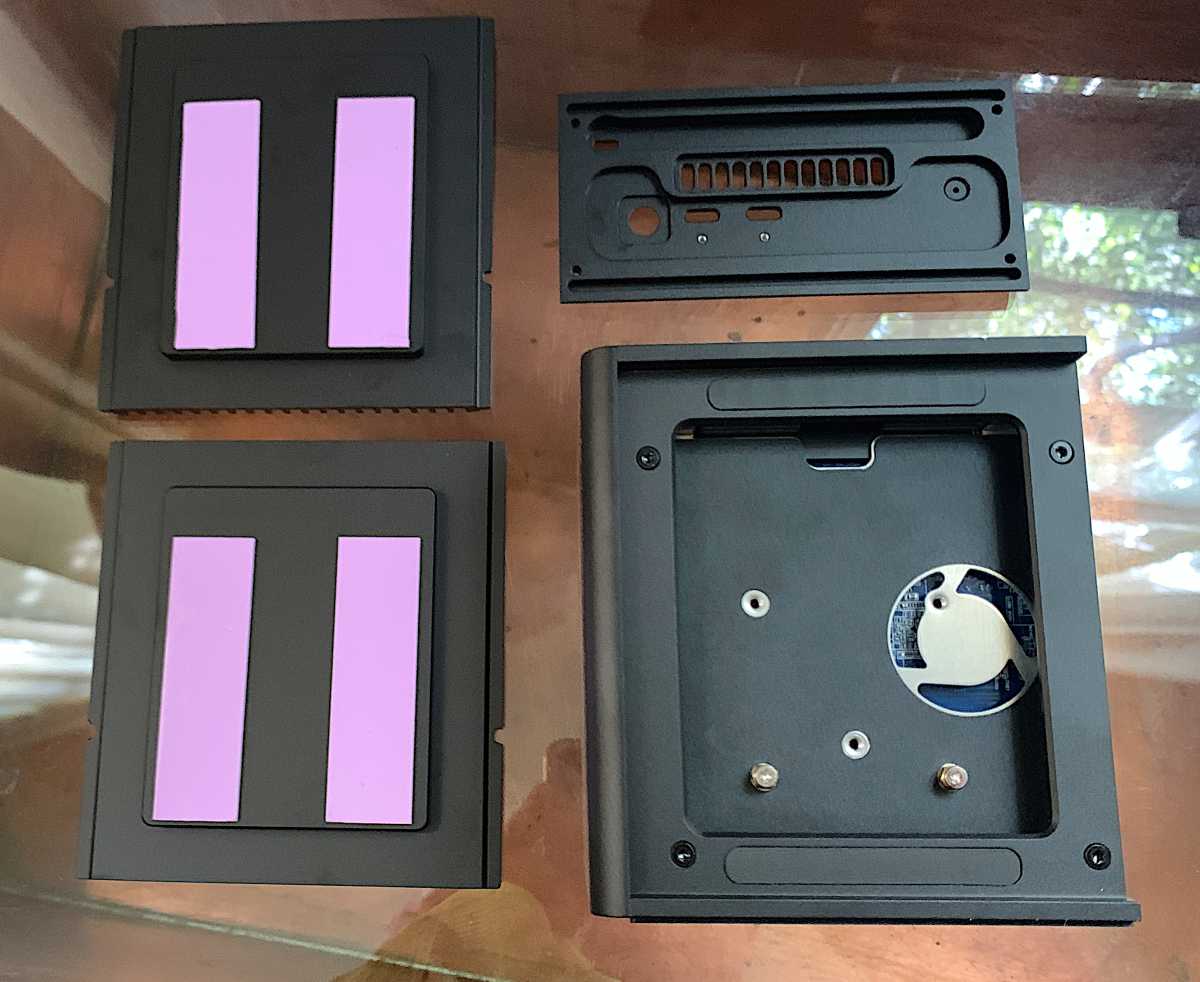
If you remove the four screws on the bottom holding the aluminum body to the chassis, you’ll find three PCIe 3.0 NVMe M.2 slots that accept NVMe SSDs. There’s enough space for heat sinks, which would be a good idea to prolong SSD life. Note that you can use PCIe 4.0/5.0 SSDs but they’ll be limited to PCIe 3.0 speed.
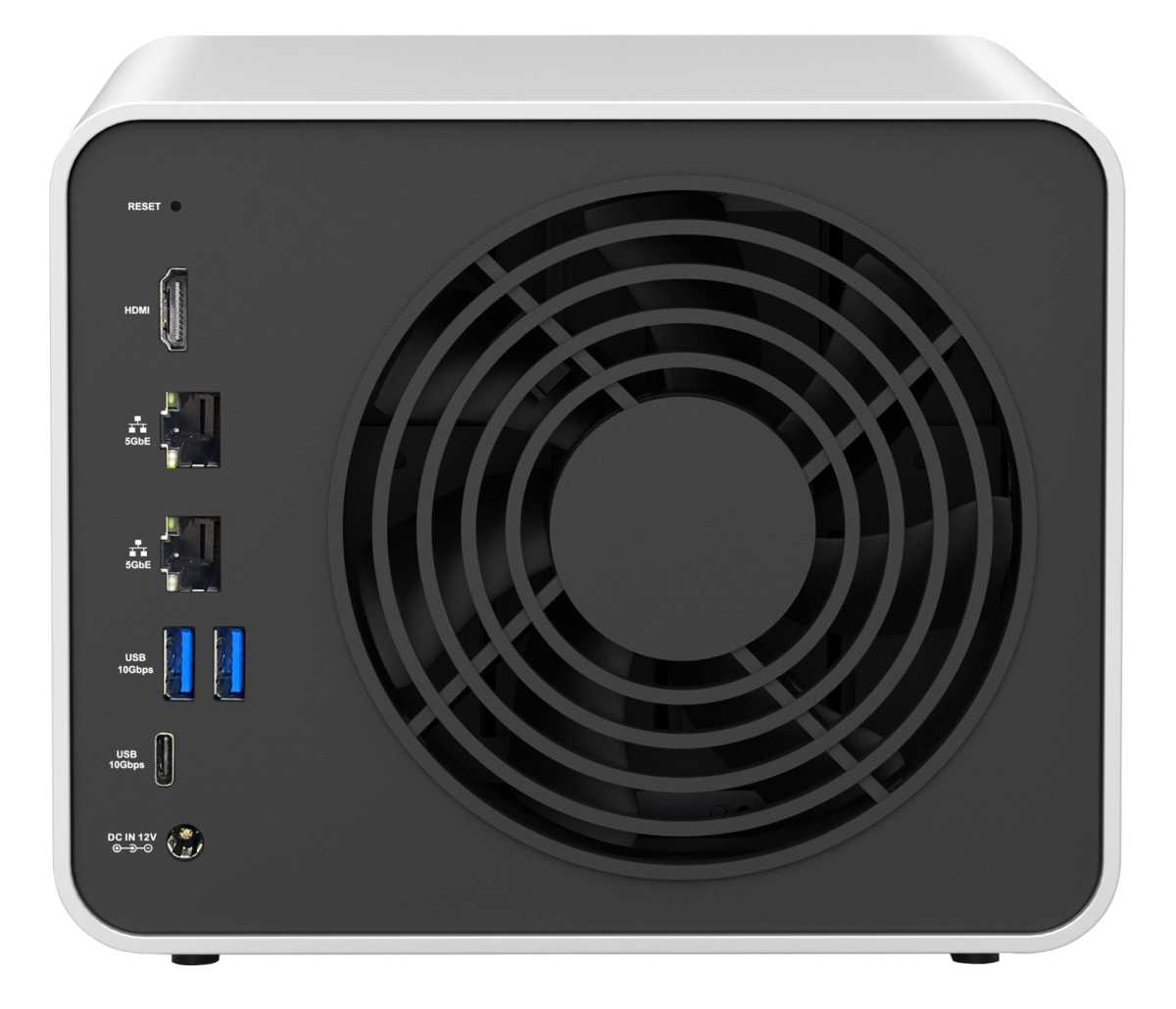
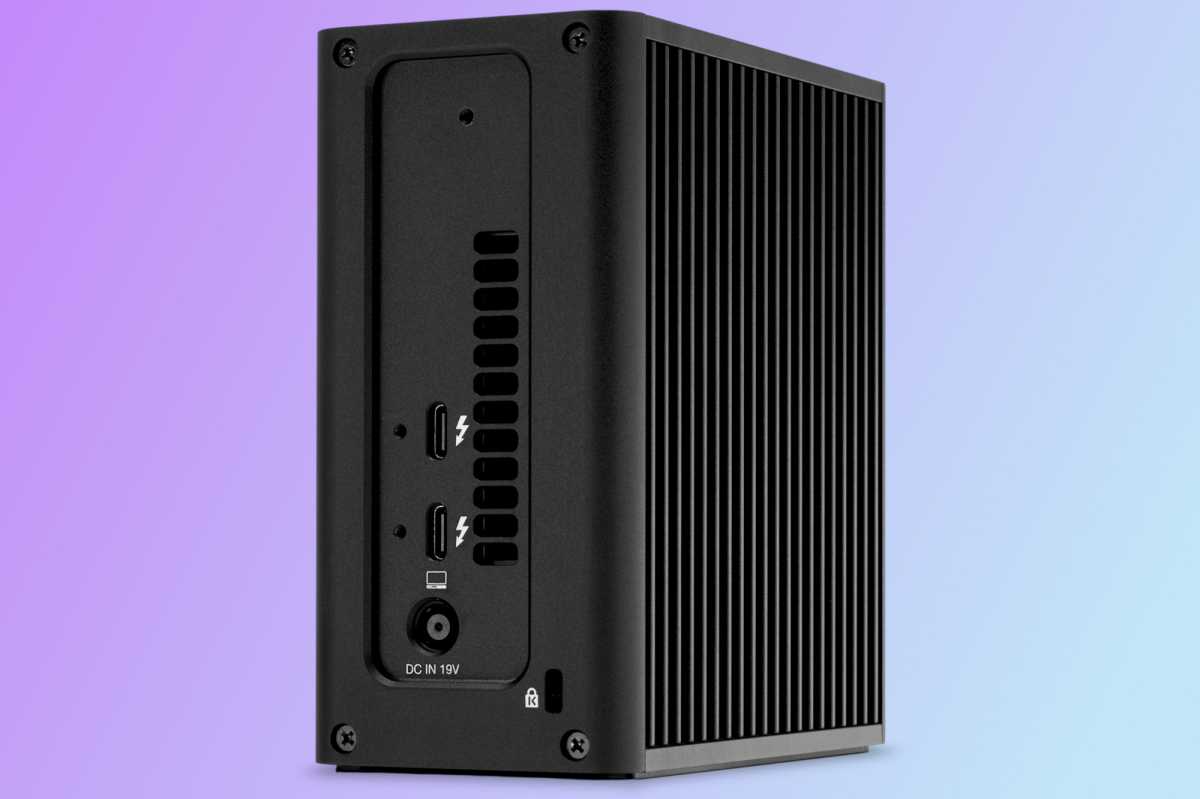
The front of the unit provides access to the four drive bays, as well as the power button and a single 10Gbps USB Type-A port. The back is home to an additional pair of 10Gbps Type-A USB ports, twin 5Gbe Ethernet ports, and HDMI port (console use only), and a single Type-C port for diagnostics and the like. There’s also the power jack, a pinhole reset button, and a rather massive exhaust fan.
The back of the F4-425 Pro with its dual 2.5Gbpe and 10GBps Type-A ports. There’s a Type-C port but it’s only for diagnostics. The HDMI port is for console (command prompt) use only.
The processor inside of our test unit was a capable 8-core Intel N350 with a substantial 16GB of DDR5 onboard. That’s plenty of power for advanced tasks like virtual machines and Docker.
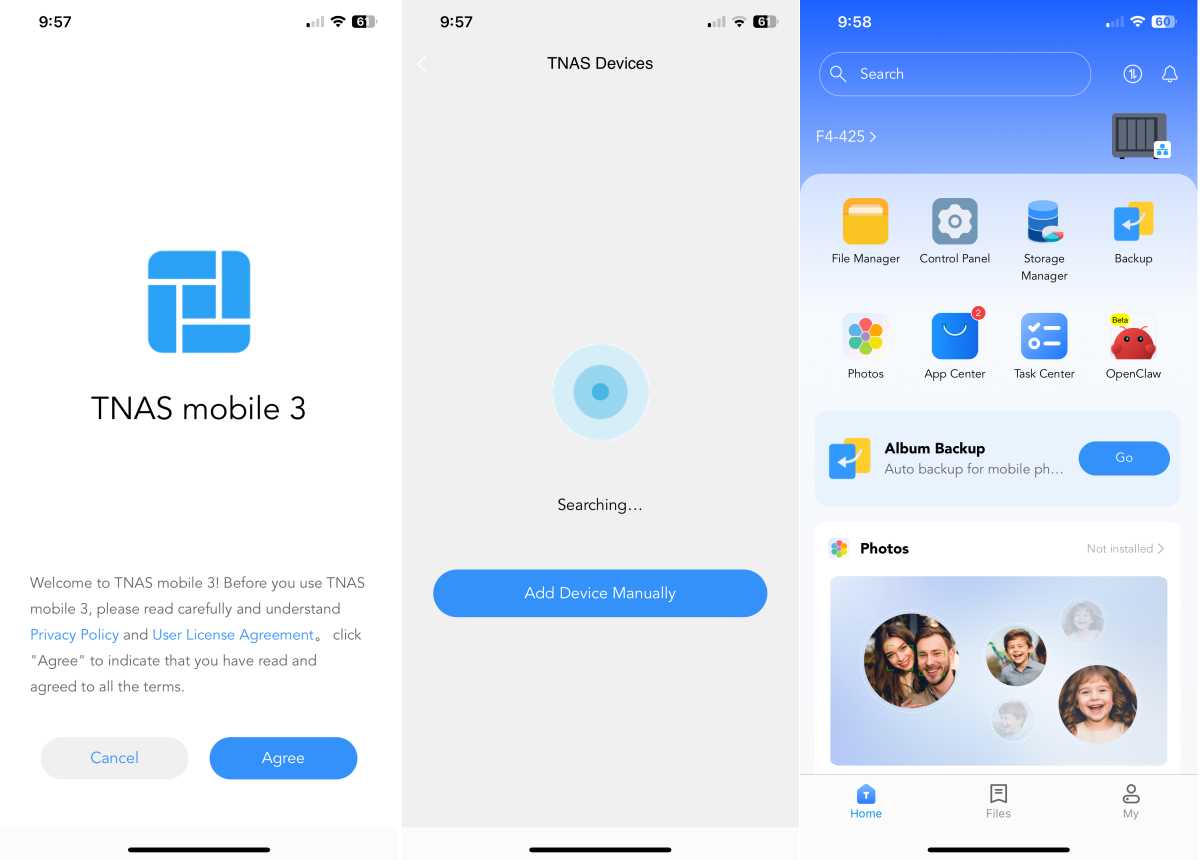
TerraMaster also provides several apps for backup up mobile devices, and even controlling the box.
The TNAS mobile app on install and first use.
TerraMaster provides 2-year warranty on the F4-425 Pro. And thankfully, the company now also provides a downloadable PDF user’s guide.
How is the F4-425 Pro’s setup?
Adding drives to the tool-less trays is largely painless: slide them out, pop out the side rails, slip in the 3.5-inch HDD and replace the side rails. Screws are provided for 2.5-inch hard drives or SATA SSDs. As described above, you’ll need to remove the outer shell to access the three PCIe 3.0 NVMe slots.
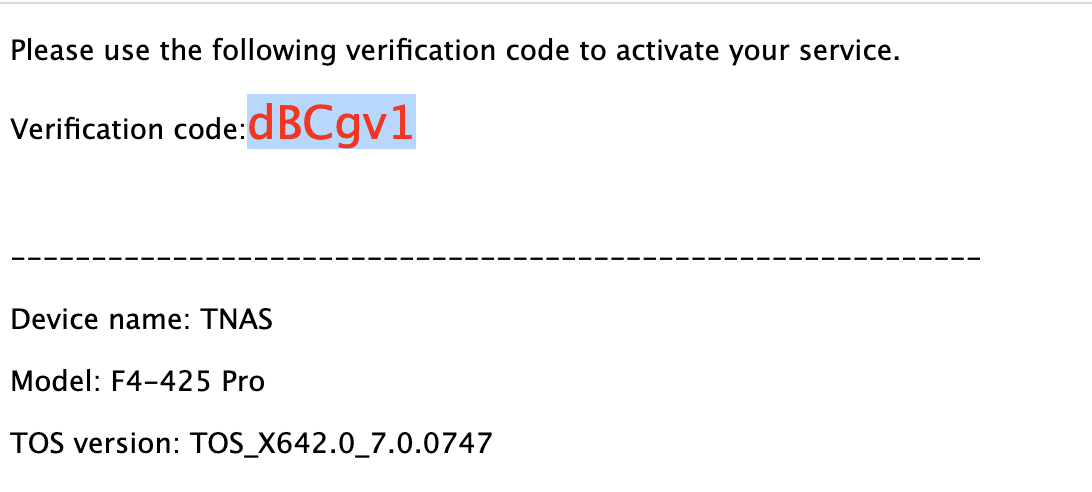
lWhen you first boot the F4-425 (and most TerraMaster NAS) it presents a dialog asking for your email address to receive a code. That’s of course after you find its IP address (E.g. 192/168.1.110) and visit with your browser. Below the email field, in very light lettering, is the ability to bypass this step.
If you choose, you can activate your online presence with TerraMaster during setup.
Alas, you still have to enter your email. I don’t like sending info to a company until I’m very familiar with the hardware and said company. I wish TerraMaster would abandon this practice ad to be blunt–it’s none of their darn business.
To be fair, you can put the F4-425 Pro into “Security Isolation Mode” (Control Panel / Security/ Security Isolation Mode) after setup, to prevent any further traffic outside of your local network. The F4-425 also features a highly configurable firewall if that’s too drastic a measure for you.
What is the F4-425 Pro’s operating system and software like?
The F4-425 Pro delivered our first look at the latest version 7 of TOS (TerraMaster Operating System), a substantially feature-equivalent but far better-performing version of the operating system (version 6) than I tested with the F2-425. Especially in regards multitasking.
Beyond that, it appeared to me to be more evolutionary than revolutionary, despite heralding itself as the first AI-enabled NAS OS. It does allow you to install OpenCLAW which enables normal language access to various features.
TerraMaster says OpenCLAW makes things easier, but the real issue with most new NAS users is that they don’t know what to ask, let alone how to ask it. Actually, thinking about it, that’s the issue with just about any AI system. Note also that the minute I opened OpenCLAW, the F4-425 Pro’s fan kicked into high gear. It takes some juice.
That said, I quite like TOS, it’s as well laid out as the QNAP and Synology equivalents, and perhaps a bit more intuitive. However, I found version 7 a bit buggy. Rough around the edges, as it were.
I stuck with TOS 7 as it’s so much quicker at everything than version 6 but there were some annoyances such as the inability to include spaces in a backup job name, and not automatically resuming jobs that were not completed in the last session. I’d also be careful doing searches and deleting the results with the file manager.
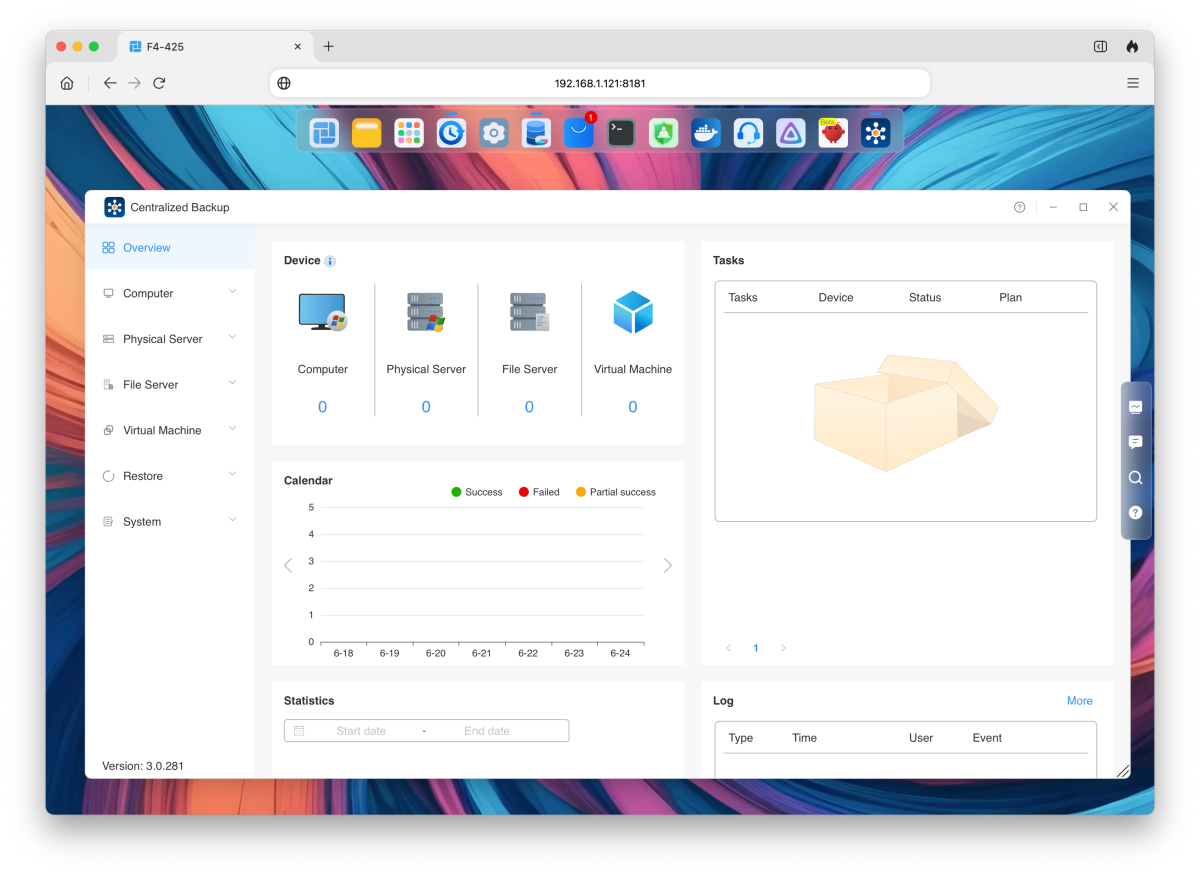
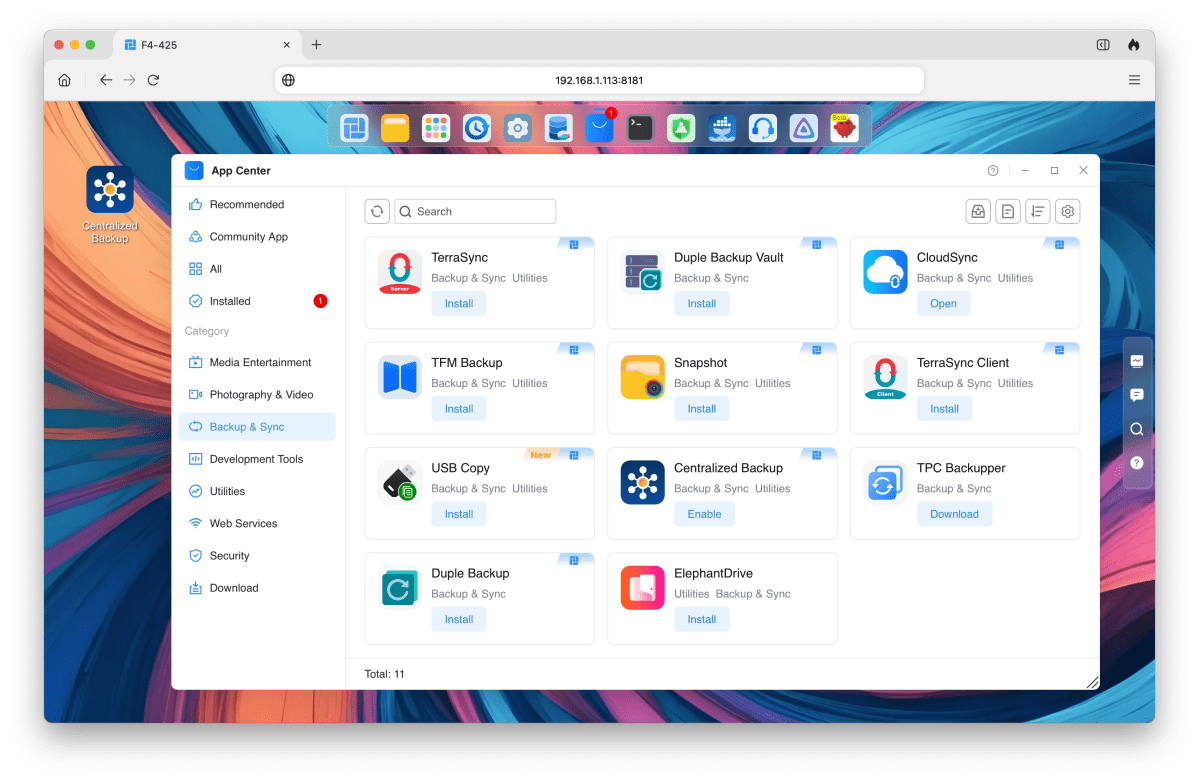
There are also tons of apps for backup, surveillance, development, and multimedia streaming. Below is my favorite: Centralized Backup, which can back up from numerous sources (SMB, FTP, etc.) without the need to install clients on every machine. Simply share the folders or files you want across the network, locate them and create a job to back them up.
I love Centralized Backup’s ability to back up my shared folders without me having to install client software on the involved computers.
Centralized Backup, along with CloudSync (back up to a host of online services) are my favorite TOS backup apps, but there are quite a few others (Duple Vault, Elephant Drive, etc.) as well as TerraMaster’s own client-based, portal driven TerraSync. There’s also a handy folder mirroring utility (TFM) that you can use across volumes.
eAll the backup and sync options offered by TOS 7.
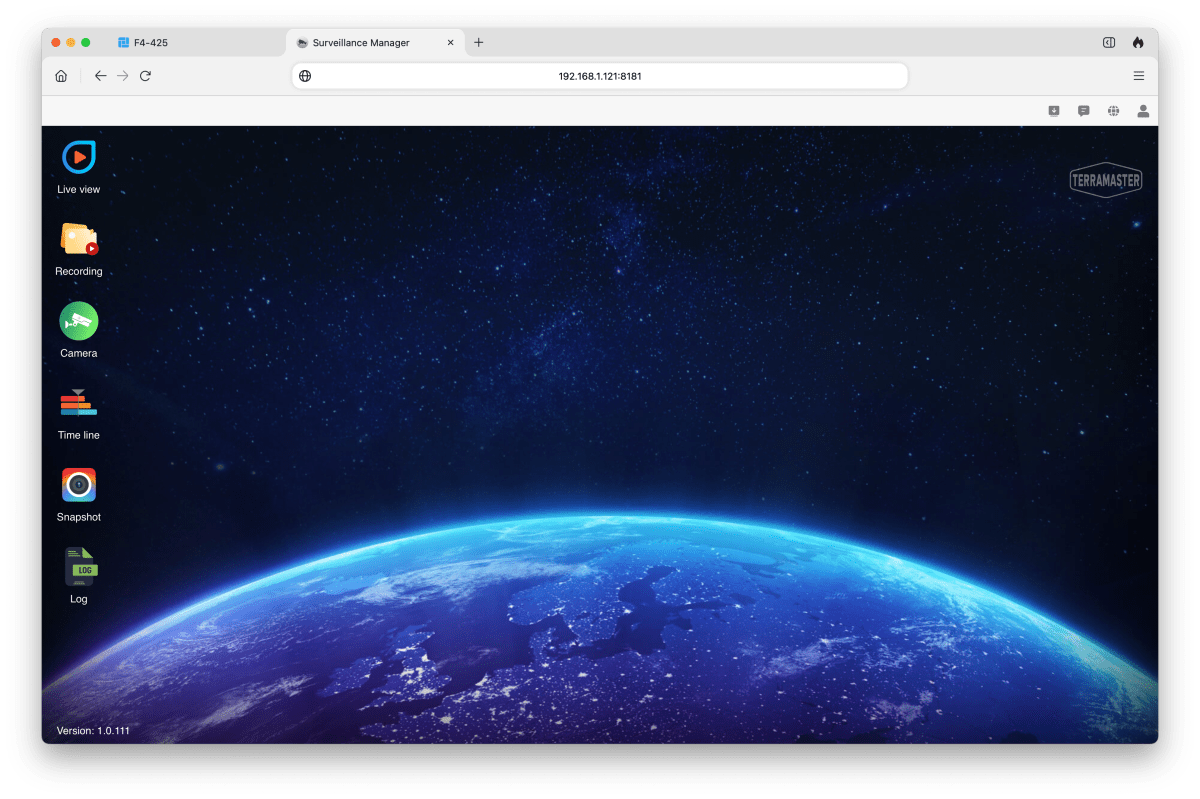
Want to keep tabs on your house? TerraMaster includes Surveillance Manager (shown below), which offers support for unlimited cameras. This is in distinct contrast to Synology and QNAP which limit you to one or two cameras so they can sell you more licenses. This is one of the best reasons to opt for a TerraMaster NAS box, however, note that you’ll have to configure your router to reach the app remotely.
The Surveillance Manager opens in a separate tab and allows up to tk IP cams.
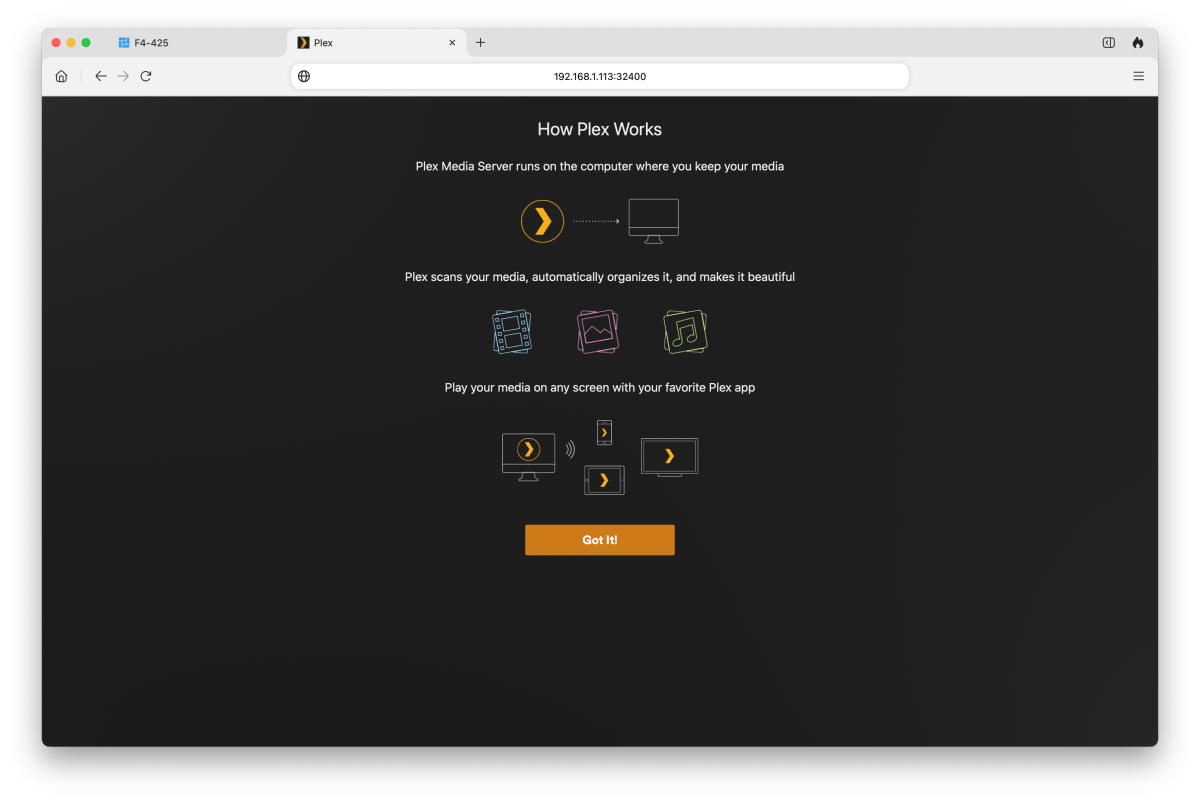
While I use TOS’s DLNA Multimedia Server to stream movies to my TV, TerraMaster also includes the extremely popular Plex (shown below), as well as Jellyfin and Emby for fans of those systems.
The extremely popular Plex Media Server is present in TOS 7.
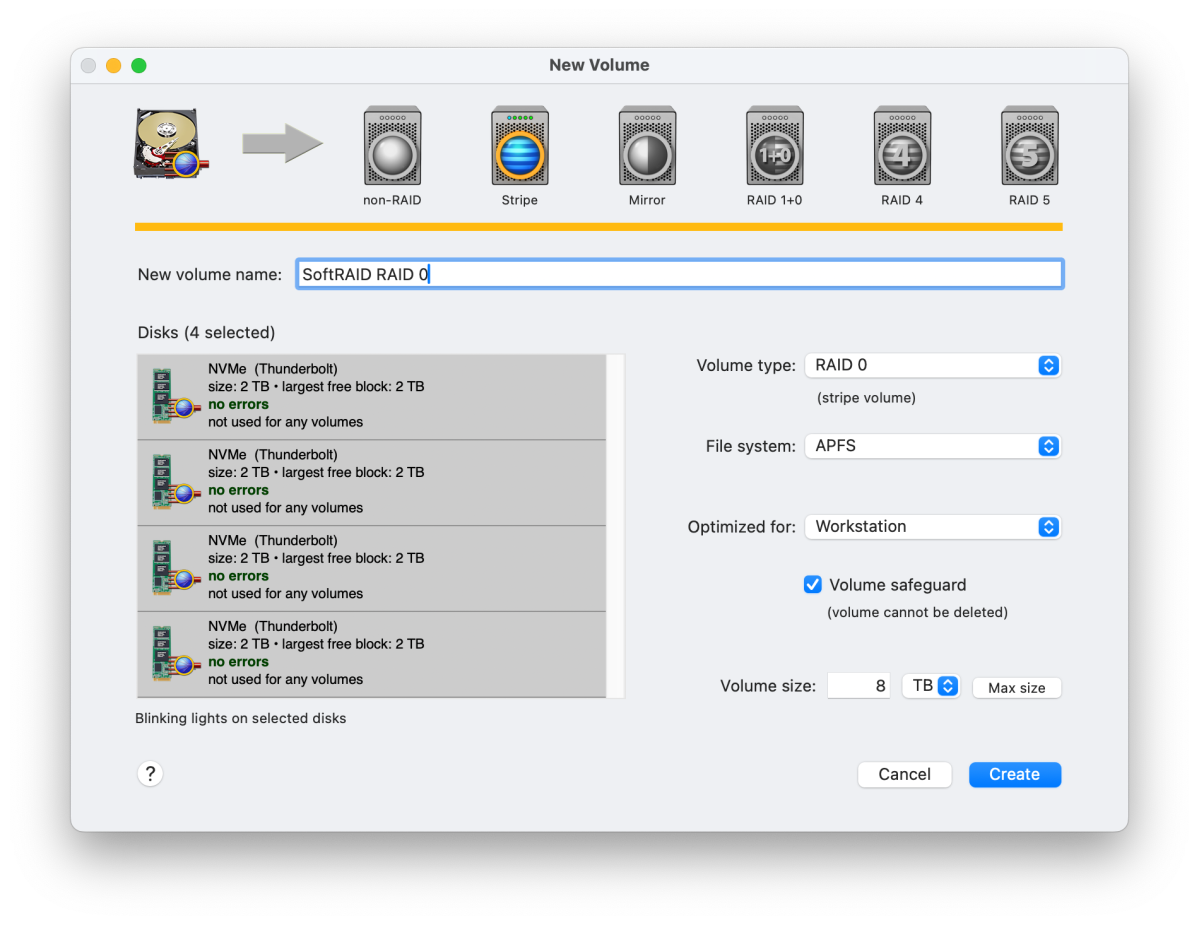
TRAID is TerraMaster’s hybrid RAID solution (all NAS vendors have one these days) that combines mirroring (RAID 1) and parity (RAID 5). It allows you to combine drives of different sizes while using more of their capacity than standard RAID modes do.
Generally speaking, most RAID modes allow you to use only the capacity of each drive in the array equal to that of the smallest drive in the array. Combine a 4TB HDD and an 8TB HDD in RAID 0 (striping) or RAID 1 (mirroring), and only 4TB of the 8TB drive is used, while the rest just sits there. TRAID and similar solutions let you employ the otherwise wasted capacity as another volume, or part of one.
How much is the F4-425?
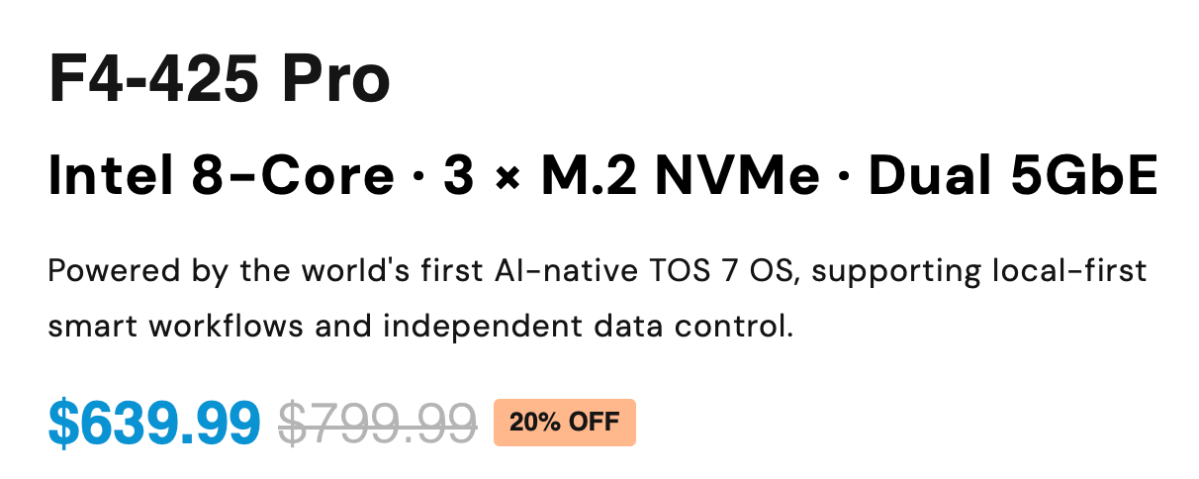
The F4-425 Pro with the Intel N350 retails for $799, but was on sale at TerraMaster’s site for $639 at the time of this writing. From TerraMaster’s Amazon store make that $699.
There’s a cheaper $569 Intel N305/8GB version of the F4-425 Pro available, as well as less endowed $599 F4-425 Plus (Intel N150 processor, 16GB), and $429 F4-425 (quad-core, 4GB) models if the Pro is too pricey for you, or you don’t need to run VMs, Docker, etc.
The Plus and plain versions were discounted to $480 and $344 respectively at the time of this writing. All use the same operating system and offer the same applications.
The F4-425 Pro’s price is roughly on par for a NAS box with this grade of processor, 16GB of memory and NVMe slots, but as always — shop around, though we’re fairly sure you’d be happiest with the TerraMaster.
How does the F4-425 perform?
The F4-425 Pro features dual 5Gbpe (Multi-gig) so it’s capable of nearly 600MBps when using that protocol, and around 1GBps if you aggregate the two 5Gbps Ethernet adapters. At 2.5Gbps, expect around 290MBps, and on gigabit, around 140Mbps.
There’s no Wi-Fi, but that’s not the best way to use a NAS box. You can with some (and an add-in card), but commonly NAS is connected via Ethernet directly to a router or switch.
I populated the F4-425 with a single 1.92GB Seagate IronWolf SATA SSD and two Crucial T710 PCIe 5.0 NVMe SSDs (running at PCIe 3.0 speed) and formatted with the Btrfs file system. All those SSDs are massively faster than 5Gbpe or even 10Gbpe. The test network consisted of my M4 Max Studio, an EnGenius ECS2512FP 12-port switch (8 x 2.5Gbe/4 x 10Gbe), and PCWorld’s 10Gbe Intel testbed.
I tested with both a single 5Gbe Ethernet connection and both 5Gbe Ethernet ports bonded using TOS 7. However, there was so little improvement with the ports bonded, I’m showing only the 5Gbe results. As to that…
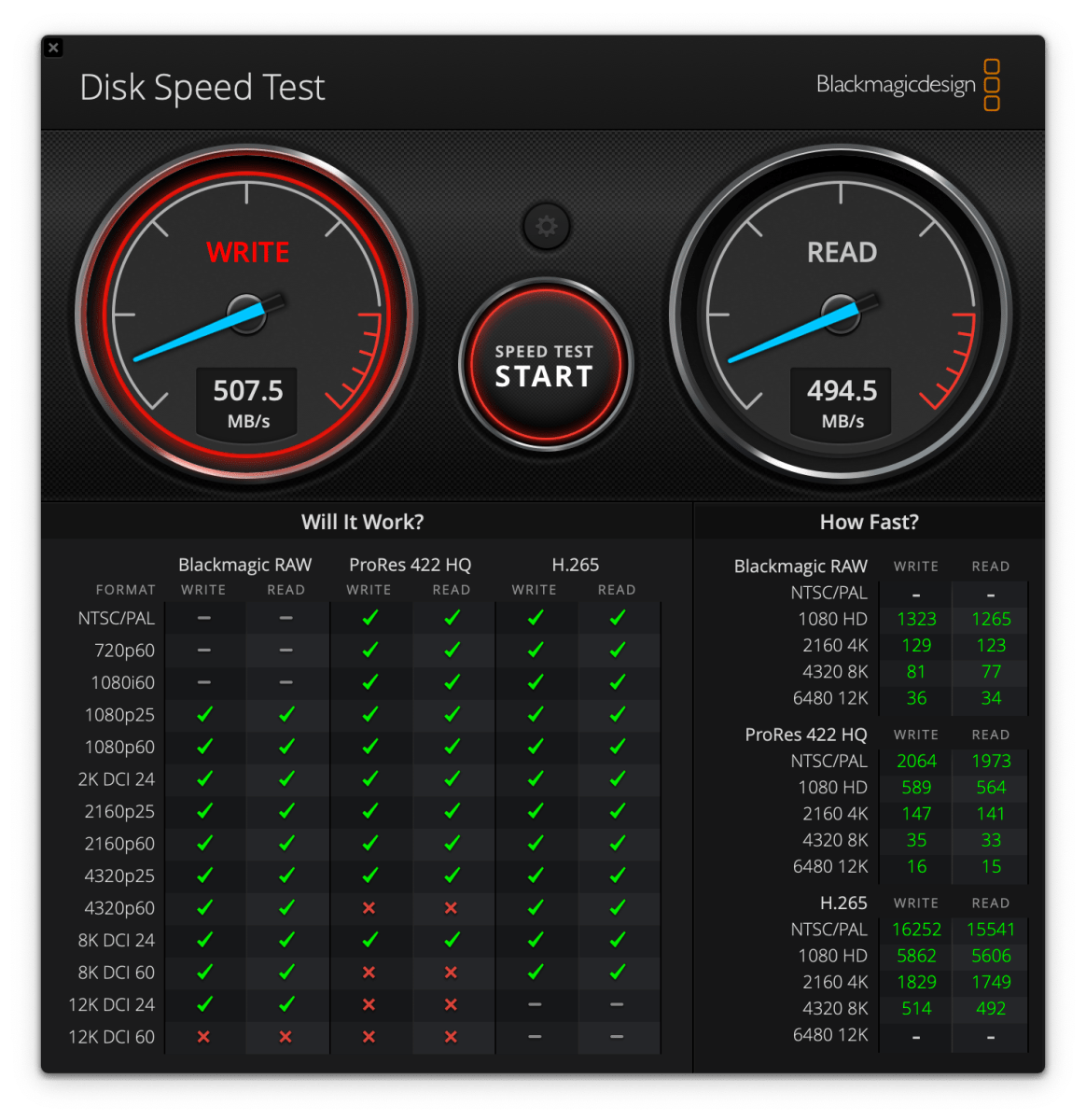
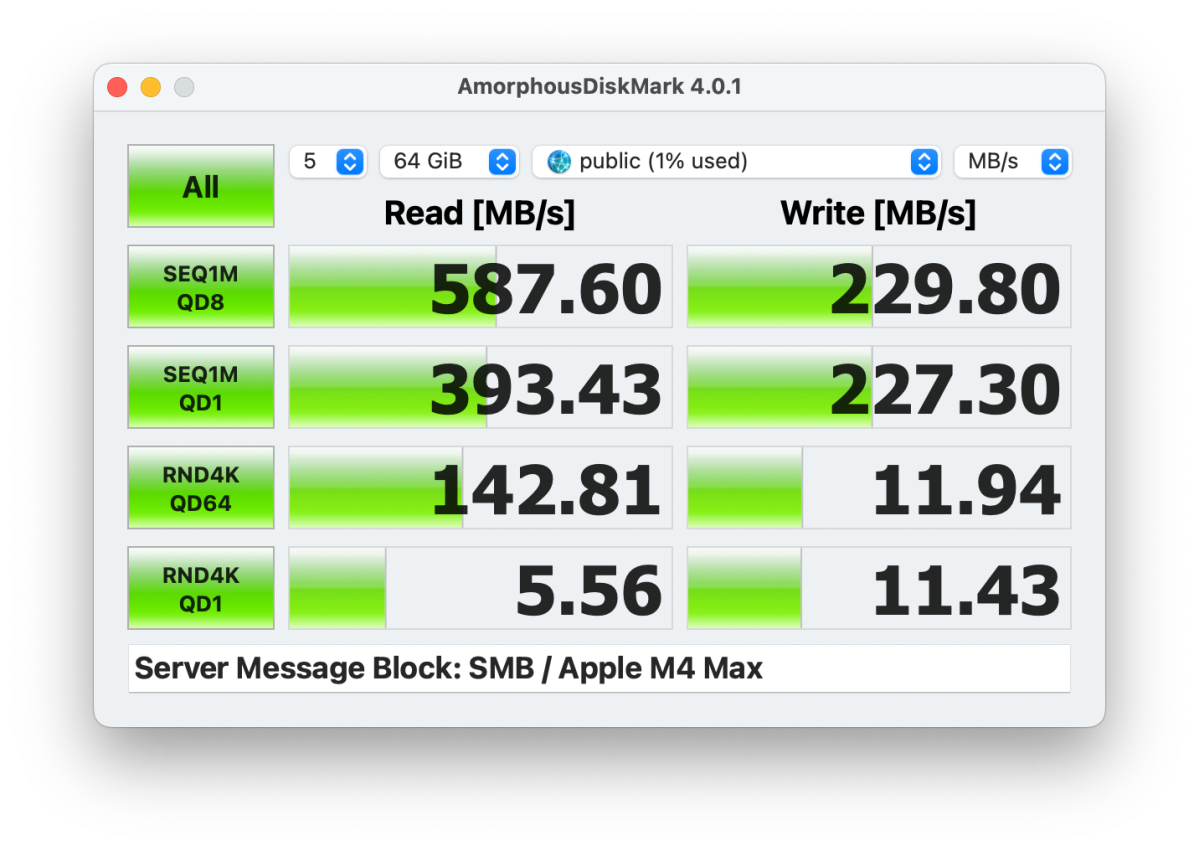
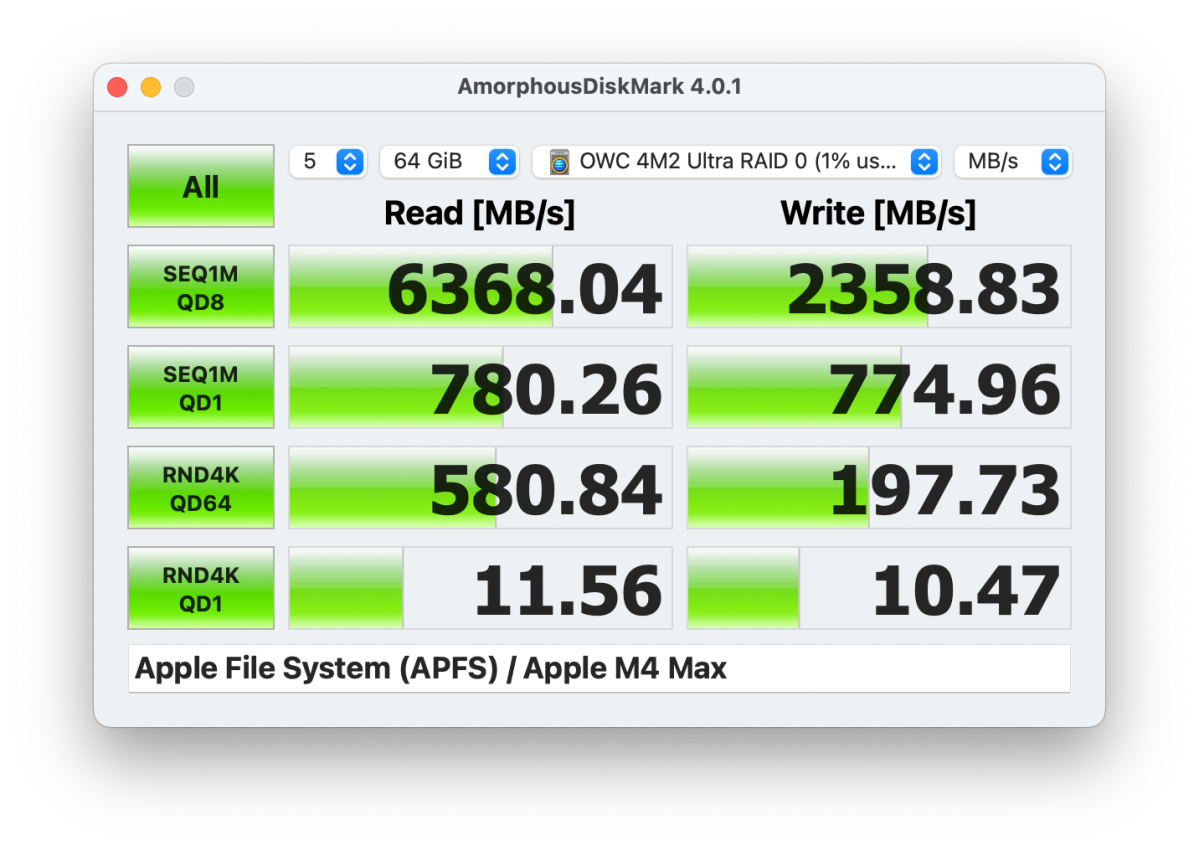
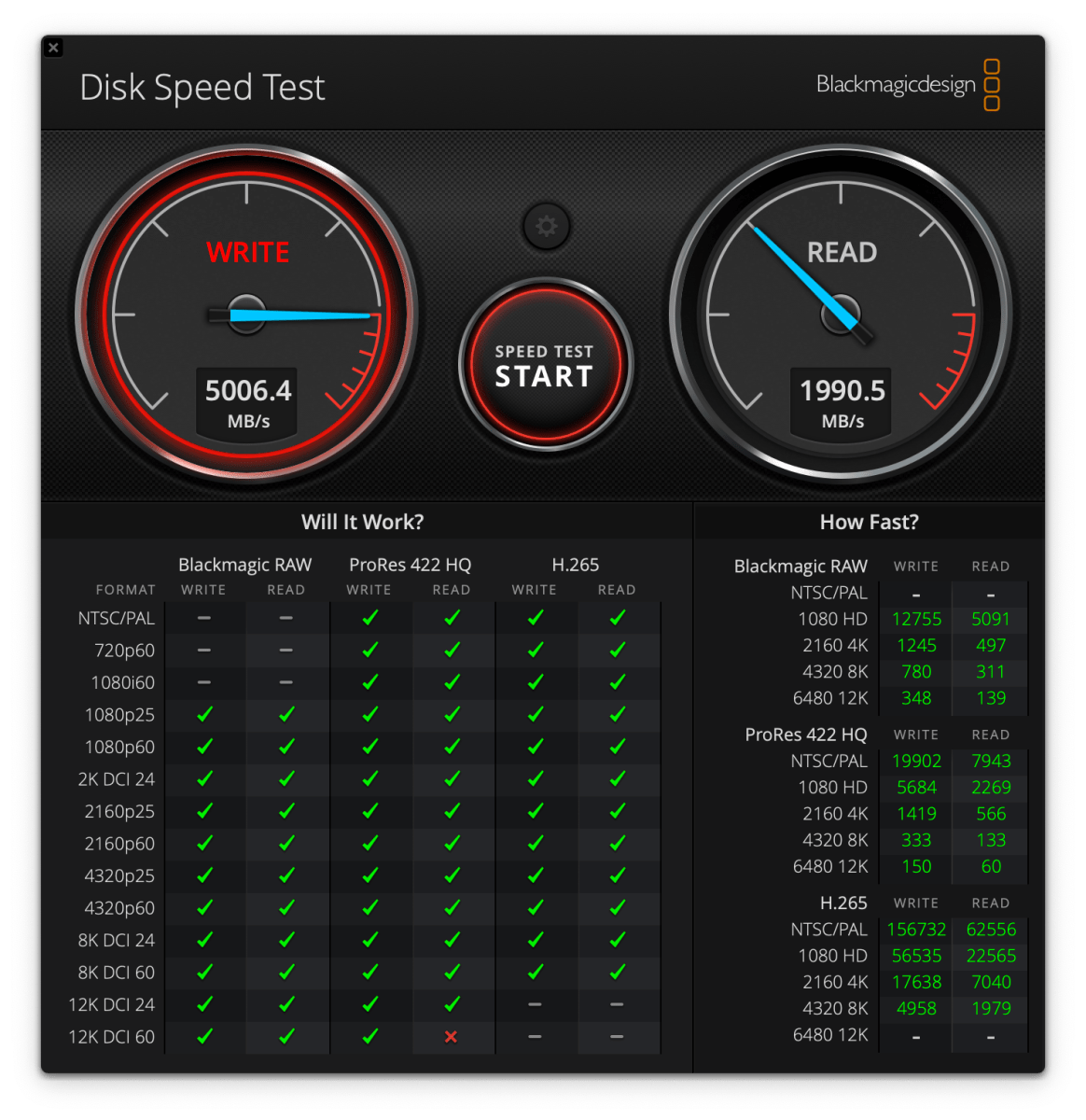
Disk Speed Test was quite complimentary of the F4-425’s throughput, and more so than AmorphousDiskMark.
Disk Speed Test was complimentary of the F4-425’s throughput, and more so than AmorphousDiskMark.
AmorphousDiskMark writes more data at a time than Disk Speed Test, which may be the reason for the lower write number. That said, CrystalDiskMark on the PC showed even greater performance that Disk Speed Test — 587MBps reading and 580GBps writing.
AmorphousDiskMark writes more data at a time than Disk Speed Test, which may be the reason for the lower write number. That said, CrystalDiskMark on the PC showed even greater performance that Disk Speed Test — 587MBps reading and 470GBps writing.
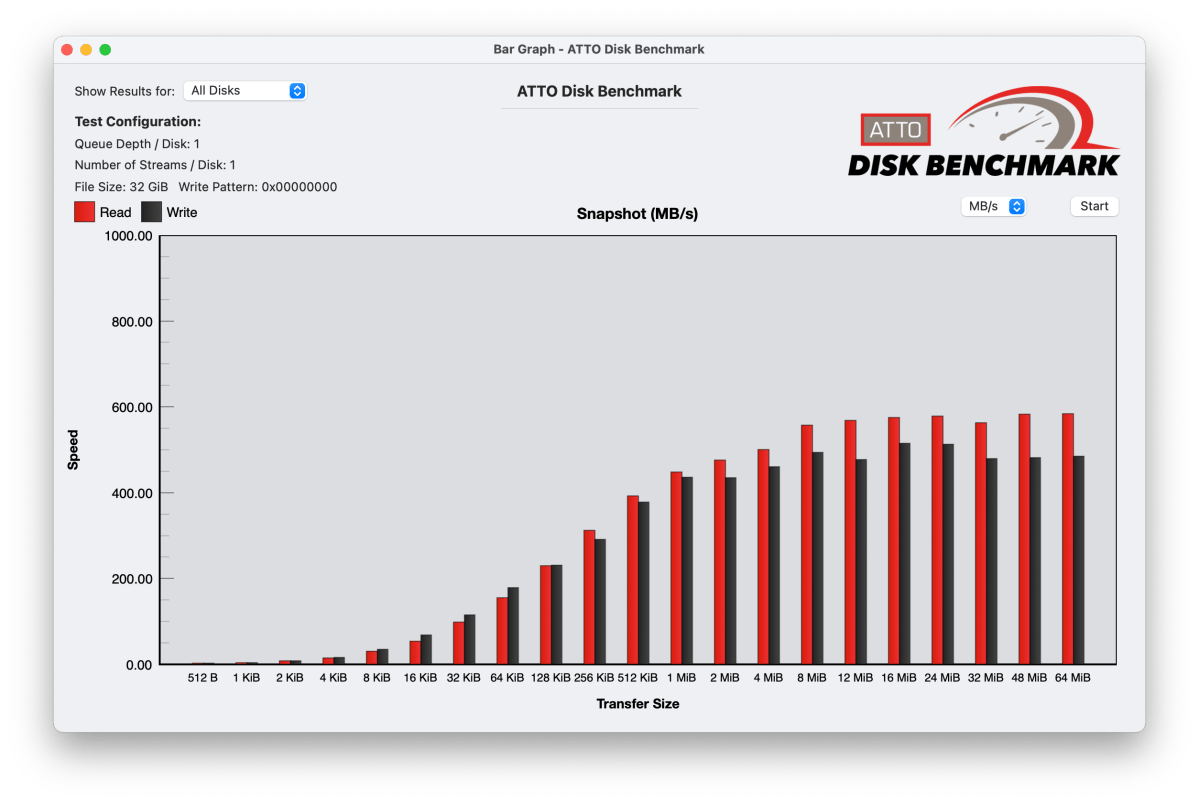
ATTO was more in line with Disk Speed Test than AmorphousDiskMark.
ATTO was more in line with Disk Speed Test than AmorphousDiskMark.
As to sprightlyness, I banged on the interface and apps pretty hard. The F4-425 Pro was extremely responsive. Tasks completely quickly, including firmware updates and reboots. The latter were far faster than what I’m used to with my older NAS boxes. Multi-tasking, which I complained about with TOS 6 on the F2-425 was light years better. Thank you TOS 7! And of course, more memory and a faster processor.
TerraMaster’s advertising teases over 1GBps performance. However, that’s simply totaling two separate 500GBps connections working separately. Expect what you see above.
Note also that there is a list of compatible NVMe SSDs found here. I’ve had issues with the F8 SSD Plus with some that weren’t supported, though the F4-425 seems fine with the same SSDs. I also found that some software required re-enabling after reboots or shutdowns in TOS 7.
Should I buy the F4-425 Pro?
If you need a very fast 4-Bay NAS box, the TerraMaster F4-425 fits the bill. Though you should expect a couple of software glitches here and there with TOS 7 that QNAP and Synology don’t suffer. That said, for creating a surveillance system, the lack of additional fees makes it top dog in that department.
Apple lawsuit against OpenAI has reached its first major procedural challenge, with the ChatGPT developer asking a US federal judge to dismiss allegations that it acquired or used trade secrets taken by former Apple employees.
OpenAI submitted its 31-page dismissal motion on Wednesday in the US District Court for the Northern District of California. The filing argues that Apple has not adequately identified protectable trade secrets or alleged facts showing that OpenAI misappropriated confidential information.
Apple filed the case on July 10 against OpenAI, its io Products hardware operation, former Apple Vice President Tang Yew Tan, and former electrical engineer Chang Liu. The complaint accuses the defendants of obtaining information connected to Apple’s product development, manufacturing, components, testing, and supply chain operations.
The allegations have not been proven, and OpenAI denies possessing or seeking Apple’s trade secrets. US District Judge Edward Davila must now decide whether Apple’s complaint contains enough factual detail for the litigation to continue.
OpenAI Challenges the Apple Lawsuit
OpenAI’s motion focuses initially on how Apple described the information it claims was stolen. According to OpenAI, the complaint relies on generalized product-development categories without identifying the protected information with enough precision.
Trade secret plaintiffs face a difficult balance at the beginning of litigation. Apple must describe the protected material sufficiently to establish a plausible legal claim, but revealing the material publicly could expose the same information it is trying to protect.
Sensitive details can later be handled under seal or through a protective order. At the dismissal stage, however, Apple must still provide enough information for the court to distinguish genuine trade secrets from general engineering knowledge, employee experience, or skills acquired through years of work.
OpenAI argues that Apple has not crossed that threshold. Its motion says the complaint fails to establish ownership of a protectable trade secret and does not plausibly allege that OpenAI acquired, disclosed, or used such information.
The filing also disputes the commercial premise behind Apple’s accusations. OpenAI says it is developing products that are different from Apple’s hardware and has no need or desire to use the iPhone maker’s confidential material.
That position does not settle whether information was taken. A company can potentially misappropriate trade secrets even when its eventual product has a different design. The court’s immediate task is narrower: determining whether Apple has alleged facts that could support its claims if those facts are later proven.
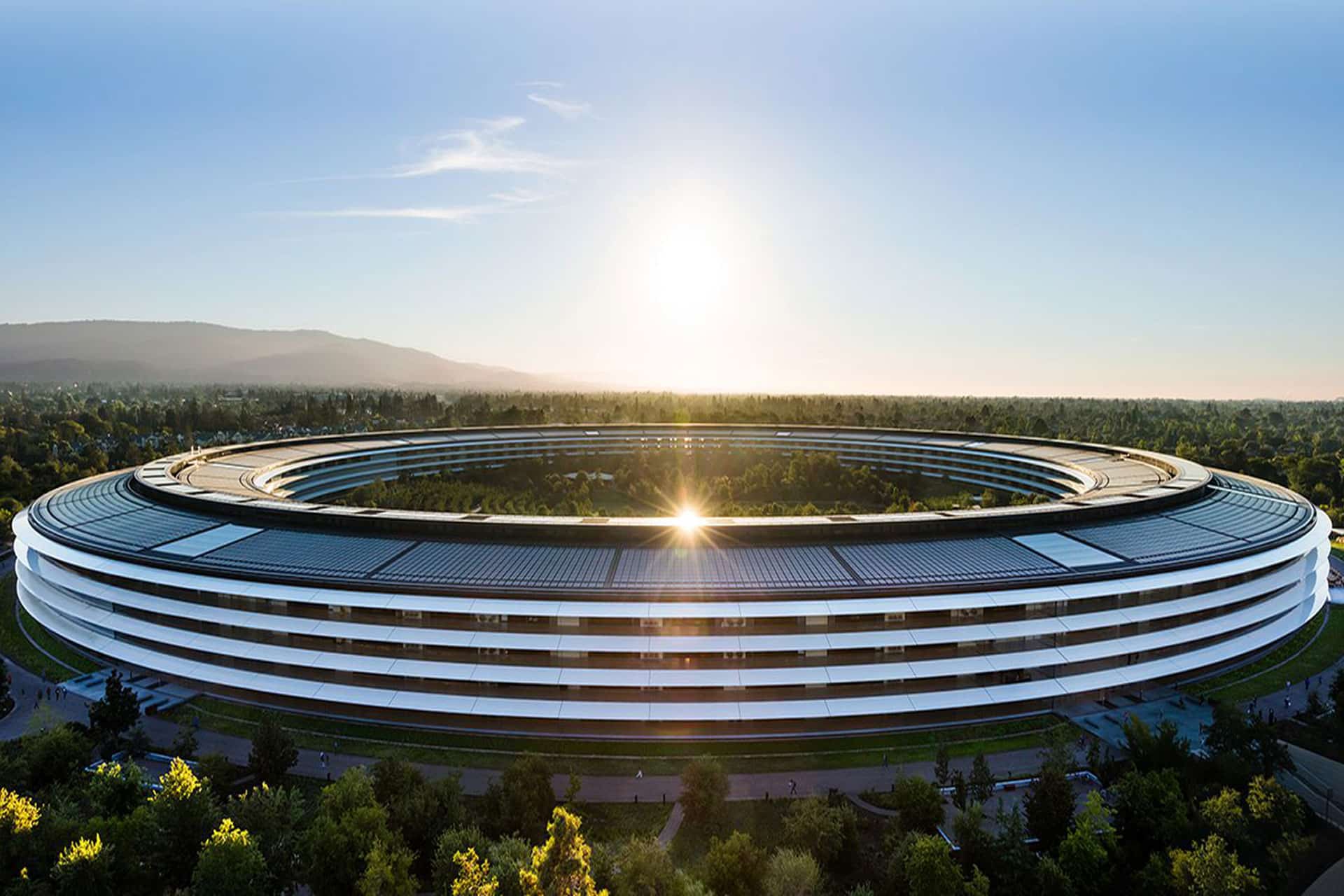
Apple Park | Image Source: Google
Disputed Access to Apple Information
Apple’s complaint centers partly on Chang Liu, who spent eight years working as a senior system electrical engineer at the company before joining OpenAI in January 2026.
Apple alleges that Liu retained an Apple-issued computer and accessed confidential technical information after leaving. It claims he exploited residual authentication access on multiple occasions to obtain internal documents while already working for OpenAI.
OpenAI presents a different explanation. It says Apple employees contacted Liu after his departure and asked him to help locate files needed for ongoing Apple work. The company published redacted messages that it says support this account.
OpenAI argues that Apple’s systems and policies allowed personal and corporate information to become intermingled through iCloud accounts. Former employees, it says, could retain access to Apple files without requesting it or realizing that access remained active.
The motion maintains that Apple cannot treat the foreseeable effects of its own access-management practices as proof that former employees intentionally stole data. Apple, in contrast, alleges that its records document repeated access to restricted information rather than an accidental discovery of lingering permissions.
These competing accounts are likely to become central if the case enters discovery. Authentication logs, downloaded files, device records, internal communications, and employment timelines could establish whether access was deliberate, what information was obtained, and whether it reached anyone working on OpenAI products.
A dismissal motion normally tests whether the complaint states a legally sufficient claim. It is not a trial, and the judge is not expected to resolve every factual disagreement using competing evidence at this point.
Tang Tan and OpenAI’s Hardware Team
Apple separately accuses Tang Tan, OpenAI’s chief hardware officer, of seeking confidential information from Apple employees during recruiting conversations.
Tan spent more than 24 years at Apple and worked on products including the iPhone, Apple Watch, AirPods, and iPod. He later helped establish io Products with former Apple design chief Jony Ive and other collaborators. OpenAI acquired the hardware company as part of its effort to create a family of devices built around artificial intelligence.
Apple alleges that Tan used confidential project names, retained internal materials, and encouraged job candidates to discuss unreleased components or bring physical parts to interviews. OpenAI rejects the claim that these interactions formed a coordinated effort to collect Apple secrets.
OpenAI says Tan repeatedly instructed employees that confidential information from previous employers could not be brought into its organization. It also offers an alternative explanation for an Apple offboarding document found in his possession, arguing that Tan retained it to help incoming employees comply with Apple’s departure procedures.
Apple’s position is that the document and recruiting communications must be examined alongside the other alleged conduct. It describes the events as part of a connected campaign rather than isolated employment or administrative issues.
The dispute comes during intense competition for engineers capable of developing consumer AI hardware. Apple alleges that more than 400 former employees have moved to OpenAI, although hiring people from a competitor does not by itself establish trade secret misappropriation.
A company must generally connect recruitment to the acquisition, disclosure, or use of protected information. OpenAI is relying heavily on that distinction, presenting Apple’s lawsuit as an attempt to respond to employee departures and its difficulties competing for AI talent.
Image Credit: Getty Images
Apple Seeks Immediate Restrictions
OpenAI’s dismissal request arrives shortly after Apple asked the court for a preliminary injunction. Apple wants restrictions imposed while the lawsuit proceeds, arguing that it could suffer harm if its confidential information is used during OpenAI’s hardware development.
The requested relief would prevent OpenAI and the individual defendants from acquiring, accessing, using, or disclosing the alleged trade secrets. Apple has also requested expedited discovery and forensic examination of relevant devices and accounts.
OpenAI says those restrictions are unnecessary because it does not possess or want Apple’s protected information. It has described Apple’s request as based on false information and has offered to cooperate in addressing specific concerns.
The two companies also disagree over their communications before the lawsuit. Apple initially said its concerns had been raised with OpenAI months earlier. OpenAI responded that Apple’s outside lawyers contacted the wrong person after confusing names and incorrectly described a conversation with OpenAI’s general counsel.
OpenAI says Apple did not present the specific accusations before filing the case and that the companies had previously discussed resolving any access issues. Apple has since provided additional information in support of its injunction request, including allegations involving other former employees.
These disputes have moved beyond ordinary court filings. OpenAI published messages and emails on its website to support its version of events, calling Apple’s lawsuit aggressive and poorly investigated. Apple has primarily presented its account through formal legal submissions.
Judge Davila could dismiss some or all of Apple’s claims, deny the motion, or allow Apple to amend its complaint with more specific allegations. Even a dismissal would not necessarily end the case if permission to revise the complaint is granted.
The next scheduled public test is an October 1 hearing covering Apple’s preliminary injunction and request for early discovery. That proceeding may determine whether OpenAI faces immediate limits on its hardware work before the underlying trade secret claims receive a full evidentiary review.
Apple has increased its estimated trade-in values for most current iPhone, iPad, Mac, and Apple Watch models in the United States. The adjustments give customers slightly more credit toward a new device, although some older Apple hardware and several Android phones have moved in the opposite direction.
The updated values are maximum estimates rather than guaranteed payments. Apple calculates the final credit after confirming the model and inspecting its condition. A damaged display, enclosure problems, missing functionality, or an inaccurate description can reduce the amount offered.
Most of the increases are modest, but they arrive across several of Apple’s largest product categories at the same time. Recent iPhones receive between $10 and $25 more, every iPad category listed in Apple’s summary gains value, and several popular Macs receive larger increases.
The revisions also reinforce the role of trade-ins within Apple’s retail operation. Credit can reduce the cost of a regular purchase, be delivered through an Apple Gift Card, or lower payments at the beginning of an eligible Apple Upgrade lease.
Image Credit: Apple Inc.
Trade-In Values Rise Across iPhone and iPad
Every iPhone 16 model included in the update receives a higher maximum estimate. The iPhone 16 Pro Max moves from $685 to $695, retaining the highest listed value among the affected iPhones.
The iPhone 16 Pro increases from $550 to $560, while the iPhone 16 Plus moves from $455 to $465. The standard iPhone 16 receives the largest increase within the family, rising by $25 from $435 to $460.
These changes narrow the difference between the standard iPhone 16 and the larger Plus model. The Pro models retain substantially higher estimates, reflecting their higher original prices and stronger position in the used-device market.
An additional $10 or $25 will not transform the cost of an upgrade, but it can offset part of a case, charger, AppleCare plan, or storage upgrade. The difference also becomes more relevant for customers comparing Apple’s direct program with a third-party reseller offering a similar amount.
Apple’s iPad adjustments are more consistent. The maximum estimate for an iPad Pro rises from $670 to $690, an increase of $20. The iPad Air moves from $445 to $460, while the standard iPad rises from $220 to $235.
The iPad mini also gains $15, moving from a maximum of $250 to $265. That means every current iPad category displayed in Apple’s trade-in summary receives a higher estimate.
Apple’s direct trade-in values are generally lower than the prices an owner might obtain through a private sale. The program instead emphasizes convenience: the device can be returned at an Apple Store or sent using Apple’s online process, with the credit connected directly to a new purchase.
A private sale can produce a better return, especially for a recent device in excellent condition. It also requires the owner to set a price, find a buyer, manage payment, and handle the transfer independently. Apple’s program trades some resale value for a simpler exchange.
Mac and Apple Watch Changes Are Less Consistent
Mac trade-in values receive some of the largest increases, but the category also includes notable reductions.
The MacBook Air rises from a maximum of $485 to $520, adding $35. The Mac mini receives the same increase, moving from $340 to $375. The MacBook Pro changes only slightly, increasing from $685 to $690.
Apple leaves the current iMac estimate unchanged at $355. The Mac Studio receives a larger increase from $975 to $1,045, reflecting the higher value retained by recent desktop configurations.
Older professional desktops move in the other direction. The iMac Pro falls from $325 to $315, while the top Mac Pro estimate declines from $2,090 to $2,045.
That $45 reduction at the top of the Mac range means Apple’s maximum Mac trade-in offer decreases even though several mainstream models receive more credit. The changes appear more closely connected to the resale position of individual product families than to a uniform increase across every computer.
Mac estimates can vary considerably because one model name can cover different years, processors, memory configurations, storage capacities, and physical designs. Apple asks for a serial number before producing a more specific estimate for a Mac.
The Apple Watch adjustments are similarly mixed. Apple Watch Ultra 2 rises from $295 to $305, while Apple Watch Series 9 increases from $120 to $130.
Apple Watch Series 10 remains unchanged at a maximum of $150. The original Apple Watch Ultra falls from $215 to $205, losing $10.
Wearable trade-in values can decline quickly because watches receive frequent updates and are exposed to greater physical wear than many computers or tablets. Battery condition, display damage, case wear, and working buttons can influence whether the device receives the estimated credit.
Apple also accepts devices that no longer qualify for monetary value. Those products can be returned for recycling, including older hardware and accessories that would otherwise remain unused.
Image Credit: Apple Inc.
Android Offers Face Several Reductions
Apple accepts selected smartphones from Samsung, Google, and other manufacturers when customers move to an iPhone. The latest revisions are less favorable to several Android devices.
The maximum Android estimate across Apple’s displayed range decreases from $370 to $360. Individual changes vary by model.
The Samsung Galaxy S23 Ultra drops from $230 to $200, a $30 reduction. Google’s Pixel 8 Pro declines from $170 to $165.
Other devices remain unchanged. The standard Galaxy S23 continues to carry an estimated value of up to $125, while the OnePlus 12 remains at up to $200.
Apple’s Android offers are primarily designed to remove friction for people moving to the iPhone. They do not necessarily match the amount available from the manufacturer, a carrier promotion, or a private buyer.
Carrier promotions can advertise considerably higher trade-in credits than Apple, particularly around a new iPhone launch. Those offers commonly require an eligible unlimited plan, a new line, monthly bill credits, or a commitment lasting two or three years.
Apple’s direct credit is easier to understand because it is tied to the assessed value of the device rather than a long carrier agreement. The best choice depends on whether the customer values flexibility, immediate credit, or the largest possible promotional discount.
A Higher Estimate Is Not the Final Offer
Apple’s published figures represent the maximum available for qualifying devices in suitable condition. The online estimate is based on the answers supplied before the product is inspected.
After receiving the device, Apple or its trade-in partner verifies its identity and checks whether it powers on, functions properly, and matches the reported condition. A difference can produce a revised offer.
Customers can accept or reject a lower revised value. Rejecting it cancels the trade-in and returns the device, although the payment arrangement for the accompanying purchase may also be adjusted. If the inspected value is higher than the original estimate, Apple says it automatically increases the credit.
The way the credit is delivered depends on the purchase. When a customer pays in full for a new iPhone, iPad, Mac, or Apple Watch, the confirmed value can be returned to the original payment method up to the price of the new product. Any remaining amount can be issued through an Apple Gift Card.
With an eligible monthly payment arrangement, the estimated credit can be applied directly to the new device’s purchase price. Under Apple Upgrade, a qualifying trade-in owned by the customer can reduce payments across the initial lease term. Another device cannot be traded in each time the customer exercises the lease’s upgrade option.
Values also differ between countries and can change without a product announcement. The revised dollar amounts apply to Apple’s United States program, while local market prices, available models, currencies, and trade-in partners determine estimates elsewhere.
Anyone considering an exchange should obtain a fresh estimate shortly before purchasing. Apple requires the trade-in device to arrive within the specified return period and says an online estimate is generally protected for 14 days after the customer receives the new product.
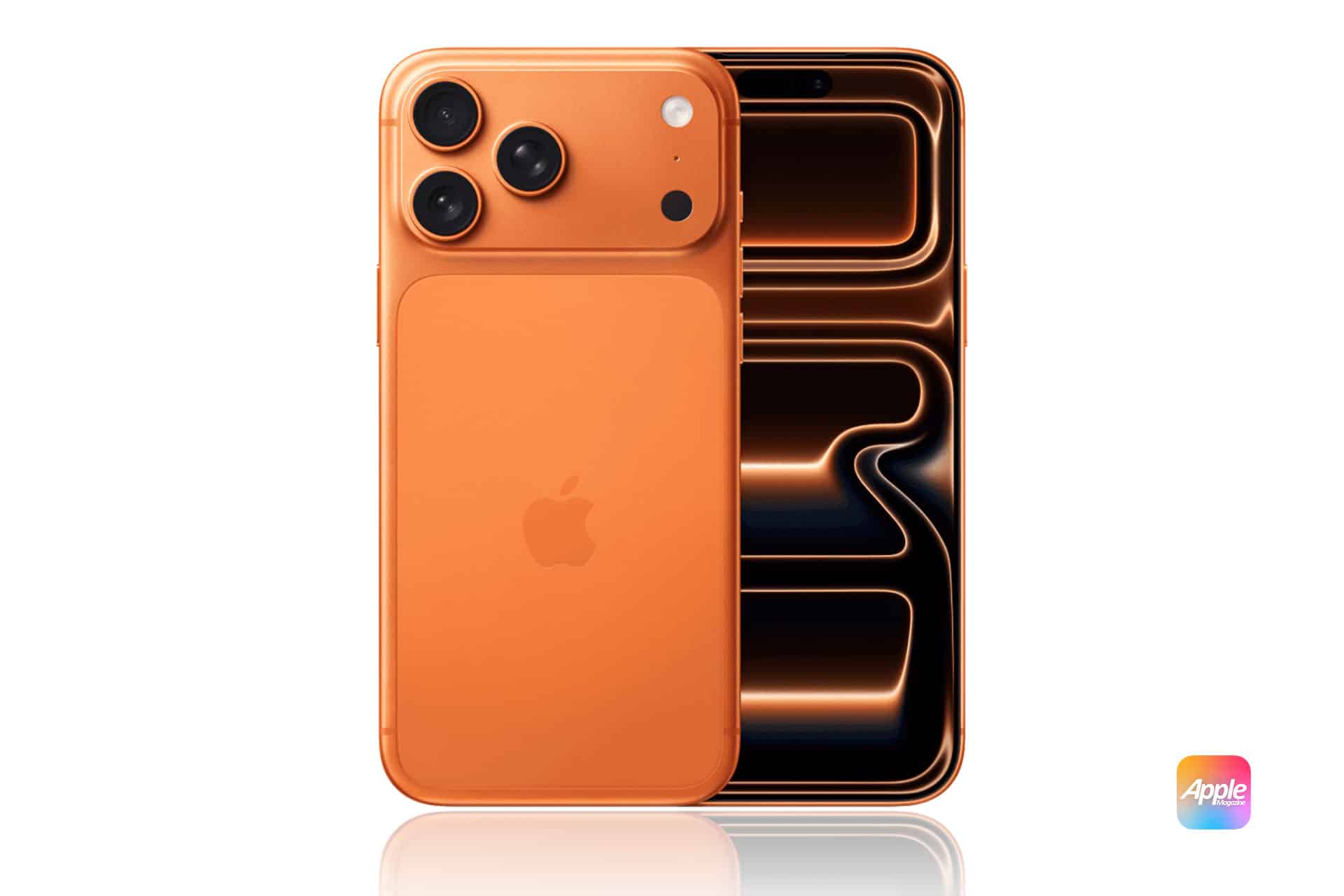
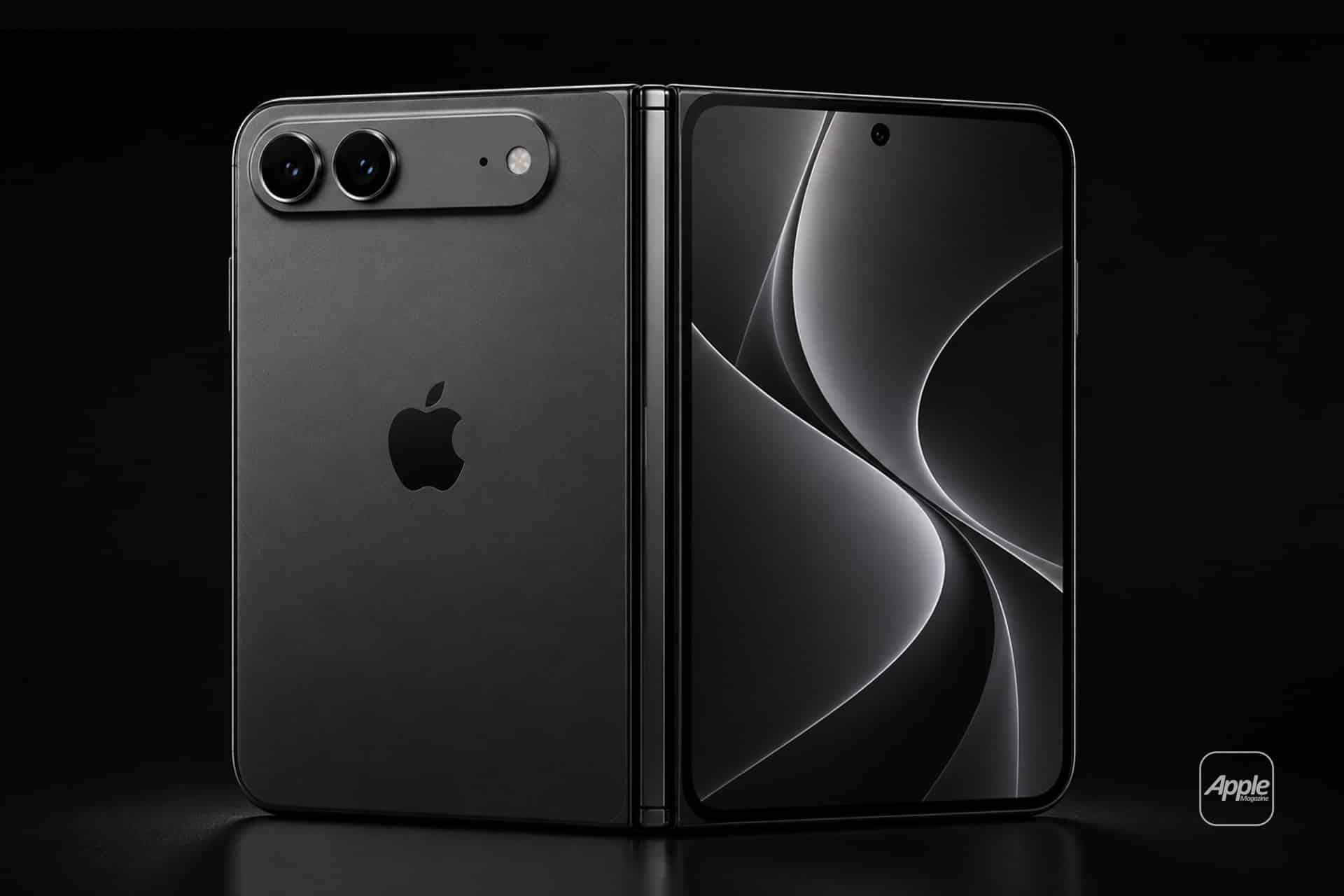
The iPhone Ultra price could establish an entirely new tier within Apple’s smartphone range. Current estimates place the company’s first foldable iPhone above $2,000, with some industry forecasts suggesting an average selling price near $2,500 and higher-storage configurations approaching $3,000.
Apple has not confirmed the device, its name, or its retail price. The iPhone Ultra branding also remains unofficial, although it has appeared repeatedly in reports concerning Apple’s planned expansion beyond the Pro and Pro Max levels.
The foldable is expected to join the iPhone 18 Pro family during Apple’s fall hardware cycle. Rather than replacing the iPhone Pro Max, it would sit above it as a separate model built around a book-style design and a display that expands to approximately the size of a small tablet.
A price beyond $2,000 would make it the most expensive iPhone Apple has released. The current iPhone 17 Pro Max starts at $1,199 in the United States, leaving a difference of at least $800 between Apple’s established flagship and the lowest estimates for the foldable.
Recent projections have pushed that gap even wider. Reports citing analyst Ming-Chi Kuo have discussed a possible range between $2,300 and $2,500, while an IDC estimate cited in supply-chain coverage placed the average selling price at approximately $2,500. Storage upgrades could take selected configurations closer to $3,000.
iPhone Ultra Price Creates a New Flagship Tier
Apple has spent years arranging the iPhone range around a price ladder. Standard models serve the center of the market, while Air and Pro devices address different preferences involving weight, cameras, materials, performance, and display size.
A foldable iPhone would require another level. Its internal display, hinge, structural materials, battery arrangement, and manufacturing tolerances introduce costs that do not exist in a conventional iPhone.
The rumored hardware points to a device intended to combine phone and tablet functions. Reports describe an outer screen measuring about 5.5 inches and an internal display of approximately 7.8 inches. When closed, the product would operate as a compact iPhone. Opening it would provide enough space for larger applications, side-by-side content, expanded video, and an iPad-style software interface.
Apple is reportedly developing interface changes that would let applications take greater advantage of the internal display instead of simply enlarging an iPhone layout. That software work may become one of the main distinctions between the device and existing foldables, particularly if Apple can connect it closely with iPad multitasking conventions.
The hinge is expected to use liquid metal, an amorphous alloy chosen for strength and resistance to deformation. Apple has also reportedly focused on reducing the visible display crease, one of the most recognizable compromises found on current folding phones.
Those elements help explain a premium price without guaranteeing that customers will accept it. A $2,000-plus phone would compete for spending that could otherwise purchase an iPhone and an iPad, a high-end Mac, or several years of conventional smartphone upgrades.
The device would therefore need to offer more than the novelty of a folding screen. Durability, battery life, camera performance, application behavior, repair costs, and long-term display reliability will influence whether buyers view the iPhone Ultra as a versatile computer or an unusually expensive phone.
Costly Engineering Behind the Fold
Rumors suggest Apple may use Touch ID in the side button instead of Face ID. The change would not necessarily represent a retreat from facial authentication across the rest of the iPhone range. A foldable chassis has limited internal space, and eliminating the TrueDepth camera hardware could help Apple manage thickness around the outer and inner displays.
The reported design includes two rear cameras and front-facing cameras accessible in both folded and unfolded positions. That arrangement may leave the iPhone 18 Pro Max with the more extensive photography system, despite the foldable carrying a much higher price.
Such a decision would position the iPhone Ultra around form factor and productivity rather than making it the automatic leader in every specification. Apple has used similar distinctions elsewhere, allowing one product to command a premium for its design while another retains advantages in cameras, battery endurance, or sustained performance.
Display production is another source of expense. Folding OLED panels require flexible materials, protective layers, specialized hinges, and tighter assembly controls. Apple’s reported pursuit of a nearly crease-free screen may increase component costs and reduce early manufacturing yields.
The company is also entering the category after competitors have spent several generations addressing hinge failures, screen damage, dust protection, and application scaling. Arriving later gives Apple access to a more mature supply chain, but its design standards may create additional production challenges.
Industry estimates suggest Apple’s arrival could help raise the average selling price of book-style foldables throughout 2026. Competitors already sell premium folding phones, yet a model priced near $2,500 would push the category further away from mainstream flagship pricing.
Image Credit: AppleMagazine
Apple Upgrade Softens the Monthly Number
Apple Upgrade could make the iPhone Ultra price appear less intimidating at checkout. The Klarna-backed program lets eligible US customers lease selected Apple devices through fixed monthly payments rather than covering the entire retail price upfront.
Current iPhones can be leased for 12 or 24 months. At the end of the term, customers may return the device, move into another eligible Apple product, or pay the remaining amount required to keep it.
That structure can produce lower monthly payments than traditional financing because the customer is not necessarily paying the entire purchase price during the lease. Part of the product’s value remains in the device at the end of the agreement.
A future iPhone Ultra could fit naturally into this model. Its high retail price and expected resale value would give Apple and Klarna room to separate the cost of using the phone for two years from the cost of owning it permanently.
No monthly figure has been announced for the foldable. Apple cannot price an Apple Upgrade lease until it establishes the phone’s retail cost, residual value, eligible term, and trade-in conditions. A simple calculation that divides $2,000 or $2,500 by 24 months would therefore be misleading.
The monthly charge may be considerably lower than a standard purchase installment, but the customer does not automatically own the iPhone after making the scheduled lease payments. Keeping it requires an additional payment based on the remaining value specified by the agreement.
AppleCare+ is also separate from the current Apple Upgrade lease price. That differs from the former iPhone Upgrade Program, which bundled AppleCare+ coverage into its monthly payments. Protection could be particularly relevant for an expensive first-generation foldable containing a flexible display and complex hinge.
Trade-in credit may reduce the monthly charge, while storage selection would push it higher. Sales tax, cellular service, accessories, and optional protection would remain additional costs. Apple Upgrade changes when and how customers pay, but it does not turn a $2,000-plus product into a lower-priced iPhone.
Limited Supply Could Intensify Early Demand
Apple is reportedly preparing millions of foldable units, but production may be heavily weighted toward the final months of 2026 and 2027. Supply-chain estimates have ranged from 7 million to 10 million devices, with different reports using different production periods and assumptions.
The foldable may be announced alongside the iPhone 18 Pro and iPhone 18 Pro Max but reach customers later. That would resemble the 2017 launch of the iPhone X, which was introduced with the iPhone 8 family in September and released in November.
A delayed retail date would give Apple more time to accumulate inventory while preserving the device’s place in its fall presentation. It could also place the iPhone Ultra into the holiday quarter with considerable demand concentrated around a relatively small supply.
High pricing does not necessarily prevent shortages during the first weeks of an Apple product launch. Early adopters, developers, collectors, and customers waiting specifically for an Apple foldable represent a smaller audience than the conventional iPhone market, but they may still outnumber the units available at release.
Apple Upgrade could add another source of demand by replacing the full retail figure with a monthly lease price inside the Apple Store. That presentation may make the phone accessible to customers who would reject a $2,500 purchase while accepting a recurring payment and returning the device later.
Kuo expects only 500,000 to 1 million foldable iPhones to ship during the third quarter, a supply level that could push some deliveries four to six weeks beyond the opening preorder window.
When the Federal Aviation Administration shut down air traffic to El Paso Airport earlier this year, nobody could have guessed than an experimental high-energy laser weapon was the cause. After days of chaos and speculation, it was revealed that Customs and Border Patrol officials had fired off a laser volley from a US Army base adjacent the El Paso Airport.
Though the trigger-happy Border Patrol grunts evidently thought they were firing at drug-smuggling drones, their real target turned out to be a kids’ party balloon. Regardless, it was later reported that the cutting-edge weapon was taken for a test-drive a week before FAA and Pentagon officials had a chance to discuss how to safely implement the laser device, making it a small miracle that nobody in the air was killed.
Not every use of an experimental aerospace weapon goes off without a hitch, however.
New bombshell reporting by Wired reveals an incident in which the testing of an experimental GPS jammer resulted in a medical plane crashing into the side of a mountain.
The horrifying incident happened in May, the publication reports, when a small twin-engine medevac aircraft carrying two pilots and two medical workers departed from Roswell, New Mexico. Heading West for the small mountain village of Ruidoso, the crew became the victim of an electronic warfare exercise being conducted at the nearby White Sands Missile Range, a test which rendered their navigational system inoperable.
Due to a combination of low visibility and an air-traffic control that was stretched far beyond capacity — at least three other planes reported navigation disruptions due to the GPS jamming — the pilots failed to register a mountainous formation between their plane and the landing strip.
As airline pilot and aviation crash analyst Juan Browne told Wired, the visual effect of that approach would have been stupefying. “When those lights go out, man, you know you are in big trouble,” Browne explained.
Unfortunately, the disoriented crew ran straight into the side of a mountain they likely never saw, resulting in the loss of every life on board. It’s the first known instance where military GPS jamming played a role in downing a civilian plane in US airspace. Reported incidents of GPS jamming within the continental US have skyrocketed in recent years. According to the Aircraft Owners and Pilots Association, the number of GPS interference events went from four in 2020 to 50 in 2024, and 40 across 2025.
After the initial publication of this piece, a spokesperson for the US Army provided a statement in response.
“The Army is aware of the release of the NTSB’s preliminary report into the crash of a civilian medical evacuation flight on May 14 in the vicinity of Ruidoso, New Mexico,” it read. “As the incident remains under investigation, we cannot comment at this time.”
Though the crew involved in the New Mexico crash was warned that GPS interference may be present, there evidently weren’t enough safeguards or air traffic control personnel in place to prevent a tragedy.
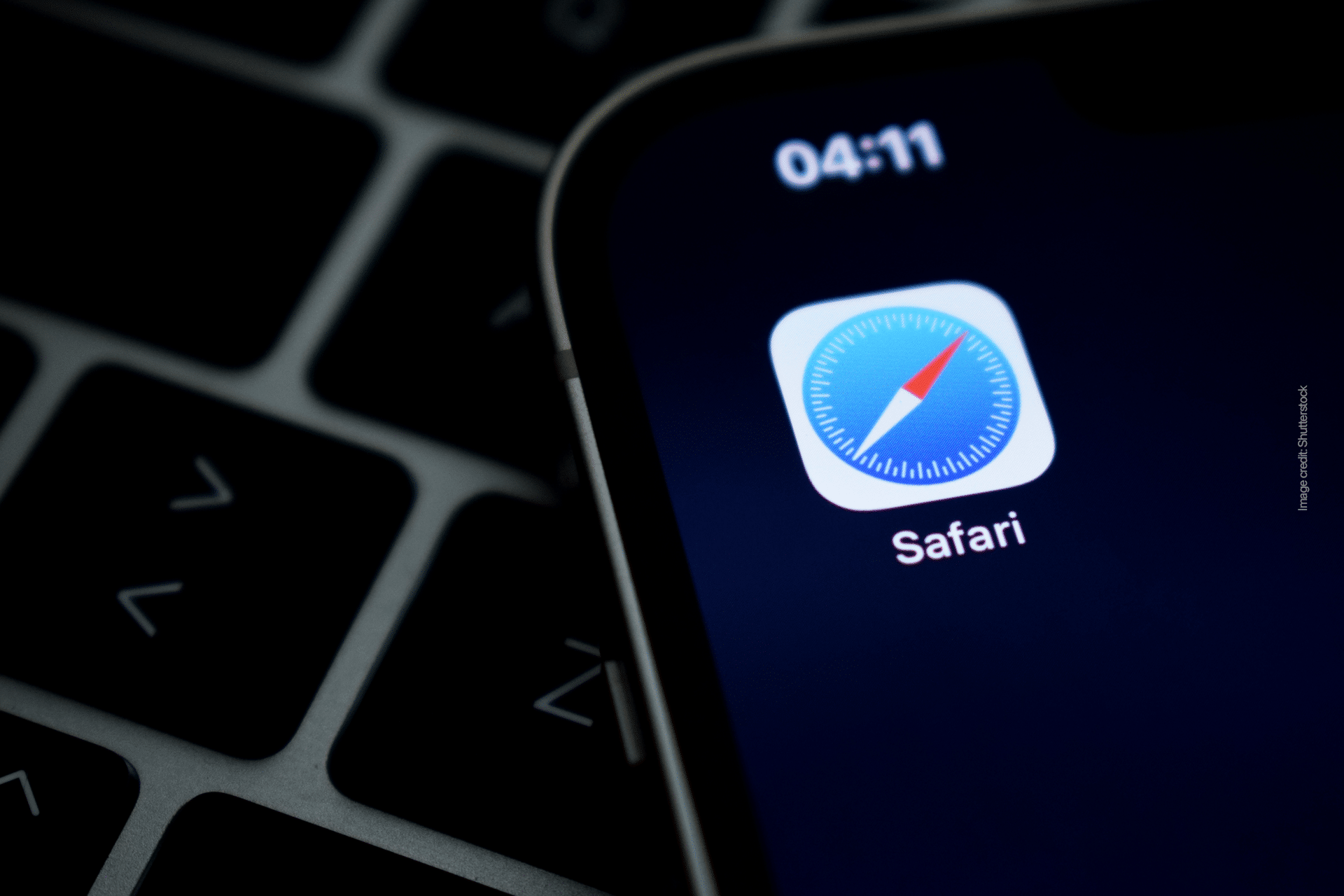
Safari web apps give frequently used websites many of the qualities normally associated with installed software. A site can receive its own icon, open outside the regular Safari tab interface and appear alongside native apps on supported Apple devices.
The feature is useful for services that do not offer an App Store download, websites used throughout the workday and online tools that feel crowded when surrounded by unrelated browser tabs.
A Safari web app remains a website rather than becoming native Apple software. Its capabilities, interface and offline behavior depend on how the site was developed. Safari supplies the app-like container, while the website continues providing the actual service.
The experience also differs across Apple devices. iPhone and iPad place web apps on the Home Screen, while Mac saves them as separate applications that can open from the Dock, Spotlight or Applications folder.
Image Credit: AppleMagazine
Safari Web Apps Are More Than Bookmarks
A traditional bookmark saves an address inside Safari. Selecting it opens the page in a normal browser tab with the rest of the browsing session.
A Safari web app creates a more focused entry point. Its icon appears with installed apps, and opening it produces a separate app window or full-screen interface without the usual collection of Safari tabs.
This distinction is particularly valuable for communication tools, project dashboards, streaming services, publications and business systems. A user can switch to the website through the App Switcher, Dock or Spotlight instead of locating the correct Safari window and tab.
Web apps can also support notifications and icon badges when the website provides those features. On iPhone and iPad, supported notifications can appear on the Lock Screen, in Notification Center and on a paired Apple Watch.
The site still controls the quality of the experience. A website designed as a progressive web app may include responsive navigation, offline resources, custom icons and carefully defined window behavior. A basic website may simply open inside a cleaner Safari frame.
How to Create Safari Web Apps on iPhone
Current iPhone software includes an Open as Web App option when adding a website to the Home Screen.
To create one:
Open the website in Safari
Tap the More button and choose Share. Depending on the selected Safari layout, the Share button may already be visible beside the address field
Scroll down and select Add to Home Screen
Edit the displayed name if necessary
Turn on Open as Web App
Tap Add
The new icon appears on the iPhone Home Screen. Selecting it opens the site separately from the main Safari interface, and the web app can be closed through the App Switcher like other iPhone apps.
If Add to Home Screen is missing from the Share menu, scroll to the bottom, select Edit Actions and add it to the available actions.
The chosen name should be short enough to remain recognizable below the icon. Safari may use an icon supplied by the website. When a suitable image is unavailable, the generated icon may use a simplified site image or monogram.
How to Create Safari Web Apps on iPad
The iPad process is similar, although the Share menu reflects the larger Safari interface.
Open the desired website, select Share, choose More if required and tap Add to Home Screen. Turn on Open as Web App before selecting Add.
The resulting icon appears on the iPad where it was created. It can be organized into Home Screen folders and opened through iPad search like other applications.
An iPad web app can be especially useful for browser-based writing tools, office systems, inventory dashboards and educational platforms. Removing the tab bar gives the website more room and makes it easier to use beside another app.
Whether the web app supports multiple windows, external displays or advanced iPad multitasking depends on its design and the capabilities exposed through Safari. Installing a website does not automatically give it every feature available to a native iPad app.
Safari Web Apps Work Differently on Mac
Apple introduced its current Mac web app system with macOS Sonoma 14. Any webpage can be saved as a web app without requiring the website developer to distribute a Mac application.
To create one, open the page in Safari and choose File > Add to Dock. The same command is available through Safari’s Share button.
Safari displays the proposed name and icon before saving the app. After confirmation, the web app appears in the Dock and Spotlight Applications. Its application file is placed inside the Applications folder located in the user’s Home folder.
A Mac web app receives its own window and menu-bar identity. It uses a simplified toolbar containing navigation and sharing controls rather than Safari’s complete tab and bookmark interface.
The web app can remain in the Dock, run automatically as a login item and participate in normal macOS window management. It can also be opened through Spotlight without launching a visible Safari window first.
Image Credit: AppleMagazine
Mac Web Apps Keep Browsing Separate
A Mac web app operates independently from ordinary Safari browsing. Apple says it does not share ongoing browsing history, cookies, website data or settings with Safari.
When the web app is first created, Safari can preserve an existing website sign-in in many cases. Activity after that point remains inside the web app’s separate data container.
This separation resembles using a dedicated Safari profile, but the web app is even more focused. Searching, following links and changing accounts inside it do not add those pages to the normal Safari history.
The arrangement can be helpful when the same service is used for work and personal accounts. Separate web apps can create clearer boundaries, although account behavior still depends on the website.
Isolation can also explain an unexpected sign-in request. A person may already be authenticated in Safari but encounter a separate session after creating, resetting or reinstalling the web app.
Mac Settings Allow More Control
Mac web apps include settings that are unavailable to ordinary Home Screen bookmarks.
Open the web app, select its name in the menu bar and choose Settings. The application name, starting address and icon can be changed without recreating the app.
Navigation controls can be shown or hidden. Hiding them creates a cleaner appearance for a dashboard that rarely leaves its main page, while displaying them makes sense for sites with deeper navigation.
The title bar can adopt colors supplied by the website. This helps distinguish several installed services but can be disabled when a consistent Mac appearance is preferred.
The Privacy section controls access to the camera, microphone, screen and location. Website data can also be cleared from this area without deleting normal Safari data.
Compatible Safari extensions can be enabled separately for the web app. This prevents every active Safari extension from automatically affecting a focused work tool.
Notifications Make Websites Feel Like Apps
A supported website can request notification permission after it becomes a web app.
On iPhone and iPad, web push notifications use Apple’s notification system. They can appear on the Lock Screen, inside Notification Center and on a paired Apple Watch. They also respond to Focus settings.
Websites must request permission after a direct user action, such as selecting a notification or subscription button. Simply adding a site to the Home Screen does not automatically authorize alerts.
Supported sites can place a count on the Home Screen icon through web badging. This may represent unread messages, pending tasks or new articles, depending on the service.
Mac web apps can send notifications and display unread badges on their Dock icons. Permission should be granted from inside the web app rather than through the same site in Safari if the alerts are intended to belong to the installed app.
Each web app appears by its chosen name in Apple’s notification settings. Alerts, sounds, badges and preview behavior can then be controlled much like those of downloaded software.
Web Apps Do Not Automatically Work Offline
An installed icon does not mean the website has been downloaded completely.
Most web apps continue to require an internet connection because their pages, account data and services remain on remote servers. If the connection disappears, the app may show an error or only display information already stored temporarily.
Websites designed for offline use can cache interface elements and selected content through supported web technologies. The developer decides what remains available without a connection and how changes synchronize later.
This makes offline behavior inconsistent between sites. One writing service may continue editing disconnected documents, while another cannot move beyond its sign-in page.
Anyone depending on a web app during travel should test it in Airplane Mode before assuming that important information will remain accessible.
Links Can Return to Safari
Links belonging to the same website usually remain inside the web app when they fall within its intended navigation area.
External links may open in Safari because they lead beyond the web app’s domain or configured scope. Authentication systems, payment providers and support pages can also move temporarily into a browser window.
This behavior protects the focused identity of the web app. A project-management tool does not need to become a complete browser simply because a task contains a news link.
A poorly configured website may open more links externally than expected. That behavior is generally controlled by the site rather than by a Safari setting available to the user.
Safari Web Apps Do Not Sync Automatically
A web app icon appears only on the Apple device where it was created.
Adding a website to an iPhone Home Screen does not install the same web app on an iPad or Mac, even when every device uses the same Apple Account. Each installation must be created separately.
Safari bookmarks, Reading List items and open tabs can synchronize through iCloud, but web app installations remain local. Mac settings and custom icons also do not automatically transfer to another Mac.
This local behavior allows each device to maintain a different collection. A detailed analytics dashboard may belong on a Mac and iPad, while a compact travel service may only need an iPhone icon.
Removing a Web App Leaves the Website Available
On iPhone or iPad, touch and hold the web app icon and select the removal option. Deleting the icon does not cancel the website account or remove the service from the internet.
A Mac web app can be deleted by opening the Applications folder inside the user’s Home folder and moving the app to the Trash. Removing it from the Dock alone only removes the shortcut.
Website data may remain until it is cleared through the web app’s privacy settings or removed with the app, depending on the platform and current software behavior.
Saved documents stored exclusively by the online service remain subject to that service’s account and retention policies. Removing the web app should not be treated as deleting information held by the website.
Apple Vision Pro Uses a Different Safari Model
Safari on Apple Vision Pro can open multiple spatial windows, synchronize bookmarks and tabs through iCloud, save pages to Reading List and place separate browser windows around the user’s space.
Apple’s current Vision Pro guide does not provide the same Add to Home Screen or Add to Dock installation process documented for iPhone, iPad and Mac.
A website can still feel application-like inside its own Safari window, particularly when positioned as a persistent part of a workspace. That does not make it an installed Home View app.
Apple Watch also does not provide a general Safari web app installation system. It can, however, display supported notifications sent by an iPhone Home Screen web app.
Choose the Starting Page Carefully
A Safari web app opens from a defined starting address, making the selected page important.
Installing a service from its general homepage may produce an app that repeatedly opens promotional content or a sign-in screen. Creating it while viewing an inbox, dashboard, calendar or project page can provide a faster route to the area used every day.
Mac users can change the Application URL later through the web app settings or use Set to Current Page after navigating to a better starting location.
The most effective Safari web apps begin where the work actually happens. A publication can open directly to its latest articles, a company tool can start on its task board and a cloud service can lead to the folder used most often.
That small choice determines whether the icon functions as another website shortcut or becomes an app-like destination that removes several steps from a repeated Apple device workflow.
OpenAI family of devices plans are no longer limited to an experimental gadget hidden inside a design studio. OpenAI President Greg Brockman has confirmed that the company’s first consumer device will begin a broader series intended to reconsider how people interact with artificial intelligence.
The confirmation gives OpenAI’s hardware strategy a clearer shape without revealing the first product itself. Brockman said the company is not ready to discuss the device in detail, but described it as the first in a series that will rethink what devices should be when AI can understand language, observe context and complete tasks.
That ambition extends well beyond placing the ChatGPT app on another piece of hardware. OpenAI wants to reduce the menus, buttons, model selectors and separate applications that currently stand between a person and an AI assistant.
For Apple, Google and other established platform owners, the implication is significant. ChatGPT currently reaches consumers through devices and operating systems controlled by other companies. An OpenAI-designed product would give the company direct control over the microphones, cameras, sensors, interface and account experience through which its models interact with people. 56000
OpenAI Family of Devices Begins With io
OpenAI’s move into consumer hardware accelerated in 2025 when it acquired io Products in a transaction valued at approximately $6.5 billion.
The startup had been founded by former Apple design chief Jony Ive alongside Scott Cannon, Evans Hankey and Tang Tan. Its team included hardware engineers, designers, manufacturing specialists and product developers, many of whom had spent years working together at Apple.
OpenAI and Ive had already been collaborating before the acquisition. Their early ideas developed into physical designs, convincing the partners that they needed a dedicated company capable of engineering and manufacturing complete products rather than another software prototype.
The io team officially merged with OpenAI in July 2025. Ive and his design collective LoveFrom remained independent while assuming extensive design and creative responsibilities across OpenAI.
The structure combines OpenAI’s models and software research with a group experienced in turning new interface concepts into mass-produced consumer products. Ive’s previous work helped shape the iMac, iPod, iPhone, iPad, Apple Watch and other devices that established Apple’s modern design identity.
OpenAI has continued recruiting hardware expertise from Apple. Paul Meade, who led hardware development for Apple Vision Pro and worked on the company’s smart-glasses efforts, reportedly joined OpenAI’s hardware organization in 2026.
OpenAI also placed product-development veteran Peter Welinder in a leadership role connected to the io division. The resulting organization is not structured like a small accessory project. It is being assembled to develop products, create manufacturing relationships and support more than one form factor.
Image Credit: Google
The First Device Remains Unannounced
OpenAI has not publicly confirmed the name, appearance, price or specifications of its first device. It has also not presented the product as a smartphone, pair of glasses, wearable pin or conventional smart speaker.
Recent reporting describes a portable, screen-free device designed primarily for use inside the home. The reported product resembles a compact speaker but includes a rechargeable battery, allowing it to move between rooms rather than remain attached to one location.
A camera and additional sensors would help the device understand its surroundings. Mechanical elements could allow parts of it to move, creating a more expressive physical presence than a stationary speaker waiting for a wake word.
The reported design would rely heavily on OpenAI’s latest voice technology. Instead of requiring a person to wait for the assistant to finish speaking, the system could listen and respond more naturally during overlapping conversation. Access to personal information, including messages or email when authorized, could give it enough context to handle requests rather than merely answer questions.
These details remain reported plans rather than announced specifications. OpenAI could change the hardware, features or release schedule before introducing the product.
The company is reportedly targeting a presentation during 2026 and a commercial release in 2027. Fortune separately reported that the initial design has been finalized, although development of the larger product family continues.
Why OpenAI Wants Hardware of Its Own
ChatGPT already operates across iPhone, iPad, Mac, Android and Windows devices. That wide distribution gives OpenAI access to an enormous audience without requiring it to manufacture screens, batteries or processors.
It also leaves crucial parts of the experience under the control of Apple, Google and Microsoft.
An operating system determines when ChatGPT can use a microphone, whether it can run continuously, how notifications appear and which applications it can control. Platform owners can limit background access, change default-assistant rules or promote their own AI systems more prominently.
Those restrictions matter more as ChatGPT develops from a chatbot into an agent. Answering a question inside an app requires relatively little control over the device. Completing a task across messages, calendars, files, cameras and connected appliances requires deeper access.
OpenAI hardware could be designed around those capabilities from the beginning. The assistant would not need to behave like one application among dozens because it could become the primary interface.
Brockman has described the current ChatGPT interface as too complicated, particularly as new models and tools add more controls. OpenAI’s objective is to make much of that interface disappear.
A successful device could allow someone to describe an outcome instead of opening several applications and completing each step manually. The user might ask the assistant to reorganize a day after a delayed flight, contact the relevant people and adjust reservations. The interface would be the request and the resulting confirmation rather than a sequence of taps.
A Family Creates More Context Than One Gadget
Calling the project a family of devices changes the strategy. One experimental product would need to prove its value independently. A coordinated group could distribute different sensors and functions across the places where people already live and work.
A home device could provide shared access in kitchens and living spaces. A personal wearable could preserve private conversations while moving outside. A future mobile product could handle visual information, navigation and communication without reproducing the application grid of a smartphone.
OpenAI is reportedly developing approximately five hardware concepts, with the screen-free home companion receiving priority. The company has also explored wearables and home robotics, although none of those later products has been announced.
The devices would become more useful if they shared the same ChatGPT identity, memory controls and task history. A request started at home could continue through another product without requiring the user to repeat the people involved, the desired result or the decisions already made.
That continuity is one of the strongest advantages Apple currently receives from controlling a complete ecosystem. An iPhone, Mac, Apple Watch, AirPods and HomePod can exchange information because Apple designs the devices, operating systems and cloud services together.
OpenAI appears to be pursuing a different center of gravity. Instead of making the operating system coordinate applications, it could make the AI assistant coordinate specialized devices.
Image Credit: Dado Ruvic/Reuters
ChatGPT Will Also Expand Through Other Companies’ Hardware
OpenAI’s hardware work does not mean the company intends to reserve ChatGPT for its own products.
Brockman has said OpenAI is interested in deeper integrations with smart glasses, wearables and other devices through its application programming interfaces. The company wants ChatGPT to become an interface available across hardware categories, including products manufactured by third parties.
That creates a two-track strategy. OpenAI can use its own devices to demonstrate the experience it considers ideal while allowing other manufacturers to connect their cameras, microphones and sensors to ChatGPT.
Third-party distribution would help OpenAI reach consumers who do not want another dedicated device. It would also reduce the risk of depending entirely on the success of one hardware launch.
The difficult part will be keeping those experiences consistent. A wearable may have limited battery capacity, a camera may require visible privacy controls, and a speaker may depend on cloud processing when a connection is available. OpenAI will need to define what its assistant can do reliably across products with very different technical limits.
Early AI Hardware Changed the Expectations
The first generation of dedicated AI gadgets established a warning for every company entering this market.
Humane’s AI Pin and the Rabbit R1 attracted attention by promising an alternative to application-based computing. Their launches also exposed problems involving response delays, battery life, incomplete features and tasks that remained easier on a smartphone.
Those products demonstrated that access to a language model does not automatically justify a new object. Consumers need to understand why they should carry, charge and maintain another device when ChatGPT, Gemini and other assistants already operate on phones.
OpenAI has several advantages those earlier companies lacked. It controls one of the most widely used AI services, operates the models behind the interface and has the resources to improve the software after launch. The io acquisition gives it experienced design and manufacturing leadership rather than requiring it to assemble a hardware organization gradually.
The standard will consequently be higher. A well-designed enclosure and natural voice will not be enough if the device cannot complete dependable tasks more efficiently than an iPhone or Android phone.
Apple’s Lawsuit Could Affect the Schedule
OpenAI’s expansion beyond Apple devices has also produced a direct legal confrontation with Apple.
Apple filed a federal lawsuit in July 2026 accusing OpenAI, io and former Apple employees of misappropriating confidential hardware information. The complaint alleges that trade secrets connected to unreleased products, engineering processes and suppliers were taken for the benefit of OpenAI’s hardware business.
OpenAI has denied having any interest in Apple’s trade secrets and said it was unaware of evidence giving the complaint merit. The allegations have not been decided by a court.
Apple is seeking restrictions on the use of its confidential information, along with the return of materials and financial damages. The case could require OpenAI to separate employees from parts of the project, replace suppliers or repeat engineering work if disputed information is found inside the development process.
It does not automatically establish that OpenAI’s reported product copies an Apple device. The first OpenAI design is described as substantially different from Apple’s current hardware, but the legal dispute could still affect when it can be manufactured or sold.
The First Product Will Define the Rules for the Rest
The most important details at OpenAI’s eventual hardware presentation may have little to do with the object’s shape.
A camera-equipped device that learns from activity inside a home will need unmistakable recording indicators, understandable data-retention controls and a simple method for temporarily disabling its sensors. Owners will need to know which information remains on the device, what reaches OpenAI’s servers and which memories can be reviewed or deleted.
OpenAI will also have to explain whether the product requires a paid ChatGPT subscription, how much it can do without an internet connection and whether multiple members of a household receive separate identities. Those choices will determine whether it behaves like a personal assistant, a shared appliance or a new subscription terminal.
Support for messages, calendars, music and connected appliances will require cooperation from outside companies. A device cannot replace frequent phone interactions if it remains unable to enter the services where those interactions occur.
The first model will therefore establish more than OpenAI’s industrial-design language. It will set the privacy, account, subscription and developer rules that every later member of the OpenAI family of devices inherits.
Global smartphone revenue rose 7% year-on-year in Q2 to an historic $109 billion, the highest second-quarter total on record even as shipments declined, Counterpoint Research revealed.
The disconnect between rising revenue and falling volumes was driven by average selling prices (ASPs), which rose 17% to a record high of $400, fuelled by sustained demand for premium devices and memory-driven price hikes across Android portfolios.
Apple was the standout performer, with revenue up 22% to the brand’s highest-ever Q2 total.
The growth was supported by a 13% rise in shipments alongside an 8% increase in ASP, pushing Apple’s revenue share to a record 49%.
Counterpoint Research director Tarun Pathak said Apple’s performance was underpinned by sustained demand for the iPhone 17 line-up, particularly the base 17 and 17 Pro Max, which kept the sales mix skewed toward premium smartphones.
Unlike rivals which pushed through steep price increases, Apple largely held pricing steady, a move Pathak said reflects the company’s ability to absorb rising bill-of-materials costs and stay comparatively insulated from the industry’s memory chip crunch.
He cautioned Apple would likely raise prices in coming quarters, but believes the pricing discipline so far has strengthened its competitive position, enabling growth in both value and volume.
China, Europe and emerging markets were strongholds, as Apple’s stable pricing improved its relative value proposition against widespread Android price hikes.
Samsung ranked second with a 16% revenue share, with both revenue and shipments up 9% helped by steady Galaxy A-series demand and continued momentum from the Galaxy S26 series, along with strong growth in North America and the Middle East and Africa.
Xiaomi posted the steepest shipment decline among the top five brands, down 26%, dragging revenue down 17% despite a 13% rise in ASP as the company pushed toward higher-value devices.
Oppo and vivo also saw revenue fall, down 10% and 11%, respectively.
Senior analyst Shilpi Jain said the market has entered a phase where value, not shipment volume, is the primary growth driver, with OEMs increasingly passing higher component costs on to consumers.
With memory shortages showing no near-term signs of easing, the research company expects further price increases and steeper shipment declines across the industry in the second half of 2026.
Price comparison from over 24,000 stores worldwide
Product
Price
Price comparison from Backmarket
OWC’s 80Gbps 4M2 Ultra is a four-slot RAID enclosure that lets you build your own high-capacity, super-fast external storage using NVMe SSDs.
Depending on the RAID mode you use, you can saturate the 80Gbps Thunderbolt 5/USB4 bus to the tune of 7GBps sequential transfers. You can also safeguard your data with mirroring or parity, which a single external SSD enclosure won’t allow.
What are the OWC 4M2 Ultra’s features?
The 4M2 Ultra is a black, mostly aluminum box measuring around 4.75-inches tall, 4.5.inches deep, by 2.35-inches wide. Unlike the 40Gbps 4M2, the sides are finned to create more heat-shedding surface area. Nice. On the back are two Thunderbolt 5 ports (one marked as the computer port), a Kensington lock port, and the AC adapter jack…
You didn’t think you could run four SSDs on bus power alone, did you? Well, being curious and considering that Thunderbolt 5 is required to deliver 140 watts (240 watts optionally) I pulled the power jack with the 4M2 Ultra attached to my M4 Max Studio. No blue power light. Sigh.
The rear of the 4M2 Ultra with the upstream and downstream Thunderbolt 5 ports, the Kensington lock port and the AC adapter jack.
I was a bit surprised to see the 4M2 Ultra open like a flower when I removed the screw-down backplate. The backplate holds the two side plates (keyed for reattachment) in place, so both fell to the side, revealing two 2280/2242 M.2 slots under each.
Thermal strips are pre-attached to the side plates, which is thoughtful, though mine didn’t have any protection on them. Before I realized that, I’d minimally damaged one by stacking one side plate on the other. Easily repairable, so no big deal.
The 4M2 Ultra’s dual PC board, chips and fan are sandwiched between the two dual-drive bays. The front of the 4M2 Ultra is perforated to allow air flow through the unit to the vents on back.
You can hear the fan when it kicks in. It’s not loud, but if such things bug you, you’ve been informed. I find the sound reassuring in that the 4M2 Ultra isn’t allowing your SSDs to fry.
All four major pieces of the 4M2 Ultra: two sides, the main body and the backplate.
The Intel JHL9480 (Barlow Ridge) controller allocates each of the 4M2 Ultra’s M.2 slots a single PCIe 4.0 lane, which amounts to around 2GBps of bandwidth per slot. Hence, while you could run the four SSDs singly, you’ll only get 80Gbps (or 40Gbps) performance with all four drives combined in RAID 0 (fastest) or RAID 10 (next fastest).
To operate the Express 4M2 Ultra in RAID, you need software. OWC provides a license for its handy cross-platform SoftRAID, though the inlcuded Pro license expires three years from the date of purchase. However, the core functions (operation and rebuilding arrays) remain eternally functional.
OWC’s SoftRAID array creation page.
If expiring software makes you nervous, there’s always macOS RAID or Windows Storage Spaces. Sadly, Windows Storage Spaces is pathetically slow, but macOS RAID 0 was competitive with SoftRAID
The 4M2 Ultra is warrantied for two years, however, given the quality of the construction it should last well beyond that.
How fast is the 4M2 Ultra?
When running four SSDs in RAID 0, the 80Gbps 4M2 Ultra is a very fast reader, up to 7GBps (Windows). It’s a considerably slower writing at a little over 2GBps according to most of our tests.
The 4M2 Ultra is also significantly faster in every RAID mode than the older 40Gbps 4M2 — hardly surprising given twice the older unit’s 40Gbps bandwidth. Note that all RAID tests were done while using OWC’s SoftRAID in RAID 0.
AmorphousDiskMark had the 4M2 Ultra at 6.35GBps reading, and 2.35GBps writing.
AmorphousDiskMark had the 4M2 Ultra at 6.35GBps reading, and 2.35GBps writing. This is in striped, RAID 0.
Disk Speed Test from Blackmagicdesign wasn’t quite as giddy as AmorphousDiskMark, and for some reason, likely a much smaller data set, showed 5GBps writing and only 2GBps reading.
For some reason Disk Speed Test wasn’t in alignment with either AmorphousDiskMark or ATTO when it came to write speeds.
I also ran the 4M2 Ultra through PCWorld’s battery of tests for comparison purposes. However, the other drives shown: the Satechi DotDisk, TerraMaster D1 SSD Pro, and OWC’s own 1M2 are 80Gbps single drive enclosures, which makes these comparisons a tad unfair. But the charts do show what you stand to gain or lose by going the RAID route.
The 4M2 Ultra did well in some CrystalDiskMark 8 (the code base for AmorphousDiskMark) tests, while in others, not so much. And with four SSDs to stripe writes across, the 4M2 Ultra’s write performance is a tad disappointing.
Though it’s very fast overall, with four SSDs to stripe writes across, we were expecting better write numbers from the 4M2 Ultra..
The 4M2 Ultra lagged a bit in CrystalDiskMark 8’s 4K tests, but it’s still fast in the grand scheme of external storage.
The 4M2 Ultra lagged a bit in CrystalDiskMark 8’s 4K tests, but it’s still fast in the grand scheme of external storage.
In PCWorld’s real life 48GB transfers, the 4M2 Ultra was quite close to the competition, and even tied for first in one test.
In PCWorld’s real life 48GB transfers, the 4M2 Ultra was quite close to the competition, and even tied for first in one test.
PCWorld’s 450GB write test proved the 4M2 Ultra to be a very fast solution when transferring very large files using Windows Explorer, but didn’t perk up, as is usually the case, with the fantastic FastCopy utility.
PCWorld’s 450GB write test proved the 4M2 Ultra to be a very fast solution when transferring very large files using Windows Explorer, but didn’t perk up as is usually the case with the FastCopy utility.
All told, the 4M2 Ultra is fast, and a great improvement over the older 40Gbps 4M2. However, it’s not as fast as single enclosures, so its most salient strength is combining smaller SSDs into a single large volume, up to 32TB with 8TB SSDs.
Note that while testing, it was discovered that Phison E26 controllers apparently require more power than my M4 Max Studio can provide under heavy loads at 80Gbps (10Gbps and 40Gbps are fine). Using these in the 4M2 Ultra was a rocky experience–they would disconnect under load. This did not occur with the 4M2 Ultra on PCWorld’s Wintel test beds. If you’re a Wintel user who has E26 SSDs, you’re safe. Have an 80Gbps Mac? Avoid them.
Should I buy the 4M2 Ultra?
If you want fast, super vast external storage, the 80Gbps 4M2 is a great way to create speedy large volumes from smaller SSDs. Just avoid E26-based SSDs.
Tim Cook’s last earnings call as the CEO of Apple covered record revenue across iPhone, Mac and services despite ongoing supply constraints for memory chips.
Revenue in its fiscal Q3 2026 (the period from 29 March to 27 June) was $109.4 billion, up 16.4% year-on-year.
Cook (pictured) took the helm from Apple co-founder and chief Steve Jobs in 2011, when the company posted annual revenue of $108 billion.
“It’s a special privilege to be part of people’s lives in lasting and meaningful ways, helping them to create, connect and experience the world around them,” Cook said on the earnings call.
“The transition is going seamlessly, and I am beyond excited for John [Ternus] to step into his new role and lead Apple into its next era.”
Tariffs Apple’s booked a $0.11 per-share boost from tariff refunds, which added roughly two percentage points to gross margin after the US Supreme Court struck down a tranche of the Trump administration’s fees earlier this year.
“Last year, we made a $600 billion commitment to the US over four years and now, as we said before, we plan to reinvest the tariff refunds we’ve received into the US,” Cook said.
“We’re pleased with the progress we’ve already made advancing the American supply chain.”
Cook highlighted Apple sourcing more than 100 million components from a TSMC production facility in the US state of Arizona as an example.
“We could not be more pleased with how that fab has ramped and is producing for us.”
Siri AI He noted positive developer reviews of Siri AI, which was introduced at WWDC in June.
“I think it’s a very big idea to have AI that’s private, that’s based on your personal context and that’s integrated across the operating system.”
Siri AI is scheduled to be released in September alongside iOS 27 and the iPhone 18 line-up.
Cook noted Apple is working closely with the European Commission to make the assistant available on devices in the European Union and said the company recently received approval to ship some of the original features of Apple Intelligence for use in China.
“We’re working now through the rollout of those and there will be more work required down the road for Siri AI,” he said. “But we’re at the front end of that.”
Supply chain Apple flagged persistent supply constraints heading into the current fiscal quarter, forecasting revenue growth of 9% to 11%.
Cook described the memory chip shortage driving the pressure as a “hundred-year flood,” warning Apple expects to keep paying more after three consecutive quarters of price increases, albeit with some inventory offset and reductions in other components.
Numbers Net income rose 27.1 per cent to $29.8 billion.
iPhone revenue rose 21.7% to $54.3 billion, which Apple branded a record for the period.
Greater China revenue rose 22.4% to $18.8 billion.
Service revenue was $30.7 billion and Mac revenue rose 28.7% to $10.3 billion.
Samsung Electronics booked an operating loss at its mobile division in Q2 due to elevated component costs and revealed plans for efficiency initiatives at the unit, as it registered another all-time high in overall quarterly earnings driven by memory sales.
Its Mobile eXperience (MX) division and associated Networks Business recorded an operating loss of KRW700 billion ($480 million) compared with a profit of KRW2.8 trillion in Q2 2025. Revenue was up 14% to KRW33.2 trillion
The company plans to continue its focus on providing AI experiences on its devices and “drive overall market share growth based on flagship-first expansion centred on the new Galaxy Z8 and S26 series”.
It also flagged plans to launch smart eyewear and “pursue efficiency initiatives to mitigate the impact of rising costs”.
For networks, it pointed to improved earnings supported by increased sales outside of its home market of South Korea.
While the company suffered from rising component costs for its devices, Samsung’s memory chip business recorded what it described as an all-time high in quarterly revenue and operating profit.
The Device Solutions division, which houses the memory unit, booked an 89% increase in operating profit to KRW89.2 trillion on revenue up 357% to KRW127.5 trillion.
Across the whole of Samsung Electronics, revenue was up 130% to KRW171.5 trillion and net profit grew from KRW5.1 trillion to KRW71.6 trillion.
Qualcomm reported fiscal Q3 results which beat Wall Street’s revenue expectations but missed on profit, as the chipmaker continued to grapple with the impact of a memory supply crunch weighing on the smartphone sector.
The company posted revenue of $9.9 billion for the quarter ended 28 June, down 4 per cent from $10.4 billion a year earlier but ahead of the roughly $9.7 billion analysts had expected. Net income during the period was $2 billion, down 25% year-on-year.
Handset chip sales fell 20% to $5.1 billion, which Qualcomm CEO Cristiano Amon (pictured) stated reflected a bottoming out in the China market after OEMs pulled back on orders amid memory supply uncertainty.
“We actually don’t expect fundamental changes in the premium tier and the higher tier volume,” Amon said on the company’s investor call.
Going forward, the executive expects Apple-related revenue to decline sharply and faster than previously anticipated, after Qualcomm’s share of components in the upcoming iPhone range came in well below an earlier estimate of around 20%.
Amon said the company is offsetting the loss with growth elsewhere, including its emerging data centre business, which it expects to generate $5 billion in revenue by fiscal 2027.
“We expect Android to grow and significantly offset the reduction in Apple, and then data centre revenue that starts to ramp in the fourth quarter,” CFO Akash Palkhiwala said.
Amon said its Q3 results reflected “solid execution of our growth strategy” despite the challenging environment.
He noted Qualcomm is taking steps to protect margins going forward, including raising prices across its chip portfolio from 1 September, as component costs continue to climb.
Automotive remained a bright spot, with revenue reaching $1.59 billion which marked a 61% increase and the 23rd consecutive quarter of double-digit year-on-year growth for the segment. Qualcomm reiterated a target of $10 billion in annual automotive revenue by fiscal 2029.
IoT revenue was $1.83 billion, representing a 9% increase. Combined automotive and IoT revenue climbed 28%, underscoring the company’s push to diversify beyond its traditional handset business as it also builds out a data centre and custom silicon strategy with a leading hyperscaler.
Google expanded its Play Age Signals API to all developers globally, part of a broader push to help parents and app developers deliver safer, age-appropriate experiences on Google Play.
Currently available in Brazil, the tool will be introduced to users in Australia and Canada by mid-August, with a full global rollout planned later this year, according to Paul Feng, Google Play’s vice president of product management.
The Play Age Signals API is designed as a privacy-preserving tool that lets parents share their child’s age range, such as 16-17, directly with apps, while also allowing adults to share their own age when prompted by developers.
Developers then receive these signals to tailor in-app safety settings and content to match their audience, rather than applying uniform rules across all apps regardless of content type.
Feng stated the approach gives developers flexibility to choose protections appropriate to their app’s nature, noting a weather app shouldn’t require the same safety settings as an entertainment or media app.
For parents, age-sharing controls are centralised within the Google Family Link app rather than requiring configuration across individual apps.
Once a parent chooses to share a child’s age range, all Play apps using the API can receive that signal, letting children access age-appropriate content without manual setup in each app. Google said age ranges are never shared by default, and parents can update or disable the settings at any time.
The API builds on Google Play’s existing safety infrastructure, including mandatory safety standards for apps designed for families, ongoing app reviews and scanning, and tools such as Restrict Minor Access within the Play Console, which helps developers manage who can discover their apps.
Family Link continues to serve as a central dashboard for parents to manage screen-time limits, PIN-based content filters and app download approvals.
Google positioned the global expansion as an addition to its existing safety suite, aimed at helping parents and developers collaborate to make Google Play safer and more trustworthy for families.
The expansion comes as lawmakers and regulators around the world are increasingly pressuring app stores to provide better protections for minors.
Earlier this year, Apple pushed out age verification rules across a range of its services in the UK, responding to pressure from the government around ensuring safety on the internet for younger users.
By controlling a type of polarized light widely used in quantum optics, researchers have transformed subtle optical patterns in our peripheral vision into vibrant, easily perceptible shapes. Led by Dusan Sarenac at the University of Waterloo, Canada, the team showed for the first time that the “Boehm’s brushes” perceived by participants can be altered by adjusting the topology of spin-orbit coupled light. Their results, reported in Proceedings of the National Academy of Sciences, could lead to promising new techniques for checking our eye health.
For the most part, human eyes are incapable of detecting polarization in visible light. But in some rare cases, structures inside the eye itself can scatter light in different ways depending on its polarization, creating subtle yet perceivable “entoptic” patterns. Perhaps the best-known examples of these are “Haidinger’s brushes”: hourglass-shaped patterns that can form in our central vision, but only when viewing linearly polarized light at blue wavelengths.
In 1940, Swiss biophysicist Gundo Boehm discovered another example: a two-lobed, bowtie-shaped entoptic pattern that forms when viewing linearly polarized light in the peripheral vision as it scatters from subcellular structures in the inner retina. Unlike Haidinger’s brushes, this lesser-known effect is driven by angular variations in scattering strength relative to the polarization direction.
But as Sarenac explains, these ethereal shapes are more than just a curiosity. “Because retinal disease may alter a person’s ability to perceive the pattern, researchers have long considered whether Boehm’s brushes could serve as a biomarker of retinal health,” he says. “However, their weak visibility has limited practical use.”
Whereas previous studies simply asked participants to passively observe the effect, Sarenac’s team considered what would happen if the light’s polarization was constantly varied. To explore this possibility, the researchers created a beam of spin-orbit coupled light, in which polarization is linked to the light’s orbital angular momentum – a property describing how the wavefront twists as the beam travels – so that the polarization direction rotates steadily across the beam.
In quantum optics, these structured waveforms are already being widely explored for their possibilities in imaging, communication and information processing. But for the first time, Sarenac’s team considered how our eyes could actually perceive this light. “We engineered the spatial polarization of the light to match the symmetry of the retinal scattering response,” Sarenac describes. “This allowed many weak local contributions to reinforce one another.”
The researchers then projected this structured light through a ring-shaped aperture, targeting specific regions in the periphery of participants’ retinas, which could also be adjusted to target varying distances from the centre of vision. Using an automated test, they measured how much contrast participants needed to reliably distinguish a Boehm’s brush from the background at these varying distances.
Based on the subject’s responses, Sarenac’s team determined that the use of spin-orbit coupled light not only made Boehm’s brushes appear far more vivid to the participants, it also transformed the bowtie shape into a multi-lobed pattern, with the number of lobes varying depending on the topology of the light’s twisting polarization.
“Across 11 participants, detection thresholds improved exponentially away from the centre of vision, and the pattern became robustly visible at approximately one degree of retinal angular distance,” Sarenac describes. These results reveal a fascinating link between human vision and quantum mechanics, which the team hope could be harnessed in practical healthcare. With further studies involving patients with retinal disease, they now envisage eye tests where retinal conditions could be diagnosed in people who can’t clearly perceive vibrant, multi-lobed Boehm’s brushes in their peripheral vision.
“In the longer term, these patterns may provide a non-invasive functional probe of retinal integrity because their shape and visibility can be measured across different retinal locations,” Sarenac says.

 Login