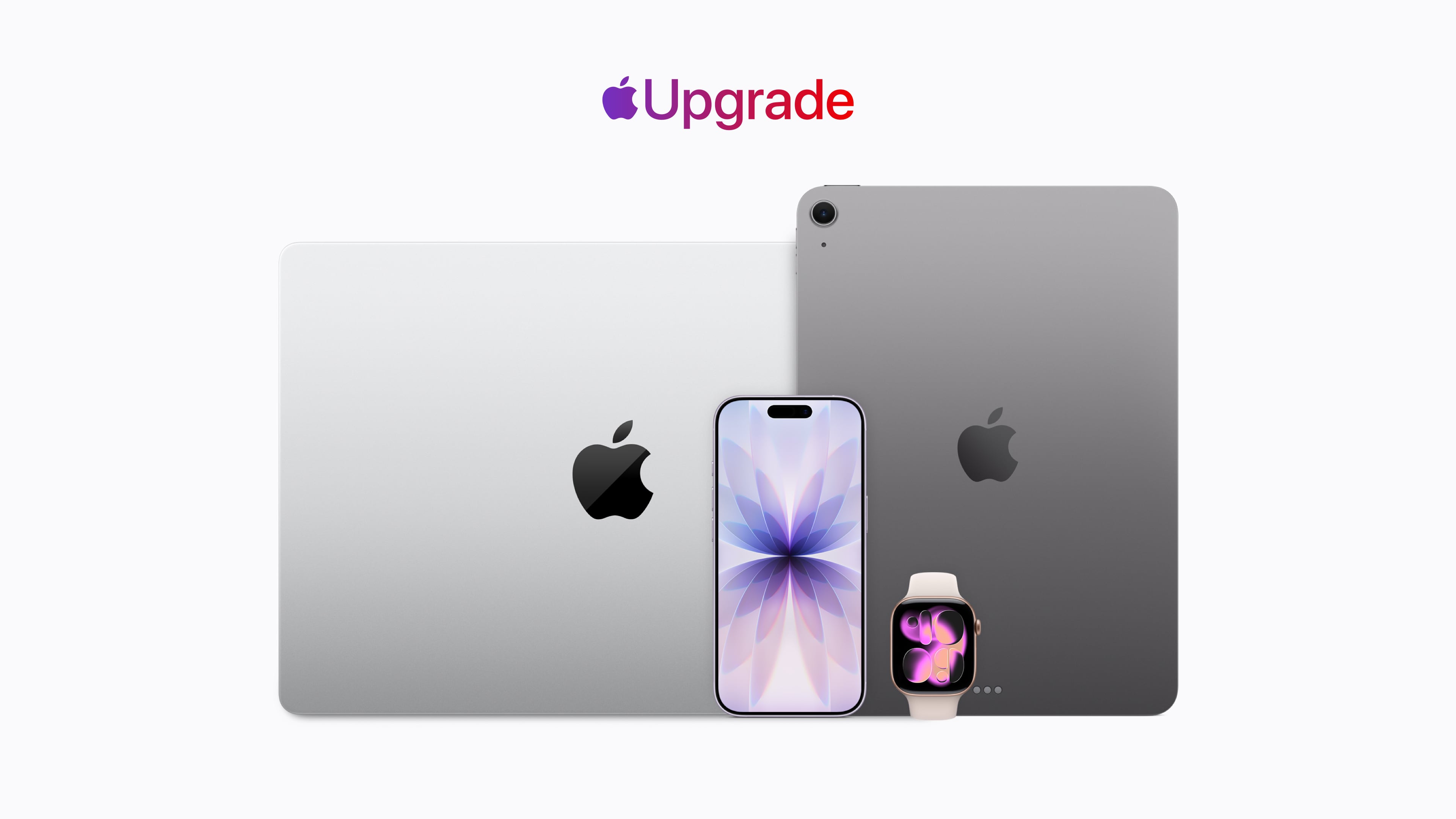
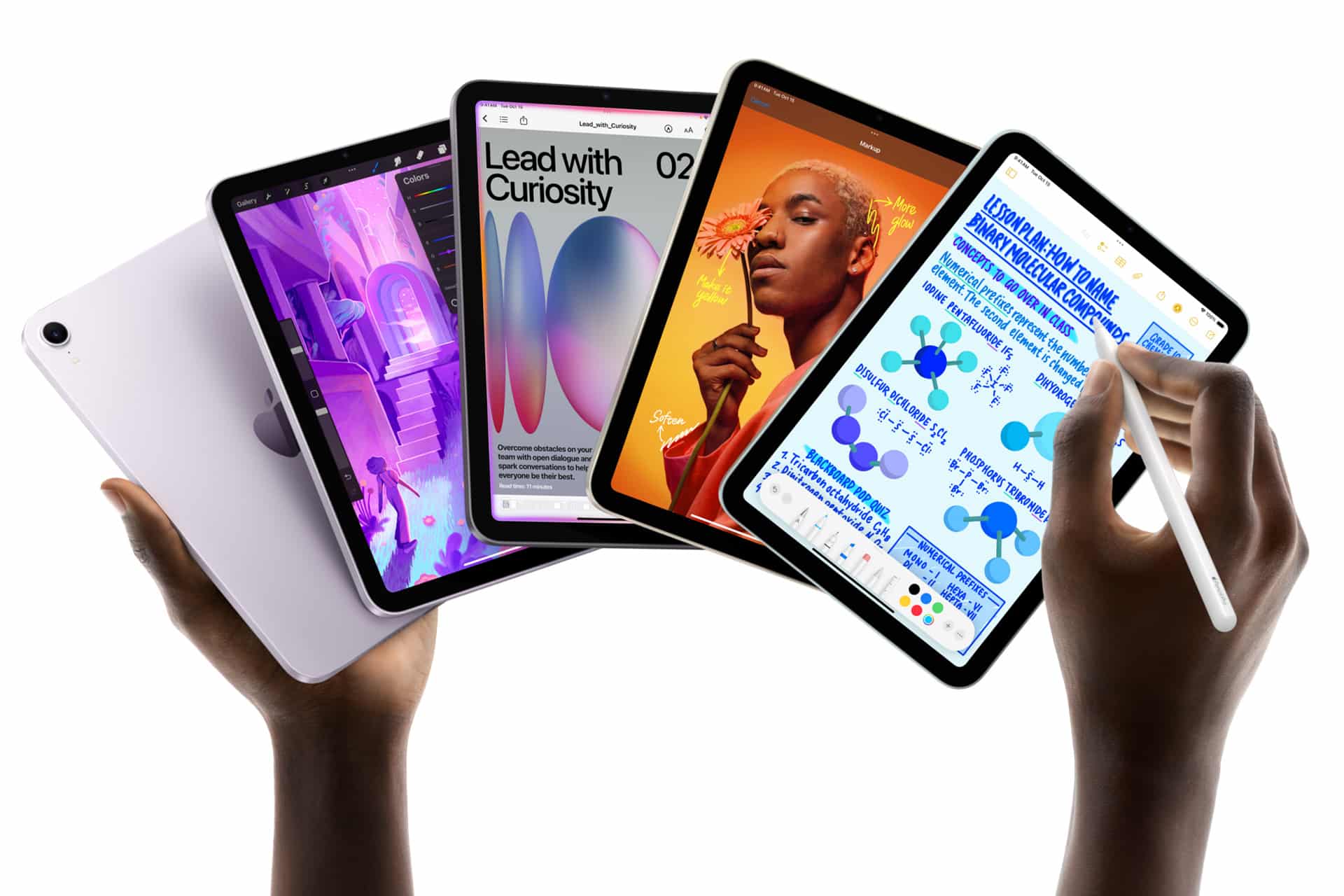
De acordo com o jornalista da Bloomberg, Mark Gurman, a Apple teria cogitado (e posteriormente descartado) um recurso bastante interessante para o Apple Upgrade: a transferência dos dados do iCloud do usuário para o novo aparelho antes mesmo de ele ser enviado para o assinante.
Revelada na última edição da sua newsletter “Power On”, a ideia — descrita como um recurso premium — seria especialmente bem-vinda para as trocas anuais de iPhones realizadas durante o período do serviço adquirido, livrando o usuário de ter que configurar seu aparelho ao ligá-lo pela primeira vez.
The Apple Upgrade feature that never made it past the drawing board: a so-called white-glove component, where your new device each year would arrive at home ready to go, preloaded with all of your data via your iCloud backup. Here’s what happened. https://t.co/PZ4r8jEgvG
O recurso de atualização da Apple que nunca saiu do papel: um componente supostamente premium, em que seu novo dispositivo chegaria à sua casa a cada ano, pronto para uso, com todos os seus dados pré-carregados por meio do backup do iCloud. Veja o que aconteceu.
Essa ideia, no entanto, esbarrou em um obstáculo importantíssimo: a privacidade do usuário, já que dados do iCloud só poderiam ser acessados pela Apple nos casos em que a Proteção Avançada de Dados (Advanced Data Protection) com criptografia de ponta a ponta não foi ativada. Isso, é claro, não inclui o Reino Unido, onde o recurso não pode ser mais acessado.
Como lembrou o 9to5Mac, o acesso remoto às definições de sistema de um iPhone obtido por meio do Apple Upgrade poderia ser associado ao Presto, um sistema proprietário de gerenciamento de atualizações baseado em hardware (empurrado especificamente por um Mac mini com um sistema customizado) para realizar o update de iPhones lacrados.
Anunciado no mês passado, o Apple Upgrade oferece o leasing de Apple Watches, iPhones, iPads e Macs para clientes dos Estados Unidos, com planos de até 36 meses dependendo do dispositivo escolhido.
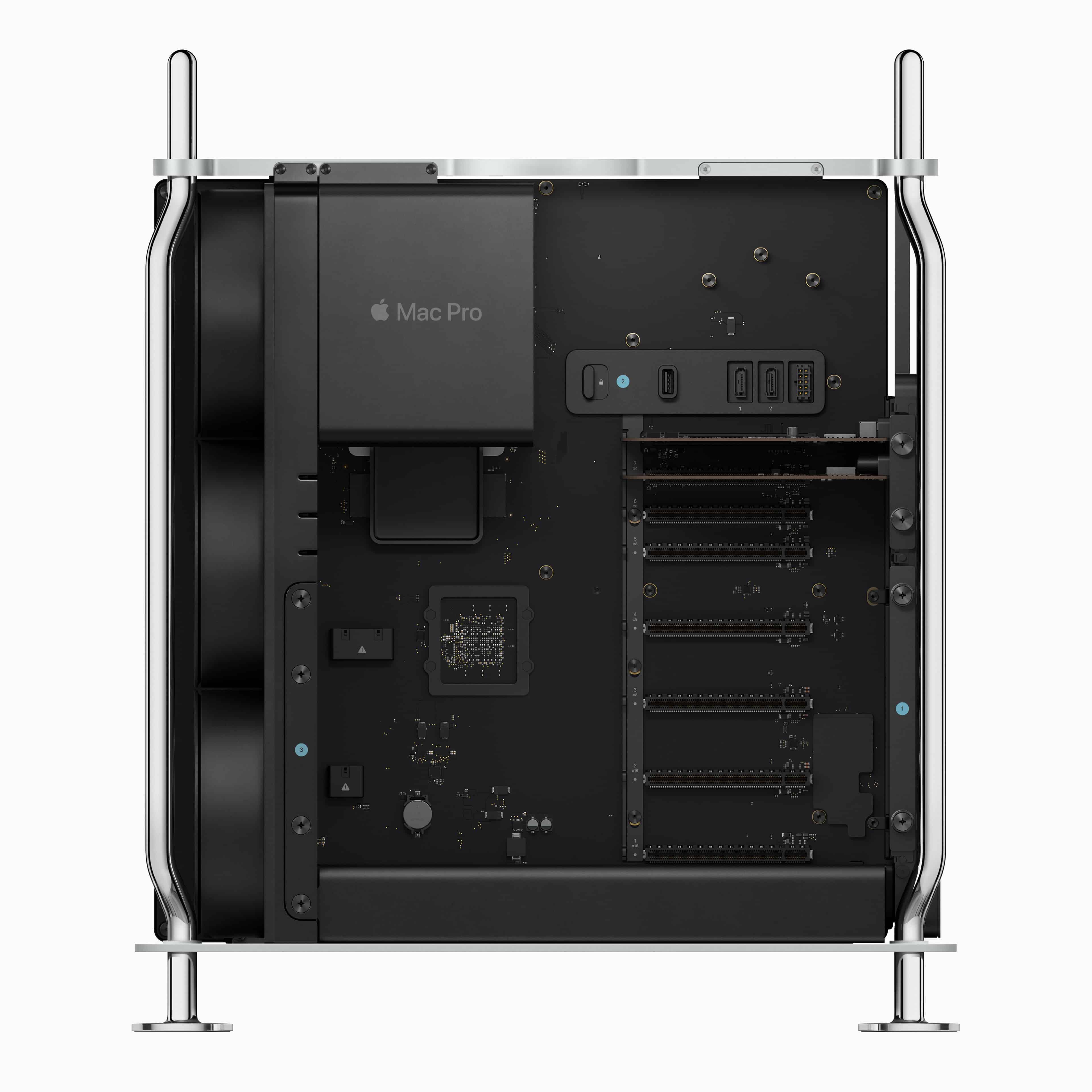
Último Mac a trocar os chips PowerPC pelos processadores da Intel (transição que havia sido iniciada em 2005), ele chegou com o dobro de performance do Power Mac G5, seu antecessor direto — e de quem herdou a primeira iteração do design de “ralador de queijo”, que com certeza marcou época.
Com um preço inicial de US$2.500 (ou US$4.140, levando em conta a inflação até os dias de hoje), ele era parrudíssimo — tanto em termos de performance bruta quanto de conectividade. Extremamente “upgradeável”, ele vinha com dois processadores Intel Xeon de dois núcleos (2,0GHz, 2,66GHz ou 3,0GHz, dependendo da versão escolhida), bem como com a placa gráfica GeForce 7300 GT, da NVIDIA — componente que podia ser trocado por uma Quadro FX 4500 (também da NVIDIA) ou uma ATI Radeon X1900 XT (da AMD).
Contando com quatro espaços para unidades Serial ATA (dois a mais que o Power Mac G5), o Mac Pro de primeira geração também permita a instalação de até quatro GPUs 1Graphics processing units, ou unidades de processamento gráfico. via PCIe, além suportar até 32GB de RAM 2Random access memory, ou memória de acesso aleatório. — por padrão, ele vinha com “apenas” 1GB. O desktop também era equipado com 5 portas USB 2.0 e 4 FireWire 800, padrão ainda muito popular na época.
O queridinho de profissionais criativos, o Mac Pro parecia ser feito sob medida (ou vice-versa) para softwares como o Final Cut Pro, além de vir de fábrica com o clássico Mac OS X Tiger, lançado mais cedo naquele ano. Nem tudo eram flores, no entanto, já que alguns apps, como os da popular Adobe Creative Suite, ainda precisavam da camada de tradução Rosetta para rodar adequadamente em Macs com processadores x86, o que resultava em gargalos de performance — problema que foi solucionado com o passar dos meses.
Desde então, o Mac Pro original foi atualizado algumas vezes; o primeiro upgrade veio já em abril 2007, seguido por outro em janeiro de 2008. No início de 2009, o computador ganhou os processadores Intel Xeon 5500 e, um ano depois, passou a suportar até 64GB de memória e até 8TB de armazenamento — além de ter adotado os processadores da linha Intel Xeon 5600, é claro. A última dança desse primeiro design do desktop veio em 2012, com dois processadores Intel Xeon Westmere-EP de seis núcleos (2,4GHz).
O primeiro tropeço
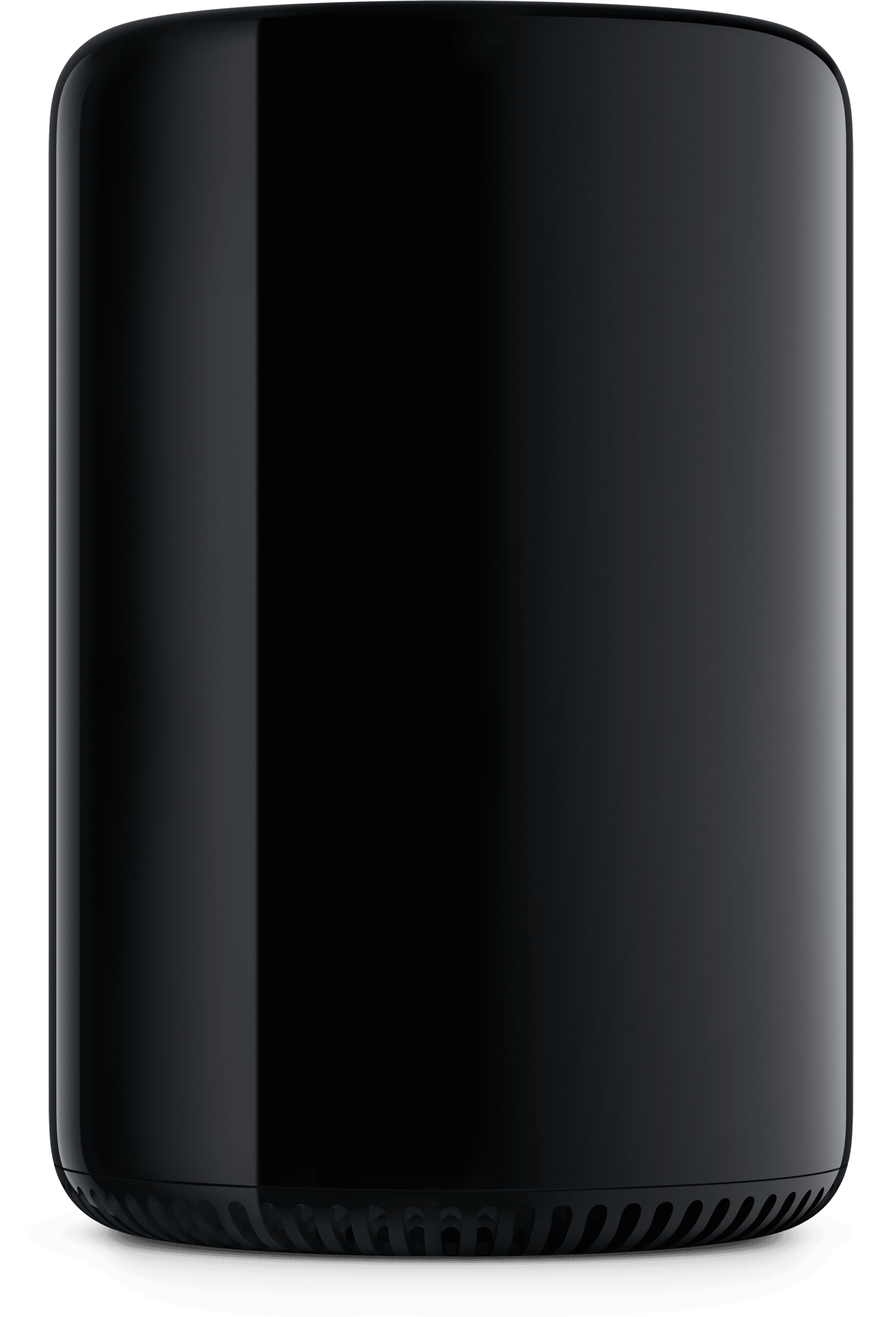
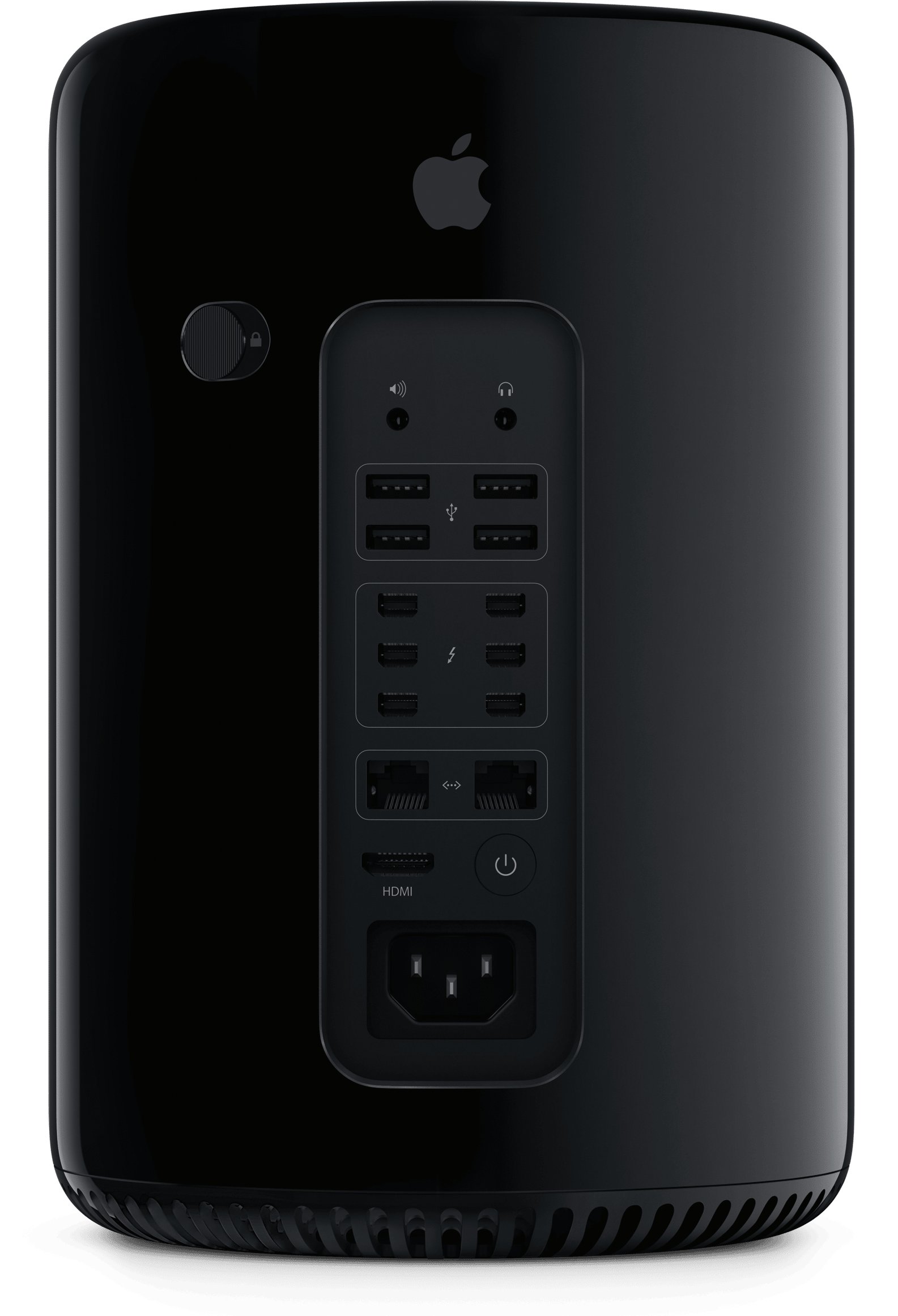
O ano de 2013 foi difícil para o Mac Pro, que recebeu um novo design tão compacto quanto polêmico. Cilíndrica, a nova geração do Mac Pro instigou comparações com latas de lixo, principalmente por conta da abertura para ventilação na parte de cima do computador.
Divulgação/Apple
Por falar em ventilação, é nessa área onde reside a maior fraqueza desse novo modelo: o sistema de resfriamento, construído em volta de um “núcleo térmico unificado” central que, embora fosse, sim, um conceito muito interessante, não era o suficiente para resfriar o seu processador Intel Xeon e as duas GPUs AMD FirePro.
O novo design também fez a Apple abrir mão de duas outras características importantíssimas do Mac Pro: a vasta seleção de portas e a possibilidade de trocar praticamente todos os principais componentes do computador. Caso o usuário quisesse realizar algum upgrade, ele era obrigado a fazer isso por meio de uma das suas portas Thunderbolt 2, o que estava longe de ser o ideal.
Foto: iFixit
A má recepção fez o Mac Pro “lata de lixo” cair no ostracismo e ficar sem receber novas atualizações por nada menos que seis anos — um contraste e tanto em relação ao modelo anterior. A situação chegou até mesmo ao ponto de a própria Apple admitir, em 2017, que errou a mão na hora de projetar a mais nova versão do seu desktop profissional — atitude que foi seguida pelo lançamento do iMac Pro, que serviu como uma espécie de “tapa buraco” até o lançamento do último grande redesign do Mac Pro.
Um breve renascimento
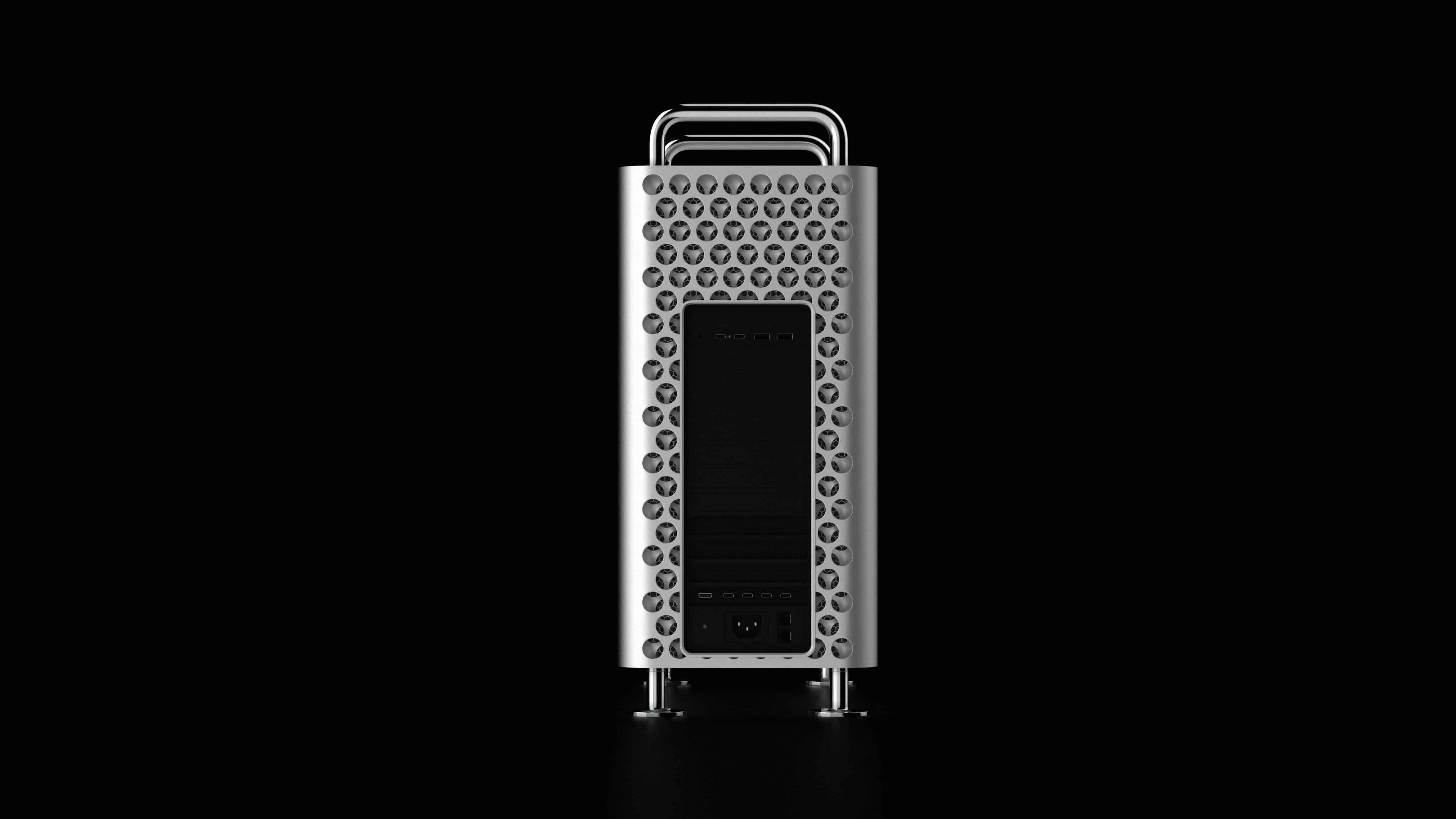
Em 2019, a Apple colocou ordem na casa ao lançar um novo Mac Pro muito mais parecido com o modelo original do que com o computador que o precedeu — ou seja, com um formato de torre tradicional.
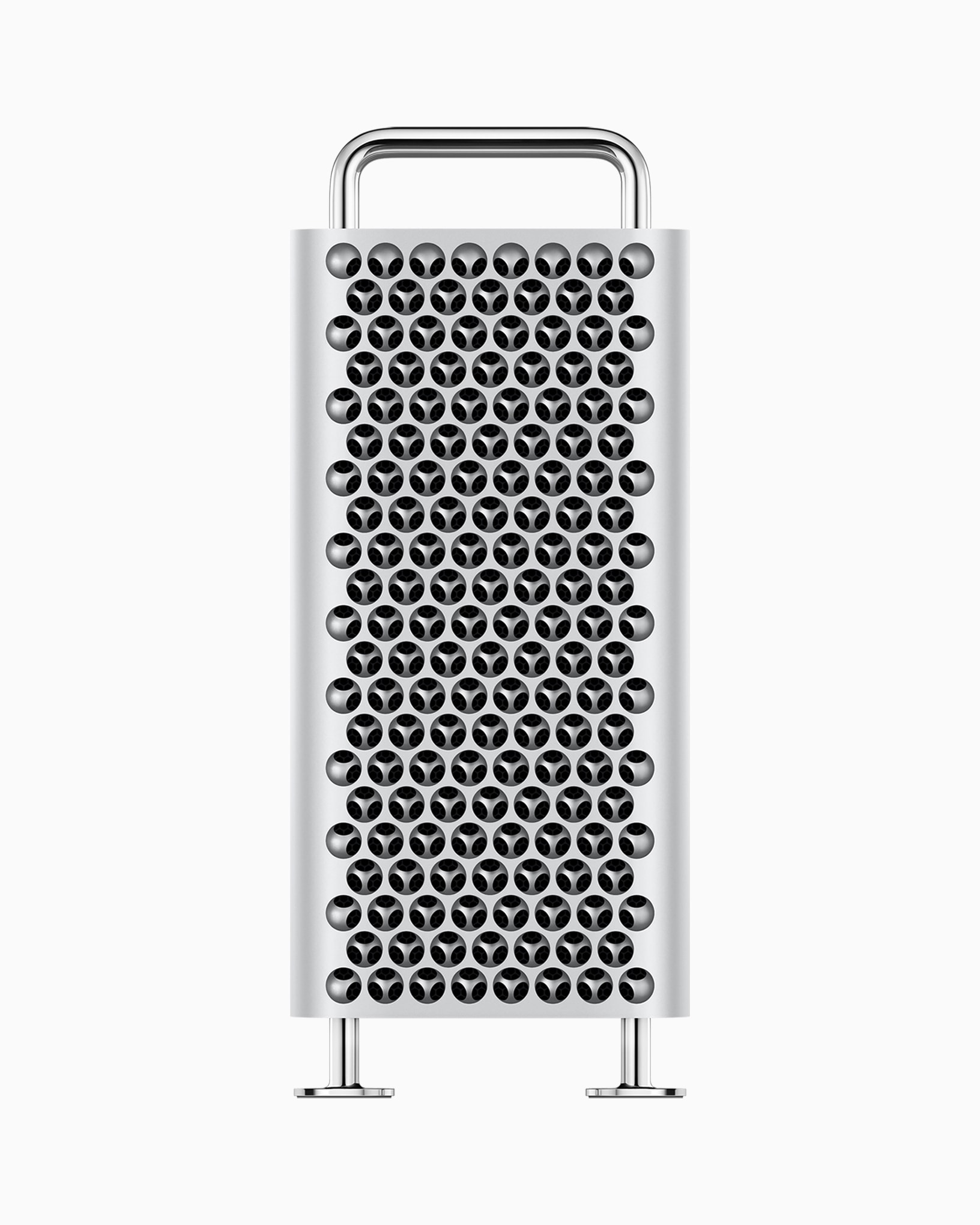
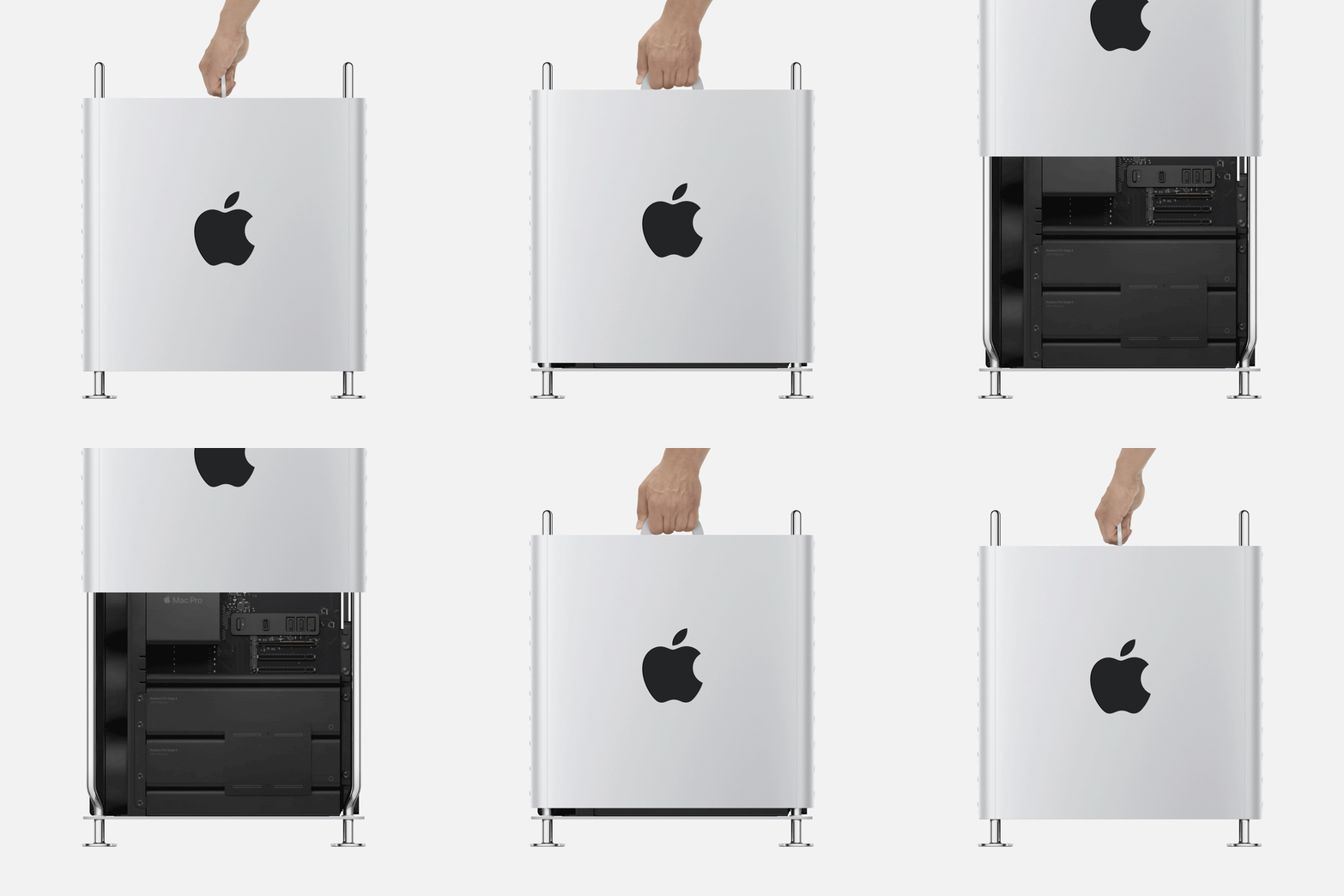
Apostando mais uma vez no alumínio como seu material principal, o desktop passou a contar com furos para ventilação que, mais uma vez, provocaram comparações com raladores de queijo. Dentro, foram adicionada três ventoinhas bem parrudas, as quais davam conta de resfriar todos os componentes do computador, já que eles não contavam com coolers individuais.
Divulgação/Apple
Equipado com um processador Intel Xeon de até 28 núcleos, ele suportava até 1,5TB de memória — número surpreendente até para os dias de hoje. Contando com nada menos que oito slots PCIe, ele podia ser configurado com as GPUs Radeon Pro 580X ou Radeon Pro Vega II, da AMD, bem como com a novíssima placa aceleradora Apple Afterburner, para a edição de vídeos.
O otimismo introduzido por esse novo design, porém, foi logo suplantado pela introdução, apenas um ano depois, dos chips da família Apple Silicon, bem mais rápidos e eficientes que os da Intel e que passariam a substituir os processadores da fabricante estadunidense nos Macs. Em outras palavras, isso fez com que muita gente pensasse duas vezes antes de adquirir um Mac Pro — afinal, uma versão bem mais poderosa com um chip ARM3Advanced RISC Machine. provavelmente já estava nos planos da Apple.
Isso, no entanto, só foi acontecer em 2023 — e de um jeito um tanto… agridoce. Embora a adoção do chip M2 Ultra tenha sido bem-vinda, o computador perdeu muitas das características que o faziam ser uma boa opção para usuários profissionais, como a possibilidade de fazer upgrades nas suas peças — uma consequência da natureza centralizada dos SoCs 4System on a chip, ou sistema em um chip. da Apple.
Além disso, a essa altura do campeonato, o Mac Studio (outro computador voltado a profissionais) já estava no mercado há cerca de um ano e oferecia a mesma performance de ponta que muitos esperavam do Mac Pro, além de ser bem mais compacto e, principalmente, “acessível” (a partir de US$7.000vs. a partir de US$2.000).
Embora rumores de uma atualização tenham circulado nos últimos anos, tudo isso levou a Apple a finalmente aposentar o Mac Pro em março de 2026, pouco meses antes do seu aniversário de 20 anos. No momento, os esforços da Apple parecem estar completamente voltados ao Mac Studio, que tomou o posto de “computador para profissionais” da Maçã.
FaceTime Dual Capture is bringing simultaneous front-and-rear camera streaming to video calls in iOS 27, allowing compatible iPhones to show the caller and their surroundings without repeatedly switching between cameras.
The feature expands technology Apple introduced with the iPhone 17 family. Dual Capture already allows the Camera app to record through the Center Stage front camera and a rear camera at the same time. iOS 27 brings a similar capability directly into live FaceTime calls.
During a call, the front camera can continue showing the speaker while the rear camera displays whatever the iPhone is pointing toward. Someone attending a concert can share the performance and remain visible. A parent can show a child playing without disappearing from the conversation. A person asking for technical assistance can remain on screen while directing the rear camera toward the equipment causing the problem.
Dual Capture removes the awkward sequence of switching to the rear camera, showing something, and switching back to continue speaking face to face. Both perspectives remain available inside the same call.
Image Credit: Thomas Trutschel Photothek/Getty Images
FaceTime Dual Capture Changes Camera Switching
The normal FaceTime camera control changes from a simple front-or-rear choice on supported iPhones. When the caller activates the rear camera, iOS 27 keeps the front camera visible by default.
The main view displays the rear camera feed while a smaller window contains the front camera image. This picture-in-picture arrangement gives the other participant a continuous view of the caller’s reaction, commentary, or explanation.
To activate both cameras during a supported FaceTime call:
FaceTime > Start a video call > Tap the Flip button
Tapping the Flip button turns on the rear camera without immediately removing the front view. The other participant begins receiving both perspectives as part of the FaceTime stream.
The caller can disable the front view when it is no longer needed. This provides a conventional rear-camera presentation for situations where the surroundings should occupy the complete image.
To return to a single camera view:
FaceTime > Tap the camera view > Disable the front camera
The exact labels and placement may change before the public release of iOS 27 because the feature is still being tested in beta software. Its basic behavior is already established: the Flip control activates the rear camera while retaining the front camera feed.
Dual Capture does not create two independent FaceTime calls. Both images belong to one video stream, so the caller does not need a second account, device, or invitation.
The feature also differs from screen sharing. FaceTime screen sharing transmits applications and interface activity from the iPhone display. Dual Capture transmits live video from two physical cameras.
Image Source: Google
Which iPhones Support Dual Capture
Apple has limited FaceTime Dual Capture transmission to the iPhone 17, iPhone 17 Pro, iPhone 17 Pro Max, and iPhone Air. Each model includes Apple’s 18MP Center Stage front camera and the Dual Capture capability introduced in the Camera app.
An older iPhone that supports iOS 27 cannot originate a Dual Capture stream. It continues to use the normal option of selecting either the front camera or a rear camera during a call.
Older models can still receive and display a Dual Capture feed when they are running iOS 27. This allows an iPhone 16 or another supported device to see both views transmitted from an iPhone 17, even though it cannot send the same presentation back.
Both participants need iOS 27 for the new FaceTime layout to work as intended. The transmitting device must also be one of the supported iPhone 17-generation models.
This limitation is based on Apple’s official feature support rather than the simple presence of front and rear cameras. Earlier iPhones have camera hardware capable of operating in several multi-camera applications, but Apple has not extended its native Dual Capture implementation to them.
Third-party applications have offered forms of simultaneous multi-camera recording for years through Apple’s developer frameworks. The difference is that iOS 27 integrates the experience into FaceTime, where users can activate it through the familiar camera-switching control.
iPhone 17 Owners Receive a Second Dual Capture Feature
Describing FaceTime Dual Capture as retro-compatible with the iPhone 17 does not fully explain its relationship with the hardware. The iPhone 17 family introduced Apple’s native Dual Capture recording in 2025, and iOS 27 now gives that existing camera system another purpose.
Inside the Camera app, Dual Capture produces a saved video containing front and rear views. Apple lists support for recording at up to 4K Dolby Vision at 30 frames per second on the iPhone 17.
FaceTime uses the camera pairing for live communication instead. Network quality, bandwidth, device temperature, and FaceTime processing can affect the transmitted resolution, so users should not assume that a call will preserve the Camera app’s maximum 4K recording specification.
The Center Stage front camera also contributes more than resolution. Its square sensor gives the iPhone greater freedom to adjust framing without requiring the device to be physically rotated. Center Stage can help keep the caller positioned inside the smaller front-camera view while the rear camera follows the subject being shared.
That combination makes Dual Capture more useful than placing two untreated camera feeds beside each other. FaceTime can preserve the speaker’s presence while directing most of the screen toward the event, object, or location being discussed.
The feature may require more processing power and energy than an ordinary single-camera call. Running two camera sensors while encoding and transmitting live video can increase battery consumption and device temperature, especially during long calls over cellular data.
Apple has not published separate battery estimates for Dual Capture FaceTime calls. Users planning extended sessions may want access to power and a stable Wi-Fi connection.
iOS 27 Prepares FaceTime for iPhone 18
FaceTime Dual Capture arrives shortly before Apple’s expected iPhone 18 generation, making it likely to become part of how the company demonstrates the new phones’ camera and communication abilities.
Apple has not announced the iPhone 18 lineup or confirmed its final camera specifications. Compatibility with FaceTime Dual Capture is therefore expected from the software’s “iPhone 17 and newer” positioning, but individual iPhone 18 models should not be treated as confirmed until Apple presents them.
The software release gives existing iPhone 17 owners access without requiring another hardware purchase. That approach also provides Apple with a working FaceTime feature before the next iPhone launch rather than introducing the camera mode and communication interface at the same moment.
Future hardware could improve the experience through faster processors, stronger image stabilization, upgraded sensors, or more efficient video encoding. None of those additions is required for the supported iPhone 17 family, which already contains the camera system needed to transmit both views.
Dual Capture is only one part of the FaceTime update. Apple is also improving video-call quality when the network connection is weak, addressing a problem that becomes especially relevant when two live camera views require transmission. Traditional Chinese support is joining FaceTime Live Captions as well.
The weak-connection improvement may determine how dependable Dual Capture becomes away from Wi-Fi. A feature designed for travel, events, repairs, and outdoor calls needs to tolerate changes in cellular bandwidth without freezing both views or forcing the session to end.
FaceTime Dual Capture remains part of the iOS 27 beta as Apple prepares the public update for September. Apple can still adjust the interface, performance, device requirements, and picture-in-picture behavior before the completed software reaches iPhone 17 owners.
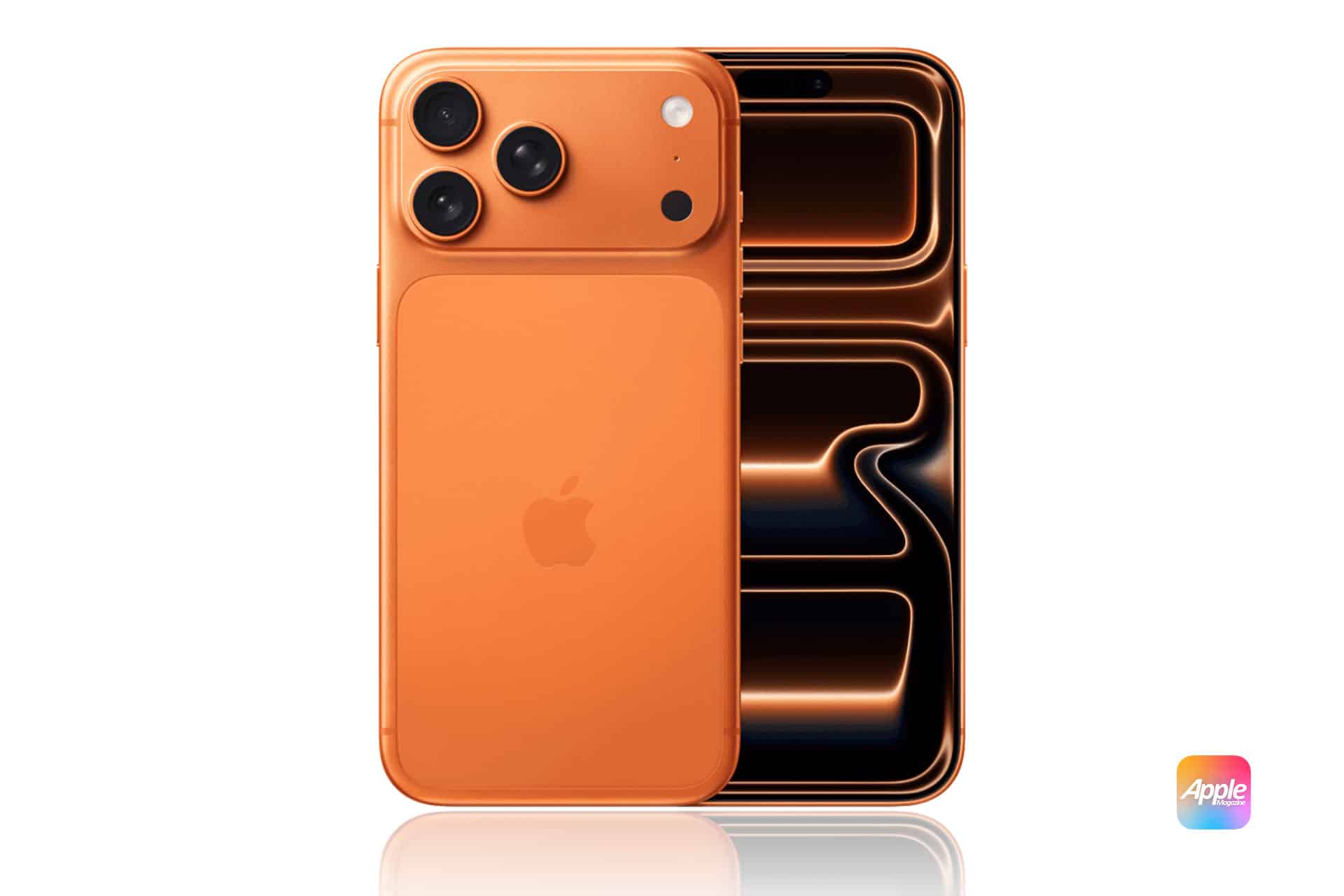
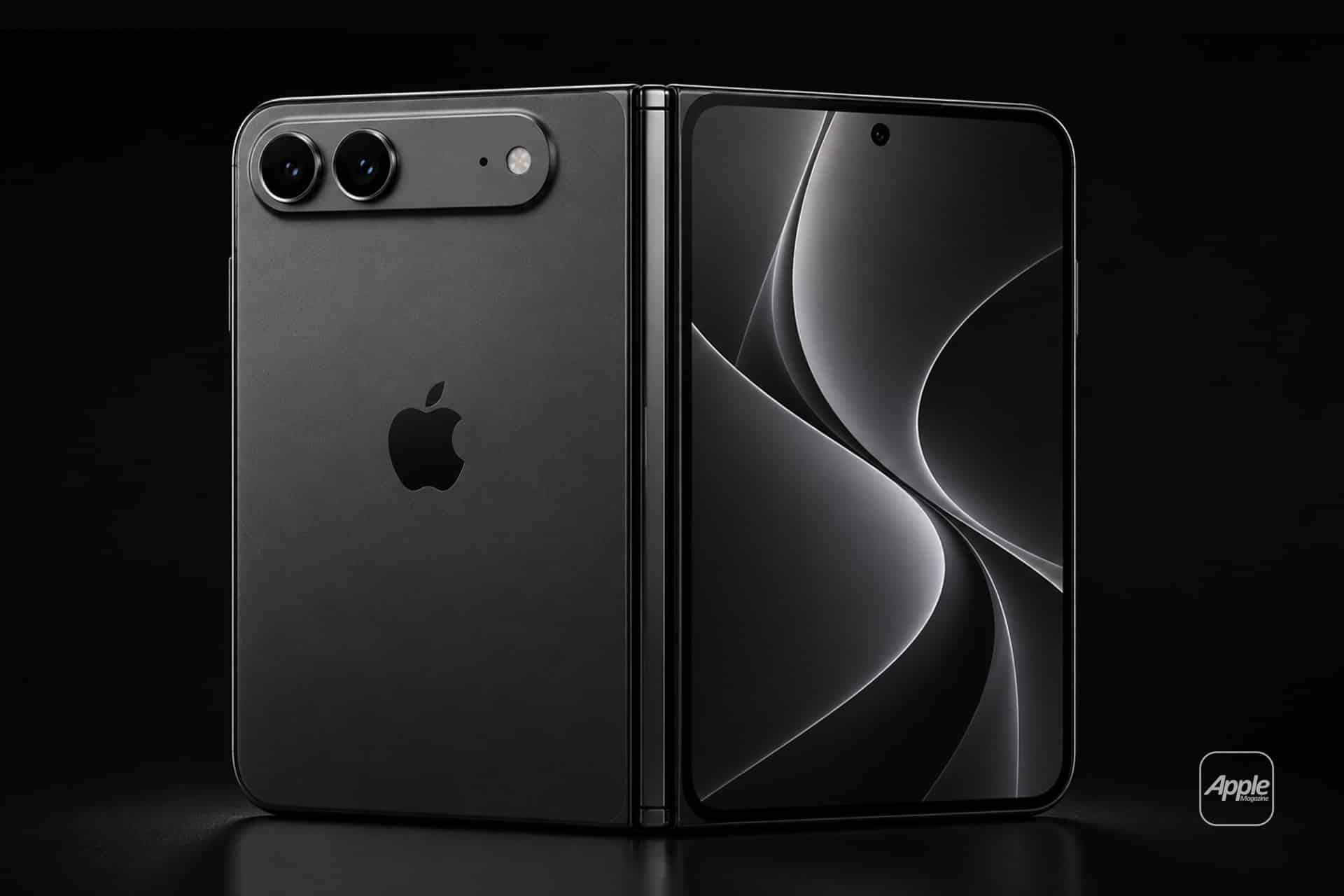
The iPhone Ultra price could establish an entirely new tier within Apple’s smartphone range. Current estimates place the company’s first foldable iPhone above $2,000, with some industry forecasts suggesting an average selling price near $2,500 and higher-storage configurations approaching $3,000.
Apple has not confirmed the device, its name, or its retail price. The iPhone Ultra branding also remains unofficial, although it has appeared repeatedly in reports concerning Apple’s planned expansion beyond the Pro and Pro Max levels.
The foldable is expected to join the iPhone 18 Pro family during Apple’s fall hardware cycle. Rather than replacing the iPhone Pro Max, it would sit above it as a separate model built around a book-style design and a display that expands to approximately the size of a small tablet.
A price beyond $2,000 would make it the most expensive iPhone Apple has released. The current iPhone 17 Pro Max starts at $1,199 in the United States, leaving a difference of at least $800 between Apple’s established flagship and the lowest estimates for the foldable.
Recent projections have pushed that gap even wider. Reports citing analyst Ming-Chi Kuo have discussed a possible range between $2,300 and $2,500, while an IDC estimate cited in supply-chain coverage placed the average selling price at approximately $2,500. Storage upgrades could take selected configurations closer to $3,000.
iPhone Ultra Price Creates a New Flagship Tier
Apple has spent years arranging the iPhone range around a price ladder. Standard models serve the center of the market, while Air and Pro devices address different preferences involving weight, cameras, materials, performance, and display size.
A foldable iPhone would require another level. Its internal display, hinge, structural materials, battery arrangement, and manufacturing tolerances introduce costs that do not exist in a conventional iPhone.
The rumored hardware points to a device intended to combine phone and tablet functions. Reports describe an outer screen measuring about 5.5 inches and an internal display of approximately 7.8 inches. When closed, the product would operate as a compact iPhone. Opening it would provide enough space for larger applications, side-by-side content, expanded video, and an iPad-style software interface.
Apple is reportedly developing interface changes that would let applications take greater advantage of the internal display instead of simply enlarging an iPhone layout. That software work may become one of the main distinctions between the device and existing foldables, particularly if Apple can connect it closely with iPad multitasking conventions.
The hinge is expected to use liquid metal, an amorphous alloy chosen for strength and resistance to deformation. Apple has also reportedly focused on reducing the visible display crease, one of the most recognizable compromises found on current folding phones.
Those elements help explain a premium price without guaranteeing that customers will accept it. A $2,000-plus phone would compete for spending that could otherwise purchase an iPhone and an iPad, a high-end Mac, or several years of conventional smartphone upgrades.
The device would therefore need to offer more than the novelty of a folding screen. Durability, battery life, camera performance, application behavior, repair costs, and long-term display reliability will influence whether buyers view the iPhone Ultra as a versatile computer or an unusually expensive phone.
Costly Engineering Behind the Fold
Rumors suggest Apple may use Touch ID in the side button instead of Face ID. The change would not necessarily represent a retreat from facial authentication across the rest of the iPhone range. A foldable chassis has limited internal space, and eliminating the TrueDepth camera hardware could help Apple manage thickness around the outer and inner displays.
The reported design includes two rear cameras and front-facing cameras accessible in both folded and unfolded positions. That arrangement may leave the iPhone 18 Pro Max with the more extensive photography system, despite the foldable carrying a much higher price.
Such a decision would position the iPhone Ultra around form factor and productivity rather than making it the automatic leader in every specification. Apple has used similar distinctions elsewhere, allowing one product to command a premium for its design while another retains advantages in cameras, battery endurance, or sustained performance.
Display production is another source of expense. Folding OLED panels require flexible materials, protective layers, specialized hinges, and tighter assembly controls. Apple’s reported pursuit of a nearly crease-free screen may increase component costs and reduce early manufacturing yields.
The company is also entering the category after competitors have spent several generations addressing hinge failures, screen damage, dust protection, and application scaling. Arriving later gives Apple access to a more mature supply chain, but its design standards may create additional production challenges.
Industry estimates suggest Apple’s arrival could help raise the average selling price of book-style foldables throughout 2026. Competitors already sell premium folding phones, yet a model priced near $2,500 would push the category further away from mainstream flagship pricing.
Image Credit: AppleMagazine
Apple Upgrade Softens the Monthly Number
Apple Upgrade could make the iPhone Ultra price appear less intimidating at checkout. The Klarna-backed program lets eligible US customers lease selected Apple devices through fixed monthly payments rather than covering the entire retail price upfront.
Current iPhones can be leased for 12 or 24 months. At the end of the term, customers may return the device, move into another eligible Apple product, or pay the remaining amount required to keep it.
That structure can produce lower monthly payments than traditional financing because the customer is not necessarily paying the entire purchase price during the lease. Part of the product’s value remains in the device at the end of the agreement.
A future iPhone Ultra could fit naturally into this model. Its high retail price and expected resale value would give Apple and Klarna room to separate the cost of using the phone for two years from the cost of owning it permanently.
No monthly figure has been announced for the foldable. Apple cannot price an Apple Upgrade lease until it establishes the phone’s retail cost, residual value, eligible term, and trade-in conditions. A simple calculation that divides $2,000 or $2,500 by 24 months would therefore be misleading.
The monthly charge may be considerably lower than a standard purchase installment, but the customer does not automatically own the iPhone after making the scheduled lease payments. Keeping it requires an additional payment based on the remaining value specified by the agreement.
AppleCare+ is also separate from the current Apple Upgrade lease price. That differs from the former iPhone Upgrade Program, which bundled AppleCare+ coverage into its monthly payments. Protection could be particularly relevant for an expensive first-generation foldable containing a flexible display and complex hinge.
Trade-in credit may reduce the monthly charge, while storage selection would push it higher. Sales tax, cellular service, accessories, and optional protection would remain additional costs. Apple Upgrade changes when and how customers pay, but it does not turn a $2,000-plus product into a lower-priced iPhone.
Limited Supply Could Intensify Early Demand
Apple is reportedly preparing millions of foldable units, but production may be heavily weighted toward the final months of 2026 and 2027. Supply-chain estimates have ranged from 7 million to 10 million devices, with different reports using different production periods and assumptions.
The foldable may be announced alongside the iPhone 18 Pro and iPhone 18 Pro Max but reach customers later. That would resemble the 2017 launch of the iPhone X, which was introduced with the iPhone 8 family in September and released in November.
A delayed retail date would give Apple more time to accumulate inventory while preserving the device’s place in its fall presentation. It could also place the iPhone Ultra into the holiday quarter with considerable demand concentrated around a relatively small supply.
High pricing does not necessarily prevent shortages during the first weeks of an Apple product launch. Early adopters, developers, collectors, and customers waiting specifically for an Apple foldable represent a smaller audience than the conventional iPhone market, but they may still outnumber the units available at release.
Apple Upgrade could add another source of demand by replacing the full retail figure with a monthly lease price inside the Apple Store. That presentation may make the phone accessible to customers who would reject a $2,500 purchase while accepting a recurring payment and returning the device later.
Kuo expects only 500,000 to 1 million foldable iPhones to ship during the third quarter, a supply level that could push some deliveries four to six weeks beyond the opening preorder window.
Apple Upgrade — a new hardware leasing program — is available on the Apple Store online, in the Apple Store app, and at Apple Store locations in the United States.
Apple’s new Upgrade leasing program lets you pay a low monthly fee for an iPhone, Mac, iPad, or Watch instead of the full price upfront. Max Tech creator Vadim Yuryev ran the numbers on a $2,999 MacBook Pro and claims that leasing, buying out the residual, and reselling can leave you hundreds ahead of purchasing outright — with zero interest. Here’s how the math works (and the caveats that still apply).
In a post on X in response to Bloomberg’s Apple expert Mark Gurman, Yuryev walked through the math, using a $2,999 MacBook Pro as an example.
Explained this in today’s YouTube video. If you lease a $2,999 Mac, you pay $58 a month for 36 months. At the end, you owe $911 to pay it off or return it.
However, Apple gives you 6 more months to decide. Meanwhile, you continue paying monthly payments of $53.
He said a 36-month lease would run $58 per month, leaving a $911 balance due at the end — though Apple gives lessees six additional months to decide, during which payments drop to $53 per month. Yuryev argued that paying off that final balance makes sense because the device could then be resold for “$1,500+ on eBay or Facebook marketplace,” rather than the customer simply losing the amount paid in over the life of the lease.
Yuryev emphasized that “you never pay more” than the device’s MSRP, since Apple Upgrade carries no interest or lease fees. He added that the primary risk is failing to keep up with payments or falling short on the final balance, and noted that once a device is paid off, users can start a new lease while keeping the original one.
MacDailyNews Take: While, as AAPL shareholders, we wish Apple every success with their Apple Upgrade program via Klarna, in an age of zero-interest financing, “buy now, pay later,” and glossy leasing schemes dressed up as smart upgrades, a simple truth keeps getting buried (caution, soap box sermon ahead):
The surest way to build lasting wealth is to avoid debt entirely, buy only what you can afford outright, and live within your means.
Leasing expensive hardware, stretching payments over years, may feel painless month to month. It is still debt. You are paying for the privilege of using something you do not fully own, often while assuming residual balances, credit checks, and the risk that the used-market value collapses when everyone else is dumping the same leased devices. The math can be made to look attractive on a YouTube whiteboard. Reality is less forgiving.
Paying cash for what you can actually afford forces discipline. It prioritizes value over status. It eliminates interest, fees, and the quiet stress of monthly obligations. When the device eventually ages, you own it free and clear — you can sell it, keep it, or pass it on without a lender’s permission. That freedom compounds.
Financial success is not about maximizing monthly cash flow or chasing the newest model every two years. It’s not about keeping up with The Joneses. It is about keeping more of what you earn, avoiding the traps that turn consumers into lifelong renters, and building genuine ownership over time.
Debt is easy. Discipline is harder. The latter is the only reliable route to real financial independence.
Please help support MacDailyNews — and enjoy subscriber-only articles, comments, chat, and more — by subscribing to our Substack: macdailynews.substack.com. Thank you!
Apple Upgrade — a new hardware leasing program — is available on the Apple Store online, in the Apple Store app, and at Apple Store locations in the United States.
Apple has launched a major new program that lets customers lease its hardware on monthly payments instead of buying outright, positioning the company more firmly as a subscription-driven business.
On July 28th, Apple introduced Apple Upgrade in the United States, a Klarna-backed leasing service available online and in Apple Stores. It replaces the older iPhone Upgrade Program and extends subscription-style access across most iPhones, iPads, Apple Watches, and Macs.
How it works
Customers choose lease terms of 12 or 24 months for phones and watches, or 24 or 36 months for tablets and computers. Starting prices are roughly:
• iPhone: from about $17.99–$18 per month
• Apple Watch and iPad: from about $11.99–$12 per month
• Mac: from about $24.99–$25 per month
Exact amounts vary by model, configuration, and term length. Higher-end devices cost more (for example, certain MacBook Pros start in the high $30s to $50s range). A soft credit check is required. Trade-ins can lower monthly payments, and Apple Card users may earn Daily Cash on payments.
At the end of the term, users can upgrade to a newer device, pay a one-time fee to keep the current one, or return it. Early upgrades, early payoffs, or terminations can incur extra fees. AppleCare is not included and must be purchased separately. Some lower-cost models (such as the Apple Watch SE, entry-level iPad, certain older iPhones, and the MacBook Neo) and business/education purchases are excluded.
Why it matters
The program arrives as Apple’s services business continues to grow strongly and as hardware prices have risen amid industry-wide memory and storage shortages driven by AI demand, Bloomberg News‘ Mark Gurman notes in his most-recent newsletter. By partnering with Klarna, Apple offers lower monthly outlays and easier access to the latest devices without taking on the full financing risk itself.
This move answers a long-standing question about Apple’s next growth phase. Combined with its existing software and media subscriptions (now totaling well over a billion paid subscriptions across Apple services and App Store apps), Apple Upgrade pushes the company closer to a full hardware-plus-services subscription model. Customers stay in the ecosystem longer, upgrade more frequently, and generate recurring revenue rather than one-time hardware sales.
In short, Apple is no longer just selling products, it’s increasingly selling ongoing access to them. The new leasing program is the clearest signal yet of that strategic shift.
MacDailyNews Take: Apple just made the smartest move in years. By turning hardware into a true subscription via Apple Upgrade + Klarna, Cupertino locks customers into the ecosystem, smooths out lumpy iPhone cycles, and rakes in predictable revenue while competitors still chase one-time sales. Yet, if you still want to buy outright, you can! Welcome to the optional Apple-as-a-Service era.
Please help support MacDailyNews — and enjoy subscriber-only articles, comments, chat, and more — by subscribing to our Substack: macdailynews.substack.com. Thank you!
Apple is scheduled to report fiscal third-quarter 2026 results (the June quarter) after the market close on Thursday, July 30th, followed by its usual conference call. The release carries extra weight: it is expected to be Tim Cook’s final earnings call as CEO before hardware engineering chief John Ternus assumes the role on September 1, with Cook moving to executive chairman.
Consensus Estimates
Wall Street is looking for solid double-digit growth. Consensus forecasts (drawn from roughly 27–31 analysts) call for:
• Revenue of approximately $108.9 billion, up about 16% from $94.0 billion a year earlier.
• Diluted EPS of $1.89, up roughly 20% from $1.57 in the year-ago quarter.
These figures sit comfortably inside management’s prior guidance of 14–17% year-over-year revenue growth and a gross margin range of 47.5–48.5% (down from 49.3% in the March quarter as higher memory costs begin to weigh). Operating expenses are expected in the $18.8–$19.1 billion range.
Zacks consensus is nearly identical at $108.8 billion in sales and $1.88 EPS. Apple has beaten estimates in recent quarters, with an average earnings surprise of more than 7% over the past four reports.
Segment Expectations
• iPhone remains the primary driver. Analysts project iPhone revenue near $53 billion (some estimates range $53–$55 billion), representing roughly 19–23% growth from $44.6 billion last year, fueled by the iPhone 17 cycle, healthy upgrade activity, share gains, and a richer mix of higher-priced Pro models.
• Services, Apple’s high-margin growth engine, is expected around $31.4 billion, up from $27.4 billion a year earlier (mid-teens percentage growth). Investors will watch for any commentary on Apple Intelligence adoption and subscription momentum.
• Mac, iPad, and Wearables are expected to contribute more modestly, with some notes of supply constraints on certain Mac models.
Analyst Views
Several firms are slightly ahead of consensus. Goldman Sachs expects revenue of $110.1 billion (17% growth) and EPS of $1.93, citing outperformance in iPhone and Mac plus better margins; the firm raised its price target to $370. Bank of America models about $109 billion in revenue and $1.89 EPS. UBS is more cautious at $107.8 billion revenue and $1.84 EPS.
Key focus areas on the call are expected to include:
• Sustainability of iPhone demand into the September quarter and the upcoming product cycle.
• Gross-margin trajectory amid elevated DRAM and NAND costs.
• Progress on AI features (including the recent clearance for Apple Intelligence in Greater China) and any early metrics on usage or monetization.
• Forward guidance, especially for the September quarter, and any color on the leadership transition.
• Capital return, inventory levels, and China trends.
Apple stock has rallied strongly in 2026 (up roughly 24% year-to-date in some tallies), leaving the shares trading at a premium valuation — near 35–38 times forward earnings by some measures. That leaves limited room for disappointment. A clean beat paired with confident guidance on continued double-digit growth and stable margins would likely be well received; any soft outlook or sharper-than-expected margin pressure could prompt a more cautious reaction.
MacDailyNews Take: In a nutshell, analysts expect another strong quarter driven by iPhone and Services, but the real test will be whether Apple can sustain the momentum while navigating higher component costs as new CEO John Ternus, blessedly a product guy per se, prepares to take the reins. Apple Upgrade should help in this respect.
Please help support MacDailyNews — and enjoy subscriber-only articles, comments, chat, and more — by subscribing to our Substack: macdailynews.substack.com. Thank you!
Apple today announced Apple Upgrade, a new product leasing program provided by Klarna for iPhone, Apple Watch, Mac, and iPad available on the Apple Store online, in the Apple Store app, and at Apple Store locations in the United States.
[…]
Apple Upgrade offers 12- and 24-month leasing options for iPhone and Apple Watch, and 24- and 36-month leasing options for Mac and iPad. Leasing prices start as low as $17.99 per month for iPhone, $11.99 for Apple Watch, $24.99 for Mac, and $11.99 for iPad.
The $17.99/month gets you a base model iPhone 17e for 24 months. This is a total of $431.76 vs. $599 for buying a new one today, but then you have to make a decision:
At the end of the lease term, customers can upgrade their device to the latest generation, purchase it with a one-time payment, or simply return it and exit the program.
I used to get a new phone every other year, but I kept my iPhone 12 mini for three years and will likely keep my 15 Pro for four years. In addition to making it easier to buy phones without the up-front payment, Apple is probably hoping this will encourage more customers to get back on the two-year cycle. Given the choice between continuing a small monthly payment and getting a new phone or making a larger payment to keep their old phone, many may opt to upgrade.
The payoff amount is the difference between what was paid during the leasing period and the retail price of the device, minus any remaining trade-in credits. Klarna is not charging a fee for the leasing program, so an iPhone that’s $1,099 can be leased and then purchased for $1,099 with no extra cost beyond taxes.
I guess this means that, for a bit of hassle, you can essentially buy the device for the list price at 0% interest.
Lease participants can opt to end a lease early and return a device, but Apple says there may be “substantial fees” for terminating a lease before the end of the term.
[…]
Customers must upgrade, end the lease, or purchase the device at the end of the lease term. If that doesn’t happen, the lease converts to a month-to-month lease for up to six months.
[…]
Damage to an iPhone, losing an iPhone, or having an iPhone stolen could incur fees.
The rollout of the program comes as Apple has been struggling with supply chain issues related to “RAMageddon,” which refers to the industry-wide shortage of memory chips that is driving up the price of hardware. As a result, Apple recently announced price hikes for its Mac and iPad lineups, sparing the iPhone for now. The new Upgrade program seems to be Apple’s answer to making those higher prices more manageable for consumers.
Customers can manage their lease directly in the Klarna app, where they can view their billing schedule and track remaining payments.
With the launch of the new Upgrade program, Apple is discontinuing its existing in-house financing and installment programs in the U.S., which include the iPhone Upgrade Program and iPhone Payments.
For iPhones, you have to have a carrier and can’t use a prepaid plan.
[…]
For iPads, the starting prices range from $12.99/month to $24.99/month, Macs range from starting prices of $24.99/month to $48.99/month, and the Apple Watch ranges from starting prices of $11.99/month to $47.03/month. But again, these are just starting prices. You can configure a fully loaded 16-inch MacBook Pro that is just under $230/month, and it won’t include AppleCare.
As a point of comparison, under the current program that is being discontinued, I pay $69.50/month for an iPhone 17 Pro Max, but I have a 512GB model, so my lease price for the same phone would be $40.83/month, significantly lower, but keep in mind that doesn’t include AppleCare+, which would add $13.99/month or $139/year for that iPhone. On a monthly basis, that puts a new iPhone 17 Pro Max with 512GB of storage and AppleCare+ at just under $55/month. Still a superior deal, but not nearly as good as the landing page might initially lead you to believe.
[…]
If you lease accessories for your device, those don’t have to be returned. Why? Presumably because they have no value to Apple or Klarna.
9to5Mac can now confirm that code found in the iOS 27 beta appears to reveal a broader system for managing a financed iPhone, including the ability to restrict apps and services when payments are missed.
The code describes a system called App Managed Features, which allows an authorized financing or provider app to enroll an iPhone and perform ongoing status checks.
If the contract is no longer in good standing, Apple’s system services can place the iPhone in “Restricted Mode,” which blocks access to most apps until the payment or contract issue is resolved, while keeping a small set of apps available.
I bet there are some governments that would love to commandeer that for their own purposes.
Finally, the new framework also introduces a new type of activation lock called “Partner Finance Lock,” which is meant to prevent users from erasing, reselling, or stripping a restricted device for parts.
Apple says it won’t limit the capabilities of devices leased through its new Upgrade program if you miss a payment. In an emailed statement to The Verge, Apple spokesperson Brian Bumbery says, “There will be no restricted mode and/or there will be no limitations put on device functionality due to missed payments or default with the Apple Upgrade program.”
One possibility is that it was developed for financing programs offered by carriers, retailers, or other partners outside Apple Upgrade, potentially including markets where device restrictions are already used to enforce installment agreements.
Here’s a breakdown of how much you’d pay for the devices included in the Apple Upgrade program, as well as how much more you’d pay to purchase the devices outright at the end of your lease[…]
[…]
Klarna doesn’t say what will happen if you don’t pay the outstanding balance.
[…]
During the lease, Klarna owns your device. You’re responsible for any damage, and will get charged a fee if you don’t return the device in “good condition.” That’s why Apple is encouraging customers to sign up for an AppleCare subscription that could drive up the cost of your lease even more.
[…]
Apple also notes that you’ll have to pay an early termination fee if you want to return the device before your lease ends or if you want to upgrade early.
The Apple Card Monthly Installments aren’t going away, so I’ll keep using that.
[…]
When you finance using the Apple Card Monthly Installments, you pay a fixed amount to own your device. There are no savings here — aside from the 3% cashback — the monthly payment is the purchase price divided by either 12 or 24 months.
When you lease an iPhone through Apple Upgrade, you need a cellular account on one of the big three U.S. carriers: AT&T, T-Mobile, or Verizon. That kind of stinks, and I’m not quite sure I understand why.
The iPhone upgrade program always required it. For a time you could do Apple Card installments without a carrier if you bought it online but never in store. I assume there is carrier pressure to tie the phones to the carriers. Activating iPhones on carriers was a key metric at the Apple Store.
Credit-risk assessment is seemingly part of it. There’s a lot of fraud in iPhone purchases specifically and cell phone service generally. The big three carriers do a significant amount of risk assessment before letting you open a new postpaid account; that you have an active account with one of them is a signal that you’re not trying to lease an iPhone using phony credentials in order to sell it.
But the bigger reason is the complex nature of the contracts between Apple and each of the big three carriers.
Apple has revealed its new hardware leasing program called Apple Upgrade, which is being offered in collaboration with Klarna. This is Apple’s pitch:
Introducing Apple Upgrade, a new way to always have the Apple products you love. Lease a new iPhone, iPad, Mac, or Apple Watch with pocket-friendly payments and terms that work for you. Then easily upgrade to something new at the end of your lease, and return your current device. It’s that simple.
That pitch comes with a footnote that includes other details worth considering:
The program is U.S. only (excluding U.S. territories).
You need to be a U.S. resident who is at least 18 years old, or whatever the legal age is where you live.
There are eligibility and credit approval requirements and you must have a credit or debit card and an Apple ID.
When a device is returned, it must be in good condition or damage fees will be assessed.
Upgrades require a new lease subject to whatever eligibility and credit requirements apply at that time.
For iPhones, you have to have a carrier and can’t use a prepaid plan.
The program isn’t available for refurbished devices or through the Apple Employee Purchase Plan, corporate Employee Purchase Plans, Apple at Work, Government, Education, or Veterans and Military Purchase Programs.
Okay, so maybe it’s not “that simple” after all.
The program is available for the iPhone, iPad, Mac, and Apple Watch product lines. For the iPhone, monthly payments start at $17.99 for an iPhone 17e and start at $34.99 for an iPhone 17 Pro Max, for leasing periods of either 12 months or 24 months.
For iPads, the starting prices range from $12.99/month to $24.99/month, Macs range from starting prices of $24.99/month to $48.99/month, and the Apple Watch ranges from starting prices of $11.99/month to $47.03/month. But again, these are just starting prices. You can configure a fully loaded 16-inch MacBook Pro that is just under $230/month, and it won’t include AppleCare.
As a point of comparison, under the current program that is being discontinued, I pay $69.50/month for an iPhone 17 Pro Max, but I have a 512GB model, so my lease price for the same phone would be $40.83/month, significantly lower, but keep in mind that doesn’t include AppleCare+, which would add $13.99/month or $139/year for that iPhone. On a monthly basis, that puts a new iPhone 17 Pro Max with 512GB of storage and AppleCare+ at just under $55/month. Still a superior deal, but not nearly as good as the landing page might initially lead you to believe.
At the end of your lease you’ll have six months to decide to return the leased device, during which you’ll continue to make monthly payments, or pay a fee equal to the difference between the original purchase price and your lease payments to buy it outright. Your other option is to enter into a lease for a new device. If you return your leased device in poor condition, Klarna will charge you a damage fee. You can also terminate your lease early if you pay the remaining lease payments in full plus any taxes and fees.
If you lease accessories for your device, those don’t have to be returned. Why? Presumably because they have no value to Apple or Klarna.
Of course, if you have a device to trade in, that monthly figure could be significantly reduced. If I had the iPhone 16 Pro Max I had last year to trade in and leased a 17 Pro Max for 12 months, my monthly payments would be under $1. However, keep in mind that once you’re on the leasing train, you no longer own your iPhone, so future upgrades won’t reduce your payments the next time you swap your device for a new model. If you don’t own it, the value isn’t yours to trade in.
If you’re on the existing iPhone Upgrade Program like me, it’s being discontinued, but Apple has a transition offer for you. The old program spread payments over 24 months with the option to turn in an iPhone for a new one after 12 months. That’s not changing. If you’re paid in full on your first 12 months of an iPhone, you can sign up for the new program, get a new iPhone, and return your old iPhone to Apple, which will close your old account but won’t reduce your lease payments. You’re not obligated to join the new leasing program, though. You can also trade in your old iPhone, ending your finance contract, and buy a new full price iPhone.
As you may have figured out by now, I’m not a fan of this program, though I expect it will be successful.
Apple products, like all consumer electronics, are getting more expensive every day. The monthly payments on a leased device look very attractive compared to the pay-up-front price. For years, car leases have induced people into monthly payments that can become a burden when their financial situation changes. Now the same will be true of iPhones, iPads, Macs, and Apple Watches.
Maybe as a practical matter this program isn’t that different from the old financing program, but at least there, you owned your device at the end and could just keep using it indefinitely. With the new program, that’s not an option. When your lease is over, you’re empty-handed and faced with leasing again, buying out the lease, or buying at full price with no trade-in, which is objectively worse.
Ultimately, Apple isn’t responsible for customers’ bad financial decisions, but this program feels like Apple is putting its customers in harm’s way.
Apple Upgrade — a new hardware leasing program — is available on the Apple Store online, in the Apple Store app, and at Apple Store locations in the United States.
Apple today announced Apple Upgrade, a new product leasing program provided by Klarna for iPhone, Apple Watch, Mac, and iPad available on the Apple Store online, in the Apple Store app, and at Apple Retail Store locations in the United States. Apple Upgrade makes it even easier for customers to get the Apple products they love with a leasing plan that is right for them.
“At Apple, we put the customer at the center of everything we do,” said Karen Rasmussen, Apple’s vice president of the Apple Store online, in a statement, “and we’re thrilled that Apple Upgrade offers our customers, both online and in-store, a more flexible way to pay for the products they love.”
Apple Upgrade offers 12- and 24-month leasing options for iPhone and Apple Watch, and 24- and 36-month leasing options for Mac and iPad. Leasing prices start as low as $17.99 per month for iPhone, $11.99 for Apple Watch, $24.99 for Mac, and $11.99 for iPad. When customers first enroll in Apple Upgrade, they can further lower their monthly lease payments by trading in their currently owned device through Apple Trade In. Customers can also earn 3 percent Daily Cash back when making their lease payments with Apple Card.
Upgrading Has Never Been Easier
With Apple Upgrade, customers can expect the same seamless and personalized shopping experience online and in stores. Apple and Klarna have created a simple enrollment process that provides customers with detailed information regarding their leasing options before they enroll.
Upon choosing their preferred leasing option, customers can apply within minutes — online or in-store — and receive quick approval from Klarna. All applicants will be subject to a soft credit inquiry that will not impact their credit score. Once approved, they can complete their transaction as usual. In-store customers can enjoy their new device right away, while online customers can choose delivery or in-store pickup. Whether they shop in-store or online, all customers can take advantage of Apple’s Personal Setup service to help get their new product ready to use and ask any questions they might have. They can also join the many free and educational Today at Apple sessions to learn how to get started — or go further — with their devices.
At the end of the lease term, customers can upgrade their device to the latest generation, purchase it with a one-time payment, or simply return it and exit the program. In the Klarna app, they can stay on top of all of their lease information, including their billing schedule and remaining payments. Customers can add an AppleCare subscription to protect their products, making the return of their current device and upgrade to a new one even easier.
With the launch of Apple Upgrade, Apple will no longer offer the iPhone Upgrade Program and iPhone Payments in the United States. When eligible, customers currently enrolled in the iPhone Upgrade Program will have the option of leasing a new device with Apple Upgrade, financing with Apple Card Monthly Installments, purchasing the product outright, or choosing carrier financing.
Explore the Lineup and Upgrade Today
iPhone
iPhone 17e delivers incredible value with faster performance, an advanced camera system, enhanced durability, the magic of MagSafe, and double the starting storage at 256GB. iPhone 17 is packed with features users will enjoy every day, including a bigger and brighter display with ProMotion up to 120Hz, all-day battery life with faster charging, a fantastic 48MP Dual Fusion camera system, and the Center Stage front camera. iPhone Air features a thin and light design that is more durable than any previous model, with pro performance, advanced camera systems on the front and back, and all-day battery life. With a unibody design optimized for performance and powered by A19 Pro, iPhone 17 Pro and iPhone 17 Pro Max are the most powerful Pro models ever made, delivering the best performance, camera systems, and battery life in an iPhone. iPhone leases start at $17.99.
Apple Watch
Apple Watch Series 11 is the ultimate health and fitness companion, featuring the most comprehensive set of health features yet — including groundbreaking hypertension notifications that can alert users to signs of chronic high blood pressure, and sleep score, which helps users understand the quality of their sleep and how to make it more restorative. With up to 24 hours of battery life and a display that’s 2x more scratch-resistant, Apple Watch Series 11 is more convenient than ever to wear throughout the day and night. Apple Watch Ultra 3 is the most advanced Apple Watch — rugged and capable, built for sports and adventure while seamlessly serving as a powerful health companion. It features the largest display ever in an Apple Watch, powered by Apple’s most advanced display technology with LTPO3 and wide-angle OLEDs, along with up to 42 hours of battery life — or up to 72 hours in Low Power Mode. Apple Watch Ultra 3 also features built-in, two-way satellite communications, so users can text emergency services, message friends and family, and share their location even when off the grid. Apple Watch leases start at $11.99.
Mac
Available in 13- and 15-inch models, MacBook Air with M5 delivers incredible performance, up to 18 hours of battery life, and advanced AI capabilities in a thin, light, and durable aluminum design. The M5 family of chips — M5, M5 Pro, and M5 Max — deliver even more performance and capabilities to MacBook Pro, the world’s best pro laptop. All MacBook Pro models deliver game-changing performance and advanced AI capabilities, and include a Liquid Retina XDR display with a nano-texture option, an advanced 12MP Center Stage camera, and up to 24 hours of battery life. Powered by the M4 chip, iMac is the world’s best all-in-one and features a nano-texture display option, a 12MP Center Stage camera, and Thunderbolt 4 connectivity — all in its strikingly thin design. Mac Studio with M4 Max and M3 Ultra is the most powerful Mac ever made, delivering groundbreaking pro and AI performance, plus extensive connectivity with Thunderbolt 5 in its compact and quiet design that can live right on a desk. Mac leases start at $24.99.
iPad
iPad Air features blazing performance, 12GB of unified memory, and fast connectivity, empowering users to be productive and creative wherever they are. With the Ultra Retina XDR display and the power of M5, iPad Pro offers the most advanced iPad experience, packing powerful performance in a stunningly thin and light design. iPad mini delivers the full iPad experience in a device users can hold in the palm of their hand. Accessories such as Magic Keyboard extend the versatility of iPad Air and iPad Pro, while Apple Pencil Pro unlocks even more magical capabilities for illustrating, note-taking, annotating, and more on iPad Air, iPad Pro, and iPad mini. iPad leases start at $11.99.
More info about Apple Upgrade here.
MacDailyNews Take: Here’s the fine print:
iPhone 16, iPhone 16 Plus, Apple Watch SE, MacBook Neo, Mac mini, iPad (A16), and Studio Display are not available as part of the Apple Upgrade program.
Apple Card is subject to credit approval, available only for qualifying applicants in the United States, and issued by Goldman Sachs Bank USA, Salt Lake City Branch.
Subject to eligibility and credit approval.
Upgrades require entering into a new lease and returning your prior device, and are subject to eligibility and credit approval.
AppleCare delivers exceptional service and support, with flexible options for Apple users. Customers can choose AppleCare+ to cover their new product, or AppleCare One to protect multiple products in one simple plan. Both plans include coverage for accidents like drops and spills, theft and loss protection on eligible products, battery replacement service, and 24/7 support from Apple Experts. For more information, visit apple.com/applecare.
Apple Card Monthly Installments (ACMI) is a 0 percent APR payment option that is only available if users select it at checkout in the U.S. for eligible products purchased at Apple and is subject to credit approval and credit limit. See support.apple.com/en-us/102730 for more information about eligible products. Additional limits and restrictions apply. See the Apple Card Customer Agreement for more information about ACMI.
Apple Watch Series 11 with Ion-X glass has a ceramic coating that provides 2x more scratch resistance than Series 10 with Ion-X glass.
Subject to availability.
This offer is for a consumer lease, not a purchase or loan. Lease provided by Klarna Inc. for 12-, 24-, or 36-month term. 12- and 36-month terms not available for all device models. Your first monthly payment is due approximately 30 days after device is shipped or available for pickup. Lease approval is subject to eligibility and is based on creditworthiness. Monthly payments are based on the selected device and lease term. For example:
For an iPhone 17 Pro 256GB with a purchase price of $1,099 (excluding taxes and any trade-in credit), the typical monthly payment is $31.99 (excluding taxes and any trade-in credit) for a 24-month lease term and $45.99 (excluding taxes and any trade-in credit) for a 12-month lease term.
For an Apple Watch Series 11 (GPS) 42mm with a purchase price of $399 (excluding taxes and any trade-in credit), the typical monthly payment is $11.99 (excluding taxes and any trade-in credit) for a 24-month lease term and $21.99 (excluding taxes and any trade-in credit) for a 12-month lease term.
For an 11-inch iPad Pro 256GB with a purchase price of $1,199 (excluding taxes and any trade-in credit), the typical monthly payment is $24.99 (excluding taxes and any trade-in credit) for a 36-month lease term and $31.99 (excluding taxes and any trade-in credit) for a 24-month lease term.
For a 14-inch MacBook Pro 16GB with a purchase price of $1,999 (excluding taxes and any trade-in credit), the typical monthly payment is $38.99 (excluding taxes and any trade-in credit) for a 36-month lease term and $53.99 (excluding taxes and any trade-in credit) for a 24-month lease term.
No security deposit required. A trade-in device may reduce monthly payments. Advertised monthly payment amount may not include a trade-in device’s estimated value. Upgrades are not guaranteed and are subject to eligibility and approval.
For iPhone only: In order to lease an iPhone, you must select an eligible carrier (AT&T, T-Mobile, or Verizon), but you cannot use a prepaid carrier plan. A leased iPhone is always unlocked, so you can switch carriers at any time, subject to your carrier’s terms.
Terminating the Apple Upgrade lease: Closing your lease and returning your device terminates your lease. You may incur substantial fees if you terminate your lease before the end of your initial lease term. You may have the option to upgrade to a new device by entering into a new lease agreement and returning your prior device. If you upgrade, your new monthly payments may be greater than your prior monthly payments. If you do not upgrade, terminate your lease, or purchase your device by the end of the initial lease term, the lease will convert to a month-to-month lease for up to six months. Your monthly payments may increase during the month-to-month periods. If you take no action at the end of your extension period, you will be charged the purchase fee under your lease. You will not own your device at the end of your lease, unless you pay the purchase fee. Insurance is not included in your lease, and you may incur damage fees if the device is lost, stolen, or not returned in the condition required by the lease.
Apple Upgrade lease eligibility: Leases are only available to U.S. residents (excluding residents of U.S. territories). Leased devices are only available for shipping to U.S. addresses (excluding U.S. territories) or pick up at Apple Retail stores in the U.S. (excluding U.S. territories). To be eligible for a lease, you must be at least 18 years old (or the legal age in your state of residence), have a valid Social Security Number or individual taxpayer identification number (ITIN), have an accepted credit or debit card, have an Apple Account in good standing, have a Klarna Account, and be able to receive security verification codes via text message. Leases are not available on refurbished accessories or online at the following special stores: Apple Employee Purchase Plan; participating corporate Employee Purchase Programs; Apple at Work for small businesses or enterprises; Government, Education, or Veterans and Military Purchase Programs.
Please help support MacDailyNews — and enjoy subscriber-only articles, comments, chat, and more — by subscribing to our Substack: macdailynews.substack.com. Thank you!
Apple Watch Series 11, Apple Watch Ultra 3, and Apple Watch SE 3.
Apple is advancing several key product and service initiatives beyond its smart glasses efforts, according to details shared in Bloomberg News’ Mark Gurman’s Power On newsletter. These include refreshed Apple Watch models heading into late-stage testing, a comprehensive update across its entire Mac lineup to meet AI-driven demand, a new leasing program with Klarna, and a navigation partnership with Ford.
Three New Apple Watch Models in Late-Stage Testing
Apple is currently testing three new Apple Watch models expected this fall: the Series 12 in both Wi-Fi-only and cellular versions (internally codenamed N237 and N238) and the Ultra 4 (N240). No new Apple Watch SE is planned for 2026, following the prior year’s refresh of that model.
These updates will retain the existing design language rather than introducing a visual overhaul. Focus areas include performance improvements via new processors and enhancements to health and fitness tracking capabilities. A more significant redesign of the Apple Watch is in the works but is not expected for another year or two. Work also continues on a blood-sugar monitoring feature, a long-term project originally conceived during the Steve Jobs era, with availability targeted later this decade.
Full Mac Lineup Overhaul for AI Demand
Apple is preparing new versions of every Mac it currently sells, timed across this fall and into next year, to capitalize on demand for powerful machines suited to artificial intelligence workloads.
The initial wave this fall is expected to include a refreshed entry-level 14-inch MacBook Pro powered by the M6 chip and updated iMac models (the first significant desktop refresh in some time). Later in late 2026 or early 2027, higher-end 14-inch and 16-inch MacBook Pro models featuring OLED displays and touchscreen capabilities are planned (using M5 Pro and M5 Max chips in the first generation of the redesigned versions). Updated MacBook Air models (13- and 15-inch), a refreshed MacBook Neo with an A19 Pro chip and increased memory plus potential new colors, plus new Mac mini (M6 and M5 Pro) and Mac Studio (M5 Max and M5 Ultra) configurations are also in development. Timing for some desktop models may depend on memory chip supply availability amid broader industry constraints. Further redesigns and chip updates (including M7 variants) are mapped into 2027 and beyond.
Apple Upgrade Device Leasing Program with Klarna
Apple plans to launch “Apple Upgrade,” a leasing program in partnership with Klarna, on July 28th. It will cover most iPhone, Mac, iPad, and Apple Watch models and represents one of the largest shifts in how the company sells devices.
Lease terms are expected to run 24 months for iPhones and Apple Watches and 36 months for Macs and iPads. Customers can make monthly payments, pay off the device early, upgrade to a newer model before the term ends, keep the device, or return it at the end of the period (with some options potentially involving additional fees). The program requires a soft credit check, will be available online and in U.S. Apple Stores, and will not bundle AppleCare.
A soft credit check (also called a soft inquiry or soft pull) is a review of your credit report that does not affect your credit score. Lenders or companies use it to pre-qualify you, check eligibility, or review an existing account, without the temporary score dip that comes from a hard inquiry (which is used for actual loan/credit applications). Soft checks still appear on your own credit report but are not visible to other lenders.
Certain entry-level models (such as the Apple Watch SE, base iPad, iPhone 16, and MacBook Neo) and business/education purchases are excluded. It is intended to replace or wind down new enrollments in existing iPhone Upgrade and standard financing options, with marketing emphasizing lower monthly payments.
Apple Maps Integration with Ford’s Universal Electric Vehicle Platform
Apple and Ford have announced that Apple Maps will be integrated directly into Ford’s upcoming Universal Electric Vehicle (UEV) Platform, starting in 2027, via Apple’s new MapKit for Automotive SDK. This will deliver native navigation on vehicle displays—including turn-by-turn directions with natural language, real-time traffic and incident information, detailed place cards, intelligent EV routing with battery preconditioning—without requiring a paired iPhone (though CarPlay remains available as an option).
Road-level Maps data will also support Ford’s Latitude AI team in developing enhanced hands-free driving experiences, including next-generation BlueCruise capabilities for a more seamless on-ramp-to-off-ramp experience. The UEV Platform underpins Ford’s planned affordable electric vehicles, beginning with a midsize electric truck targeted around the $30,000 price point.
These developments reflect Apple’s broader hardware refresh cycle and service expansions amid rising component costs and growing demand for AI-capable devices and integrated experiences. As always, details remain subject to change as the company finalizes plans ahead of expected fall announcements.
MacDailyNews Take: These developments reflect Apple’s broader hardware refresh cycle and service expansions amid rising component costs and growing demand for AI-capable devices and integrated experiences. As always, details remain subject to change as the company finalizes plans ahead of expected fall announcements.
Please help support MacDailyNews — and enjoy subscriber-only articles, comments, chat, and more — by subscribing to our Substack: macdailynews.substack.com. Thank you!
Confirmando rumores, a Appleanunciou hoje, nos Estados Unidos, a chegada do Apple Upgrade, seu programa de leasing de iPhones, iPads, Macs e Apple Watches feito em parceria com a Klarna.
Exclusivo das Apple Stores (inclusive a Online), ele permite alugar iPhones e Apple Watches por 12 ou 24 meses. iPads e Macs, por sua vez, podem ser utilizados por 24 ou 36 meses.
Na Apple, colocamos o cliente no centro de tudo o que fazemos e estamos muito satisfeitos que o Apple Upgrade ofereça aos nossos clientes — tanto online quanto nas lojas — uma maneira mais flexível de pagar pelos produtos que eles adoram.
—Karen Rasmussen, vice-presidente da Apple Store online
Antes de completar o seu pedido, o usuário passa por uma rápida avaliação de crédito conduzida pela Klarna, que também mantém um app com todas as informações do Apple Upgrade. Caso aprovado, ele está liberado para escolher o dispositivo desejado.
Segundo a Maçã, o programa avisará o usuário quando ele estiver apto a fazer um upgrade sem pagar qualquer tipo de taxa. A Apple também permite acelerar a troca mediante um pagamento adicional e oferece instruções sobre como devolver o aparelho antigo.
Divulgação/Apple
Também é possível continuar com o dispositivo que o usuário já está utilizando ao final do período de leasing ou simplesmente devolvê-lo para a Apple. Caso ele escolha a primeira opção, no entanto, será necessário realizar um pagamento único para mantê-lo.
A Apple alerta que, caso o contrato de leasing seja encerrado antes do fim do prazo estipulado, “taxas substanciais” poderão ser cobradas. Além disso, se o usuário não tomar nenhuma ação após o fim do contrato, sua assinatura será convertida em um contrato de leasing mensal que durará até seis meses. Se o usuário continuar sem tomar uma decisão após o fim desse período extra, ele terá que pagar a taxa de compra integral.
O Apple Upgrade também permite adicionar as coberturas do AppleCare aos dispositivos no momento da assinatura do serviço, dando aos usuários um pouco mais de tranquilidade na hora de investir em um novo iPhone/iPad/Mac/Apple Watch.
Eis os dispositivos oferecidos pelo Apple Upgrade, começando pelos iPhones:
iPhone 17e: a partir de US$25/mês por 12 meses ou US$18/mês por 24 meses;
iPhone 17: a partir de US$33/mês por 12 meses ou US$23/mês por 24 meses;
iPhone Air: a partir de US$42/mês por 12 meses ou US$29/mês por 24 meses;
iPhone 17 Pro: a partir de US$46/mês por 12 meses ou US$32/mês por 24 meses;
iPhone 17 Pro Max: a partir de US$49/mês por 12 meses ou US$35/mês por 24 meses.
Vale notar que, embora o iPhone venha desbloqueado, é preciso selecionar uma das operadoras cobertas pelo Apple Upgrade (AT&T, T-Mobile ou Verizon). Também não é possível utilizar um plano pré-pago.
Agora, os iPads:
iPad mini (A17 Pro): a partir de US$16/mês por 24 meses ou US$12/mês por 36 meses;
iPad Air (M4) de 11 polegadas: a partir de US$20/mês por 24 meses ou US$16/mês por 36 meses;
iPad Air (M4) de 13″: a partir de US$26/mês por 24 meses ou US$20/mês por 36 meses;
iPad Pro (M5) de 11″: a partir de US$32/mês por 24 meses ou US$25/mês por 36 meses;
iPad Pro (M5) de 13″: a partir de US$41/mês por 24 meses ou US$31/mês por 36 meses.
Os Macs:
MacBook Air (M5) de 13″: a partir de US$35/mês por 24 meses ou US$25/mês por 36 meses;
MacBook Air (M5) de 15″: a partir de US$41/mês por 24 meses ou US$29/mês por 36 meses;
MacBook Pro de 14″ (linha M5): a partir de US$54/mês por 24 meses ou US$39/mês por 36 meses;
MacBook Pro de 16″ (linha M5): a partir de US$81/mês por 24 meses ou US$58/mês por 36 meses;
iMac (M4): a partir de US$41/mês por 24 meses ou US$29/mês por 36 meses;
Mac Studio (M4 Max /M3 Ultra): a partir de US$68/mês por 24 meses ou US$49/mês por 36 meses.
Por fim, os Apple Watches:
Apple Watch Series 11: a partir de US$22/mês por 12 meses ou US$12/mês por 24 meses;
Apple Watch Hermès Series 11: a partir de US$76,04/mês por 12 meses ou US$40,78/mês por 24 meses;
Apple Watch Ultra 3: a partir de US$45/mês por 12 meses ou US$25/mês por 24 meses;
Apple Watch Hermès Ultra 3: a partir de US$87,28/mês por 12 meses ou US$47,03/mês por 24 meses.
Clientes têm ainda a opção de entregar o seu dispositivo antigo para receber um desconto no pagamento do novo, assim como já acontecia em compras tradicionais.
Além disso, como era esperado, a Apple aproveitou o lançamento do seu novo serviço para descontinuar o antigo iPhone Upgrade Program, que estava no ar há mais de uma década.
Apple is preparing for a major expansion of device financing with the upcoming “Apple Upgrade” leasing program — and iOS 27 already contains the tools to enforce it. Code discovered in the beta reveals a new “Restricted Mode” that can limit access to most apps and services on leased iPhones if payments fall behind, while preserving essential functions like Phone, Settings, and Health. Paired with a new “Partner Finance Lock,” this system gives financing partners powerful remote controls without handing over location data.
As Apple partners with Klarna to make iPhones and other devices more affordable through longer-term leases, these findings show exactly how the company plans to protect itself from defaults.
9to5Mac can now confirm that code found in the iOS 27 beta appears to reveal a broader system for managing a financed iPhone, including the ability to restrict apps and services when payments are missed…
If the contract is no longer in good standing, Apple’s system services can place the iPhone in “Restricted Mode,” which blocks access to most apps until the payment or contract issue is resolved, while keeping a small set of apps available…
The code does not appear to cancel, suspend, or otherwise modify App Store subscriptions associated with blocked apps. As a result, a subscription could continue billing even while access to its app is restricted.
Additionally, there isn’t a fixed number of missed payments that automatically triggers the restrictions. The financing provider’s app decides when to lock the device based on its own policies.
Finally, the new framework also introduces a new type of activation lock called “Partner Finance Lock,” which is meant to prevent users from erasing, reselling, or stripping a restricted device for parts.
MacDailyNews Take: It makes perfect sense for Apple to have digital repossession capabilities for leased devices which, after all, users do not own until they are fully paid off.
If you don’t like this financing setup, buy your Apple hardware outright like normal people with basic financial sense.
Please help support MacDailyNews — and enjoy subscriber-only articles, comments, chat, and more — by subscribing to our Substack: macdailynews.substack.com. Thank you!
In what marks one of its most significant retail model overhauls in years, Apple is preparing to roll out a broad new device leasing initiative called “Apple Upgrade” on July 28th.
Partnering with Swedish financial tech company Klarna Group Plc, the tech giant will allow U.S. customers to lease most models of iPhones, Macs, iPads, and Apple Watches with low monthly installments, expanding hardware subscriptions far beyond its traditional phone-only offerings.
Key Details of the ‘Apple Upgrade’ Program
• Partner Bank: Klarna Group Plc (soft credit check required)
• Supported Hardware: Select iPhones, Macs, iPads, and Apple Watches
• End-of-Term Options: Upgrade early, pay off balance to own, continue monthly payments, or return device
• Notable Exclusions: Apple Watch SE, entry-level iPad, iPhone 16, MacBook Neo
• Protection Plan: AppleCare+ not bundled (available as an optional add-on)
A Broader Reach Across Apple’s Hardware Ecosystem
For over a decade, Apple’s hardware installment options were anchored by its legacy iPhone Upgrade Program, launched in September 2015 in partnership with Citizens Bank. However, that program was restricted strictly to iPhones and bundled AppleCare+ into every plan.
Under the new arrangement with Klarna, Apple aims to address softening hardware demand and recent supply-chain cost spikes by softening the upfront price tag across almost its entire lineup. Customers will no longer be limited to mobile devices; for the first time, high-end MacBooks and iPads can be structured as multi-year leases directly through Apple Stores and the Apple Online Store.
Trade-Offs and Exclusions
While the new leasing options make expensive hardware more accessible, the service is said to come with a few notable catches:
• No Bundled AppleCare+: Unlike the legacy iPhone Upgrade Program, base monthly payments on Apple Upgrade will only cover the hardware cost. Users wanting theft, loss, or damage coverage must purchase AppleCare+ separately.
• Entry-Level Exclusion: According to reports, Apple is intentionally excluding lower-priced budget devices—such as the Apple Watch SE, base-model iPad, older-generation iPhone 16, and MacBook Neo—to encourage buyers toward mid- and high-tier hardware.
• Sunsetting the Old Guard: With Apple Upgrade launching, Apple plans to stop accepting new enrollments for the original iPhone Upgrade Program, though existing members will be permitted to complete their current terms.
MacDailyNews Take: The new program arrives at a critical moment as average selling prices for consumer tech continue to rise. By framing flagship hardware purchases as digestible monthly subscriptions, Apple hopes to keep ecosystem upgrades steady despite broader macroeconomic pressures. Shifting the financing backend to a third-party partner like Klarna allows Apple to expand leasing across nearly its entire hardware portfolio without taking the credit risk directly onto its own balance sheet.
Please help support MacDailyNews — and enjoy subscriber-only articles, comments, chat, and more — by subscribing to our Substack: macdailynews.substack.com. Thank you!
Apple is set to roll out a major new device financing program called “Apple Upgrade,” partnering with Swedish fintech Klarna Group Plc, in a significant new option for Apple hardware customers.
The program, scheduled to launch on July 28th, will allow U.S. customers to lease most models of iPhones, Macs, iPads, and Apple Watches through Apple Stores and online. It requires only a simple credit check and is designed to address softening demand and higher device prices by offering more affordable monthly payments.
Bloomberg News reports that according to people familiar with the matter, Apple Upgrade marks one of the biggest changes to the company’s sales model in years. Lease terms will be 24 months for iPhones and Apple Watches, and 36 months for Macs and iPads. Customers will have flexibility at the end of the term: upgrade to a newer device early, pay off the balance to own it outright, keep making payments, or return the device.
The initiative builds on — and in many ways replaces — Apple’s existing iPhone Upgrade Program. By working with Klarna as the financial backer, Apple aims to spur sales without directly shouldering the full credit risk, while making premium devices more attainable as average selling prices continue to climb.
Notable details and limitations include:
• AppleCare+ is not included in the base lease (customers can add it separately).
• Certain newer models, such as the iPhone 16 series, may initially be excluded.
• Availability is currently limited to the U.S. market.
Consumer reactions have been mixed. Proponents see it as a convenient way to stay on the cutting edge of Apple’s ecosystem with lower upfront costs, while critics worry it could encourage perpetual leasing over ownership and increase long-term spending for users who frequently upgrade.
This move comes as Apple faces pressure to innovate its services and hardware sales amid a competitive landscape and macroeconomic challenges. The partnership with Klarna, known for its “buy now, pay later” services, could also expand into broader financing options in the future.
MacDailyNews Take: The program comes on the heels of recent price increases across iPad and Mac lines driven by component cost inflation, aiming to keep monthly friction low for consumers even as average selling prices rise. Shifting the financing backend to Klarna allows Apple to expand leasing across nearly its entire hardware portfolio without carrying credit risk on its own balance sheet.
The news has boosted AAPL shares into the green.
Please help support MacDailyNews — and enjoy subscriber-only articles, comments, chat, and more — by subscribing to our Substack: macdailynews.substack.com. Thank you!
Ontem, falamos aqui sobre o rumor de que a Apple estaria prestes a lançar, nos Estados Unidos, um programa de assinatura de iPhones, iPads, Macs e Apple Watches, dando aos consumidores mais formas de acessar seus dispositivos.
Logo depois, o 9to5Mac encontrou, no código da beta do iOS 27, menções a um novo framework que serviria para gerenciar dispositivos alugados por meio de assinaturas como essa.
Chamado App Managed Features, ele permitirá, ao que tudo indica, que um aplicativo autorizado de financiamento ou de prestação de serviços — e não apenas o “Apple Upgrade”, como a solução proprietária está sendo chamada — registre um iPhone e realize verificações contínuas de status.
Caso haja algum problema com o registro (como pagamentos atrasados), o iPhone será colocado automaticamente em um estado intitulado “Restricted Mode” (“Modo Restrito”, em tradução livre), que bloqueia o acesso a uma série de apps do iOS, incluindo:
Leitor de Acessibilidade (Accessibility Reader)
App Store
Saúde (Health)
Lupa (Magnifier)
Telefone (Phone)
Relógio (Clock)
Ajustes (Settings)
Carteira (Wallet)
Senhas (Passwords)
A interface do “Restricted Mode” em si
Como é possível notar, alguns apps mais “críticos”, como o Mensagens (Messages) e o Casa (Home), poderão continuar disponíveis mesmo quando esse bloqueio estiver ativo. Segundo o 9to5Mac, no entanto, o provedor do aparelho será capaz de escolher quais apps ficarão (ou não) de fora dessa lista.
Embora restrinja o acesso aos apps do aparelho, o recurso não parece modificar assinaturas da App Store, o que significa que o usuário continuará sendo cobrado pelos seus apps e serviços mesmo após ter sido colocado no “Restricted Mode”.
Além disso, o código do iOS 27 não lista um número limite de pagamentos atrasados como condição para o bloqueio dos apps, o que significa que ficará a cargo dos serviços de assinatura decidir quando impor essas restrições de acordo com os seus termos e condições.
Há, no entanto, menções a um novo tipo de Bloqueio de Ativação (Activation Lock) chamado “Partner Finance Lock”, criado com o objetivo de impedir que usuários apaguem, vendam ou desmontem um aparelho alugado para revender suas peças.
Ainda segundo as informações, o App Managed Features faz parte do app Buscar (Find My), embora o provedor não tenha acesso à localização do dispositivo. Ao que tudo indica, essa integração existe apenas para garantir que o bloqueio continue de pé mesmo que o usuário apague ou redefina o aparelho.
Embora essas referências não tenham sido encontradas na versão Release Candidate (RC) do iOS 26.6, é possível que elas sejam adicionadas à versão final do sistema, já que, segundo a Bloomberg, o “Apple Upgrade” será anunciado na semana que vem.
De acordo com informações da Bloomberg, a Apple lançará na próxima semana o “Apple Upgrade”, um serviço de assinatura que incluirá iPhones, iPads, Macs e até mesmo Apple Watches.
Desenvolvida em parceria com a empresa financeira Klarna Group Plc, a iniciativa será disponibilizada primeiro apenas nos Estados Unidos — tanto em lojas físicas da Maçã quanto na Apple Store Online.
Assim como outros programas do tipo, o “Apple Upgrade” permitirá que os usuários quitem o dispositivo antecipadamente durante o contrato, façam um upgrade para um modelo mais recente antes do fim da assinatura ou fiquem com o aparelho ao final do período de locação. Ainda segundo as informações, é possível que taxas adicionais sejam cobradas em casos específicos.
Mais precisamente, aluguéis de iPhones e Apple Watches terão uma duração de 24 meses, enquanto Macs e iPads poderão ser usados por 36 meses. Sujeito a uma análise de crédito antes da contratação do serviço, o usuário sempre poderá devolver o seu aparelho ao final do período de locação.
A Bloomberg disse ainda que o plano da Maçã é divulgar o “Apple Upgrade” como uma forma de realizar pagamentos menores do que os oferecidos por programas de financiamento tradicionais. Além disso, ela estaria se preparando para descontinuar o iPhone Upgrade Program e a modalidade de financiamento tradicional para abrir espaço para a nova oferta.
Ao contrário do iPhone Upgrade Program, no entanto, o “Apple Upgrade” não incluirá o AppleCare; dispositivos de entrada — como o Apple Watch SE 3, o iPad (A16 Bionic), o iPhone 16 e o MacBook Neo — não estarão disponíveis no novo programa; por fim, usuários corporativos e estudantes também ficarão de fora da brincadeira.
Rumorado há alguns anos — e supostamente cancelado internamente pela companhia no final de 2024 — o “Apple Upgrade” chegará pouco tempo depois de a Apple aumentar os preços de vários de seus produtos em decorrência da crise de DRAM 1Dynamic random access memory, ou memória dinâmica de acesso aleatório., provocada pela alta demanda por chips de memória no mercado de inteligência artificial.
Notas de rodapé
1
Dynamic random access memory, ou memória dinâmica de acesso aleatório.
Apple’s next iPad lineup refresh could begin this fall with a new iPad mini, followed by updates across the rest of the tablet family during 2027. The reported schedule would give Apple a rolling series of launches rather than one event covering every iPad at once.
Bloomberg’s Mark Gurman reports that Apple is preparing replacements for the iPad mini, entry-level iPad, iPad Air and iPad Pro. The compact model is expected to arrive first, potentially as early as October, while the remaining tablets would follow over the next several months.
Apple has not announced any of the devices, and release timing can change. The report nevertheless gives prospective buyers a clearer picture of where each current model sits in its cycle. The first update could also bring one of the most requested display improvements to Apple’s smallest tablet.
iPad Lineup Refresh Starts With the Mini
The iPad lineup refresh is expected to begin with the iPad mini, which has received fewer updates than Apple’s larger tablets. The current design remains popular because it offers an 8.3-inch screen in a device small enough to hold comfortably with one hand, place in a small bag or use as a portable reading and note-taking tool.
The next model is reportedly moving to an OLED display. That would give the iPad mini deeper black levels, stronger contrast and more vivid color than its current LCD panel. OLED would be particularly noticeable when reading in dark environments, watching video or working with images.
The new display is expected to measure approximately 8.4 inches without producing a major change to the overall design. Apple may retain a 60Hz refresh rate rather than bringing the 120Hz ProMotion technology used by the iPad Pro. That could disappoint buyers hoping the mini would become a compact Pro model, but OLED alone would represent a visible upgrade.
Reports have also pointed to an A19 Pro chip. That would give the smaller tablet more performance for games, creative apps, Apple Intelligence and longer-term software support. The current iPad mini already occupies an unusual position between a reading device and a compact professional tool. A stronger chip and OLED screen would push it further toward the second category.
Price may become the less attractive part of the update. Apple could raise the starting cost as display and memory expenses increase. Buyers interested mainly in portability may accept a higher price, but the iPad mini would need to avoid moving too close to the iPad Air.
The Entry-Level iPad May Stay Familiar
Apple’s least expensive iPad is expected to receive a more modest update in early 2027. The company reportedly plans to preserve the current design while replacing the processor with a newer chip.
That would fit the role of the entry-level model. Apple uses it for education, families, basic productivity, streaming, games and first-time tablet buyers. A dramatic redesign could increase the cost without improving the tasks most customers use it for.
The processor update could bring Apple Intelligence compatibility, depending on the chip and memory configuration Apple chooses. The current model’s position outside some advanced AI features creates an increasingly visible separation from the rest of the lineup.
A newer chip would also extend the useful life of the device. Entry-level iPads are often kept for several years, passed between family members or deployed in schools and businesses. Long software support can be more valuable in that segment than a thinner body or new camera arrangement.
Anyone considering the current base iPad should decide whether price or longevity has greater value. The current model remains suitable for ordinary use, particularly when discounted. Buyers who want the longest possible support window may prefer to wait.
iPad Air Could Receive the Larger Display Upgrade
The iPad Air is also expected to receive an update in 2027, with OLED display technology reportedly planned for the range. That would narrow one of the most obvious visual differences between the Air and the iPad Pro.
Apple currently positions the Air as the balanced choice: stronger than the entry model, less expensive than the Pro and available in 11-inch and 13-inch sizes. It supports Apple Pencil Pro and Magic Keyboard while offering M-series performance for demanding apps.
An OLED display would make that value proposition more aggressive. The Air could offer improved contrast and image quality without requiring buyers to move to the Pro tier. Apple would still have several ways to distinguish the Pro, including ProMotion, brighter displays, thinner hardware, advanced cameras and newer processors.
The processor is likely to receive another M-series upgrade as well, though the exact chip remains uncertain. For most users, the Air already has far more processing power than routine tablet work demands. The screen may provide the stronger reason to wait.
The risk for Apple is pricing. OLED panels could push the Air upward, especially in the 13-inch configuration. If the gap between Air and Pro becomes too narrow, buyers may move directly to the flagship. Apple will need to preserve a convincing middle tier.
iPad Pro May Focus on Power and Accessories
The next iPad Pro is reportedly planned for spring 2027. Apple may use a new M-series processor while leaving the current thin design largely intact.
That would make the Pro refresh more evolutionary than transformative. The current generation already includes OLED displays, high-end performance, Face ID, ProMotion and support for Apple Pencil Pro and Magic Keyboard.
Apple is also reportedly preparing two updated Apple Pencil models. Those accessories could arrive alongside the next iPad Pro, with changes potentially related to battery design and regulatory requirements.
The larger question is what additional processor power will do for the tablet. iPadOS 27 has expanded multitasking and window management, but buyers continue to evaluate the Pro against MacBook models at similar prices. A faster chip alone will not settle that comparison.
Apple may rely more heavily on AI, professional applications and accessory integration to justify the update. The Pro has become a platform for illustration, video editing, music production, 3D work and specialized enterprise apps. New hardware needs to strengthen those uses rather than simply win another benchmark.
Should Buyers Wait?
The answer depends on the model. Prospective iPad mini buyers have the strongest reason to pause because the reported fall update could introduce a substantially better display within months.
Entry-level buyers can still consider the current iPad when pricing is attractive. Its expected replacement appears focused on performance rather than design. Waiting becomes more sensible for anyone who wants Apple Intelligence support or maximum longevity.
The current iPad Air remains a capable option, particularly for users who need a tablet now. OLED would improve the experience, but a 2027 release leaves a longer wait. The same logic applies to the iPad Pro. Its successor may be faster, though the existing model already covers demanding work comfortably.
Apple’s gradual schedule could keep the iPad in the hardware conversation from fall through spring. It also means there will be no single perfect moment when every model is equally new.
The iPad mini may open the cycle because it has the most obvious opportunity for visible improvement. After that, Apple can use the base iPad for reach, the Air for broader OLED adoption and the Pro for its latest silicon and accessories.
The tablet lineup is not expected to change all at once. It may instead evolve model by model, giving buyers repeated reasons to reconsider which iPad fits their needs.

 Login