Semanalmente, destacamos aqui os cinco artigos mais lidos no MacMagazine — caso você tenha perdido algum ou queira reler a matéria (e/ou seus comentários).
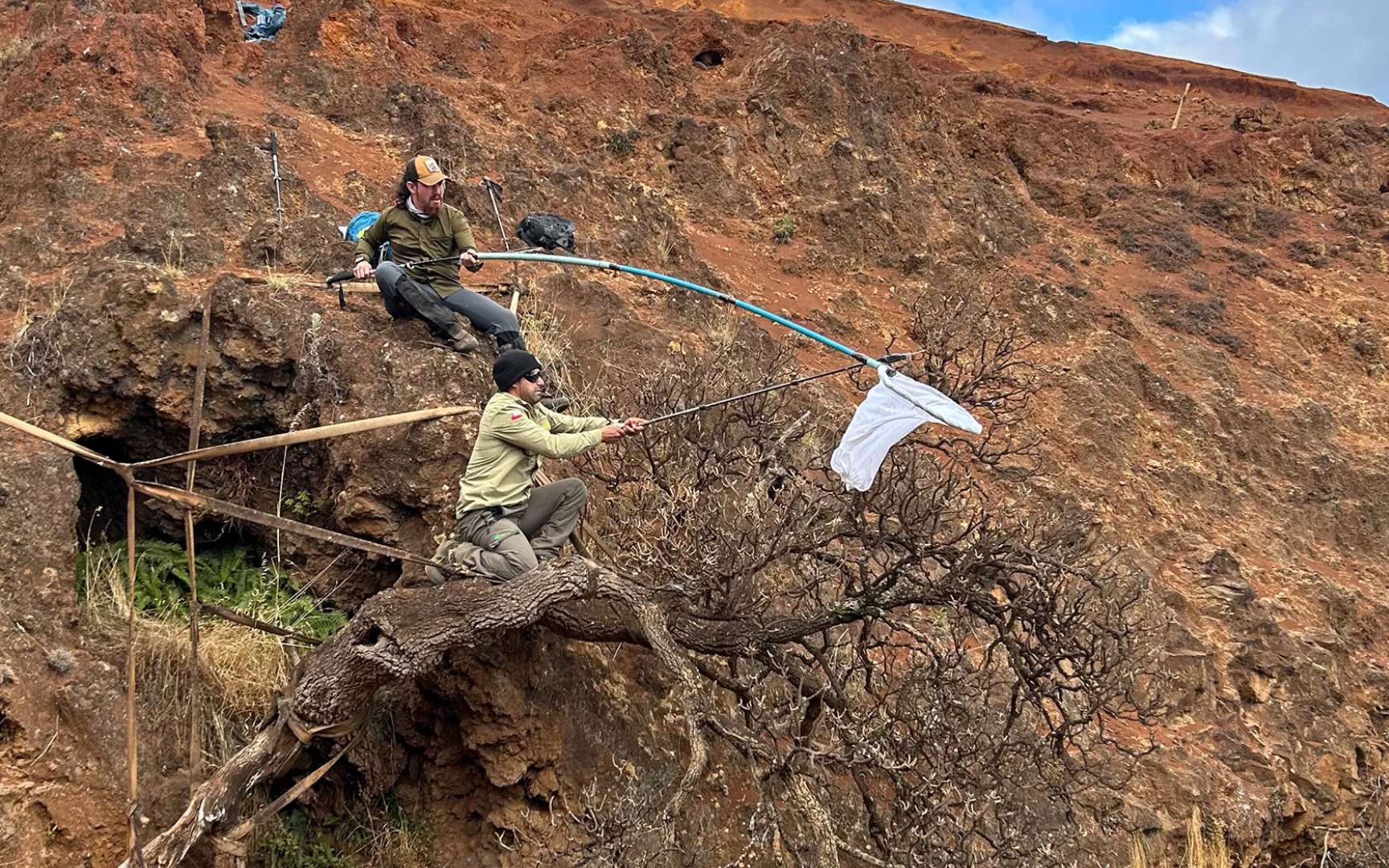
Il ne reste qu'un seul individu sauvage de son espèce, accroché à une falaise volcanique et maintenu par des cordes pour ne pas basculer dans le vide. Quatre heures de trajet, deux heures d'escalade : voilà ce qu'il faut pour l'atteindre. Ses graines viennent d'entrer pour la première fois dans...
C’est désormais une évidence : la nature est en train de mourir en Europe et les conséquences ne touchent pas seulement la faune et la flore, elles bouleversent la société humaine. L'Europe veut restaurer ses zones naturelles les plus précieuses en l'espace de quelques années et le compte à...
Et si la vie foisonnait là où on ne l’attendait pas ? Des chercheurs viennent de découvrir un monde insoupçonné. Champignons, tardigrades, vers… une véritable jungle souterraine qui bouleverse notre vision de la biosphère.
Semanalmente, destacamos aqui os cinco artigos mais lidos no MacMagazine — caso você tenha perdido algum ou queira reler a matéria (e/ou seus comentários).
Les Français sont de vrais « jardinophiles » ! Et vous ? Avec cette chronique, (re)découvrez une plante, un fruit, un légume.Cette semaine, c’est dans le potager que ça se passe ! Légume-fruit aux allures de tomate, cette aubergine africaine n’a pas fini d’intriguer et de séduire les passionnés...
Vous trouvez une araignée dans votre salon et votre premier réflexe est de l'attraper pour la jeter dehors. Mauvaise idée, selon les spécialistes des arachnides. Ce geste, pourtant instinctif, peut nuire à l'araignée elle-même et perturber l'équilibre de votre environnement. Voici pourquoi il...
Além de compartilhar uma página da web usando um link normal, o navegador Mozilla Firefox também permite enviar um endereço da web de outra forma.
Mais precisamente, trata-se da geração de um código QR (QR code) — que pode, posteriormente, ser lido a partir de qualquer câmera ou compartilhado em uma postagem, por exemplo.
Une pomme fripée, une poire trop mûre, abandonnées au fond du jardin par simple négligence. Ce geste anodin peut pourtant sauver la mise à tout un cortège de créatures affamées. À l'approche de l'hiver, un fruit oublié devient un festin vital. Et un coup de pouce insoupçonné à la biodiversité.
Sais-tu quel animal pousse des cris qu’il combine un peu comme nous, nous organisons des mots dans une phrase ? Aujourd’hui, on va parler d’un singe bien particulier, la mone de Campbell dans Bêtes de science.
Chegou o momento do nosso ritual de todo mês: pausar por um instante para agradecer a quem ajuda o MacMagazine a se manter de pé pelo Patreon ou pelo Catarse. Isso não é força de expressão — é algo que realmente importa para a gente.
Quem lê o MM há um tempo sabe qual foi sempre o nosso plano: viver de publicidade e jamais colocar uma paywall entre você e o conteúdo do site. Isso não mudou. Só que a publicidade sozinha não dá conta de tudo o que é preciso para manter o site no ar, o canal no YouTube, o podcast, o MM Fórum e tudo aquilo que acontece nos bastidores e que ninguém vê. É aí que entra quem nos apoia diretamente.
Hoje somos 115 patrões. Não importa o valor escolhido por cada um: toda contribuição é real e ajuda a gente a seguir publicando com a mesma frequência e a mesma independência de sempre — feriado ou fim de semana incluído. Já apoiou e precisou dar uma pausa? Tudo bem, a porta continua aberta pra quando quiser voltar. Nunca apoiou, mas está pensando nisso? Qualquer valor faz diferença, mesmo.
Dependendo da categoria escolhida, dá pra aproveitar benefícios como navegação sem anúncios, prioridade em ações como o MM Tour e a chance de participar das gravações do nosso podcast, entre outras vantagens.
Aos nossos 115 patrões atuais: obrigado por acreditarem no nosso trabalho e por fazerem tudo isso ser possível, todo santo mês. 💙
Semanalmente, destacamos aqui os cinco artigos mais lidos no MacMagazine — caso você tenha perdido algum ou queira reler a matéria (e/ou seus comentários).
My first day on the job at Macworld, Apple was perilously close to going out of business. It was the fall of 1997, and Steve Jobs had returned to Apple and engineered the ejection of Gil Amelio as CEO, but there was no iMac yet, no visible turnaround in terms of products at all. Beyond the release of the iconic “Think Different” ad campaign, there was nothing.
Apple’s survival hung by a thread. Steve Jobs asked everyone to trust him. At Macworld Expo, he had enlisted Bill Gates—Bill Gates, of all people!—to help him instill belief in the world that Apple would find a way to survive.
The world was skeptical, to say the least. My family asked what job I thought I’d get once Apple went out of business. The magazine I had worked at for four years, MacUser, had been folded, and some of us had been transferred over to our rival, Macworld, presumably to publish issues until Apple finally gave up the ghost and died. We existed to minimize the loss exposure of our respective publishing companies.
1997 was weird, folks. And that’s how my tenure at Macworld started.
The last two years at WWDC, Apple has felt like it’s been in a hurry. In 2024, in a hurry to catch the AI wave before it entirely passed them by. (They didn’t catch that wave—they wiped out, lost their surfboard, and may have been partially gnawed on by a shark.) Then last year it felt like it was trying to cover up its embarrassment about AI failures by rushing out a new design scheme that felt ill conceived, especially when it came to the Mac.
This year feels different. Apple is unveiling a second take on its AI plans, but it feels like they’ve spent the intervening two years trying to make sure that this time, it sticks. And when it comes to almost every other announcement at WWDC 2026, it feels like the company is taking stock, measuring twice, and cutting once. As famed basketball coach John Wooden warned his young charges, it’s important to be quick—but not to hurry.
Perdre du poids est une chose, éviter de le reprendre en est une autre. Selon une étude publiée dans Clinical Nutrition, le jeûne intermittent pourrait contribuer à maintenir les résultats obtenus plusieurs mois après la fin de l'intervention. Que faut-il réellement en penser ?
Une nouvelle espèce de requin vient d'être identifiée dans les eaux de Papouasie-Nouvelle-Guinée. Sa particularité ? Comme les autres rares « requins marcheurs », il utilise ses nageoires pour se déplacer sur les récifs peu profonds, une adaptation étonnante qui intrigue les scientifiques.
Scientists working in the jungles of Borneo report an unsettling discovery: a parasitic organism that they say has a hunger for zombie fungi.
This “hyperparasite” fungus thrives, according to Malaysian scientists behind the discovery, by feeding on forms of fungi that are known to infect insects and temporarily take control of them before ultimately killing them.
The unusual fungus was discovered during field trips by researchers with the University of Malaysia Sabah’s Institute for Tropical Biology and Conservation, who have designated it a hyperparasite because of its unique strategy of feeding through parasitizing another parasite organism.
A Hyperparasitic Zombie-Killer
“The fungus belongs to the genus Pleurocordyceps and acts as a specialized hyperparasite,” said Jaya Seelan Sathiya Seelan, the institute’s deputy director, in a statement provided to AFP last week.
In the television show and related video game series, The Last of Us, a unique approach to the idea of a zombie apocalypse is presented, where humans can become infected by a novel variety of cordyceps. Fortunately, in real life, these parasitic fungi only manipulate insects by hijacking their nervous systems and temporarily taking control of their bodies for a time.
Above: A wasp that has become parasitized by cordyceps (Image Credit: Erich G. Vallery/USDA Forest Service, United States/SRS-4552, Bugwood.org/Wikimedia Commons CC 3.0).
The infected insects begin engaging in erratic behavior as the parasitic fungus takes hold, which eventually fills their bodies and then bursts out in a final, gruesome death for the unlucky host.
A Horned Hyperparasite
The newly discovered “hyperparasite,” Pleurocordyceps cornusynnemata, garners its name from a distinctive horn-shaped appearance, and works by targeting insects—namely tropical ants—which have already been infected by a variety of zombie fungus known as Ophiocordyceps.
“Rather than manipulating the insect’s nervous system itself, Pleurocordyceps infiltrates and feeds directly on the thriving Ophiocordyceps tissue inside the host,” Seelan recently explained, adding that the unique fungus was discovered while investigating a dead ant specimen that was collected from the Danum Valley in southern Sabah.
Although Pleurocordyceps cornusynnemata is not the first hyperparasite fungus known to science, Seelan said it is the first recognized by science possessing its distinctive horn-shaped structure.
The research team with the University of Malaysia Sabah’s Institute for Tropical Biology and Conservation also says they discovered a new species of fungus that similarly attacks and kills spiders by spreading its invasive spores throughout their bodies before death.
Parasites with Promising Potential
Despite their unsettling parasitic nature, scientists are very intrigued by cordyceps. One reason is that these fungi that can hijack and “zombify” the nervous systems of some insects also possess a range of health benefits when consumed by humans, which include boosting energy and athletic stamina, as well as supporting immune function and helping to reduce inflammation.
“These newly documented fungi hold immense potential,” Seelan told AFP, “both as sources for developing next-generation antimicrobial drugs and as highly effective biocontrol agents against agricultural pests.”
The team’s findings were published in a recent study, titled “Taxonomy and phylogeny of Pleurocordyceps (Polycephalomycetaceae, Hypocreales) associated with ants and cicadas from Malaysia, including a new species and new records,” which appeared in the journal Phytotaxa.
Micah Hanks is the Editor-in-Chief and Co-Founder of The Debrief. A longtime reporter on science, defense, and technology with a focus on space and astronomy, he can be reached atmicah@thedebrief.org. Follow him on X @MicahHanks, and at micahhanks.com.
La nouvelle espèce, collectée lors d'expéditions dans l'est de la Malaisie, est un "hyperparasite" qui se nourrit des tissus d'un champignon infectant des insectes.

 Login


















 Patrões Platinum


 Patrões Ouro
 Patrões Prata
 Patrões Bronze