❌

Reading view

Illinois Photos.app People Album Lawsuit

Anurag Chawake:

Apple faces a $32.5 billion lawsuit over how its Photos app scans and stores faces. A federal judge cleared the case to proceed as a class action late last month, allowing millions of Illinois iPhone owners to join.

The case has been years in the making, and Apple has fought to shut it down at nearly every turn. Now it heads back to the court, with the company’s privacy practices on trial.

[…]

Court records have shown that the update applies to users with iCloud Photos turned on. Those accounts also need to use at least 10GB of storage and contain at least 5,000 photos and videos. Plaintiffs say all this amounts to collecting biometric data without consent, putting Apple squarely at odds with Illinois law.

Again, I find it odd that features are apparently gated based on the capacity of your iCloud account rather than the available storage.

Malcolm Owen:

The lawsuit accuses Apple of collecting biometric data without user consent in the Photos app, reports The Times. It is alleged that Photos uses facial recognition technology to scan individuals who appear in images, creating a “faceprint” for each person in the photo library.

After collecting enough samples, an algorithm is allegedly used to identify the iPhone user. That data is then stored on the iPhone within the Photos app.

I don’t see what the issue is here. My understanding is that it only uploads vectors after you’ve opted in by enabling iCloud Photos and manually assigning names. Also, the vectors don’t seem like the sort of biometric information that the law was meant to protect.

Brian Webster:

Assuming things are working properly, what should happen is that the people you have specifically named and the photos you have specifically verified sync their info via iCloud. However, the actual face detection for the rest of the photos is done on a per device basis and is not synced via iCloud, primarily for security/privacy reasons.

So, when you first set up a new device, it will pull down the names and info for the photos where you have identified a particular person, but then it still needs to go through the entire library on-device, identify the faces in each photo, and compare them to the synced information to tell which person is in which photo. So once it’s done, you should end up with mostly the same photos identified as each person, but each device still needs to do its own face detection locally.

  •  

OpenAI seeks dismissal of Apple’s trade secrets lawsuit

OpenAI

According to a Reuters report today, OpenAI filed a motion on Wednesday seeking dismissal of Apple’s complaint. Apple had sued OpenAI and two former Apple employees, alleging trade-secret theft aimed at helping OpenAI expand into consumer hardware.

OpenAI’s lawyers stated: “OpenAI has no use, need or desire for Apple’s trade secrets. OpenAI is building something entirely new and different from anything at Apple.” They argued that Apple’s complaint fails to sufficiently describe the claimed trade secrets (calling the generalized product-development categories inadequate), does not show ownership of a protectable trade secret, and does not plausibly allege misappropriation. The filing also said Apple should not be allowed to use a “baseless and pretextual lawsuit” to offset difficulties retaining talent or integrating AI into its products.

Apple’s earlier complaint (filed in July) claimed OpenAI systematically obtained and used confidential information via former employees, recruiting practices, and supplier relationships to speed up its consumer-hardware plans. The dispute centers on competition for future AI devices that may not rely on traditional apps or operating systems and could draw attention away from the iPhone; analysts believe OpenAI is developing a phone or similar device.

The two companies still maintain a partnership that lets Apple users access ChatGPT through Siri and sign up for ChatGPT memberships via iOS settings. Apple did not immediately comment on the motion.

MacDailyNews Take: The usual legal wrangling. We highly doubt the case will be summarily dismissed.


‎
Please help support MacDailyNews — and enjoy subscriber-only articles, comments, chat, and more — by subscribing to our Substack: macdailynews.substack.com. Thank you!

Support MacDailyNews at no extra cost to you by using this link to shop at Amazon.

The post OpenAI seeks dismissal of Apple’s trade secrets lawsuit appeared first on MacDailyNews.

  •  

OpenAI Open Letter Responds to Apple Lawsuit

Sarah Perez (Hacker News):

Apple is now seeking a preliminary injunction in its trade secrets case against OpenAI, which aims to stop the AI model maker from moving forward with developing an AI device or other products based on Apple’s technology. […] In a new filing, Apple is requesting expedited discovery from the accused OpenAI employees, senior systems engineer Chang Liu and Chief Hardware Officer Tang Yew Tan; OpenAI, and its foundation; and io, the device startup co-founded by Apple’s former lead designer Jony Ive.

OpenAI (Hacker News, ArsTechnica, The Verge, MacRumors, 9To5Mac):

Apple had claimed that they contacted OpenAI in February and that we didn’t respond. They now admit that their outside lawyers emailed the wrong person after confusing two Asian last names—only after we brought this to their attention. Apple also claimed they had a discussion with our General Counsel, which they now concede never happened. But they again hide the fact that they never raised the specific allegations in this lawsuit at that time, and that they in fact told us that they were “resolving any issues”. We then heard nothing for five months until they sued. In their latest filing, Apple tries hard to spin this sequence of events, but you can just read the emails for yourself here.

Apple accuses Chang Liu of accessing Apple confidential information after leaving the company, but only now admits that Apple employees reached out to him and asked for his help to locate this information (you can read the messages here). Apple now tries to shift the blame to “residual access”, but they also don’t disclose that this is a common issue with Apple which is caused by them failing to properly manage system access when people leave. What that means in practice is that former employees who are trying to do the right thing when they leave still have access to Apple files—despite not wanting them or even being aware of them.

William Gallagher:

What it does not even touch is the accusation that Chang Liu retained his Apple laptop, which seems to be proven by what OpenAI posted. Apple further says that Liu entered shared network folders after leaving the company, and did so to download dozens of confidential files.

Then, too, OpenAI ignores the specific further accusation that ex-Apple employee Tang Tan both emailed documents to himself and sought trade secrets from employees he was recruiting for the ChatGPT company.

asimpletune:

What really matters is the claim that Apple never raised those issues in the lawsuit with them. OpenAI claims the emails prove this, but to me all the emails prove is Apple sent an email that said “please see the attached letters”. We don’t know what is in the attachments but I imagine those were the relevant issues they raised.

[…]

The fact that the lawyer emailed the wrong person is moot if they caught it and resolved it days later.

Previously:

Update (2026-08-05): John Gruber:

In OpenAI’s phrasing, it sounds like Apple’s attorney sent the entire initial letter of concern to the wrong person, and that’s why OpenAI never responded — because it wasn’t sent to the correct person (OpenAI general counsel Che Chang). That’s not what happened. The initial blockbuster “hey we think you guys are stealing our trade secrets and we want to talk to you about it” letter was sent to Che Chang. And Che Chang never did respond to Apple’s lawyers. That a mistaken email thanking Che Chang for a phone call that never happened (because that email was intended for another OpenAI employee) was also sent is irrelevant. I don’t understand why OpenAI is continuing to focus on this inconsequential mistake.

[…]

The iMessage transcripts that OpenAI provides at the bottom of their post do not contradict Apple’s claims at all. […] Apple also claims that Liu accessed confidential information, presumably in Box and definitely not in iCloud Drive, on five different occasions, up until 27 April 2026, over three months after he left Apple. These chat transcripts offer no explanation for that.

[…]

To me, the most interesting response from OpenAI wasn’t their blog post, and was in fact released by Apple, as “Exhibit F” to one of their expert declarations submitted to the court last night.

  •  

Confidential Apple Files in iCloud

Juli Clover:

The way Apple combines work and personal iCloud accounts left some employees able to access confidential documents after departing the company, reports The Information. The site spoke to more than half a dozen former Apple employees who were unknowingly left with access to sensitive content.

[…]

Apple told The Information that the OpenAI lawsuit is unrelated to any files left available on iCloud and that it does not pursue legal claims against former employees who accidentally have Apple documents in their personal iCloud accounts.

[…]

In a now-settled legal dispute, chip company Rivos claimed Apple intentionally lets former employees retain access to files “as part of a planned effort to generate a pretextual basis to sue the employees and their new employer for ‘stealing’ Apple material.” In the Rivos case, an employee was targeted for keeping work files in his personal iCloud account.

Andrew Orr:

The documents included confidential material such as plans for product launch events. The former employees said they made no effort to retain access and unexpectedly found the files mixed with their personal iCloud data.

The problem reportedly grew from Apple’s practice of encouraging employees to connect their personal Apple IDs to company-funded iCloud storage.

[…]

Apple also relied heavily on iMessage for workplace conversations and file sharing before rolling out Slack around 2019. Former employees could retain old iMessage conversations and attachments, while Apple could terminate their Slack access when they left.

John Gruber (Mastodon):

If you use your personal Apple ID, you get a magic “Apple Work” folder in iCloud Drive. When you leave Apple, that “Apple Work” folder disappears. But any other files or folders that were shared with you that were outside that magic folder are still in your iCloud Drive, because it’s still your personal iCloud account.

[…]

You still have the same Apple ID account, even though you no longer have an employee @apple.com email account. Overall, this is a humane way of dealing with digital identity. Your Apple ID account is you, the person, not “example@icloud.com”, one specific unique email address. And you, the person, may well have multiple email addresses — all of which can be associated with your one Apple ID account. That makes Apple IDs more nuanced and complicated than a simple mapping of one email address = one account. And it obviously makes access restrictions more complicated.

Yesterday, OpenAI released messages to show that Apple employees (with permission) retained access to the departing employee’s personal iCloud account so that they could access work files that were stored there. It’s just a mess that both the software and corporate policy encourage mixing everything in one account.

Eric Schwarz:

As many things I know about Apple, this whole thing both makes perfect sense and feels absolutely bonkers.

Previously:

  •  

Apple Fires Engineer Who Kept Customer Device IDs Private

Ryan Merket (Hacker News, PDF):

The company said his performance was the reason, according to a lawsuit Boardman filed in San Francisco Superior Court. Boardman says that explanation was a pretext. His version of the story begins three years earlier, inside Apple’s technical relationship with the largest wireless carriers in the United States, with a category of data capable of identifying nearly every phone on the network.

[…]

Apple considered serial numbers and IMEIs personally identifiable information under its internal policies, Boardman alleges. Representatives working with carriers other than AT&T required the carrier to obtain a customer release before Apple supplied the data. The Apple representative assigned to AT&T did not enforce that requirement, according to the complaint. Boardman says the identifiers were then transmitted through “unsecured email communications.”

He reported the practice to his manager and sought guidance from Apple’s legal department. He alleges that the company never gave him a written response.

I don’t think he has much of a legal case. Apple was probably within its rights to fire him if what he refused to do was against company policy but not illegal. It doesn’t sound like Apple is disputing that, at least not yet.

However, I think this is interesting because:

  • This seems to be another case, like yesterday’s story, where the interests of the customer and the carrier are at odds, and Apple leans towards the latter.

  • It shows that a policy is no guarantee, because it depends on humans choosing to follow it. There are other cases where Apple has been able to engineer privacy into the system. But some data is not end-to-end encrypted, so consent is a formal but a not technical requirement.

Previously:

  •  

Apple seeks court order to block OpenAI from using alleged trade secrets in hardware ambitions

OpenAI

Apple has asked a federal judge for a preliminary injunction that would stop OpenAI and two of its former employees from accessing, using, or disclosing what the iPhone maker claims are its confidential trade secrets, escalating a high-stakes legal battle over artificial intelligence and future consumer devices.

In a filing Monday in the U.S. District Court for the Northern District of California, Apple argued it faces “irreparable harm” without the order. The motion comes weeks after the company sued OpenAI, the two ex-employees now working for the ChatGPT maker, and OpenAI’s commercial arm io Products. Apple alleges the defendants misappropriated proprietary information to advance OpenAI’s push into consumer hardware.

The two former Apple staffers named are Chang Liu, previously a senior system electrical engineer, and Tang Yew Tan, who served as vice president of product design for the iPhone and Apple Watch. Apple is also seeking expedited discovery, including documents related to alleged access of its trade secrets, and depositions of Liu, Tan, OpenAI employee Yu-Ting Peng, an unnamed OpenAI worker who previously worked at Apple, and corporate representatives from OpenAI and io Products.

The lawsuit highlights growing rivalry between the two tech giants. Analysts have suggested OpenAI is developing its own phone or other AI-powered device that could operate without traditional apps or operating systems, potentially drawing users away from Apple’s dominant iPhone ecosystem. The legal action follows OpenAI’s successful defense against a separate challenge from Elon Musk’s xAI.

The case underscores intensifying competition in AI hardware, where control over key technical knowledge could shape the next generation of consumer gadgets. A ruling on the injunction request is pending.

MacDailyNews Take: OpenAI, the company behind ChatGPT, the AI for newbies who don’t know better alternatives exist, seems to be filled with traitors.


‎
Please help support MacDailyNews — and enjoy subscriber-only articles, comments, chat, and more — by subscribing to our Substack: macdailynews.substack.com. Thank you!

Support MacDailyNews at no extra cost to you by using this link to shop at Amazon.

The post Apple seeks court order to block OpenAI from using alleged trade secrets in hardware ambitions appeared first on MacDailyNews.

  •  

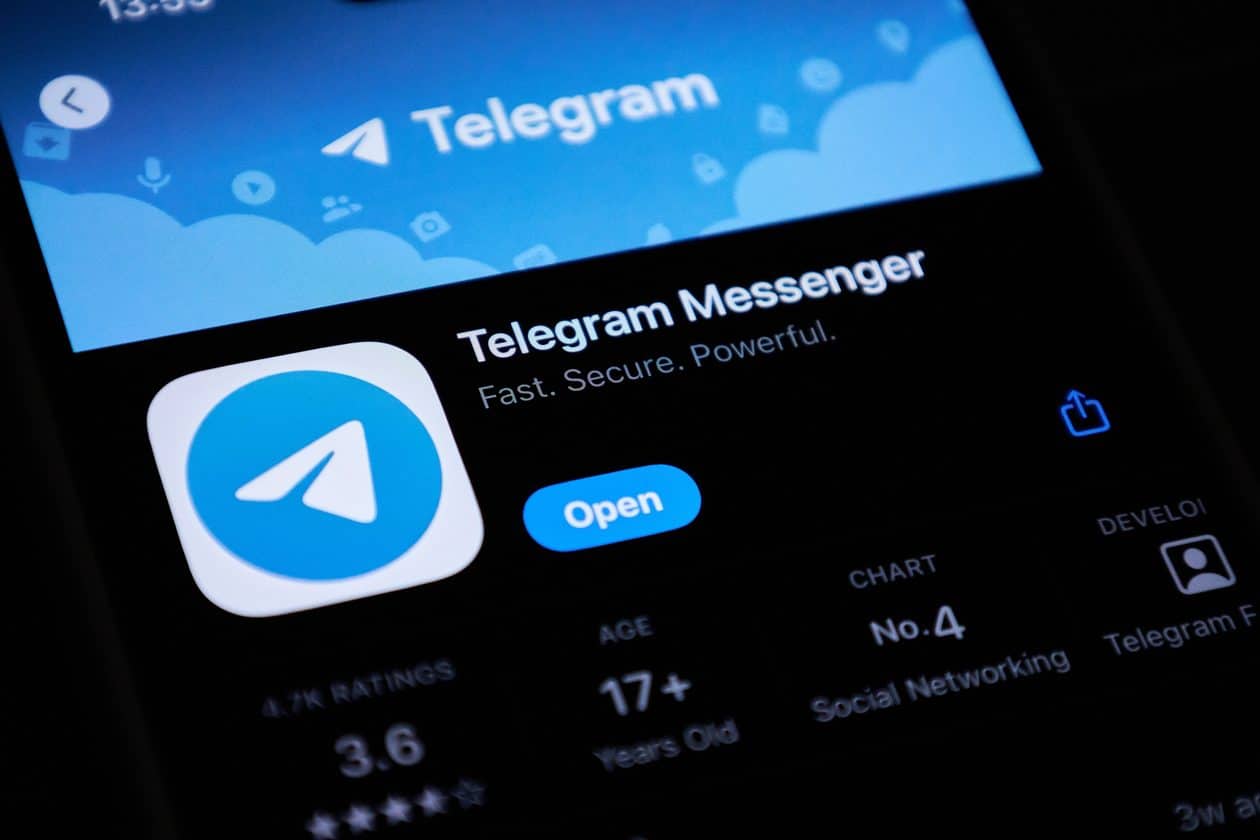
Telegram é removido temporariamente da App Store por conteúdo ilegal [atualizado]

Usuários do Telegram notaram ontem que o aplicativo do mensageiro para iOS ficou indisponível na App Store por um breve período, o que deixou muita gente confusa.

Contatada pela Reuters, a Apple explicou que tirou o mensageiro do ar após um usuário ter reportado a presença de “material de abuso sexual infantil” na plataforma, o que obviamente vai contra as regras da sua loja.

Ainda segundo a gigante de Cupertino, a página do Telegram foi restaurada depois que a equipe do mensageiro removeu o conteúdo supracitado e baniu o usuário responsável pela publicação.

Em resposta, o mensageiro disse que possui uma política de “tolerância zero” contra esse tipo de conteúdo, além de ter bloqueado mais de 338.000 grupos e canais com material ilegal ao longo do último ano.

Ainda assim, a equipe do app ironizou a decisão da Apple nas redes sociais, dando a entender que a companhia não aplica o mesmo tratamento a outros apps. Ela também aproveitou a situação para divulgar uma página com dados sobre a moderação de conteúdo na plataforma:

I'm sure this stance will be applied equally to all other apps in the store, in the future right? @Apple

(btw: https://t.co/ZRYqIGaxVH)

— Telegram Messenger (@telegram) August 4, 2026
Tenho certeza de que essa postura será aplicada igualmente a todos os outros aplicativos da loja no futuro, certo? @Apple

(Aliás: telegram.org/safety#csam-gr…)

Outra pessoa a ir às redes sociais para comentar esse pequeno imbróglio foi o CEO 1Chief executive officer, ou diretor executivo. da Epic Games, Tim Sweeney, que criticou a falta de transparência na tomada de decisão da Apple, além de classificá-la como “arbitrária”. Em guerra com a fabricante do iPhone há alguns anos por conta das regras da App Store, ele aproveitou a situação para dizer que a loja da Maçã “precisa desesperadamente de concorrência”:

Such arbitrary policy enforcement, by a monopoly gatekeeper, creates a perfect storm of fear and acquiescence by developers who are victims of Apple’s monopoly. Speak up and criticize their gatekeeping and maybe they’ll enforce the rules one way rather than the other way.

— Tim Sweeney (@TimSweeneyEpic) August 4, 2026
A App Store da Apple precisa desesperadamente de concorrência global. A Apple remove arbitrariamente uma ferramenta vital de comunicação e privacidade, tornando-a inacessível a bilhões de usuários, e infelizmente isso é considerado normal.

A Apple declarou que removeu o aplicativo para um bilhão de pessoas porque um usuário do Telegram publicou algo horrível e ilegal. A empresa não explicou como, se esse é o padrão para remoção de aplicativos, qualquer aplicativo de comunicação, incluindo o iMessage, poderia operar em larga escala.

Essa aplicação arbitrária de políticas, por parte de um monopólio, cria a tempestade perfeita de medo e aquiescência por parte dos desenvolvedores, que são vítimas do monopólio da Apple. Manifeste-se e critique essa postura de controle, e talvez eles passem a aplicar as regras de uma forma, em vez de outra.

Questionada sobre os comentários de Sweeney, a Apple preferiu não emitir uma resposta.

Atualização 04/08/2026 às 13:10

O chefão do Telegram, Pavel Durov, finalmente se pronunciou sobre a remoção do seu app da App Store por meio de uma mensagem no seu canal pessoal.

Segundo ele, todo esse imbróglio foi provocado por um único usuário mal intencionado, que plantou conteúdo impróprio modificado por inteligência artificial (IA) em um grupo público na plataforma. Para tal, essa pessoa editou uma mensagem antiga na conversa, o que acabou fazendo com que ela passasse despercebida pelos administradores do grupo.

Ainda de acordo com Durov, esse usuário era um extorsionista — ou seja, uma pessoa que usa “contas automatizadas para plantar conteúdo ilegal em grupos públicos e depois denunciá-lo diretamente à Apple, tentando provocar a remoção de comunidades legítimas” cujos donos se recusaram a pagar o resgate.

O executivo também garantiu que a presença de conteúdo desse tipo na plataforma não representa um problema sistêmico e que sua equipe de moderação é efetiva, além de ter criticado a Apple por ter removido o app de sua loja sem contatar o Telegram primeiro. “Se um aplicativo usado por mais de 1 bilhão de pessoas pode ser removido da App Store sem aviso prévio, qualquer aplicativo pode ser”, comentou.

Notas de rodapé

  • 1
    Chief executive officer, ou diretor executivo.

  •  

Sparrow Wallet Lawsuit

Joe Rossignol (PDF):

The complaint alleges that Apple violated California’s Consumers Legal Remedies Act and other laws by failing to adequately review and monitor apps distributed through the App Store, despite marketing it as “a safe and trusted place to discover and download apps.” Due to these assurances in Apple’s marketing, the complaint said the plaintiffs trusted that a Sparrow Wallet app they downloaded from the App Store on iOS was legitimate, when in reality it was a fraudulent spoof designed to steal Bitcoin from users.

Sparrow Wallet is only available on Windows, macOS, and Linux. The popular Bitcoin wallet is not available on iOS, but scammers have released fake lookalike apps in the App Store that can trick users into giving up control of their funds.

[…]

Even when victims reported fraud, the lawsuit alleges that Apple often took little to no action, and it says other fake Sparrow apps remain in the App Store.

Sparrow Wallet developer Craig Raw has publicly addressed Apple’s slow response to multiple fake versions of his app appearing in the App Store. In a January 2024 social media post, for example, he said “there is still a scam ‘Sparrow Wallet’ app on the @Apple App Store, despite myself and others having reported it weeks ago.”

Craig Raw:

My attempt to protect users from scam apps on the @AppStore has gotten my Apple Developer account flagged for termination - ironically, for “dishonest activity”.

[…]

I’m the developer of the real Sparrow Wallet, a desktop app, and I hold the registered US trademarks for the name and logo. I have publicly warned @Apple and the community about these fake apps from early 2024, but they keep appearing.

The app @Apple flagged was a placeholder that was never published. Its only purpose was to warn users that Sparrow is desktop-only and that other “Sparrow” apps aren’t mine. This approach may have been misguided, but there was nothing dishonest about it.

Joe Rossignol:

In response to our request for comment, Apple said it has taken swift action to remove any apps impersonating Sparrow Wallet[…] Apple says it takes immediate action against apps that do not comply with its guidelines.

Previously:

Update (2026-07-28): Sarah Perez:

The complaint targets one of Apple’s longtime competitive arguments: that its tight control over its App Store makes its platform safer than those offered by its rivals. The company has used this claim to push back against deregulation of the app ecosystem, including third-party app stores and sideloading.

“As part of a sustained marketing campaign, Apple has positioned itself, its products and services, as offering a level of security and trustworthiness superior to any competing technology company,” the new filing states. “This includes assurances about the safety of applications distributed through its App Store. By retaining exclusive control over which apps are permitted on Apple devices, Apple has structured its platform to ensure that consumers depend entirely on its promise of safety and reliability,” it reads.

With third-party app stores, there would be an incentive to do better vetting than Apple, and with sideloading it would be clear that the app was not being downloaded from sparrowwallet.com.

Update (2026-07-29): Jeff Johnson:

What struck me about Apple’s response is that it places the burden of curating the App Store on developers and users rather than taking responsibility for it. After all, Apple reviews every version of every app before it can be published to the App Store. If Apple is curating the App Store, then why do scams have to be reported and removed? One wonders how the scams get past Apple review in the first place, and even if Apple review “is not perfect” (a gross euphemism), how the second line of defense, Apple employees patrolling the App Store for scams that the review team missed, also fails. The burden of App Store curation should not fall to me, a lone indie developer.

Apple’s response also ignores that the indie developer did report the scams, multiple times.

Previously:

  •  

Activist charged with felony after giving border agent "duress code" that wiped his phone

In early 2025, Atlanta resident Samuel Tunick was on his way home following a trip abroad. After landing in the US, customs agents demanded access to his Pixel phone, which was running an alternative version of Android called GrapheneOS. Rather than hand over his data, Tunick used a clever feature of the software to delete everything. Now, he's facing federal charges.

The first hearing in this case happened last week, according to The Guardian, during which government attorneys and agents claimed that Tunick was subjected to a standard secondary interrogation at an international airport. During that encounter, agents were "looking for anything that’s prohibited." However, Tunick's legal team alleges he was targeted for his activism.

Tunick was involved with a group called Defend the Atlanta Forest, which opposed the construction of an enormous law enforcement training facility in the area often known as Cop City. What Tunick didn't know, according to his lawyers, was that he'd been placed on a watch list for his actions and that Customs and Border Protection had discussed over email plans to detain him upon his arrival back in the US for "suspected terrorism activities."

Read full article

Comments

© Ryan Whitwam

  •  

Anthropic Book Training Settlement

AP (Hacker News):

A federal judge has approved a $1.5 billion copyright settlement in which artificial intelligence company Anthropic will pay thousands of authors about $3,000 per book after using pirated copies of their works to train its Claude chatbot.

[…]

Bestselling thriller novelist Andrea Bartz first brought the suit with two other authors in 2024. It’s the first major settlement in dozens of AI copyright lawsuits that are still working their way through courts.

Dare Obasanjo:

Somewhat ironic given recent claims from Anthropic about others training their AI on its work.

Previously:

  •  

EU Antitrust Fines for Google Search and Play Store

Tim Hardwick (Wired):

Google was today fined €890 million ($1 billion) by the European Union for breaching antitrust rules with regard to its search and Google Play store services.

The European Commission found that Google had broken the Digital Markets Act (DMA) by using its dominant position in the search market to favour its own services, like shopping and hotel deals, over those of rivals.

The Commission also said that the company had abused its position by preventing developers from directing users to cheaper ways to buy apps and app subscriptions on websites and alternative app stores.

Sergiu Gatlan:

The Commission noted that Google has begun testing changes to how its own services are placed in search results and rolled out changes to its steering terms, which the EU’s main executive body described as substantial progress towards compliance.

“Google has fallen short of effective compliance with the Digital Markets Act, and today we have taken decisive yet balanced enforcement action sanctioning these breaches,” said Teresa Ribera, Executive Vice-President for Clean, Just and Competitive Transition.

“The best products should succeed because they’re better, not because they’re owned by the company running the search engine. And European consumers have a right to be told by app developers where to sign up to the best offers, even when the app store owner does not get a cut.”

John Gruber (Mastodon):

With search, Google is required to share with competitors — search engines and AI chatbots alike — a massive amount of user data from Google Search user interactions. What terms people search for, what they click on in results, what languages and devices they use. It’s all ostensibly anonymized but that’s tricky when it comes to search terms. A lot of the terms people type into web search fields are to some degree personally identifying. The EC seems to be saying it’s Google’s problem to filter out things like passwords and usernames and omit them from the shared datasets. Google can charge money for this access, but only under “fair, reasonable, and non-discriminatory (FRAND)” prices, based on a Commission-defined methodology.

Previously:

Update (2026-07-27): John Gruber:

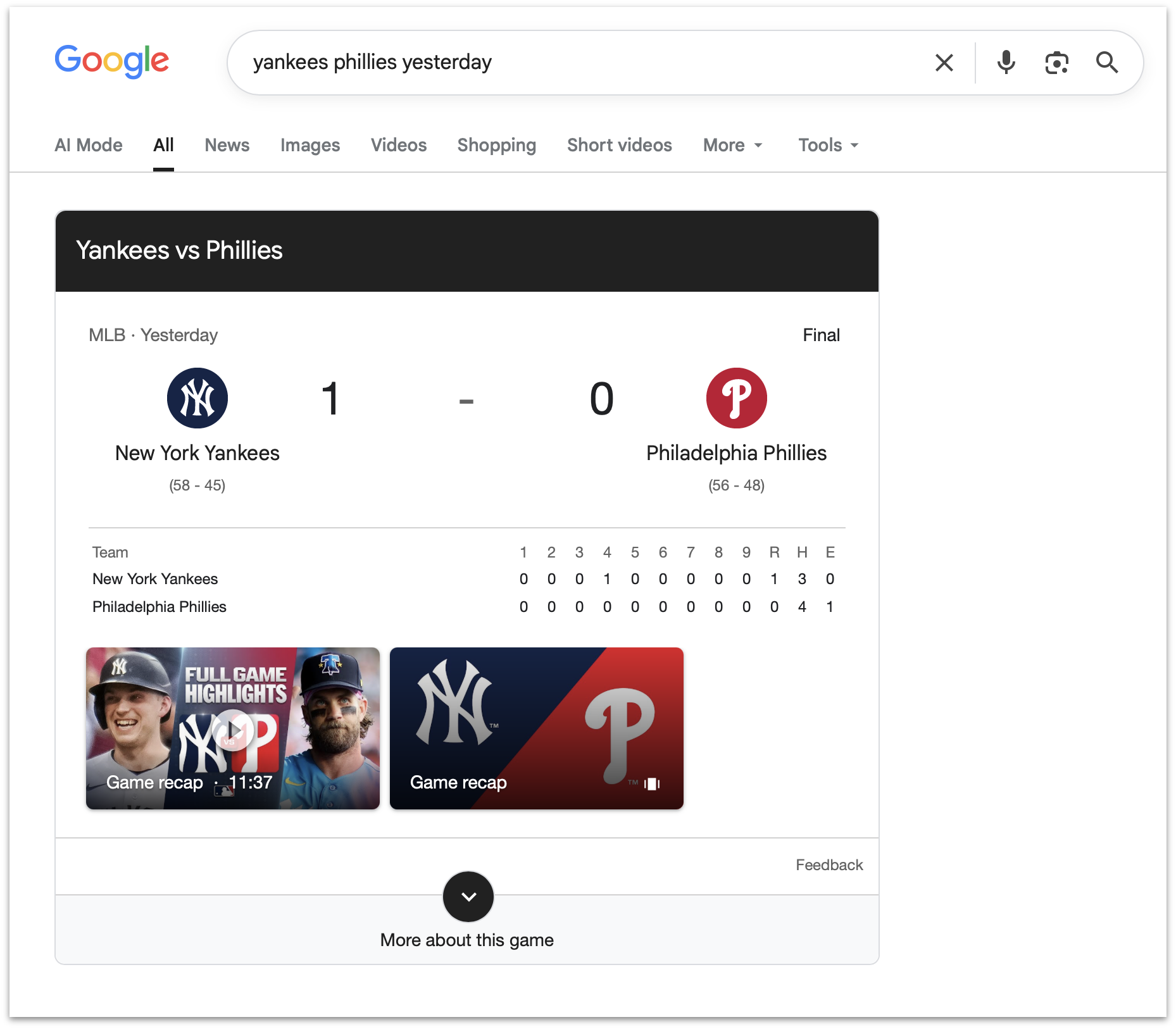
So if you search for the score of a sporting event, it’s illegal in the EU for Google to show you the score, like this search I just tried. What the EC is saying is that because Google Search is so popular, it’s no longer allowed to improve.

plantain:

It drives me insane when in Europe the link between Google Search and Google Maps is broken and I often have to copy paste an address between the two. Thanks EU, what if I like Google’s integrations?

phiresky:

They could have simply added a selector when a user first clicks on the maps preview in the search result, and then remembered it on device or across that user’s account.

But of course, then the user could choose a competitor’s product and Google would have to honor it. That would be horrible, so instead they just made the user experience worse for everyone and elegantly made people blame the EU.

See also: Hacker News.

  •  

Google Loses Final EU Antitrust Appeal

Ryan Whitwam (PDF, Reddit):

Back in 2018, Google was handed a record-setting 4.34 billion-euro ($4.9 billion) fine in Europe for abusing its monopoly on Android. The company has spent the intervening years challenging that decision, but the continent’s highest court has put a stop to that. The Court of Justice of the European Union has affirmed the penalty, meaning Google is out of options.

[…]

The EU took issue with Google search and Chrome being the default options on Android. Even devices made by other companies, such as Samsung and Xiaomi, include Google apps as the default per the Android licensing agreement, giving Google an unfair advantage, according to European antitrust regulators. This is not to be confused with a 2.95 billion euro ($3.45 billion) fine against Google’s advertising monopoly issued by the European Union last year.

Arjun Kharpal:

In 2022, a lower EU court reduced the fine to the current 4.1 billion euros from 4.34 billion euros previously.

Google has argued that the Android operating system provides choice for users and supports developers and businesses across Europe.

Via John Gruber:

Google last year booked $132 billion in profit; this fine is about 3 percent of that..

[…]

There’s never a reason not to string the appeal process out, but it’s especially true when your profits are growing at an exceptional rate. By growing their profits around 5×, they’ve reduced the relative sting of this fine by 5×

Previously:

  •  

Apple Loses Masimo Appeal

Marcus Mendes:

Apple’s requests to overturn a $634 million patent verdict and secure a new trial in its long-running legal battle with Masimo were denied.

Wesley Hilliard:

There doesn’t appear to be any other path for appeal or recourse, as the judge rejected both requests for either a new judgement or trial.

[…]

In the end, Masimo didn’t succeed in getting the Apple Watch banned or fundamentally redesigned. It won an empty victory with the funds it will be paid, and the patents affecting the lawsuit will expire in 2028 and 2029 anyway.

Paul Terpstra:

Although the ruling confirms the financial penalty, it does not affect current Apple Watch users. The smartwatch’s blood oxygen monitoring feature remains available after Apple introduced a software update in January 2024 that allowed sales to continue despite earlier legal challenges.

Previously:

  •  

La transition agricole du café devient aussi un enjeu social et climatique

Le café fait vivre environ 125 millions de personnes dans le monde. Pourtant, près d'un producteur sur deux vit encore sous le seuil de pauvreté, alors que jusqu'à la moitié des terres adaptées à la culture du café arabica pourrait disparaître d'ici 2050 sous l'effet du changement climatique.

  •  

San Francisco Demands Removal of Nudify Apps

Matt Burgess (MacRumors, ArsTechnica):

On Thursday, San Francisco city attorney David Chiu sent legal notices to Apple and Google demanding that they remove from their app stores 13 face-swapping apps, which allow users to create AI-generated nonconsensual nude images. The letters say the Silicon Valley giants should stop “aiding and abetting” the sale of explicit deepfake images and “sever” business relationships with the app developers.

[…]

Researchers have repeatedly found and reported apps in Apple’s App Store and Google’s Play Store that allow people to generate sexual images using AI—including some apps being rated as suitable for use by children. While new laws and bans aim to tackle the scourge of explicit deepfakes online, technology and social media companies consistently direct millions of people toward the harmful tech.

Both Apple and Google have developer policies that prohibit pornography, abuse, and harassment on their platforms.

Burgess gives the impression, which is my base assumption, that these 13 apps were clear about what they do, so App Review has no excuse for missing them. But I’m sure it’s keeping us all safe in other regards.

Meanwhile, in a preprint research paper published in May, researchers from Cornell University and Georgetown University identified 420 apps offering general face-swapping capabilities on Google’s and Apple’s app stores. They tested 155 to see if they could be used to create face swaps with nude images; in 70 percent of cases, it was possible, with the apps not including safety measures to prevent this.

Previously:

Update (2026-07-21): Danny Bradbury:

Chiu isn’t arguing that hosting an app automatically makes a platform liable for what it does. Platform operators already won that battle with Section 230 of the Communications Decency Act. That 30-year-old law says websites generally aren’t responsible for content posted by users, allowing platforms to host user-generated content without getting sued every time someone defames someone in a comment thread.

Courts have often extended those protections to cover app stores too. Apple and Google are treated as distributors of whatever a third-party developer uploads, rather than publishers.

Chiu is attempting to sidestep that argument by focusing on the companies’ payment systems, noting that Apple and Google collect a cut of every in-app purchase. According to the Tech Transparency Project (TTP), that means they profit from apps that generate revenue by creating non-consensual intimate imagery.

  •  

EU Exempts Apple Watch and AirPods From Battery Removal Requirement

Hartley Charlton:

The European Commission yesterday adopted new exemptions to its Batteries Regulation that free the Apple Watch and AirPods from having to offer user-removable and replaceable batteries.

[…]

The reasoning largely mirrors why devices like electric toothbrushes were already exempt: Opening a compact, sealed enclosure and failing to reseal it properly could let water in and create a safety risk. Products can also qualify for exemption if their construction makes battery removal inherently dangerous, or if there is no realistic way to build in user access given current manufacturing methods.

[…]

The iPhone was already exempt from the removability rule under the original regulation, thanks to its battery cycle life and water resistance rating.

Marcus Mendes:

Although the Commission has adopted the exemption, it must still undergo scrutiny by the European Parliament and the Council of the EU.

[…]

To read the European Commission’s full delegated act, follow this link.

Previously:

Update (2026-07-20): See also: Hacker News.

Update (2026-07-30): Rui Carmo:

This is one of those exceedingly rare cases where EU legislation has produced an unambiguously good outcome: from February 2027, Logitech’s European wireless devices will ship with hard-pack, user-replaceable batteries, and Logitech will sell certified replacements.

  •  

Suno Hack and Audio Scraping

Jason Koebler (tweet, Reddit):

The AI music generation tool Suno scraped millions of songs and lyrics from YouTube Music, Deezer, and Genius, as well as from the stock music libraries Pond5, Jamendo, Freesound, the International Music Score Library Project, and podcasts via RSS feeds, according to a hacker who breached the company and shared data about Suno’s training libraries with 404 Media. The hacker was also able to access user information for hundreds of thousands of Suno’s customers, as well as Stripe payment information, they said.

[…]

As part of these legal proceedings, Suno previously admitted that it was trained on “essentially all music files of reasonable quality that are accessible on the open internet,” which included a total of “tens of millions of recordings.” Suno has been making the argument that it is allowed to train on copyrighted works as fair use in those cases, one of which has been settled.

Corbin Bolies:

Suno has long acknowledged that its AI music generator relied on the scraping of millions of songs available across the internet, but a new hack reveals just how the company pulled from streaming services and websites[…] all while user information remained vulnerable.

[…]

“Our goal has always been to help people create original new music, not replicate someone else’s. That’s why we build our models around what we call ‘Original Creation, By Design,’” the spokesperson said in a statement. “For example, we intentionally do not use artist names as a category of training metadata because we want our models to help people create brand new songs, not music that replicates other artists’ existing work. It’s also why we built Suno with detection filters that block or prevent a user from using specific artist, song, or album names as prompts, and prevent users from uploading lyrics or sound recordings that match existing works.”

Previously:

  •  

Apple Sues OpenAI Over Trade Secrets

Sarah Perez (PDF, Hacker News, MacRumors):

The iPhone maker alleges that this misconduct, which it says reveals a pattern of theft from OpenAI employees who previously worked at Apple, was directed by OpenAI’s senior leadership, including Chief Hardware Officer Tang Tan.

The lawsuit, which was filed in the U.S. District Court for the Northern District of California, accuses Tan of using Apple’s confidential project code names during OpenAI’s recruiting process, asking job candidates to bring in Apple hardware components to their interviews, coaching departing Apple employees on how to evade the company’s security procedures, and asking for details about the company’s unannounced products.

Apple’s allegations are detailed and shocking, and it sounds like they have a lot of evidence.

Chance Miller:

The lawsuit names Chang Liu and Tang Tan as two of the defendants. Tang Tan served as VP of product design at Apple, leading iPhone and Apple Watch product design. He departed the company in February 2024 to work with Jony Ive. Chang Liu, meanwhile, worked at Apple for eight years and was a senior system electrical engineer before departing to join OpenAI in January 2026.

Apple’s lawsuit also names OpenAI and io Products as defendants.

OpenAI’s hardware efforts are being led by Jony Ive, Apple’s former chief design officer.

[…]

Ive, Hankey, and Cannon are not personally mentioned anywhere in Apple’s initial filing today.

Emma Roth:

Here are the most surprising claims in Apple’s 41-page filing.

Marcus Mendes (MacRumors):

OpenAI’s Director of Strategic Communications, Drew Pusateri, took to X to comment on the company’s behalf.

In his post, he claims OpenAI has “no interest in other companies’ trade secrets,” adding that OpenAI remains “focused on building innovative technology that empowers people everywhere.”

This seems like a weak response, given that Apple says it reported its findings to OpenAI in February and never heard back. Presumably, they’ve already investigated but see the situation as serious enough that they need to say as little as possible.

It’s not clear to me the extent to which Apple believes the behavior was limited to the named defendants. It’s hard to believe that the rest of OpenAI’s leadership—including Altman and Ive—were unaware, given the scale of their recruiting from Apple. It’s equally hard to believe that they were aware and thought they could get away with it. I guess little from Altman would surprise me at this point. I’d like to believe that Ive wasn’t part of it, but then are we to believe that his former coworkers all kept him in the dark?

Nick Heer:

What is immediately notable about this whole thing is the myriad conflicts of interest. Apple, of course, has a current partnership with OpenAI to power Apple Intelligence features, something repeatedly mentioned on the previous version of its marketing webpage, and conspicuously absent on the current one.

But the history runs far deeper. Among the defendants in the suit is io Products — do not blame me for that capitalization choice — founded by Jony Ive and acquired by OpenAI last May. Total mentions of “Ive” in the body of this lawsuit? Zero. Also, one of the investors in Ive’s company was Emerson Collective, founded by Laurene Powell Jobs, and which now has equity in OpenAI. Neither Emerson nor Powell Jobs are defendants.

M.G. Siegler:

It all reads a bit as if Apple has been building up evidence of these allegations for some time and recently got their smoking gun. It’s not just nebulous “trade secrets” either, there are specific mentions down to “metal finishing techniques” that Apple apparently invented and protected.

It also comes a little less than a month after OpenAI was rumored to be threatening Apple with a lawsuit over the perceived failure of their deal to bake ChatGPT into the iPhone. As I wrote at the time, even just that threat was clearly not going to go over well in Cupertino.

John Gruber (Mastodon):

Footnote 13 on p. 15 states:

Apple and OpenAI have a commercial relationship involving the integration of OpenAI’s ChatGPT into Apple Intelligence. The companies have entered into a written agreement governing that integration. That agreement is not at issue here. OpenAI’s acts of trade secret misappropriation alleged herein do not arise from and have no connection to that agreement.

Be that as it may legally speaking, in practical terms it seems untenable for that Apple Intelligence partnership to continue after this.

Jason Snell:

All that bubbling-under-the-surface tension between Apple and OpenAI is now out in the open!

M.G. Siegler:

Namely, while Apple frames OpenAI – or at least its fledgling hardware division – as “rotten to its core” (interesting terminology!), they really only have a case against two and maybe three individuals. But they also clearly believe that if this case goes to trial, they will have a case against a lot more.

[…]

The parallels to the Anthony Levandowski situation after he left Google for Uber have been drawn.

[…]

It is interesting that Apple is not suing Yu-Ting “Alyssa” Peng, who is named in the suit as a co-conspirator with Liu while she was still employed at Apple, before she also subsequently went to work at OpenAI. Is it possible she’s cooperating or has cooperated with Apple in this investigation?

[…]

Even if these allegations are found to be untrue or embellished, can he reasonably stay at OpenAI now? And perhaps that’s the real outcome Apple is looking for here, as they clearly frame him as the ringleader of the 400-plus people who have come over to OpenAI from Apple.

Hartley Charlton:

OpenAI’s ambitions to build a hardware rival to the iPhone are already running into trouble because of Apple’s trade secret lawsuit, according to Bloomberg’s Mark Gurman, who argues the damage is showing up well before any court ruling.

[…]

The scale of the talent drain is a major part of why this matters to Apple. More than 400 former Apple employees now work at OpenAI, including former Apple design chief Jony Ive, and Gurman says the company poached so heavily from Apple’s iPhone product design group specifically that Apple had to rebuild parts of the team. Apple has responded with bigger retention bonuses and executives personally working to keep engineers from leaving.

Jeff Johnson:

OpenAI stole stuff? I can’t believe it! I thought they were done with stealing after they stole literally everything on the internet.

Colin Cornaby:

I’m sure there’s no problem with sending this company all your source code they pinky swear not to train on.

Steve Troughton-Smith:

I can’t believe this awful company solicited confidential information and stolen trade secrets, hiring from this other company while pretending to partner with them. ‘Rotten to the core’ indeed

😛

He’s referencing Apple doing this to Masimo. And, of course, Steve Jobs himself directed Apple to engage in illegal hiring practices.

Previously:

Update (2026-07-17): See also: Dithering.

Tim Hardwick (FT, Hacker News):

Apple has reportedly sent legal letters to dozens of former Apple employees now working at OpenAI, telling them to preserve potentially relevant documents and communications as it continues to pursue its trade secret lawsuit against the AI company.

Update (2026-08-06): Hartley Charlton (PDF):

OpenAI has asked a federal judge to dismiss Apple’s lawsuit accusing the AI company of stealing trade secrets, calling the allegations “meritless.”

Previously:

  •  

Apple Still Designated a Gatekeeper

Tim Hardwick:

Apple’s challenge against the EU’s designation of its App Stores and iOS platform as “gatekeepers” was dismissed by Europe’s top court on Wednesday, reports Reuters.

[…]

The company also disputed the classification of iMessage as a number-independent interpersonal communications service, or NIICS, which would subject the app to EU telecoms rules. But the General Court said Apple’s actions regarding the iMessage service are inadmissible.

William Gallagher:

Back in 2023, Apple acknowledged that it qualified under the then-new definition of being what the EU called a gatekeeper service. But key to that is the size of the operation, and since 2024, Apple has been claiming it runs five smaller App Stores rather than one large one.

[…]

“Irrespective of the devices in question,” ruled the judges, “those stores have the same purpose, namely to connect app developers with end users in order to facilitate the distribution of software applications.”

Steve Dent:

Apple disagreed with the decision but didn’t say yet if it would appeal. “We firmly believe the DMA’s mandate goes beyond what is lawful and proportionate, threatening to erode decades of privacy and security protections we’ve built and leaving our users vulnerable to new risks,” an Apple spokesperson said in a statement to multiple outlets. “We will continue advocating for the innovation and privacy our European customers deserve.”

Apple still has two cases pending with EU courts. The first is a challenge to the EU Commission’s decision last year forcing Apple to open iOS to third-party developers, and the second is an appeal against the €500 million fine imposed in April last year for anti-steering violations.

Previously:

  •  

UK CMA Proposals for External Payments and NFC

Ben Lovejoy:

The EU required Apple to permit third-party app stores, while a US court ruled that developers have the right to direct iPhone users to third-party payment platforms for app purchases and subscriptions. Britain’s Competition and Markets Authority (CMA) is now proposing to apply this latter rule in the UK.

Tim Hardwick (John Gruber):

The U.K.’s competition regulator has proposed letting app developers direct users to payment options outside Apple’s App Store and Google’s Play Store, in a move aimed at increasing competition and reducing the fees charged by the two companies.

[…]

The regulator said any fees Apple and Google charge developers for enabling such “steering” must be fair and reasonable, remain below existing App Store and Play Store commissions, and allow developers to either pass savings on to consumers or reinvest them in innovation.

John Gruber (Mastodon):

Requiring Apple to allow apps to steer users to the web to make payments is, I’ve long argued, sensible regulation. I’ve also long argued that Apple has been obstinate in disallowing it. If in-app payments — through Apple’s system — can’t compete with out-of-app payments on the web, something is wrong with IAP. But it’s wrong to assume that payments outside IAP will result in lower prices and better policies for users.

Nick Heer:

They may increase prices when costs grow but that does not mean they do the opposite. But who cares? Lower costs permit more flexibility on pricing and, even if that money ends up in the pockets of developers instead of Apple, is that supposed to be a bad thing? Is there a reason why someone should be upset that they might pay the same amount but an indie developer gets to keep more of it?

The proposed policies are pretty straightforward from what I can see. Among other obligations, Apple is not allowed to use or require scare tactics when users are routed to an external payment mechanism and, while it is allowed to charge a steering fee, it is not allowed to count services not used by developers offering third-payments nor double-count for services already accounted for by other developer fees. Also, the CMA calls bullshit on Apple’s claim that third-party payments are particularly risky[…]

Previously:

Update (2026-07-30): Juli Clover:

Apple said new UK App Store rules would give regulators a “highly intrusive” role dictating how it runs its business, reports Reuters. Apple submitted feedback to the UK’s Competition and Markets Authority as it considers forcing Apple to change its App Store rules around steering.

[…]

UK regulators said Apple can charge developers a fee, but it must be fair and reasonable, and below existing App Store commissions, so developers can pass savings to customers or reinvest them in innovation.

According to Apple, the CMA’s proposed rules would undermine innovation and investment, and would amount to price regulation because of the restriction on fees.

  •  
❌