Reaching 90 without dementia may feel like clearing the final hurdle. But the risk does not necessarily end there. Dementia risk does not disappear after age 90. Even among people who reach their 10th decade without cognitive symptoms, the likelihood of developing the condition can vary substantially by sex, race, ethnicity, and genetics, according to [...]
A Massachusetts man is feeling some buyer’s remorse after securing a $5.5 million mortgage on a mansion poised to fall into the Cape Cod Bay.
The man, John Bonomi Jr, first made headlines five years ago when he purchased the sprawling 5,817-square-foot estate against warnings from area conservationists, who advised that the beach was eroding at a rate of six feet per year as rising sea levels take their toll.
Bonomi’s house, meanwhile, sat just 12 to 14 feet away from the rapidly-disappearing escarpment — and that was 2021.
Fast forward half a decade, and the situation — not to mention the mansion’s foundation — has only deteriorated as the continual lashing of ocean waves takes its toll. According to the Boston Globe, Bonomi is now trying to recoup his costs by filing suit against JP Morgan Chase, the bank that originally serviced his ill-fated mortgage.
As for his legal strategy, the property owner is essentially pleading insanity, saying that he was “acting under an uncontrollable manic psychosis at the time” he agreed to the terms of the mortgage. It’s a fascinating argument, especially because Bonomi has been diagnosed with bipolar disorder.
“No rational person… would have considered purchasing the Property, and certainly not at the full asking price,” the suit argues. “It is a recognized diagnostic fact that a symptom of bipolar disorder is irrational risk-taking and impulsive behavior, including reckless spending.”
While Bonomi may have a point — it’s astonishing that JP Morgan Chase gave him the green light, mental health episode or not — it remains to be seen whether the courts agree.
According to the Globe, the bank originally lobbied to get the case dismissed. It answered Bonomi’s filings in May, however, saying that, “to the extent a response is required, Chase denies the allegations contained therein and leaves Plaintiff to his proofs.”
The research, published in the journal Science, was led by Richard F. Kay, emeritus professor of Evolutionary Anthropology at the Trinity College of Arts & Sciences and at the Nicholas School of the Environment at Duke University. The work, which used a unique collection of skulls mostly from the Natural History Museum of the Duke […]
A team of researchers from the University of Sydney and the University of Glasgow argues that dietary sugars, not animal foods, may have played the decisive role in the expansion of the human brain over the past 4 million years, as hominin brain size grew nearly fivefold, from about 300 grams in early relatives like […]
New research led by University of Lethbridge scientists offers the most detailed look yet at how the dodo (Raphus cucullatus) -- the flightless bird driven to extinction by the 1600s -- actually perceived its world, suggesting the ‘stupid bird’ had a far more complex sensory life than its reputation implies.
On July 27, a billboard went up in San Francisco advertising an AI service called ChatTJB. But the “AI” powering the service, as noted in a small disclaimer on the billboard, isn’t artificial intelligence. It’s a self-avowed “average individual” named Tucker Bryant, who manually answers user queries by way of a chatbot-like interface.
An “About” page for the service defines the process as “artisanal intelligence, handcrafted by a single human being.” Or, in other words: just talking to a guy.
Bryant, a Stanford graduate and former Google employee who now works as an artist and speaker, is clear that the project isn’t designed to be anti-AI. But in an interview with Futurism, he explained that he was inspired to create ChatTJB after his romantic partner introduced him to the phrase “cognitive surrender” — a term introduced in a University of Pennsylvania study which found that AI users are overwhelmingly likely to blindly trust the advice of chatbots, even when AI-generated responses are incorrect. It resonated: Bryant felt he’d personally experienced the phenomenon during his own interactions with chatbots, so he cooked up ChatTJB as a satirical way to infuse inconvenience and unpredictability back into a chatbot-like experience.
It’s “this idea that we often, or increasingly, trust LLM outputs so easily that we stop bringing our own creativity or critical thinking into the responses we receive, and over time that weakens our ability to be fully-functioning, sovereign human beings in the world,” Bryant mused. “I thought it would be fun or interesting to create an experience that looks like the LLMs we trust a lot — that I, at least, have fallen prey to the trap of over-trusting at times — but where the experience, rather than being this super futuristic thing I think we all felt the first time we saw those cool tokens streaming on ChatGPT, would be just a really average or bad experience.”
Indeed, chatbots like OpenAI’s ChatGPT and Anthropic’s Claude are simultaneously authoritative-sounding and eager-to-please, a combination that can lead to terrible-yet-seductive advice that many users accept with little to no critical pushback. In contrast, ChatTJB’s responses are unwieldy and unpredictable. Bryant’s responses might be good; they may also be terrible, or equivocal, or otherwise bizarre and helpful. (In a social media video, Bryant says that he wants ChatTJB users “to have such an inconvenient experience with something that aesthetically looks like artificial intelligence that the next time an LLM gives you what sounds like a reasonable answer, you remember the time ChatTJB responded to your tax question with a haiku about crows.”)
Like a chatbot, he can also generate images upon request— in the form of graphics that he hastily sketches, of course.
At first, Bryant said, ChatTJB attracted a “slow trickle” of incoming queries. Which wasn’t all that surprising, given that the billboard itself isn’t exactly in a prime spot.
“It’s not a very good location — it’s obscured by trees, there’s basically no oncoming traffic that can see it, and the only way you’d get a clear look at the full billboard is if you’re parking a car in the lot right underneath it,” Bryant said. “But I was fine with that, and I also didn’t want to pay much more.” The billboard’s cost, he conceded, was “less than most used cars under 150,000 miles, but still a very irresponsible amount… $6,000 for the month, not including fees.”
But when a picture of the billboard started to make the rounds online, Bryant quickly found himself drowning in requests.
“The first couple of days I would get maybe several dozen over the course of the day. There’d be a couple hours of silence, then I’d get one inquiry, respond to that, then get a couple of other prompts from different users,” he recounted. “A few days later it started taking off into the hundreds to thousands range.” By the time Bryant made an Instagram video promoting ChatTJB, he says he was receiving about a thousand prompts a day.
“I was answering all of those,” he added. “After that is when it blew up beyond my control.”
Though many of ChatTJB’s patrons have been trolls — which Bryant says is “reasonable,” given that ChatTJB “is in some ways a troll” itself — many of the inquiries have been surprisingly tender, and at times even moving.
“Some people are just looking to chat, asking about what to make for dinner, etc. And some people are coming with their personal life stuff, and it’s been really sweet to engage with them,” said Bryant. “The one I keep coming back to — this is when I realized this isn’t just a joke to some people — was somebody a couple of days in said, ‘I’m on the first night of my honeymoon and I don’t feel relaxed, is that okay?'”
“I switched out of super-casual-mode into supportive-friend-model,” the artist continued, adding that he “acknowledged their wedding had just happened, they’d probably been anticipating it with a lot of excitement but also a lot of stress, that it was a peak moment, and now the celebration is still happening but that peak moment has passed and they’re starting what might be the rest of their life — I imagined that might feel like a strange dissonance, so I could imagine their nervous system not being settled yet, and I wondered if they were going to talk to their spouse about it.”
Often, Bryant said, users of ChatTJB have sent him reminders to take breaks and drink water as he’s worked to respond to the thousands of inputs waiting for him in ChatTJB. The reminders have been welcome.
“There were a number of days I wasn’t taking the best care of myself,” Bryant admitted. “That was also very humanizing, getting responses from people on that basis.”
It’s not just users who have been reaching out to ChatTJB. According to Bryant, he’s received over a thousand messages from aspirational “average individuals” who want to help moderate the platform and respond to inbound user inquiries. Bryant is now — carefully, he says — testing the idea of turning ChatTJB into a community project. Which, for ChatTJB users, means they’ll have to wait a while for answers.
“I’m going to move slowly,” Bryant told us. “This was just intended to be an art project. I think it’s beautiful that people want to do something less ridiculous with it than what I had planned. I also don’t want people to get hurt, so I’d rather people wait a long time for their prompts than open the floodgates to anyone and everyone. So, a long preamble to saying: I’m starting to let some approved volunteers try answering questions while testing out some moderation tools.
“We’re testing this out — so far it seems to be going fine, and it’s been tender seeing folks helping the stranger on the other end,” Bryant added. “But if it doesn’t work out, I’ll either revert or we’ll take a break from ChatTJB overall, because short term, I want to help people do what they want with it, but I don’t want anyone at risk of danger.”
Asked why he would pay thousands of dollars for a billboard — after all, he could’ve just made a website and posted about it on social media — Bryant pointed to the ubiquity of often-confusing AI billboards blanketing his city and the “cultural omniscience” of AI.
“Here in San Francisco, a lot of us have had this experience of AI billboards everywhere,” said Bryant. “There’s this cognitive dissonance I felt… in a lot of ways there are meaningful and positive changes these technologies are bringing. But at the same time, they’re associated with such anxiety about the future, and the world, and the economy, and the environment. It can feel really strange walking around and seeing all these billboards with those two sides of the conversation happening at once. So it felt like a natural extension to prod at what I’ve been referring to as the cultural omniscience that AI has — why not satirize the billboards too, because they’re part of this ecosystem.”
“That’s the highbrow answer,” Bryant added. “But the lowbrow answer is just as authentic, which is that I also thought it would be funny. I tend to overcommit to bits.”
For those who want to help Bryant pay off his billboard, there is a ChatJTB “Pro” tier. Be warned, though, that you won’t get your answers any faster if you pay up.
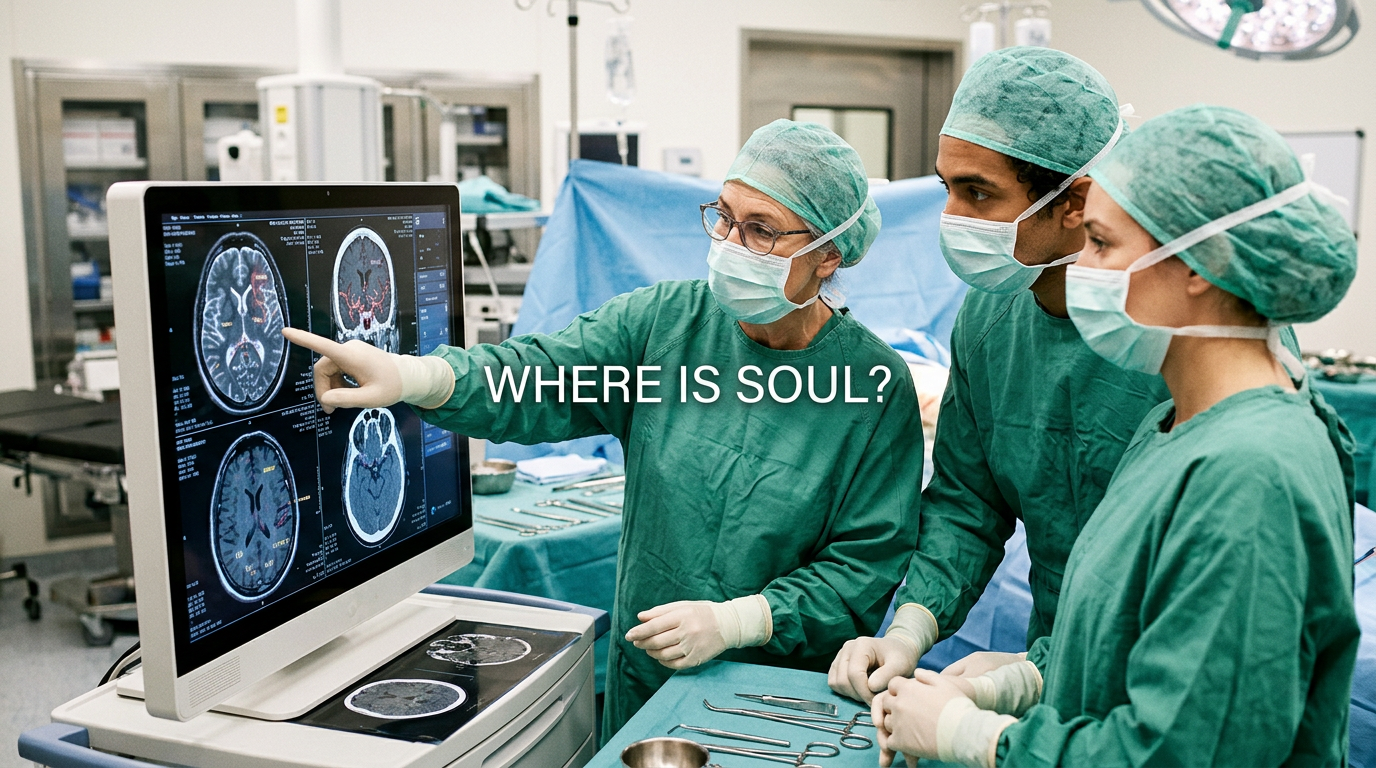
The biblical definitions of heart, mind, intellect, body and soul are discussed. I expand the discussion to the immortality of the soul and whether or not an AI machine can ever have or possess a soul.
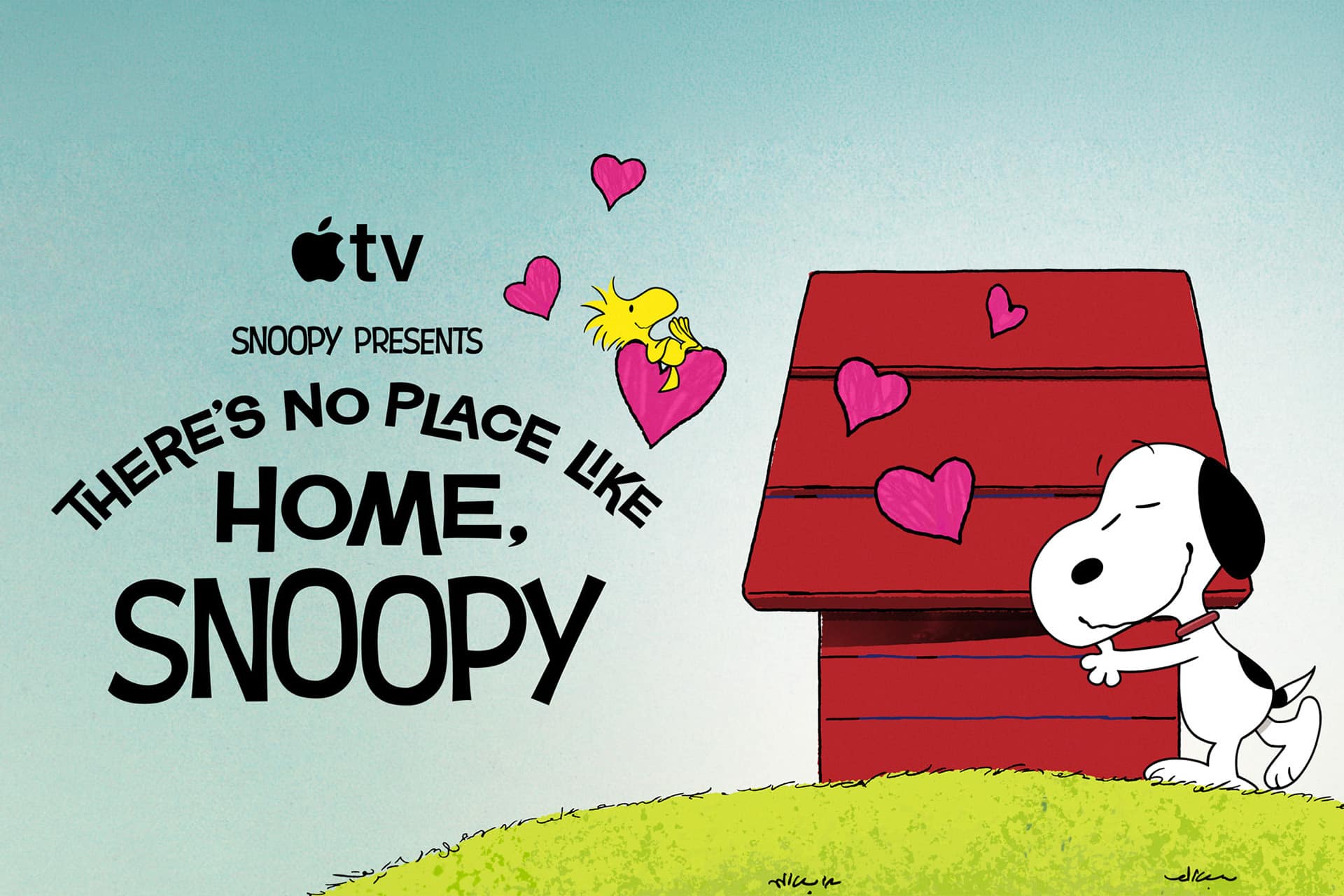
The 31-minute animated special follows Snoopy after his doghouse disappears during a yard sale. Charlie Brown attempts to help his devastated friend by organizing a search, but recovering the missing home becomes more difficult once it has left the neighborhood.
The story uses Snoopy’s doghouse as more than a familiar red prop. It is the place where he sleeps, stores his possessions and begins the imaginary adventures that transform him into a World War I flying ace, author and explorer.
Losing it removes the physical center of that private world. Charlie Brown and Snoopy must determine whether home depends on recovering the exact building or remaining close to the people and memories connected to it.
The Apple Original is rated TV-G and includes Dolby Atmos audio in supported languages and configurations. An Apple TV subscription is required, with availability extending across the Apple TV app and the service’s supported devices.
Image Credit: Apple Inc.
There’s No Place Like Home, Snoopy Begins at a Yard Sale
The central problem begins with an ordinary neighborhood event rather than one of Snoopy’s elaborate fantasies.
His doghouse is mistakenly treated as an item that can be sold. By the time Charlie Brown and the others understand what happened, Snoopy has lost the one place he regards as entirely his own.
The premise creates a recognizable childhood fear. A treasured object can appear unimportant to another person while carrying memories and emotional meaning for its owner.
Snoopy cannot explain that attachment through conventional dialogue. His reactions, imagination and physical comedy must communicate why the loss feels larger than a missing piece of outdoor furniture.
Charlie Brown responds by doing something he rarely manages for himself: taking charge with enough confidence to help someone else. His search gives the special momentum while preserving the uneven friendship at the center of many Peanuts stories.
Snoopy frequently ignores Charlie Brown, takes his meals for granted and escapes into fantasies. Charlie Brown continues caring for him even when the beagle’s behavior makes that affection difficult to return.
The missing doghouse reverses their normal relationship. Snoopy needs practical help, while Charlie Brown becomes the person capable of guiding him through the disappointment.
Why Snoopy’s Doghouse Matters
Charles M. Schulz turned Snoopy’s doghouse into one of the most flexible locations in the Peanuts comic strip.
From the outside, it is a simple red structure with a black entrance. Snoopy rarely sleeps inside it, preferring to rest on the pointed roof despite the physical impossibility of remaining balanced there.
The interior follows no ordinary rules. Comic storylines have suggested that it contains a pool table, television, library, guest rooms, paintings and other possessions that could not fit within its exterior dimensions.
Schulz generally avoided showing the complete interior. That decision allowed the doghouse to expand according to Snoopy’s imagination without requiring one definitive layout.
The roof also becomes the Sopwith Camel flown by the World War I flying ace. A few changes in posture and sound can transform a suburban backyard into an aerial battle with the Red Baron.
For Snoopy, the building is simultaneously a bedroom, stage, aircraft, writing desk and portal into imaginary lives. Selling it removes the starting point for nearly every identity he creates.
There’s No Place Like Home, Snoopy can therefore explore loss without introducing a permanent tragedy into the Peanuts world. The doghouse is physically replaceable, but Snoopy’s attachment to the original makes the search emotionally credible.
Image Credit: Apple Inc.
Charlie Brown Voices Lead the New Special
Riley Vargas voices Charlie Brown, while Terry McGurrin returns as Snoopy. McGurrin has become closely associated with the modern animated version of the character through Apple’s Peanuts programming.
Rob Tinkler voices Woodstock, the small yellow bird who frequently joins Snoopy’s adventures. Although Woodstock’s speech appears as rapid bird sounds, Snoopy understands him, allowing the pair to communicate without conventional dialogue.
Grace Nicolaou-Wood voices Sally, and Jo-Hannah Atchison performs Lucy. Kitai O’Garro plays Franklin, Josephine Nisbett voices Marcie and Lexi Perri voices Peppermint Patty.
Athan Giazitzidis appears as Linus, while Diego Whalen voices Rerun. Noah Paisley plays Milo.
The larger ensemble gives Charlie Brown access to the neighborhood network needed for a search without shifting the story away from Snoopy. Each character can respond differently to the problem according to an established personality.
Lucy may approach the situation with certainty, Linus with reflection and Sally with her own interpretation of what occurred. Woodstock has the closest connection to Snoopy’s private world and understands what the doghouse represents without requiring an explanation.
There’s No Place Like Home, Snoopy Behind the Scenes
Ridd Sorensen directed There’s No Place Like Home, Snoopy, with Rob Boutilier serving as series director. Rob Hoegee wrote the special.
Executive producers include Josh Scherba, Stephanie Betts, Logan McPherson, Paige Braddock, Chris Bracco and Mark Evestaff.
The production continues Apple’s collaboration with WildBrain, Peanuts Worldwide and Lee Mendelson Film Productions. Those organizations combine modern animation production with the characters and creative legacy established by Schulz.
The special was produced in Canada and is available with extensive dubbing and subtitle support.
Apple lists audio options spanning languages including:
Arabic
Cantonese
Danish
Dutch
French
German
Hindi
Italian
Japanese
Korean
Mandarin
Portuguese
Spanish
Thai
Turkish
Vietnamese
Audio descriptions are included across many of those language options. English playback supports Dolby Atmos and Dolby 5.1 on compatible equipment.
The wide localization reflects the international reach Peanuts developed long before streaming. Schulz’s comic strip appeared in more than 2,600 newspapers and reached readers across 75 countries.
Apple can now release one new animated story simultaneously across more than 100 countries and regions without waiting for separate broadcast schedules.
An Original Song Gives the Story Its Emotional Center
There’s No Place Like Home, Snoopy includes the original song “Home, Where Your Heart Found Me” by singer-songwriter Allen Stone.
Music has always occupied an important place in animated Peanuts productions. Vince Guaraldi’s jazz compositions became inseparable from the classic television specials, creating a musical identity that later productions must acknowledge without simply reproducing the same material.
An original song allows the new story to develop its own emotional language around home and attachment. It can express ideas that Snoopy cannot communicate verbally while avoiding the need for Charlie Brown to explain the complete meaning of the adventure.
The title connects home with an emotional discovery rather than an address or possession. That idea supports the special’s central distinction between the missing doghouse and the relationships Snoopy still has around him.
Apple previously expanded the musical side of its Peanuts catalog through Snoopy Presents: A Summer Musical, the first Peanuts musical special in decades. The addition of Allen Stone continues that willingness to use original songs rather than treating music only as background.
Image Credit: Apple Inc.
How to Watch There’s No Place Like Home, Snoopy
The special is available through the Apple TV app on iPhone, iPad, Mac, Apple TV 4K and Apple Vision Pro.
It can also be watched on supported smart televisions from manufacturers including Samsung, LG, Sony, Vizio and TCL. Roku, Amazon Fire TV, Google TV, PlayStation and Xbox devices provide additional access.
Web playback is available through tv.apple.com after signing in with an Apple Account carrying an active subscription.
Apple TV currently costs $12.99 per month in the United States and includes a seven-day trial for eligible new subscribers. Customers activating a qualifying new iPhone, iPad, Mac or Apple TV 4K may receive three free months, subject to Apple’s promotional conditions.
There’s No Place Like Home, Snoopy is presented as one complete special rather than an episodic series. Its 31-minute running time makes it closer to the length of traditional Peanuts television programs than a feature film.
Parents can locate it within the Kids & Family area of Apple TV. Its TV-G classification indicates that it is designed for a general audience, although rating systems and descriptions can vary by country.
Apple Builds a Permanent Peanuts Library
Apple has served as the principal streaming home for Peanuts since 2020, combining classic holiday programs with new specials, series and documentaries.
The agreement has sometimes received attention because programs such as A Charlie Brown Christmas, A Charlie Brown Thanksgiving and It’s the Great Pumpkin, Charlie Brown spent decades appearing on broadcast television.
Apple has provided limited free streaming windows for major holiday titles, allowing people without a subscription to continue watching selected specials during their associated seasons.
The wider library includes The Snoopy Show, Snoopy in Space and Camp Snoopy. Original Snoopy Presents specials have focused on characters and subjects that received less attention in the earliest television productions.
One-of-a-Kind Marcie centered on Marcie’s quiet approach to leadership. Welcome Home, Franklin expanded Franklin’s introduction to the neighborhood, while Lucy’s School explored the group’s anxiety about change.
Apple also carries the documentaries Who Are You, Charlie Brown? and Peanuts in Space: Secrets of Apollo 10.
The service added This Is America, Charlie Brown and The Charlie Brown and Snoopy Show during July 2026, bringing more material from the 1980s into the same streaming catalog as the latest production.
Snoopy’s Next Search Heads to the Big City
Apple’s Peanuts partnership extends through 2030, giving WildBrain and Peanuts Worldwide several more years to create original series and specials for the service.
The most ambitious announced project is Snoopy Unleashed, an animated feature film currently in production.
That story will reverse the situation presented in There’s No Place Like Home, Snoopy. Instead of Charlie Brown searching for the doghouse, the Peanuts gang will search for Snoopy after he runs away to the Big City.
The larger setting will move Snoopy beyond the familiar neighborhood and require Charlie Brown, Lucy, Linus and the others to navigate an environment rarely explored in the comic strip.
Apple plans to release Snoopy Unleashed in 2027. Until then, Snoopy’s missing doghouse provides a smaller journey built around the same question the film will approach from another direction: what remains of home when the person or place associated with it disappears?
A single neuron may help the brain recognize what it sees, track what the body is doing, and guide a decision, all at the same time. Most neurons may be far more versatile than scientists once thought. In a major study published in Nature, researchers analyzed more than 14,000 individual neurons across 43 regions of [...]
Dr. Michael Egnor explores the existence and immortality of the soul, challenging materialist views by analyzing brain injuries, free will, and near-death experiences. He concludes that while the brain handles physical functions, the soul embodies abstract thought and consciousness, remaining independent and everlasting.
A group at the Institute of Science Tokyo simultaneously measured the activity of thousands of neurons in two mousebrain regions and found that the areas sometimes shared timing information but maintained more independent representations at other times. The researchers, led by Associate Professor Riichiro Hira, maintained that this flexibility enables the brain to remain stable as it adapts to changing requirements.
A Task Built to Catch the Brain Switching Modes
Hira’s team created a task to highlight this timing mystery. They trained mice to expect rewards at intervals that switched between 6 and 12 seconds, without any break to mark the end of one trial and the start of the next. Since there was no pause, the mice had to keep updating their internal sense of time throughout the experiment, instead of resetting their mental stopwatch for each new trial.
The mice eventually figured out the pattern. At first they expected a reward every six seconds even if the time they had to wait was longer than this, but by the end of the training session, their behavior indicated that they had learned to anticipate both reward intervals. This showed that the mice were capable of keeping track of both durations and of predicting which one would come next.
While the mice performed the task, the researchers recorded activity in their secondary motor cortex and the posterior parietal cortex using wide-field two-photon calcium imaging. Both regions play key roles in planning, prediction, and working memory.
Two Regions, Two Kinds of Mistakes
The neurons fired in sequence in each brain area, with different cells becoming active at different times. This sequence showed that each region was monitoring the passage of time.
The researchers also identified two kinds of errors in the neural activity. In some cases, both areas made the same mistake when assessing the passage of time. These coherent errors suggested that both regions sometimes shared the same timing drift. In other instances, only one region was inaccurate while the other remained correct. These independent errors suggested that one region could temporarily maintain a different timing representation from the other. Independent errors were more frequent than coherent ones, and this ratio remained the same in all the mice examined.
If the brain regions were just randomly out of sync, you’d expect the ratio to change. However, it didn’t, which suggests that the brain has a built-in way to balance working together and working independently.
Modeling the Switch Between Coherence and Independence
To identify this mechanism, the team built a computational model with two recurrent neural networks linked by sparse, long-range connections and exposed to the same background noise. The model produced the same 2-to-1 ratio of independent to coherent errors seen in the mice.
The model also discovered that the limited connections between the networks tended to cause them to become synchronized, while the common noise caused them to move in separate directions. Hira provided an explanation of the interaction saying, “We found sparse inter-regional connectivity promotes synchronization between the two regions, whereas widespread fluctuations prevent complete synchronization, allowing each region to preserve its own temporal representation.” Neither force takes precedence; instead, a compromise is reached which allows communication between the regions.
The findings challenge the idea that brain regions rely on a single synchronized timing system. It indicates that the brain can adjust how different parts are coordinated, rather than just turning that coordination on or off.
What a Flexible Clock Could Mean for the Brain
Hira’s team believes that there are implications beyond simple timing circuits. “In the future, our results may contribute to a better understanding of cognition, neurological disorders involving disrupted inter-regional coordination, and the development of brain-inspired artificial intelligence and robotic control systems that combine stability with flexibility,” said Hira.
This last idea may prove most important in the years ahead. Engineers building AI and robotic systems face a similar challenge: how to let separate parts work on their own when needed, yet still come back into sync. The mouse brain shows that sparse connections and shared background fluctuations can achieve this balance. This could point to a design principle that even applies to systems with no biological components.
Austin Burgess is a writer and researcher with a background in sales, marketing, and data analytics. He holds an MBA, a Bachelor of Science in Business Administration, and a data analytics certification. His work focuses on breaking scientific developments, with an emphasis on emerging biology, cognitive neuroscience, and archaeological discoveries.
A large British study spanning more than 70 years has found that people who experience chronic money struggles over their working lives show measurable declines in memory and processing speed by their 50s, along with signs of accelerated brain shrinkage decades later.
The tech overlords pushing the AI boom are quickly wearing out what little welcome they had.
You may have noticed big-name AI labs pushing new commercials lately. Meta’s new 60-second ad spot insists that the “future is for everyone,” even as CEO Mark Zuckerberg’s personal net worth eclipses the GDP of Hungary. Anthropic’s new commercial for Claude assures viewers that there’s “hope in hard questions,” seemingly embracing the discomfort that comes when your software is used to bomb elementary schools in Iran.
For as magnanimous as these new PR stunts appear on the surface, a vast swathe of the public they’re meant to sway are rejecting the industry’s faux-populism messaging out of hand, as the cost of AI — born out in inflation, data center pollution, fears of job loss and mental health concerns — becomes too much to bear.
According to data compiled by Pew Research, 40 percent of US adults predict AI will have a negative impact on society writ large, compared to just 16 percent who say it’ll have a positive effect. A whole 31 percent of those surveyed think AI will have negative consequences for themselves, personally, over the next 20 years.
As disgust with AI itself grows, so too does resistance to the hardware embodying its rise.
Per a separate poll by Gallup, flagged by Business Insider, an astonishing three-quarters of US adults are now resolutely opposed to hyperscale data centers popping up near their home. City councils are increasingly forced to reconcile with landowners hostile to any AI data center appearing in their district, putting significant strain on developers hoping to gorge themselves on the fruits of the AI boom. Protests against AI companies are flaring up across the country, with Time reporting 142 protests across 42 states in one day alone.
Beyond data centers, a decentralized but highly-motivated movement is growing around the chopping, hacking, and outright sabotage of AI-integrated surveillance cameras. A parallel struggle is being waged around AI-integrated surveillance drones, with organizers in cities like Minneapolis beating back ambitious police dragnets.
So if you’re a tech executive trying to win back the masses to the AI revolution, take note: it’s gonna take a lot more than a few smarmy commercials to solve your PR problem.
An eye implant that can help blind people see again is poised to hit the market — in Europe, at least.
On Wednesday, the US-based Science Corporation announced that it had received approval from the European Union to treat patients with its vision-restoring bionic eye device, called Prima, in a huge step towards the commercialization of the technology.
“We have a cochlear implant for vision now,” CEO Max Hodak told Stat News.
Science Corp’s device is designed to treat advanced macular degeneration, a condition in the eye which causes central vision loss. It’s the leading cause of vision loss in older adults, with severe forms of it accounting for nearly 90 percent of legal blindness in the US, according to one estimate.
To restore vision, the Prima device uses a wireless chip that’s surgically implanted under the retina. This connects with a pair of camera-equipped glasses, which transmits video in the form of near-infrared light that the chip turns into electrical signals interpreted by the brain.
“One of our patients in France finished a 300-page novel a little while ago, and sent us the book,” Hodak recently told TechCrunch. “We have a sketch on the wall [that] one of our patients drew of the Sydney Opera House. There are videos of patients playing crossword puzzles and filling in Sudoku.”
But Hodak — who cofounded Neuralink with Elon Musk before leaving to start Science Corp — was candid that his tech still has a lot of room for improvement.
“This is an early version. It’s kind of like looking through a straw in the centre of their vision,” he told the Financial Times, saying it was “powerful proof” that the company was on the right track.
“We see in the future how to get to colour pretty close to native acuity,” he added.
Each Prima device is expected to cost hundreds of thousands of dollars, but Science Corp says it’s working with healthcare providers to cover some of the cost, per TechCrunch. It’s most likely to first start treating patients in Germany, where it conducted its clinical trials.
It’s not the only company making moves in this space. Neuralink is also working on a vision implant called Blindsight, but it hasn’t begun human trials yet.
Researchers have developed a magnetic method for influencing deep-brain circuits without permanently implanted electrodes. A magnetic field may offer a new way to reach circuits buried deep within the brain without permanently implanting electrodes. An international research team injected magnetic nanoplatelets into a targeted brain region and used them to improve movement problems in mice [...]
A new study strengthens the case for exercise as a critical way to protect the brain from age-related decline, including dementia and Alzheimer’s disease. During sleep, the brain activates a cleanup network that helps remove accumulated waste. A review led by Victoria University (VU) researcher Dr. James Broatch examined whether exercise could strengthen this glymphatic [...]
Paleontologists have unearthed a remarkably preserved fossil snake in Brazil that is reshaping ideas about how the earliest snakes lived and complicating the long-running debate over whether their ancestors burrowed underground, swam in the sea or crawled the surface.
Scientists have identified a brain protein that may help Alzheimer’s spread, revealing a potential new target for slowing the disease’s progression. Alzheimer’s disease is closely linked to the accumulation of a toxic form of the protein Tau inside the brain. As Tau damage reaches additional brain regions, more neurons are harmed, symptoms intensify, and the [...]
New research suggests that low oxygen levels may help alleviate disease caused by defects in mitochondrial quality control. Oxygen is essential for people—and most other organisms—but more is not always better. When oxygen accumulates beyond what cells can safely use, it can become toxic and contribute to serious health problems. In the brain, excess oxygen [...]

 Login

 Reaching 90 without dementia may feel like clearing the final hurdle. But the risk does not necessarily end there. Dementia risk does not disappear after age 90. Even among people who reach their 10th decade without cognitive symptoms, the likelihood of developing the condition can vary substantially by sex, race, ethnicity, and genetics, according to [...]