
❌

Reading view

Scientists Find Traces of Two Unknown Archaic Hominins in Human DNA

An archaic hominin. Image credit: Ninara / CC BY 2.0.

New research led by the University of California, Berkeley reveals that beyond Neanderthals and Denisovans, humans interbred with two mysterious β€˜ghost’ lineages: one in Africa more than 50,000 years ago, another in Eurasia over 1.7 million years ago.

The post Scientists Find Traces of Two Unknown Archaic Hominins in Human DNA appeared first on Sci.News: Breaking Science News.
  •  

520-Million-Year-Old Fossil from China Fills Gap in Evolutionary History of Cephalopods

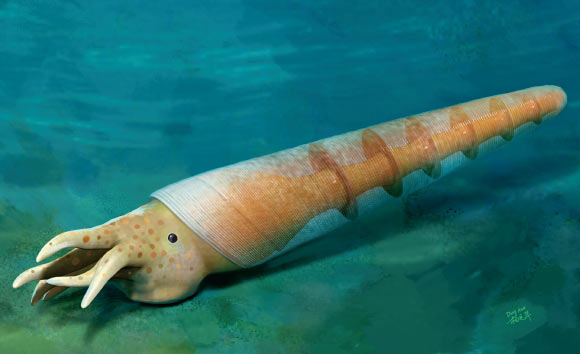
Life reconstruction of Eoceras shaanxiense. Image credit: Dinghua Yang.

Paleontologists have identified the earliest-known cephalopod equipped with a siphuncle -- a tubular extension of the mantle found in shelled cephalopods -- pushing back the fossil record of this key evolutionary feature to the Early Cambrian, roughly 520 million years ago.

The post 520-Million-Year-Old Fossil from China Fills Gap in Evolutionary History of Cephalopods appeared first on Sci.News: Breaking Science News.
  •  

40,000-Year-Old Bird Figurines Found in German Cave

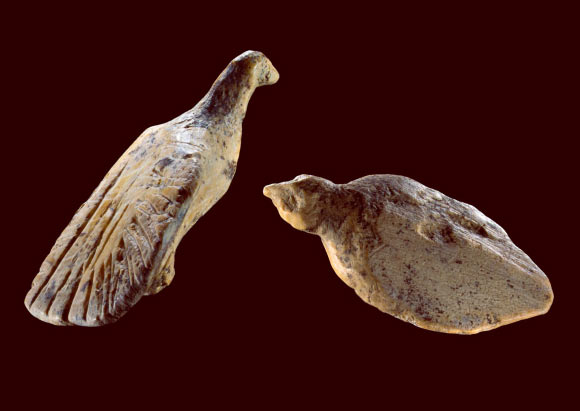
Two bird figurines found at Hohle Fels Cave in Germany. Image credit: Ralf Ehmann / University of TΓΌbingen / Museum of Prehistory and Ice Age Art.

Archaeologists in southwestern Germany have unearthed two miniature bird figurines carved from mammoth ivory, among the smallest and most delicate examples of Ice Age art ever found.

The post 40,000-Year-Old Bird Figurines Found in German Cave appeared first on Sci.News: Breaking Science News.

  •  

New Species of Triassic Dinosaur Discovered on Shores of Zimbabwe’s Lake Kariba

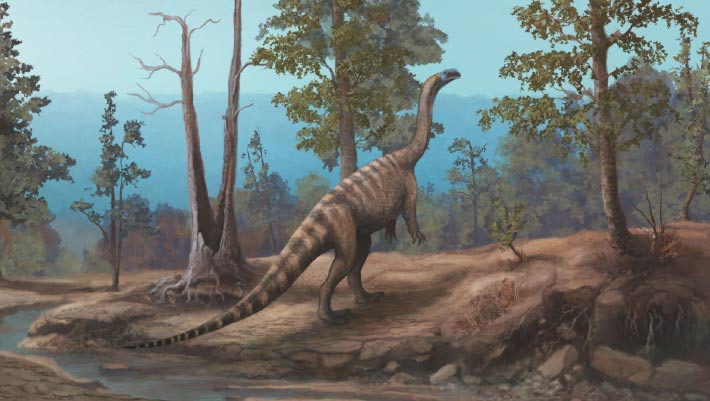
Life reconstruction of Musango matusadonaensis. Image credit: Mark Witton.

An international team of paleontologists has identified a new species of early sauropodomorph dinosaur in Zimbabwe, adding to growing evidence that southern Africa hosted a richer diversity of dinosaurs during the Late Triassic epoch than previously recognized.

The post New Species of Triassic Dinosaur Discovered on Shores of Zimbabwe’s Lake Kariba appeared first on Sci.News: Breaking Science News.
  •  

Ancient Footprints in Kenya Hint at Bigger Bodies and Group Behavior among Early Human Relatives

One of 1.43-million-year-old footprints found at the GaJi10 site in the Koobi Fora Formation in northern Kenya; a 15-cm (6-inch) ruler is shown for scale. Image credit: Kay Behrensmeyer.

A set of 1.43-million-year-old fossil footprints preserved along the margin of an ancient lake in northern Kenya is offering paleoanthropologists new evidence about the size, gait and social lives of the beings who made them and reopening questions about which species they belonged to.

The post Ancient Footprints in Kenya Hint at Bigger Bodies and Group Behavior among Early Human Relatives appeared first on Sci.News: Breaking Science News.
  •  

Astronomers Directly Image Betelgeuse’s Long-Suspected Stellar Companion

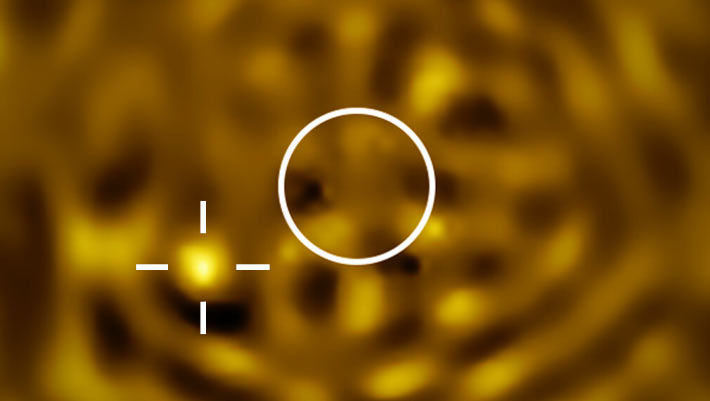
This VLT/SPHERE image shows the clearest image ever of what likely is Betelgeuse B. Image credit: ESO / Montargès et al.

After a century of speculation, astronomers using ESO’s Very Large Telescope (VLT) have captured the clearest evidence yet that the red supergiant Betelgeuse is orbited by a faint companion star.

The post Astronomers Directly Image Betelgeuse’s Long-Suspected Stellar Companion appeared first on Sci.News: Breaking Science News.

  •  

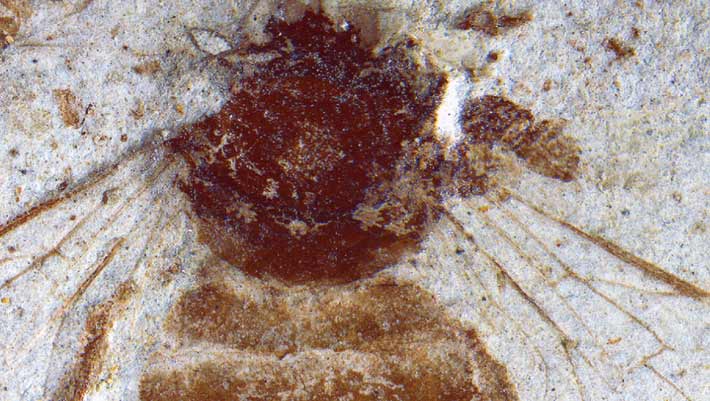
Japanese Fossil Bee Fills Two-Million-Year Gap in Honeybee History

Apis aibai. Image credit: Y. Takahashi & J-ichi Takahashi, doi: 10.3897/zookeys.1255.162389.

Paleontologists have announced the discovery of a new fossil honeybee species that fills a long-standing gap in the evolutionary record of the genus Apis.

The post Japanese Fossil Bee Fills Two-Million-Year Gap in Honeybee History appeared first on Sci.News: Breaking Science News.
  •  

Hubble Spots Spiral Galaxy Warped by Cosmic Forces

This Hubble image shows NGC 4654, an intermediate spiral galaxy some 55 million light-years away in the constellation of Virgo. Image credit: NASA / ESA / Hubble / D. Thilker / J. Lee / PHANGS-HST Team.

A stunning new image captured by the NASA/ESA Hubble Space Telescope shows the lopsided intermediate spiral galaxy NGC 4654, whose unusual shape was sculpted by both a close encounter with another galaxy and a headlong plunge through the hot gas of the Virgo Cluster.

The post Hubble Spots Spiral Galaxy Warped by Cosmic Forces appeared first on Sci.News: Breaking Science News.
  •  

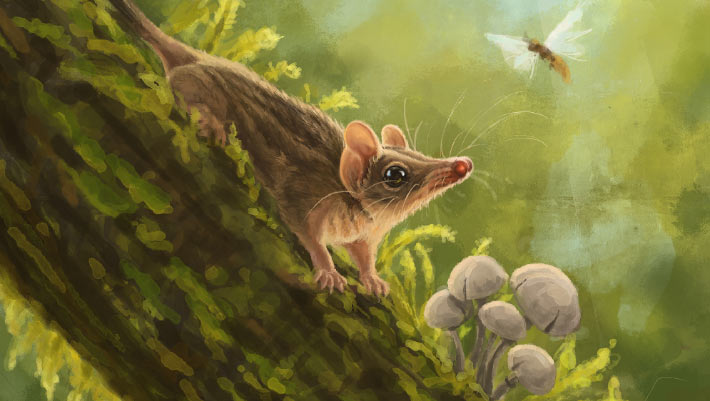
Early Miocene Fossil Rewrites Family Tree of Little Carnivorous Marsupials

An artist’s reconstruction of Miyumba chrisdickmani in the Early Miocene rainforests of northern Australia. Image credit: Nellie Pease.

Paleontologists at the University of New South Wales have described a new genus and species of dasyurid marsupial from the Early Miocene of Australia, offering the first solid evidence that the family Dasyuridae -- which today includes quolls, Tasmanian devils and tiny antechinuses -- existed long before scientists had proof of it in the fossil record.

The post Early Miocene Fossil Rewrites Family Tree of Little Carnivorous Marsupials appeared first on Sci.News: Breaking Science News.

  •  

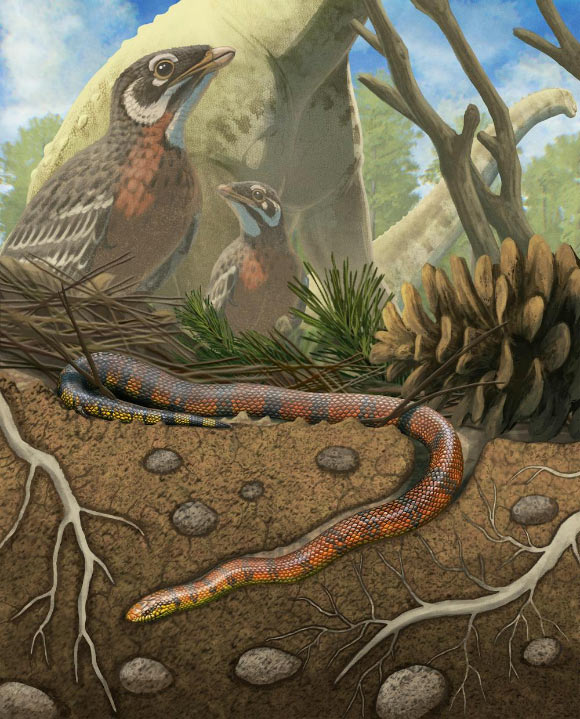
Did Early Snakes Burrow, Swim or Crawl? 80‑Million‑Year‑Old Fossil Suggests: All Three

Life reconstruction of Tametara mirim. Image credit: Gabriel Ugueto.

Paleontologists have unearthed a remarkably preserved fossil snake in Brazil that is reshaping ideas about how the earliest snakes lived and complicating the long-running debate over whether their ancestors burrowed underground, swam in the sea or crawled the surface.

The post Did Early Snakes Burrow, Swim or Crawl? 80‑Million‑Year‑Old Fossil Suggests: All Three appeared first on Sci.News: Breaking Science News.
  •  
  •  

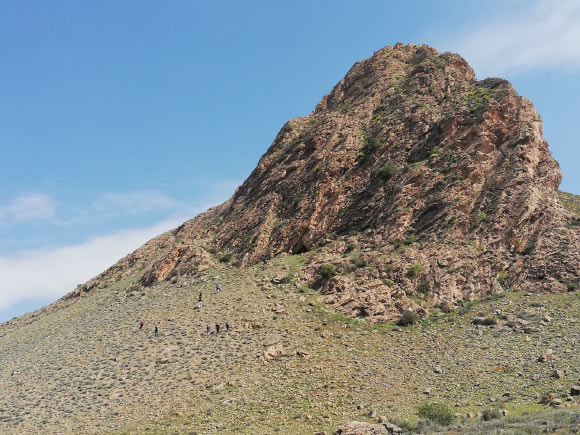
Stone Tools from Armenian Cave Reveal Split Strategy for Survival 50,000 Years Ago

A look at Ararat-1 Cave from the bottom of the Ararat Depression. Image credit: Ariel Malinsky Buller.

Ararat-1, a modest limestone cave that lies at an elevation of 1,034 m on the eastern flanks of the Ararat Depression in central Armenia, has yielded a striking puzzle about how Middle Paleolithic humans moved across their landscape.

The post Stone Tools from Armenian Cave Reveal Split Strategy for Survival 50,000 Years Ago appeared first on Sci.News: Breaking Science News.
  •  

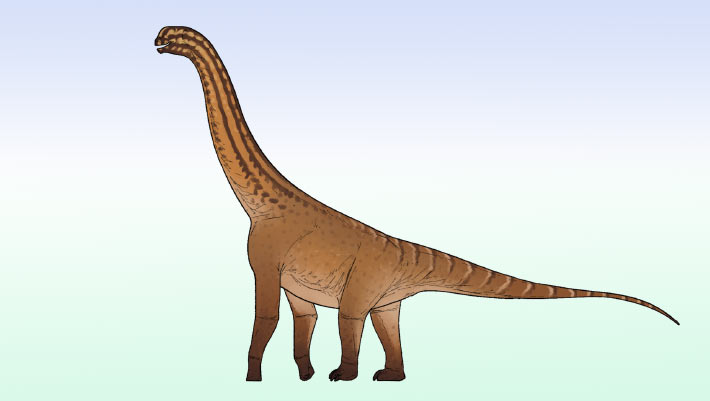
Small Sauropod Dinosaur from Jurassic Period Discovered in India

Life reconstruction of Ceratocaudia antiqua, the earliest-known macronarian neosauropod species from India. Image credit: Connor Ashbridge / CC BY 4.0.

Paleontologists in India have unearthed a partial skeleton of a diminutive, previously unknown neosauropod dinosaur from the Middle Jurassic rocks of Gujarat’s Kachchh Basin.

The post Small Sauropod Dinosaur from Jurassic Period Discovered in India appeared first on Sci.News: Breaking Science News.
  •  

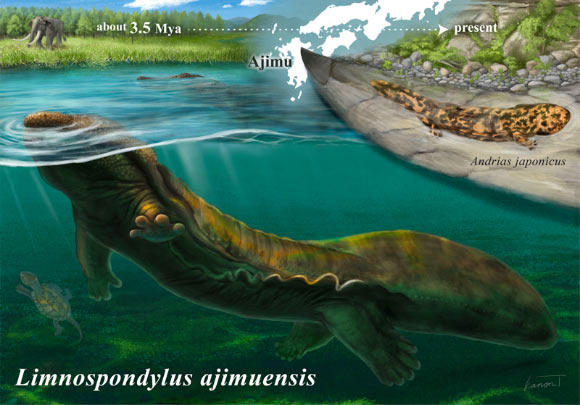
3.5-Million-Year-Old Fossil from Japan Reveals Lost Lineage of Giant Salamanders

Life reconstruction of Limnospondylus ajimuensis. Image credit: Kanon Tanaka.

A new genus and species of cryptobranchid salamander that lived in lakes in Japan about 3.5 million years ago has been identified from three fossil vertebrae, filling a major gap in the fossil record of one of the world’s oldest amphibian lineages.

The post 3.5-Million-Year-Old Fossil from Japan Reveals Lost Lineage of Giant Salamanders appeared first on Sci.News: Breaking Science News.
  •  

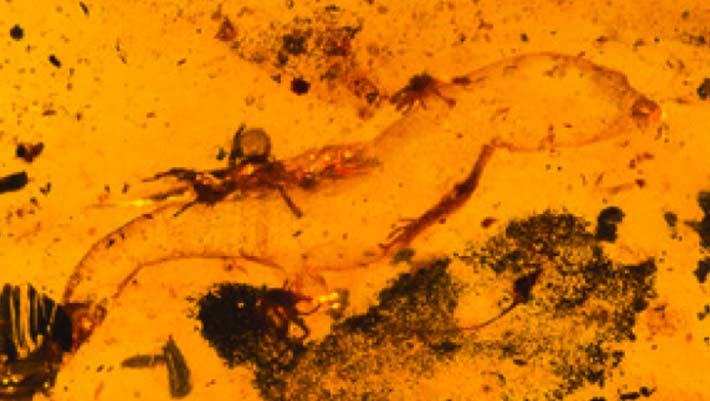
Oldest Known Male Gecko Found Preserved in Kachin Amber

Carinasquama rusmithii. Image credit: Daza et al., doi: 10.3897/sjp.145.188227.

Paleontologists have described a new genus and species of ancient gecko found in two pieces of amber from the 99-million-year-old (mid-Cretaceous) amber deposits in Kachin province, Myanmar.

The post Oldest Known Male Gecko Found Preserved in Kachin Amber appeared first on Sci.News: Breaking Science News.

  •  

Dinosaurs May Have Been Wiped Out by β€˜Oddball’ Space Rock

This painting depicts an asteroid slamming into tropical, shallow seas of the sulfur-rich Yucatan Peninsula in what is today southeast Mexico. The aftermath of this immense asteroid collision, which occurred approximately 65 million years ago, is believed to have caused the extinction of the dinosaurs and many other species on Earth. Shown in this painting are pterodactyls, flying reptiles with wingspans of up to 50 feet, gliding above low tropical clouds. Image credit: Donald E. Davis / NASA.

By analyzing nickel isotopes preserved in the 66-million-year-old debris left by the Chicxulub impact, researchers conclude that the asteroid responsible for Earth’s last mass extinction most likely belonged to an exceptionally rare class of primitive meteorites called carbonaceous chondrites of the Ornans type (CO chondrites).

The post Dinosaurs May Have Been Wiped Out by β€˜Oddball’ Space Rock appeared first on Sci.News: Breaking Science News.
  •  

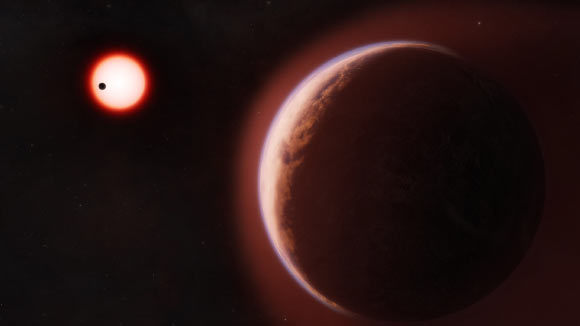
Potential Atmosphere Detected on Habitable-Zone Exoplanet LHS 1140b

An artist’s concept of rocky planets LHS 1140b and LHS 1140c. Image credit: Melissa Weiss / Harvard & Smithsonian’s Center for Astrophysics.

Using spectral data from the Magellan Clay telescope at Las Campanas Observatory, astronomers detected helium escaping from LHS 1140b, a rocky exoplanet that orbits in the habitable zone of the nearby low-mass star LHS 1140.

The post Potential Atmosphere Detected on Habitable-Zone Exoplanet LHS 1140b appeared first on Sci.News: Breaking Science News.

  •  

Scientists Discover New Monkey Species in Democratic Republic of Congo

Colobus congoensis. Image credit: Daniel Rosengren, Frankfurt Zoological Society.

Researchers have identified and formally described a new species of the African monkey genus Colobus living in the remote interior of the Democratic Republic of Congo, marking only the fifth new monkey species found on the continent in the past 75 years.

The post Scientists Discover New Monkey Species in Democratic Republic of Congo appeared first on Sci.News: Breaking Science News.
  •  

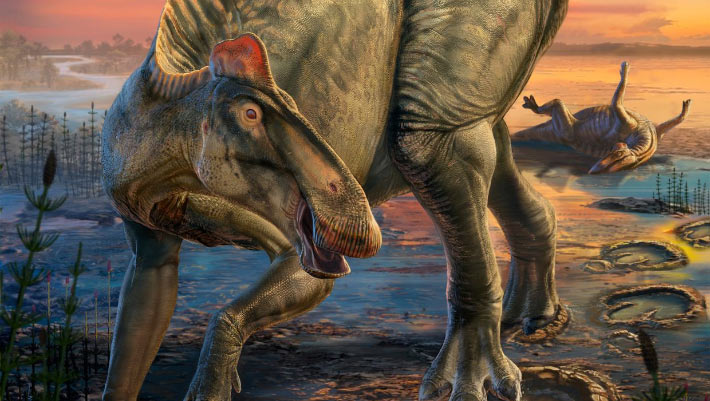
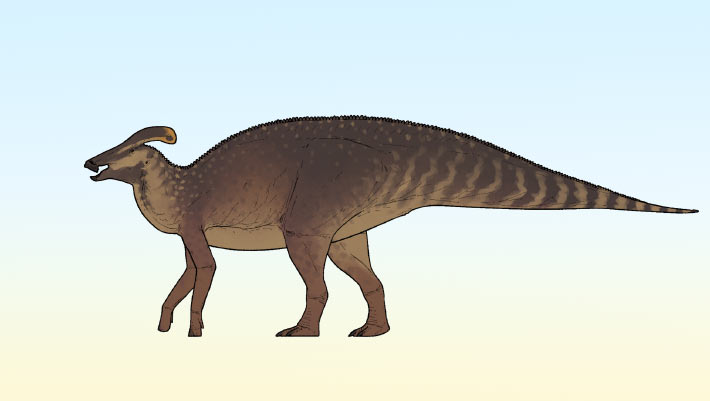
New Crested Dinosaur Species Identified in Canada

Life reconstruction of Plesiolophus warnerensis. Image credit: Connor Ashbridge / CC BY 4.0.

A new genus and species of lambeosaurine hadrosaurid dinosaur has been identified in southern Alberta, Canada, dating back 77 million years to the Campanian age of the Cretaceous period.

The post New Crested Dinosaur Species Identified in Canada appeared first on Sci.News: Breaking Science News.
  •  
❌