❌

Reading view

What colors were prehistoric mammals?

The spots on a leopard, the stripes on a zebra, and the mask on a raccoon are all types of coloration in mammal fur, referred to as pelage. Scientists have struggled for a long time to understand how these colorations evolved. A team of researchers recently discovered how to reconstruct the colors of ancient mammal fur using cell structures that contain the chemical pigment melanin, known as melanosomes. They hope to use this understanding of ancient mammal pelage to determine how they lived and what their environments were like.

To decipher the color of ancient mammal fur, the researchers constructed a statistical computer model to predict their fur colors based on the shape of their melanosomes. First, they needed to understand how the shapes of melanosomes control fur color in modern mammals. To measure the length and width of the modern melanosomes, the scientists used a beam of electrons like a flashlight to map them in great detail, a technique called scanning electron microscopy.

They measured the length and width of 2,615 melanosomes from the fur of 116 different living mammal species, including a Red Panda, a German Shepard, and one or more species of most types in the mammalian classification. Then they recorded the wavelengths of light reflected off each melanosome using a microspectrophotometer. These wavelengths represented the exact color of hair from each melanosome they measured. This means they now had a quantitative measurement of the color of each hair to compare with its corresponding melanosome length and width.

When they examined their data, the researchers found that spherical melanosomes produced brighter fur colors, like reds and oranges, while elongated melanosomes produced darker fur colors, like browns and grays. The researchers plotted the microspectrophotometric measurements for each melanosome as a graph showing how much light it absorbed across each possible wavelength, creating reflectance curves. Based on these data, the researchers used computer software to create a statistical model that could predict reflectance curves, and therefore color, from melanosome shape alone.

Once the researchers created a model, they needed to find fossilized mammal melanosomes to predict their fur color. Mammal fossils are rare, and pieces of cells are only preserved in the most immaculate fossil deposits. In fact, these researchers only found 6 fossils of this caliber, from Mesozoic rocks deposited around 250 million years ago, soon after mammals evolved. 

The fossils came from 2 world-renowned deposits in Northeastern China, the Yanliao and Jehol biotas. They selected 5 previously studied fossils from these locations, including 1 specimen of Megaconus mammaliaformis, 1 specimen of Vilevolodon diplomylos, 2 specimens from the group Docodonta, and 1 specimen from the group Eutheria. All of these animals were small, rodent-like mammals. The researchers also discovered a new species of tree-dwelling mammal, Arboroharamiya fuscus.

The scientists used scanning electron microscopy to measure a total of 2,159 fossilized melanosomes to refine their color predictions. The fossilized melanosomes were all slightly elongated spheres and had far fewer differences in shape than in modern mammals. The researchers used their model to predict reflectance curves based on the shapes of the fossil melanosomes to determine the ancient mammals’ colors. They found that all the extinct mammals they examined likely had dark brown fur without any color patterns.

Based on these findings, the researchers suggested that most, if not all, early mammals were nocturnal, like many dark-colored mammals today. They suggested that this nocturnal lifestyle probably helped them survive the meteorite impact that wiped out the dinosaurs 100 million years later. While dinosaurs were unable to survive in the post-impact wasteland, these smaller, dark-colored mammals were more resilient and thrived in the aftermath. As mammals filled the ecological roles left by the dinosaurs, they evolved new color patterns, some based solely on camouflage, and others on new factors, like sexual selection and visual communication.

The researchers concluded that their model can predict fossilized mammal colors and help determine how these ancient animals lived. Notably, their data suggest that mammals likely stayed small and nocturnal throughout the Mesozoic until the dinosaurs were gone. Future researchers could use similar methods to uncover exactly how mammals evolved the colors we see today. For example, studying mammals closer to the impact event could reveal if it took a long time to develop diverse fur patterns, or if they began before the dinosaurs’ demise. Ultimately, similar studies could help determine whether the extinction of dinosaurs was necessary for the rise of mammals.

The post What colors were prehistoric mammals? appeared first on Sciworthy.

  •  

Science word of the day: Coprolite

Science word of the day: Coprolite

Pronunciation: KAHP'-ruh-lite

What it means: Coprolites are fossilized poop. Scientists have found coprolites from animals as diverse as fish, dinosaurs and saber-toothed cats. Teeth in the saber-toothed cat poop indicated that it had been eating baby sloths, which frankly feels a bit unfair from a creature with 11-inch-long (28 centimeters) teeth.

These fossils form when poop gets rapidly buried and mineralized instead of rotting away. Coprolites can be hard to match to the animal that produced them, but undigested bones and teeth in the fossilized poop can often provide clues to the kinds of animals that other animals eat.

How to use it in a sentence: If you're ever in a science museum and a volunteer, with a twinkle in their eye, asks you what you think a chunky, rock-looking thing is, the answer is always coprolite.

Can you crack our science word of the day puzzle, Chain Word?

  •  

Study: Dinosaurs were charbroiled after Chicxulub impact

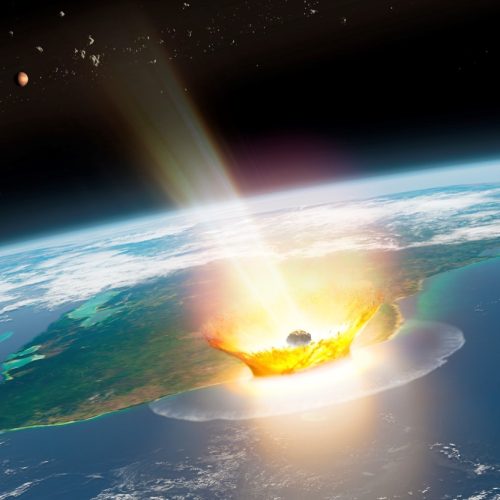
Some 66 million years ago, an asteroid impact wiped out three-quarters of all plant and animal species on Earth, most notably taking down the dinosaurs. But exactly how that impact caused those extinctions has been the subject of fierce debate. According to a new paper published in the Journal of Geophysical Research: Biogeosciences, the impact would have produced an immense cloud of dust that superheated the upper atmosphere, charbroiling living organisms unable to take shelter and igniting widespread wildfires.

As previously reported, the most widely accepted explanation for what triggered that catastrophic mass extinction is known as the “Alvarez hypothesis,” after the late physicist Luis Alvarez and his geologist son, Walter. In 1980, they proposed that the extinction event may have been caused by a massive asteroid or comet hitting the Earth. They based this conclusion on their analysis of sedimentary layers at the Cretaceous-Paleogene boundary(the K-Pg boundary, formerly known as the K-T boundary) found all over the world, which included unusually high concentrations of iridium—a metal more commonly found in asteroids than on Earth. (That same year, Dutch geophysicist Jan Smit independently arrived at a similar conclusion.)

Since then, scientists have identified a likely impact site: a large crater in Chicxulub, Mexico, in the Yucatan Peninsula, first discovered by geophysicists in the late 1970s. The impactor that created it was sufficiently large (between 11 and 81 kilometers, or 7 to 50 miles) to melt, shock, and eject granite from deep inside the Earth, probably causing a megatsunami and ejecting vaporized rock and sulfates into the atmosphere. It has been estimated that the impact would have released energy over a billion times higher than the atomic bombs dropped on Hiroshima and Nagasaki in 1945.

Read full article

Comments

© Mark Garlick

  •  

“Enough Heat to Sizzle Thin-Skinned Animals”: New Evidence Shows How a Dinosaur-Killing Meteor Set the World on Fire

New analysis of dust deposits left after the massive asteroid hit Earth around 66 million years ago suggests the event created a thick, worldwide dust blanket that drove heat down toward the planet’s surface, resulting in global wildfires.

The researchers behind the new study said the evidence for a post-impact dust blanket and resulting heat wave adds new fuel to the debate about what role, if any, the Chicxulub asteroid played in their extinction, by suggesting most unsheltered animals would have died instantly.

Scientists Debate Connection Between Asteroid Impact and Dinosaur Extinction

While scientists agree that a massive chunk of space rock slammed into Mexico’s Yucatan Peninsula 66 million years ago, they have continued to debate the event’s impact on the end of the dinosaurs‘ reign. Still, the timing of the two events, and the evidence for a mass extinction of animals incapable of seeking the necessary shelter to survive the asteroid’s impact, has led most to connect the two events to some degree.

Further studies of the impact have shown that the event’s immense heat and pressure vaporized a massive amount of rock, resulting in a huge cloud of dust and rock vapor high into the Earth’s atmosphere. As some of that dust condensed into tiny rock ‘spherules’ and slammed back into the surface, the friction between them and the air generated a corresponding heat pulse.

According to the authors of the new study, many theories suggested that this heat pulse acted like a planetary-wide broiler, including “radiating enough heat to sizzle thin-skinned animals without shelter,” but not enough for plants to suddenly burst into flames. The team said that this result temporarily caused researchers to move away from the idea that the immediate impact event caused the dinosaur’s extinction rather than a longer, more drawn-out event.

Now, after years of new ideas, the team said that a 2023 discovery once again changed the debate, leading to their new proposal.

Atmospheric Layer of ‘Post-Impact’ Dust Would Have Magnified Heat Wave 3.5 Times

According to the team’s statement, the 2023 discovery involved a layer of “extremely fine post-impact dust” that could have formed from rock vapor that did not condense into spherules.

“It reinvigorated my interest in what happened to the leftover vapor,” explained Brandon Johnson, a planetary scientist at Purdue University and lead author of the study detailing the new theory, “that’s where this work started.”

To determine what effect such a post-impact dust layer might have had on dinosaurs and other terrestrial animals, the team plugged the new data into previous simulations of the Chicxulub event. Johnson and colleagues especially wanted to know how the dust layer would boost Earth’s retention and release of heat energy generated by the falling rock spherules.

After running several simulations, the team determined that the dust layer would have increased the surface heat by 3.5 times compared to an event that only included the falling spherules. Unlike earlier models, this new version with the dust layer included showed that the heat pulse would have been enough to “kill animals and start spontaneous forest fires.”

“We’re in the realm where we might be essentially killing off everything within that first hour or two,” Johnson explained.

Notably, the researcher said his team’s concept is not unlike alternative extinction theories that credit a global post-impact winter for the eventual mass extinction of dinosaurs and other lifeforms.

“It seems counterintuitive,” Johnson said, “but actually it’s the same effect.”

The research compared the idea to how an insulated mug can keep hot coffee hot and iced coffee cold.

“Once the spherules finished falling and the fires petered out, massive dust clouds could have blocked warmth from the Sun for years to decades and caused a global winter,” the authors explained.

Results Could Help Unravel Why Some Animals Survived, and Others Didn’t

When discussing how the team’s findings might affect the ongoing debate about dinosaur extinction, Johnson said the work seems to offer strong support to the impact extinction theory.

“This work of ours supports this idea that it really is the impact that was devastating to terrestrial life and caused the mass extinction,” the researcher explained.

Although the team suspects that the global fires caused by the dust amplified the heat wave, they point out that a more complete geological record would likely be needed to provide confirmation. Alfio Alessandro Chiarenza, a paleontologist at University College London who was not involved with this study, said researchers could find a record of global wildfires, but “we just don’t have it so far.”

“It would be great to figure out which animals survived right at the impact and what their biological features were,” Chiarenza added. “This could finally tell us why some animals made it when others, like the dinosaurs, didn’t.”

The study “Heat and wildfires during the K-Pg mass extinction enhanced by fine dust” was published in the Journal of Geophysical Research: Biogeosciences.

Christopher Plain is a Science Fiction and Fantasy novelist and has spent the last six years as Associate News Editor and Head Science Writer at The Debrief. Follow and connect with him on X, learn about his books at plainfiction.com, or email him at christopher@thedebrief.org

  •  

A New Solution to the Dinosaur-Killer Meteorite Mystery Creates Fresh Questions

Researchers from the University of British Columbia studying material from the mysterious dinosaur-killer meteorite that wiped out 75% of Earth’s species, including non-avian dinosaurs, have determined the doomsday space rock was likely a rare type of carbonaceous chondrite.

Although the international team behind the discovery, which includes researchers from Paris, Brussels, and Vienna, said the evidence for this category of “oddball” meteorite offers a viable solution to its mysterious composition, they note that the rarity of chondrite meteorites makes its origin a new mystery that needs to be solved by future research.

They also note that a chondrite meteorite impact would have much less effect on atmospheric sulfur, which is critical to most extinction models, potentially casting doubt on its central role in dinosaur extinction.

Many Details About the Dinosaur Killer Meteorite Remain a Mystery

According to a statement, the Cretaceous-Paleogene impactor resulted in one of the largest extinction events in the planet’s history. While most scientists agree that the event played a significant role in ending the dinosaurs’ reign, the study’s authors note that “the exact mechanism and the extent of the impact-extinction link are debated.” They also note that the origin and composition of the dinosaur killer have remained a mystery.

An analysis of the Chicxulub impact structure reveals that the doomsday dinosaur-killer meteorite was between 10 and 15 kilometers (approximately 6 to 9 miles) wide. Estimates also suggest it impacted Earth at 64,000 km/m (40,000 mph) beneath the modern-day Yucatán Peninsula in Mexico.

Although previous studies identified the meteorite as similar to carbonaceous chondrites, the researchers said that carbonaceous chondrites are a diverse class of space rock, “leaving the exact nature of the impactor unclear.”

“Carbonaceous chondrites of the Ornans class (CO) are definitely not like the typical meteors you find in museum collections,” explained study co-author and visiting professor Dr. Philippe Claeys.

For example, the professor explained, a CO contains fewer volatile elements, such as zinc, carbon, Sulphur, and H20 “than other classes of meteorites we’ve discovered so far on Earth.”

One Mystery Solved

To try to unravel the mystery of the dinosaur-killer meteorite, the researchers teamed up with scientists from the Institut de Physique du Globe and the Université de Paris to conduct high-precision nickel isotope measurements of meteor samples from the event that have been collected over the years from the thin, worldwide layer of clay created by the explosive impact.

Dr. Claeys, a professor at Vrije Universiteit Brussel, currently visiting the Pacific Center for Isotopic and Geochemical Research in Earth, Ocean and Atmospheric Sciences at UBC, noted the challenging nature of the isotopic analysis, primarily due to the limited number of samples.

“Only a minute fraction of the projectile is preserved in the planet’s KT clay layer because the entire meteorite vaporized upon impact,” the researcher explained.

Still, the study authors explain, evaluating Nickel isotopes offers several advantages over other testing methods. For example, Nickel has five isotopes that the researchers note  “allow for up to three separate internally normalized signatures.” They also highlight the availability of Nickel in “virtually all types of available early Solar System solids,” including iron meteorites, which allows for comparison with a wide variety of potential impactors.

Finally, they write, CI chondrites have a distinct Ni isotope signature from the rest of the class, therefore “making it possible to distinguish a CI-like impactor clearly” from other meteorite types.

After completing an isotopic analysis of samples of marine clays containing microscopic pieces of the ejecta, the team said their results “constrain the impactor to one group of carbonaceous chondrites, CO chondrites, “ as well as some evidence for “ungrouped chondrites.”

“By combining our new Ni isotope data with the existing evidence, we demonstrate that the composition of the Chicxulub impactor was most likely CO chondrite-like,” the researchers write, adding that this identification is possible “given nickel’s high abundance in primitive meteorites compared to the Earth’s crust and the distinct isotope compositions they record.”

A New Mystery is Created

While the isotopic analysis offers a compelling solution to the composition of the famed dinosaur-killer that slammed into Earth millions of years ago, the team said the identification casts doubt on the extent of its role in the dinosaurs’ extinction. Specifically, they note that CO chondrites are “dry” compared to others in their class, meaning they contain much less of the volatiles that most extinction theories cite as a significant mechanism.

“As highly volatile elements, such as C, N, and S, in CO chondrites are less abundant than in the typical CCs, questions arise whether the impactor was an essential contributor to the volatiles released during the impact,” they explained.

The most important volatile in most extinction theories is Sulfur (S). However, the authors note, CO chondrites would deliver “approximately half as much S” as more common types.

If the new analysis is correct, it also puts the dinosaur-killer’s origin in question. The authors note that possible sources include distant, debris-rich regions of the outer Solar System or even the outer area of the asteroid belt near Jupiter.

Combined with the compositional analysis lacking volatiles, the team notes that their findings allow “further studies of the mechanism behind the extinction.”

Finding “Doesn’t Alter Our Theory” of What Caused Land Dinosaur Extinction

When discussing the potential implications of their findings, the researchers said their study “highlights the extraterrestrial origin of the K-Pg mass extinction and the isotopes of Ni as a well-suited tool to characterize the nature of extraterrestrial material on Earth.” They also note that the composition of the dinosaur-killer “opens the door for further research into the connection between the impact and the mass extinction.”

From a scientific perspective, the research said their work “highlights the use of Ni isotopes in fingerprinting extraterrestrial materials on Earth,” and helps evaluate the risks associated with “potential future impact events and their consequences.” The study also shows how even an uncommon type of space rock can permanently alter the planet’s history.

“Being impacted by such a rare, distant projectile really underscores how unlucky the dinosaurs were,” Dr. Claeys said.

The researcher also noted that the lack of volatiles in this category of meteorite “doesn’t alter our theory of what caused the extinction event.” However, he notes, if correct, the result “makes it less likely that Sulphur contained in the impactor was the smoking gun.”  Instead, the fine debris “thrown into the atmosphere” by the forceful impact would have been the primary factor in the end of the dinosaurs.

The study “The origin of Cretaceous-Palaeogene impactor revealed by nickel isotopes” was published in Science Advances.

Christopher Plain is a Science Fiction and Fantasy novelist and has spent the last six years as Associate News Editor and Head Science Writer at The Debrief. Follow and connect with him on X, learn about his books at plainfiction.com, or email him at christopher@thedebrief.org

  •  

'Another dinosaur has entered the luxury collectibles market': Gus the T. rex just sold for $50 million. Here's what its loss means to science.

On July 14, 2026, "Gus," one of the most complete specimens of Tyrannosaurus rex, went to an as yet unidentified buyer for US$50.1 million. This auction at Sotheby's set a record for most valuable fossil ever sold. Another dinosaur has entered the luxury collectibles market, a reminder that even Earth's deepest history can be sold to the highest bidder.

To paleontologists like me, however, a fossil like "Gus" — excavated from the Hell Creek Formation in South Dakota over three years starting in 2021 by commercial collector Thomas Heitkamp and his team — is not a trophy or a work of art. It is an irreplaceable scientific archive. Fossils preserve evidence of evolution, extinction, growth, disease, injury and ancient ecosystems. They are finite, nonsubstitutable records of life’s history on Earth.

Science depends on independent verification of claims and healthy debate. Researchers must be able to revisit specimens, test earlier conclusions and ask new questions.

But once a scientifically important fossil enters a private collection, access for researchers is no longer guaranteed. Collectors typically sequester their fossils in their homes. Even when privately owned specimens are loaned to museums, the owners can change their minds, ending access at any time. This issue is especially of note when it comes to Tyrannosaurus rex; a 2025 study found that while there were 61 T. rex fossils in public trusts at that time, 71 were privately held.

That is why the Society of Vertebrate Paleontology, of which I'm a long-term member and president-elect, has long argued that scientifically significant vertebrate fossils belong in the public trust, curated in museums and universities that preserve them permanently, make them available for research and share them with the public.

Finding a fossil

Supporters of commercial fossil sales often argue that without sales to private collectors, specimens like "Gus" would remain buried or erode away. They’re right about one thing: Discovery matters. Many extraordinary fossils have been found by ranchers, hikers, amateur collectors and commercial excavators. Paleontology is accessible to everyone who has an eye for observing nature — you don't need to be an expert with academic credentials to make an important discovery.

A close up of a person's hands unearthing rocks from a tan block

Fossil kits are sold on Amazon and other online retailers, encouraging curiosity in budding paleontologists. (Image credit: Amazon)

But discovery is only the beginning. A fossil's scientific value depends on careful documentation of where it was found, the rocks surrounding it, and the plants and animals preserved alongside it. Those details allow scientists to reconstruct ancient ecosystems, understand how an animal lived and died, and interpret how its remains became fossilized. When that contextual information is incomplete or lost, much of the fossil's scientific value is lost as well.

Yet even discovery, excavation and publication barely scratch the surface of a fossil's scientific importance. The greatest scientific value of a specimen often comes decades later, when researchers ask new questions and apply new technologies that earlier generations never imagined. A specimen that seems fully studied today may yield surprising new information tomorrow, but only if it is still available for study.

Delayed discoveries

Consider the iconic dinosaurs, including T. rex, Triceratops, Diplodocus and Stegosaurus, first collected more than a century ago. Early paleontologists could describe their shapes but had no way to dig deeper by peering inside the bones. Because those specimens were preserved in museum collections, later generations could revisit them with technologies that didn't exist when they were discovered.

Paleontologist Larry Witmer and his collaborators at Ohio University started using CT imaging 20 years ago to reconstruct the internal anatomy of historic dinosaur fossils without damaging them, based on how X-rays travel through specimens. Brain cavities, inner ears, air spaces, nerves and blood vessels became visible for the first time, revealing how dinosaurs balanced, heard, smelled and perceived their world.

Henry Fricke, Thomas Cullen and other geochemists have used isotopic signatures preserved in fossil teeth and eggshells to reconstruct dinosaur diets, migration patterns and body temperatures. This research has revealed how dinosaurs lived: what they ate, how they moved through ancient landscapes, and even how warm their bodies were.

More recently, molecular paleontologist Jasmina Wiemann and her collaborators have identified chemical traces preserved in fossil bone, eggshell and skin that reveal aspects of dinosaur biology unimaginable even a generation ago. Until now, paleontologists had no way to know details about metabolic rates and reproduction or the colors of skin, feathers and eggs.

A close up of red cells under a microscope

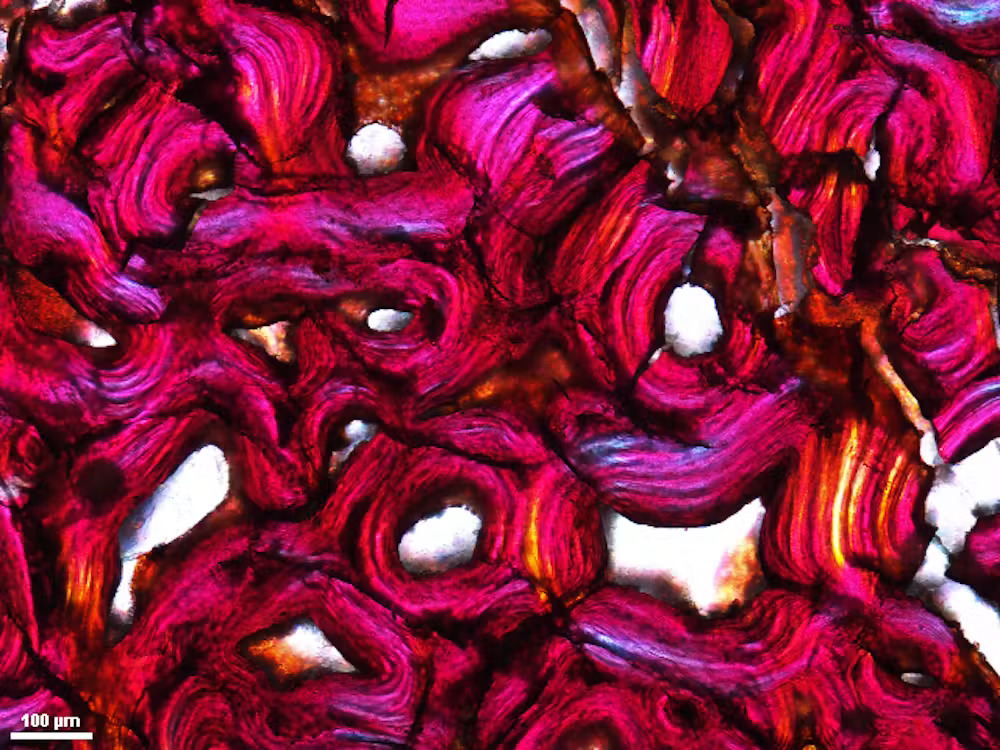
A thin section of a Diplodocus femur reveals the microscopic architecture of the bone, preserving a record of the animal's growth and life history.  (Image credit: Kristina Curry Rogers)

In my own research I use microscopes to uncover the hidden stories preserved inside dinosaur bones and teeth. Thin sections of fossil bones reveal that dinosaurs grew more like mammals and birds than like oversized reptiles. Microscopic modifications to bones capture traces of ancient scavenging, and tiny signatures deep inside baby dinosaur bones indicate the moment of hatching.

None of these discoveries would have been possible if the original fossils had vanished into inaccessible private collections.

Shared natural heritage, on the auction block

Fossils are not static objects whose scientific value is exhausted once they are described. Their value grows as science advances, but only if future researchers can continue to examine the original specimens.

Of course, sometimes dinosaur fossils are rescued from obscurity through purchase and immediate deposition or donation to natural history museums. Some of the world's most important dinosaur fossils are accessible today because individuals, companies or organizations with the means to acquire extraordinary specimens recognized that they belong where scientists can continue to study them and where future generations can learn from them.

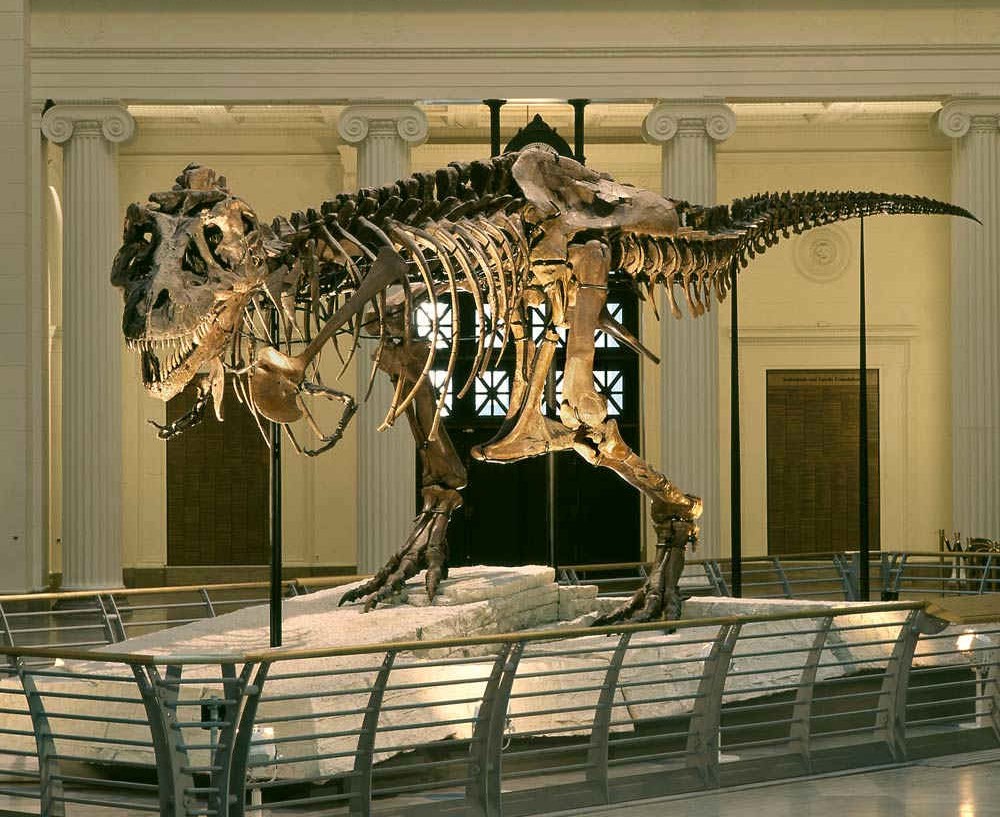
The <em>Tyrannosaurus rex</em> named Sue, shown here at The Field Museum in Chicago, may not have used her little arms much when she was alive, scientists say.

Schoolchildren were among the first to visit 'Sue' the T. rex once it was displayed at the Field Museum of Natural History in Chicago, Ill., thanks to funding from the California State University system, Walt Disney Parks and Resorts and McDonald's. (Image credit: copyright The Field Museum)

Purchasing a fossil in order to place it permanently in the public trust is fundamentally different from acquiring it as a private collectible: One expands access, the other leaves access uncertain.

But as fossil prices rise into the millions, museums increasingly cannot compete. The most significant fossils are no longer reliably entering public collections. Instead, they are becoming luxury assets whose market value supersedes their scientific value.

Dinosaurs belong to our shared natural heritage. They inspire wonder because they connect all of us to a world unimaginably older than our own. For me, the question raised by auctions like the one on July 14 of "Gus" is not who can afford to own these relics of the past. It is whether future generations have the chance to study and learn from them.

This edited article is republished from The Conversation under a Creative Commons license. Read the original article.

How much do you know about the king of the dinosaurs? Test your knowledge with our T. rex quiz!

  •  

Sotheby's big T. rex auction raises concerns hype and wealth are upending science

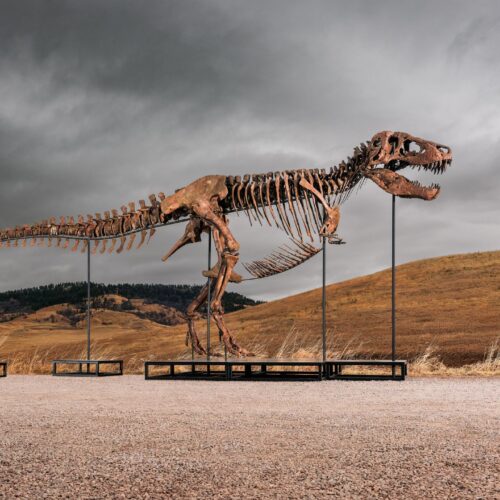
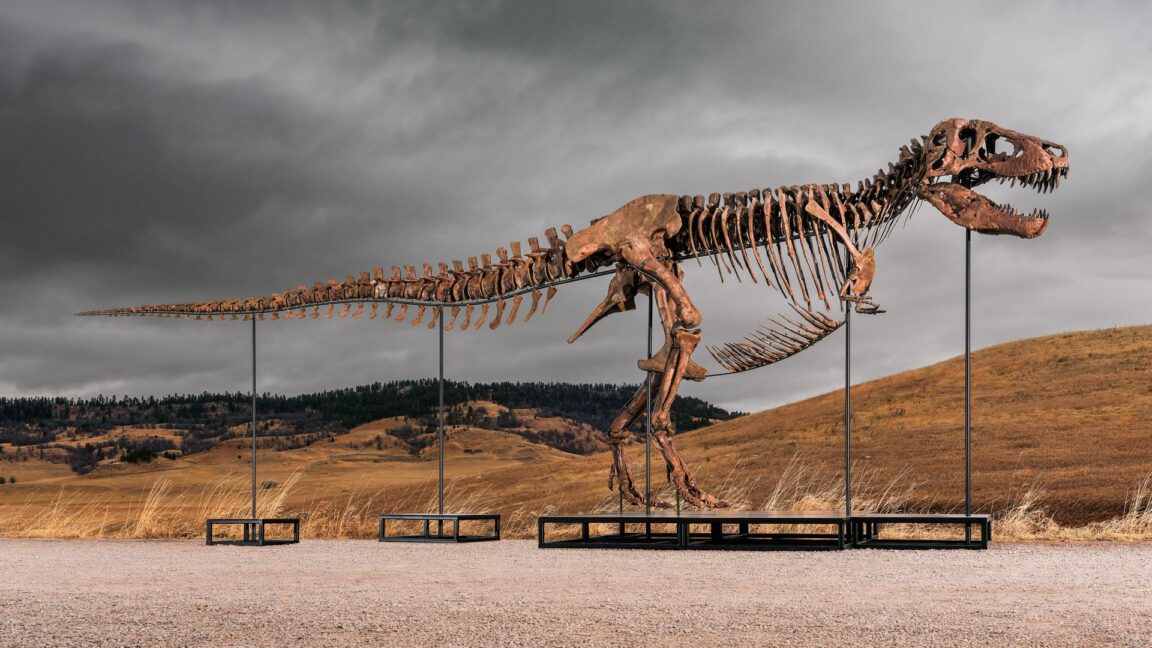
Forget the sale of the century. The auction house Sotheby’s has geared up for the sale of the epoch. On July 14 it opened live bidding on assorted fossils, but the pièce de résistance is lot 20, a rare 67-million-year-old Tyrannosaurus rex skeleton.

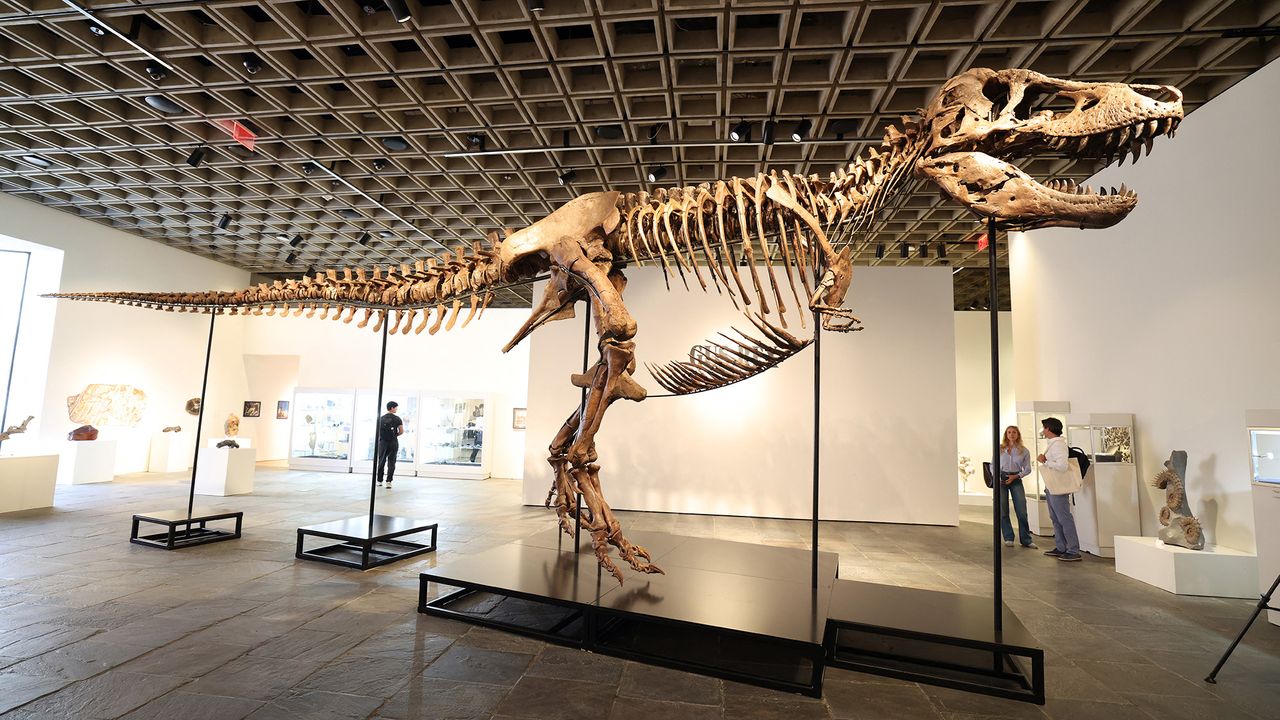
The specimen—dubbed Gus—is billed as one of the largest, most complete T. rexes ever found. Gus is expected to fetch up to $30 million and will go to the highest bidder, whether public museum or private collector. The latter have played an increasingly prominent role in buying fossils, with auction houses, according to paleontologists, contributing to the trend by building hype. But when private collectors swoop in and buy fossils at auction as luxury assets, those pieces of history are effectively lost to science.

By nearly all accounts, Gus is a big deal. In its description, Sotheby’s boasts that the specimen, which was discovered on a ranch in South Dakota, comprises “an incredible 183 fossil bone elements” making it “approximately 61% complete by bone count.” The fossil remains have been mounted in a custom steel armature along with replicas of the missing bones. The result is a reconstructed skeleton posed as if in hot pursuit, its mouth full of dagger teeth ready to tear into prey.

Read full article

Comments

© Courtesy of Matthew Sherman/Sotheby's

  •  

How many asteroids can we detect before they hit Earth?

When you think of an asteroid impact, you’re probably imagining something like the cataclysmic event that nearly wiped out the dinosaurs. In an astonishingly rare event, a rock the size of the island of Manhattan could come hurtling from deep space towards Earth and destroy the world.

On the contrary, asteroids are generally leftover debris from the primordial solar system that didn’t become part of a larger body, like a planet or moon, and they’re not particularly rare. Scientists estimate that there are about 1 billion asteroids and comets classified as near-Earth objects, or NEOs. NEOs are generally much smaller than the asteroid that killed the dinosaurs. They range from weakly held-together piles of rubble 200 meters (700 feet) across, to the minuscule 2024 BX1, approximately 44 centimeters (17 inches) across. 

For several decades, astronomical surveys of the sky have looked for these asteroids. NASA’s Center for Near-Earth Object Studies (CNEOS) Fireball and Bolide Database has records of over 1,000 incidents of objects colliding with our planet since the mid-1990s. Among these is a set of 11 objects that scientists detected before they hit Earth, known as imminent impactors. Finding imminent impactors allows scientists unique opportunities to study the smallest building blocks of the solar system, enabling them to learn more about asteroid composition, structure, and history.

A team of scientists recently conducted a study on how the newly built Vera Rubin Observatory could detect more imminent impactors before they strike Earth. They examined the CNEOS Fireball and Bolide Database impact records spanning February 1, 1994, to January 1, 2026, for records of the asteroids’ coordinates, velocities, and the energy they released at the time of collision. 

They found that 343 NEOs met this criterion, including 5 known imminent impactors. Using these recorded data, they reconstructed the objects’ pre-impact characteristics. The team predicted the asteroids’ orbital paths from the recorded coordinates and velocity. Assuming the objects were spherical, they estimated the size from velocity and impact energy. From this information about the asteroids’ state before impact, the team could then simulate whether the Rubin Observatory would have detected them. 

When small asteroids hit Earth, they mostly burn up in the atmosphere, producing a bright flash that is relatively easy to spot compared to when they are in space. The Rubin Observatory can see objects up to 10 billion times dimmer than the brightest star in the night sky, Sirius. To predict if the Rubin Observatory can detect dim NEOs, the team used the solar system simulator SORCHA. SORCHA takes an observatory’s specifications and the physical properties of the NEOs and uses these to determine whether the observatory could detect them. It also estimates the measured sizes and speeds of the NEOs, and predicts when the observatory would have seen them. 

At the Rubin Observatory, an imminent impactor is considered discovered if it’s observed at least 3 separate times over 15 days before hitting Earth. So this team applied this same criterion to their simulation. They found that of their 343 impactors, SORCHA estimated that the Rubin Observatory would have discovered 14 of them before impact. 

They also found that SORCHA predicted 4 additional impactors that could have been observed at least once, potentially allowing scientists to search other telescope data for evidence of their existence in pre-collision images. Based on these results, the team estimated that the Rubin Observatory could find 4% of all objects longer than 1 meter (3 feet) before they hit Earth. This percentage of discovery translates to 1 to 2 imminent impactors detected every year, at least double their current discovery rate.

The ability to more consistently find imminent impactors would allow researchers to study the smallest pieces of the solar system in detail and to draw general conclusions about the properties of objects that could potentially collide with Earth. This would also allow scientists to more accurately calculate the orbits of imminent impactors, determine where more meteorites land to recover them, and keep tabs on the extremely rare but more hazardous large impactors for planetary defense initiatives. So, humanity can learn more about the ancient solar system, and hopefully avoid going the way of the dinosaurs while doing so!

The post How many asteroids can we detect before they hit Earth? appeared first on Sciworthy.
  •  

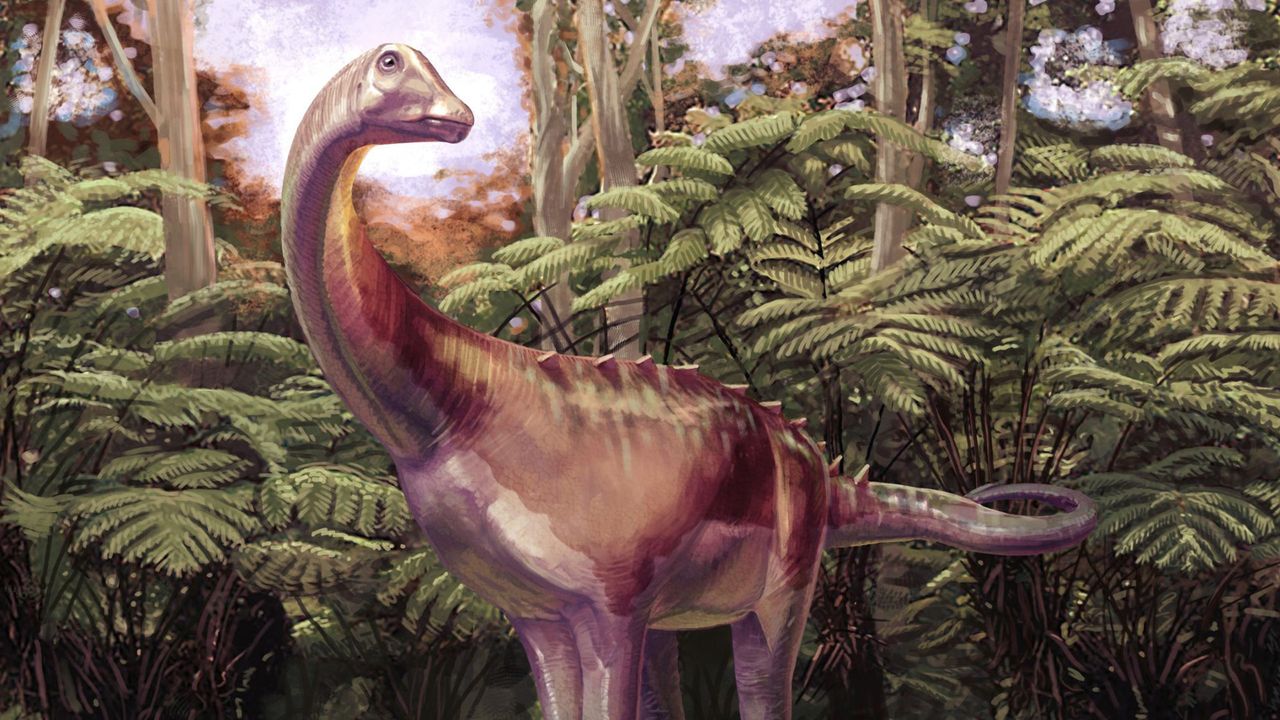
Antarctica's first dinosaur fossil belonged to a group of the largest land animals ever

The first dinosaur found in Antarctica belonged to a group that included the largest animals ever to walk the planet, a new study finds.

A backbone from the 82 million-year-old giant was discovered more than 40 years ago, but at the time, researchers assumed it came from an ancient marine reptile. Now a new study, published June 29 in the journal Acta Palaeontologica Polonica, has revealed that it was actually a titanosaur — the group of long-necked sauropods that included the largest land animals on record.

"At first glance this appears to be an unremarkable fossil, but it holds an important place in the history of Antarctic exploration as the first dinosaur fossil found on the continent," study first author Paul Barrett, a paleontologist at the Natural History Museum in London, said in a statement.

While this fossil now holds the record for the first dinosaur fossil found in Antarctica, other dinosaur fossils were identified on the continent after its discovery, so it's not the only known Antarctic dinosaur. In fact, researchers have identified a variety of dinosaurs on Antarctica, with another sauropod fossil identified as a titanosaur in 2011.

The newly identified dinosaur was around 20 to 23 feet (6 to 7 meters) long. That's very small compared with the largest-known titanosaurs, which could grow up to 123 feet (37.5 m) long. However, as the fossil is just a fragment of a vertebra, researchers are unable to narrow down which species the Antarctic titanosaur belonged to, and it's possible that the individual was only a juvenile when it died.

Mike Thomson, a British Antarctic Survey geologist, found the fossil during an expedition to James Ross Island in 1985. The island, which has been the site of multiple dinosaur discoveries, is located off the northeastern Antarctic Peninsula, south of the 600-mile-wide (965 kilometers) Drake Passage that separates South America from Antarctica.

Antarctica is well known for its icy landscapes, but when titanosaurs roamed Earth, the continent was still attached to South America and full of temperate forests. Antarctica's dinosaurs were so far south that they would have lived in constant twilight during the winter months, according to a news article published by the Natural History Museum.

The authors of the new study identified the dinosaur using high-resolution CT scans, which enabled them to look inside the fossil. Dating back to the Cretaceous period (143 million to 66 million years ago), the titanosaur lived in the last age of the non-avian dinosaurs, before an enormous asteroid hit what is now Mexico's Yucatan Peninsula 66 million years ago and wiped them out.

The Antarctic titanosaur helps researchers better understand how dinosaurs spread across Earth's southern continents, which at the time were combined into a supercontinent called Gondwana. The presence of titanosaurs on Antarctica suggests that they may have used Antarctica to travel from what is now South America to New Zealand.

Other dinosaurs identified on Antarctica include small herbivores, armored ankylosaurs and bipedal predators like Imperobator, which would have shared the forests with the newly identified titanosaur. While researchers are beginning to piece together Antarctica's ancient ecosystems, they still have a lot to learn about the dinosaurs that lived there.

"There are likely many more dinosaurs to be discovered on the continent," Barrett said. "As climate change causes ice to retreat we may indeed find further evidence of this past biodiversity."

  •  

Were dinosaurs doomed before the asteroid hit?

Around 66 million years ago, an asteroid wiped out 75% of the species on Earth. This event caused the extinction of all dinosaurs except birds, referred to as non-avian dinosaurs. However, an open question in paleontology is whether the dinosaurs were already declining before the asteroid hit. Many scientists think that around 5 to 10 million years before the extinction event, dinosaurs became less biologically diverse across America, making them more prone to extinction. 

To investigate this hypothesis, scientists recently revisited fossils in a rock layer from the end of the dinosaur era that previous researchers had incorrectly dated. The bulk of the fossils from this period had previously been collected from a different section of rocks called the Hell Creek Formation in Montana. These researchers studied a rock layer in New Mexico that is exposed to the surface, known as the Naashoibito Member. It’s approximately 30 meters (about 100 feet) thick and formed from ancient river sediments. 

To determine when the Naashoibito Member formed, the scientists measured the decay of radioactive elements within its mineral grains over time, a technique called radiometric dating. The scientist reasoned that these mineral grains must have crystallized before being transported and incorporated into the Naashoibito Member, so their youngest ages should provide a maximum depositional age. 

They determined the ages of 1,046 crystals of the mineral feldspar from 2 dinosaur-bearing rock layers in the Naashoibito Member. Based on these ages, the researchers found that a sandstone within 5 meters (about 16 feet) of the lowest boundary of the Naashoibito Member must be younger than 66.9 million years old. They found that the other layer, which is around 3.5 meters (11 feet) from the base of the lowest boundary, must be younger than 66.4 million years old. These age ranges indicated that the sandstone contains dinosaur fossils formed 400,000 years before their extinction.

Next, the researchers measured the direction of magnetic minerals inside the rocks, using a practice called magnetostratigraphy. The direction of these minerals indicates where Earth’s magnetic field was pointing at that time. Scientists have shown that the Earth’s magnetic field has flipped multiple times over Earth’s history, so they can use these magnetic signals to create a timescale for when the sediments formed. 

The researchers wanted to determine whether the magnetic minerals were lined up in a direction like today, called normal polarity, or the opposite, called reverse polarity. The researchers found one rock layer with normal polarity at the base of the Naashoibito Member, and one with reverse polarity in the upper part of the Naashoibito Member. These magnetic field directions lined up with 2 known polarity intervals over a timeline that matched the feldspar dates. Together, these data demonstrated that the Naashoibito Member formed at the end of the dinosaur era, around the same time as the Hell Creek Formation.

Next, the researchers wanted to test whether non-avian dinosaurs maintained their diversity across different regions of Western North America during this time period. They compared fossil patterns from locations across North America using statistical grouping methods that determine how similar or different their environments were. They found that temperature, rather than geographical location alone, was the best predictor of diversity at the extinction event. 

The team concluded that a diverse population of Naashoibito dinosaurs lived at around the same time as the Hell Creek dinosaurs. Earlier scientists surmised that dinosaurs were already on the decline because they studied the colder northern regions, where diversity was lower. However, these results suggest that warmer conditions in the south still supported diverse dinosaur populations. Together, this evidence suggests that dinosaurs were still diverse and thriving 66 million years ago, and that their extinction was indeed a result of the asteroid impact.


The post Were dinosaurs doomed before the asteroid hit? appeared first on Sciworthy.
  •  

New Feathered Dinosaur May Have Solved a 120-Million-Year-Old Fossil Mystery

Jian changmaensis Attacks Gansus yumenensis in Ancient ChinaA newly discovered feathered dinosaur from China may help solve a long-standing mystery surrounding a fossil bed filled with ancient bird remains. For years, one fossil site in northwestern China has posed a mystery. The area contains hundreds of fossilized birds, many remarkably well preserved. Mixed among them are strange clusters of shattered bones compressed [...]
  •  

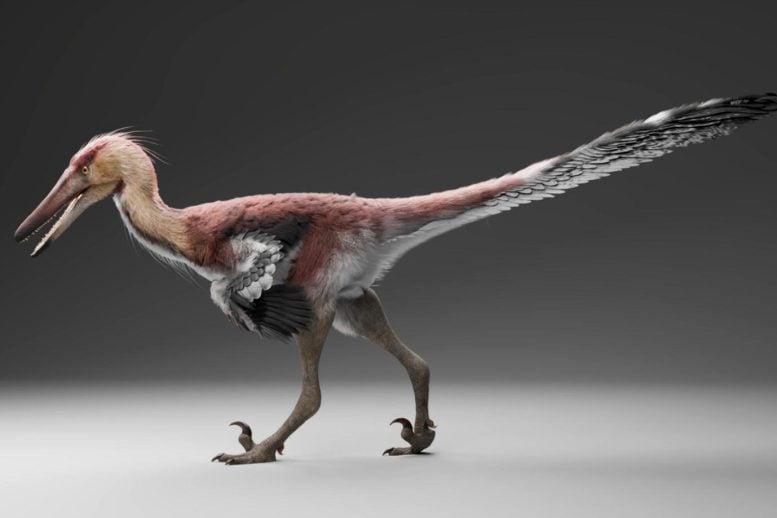
This Dinosaur Had the Claws of a Raptor but Hunted Like a Heron

Kank ReconstructionScientists have uncovered a fish-hunting raptor from Patagonia that may have stalked prey like a giant prehistoric heron. A newly identified dinosaur from Patagonia is giving scientists fresh insight into how some raptor relatives lived during the final chapter of the age of dinosaurs. The species, named Kank australis, appears to have spent much of [...]
  •  

The Physics of the Global Flood

The biblical account of Noah’s Ark and the global Flood as a divine judgment on humanity's wickedness is discussed. That includes the processes of water covering the Earth, and tectonics theories to explain geological changes during the Flood and implications for Earth's environment post-Flood.

  •  

The Physics of the Curse

The Curse resulted in decay, disease, and death affecting the entire creation, meaning the whole universe. The effects are seen in the cosmos and in living organisms. However a future restoration of creation is promised by God, reversing the effects of the Curse.

  •  

The Physics of Creation | Day 6

Day 6 of creation, God created air-breathing land animals and the first humans, Adam and Eve, who were to have dominion over all creatures. I discuss the theological and scientific implications of this creation, emphasizing the unique role of humans and the perfection of the original creation, free from all defects.

  •  
❌