❌

Reading view

Scientists Find Traces of Two Unknown Archaic Hominins in Human DNA

An archaic hominin. Image credit: Ninara / CC BY 2.0.

New research led by the University of California, Berkeley reveals that beyond Neanderthals and Denisovans, humans interbred with two mysterious ‘ghost’ lineages: one in Africa more than 50,000 years ago, another in Eurasia over 1.7 million years ago.

The post Scientists Find Traces of Two Unknown Archaic Hominins in Human DNA appeared first on Sci.News: Breaking Science News.

  •  

Scientists Reveal Hidden DNA Traces in the Shroud of Turin

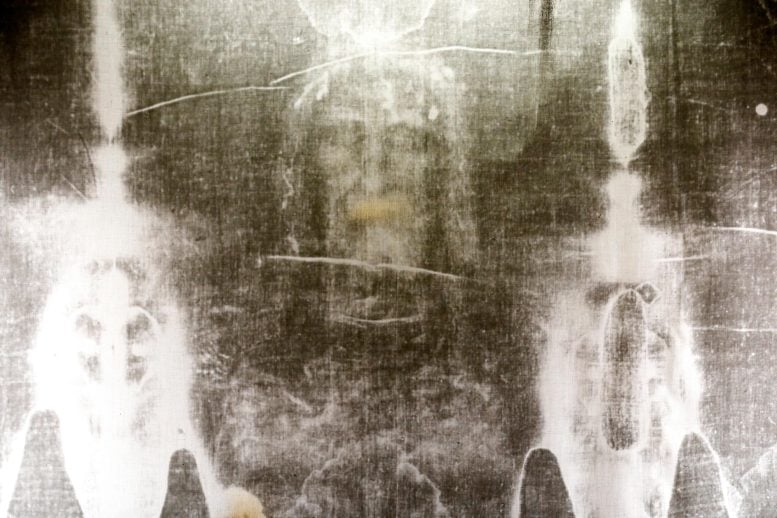
Shroud of Turin Jesus ChristNew research has revealed the complex biological history preserved in DNA traces on the Shroud of Turin. Fibers taken from the Shroud of Turin nearly five decades ago still contain a complex record of biological material accumulated over centuries. In research published in Scientific Reports, scientists applied advanced genomic sequencing (rigorous PCR-free next-generation metagenomic sequencing) [...]
  •  

Scientists Discover Evidence of a Mysterious ‘Ghost’ Human Ancestor Hidden in Our DNA

In recent years, advances in ancient DNA sequencing have redefined our understanding of human evolution, revealing that our species did not emerge in isolation but repeatedly interbred with close evolutionary relatives like Neanderthals and Denisovans.

Yet one of the field’s greatest mysteries has remained unanswered: What if some of our ancestors also encountered extinct human groups whose DNA has never been recovered from fossils? Now, a recent study published in Science suggests researchers may finally have found a way to detect those long-lost relatives.

Instead of relying on ancient bones or preserved genomes, researchers developed a powerful computational approach capable of identifying genetic traces of previously unknown archaic humans using only the genomes of living people.

Applying the technique to modern populations around the world, the researchers uncovered evidence that an unidentified “ghost” hominin contributed DNA to the ancestors of all living humans before the great migration out of Africa.

Researchers also found new evidence providing evidence for the existence of an even older “super-archaic” human lineage whose genetic legacy may survive today through Denisovan ancestry in Oceania.

“Admixture between modern humans and extinct hominins has shaped the genomes of present-day individuals, but reconstructing this history has been constrained by the scarcity of archaic samples and unadmixed outgroup populations,” researchers write. “We introduce TRACE, a reference- and outgroup-free approach that uses features of ancestral recombination graphs to identify archaic ancestry.”

Past research has sequenced only a handful of high-quality archaic human genomes, all from Eurasia. While those genomes have revealed that most people outside Africa carry roughly 1 to 2 percent Neanderthal DNA and that many Asian and Oceanian populations also inherited Denisovan ancestry, scientists have long suspected those known groups represented only part of humanity’s evolutionary history.

Previous genetic studies had hinted that modern humans, especially African populations, contained fragments of DNA from unidentified archaic relatives. However, because no fossil genomes exist for those populations, proving their existence has been extraordinarily difficult.

The new method, called TRACE, short for “TRacking Archaic Contributions via ARG Estimation,” takes a fundamentally different approach. Rather than comparing modern DNA against known Neanderthal or Denisovan genomes, it reconstructs ancestral recombination graphs. These enormous evolutionary family trees trace how pieces of DNA have been inherited over hundreds of thousands of years.

These ancestral graphs preserve signatures left behind when deeply divergent human lineages interbred. Such events create unusually long branches and distinctive genetic patterns that can persist in descendants for hundreds of thousands of years. By searching for those signatures, TRACE can identify archaic ancestry even when no reference genome exists.

To test the system, the researchers first ran extensive computer simulations modeling ancient human populations and known episodes of Neanderthal interbreeding. The method consistently revealed high accuracy while producing very low false-positive rates.

The team then applied TRACE to genomes from the 1000 Genomes Project, encompassing hundreds of individuals representing populations across Africa, Europe, Asia, and elsewhere.

The program successfully recovered well-established Neanderthal ancestry in Europeans and Asians, along with Denisovan ancestry concentrated primarily in Asian populations. More intriguing, however, was the discovery of an additional category of DNA that matched neither Neanderthals nor Denisovans.

TRACE identified between roughly 0.5 and 1.1 percent “ghost” ancestry across all modern populations examined. The genetic evidence suggests these segments originated from an unknown archaic human lineage that diverged from our ancestors roughly 830,000 years ago, before later contributing DNA to the ancestors of modern humans.

Perhaps most surprising was where that ancestry appeared.

Rather than being confined to African populations, as several earlier hypotheses proposed, the researchers found remarkably similar ghost ancestry in both Africans and non-Africans.

Most of the segments detected outside Africa were shared with African populations, suggesting the interbreeding event occurred before modern humans started dispersing across the globe roughly 50,000 to 70,000 years ago.

The findings point toward a previously unrecognized chapter of human evolution in which an unidentified human population mixed with the common ancestors of everyone alive today.

The researchers also explored where these ancient genetic fragments survive in the modern genome.

They found ghost ancestry spread across more than 70 percent of the accessible human genome, although it was far from evenly distributed. Some regions contained unusually high concentrations of ghost DNA, including genes involved in immune function and metabolism.

Even more unexpectedly, ghost ancestry persisted inside genomic regions previously believed to be largely devoid of archaic DNA.

These regions, known as “Neanderthal and Denisovan ancestry deserts,” have often been interpreted as places where natural selection eliminated archaic genetic variants because uniquely modern human versions proved advantageous.

The presence of ghost ancestry inside many of those same regions suggests the story may be more complicated. Rather than rejecting all archaic DNA equally, natural selection may have acted differently depending on which ancient human lineage contributed the genes.

The study also ventured even farther back in evolutionary time.

Focusing on genomes from Papua New Guinea, Vanuatu, and the Santa Cruz Islands, the researchers searched for evidence of “super-archaic” ancestry—genetic contributions from a lineage that diverged long before Neanderthals, Denisovans, and modern humans separated.

Previous studies had suggested Denisovans themselves may have inherited DNA from such an ancient population. TRACE now provides additional support for that hypothesis.

The team identified deeply divergent genetic segments embedded explicitly within Denisovan-derived DNA in Oceanian populations. Based on their analyses, those ancient lineages may have split from the ancestors of modern humans approximately 1.77 million years ago.

While the researchers stress this represents a conservative estimate of surviving super-archaic ancestry, the findings strengthen the idea that modern humans indirectly inherited DNA from a much older human lineage through Denisovan interbreeding.

The identity of both the ghost lineage and the super-archaic population remains unknown.

The ghost population may represent Middle Pleistocene human groups or African populations of Homo heidelbergensis that encountered the ancestors of modern humans before the Out-of-Africa migration. For the older super-archaic lineage, the researchers note that Homo erectus remains one plausible candidate given its estimated divergence time and broad geographic distribution.

Although the new method cannot yet identify specific fossil species, it provides researchers with an entirely new tool for investigating chapters of human evolution that may never yield recoverable ancient DNA.

Because DNA older than roughly one million years is extraordinarily unlikely to survive outside permanently frozen environments, computational approaches like TRACE are becoming increasingly important for reconstructing humanity’s deepest evolutionary history.

“We find evidence for at least one ghost introgression predating the OOA expansion that contributed ancestry to all present-day populations,” researchers write. “These results point to multiple layers of introgression—both direct and mediated through other archaic groups—shaping modern human genomes.”

The study, “Recovering signatures of archaic hominin introgression using ancestral recombination graphs,” was published in the journal Science.

Tim McMillan is a retired law enforcement executive, investigative reporter and co-founder of The Debrief. His writing typically focuses on defense, national security, the Intelligence Community and topics related to psychology. You can follow Tim on Twitter: @LtTimMcMillan.  Tim can be reached by email: tim@thedebrief.org or through encrypted email: LtTimMcMillan@protonmail.com 

  •  

Largest Mammoth DNA Study Suggests Ice Age Hunters Preferred Female Mammoths

An international team of researchers who extracted ancient mammoth DNA from a sample of 500 bones reports that Ice Age humans selectively targeted female woolly mammoths. 

The results of the team’s work show a contrast in sex ratio and mammoth remains, and found that the connection to large bones associated with ancient human activity was dominated by females.

“Whether these massive mammoth bone accumulations were formed naturally or by human hunting has been debated for decades”, says David Díez del Molino, Researcher at the Centre for Palaeogenetics and co-senior author of the study, in a statement. “By comparing the genetic sex ratios of hundreds of mammoths from natural settings with those found in these archaeological contexts, we can now infer that human activity was the primary driver behind these bone accumulations.” 

The team took samples from a total of 521 woolly mammoths, including 448 individuals whose DNA was sequenced for the first time. The study, the team says, became the largest genetic analysis of mammoths ever conducted.

Archaeologists have been wondering for years if the large bone piles they found were created naturally or organized by humans. The new research pointed to a clear answer: these discoveries can be attributed directly to human hunting and organization. 

Excavation in Langmannersdorf 2025. Photo: Marc Händel/Austrian Academy of Sciences.
Excavation in Langmannersdorf 2025. Photo: Marc Händel/Austrian Academy of Sciences (Image Credit: Marc Händel/Austrian Academy of Sciences).

The researchers determined the sex of each mammoth based on genetics and found that remains from natural settings were more likely to be male, with around 66 percent being males and 34 percent females. Scientists believe these reveal a direct connection to the behavior of mammoths, much like modern elephants, where adult males were more likely to be trapped in sinkholes or other related natural disasters, which would increase the chances of their bones being preserved, compared to females. 

However, the sites connected to human organization and consumption told a different story. Around 70 percent of the mammoths found were female, suggesting that during the Ice Age, strategic hunting was being undertaken. The question remains why hunters preferred females over males, which also seems unusual since killing more female mammoths would decrease the population, and therefore decrease the overall food supply of Ice Age hunters.

“While it is tempting to assume that hunters would have targeted females because they were smaller than adult males, the reality may have been more complex. If mammoths behaved like modern elephants, females living in matriarchal herds may have had group defences that would have made encounters with herds equally or even more risky,” says Hannah M. Moots, Postdoctoral Researcher at the Centre for Palaeogenetics and lead author of the study.

Although females were generally smaller than fully grown bulls, researchers caution against assuming they were easier prey.

“Another possibility is that female-led herds moved across the landscape in more predictable ways than solitary males, meaning Upper Palaeolithic hunter-gatherers may simply have encountered them more frequently, whether for hunting or scavenging”, Moots adds. The researchers also suggest that female herds could have followed migration routes, therefore making their movements more predictable for Upper Paleolithic hunter-gatherers. 

The study examined 11 major archaeological sites dating from 30,000 to 20,000 years ago, a time when mammoths were essential to human survival. Hunters during this period used nearly every part of the animal for food, clothing, shelter, tools, and even art.

By analyzing DNA from 100 mammoths found at archaeological sites and 421 from natural deposits, researchers assembled the largest dataset of its kind, revealing new insights into mammoth behavior and Ice Age hunting practices.

The analysis also uncovered the first known case of X0/XX mosaicism, a genetic condition similar to Turner syndrome in modern humans, in an extinct species. The affected mammoth, from Wrangel Island, provides a rare glimpse into the biology of these ancient giants.

The recent study, “Palaeogenomic sex inference of mammoth remains sheds light on the anthropogenic nature of bone accumulations,” appeared in the journal Current Biology. 

Chrissy Newton is a PR professional and the founder of VOCAB Communications. She currently appears on The Discovery Channel and Max and hosts the Rebelliously Curious podcast, which can be found on YouTube and on all audio podcast streaming platforms. Follow her on X: @ChrissyNewton, Instagram: @BeingChrissyNewton, and chrissynewton.com. To contact Chrissy with a story, please email chrissy @ thedebrief.org.

  •  

Decades of Financial Hardship Linked to Faster Brain Aging

Long-term financial stress accelerates age-related cognitive decline. Image credit: Thomas Breher.

A large British study spanning more than 70 years has found that people who experience chronic money struggles over their working lives show measurable declines in memory and processing speed by their 50s, along with signs of accelerated brain shrinkage decades later.

The post Decades of Financial Hardship Linked to Faster Brain Aging appeared first on Sci.News: Breaking Science News.

  •  

Scientists Discover New Monkey Species in Democratic Republic of Congo

Colobus congoensis. Image credit: Daniel Rosengren, Frankfurt Zoological Society.

Researchers have identified and formally described a new species of the African monkey genus Colobus living in the remote interior of the Democratic Republic of Congo, marking only the fifth new monkey species found on the continent in the past 75 years.

The post Scientists Discover New Monkey Species in Democratic Republic of Congo appeared first on Sci.News: Breaking Science News.

  •  

Wisdom of the Wise is Foolishness with God

The mystery of life's origin on Earth remains unsolved. With modern biochemistry tools scientists are no closer to synthesizing life from non-living chemicals despite advanced knowledge and technology, let alone understanding how it could have arisen abiogenetically. The rejection of the Creator has led to foolishness in the wise.

  •  

Japanese Researchers Unlock a Powerful New Way To Edit and Assemble DNA

Genetic Mutation Damaged Broken DNA StrandSilver nanoparticles provide a more efficient way to cut and assemble DNA, improving recovery rates and boosting DNA joining efficiency for future gene engineering applications. DNA is made of long chains that carry the instructions living things need to grow and function. In genetic engineering, researchers cut DNA at chosen locations and attach the pieces [...]
  •  

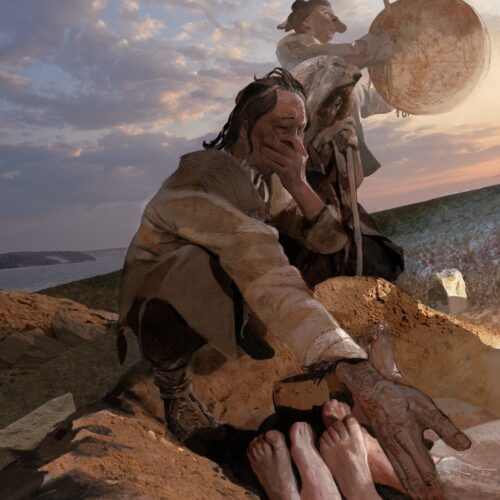
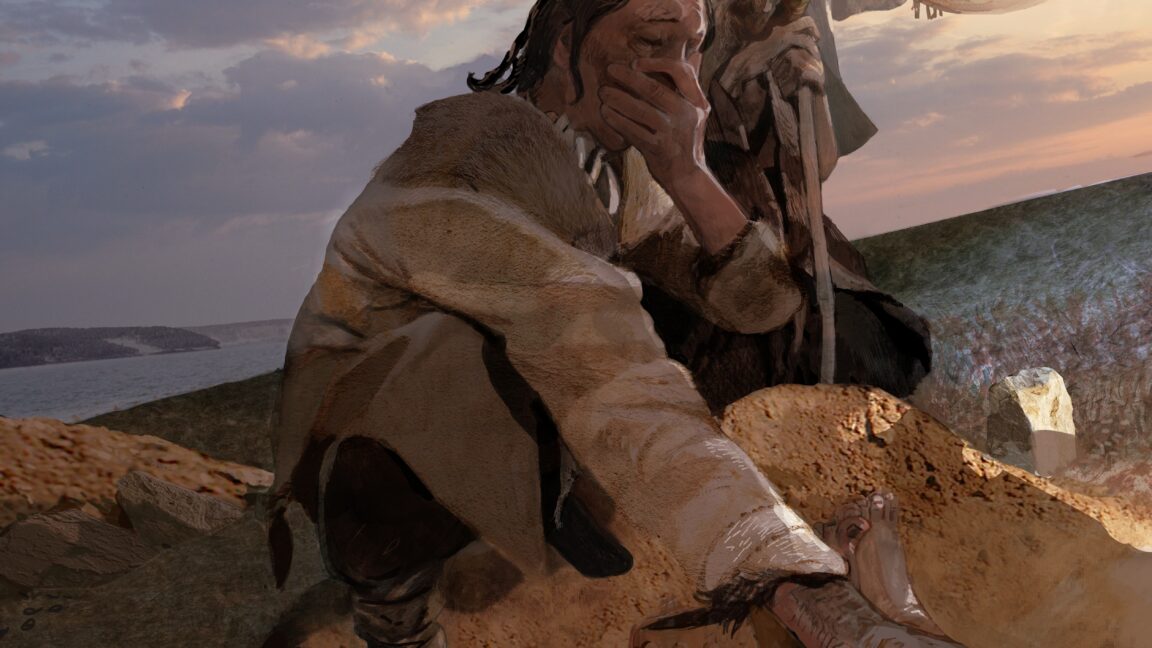
5,500 Years Ago, Something Was Killing Humans in Prehistoric Siberia—New Research Has Finally Revealed This Ancient Assassin

A longstanding archaeological mystery has loomed over discoveries at ancient burial sites in eastern Siberia: why were so many children and adolescents among the dead?

Now, according to a recent study in the journal Nature, DNA recovered from human remains found in burial sites at four cemeteries near Lake Baikal in eastern Siberia may finally reveal the answer.

Thousands of years ago, prior to the rise of ancient medieval cities—and their often-rat-infested streets—a disease famously associated with these rodents had already ravaged communities of prehistoric hunter-gatherers.

The research, based on reconstructions of ancient bacterial genomes preserved in the teeth of these ancient Siberians, revealed the presence of previously unknown strains of Yersinia pestis—the bacteria responsible for plague—providing fresh evidence that the lethal disease was already manifesting and killing human populations at least as far back as 5,500 years ago.

“Whether the earliest forms of plague were mild or virulent has been a matter of debate, but our findings demonstrate that these ancient strains were already highly lethal,” said senior author Eske Willerslev of the University of Copenhagen and the University of Cambridge.

New Evidence of an Ancient Siberian Plague

In their study, the team successfully located plague DNA in 18 out of 46 individuals they studied. Based on radiocarbon dating, many of the deaths were confirmed to have all happened within a short span of time, which is consistent with sudden deaths resulting from plague. Additionally, genetic evidence showed that several of these victims had been close relatives.

One key finding in the research involved the number of children and adolescents who were among the dead—a discovery mirroring earlier findings at prehistoric sites in the region, which had remained a longstanding archaeological mystery.

“The unusually high number of children and the short timespan was a real puzzle that we’ve been trying to solve since the 1990s,” said archaeologist Andrzej Weber of the University of Alberta. “Finding out that plague was the cause is extraordinary, but it makes so much sense.”

New Findings Challenge Old Assumptions

Based on the new findings, ancient strains of plague appear to have been more harmful than once thought. In the past, it was presumed that because these early strains lacked genetic adaptations that helped the bubonic plague spread so efficiently through fleas and rodents, they were relatively harmless.

The team’s research now reveals that these newly identified strains carried a specific toxin-producing genetic feature, known as a superantigen, which can trigger severe immune responses that potentially had devastating impacts on mortality rates in the ancient world.

Such deadly outbreaks may have had a far more significant impact on ancient human populations than previously realized, and during periods long before the rise of major urban centers and organized agriculture.

In terms of the origins of the disease, researchers believe that they may have finally traced it to Central or Northeast Asia, where infections may have spread from marmots, large rodents that are still recognized as plague carriers in modern times.

After years of uncertainty, the team’s research offers some of the best evidence to-date that one of the most devastating diseases in human history was already playing a role in shaping human history thousands of years earlier than once thought.

Martin Sikora, associate professor at the University of Copenhagen and the study’s senior author, says his team’s research “changes our understanding of the earliest plague outbreak,” and now confirms that such ancient strains “appear to have carried a potent combination of virulence factors that could make infection highly lethal.”

The team’s study, “Lethal plague outbreaks in Lake Baikal hunter-gatherers 5,500 years ago,” appeared in the journal Nature on June 17, 2026.

Micah Hanks is the Editor-in-Chief and Co-Founder of The Debrief. A longtime reporter on science, defense, and technology with a focus on space and astronomy, he can be reached at micah@thedebrief.org. Follow him on X @MicahHanks, and at micahhanks.com.

  •  

2,000-Year-Old Grape Seeds Rewrite the History of Italian Wine

Professional Sommelier Analyzing Red WineA genetic study of 2,000-year-old grape seeds is shedding new light on ancient winemaking. For centuries, the vineyards of Tuscany have been associated with some of the world’s most celebrated red wines. But a cache of grape seeds buried in ancient wells is revealing a very different story about what people were growing and drinking [...]
  •  

Thinking of Gifting a DNA Test for Father’s Day? This Researcher Warns it Could Lead to Surprising Discoveries


Have you ever considered buying a DNA kit for a family member as a special gift, such as Father’s Day? On the surface, it may seem like a good idea, as it allows loved ones or friends to peer into their past and family history; however, psychologists have recently warned against it, as it might have profound psychological implications.

In a new book titled The Psychology of Genealogy, Dr. Susan Moore, a retired Australian university researcher in social and developmental psychology, examines the complex emotions associated with DNA testing and uses real-life case studies to illustrate its psychological impact.

“Should you give DNA kits as gifts? It can be fun, [but] it can be risky,” Moore says in a statement. 

Moore cautions that the psychological impact of DNA testing may be far greater than many people anticipate. These tests can reveal unexpected family secrets, uncover cases of misattributed paternity, disclose donor conception, and even link individuals to hundreds of previously unknown half-siblings or relatives they may not want to be connected with.

“Do first think carefully about how your intended recipient might cope with unexpected outcomes,” Moore says.

“Hobbyist family historians are uncovering joyful and inspiring stories of the past as well as sad and unsettling secrets of their ancestry,” Moore explains. “Records and DNA matches provide boosts, challenges, and even threats to one’s sense of self, and this is occurring at unprecedented levels.”

Unexpected DNA results can deeply impact a person’s sense of self and identity, along with family belonging and dynamics—a phenomenon psychologists call “identity disruption.” Moore’s book highlights cases involving revelations of misattributed parentage, late-discovered adoption, and donor conception uncovered through genetic testing, all of which caused more physical harm than good. 

“At the personal level, these may be findings that cause you great distress, that destabilize your sense of who you are, that initially at least, you would have preferred not to know. Once known, however, they cannot be unknown,” says Moore.

DNA testing has also raised privacy concerns in recent years. A 2023 23andMe data breach exposed millions of users’ genetic information, while financial challenges that DNA companies have faced raise questions about what happens to genetic data if these companies fail.

Surprising statistics show that, presently, over 30 million people have tested their DNA through genealogical services like 23andMe and AncestryDNA. 

Still, for many people, even with data breaches and larger companies buying up DNA data sets, it’s still enticing to buy, as their curiosity seems to outweigh the risks.

“How exciting it can be to discover the identity of an ancestor, solve a family mystery, prove or disprove family ‘legends’ or discover previously unknown living relatives,” Moore says. 

“Indeed, genealogists regularly report elation and joy as they unearth lost relatives, discover the identity of a ‘missing’ ancestor, or otherwise break down ‘brick walls’ (genealogical puzzles that seem to resist solutions due to missing, inaccurate, or hard-to-access records).”

“Curiosity is a great motivator,” Moore adds.

Chrissy Newton is a PR professional and the founder of VOCAB Communications. She currently appears on The Discovery Channel and Max and hosts the Rebelliously Curious podcast, which can be found on YouTube and on all audio podcast streaming platforms. Follow her on X: @ChrissyNewton, Instagram: @BeingChrissyNewton, and chrissynewton.com. To contact Chrissy with a story, please email chrissy @ thedebrief.org.

  •  

Beyond DNA: Scientists Discover Inheritance That Breaks the Rules of Genetics

Genetic Information DNA MethylationScientists found that some inherited traits can bypass the traditional rules of genetics, revealing a surprising new layer of inheritance beyond DNA. For more than a century, Gregor Mendel’s laws of inheritance have served as the foundation of genetics. But new research suggests that inheritance can be more complicated than the DNA sequences passed from [...]
  •  

A Surprising Discovery Challenges What Scientists Thought DNA Methylation Was For

DNA Genetics Breakthrough ConceptDNA carries the instructions for life, but additional molecular systems help determine how those instructions are used. New research in a sea anemone reveals an unexpected role for one of these systems. DNA is often described as the blueprint of life, but a blueprint is only useful if someone knows how to read it. Across [...]
  •  

This New DNA Test Solves Rare Disease Mysteries That Standard Genetics Misses

Blood DNA Forming Inside Test TubeA new long-read DNA test improves rare disease diagnosis, replaces multiple existing tests, and could become the preferred global standard for genetic diagnostics. A new DNA test is providing a far more detailed view of the genome than current standard diagnostic methods, helping doctors identify rare genetic disorders more often. The test can replace up [...]
  •  

Hunter-gatherers in Siberia died of a plague outbreak 5,500 years ago

Plague swept through groups of hunter-gatherers in southeastern Siberia 5,500 years ago, leaving dozens dead in its wake—with DNA from Yersinia pestis bacteria still trapped inside their teeth.

University of Oxford ancient DNA researcher Ruairidh Macleod and his colleagues recently sequenced the telltale bacterial DNA in teeth from plague victims at four ancient cemeteries in the area around Russia’s Lake Baikal. The tragedy that befell these communities is now the earliest known plague outbreak, courtesy of the oldest strain of Y. pestis ever sequenced.

Unearthing a new backstory for the plague

Until recently, scientists who study the evolution of diseases have held two fairly solid ideas about the origins of plague, the disease caused by Yersinia pestis bacteria. It's a scourge so awful that it has gone down in history as not just a plague but the plague. The first idea is that the earliest strains didn't have the right genetic traits to be really lethal. And the second is that the plague first began menacing humans when the first farmers settled in densely packed towns alongside rats and domestic animals.

Read full article

Comments

© Kevin WIlson

  •  

Researchers Capture the First Atomic-Level Images of a Critical Human DNA Repair Enzyme

SMUG1 and APE1Researchers have captured the first atomic-level views of human SMUG1, a key enzyme involved in repairing damaged DNA. Every cell in your body is constantly battling damage to its DNA. Now, scientists have captured the first atomic level images of a key human repair enzyme in action, revealing how cells identify and remove some of [...]
  •  

DNA Breakthrough: Silver Nanoparticles Cut and Join DNA Segments with Incredible Efficiency


A new ultra-efficient DNA splicing method developed by a Japanese research team using silver nanoparticles offers a dramatic improvement to how scientists stitch genetic blueprints together, with implications for future developments in genetics.

In animal models for drug research, crop breeding, and disease treatment, scientists cut and recombine DNA segments, traditionally relying on “sticky ends,” the overhanging bits left at the ends of the sequences to create a stable join.

Now, researchers at Japan’s Nagoya University and Gifu University have announced a much more precise silver nanoparticle-based solution for DNA cutting and joining in a recent paper published in Nucleic Acids Research, enabling incredible precision.

DNA Splicing Challenges

The sticky ends required in traditional splicing techniques come with significant drawbacks. In these methods, restriction enzymes cut DNA, which is then reattached using T4 DNA ligase. Unfortunately, restriction enzymes lack precision, often producing sticky ends that are not long enough to create an optimal join.

Professor Hiroshi Abe and Assistant Professor Masahito Inagaki at Nagoya University, in collaboration with Professor Natsuhisa Oka at Gifu University, led the effort to improve the efficiency of DNA splicing. The team focused on cutting DNA segments using chemical reactions rather than the restriction enzymes typically employed, drawing inspiration from decades-old research.

Between 1990 and 1992, researchers reported successfully cutting 3′-thiol-modified DNA at specific locations using silver ions.

“Although it had been known for a long time, it was never put to practical use, and we recognized that it could be the key to our goal of creating sticky ends of any length and sequence at any position we choose,” Hiroshi told The Debrief.

Rethinking Old Work

However, this method was impractical because nonspecific binding of silver ions resulted in only a 14% recovery rate.’ The researchers’ breakthrough came from substituting silver nanoparticles for silver ions, aiming to improve DNA recovery by removing them via centrifugation after the reaction was over.

“The turning point was to turn this problem of ‘how to remove the silver’ to our advantage,” Hiroshi explained. “We reasoned that if the silver were in the form of nanoparticles, it could be removed easily by centrifugation after the reaction, greatly improving recovery.”

Another problem quickly arose, as cleaving efficiency required temperatures and durations that were hazardous to the DNA itself. At 70°C, the DNA achieved only 50% efficiency, whereas it took 2 hours at 95°C to reach something approaching 100% efficiency.

Polyethylene glycol (PEG), a water-soluble polymer, provided the solution the researchers required. Coating the silver nanoparticles with PEG increased efficiency at a mere 37°C for two hours, from 36% to 92%. 

“In the end, we optimized the conditions to a practical level and, under ambient temperatures, achieved PEG-modified cleaving efficiency above 91% at 50°C within just one to two hours,” Inagaki said.

A Powerful DNA Editing Breakthrough

The new silver nanoparticle technique improves DNA assembly efficiency by two to five times. Crucially, their work is not theoretical: the team successfully introduced a DNA fragment into live cells, confirming expression of a green fluorescent protein gene.

“We have shown that two DNA fragments can be joined. Now, we need to confirm whether multiple fragments can be joined at the same time—a key step for building genome-scale DNA,” Ingaki said.

The researchers will continue to pursue this new splicing method, both to explore its potential for advanced applications and to consider bringing the technique into routine use.

“To make it a routine, everyday tool, the remaining tasks are to verify reproducibility across a wide range of sequences, to scale up to longer DNA, and to develop standardized, kit-format protocols that anyone can follow,” Hiroshi said. “We see these as engineering and optimization challenges rather than fundamental barriers, and we believe they can be overcome.”

“Our next goal is to extend this technique to longer DNA and, ultimately, to genome-scale DNA assembly,” Hiroshi concluded. “Specifically, we plan to apply it to the construction of mRNA libraries and the synthesis of long-chain DNA encoding therapeutic proteins, while also working on automation and standardization, so that it can grow into a foundational technology actually used in the fields of synthetic biology and nucleic acid medicine.”

The paper, “Silver Nanoparticle Induced Site-Specific Strand Cleavage of Chemically Modified Oligonucleotides for Long-Chain DNA Assembly,” appeared in Nucleic Acids Research on June 10, 2026.

Ryan Whalen covers science and technology for The Debrief. He holds an MA in History and a Master of Library and Information Science with a certificate in Data Science. He can be contacted at ryan@thedebrief.org, and follow him on Twitter @mdntwvlf.

  •  
❌