
❌

Reading view

Astronomers Find Omega Centauri’s First Stellar-Mass Black Hole
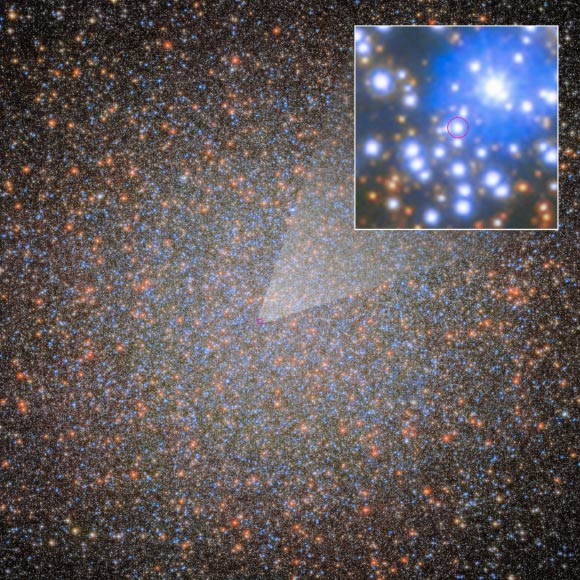
Whitaker et al. found Omega Centauri’s first stellar-mass black hole, which has a visible star companion that is shown in greater detail. Image credit: ESA / NASA / Maximilian Häberle, MPIA / Joseph DePasquale, STScI.

After decades of searching, astronomers have pinpointed the first of an estimated 10,000 stellar-mass black holes thought to lurk in Omega Centauri, the most massive stellar system in the Milky Way found so far, with a stellar mass of 3.6 million solar masses.

The post Astronomers Find Omega Centauri’s First Stellar-Mass Black Hole appeared first on Sci.News: Breaking Science News.
  •  

Astronomers Discover and Directly Image Third Planet in Beta Pictoris System

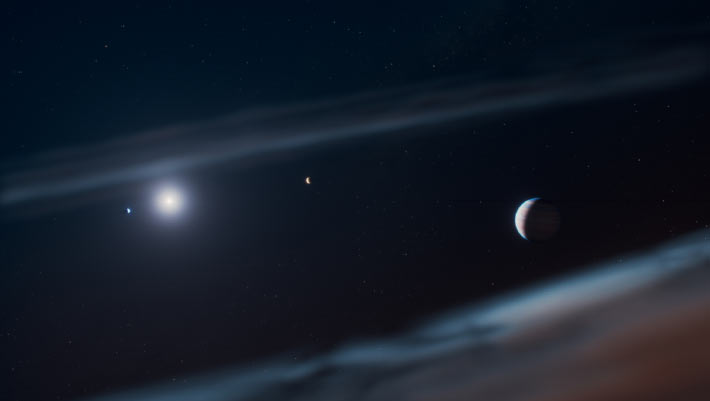
This artist’s concept shows the Beta Pictoris system with the discovered giant exoplanet Beta Pictoris d at the right. Image credit: NASA / ESA / CSA / STScI / Ralf Crawford, STScI.

Named Beta Pictoris d, the newly-discovered world is 100 times fainter than Beta Pictoris b -- the first planet discovered around the A5-type star Beta Pictoris -- and is among the lightest exoplanets ever to be imaged from the ground.

The post Astronomers Discover and Directly Image Third Planet in Beta Pictoris System appeared first on Sci.News: Breaking Science News.
  •  

Webb Catches Supermassive Black Hole Feeding from Cosmic Gas Streams

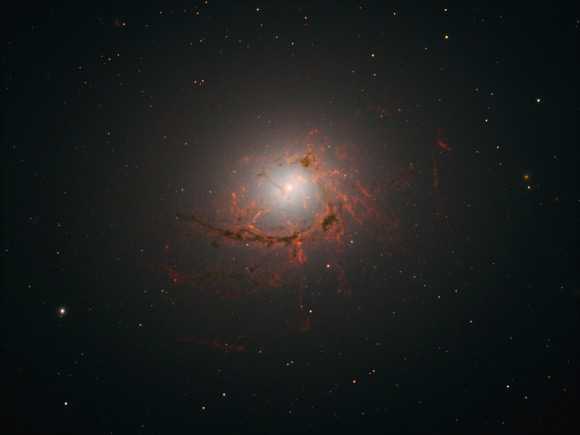
This Hubble image shows the elliptical galaxy NGC 4696. Image credit: NASA / ESA / Hubble / A. Fabian.

New images of the giant elliptical galaxy NGC 4696 from the NASA/ESA/CSA James Webb Space Telescope reveal gas filaments funneling material into a spinning disk around a supermassive black hole 800 light-years across.

The post Webb Catches Supermassive Black Hole Feeding from Cosmic Gas Streams appeared first on Sci.News: Breaking Science News.

  •  

Interstellar Comet 3I/ATLAS Formed Up To 12 Billion Years Ago, New Observations Suggest

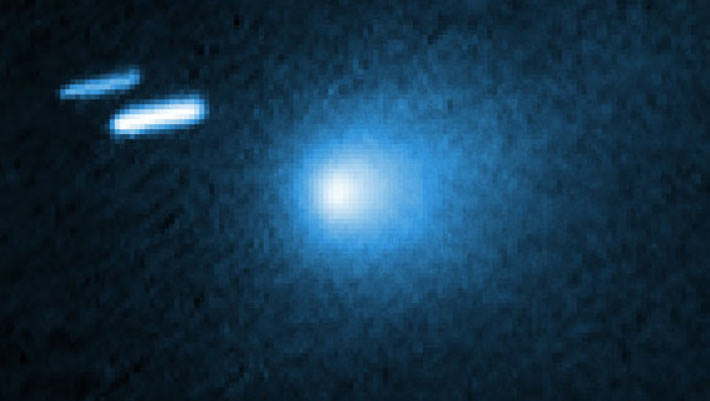
Hubble captured this image of 3I/ATLAS on July 21, 2025, when the comet was 446 million km (277 million miles) from Earth. Image credit: NASA / ESA / David Jewitt, UCLA / Joseph DePasquale, STScI.

The interstellar comet 3I/ATLAS carries a chemical fingerprint unlike anything in our Solar System, and it may have formed 10 to 12 billion years ago, before our Sun even existed, according to two papers published in the journal Nature.

The post Interstellar Comet 3I/ATLAS Formed Up To 12 Billion Years Ago, New Observations Suggest appeared first on Sci.News: Breaking Science News.
  •  

Webb Sees Jupiter-Size Exoplanet Being Roasted by Its Star

An artist’s impression of the hot-Jupiter exoplanet HD 80606b. Image credit: NASA / ESA / CSA / Joseph Olmsted, STScI.

HD 80606b has one of the most extreme orbits of any known exoplanet and the NASA/ESA/CSA James Webb Space Telescope just caught it getting flash-fried as it whipped past its star.

The post Webb Sees Jupiter-Size Exoplanet Being Roasted by Its Star appeared first on Sci.News: Breaking Science News.

  •  

Astronomers Find Four Separate Generations of Stars in ‘Globular Cluster’ Terzan 5

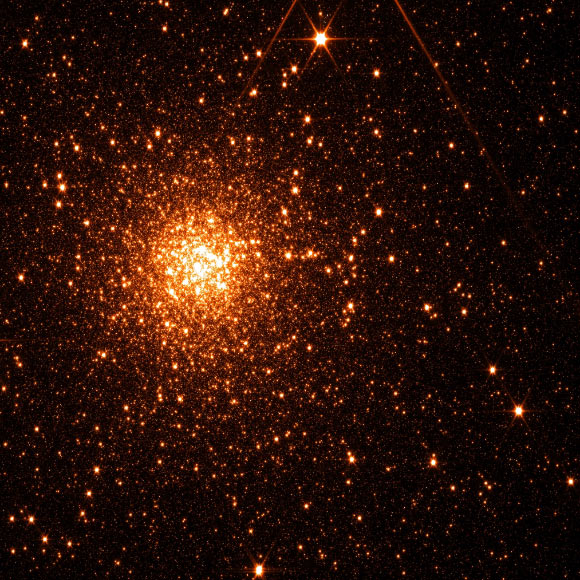
This Webb/NIRCam image shows the star cluster Terzan 5. Image credit: NASA / ESA / CSA / Webb.

New Webb and Hubble data not only confirm the existence of two distinct populations of stars in the ancient stellar system Terzan 5, once classified as a globular cluster, but also provides evidence for two more recent rounds of star formation.

The post Astronomers Find Four Separate Generations of Stars in ‘Globular Cluster’ Terzan 5 appeared first on Sci.News: Breaking Science News.
  •  

Webb Weighs Most Distant Inactive Black Hole Ever Found

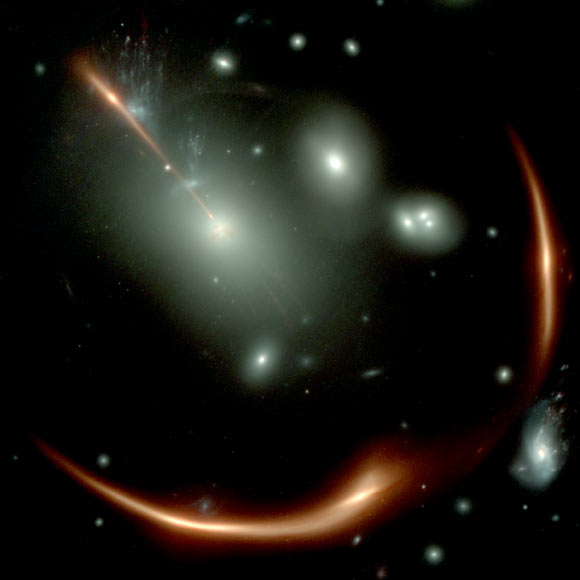
This Webb image shows the highly distorted red galaxy MRG-M0138 seen through a foreground cluster of galaxies (white sources). Image credit: NASA / ESA / CSA / Webb.

A supermassive black hole 6 billion times the mass of the Sun lurks in MRG-M0138, a gravitationally lensed quiescent galaxy seen when the Universe was just 3 billion years old, according to an analysis of data collected by the NIRSpec Integral Field Spectrograph onboard the NASA/ESA/CSA James Webb Space Telescope.

The post Webb Weighs Most Distant Inactive Black Hole Ever Found appeared first on Sci.News: Breaking Science News.
  •  

Webb Detects Methane on Interstellar Comet 3I/ATLAS

Hubble captured this image of 3I/ATLAS on July 21, 2025, when the comet was 446 million km (277 million miles) from Earth. Image credit: NASA / ESA / David Jewitt, UCLA / Joseph DePasquale, STScI.

Using the spectral data from the Mid-Infrared Instrument (MIRI) onboard the NASA/ESA/CSA James Webb Space Telescope, astronomers have detected methane on 3I/ATLAS.

The post Webb Detects Methane on Interstellar Comet 3I/ATLAS appeared first on Sci.News: Breaking Science News.

  •  

Webb Spots Supermassive Black Hole Older Than Its Home Galaxy

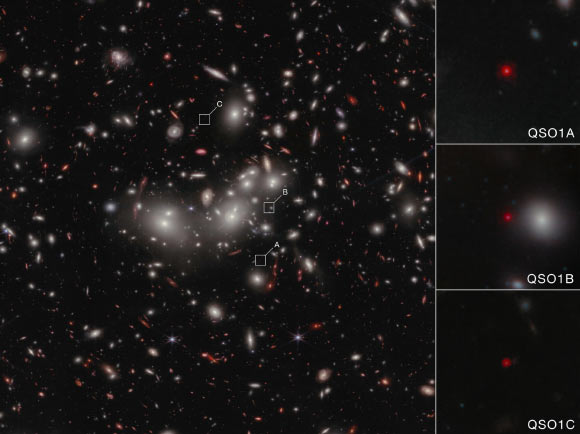
This Webb/NIRCam image shows the little red dot Abell2744-QSO1, magnified and triply imaged by galaxy cluster Abell 2744. Image credit: NASA / ESA / CSA / Lukas Furtak, Ben-Gurion University / Alyssa Pagan, STScI.

Astronomers using the NASA/ESA/CSA James Webb Space Telescope have found an enormous black hole in the early Universe that appears to predate its own host galaxy, raising fresh questions about how the cosmos’ first supermassive monsters were born.

The post Webb Spots Supermassive Black Hole Older Than Its Home Galaxy appeared first on Sci.News: Breaking Science News.

  •  

Webb Detects Methane in Atmosphere of Exo-Saturn TOI-199b

An artist’s rendition of the ultrahot Jupiter TOI-1518b and its parent star. Image credit: Sci-News.com.

Using spectral data from the Near-Infrared Spectrograph (NIRSpec) onboard the NASA/ESA/CSA James Webb Space Telescope, astronomers analyzed the atmosphere of TOI-199b, a distant Saturn-mass world that is neither frozen nor scorching hot.

The post Webb Detects Methane in Atmosphere of Exo-Saturn TOI-199b appeared first on Sci.News: Breaking Science News.

  •  
❌