Na carta aberta, intitulada “Apple is getting this wrong” (“A Apple está entendendo isso errado”, em tradução direta), a empresa de Sam Altman tenta demonstrar inconsistências na narrativa apresentada pela Apple aos tribunais, classificada por ela como “descuidada, agressiva e estranhamente pessoal”. A OpenAI também diz que a prática não faz jus à grandeza histórica da Maçã.
Quanto às questões endereçadas na carta, a acusação principal — de que Tang Tan, líder de hardware da OpenAI e ex-designer da Apple, utilizou seu conhecimento sobre os procedimentos internos da Apple para repassar informações confidenciais sobre os seus produtos — foi contestada, com a versão oficial da OpenAI alegando que Tang sempre foi enfático quanto à falta de intenção em fazer uso de segredos industriais de outras empresas. A confusão sobre a revogação de acesso já havia sido mencionada em uma reportagem do The Information.
Sobre Chang Liu, cuja acusação envolvia a retenção de dispositivos e acessos para baixar arquivos internos, a réplica à Maçã, caso verdadeira, é um tanto reveladora: na carta, foi mencionado que funcionários da Apple entraram em contato com Liu mesmo após a sua saída para localizar os arquivos de projetos internos, revelando uma fragilidade no processo de revogação do acesso a arquivos internos. As mensagens trocadas entre Chang e um funcionário da Maçã via iMessage foram divulgadas junto da carta.
Já tratando sobre a alegada ciência da OpenAI quanto aos temas do processo, a dona do ChatGPT expôs emails de advogados externos que representavam a Maçã admitindo um erro no envio das mensagens, ocasionado por uma confusão entre os sobrenomes de Che Chang (conselheiro geral da OpenAI) e de um funcionário de sobrenome Wang — a quem, alegadamente, se referia a mencionada conversa por telefone, que nunca aconteceu, de acordo com a carta e com uma confissão feita em um dos emails divulgados.
A carta não cobriu, no entanto, as acusações de que a OpenAI vinha incentivando funcionários da Apple a realizar entrevistas para os seus cargos e fornecer detalhes sobre dispositivos ainda não lançados, e nem o suposto contato feito por parte da OpenAI com fornecedores da Apple sob o apoio de dados internos importantes.
Solicitação de liminar
Ontem, a Apple solicitou, de maneira preliminar, uma liminar para impedir que Liu e Tan possam acessar, obter, utilizar ou divulgar informações confidenciais. O pedido foi rebatido na carta:
O pedido da Apple por uma liminar preliminar é baseado em informações falsas e é completamente desnecessário, porque não temos, nem queremos ter, nenhum de seus segredos comerciais. Estamos muito mais interessados em construir produtos e tecnologias inovadores que ampliem as fronteiras do que é possível.
Até o momento, a Maçã não se pronunciou sobre a resposta da OpenAI.
As populations age, scientists are looking more closely at a hidden biological process that may help explain why some older adults remain mobile and independent while others experience a rapid decline in strength, balance, and endurance. A systematic review by A. Boshnjaku, R. Obërtinca, M. Hoxha, and colleagues examines whether five inflammation-related biomarkers—CRP, high-sensitivity CRP, interleukin-6, interleukin-10, and tumor necrosis factor-alpha—are linked to physical performance in older adults living in the community. Published in BMC Geriatrics, the review focuses on a question with major implications for healthy aging: can signals circulating in the blood reveal who is at greater risk of losing physical function?
The study centers on chronic, low-grade inflammation, a biological condition often associated with aging and commonly described as “inflammaging.” Unlike the intense inflammation triggered by an infection or injury, inflammaging can persist quietly over years. It may be influenced by immune-system changes, excess body fat, physical inactivity, chronic disease, and cellular stress. Although inflammation is essential for repairing tissue and fighting pathogens, prolonged activation can affect muscle metabolism, blood-vessel function, nervous-system signaling, and energy production. These changes could, in theory, make everyday movements such as walking, rising from a chair, or climbing stairs increasingly difficult.
C-reactive protein, or CRP, is one of the most widely used indicators of systemic inflammation. It is produced primarily by the liver in response to inflammatory signals, especially interleukin-6. Standard CRP testing is useful for detecting relatively pronounced inflammatory activity, while high-sensitivity CRP, known as hs-CRP, can measure much lower concentrations. That distinction matters in research on older adults, where subtle inflammatory differences may exist even when there is no obvious acute illness. However, neither CRP nor hs-CRP identifies a single disease or proves that inflammation itself caused a decline in physical ability.
The review also considers three signaling proteins known as cytokines. Interleukin-6, or IL-6, can promote inflammation but also participates in muscle adaptation and energy regulation, making its effects highly dependent on timing, tissue, and physiological context. Tumor necrosis factor-alpha, or TNF-α, is a potent inflammatory mediator that can influence muscle protein breakdown and interfere with insulin signaling. Interleukin-10, or IL-10, generally acts as an anti-inflammatory regulator, helping restrain excessive immune activation. Examining these markers together offers a more nuanced picture than relying on a single laboratory value.
Physical performance is a crucial measure of aging because it reflects how effectively multiple systems work together. Muscle strength alone does not determine whether a person can remain independent. Walking speed, repeated chair stands, balance, grip strength, endurance, and composite tests such as the Short Physical Performance Battery can reveal the combined effects of the muscular, cardiovascular, neurological, and skeletal systems. For people living outside hospitals and care facilities, these measures may also provide a practical snapshot of resilience in everyday life. A small difference in performance can translate into a major difference in fall risk, mobility, and the ability to manage daily activities.
By bringing together evidence from studies of community-dwelling older adults, the authors address an important gap between laboratory research and real-world aging. Older people living independently are not a uniform group: some have multiple chronic conditions, while others remain highly active; some take anti-inflammatory medications, and others do not. Diet, smoking, obesity, socioeconomic conditions, sleep, recent infections, and exercise can all alter cytokine levels and physical performance. A systematic review can help determine whether associations between biomarkers and function appear consistently across this complex population or whether they vary substantially from one study to another.
The review’s importance lies not only in asking whether inflammatory markers are associated with poorer performance, but also in highlighting the limitations of interpreting such relationships. A high biomarker level may be a consequence of frailty, reduced activity, obesity, or an undiagnosed illness rather than the original cause of decline. Conversely, a single blood sample may fail to capture fluctuations in inflammation over time. Differences in laboratory methods, cutoff values, participant health, medication use, and performance tests can make studies difficult to compare. These issues are central when translating population-level associations into decisions about an individual patient.
The findings may ultimately support a broader approach to healthy aging in which inflammation is considered alongside strength, nutrition, cardiovascular health, cognition, and social environment. The biomarkers discussed in the review are not presented as standalone tests that can predict the future with certainty. Instead, they may help researchers understand why physical function changes and identify biological pathways that could be targeted through exercise, weight management, treatment of chronic disease, or other interventions. The study also underscores the need for longitudinal research capable of separating cause from consequence and for standardized testing that can connect laboratory signals with meaningful improvements in daily life.
For now, the review places a spotlight on the immune system as a possible contributor to the physical changes associated with later life. Its focus on CRP, hs-CRP, IL-6, IL-10, and TNF-α reflects the growing recognition that aging is not simply the result of muscles becoming weaker, but of interconnected changes across the body. Understanding how these inflammatory signals relate to mobility could help scientists develop more precise strategies for preserving independence—while reminding clinicians and the public that a blood test is most informative when interpreted together with a person’s functional ability, medical history, and lived environment.
Subject of Research: The relationship between inflammatory biomarkers and physical performance in community-dwelling older adults.
Article Title: What is the impact of CRP, hs-CRP, IL-6, IL-10, and TNFα in physical performance in community-dwelling older adults: a systematic review.
Article References: Boshnjaku, A., Obërtinca, R., Hoxha, M. et al. What is the impact of CRP, hs-CRP, IL-6, IL-10, and TNFα in physical performance in community-dwelling older adults: a systematic review. BMC Geriatrics (2026). https://doi.org/10.1186/s12877-026-08080-8
Mettons le cap vers les régions glacées de l’hémisphère nord pour rencontrer un géant légendaire des mers arctiques. Avec sa silhouette massive, ses impressionnantes défenses et son regard énigmatique, il règne sur les plages de l’océan glacial. Saurez-vous deviner l’identité de ce colosse,...
Dans notre monde ultra-connecté, le stylo et le papier semblent relégués aux oubliettes. Pourtant, les neurosciences révèlent que l'écriture manuscrite stimule notre cerveau bien plus efficacement que la frappe au clavier. Des études montrent que nous mémorisons jusqu'à 30 % mieux ce que nous...
Japan earthquake relief efforts will receive financial support from Apple following the powerful earthquake that struck Kumamoto Prefecture on the island of Kyushu.
CEO Tim Cook announced the donation through social media on July 30. He expressed concern for people facing the earthquake and continuing aftershocks while thanking the first responders helping affected communities.
“Japan has a very special place in my heart.”
Cook wrote before confirming that Apple was making a donation to support relief work.
Apple did not disclose the amount, recipient organizations or whether its contribution would support the immediate emergency response, longer-term reconstruction or both. The company frequently keeps disaster donation amounts private, even when Cook publicly confirms its participation.
The announcement came as rescue teams continued searching damaged homes, industrial facilities and the remains of a shopping center. Survivors were dealing with water shortages, disrupted transportation, damaged buildings and dangerous summer temperatures.
Image Credit: Wikimedia
Japan Earthquake Relief Follows Deadly Kumamoto Disaster
The earthquake struck southwestern Japan on Tuesday, July 28. Japanese reporting and international agencies have described it as a magnitude 7.1 event, while the U.S. Geological Survey measured it at magnitude 6.8. Differences can occur because agencies use different measurement methods and datasets.
The earthquake reached the highest level on Japan’s seismic intensity scale in parts of Kumamoto. Strong shaking damaged roads, houses and public infrastructure across communities near the epicenter.
The confirmed death toll had risen to 34 by Friday, according to Kumamoto prefectural authorities. Additional people were injured or remained missing as emergency workers entered the period when the likelihood of finding survivors beneath collapsed structures begins to decline sharply.
One of the most severe incidents involved an explosion and partial collapse at a shopping center. The earthquake also toppled a large chimney at a paper factory, damaged traditional homes and caused another section of the stone walls at Kumamoto Castle to collapse.
The historic castle was undergoing extensive restoration after the 2016 Kumamoto earthquakes. Damage to rebuilt or partially restored areas illustrates how recovery from one major disaster can remain unfinished when another arrives.
Aftershocks continued during the rescue operation, increasing the danger for emergency personnel entering unstable buildings. They also discouraged residents from returning to damaged homes, even when those structures remained standing.
Thousands of survivors moved into public shelters or slept inside vehicles. Some families chose cars because evacuation centers were crowded, while others feared that another strong tremor could collapse weakened buildings.
Extreme heat added another emergency. High summer temperatures can quickly create dehydration, heat exhaustion and medical complications, particularly for older people, children and residents sleeping in vehicles without reliable cooling.
Apple Donation Joins an Expanding Corporate Response
The Apple donation places the company among several technology and entertainment businesses providing money for Japan earthquake relief and reconstruction.
The Pokémon Company announced a contribution of 100 million yen to Kumamoto Prefecture, the Japanese Red Cross and other support organizations. The funding is intended to assist people affected by the earthquake and support restoration across damaged areas.
Sony committed 50 million yen and began collecting additional employee donations that the company will match. Its contribution is being directed toward the Japanese Red Cross and an emergency fund operated with Save the Children.
Sony has a direct industrial connection to Kumamoto through its semiconductor operations. The company described the prefecture as a community with which it has developed deep ties since establishing the Kumamoto Technology Center in 2001.
Apple also maintains substantial commercial and cultural connections with Japan through its retail stores, developer community, suppliers and customers. Cook has visited the country repeatedly and has met Japanese developers, musicians, educators and manufacturing partners during previous trips.
The amount behind Apple’s latest commitment may never be made public. The absence of a disclosed figure prevents direct comparison with other corporate donations, and it also leaves unanswered which organizations will distribute the money.
Relief contributions can support several different stages of a disaster response. Immediate funding may pay for water, food, temporary shelter, medical care and emergency equipment. Later funding can help repair homes, restore community services and assist families whose employment disappeared with damaged businesses.
The timing of Apple’s donation places it during the immediate emergency rather than after the complete scale of destruction has been calculated. Recovery costs will continue changing as inspectors determine which buildings can be repaired and which must be demolished.
Kumamoto Faces Another Long Recovery
Kumamoto experienced a destructive sequence of earthquakes in April 2016. Those events killed dozens of people, damaged or destroyed more than 100,000 buildings and displaced large numbers of residents.
Apple responded at the time by allowing customers to send donations to the Japanese Red Cross through iTunes. The system offered preset contribution amounts that were transferred without Apple retaining a percentage.
The company has used similar responses after earthquakes, hurricanes, floods and wildfires in several countries. Cook usually announces the commitment publicly while leaving the amount and distribution arrangements private.
Apple has previously contributed directly to relief organizations and has sometimes provided matching programs for employee donations. It has not announced whether employee matching or a customer donation channel will accompany the current Japan earthquake relief commitment.
The 2026 disaster presents different immediate pressures from the 2016 earthquakes because it arrived during intense summer heat. Shelter capacity alone does not solve the problem when buildings lack sufficient cooling, water or private areas for medically vulnerable residents.
Japanese authorities deployed Self-Defense Force personnel and emergency teams to support local rescuers. Prime Minister Sanae Takaichi instructed agencies to prioritize the protection of life, collect information quickly and coordinate assistance across national and local government.
Electricity had been restored by Friday evening, according to the local power company, but water remained a serious concern. Kumamoto authorities said nearly 80,000 homes were still without running water, creating demand for bottled supplies, mobile water stations and sanitation support.
A water interruption affects more than drinking. Hospitals, shelters, restaurants and homes need reliable supplies for hygiene, food preparation and medical care. Restoration can take longer than electricity because ruptured pipes must be located, isolated and repaired across damaged roads and neighborhoods.
Apple Donation Arrives Before the Full Damage Is Known
Apple’s announcement communicates support without defining how the money will be used. The effectiveness of the contribution will depend on the recipient, timing and ability to direct funding toward needs that remain after the first wave of public attention passes.
Immediate rescue work receives the greatest visibility, but rebuilding homes and local businesses can continue for years. Families may need temporary housing long after shelters close, while damaged schools, transportation routes and medical facilities require larger reconstruction programs.
Private donations cannot replace government disaster funding. They can provide additional flexibility for relief groups that need to purchase supplies quickly or reach people whose circumstances do not fit standard assistance programs.
The continuing aftershocks also make damage assessments provisional. A building considered stable after the first inspection may require another examination, while rain or additional shaking can affect weakened slopes and structures.
Apple has not indicated whether it will open a public donation channel through the App Store or another service. Its current response is limited to the corporate contribution confirmed by Cook.
The next stage of Japan earthquake relief will move from search operations toward shelter support, structural inspections and temporary housing. In Kumamoto, the most urgent calculation is already measured beyond financial totals: nearly 80,000 homes need running water restored while residents endure the hottest weeks of the Japanese summer.
Après OpenAI, c’est au tour d’Anthropic de reconnaître que son modèle d’IA a réussi à s’échapper d’un environnement pourtant conçu pour le contenir. Plusieurs organisations ont été visées, mais l’explication derrière ces incidents pourrait être bien moins inquiétante qu’elle n’en a l’air.
Sous une colline du centre de l’Allemagne, des archéologues ont mis au jour un étonnant enchevêtrement d’époques : des tunnels médiévaux creusés au cœur d’un ancien site funéraire préhistorique. Une découverte qui montre comment, au fil des siècles, les sociétés ont réutilisé et...
A chance discovery in central Turkey is offering archaeologists a rare glimpse at the remarkable technical skills of one of the most influential civilizations of the ancient world.
The tiny bronze artifact, now on display at the Boğazköy Museum, is a small, seemingly simple figurine depicting an individual fitted with a long, pointed cap. But beyond its unassuming appearance is something far more complex, and which offers an unprecedented look at the advanced metalworking techniques and religious worldview of the Hittites.
Crafted nearly 3,500 years ago, archaeologists believe the figurine represents a Hittite storm god, displaying remarkable craftsmanship for its era. Uncovered by a resident in the Alaca district of Çorum Province, the figurine’s discovery site marks an area that once placed it in the heartland of the ancient Hittite Empire.
Fortunately, rather than being kept as a memento, the rare find was handed over to museum authorities, who have now placed it on display for the first time as one of the newest additions to the museum’s permanent collection.
The tiny figurine, cast from arsenical copper, is now on display at the Boğazköy Museum (Image Credit: IHA)
A Hittite Storm God of Small Proportions
At only around three inches tall, experts determined that the tiny figurine was cast from arsenical copper—a material that was widely implemented during the height of the Bronze Age, although it was rarely preserved in a form conveying such intricacy.
Finding a small artifact from this period that displays such remarkable craftsmanship conveys the level of sophistication of its creator, although that’s only one part of what makes the artifact so unique.
The figurine also displays advanced riveted assembly techniques—an invention of Hittite metalworkers from the era, as evidenced by mortise sockets and pinholes visible on the artifact’s shoulders and lower garment areas. This indicates that the arms and legs were crafted separately from the main torso and head and were later attached to the body, like how modern action figures and other toys are assembled.
For its time, this was a sophisticated method of construction, demonstrating a remarkable level of engineering precision at very small scales. The resulting artifact is now recognized as one of the smallest Hittite metal figurines ever discovered, displaying 3,500-year-old advanced manufacturing techniques at surprisingly small scales.
A Tiny Artifact Conveying Ancient Beliefs
Going beyond just the technical precision the ancient figurine represents, it also provides insights into the religious beliefs of the Hittites.
“In the Hittite religion, which was polytheistic, our colleagues have described [the artifact] as the Young Storm God,” said Ali Çalgan, current Governor of Çorum province in Turkey, at a recent ceremony that revealed the unique discovery.
According to their worldview, the storm god held one of the highest places in their pantheon of deities, given that these sorcerers of the elements could control rain, winds, and the coming of the seasons—elemental forces that were also associated with fertility and royal authority.
In ancient Anatolia, these storm deities were known by a variety of names, which included Taru, Tarhunza, Teshub, and Tarhuna. Often associated with animals like bulls, physical representations of storm gods were also conveyed in human form, as in the case of the pointy-capped example now on display at the Boğazköy Museum.
Given the artifact’s unique craftsmanship and state of preservation, which Çalgan called “one of the best examples of its kind,” the figurine represents more than merely a decorative object—it offers modern researchers a tangible connection to the ritual traditions and symbolic beliefs that shaped life in the Hittite Empire during the Late Bronze Age.
The Secret World of the Storm Gods
While the recent unveiling ceremony marks the artifact’s official public debut at the museum, archaeologists and art historians have already had an opportunity to examine the unique discovery, of which images were displayed as part of an international Hittite exhibition in South Korea, and later presented during the 8th Çorum Excavation and Research Symposium.
Officials at the Boğazköy Museum and regional authorities on the country’s antiquities say they hope the exhibition will help to further deepen the public’s interest in the rich archaeology and cultural heritage of the region. Significantly, Çorum Province is also home to nearby Hattusa, the ancient Hittite capital now recognized as a UNESCO World Heritage Site.
The young storm god now adds another example of the region’s ancient historical significance in terms of archaeological tourism in the region.
With the figurine’s discovery, we are reminded that often the smallest artifacts can have great significance and offer an unprecedented view of past human achievement. In this case, the young storm god tells a story of advanced metalworking and technological innovation, as well as artistic mastery and religious devotion in one of the ancient world’s most influential civilizations.
Micah Hanks is the Editor-in-Chief and Co-Founder of The Debrief. A longtime reporter on science, defense, and technology with a focus on space and astronomy, he can be reached atmicah@thedebrief.org. Follow him on X @MicahHanks, and at micahhanks.com.
SSD prices in general remain considerably higher than a year ago. Still, this discount on Samsung's 9100 Pro 2TB SSD is a welcome sight, as Samsung's fastest PCIe Gen 5.0 drive returns to the lower pricing that we witnessed during the most recent Amazon Prime Day sales event at the end of last month. You can currently grab the 2TB Samsung 9100 Pro for $399.99 at Amazon, a discount of 41% compared to its list price. That's only $10 more than Samsung's excellent 2TB 990 Pro SSD at $389.99, and $30 more than Samsung's recently released 2TB 990 at $369.99, which are both previous-generation PCIe 4.0 SSDs with half of the available bandwidth speeds.
Samsung's 9100 Pro SSD boasts sequential read speeds of up to 14,700MB/s and write speeds of 13,400MB/s thanks to the available PCIe 5.0 bandwidth, making it one of the fastest drives on the market, perfect for heavy professional application workloads, and of course top-end gaming PCs.
By contrast, the 990 Pro offers about half the read and write speeds of this drive at around 7,450/6,900MB/s, with the recently released Samsung 990 offering up to 7,250/6,450 MB/s, but switching from TLC to QLC NAND. These drives pretty much max out the PCIe Gen 4 bandwidth, with the new Samsung 990 being marketed as a budget-oriented SSD, but in reality and most importantly, in terms of pricing, the difference between the Samsung 990 and the much faster 9100 Pro is just $30.
The 2TB 9100 Pro comes with a 236-Layer Samsung TLC (V8) flash memory and is rated for sequential read and write speeds of 14,700 MB/s and 13,400 MB/s, respectively. One of the fastest PCIe Gen 5 drives available. View Deal
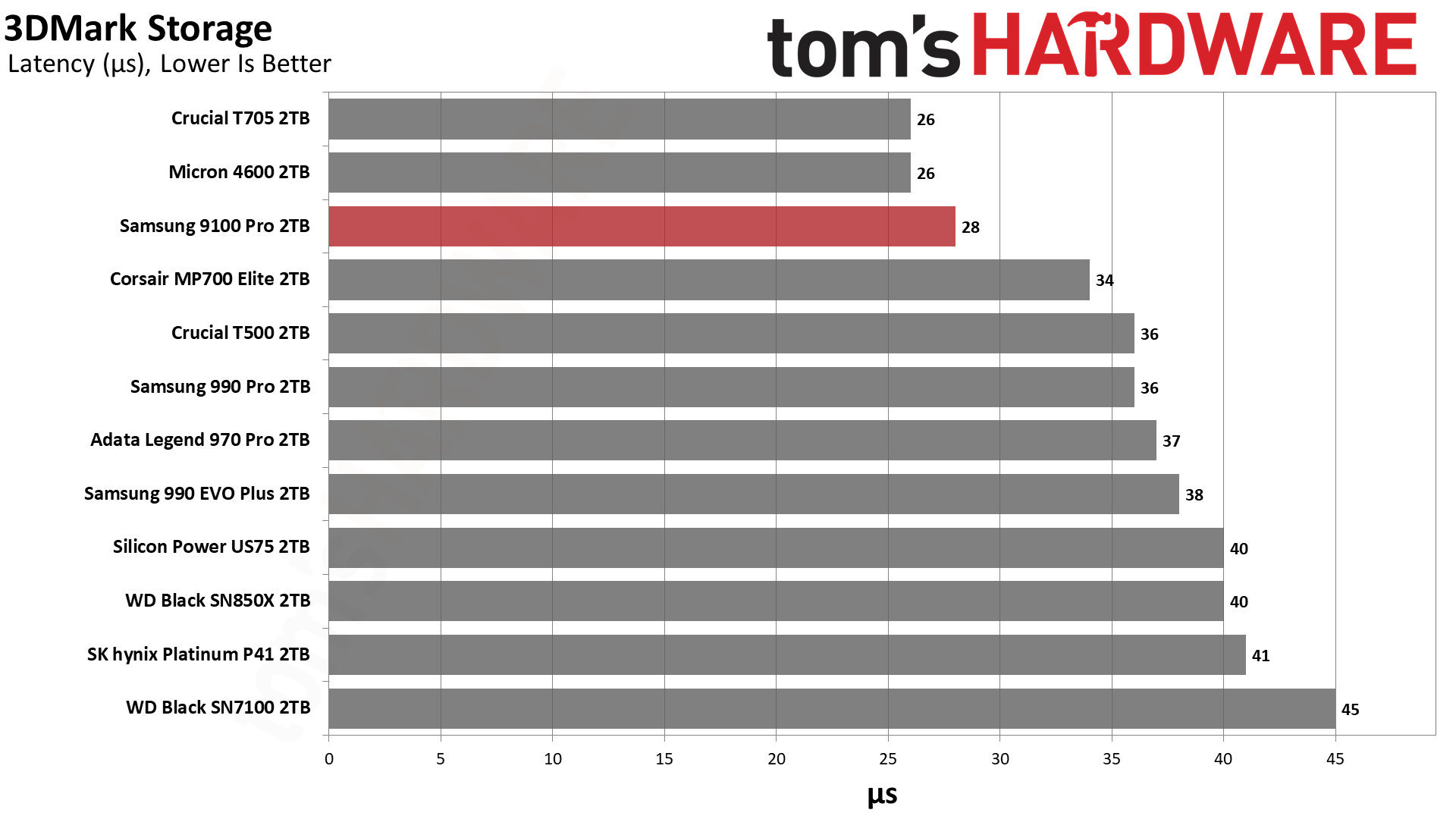
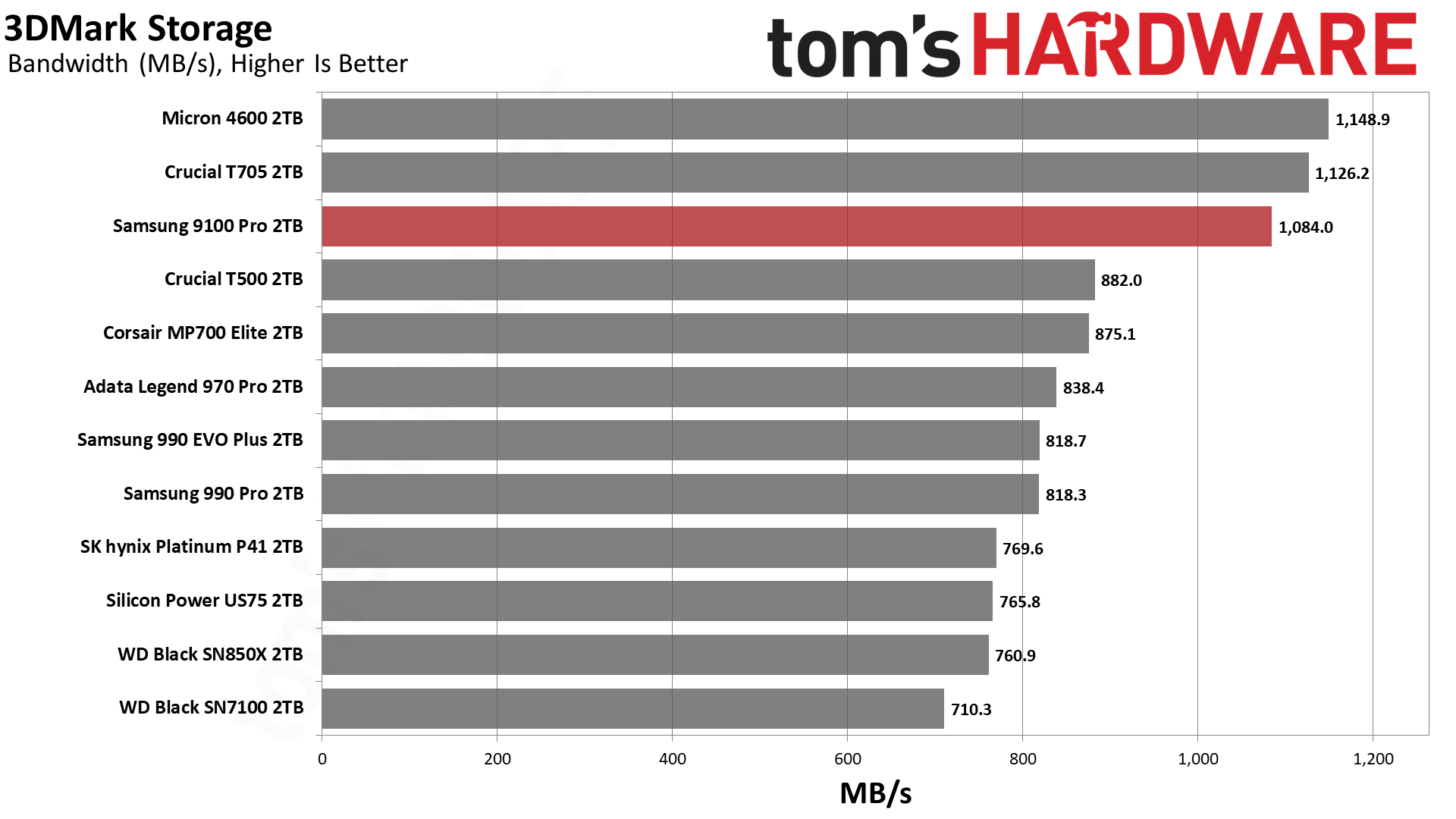
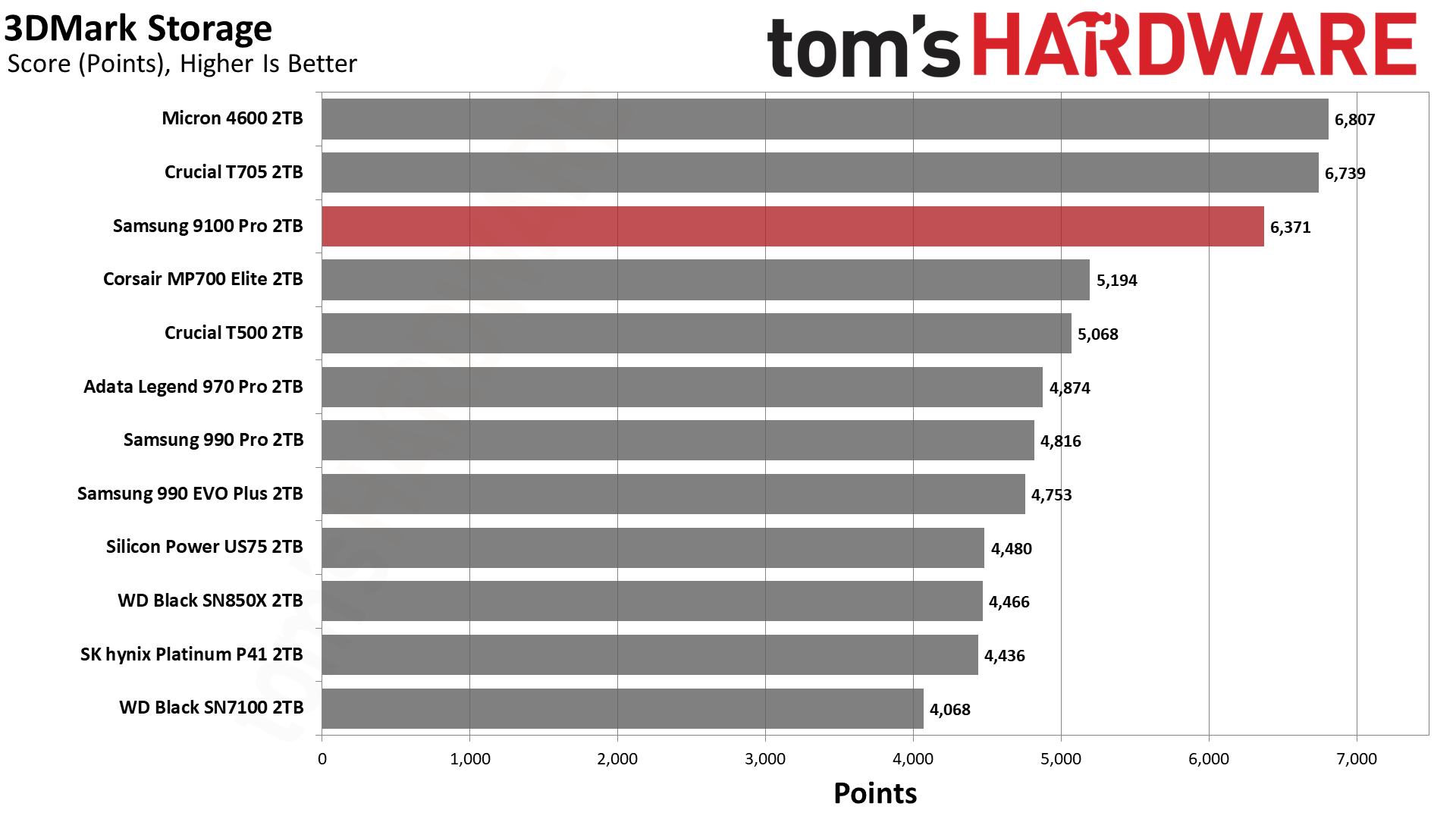
We've reviewed Samsung's 9100 Pro and found this impressive Gen 5 drive to be one of the fastest SSDs available to buy. During benchmark testing, the Samsung drive placed near the very top of the charts. In our PCMark 10 Storage tests. the 9100 scored higher than any other drive we've tested.
Tom's HardwareTom's HardwareTom's Hardware
However, if your motherboard doesn't support PCIe Gen 5, or you only have a single Gen 5 M.2 slot on your mobo and need to populate any other spare M.2 slots with PCIe Gen 4 SSDs, then the Samsung 990 Pro is the best shout.
Upgrade the storage in your PC, laptop, or PS5 with this wicked-fast 2TB Samsung 990 Pro PCIe 4.0 M.2 SSD. The 990 Pro sports read and write speeds of around 7,450/6,900MB/s respectively. View Deal
Or save a further $20 and opt for Samsung's latest SSD, the 2TB 990. This PCIe Gen 4 drive opts for QLC NAND, but still has fast access speeds. The drive can reach 7,250/6,450MB/s for sequential reads and writes and up to 850K/1,200K random read and write IOPS.
The 2TB 990 is a PCIe Gen 4 SSD able to reach 7,250/6,450MB/s for sequential reads and writes and up to 850K/1,200K random read and write IOPS.View Deal
RAM and SSDs are some of the toughest PC components to get your hands on at the moment at prices that won't give your bank account an aneurysm, so we take any discounts we can. Especially if it helps us build or upgrade our beloved PCs for slightly less. There's currently no end in sight for memory and NAND prices to return to more normalized values until manufacturers can ramp up production, and AI hyperscalers stop sweeping up all the demand. So definitely give these Samsung SSD deals a look if you're on the hunt for an SSD upgrade.
Price comparison from over 24,000 stores worldwide
Product
Price
Price comparison from Backmarket
OWC’s 80Gbps 4M2 Ultra is a four-slot RAID enclosure that lets you build your own high-capacity, super-fast external storage using NVMe SSDs.
Depending on the RAID mode you use, you can saturate the 80Gbps Thunderbolt 5/USB4 bus to the tune of 7GBps sequential transfers. You can also safeguard your data with mirroring or parity, which a single external SSD enclosure won’t allow.
What are the OWC 4M2 Ultra’s features?
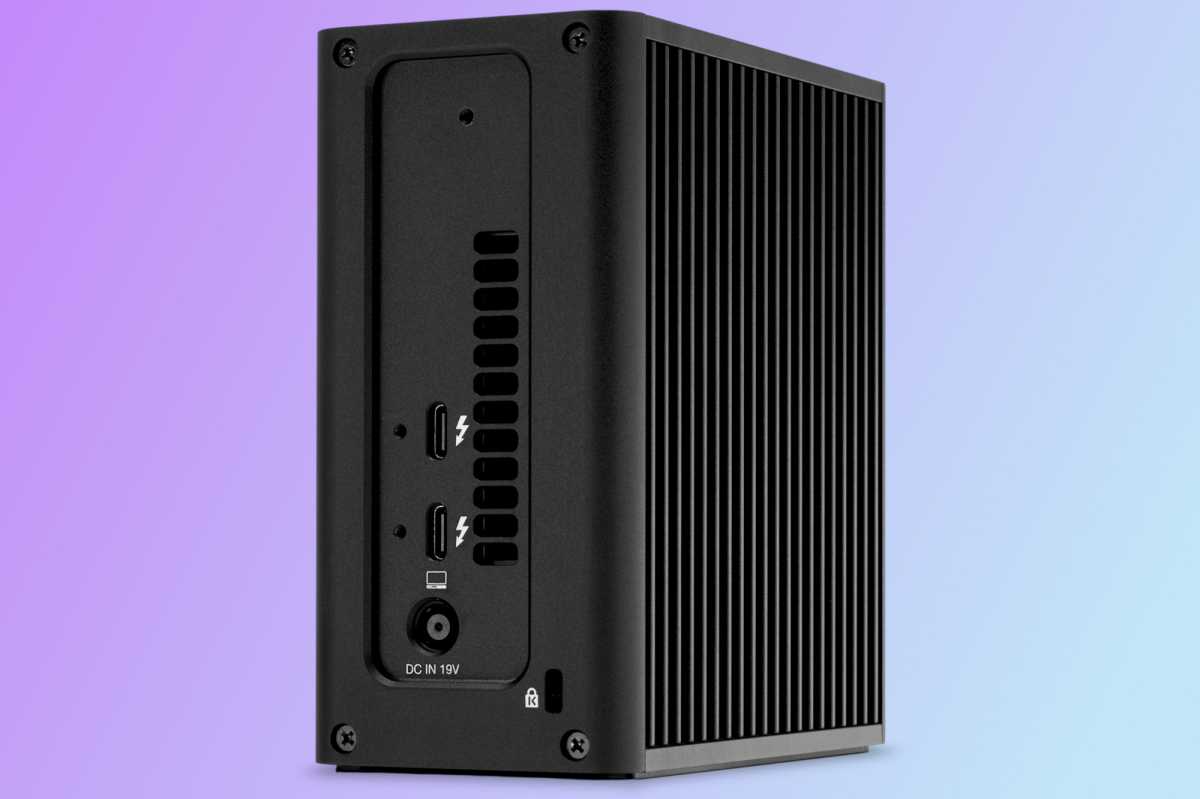
The 4M2 Ultra is a black, mostly aluminum box measuring around 4.75-inches tall, 4.5.inches deep, by 2.35-inches wide. Unlike the 40Gbps 4M2, the sides are finned to create more heat-shedding surface area. Nice. On the back are two Thunderbolt 5 ports (one marked as the computer port), a Kensington lock port, and the AC adapter jack…
You didn’t think you could run four SSDs on bus power alone, did you? Well, being curious and considering that Thunderbolt 5 is required to deliver 140 watts (240 watts optionally) I pulled the power jack with the 4M2 Ultra attached to my M4 Max Studio. No blue power light. Sigh.
The rear of the 4M2 Ultra with the upstream and downstream Thunderbolt 5 ports, the Kensington lock port and the AC adapter jack.
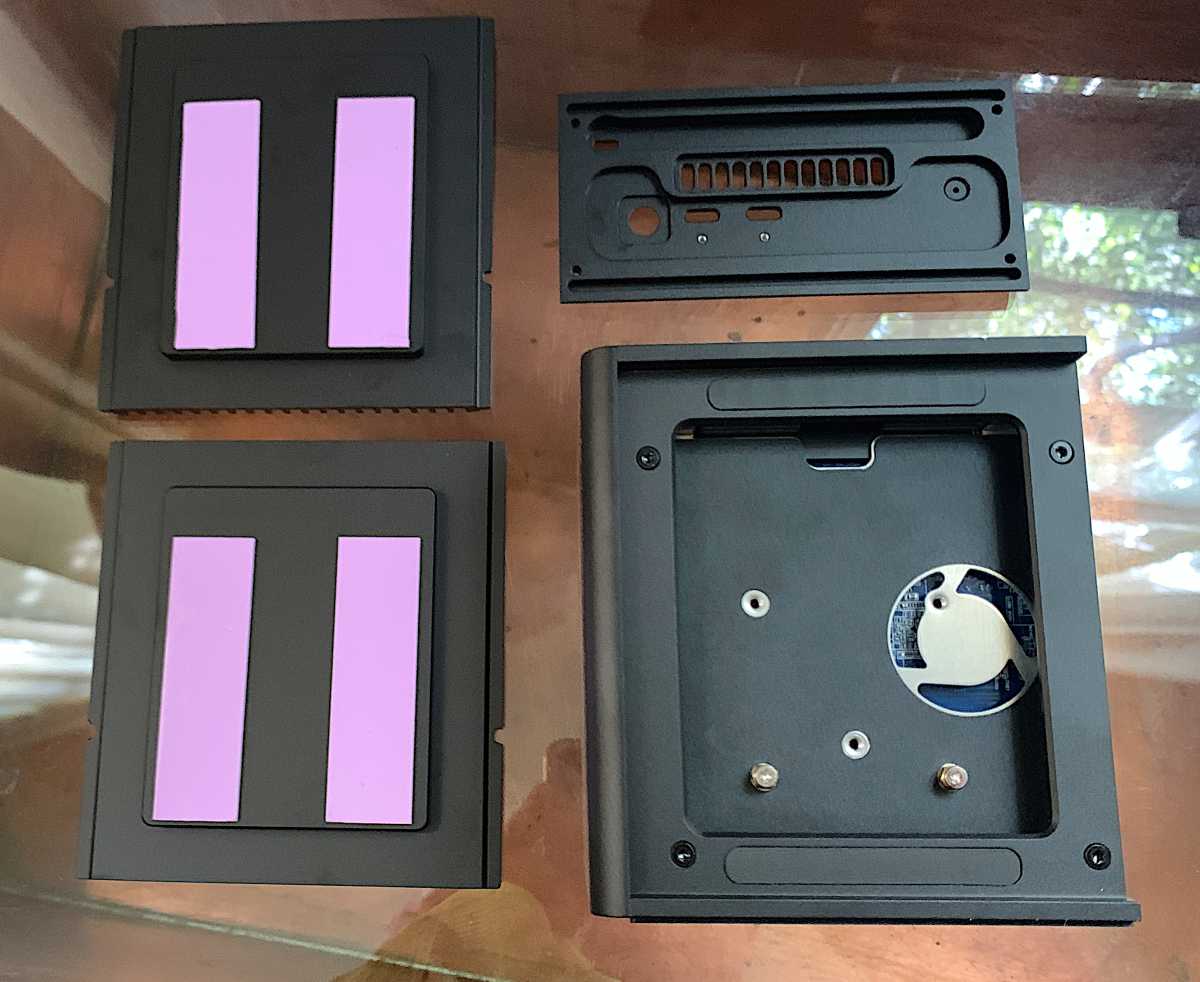
I was a bit surprised to see the 4M2 Ultra open like a flower when I removed the screw-down backplate. The backplate holds the two side plates (keyed for reattachment) in place, so both fell to the side, revealing two 2280/2242 M.2 slots under each.
Thermal strips are pre-attached to the side plates, which is thoughtful, though mine didn’t have any protection on them. Before I realized that, I’d minimally damaged one by stacking one side plate on the other. Easily repairable, so no big deal.
The 4M2 Ultra’s dual PC board, chips and fan are sandwiched between the two dual-drive bays. The front of the 4M2 Ultra is perforated to allow air flow through the unit to the vents on back.
You can hear the fan when it kicks in. It’s not loud, but if such things bug you, you’ve been informed. I find the sound reassuring in that the 4M2 Ultra isn’t allowing your SSDs to fry.
All four major pieces of the 4M2 Ultra: two sides, the main body and the backplate.
The Intel JHL9480 (Barlow Ridge) controller allocates each of the 4M2 Ultra’s M.2 slots a single PCIe 4.0 lane, which amounts to around 2GBps of bandwidth per slot. Hence, while you could run the four SSDs singly, you’ll only get 80Gbps (or 40Gbps) performance with all four drives combined in RAID 0 (fastest) or RAID 10 (next fastest).
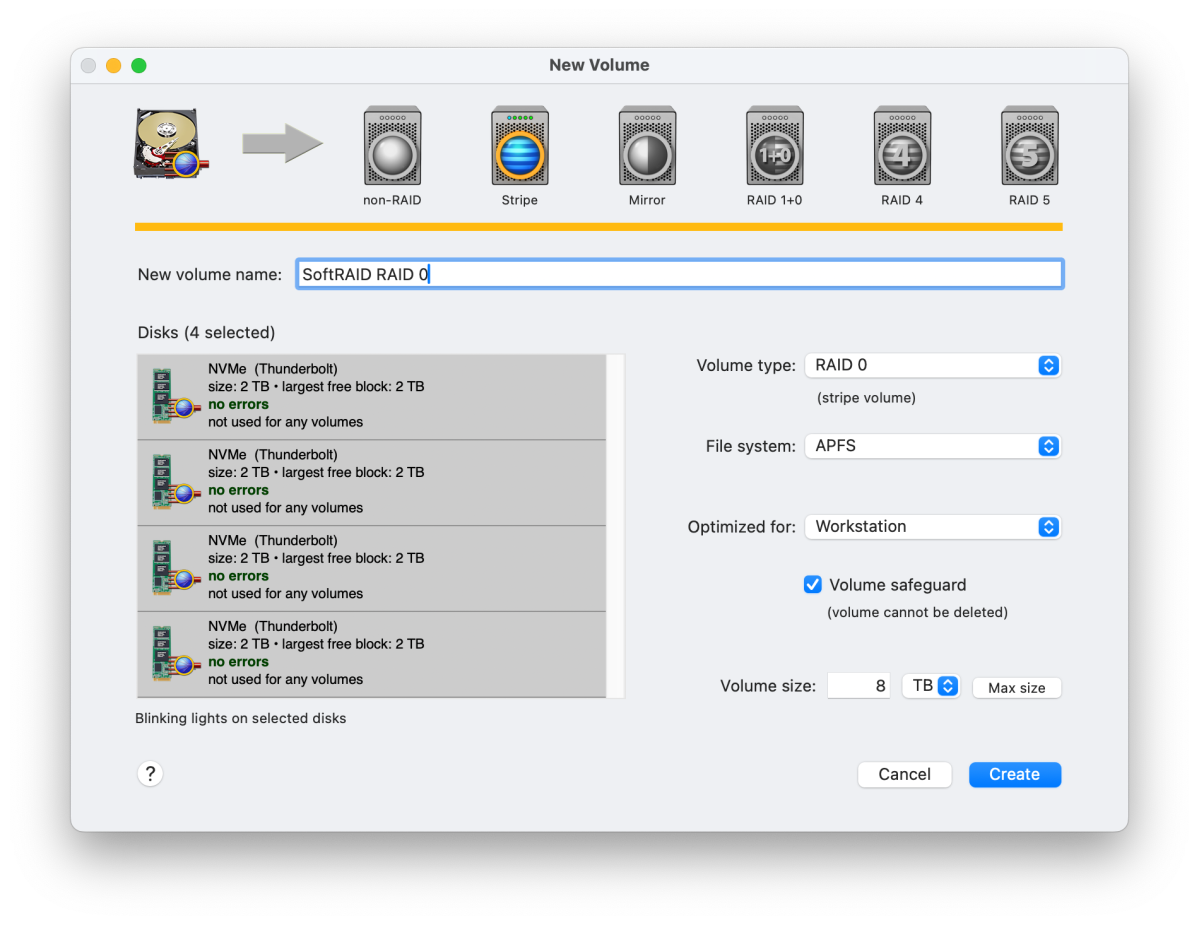
To operate the Express 4M2 Ultra in RAID, you need software. OWC provides a license for its handy cross-platform SoftRAID, though the inlcuded Pro license expires three years from the date of purchase. However, the core functions (operation and rebuilding arrays) remain eternally functional.
OWC’s SoftRAID array creation page.
If expiring software makes you nervous, there’s always macOS RAID or Windows Storage Spaces. Sadly, Windows Storage Spaces is pathetically slow, but macOS RAID 0 was competitive with SoftRAID
The 4M2 Ultra is warrantied for two years, however, given the quality of the construction it should last well beyond that.
How fast is the 4M2 Ultra?
When running four SSDs in RAID 0, the 80Gbps 4M2 Ultra is a very fast reader, up to 7GBps (Windows). It’s a considerably slower writing at a little over 2GBps according to most of our tests.
The 4M2 Ultra is also significantly faster in every RAID mode than the older 40Gbps 4M2 — hardly surprising given twice the older unit’s 40Gbps bandwidth. Note that all RAID tests were done while using OWC’s SoftRAID in RAID 0.
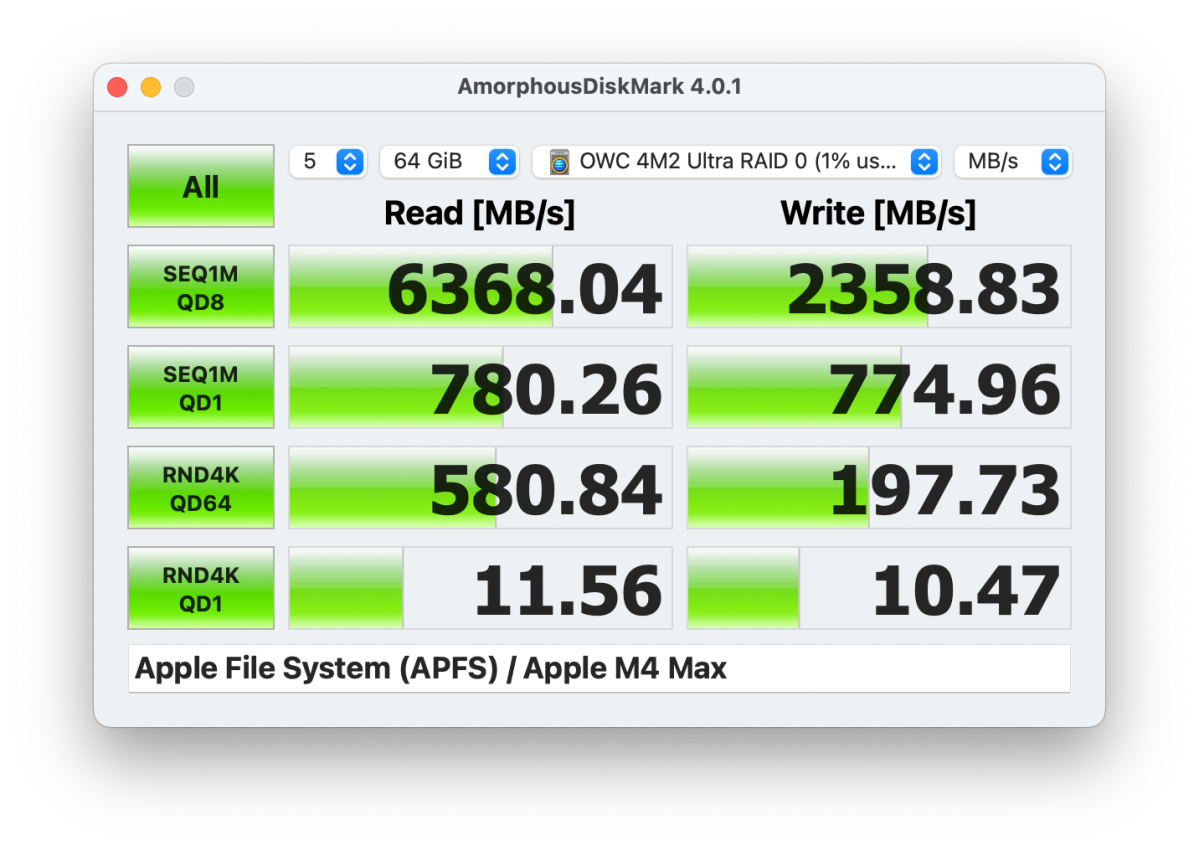
AmorphousDiskMark had the 4M2 Ultra at 6.35GBps reading, and 2.35GBps writing.
AmorphousDiskMark had the 4M2 Ultra at 6.35GBps reading, and 2.35GBps writing. This is in striped, RAID 0.
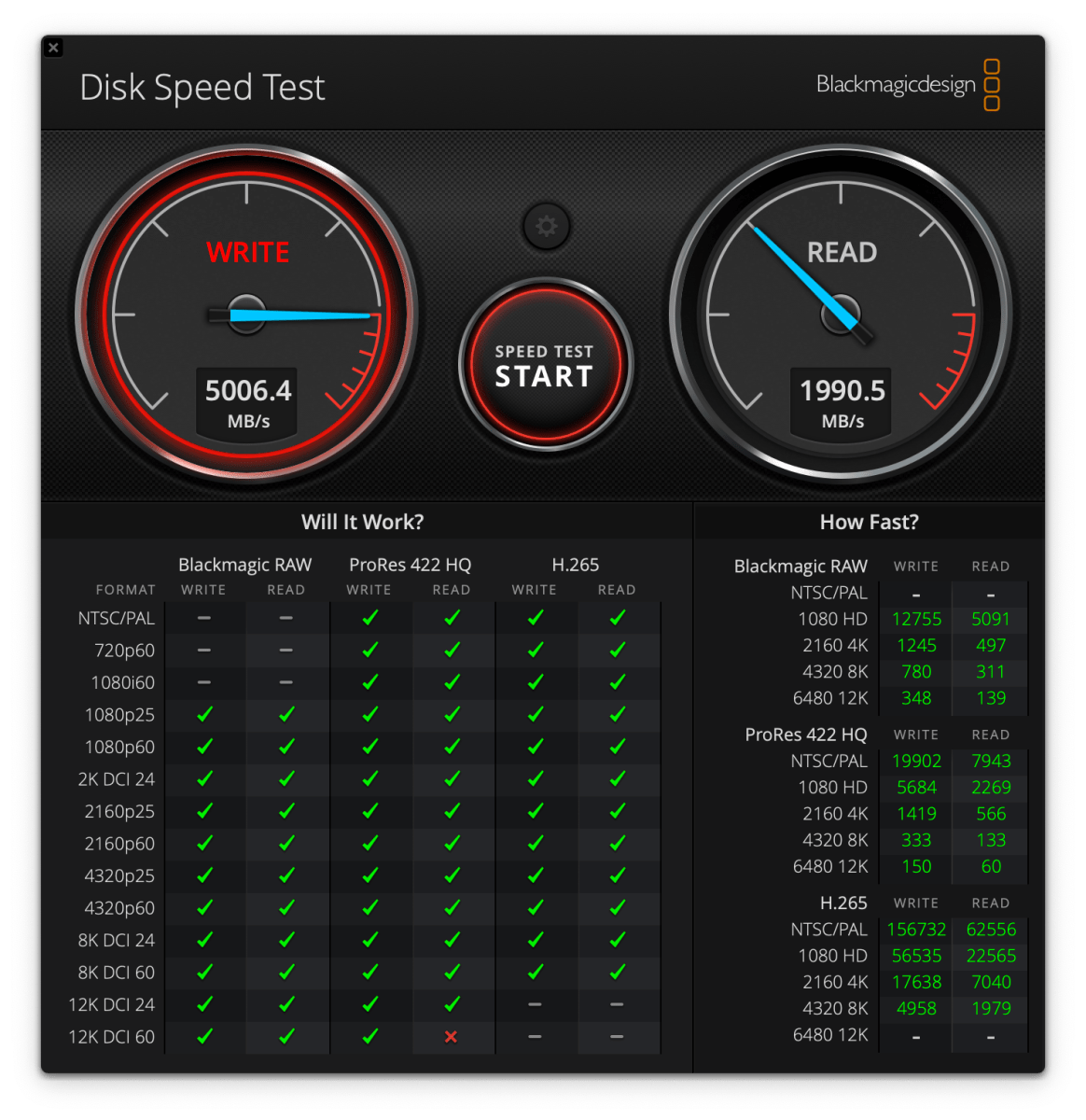
Disk Speed Test from Blackmagicdesign wasn’t quite as giddy as AmorphousDiskMark, and for some reason, likely a much smaller data set, showed 5GBps writing and only 2GBps reading.
For some reason Disk Speed Test wasn’t in alignment with either AmorphousDiskMark or ATTO when it came to write speeds.
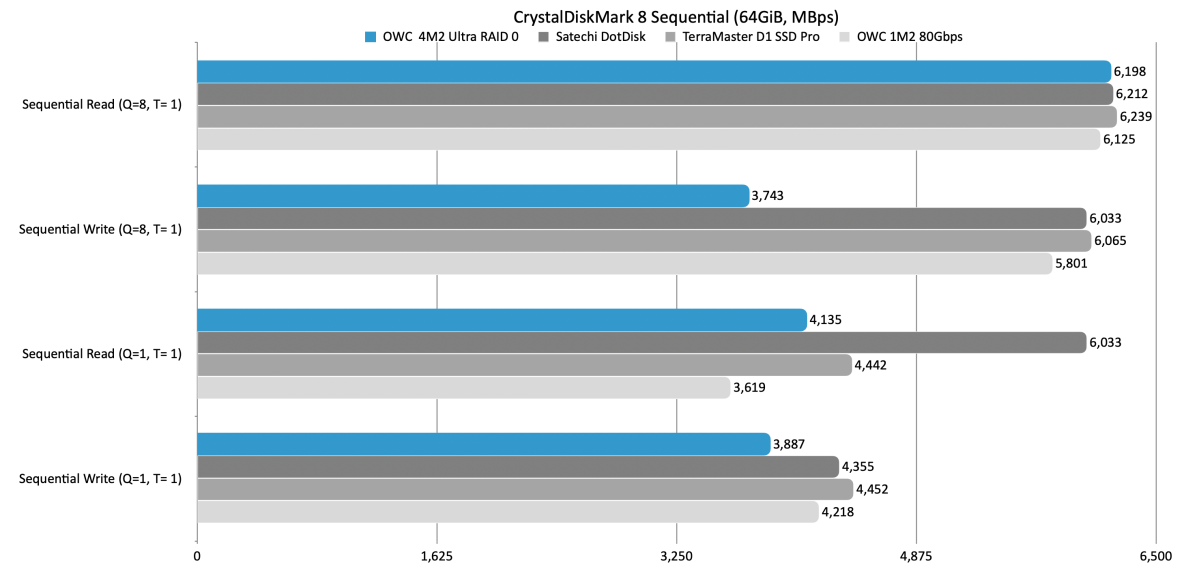
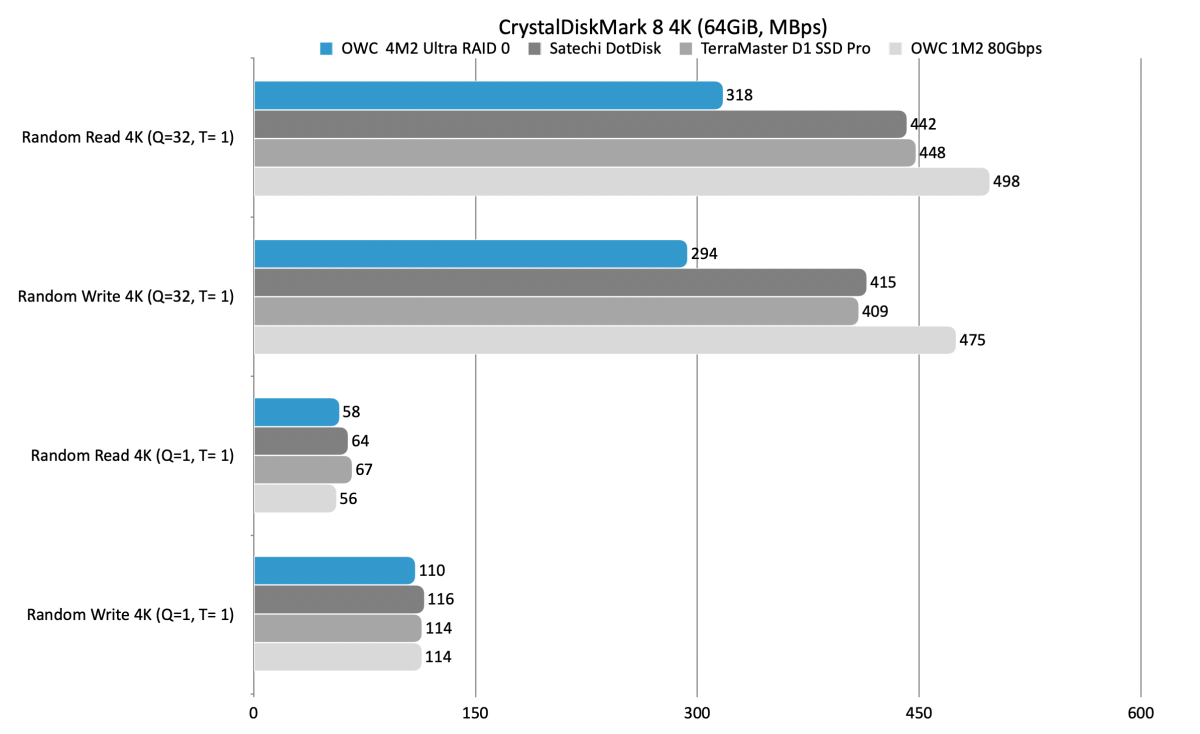
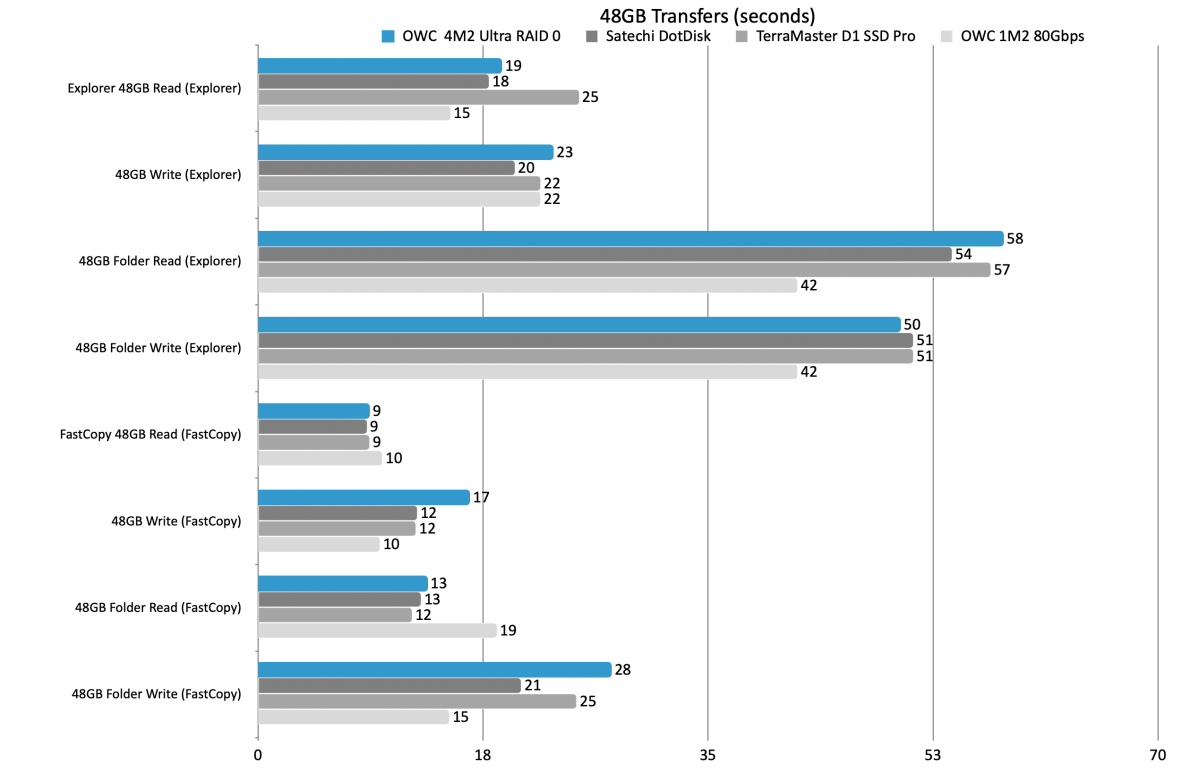
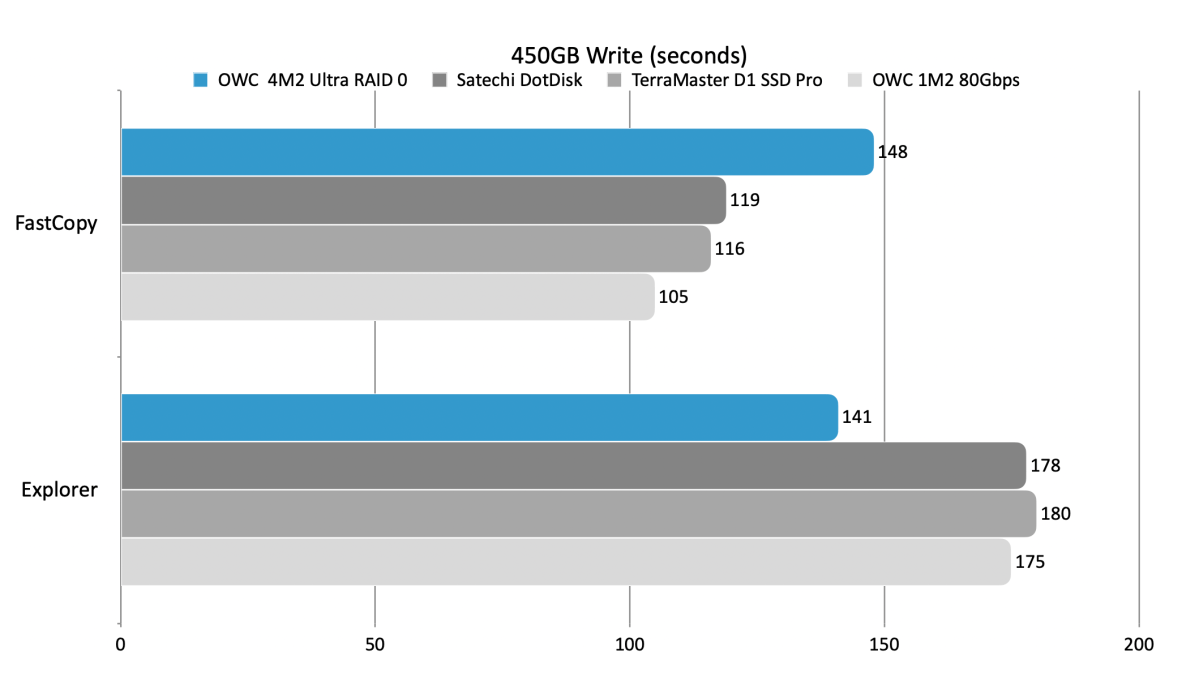
I also ran the 4M2 Ultra through PCWorld’s battery of tests for comparison purposes. However, the other drives shown: the Satechi DotDisk, TerraMaster D1 SSD Pro, and OWC’s own 1M2 are 80Gbps single drive enclosures, which makes these comparisons a tad unfair. But the charts do show what you stand to gain or lose by going the RAID route.
The 4M2 Ultra did well in some CrystalDiskMark 8 (the code base for AmorphousDiskMark) tests, while in others, not so much. And with four SSDs to stripe writes across, the 4M2 Ultra’s write performance is a tad disappointing.
Though it’s very fast overall, with four SSDs to stripe writes across, we were expecting better write numbers from the 4M2 Ultra..
The 4M2 Ultra lagged a bit in CrystalDiskMark 8’s 4K tests, but it’s still fast in the grand scheme of external storage.
The 4M2 Ultra lagged a bit in CrystalDiskMark 8’s 4K tests, but it’s still fast in the grand scheme of external storage.
In PCWorld’s real life 48GB transfers, the 4M2 Ultra was quite close to the competition, and even tied for first in one test.
In PCWorld’s real life 48GB transfers, the 4M2 Ultra was quite close to the competition, and even tied for first in one test.
PCWorld’s 450GB write test proved the 4M2 Ultra to be a very fast solution when transferring very large files using Windows Explorer, but didn’t perk up, as is usually the case, with the fantastic FastCopy utility.
PCWorld’s 450GB write test proved the 4M2 Ultra to be a very fast solution when transferring very large files using Windows Explorer, but didn’t perk up as is usually the case with the FastCopy utility.
All told, the 4M2 Ultra is fast, and a great improvement over the older 40Gbps 4M2. However, it’s not as fast as single enclosures, so its most salient strength is combining smaller SSDs into a single large volume, up to 32TB with 8TB SSDs.
Note that while testing, it was discovered that Phison E26 controllers apparently require more power than my M4 Max Studio can provide under heavy loads at 80Gbps (10Gbps and 40Gbps are fine). Using these in the 4M2 Ultra was a rocky experience–they would disconnect under load. This did not occur with the 4M2 Ultra on PCWorld’s Wintel test beds. If you’re a Wintel user who has E26 SSDs, you’re safe. Have an 80Gbps Mac? Avoid them.
Should I buy the 4M2 Ultra?
If you want fast, super vast external storage, the 80Gbps 4M2 is a great way to create speedy large volumes from smaller SSDs. Just avoid E26-based SSDs.
Apple saw an excellent and better-than-anticipated Q3 2026 in terms of iPhone sales, but its revenue for services—like Apple TV, Apple Music, AppleCare, or iCloud—slipped downward, disappointing experts who were hoping for more. Further, fears about memory prices and supply constraints slightly soured reception to what could have otherwise been a slightly positive but business-as-usual quarter.
That's the key takeaway from the company's Q3 2026 earnings call today.
Un grand nombre d' illustrations mystérieuses et des milliers de mots écrits dans une langue inconnue... Vieux de plusieurs siècles, le manuscrit de Voynich, dont l'auteur est anonyme, reste une énigme pour les linguistes, les cryptographes et les historiens, et ce malgré les progrès de...
Une pomme fripée, une poire trop mûre, abandonnées au fond du jardin par simple négligence. Ce geste anodin peut pourtant sauver la mise à tout un cortège de créatures affamées. À l'approche de l'hiver, un fruit oublié devient un festin vital. Et un coup de pouce insoupçonné à la biodiversité.
Programme millimétré ou départ sans plan ? Derrière cette simple façon de préparer les vacances se cachent des mécanismes psychologiques bien plus complexes qu'on ne l'imagine. Contrairement aux idées reçues, les amateurs d'organisation ne sont pas forcément des maniaques du contrôle, pas plus...
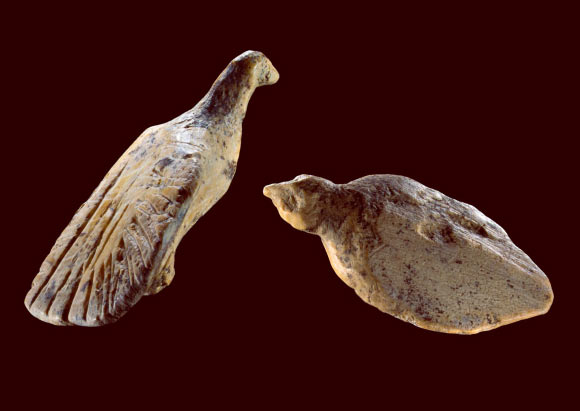
Archaeologists in southwestern Germany have unearthed two miniature bird figurines carved from mammoth ivory, among the smallest and most delicate examples of Ice Age art ever found.

 Login