❌

Reading view

Whisper and SpeechAnalyzer

Om Malik (2023):

One of the key advantages of MacWhisper, as it utilizes the Whisper technology, is its superior accuracy in transcriptions compared to other services I have used. I was an early adopter of Rev.com and eventually switched to Otter.ai, for which I paid approximately $100/year. However, I have since canceled my subscription.

[…]

After comparing the audio transcripts from MacWhisper and Otter, I found that while Otter’s formatting is superior, there is hardly any difference in the transcriptions. I started with the free model, which was sufficient for my needs, and eventually upgraded to the large models. Nowadays, I primarily use MacWhisper to transcribe my voice memos, which I then import into Lex.Page.

Bon Adamson:

Whisper, which is made by OpenAI, has the distinct advantage of allowing you to transcribe audio in almost any language you may ever need to. For the time being, Otter can only transcribe English. The benefits of better accuracy and accurate punctuation that the service already holds over Siri hold up across other languages as well. If you’re looking to transcribe non-English audio accurately, Whisper is definitely the best option available on Mac.

Dan Moren:

By taking advantage of OpenAI’s Whisper framework, Audio Hijack can now take any audio it’s recording and generate a text transcript. While this process was possible before—see Jason’s lengthy post about his workflow—it required a lot of fiddling and several different tools to accomplish; it’s certainly a lot easier to simply drop Audio Hijack’s block into your existing session. If you record multiple sources, it can even appropriately label each one—though if you record multiple people via one input, say the other end of a Zoom call, it can’t distinguish between the various participants.

Inscribe (2026, Hacker News):

Apple’s new SpeechAnalyzer is the most accurate on-device speech engine we tested. It beat every Whisper model we ship, including Whisper Small, on both the clean and the noisy half of LibriSpeech, while running roughly three times faster than Small. And the API it replaces, SFSpeechRecognizer, came last on clean speech: behind even Whisper Tiny, a 40MB model.

[…]

The new API cuts word error rate by 3.5 to 4x on the same audio: from 9.02% to 2.12% on clean speech, and from 16.25% to 4.56% on noisy speech. There is no accuracy trade-off to weigh; the new API wins everywhere we measured, and it produces punctuated, cased text where the legacy engine’s output is rougher.

[…]

All five engines ran comfortably faster than real time: between roughly 12x and 40x on the M2 Pro, meaning an hour of audio transcribes in about 1.5 to 5 minutes on-device. SpeechAnalyzer was about 3x faster than Whisper Small per second of audio while beating it on accuracy.

Yuki:

SpeechAnalyzer’s ReportingOption.fastResults reads like a knob you’d reach for when you want to trade power for latency. That framing is what cost me the afternoon.

[…]

If a recording matters — and in a notes app, a lost meeting is the worst thing that can happen to a user — then the container you write while recording has to be PCM in CAF. Not m4a, and not AAC-in-CAF either.

[…]

AVAudioEngine’s inputNode silently ignores your device selection

[…]

I wanted summarization to run on-device. Everything else in Nib’s transcription path does, the audio never leaves the machine, and it would have been a much cleaner story to tell.

But 4,096 tokens for the Foundation Models isn’t enough.

Previously:

  •  

Suno Hack and Audio Scraping

Jason Koebler (tweet, Reddit):

The AI music generation tool Suno scraped millions of songs and lyrics from YouTube Music, Deezer, and Genius, as well as from the stock music libraries Pond5, Jamendo, Freesound, the International Music Score Library Project, and podcasts via RSS feeds, according to a hacker who breached the company and shared data about Suno’s training libraries with 404 Media. The hacker was also able to access user information for hundreds of thousands of Suno’s customers, as well as Stripe payment information, they said.

[…]

As part of these legal proceedings, Suno previously admitted that it was trained on “essentially all music files of reasonable quality that are accessible on the open internet,” which included a total of “tens of millions of recordings.” Suno has been making the argument that it is allowed to train on copyrighted works as fair use in those cases, one of which has been settled.

Corbin Bolies:

Suno has long acknowledged that its AI music generator relied on the scraping of millions of songs available across the internet, but a new hack reveals just how the company pulled from streaming services and websites[…] all while user information remained vulnerable.

[…]

“Our goal has always been to help people create original new music, not replicate someone else’s. That’s why we build our models around what we call ‘Original Creation, By Design,’” the spokesperson said in a statement. “For example, we intentionally do not use artist names as a category of training metadata because we want our models to help people create brand new songs, not music that replicates other artists’ existing work. It’s also why we built Suno with detection filters that block or prevent a user from using specific artist, song, or album names as prompts, and prevent users from uploading lyrics or sound recordings that match existing works.”

Previously:

  •  

Apple Silicon and AI

Jason Hiner (MacRumors):

In an exclusive conversation with The Deep View ahead of WWDC 2026 in June, Doug Brooks, senior product manager of Apple silicon, discussed how Apple’s long-term investments in neural processing, unified memory, power-efficient computing, and hardware-software integration have positioned its devices for the AI era.

He also explained why Macs have become a favorite platform among AI developers, why Mac minis and Mac Studios are emerging as the preferred AI agent machines, and how Apple sees the future of on-device AI across iPhone, iPad, and Mac.

[…]

“We build a chip knowing exactly what systems it’s going to go into. The chip can influence the system design, and the system design can influence the chip requirements. They’re married together very tightly. I’d actually go a step further and include software in that equation. As we enable new capabilities in the chip, we want to make sure those capabilities are exposed all the way through the software stack so developers can benefit and customers can benefit. Because if those transistors go unused, what’s the point? It’s not about adding something and hoping somebody finds a use for it. We want those capabilities available to solve real problems. I think that’s what allows us to build better systems and ultimately better products.”

It seems like a lot of it is just that developers like macOS.

Previously:

Update (2026-07-10): See also: Hacker News.

  •  

Castro’s Customer Support Lessons

Dustin Bluck (archive link, Hacker News):

I had an idea when I bought Castro that human support based around actual user experience was an easy differentiator. I’ve rarely gotten useful answers from support from services I use. I thought if I used my own product every day, read every email and answered it thoughtfully, people would appreciate this, and it would build some degree of loyalty and appreciation.

[…]

However, what I found is this whole thing didn’t work as I thought it would. Sure sometimes we were able to wow customers, particularly when we responded right away with an exact fix for them. But the vast majority of our honest, thoughtful answers were deeply unsatisfactory to users, and it often annoyed them more than anything else.

[…]

Customers email us with confusion about how podcasts work, how the App Store works, how their Mac works, and any number of tangential issues. What tends to happen is the same users do this over and over, and once they find out we answer, the requests get more frequent and more burdensome.

[…]

To the user, any response aside from “Okay, we’re going to build that right now” is meh-to-negative. Various honest responses, such as “I thought about this or tried it in the past and it unfortunately didn’t work very well” are not going to knock their socks off. These just don’t do much in terms of loyalty and rapport.

[…]

Avoiding explanations and specifics tends to get a neutral response and doesn’t suck anyone in or waste too much time. In other words, the best approach for us is what most companies do. Because building loyalty or rapport at the moment something isn’t working and the user is frustrated hasn’t worked. The real positive experience comes when you actually improve the product, so that’s where we’re spending our time.

I have definitely seen all these categories of customer interactions, but I don’t agree with the conclusion. Yes, in the end you want to be improving the product, but I don’t think that’s fully separable from interacting with customers as humans. I’ve found spending time on customer support incredibly valuable for making my products better. Even a lone report of an issue can often lead to a fix and learning something important that has wider implications. It’s also enjoyable and motivational to hear about real people making use of what I’ve built or to turn around someone who started with a negative view. And it seems to help with marketing, too.

I also see a correlation with the apps that I use—the better ones tend to also have good support. That said, I use a podcast app that famously doesn’t offer support. There are different situations, and there’s more than one way to a good product and a successful business.

I do think there’s an art to all this. Not everything can be measured, and there’s more to it than just committing to answering e-mails thoughtfully. You need to set boundaries and steer the interactions to make them productive, efficient, and satisfying for both sides. I’m still learning.

Previously:

Update (2026-07-07): Jeff Johnson:

This is what you get from the free with IAP business model: most of your support emails are from freeloaders!

My apps are upfront paid, thus most of my support emails are from customers. I don’t get overloaded with emails, and paid customers are more incentivized to solve issues with you, because they’ve invested money into the app.

Vitor:

I find myself agreeing with you that customer support is valuable and we should do it. But over the years I have also realised that, in a way, being good at support is punishing. I’ll explain[…]

  •  

Apple Hardware Price Hikes

Osmond Chia (Hacker News, 9To5Mac, Engadget):

Apple plans to raise the prices of its products as the cost of the memory chips it uses has surged, the technology giant’s boss has said.

Tim Cook, Apple’s outgoing chief executive, told the Wall Street Journal (WSJ) that price increases were “unavoidable” as the situation around memory chips had become “unsustainable”.

Nick Heer:

During its holiday quarter, Apple’s profit margin on hardware was 40.7%; in its most recent quarter, that dropped to 38.7% — a remarkable figure for physical products. It is these high margins that led to analysts like Ming-Chi Kuo to claim Apple would keep prices more-or-less stable and offset the additional costs through its even higher-margin — 76.7% — services business.

Adam Engst:

Winkler suggests in his summary that Apple has absorbed the cost increases so far because it has always treated memory and storage upgrades as profit centers. That’s no surprise to the Apple community, which has long chafed at Apple’s premium prices for memory and storage. But now, for instance, the price of standalone internal flash storage is closer to and sometimes even higher than Apple’s upgrade prices.

[…]

Obviously, Apple could absorb such costs and more if it were to accept dramatically lower gross margins. But as high-minded and customer-focused as Apple is, the company is still in business to maximize profit.

I was recently looking to add another SSD and a few hard drives to my setup. Normally, prices go down over time, but currently it SSDs are about double the price I paid last year, and large hard drives are almost triple.

John Gruber (Hacker News):

Apple, to my recollection, has never before issued a warning about price increases. Keep in mind that Apple deals with prices in a very different way from its competitors. For Apple, prices are part of a product’s brand, so they don’t fluctuate with component costs.

Chance Miller (Hacker News, MacRumors, Mac Power Users):

Apple has raised prices across the board for many of its products today. MacBook Neo now starts at $699 (up from $599), while MacBook Air now starts at $1299 (up from $1099). Other impacted products include MacBook Pro, iPad, iPad Air, and many more. iPhone, Apple Watch, and AirPods pricing is unchanged.

Ben Lovejoy:

Earlier this week, I outlined three reasons for agreeing with Mark Gurman that the Apple price increases could be imminent, and that indeed proved to be the case.

iPhones have escaped the increases, but they are otherwise both broad-reaching and pretty dramatic. But perhaps the most surprising thing is that the MacBook Neo has been included …

Tim Hardwick:

Apple today increased the starting price of the Mac mini with M4 Pro chip by $200, taking the higher-tier model up to $1,599 on its online store.

[…]

Apple had already raised the Mac mini’s effective starting price in May by discontinuing the $599 configuration with 16GB of RAM and a 256GB SSD, leaving the $799 model with a 512GB SSD as the new entry-level option. Interestingly, the 16GB RAM / 256GB storage option has now been reinstated, but the $799 starting price remains.

Stephen Hackett has a table of the old and new prices.

Nick Heer:

Pre-announce it with a small delay, thus giving you a temporary sales boost as people scramble to get their orders in at current prices, and to soften the blow when the increases hit.

Matt Birchler:

I also can’t help but see that “we need to begin raising prices on a number of products, including today’s increases for iPad and Mac,” statement as implying more increases are coming. The iPhone price increase seems inevitable, and my money is on it starting with the new models in September.

Simon Sharwood:

Micron CEO, president and chairman Sanjay Mehrotra explained the SCAs in prepared remarks delivered during the company’s Q3 earnings call. He explained that Micron has signed 16 SCAs, most of them covering 2026 to 2030, and that they involve a commitment to buy a certain quantity of product and pay for it in a pricing band that has a floor and a ceiling price. The floor price covers the historically high gross margins mentioned above, and the ceiling price means those who commit to an SCA are insulated if memory prices go even higher.

Previously:

Update (2026-06-26): Hartley Charlton:

Micron’s chief business officer has hinted, without calling it out by name, that Apple’s tough supplier negotiations contributed to the conditions behind the global memory shortage.

M.G. Siegler:

For years, Apple has been able to dominate and dictate to their suppliers thanks to their scale. But the Asian operations which Tim Cook so famously set up, have been upended, like most everything else, by AI. From TSMC on down, Apple is no longer the customer dictating terms for the entire industry, it’s now the company which has taken over the mantle as the most valuable one in the world: NVIDIA.

Joe Rossignol:

Apple’s stock price dropped 6% on the day — its largest single-day loss since April 2025.

John Gruber:

Here’s a table with most of the base models whose prices increased[…]

[…]

iPad prices mostly went up 20–25%, but the hardest hit was the no-adjective base model, which rose almost 30%, from $350 to $450. That’s a big increase for a product meant to appeal to buyers for whom price is obviously their biggest concern.

John Gruber:

Anyone who purchased a MacBook Neo for $600 (or $500 with education discount) between March and this morning purchased the lowest-price MacBook Apple has ever sold — and perhaps the lowest-price MacBook they ever will sell.

Joe Rossignol:

Apple’s full statement:

The consumer electronics industry is facing an unprecedented challenge. The rapid expansion of AI data centers has created an extraordinary surge in demand for memory and storage. We have never seen a component price increase this much, this quickly. We have shielded our customers from these increases so far, but we have now reached a point where we need to begin raising prices on a number of products, including today’s increases for iPad and Mac. We know this is not welcome news, and we are working tirelessly to find solutions.

[…]

Apple indicating that it needs to “begin” raising prices suggests that additional price increases might occur later.

Jason Martin:

“and we are working tirelessly to find solutions.”

I find this to be the most confusing part. Do we believe this to be a genuine effort? Even if so, how would a “solution” actually work? Would they actually lower prices if a solution were to be found?

They also just said they “will continue working” on bringing Siri AI to the EU right before saying in a different venue that they’d stopped working on it.

Jeff Johnson:

In a statement about the price increases, Apple said, “We can no longer shield customers from our 39% gross margin.”

Christina Warren:

Like, truly laughable. $200 for a 64GB Apple TV 4K that is almost 4 years old?

John Gruber (Mastodon):

But even setting aside the prices of competing devices, it just feels wrong to hike prices this much for four-year-old hardware running five-year-old pre-AI silicon. The higher-end model’s price went up 67 percent!

The only way this makes sense is if these prices are really meant for the upcoming new hardware, and those new models are more ambitious home hubs that warrant $200–250 prices.

Previously:

Update (2026-06-29): Zac Hall:

The Financial Times reports that Apple is seeking clearance from the Trump administration to purchase memory chips from a blacklisted Chinese company. The move would help it meet demand for product manufacturing during the ongoing global memory supply shortage.

Perhaps this is the “working tirelessly” that Apple was referring to.

Ben Lovejoy:

Apple previously sought permission from the Biden administration to do the same thing back in 2022, and that did not go well – despite promising to use the chips only for iPhones sold in China …

John Gruber:

Something happens — outside the company’s control — that causes those essential components to rise in price significantly.

[…]

What you cannot do is hold a philosophically consistent logically coherent view where your answer to how a company should respond in such a scenario is contingent on what the “something happens” is that caused component prices to rise.

Maybe—but that’s only relevant if you accept the premise that it was out of Apple’s control. I don’t know the details of the deals, but there’s an argument that the rising costs to Apple are to some extent Apple’s “fault.” If Tim Cook gets credit for helping suppliers expand capacity and locking in contracts for memory at low prices over the past two decades, doesn’t the same logic apply in reverse? The AI-driven shortages were foreseeable—and publicly discussed years ago. If you believe Micron that Apple chose to prioritize its own past numbers rather than securing its future supply, doesn’t that make today’s situation different from, say, a tsunami that unexpectedly wiped out a bunch of factories? I don’t know exactly how the increased costs should be apportioned, but I think the reasons for the costs are relevant, and I don’t think they’re fully exogenous.

sid:

If Apple has the balls to raise the prices of their products, they should also have the balls to increase trade-in values for older devices.

Update (2026-06-30): Kif Leswing:

But while tech giants like Apple and Microsoft, which both announced price hikes this week, have a hefty cash cushion, supply chain leverage and customers numbering in the millions or billions, a much wider swath of businesses face potentially dire straits. Most consumer electronics companies have little margin to spare and can’t confidently raise prices in an economy already grappling with inflationary pressures.

GoPro, the struggling maker of action cameras, warned this month that it might go out of business after memory costs shot up between 80% and 115% at the end of the first quarter. And shares of speaker maker Sonos are down 23% this year as memory prices pressure margins.

Update (2026-07-06): Basic Apple Guy:

Below you’ll find a bunch of charts chronicling the current state of RAMmaggedon, the global memory-chip crisis we currently find ourselves in.

Update (2026-07-22): Tim Hardwick:

Apple’s principal chipmaker TSMC plans to raise prices by as much as 10 percent starting in 2027, according to a new report from Nikkei Asia.

  •  

CrashReportExtension

CrashReportExtension:

The Crash Report Extension framework allows you to perform analysis and produce a report when your app crashes. Your crash-handling code executes out-of-process, rather than from a signal handler or other in-process techniques.

You implement your handler by writing an app extension that conforms to the CrashReporterExtension protocol. The system calls your processCrashReport(process:) method when the app crashes. Use the CrashedProcess parameter to inspect the state of the crashed app by retrieving a crash reason, symbolicating relevant addresses, and communicating with the process over a read-only Mach port. After collecting the crash data, you can send a report back to your own server.

[…]

Crash Report Extension is available on iOS 27 and later. It isn’t available to Catalyst-based macOS apps, or on iOS apps running on Mac computers with Apple silicon.

The top of the page says “macOS 27.0+,” so I guess this means it does work for regular AppKit and SwiftUI Mac apps. It’s great to finally have a supported way to do this.

I don’t know why they can’t just give you the crash report text or .ips JSON directly, though. It looks like you have to use Mach IPC with the corpsePort to get the backtrace for each thread and then use the extension API to symbolicate the addresses. Even then, I’m not sure you can get all the information that’s in a standard crash report, such as the Application Specific Backtrace. Maybe you can find the address for gCRAnnotations/__crashreporter_info__ and load it with mach_vm_read?

Previously:

  •  

VOOPOO Vinci S vs Vinci E80 Pod Vape Review: Which Vinci Pod Kit Is Better?

VOOPOO continues to expand its popular Vinci series with two impressive devices: the VOOPOO Vinci S and VOOPOO Vinci E80. Both models focus on portability, flavor performance, and easy operation, but they target different types of vapers.

The Vinci S is designed as a simple, lightweight 40W pod device with long battery life and beginner-friendly operation, while the Vinci E80 is a more powerful pod mod featuring an 80W output, larger battery, display screen, and broader vaping flexibility.

In this detailed comparison, we will look at their design, battery performance, pods, flavor, airflow, power output, and overall vaping experience to help you choose the right Vinci device.

VOOPOO Vinci S vs Vinci E80 Specifications

Feature VOOPOO Vinci S VOOPOO Vinci E80
Device Type Pod System Pod Mod
Maximum Output 40W 80W
Battery Capacity 2000mAh Built-in 3000mAh Built-in
Chipset GENE TT 2.0 GENE TT 2.0
Display LED Indicator 1.47-inch TFT Color Screen
Pod Capacity 4.5ml / 2ml TPD 5ml / 2ml TPD
Cartridge Type Vinci S Cartridge Vinci E Cartridge / PnP X Compatible
Filling Method Top Fill Top Fill
Airflow Adjustable Adjustable
Charging USB Type-C USB Type-C 5V/2A
Best For MTL & RDL Users MTL, RDL & DTL Users

Specifications are based on VOOPOO’s official product information.


Design and Build Quality

VOOPOO Vinci S Design

The Vinci S adopts a minimalist and stylish design. It uses an aluminum alloy + PC construction, making it lightweight and comfortable for daily carrying. The device weighs around 69g and has a slim body that fits easily into pockets.

Its biggest design highlight is the Luminous Palette finish, giving the device a premium appearance while maintaining a simple operation style. There are no complicated buttons or menus, making it ideal for beginners.

The Vinci S focuses on:

  • Compact size
  • Easy operation
  • Lightweight portability
  • Everyday vaping convenience

VOOPOO Vinci E80 Design

The Vinci E80 takes a more advanced pod mod approach. Although it remains compact, it provides a larger body to accommodate the bigger battery and screen.

The device weighs about 88.8g and features an aluminum alloy + PC body. It includes a 1.47-inch TFT color display, allowing users to view battery level, wattage, resistance, and vaping information clearly.

Compared with Vinci S, the E80 feels more like a traditional box-style pod mod.

Vinci E80 Advantages:

Larger screen
More adjustable settings
More powerful output
Better for experienced users

Winner: Vinci E80 for advanced design
Winner: Vinci S for portability


Battery Performance Comparison

Vinci S: 2000mAh Battery

The Vinci S comes with a built-in 2000mAh battery, which is impressive for a compact pod device. Its maximum output is 40W, providing enough power for daily MTL and RDL vaping.

For moderate users, the battery can easily last a full day or longer.

Best suited for:

  • Nicotine salt users
  • Moderate vaping habits
  • Pocket-friendly daily use

Vinci E80: 3000mAh Battery

The Vinci E80 features a larger 3000mAh battery combined with an 80W maximum output. This gives it significantly more power and endurance compared with Vinci S.

The larger battery is especially useful when using lower resistance coils at higher wattages.

Best suited for:

  • Heavy users
  • Cloud-focused vaping
  • Long outdoor sessions

Battery Winner: VOOPOO Vinci E80


Power Output and Performance

Vinci S Performance

The Vinci S offers adjustable output from 5W to 40W. It uses the GENE TT 2.0 chipset, which automatically detects coil resistance and adjusts power settings for stable performance.

The device supports:

  • 0.6Ω Vinci S cartridge
  • 0.8Ω Vinci S cartridge
  • Selected PnP X cartridges

It delivers a smooth and flavorful vape, especially for:

  • Tight MTL
  • Loose MTL
  • Light RDL

Vinci E80 Performance

The Vinci E80 is designed for users who want more control. With up to 80W output, it can produce warmer vapor, larger clouds, and stronger flavor intensity.

It supports:

  • Vinci E cartridges
  • PnP X platform cartridges
  • Multiple resistance options

The included 0.3Ω and 0.6Ω cartridges allow users to switch between stronger vapor production and smoother restricted airflow vaping.

Performance Winner: VOOPOO Vinci E80


Flavor Quality and Pod Comparison

Vinci S Cartridge System

The Vinci S uses integrated Vinci S cartridges with iCOSM CODE 2.0 technology, designed to improve leak resistance and maintain consistent flavor.

The 0.8Ω cartridge is excellent for:

  • Nicotine salts
  • Cigarette-style draws
  • Smooth throat hits

The 0.6Ω option provides:

  • More vapor
  • Warmer flavor
  • Looser airflow

Vinci E80 Cartridge System

The Vinci E80 uses Vinci E cartridges and supports the PnP X platform, giving users more flexibility.

Advantages include:

  • More coil choices
  • Wider wattage range
  • Better customization

For flavor enthusiasts who enjoy experimenting with different vaping styles, the E80 offers more possibilities.

Flavor Winner: VOOPOO Vinci E80


Ease of Use

Vinci S

The Vinci S is almost plug-and-play:

  1. Fill the pod
  2. Insert cartridge
  3. Start vaping

It has automatic operation and simplified controls, making it suitable for beginners.

Recommended users:

  • First-time pod users
  • Smokers switching to vaping
  • Users who dislike complicated settings

Vinci E80

The Vinci E80 is still beginner-friendly but offers more advanced features:

  • Adjustable wattage
  • Display screen
  • More cartridge options
  • More airflow adjustment

It gives experienced users more control without becoming complicated.

Ease of Use Winner: Vinci S


Pros and Cons

VOOPOO Vinci S

Pros:

Lightweight and portable
Excellent 2000mAh battery
Simple operation
Great MTL flavor
Leak-resistant cartridge design


VOOPOO Vinci E80

Pros:

Powerful 80W output
Large 3000mAh battery
TFT color display
Supports PnP X platform
Better for different vaping styles


Which One Should You Buy?

Choose VOOPOO Vinci S If:

  • You want a simple pod vape
  • You prefer MTL vaping
  • You need a lightweight device
  • You mainly use nicotine salts
  • You want long battery life without complicated settings

The Vinci S is an excellent everyday pod system.


Choose VOOPOO Vinci E80 If:

  • You want stronger vapor production
  • You enjoy RDL or DTL vaping
  • You want adjustable wattage
  • You prefer a screen and advanced controls
  • You want more cartridge choices

The Vinci E80 is better for experienced vapers who want more performance.

Final Verdict: Vinci S vs Vinci E80

Both devices represent the strengths of the VOOPOO Vinci family, but they serve different audiences.

VOOPOO Vinci S is the better choice for beginners and MTL users who want simplicity, portability, and reliable flavor.

VOOPOO Vinci E80 wins for power, customization, and versatility with its 80W output, 3000mAh battery, and PnP X compatibility.

Overall Winner: VOOPOO Vinci E80

For users who want a future-proof pod device with more vaping options, the Vinci E80 offers a more complete experience. However, the Vinci S remains one of the best choices for anyone looking for a lightweight, easy-to-use daily pod vape.

The post VOOPOO Vinci S vs Vinci E80 Pod Vape Review: Which Vinci Pod Kit Is Better? appeared first on IGeeKphone China Phone, Tablet PC, VR, RC Drone News, Reviews.

  •  

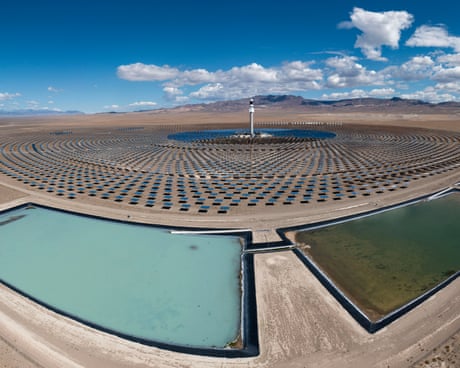
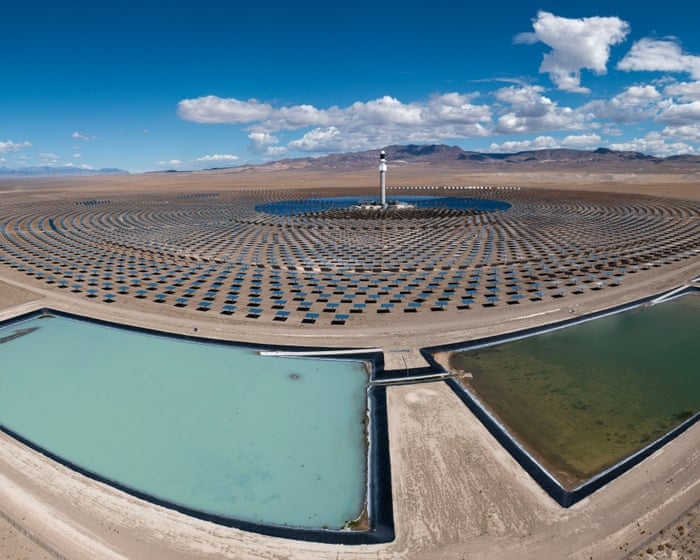
Molten salt and human sweat: the weird batteries that could store renewable energy

From Nevada to Manchester, developers are trialling innovative solutions to clean energy’s biggest challenge

In the deserts of the United Arab Emirates a sprawling clean energy project, stretching across an area roughly the size of 12,600 football fields, will play host to a breakthrough allowing solar energy to power the equivalent of half a million homes through the night.

The Gulf state has been steadily combining 5.2GW of solar power capacity with 19GWh of battery storage to create the largest battery scheme in the world.

Continue reading...

© Photograph: UCG/Universal Images Group/Getty Images

© Photograph: UCG/Universal Images Group/Getty Images

© Photograph: UCG/Universal Images Group/Getty Images

  •  

As Natural Disasters Expand, a Disaster-Tracking App Is Booming

Known for tracking California wildfires, Watch Duty is moving beyond that mission. Millions of people are turning to it for help.

© Joel Angel Juarez/Associated Press

An emergency vehicle at the flooding Guadalupe River in Comfort, Texas, on Thursday.
  •  

Apple pilots AI-powered ‘Live Notes’ at Genius Bar and reveals bigger ambitions for the discontinued Mac Pro

Apple announces Apple Retail Store expansion in Saudi Arabia

In his latest Power On newsletter, Bloomberg News’ Mark Gurman highlights two notable Apple developments: a new AI tool being tested in retail stores and previously undisclosed plans for the now-defunct Mac Pro.

AI Recording and Transcription for Genius Bar Appointments

Apple is piloting an AI-powered system called Live Notes at select retail stores. The tool allows Genius Bar employees to record conversations with customers using an iPad. AI then transcribes and summarizes the discussion, automatically adding it to the employee’s notes and the official repair session record.

Key details of the pilot include:

• Opt-in only — Both the employee and customer must agree before recording begins.

• Goal — Reduce manual note-taking so staff can focus more on customer service and problem-solving rather than typing during appointments.

• Integration — Transcripts feed directly into Apple’s internal Genius Bar system for better documentation and follow-up.

This initiative reflects Apple’s broader push to integrate AI across its ecosystem, including retail operations, to improve efficiency while maintaining a personal touch in customer interactions. Privacy safeguards via the opt-in requirement appear designed to address potential concerns.

Apple Once had Bigger Plans for the Mac Pro

Apple discontinued the Mac Pro earlier in 2026, but new reporting reveals the company once had far more ambitious plans for the high-end desktop. Gurman notes that Apple developed — but ultimately shelved — “M2 Extreme” and “M3 Extreme” chip variants specifically intended for the Mac Pro.

These ultra-powerful chips were part of an effort to deliver even greater performance for professional users who rely on the modular, expandable workstation. The decision not to release them contributed to the product’s eventual discontinuation, as Apple shifted focus amid changing market demands and the rise of more portable high-performance options like Mac Studio and MacBook Pro configurations.

The revelations underscore the evolving nature of Apple’s Mac lineup, where even flagship products like the Mac Pro face tough strategic trade-offs in an AI-driven computing era.

MacDailyNews Take: Not everything makes it to market. Conditions change. As always, retail and pro desktop innovations continue to shape the company’s customer and professional user experiences.

In the end, Mac Pro was a waste of aluminum. – MacDailyNews, March 30, 2026

For the vast majority of professional users (video editors, photographers, 3D artists, developers, and those running AI/ML workloads) the Mac Studio is the superior choice overall. It delivers an excellent balance of performance, price, compact size, and modern features. The Mac Studio covers 90% (or more) of what the Mac Pro once offered, but at a fraction of the cost and with newer silicon, and the promise of regular updates. The discontinued Mac Pro was only preferable, or truly necessary, in the rare cases that demand heavy internal PCIe expansion that cannot be adequately handled externally via Thunderbolt; a very niche market. – MacDailyNews, March 27, 2026

Apple’s Mac Pro is a dead end. Mac Studio is the high-end Mac future now. Bring on the M5 Ultra Mac Studio and rename it “Mac Pro.” – MacDailyNews, November 17, 2025


‎
Please help support MacDailyNews — and enjoy subscriber-only articles, comments, chat, and more — by subscribing to our Substack: macdailynews.substack.com. Thank you!

Support MacDailyNews at no extra cost to you by using this link to shop at Amazon.

The post Apple pilots AI-powered ‘Live Notes’ at Genius Bar and reveals bigger ambitions for the discontinued Mac Pro appeared first on MacDailyNews.

  •  

Apple plante einen letzten Intel-Mac – nach fünf Jahren Apple Silicon

Für Apples Mac Pro gibt es keinen Weg zurück: Am 27. März 2026 bestätigte das Unternehmen offiziell, dass der High-End-Rechner aus dem Sortiment genommen wurde. Auch seine Landing-Page verschwand aus dem Apple Store. Bereits Ende 2025 gab es Anzeichen, dass Apple vorerst keine neueren Chips für seinen Tower plant. Letztendlich wurde der Mac Studio aktualisiert, mit dem M4 Max und M3 Ultra.

Doch zwischen der Einstellung im März 2026 und der Aktualisierung im März 2023 hegte Apple noch andere Pläne für seinen Profi-Mac, berichtet Bloomberg-Redakteur Mark Gurman.

Zum einen experimentierten Ingenieure in Cupertino mit einer weiteren Abwandlung der M3- und M4-Prozessoren. Die Idee war, die doppelte Anzahl an CPU- und der GPU-Kerne als bei M2 Ultra auf einen Chip zu bringen, dieser sollte M2 Extreme heißen. Schon damals wurden Konfigurationen mit gemeinsamem Arbeitsspeicher von 192 GB getestet. Maximal sollten in einem solchen Mac Pro 256 GB an RAM eingebaut werden, bislang ist eine solche Konfiguration nur mit einem Mac Studio mit M3 Ultra möglich.

Der eine zu teuer, der andere zu unattraktiv

Die Experimente mit solchen extrem aufgerüsteten Prozessoren sind im Laufe der vergangenen drei Jahre versandet, da die höchste Stufe des Apple Silicon recht teuer gekommen wäre. Ebenfalls war nicht klar, welche Zielgruppe sich für solche Macs interessieren würde.

Gleichzeitig mit den Experimenten an den M3 und M3 Extreme arbeitete Apple an einer neuen Version des Mac Pro mit Intel-Prozessor. Mark Gurman, der über solche Modelle erfahren haben soll, spezifiziert jedoch nicht, welche Generation der Intel-Chips Apple für seinen Tower angedacht hatte. Der Rechner war für eine bestimmte, wohl recht kleine Zielgruppe gedacht, die von der alten Plattform nicht umsteigen konnte oder wollte.

Warum sich Apple gegen einen Intel-Mac entschieden hat, geht aus Gurmans Artikel nicht hervor. Doch bereits im September 2026 kommt ein Betriebssystem, das ausschließlich mit Apple-Silicon-Macs kompatibel ist. Das Betriebssystem ist zudem kompakter geworden, da es auf Altlasten verzichten kann.

  •  

Apple shares hit new all-time closing and intraday highs

Apple logo

In Nasdaq trading today, shares of Apple Inc. (AAPL) rose $0.48 to $333.74 to hit a new all-time closing high. Apple’s all-time intraday high was also set today at $334.98.

Apple’s 52-week low stands at $201.50.

Today’s trading volume for AAPL shares was 63,196,563 versus Apple’s average trading volume of 54,686,906 shares.

Apple’s PE Ratio currently stands at 40.40.

Apple currently has a market value of $4.902 trillion, making it the world’s second-most valuable company.

The top five U.S. publicly-traded companies, based on market value:

  1. NVIDIA (NVDA) – $4.912T
  2. Apple (AAPL) – $4.902T
  3. Alphabet (GOOGL) – $4.231T
  4. Microsoft (MSFT) – $2.925T
  5. Amazon (AMZN) – $2.659T

Selected companies’ current market values:

• Taiwan Semi (TSM): $2.252T
• Tesla (TSLA): $1.488T
• Meta Platforms (META): $1.695T
• Berkshire Hathaway (BRK-A): $1.087T
• Walmart (WMT): $906.425B
• Advanced Micro Devices (AMD): $909.696B
• Intel (INTC): $552.056B
• Cisco (CSCO): $473.938B
• Netflix (NFLX): $310.883B
• SoftBank (SFTBF): $220.206B
• IBM (IBM): $275.786B
• Dell (DELL): $254.787B
• Disney (DIS): $166.045B
• Sony (SONY): $122.428B
• Adobe (ADBE): $90.177B
• Spotify (SPOT): $98.65B
• Nokia (NOK): $69.447B
• Hewlett-Packard (HPQ): $20.961B
• SiriusXM (SIRI): $9.937B
• BlackBerry (BB): $6.06B
• Sonos (SONO): $1.727B
• Liquidmetal (LQMT): $0.181B
• RealNetworks (RNWK) was delisted from U.S. exchanges on December 21, 2022 and is no longer publicly traded.🍩

Apple all-time high (AAPL) via NASDAQ here.

MacDailyNews Take: To the moon, Alice. To the moon!


Please help support MacDailyNews — and enjoy subscriber-only articles, comments, chat, and more — by subscribing to our Substack: macdailynews.substack.com. Thank you!

Support MacDailyNews at no extra cost to you by using this link to shop at Amazon.

Like 🙂 or dislike 🙁 this post below!

The post Apple shares hit new all-time closing and intraday highs appeared first on MacDailyNews.

  •  

Apple shares hit new all-time closing and intraday highs

Stock chart

In Nasdaq trading today, shares of Apple Inc. (AAPL) rose $5.76 to $333.26 to hit a new all-time closing high. Apple’s all-time intraday high was also set today at $334.68.

Apple’s 52-week low stands at $201.50.

Today’s trading volume for AAPL shares was 59,624,981 versus Apple’s average trading volume of 54,664,537 shares.

Apple’s PE Ratio currently stands at 40.40.

Apple currently has a market value of $4.895 trillion, making it the world’s second-most valuable company.

The top five U.S. publicly-traded companies, based on market value:

  1. NVIDIA (NVDA) – $5.023TT
  2. Apple (AAPL) – $4.895T
  3. Alphabet (GOOGL) – $4.325T
  4. Microsoft (MSFT) – $2.980T
  5. Amazon (AMZN) – $2.688T

Selected companies’ current market values:

• Taiwan Semi (TSM): $2.109T
• Meta Platforms (META): $1.683T
• Tesla (TSLA): $1.469T
• Berkshire Hathaway (BRK-A): $1.055T
• Walmart (WMT): $913.508B
• Advanced Micro Devices (AMD): $816.833B
• Dell (DELL): $253.543B
• Intel (INTC): $487.421B
• Cisco (CSCO): $431.883B
• Netflix (NFLX): $313.073B
• SoftBank (SFTBF): $223.341B
• IBM (IBM): $206.051B
• Disney (DIS): $173.009B
• Sony (SONY): $124.819B
• Spotify (SPOT): $98.404B
• Adobe (ADBE): $93.544B
• Nokia (NOK): $57.897B
• Hewlett-Packard (HPQ): $22.077B
• SiriusXM (SIRI): $10.54B
• BlackBerry (BB): $5.357B
• Sonos (SONO): $1.679B
• Liquidmetal (LQMT): $0.135B
• RealNetworks (RNWK) was delisted from U.S. exchanges on December 21, 2022 and is no longer publicly traded.🍩

Apple all-time high (AAPL) via NASDAQ here.

MacDailyNews Take: Onward amd upward, Cupertino soldiers!


Please help support MacDailyNews — and enjoy subscriber-only articles, comments, chat, and more — by subscribing to our Substack: macdailynews.substack.com. Thank you!

Support MacDailyNews at no extra cost to you by using this link to shop at Amazon.

Like 🙂 or dislike 🙁 this post below!

The post Apple shares hit new all-time closing and intraday highs appeared first on MacDailyNews.

  •  

Apple shares hit new all-time closing and intraday highs

Apple logo

In Nasdaq trading today, shares of Apple Inc. (AAPL) rose $12.64 to $327.50 to hit a new all-time closing high. Apple’s all-time intraday high was also set today at $328.72.

Apple’s 52-week low stands at $201.50.

Today’s trading volume for AAPL shares was 58,741,821 versus Apple’s average trading volume of 54,375,570 shares.

Apple’s PE Ratio currently stands at 39.70.

Apple currently has a market value of $4.810 trillion, making it the world’s second-most valuable company.

The top five U.S. publicly-traded companies, based on market value:

  1. NVIDIA (NVDA) – $5.147T
  2. Apple (AAPL) – $4.810T
  3. Alphabet (GOOGL) – $4.526T
  4. Microsoft (MSFT) – $2.939T
  5. Amazon (AMZN) – $2.743T

Selected companies’ current market values:

• Taiwan Semi (TSM): $2.195T
• Meta Platforms (META): $1.667T
• Tesla (TSLA): $1.483T
• Berkshire Hathaway (BRK-A): $1.073T
• Walmart (WMT): $913.03B
• Advanced Micro Devices (AMD): $871.377B
• Intel (INTC): $518.281B
• Cisco (CSCO): $469.977B
• IBM (IBM): $273.502B
• Dell (DELL): $275.78B
• Netflix (NFLX): $310.925B
• SoftBank (SFTBF): $218.098B
• Disney (DIS): $166.688B
• Sony (SONY): $122.34B
• Spotify (SPOT): $99.839B
• Adobe (ADBE): $91.669B
• Nokia (NOK): $65.958B
• Hewlett-Packard (HPQ): $22.653B
• SiriusXM (SIRI): $10.487B
• BlackBerry (BB): $6.286B
• Sonos (SONO): ~$1.98B
• Liquidmetal (LQMT): ~$0.135B
• RealNetworks (RNWK) was delisted from U.S. exchanges on December 21, 2022 and is no longer publicly traded.🍩

Apple all-time high (AAPL) via NASDAQ here.

MacDailyNews Take: Gaudy (yet still woefully undervalued)! To the moon, Alice. To the moon!


Please help support MacDailyNews — and enjoy subscriber-only articles, comments, chat, and more — by subscribing to our Substack: macdailynews.substack.com. Thank you!

Support MacDailyNews at no extra cost to you by using this link to shop at Amazon.

Like 🙂 or dislike 🙁 this post below!

The post Apple shares hit new all-time closing and intraday highs appeared first on MacDailyNews.

  •  

OpenAI to join the smart speaker party: Following Amazon, Google, and Apple into the AI companion era

Apple's HomePod
Apple’s HomePod

OpenAI, the company behind ChatGPT, the AI for newbies who don’t know better alternatives exist, is stepping into consumer hardware with its first device: a movable, screen-free smart speaker designed as an always-on AI companion for the home. According to a Bloomberg News report, the product — still in development — aims to control smart-home devices, play media, answer questions, handle messages, and leverage ChatGPT’s capabilities.

This sounds innovative on paper, especially with the promise of a more “humanlike” AI presence. But let’s be clear: Amazon, Google, and Apple pioneered this category years ago. OpenAI isn’t breaking new ground here — it’s trying to catch up to a market these giants have dominated for nearly a decade.

In addition to midnight, HomePod mini is available in yellow, orange, blue, and white.
Apple’s HomePod mini

The Smart Speaker Revolution Started Long Before ChatGPT

Amazon lit the fuse in 2014 with the original Echo and Alexa. What began as a cylindrical speaker that could play music, set timers, and answer basic questions quickly evolved into a full ecosystem. Echo devices now control lights, thermostats, door locks, and more — exactly the smart-home hub role OpenAI envisions. Amazon iterated relentlessly with cheaper Dots, portable versions, and premium models, shipping hundreds of millions of units and embedding Alexa into countless third-party devices.

Google followed in 2016 with Google Home (later Nest Audio and similar), emphasizing superior search integration and natural language understanding powered by its vast data resources. These speakers became central to many households for information, entertainment, and automation. Apple entered the fray in 2018 with the HomePod, focusing on premium audio quality and tight integration with its ecosystem, later adding the more affordable HomePod mini.

By the time OpenAI is targeting a potential 2027 launch for its device, smart speakers will have been mainstream for over a dozen years. The core features OpenAI highlights — voice interaction, media playback, smart-home control, and AI assistance — are table stakes that consumers already expect.

What’s New (or Not So New) with OpenAI’s Approach?

The Bloomberg News description by Mark Gurman positions OpenAI’s speaker as a “new type of home computer for the AI era,” movable and screen-free for ambient use.

Earlier reports suggest possible camera integration for environmental awareness, object recognition, and even facial recognition for purchases — features that echo (pun intended) what existing devices already offer or are evolving toward. Many current smart speakers and displays already include cameras, microphones that listen continuously (with privacy toggles), and advanced AI for proactive suggestions.

OpenAI’s edge is presumably its cutting-edge language models, potentially enabling more conversational, context-aware interactions than today’s assistants. Yet even here, competitors aren’t standing still: Google has integrated Gemini, Amazon continues enhancing Alexa with generative AI, and Apple is finally significantly deepening Siri with on-device intelligence in its ecosystem.

Privacy Concerns Loom Large, Especially Versus Apple

One area where OpenAI’s entry raises fresh questions is privacy. An always-listening, camera-equipped AI companion that processes conversations, surroundings, and potentially personal interactions could amass intimate data about users’ daily lives. OpenAI has faced broader scrutiny over how it handles training data and user inputs with its models, and a device that lives in the home would amplify those risks — including potential data sharing, advertising uses, or breaches.

In contrast, Apple has long positioned itself as a privacy leader in the smart speaker space. HomePod devices prioritize on-device processing where possible, use randomized identifiers instead of linking data to user accounts, and offer straightforward controls to delete Siri history. Apple’s ecosystem design generally minimizes cloud transmission and avoids using customer data for ad targeting in the same way its competitors do. OpenAI, as a newer hardware player heavily reliant on cloud-based AI, will need to earn similar trust — something that could prove challenging given the always-on nature of the proposed companion.

Challenges Ahead for the Newcomer

OpenAI enters a crowded, mature market where hardware margins are thin, privacy concerns run high, and user loyalty to existing ecosystems (Amazon for shopping, Google for search, Apple for seamless device handoff) is strong. Building reliable hardware at scale, managing always-listening microphones and potential cameras responsibly, and competing on price (rumored $200–$300 range) won’t be trivial.

History shows that smart speakers succeeded because they solved simple, everyday problems affordably and reliably — not because they promised revolutionary AI companionship. OpenAI’s version may feel more “alive” thanks to advanced models, but it risks being perceived as a me-too product unless it delivers truly standout experiences that justify switching or adding yet another device to the home.
‎
MacDailyNews Take: In the smart speaker space, OpenAI following well-trodden footsteps laid by Amazon, Google, and Apple. The real test will be whether ChatGPT can make the familiar feel fresh enough to stand out — while addressing privacy headwinds that Apple has long navigated more cautiously.

Our prediction is that it won’t.

OpenAI has always been skeevy, from eschewing its open source roots to Sam Altman to desperately overpaying for a washed Jony Ive. Just plain skeevy.

If ever a Skynet would arise, we expect it would spring from the diseased loins of OpenAI. – MacDailyNews, July 13, 2026


‎
Please help support MacDailyNews — and enjoy subscriber-only articles, comments, chat, and more — by subscribing to our Substack: macdailynews.substack.com. Thank you!

Support MacDailyNews at no extra cost to you by using this link to shop at Amazon.

The post OpenAI to join the smart speaker party: Following Amazon, Google, and Apple into the AI companion era appeared first on MacDailyNews.

  •  

Apple shares hit new all-time closing and intraday highs

Apple logo

In Nasdaq trading today, shares of Apple Inc. (AAPL) rose $1.99 to $317.31 to hit a new all-time closing high. Apple’s all-time intraday high was also set today at $323.45.

Apple’s 52-week low stands at $201.50.

Today’s trading volume for AAPL shares was 41,376,714 versus Apple’s average trading volume of 54,682,654 shares.

Apple’s PE Ratio currently stands at 38.42.

Apple currently has a market value of $4.660 trillion, making it the world’s second-most valuable company.

The top five U.S. publicly-traded companies, based on market value:

  1. NVIDIA (NVDA) – $4.930T
  2. Apple (AAPL) – $4.660T
  3. Alphabet (GOOGL) – $4.302T
  4. Microsoft (MSFT) – $2.904T
  5. Amazon (AMZN) – $2.660T

Selected companies’ current market values:

• Taiwan Semi (TSM): $2.195T
• SpaceX (SPCX): $1.833T
• Tesla (TSLA): $1.483T
• Meta Platforms (META): $1.667T
• Berkshire Hathaway (BRK-A): $1.073T
• Walmart (WMT): $913.03B
• Advanced Micro Devices (AMD): $871.377B
• Intel (INTC): $518.281B
• Cisco (CSCO): $469.977B
• Netflix (NFLX): $310.925B
• IBM (IBM): $273.502B
• Dell (DELL): $275.78B
• SoftBank (SFTBF): $218.098B
• Disney (DIS): $166.688B
• Sony (SONY): $122.34B
• Spotify (SPOT): $99.839B
• Adobe (ADBE): $91.669B
• Nokia (NOK): $65.958B
• Hewlett-Packard (HPQ): $22.653B
• SiriusXM (SIRI): $10.487B
• BlackBerry (BB): $6.286B
• Sonos (SONO): ~$1.98B
• Liquidmetal (LQMT): ~$0.135B
• RealNetworks (RNWK) was delisted from U.S. exchanges on December 21, 2022 and is no longer publicly traded.🍩

Apple all-time high (AAPL) via NASDAQ here.

MacDailyNews Take: To the moon, Alice. To the moon!


Please help support MacDailyNews — and enjoy subscriber-only articles, comments, chat, and more — by subscribing to our Substack: macdailynews.substack.com. Thank you!

Support MacDailyNews at no extra cost to you by using this link to shop at Amazon.

Like 🙂 or dislike 🙁 this post below!

The post Apple shares hit new all-time closing and intraday highs appeared first on MacDailyNews.

  •  
❌