SpaceX has acquired xAI to form the most ambitious, vertically-integrated innovation engine on (and off) Earth, with AI, rockets, space-based internet, direct-to-mobile device communications and the world’s foremost real-time information and free speech platform.
[…]
Current advances in AI are dependent on large terrestrial data centers, which require immense amounts of power and cooling. Global electricity demand for AI simply cannot be met with terrestrial solutions, even in the near term, without imposing hardship on communities and the environment.
In the long term, space-based AI is obviously the only way to scale.
There are potential environmental and energy benefits to putting data centers in space, and Blue Origin’s Bezos also thinks this makes sense, but many are convinced that the numbers just don’t work (Reddit).
But in its 24-year history, nothing quite compared to its initial public offering. Everyone seemed interested — perhaps because of the sheer size of the IPO. The company priced its 555.6 million shares at $135 each to raise $75 billion, making it the largest IPO in history and turning Musk into the world’s first trillionaire. That total raised figure would end up ballooning to $85.7 billion raised.
[…]
SpaceX shares opened June 12 at $150 on the Nasdaq public exchange, an 11% pop for the most anticipated debut in history. And it has continued to rise. The shares kept rising too. In midday trading, SpaceX shares soared 30%. SpaceX shares closed at $160.95, up 19%.
SpaceX passed Amazon to become the fifth-most valuable company in the world, after its stock price climbed 20% on Monday and more than 8% in early trading Tuesday, pushing its valuation past $2.7 trillion.
SpaceX is buying the startup behind the popular AI coding agent Cursor, Anysphere, for $60 billion in an all-stock deal to boost its presence in the lucrative enterprise AI tools market.
After years of being engaged, it looks like SpaceX and the Pentagon are finally ready to send out save-the-dates.
On Friday, the Wall Street Journal reported that Elon Musk’s formerly-just-rockets company is now in talks with the Department of Defense over providing the military access to its data-center capacity for running AI models, tying the knot on their already close relationship.
People familiar with the matter told the newspaper that the arrangement could cost the Pentagon billions of dollars, but stressed the talks are ongoing and could fall apart.
Computing power is a precious commodity during this ever-raging AI boom, and SpaceX has it in spades. Musk has rapidly built data centers in Memphis, Tennessee and a lot of that capacity hasn’t been tapped into, with Bloomberg reporting that his AI startup xAI is only using 11 percent of its total computing power.
Selling this excess compute would help generate the company some much needed revenue, even if it directly benefits its rivals. SpaceX has struggled to be profitable, losing $5 billion last year. And xAI, which was folded into SpaceX before its IPO last month, burned through $6.4 billion over the same period. All the while, Musk has struggled to sell his Grok chatbot to businesses, as its capabilities lag behind leaders like Anthropic and ChatGPT.
Those collaborations have gotten way bigger in the past year. In May, it won a $2.29 billion Space Force contract to build a network of satellites that could function as a military internet service, connecting weapon systems across the globe. That same month, it was awarded an even larger $4.16 billion contract to provide the technology to build a system that can track missiles and aircraft from orbit.
To be clear, Musk’s companies are far from the only tech leaders to be getting in bed with the Pentagon. Amazon, Google, Microsoft and Oracle all have similar deals for providing cloud computing capacity to the military, as well as for providing their AI models, the WSJ noted.
But it’s a particularly hypocritical road to be going down for Musk. When Musk cut off Starlink satellite access to the Ukrainian forces in 2023, he reasoned that he didn’t want SpaceX to be “explicitly complicit in a major act of war and conflict escalation.” Fast forward to this June, when a Pentagon official bragged that the military used Grok to fire 2,000 missiles at Iran during Operation Epic Fury, sparking a war that killed thousands of civilians in the country.
The Space Development Agency was established in 2019 to help speed up the deployment of US military space systems by sidestepping the Pentagon's traditional sluggish bureaucracy.
Seven years later, SDA is finally launching its first batches of operational satellites, just as the Pentagon plans to shutter the semi-autonomous agency and fold it back into the Space Force's procurement pipeline, newly reorganized under several program acquisition executives in a bid to streamline weapons buying.
SDA's fate is not a surprise, and lawmakers in both houses of Congress have backed the agency's closure in drafts of this year's National Defense Authorization Act.
SpaceX’s IPO marks the moment the space dream became a mainstream capital markets story. For decades, it has sold a vision of interplanetary civilization on behalf of the wider space […]
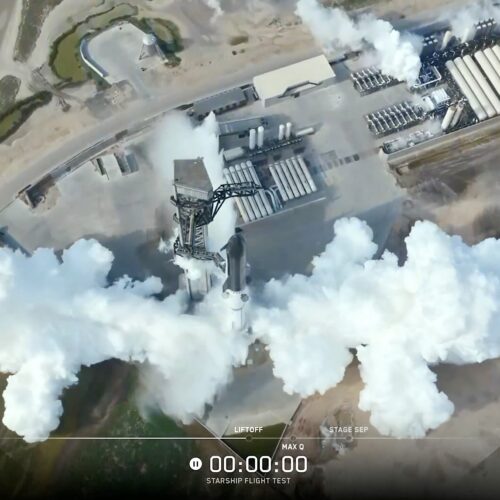
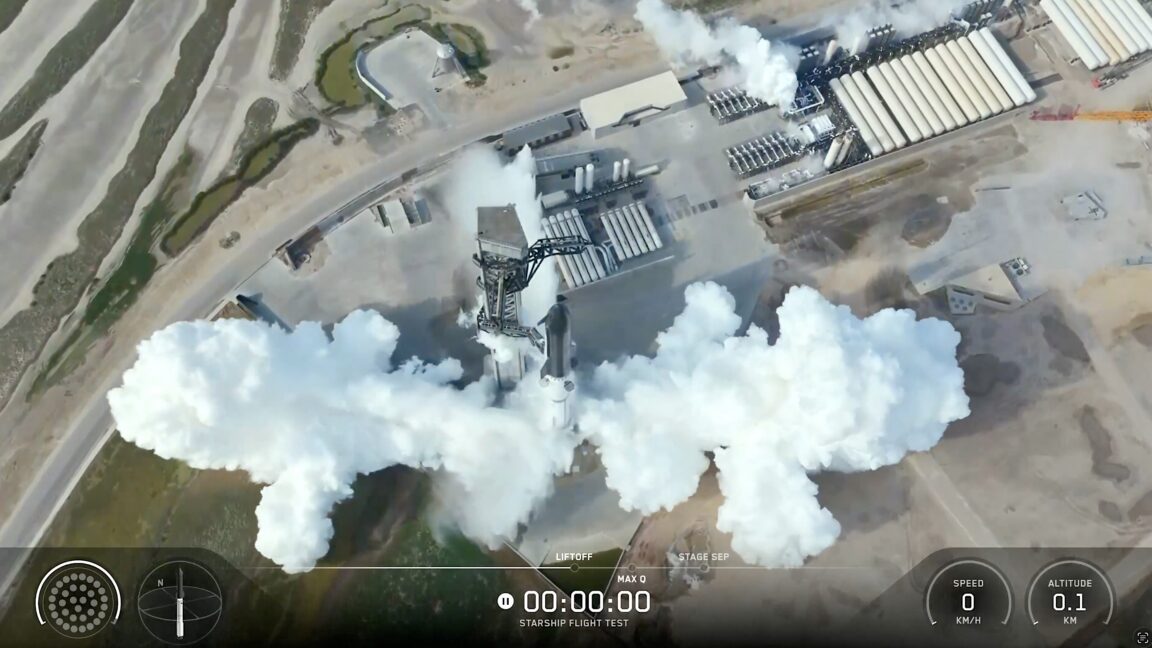
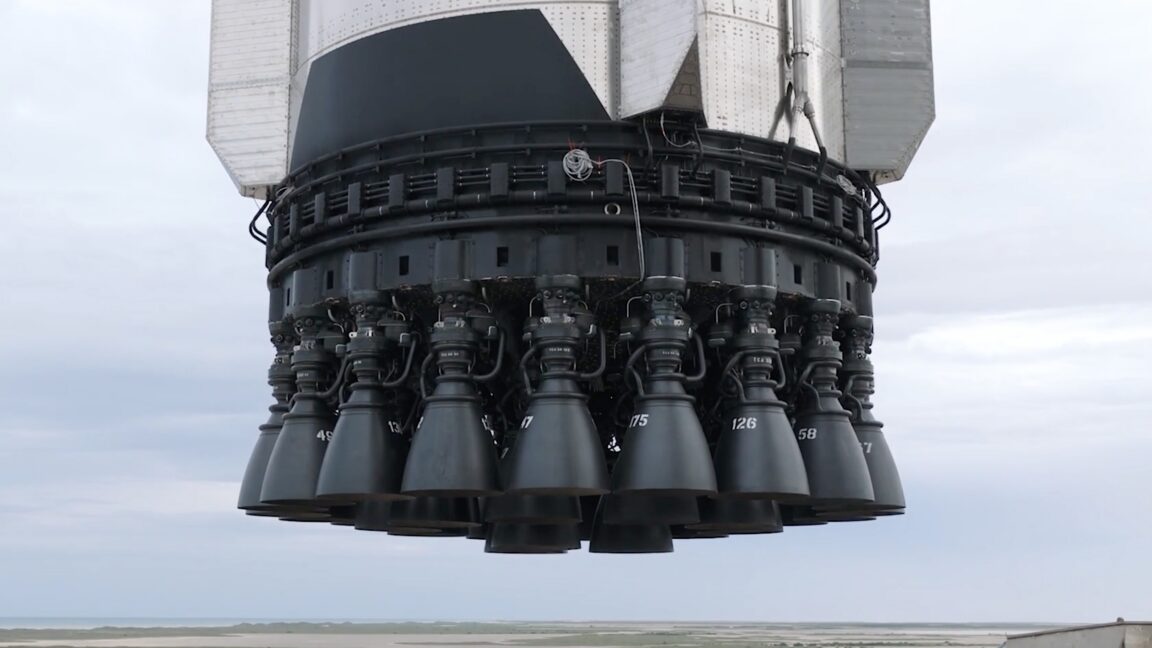
SpaceX called off a test flight of its powerful Starship rocket and Super Heavy booster as the countdown clock reached zero Thursday at the company's spaceport in South Texas.
The launch team at Starbase, Texas, just north of the US-Mexico border, aimed to launch the more than 400-foot-tall rocket at 5:45 pm local time (6:45 pm EDT; 22:45 UTC). The countdown proceeded smoothly throughout the day, culminating in the loading of more than 11.5 million pounds of liquid methane and liquid oxygen into the two-stage rocket.
But the computers controlling the countdown called an abort during the Super Heavy booster's engine startup sequence. SpaceX scrubbed the launch attempt, and engineers began preparations to drain the rocket's propellant tanks. Officials did not immediately announce when they plan to try to launch again.
With the launch of 21 York Space Systems satellites, the Space Development Agency has now placed half of its planned Tranche 1 Transport Layer constellation in orbit
One week ago, three widely respected European news outlets published the results of an investigation into what they described as a "joint plan" by China and Russia to "defeat Elon Musk's Starlink."
The story was the product of a long-running inquiry by The Insider, Der Spiegel, and Le Monde. Reporters at those publications said they reviewed a cache of documents detailing growing military cooperation between China and Russia. The documents covered discussions between the nuclear powers on integrated air and missile defense systems, autonomous "swarm" loitering munitions, next-generation armored vehicles, and military aviation, the report said.
According to the papers, the investigation found evidence of a partnership between China and Russia in the field of space weapons far deeper than either country has acknowledged. One particular focus for China and Russia has been developing strategies to counter SpaceX's Starlink satellite broadband network.
The stock has steadily fallen from the euphoric post-IPO high, showing that markets may be sobering up to the promises CEO Elon Musk made before and after SpaceX went public.
Shares of Elon Musk’s SpaceX are scraping by at record low levels this week, struggling to find any renewed enthusiasm from wary investors.
The stock is hovering just below $136, a hair above its original IPO price of $135, and well below its opening price of $150 on the day it went public last month. Shares are down almost nine percent over the last five days alone, and are just shy of 40 percent down compared to their all-time high of $225.
The slumping value of Musk’s rocket company has been a brutal wake-up call for some particularly daring investors, who went all in on what many have started to refer to as a “meme stock.” One Reddit user, who leveraged their own Roth IRA by making major calls on SpaceX, wiped out several hundred thousand dollars from their retirement.
The user made several SPCX calls at $160 and $145, decisions that ultimately came back to haunt them.
“So my Roth IRA is down 25 percent, I went and made a few options trades in Robinhood that also went the other way,” the user lamented in the infamous Wall Street Bets subreddit.
The warning signs of a steep market correction were all there. SpaceX went public with an astronomical, multitrillion dollar valuation despite losing billions of dollars a quarter, effectively guaranteeing major volatility. Even members of the Wall Street Bets community, which has a long history of advocating for aggressive trading strategies, were shaking their heads.
“No one could have seen this coming,” one user wrote facetiously.
“Crazy that people knew the insanely bloated valuation but still went long,” another added.
“Musk companies aren’t rational, Tesla has an insanely bloated valuation and is still way too high,” one user argued. “The only winning move is not to play.”
Analysts have long warned that investing in SpaceX is a bet on Musk himself. To make sense of its enormous valuation requires buying into his lofty vision of establishing AI data centers in space and constructing a city on Mars.
As Reuters puts it, SpaceX’s listing has turned into a “confidence test.” Now that shares have plunged below its IPO price, the scales could already be falling from investors’ eyes.
“It raises the narrative that the stock is up on fluff, on speculation, on froth, and not on real fundamentals,” Miller Tabak chief market strategist Matthew Maley told Reuters.
Anybody who bought in early “hoping to ‘make a killing’ will be disappointed,” Carnegie Investment Counsel director of research Greg Halter added.
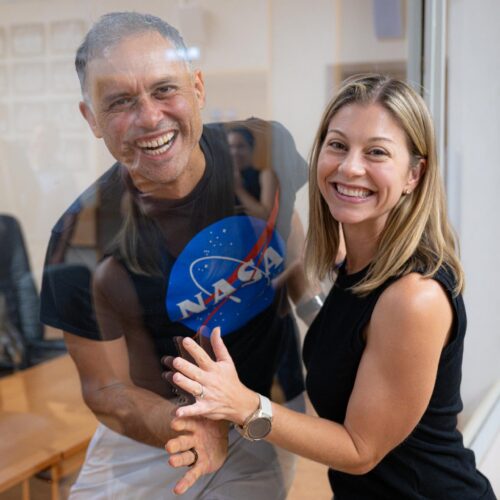
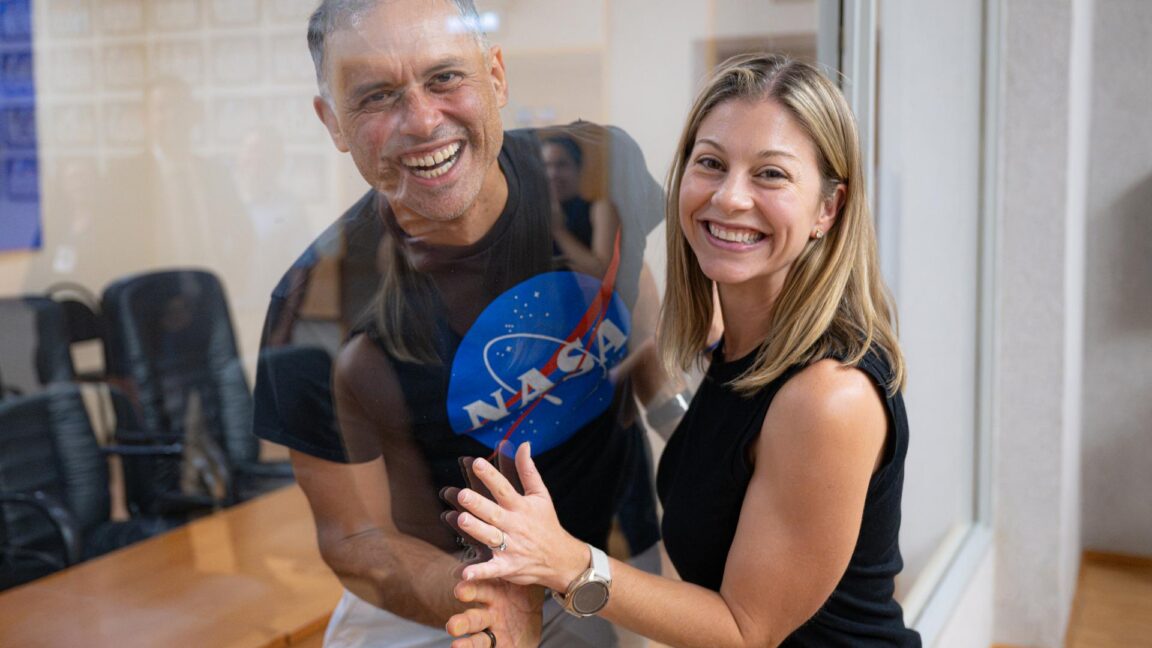
Anil Menon, a NASA flight surgeon, felt crushed nine years ago as his hopes and aspirations collapsed around him.
For the fourth time, he had diligently applied to become an astronaut at the US space agency, seeking to fulfill a lifelong dream. Although he made it to the final round, NASA had once again rejected his application at the end of the grueling process.
"I was so sad, and I admitted defeat," Menon said. "I just did not see a pathway forward. So I pretty much, at that point in time, gave up on being an astronaut. I thought there was a zero percent chance."
The next test flight of SpaceX's Starship spacecraft and Super Heavy booster could take off as soon as Thursday, and much of the hour-long mission will look a lot like the last Starship flight in May.
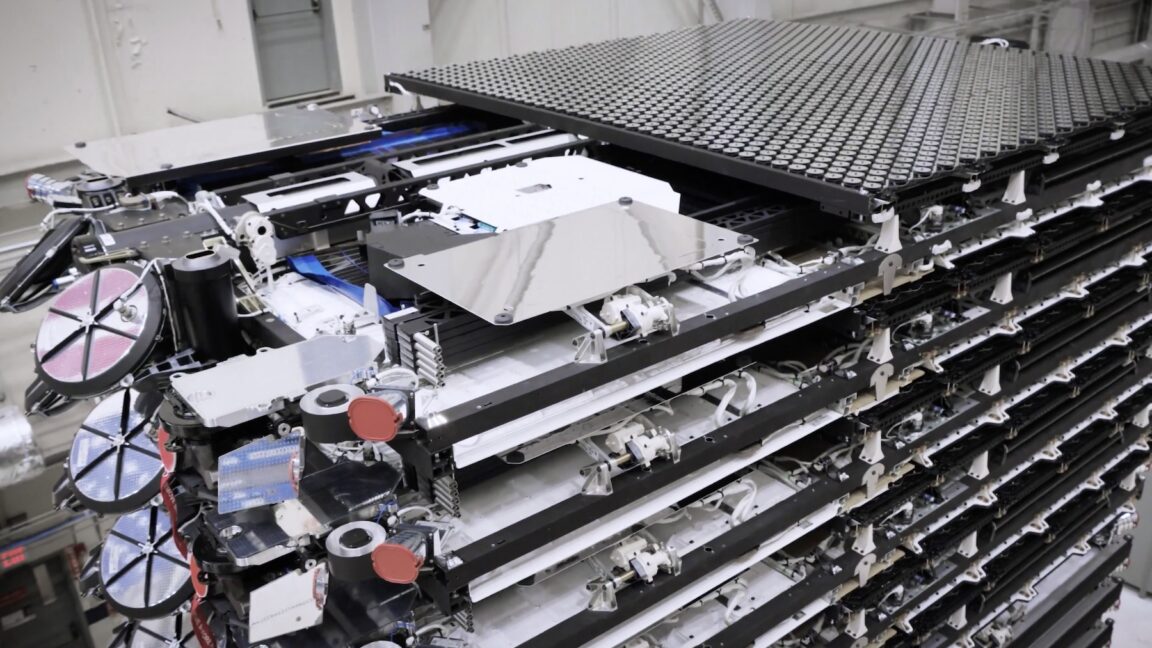
But there are a few key differences for this launch, set to occur during a launch window that opens at 5:45 pm CDT (22:45 UTC) on Thursday. The most notable change is the inclusion of real, functioning Starlink satellites inside Starship's cargo bay. SpaceX previously tested the ship's payload deployment mechanism using simulators mimicking the mass and dimensions of the company's next-generation Starlink Version 3 broadband satellites.
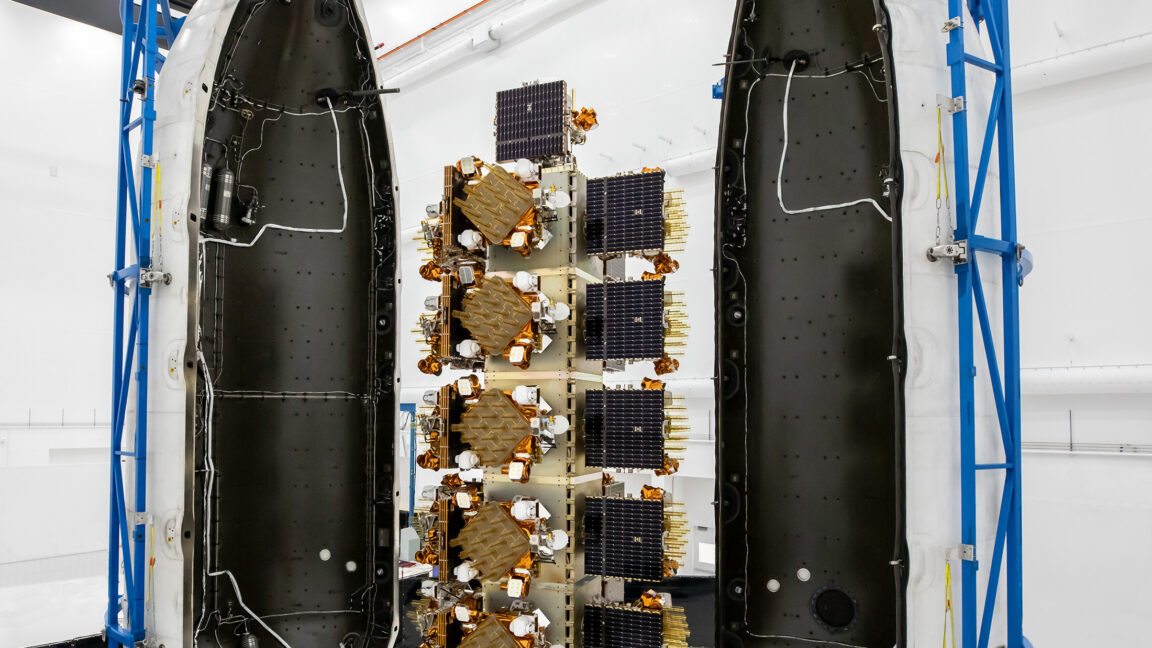
This time—Starship's 13th full-scale test flight and the second to use SpaceX's newest version of Starship—technicians have installed 20 Starlink V3 satellites into the ship's deployer, a system of pulleys and cables designed to eject a stack of satellites one at a time through an opening on the side of the spacecraft. The satellites will not be part of SpaceX's operational network, but engineers will attempt to briefly establish laser communication links between the Starlink V3s and other spacecraft flying in low-Earth orbit. If successful, these links will validate Starlink V3's interoperability with SpaceX's previous generation of Starlink satellites.
Shares of Elon Musk’s SpaceX took another beating when trading resumed on Monday, sliding to an all-time low of just under $139, well below its IPO opening price of $150.
It’s now over 38 percent down from its all-time high of $225 three weeks ago, illustrating how rapidly the hype has inverted into widespread skepticism over Musk’s vision.
Following a blockbuster Wall Street debut, the space company has struggled to maintain any degree of momentum as investors continue to ask some very hard questions, including over its major pivot to orbital data centers and its near-term profitability. Despite being valued at almost two trillion dollars, the company lost nearly $5 billion last year.
Beyond some steepening international space launch competition, experts believe SpaceX’s transformation into an “AI play” may be closely related to its Wall Street woes, as the BBC reports.
“Everyone saw SpaceX as an AI story,” CFRA investment research analyst Keith Snyder told the broadcaster.
“With Elon Musk, any company he touches gets people excited,” he added. “But this was also the first time people felt like they were able to invest in something that was being marketed as an AI play.”
In short, the initial enthusiasm surrounding SpaceX’s IPO is firmly behind us.
“If you bought around the first tick you’re definitely underwater,” Snyder told the BBC. “It started to look a lot like a meme stock.”
“If you’re an IPO investor, you’re ok,” Mergermarket analyst Samuel Kerr added. “If you bought in the first few days, you’re not very happy right now.”
Investors remain sharply divided on where SpaceX shares are headed next. Many analysts from major investment banks remain bullish, expecting the stock to make massive gains. Case in point, Morgan Stanley believes the company will reach a price tag of $300 — far more than double its current stock price.
Snyder has a far more muted outlook, expecting SpaceX to fall down to just $115 a share.
Meanwhile, Musk has said he thinks “SpaceX will be worth more than the rest of Earth if we accomplish our goals,” a characteristically ambitious and perhaps delusional argument that assumes a lot of things will go right for the company.
Whether investors will buy into this lofty vision remains to be seen. Given its recent stock performance, it’s far from a guarantee.
“If SpaceX can do all the things it says it will do, yes, investors are sitting on the most valuable company ever,” Kerr told the BBC. “But it’s got a lot of work to do to get there.”
SpaceX CEO Elon Musk has long heavily relied on selling science fiction to investors.
He wants to pollute our planet’s orbit — already brimming with junk — with gigantic orbital data centers. Then, he wants to settle on the surface of the Moon. Ultimately, he wants to make humanity an interplanetary species by building a city on Mars with the help of an enormous fleet of Starship spacecraft, leaving a planet reeling from a climate crisis behind.
It’s the kind of lofty — and, according to his many critics, delusional — thinking that turned him into an (almost) trillionaire. And, as SpaceX continues to struggle selling investors on Musk’s lofty imagination, the mercurial CEO is already conjuring new visions to keep the hype train chugging. According to a recent tweet, he believes that “SpaceX will be worth more than the rest of Earth if we accomplish our goals.”
To Musk, it all comes down to our ability to fully harness the power of the Sun. As illustrated by the Kardashev scale — a method devised by Soviet astronomer Nikolai Kardashev that measures a civilization’s level of technological advancement based on the amount of energy it can channel — Musk believes we’re not even close to unlocking our full potential as a species.
By utilizing all that untapped solar energy, Musk thinks SpaceX could eclipse the Earth’s entire GDP of around 100 trillion dollars — if you’re willing to entertain his outrageously lofty vision, that is.
Back in January, Musk argued that “space-based industries will vastly exceed the value of all of Earth, given that you could harness roughly 100,000 times more energy than Earth and still be using less than a millionth of the Sun’s energy!”
Skeptics will differ. He also claimed that “due to autonomy, Tesla is worth more than the rest of the auto industry,” while his EV maker’s struggling Optimus robot will increase “Earth GDP by an order of magnitude.”
It’s the kind of wishful thinking his entire business empire is teetering on top of lately. For years now, tech leaders have been trying to sell us on a utopian “age of abundance,” in which manual labor is a thing of the past and everybody enjoys a high standard of living.
However, reality tells a dramatically different story. Despite Musk’s repeated promises for over a decade, in one telling example, Tesla vehicles are still far from reliably driving themselves without constant oversight.
Even investors are having trouble buying into his dreams of training AI models from space. SpaceX’s shares initially rallied following a blockbuster IPO last month, but have been in decline ever since. The muted enthusiasm highlights persistent doubts over a multitrillion dollar valuation for a company that lost a staggering $5 billion last year.
In short, his claim that SpaceX will somehow become worth more than the entire global economy should be taken with an astronomical amount of salt.
SpaceX has radically reduced the cost of reaching space thanks to its reusable rockets, a revolutionary capability that has greatly set it apart from its competitors.
But its dominance in the domain is seriously being challenged by China. Footage shared by the Chinese state-run CCTV shows a Long March 10B rocket booster being caught by an offshore recovery platform. Engineers can be heard cheering on the slowly descending rocket as it confidently sets down.
As Engadget reports, that makes China only the second country to have pulled off such a feat, following the United States — a “historic breakthrough” that could have major implications not just for SpaceX, but for the space industry as a whole.
The rocket was developed by the China Academy of Launch Vehicle Technology (CALT), a subsidiary of the state-owned Chinese space program contractor China Aerospace Science and Technology Corporation (CASC).
The rocket has a payload capacity of 16 tons to low-Earth orbit, not far off from SpaceX’s workhorse Falcon 9, which can carry 22 tons. However, unlike the Falcon 9, which lands autonomously with the help of four deployable landing legs, CALT’s recovery platform picks the descending rocket out of the air with “landing hooks.”
Previous attempts have resulted in descending rockets missing the launch pad. Chinese competitor LandSpace is trying an even more SpaceX-like approach using a leg system. In December, the company successfully sent its Zhuque-3 rocket into orbit, but it ended up blowing up in a fireball while trying to land.
CALT is envisioning it as a new platform to launch Starlink-like internet broadband satellites and other larger commercial satellites.
By reusing the first stage, the company is hoping to dramatically reduce launch costs, much like SpaceX.
The Elon Musk-led company first successfully landed a Falcon 9 rocket following orbital flight in December 2015. Jeff Bezos’ Blue Origin became the second company to have pulled off such a feat in November, with its New Glenn booster gently touching back down in November, just under a decade later.
While CALT’s latest feat is undoubtedly a major sign of progress, China has its work cut out to reach SpaceX’s unparalleled launch cadence. The rocket company came close to launching a rocket every other day in 2025, completing an astonishing 165 orbital flights — almost twice as many as China’s entire space program.
Welcome to this edition of The Intelligence Brief… This week, a new milestone has been reached in space technology, with the launch of the world’s first satellite equipped with a commercial betavoltaic nuclear power system. The satellite was carried to orbit on a a SpaceX Falcon 9 rocket on Tuesday, and in our analysis, we’ll be looking at 1) how the next generation of compact nuclear power systems are now being tested aboard the first City Labs BOHR satellite, 2) how the satellite converts radioactive decay into electricity, and why this technology could eventually help to facilitate long-term space missions to the Moon and other locales, 3) the advantages and hurdles this novel tritium-based power system faces, and 4) what this all could mean for the future of nuclear powered spacecraft used in deep-space missions.
Quote of the Week
“This is a historic step for commercial nuclear power in space.”
— Peter Cabauy, CEO of City Labs
If you enjoy the news and perspectives offered by The Debrief, make sure that you aren’t missing our stories by making us one of your “preferred sources” on Google News. You can simply follow this link to add The Debrief to your list of favorites, and you can read more about Google’s preferred sources in our article here.
Get all the latest stories from The Debrief, with more breaking stories at the end of this week’s newsletter.
The First Nuclear-Powered Satellite is Now in Orbit
Tuesday marked a new chapter in the quest for novel power systems for spacecraft, with the launch of the world’s first satellite equipped with a commercial betavoltaic nuclear power system.
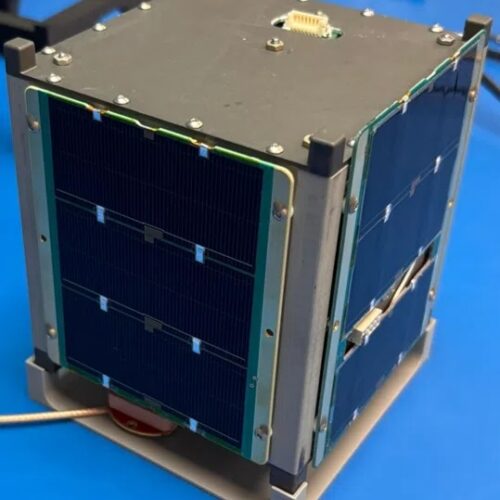
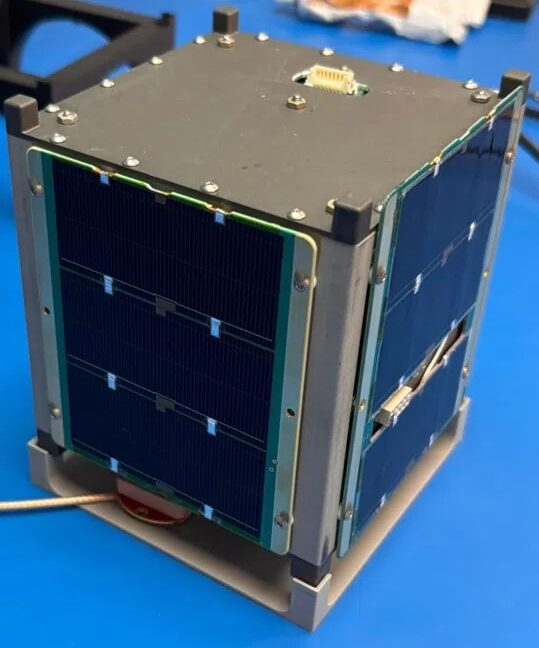
The City Labs Betavoltaic Orbital High-Reliability (BOHR) satellite was carried to space on board a SpaceX Falcon 9 rocket, and in the coming weeks will begin tests to determine whether miniature nuclear batteries can reliably generate electricity in space.
Designed primarily as a proof of concept, the first BOHR satellite will rely on conventional solar panels for its primary power system. However, the first-of-its-kind spacecraft also carries the company’s proprietary “NanoTritium” betavoltaic power source, which, according to the company, uses beta particles emitted during the radioactive decay of tritium that are converted into electricity.
In a statement, Peter Cabauy, CEO of City Labs, called this week’s launch “a historic step for commercial nuclear power in space,” adding that the BOHER satellite “demonstrates that safe, compact, and regulatory-approved nuclear power systems are ready for routine commercial deployment.”
“This capability enables persistent, always-on payload operations that are not constrained by sunlight or battery life,” Cabauy added.
Harnessing the Power of Beta Radiation
The innovative satellite was carried to space earlier this week as part of the recent SpaceX Transporter-17 mission.
“On Tuesday, July 7 at 12:12 a.m. PT, Falcon 9 launched the Transporter-17 mission to low-Earth orbit from Space Launch Complex 4E (SLC-4E) at Vandenberg Space Force Base in California,” read an update that appeared at the SpaceX website announcing the successful launch that carried the City Labs BOHR satellite to space.
“Transporter-17 was a dedicated smallsat rideshare mission,” SpaceX’s update earlier this week added. “There were 81 payloads on this flight, including cubesats, microsats, hosted payloads, and orbital transfer vehicles carrying eight of those payloads to be deployed at a later time.”
Following the satellite’s successful delivery to orbit, its power systems will begin testing the feasibility of beta radiation as a primary driver to produce electricity. In the past, radioisotope thermoelectric generators have been used to propel landmark space missions, such as Voyager 1 and Voyager 2. By contrast, BOHR’s beta radiation system does not rely on heat generated by radioactive decay, which allows for a compact power source that, if all goes according to plan, could one day be deployed in future missions to support spacecraft operating in environments where sunlight is limited. Such applications include the permanently shadowed craters on the Moon and future missions into the outer solar system.
Primarily, City Labs says a tritium-based system is also more beneficial than traditional nuclear fuels like plutonium since it emits relatively low-energy radiation. This, the company says, makes it easier to shield and safer to handle during spacecraft assembly and launch.
Challenges Ahead
The technology does face significant hurdles, however. One involves the fact that tritium is presently still one of the world’s rarest—and most expensive—radioactive materials. Right now, with only around 20 kilograms produced annually throughout the world, the limited quantity and exorbitant costs (current prices reach tens of thousands of dollars per gram) make large-scale adoption anytime in the near term a significant challenge.
There are also regulatory considerations, as noted in a news article released this week by the American Nuclear Society (ANS) following the launch. “In 2019, National Security Presidential Memorandum – 20 (NSPM-20) laid out updates to the process for launching spacecraft containing nuclear systems,” the article states.
“Now the Department of Transportation, which includes the Federal Aviation Administration (FAA), directs the coordination of various agencies to review the safety analysis for missions with nuclear components,” the ANS news brief added, noting that the FAA updated its launch regulations in 2020.
Despite the existence of a few hurdles and other considerations, the mission nonetheless marks an important milestone in the development of next-generation spacecraft power systems. If successful, BOHR could demonstrate that compact betavoltaic power sources are a viable complement to solar energy, opening new possibilities for long-duration missions in some of the darkest and most remote regions of the solar system.
The proliferation of nuclear power in space got a little more real Tuesday with the launch of a small satellite developed by a Florida-based company specializing in nuclear micro-power technology.
The satellite from Miami-based City Labs is named BOHR, short for Betavoltaic Orbital High-Reliability, and it launched on a SpaceX rideshare mission Tuesday alongside 80 other payloads. SpaceX's Falcon 9 rocket released the BOHR satellite into an orbit between 350 and 400 miles (nearly 600 km) in altitude.

 Login