 Login

The AI Robots Won’t Strike, So Hyundai’s Workers Did It First
This content is for members only. Visit the site and log in/register to read.

Engineers at Queen Mary University of London have created a tactile sensor, described in a study published in Science Advances, that allows robots to detect touch using a simple camera.
The sensor converts mechanical forces into visible color patterns, reducing the need for dense arrays of embedded sensors. Giacomo Sasso, a postdoctoral researcher at Queen Mary’s School of Engineering and Materials Science, led the team that developed this new sensor. Rather than relying on embedded electronic sensors, they created a soft material that changes color when pressed or bent.
This effect, known as structural color, is the same reason butterfly wings look iridescent without pigment. Pressure causes microscopic structures within the material to shift, altering how light reflects and creating a real-time visual indicator of force.
Most vision-based tactile sensors can map contact and force in detail, but only at the cost of heavy computation that slows them down. Simpler systems are faster, but sacrifice detail. The new material developed by Sasso’s team sidesteps this problem by building the sensing function into the material itself. With just a standard USB camera, researchers can track color changes on the surface and immediately infer pressure, strain, and contact shape without complex data reconstruction.
“You won’t guess how much information is generated when your finger presses a light switch. A human hand contains more than 10,000 mechanoreceptors to do the job, yet touch sensing remains one of the major challenges in robotics,” Sasso said. “We were happy to capture the finger ridges, as no existing technology can reproduce such sensor density at [a] comparable scale and simplicity. The key idea behind this project was to think outside the box: instead of embedding dense and overengineered sensor arrays, sensing is moved into the material itself, where mechanical cues are directly transformed into colour fields and captured using a simple low-cost USB camera.”
Professor James Busfield, one of the paper’s co-authors, described the advantage more simply: “What is particularly powerful is that the information is already in the light signal. You are no longer reconstructing touch – you are observing it directly.”
Reducing the computational demands of touch sensing opens up new possibilities. A robotic gripper made with this material could handle tiny parts more gently, since changes in force are immediately detectable. Prosthetic limbs equipped with similar sensors could also provide users with more detailed tactile feedback.
The researchers also see potential applications in surgery, where detecting subtle pressure differences could help clinicians interpret tissue properties.
Professor Federico Carpi from the University of Florence and Professor James Busfield from Queen Mary worked together on this project, merging years of separate work on stretchable sensors and polymer behavior into one material system. This allowed the team to use a mechanochromic material as the sensor itself, not just as a base for electronics.
Many approaches to robotic touch have relied on increasingly complex sensor arrays, wiring, and computing systems. Rather than adding more electronics, Sasso’s team’s approach allows the material itself to encode touch into visible color. It remains unclear whether this color-based method can be scaled for use in commercial robotic hands, but this work suggests that the future of robotic touch might rely as much on smart materials as on advanced electronics.
Austin Burgess is a writer and researcher with a background in sales, marketing, and data analytics. He holds an MBA, a Bachelor of Science in Business Administration, and a data analytics certification. His work focuses on breaking scientific developments, with an emphasis on emerging biology, cognitive neuroscience, and archaeological discoveries.


Researchers at the Massachusetts Institute of Technology (MIT) have developed an ultra-efficient computer chip that could help tiny robots and lightweight devices create detailed 3D maps of their surroundings while using very little energy. The new chip could allow small drones to fly through narrow spaces, such as air-conditioning ducts or industrial pipelines, to inspect […]
The post Tiny MIT chip could help small robots navigate like experts while using almost no power appeared first on Knowridge Science Report.
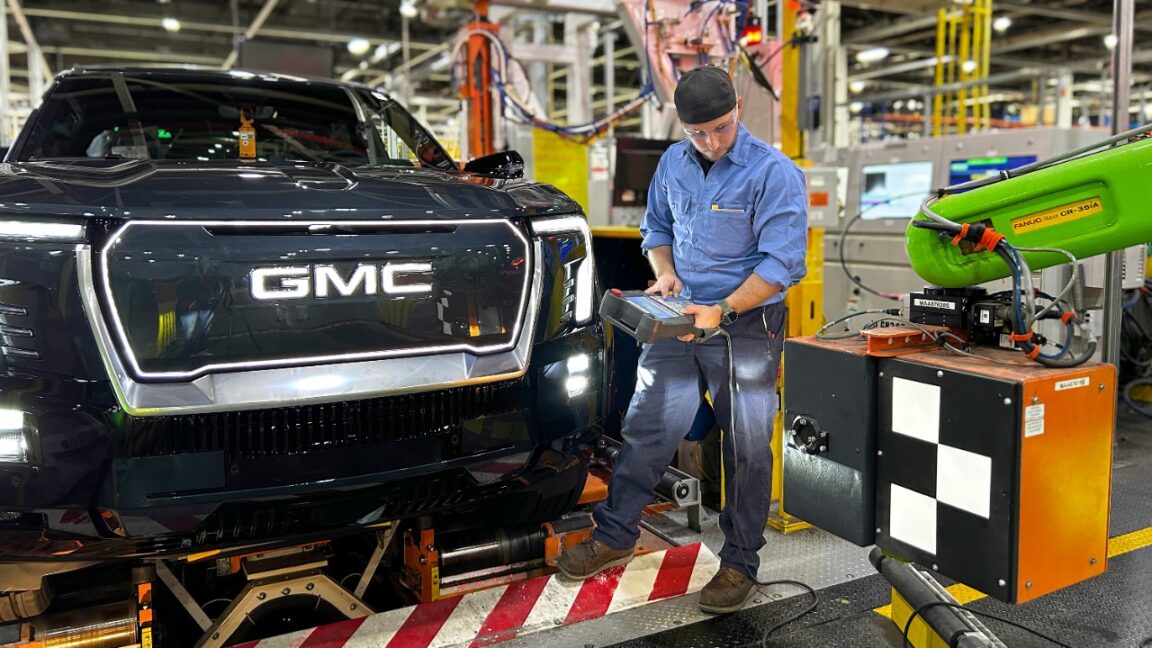
Dozens of new robot arms have been installed at General Motors’ flagship electric vehicle factory in Detroit—even as 1,300 workers remain out of work following what was supposed to be a temporary layoff. The latest automation push has spurred union pushback over a potentially existential issue for automakers and their workers.
General Motors installed approximately 50 robot arms at GM’s Factory Zero plant in Detroit, Michigan, according to reporting by Crain’s Detroit Business. Made by the Japanese robotics company FANUC, the robots are designed to help attach various components to vehicles during the assembly line process. But leaders at United Auto Workers (UAW), the primary US union for autoworkers, reacted with anger to the new robotic presence, given how GM has not yet called back any of the workers affected by supposedly temporary layoffs in March.
More than 1,000 union members are still “laid off indefinitely,” James Cotton, president of UAW Local 22, told The Detroit News. He said that the company could bring some of those members back to work instead of installing the 50 robots.

© General Motors Company
In a groundbreaking stride toward enhancing robotic cognition, scientists at MIT have unveiled an innovative memory framework that equips robots with the capacity to create, retain, and retrieve extensive, richly annotated spatial memories over extended periods. This advancement marks a significant leap beyond traditional robotic mapping techniques, enabling robots to comprehend and interact with complex environments in ways that closely mirror human spatiotemporal reasoning. The development promises transformative impacts on robotic collaboration with humans, particularly in dynamic and large-scale settings such as industrial facilities and urban landscapes.
Traditional robots, while adept at constructing geometric maps and executing predefined tasks, lack the nuanced memory capabilities that humans effortlessly employ. Consider a factory worker recalling the exact location of a partially assembled component from the previous day—a routine yet intricate cognitive task. Robots confronted with this scenario traditionally falter because their mapping systems fail to integrate detailed object descriptions and temporal context seamlessly. MIT’s new framework addresses this critical deficiency by embedding rich semantic information directly into the spatial maps robots generate as they navigate, thus producing a coherent, language-accessible mental model of their environment.
At the core of this system is a method termed Describe Anything, Anywhere, Anytime, at Any Moment (DAAAM), which synergizes advanced computer vision with robust spatial mapping. DAAAM endows robots with the ability to tag objects with descriptive annotations as they explore. For instance, a robot might label a building as the “Stata Center,” noting its architectural style, or observe a collection of bicycles and recall specifics such as a red bike sporting a flat tire. Crucially, these annotations are spatially organized within a three-dimensional map, allowing the robot to group objects logically by their locations and create a persistent, queryable memory that supports efficient retrieval.
One of the distinguishing challenges in realizing such a system lies in balancing the richness of data with the constraints of real-time operation. Existing approaches to detailed environmental annotation are computationally intensive, often taking precious seconds to process a handful of objects, thereby rendering them impractical for dynamic robotic applications. To solve this bottleneck, the MIT team engineered an optimization technique for keyframe selection, enabling the robot to identify and annotate images that offer the clearest and most comprehensive view of multiple objects simultaneously. This selective strategy accelerates the annotation process by an order of magnitude, permitting the robot to construct and update its semantic map as it moves without latency.
Beyond data acquisition, the ability to efficiently query and extract relevant information from the amassed database of spatial and semantic knowledge is vital. The researchers integrated a sophisticated large language model (LLM) enhanced with tailored toolsets designed to mitigate common issues such as hallucinations and to refine the relevance of retrieved data. This framework allows for rapid, accurate responses to complex spatial-language queries like, “Where did I leave my wallet?” or inquiries about specific landmarks within an indoor or outdoor environment. By leveraging semantic search capabilities that consider both linguistic cues and geographical context, the robot can pinpoint targets with remarkable precision and speed.
The practical implications of this technology are profound. In manufacturing settings, a robotic assistant could be dispatched to retrieve components based on natural language queries referencing past events and locations, thus augmenting human productivity and safety. Similarly, augmented reality systems could harness this structured long-term memory to guide maintenance personnel through complex infrastructure, flag anomalies based on historical data, or assist commuters in navigating public transportation hubs with personalized, context-aware directions.
MIT’s approach signifies a departure from conventional 3D mapping systems that either sacrifice descriptive depth for computational efficiency or rely on rich annotations that are prohibitively slow to generate at scale. By fusing high-level semantic perception with spatial cognition underpinned by real-time processing capabilities, DAAAM lays the foundation for a new class of robots that can engage in sophisticated spatial-temporal reasoning analogous to human common sense.
Ongoing research aims to extend this framework’s scope to encompass temporally dynamic events, enabling robots not only to remember object locations but also to encode significant occurrences within their environment. Integrating confidence metrics into the system’s responses is also a priority, enhancing the reliability and interpretability of information supplied to human users in collaborative scenarios. The vision is to cultivate a versatile, generalist robotic agent capable of executing diverse tasks on demand through naturalistic human-robot interaction grounded in shared language and understanding.
The robustness of the DAAAM system was empirically validated through comparative experiments, demonstrating superior accuracy over leading existing methodologies by margins ranging from 21 to 53 percent, contingent on the nature of the queries. The project’s intersection of computer vision, robotics, and natural language processing underscores a multidisciplinary approach vital for advancing intelligent autonomous systems that are primed for real-world deployment.
With the proliferation of autonomous machines across myriad domains, the advent of this long-term spatiotemporal memory framework addresses a pivotal gap in robotic intelligence. Robots equipped with such memory capabilities can transcend static, pre-programmed functions, adapting fluidly to evolving tasks and environments while fostering seamless collaboration with humans through shared understanding. As such, MIT’s contribution is poised to accelerate the integration of robots as capable and context-aware partners in everyday human endeavors.
This research, funded partly by the U.S. Army Research Laboratory and the Office of Naval Research, was publicly disclosed in a paper authored by Nicolas Gorlo, Lukas Schmid, and Luca Carlone and presented at the Conference on Computer Vision and Pattern Recognition (CVPR). Luca Carlone, the principal investigator and a professor at MIT’s Department of Aeronautics and Astronautics, emphasizes that the technology was developed with the goal of endowing robots with human-like language-based spatial reasoning, a foundational step toward more intelligent and helpful machines.
Subject of Research: Robotics, Artificial Intelligence, Long-Term Spatial Memory for Robots
Article Title: MIT Develops Real-Time Long-Term Memory Framework for Robots Combining Semantic Understanding with 3D Mapping
News Publication Date: Not explicitly stated; presented at CVPR 2024
Web References:
Image Credits: MIT
Artificial intelligence, Robotics, Spatiotemporal memory, Computer vision, Long-term memory, Language models, Human-robot interaction, Autonomous systems, Machine learning, Semantic mapping, Real-time processing, Augmented reality
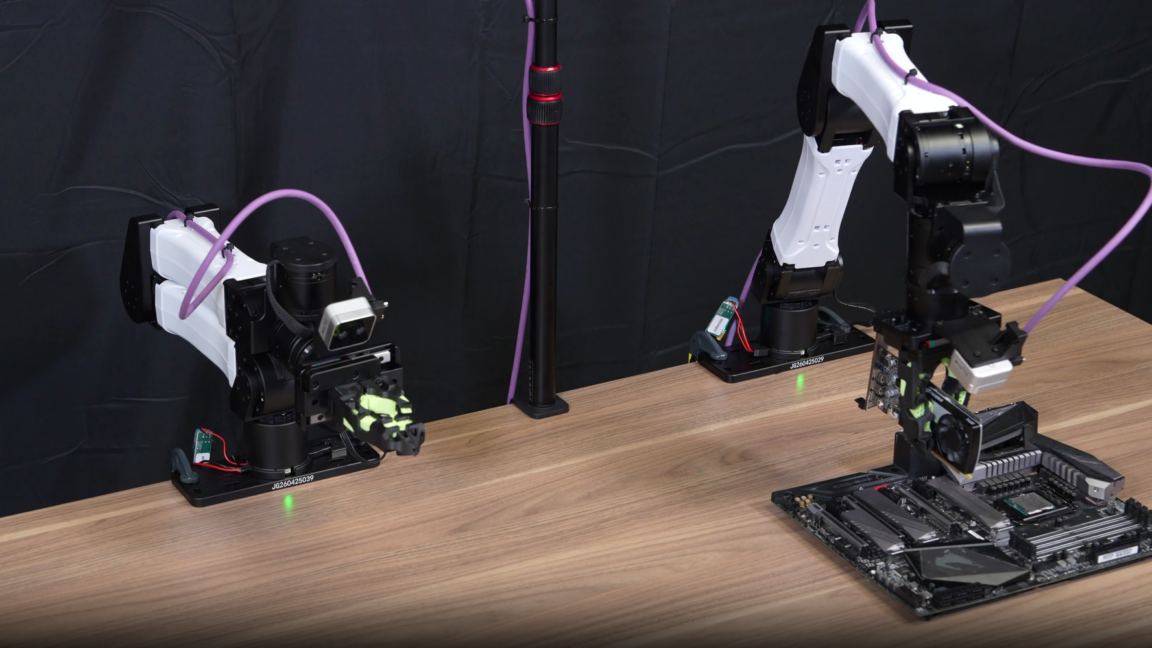
What happens when you give AI coding agents a lab full of robotic arms, some compute resources, and a “generous token budget” for teaching the robots various tasks? The agents can apparently figure out a training regimen that teaches the robots to successfully cut zip ties and even insert GPUs into thin sockets on motherboards.
That glimpse into how AI can act in a fully autonomous way to automate robot training was made possible by a new agent harness framework—software that wraps around AI models to enable their use of various tools while also providing capabilities such as memory, context, constraint, and feedback loops. That agentic harness, called ENPIRE, was developed by robotics researchers at the Nvidia GEAR (Generalist Embodied Agent Research) lab alongside collaborators from Carnegie Mellon University in Pittsburgh and the University of California, Berkeley.
“A part of our NVIDIA GEAR lab now self-improves tirelessly overnight,” wrote Jim Fan, director of AI at NVIDIA, in a LinkedIn post. “We just read the reports in the morning.”
© NVIDIA
A groundbreaking advancement in nanotechnology has emerged from the University of Basel, Switzerland, where a research team has engineered a sophisticated modular nanorobot exhibiting unparalleled versatility. This innovative system comprises two distinct, reusable components: a propulsion module and a payload capsule, which autonomously self-assemble through a DNA-based molecular Velcro mechanism. Their dynamic interplay offers promising applications across medicine, industry, and environmental science, heralding a transformative direction in nanorobotics research.
Nanorobotics has often been confined to the realm of science fiction, evoking images of minuscule machines navigating within the human body or cleaning up environmental pollutants. However, the rapid progress in this field reflects a new reality where these tiny constructs—differing fundamentally from conventional robots due to their biochemical and nanoscale nature—have started to fulfill tangible roles. Unlike traditional robots equipped with electronic circuits and software, these nanorobots utilize biomolecules and nanoparticles as their building blocks, innovatively combining bioengineering and materials science.
The design philosophy underlying the Basel team’s nanorobot addresses a critical limitation that has hampered previous efforts: specificity of function. Traditional nanorobots tend to be single-purpose entities, finely tuned for a particular task and lacking adaptability. In contrast, this modular system’s architecture allows for the independent development and exchange of functional units, rendering it highly customizable. Such adaptability is pivotal for extending the utility of nanorobots across diverse scenarios, from executing targeted drug delivery within the human body to catalyzing chemical reactions in industrial environments.
At the core of the nanorobot’s structure lies two integral modules. The first is a magnetic propulsion unit, which empowers the nanorobot with directed mobility under external magnetic fields. This enables precise navigation through complex environments—a critical capability for any targeted therapeutic or catalytic application. The second module serves as a payload capsule, designed to securely house and transport therapeutic agents, enzymes, or other functional molecules to desired locations. This segregation of propulsion and payload functions epitomizes engineering elegance at the nanoscale.
The payload capsule is particularly remarkable due to its internal composition. It encapsulates four enzyme-loaded polymer vesicles—nanoscale spherical structures synthesized from polymers that can safeguard and regulate the biochemical cargo within. These vesicles are equipped with nanoscaled pores, facilitating the ingress of substrate molecules and the egress of reaction products while protecting the encapsulated enzymes from premature degradation or deactivation. Moreover, depending on the specific configuration, these vesicles can be selectively triggered to release bioactive substances on demand, a feature critical for controlled therapeutic interventions.
Achieving a robust yet reversible connection between the propulsion module and payload capsule, the researchers employed a DNA-based “Velcro” assembly system. This approach utilizes complementary strands of DNA grafted on the surfaces of both modules, fostering specific and programmable binding through Watson-Crick base pairing. Such molecular precision guarantees that the modules self-assemble and remain stably coupled during operation, yet can be separated and recombined efficiently. This dynamic assembly-disassembly paradigm allows for easy reloading of the payload and recycling of the propulsion units, a major advantage for scalability and cost-efficiency.
Another notable feature enhancing the nanorobot’s functionality is the strategic modification of the payload capsule with biomolecular ligands that enable targeted docking onto specific cells or substrates. Using the human cancer cell line HeLa as a test model, the scientists demonstrated that these nanorobots, when loaded with fluorescent markers, preferentially accumulate on the cell surfaces. This active targeting capability is instrumental for precise delivery of therapeutic agents, ensuring minimal off-target effects and enhancing treatment efficacy.
In a striking demonstration of biomedical potential, the enzyme-laden nanorobots successfully synthesized an anticancer drug directly at the targeted site, reducing the viability of HeLa cells to a mere 16 percent within 72 hours. This localized drug production exemplifies an advanced therapeutic approach where site-specific synthesis and delivery converge, potentially overcoming challenges related to systemic side effects and suboptimal drug concentrations. According to Dr. Voichita Mihali, the lead author, this concentration of drug activity represents a promising strategy for future oncological applications.
Beyond the biomedical sphere, the modular nanorobot’s catalytic prowess, combined with its magnetic propulsion, opens compelling avenues in environmental and industrial contexts. For instance, nanoscale catalysts capable of performing complex chemical transformations can be transported magnetically to reaction sites, where they perform precise functions before being retrieved for reuse. This magnetically enabled recyclability addresses a critical sustainability challenge, aligning with growing demands for environmentally responsible and economically viable technologies.
The ability to dissociate the two modules after task completion and reload the payload capsules before reassembling them underscores the potential for repeated usability. This reusability is vital for practical implementations where cost limitations and material efficiency are paramount. Moreover, it facilitates adaptability, as different payloads can be swapped in according to the specific functional requirement, whether it be therapeutic commands or industrial chemical catalysis.
Importantly, the modular design philosophy extends the nanorobot’s versatility beyond its current framework. By altering the composition of the payload capsule, this platform could be customized for a plethora of applications without necessitating complete redesign. This adaptability accelerates translational research by leveraging a common technological foundation to address multiple challenges spanning healthcare, environmental remediation, and manufacturing.
The interdisciplinary nature of this project also highlights effective scientific collaboration, combining expertise from the National Center of Competence in Research – Molecular Systems Engineering, the Swiss Nanoscience Institute, and Heidelberg University. Such collaborative efforts are critical to tackling the complex engineering and biological challenges inherent in creating functional nanomachines capable of interacting reliably within diverse and dynamic environments.
While the modular nanorobot represents a significant leap forward, its ultimate deployment in human clinical settings remains a long-term objective, contingent on extensive biocompatibility and safety validation. Nonetheless, its current design and demonstrated functionalities establish a crucial foundation. The system’s adaptability and multifunctionality promise to catalyze new directions in nanomedicine and industrial nanotechnology, potentially revolutionizing how minute robots operate and impact their environments.
In conclusion, the University of Basel’s innovative modular nanorobot not only redefines the capabilities of nanoscale machines but also introduces an engineering paradigm centered on modularity, programmability, and reusability. Its ability to combine magnetic propulsion with a versatile, enzyme-loaded payload paves the way for localized therapies and catalysis with unprecedented precision and efficiency. This research marks a transformative milestone that will likely inspire continued exploration into modular nanorobotics, nurturing advancements that could one day address some of the most pressing challenges in medicine and technology.
Subject of Research: Modular Nanorobots with Enzyme-Based Catalytic Activity and Magnetic Propulsion
Article Title: Multiplex Modular Nanorobotic Systems with Catalytic Activity under Magnetic Navigation
Web References: https://doi.org/10.1002/adfm.202600079
References: Advanced Functional Materials, University of Basel Research Articles
Image Credits: Voichita Mihali, University of Basel
Nanorobots, Modular Nanorobotics, Enzyme Catalysis, Magnetic Propulsion, Targeted Drug Delivery, Polymer Vesicles, DNA-Based Assembly, Cancer Therapy, Biocompatible Nanomachines, Reusability, Molecular Velcro, Nanomedicine
Um robot-bicicleta desenvolvido por um estudante de doutoramento do Instituto de Tecnologia de Georgia, nos Estados Unidos, conseguiu realizar uma manobra acrobática de grande relevo e, agora, é uma "celebridade" na comunidade robótica.
The post Robot surpreende com salto mortal (sem precisar de ajuda) e torna-se uma estrela das demonstrações robóticas appeared first on Tek Notícias.

Researchers in Austria have developed a four-legged robot that could make firefighting operations safer by entering dangerous areas and detecting hazardous substances before firefighters have to go in. The robot, developed under the leadership of researchers at Graz University of Technology (TU Graz), is designed to act as an advance scout during emergencies involving toxic […]
The post Robot dogs could help firefighters safely detect hazardous chemicals appeared first on Knowridge Science Report.
 Japan’s tiny SORA-Q rover showed what happened when SLIM landed upside down.

Cloudy underwater conditions can be a major problem for robotic vehicles exploring the ocean. When underwater robots land on the seafloor, inspect shipwrecks, or dig into sandy areas, they often stir up clouds of sediment that block their cameras. In many cases, operators have no choice but to wait for the water to clear before […]
The post New sonar-camera system could help underwater robots navigate in near-zero visibility appeared first on Knowridge Science Report.

Artificial intelligence is becoming increasingly skilled at understanding the world around it, but new research suggests it still has a major weakness: reading human facial expressions. Researchers at Cornell University have been exploring ways to give robots greater social intelligence so they can work more effectively alongside people. Social intelligence allows humans to read facial […]
The post Why robots struggle to understand human facial expressions appeared first on Knowridge Science Report.

Scientists in Italy have developed a remarkable robotic arm inspired by the octopus, one of the ocean’s most skilled and intelligent creatures. The new device can sense touch, understand how much force it is applying, and automatically adjust its grip when handling objects—even underwater. The research, led by scientists at the Italian Institute of Technology […]
The post Octopus-inspired robotic arm can feel and grasp objects underwater appeared first on Knowridge Science Report.
