❌

Reading view

Em meio a processo, Apple envia advertências a funcionários da OpenAI

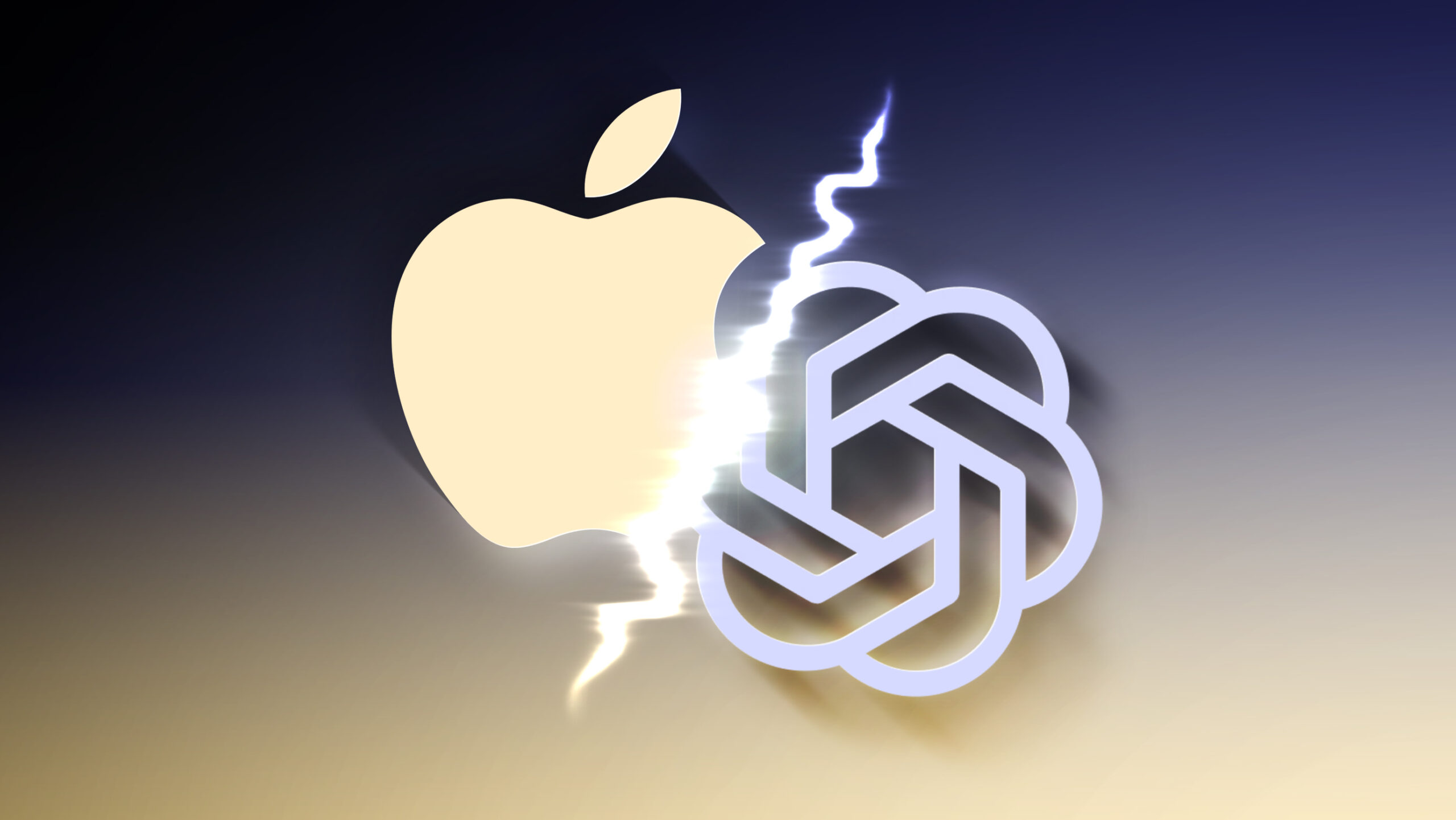
Em meio à polêmica envolvendo a abertura de um processo contra a OpenAI, a Apple enviou cartas — mais precisamente advertências legais individuais — para dezenas de funcionários da empresa de inteligência artificial.

Segundo o Financial Times, cerca de 40 ex-funcionários da Apple que hoje trabalham na OpenAI receberam as cartas. Nela, a Maçã solicita reuniões com seus advogados, exigindo a preservação de documentos e comunicações.

A empresa, vale recordar, acusa alguns dos seus ex-funcionários de roubar planos secretos de hardware e entregá-los à OpenAI — que trabalha atualmente com o ex-chefão de design da Apple, Jony Ive, para desenvolver seus próprios dispositivos.

O envio desse tipo de documento é descrito pelo FT como uma prática agressiva. Nos documentos judiciais, a Maçã argumenta que as evidências que possui representam apenas a “ponta do iceberg” em relação à conduta da OpenAI.

Tendo denunciado diretamente a empresa e dois de seus ex-funcionários, a Apple afirma que todo o negócio de hardware da OpenAI estaria comprometido pelo uso de seus segredos comerciais de forma ilegal.

Procuradas pelo jornal, tanto a Apple quanto a OpenAI recusaram-se a comentar a reportagem.

  •  

Dave Eggers told OpenAI staff that ChatGPT was ‘silencing an entire generation’

Dave Eggers attends the "The Turning Point: To Be Destroyed" premiere. | Image: John Lamparski/Getty Images for Tribeca Festival

Last year, Sam Altman invited author Dave Eggers to give a talk to around 200 OpenAI staffers. The man has written countless novels, screenplays, pieces of journalism, started McSweeney's, and founded multiple schools and nonprofits that support writers and the arts more broadly. So one might expect he'd roll into the company's offices and offer tips on being relentlessly prolific, or how to excel in multiple fields. Instead, he apparently laced into the company. According to the Financial Times, Eggers told the staff:

"The effect of ChatGPT on educators' lives is catastrophic. Whether you intended to do it or not, you've made every teache …

Read the full story at The Verge.

  •  

Meta’s AI bots drain publisher pockets with 9 billion Q2 2026 requests at host expense while returning ZERO traffic — as ChatGPT claims 88% of AI referrals

  • DataDome analysis claims agentic traffic has surged by 45% in Q2 2026
  • Meta AI bots have grown over 163% on the previous quarter
  • The analysis was conducted by bot management and agent control platform DataDome

If you run a website, every crawl costs bandwidth, resources, logging, and creates CDN transactions, and while search engine crawlers offered the promise of sending visitors, AI bots do not.

Analysis in a report from cybersecurity firm DataDome has shown that while bots from Meta AI have increased activity, they’re not delivering any significant returns to websites.

Conversely, ChatGPT crawlers have reduced in traffic, but are sending more referrals.

AI agent traffic is growing

While Meta AI is usually considered to be the “chatbot within Facebook” it seems that it is becoming something more – and the emergence of the Meta-WebIndexer bot (which grew 163% on Q1) suggests that Meta may be indexing a library of websites, in much the same way Google has done for the past few decades.

The growth of Meta AI as an active crawler is only part of the story, as is ChatGPT’s comparative efficiency. The OpenAI tool seems to know enough about websites, so can provide the answers it already “knows.” Conversely, Meta AI’s activity indexing the web seems to explain its heavy impact in Q2 2026.

But also emerging is the Model Context Protocol (MCP) signal, which connects AI agents with external tools, and differs from standard crawler traffic.

“Q2 showed us that the ground is shifting faster than most organizations realize. Meta now dominates AI traffic on our network, MCP traffic has emerged as a real signal, and ChatGPT is driving more referral value with fewer crawls," noted Jérôme Segura, VP of Threat Research at DataDome.

The differences in the way the AI agents are interacting with websites – some behaving like users, others scraping content – means that organizations need to act accordingly.

“What the data makes clear is that not all agents are created equal. The organizations building policy around these distinctions are the ones gaining an edge, and that's exactly why agent trust adoption is accelerating."

Unfortunately, MCP’s existence and growth into a significant, measurable quantity, means that it should also be treated as part of an organization’s attack surface.

Allocating resources

Given the origins of the report, there is naturally a cybersecurity aspect to this. While ransomware, malware, and phishing are not going anywhere, autonomous software on the web needs addressing in a different way.

Those “organizations building policy” that Segura mentions might, for example, give full crawl access to Google, allow ChatGPT to retrieve results, but rate-limit Meta AI based on its poor return.

Meanwhile, unknown agents – perhaps cybersecurity threats – would require additional verification or be blocked entirely.

  •  

ChatGPT e Meta AI ganham novas funcionalidades para reforçar a proteção dos adolescentes

Entre as novidades anunciadas pela OpenAI e pela Meta estão mais controlos para os pais, mecanismos de segurança reforçados e ferramentas concebidas para adaptar a experiência aos utilizadores mais jovens.

The post ChatGPT e Meta AI ganham novas funcionalidades para reforçar a proteção dos adolescentes appeared first on Tek Notícias.

  •  

Terrified Tech Execs Are Traveling With Armed Bodyguards as AI Backlash Grows

Public backlash to AI is intensifying — and transforming into real-world attempts at physical violence. Industry leaders are fearing for their lives.

Leading AI companies and their top executives are beefing up security, the Wall Street Journal reports, as escalating anti-AI industry sentiment is culminating in threats and attempts of violence against the people and ventures building leading AI models. Some executives are even traveling with armed guards, while others have taken to keeping a lower public profile.

“Tech CEOs, a few years ago, definitely did not have security,” Dakota Dominguez, an executive at the Silicon Valley-based security firm JPT Security, told the WSJ. “A lot of tech companies now are incorporating that into their budgets.”

Earlier this year, the AI industry was shaken when a 20-year-old anti-AI activist named Daniel Moreno-Gama, armed with a gun and a Molotov cocktail, unsuccessfully tried to firebomb the home of OpenAI CEO Sam Altman. No one was injured, but the high-profile incident followed a string of violent threats and at least one OpenAI lockdown.

OpenAI isn’t alone. Per the WSJ, around the time that Altman’s home was targeted, OpenAI rival Anthropic faced a close call when a man snuck into its headquarters behind an employee carrying an envelope with an executive’s name on it. The man reportedly then told a guard that the executive was “going to be killed.” The man was stopped before anyone got hurt.

All in all, it’s easy to see why tech leaders are budgeting for beefed up security.

Not all anti-AI sentiment has manifested in attempted physical violence. Activists have also shut down data centers, taken down AI-powered surveillance cameras, and protested outside AI company headquarters. As the fight over AI data centers heats up, some polls have shown that AI is less popular with Americans than Immigration and Customs Enforcement. People fear that AI will result in mass layoffs, a further consolidation of wealth and power, or even a catastrophic apocalypse — outcomes that many leaders in the AI industry have issued warnings about.

“That’s why people are setting warehouses on fire,” a former Pinterest employee named Bonnie Kate Wolf, who was laid off during an AI-focused restructuring, told the WSJ. “You can’t go back to serfdom. It really feels like the people in power want to be kings. Historically, that doesn’t work out for kings.”

More on AI tensions: AI Billionaires Are Starting to Get Scared

The post Terrified Tech Execs Are Traveling With Armed Bodyguards as AI Backlash Grows appeared first on Futurism.

  •  

Report: Apple Sends Legal Letters to Dozens of OpenAI Employees

Apple has reportedly sent legal letters to dozens of former Apple employees now working at OpenAI, telling them to preserve potentially relevant documents and communications as it continues to pursue its trade secret lawsuit against the AI company.


The Financial Times ($) reports that Apple has targeted around 40 former employees with legal preservation letters, acting on its belief that the alleged misappropriation of confidential information may extend beyond the individuals named in its original complaint.

The development follows Apple's lawsuit filed last week against OpenAI, in which the company alleges a coordinated effort to obtain confidential information relating to its hardware engineering and product development.

Apple claims OpenAI recruited key engineers, including former Apple executives Tang Tan and Chang Liu, and benefited from proprietary designs, manufacturing processes, and other trade secrets. Tan is OpenAI's Chief Hardware Officer and a 24-year Apple veteran who led product design, while Liu is on the hardware team at OpenAI after working as a senior system electrical engineer at Apple.

The complaint says that more than 400 former Apple employees now work at OpenAI and suggests that the alleged misconduct is broader than a few isolated actions by individual employees. OpenAI has denied the allegations, saying in a statement to Bloomberg this week that it is "not aware of any evidence that this complaint has merit."

Apple has requested an injunction requiring OpenAI to cease using any Apple information during the development of OpenAI's AI hardware device. Apple is also seeking damages and suing Tan and Liu for breach of contract for violating their employment agreements. The company believes the evidence uncovered so far may represent only the "tip of the iceberg," according to its lawsuit.
This article, "Report: Apple Sends Legal Letters to Dozens of OpenAI Employees" first appeared on MacRumors.com

Discuss this article in our forums

  •  

OpenAI adia o seu primeiro equipamento de IA, mas lança acessório para programadores

O esperado primeiro equipamento de inteligência artificial da OpenAI continua envolto de mistério e voltou a ser adiado. A equipa, liderada por Jony Ive, o “pai” do iPhone, está a recrutar elementos para a sua equipa diretamente da Apple.

The post OpenAI adia o seu primeiro equipamento de IA, mas lança acessório para programadores appeared first on Tek Notícias.

  •  

OpenAI's first branded hardware is... a light-up keyboard?

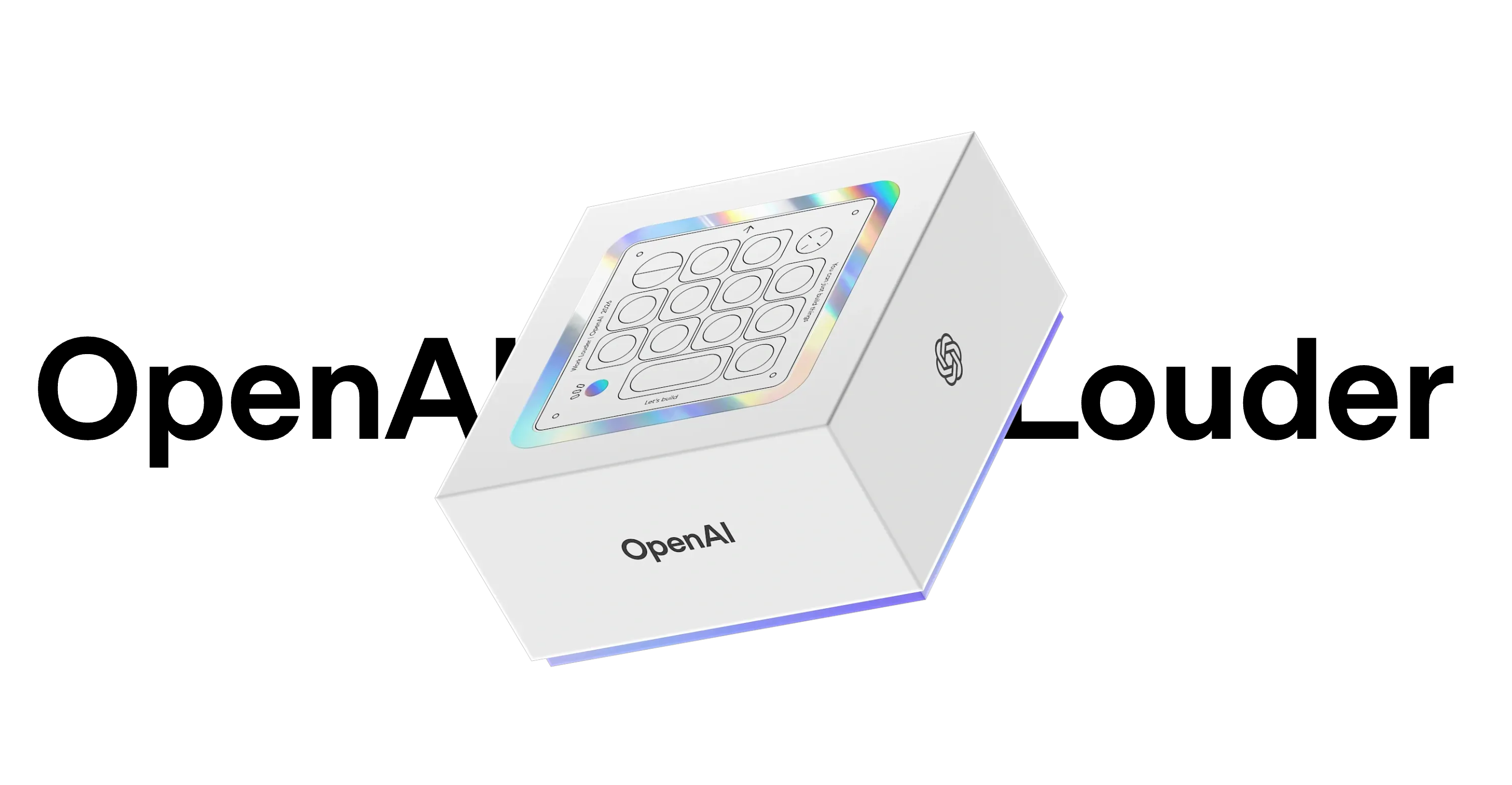
As rumors continue to swirl about OpenAI's work on a personalized smart speaker and other hardware, the company is today rolling out its first branded device. The $230 Codex Micro is a specialized, RGB-lit mini-keyboard designed to let users monitor and quickly interact with multiple Codex agents with a glance and a few clicks.

The device is described as a "limited-run collaboration" with Work Louder, which already sells a very similar-looking Creator Micro line of customizable square keyboards targeted at creative professionals. The Codex Micro differentiates itself from those mainly through six frosted keys in the top two rows, which offer color-coded live feedback on up to six Codex threads, even when they are not in focus on-screen.

Open the OpenAI box for AI assistance. Credit: OpenAI / Work Louder

Ideally, those colored keys will cycle from white when a thread is idle to blue when Codex is thinking to green when a task is complete. But the keys can also flash amber when Codex requires feedback or a decision from a human operator and red when a thread encounters an error, letting users know at a glance which of their Codex tasks needs immediate attention. A quick tap on the lit-up button brings up the applicable Codex window on-screen.

Read full article

Comments

© OpenAI / WorkLouder

  •  

OpenAI Is Shutting Down Its Browser That Was Supposed to Change Everything

In October, OpenAI unveiled an AI browser dubbed Atlas, purportedly designed to help you “understand your world” and “achieve your goals” by putting ChatGPT front and center.

A special “agent mode” was meant to book flights or buy groceries online on your behalf without you ever having to lift your finger.

“The browser just changed,” OpenAI’s head of ChatGPT boasted at the time, calling it a major step in ChatGPT evolving into an entire AI operating system.

But the cracks started to show almost immediately. There were glaring cybersecurity concerns, including a major vulnerability to prompt injection attacks. Its agent worked at a frustratingly glacial pace — it took the browser ten full minutes to add three items to an Amazon shopping cart, as The Verge found out the hard way. It even ignored huge portions of the internet like the plague, highlighting ongoing legal battles over copyright.

And now OpenAI is pulling the plug on the nonstarter browser, a mere nine months after launching it.

In an announcement, the company said it was updating browser extensions designed for Google Chrome — which still dominates the global web browser market — by building on “what we learned from Atlas.”

“Atlas is scheduled to stop working on August 9, 2026,” the company wrote in separate ChatGPT release notes.

Atlas joins a growing graveyard of OpenAI products — distracting “side quests,” according to OpenAI CEO of applications Fidji Simo, herself now leaving the company — that failed to take off.

The latest news highlights how the Sam Altman-led company and the AI industry as a whole is seriously struggling to come up with meaningful products based on the tech. Case in point, OpenAI’s catastrophic text-to-video AI app Sora didn’t even make it to five months of being online. The feature became ground-zero for flagrantly copyright-infringing footage, opening the company up to major legal drama.

As it abandons its efforts to build its own AI-powered browser, OpenAI is launching a new platform, called ChatGPT Work, a software suite designed for office work.

“It can gather information across your apps and workflows to create finished materials like sheets, slides, docs, and web apps, and stay with complex projects for hours by breaking them into smaller steps and completing them independently,” the company said in an announcement.

Whether the new app will fare any better than its ill-fated browser is anything but certain, especially considering the major cybersecurity implications of giving AI agents such extensive access to potentially sensitive data.

More on OpenAI: Simple Prompt Turns ChatGPT Into a Sociopath That Ignores Safety Guardrails

The post OpenAI Is Shutting Down Its Browser That Was Supposed to Change Everything appeared first on Futurism.

  •  

OpenAI reveals its first AI processor: Jalapeño

A photo of Sam Altman and Hock Tan holding an AI chip

OpenAI has just revealed a new "intelligence processor" chip for AI servers made in partnership with Broadcom. The chip, called Jalapeño, is designed to power current and future large language models, according to an announcement on Wednesday.

Jalapeño is an ASIC (Application-Specific Integrated Circuit), meaning it's designed for a specific purpose: AI inference. With AI inference, models process a user's request to run an agent like Codex or offer a response from ChatGPT, while AI training involves a model consuming vast amounts of data to inform its responses.

It comes just nine months after OpenAI revealed that it would team up with Br …

Read the full story at The Verge.

  •  

Hollywood is bending the knee to OpenAI

Photo collage of Sam Altman in front of the OpenAI logo.

Netflix, A24, Focus Features, and Warner Bros.' Clockwork have all reportedly decided to pass on picking up Artificial - director Luca Guadagnino's new biographical drama about OpenAI cofounder / CEO Sam Altman - for distribution deals. And while Neon and Mubi are still said to be interested in the film, this situation makes it seem like Hollywood no longer has the courage to tell critical stories about Big Tech.

Postproduction on Artificial was nearly finished when Amazon MGM unexpectedly announced last week that it no longer plans to distribute the film. The news came as a surprise given how far along the movie was and reports that Amazon …

Read the full story at The Verge.

  •  
❌