Com o Pixelmator Pro e uma assinatura do Apple Creator Studio, o processo de edição de imagens fica muito mais fácil e eficaz, graças às ferramentas avançadas disponibilizadas.
Uma dessas ferramentas é a Super resolução (Super Resolution). Com ela, é possível ampliar qualquer foto, ao mesmo tempo que se tenta preservar a nitidez e os detalhes.
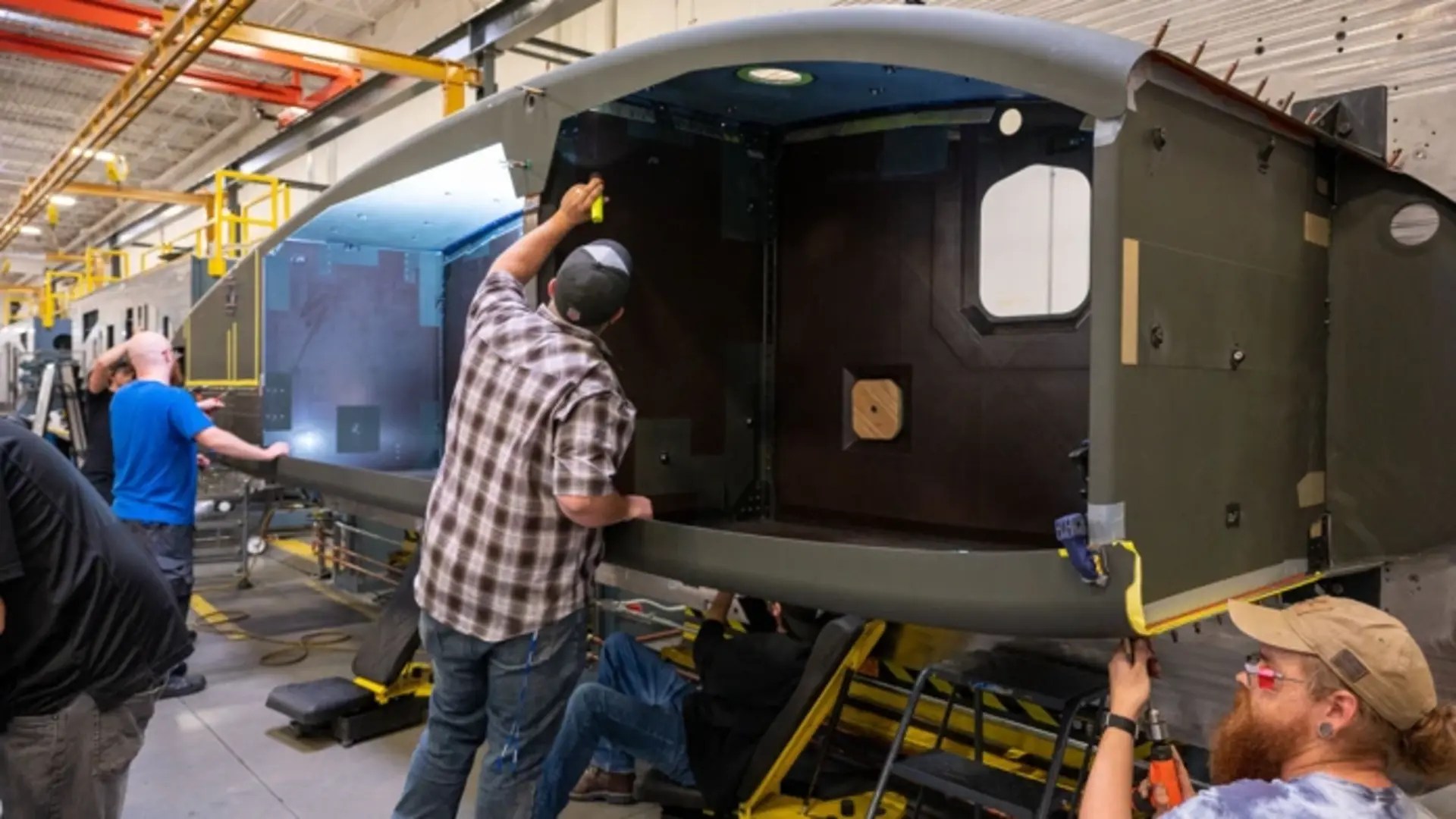
Albany Engineered Composites and A&P Technology are combining advanced braiding and resin transfer molding technologies to accelerate the development of scalable composite solutions for future aerospace and defense applications.
Albany Engineered Composites (AEC), a segment of Albany International Corp., and A&P Technology, a global leader in precision braided composite reinforcement technologies, announced a strategic collaboration to explore and develop advanced braided composite manufacturing solutions for current and next-generation aerospace and defense applications.
The collaboration will capitalize on A&P Technology’s expertise in braided composite architectures and Albany Engineered Composites’ advanced Resin Transfer Molding (RTM) manufacturing capabilities. The companies said the partnership is focused on accelerating the industrialization of lightweight, highly integrated composite structures designed to support future commercial and defense aircraft production requirements.
“Future aerospace platforms demand manufacturing technologies capable of simultaneously improving performance, reducing recurring cost and scaling to production rates the industry has not previously achieved,” said Chris Stone, president of Albany Engineered Composites in a press release.
“By combining A&P Technology’s deep expertise in advanced braiding with Albany’s industry-leading RTM capabilities, we are creating a force multiplier for our customers, accelerating the transition from innovative textile architectures to repeatable, production-ready composite solutions.”
The companies will work together on research, technology development, manufacturing process maturation, and commercialization opportunities focused on purpose-designed braided composite structures. These efforts will target current and next-generation aeroengine platforms, commercial aircraft, Advanced Air Mobility (AAM) blades and structures, Collaborative Combat Aircraft (CCA), and solid rocket motor nozzles.
Expanding advanced aerospace capabilities
Albany Engineered Composites is a rapidly growing division of Albany International Corp. that designs and manufactures advanced composite components for aerospace and defense industries. Headquartered alongside its parent company in Rochester, New Hampshire, AEC operates advanced research, development and manufacturing facilities across the globe, including major composite production sites in Salt Lake City, Utah; Boerne, Texas; and Commercy, France.
As aerospace manufacturers seek larger, more integrated composite structures, the companies said that combining braided composite preforms with automated RTM processing provides a pathway to scalable manufacturing by reducing assembly complexity and supporting higher production rates.
“It’s a privilege to collaborate with Albany given their broad and deep design and manufacturing skill and know-how built on decades of success making parts for the most demanding applications,” said Andy Head, president of A&P Technology.
“Together, we can offer composite solutions not only at an enabling rate but also with enabling cost and performance benefits. We look forward to meeting customer challenges together.”
Brent Stevenson, vice president of emerging markets and technology at Albany Engineered Composites, said that customers are seeking integrated solutions that combine multiple manufacturing processes.
“Our customers are looking beyond individual manufacturing processes; they’re looking for integrated solutions,” said Stevenson.
“Braiding and RTM are naturally complementary technologies. Together, they enable highly engineered composite architectures supporting complex geometries, efficient manufacturing and production scalability for both current and next-generation aerospace and defense platforms.”
Supporting future aerospace platforms
Through the collaboration, Albany Engineered Composites and A&P Technology aim to advance composite manufacturing solutions that combine precision braided reinforcement technologies with advanced RTM processing. The companies’ work will focus on production-ready composite structures for a range of aerospace and defense applications, including commercial aircraft, military platforms and emerging aviation technologies.
The partnership brings together two specialized manufacturing approaches as the companies pursue opportunities in research, development, process advancement and commercialization of advanced composite solutions, the press release concludes.
This week, Chinese equipment brand LiuGong officially launched its battery-electric equipment and material handling asset portfolio in the United States and Canada, making it easier than ever for construction and forestry crews to decarbonize their fleets.
An academic at the Australian National University has accused it of a “hysterical” response to students using AI to cheat, as tertiary institutions rush to shore up the credibility of assessments.
But a colleague warned Australia is in danger of “shipping our national intellectual capability” to companies in California and China if educational rigour is not restored.
Biological defenses make losing weight and keeping it off unusually difficult. Better treatments, healthier environments, and sustainable habits may support long-term health more effectively than willpower alone. For years, weight loss has been framed as a simple test of discipline: consume fewer calories and exercise more. Modern research, however, shows that body weight is regulated [...]
Sleep tracking on Apple Watch can make an invisible part of daily health easier to understand. Each morning, the watch may show sleep duration, stages, interruptions, overnight vitals and a score intended to summarize the night.
That information can be useful. It can also create a new habit of judging the entire day before getting out of bed.
One low score may make a person feel tired before noticing how they actually feel. A few minutes less deep sleep can become a source of concern. Going to bed can even start to feel like a test that must be passed rather than a normal biological process.
Apple Watch sleep data works better as a long-term observation tool than as a nightly verdict. The goal is not to collect perfect scores. It is to notice repeatable patterns and make small changes when those patterns match real-life problems.
What Apple Watch Measures During Sleep
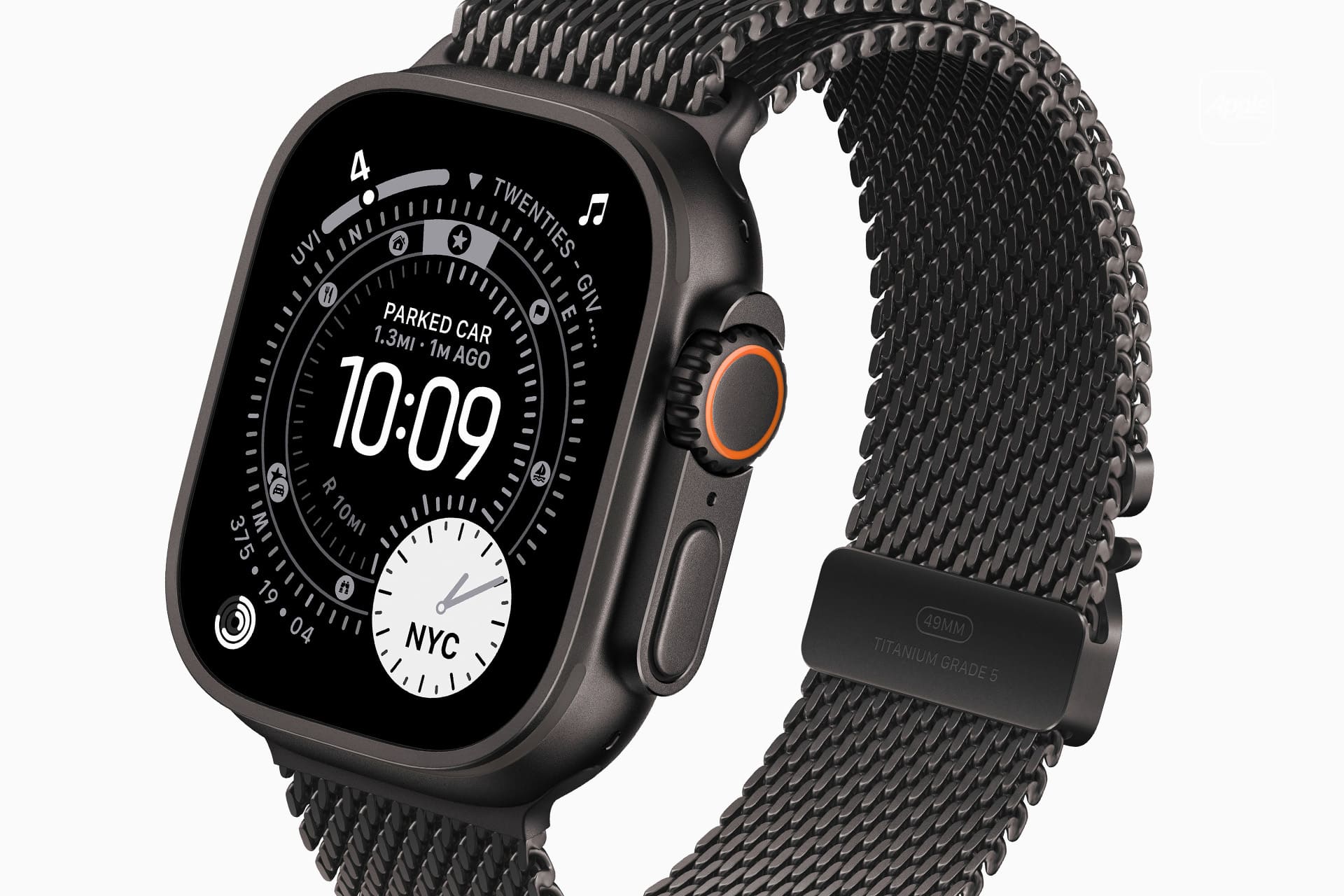
Apple Watch estimates sleep using movement and signals collected while it is worn overnight. Depending on the model and available features, the Health and Sleep apps can show total sleep time, awake periods and estimates for core, deep and REM sleep.
The watch may also collect sleeping heart rate, respiratory rate, wrist temperature and other overnight metrics. The Vitals app compares several of these measurements with the user’s established typical range.
A sleep score compresses parts of the night into one number or category. Apple’s score considers factors including sleep duration, consistency and time spent awake. That makes it convenient, but convenience should not be confused with a complete medical interpretation.
The watch cannot know whether a stressful conversation kept someone awake, whether a child interrupted the night or whether the wearer woke feeling unexpectedly refreshed after fewer hours. It estimates physiological and behavioral signals. The person still supplies the context.
Sleep Tracking Apple Watch Data Works Best as a Trend
One night can be distorted by almost anything: travel, alcohol, illness, noise, a late meal, room temperature or a loose watch band. Even the position of the arm can affect sensor collection.
A weekly or monthly view is more useful because it reduces the influence of isolated nights. Patterns begin to emerge around bedtime consistency, total duration and changes in overnight vitals.
To review longer sleep trends on iPhone:
Health > Search > Sleep > select the weekly, monthly or six-month view
Look first at sleep duration and timing. These measurements are generally easier to interpret than small changes in individual sleep stages.
A person who repeatedly sleeps less on work nights may have a scheduling issue. Someone whose sleep becomes more fragmented after late caffeine may have found a useful connection. A consistently irregular bedtime may explain more than whether deep sleep moved by 12 minutes on Tuesday.
The data becomes valuable when it supports an observation that can lead to a realistic adjustment.
Image Credit: Apple Inc.
Do Not Treat Sleep Stages as Exact Measurements
Core, deep and REM sleep are presented as distinct colored sections, which can make them appear more precise than they are. Apple Watch estimates these stages from signals available at the wrist. A clinical sleep study uses additional equipment and is designed for medical evaluation.
That does not make the stage information worthless. It means small nightly differences should not be overinterpreted.
A person does not need to increase deep sleep manually or achieve a perfect proportion of REM sleep. Sleep architecture changes naturally across age, stress levels, exercise, illness and different parts of the night.
Use stage data to notice substantial or persistent changes, not to compete with yesterday’s chart. Spending 15 minutes less in one estimated stage is not automatically a health problem.
Start With How You Feel
Before opening the Sleep app, notice how the morning feels.
Was waking difficult? Is concentration normal? Is there unusual daytime sleepiness? Does the body feel recovered after exercise? Was the night interrupted for an obvious reason?
This brief self-check prevents the score from defining the experience. Someone may feel fine after a lower-rated night, while another person may feel exhausted despite receiving a favorable score.
The most useful interpretation combines both sources: subjective experience and device data. When they repeatedly agree, the pattern deserves attention. When they conflict for one night, there may be no reason to react.
Use Vitals as Context, Not a Diagnosis
The Vitals app can show whether overnight measurements such as heart rate, respiratory rate, wrist temperature and sleep duration fall within a typical range. It becomes more useful after the watch has collected enough nights to establish a personal baseline.
An outlier may reflect alcohol, medication, elevation, intense training or the beginning of an illness. It may also be an ordinary variation or imperfect reading.
Several unusual metrics appearing together may provide more context than one isolated number. Even then, Apple Watch data should not be used to diagnose a condition independently.
Persistent symptoms, breathing concerns, extreme daytime sleepiness or major changes in sleep should be discussed with a qualified healthcare professional. Bring the trend data if it helps describe what has been happening, but do not let the watch replace an evaluation.
Build a Routine Around Behavior, Not Scores
The healthiest use of sleep tracking is to connect the data with actions a person can actually control.
A consistent bedtime may improve the pattern. Charging the watch before the evening makes tracking more reliable. Reducing late caffeine, adjusting the bedroom temperature or moving an intense workout earlier may also produce noticeable changes.
To set a sleep schedule:
Health > Search > Sleep > Full Schedule & Options > Add Schedule
A schedule can provide Wind Down reminders and help keep bedtime more regular. It should remain a helpful structure rather than a rigid obligation. Life will occasionally interrupt it.
Choose one adjustment and observe it for a week or two. Changing five habits after one poor night makes it difficult to identify what helped.
Image Credit: Apple Inc.
When Sleep Tracking Creates More Stress
Some people become preoccupied with improving sleep data, repeatedly checking results or worrying that a low score guarantees a bad day. The anxiety can itself make falling asleep more difficult.
That is a sign to reduce exposure to the numbers.
Sleep tracking can be turned off temporarily, or the data can be reviewed only once per week. Another option is to avoid checking the score in the morning and examine trends at a neutral time later.
To change sleep tracking settings:
Watch app on iPhone > My Watch > Sleep
A break does not erase the knowledge already gained. A person who has learned that regular timing and less late caffeine improve sleep may no longer need a daily chart to confirm it.
The device should support rest, not supervise it.
A Better Way to Read the Morning Report
A practical morning review can remain simple. Check whether the watch recorded the full night. Notice total duration. Consider whether the bedtime was typical. Look for any major change in overnight vitals, then move on.
There is rarely a need to analyze every stage, compare several apps or search for explanations after one ordinary variation.
Sleep tracking on Apple Watch is most useful when it reveals something that was difficult to see without data: a repeated shortfall in duration, an inconsistent schedule or a pattern linked to habits and recovery.
The score can summarize one night, but it cannot grade the person who slept through it. A healthier measure is whether the information helps create calmer nights, better days and fewer reasons to think about the watch after waking.
Cylinder seals were far more than ancient signatures. They fused art, power, and belief into objects that revealed exactly who their owners were. The earliest form of the signature came from ancient Iraq in the form of cylinder seals. Mesopotamians, the ancient inhabitants of the land between the Euphrates and Tigris rivers, are credited for [...]
Tutankhamun’s 1925 examination left behind evidence that official accounts largely omitted. A closer look at the records reveals a troubling gap between scientific history and what actually happened. November 2025 marks 100 years since archaeologists first examined Tutankhamun’s mummified remains. What followed wasn’t scientific triumph—it was destruction. Using hot knives and brute force, Howard Carter’s [...]
EU tech regulation, Digital Markets Act, Apple Europe sales, Apple regulation, European Union, Siri AI, iPhone features, device interoperability, App Store changes, alternative marketplaces, iPhone Mirroring, AirPods translation, Apple privacy, iPhone security, app sideloading, platform competition, DMA compliance, Apple Intelligence, European technology, government control
EU tech regulation is no longer limited to App Store payment rules or competition disputes hidden from ordinary consumers. It is beginning to determine which features reach European devices, how quickly they arrive and how deeply third-party companies can interact with the iPhone, iPad and Mac.
The Digital Markets Act was designed to reduce the control of large technology platforms over software distribution, payments, browsers, digital assistants and connected hardware. For Apple, compliance has already produced alternative app marketplaces, web distribution, third-party payment options, additional default-app controls and expanded access to iPhone technologies.
The next phase reaches much deeper into the operating system. European regulators want competing accessories, cloud services and AI assistants to receive access to capabilities traditionally reserved for Apple’s own products.
Apple argues that some of those demands could weaken privacy and security. The European Commission says the company is responsible for creating compliant systems that preserve both competition and user protection.
Between those positions sits a large and commercially significant group of customers. Europe generated $28.06 billion in Apple sales during the quarter ending March 28, 2026, up from $24.45 billion one year earlier. Six-month European sales reached $66.20 billion, compared with $58.32 billion during the same period of fiscal 2025.
Europe therefore represented more than one-quarter of Apple’s latest quarterly revenue. It is too valuable to leave behind, but increasingly difficult to serve with the same software experience available elsewhere.
EU Tech Regulation Is Splitting Feature Availability
Regional differences once centered mainly on language support, licensing agreements or local services. EU tech regulation is creating a more structural divide.
Apple has blamed Digital Markets Act requirements for delaying Siri AI across the European Union. The company says regulators expect competing AI assistants to receive extensive access to personal information, apps and device actions before Apple can reserve those capabilities for its own assistant.
The disagreement concerns more than answering questions. Siri AI is designed to read personal context, understand onscreen information and complete actions across apps. That may include finding messages, accessing files, making purchases or sending information on the user’s behalf.
Opening those capabilities to outside AI systems requires new permission structures, technical interfaces and safeguards. Apple says it cannot release its assistant first and add competing access later without risking regulatory action. The Commission says Apple had sufficient time to design an interoperable solution.
Other delayed European features have included iPhone Mirroring on Mac, Live Translation through AirPods and certain location-based Maps capabilities. Each feature touches a different part of the ecosystem, but all depend on privileged communication between Apple devices, software and services.
The consequence is becoming visible at purchase. Two customers can buy the same iPhone model at similar prices and receive different capabilities because one lives inside the European Union.
Image Credit: Apple Inc.
Feature Adoption Becomes Slower and Less Predictable
Delayed availability can weaken the adoption of new hardware features even when the devices themselves continue selling well.
Siri AI is intended to become a central part of newer iPhones, iPads and Macs. Buyers who cannot access it lose part of the justification for newer chips, additional memory and on-device AI processing. Developers also face a smaller addressable audience for apps built around the new assistant.
AirPods Live Translation presents a similar problem. A feature designed to demonstrate the combination of iPhone processing, microphones and wearable audio becomes unavailable in a region built around dozens of languages and frequent cross-border travel.
iPhone Mirroring affects the relationship between iPhone and Mac. Users outside the EU can interact with the phone from macOS, while European users may receive notifications without gaining the complete experience.
These differences do not necessarily stop hardware sales. Apple’s newest results show strong European demand despite years of regulatory conflict. They can, however, reduce the speed at which customers use the ecosystem’s newest capabilities.
The effect may grow as software becomes a larger part of hardware differentiation. A faster processor has limited emotional value when the feature designed to demonstrate it is unavailable.
Apple Sales Show Why Europe Cannot Be Ignored
Apple does not report European Union revenue separately. Its Europe segment also includes countries outside the bloc, along with India, the Middle East and Africa. The official segment remains the best regularly published measure of the region’s commercial weight.
European sales rose approximately 15% year over year in Apple’s latest reported quarter. During the first six months of fiscal 2026, the segment expanded by roughly 14%.
Those figures weaken the argument that regulation is already driving customers away from Apple hardware. Demand remains strong, supported by the iPhone 17 family, Mac sales, services and the company’s installed base.
The financial risk is more gradual. Regional software fragmentation can raise engineering costs, delay launches and make European devices less competitive against products able to offer complete feature sets.
Apple must maintain separate distribution rules, payment systems, browser options and eligibility checks. Developers must decide whether alternative stores, external payments or EU-specific business terms justify additional work. Support teams must explain why features differ between countries using the same operating-system version.
A market responsible for more than $28 billion in one quarter can absorb considerable compliance expense. It can also influence Apple’s global product decisions when regulators demand interfaces that cannot be restricted to Europe easily.
A Slow Transfer of Ecosystem Control
The escalating regulatory environment also creates a more fundamental concern: control over complex technology ecosystems can gradually move away from the companies that designed them and toward government committees, regulatory bodies and administrative processes.
That transfer rarely happens through one dramatic order. It develops through repeated obligations covering app distribution, payment systems, browser engines, digital assistants, hardware access, data portability and interoperability. Each requirement may appear narrow when considered alone. Together, they can redefine who determines how the ecosystem operates.
Apple built its platform around tight integration between hardware, software, services and security. Regulators increasingly treat parts of that integration as market power that must be opened to competitors. The danger is that an ecosystem designed as one coordinated environment becomes subject to decisions made by committees that do not carry direct responsibility for product quality, reliability or long-term maintenance.
This can become a slow trap. Once a platform is required to expose one layer, regulators may use that access as the basis for demanding another. A payment exception can be followed by alternative app stores. Alternative stores can lead to broader installation rights. Device interoperability can expand into access for AI assistants, personal data and system actions.
The boundaries of the platform are then set less by engineering judgment and more by regulatory negotiation.
Government agencies have legitimate authority to address competition and consumer harm. The concern appears when regulation shifts from preventing abusive conduct to directing product architecture. At that point, public authorities begin influencing feature design, release timing, software permissions and the relationship between first-party and third-party services.
That creates consequences beyond Apple. Any company considering a tightly integrated product may decide that deep integration invites intervention. Businesses could avoid building ambitious ecosystems if successful coordination later becomes grounds for forced access.
Innovation then becomes shaped by what regulators are likely to permit rather than by what engineers believe will produce the safest or most coherent experience.
Image Credit: Ink Drop / Alamy Stock Photo
Competition Gains Come With Real Consumer Choices
EU policy has produced benefits that Apple rarely emphasizes. Users can install apps through alternative marketplaces or directly from authorized developers. Developers can offer external payment methods, promote different prices and avoid relying entirely on Apple’s distribution system.
Alternative browser engines can compete with WebKit, while users have more control over default apps. Contactless payment access has expanded beyond Apple Pay, allowing competing wallet providers to use the iPhone’s NFC technology under approved conditions.
Interoperability requirements could also improve third-party accessories. Smartwatches, headphones and other devices may gain better notification access, background connectivity and proximity pairing with the iPhone.
These changes can increase competition and reduce the advantage Apple gives its own services and accessories. A third-party smartwatch should not become artificially less useful simply because it was not made in Cupertino.
The difficulty is separating legitimate platform access from unlimited access. A notification interface is one thing. An autonomous AI assistant capable of reading messages, accessing files and acting across apps introduces a different level of sensitivity.
Privacy and Security Risks Are Not Theoretical
Alternative app distribution increases user choice, but it also moves some responsibility away from the App Store. Apple continues to notarize apps distributed through approved alternative channels, checking for known malware and severe fraud. That process is narrower than a complete App Store review.
Purchases made outside Apple’s payment system also fall outside its normal refund and billing support. Users may need to resolve disputes directly with the developer or payment provider.
A malicious marketplace, deceptive payment page or compromised developer account can create opportunities for fraud. Enterprise users face additional concerns when employees install software from sources their organization has not approved.
The AI question reaches further. A third-party assistant may need permission to access messages, photos, calendars, documents and app controls. Even a reputable provider can collect more information than the user expects or introduce vulnerabilities through poorly designed integrations.
Apple can build permission prompts, app isolation and revocation controls, but technical access always creates some exposure. Security depends on how narrowly permissions are defined, how visibly they are used and whether the operating system can stop unauthorized actions.
The Commission maintains that interoperability and privacy can coexist. Apple maintains that regulators are demanding access before adequate protections are ready. Both positions contain a legitimate concern: dominant platforms should not block competition, and competition should not require users to surrender control of personal data.
When regulators require a company to alter its architecture, responsibility can become blurred.
Apple remains the company customers blame when an iPhone feature fails, a third-party marketplace distributes a harmful app or an outside assistant misuses personal data. Regulators may have required the access, but they do not operate the device, provide technical support or repair the damage to the platform’s reputation.
This creates an accountability gap. Government committees can mandate openness without assuming the commercial and security consequences of that openness. Apple must comply, maintain the system and explain the outcome to users.
The same problem applies to delayed features. Regulators may argue that Apple chose not to release a service, while Apple may argue that the required conditions made the launch unsafe or technically impractical. Customers are left with less functionality and no simple way to determine who caused the delay.
Over time, the ecosystem can become a negotiated compromise rather than a product with one coherent direction. That may satisfy formal compliance while producing a weaker experience for everyone involved.
The risk is not that governments will literally operate Apple’s software. It is that committees increasingly define the conditions under which Apple can design, connect and release its own features. Control shifts through constraints.
The Industry Will Follow Europe’s Experiment
The consequences extend beyond one company. Google, Meta, Microsoft, Amazon and other platform operators face related European obligations. Hardware makers must consider whether ecosystem advantages can survive when core services are required to support rivals.
Smaller developers may gain new distribution and payment choices, but they may also inherit more compliance, customer-service and security responsibilities. Accessory companies could compete more effectively while becoming accountable for handling sensitive device data.
Other governments are watching. Rules introduced in Europe can influence legislation elsewhere, particularly when companies decide that maintaining one global technical framework is easier than operating several regional versions.
Apple is unlikely to abandon Europe or stop adapting its products. Its sales provide too much evidence of the region’s importance. The company will continue negotiating, appealing decisions and building compliance systems while withholding features it considers unsafe under current demands.
European customers may receive more app stores, payment choices and accessory compatibility. They may also wait longer for headline features included with the same hardware elsewhere.
The deeper consequence may be a technology industry that becomes more cautious about building tightly integrated products. Companies may design around anticipated regulatory demands from the beginning, limiting exclusive features, reducing private-system integration or avoiding innovations that depend on controlled access.
EU tech regulation began as an effort to constrain dominant platforms. Its long-term effect may be to transfer part of the power to shape those platforms from companies and users to regulatory institutions.
That shift deserves scrutiny equal to the market power it is intended to correct. Competition rules can restrain abuse. They can also become a slow mechanism for placing product design, security choices and ecosystem evolution under government supervision.
Shady Control and Bureaucracy
The danger grows when regulatory discretion becomes buried beneath permits, approvals, negotiations and technical committees that operate beyond meaningful public scrutiny.
The more power officials hold over which features, contracts or technologies may proceed—and when—the greater the opportunity for lobbying, favoritism and selective enforcement to influence outcomes. What begins as oversight can gradually become a system in which delay itself is leverage, while responsibility disappears inside layers of administration.
For the technology industry, that risks replacing transparent product decisions with political access, negotiated exceptions and regulatory influence exercised far from the consumers expected to live with the consequences.
Last year just 0.6% of new vehicles made for U.S. customers were stick shifts, reports the Washington Post, citing preliminary government data.
"That's a precipitous drop from the 34.6 percent of vehicles with manual transmissions produced in 1980."
[T]he stick shift's popularity hit multiple new lows in recent years, with no signs of a turnaround, thanks to new technologies and a rapidly changing marketplace. Buyers and automakers increasingly have turned to the sophisticated automatic drivetrains that now smoothly swap gears in fractions of a second and with better fuel efficiency. The average new vehicle today comes with seven gears, thanks to computers, twice as many as in 1980 and more gears than any ordinary driver would want to shift through using a manual gearbox. At the same time, sporty cars — the kind that buyers might demand a stick shift to drive — have fallen out of favor, replaced by interest in hulking SUVs, which are almost always automatics. The stick shift's demise has been hastened, too, by the rise of electric vehicles and increasingly autonomous vehicles. Neither have any need for a manual transmission...
Europe has seen a less dramatic decline in stick shifts, with manual transmissions dropping from 91 percent of car registrations in 2001 to 29 percent in 2024 among Europe's largest auto markets, according to industry analyst JATO Dynamics... Subaru made its name with manual cars. But the Japanese automaker stopped offering a manual Crosstrek with the 2023 model year, having already dropped that transmission from its Legacy, Outback and Forester models. Other automakers have followed the same path. Volkswagen announced that it plans this year to ditch its last U.S. stick-shift model, the Jetta GLI.
Even Toyota, Honda, and BMW have all reduced the number of cars for the U.S. market with a manual transmission, the article points out — leaving stick shift-loving Americans with a total of about 24 new-vehicle models to choose from. The articles adds that only 60% of Americans know how to drive a manual transmission (according to a survey from auto parts retailer AmericanMuscle): 83% for baby boomers but 39% for Gen Z. "Respondents were about evenly split on whether knowing how to drive a manual is an important life skill."
But Ford CEO Jim Farley said earlier this year he has no plans to make the Mustang automatic-only.
"Out of our cold, dead hands will we not have a manual Mustang." Farley said.
Meta executives claimed that a controversial facial recognition feature didn’t “exist.” Fast forward a few weeks later, and they’re describing the feature in public — and in detail.
In June, a Wired investigation revealed that Meta had quietly infused unreleased facial recognition tech into its “AI Glasses,” the tech giant’s chatbot and camera-equipped smart glasses. While the feature, dubbed NameTag, was inaccessible to consumers, it was designed to register faces encountered by Meta glasses wearers “into unique biometric signatures, commonly known as faceprints, and check each one against faceprints stored on the user’s phone,” according to the magazine.
Andy Stone, the tech giant’s spokesperson and VP of communications, declared on X that Wired’s reporting was “intellectually dishonest” and “advocacy-driven click bait.” What’s more, according to Stone, NameTag was fully nonexistent.
“Here’s a thing: Wired reports Meta didn’t answer several questions about how this will work,” Stone added in a follow-up post. “How could we? The feature doesn’t exist!”
In response to Stone, another Meta executive, chief technology officer Andrew “Boz” Bosworth, jumped in.
“Incredibly misleading from Wired,” he wrote. “Absolutely dishonest.”
Yet despite company leaders reassuring us that the feature doesn’t exist, Bosworth discussed it in detail during an interview with The Atlantic CEO and podcaster Nick Thompson. Bosworth’s comments in the interview, which was published last week, seemingly contradicted his fellow executives, revealing that the feature did indeed exist.
NameTag, Bosworth told Thompson, would be “encrypted locally to your device,” and would catalog people who smart glasses wearers “met in person, with your glasses on, who introduced themselves, or you said, ‘okay, this is David, remember this person.'”
This information is “only available to you, when you are wearing your glasses,” Bosworth added. He emphasized that the data captured by NameTag wouldn’t be stored in a centralized database.
“This is a person you’ve met before. Here’s their name. They’re right in front of you. That’s… what we call a NameTags feature,” said Bosworth. “I think people get confused because they hear face recognition and they think, ‘oh, there’s a central face database that everyone’s being scanned constantly into.’ It’s not that.”
In addition to supporting blind or low-vision smart glasses wearers, said Bosworth, NameTag could solve what Meta calls “the cocktail party problem,” saving wearers from any awkwardness that may arise when encountering people at parties who they’re sure they’ve met before, but can’t quite place.
“It’s a very universally human problem,” Bosworth said. “Nearly every human I talk to, no matter what their status of their vision or their memory, understands that this is a problem that would help them feel more comfortable in social situations if they had it.”
To be clear, Wired never suggested that the facial recognition feature it uncovered was being used to build a “central face database” by way of Meta’s smart glasses. Indeed, in line with what Bosworth said in the podcast appearance, Wired reported that “code discreetly added to Meta’s AI app over multiple updates this year shows that the feature, internally called ‘NameTag,’ identifies people captured by the glasses’ camera and, when activated, alerts the wearer when it recognizes someone.” The story also repeatedly noted that the feature was unreleased and inaccessible to glasses wearers.
When journalists and others called out the contradiction between Meta’s past and recent statements, Stone — the comms executive who said that Wired couldn’t answer questions about the feature because it “doesn’t exist” — jumped back in the comments section.
“We have said for months we’re exploring such features, even as nothing has shipped to consumers,” the spokesperson said in response to a post by The Intercept journalist Sam Biddle. “No secret there despite the conspiratorial thinking.”
There’s a big difference between a feature not existing and a feature that exists — if still unfinished — and has yet to be released. Meta appears to be arguing that if a feature remains inaccessible to consumers, it’s technically nonexistent, even if the company has gone as far as to issue multiple updates inserting code for the feature into products that are already in consumers’ hands. (Meta quietly deleted the NameTag code after its existence was made public.)
During the podcast interview, Bosworth took care to emphasize that Meta is considering the privacy implications of a facial recognition-powered feature like NameTag. He noted that it’s likely illegal in states like Illinois and Texas, and that it “has to be done in a way that people feel comfortable.”
Meanwhile, Meta continues to fight an ongoing consumer harm lawsuit, prompted by an investigation by a pair of Swedish newspapers. The publications found that Meta collected recordings by smart glasses wearers and passed them along to human data labelers, despite promising consumers that their recordings would be stored only on their devices.
“Designed for privacy,” reads a webpage for Meta’s smart glasses, “controlled by you.”
An international team led by Juan Diego Soler at the University of Vienna used two of the world’s most advanced radio telescopes to map neutral atomichydrogen gas across the nebula’s outer shell at unprecedented resolution. The new maps provide a clearer view of the celestial feature, and reveal a previously uncatalogued second bubble—a shell with much less mass than earlier estimates—and a four-light-year filament of gas extending from the structure.
The Orion Nebula’s Miscalculated Bubble
Neutral hydrogen emits a faint radio signal at a wavelength of 21 centimeters, making it possible to trace otherwise invisible gas between the stars. Soler’s team solved this by combining data from the Karl G. Jansky Very Large Array in New Mexico and the FAST telescope in China. The VLA provided high resolution, while FAST picked up faint, widespread signals. Together, they produced the first detailed hydrogen map of the extended Orion Nebula, at the same scale as earlier ionized carbon maps.
Earlier calculations based on ionized carbon estimated that the front half of the shell was about 1,100 times the mass of our Sun. The hydrogen observations paint a different picture, suggesting the shell actually weighs in at closer to 100 solar masses. “Measuring mass is fundamental,” Soler said, “because it tells us about the efficiency of these newly formed stars shaping their environment with wind and radiation.”
A shell with only a tenth of the previously assumed mass significantly alters calculations of how efficiently newly formed stars shape their environment. The researchers note that molecular hydrogen, which is not detected in either the hydrogen or carbon data, may account for some of the missing mass.
A Second Bubble
The hydrogen maps also revealed an uneven distribution of gas, indicating a second, smaller cavity within the main shell. The team searched catalogs of known stars and young stellar objects in the region but found no candidate at the bubble’s center. The source responsible for creating the cavity may not be the type of object included in current catalogs.
Daniel Seifried at the University of Cologne, a co-author on the study, pointed to what that means for the models astronomers build to explain regions like this one. “These stunning observations serve as a reference for many modern astrophysical simulations investigating the evolution of gas and stars in the Milky Way. These are the kind of images that challenge the theoretical models and numerical simulations that we use to understand how massive stars affect their immediate surroundings.”
Previous models generally treated Orion’s shell as the product of a single expanding bubble. The discovery of a second cavity, with no obvious source at its center, instead suggests the nebula was shaped by multiple episodes of stellar feedback.
An Unexpected Filament
The new maps also uncovered a filament of hydrogen extending about four light-years from the shell’s western edge. Previous carbon-based observations saw only the base of this structure. The filament contains about 80 solar masses of hydrogen and does not appear to be associated with any known group of young stars. Its origin is unclear; it could be gas leaking through a weak spot in the shell or a leftover from the original cloud that existed before the bubble formed.
Claire Murray of the Space Telescope Science Institute, another co-author, framed the discovery within the broader push behind the observations. “This study is an exciting demonstration of the power of the latest-generation radio telescopes to uncover new pieces to the star formation puzzle.” Despite being one of the galaxy’s most extensively studied star-forming regions, the Orion Nebula continues to reveal discoveries.
This survey is the first scientific result from the NeAtHood project, which aims to map atomic hydrogen across nearby star-forming regions accessible to the VLA and FAST telescopes. Soler and his colleagues now plan to apply the same approach to additional targets. “Orion is only the beginning. Our newly developed methods show how future interferometers will reveal the hidden structure and dynamics of the interstellar medium—even in regions that astronomers already believed they understood well,” Soler explained.
If one of the sky’s best-studied star-forming regions still contains hidden structures, other nearby nebulae may prove equally surprising as the NeAtHood survey expands.
Austin Burgess is a writer and researcher with a background in sales, marketing, and data analytics. He holds an MBA, a Bachelor of Science in Business Administration, and a data analytics certification. His work focuses on breaking scientific developments, with an emphasis on emerging biology, cognitive neuroscience, and archaeological discoveries.
British aerospace company Vertical Aerospace is set to conduct the first public electric vertical take-off and landing (eVTOL) demonstration flights at the upcoming Farnborough International Airshow.
The event represents another milestone in the company’s journey toward certification and the eventual launch of commercial electric aircraft services.
The demonstrations come at a key stage in the company’s development, Vertical Aerospace noted. In recent months, the company has unveiled its Valo aircraft, completed successful piloted transition flights, strengthened its financial position, expanded its global technology partnerships, progressed its hybrid-electric defense strategy, and continued advancing its certification program.
Valo eVTOL moves closer to commercial operations
Following successful demonstrations of the aircraft’s core capabilities, Vertical Aerospace is now shifting its focus toward the next stage of development, with efforts centered on certification, industrialization and preparing for commercial operations.
Alongside public piloted flight demonstrations of its full-scale prototype, the company will also showcase its full-scale commercial Valo aircraft model, offering visitors a closer look at the technology behind its next-generation electric aircraft.
According to Stuart Simpson, CEO of Vertical Aerospace, the company arrives at Farnborough with the key building blocks for its next phase already in place. He said Vertical has transformed over the past year by launching its Valo aircraft, achieving piloted transition flights, strengthening its financial position and expanding its industrial ecosystem, while continuing to prove the technology.
“Every milestone we deliver reduces risk, strengthens our competitive position and brings us closer to building one of the world’s leading electric aerospace companies,” Simpson noted. A major highlight of Vertical Aerospace’s presence at the Farnborough International Airshow will be its planned flight demonstrations, which are set to mark the first public eVTOL aircraft demonstrations at the event.
Company targets key certification and production milestones after expanding flight tests
The company intends to conduct demonstration flights throughout the show, subject to approved flight conditions. The planned flights follow the UK Civil Aviation Authority’s recent expansion of Vertical’s Permit to Fly, allowing the company to carry out public demonstrations beyond its Flight Test Centre at Cotswold Airport for the first time.
Following the expanded flight approval, Vertical’s test pilots have successfully operated the aircraft across multiple locations, including RAF Brize Norton, RAF Benson, Blackbushe Airport and Farnborough Airport. These flights have expanded the company’s test program, providing valuable experience across different operating environments.
The company is also targeting several important program milestones that will support the development, production, and commercial rollout of its aircraft. These include completing the Critical Design Review (CDR) by the end of 2026, which will establish the certifiable design baseline for the aircraft and enable the production and testing of certification-conforming models.
Furthermore, the UK firm plans to bring its early production aircraft assembly facility online in Q3 2026 and expand the Vertical Energy Centre in Q4 2026 as part of its industrialization efforts. In addition, Vertical expects to select a long-term turbogenerator supplier during 2026, ahead of beginning hybrid-electric flight testing in the first half of 2027.
Future spacecraft may travel farther by drawing momentum from planets, sunlight, and the solar wind instead of onboard fuel. Every conventional rocket faces the same problem: it must carry the material that propels it. Since Konstantin Tsiolkovsky described the rocket equation in 1903, spacecraft have burned fuel and expelled it backward to move forward under [...]
If you’re like me, you or a loved one has struggled through the process of gaining pre-approval for the medical care that your physician has recommended. Personal stories abound regarding the tribulations of patients as they go through hoops to get their health insurer to pay for certain prescription medications, medical procedures, and more.
When used judiciously, this process—known as prior authorization—serves as a check on overuse and spending on services or technologies for which there are less costly alternatives. But a large majority of physicians voice concerns about care delays, which can cause patients to abandon recommended treatments while waiting for the insurance company to verify their eligibility and confirm that the treatment is, indeed, medically necessary. Patients who are denied care may submit an appeal, but that requires more time.
AI might be able to help. With its ability to efficiently sort through vast reams of information, artificial intelligence could theoretically expedite approval of unambiguously allowable claims, thereby reducing care delays. However, AI-driven prior authorization is facing resistance, as it may increase wrongful denials of health insurance coverage. A 2025 American Medical Association survey of physicians revealed significant concern about the application of AI tools, with 61 percent of doctors worrying that AI will exacerbate denials of what they deem are necessary treatments.
China’s Tianwen-1 orbiter caught a rare glimpse of 3I/ATLAS as it swept past Mars, revealing the hazy coma and tail of a comet born beyond our solar system. The interstellar object known as 3I/ATLAS just flew past Mars, and China’s Tianwen-1 mission managed to snap some pics with its high-resolution camera. According to the China [...]

 Login