❌

Reading view

Apple agora vale US$4,9 trilhões; empresa ultrapassou a NVIDIA brevemente em valor de mercado

Após atingir três valores recordes só nesta semana, as ações da Apple [$AAPL] mantiveram a ascensão nesta sexta-feira e, graças a uma alta de 0,14%, elas valem agora US$333,74 — US$0,48 a mais do que o valor registrado ontem e um novo recorde histórico.

Já o pico do pregão foi de US$334,98, o que também representa um recorde em relação ao penúltimo valor máximo registrado (US$334,68).

Com relação ao ranking das empresas de capital aberto mais valiosas do mundo, a Apple segue na segunda posição, agora com um market cap de US$4,902 trilhões. Porém, algo interessante aconteceu hoje: ela ultrapassou brevemente a NVIDIA [$NVDA] durante o pregão, assumindo a posição de empresa mais valiosa do mundo por algum tempo; no fechamento da Nasdaq, porém, ela acabou voltando ao segundo lugar.

Isso foi facilitado após mais um dia de queda nas ações da fabricante de GPUs (o segundo seguido), desta vez de -2,21%, o que fez com que os papéis da empresa fechassem valendo US$202,81. Já o market cap está agora em US$4,912 trilhões — ou seja, apenas US$10 bilhões a mais do que o da Apple.

A Alphabet [$GOOG], empresa-mãe do Google, segue na terceira posição desse ranking, agora um market cap de US$4,224 trilhões. Assim como a NVIDIA, as ações da gigante de Mountain View também recuaram hoje, fechando o dia valendo US$346,12 (-2,17%).

  •  

Apple e Google são pressionadas a banir apps que geram nudez com IA

A Apple e o Google foram intimados por um procurador de San Francisco a remover aplicativos que gerem imagens de nudez não consensuais.

As notificações extrajudiciais foram enviadas pelo procurador David Chiu, que exigiu a remoção de 13 aplicativos de troca de rostos (face swap) os quais permitem que usuários criem imagens de nudez sem o consentimento das pessoas envolvidas, com o auxílio da inteligência artificial (IA). Ele solicitou ainda o rompimento das relações comerciais com os desenvolvedores desses apps.

Chiu comentou o conflito com esse segmento de apps e a problemática da relação desses aplicativos com grandes empresas de tecnologia:

Gerar imagens íntimas não consensuais é ilegal, prejudicial e completamente inaceitável. […] Essas empresas têm a responsabilidade de garantir que os aplicativos em suas plataformas não facilitem abuso sexual. […] O fato de algumas das maiores e mais consolidadas empresas de tecnologia do mundo estarem facilitando isso precisa acabar.

Pesquisadores das universidades de Cornell e Georgetown descobriram que, de 155 apps de criação de deepfakes, 70% deles permitiam gerar conteúdos com nudez sem quaisquer restrições — demonstrando que mesmo os apps que não são promovidos como tal não impedem práticas criminosas. Uma investigação da Tech Transparency Project (TTP) revelou números parecidos.

A Apple possui um histórico delicado com o tema: embora esses estudos apontem leniência com a existência desse tipo de ferramenta na App Store, a Maçã possui um rastro de combate a esse tipo de prática — ainda que sob pressão governamental —, a exemplo da ameaça de remoção do X em meio à polêmica com a geração de imagens de nudez com o auxílio do Grok.

Ao longo dos últimos meses, a empresa foi criticada por autoridades como o governo do Reino Unido e o estado americano da Virgínia Ocidental para combater a proliferação de apps com conteúdo adulto em meio a crianças e adolescentes.

Representando o Google, Dan Jackson afirmou que centenas desses aplicativos foram excluídos da loja do Android:

O Google Play não permite aplicativos que contenham conteúdo sexual, e tomamos continuamente medidas proativas para detectar e remover apps com conteúdo prejudicial. […] Quando recebemos denúncias, investigamos e agimos rapidamente, o que, nesses casos, incluiu suspender centenas de aplicativos que violavam nossas políticas e restringir termos de busca relacionados, como “nudify”, em nossa loja.

A Apple, por sua vez, optou por não comentar o caso.

via WIRED

  •  

App Apple TV ganha widgets e suporte ao “Continue Assistindo” no Android

Embora costume dar mais foco aos seus próprios sistemas operacionais, a Apple também lança esporadicamente recursos para as versões de seus aplicativos em plataformas concorrentes, como o Android.

O aplicativo Apple TV, por exemplo, está ganhando widgets para a tela inicial do Android — o que permite que usuários acessem ou visualizem informações sem precisar abrir o aplicativo.

Apple TV para Android

Além dessa novidade, o aplicativo também está ganhando suporte ao recurso “Continue Assistindo” (“Continue Watching”) no sistema operacional do Google, juntando-se a outras tantas plataformas de streaming populares do mercado.

A novidade, semelhante ao recurso disponível no aplicativo Apple TV nas plataformas da Maçã, permite continuar assistindo a produções a partir do hub unificado de serviços de streaming do sistema operacional.

Apple has also launched homescreen widgets on Android for the Apple TV app. https://t.co/kKHqj0cqKd pic.twitter.com/qOhQsWqMeV

— Aaron (@aaronp613) July 16, 2026

Ainda na seara dos updates, o 9to5Google revelou que o Apple Music também está sendo atualizado no sistema concorrente, agora com suporte ao compartilhamento via WhatsApp.

  •  

The EU Orders Google to Give Rival AI Apps Equal Android Access

The European Commission just told Google to stop giving its own artificial intelligence assistant special treatment on smartphones. Regulators declared that the company must give competing software the same system permissions currently used by Gemini. This order falls under the Digital Markets Act, forcing the tech giant to open up deep phone controls that were […]

The post The EU Orders Google to Give Rival AI Apps Equal Android Access appeared first on The Mac Observer.

  •  

Google might not kneecap the Pixel 11a with an old processor

Photo of Google Pixel 10A in front of white tiles, showing the camera from an angle
The Pixel 10a shipped with a last gen processor. | Photo: Dominic Preston / The Verge

Mystic Leaks suggests that the Pixel 11a will return to featuring a flagship-grade processor with the Tensor G6. Rather than the Tensor G5 found in the Pixel 10 and 10 Pro, the Pixel 10a shipped with the previous generation Tensor G4. That was a huge disappointment since, typically, the Pixel a lineup kept the modern processor, but cut corners in other places to keep costs down.

The Tensor G6 is rumored to feature the same PowerVR DXT-48-1536 GPU as the G5, but it should still be an improvement over the Mali-G715 in the Tensor G4. The big upgrade is that the G6 moves on from Samsung's Exynos modems and instead uses a MediaTek M90 modem. Tha …

Read the full story at The Verge.

  •  

Google is open-sourcing its 3D emoji

Google’s 2D blob thumbs up emoji next to a wire frame model and the new 3D model.

Now, if you want to, you can use Google's 3D emoji in your own creations. The company shared some details about how it went about designing the little pictograms and why, as part of World Emoji Day on Friday. Things you might not necessarily worry about in a 2D illustration suddenly become very important when you're talking about a 3D model. Is a smiley face a sphere? A mask? A flat disc?

In addition to offering a behind-the-scenes look at Google's design process, it also announced that it would be completely open-sourcing the emoji set:

We're handing over raw .OBJ files to the community so they can use them to build immersive VR worlds, …

Read the full story at The Verge.

  •  

Google Images tem novos truques para pesquisar e criar imagens

A pesquisa de imagens no Google já começou há 25 anos, com a evolução do motor de busca de pesquisas simples em texto para uma exploração mais visual da informação. Agora o google Images ganhou novos truques.

The post Google Images tem novos truques para pesquisar e criar imagens appeared first on Tek Notícias.

  •  

Google-backed satellites for wildfire detection launch as smoke chokes US, Canada

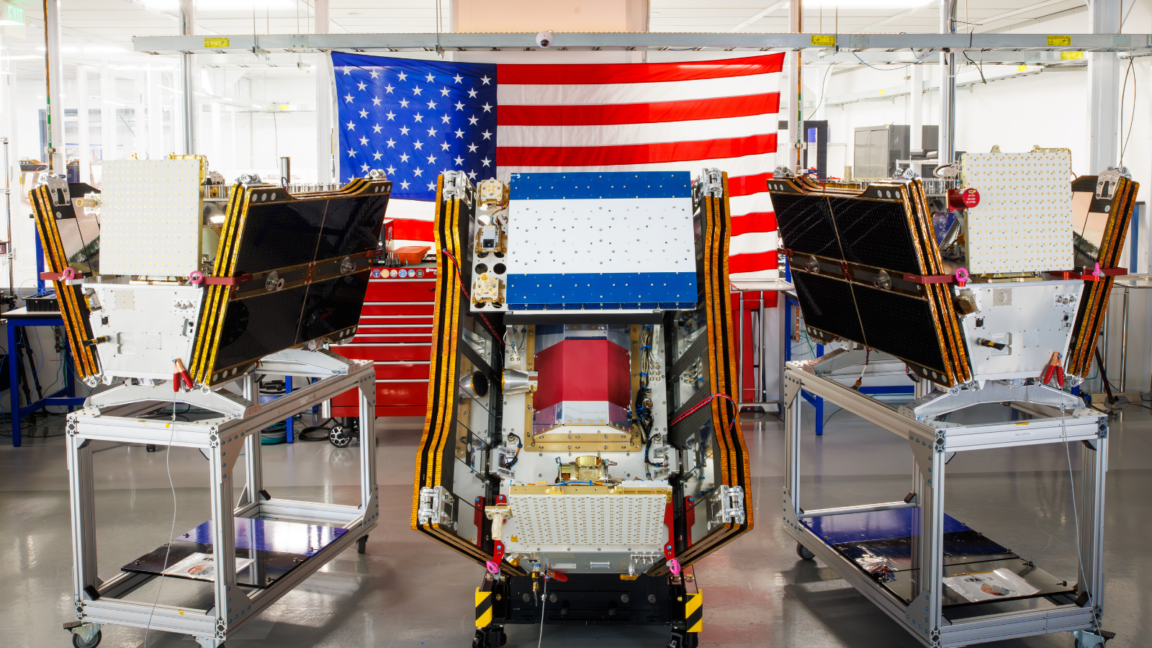
As smoke from hundreds of burning wildfires spread across Canada and the United States, the first three operational satellites in the Google-backed FireSat program successfully launched into orbit. The satellites will begin providing wildfire detection capable of spotting even small fires in the United States, Australia, and Europe before the end of the year.

The launch of the microsatellites aboard a SpaceX Falcon 9 rocket from Vandenberg Space Force Base in California on July 7, 2026 marks a transition to “initial operational capability” for the FireSat constellation managed by the nonprofit Earth Fire Alliance. After a three-month testing period, the three satellites will begin actively providing data to fire agencies while covering every fire-prone region on Earth at least twice per day.

FireSat represents the first satellite constellation purpose-built for detecting wildfires, including spotting smaller fires that other satellites may miss. The satellites were designed by California-based satellite manufacturer Muon Space and have received over $15 million from Google to support initial deployment. Other notable financial supporters include the Bezos Earth Fund that committed $26 million.

Read full article

Comments

© Muon Space

  •  

Google Vids si evolve con Gemini Omni: arrivano gli avatar “personali”

Google ha annunciato importanti novità per Google Vids, la piattaforma dedicata alla realizzazione di video inclusa nell’ecosistema Workspace, introducendo Gemini Omni e una nuova tipologia di avatar alimentati dall’AI. L’obiettivo è rendere la produzione di contenuti più semplice, divertente e maggiormente accessibile.

La funzionalità di maggior rilievo riguarda la possibilità di creare un alter ego digitale in grado di sostituire l’utente in qualsiasi video generato. Attraverso gli avatar personali, Google permette infatti di creare una versione digitale di sé stessi, che replica sia l’aspetto che la voce di una persona. Per ottenerla è sufficiente fornire un selfie e una breve registrazione vocale al sistema.


Lo Smartphone piccolo che va bene a tutti? Motorola Edge 50 Neo, compralo al miglior prezzo da Unieuro a 239 euro.

CLICCA QUI PER CONTINUARE A LEGGERE

  •  

San Francisco orders Apple, Google to remove nudify apps from app stores

This week, San Francisco’s attorney general, David Chiu, sent cease-and-desist letters, demanding that Apple and Google remove 13 so-called nudification apps from their app stores, Wired reported.

Nudification apps can make it trivially easy to transform ordinary photos of real people into explicit images. The harmful AI tools allow bad actors to remove clothing, change a person’s features, place them in sexualized positions, and swap victims’ faces onto other people’s naked bodies.

Chiu's letter warned that app stores were violating "California’s laws that prohibit supporting services that create deepfake pornography," Wired reported.

Read full article

Comments

© SOPA Images / Contributor | LightRocket

  •  

Intel, Google Cloud deepen AI partnership

Intel and Google Cloud broadened their multi-year strategic collaboration with plans to deploy Gemini Enterprise and Google Cloud infrastructure across the chipmaker’s global operations as part of a wider AI-driven transformation.

Under the expanded partnership, Intel will roll out Gemini-powered generative AI tools across engineering, supply chain and corporate functions, aiming to scale workforce capabilities through agentic workflows.

The hyperscaler’s infrastructure will also support Intel’s semiconductor development environment, with custom agentic workflows intended to speed up the chip design lifecycle and improve cross-functional execution.

Intel CIO Cindy Stoddard stated the collaboration gives employees a central hub to build and deploy agents through Gemini Enterprise, alongside elastic cloud infrastructure to scale silicon development, as part of the company’s push to move faster and more efficiently.

Karthik Narain, chief product and business officer at Google Cloud, described the partnership as an effort to pair Intel’s engineering expertise with agentic AI tools to create what he called an autonomous foundation for how the chipmaker designs, operates and scales its business.

The companies stated the deployment moves Intel beyond isolated AI pilot programmes. Through the Gemini Enterprise Agent Platform, Intel’s business units will be able to build and run tailored line-of-business agents aimed at automating core processes and speeding up data-driven decision-making.

Gemini’s reasoning capabilities will also power dedicated coding assistance and engineering automation tools designed to streamline software development pipelines and automate multi-step workflows.

Intel is separately piloting Google Cloud-powered tools for marketing and communications, including agents that can identify relevant subject matter experts, draft executive-ready messaging, and generate supporting content across communications channels.

On the infrastructure side, Intel is extending its on-premises compute capacity into Google Cloud’s C4 and N4 instances to support silicon development simulations and core engineering workloads, letting engineering teams run high-performance computing simulations concurrently to shorten chip development cycles.

The tie-up builds on a partnership which has deepened steadily this year. In April, Google committed to using multiple generations of Intel’s Xeon processors, including the 18A-manufactured Xeon 6, to support AI training and inference in its data centres, alongside a plan to co-develop custom infrastructure processing units.

The post Intel, Google Cloud deepen AI partnership appeared first on Mobile World Live.

  •  

Thousands of Google workers demand layoff protections amid AI boom in petition to CEO

The petition to Sundar Pichai, the CEO, included more than 4,500 signatures and included calls for buyout options

Google workers on Thursday delivered a petition calling for layoff protections as tech giants continue to slash their workforces while pouring billions into AI.

“Make no mistake: this is a company that is enjoying massive, unprecedented success,” Parul Koul, Google software engineer and Alphabet Workers Union president, said outside the company’s California headquarters after delivering the petition to the office of the CEO, Sundar Pichai’. Koul pointed to Google’s $4tn valuation, which has quadrupled over the last six years: “These layoffs and cuts are not difficult decisions, but simply profit being put over the people that make this company run.”

Continue reading...

© Photograph: Justin Sullivan/Getty Images

© Photograph: Justin Sullivan/Getty Images

© Photograph: Justin Sullivan/Getty Images

  •  

It's official: EU will force Google to share search data and open up AI on Android

Europe wasted no time using its landmark Digital Markets Act (DMA) to try to rein in Big Tech. Companies like Apple, Meta, and Google have faced steep fines and orders to modify their business practices since the law came into force in 2024. And the hits keep on coming for Big Tech in Europe. After several months of consideration, the European Commission has announced new DMA measures that will force Google to support interoperability and competition in the European Union, and Google is not happy about it.

The new "specification measures" cover two elements of Google's business: Android phones and search. Both changes could theoretically increase competition and give users more choices, but Google claims they will undermine privacy and security. But as a "gatekeeper" under the DMA, Google has no choice but to comply. As the European Commission points out in its announcement, these decisions are legally binding.

On Android, Google will have to open up access to competing AI platforms. Currently, Google's Gemini gets preferential access to the system. Gemini is preloaded on all Google-certified Android phones and can wake up in response to the "Hey Google" hot word. Google's AI also includes system and app automation features, screen content access, and more.

Read full article

Comments

© Getty Images | BeeBright

  •  

EC calls on Google to level up AI playing field

The European Commission (EC) ordered Google to ensure rival AI platforms can compete better with the company’s own services on Android and laid out data sharing requirements for its search engine.

The EC stated the measures fall under its Digital Markets Act and are the result of a six-month probe against the company to ensure compliance with the legislation.

In the field of AI, the EC noted competing AI assistants currently have only restricted access to key functions on the current Android OS. This means systems including OpenAI’s ChatGPT and Anthropic’s Claude “are not competing on an equal footing” with Google’s own services such as Gemini which have full access.

As a result, third party AI assistants are 60% less attractive to EU users who have an Android device, the EC stated.

The EC stated the measure means users would be able to activate their preferred AI assistant through voice commands.

Third-party users would also be able to employ AI assistants to perform actions in apps on their behalf.

The EC also included safeguards to ensure privacy, device integrity and security.

In total, it will open 11 features on Android to rival AI companies.

Google is also required to share data it collects from its search services with rivals including OpenAI, allowing “for the development and optimisation of third-party search engines”.

The EC stated the move would create a more level playing field with Google Search, although it will be allowed to assess whether rivals pose cybersecurity and data protection risks before opening data to them. The EC stated the measure provides “a fair formula to calculate the price of the shared data”.

Google is required to begin implementing the search measures by January 2027 and the changes to Android from July 2027.

The post EC calls on Google to level up AI playing field appeared first on Mobile World Live.

  •  

XPeng L03 ships Google Maps Auto SDK — a first for an APAC automaker

XPeng used the global launch of its new L03 in Munich to announce that the electric SUV coupe is the first vehicle from any Asia-Pacific automaker to ship with Google Maps’ Auto SDK built in.

The integration replaces XPeng’s overseas navigation stack with Google Maps data and, more importantly, feeds map data into its NGP and XPILOT ASSIST driver-assistance systems outside China.

  •  

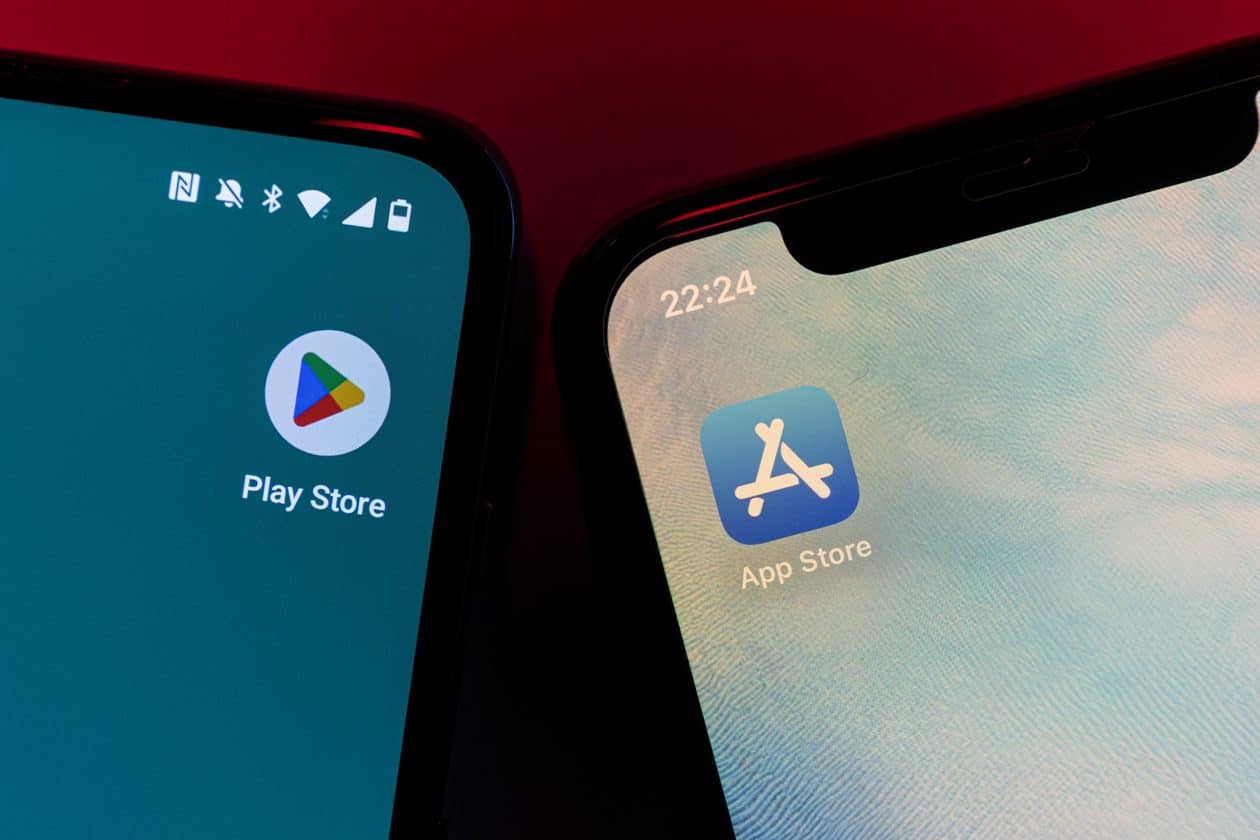
Apple and Google Hit With Demand to Pull AI 'Nudify' Apps [Updated]

A San Francisco City Attorney has sent cease-and-desist letters to Apple and Google demanding the removal of 13 AI "face-swap" apps that can generate nonconsensual nude images, according to WIRED.


The letters, sent on Thursday, target eight apps on the App Store and five on the Play Store that market themselves as face-swapping tools but are used to "undress" photos of real people. The attorney's office wants both companies to cut ties with the developers and stop taking a cut of in-app payments, arguing they are effectively "aiding and abetting" the sale of explicit deepfake images. The attorney called the practice "illegal, harmful, and completely unacceptable" and believes Apple and Google have collected millions in fees from the apps.

Both companies have developer rules against pornography and have removed batches of nudify apps in the past after being flagged by researchers. A Google spokesperson told WIRED that the company has deleted "hundreds" of apps with nudifying features for policy violations, including the five named in the letters. In June, it emerged that Apple had already tightened its ‌App Store‌ guideline language on developer responsibility for pornographic content.

Update: Apple told MacRumors that it takes reports of apps against its guidelines seriously. Apple applies App Review Guidelines to all developers, which include specific provisions to prohibit overtly sexual or pornographic content. As such, "nudificiation" apps are against its guidelines and the company has proactively rejected and removed many such apps, including when they have been flagged by users.

The App Store was designed to be a safe and trusted place for users, and we have always strictly prohibited apps designed to generate, distribute, or consume pornography. "Nudification" apps are against our App Review Guidelines and we have proactively rejected many of these apps and removed many others, including when users have flagged them via our reporting tools. We have removed three of the apps in question and are in the process of terminating their developer accounts from our program. We are in contact with four others that need to address policy violations or risk being removed as well.


Users can go to reportaproblem.apple.com to report illegal, offensive, or abusive content, as well as scam or fraud on the ‌App Store‌.
Tags: Google, Wired

This article, "Apple and Google Hit With Demand to Pull AI 'Nudify' Apps [Updated]" first appeared on MacRumors.com

Discuss this article in our forums

  •  

EU Orders Google to Give Rival AI Apps the Same Android Access as Gemini

The European Commission today formally ordered Google to give third-party AI services the same access to Android device features that Gemini has. Europe's Digital Markets Act requires software makers like Apple and Google to grant equal interoperability to third-party apps and services, and the EC is enforcing it.


DMA interoperability rules are why Siri AI won't be available in the European Union when iOS 27 launches. While Apple tried to work out an agreement with regulators before launching ‌Siri‌ AI in Europe, Google did the opposite. Instead of asking, Google just launched Gemini integration on Android and opted to deal with the consequences afterward. Google's strategy gives Android users in Europe full Gemini access while it works on compliance with the DMA.

The European Commission is giving Google a full year to implement changes that will meet the Digital Markets Act requirements, and that's before any legal appeals Google might make.

The European Commission is making many of the same demands of Google that it made of Apple. Google must allow AI apps to access 11 features, such as:

  • AI services must be accessible through voice commands like "Hey Google" or through access points like the home button or another activation button.

  • AI services must be able to complete actions in and across apps, including completing long-running tasks in the background.

  • Google must allow AI services to access context from apps and device sensors so AI can offer proactive services and anticipate user needs.

  • Google has to give AI apps sufficient hardware and software resources, including access to its on-device AI models to execute tasks.


Google is required to implement the majority of the European Commission's changes by August 1, 2027.

Shortly after announcing ‌Siri‌ AI, Apple said EU regulators would not accept any of its proposed solutions to introduce the feature, and refused to engage on options that "preserve privacy and security." Apple wanted to use a Trusted System Agent that would allow third-party virtual assistants to safely access the same device capabilities as ‌Siri‌ AI.

Apple said the Digital Markets Act would require it to give any AI system "nearly unlimited access to a user's device," along with the ability to act on that information autonomously.

The European Commission claims Apple was "unable to develop interoperability solutions that meet essential EU privacy and security standards" and instead asked for a blanket exemption from the interoperability requirements, which the EC did not grant.

In response to the EC's mandate, Google said the requirements "risk undermining vital privacy and security guardrails for millions of Europeans." Google hasn't given information on its next steps, but it says it plans to "continue advocating for a balanced approach that protects privacy and security while supporting market goals."
This article, "EU Orders Google to Give Rival AI Apps the Same Android Access as Gemini" first appeared on MacRumors.com

Discuss this article in our forums

  •  

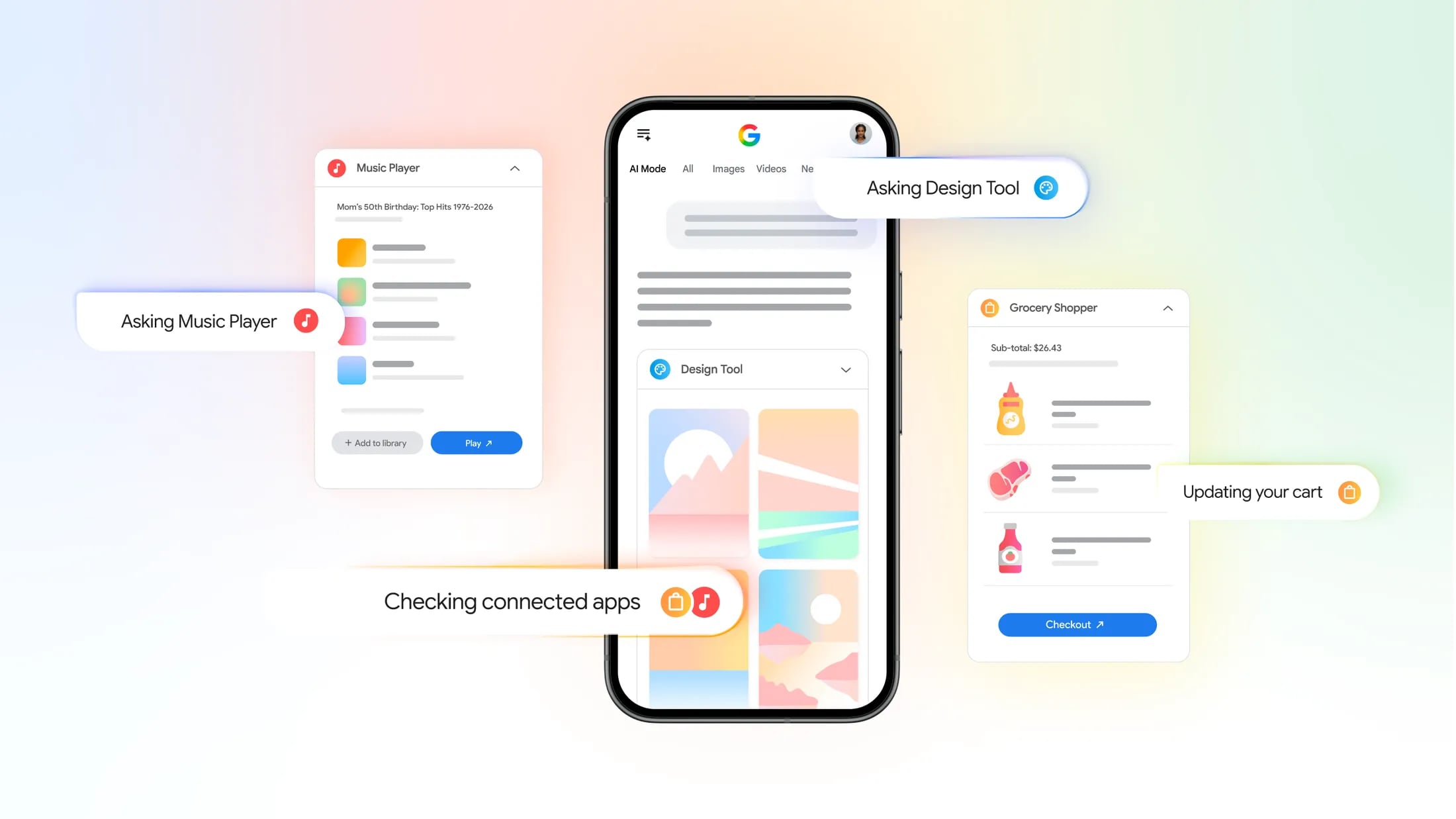
Google Search Now Connects to Instacart, Canva and YouTube Music

Google is expanding AI Mode in Search, allowing users to connect apps to improve search results and "get more done."


Instacart, YouTube Music, and Canva can be connected, and Google explains how the integrations can be useful:

  • Instacart - If you're using AI Mode to help you plan a grocery list, ingredients can be added right to an Instacart shopping cart for quick ordering.

  • Canva - If you're creating a flyer, you can get template options from Canva.

  • YouTube Music - You can use AI Mode to curate a playlist and save it to YouTube Music.


Instacart, Canva, and YouTube Music are the only apps that can be connected right now, but Google may add more in the future. Connected apps were previously available in Gemini, but the feature set is now being expanded to Search.

Connecting apps is limited to AI Mode in the United States, in English. Once an app is connected, users are able to access new features when making a request in Google Search AI Mode. Connected apps can be used in Search both on the desktop and through the Google Search iOS app.

Google suggests users turn on history and personalized recommendations to improve the Google Search experience. Google says it uses people's interactions with Search and the new AI features to develop and improve generative AI experiences.
Tag: Google

This article, "Google Search Now Connects to Instacart, Canva and YouTube Music" first appeared on MacRumors.com

Discuss this article in our forums

  •  
❌