❌

Reading view

Astronomers Discover and Directly Image Third Planet in Beta Pictoris System

This artist’s concept shows the Beta Pictoris system with the discovered giant exoplanet Beta Pictoris d at the right. Image credit: NASA / ESA / CSA / STScI / Ralf Crawford, STScI.

Named Beta Pictoris d, the newly-discovered world is 100 times fainter than Beta Pictoris b -- the first planet discovered around the A5-type star Beta Pictoris -- and is among the lightest exoplanets ever to be imaged from the ground.

The post Astronomers Discover and Directly Image Third Planet in Beta Pictoris System appeared first on Sci.News: Breaking Science News.

  •  

New Crested Dinosaur Species Identified in Canada

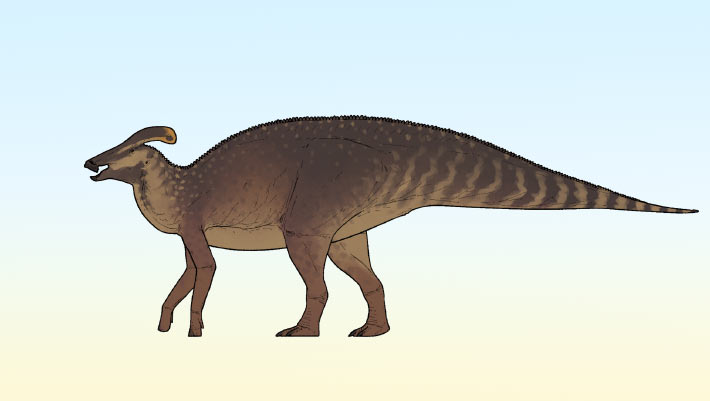
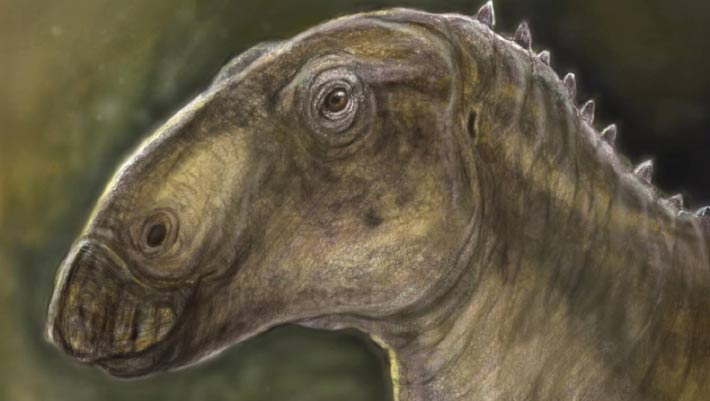
Life reconstruction of Plesiolophus warnerensis. Image credit: Connor Ashbridge / CC BY 4.0.

A new genus and species of lambeosaurine hadrosaurid dinosaur has been identified in southern Alberta, Canada, dating back 77 million years to the Campanian age of the Cretaceous period.

The post New Crested Dinosaur Species Identified in Canada appeared first on Sci.News: Breaking Science News.

  •  

Paleontologists Discover New Species of Titanosaur in Uruguay

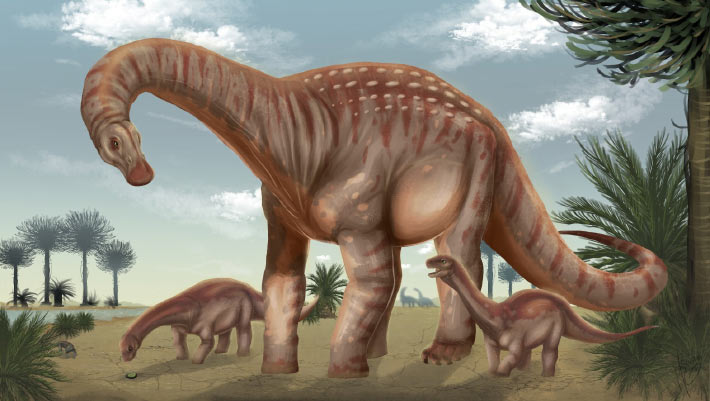
Mesetasaurus protector. Image credit: Merlina Ramírez.

Paleontologists in Uruguay have identified a new species of aeolosaurine titanosaur from a pair of remarkably well-preserved tailbones unearthed in the 1980s near the Uruguay River.

The post Paleontologists Discover New Species of Titanosaur in Uruguay appeared first on Sci.News: Breaking Science News.

  •  

Astronomers Detect Sugar in Interstellar Space for First Time

This composite image of the Milky Way’s central region shows the location of the molecular cloud G+0.693-0.027. Image credit: Ashley Barnes / Izaskun Jiménez-Serra / Juan García de la Concepción.

Using the Yebes 40-m and IRAM 30-m radio telescopes, astronomers have discovered erythrulose, a four-carbon sugar commonly found in raspberries and sunless tanning cosmetics, in the molecular cloud G+0.693-0.027.

The post Astronomers Detect Sugar in Interstellar Space for First Time appeared first on Sci.News: Breaking Science News.

  •  

Was Odysseus’ Ithaca Never an Island? Scholars Challenge Centuries-Old Assumption

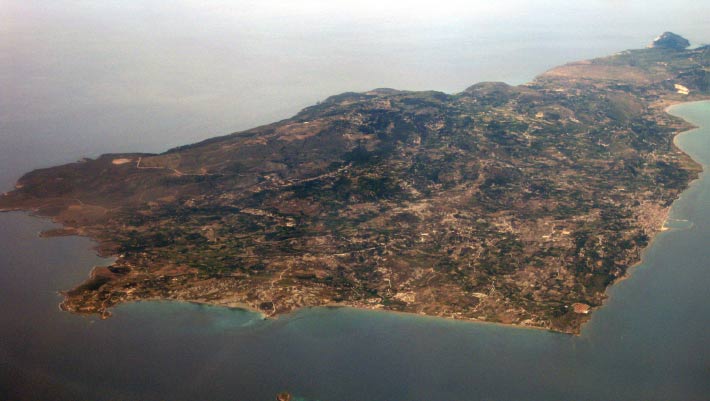
Paliki peninsula on the island of Kefalonia, Ionian Islands, Greece. Image credit: Christos Vittoratos / CC BY-SA 3.0.

For as long as readers have pored over Homer’s Odyssey they have pictured Ithaca, the homeland Odysseus fights for ten years to reach, as an island unto itself.

The post Was Odysseus’ Ithaca Never an Island? Scholars Challenge Centuries-Old Assumption appeared first on Sci.News: Breaking Science News.

  •  

Tiny Triassic Reptile Sheds Light on Early Lizard Evolution

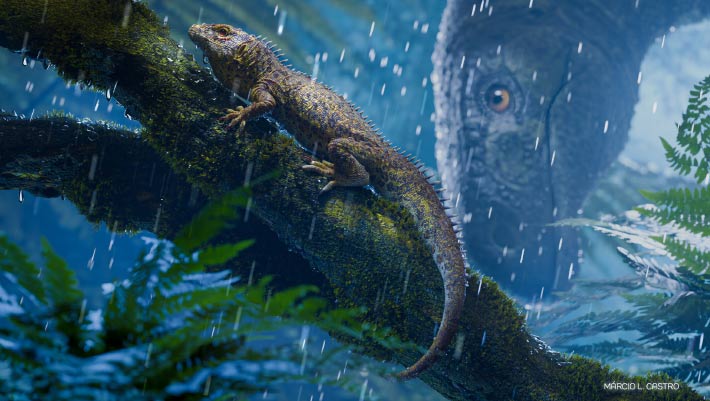
A landscape from the Late Triassic of southern Brazil showing Cargninia enigmatica being observed by the sauropodomorph dinosaur Macrocollum itaquii. Image credit: Marcio L. Castro.

Today, lepidosaurs -- the reptile group that includes lizards, snakes and New Zealand’s tuatara -- are among the most diverse vertebrates on Earth, but their earliest evolutionary history remains poorly understood.

The post Tiny Triassic Reptile Sheds Light on Early Lizard Evolution appeared first on Sci.News: Breaking Science News.

  •  

New Species of Long-Necked Dinosaur Identified in Thailand

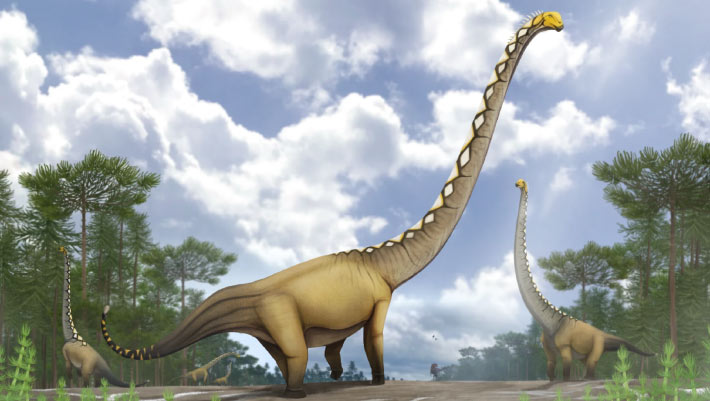
Life reconstruction of a herd of five individuals of Uragasaurus kalasinensis inhabiting a Late Jurassic forest in Thailand, accompanied by a pair of rhamphorhynchoid pterosaurs and a metriacanthosaurid theropod. Image credit: Pakorn Chotchaiyaporn.

Paleontologists working in northeastern Thailand have identified a new species of mamenchisaurid sauropod dinosaur, offering fresh evidence that a group of giant sauropods once thought to be almost exclusively East Asian also roamed mainland Southeast Asia.

The post New Species of Long-Necked Dinosaur Identified in Thailand appeared first on Sci.News: Breaking Science News.

  •  

New Feathered Dinosaur from China Had Peacock-Like Tail

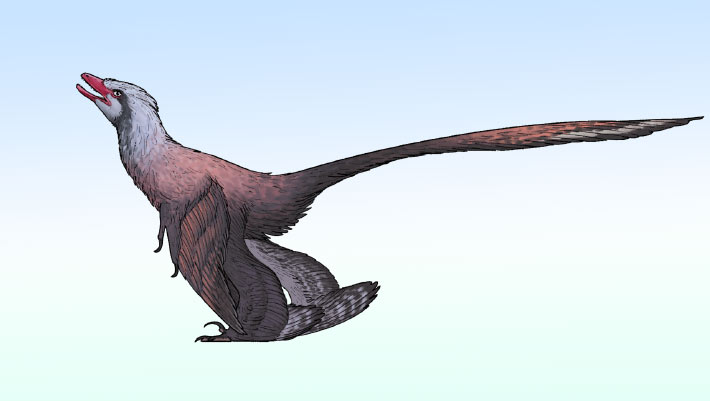
Changzhousaurus sinensis. Image credit: Connor Ashbridge / CC BY 4.0.

A new genus and species of four-winged pennaraptoran dinosaur from the Early Cretaceous of northern China is adding another twist to the story of how birds evolved from their dinosaur ancestors.

The post New Feathered Dinosaur from China Had Peacock-Like Tail appeared first on Sci.News: Breaking Science News.

  •  

Interstellar Comet 3I/ATLAS Formed Up To 12 Billion Years Ago, New Observations Suggest

Hubble captured this image of 3I/ATLAS on July 21, 2025, when the comet was 446 million km (277 million miles) from Earth. Image credit: NASA / ESA / David Jewitt, UCLA / Joseph DePasquale, STScI.

The interstellar comet 3I/ATLAS carries a chemical fingerprint unlike anything in our Solar System, and it may have formed 10 to 12 billion years ago, before our Sun even existed, according to two papers published in the journal Nature.

The post Interstellar Comet 3I/ATLAS Formed Up To 12 Billion Years Ago, New Observations Suggest appeared first on Sci.News: Breaking Science News.

  •  

CERN Physicists Discover Third and Final Member of Doubly Charmed Baryon Family

An artist’s impression of the doubly charmed Ωcc⁺ baryon. Image credit: Daniel Dominguez / CERN.

Physicists with LHCb Collaboration at CERN’s Large Hadron Collider (LHC) have detected the elusive Ωcc⁺ baryon, a particle containing two charm quarks and one strange quark, completing a long-sought family of doubly charmed baryons first predicted over half a century ago.

The post CERN Physicists Discover Third and Final Member of Doubly Charmed Baryon Family appeared first on Sci.News: Breaking Science News.

  •  

Consciousness is Not Exclusive to Earth’s Biology, Philosophers Argue

Levin et al suggest that we could have more in common with our extraterrestrial neighbors than initially thought. Image credit: Fernando Ribas.

University of California, Riverside’s Professor Eric Schwitzgebel and University of Lisbon postdoctoral researcher Jeremy Pober argue that consciousness is substrate flexible, meaning it can arise not just in the biological tissue we find on Earth, but potentially in radically different physical materials found elsewhere in the cosmos.

The post Consciousness is Not Exclusive to Earth’s Biology, Philosophers Argue appeared first on Sci.News: Breaking Science News.

  •  

New Duck-Billed Dinosaur Unearthed in Romania

Kryptohadros kallaiae. Image credit: Tibor Pecsics.

An international team of paleontologists from Romania, Hungary and Italy has identified a new genus and species of herbivorous, duck-billed dinosaur from an incomplete skeleton unearthed in the Hațeg Basin, a bowl-shaped depression in the Carpathians of present-day Romania.

The post New Duck-Billed Dinosaur Unearthed in Romania appeared first on Sci.News: Breaking Science News.

  •  

New Species of Walking Shark Discovered off Papua New Guinea

Hemiscyllium dudgeonae, male paratype, Nubwageta, Milne Bay province, Papua New Guinea. Image credit: M.V. Erdmann.

Marine biologists have identified a new species of the shark genus Hemiscyllium in the waters of eastern Papua New Guinea, expanding a remarkable group of reef-dwelling sharks known for using their four fins to ‘walk’ across the seafloor.

The post New Species of Walking Shark Discovered off Papua New Guinea appeared first on Sci.News: Breaking Science News.

  •  

Fossils from Chinese Cave Fill Crucial Gap in History of Gigantopithecus blacki

An artist’s impression of a group of Gigantopithecus blacki within a forest in southern China. Image credit: Garcia / Joannes-Boyau, Southern Cross University.

Deep inside a limestone cave in southern China, paleontologists have uncovered an assemblage of thirteen fossilized teeth belonging to Gigantopithecus blacki, the largest primate species ever known to have lived.

The post Fossils from Chinese Cave Fill Crucial Gap in History of Gigantopithecus blacki appeared first on Sci.News: Breaking Science News.

  •  

Delhi Hits 43.5°C as Urban Heat Islands Intensify, Thames Microplastics Study Launched While Dog Disturbances Threaten Record Little Tern Breeding Season — Today’s Environmental Briefing for Mon, Jun 15 2026

Thermal imaging camera showing extreme heat radiating from Delhi city surfaces during record temperatures

Across the stories today, a common thread emerges around the gap between scientific urgency and practical action — from coral reefs that might survive climate change to political systems struggling to keep pace with environmental reality.

The day’s coverage points to growing momentum around citizen-led conservation, revealing how communities are stepping in where institutions fall short. In Britain, volunteers are using remote cameras to protect red squirrels while citizen scientists help restore bog insect populations through coordinated community efforts. Meanwhile, American homeowners are banding together in group buying programs, saving thousands of dollars on heat pumps while collectively advancing climate solutions one neighborhood at a time.

Yet this grassroots energy exists alongside troubling institutional retreats. The UK government appears ready to scale back electric vehicle targets after industry pushback, while critical monitoring systems for Atlantic ocean currents — which could collapse ten times faster than previously predicted — may lose funding just when we need them most. It’s a reminder that progress and pressure often arrive together, creating political tensions that can undermine long-term environmental goals.

The human cost of these delays becomes starkly visible in places like Delhi, where thermal imaging revealed that 43.5°C air temperatures translated into furnace-like conditions on urban surfaces, or in the Marshall Islands, where researchers race to identify “super reefs” that might survive rising ocean temperatures. Behind the numbers are real communities adapting in real time, from Thai rubber farmers navigating new EU deforestation rules to climate-displaced people facing growing barriers to safety as extreme weather events multiply.

Perhaps most striking is how wildlife serves as both victim and indicator of these broader pressures. Little terns face their most challenging breeding season yet due to dog disturbances, while a single black-headed gull spotted in Australia sends bird enthusiasts flying across the continent — a reminder of how rare the unexpected has become. Meanwhile, Mexican long-tongued bats continue their nightly dance through agave flowers, unknowingly keeping the tequila industry alive through pollination, even as global wildlife trade creates what scientists call “pandemic roulette” by moving billions of animals across unnatural boundaries.

The most promising thread runs through stories of restoration and discovery. A former banker is bringing back Australia’s lost Big Scrub rainforest, while Amazon deforestation drops to nearly decade-low levels, showing environmental progress is possible when political will aligns with practical action. Century-old Antarctic research voyages are revealing early clues to El Niño patterns, and scientists have identified hidden pollutants driving 15 percent of global warming — knowledge that could reshape climate policy.

Indigenous scholar Tyson Yunkaporta’s argument that “false narratives drive environmental destruction” feels particularly relevant amid today’s stories. From conservation groups rejecting shark culling calls in favor of drone technology to the controversy over displaying an African elephant at a political convention, the battle over environmental stories — which ones we tell, which ones we fund, which ones we act upon — shapes outcomes as much as any scientific discovery.

As the week unfolds, all eyes will be on whether these citizen-led conservation efforts can scale fast enough to compensate for institutional hesitation, and whether the gap between scientific understanding and political action will narrow or continue to widen in the face of accelerating environmental change.

The post Delhi Hits 43.5°C as Urban Heat Islands Intensify, Thames Microplastics Study Launched While Dog Disturbances Threaten Record Little Tern Breeding Season — Today’s Environmental Briefing for Mon, Jun 15 2026 first appeared on EnviroLink Network.

  •  

Hidden Pollutants Drive 15 Percent of Global Warming, Wildlife Trade Creates ‘Pandemic Roulette’ With Billions of Animals — Today’s Environmental Briefing for Sun, Jun 14 2026

Scientists analyzing data on overlooked pollutants contributing to global climate change

Across the stories today, a common thread emerges: the gap between what we know and what we’re able to protect is narrowing, but not fast enough. From hidden pollutants driving 15 percent of global warming to fungal networks stretching nearly a billion times the distance to the sun, science continues revealing the intricate systems that sustain life on Earth—even as political and economic forces test our commitment to preserving them.

The day’s coverage points to growing momentum around conservation breakthroughs. In the Marshall Islands, researchers hunt for “super reefs” that could survive rising ocean temperatures, while Brazil celebrates Amazon deforestation dropping to nearly decade-low levels. Young Stanley the giraffe joins breeding programs in Wiltshire, osprey chicks hatch successfully in North Wales, and Australia’s PlantBank emerges as a global leader in seed conservation. These aren’t just feel-good stories—they represent systematic efforts to build resilience into ecosystems under unprecedented pressure.

Yet the challenges are accelerating too. A century of Antarctic research data now helps scientists track El Niño patterns, but current observations show Antarctica missing a France-sized area of sea ice while winter temperatures soar 20 degrees above normal. The Hoover Dam faces massive power cuts as Lake Mead approaches critical lows, and millions of climate-displaced people find virtually no legal pathway to safety in the United States. It’s a reminder that progress and pressure often arrive together.

Perhaps most striking is how these environmental shifts intersect with human communities. Behind the numbers are real communities adapting in real time—from families near the massive illegal waste dump behind a UK primary school that’s become an election flashpoint, to Florida volunteers mounting dramatic rescue operations for endangered sea turtles. When botanist Beronda Montgomery explores connections between trees and Black American history in her new memoir, she’s mapping how environmental and social justice have always been intertwined.

The global wildlife trade, operating like “pandemic roulette” as it moves billions of animals across continents, exemplifies how our interconnected world amplifies both risks and opportunities. Commercial satellite launches threaten the night sky that has guided humanity for millennia, while SpaceX prepares for a massive public offering. Each technological leap forward carries environmental trade-offs that ripple across systems we’re still learning to understand.

China’s story encapsulates these tensions perfectly: achieving a historic drop in power sector emissions for the first time in a decade, yet simultaneously surging coal power that threatens to reverse those gains. Australia faces a similar paradox, preparing to lead international climate negotiations even as climate denial gains political ground domestically.

What emerges from today’s reporting is a picture of accelerating change on multiple fronts. Scientists are racing to identify heat-resistant corals and document rare butterfly discoveries in Surrey, while bird enthusiasts fly across Australia for a single gull sighting—small acts of attention that collectively map our changing world.

As the week unfolds, all eyes will be on how these parallel tracks—scientific discovery, conservation innovation, political resistance, and community adaptation—continue to intersect. The federal judge ruling against the Trump administration’s cancellation of environmental justice grants signals that legal frameworks remain crucial battlegrounds. But the deeper story may be in the fungal networks beneath our feet: vast, interconnected systems working largely unseen to sustain life, reminding us that resilience often operates at scales both smaller and larger than we imagine.

The post Hidden Pollutants Drive 15 Percent of Global Warming, Wildlife Trade Creates ‘Pandemic Roulette’ With Billions of Animals — Today’s Environmental Briefing for Sun, Jun 14 2026 first appeared on EnviroLink Network.

  •  

China’s Coal Surge Threatens Historic Emissions Drop, Hoover Dam Faces Massive Power Cut as Lake Mead Hits Critical Low — Today’s Environmental Briefing for Sat, Jun 13 2026

Hoover Dam hydroelectric facility with dramatically lowered water levels visible at Lake Mead

**

Across the stories today, a common thread emerges: the tension between revelation and rescue—moments when new understanding drives urgent action, even as time runs short.

Beneath our feet, scientists have mapped fungal networks stretching nearly a billion times the distance to the sun, revealing an underground web of connection that dwarfs anything visible above ground. It’s a reminder that the natural world operates on scales both microscopic and cosmic, with systems we’re only beginning to understand. This same spirit of discovery appears in unexpected places—from the ghostly earthshine illuminating the moon’s dark side to the arrival of a tropical western reef heron in Wales, likely pushed northward by changing climate patterns.

The day’s coverage points to growing momentum around what happens when scientific insight meets conservation urgency. In Mozambique, nine female white rhinos completed their journey to establish the country’s first viable breeding population in generations—a decade-long effort finally bearing fruit. Meanwhile, Australian researchers at PlantBank work like modern-day ark builders, preserving seeds before species disappear forever. On Palau’s Ulong Island, the simple act of removing invasive rats triggered rapid ecological recovery across both land and marine environments, challenging assumptions about how long nature needs to heal.

Yet revelations don’t always bring good news. China’s power sector emissions fell for the first time in a decade, a historic milestone, but a coal surge threatens to reverse that progress. Trees may store less carbon than scientists hoped, according to new research examining growth patterns across 137 forest sites. And Antarctica is missing sea ice equivalent to France’s size, with winter temperatures soaring 20°C above normal—numbers that feel abstract until you consider their global implications.

It’s a reminder that progress and pressure often arrive together. Lake Mead approaches the critical threshold that will slash Hoover Dam’s electricity production, while thousands of marine animals die in fishing nets annually through bycatch. For the 58-year-old Kenyan fisherman Mohamed Mwazigona, returning to shore with just 2 kilograms of fish, these aren’t statistics—they’re the reality of dwindling catches that threaten coastal livelihoods.

Behind the numbers are real communities adapting in real time. Eight volunteers used ropes and pulleys to rescue a 172-pound loggerhead turtle named Bowser from a Florida pier—the kind of hands-on conservation that makes the difference between survival and loss. In Albania, protesters dubbed the “Flamingo Revolution” emerged after bulldozers illegally destroyed protected wetlands for a luxury resort, showing how environmental destruction can galvanize public resistance.

The stories also reveal how legal frameworks struggle to keep pace with environmental challenges. A federal judge ruled the Trump administration’s cancellation of environmental justice grants illegal, while Australia’s climate chief outlined plans to transform the country from fossil fuel exporter to renewable energy leader. Meanwhile, environmental laws were waived to enable border wall construction through Big Bend National Park, illustrating how political priorities can override conservation concerns.

What emerges is a picture of a planet under pressure, but also of human ingenuity rising to meet unprecedented challenges. As commercial satellites threaten the night sky that has guided humanity for millennia, conservationists celebrate osprey chicks hatching in Wales and sengi pups born in captivity. Progress isn’t linear, and solutions often come from unexpected directions—underground fungal networks, community rescue efforts, and the patient work of seed preservation.

As the week unfolds, all eyes will be on how these parallel stories of discovery and rescue continue to intersect, shaping our understanding of what’s possible when knowledge meets action.

The post China’s Coal Surge Threatens Historic Emissions Drop, Hoover Dam Faces Massive Power Cut as Lake Mead Hits Critical Low — Today’s Environmental Briefing for Sat, Jun 13 2026 first appeared on EnviroLink Network.

  •  

El Niño Officially Begins as Solar Power Surpasses Coal, SpaceX Eyes Historic IPO — Today’s Environmental Briefing for Fri, Jun 12 2026

Satellite view of Pacific Ocean showing temperature patterns indicating El Niño weather phenomenon

**

Across the stories today, a common thread emerges: the planet is sending signals, and communities are finally learning to listen—sometimes by choice, sometimes by necessity.

The day’s most prominent signal comes from the Pacific, where scientists have confirmed the arrival of a powerful El Niño that could rank among the century’s strongest climate events. This naturally occurring phenomenon, which emerges every few years to reshape weather patterns globally, arrives at a moment when human communities are already stretching to adapt to climate disruption. For families from Florida to California already spending an extra $400 to $900 annually on climate-related costs—rising to over $1,300 in the hardest-hit areas—the prospect of intensified extreme weather represents more than meteorological curiosity. It’s a reminder that progress and pressure often arrive together.

Yet the day’s coverage also points to growing momentum around solutions that seemed impossible just years ago. Solar power has quietly crossed a historic threshold, generating more electricity than coal in the United States for the first time ever—12.8% versus coal’s 12.2% in May alone. Meanwhile, engineers in Barcelona have finally realized Antoni Gaudí’s sustainable architecture vision at the Sagrada Familia, using modern technology to complete designs that were ahead of their time by more than a century. These breakthroughs suggest that patient innovation can eventually bridge the gap between ambitious vision and practical reality.

The tension between environmental protection and human needs surfaces repeatedly across today’s stories, revealing communities grappling with complex tradeoffs. In Queens, residents debate whether an abandoned railway should become green space or renewed transit infrastructure. Nebraska towns that fiercely rejected wind and solar projects are welcoming nuclear power plants. Even Britain found time to celebrate, with the peacock butterfly claiming the crown in the nation’s first-ever favorite species poll—a small but significant reminder that public engagement with nature remains strong.

Behind the numbers are real communities adapting in real time. In London, new research shows that clean air zones have measurably reduced emergency hospital visits, translating policy into tangible health benefits. But the challenges run deep: in Alabama, a community that lacks basic sanitation infrastructure now faces a proposed data center that would strain resources further, while in Ecuador’s Amazon, an Indigenous community surrounded by two rivers cannot access clean drinking water due to mining pollution.

The natural world continues revealing both its resilience and vulnerability. Scientists captured the first-ever footage of goblin sharks in their deep-sea habitat, while researchers documented how elephant loss triggers immediate dung beetle extinctions in Kenya—the first direct evidence of coextinction in action. Perhaps most remarkably, new research has mapped the underground fungal networks that span 110 quadrillion kilometers worldwide, moving billions of tons of carbon in an invisible web beneath our feet.

These discoveries underscore how much we’re still learning about the systems that sustain life on Earth, even as we’re rapidly changing them. From pharmaceutical pollution in East African waters to the transformation of Miami’s Biscayne Bay into saltier, more acidic habitat threatening endangered sharks, the impacts of human activity continue cascading through ecosystems in ways we’re only beginning to understand.

As these stories unfold, they reveal a world where environmental challenges and solutions are increasingly inseparable from questions of justice, economics, and community resilience. The coming months will test whether the momentum behind renewable energy and conservation can match the scale of changes already underway.

The post El Niño Officially Begins as Solar Power Surpasses Coal, SpaceX Eyes Historic IPO — Today’s Environmental Briefing for Fri, Jun 12 2026 first appeared on EnviroLink Network.

  •  

New Species of Ancient Bear-Dog Identified in Spain

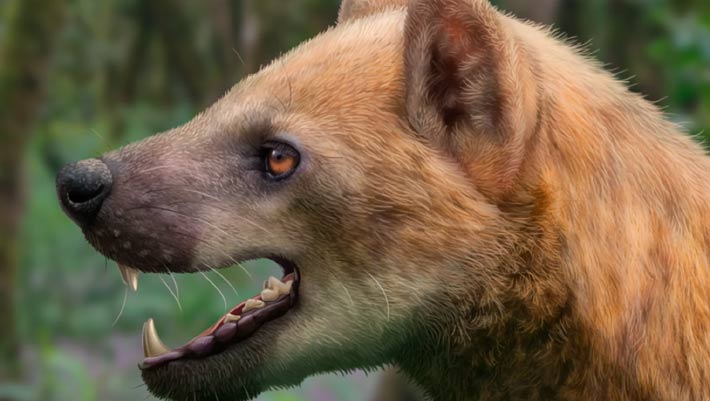
Paludocyon moyasolai. Image credit: Jesús Gamarra.

Paleontologists have identified a previously unknown species of amphicyonid -- the extinct family of carnivorous mammals popularly known as bear-dogs -- from two specimens unearthed at a rich fossil site in the Vallès-Penedès Basin near Barcelona, Spain.

The post New Species of Ancient Bear-Dog Identified in Spain appeared first on Sci.News: Breaking Science News.

  •  
❌