 Login

New Spider from Australia Turns Silk Into a Catapult Specifically to Hunt One Dangerous Ant
 A yet unnamed Australian spider weaponizes silk to hunt a single ant species.
 A yet unnamed Australian spider weaponizes silk to hunt a single ant species.
 It's not physics, it's biology.
 Researchers investigate how quantum time flow can be stretched, blurred, or even reversed. What if the direction of time isn’t as fixed as it seems? While our everyday experience tells us that time moves relentlessly forward, the microscopic laws governing quantum systems are far less restrictive. In fact, many of the equations of quantum mechanics [...]
 A quantum “mini universe” made from ultracold atoms revealed that time can emerge from entropy changes inside a system, offering experimental insight into one of physics’ deepest mysteries. A scientist at the University of Birmingham has created a “mini universe” that could help answer one of science’s most fundamental questions: What is time? In a [...]
Quantum computing news usually picks up near the end of the year, as companies try to provide evidence that they are hitting benchmarks on time. However, there have been interesting announcements as the summer starts this year, from incremental progress to attention-grabbing promises. As we did earlier this month, Ars has a rundown of some of the most significant announcements.
These include a promise of useful, error-corrected quantum computing as soon as 2028, details on an updated trapped ion processor, and a case in which claims of quantum supremacy have been cut back a bit thanks to advances in more traditional algorithms.
Many people in the field expect that useful quantum computers are still about five to 10 years away. While there may be a few useful algorithms that can be run on existing error-prone hardware, almost all of the interesting problems that quantum computing can be applied to will require some form of error correction enabled by linking a small collection of hardware qubits together into what's called a logical qubit. Logical qubits include the redundant storage of information along with neighboring qubits that can be measured to determine when errors occur and how to fix them.
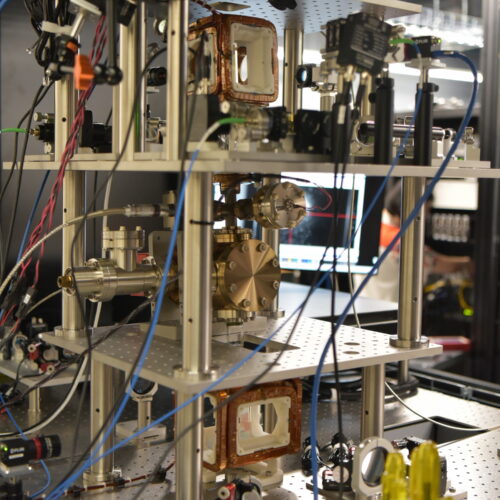
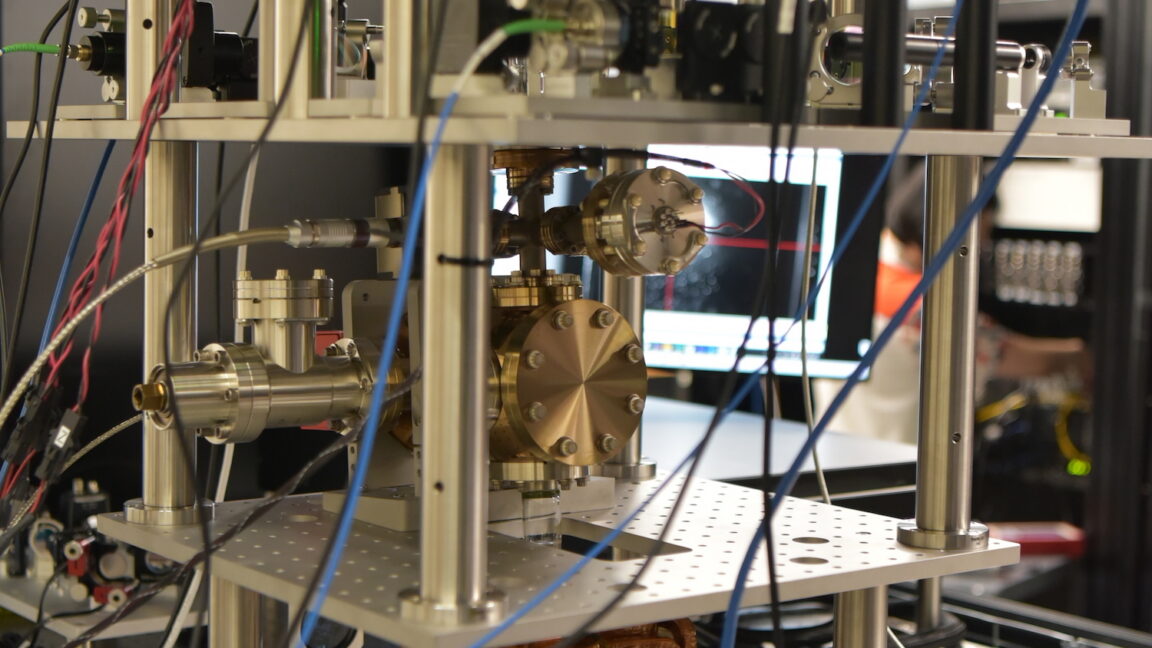
© QuEra
Quantum computing news usually picks up near the end of the year, as companies try to provide evidence that they are hitting benchmarks on time. However, there have been interesting announcements as the summer starts this year, from incremental progress to attention-grabbing promises. As we did earlier this month, Ars has a rundown of some of the most significant announcements.
These include a promise of useful, error-corrected quantum computing as soon as 2028, details on an updated trapped ion processor, and a case in which claims of quantum supremacy have been cut back a bit thanks to advances in more traditional algorithms.
Many people in the field expect that useful quantum computers are still about five to 10 years away. While there may be a few useful algorithms that can be run on existing error-prone hardware, almost all of the interesting problems that quantum computing can be applied to will require some form of error correction enabled by linking a small collection of hardware qubits together into what's called a logical qubit. Logical qubits include the redundant storage of information along with neighboring qubits that can be measured to determine when errors occur and how to fix them.
© QuEra
 Bird flocks, bacterial swarms, and even crowds move according to interaction rules that appear to break one of physics’ most fundamental principles: Newton’s law of action and reaction. Birds can see much of what is happening around them, but when flying in a flock, they respond only to birds beside them or ahead of them. [...]
 Oxford physicists have created an unconventional class of quantum superpositions from highly nonclassical states. Researchers at the University of Oxford have created a new class of quantum superpositions, including Schrödinger’s cat-like states, using building blocks that are themselves strongly nonclassical. The advance could support future quantum computing architectures based on more complex systems than conventional [...]
With dozens of companies, from small startups to tech giants, pursuing quantum computing, there's a steady flow of results as they try to find a path to utility. We typically focus on new technologies and major landmarks, which can obscure the fact that any big success will inevitably have been built on a lot of incremental progress.
The past few weeks have seen two companies release progress reports on how they're trying to get the technologies closer to general use. None of these represents a major breakthrough, but all are absolutely necessary for the technology to advance. The idea here is to convey the hard work required to move us closer to something useful.
Microsoft is one of the few companies working on topological qubits, based on the distinct physics that occurs when particles are confined. Microsoft's system relies on a thin superconducting wire placed on top of a semiconductor. In superconductors, groups of two electrons form Cooper pairs. But if the wire contains an odd number of conducting electrons—meaning there's a single unpaired electron—it will end up delocalized to both ends of the wire. (Because quantum mechanics is weird.)
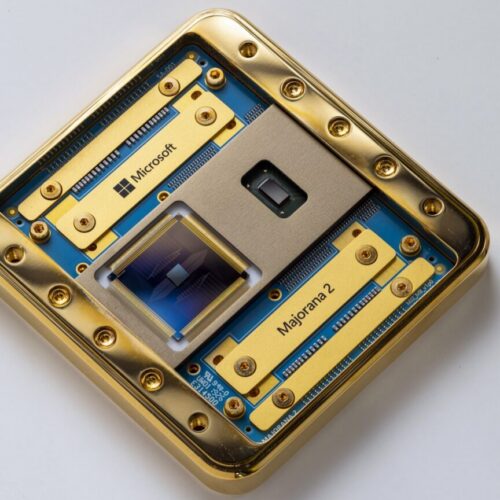

© John Brecher for Microsoft
 A new theoretical study suggests that black holes may never completely disappear, potentially offering a way to resolve the long-standing black hole information paradox. One of the biggest unsolved problems in modern physics, known as the “black hole information paradox,” may finally have a compelling solution. The proposed answer could also help explain where the [...]


