❌

Reading view

'A weird result from an already weird hominin': Archaeologists discover all Homo naledi skeletons found in South African cave are female

For the first time, archaeologists have analyzed the genetic material of Homo naledi, a mysterious 300,000-year-old relative of modern humans discovered deep in a South African cave system. What they found is unique in human evolution studies: Every skeleton known from the species is female.

"I think it is fair to say that they surprised us," Lee Berger, a National Geographic explorer-in-residence, told Live Science in an email, but H. naledi "has always been an enigmatic discovery."

Since 2013, Berger has headed the Rising Star project, which discovered nearly two dozen skeletons of small-brained, two-legged creatures, which the research team named H. naledi, within a cave system in South Africa's Cradle of Humankind.

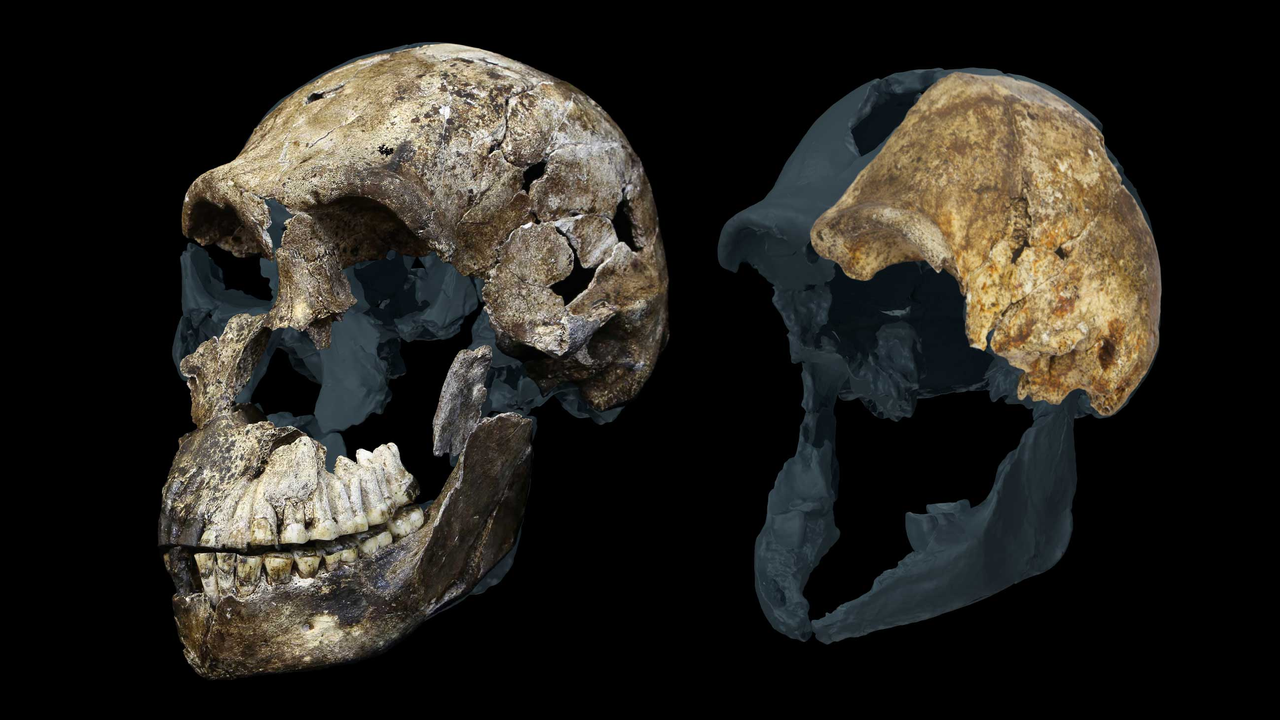
Research over the past decade has revealed that H. naledi was unusual for having a small brain and upper body, similar to earlier australopithecines like Lucy, but a face, hands and lower limbs that were more human-like. In 2023, the Rising Star team suggested H. naledi may have used fire in the cave, and in 2025, they advanced the controversial claim that H. naledi buried their dead — a complex behavior unexpected for a human relative with such a small brain.

But a new study of H. naledi teeth published Wednesday (June 24) in the journal Cell may bolster the team's interpretation of the Rising Star cave as a burial site.

An international team of experts studied 20 teeth from H. naledi skeletons using proteomic analysis, a minimally destructive technique that sequences genetic material from ancient proteins. Proteomics is a burgeoning field, especially because these proteins can last longer than DNA. The team focused on amelogenin genes (AMEL), which code for proteins in dental enamel and vary by sex. While the gene variant called AMELX is found in both males and females, another one, AMELY, is found only in biological males.

In analyzing the H. naledi teeth, the team found no AMELY genes but plenty of AMELX ones, suggesting that all of the skeletons were from females. These included the nearly complete skeleton of Neo and DH1, the main representative of the species, both originally assumed to be male.

The result is surprising because there are no known ancient human cemeteries or collections of nonhuman primate skeletons that contain only females.

"The most likely reason for these robust results are, in my opinion, cultural selection after death for burial by sex and perhaps gender," Berger said. "There are many past human societies with sex-specific burial practices," study co-author John Hawks, a paleoanthropologist at the University of Wisconsin-Madison, said in a statement, but the H. naledi skeletons "are older than any known Neanderthal or modern human burial site, and it's remarkable to see that they may all be female."
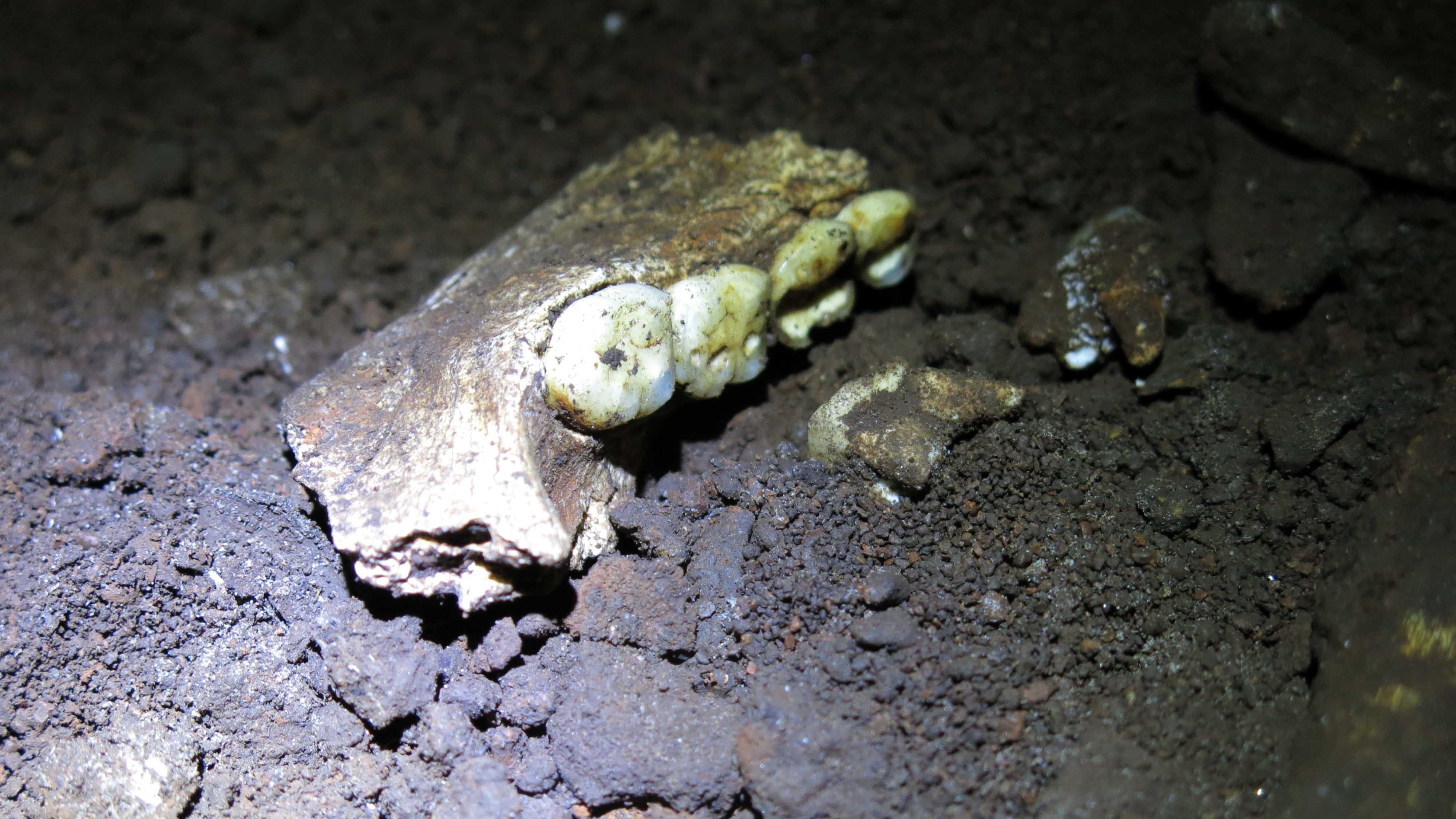
ancient teeth in a jaw on the floor of a cave

A partial jawbone with teeth from Homo naledi lies was found in the Rising Star cave system. (Image credit: Mathew Berger / Rising Star Program)

"An already weird hominin"

The discovery that everything we know about H. naledi comes from female skeletons has surprised paleoanthropologists.

"The bottom line is this is a weird result from an already weird hominin," Elizabeth Sawchuk, curator of human evolution at the Cleveland Museum of Natural History, who was not involved in the study, told Live Science in an email. "The key thing to remember is that failure to detect evidence of AMELY does not mean there are no males in the sample — it just means that none were detected."

One possible reason for the lack of this gene in H. naledi skeletons is an AMELY gene deletion that is known to occur very rarely in some modern-human populations and that has been found in one Neanderthal male. If the AMELY gene doesn't exist in this H. naledi group, then the protein profiles of males would look identical to the profiles of females.

However, "it's very unlikely that this would be the case among even half of the 20 individuals we studied or for an entire population," study co-author Enrico Cappellini, a paleoproteomics professor at the University of Copenhagen in Denmark, said in the statement. "Either scenario, namely the absence of H. naledi males in the Rising Star cave system or a systematic deletion of their AMELY gene, is fascinating and would have deep implications for a better understanding of the biology and evolution of this species."

Studies of H. naledi, a species known from a single site, "continue to yield more questions than answers," Sawchuk said. "As the authors point out, this is a surprising result that requires more investigation."

Other hominins in South Africa

A second surprising result in the proteomic analysis was that H. naledi shares a gene variant with Paranthropus robustus, a human relative with a massive face and teeth that lived in South Africa around 1 million to 2 million years ago.

Proteomic analysis of four P. robustus skeletons in 2025 proved that limited genetic material could be recovered from ancient human relatives in Africa. The new study has revealed that some members of this species and H. naledi shared a gene variant related to collagen production, which is different from the genes found in modern humans, Neanderthals and Denisovans.

While H. naledi and P. robustus inhabited the same general geographic area, it is unclear if they lived there at the same time and overlapped or if they may have had an ancestor-descendant relationship.

"It is early days for sampling fossil hominins with ancient proteins, and until we build a better, bigger sample, we just don't know" what the shared genetic variant means, Berger said.

Building a larger database of ancient proteins from other human relatives that evolved in Africa, such as Australopithecus africanus and Homo erectus, may clarify where H. naledi fits into the picture of human evolution.

"Key data are missing from H. erectus and A. africanus that would help put this evidence into context," Sawchuk said. "For now, this is another curious finding that bears further investigation."

a scientist with dark skin and glasses wears white scrubs and blue gloves to test something

Study lead author Palesa Madupe has pioneered techniques to extract proteins from fossils. (Image credit: Alberto Taurozzi / Rising Star Program)

What does sex change?

In 2015, Berger and colleagues named the new hominin H. naledi and described what they presumed to be male and female variants of the species based on the skeletons' sizes. In many groups of human relatives and in modern humans, males are physically larger than females, on average. This assumption led the researchers to classify the presumed male individual DH1, discovered in the Dinaledi chamber of the cave, as the main representative of the new species.

But a 2024 study was the first to question the assumption that the H. naledi skeletons came from two sexes. In that study, researchers found variation in the teeth of H. naledi that was "so low that the possibility that one sex is represented by few or no individuals in the sample cannot be excluded," they wrote.

"Our study helps resolve the long-standing mystery of why Homo naledi lacked significant variation," study first author Palesa Madupe, a researcher at the Max Planck Institute for Evolutionary Anthropology in Germany, said in the statement. "It's probably because they could have all belonged to one sex."

If the proteomic sex analysis is correct and H. naledi does not have AMELY deletion issues, it means everything we know about the species comes from females. But this doesn't mean interpretations of the species are wrong.

"The only thing that has changed is that we have never seen a male!" Berger said. "When and if we do, we will have to extend the description to include male sex characters and the likely extension of certain aspects of variation."

The researchers hope their study paves the way for more proteomic analyses of human relatives in the future.

The new analysis proves that protein analysis of fossils from the Pleistocene (2.58 million years ago to 11,700 years ago) can be done in a minimally destructive way, Madupe said. "This means potentially opening the door to a whole new way of sustainably investigating the differences between sexes in groups of extinct hominins and other animals without causing visible damage to these priceless fossils."

What do you know about early humans? Test your knowledge with our human origins quiz!
  •  

A “Magical” Ancient Curse Artifact Turned Up in an Unexpected Location—and in the Wrong Language

A “cursed” ancient Roman tablet, intended to invoke divine and demonic wrath upon one’s enemies, has been deciphered by researchers at Heidelberg University in Germany.

The magical lead tablet, originally discovered by Dutch archaeologists in the Netherlands, was crafted in the second century AD. Strangely, it is written in ancient Greek, although in an Egyptian style, rather than the Latin that would be expected for what was then a Roman province of Lower Germania.

Today, the excavation site within the city of Heerlen in the southeast of the Netherlands, near the German border, is home to the country’s largest ancient Roman ruins.

Curse Tablets

The object is not entirely unique, as it belongs to a category of curse tablets called katadesmoi in Greek and defixiones in Latin. The Greeks and Romans believed that cold, heavy iron was especially useful in binding supernatural entities, making it the go-to material for crafting such objects.

As this artifact’s material was both cold and heavy, it reminded ancient people of the bleak underworld. Additionally, lead is also easy to work with in practice, as it is both inexpensive and easy to inscribe.

These small tablets were typically inscribed with curses and then buried, with the intention of bringing misfortune upon rivals in matters of sport, law, or love.

At the time the tablet was created, Heerlen was a Roman military settlement known as Coriovallum. Dutch archaeologists unearthed the 9.3-by-4.8-centimeter katadesmos from a pit beneath the former town square.

Deciphering an Ancient Curse

Researchers at the University of Heidelberg’s Institute for Papyrology used reflectance transformation imaging, a technique that combines photographs taken under different lighting conditions to enhance subtle surface details. Their analysis revealed three distinct types of characters within the inscription.

The combination of Egyptian-style invocations of deities and demons written in ancient Greek is highly unusual for a region where Latin was the dominant written language. Also notable are three symbols known as “Characteres”—magical symbols believed to facilitate communication with supernatural entities—along with two male and two female names.

Dr. Rodney Ast, Academic Director of the Institute for Papyrology, suggests that these four individuals were either the targets of the curse or those on whose behalf it was created. However, Dr. Julia Lougovaya, a research associate at the institute, notes that the male names are Latin while the female names are Greek, a distinction that may hold additional significance.

“It cannot be ruled out that one of the two women was the author of the inscription and had brought the supposed ability to communicate with divine powers through such curses with her from Roman Egypt,” said Dr. Lougovaya.

Ancient Magical Practices

Magic played an important role in Egyptian society, where rituals aimed at healing and protection formed a visible part of religious life, while malicious spells were typically practiced more discreetly.

“In the early centuries A.D., Near Eastern, Egyptian, Jewish, and sometimes even Christian traditions increasingly merged and spread throughout the entire Roman Empire of that time – a development that the discovery from Heerlen impressively underscores,” explained Prof. Joachim Quack, Director of the Institute for Egyptology at Heidelberg University.

A forthcoming scholarly publication will provide the full transcription of the inscription and details of the analysis. The tablet is also scheduled to go on display at a museum in Heerlen in the future.

Ryan Whalen covers science and technology for The Debrief. He holds an MA in History and a Master of Library and Information Science with a certificate in Data Science. He can be contacted at ryan@thedebrief.org, and follow him on Twitter @mdntwvlf.

  •  

A 2,700-Year-Old Stone Could Shed New Light on a Religious Reform Described in the Bible

A massive stone, deliberately laid on its side and buried within the walls of an ancient Judean home, may provide physical evidence consistent with interpretations of King Hezekiah’s reported religious reforms.

The Hebrew Bible describes the events of Hezekiah’s reforms, including the tearing down of shrines, the destruction of sacred pillars, and the relocation of religious practice from the countryside into royal control in Jerusalem. For decades, archaeologists have searched for evidence of these changes, mostly by studying temples and public worship sites.

A new study by Avraham Faust of Bar-Ilan University, published in the Jerusalem Journal of Archaeology, suggests that important evidence may also be found in private residences.

A Stone That Wasn’t Supposed to Move

The study focuses on a massebah, a cultic standing stone about 4.6 feet tall and weighing 750 kilograms, found at Tel ‘Eton in the Judean Lowlands. The stone was originally located inside Building 101, a large residence sometimes referred to as the Governor’s Residency. Archaeologists found it placed in the largest room, directly opposite the entrance, where it functioned as a central feature for anyone entering the building.

Scholars have documented that standing stones of this type throughout the ancient Near East have ritual significance. This particular stone does not appear to have had a clear structural or practical function. “The location of the stone suggests that it played an important role in the lives of the building’s occupants,” Faust said.

Decommissioned, Not Destroyed

Sometime before the Assyrian destruction of Tel ‘Eton at the end of the eighth century BCE, during the period of Hezekiah’s reign, the stone’s status changed. Rather than leaving it upright and visible, the builders laid it on its side and incorporated it into a stone platform. The people responsible did not smash or desecrate the stone. They carefully removed it from use without destroying it.

“Those responsible for changing religious practices may have wished to eliminate the stone’s ritual function, and perhaps wanted the old ritual objects desecrated, but the people who carried out the change seem to have treated it with respect,” Faust said. “They removed it from use without destroying it, effectively neutralizing its cultic significance while preserving the object itself.”

Rare Domestic Evidence

Most searches for evidence of the events of Hezekiah’s reforms have focused on public worship sites, such as the temple at Arad and the dismantled altar at Beersheba. Researchers consider these sites significant, but competing interpretations persist, partly because so few examples exist.

Domestic religious practice presents a different challenge. When a household abandoned a religious object, people often removed or discarded it, leaving no trace for archaeologists to find centuries later. Since ordinary homes do not receive the same archaeological attention as temples and traditional sites of worship, evidence of religious practice located within these residences often disappears rather than being properly preserved or studied. This makes the Tel ‘Eton stone unusual in the archaeological record. People left it in place, buried it, and sealed it inside a platform, where it remained undisturbed for nearly 3,000 years.

An Open Question

Faust does not overstate the discovery. The study does not claim that Hezekiah’s policies directly led to the stone’s decommissioning. The dating places the event only within his reign, but not as a definite result of them. Still, the timing, the method of removal, and the care taken to preserve the object all match a period when religious practice across Judah appears to have been changing.

Scholars still debate whether Hezekiah’s reforms happened as described in the Bible or instead reflect later religious ideas. Either way, this discovery adds a rare example of domestic evidence to a debate usually focused on public religious sites.

Austin Burgess is a writer and researcher with a background in sales, marketing, and data analytics. He holds an MBA, a Bachelor of Science in Business Administration, and a data analytics certification. His work focuses on breaking scientific developments, with an emphasis on emerging biology, cognitive neuroscience, and archaeological discoveries.

  •  

After Decades of Mystery, Researchers Locate a Missing Page of the Archimedes Palimpsest

Prophet Daniel Illumination on Palimpsest LeafA newly identified Archimedes Palimpsest leaf could help recover lost ancient mathematics using modern imaging techniques. A page from one of the world’s most important ancient manuscripts has resurfaced after being missing for decades. Researchers have identified a long-lost leaf from the Archimedes Palimpsest at the Musée des Beaux-Arts in Blois, France, a discovery that [...]
  •  

The 4,000-Year-Old City That Defied History’s Rules on Wealth and Power

Weathered Ruins Deserted Landscape Ancient Civilization Mohenjo DaroA new study of the ancient Indus city of Mohenjo-daro challenges a long-held view of history by suggesting that prosperity did not lead to greater inequality. Unlike ancient Egypt, with its pyramids and powerful pharaohs, or Mesopotamia, with its ruling elites and monumental palaces, the Indus city of Mohenjo-daro left behind few obvious signs of [...]
  •  

Tiny Artifact Found by Metal Detectorist Complicates the Story of Sutton Hoo, May Rewrite the History of Early English Metallurgy

It was a chance discovery: two years ago, metal detectorist Stephen Newbury had been searching for small items outside the village of Lynsted in Kent when he unearthed a tiny metallic object.

The small bit of metal was obviously ancient, appearing to have been made from copper alloy, depicting a decorative motif featuring a horned character with hands upraised.

Little did Newbury know at the time that the discovery would challenge archaeologists’ existing understanding of one of England’s most famous Anglo-Saxon-era sites.

patrix
The Kent patrix, discovered by Stephen Newbury in 2024 (Image Credit: Kent County Council)

Discoveries at Sutton Hoo

Sutton Hoo in Suffolk, England, is the site of one of the country’s most intriguing archeological discoveries. In 1938, an undisturbed ship burial was unearthed at the site during excavations by avocational archaeologist Basil Brown, which contained a trove of artifacts dating to the 6th and 7th centuries.

Among these items was a famous helmet, believed to have been associated with Anglo-Saxon leader Rædwald of East Anglia. As both a decorative piece and a functional implement of armor, the remarkable artifact is one of the most distinctive unearthed from the Sutton Hoo site.

Anglo-Saxon
Replica of a 7th-century Anglo-Saxon helmet from Sutton Hoo, UK, located near the Sizewell C site (Public Domain).

Based on its crafting and style, archaeologists have long suspected the Sutton Hoo helmet may have origins near Uppland in eastern Sweden. However, the tiny square of bronze alloy recently uncovered in Kent is causing some archaeologists to rethink the origins of the famous implements of ancient Anglo-Saxon warfare unearthed at Sutton Hoo.

A First-of-Its-Kind Discovery

What Stephen Newbury discovered is more than just a tiny decorative scrap of metal: experts identify it as a small die stamp, known as a patrix, which would have been used in the decoration of armor like the varieties unearthed at Sutton Hoo beginning in the 1930s.

While also dated to the 6th or 7th century, the die unearthed at Kent marks an archaeological first—never has a similar object been found in England before now.

Given the similarities between the imagery the artifact conveys and the famous discoveries from Sutton Hoo, this raises an intriguing possibility: what if our presumptions about the likely origins of the famous discoveries at Suffolk in the 1930s are incorrect?

Ongoing Debate

Questions about the origins of the famous Sutton Hoo helmet have remained a matter of debate. Another recent discovery made on the island of Tåsinge, Denmark, suggests this also could be a promising location for the helmet’s origins, after the discovery of a similar patrix there in 2023.

Recent research at the National Museum of Denmark suggests that the appearance of an armored rider on a horse bears a noticeable resemblance to the famous Sutton Hoo helmet.

Peter Pentz patrix
Peter Penz with the Tasinge patrix (Image Credit: The National Museum of Denmark).

Peter Pentz, a specialist in Viking history at the museum, says this “points to a possible Danish connection,” adding that not only might these artifacts all have a common location of origins, but that they may even have been crafted by the same individual.

Expanding the Story of Ancient English Metallurgy

Before metal detectorist Stephen Newbury’s chance discovery, the Sutton Hoo helmet was among the only known Anglo-Saxon era helmets found in England that featured this specific style of die stamping (known as pressblech foils, as recently detailed at The History Blog).

Given the rarity of their discovery in England, it had been presumed that the Sutton Hoo helmet and similar headgear like helmets unearthed with the Staffordshire Hoard in 2009 had likely been brought to England from Sweden or Denmark.

Now, with Newbury’s discovery of a patrix near Kent, the question of whether such ornate Anglo-Saxon helmets could have been English originals—a possibility that raises the further question of whether more advanced metallurgy was being undertaken in the country at that time.

Altogether, Newbury’s discovery only underscores the fact that sometimes even the tiniest discoveries can have a profound impact. In this case, it could lead to a fundamental reshaping of England’s ancient history and some of the country’s most famous archaeological discoveries.

Micah Hanks is the Editor-in-Chief and Co-Founder of The Debrief. A longtime reporter on science, defense, and technology with a focus on space and astronomy, he can be reached at micah@thedebrief.org. Follow him on X @MicahHanks, and at micahhanks.com.

  •  

The Virtual World of Stonehenge Experience is Now Available Online for Free

A virtual tour of the historic UK monument, called the Virtual World of Stonehenge, which allows users to visit one of the world’s most iconic historical sites, has just been released online to coincide with the annual summer solstice.

Along with capturing the entire 2022 British Museum’s Stonehenge virtual tour, the new online experience developed by researchers at the University of Reading allows users to travel back in time to witness the site at various stages of construction on their phones, PCs, or other devices without leaving the comfort of their homes.

The Virtual World of Stonehenge
Image Credit: The Trustees of the British Museum

Building the Virtual World of Stonehenge with 3D scans

According to a statement announcing the new online Virtual World of Stonehenge experience, the museum’s original ‘World of Stonehenge’ exhibition, which opened on February 17, 2022, attracted over 190,000 visitors and brought together “over 400 objects from 36 institutions across Europe.”

“The original exhibition brought together an extraordinary collection of prehistoric objects, many of which had never been displayed together before,” explained team member and study author, Professor Duncan Garrow, Professor of Archaeology at the University of Reading. However, the team noted, viewing the entire complex, interactive exhibit required in-person attendance.

Image Credit: The Trustees of the British Museum

To capture the experience and make it available worldwide, Professor Garrow and colleagues joined forces with researchers at the University of Southampton. They also enlisted the services of ArtasMedia, a team of “digital heritage specialists” which employed laser scans to digitally capture every inch of the exhibit. According to the team, these 3D scans of the original World of Stonehenge gallery were taken during the exhibition’s final weeks.

Taking the Online Tour Makes History “More Accessible”

Along with capturing all the original exhibit, the team said that the new online experience allows users to “go inside Stonehenge itself and watch it change through time, explore Neolithic flint mines at Grimes Graves, and discover rarely seen prehistoric objects through animation, soundscapes and interactive content.”

“Timed to release alongside the summer solstice, the new virtual version goes well beyond a simple recreation of the gallery,” they explain.

Image Credit: The Trustees of the British Museum

Some of the most striking objects featured in the museum exhibit and the virtual tour include a 6,000-year-old elm leaf, a bracelet woven from cow hair, and the remains of what the team called a “prehistoric feast.” When scanned with 3D lasers and combined with their historical context, the team said the lesser-known objects and their stories suddenly become “more accessible.”

The Virtual World of Stonehenge
Image Credit: The Trustees of the British Museum.

“Now anyone, anywhere they are, can not only see those objects but understand the world of Stonehenge and experience how it looked and felt thousands of years ago,” Professor Darrow said. “We hope it brings prehistoric Britain to life in a completely new way.” 

Release Intentionally Timed with the Summer Solstice

When discussing the value of putting the Virtual World of Stonehenge online, Dr Neil Wilkin at the British Museum said the project has prompted him and his colleagues to consider the future of virtual museum exhibitions, “not just at the British Museum but everywhere across the world.”

Funded by UK Research and Innovation and building on AHRC-funded research led by British Museum curator Dr Neil Wilkin, in partnership with Professor Duncan Garrow at the University of Reading, the June 21st release of the online experience was timed to coincide with the summer solstice. Although some aspects of the iconic structure’s function may remain in dispute, most historians and many enthusiasts believe the site has been home to solstice celebrations for several millennia.

“The launch coincides with the summer solstice, the moment when Stonehenge’s alignment with the rising sun has drawn people to the site for thousands of years,” the team explained.

The Virtual World of Stonehenge is free to access from Sunday 21 June: The World of Stonehenge: University of Reading and British Museum

Christopher Plain is a Science Fiction and Fantasy novelist and Head Science Writer at The Debrief. Follow and connect with him on X, learn about his books at plainfiction.com, or email him directly at christopher@thedebrief.org.

  •  

What made prehistoric communities resilient? Ancient social networks may hold the answer

A new study led by Dr. Ariel Malinsky-Buller of the Hebrew University of Jerusalem challenges long-held assumptions about how prehistoric hunter-gatherers survived in the Southern Caucasus between 57,000 and 27,000 years ago. Rather than relying on environmental adaptation alone, the research suggests that extensive social networks, long-distance mobility and the exchange of knowledge were critical to human resilience during periods of climatic and ecological change.

  •  

“It Was Completely Shocking to Me”: Archaeologists Discover the Earliest Monumental Egyptian Hieroglyphs Written 1,000 Years Before the Pyramids

A joint expedition to the ancient Egyptian city of Elkab has unearthed several previously unknown ancient rock art inscriptions, including what the team believes are the earliest known monumental Egyptian hieroglyphs.

Written over 1,000 years before the Great Pyramid of Giza was constructed, these ancient Egyptian writings, discovered by archaeologists from Yale University and the Royal Museums of Art and History (Brussels), laid the foundation for the later, better-known hieroglyphic writing system.

Yale Professor John Coleman Darnell, the expedition’s leader and the co-director of the Elkab Desert Survey Project, said the newly discovered inscriptions, which were not recorded by any previous scientific expedition, include samples as far back as 4,000 BCE.

Although the team concedes that these are not the first examples of this specific style of rock art, they are the first of this ancient age and “monumental” scale, making them of great significance in the history of ancient Egyptian writing systems.

“This was not what I was expecting to find when I set out on this period of work on the expedition,” Professor Darnell said of the historic find. “It was completely shocking to me.”

Earliest Monumental Egyptian Hieroglyphs Depict Cosmological Concepts

In a Yale news story announcing the discovery, Professor Darnell noted that the newly discovered rock art site of El-Khawy preserved some of the earliest and largest signs “from the formative stages of the hieroglyphic script.” The professor added that the discovery includes “rare” evidence for how this enigmatic ancient society invented its internationally recognized ancient writing system.

The expedition, which was directed by Darnell and Dirk Huyge, was undertaken in cooperation with the Ministry of Antiquities and the Aswan and Edfu inspectorates.

After photographing the newly discovered inscription, Darnell and Alberto Urcia, a digital archaeologist and associate research scientist in the University’s Department of Near Eastern Languages and Civilizations, created a series of three-dimensional (3D) images. Darnell said the new technology allows archaeologists to record ancient sites and artworks “at a level of accuracy and detail that was absolutely impossible before.”

“It also means that we can record the site as a place, or a location, and not just as a series of inscriptions,” the professor added.

ancient writing, Earliest Egyptian hieroglyphs
The newly discovered panel of signs features images of a bull’s head on a short pole followed by two back-to-back saddlebill storks with a bald ibis bird above and between them. This arrangement of symbols is common in later Egyptian representations of the solar cycle and with the concept of luminosity. Image Credit: Yale University, Royal Museums of Art and History (Brussels).

One of the more noteworthy examples of ancient monumental hieroglyphs, carved sometime between 4,000 and 3,500 BCE, depicted a herd of elephants. A closer examination also revealed that one of the elephants had an image of a smaller elephant inside of it, which Professor Darnell described as “an incredibly rare way of representing a pregnant female animal.”

A second discovery detailed by the joint expedition, which consists of four separate panels, was likely created sometime around 3,250 BCE. Written right to left, which ultimately became the dominant writing form in later Egyptian hieroglyphic languages, the panels show animal images of a bull’s head on a short pole, followed by two back-to-back saddlebill storks with a bald ‘ibis’ bird above and between them.

The research team said this arrangement of symbols is common in Egyptian representations created centuries after the newly discovered panels depicting the solar cycle. These same depictions typically include imagery of luminosity. Darnell suggested that the images may also express “the concept of royal authority over the ordered cosmos.”

“This is the First Time That Anyone Has Seen Them on Such a Massive Scale”

When discussing the importance of the new find, Professor Darnell noted the immense size of the individual tableaus and their elements. For example, each individual hieroglyph identified by the Yale-led team measures over half a meter in height. The professor also noted that the entire tableau “is about 70 centimeters (27.5 inches) in height,” whereas previously discovered signs of early Egyptian hieroglyphs were “only one or two centimeters in size.”

“This discovery isn’t new in the sense that this is the first time that anyone has seen these hieroglyphs,” Darnell explained, “this is the first time that anyone has seen them on such a massive scale.”

To offer a perspective on the discovery’s significance, the professor said a modern-world equivalent would be seeing smaller text displayed on your computer screen, “and then suddenly seeing very large ones made the same way,” only displayed up on a highway billboard.

When discussing the site’s location in the northeastern desert hinterland of Elkab, Darnell noted that it was a “very important” center in ancient Egypt, which demonstrates that the area’s budding communicative system “is not limited to the more commonly found small tokens or labels.”

The professor also said the study shows that ancient writing did not develop slowly “for bureaucratic use,” as researchers had previously believed. Instead, Darnell suggested that the discovery shows hieroglyphic-style writing “was more geographically widespread and topically diverse at the time of or shortly after its development.”

“This also suggests that there is a much more expansive use of the early writing system than is indicated from other surviving archaeological material,” the professor added.

Christopher Plain is a Science Fiction and Fantasy novelist and Head Science Writer at The Debrief. Follow and connect with him on X, learn about his books at plainfiction.com, or email him directly at christopher@thedebrief.org.

  •  

Hanging lamp in the form of a sandaled right foot: A 1,600-year-old bronze lamp with multilayered Christian symbolism

QUICK FACTS

Name: Hanging lamp in the form of a sandaled right foot

What it is: A bronze oil lamp

Where it is from: Syria (Byzantine Empire)

When it was made: Fifth century

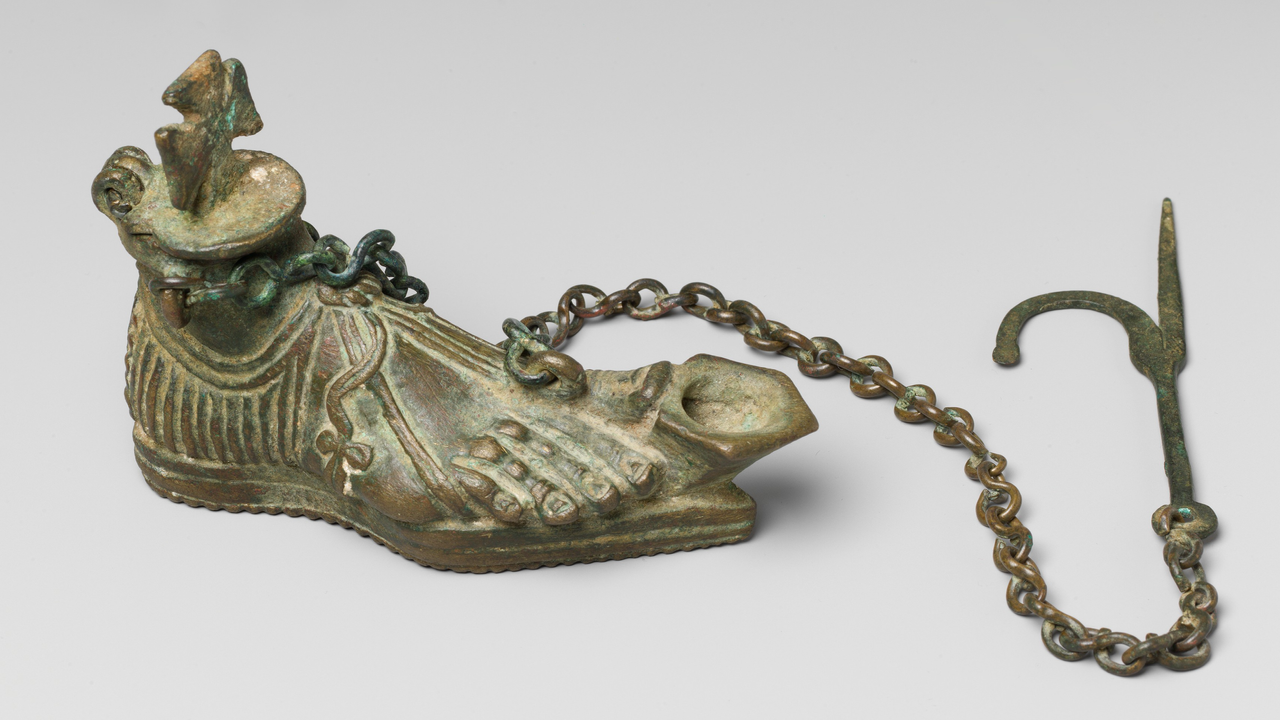
Oil lamps have been simple and popular light sources for more than three millennia. But during the Roman and Byzantine empires, many oil lamps were highly decorated works of art. This hanging lamp in the collection of the Metropolitan Museum of Art was made nearly 1,600 years ago in the shape of a human right foot wearing a sandal, likely as an early Christian symbol.

The bronze oil lamp is significantly smaller than a life-size foot, measuring just 3.25 inches (8.3 centimeters) long. Still attached to the lamp is a chain with a hook for hanging, which is over 17 inches (43.5 cm) long.

The right big toe rests against the spout of the lamp, which would have held the wick. A sandal covers the foot, its leather or cord thongs tied at the ankle. The sole of the sandal is decorated with a swastika, which in Byzantine times was known as a gammadion cross and represented good fortune.

At the back of the lamp, there is an opening at the ankle where the lamp could be filled with oil. The flat cover for the opening is topped with a cross, identifying the lamp as a Christian artifact, Vera Ostoia, a curator of medieval art at The Met, wrote in a 1969 study of objects from the The Met Cloisters.

The foot shape may have been a protective image that symbolized good health and healing, according to The Met, and it may have doubled as a symbol of Christian pilgrimage. But the symbolism may have run even deeper.

In early Christian times, oil lamps and the light they produced were metaphors for enlightenment and immortality rather than just functional, Ostoia wrote. This foot lamp may have been connected to Psalm 119:105, which reads: "Thy word is a lamp unto my feet, and a light unto my path," meaning that people should follow the word of God as their path in life.

For more stunning archaeological discoveries, check out our Astonishing Artifacts archives.

  •  

Ancient Ice Man Still Hosts Mysterious Cold-Loving Organisms, Study Finds

Iceman MummyA new study untangles the complex microbial history of Ötzi the Iceman, revealing which microorganisms originated during his lifetime and which arrived long after his death. For more than 5,000 years, Ötzi the Iceman has carried an invisible community of microbes through ice, time, and modern museum preservation. Now, scientists have taken the most detailed [...]
  •  

5,500 Years Ago, Something Was Killing Humans in Prehistoric Siberia—New Research Has Finally Revealed This Ancient Assassin

A longstanding archaeological mystery has loomed over discoveries at ancient burial sites in eastern Siberia: why were so many children and adolescents among the dead?

Now, according to a recent study in the journal Nature, DNA recovered from human remains found in burial sites at four cemeteries near Lake Baikal in eastern Siberia may finally reveal the answer.

Thousands of years ago, prior to the rise of ancient medieval cities—and their often-rat-infested streets—a disease famously associated with these rodents had already ravaged communities of prehistoric hunter-gatherers.

The research, based on reconstructions of ancient bacterial genomes preserved in the teeth of these ancient Siberians, revealed the presence of previously unknown strains of Yersinia pestis—the bacteria responsible for plague—providing fresh evidence that the lethal disease was already manifesting and killing human populations at least as far back as 5,500 years ago.

“Whether the earliest forms of plague were mild or virulent has been a matter of debate, but our findings demonstrate that these ancient strains were already highly lethal,” said senior author Eske Willerslev of the University of Copenhagen and the University of Cambridge.

New Evidence of an Ancient Siberian Plague

In their study, the team successfully located plague DNA in 18 out of 46 individuals they studied. Based on radiocarbon dating, many of the deaths were confirmed to have all happened within a short span of time, which is consistent with sudden deaths resulting from plague. Additionally, genetic evidence showed that several of these victims had been close relatives.

One key finding in the research involved the number of children and adolescents who were among the dead—a discovery mirroring earlier findings at prehistoric sites in the region, which had remained a longstanding archaeological mystery.

“The unusually high number of children and the short timespan was a real puzzle that we’ve been trying to solve since the 1990s,” said archaeologist Andrzej Weber of the University of Alberta. “Finding out that plague was the cause is extraordinary, but it makes so much sense.”

New Findings Challenge Old Assumptions

Based on the new findings, ancient strains of plague appear to have been more harmful than once thought. In the past, it was presumed that because these early strains lacked genetic adaptations that helped the bubonic plague spread so efficiently through fleas and rodents, they were relatively harmless.

The team’s research now reveals that these newly identified strains carried a specific toxin-producing genetic feature, known as a superantigen, which can trigger severe immune responses that potentially had devastating impacts on mortality rates in the ancient world.

Such deadly outbreaks may have had a far more significant impact on ancient human populations than previously realized, and during periods long before the rise of major urban centers and organized agriculture.

In terms of the origins of the disease, researchers believe that they may have finally traced it to Central or Northeast Asia, where infections may have spread from marmots, large rodents that are still recognized as plague carriers in modern times.

After years of uncertainty, the team’s research offers some of the best evidence to-date that one of the most devastating diseases in human history was already playing a role in shaping human history thousands of years earlier than once thought.

Martin Sikora, associate professor at the University of Copenhagen and the study’s senior author, says his team’s research “changes our understanding of the earliest plague outbreak,” and now confirms that such ancient strains “appear to have carried a potent combination of virulence factors that could make infection highly lethal.”

The team’s study, “Lethal plague outbreaks in Lake Baikal hunter-gatherers 5,500 years ago,” appeared in the journal Nature on June 17, 2026.

Micah Hanks is the Editor-in-Chief and Co-Founder of The Debrief. A longtime reporter on science, defense, and technology with a focus on space and astronomy, he can be reached at micah@thedebrief.org. Follow him on X @MicahHanks, and at micahhanks.com.

  •  

Ancient plague was already deadly 5,500 years ago, study reveals

Plague is often linked to medieval Europe, crowded cities, and rats carrying infected fleas. However, a new study published in the journal Nature shows that the disease was already killing people thousands of years earlier. Researchers have discovered that plague caused deadly outbreaks among hunter-gatherers in Siberia about 5,500 years ago, long before cities and […]

The post Ancient plague was already deadly 5,500 years ago, study reveals appeared first on Knowridge Science Report.

  •  

Experience the Magic of Stonehenge from Your Sofa This Solstice

A groundbreaking digital venture has been launched, promising to revolutionize the way the world experiences prehistoric heritage. The Virtual World of Stonehenge, an innovative online platform, allows users globally to immerse themselves in the fascinating history and archaeology surrounding the iconic Stonehenge site. Developed through a collaboration between the University of Reading and the British Museum, this free-to-access digital experience offers unparalleled access to one of the most significant prehistoric collections ever assembled, transcending the limitations of physical museum visits and bringing the past vividly into the present.

Launching precisely on June 21st to coincide with the summer solstice—a date of profound importance to Stonehenge and its cultural legacy—the Virtual World of Stonehenge goes far beyond a traditional replication of the physical exhibition. While the original 2022 British Museum showcase brought together over 400 objects from 36 European institutions and attracted nearly 200,000 visitors, this online experience transcends geographical and physical boundaries. It invites users to explore prehistoric Britain interactively, offering a dynamic temporal dimension where Stonehenge is seen morphing through various epochs, shedding light on its multifaceted evolution and significance.

The project’s technological core lies in its sophisticated use of 3D laser scanning, digital animation, and immersive soundscapes, created by a multidisciplinary team of archaeologists, digital heritage experts, and computer scientists. During the exhibition’s final weeks in 2022, a highly detailed laser scan of the British Museum gallery was captured, serving as the digital blueprint for the virtual environment. These precise measurements ensured every artifact and spatial detail was faithfully rendered, enabling users to navigate authentically within the gallery or step inside reconstructed prehistoric landscapes like the Neolithic flint mines at Grimes Graves.

One of the most compelling features of the Virtual World of Stonehenge is its ability to shed light on nuanced archaeological narratives often missed by conventional displays. The platform highlights lesser-known prehistoric relics such as a 6,000-year-old elm leaf, a delicately woven cow-hair bracelet, and remnants of ancient feasts, employing animation and interactive storytelling to contextualize these objects within the daily lives and rituals of Stonehenge’s ancient communities. This approach not only enhances engagement but fosters a deeper appreciation of the complex social and cultural fabric that shaped prehistoric Britain.

Professor Duncan Garrow of the University of Reading emphasizes the transformative educational potential of the project. By uniting an extraordinary assemblage of artifacts rarely seen together, the Virtual World of Stonehenge offers an immersive learning environment where users can interrogate the intersection between archaeological evidence and lived experience. This digital format allows for multi-sensory exploration—users can observe how the monument aligned with celestial phenomena, hear recreated ambient sounds, and engage with layered historical interpretations, bringing prehistoric Britain to life in a manner previously unachievable in museum contexts.

At the same time, Dr. Neil Wilkin, curator at the British Museum, highlights the project’s forward-thinking implications for museum engagement in the twenty-first century. The initiative serves as a prototype for virtual exhibitions that can extend the reach of cultural institutions globally, fostering inclusivity by making world-class collections accessible regardless of physical or economic barriers. Moreover, the integration of cutting-edge technologies heralds a new era of digital heritage preservation and public archaeology, where virtual experiences can complement and enhance traditional curatorial practices.

Technically, the Virtual World of Stonehenge exemplifies an advanced convergence of archaeological survey methods and digital tools. The laser scanning process produced millions of data points, constructing an ultra-high-resolution 3D model of the gallery space and its constituent objects. This geospatial accuracy underpins the digital environment’s interactivity, allowing users to manipulate views, zoom in on minute details, and gain spatial insights that static images or text-based descriptions cannot offer. Additionally, the underpinning narrative content draws on extensive archaeological research funded by UK Research and Innovation and the Arts and Humanities Research Council, ensuring both scholarly rigor and public accessibility.

The virtual platform’s sound design is equally innovative, using ambient recordings and reconstructed acoustic profiles to immerse visitors in the sensory atmosphere of the prehistoric world. For example, users can experience the atmospheric sounds of the summer solstice sunrise illuminating Stonehenge, or hear the ambient clatter from the flint mines at Grimes Graves, thereby deepening emotional connection and contextual understanding. This multisensory integration reinforces the project’s ambition to be more than a virtual museum tour, positioning it as a holistic archaeological experience harmonizing visual, auditory, and intellectual engagement.

Besides its public and educational impact, the Virtual World of Stonehenge also advances archaeological methodology by providing a scalable model for digital conservation. The high-fidelity digital capture serves as a preservation tool that mitigates risks associated with physical artifact degradation, travel restrictions, or exhibition deinstallations. Institutions across the globe can look to this project as a template for safeguarding and sharing their collections, leveraging virtual reality and interactive media to future-proof cultural heritage—an urgent priority amid climate change, urban development, and other preservation challenges.

Moreover, the project opens exciting avenues for interdisciplinary research by integrating digital humanities, archaeology, and computer science domains. The collaboration between British Museum curators, university archaeologists, and heritage technology firms like ArtasMedia demonstrates an effective alliance between academia and industry. Such partnerships facilitate the application of emerging technologies to solve complex questions about human history, potentially inspiring new methodologies in archaeological visualization, data interpretation, and public outreach that can be adapted to other cultural contexts and time periods.

Crucially, the Virtual World of Stonehenge also taps into the emotive and symbolic power of the site itself. Stonehenge’s exact astronomical alignments during the solstice are reconstructed with scientific precision, allowing users to witness how the monument interacts with the rising sun on this pivotal day. This temporal accuracy does not merely serve aesthetic purposes but conveys the profound cosmological knowledge possessed by its Neolithic and Bronze Age builders, adding layers of meaning to the experience and underscoring the monument’s enduring significance across millennia.

The accessibility of this virtual exhibition across multiple devices—including desktop computers, tablets, and smartphones—ensures that a diverse global audience can engage with Stonehenge’s prehistoric narratives regardless of location or technological proficiency. Such democratization of cultural heritage promotes wider public interest in archaeology while also inspiring future generations of researchers, educators, and enthusiasts. The response to the initial trial phases and media previews has been overwhelmingly positive, pointing to an appetite for more immersive, interactive digital humanities projects that redefine museum experiences.

In conclusion, the Virtual World of Stonehenge stands at the vanguard of a digital revolution in cultural heritage. By bridging meticulous archaeological scholarship with transformative technological innovation, it offers an unprecedented opportunity to explore prehistoric Britain in an expansive, nuanced, and engaging manner. This free, globally accessible experience not only honors Stonehenge’s profound historical legacy but also envisions a future where heritage and technology converge, bringing the deep past into the digital age and captivating audiences worldwide.


Subject of Research:
Historical Archaeology and Digital Heritage Preservation

Article Title:
The Virtual World of Stonehenge: A Digital Revolution in Archaeological Experience

News Publication Date:
Sunday, 21 June

Web References:
https://research.reading.ac.uk/british-museum-partnership/world-of-stonehenge/

https://www.cloudtour.tv/the-world-of-stonehenge/

Keywords:
Stonehenge, Virtual Reality, Digital Heritage, Archaeology, British Museum, University of Reading, Laser Scanning, Neolithic, Prehistoric Britain, Cultural Preservation, Interactive Museum Exhibitions, Summer Solstice

  •  

Ancient Mongolian cemetery reveals power and status mattered more than blood ties

On the edge of the Mongolian steppe, overlooking where two rivers meet, lies an ancient cemetery. Buried within are two families, traced through ancient DNA across six generations, surrounded by dozens of "strangers." The obvious assumption is that this was a family cemetery. But a recent study used machine learning and a technique borrowed from evolutionary biology to reveal that what really mattered was wealth, status and political power, not blood.

  •  

2,000-Year-Old Grape Seeds Rewrite the History of Italian Wine

Professional Sommelier Analyzing Red WineA genetic study of 2,000-year-old grape seeds is shedding new light on ancient winemaking. For centuries, the vineyards of Tuscany have been associated with some of the world’s most celebrated red wines. But a cache of grape seeds buried in ancient wells is revealing a very different story about what people were growing and drinking [...]
  •  

This Deadly Disease Was Wiping Out Humans 5,500 Years Ago

Pathogenic Yersinia pestis Microorganism Plague Disease BacteriaA new study suggests plague was already a deadly threat 5,500 years ago, striking small hunter-gatherer communities long before cities and agriculture emerged. For centuries, plague has been remembered as the disease that devastated medieval Europe, killing millions and reshaping societies. But new research suggests its deadly history stretches much further back than previously thought. [...]
  •  
❌