❌

Reading view

NASA’s Fermi Mission Uncovers Possible Sibling Supernova Remnants

6 min read

NASA’s Fermi Mission Uncovers Possible Sibling Supernova Remnants

A new study of two supernova remnants, the debris left behind after stars explode, suggests the explosions came from stellar siblings that once orbited each other. The first star’s detonation sent its binary companion hurtling through space, and then, after traveling for thousands of years, the surviving star blew up too.

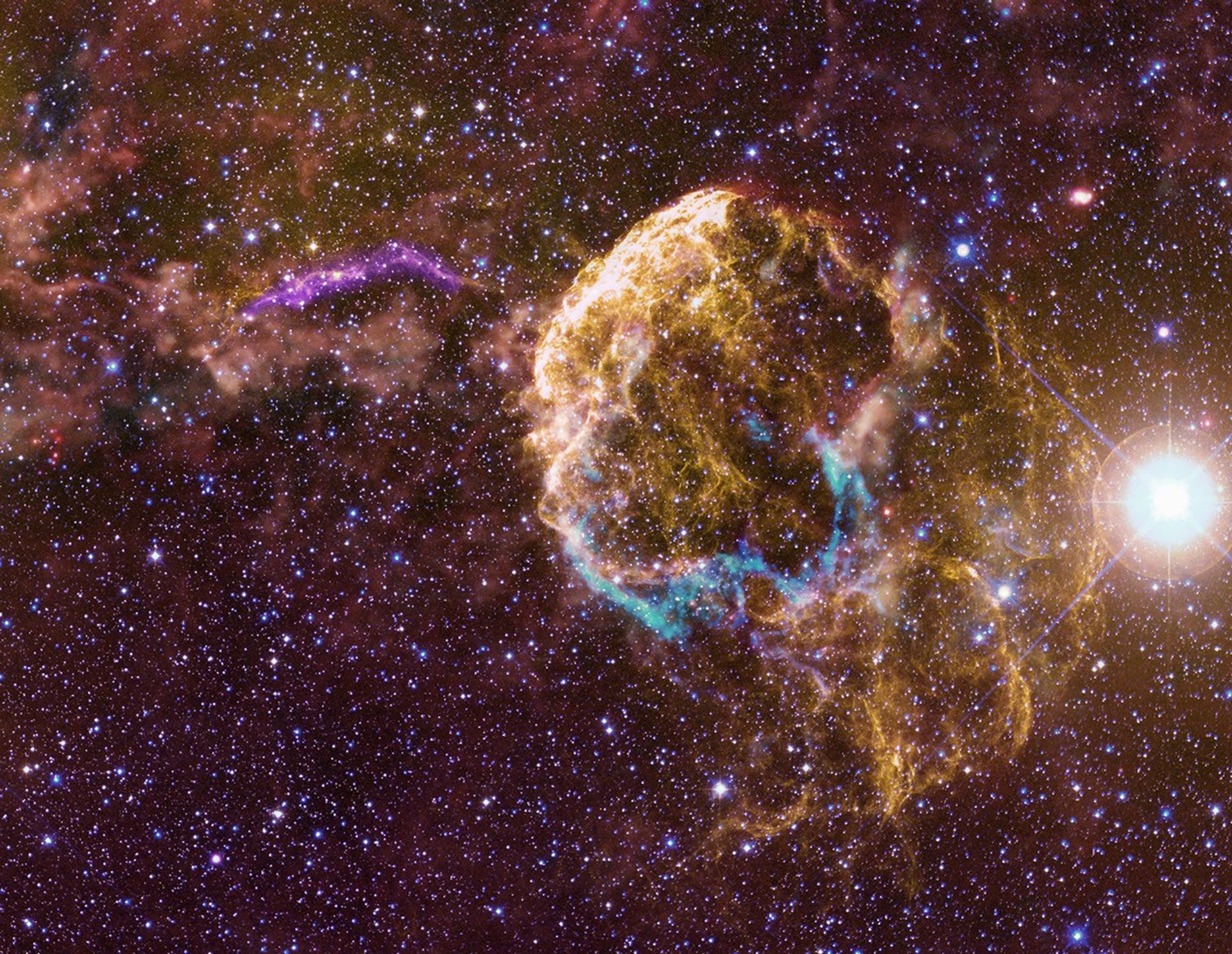
Infrared, visible, and ultraviolet image of the area around the Jellyfish Nebula
This multiwavelength scene shows the Jellyfish Nebula supernova remnant (right), the interstellar cloud it’s interacting with, and a distinctive curving filament to its upper left. The filament, which is shown here both in optical and ultraviolet (UV) light, is the visible part of an overlapping supernova remnant, G189.6+3.3, that is more prominent in radio and X-rays. Visible light is shown in yellow, UV from NASA’s Neil Gehrels Swift Observatory is shown in violet, and infrared light from NASA’s retired WISE (Wide-field Infrared Survey Explorer) mission appears in cyan, red, and orange. Both remnants are located about 6,000 light-years away in the constellation Gemini. The brilliant star at far right is Propus, also known as Eta Geminorum.
NASA Goddard Space Flight Center and M. Michailidis et al. 2026; optical: DSS; infrared: NASA/WISE/JPL-Caltech/UCLA; ultraviolet: NASA/Swift

“Using 16 years of data from NASA’s Fermi Gamma-ray Space Telescope, our analysis uncovered gamma rays associated with a supernova remnant that was hidden in the glare of its neighbor, the Jellyfish Nebula, one of the brightest gamma-ray-emitting supernova remnants known,” said Miltiadis Michailidis, a postdoctoral fellow in the physics department at Stanford University in California. “There are so many striking connections between the two remnants that we conclude they’re likely related, giving us the first known example of a binary system where both stars have undergone supernova explosions.”

Michailidis presented the findings Wednesday at the 248th meeting of the American Astronomical Society in Pasadena, California. A paper describing the results will appear in a future edition of Nature Communications.

The study focused on a faint supernova remnant called G189.6+3.3, which is mainly visible in X-rays. It is upstaged by its brighter and better-known neighbor, the Jellyfish Nebula (IC 443). The two star wrecks, both located in the constellation Gemini, appear to partially overlap as seen in X-rays. Recent X-ray evidence suggests that hot plasma likely associated with G189.6+3.3 may extend across the entire region, a hint that the overlap may be nearly total.

A massive star explodes when its energy-producing core runs out of fuel and collapses under its own weight, triggering an explosion that blows the star apart. The explosion’s shock wave encloses a hot cloud of debris that rapidly expands into space. So far, astronomers have cataloged about 300 supernova remnants in our galaxy.  

The Fermi mission is part of NASA’s fleet of observatories monitoring the changing cosmos to help humanity better understand how the universe works. More than a decade ago, observations from Fermi’s LAT (Large Area Telescope) showed that the shock waves of supernova remnants accelerated particles to within a fraction of the speed of light, a process first proposed by physicist Enrico Fermi — the mission’s namesake — in 1949.

These high-speed particles, called cosmic rays, interact with interstellar gas to produce gamma rays, the highest-energy form of light. Protons make up 99% of cosmic ray particles. To prove that accelerated protons are responsible for the glow, astronomers search for a specific gamma-ray feature. When cosmic-ray protons smash into interstellar gas, they produce a short-lived particle called a neutral pion, which almost immediately decays into a pair of gamma rays. This emission occurs within a specific band of energies associated with the neutral pion’s mass and lies within the range detected by Fermi’s LAT instrument.

In 2013, Fermi observations proved that the Jellyfish Nebula, which is interacting with part of a glowing cloud of hydrogen gas known as Sharpless 249, produced gamma rays through this mechanism. Its neighbor, G189.6+3.3, was discovered in 1994 as part of an X-ray survey by the German-led ROSAT (Roentgen Satellite) mission.

A bright filament of gas lies between the overlapping remnants. New observations of this feature reveal that the shock wave from G189.6+3.3 slammed into dense interstellar gas there and dramatically slowed, key evidence that both remnants are interacting with the same cloud system.

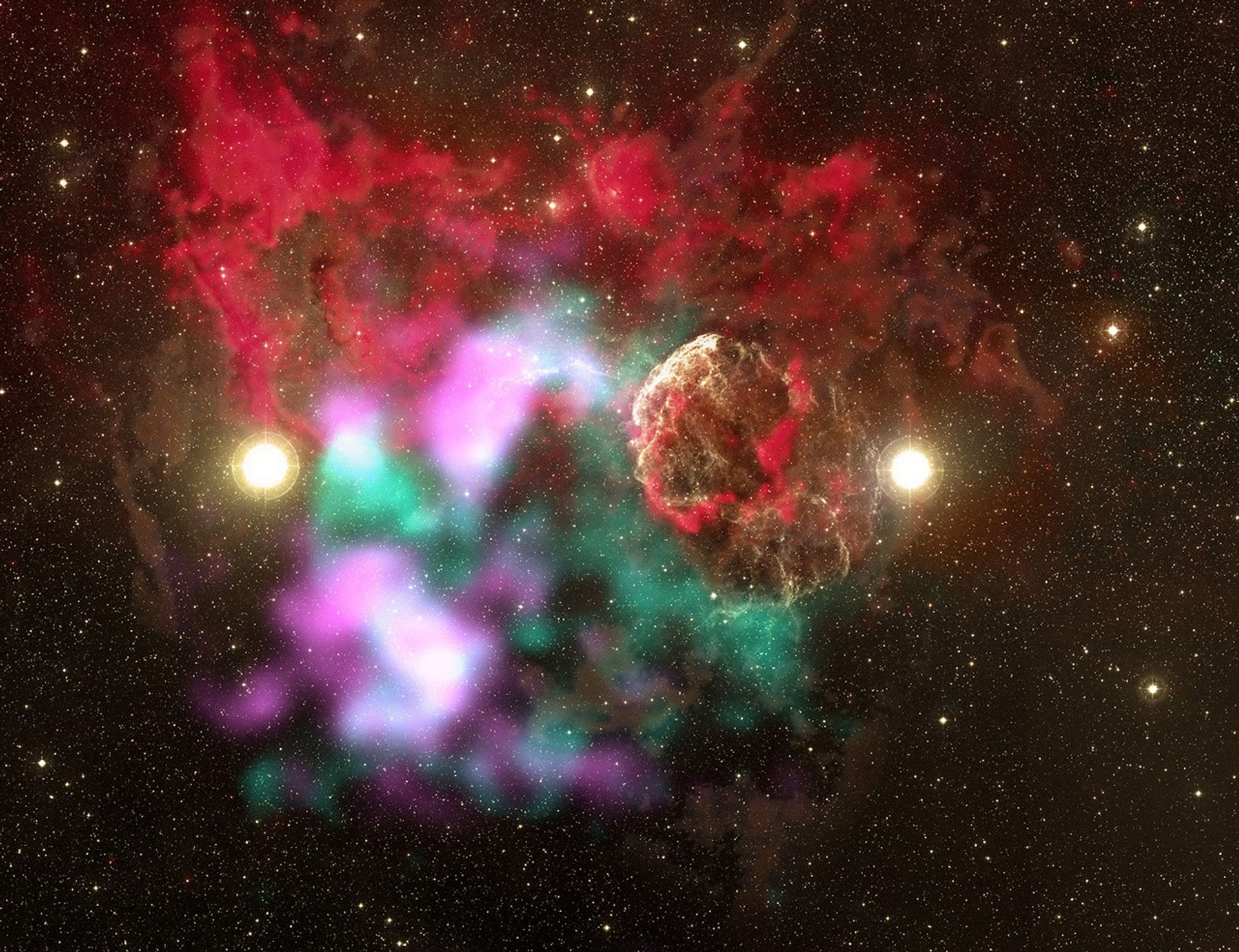
Multiwavelength composite showing high-energy light from the G189 supernova remnant
The well-known supernova remnant IC 443 (right) has an older, fainter neighbor (shown here in blue-green and magenta) called G189.6+3.3. A filament of gas between them, glowing in visible and ultraviolet light (violet arc at center), traces the neighbor’s shock wave and shows that both remnants are interacting with the same molecular cloud, shown in red, orange, brown for infrared and radio data and yellow for visible light. Blue-green shows X-rays from the fainter remnant, while magenta shows gamma rays with energies greater than 10 billion electron volts; for comparison, visible light has energies between about 2 and 3 electron volts. In this view, high-energy light from the much brighter IC 443 has been removed for clarity. Gamma-ray emission near the filament stems from protons accelerated in the supernova’s shock wave as it expands into the cloud.
NASA Goddard Space Flight Center and M. Michailidis et al. 2026; radio, MWISP and ESA/Planck; infrared: NASA/WISE/JPL-Caltech/UCLA; optical: DSS; ultraviolet: NASA/Swift; X-ray: SRG/eROSITA; gamma ray: NASA/DOE/Fermi LAT Collaboration

Astronomers think the Jellyfish Nebula is also a candidate PeVatron, a cosmic particle accelerator capable of boosting protons to energies so high they could nearly escape our galaxy. Such particles can produce gamma rays with trillions of times more energy than visible light. Finding a second particle accelerator near the Jellyfish Nebula could offer scientists new clues for how supernova remnants develop into PeVatrons.

“The overlapping remnants, a connecting gas filament, and the availability of data from Fermi and other facilities motivated us to delve into this complex but little-studied region,” said co-author Marianne Lemoine-Goumard, an astrophysicist at the French National Centre for Scientific Research (CNRS) based at the University of Bordeaux. “With Fermi’s LAT instrument, we found gamma-ray emission associated with accelerated protons in the northern part of the fainter remnant. If both remnants are interacting with the same structure, then they must share a common distance from us.”

The team concludes the remnants lie about 6,000 light-years away, their explosion centers are separated by roughly 40 light-years projected onto the plane of the sky, and the original stars may have been 20 or more times the Sun’s mass.

Estimates of the remnants’ ages vary widely, but the team concludes that the age of the Jellyfish Nebula is 8,000 to 9,000 years, while G189.6+3.3 is between 20,000 to 110,000 years old. This means the delay between the explosions could have extended for up to 100,000 years.

In addition, the team conducted computer simulations of a million massive binary systems. They show that systems where the stars orbit close enough to exchange matter and interact during their lives can readily produce dual supernova explosions with similar separations and time delays as those found for the remnants. The team also estimated that the chance of randomly encountering this combination of observed spatial alignment and compatible distances to be less than 1%, strongly supporting a physical association.

“The evidence we’ve compiled — including observations across the spectrum, the chemical and physical properties of the remnants, simulations, and more — paints a compelling picture of a dual supernova event,” said Michailidis.

This study identifies a unique possible example of a binary system where both stars exploded as supernovae and left behind separate, detectable supernova remnants. Astronomers think that most massive stars form in binary or multiple-star systems. The Jellyfish Nebula/G189.6+3.3 complex offers astronomers a rare opportunity to study how massive binary stars evolve, exchange matter, explode, and experience velocity changes — called kicks — induced by the supernova blast. It also provides a powerful new laboratory for understanding how coupled supernova remnants behave, including how they accelerate particles, generate gamma rays, and shape their surrounding environments.

“Fermi’s gamma-ray observations of supernova remnants continue to reveal the dynamic lives of stars,” said Elizabeth Hays, the Fermi project scientist at NASA’s Goddard Space Flight Center in Greenbelt, Maryland. “We can now connect the glowing remains of two massive stars to a powerful pair that evolved together over thousands of years.”

By Francis Reddy
NASA’s Goddard Space Flight Center, Greenbelt, Md.

Media Contact:
Claire Andreoli
301-286-1940
NASA’s Goddard Space Flight Center, Greenbelt, Md.

  •  

Insights from 173,303 Pakistan Genome Analyses

A groundbreaking analysis of 173,303 exomes and genomes from the Pakistan Genome Resource (PGR) has unveiled compelling insights into the genetic architecture of human diseases and the therapeutic potential of loss-of-function (LoF) variants. This expansive dataset offers unprecedented resolution into homozygous loss-of-function (homLoF) mutations across diverse genes, providing critical human biological data that challenge and refine preclinical models. The ramifications for drug discovery are profound, underscoring the value of population-based genomic studies in elucidating gene function and safety profiles of potential therapeutics.

The PGR study corroborated previously established phenotypic associations for numerous homLoF variants. For instance, homozygous LoF mutations in LDLR were linked to hypercholesterolemia, while variants in LPL were associated with elevated triglyceride levels. Similarly, ANGPTL3 and APOB homLoF carriers exhibited notably reduced cholesterol and triglyceride profiles, whereas variants in ADCY3, POMC, MC4R, and MRAP2 were implicated in obesity phenotypes. These observations not only validate the penetrance of key metabolic genes but also affirm the rigorous phenotyping framework employed by the PGR.

Delving into therapeutically relevant homLoF variants, the study sheds light on the nuanced interplay between genotype and phenotype in neurodegeneration. LRRK2, a well-known protein kinase whose gain-of-function variants increase Parkinson’s disease risk, was examined in the context of loss-of-function. Notably, two PGR participants harboring homozygous LRRK2 pLoF variants exhibited early-stage kidney disease, a phenotype absent in heterozygous carriers. This human evidence mirrors renal dysfunction observed in LRRK2 knockout rodent models and preclinical trials with LRRK2 inhibitors in primates, suggesting a need for vigilant renal monitoring in therapeutic contexts targeting LRRK2.

In the realm of metabolic disease, a participant with a homLoF variant in SLC2A4—the gene encoding GLUT4—demonstrated type 2 diabetes, aligning with experimental models where GLUT4 deficiency impairs glucose homeostasis. Contrastingly, homLoF variants in DENND1B, previously linked to obesity and implicated in MC4R signaling pathways, did not confer obesity phenotypes in the cohort. This could indicate a lack of functional penetrance of DENND1B in human energy balance, differing substantially from prior murine models. Moreover, carriers of homLoF mutations in POMC, MC4R, and MRAP2 exhibited elevated BMI, reinforcing their contributory role to obesity.

Cardiovascular research insights emerged with RXFP1, a gene encoding a receptor extensively studied for its role in fertility, fibrosis, and cardiac function. Despite the gene’s pivotal role in murine reproductive and cardiovascular models—where its absence causes pronounced phenotypes—16 PGR individuals with RXFP1 homLoF variants spanned ages 30 to 73 years with no consistent deficits. Subtle associations with reduced waist-to-hip ratio and myocardial infarction risk were noted, and echocardiographic evaluations revealed mild variations in cardiac function among some homozygotes. Such findings suggest that the translational relevance of RXFP1 as a therapeutic target may be overestimated from rodent data, urging a recalibration of expectations for RXFP1 agonist therapies.

The hepatoprotective potential of CIDEB inhibition also gained support from PGR findings. Fourteen individuals homozygous for CIDEB loss-of-function variants displayed no liver disease, and burden analyses correlated CIDEB deficiency with decreased levels of liver enzymes ALT and AST and a reduced risk of non-alcoholic fatty liver disease. This human genetic evidence bolsters the rationale for targeting CIDEB therapeutically with siRNA or other modalities, highlighting an encouraging safety profile for chronic intervention.

Surprising evolutionary biology insights were uncovered in the reproductive gene PRDM9, a histone methyltransferase essential for meiotic recombination hotspot determination. While Prdm9 knockout mice exhibit infertility, PGR identified multiple human homLoF variant carriers of PRDM9 with proven fertility and successful reproduction. This stark species divergence reveals that PRDM9’s indispensability in meiosis is not conserved in humans, emphasizing the complexity of translating mouse genetic models to human biology.

Sensory gene analyses revealed functionally impactful homLoF mutations in TRPM8, an ion channel activated by cold stimuli. RBG cohort phenotyping demonstrated that carriers exhibited delayed cold-induced pain sensitivity and increased tolerance to cold-related discomfort, aligning with murine knockout models. Intriguingly, genome-wide association studies link TRPM8 variants to migraine susceptibility, positing TRPM8 inhibition as a promising therapeutic avenue. The PGR data indicate that complete loss of TRPM8 is generally well-tolerated, mitigating safety concerns for pharmacological antagonism targeting migraine prevention.

Collectively, these results highlight the critical importance of integrating large-scale human genomic data with functional assays to delineate gene-disease relationships and therapeutic potential. The PGR exemplifies how comprehensive population-based sequencing can validate, refine, or refute biological assumptions derived from animal models, fostering a more precise paradigm for drug target validation. By profiling rare homLoF variants and linking them with detailed phenotypic data, the study provides invaluable resources for developing safer, more effective genetic-driven therapies.

This study also accentuates the value of consanguineous populations, such as the Pakistani cohort, which enrich for homozygous rare variants and enable the detection of recessive phenotypes difficult to observe in outbred populations. Such datasets maximize the discovery power for identifying natural human knockouts, thereby informing on both the efficacy and potential deleterious effects of gene inactivation.

Beyond specific gene findings, the broader implication is a caution against uncritical extrapolation from model organisms to human physiology. While murine models remain indispensable, discrepancies evidenced in PRDM9 and RXFP1 underscore that human genetic data are indispensable for accurate target validation and safety assessment. This alignment between genotype, phenotype, and therapeutic action forms the cornerstone of precision medicine.

As the PGR and similar initiatives continue to expand, the integration of genomics with phenotypic and clinical data will catalyze a new era of therapeutic development truly grounded in human biology. The promise of harnessing human loss-of-function variants lies not only in uncovering disease mechanisms but also in guiding drug discovery toward targets with validated human safety and efficacy profiles, ultimately accelerating the path from bench to bedside.

This landmark study published in Nature offers a crucial template for leveraging population genomics in drug development, emphasizing the necessity of human genetic evidence to underpin the next generation of therapies. The insights gleaned provide a roadmap for more rational, genetics-informed clinical decision-making, heralding a future where personalized medicine and pharmacogenomics converge to transform healthcare.


Subject of Research: Genomic analysis of homozygous loss-of-function variants in the Pakistan Genome Resource and their implications for human disease and drug target validation.

Article Title: Analysis of 173,303 exomes and genomes in the Pakistan Genome Resource.

Article References:
Koch, C., Khalid, S., Khan, M.Z. et al. Analysis of 173,303 exomes and genomes in the Pakistan Genome Resource. Nature (2026). https://doi.org/10.1038/s41586-026-10667-5

Image Credits: AI Generated

DOI: https://doi.org/10.1038/s41586-026-10667-5

  •  

NASA’s Fermi Mission Uncovers Possible Sibling Supernova Remnants

6 min read

NASA’s Fermi Mission Uncovers Possible Sibling Supernova Remnants

A new study of two supernova remnants, the debris left behind after stars explode, suggests the explosions came from stellar siblings that once orbited each other. The first star’s detonation sent its binary companion hurtling through space, and then, after traveling for thousands of years, the surviving star blew up too.

Infrared, visible, and ultraviolet image of the area around the Jellyfish Nebula
This multiwavelength scene shows the Jellyfish Nebula supernova remnant (right), the interstellar cloud it’s interacting with, and a distinctive curving filament to its upper left. The filament, which is shown here both in optical and ultraviolet (UV) light, is the visible part of an overlapping supernova remnant, G189.6+3.3, that is more prominent in radio and X-rays. Visible light is shown in yellow, UV from NASA’s Neil Gehrels Swift Observatory is shown in violet, and infrared light from NASA’s retired WISE (Wide-field Infrared Survey Explorer) mission appears in cyan, red, and orange. Both remnants are located about 6,000 light-years away in the constellation Gemini. The brilliant star at far right is Propus, also known as Eta Geminorum.
NASA Goddard Space Flight Center and M. Michailidis et al. 2026; optical: DSS; infrared: NASA/WISE/JPL-Caltech/UCLA; ultraviolet: NASA/Swift

“Using 16 years of data from NASA’s Fermi Gamma-ray Space Telescope, our analysis uncovered gamma rays associated with a supernova remnant that was hidden in the glare of its neighbor, the Jellyfish Nebula, one of the brightest gamma-ray-emitting supernova remnants known,” said Miltiadis Michailidis, a postdoctoral fellow in the physics department at Stanford University in California. “There are so many striking connections between the two remnants that we conclude they’re likely related, giving us the first known example of a binary system where both stars have undergone supernova explosions.”

Michailidis presented the findings Wednesday at the 248th meeting of the American Astronomical Society in Pasadena, California. A paper describing the results will appear in a future edition of Nature Communications.

The study focused on a faint supernova remnant called G189.6+3.3, which is mainly visible in X-rays. It is upstaged by its brighter and better-known neighbor, the Jellyfish Nebula (IC 443). The two star wrecks, both located in the constellation Gemini, appear to partially overlap as seen in X-rays. Recent X-ray evidence suggests that hot plasma likely associated with G189.6+3.3 may extend across the entire region, a hint that the overlap may be nearly total.

A massive star explodes when its energy-producing core runs out of fuel and collapses under its own weight, triggering an explosion that blows the star apart. The explosion’s shock wave encloses a hot cloud of debris that rapidly expands into space. So far, astronomers have cataloged about 300 supernova remnants in our galaxy.  

The Fermi mission is part of NASA’s fleet of observatories monitoring the changing cosmos to help humanity better understand how the universe works. More than a decade ago, observations from Fermi’s LAT (Large Area Telescope) showed that the shock waves of supernova remnants accelerated particles to within a fraction of the speed of light, a process first proposed by physicist Enrico Fermi — the mission’s namesake — in 1949.

These high-speed particles, called cosmic rays, interact with interstellar gas to produce gamma rays, the highest-energy form of light. Protons make up 99% of cosmic ray particles. To prove that accelerated protons are responsible for the glow, astronomers search for a specific gamma-ray feature. When cosmic-ray protons smash into interstellar gas, they produce a short-lived particle called a neutral pion, which almost immediately decays into a pair of gamma rays. This emission occurs within a specific band of energies associated with the neutral pion’s mass and lies within the range detected by Fermi’s LAT instrument.

In 2013, Fermi observations proved that the Jellyfish Nebula, which is interacting with part of a glowing cloud of hydrogen gas known as Sharpless 249, produced gamma rays through this mechanism. Its neighbor, G189.6+3.3, was discovered in 1994 as part of an X-ray survey by the German-led ROSAT (Roentgen Satellite) mission.

A bright filament of gas lies between the overlapping remnants. New observations of this feature reveal that the shock wave from G189.6+3.3 slammed into dense interstellar gas there and dramatically slowed, key evidence that both remnants are interacting with the same cloud system.

Multiwavelength composite showing high-energy light from the G189 supernova remnant
The well-known supernova remnant IC 443 (right) has an older, fainter neighbor (shown here in blue-green and magenta) called G189.6+3.3. A filament of gas between them, glowing in visible and ultraviolet light (violet arc at center), traces the neighbor’s shock wave and shows that both remnants are interacting with the same molecular cloud, shown in red, orange, brown for infrared and radio data and yellow for visible light. Blue-green shows X-rays from the fainter remnant, while magenta shows gamma rays with energies greater than 10 billion electron volts; for comparison, visible light has energies between about 2 and 3 electron volts. In this view, high-energy light from the much brighter IC 443 has been removed for clarity. Gamma-ray emission near the filament stems from protons accelerated in the supernova’s shock wave as it expands into the cloud.
NASA Goddard Space Flight Center and M. Michailidis et al. 2026; radio, MWISP and ESA/Planck; infrared: NASA/WISE/JPL-Caltech/UCLA; optical: DSS; ultraviolet: NASA/Swift; X-ray: SRG/eROSITA; gamma ray: NASA/DOE/Fermi LAT Collaboration

Astronomers think the Jellyfish Nebula is also a candidate PeVatron, a cosmic particle accelerator capable of boosting protons to energies so high they could nearly escape our galaxy. Such particles can produce gamma rays with trillions of times more energy than visible light. Finding a second particle accelerator near the Jellyfish Nebula could offer scientists new clues for how supernova remnants develop into PeVatrons.

“The overlapping remnants, a connecting gas filament, and the availability of data from Fermi and other facilities motivated us to delve into this complex but little-studied region,” said co-author Marianne Lemoine-Goumard, an astrophysicist at the French National Centre for Scientific Research (CNRS) based at the University of Bordeaux. “With Fermi’s LAT instrument, we found gamma-ray emission associated with accelerated protons in the northern part of the fainter remnant. If both remnants are interacting with the same structure, then they must share a common distance from us.”

The team concludes the remnants lie about 6,000 light-years away, their explosion centers are separated by roughly 40 light-years projected onto the plane of the sky, and the original stars may have been 20 or more times the Sun’s mass.

Estimates of the remnants’ ages vary widely, but the team concludes that the age of the Jellyfish Nebula is 8,000 to 9,000 years, while G189.6+3.3 is between 20,000 to 110,000 years old. This means the delay between the explosions could have extended for up to 100,000 years.

In addition, the team conducted computer simulations of a million massive binary systems. They show that systems where the stars orbit close enough to exchange matter and interact during their lives can readily produce dual supernova explosions with similar separations and time delays as those found for the remnants. The team also estimated that the chance of randomly encountering this combination of observed spatial alignment and compatible distances to be less than 1%, strongly supporting a physical association.

“The evidence we’ve compiled — including observations across the spectrum, the chemical and physical properties of the remnants, simulations, and more — paints a compelling picture of a dual supernova event,” said Michailidis.

This study identifies a unique possible example of a binary system where both stars exploded as supernovae and left behind separate, detectable supernova remnants. Astronomers think that most massive stars form in binary or multiple-star systems. The Jellyfish Nebula/G189.6+3.3 complex offers astronomers a rare opportunity to study how massive binary stars evolve, exchange matter, explode, and experience velocity changes — called kicks — induced by the supernova blast. It also provides a powerful new laboratory for understanding how coupled supernova remnants behave, including how they accelerate particles, generate gamma rays, and shape their surrounding environments.

“Fermi’s gamma-ray observations of supernova remnants continue to reveal the dynamic lives of stars,” said Elizabeth Hays, the Fermi project scientist at NASA’s Goddard Space Flight Center in Greenbelt, Maryland. “We can now connect the glowing remains of two massive stars to a powerful pair that evolved together over thousands of years.”

By Francis Reddy
NASA’s Goddard Space Flight Center, Greenbelt, Md.

Media Contact:
Claire Andreoli
301-286-1940
NASA’s Goddard Space Flight Center, Greenbelt, Md.

The post NASA’s Fermi Mission Uncovers Possible Sibling Supernova Remnants appeared first on NASA Science.

  •  

Dogs and humans age in similar ways, surprising study finds

Dogs may have more in common with humans than just sharing our homes and routines. A new study has found that the same biological signals linked to lifespan in people also appear in dogs, suggesting that both species may age in remarkably similar ways. The research comes from the Dog Aging Project, a long-term study […]

The post Dogs and humans age in similar ways, surprising study finds appeared first on Knowridge Science Report.

  •  

Effectiveness of Prone Positioning in Infants with Acute Bronchiolitis: New Insights

A recent clinical investigation into the impact of prone positioning on infants suffering from moderate to severe bronchiolitis has brought new insights into pediatric respiratory care. Bronchiolitis, an acute infection of the lower respiratory tract commonly caused by respiratory syncytial virus (RSV), presents a significant healthcare challenge worldwide, particularly among infants. The study specifically targeted infants receiving high-flow nasal cannula (HFNC) therapy, a common supportive treatment designed to improve oxygenation and reduce respiratory effort. Despite its widespread use, the efficacy of adjunctive positioning techniques like prone positioning in this population has remained uncertain until now.

The trial explored whether placing infants in the prone position—lying on their stomachs—could influence clinical outcomes, specifically by reducing the escalation of care. Escalation of care represents clinical deterioration requiring increased respiratory support, such as moving from HFNC to mechanical ventilation or intensive care admission. The physiological rationale behind prone positioning lies in its known benefits in improving ventilation-perfusion matching, enhancing lung mechanics, and optimizing secretion clearance. These effects have been well-documented in adult acute respiratory distress syndrome (ARDS) management, yet pediatric evidence remains limited.

In the conducted study, infants with moderate to severe bronchiolitis under HFNC support were randomized to receive either prone positioning or continue with standard positioning protocols. Researchers meticulously monitored clinical outcomes, including respiratory parameters, oxygenation indices, and the need for escalating respiratory support over the treatment course. The cohort was carefully selected to include infants representing a range of disease severities, thereby ensuring the findings would be broadly applicable to clinical practice.

Contrary to expectations driven by adult data and mechanistic theories, the results revealed no statistically significant reduction in care escalation rates associated with prone positioning in this infant population. The observed odds ratio exhibited a wide 95% confidence interval, indicating variability and uncertainty around the estimate. This statistical phenomenon suggests that while the study failed to demonstrate definitive benefit, it did not conclusively exclude the possibility that certain subgroups might still derive clinical advantage from this intervention.

The ambiguity exposed by the confidence intervals underscores the complex interplay of factors influencing respiratory mechanics and disease progression in bronchiolitis. The heterogeneity of this disease, rooted in diverse viral etiologies and varying host immune responses, may attenuate the effects of positional changes on lung function. Moreover, compliance with prone positioning protocols can be particularly challenging in infants, owing to safety concerns and caregiver adherence, potentially diluting any therapeutic effect.

Physiologically, the application of high-flow nasal cannula therapy delivers heated and humidified oxygen at flow rates sufficient to generate a mild positive end-expiratory pressure (PEEP), which helps maintain alveolar patency. Prone positioning theoretically complements this by redistributing ventilation, reducing dorsal lung atelectasis, and improving secretion mobilization. However, the dynamic respiratory mechanics of infants, coupled with the distinct pathophysiology of bronchiolitis characterized primarily by airway inflammation and mucus plugging, may limit the translation of these theoretical benefits into clinical outcomes.

In reviewing the methodological aspects, the study was conducted with rigorous adherence to randomized controlled trial protocols. Blinding was implemented where feasible, and standardized clinical criteria dictated escalation of care, thereby minimizing potential biases. The statistical power and sample size calculations accounted for anticipated effect sizes based on previous smaller studies, yet the results accentuated the need for larger, multicentric trials to verify findings and identify responsive patient subsets.

The absence of clear benefit does not diminish the value of prone positioning as a component of critical care but rather refines its role within the therapeutic armamentarium for bronchiolitis. Clinical decisions must integrate a nuanced understanding of individual patient factors, balancing potential physiological advantages against logistical and safety considerations. Additionally, continued research investigating adjunctive therapies, including pharmacologic agents and alternative respiratory support modalities, remains imperative to improve outcomes for this vulnerable population.

This investigation is particularly timely given the ongoing global burden of bronchiolitis and the frequent hospitalization of infants due to severe respiratory distress. Optimizing non-invasive interventions like HFNC and positioning could significantly impact healthcare resource utilization and patient morbidity if proven effective. Until then, prudent clinical judgment guided by evolving evidence must steer treatment approaches.

Future studies should employ advanced imaging and respiratory monitoring techniques such as electrical impedance tomography and lung ultrasound to elucidate the mechanistic effects of prone positioning on infant lung ventilation and perfusion patterns. Stratification by viral etiology, age, and baseline respiratory status could also uncover subpopulations more amenable to positional interventions. Furthermore, integrating caregiver education and safety protocols will enhance feasibility and adherence, potentially amplifying clinical benefits.

In summary, the recent multicenter randomized trial encompassing infants with moderate to severe bronchiolitis on high-flow nasal cannula support indicates that prone positioning does not significantly reduce the risk of escalation of care. Nevertheless, the wide confidence intervals highlight that this evidence is not conclusive, and further meticulously designed research is warranted. Advancing the understanding of respiratory mechanics and therapeutic positioning strategies in bronchiolitis remains a critical priority in pediatric medicine.

Corresponding author Dr. Florent Baudin emphasizes the necessity for ongoing critical appraisal and clinical trials to refine pediatric respiratory care practices. The study’s findings, presented at the International Congress of the European Society of Paediatric and Neonatal Intensive Care, contribute valuable data to the pediatric critical care community. Engaging clinicians, researchers, and healthcare providers in collaborative efforts will be essential to translate these insights into improved outcomes for infants affected by this common yet severe respiratory condition.


Subject of Research:
Prone positioning effectiveness in infants with moderate to severe bronchiolitis receiving high-flow nasal cannula therapy.

Article Title:
Not provided.

News Publication Date:
Not provided.

Web References:
Not provided.

References:
Not provided.

Image Credits:
Not provided.

Keywords:
Bronchiolitis, infants, prone positioning, high-flow nasal cannula, respiratory disorders, pediatric intensive care, respiratory support, lung mechanics, clinical research, acute infections, observational studies, medical treatments.

  •  

Dexmedetomidine Safety, Pharmacokinetics in Cooling Infants

In the delicate realm of neonatal intensive care, managing infants suffering from hypoxic-ischemic encephalopathy (HIE) presents a multifaceted challenge. Therapeutic hypothermia (TH) has emerged as the cornerstone treatment for neonatal encephalopathy, significantly improving neurological outcomes by mitigating ongoing brain injury that occurs after asphyxia at birth. However, the sedation and analgesia required during TH add complexity to clinical care. Traditionally, morphine has been the analgesic agent of choice, but concerns over its respiratory depressant effects and potential neurodevelopmental consequences have prompted the search for safer alternatives. Enter dexmedetomidine, a potent alpha-2 adrenergic receptor agonist known for its sedative and analgesic properties without significant respiratory compromise. Yet, despite its promising pharmacological profile, the safety and pharmacokinetics (PK) of dexmedetomidine in neonates undergoing cooling therapy remain largely unexplored—until now.

A groundbreaking clinical trial, aptly named the DICE trial (Dexmedetomidine use in Infants undergoing Cooling due to neonatal Encephalopathy), spearheaded by Baserga et al., has cast new light on this issue. Published recently in Pediatric Research, the trial meticulously investigates both the safety parameters and PK behavior of dexmedetomidine when administered to cooled neonates. This research addresses a critical void in pediatric pharmacology, potentially reshaping sedation practices in neonatal intensive care units worldwide.

Therapeutic hypothermia involves lowering the infant’s core temperature to 33.5°C for 72 hours, slowing metabolic processes and reducing neuronal damage after birth asphyxia. While TH improves survival and reduces disability rates, it also complicates drug metabolism due to the altered physiologic state induced by hypothermia. Infants undergoing TH frequently require continuous sedation to prevent shivering and alleviate stress, conditions that exacerbate brain injury if unmanaged. The sedative agent must provide effective analgesia without impeding vital respiratory functions or prolonging recovery. Morphine, despite being widely utilized, is not an optimal candidate due to dose-dependent respiratory depression and a potentially detrimental impact on developing neural circuits.

Dexmedetomidine’s mechanism of action involves selective stimulation of alpha-2 adrenergic receptors in the locus coeruleus region of the brainstem, leading to decreased norepinephrine release and hence sedation and analgesia. Unlike opioids, it typically does not cause respiratory depression, making it an attractive alternative for fragile neonates on TH. However, neonates present unique challenges due to immature hepatic enzyme systems and renal functions, making PK predictions complex. Additionally, TH alters enzyme activity and systemic circulation, affecting drug clearance and distribution.

The DICE trial comprehensively evaluates dexmedetomidine’s PK parameters, including clearance rates, volume of distribution, and half-life in cooled neonates. Infants receiving dexmedetomidine during TH were closely monitored for any adverse events, sedation depth, and plasma drug concentrations using highly sensitive assays. This allowed the researchers to generate detailed PK profiles, vital for establishing dosing regimens that ensure efficacy and safety.

One of the study’s pivotal findings is that the clearance of dexmedetomidine is significantly reduced during the hypothermic phase compared to normothermia. This decrement underscores the importance of dose adjustment since standard dosages could lead to drug accumulation, increasing the risk of bradycardia or hypotension. Conversely, as rewarming commences, clearance values gradually return toward normal, necessitating further dose modulation to maintain therapeutic plasma levels.

Safety endpoints reported by Baserga and colleagues are particularly encouraging. Adverse effects typically associated with dexmedetomidine, such as profound bradycardia and hypotension, were infrequent and generally mild. Continuous cardiorespiratory monitoring revealed stable parameters in the majority of subjects, with no episodes of respiratory depression. Importantly, sedation scores indicated adequate analgesia and sedation quality, thereby validating dexmedetomidine’s dual role without the respiratory risks posed by opioids.

Beyond PK and safety, the trial explores the pharmacodynamic implications of dexmedetomidine during TH. The sedative’s anti-inflammatory and neuroprotective properties may synergize with hypothermia’s benefits, although this hypothesis requires further investigation. Animal model data suggest that alpha-2 adrenergic agonism may attenuate excitotoxic injury and oxidative stress, pathways central to neuronal death in HIE. Should future studies confirm these effects in humans, dexmedetomidine could transform neonatal encephalopathy management by enhancing neuroprotection beyond sedation.

Another critical aspect highlighted by the research is dexmedetomidine’s impact on intensive care workflow. Its relatively predictable sedation profile and minimal respiratory depression could reduce the need for mechanical ventilation, thereby lowering the risk of associated complications. Enhanced safety margins facilitate more tailored sedation strategies and potentially shortened intensive care stays, lifting both clinical and economic burdens on neonatal units.

The DICE trial’s results yield a compelling argument for revisiting current sedation protocols in TH-treated neonates. The detailed PK modeling and robust safety data provide clinicians with a scientific foundation for incorporating dexmedetomidine into standard care. Yet, the authors prudently emphasize the need for larger randomized controlled trials to conclusively determine long-term neurodevelopmental outcomes, optimal dosing schedules, and comparative efficacy versus morphine.

This research emerges amidst a broader paradigm shift in neonatal critical care, where individualized pharmacotherapy and precision medicine are gaining ground. Neonatal drug development historically suffers from a paucity of rigorous studies, often leading to off-label medication use based on extrapolation from adult data. The DICE trial represents a milestone by focusing exclusively on neonates under a specialized treatment modality, thereby refining our understanding of drug behavior in this vulnerable population.

The adoption of dexmedetomidine could align with evolving ethical standards prioritizing minimization of harm and maximal comfort in neonatal intensive care. Parents and clinicians alike are increasingly motivated to seek sedation regimens that preserve neurocognitive potential while ensuring humane care during painful and distressing therapeutic procedures.

In conclusion, the DICE trial spearheaded by Baserga et al. denotes a landmark advance in neonatology. By delineating the pharmacokinetics and safety profile of dexmedetomidine in infants undergoing therapeutic hypothermia for neonatal encephalopathy, this study charts a promising path forward. The synergy between TH and dexmedetomidine could herald a new era of neuroprotective sedation strategies that not only alleviate pain and discomfort but also contribute to improved neurological outcomes in the most fragile patients. As further validation studies emerge, dexmedetomidine stands poised to become an indispensable therapeutic tool in the neonatal intensive care arsenal.


Subject of Research: Safety and pharmacokinetics of dexmedetomidine use in neonates undergoing therapeutic hypothermia due to neonatal encephalopathy.

Article Title: Dexmedetomidine use in Infants undergoing Cooling due to neonatal Encephalopathy (DICE trial): safety and pharmacokinetics.

Article References:
Baserga, M.C., Bahr, T.M., Yang, M.J. et al. Dexmedetomidine use in Infants undergoing Cooling due to neonatal Encephalopathy (DICE trial): safety and pharmacokinetics. Pediatr Res (2026). https://doi.org/10.1038/s41390-026-05184-0

Image Credits: AI Generated

DOI: 16 June 2026

Keywords: neonatal encephalopathy, therapeutic hypothermia, dexmedetomidine, sedation, analgesia, pharmacokinetics, neonates, neuroprotection

  •  
❌