❌

Reading view

Nothing cancels this year’s CMF phone due to RAM prices

The CMF Phone 2 Pro with none of its accessories attached

Nothing's next budget phone is the latest victim of RAMageddon. As 9to5Google reports, Nothing co-founder Akis Evangelidis announced in a post on X that a follow-up to the CMF Phone 2 Pro won't be coming this year:

We were working on a successor but with memory prices where they are right now, we can't build a phone that feels like a genuine step forward at a price that makes sense for CMF. As a result, we've decided not to launch a new CMF phone this year.

Last week, Nothing CEO and co-founder Carl Pei also said the RAM shortage has impacted the cost of the company's mid-range phone, stating, "For Phone 4A, memory costs doubled between …

Read the full story at The Verge.

  •  

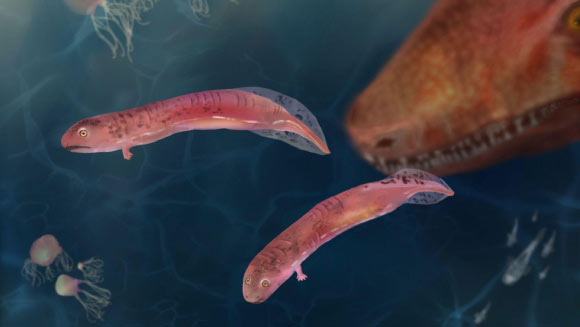
Earth’s First Land Animals May Never Have Been Amphibian-Like After All

New fossil evidence suggests that embolomeres did not undergo a metamorphosis the way that modern amphibians do when growing up, which challenges a long-standing scientific belief that amphibians, reptiles, and mammals evolved from animals that had a tadpole stage. Image credit: Berit Godring.

Paleontologists from the Field Museum of Natural History have described the fossilized remains of baby embolomeres, crocodile-like predators that prowled ancient rivers and swamps between 350 and 280 million years ago.

The post Earth’s First Land Animals May Never Have Been Amphibian-Like After All appeared first on Sci.News: Breaking Science News.

  •  

How H5N1 Bird Flu Went Undetected for Weeks in Dairy Cattle

In early 2024, a baffling outbreak of H5N1 avian influenza emerged among dairy cattle in the Texas Panhandle, presenting a new and unexpected clinical manifestation of the virus. Unlike the typical respiratory illness caused by H5N1 in other mammals, affected cows exhibited severe necrotizing mastitis, an inflammatory condition predominantly targeting the mammary glands. This atypical tissue tropism challenged existing paradigms and delayed the accurate diagnosis, as initial veterinary investigations focused mainly on bacterial pathogens common to mastitis. The revelation that H5N1 was the etiological agent marked a critical moment in understanding how influenza viruses can adapt to novel hosts and tissues.

The study, recently published in Science Advances by researchers at the University of Pittsburgh School of Public Health, provides pioneering mechanistic insights into this unusual manifestation. The research team, led by Dr. Suresh Kuchipudi, elucidated the molecular basis for the H5N1 virus’s propensity to infect bovine mammary tissue rather than respiratory organs. This phenomenon, now observed in over 100 avian and mammalian species globally, underscores the remarkable plasticity of the H5N1 virus and its ability to exploit unique receptor architectures in different host species.

Traditionally, H5N1 and related influenza viruses target sialic acid glycan receptors present in the respiratory tract, facilitating viral entry primarily via respiratory epithelial cells. However, in bovines, the absence of clinical respiratory disease despite the presence of these glycans suggested a more nuanced receptor interaction paradigm. Kuchipudi’s group hypothesized that not just the presence but the precise molecular subtype and distribution of influenza receptors could dictate tissue tropism. Their investigation focused on delineating the receptor landscape across bovine tissues using cutting-edge glycomic methods combined with binding assays and ultra-high-resolution microscopy.

The team employed glycomics—a comprehensive approach to cataloging glycan structures—collaborating with expert Dr. Lauren E. Pepi from Harvard Medical School. They identified that among various glycan receptors, only a particular subclass known as N-linked sialic acid receptors demonstrated a high affinity for the H5N1 virus. Crucially, these receptors were found to be prevalent and densely expressed in the mammary epithelial cells of the udder but conspicuously scarce in bovine airway tissues. This spatial receptor distribution offers a molecular explanation for the virus’s unusual targeting of the mammary gland, enabling productive viral replication and resulting clinical mastitis.

The discovery sheds light on the critical role of receptor architecture in species-specific influenza virus infection. Prior reports indicated the presence of flu-related glycans in bovine respiratory tissues, but those receptors did not support significant viral binding or replication. The differential receptor expression patterns in respiratory versus mammary tissues effectively reprogrammed the virus’s tissue tropism. This specialization allows H5N1 to hijack the bovine mammary environment as a niche, explaining why infected cattle shed the virus in milk rather than displaying respiratory symptoms.

Beyond animal health, this finding carries important public health implications. The intense viral shedding into milk poses a risk to farm workers exposed to raw milk and raises concerns regarding zoonotic transmission routes. Dr. Kuchipudi points out that while pasteurization effectively neutralizes the virus, the common practice of feeding raw milk to domestic pets, notably cats, can facilitate cross-species transmission. Indeed, previous studies documented feline fatalities linked to H5N1 infection. This highlights the hidden dangers of viral reservoirs in dairy cattle and underscores the need for enhanced surveillance and biosecurity protocols within agricultural settings.

Methodologically, the study stands out for its innovative multimodal approach. The integration of high-precision receptor mapping with functional binding experiments allowed researchers to move beyond conventional histochemical staining. This enabled a granular understanding of the receptor types mediating viral entry, paving the way for predictive models of viral host and tissue susceptibility. By decoding the receptor landscape at this molecular scale, the research team demonstrated an unprecedented ability to identify viral tropism determinants, which could serve as early warning indicators for emergent influenza strains.

Looking forward, these insights form the foundation for a new paradigm in influenza research and surveillance. Scientists can now preemptively screen various animal species—not just for the presence of virus-compatible receptors but for specific tissue vulnerabilities within those hosts. This capability is transformative for anticipating how H5N1 and related viruses might manifest clinically, whether through respiratory symptoms, mastitis-like conditions, or neurological involvement, as previously seen in felines. Such proactive screening could revolutionize public health responses, affording precious time to deploy targeted interventions and prevent widespread outbreaks.

The implications of receptor-based viral tropism extend beyond livestock to potential future zoonoses affecting humans. Understanding the molecular basis of host adaptation provides critical clues into viral evolution and spillover risk. This knowledge also informs vaccine development and therapeutic strategies by highlighting tissue-specific pathways of viral entry and replication. As zoonotic influenza viruses continue to adapt, harnessing receptor glycomics will be vital for staying ahead of viral evolution and protecting both animal and human health.

The study was a collaborative effort involving multiple institutions and experts, including contributors from Pennsylvania State University, Harvard University, and North Dakota State University. Their combined expertise spanned infectious diseases, glycomics, virology, and veterinary medicine, enabling a comprehensive and multidisciplinary approach. Supported by the U.S. Department of Agriculture’s National Institute of Food and Agriculture and Pitt Public Health, this research exemplifies how fundamental science can directly inform and improve agricultural biosecurity and zoonotic disease preparedness.

Ultimately, this investigation marks a significant milestone in understanding influenza virus host adaptation. By revealing the receptor basis for the bovine-specific tissue tropism of H5N1, the study not only clarifies an enigmatic veterinary health issue but also establishes a versatile scientific framework for future viral threat assessment. As influenza viruses continue to evolve in complex ecological contexts, such mechanistic insights will be indispensable tools to foresee their next unexpected moves and mitigate their impact on global health.


Subject of Research: Animals
Article Title: Receptor Basis of Unusual Tissue Tropism of Avian Influenza H5N1 Clade 2.3.4.4b Virus in Cattle
News Publication Date: 19-Jun-2026
Web References: https://doi.org/10.1126/sciadv.aea2068
Image Credits: Department of Infectious Diseases and Microbiology, School of Public Health, University of Pittsburgh
Keywords: Avian influenza, Glycomics, Public health, Viruses

  •  

Renault militarise son SUV Rafale : pourquoi ce prototype en dit long sur les guerres futures

Au salon Eurosatory 2026, Renault et Thales dévoilent un prototype de véhicule tactique 4x4 hybride, capable de coordonner drones et robots en temps réel. Le véhicule en question est un SUV Rafale et il répond aux nouvelles exigences imposées par la guerre moderne.

  •  

Sundar Pichai ricorda di quando Ballmer disse che Chrome era irrilevante

Che personaggio, che è stato, Steve Ballmer, negli anni al timone di Microsoft: sotto la sua guida il colosso di Redmond ha fatto tante grandi cose, ma tra gli appassionati tech probabilmente sarà ricordato più che altro per la sua personalità sopra le righe e le sue previsioni tanto sicure di sé quanto, con il senno di poi, fuori strada. Quando sminuì il primo iPhone perché non aveva una tastiera fisica ed era scomodo mandare le email. Quando lanciò lo Zune. Quando degli attori vestiti da Windows Phone fecero il funerale a iPhone. O quando disse che Google Chrome era rilevante come “un errore di approssimazione” nella guerra dei browser.

Quest’ultima sparata era stata fatta in una vecchia intervista intorno al 2009, quando oggettivamente Chrome era stato appena lanciato e Microsoft aveva un dominio praticamente assoluto del settore con Internet Explorer (eravamo al 75% di quote circa). Ma se n’è riparlato proprio in questi giorni grazie a un intervento dell’attuale CEO di Google, Sundar Pichai, che ha tenuto il discorso di fine anno presso la sua alma mater, l’università di Stanford.


Top gamma a prezzo da medio gamma? Poco F8 Ultra, compralo al miglior prezzo da Aliexpress.com a 594 euro.

CLICCA QUI PER CONTINUARE A LEGGERE

  •  

Saily in viaggio, tra e-SIM, Fast Track e Lounge: tutti i vantaggi 2026

Una delle principali preoccupazioni di chi viaggia all'estero è sicuramente l'accesso alla connessione dati. Arrivati all'aeroporto bisogna cercare del primo operatore locale, che spesso è preso d'assalto, oppure accontentarsi dei pochi gigabyte che il proprio piano prevede fuori dal nostro Paese. Ultimamente però stanno spopolando piattaforme per acquistare e gestire eSIM come Saily, che rendono tutto più comodo, semplice e veloce. Recentemente sono stati aggiunti anche servizi extra utili per chi viaggia. In questo articolo vi spieghiamo passo dopo passo come si configura tutto quanto.

COS’È UNA ESIM

Prima di capire come funziona, è importante capire che cos'è una eSIM. Siamo sempre stati abituati a utilizzare SIM fisiche e negli anni abbiamo potuto osservarne l'evoluzione passando dal formato standard alla microSIM fino alla nanoSIM. All'interno di questa schedina vengono raccolte tutte le informazioni necessarie per collegarsi al proprio operatore.

La eSIM è esattamente la stessa cosa, ma si tratta di un chip dedicato all'interno dello smartphone e non di un componente rimovibile. Attenzione però: non tutti gli smartphone ne sono dotati. Solitamente i modelli più recenti sì, ma vi consigliamo di verificarne la compatibilità.


Top gamma a prezzo da medio gamma? Poco F8 Ultra, compralo al miglior prezzo da Aliexpress.com a 594 euro.

CLICCA QUI PER CONTINUARE A LEGGERE

  •  

Voici l'étonnante expérience menée en 1925 pour tenter de prouver que le sommeil était inutile

Été 1925. Un professeur convaincu que dormir est une perte de temps lance un défi radical à sept étudiants : les tenir éveillés pendant 60 heures d'affilée. Une expérience folle, menée à Washington dans un contexte d'euphorie industrielle. Et si cette nuit blanche prolongée avait finalement...

  •  

Satélite usa IA para decidir o que observar em órbita sem precisar de intervenção humana

A Google DeepMind alimenta o sistema de inteligência artificial do satélite YAM‑9 que, desde que está em órbita, consegue identificar autonomamente aquilo que é necessário visualizar.

The post Satélite usa IA para decidir o que observar em órbita sem precisar de intervenção humana appeared first on Tek Notícias.

  •  

Canicule historique : plusieurs régions bientôt en alerte rouge, les prochains jours inquiètent

Ce jeudi, les premiers 40 °C de l’année ont été atteint à Montmorillon dans la Vienne, alors que cette nouvelle canicule débutait à peine. Après une légère baisse des températures à l’ouest ce vendredi, puis au nord samedi, un niveau de chaleur extrême va se produire pendant trois jours.

  •  

T1 Phone PR firm is ‘not assisting Trump Mobile any further’

Promotional image of the redesigned Trump Mobile T1 Phone on a beige background

Where's the Trump phone? We're going to keep talking about it every week. We don't have the phones we preordered yet, but this week we received unexpected news from Trump Mobile's media relations manager.

If you've been following my reporting on the Trump phone, you'll know that Trump Mobile doesn't exactly keep open lines of communication with the media. That doesn't look to be changing, with the company no longer working with its long-term media relations firm.

Poplar Group has represented Trump Mobile since at least last June, when the company's founding partner Chris Walker gave a statement to USA Today, insisting at the time that "T1 …

Read the full story at The Verge.

  •  

Android 17 e il mistero dei widget scomparsi sui Pixel: Google lavora ad un fix

Da qualche giorno Android 17 è sbarcato sui Google Pixel. E si sa, gli aggiornamenti portano novità ma anche qualche bug. E l'ultimo major update non fa eccezione: in particolare, diversi utenti hanno segnalato la scomparsa improvvisa dei widget dalla schermata Home. Con un un aggravante non da poco: in molti casi risulta impossibile ripristinarli.

WIDGET SPARITI

La situazione non è del tutto nuova. Le prime segnalazioni erano infatti emerse già nei mesi scorsi durante il programma beta di Android 17, ma il problema sembra essere riuscito a superare tutte le fasi di test fino ad arrivare alla release definitiva.

Le testimonianze pubblicate nelle ultime ore su Reddit descrivono uno scenario piuttosto simile. Dopo aver installato Android 17, alcuni utenti si sono ritrovati con una schermata Home svuotata dei widget precedentemente configurati. Il problema non riguarda soltanto la loro scomparsa: in molti casi i widget interessati non risultano più disponibili nemmeno all'interno del selettore dedicato, rendendo impossibile aggiungerli nuovamente. Dalle segnalazioni emerge inoltre che il comportamento sembra colpire soprattutto i widget già presenti prima dell'aggiornamento, mentre quelli aggiunti successivamente potrebbero non essere interessati dall'anomalia.

CLICCA QUI PER CONTINUARE A LEGGERE

  •  

Investigadores transformam smartphones velhos em centros de dados que podem ser usados em escolas

Uma experiência mostra que os smartphones velhos e usados podem tornar-se uma solução barata e sustentável para tarefas de computação, sendo capazes de rivalizar com centros de dados.

The post Investigadores transformam smartphones velhos em centros de dados que podem ser usados em escolas appeared first on Tek Notícias.

  •  

Sta diventando impossibile usare Gmail sui Google Pixel: la tastiera non compare

Gmail sta creando qualche grattacapo a diversi utenti, soprattutto a chi utilizza uno smartphone Google Pixel. Più di una segnalazione descrive comportamenti anomali dell'app: tentando di rispondere alle email, la tastiera semplicemente non compare e rende la cosa impossibile da mandare avanti.

COSA STA SUCCEDENDO SU GMAIL

Tutto avviene proprio a seguito del tentativo di iniziare a scrivere un'email di risposta. Invece della tastiera, alcuni utenti vedono comparire soltanto il riquadro associato alla funzione "Aiutami a scrivere", vale a dire lo strumento basato sull'intelligenza artificiale che suggerisce contenuti e aiuta nella stesura dei messaggi. Il risultato è che la risposta rimane bloccata ancora prima di essere scritta.

Le segnalazioni arrivate online, tra cui quelle su Reddit, coinvolgono soprattutto i possessori di dispositivi Pixel, anche se almeno un utente Samsung avrebbe riscontrato lo stesso bug. Quindi è plausibile l'ipotesi che il malfunzionamento non sia legato ad uno specifico modello di smartphone ma direttamente a Gmail.

CLICCA QUI PER CONTINUARE A LEGGERE

  •  

Canicule : les légumes les plus résistants et les gestes à adopter pour éviter que les autres soient grillés

Quand les températures élevées s’installent pour une longue période, les légumes du potager ne réagissent pas tous de la même façon et sont parfois mis à rude épreuve. Mais certains légumes font de la résistance et continuent même de prospérer. Et si bien les choisir était une stratégie pour...

  •  

World Population Day : Prixtel ajuste la data mobile à des foyers toujours plus connectés

À l’occasion de la World Population Day, Prixtel souligne l’évolution rapide des usages mobiles dans les foyers français. La consommation de data explose, portée par le streaming, les visioconférences et les multiples appareils connectés d’un foyer moderne. Entre streaming, visioconférences et...

  •  
❌