❌

Reading view

Black Holes Aren’t Real? Astronomers Propose Elusive Formation Mechanism for β€œGravastar” Alternative That is β€œEasier to Accept”


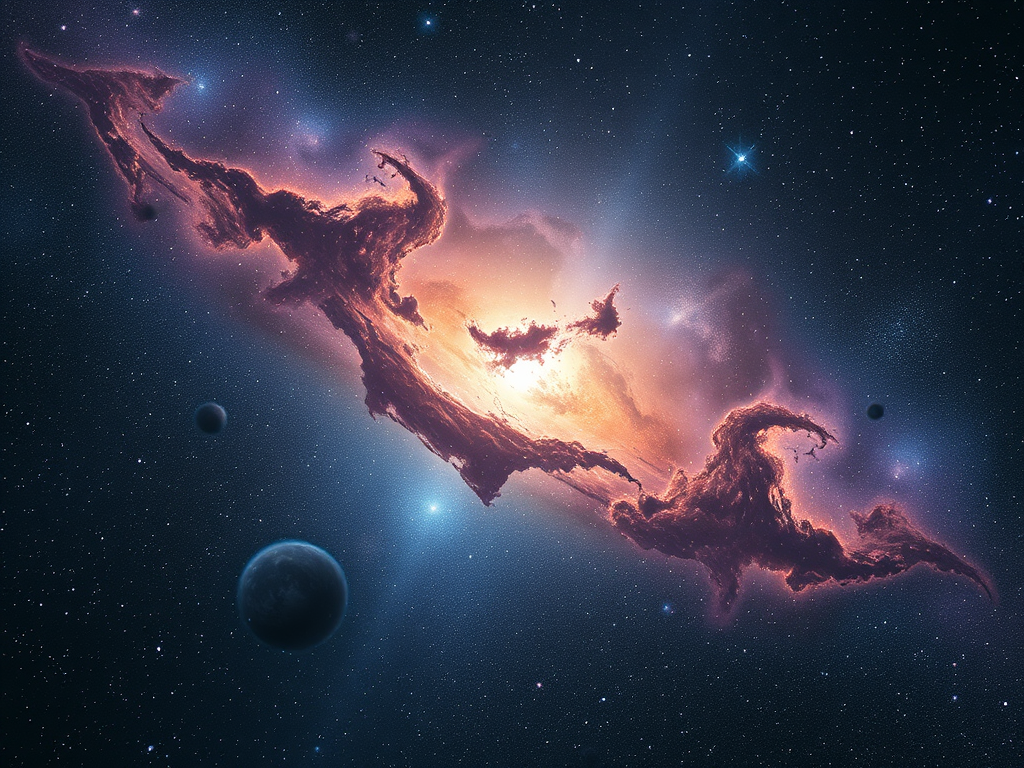
Scientists from Goethe University, Frankfurt, studying alternatives to black holes have suggested a mathematically viable formation mechanism for one proposed alternative called a β€˜Gravastar.’

Although the team behind the newly proposed gravastar formation mechanism conceded that black holes still represent the simplest and most natural solution to gravitational collapse, they also suggest that the physics behind the alternative, which doesn’t require a single point where spacetime curves infinitely, called a β€œsingularity,” can make them β€œeasier to accept” than black holes.

If correct, and some or all black holes are, in fact, gravastars that mimic their expected properties, the work would establish a valid formation mechanism that could rewrite decades of accepted science and open a new field of research dedicated to understanding this previously misunderstood phenomenon.

Meet Gravastar: The Black Hole Mimicker without a Singularity

According to standard cosmology theories, black holes form when extremely massive stars stop generating energy, allowing the force of gravity to take over and collapse the remaining matter into a single point, or singularity. Unfortunately, the research team behind the new study notes that β€œthe laws of physics break down” within the singularity, making the formation of the resulting black hole a difficult phenomenon to predict.

β€œHow can spacetime be curved infinitely at that point, the singularity?” asks the team’s statement announcing the new approach. They also note that no information escapes a black hole, including light, making studying its inner workings effectively impossible, and opening up the possibility that β€œblack holes are in fact entirely different objects.”

Some options have been proposed, including β€˜horizonless’ black hole mimickers. The team notes that these proposed options are β€œmathematically consistent alternatives” that also address the physics challenges posed by traditional black holes.Β 

Still, how these alternative objects form has remained largely unclear. The research team said this lack of a formation mechanism constitutes β€œa significant open problem” since understanding how they form is the β€œfirst step” to determining if they truly exist.

New Model Creates a β€˜Big Bang’ Inside a β€˜Mini-Universe’

In the new formation model, theoretical physicists Daniel Jampolski and Theoretical Astrophysics Professor Luciano Rezzolla from Goethe University showed that the collapse of a dying star may not go far enough that it reaches the point of no return, where β€œthe collapse to a black hole is inevitable.”

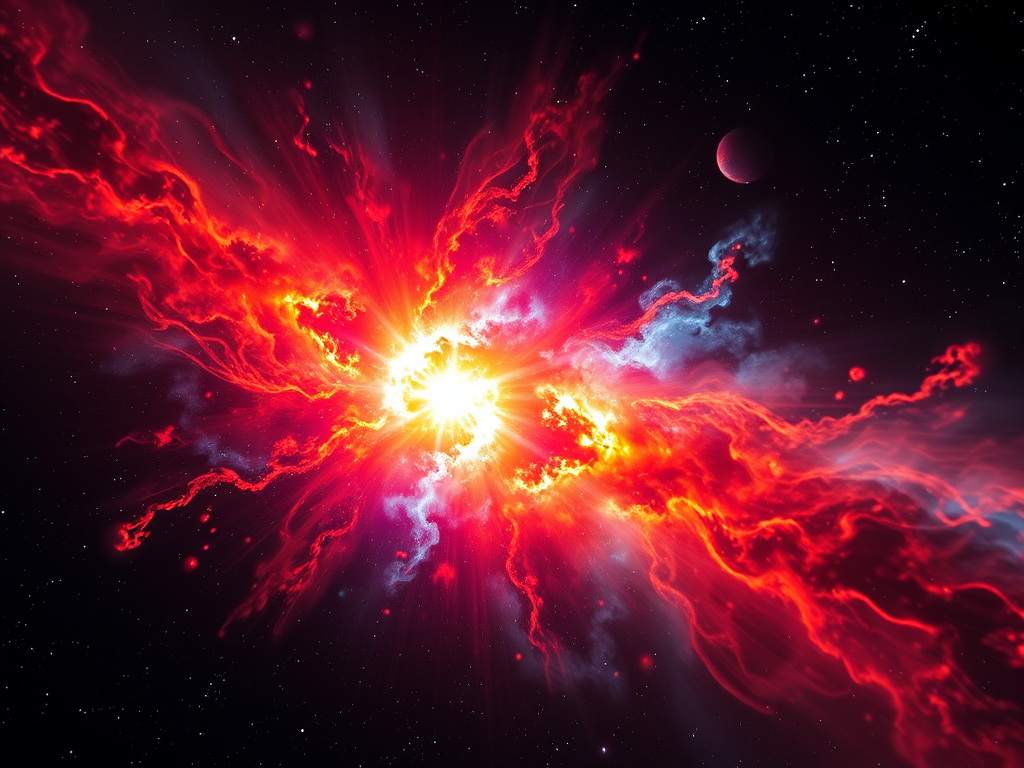
Instead, the collapse slows down near a point scientists call the Schwarzschild radius, then stops. The result is what the team termed a β€œminiature universe” within the collapsing matter, which they compared to the dynamics of the Big Bang, which most theorists agree formed the entire universe.

Since the universe’s expansion was driven by dark energy, the new model proposes that the dark energy within the mini-universe establishes an β€œequilibrium” with the counteracting force of gravity, therefore halting the collapse of the star β€œbefore a black hole can form.”

β€œThe Big Bang of the emerging universe can unfold once the star has already collapsed almost to the point of becoming a black hole,” explained Jampolski, who discovered the black hole alternative gravastar solution in his master’s thesis while under the supervision of Professor Rezzolla.

Maintaining an Unbiased Approach Toward β€œWhat We Do Not Know”

When discussing the impact of their proposed black hole alternative formation model, Jampolski said that from a mathematical and physics standpoint, it is β€œeasier to imagine that the Big Bang occurs only at a very late stage, when matter has already been compressed to an extreme degree, thereby giving rise to new effects.” The team also notes that the unresolved behavior of matter in this environment β€œleaves room for new physics.”

Although the team’s model offers a mathematically sound formation for an alternative to black holes, Rezzolla notes that the search for gravastars or other alternatives β€œshould not suggest a skepticism towards black holes,” which, he adds, β€œstill represent the most natural and simplest solution to the fate of gravitational collapse.”

Instead, the Goethe professor explained, his general role as a scientist and his specific discipline as a theoretical physicist make it essential that he and his colleagues β€œmaintain an unbiased approach towards what we do not know and hence explore both the accepted wisdom and the more exotic interpretations.”

β€œHistory teaches us that it is not unusual for the latter to become the former,” the professor added.

The paper β€œFormation of gravastars” was published in the journal Physical Review D.

Christopher Plain is a Science Fiction and Fantasy novelist and Head Science Writer at The Debrief. Follow and connect with him on X, learn about his books at plainfiction.com, or email him directly at christopher@thedebrief.org.

  •  

A Universe Without Dark Energy? Mathematicians Challenge Standard Cosmology

Dark Matter Particles Astrophysics ConceptNew mathematical research suggests dark energy may not be needed to explain the accelerating expansion of the universe, challenging the foundations of the standard cosmological model. Mathematicians are questioning whether dark energy is actually responsible for the universe’s accelerating expansion. In a new study published in Proceedings of the Royal Society A, researchers at the [...]
  •  

Mysterious Cosmic Signal Could Be First Real Evidence of Primordial Black Holes

Illustration of Black Holes Orbiting Around One AnotherScientists believe an unusual LIGO detection may be evidence of a primordial black hole, potentially linking these long-theorized objects to the mystery of dark matter. Scientists at the University of Miami believe they may be closing in on evidence for one of the most elusive objects in the universe: primordial black holes. While definitive proof [...]
  •  

Little Red Dots | Primordial Black Holes or Big Bang Failures?

Recent findings from the James Webb Space Telescope (JWST) indicate that Little Red Dots (LRD) could be primordial black holes, challenging the big bang theory. The data suggests these objects formed too soon for typical galaxy evolution, raising questions about cosmological interpretations and the nature of observational evidence.

  •  

Il telescopio spaziale James Webb sta offrendo una visione senza precedenti…

Il telescopio spaziale James Webb sta offrendo una visione senza precedenti dell’universo primordiale grazie alla sua capacitΓ  di osservare la luce infrarossa proveniente da oggetti estremamente lontani. Tra le sue scoperte piΓΉ sorprendenti figurano galassie molto luminose e apparentemente mature esistite poche centinaia di milioni di anni dopo il Big Bang. Queste osservazioni hanno acceso un intenso dibattito scientifico, poichΓ© suggeriscono che la crescita delle prime strutture cosmiche potrebbe essere avvenuta piΓΉ rapidamente del previsto. Sebbene analisi successive abbiano ridimensionato alcune delle stime iniziali, Webb continua a fornire dati che stanno portando gli astronomi a perfezionare le teorie sulla formazione delle galassie, dei buchi neri supermassicci e dell’universo delle origini.
  •  

La fin de l’univers pourrait arriver bien plus tΓ΄t que prΓ©vu, selon cette nouvelle Γ©tude cosmologique

Et si l'univers avait une date d'expiration bien plus proche que prΓ©vu ? Une Γ©tude rΓ©cente bouleverse les certitudes cosmologiques les mieux Γ©tablies. Le compte Γ  rebours serait lancΓ© : 33 milliards d'annΓ©es, pas une de plus.

  •  

Causality and the Arrow of Time Are Big Bang Problems for Cosmic Story-Telling

The big bang has causality issues, particularly the "horizon problem." I critique suggested solutions like cosmic inflation and negentropy, arguing that they require unproven concepts. The Creator, as described in the Bible, provides a coherent explanation without causality violations, in contrast with those scientific storytelling fairy tales for adults.

  •  
  •  

How I Survived the Godless Australian Education System

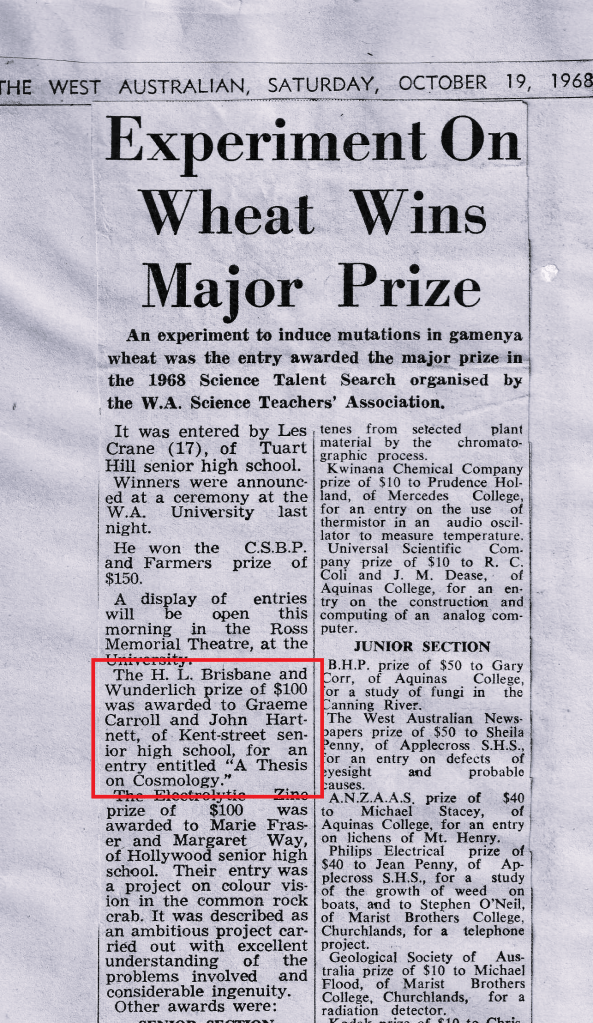
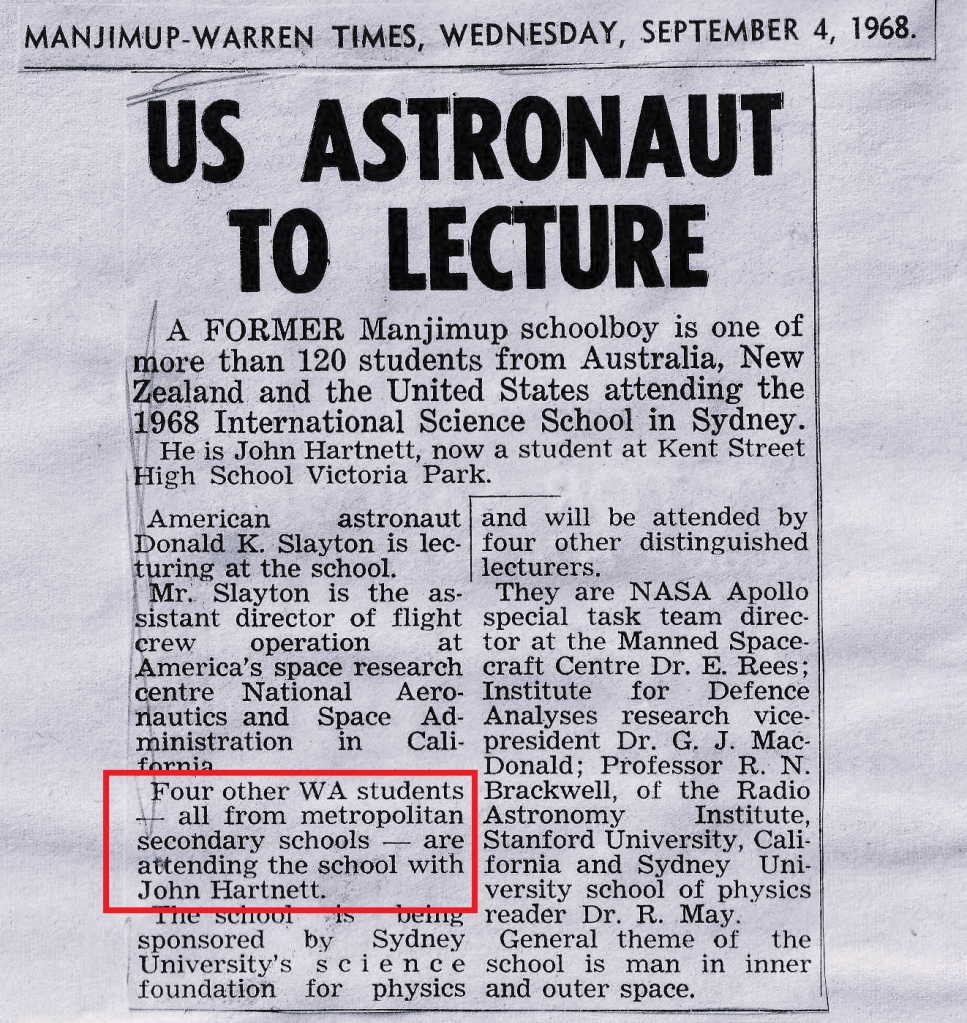
I reflect on my educational journey, highlighting challenges such as family separation and multiple school changes. I excelled in science and mathematics yet was indoctrinated on Godless cosmology and rejected the Creator. Later Jesus Christ saved me from atheism and renewed my mind to His truth.

  •  

Are We Really Observing the Universe in Real Time?

When we look out into space, even with the most powerful telescopes, are we seeing the universe in real time? Are we observing events as they happen, that is, at the time measured on our local clocks?

  •  

The Laws of Physics Point to the Creator

The biblical creation narrative is foundational to understanding reality. It highlights the role of God as the creator and sustainer of both physical laws and spiritual renewal through Jesus Christ.

  •  

True Science and Science Falsely So-Called

I discuss the distinction between operational science, which relies on repeatable experiments, and historical science, particularly cosmology. While acknowledging the contributions of renowned scientists, I argue that cosmology lacks the capacity for experimental verification and is thus not true science, but science falsely so-called.

  •  

Dark Photons and the Illusion of Dark Matter

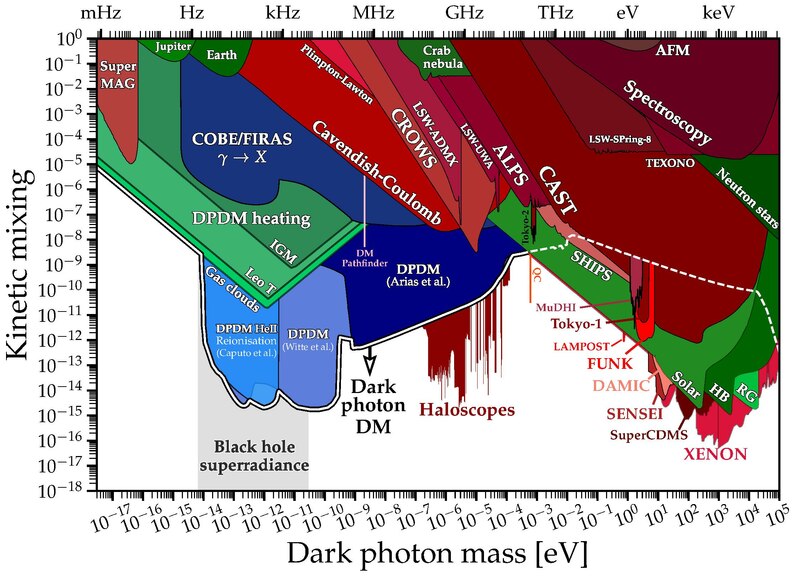
Dark matter is equated to the metaphor of the Emperor's new clothes. Dark photons and other hypothetical particles are fictitious constructs used to explain phenomena without concrete evidence, underlining that current astrophysical models are flawed and nonsensical.

  •  

Should Biblical Creationists Believe in Dark Matter and Dark Energy?

I question the acceptance of Dark Matter and Dark Energy by biblical creationists, suggesting they are problematic placeholders for undiscovered physics. The arguments for their existence are challenged by alternative cosmological models and criticisms of observational methodologies, calling for a re-evaluation of accepted astrophysical tenets.

  •  

More Than 50% US Evangelical Christians Do Not Believe in the Genesis History of Creation

I contrast two views on the origin of the universe: the big bang theory and the Genesis creation account. I highlight how many evangelicals now support the big bang, reflecting a shift in beliefs rejecting the historical Genesis narrative on concepts like original sin and redemption.

  •  

The Physics of Creation | Day 1

God created all space, time, and energy over six ordinary days less than 8,000 years ago. I discuss the physics of the Day 1 of that, with the earth formed from a sphere of water and the creation of all light, including the thermal radiation called the cosmic microwave background.

  •  

Thermodynamics and Creation: A Scientific Perspective

The four universal laws of thermodynamics are a part of God’s creation, and testify to His continuing work of creation. These fundamental physical laws argue against the big bang origin of the universe and spontaneous complexity arising in nature, attributing creation solely to a divine intelligence.

  •  

What Do We Really Know About the Cosmos?

The universe is filled with trillions of galaxies, and cosmology explores questions about its nature and structure. Many theories exist, influenced by philosophical worldviews, challenging the notion of a unique cosmological model.

  •  

Jesus Christ, the Creator of Life and the Universe

The transhumanists seek eternal life through technology. But it can only be found through Jesus Christ the Creator of the universe. God's words warn against rejecting the Creator in favor of false ideologies and foolish immortality.

  •  
❌