❌

Reading view

Radar Observations Reveal New Clues about Europa’s Hidden Interior

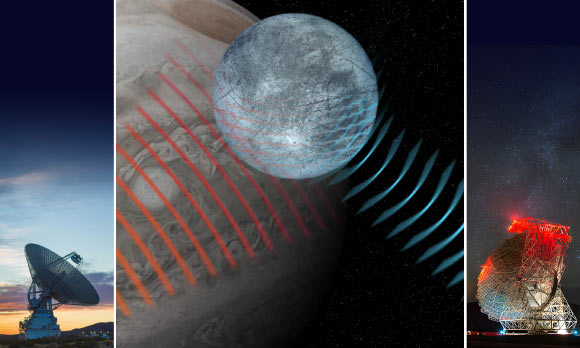
This artist’s impression shows radar waves from NASA’s Goldstone Solar System Radar pinging Europa; the radar waves penetrate Europa’s icy surface before bouncing back to be collected by NSF’s Green Bank Telescope on Earth. Image credit: NSF / AUI / NSF’s NRAO / P.Vosteen.

Using NASA’s Goldstone Solar System Radar and NSF’s Green Bank Telescope, astronomers from the University of California, Los Angeles, confirmed that the icy surface of Jupiter’s moon Europa scatters radio energy in an unusually strong and complex way not seen on rocky worlds.

The post Radar Observations Reveal New Clues about Europa’s Hidden Interior appeared first on Sci.News: Breaking Science News.

  •  

Teen Encounters with the Legal System Linked to Mental Health Symptoms

A groundbreaking study published in the open access journal PLOS One on June 17, 2026, reveals a compelling link between varying degrees of contact with the U.S. criminal legal system and the mental health outcomes of adolescents and young adults. Conducted by Raquel V. Oliveira and Elizabeth Culatta at Augusta University, this research dissects the complex and often overlooked mental health ramifications for youth entangled within the legal framework, a subject of critical importance given the high prevalence of mental health conditions in this demographic.

The study draws on data from the Pathways to Desistance project, an extensive longitudinal observational study following 1,354 youths from Phoenix, Arizona, and Philadelphia, Pennsylvania. These participants were initially assessed between 2000 and 2003 during late adolescence, spanning ages 14 to 18, and then tracked with follow-up interviews over seven years. Such an extended study period provides a rare and valuable opportunity to analyze mental health trajectories in relation to different interactions with the criminal justice system, including arrests, court appearances, and institutionalization.

Previous research has consistently demonstrated a disproportionate representation of mental health conditions among incarcerated youth, estimating that while only 15 to 22 percent of all youths in the U.S. have diagnosable mental health disorders, an alarming 40 to 80 percent of incarcerated youths fall into this category. However, Oliveira and Culatta’s work delves deeper, examining the nuanced effects of various legal system encounters on mental health symptoms such as anxiety, depression, hostility, and psychoticism, moving beyond prevalence to explore causative complexities.

The findings illustrate that the experience of arrest acts as a significant short-term stressor, exacerbating symptoms related to anxiety, depression, and psychoticism in adolescents and young adults. These acute psychological impacts can be attributed to the trauma, stigma, and uncertainty commonly associated with arrest, which can introduce substantial emotional upheaval during a developmental stage already sensitive to stress.

Institutionalization—a potential consequence of judicial decisions—was similarly linked to increased short-term symptoms of depression, hostility, and psychoticism. The constrained and often isolating environment of juvenile detention facilities can compound existing mental health issues or catalyze new psychological distress, highlighting the critical need for targeted mental health support within these settings.

Interestingly, court appearances painted a more complex picture. While the act of appearing in court was initially associated with a short-term decrease in anxiety—perhaps reflecting relief after the end of anticipatory stress—this was counterbalanced by significant long-term increases in anxiety, depression, and psychoticism symptoms. Such findings suggest that while resolutions of legal events momentarily alleviate some distress, the enduring implications and future uncertainty following these events continue to burden affected youths.

Equally noteworthy is the discovery that youth experiencing two or more concurrent legal system contacts endure more consistent and lasting mental health symptoms over time. This cumulative effect underpins the critical intersectionality of criminal justice interactions and mental health, indicating an urgent need to re-evaluate how multiple touchpoints with the system may perpetuate or intensify psychological harm.

The study also acknowledges the influence of other adverse factors commonly entangled with justice-involved youth such as substance use, engagement in criminal behavior, and the use of prescribed psychiatric medication. These intersecting variables complicate the mental health landscape, emphasizing the multifactorial nature of psychological distress in this vulnerable group.

It is important to contextualize these findings within the limitations outlined by the authors. The Pathways to Desistance study deliberately limited the inclusion of male drug offenses, potentially skewing the representativeness of offense types nationwide. Moreover, the observational nature of the research restricts conclusions to associations rather than direct causative relationships, leaving gaps for future explorations into the causal mechanisms linking legal system contact and mental health outcomes.

Despite these constraints, the authors robustly argue that contact with the criminal legal system serves as a significant psychosocial stressor for youth, triggering mental health symptoms that not only emerge in the short term but may persist years beyond initial contact. This highlights a considerable gap in both the criminal justice system’s and public health domain’s capacity to adequately address the mental wellbeing of adjudicated youth.

Oliveira and Culatta’s work resonates powerfully with existing literature emphasizing the necessity for diversion programs and comprehensive mental health services tailored to youths in contact with the justice system. Their findings reinforce the call for systemic reforms focused on ameliorating the psychological burdens imposed by mechanisms of legal adjudication.

From a policy and intervention perspective, this study sends a clear message: psychiatric assessment and therapeutic interventions must become foundational components of juvenile justice procedures. Without these, the cycle of mental health deterioration intertwined with legal entanglements is likely to continue unabated, hindered by insufficient support structures and reactive rather than proactive care models.

Ultimately, this investigation fosters a crucial dialogue around the broader societal implications of youth incarceration and court involvement, advocating for multidisciplinary approaches that incorporate mental health expertise in legal contexts. Such integration promises not only to mitigate harmful mental health outcomes but also to facilitate more humane and effective justice practices for adolescents on the cusp of adulthood.

By shedding light on the intrinsic link between criminal legal system encounters and mental health trajectories, Oliveira and Culatta’s research paves the way for future inquiries and innovations aimed at reducing psychological distress and promoting resilience among justice-involved youth cohorts, a population too often marginalized in both research and policy.

Subject of Research: People

Article Title: Effects of differential contacts with the criminal legal system on mental health outcomes of adolescents and young adults: A fixed-effects model

News Publication Date: 17-Jun-2026

Web References:
http://dx.doi.org/10.1371/journal.pone.0344895

References:
Oliveira RV, Culatta E (2026) Effects of differential contacts with the criminal legal system on mental health outcomes of adolescents and young adults: A fixed-effects model. PLoS One 21(6): e0344895.

Keywords: mental health, criminal legal system, adolescents, young adults, anxiety, depression, psychoticism, institutionalization, arrest, juvenile justice, Pathways to Desistance, longitudinal study, observational study

  •  
  •  

Brain-Inspired Digital Memory Device Promises Enhanced Energy Efficiency for AI

In a groundbreaking advancement that bridges the gap between biological intelligence and artificial systems, researchers at Oregon State University have engineered a light-sensitive device that not only detects visual stimuli but also bio-mimics the brain’s ability to store and modulate memories dynamically. Drawing direct inspiration from the complex workings of human neural processes, this pioneering approach integrates sensing, memory, and signal processing into a single phototransistor, a feat poised to revolutionize the future of neuromorphic computing.

Traditional artificial intelligence hardware architectures typically bifurcate these essential functions—detection, memory retention, and processing—forcing data to shuttle between distinct components. This separation not only introduces latency but significantly amplifies energy consumption. The novel phototransistor developed by the OSU team disrupts this paradigm by embedding memory capabilities precisely where sensory inputs occur, vastly improving computational efficiency and speed.

Central to this device’s innovation is its ability to mimic the neurochemical processes governing memory strength and decay in the human brain. Rather than storing information with fixed permanence, the phototransistor utilizes trapped electrical charges generated by incident light to represent memories, which can then be pharmacologically tuned—via electrical gate voltages—to either reinforce or weaken these stored traces over time. This dynamic modulation reproduces the adaptive nature of biological synapses and opens unprecedented avenues for creating AI systems that can ‘forget’ as well as ‘remember,’ essential for real-time learning and adaptation.

Structurally, the device marries an oxide semiconductor acting as the electronic transistor channel with an organic photosensitive layer responsible for absorbing photons and generating charge carriers. The organic layer traps a subset of these carriers, creating a persistent local electric field even after illumination ceases. This trapped charge influences electron flow through the semiconductor channel, effectively encoding a memory of prior light exposure.

A key technical breakthrough lies in the device’s gate-tunable interface: by adjusting the voltage applied to the transistor’s gate terminal, researchers can manipulate the spatial positioning of trapped charges relative to the conduction channel at a nanoscopic level. This precise control modulates the strength of electrical interaction, allowing for programmable decay times of the optoelectronic memory—ranging from seconds to considerably longer durations. Such flexibility is vital for neuromorphic systems requiring adjustable time constants for processing temporal patterns.

The implications of this technology extend beyond simple visual sensing. By localizing both sensing and adaptive memory functions, the phototransistor can serve as a foundational building block for advanced vision systems capable of real-time data processing with exceptional energy efficiency. This novel hardware approach offers substantial improvements over conventional sensors, which often offload processing to centralized units, incurring latency and energy penalties.

Neuromorphic computing, a field striving to emulate the architecture and operational principles of the brain, stands to gain significantly from this development. The device’s capacity to embody synapse-like plasticity within a phototransistor embodies a leap toward systems that do not merely compute but adapt, learn, and optimize autonomously. Furthermore, the integration of these functionalities at the hardware level paves the way for compact, scalable AI platforms potentially transformative for robotics, autonomous vehicles, and sensory-rich IoT devices.

The research team acknowledges that the trapped charges’ mobility within the device’s photosensitive layer marks a fundamental departure from fixed-charge memory devices. By enabling charge repositioning in response to externally applied voltages, the phototransistor achieves an unprecedented degree of control over memory retention timescales—a property rarely realized in optoelectronic components designed for AI applications.

From an energy perspective, co-localizing sensing and computation reduces data transfer bottlenecks traditionally plaguing AI processors. This attribute directly addresses pressing challenges in AI hardware, where escalating computational demands often collide with limitations in battery life and thermal management. As a result, the novel phototransistor aligns with broader efforts to develop sustainable, high-performance AI technologies.

Conceived through a multidisciplinary collaboration spanning electrical engineering and physical sciences at Oregon State University, the device’s development also underscores the growing convergence of materials science with computational intelligence. By synergizing metal oxide semiconductors with organic tetracene compounds, the team harnessed complementary material properties—robust electron transport with efficient light absorption—to realize the device’s multifunctional capabilities.

The National Science Foundation’s support, alongside the efforts of researchers including Larry Cheng, Ahasan Ullah, Tasnim Sarker, Xueqiao Zhang, Andrew Ensinger, Lizhong Chen, Roshell Lamug, and Oksana Ostroverkhova, culminated in the publication of their findings in the esteemed journal Advanced Functional Materials. The study not only charts new territory in optoelectronics but also sets the stage for transformative innovation in neuromorphic computing hardware.

As artificial intelligence increasingly demands systems capable of real-world adaptability and resource efficiency, innovations like this gate-tunable neuro-phototransistor epitomize the direction forward. By drawing directly from the brain’s principles of memory modulation and energy-efficient computation, the OSU team’s technology heralds a new era where AI devices can perceive, process, and remember in ways that approximate human cognition more closely than ever before.


Subject of Research: Not applicable

Article Title: Neuromodulator-Inspired Gate-Tunable Tetracene–Metal Oxide Phototransistor for Adaptive Optoelectronic Memory and Neuromorphic Computing

News Publication Date: 19-May-2026

Web References: http://dx.doi.org/10.1002/adfm.75942

References: Published in Advanced Functional Materials

Image Credits: Oregon State University

Keywords

Neuromorphic computing, phototransistor, adaptive memory, optoelectronics, brain-inspired AI, gate-tunable memory, oxide semiconductor, organic photosensitive material, energy-efficient AI, in-sensor computing, tetracene, neuromodulation

  •  

Wireless, Light-Activated Bioresorbable Stimulation Device

In a groundbreaking advancement that could reshape the landscape of bioelectronic medicine, researchers have developed a wirelessly powered, bioresorbable electrical stimulation system with unprecedented programmable control over stimulation waveforms. This innovation integrates tissue-penetrating near-infrared (NIR) light to modulate electrical currents with precision, harnessing a novel bioresorbable silicon phototransistor as the cornerstone of its operation. Pioneering beyond earlier monophasic pulse devices, this technology allows for the delivery of monophasic, biphasic, and polyphasic stimulation patterns, significantly enhancing the versatility and therapeutic potential of implantable electrical stimulators designed to dissolve harmlessly after use.

Traditional electrical stimulators implanted in biological tissues have largely relied on wired connections or bulky batteries, impeding patient mobility and often necessitating additional surgeries for device removal. Bioresorbable devices emerged as a solution to these challenges by safely degrading in the body over time, eliminating the risks associated with permanent implants. However, these earlier systems primarily delivered monophasic pulses, limiting therapeutic precision and adaptability in complex treatments. The innovation reported by Kim, Seo, Wang, and colleagues introduces a new paradigm by integrating wireless power transfer via NIR light and programmable waveform control within a fully bioresorbable platform, thus extending the functional range and easing the clinical management of bioelectronic therapies.

Central to this system is the incorporation of bioresorbable silicon phototransistors engineered to serve as optoelectronic modulators within the electrical circuitry. When illuminated by externally applied near-infrared light that penetrates deep into biological tissues, these phototransistors effectively adjust current flows at critical circuit nodes. This optical modulation capability replaces conventional electronic control elements, which often rely on persistent power sources or invasive wiring, thereby enabling the device to operate autonomously while still allowing fine-tuning of stimulation parameters through non-contact optical inputs.

The adoption of near-infrared light as the wireless power and control mechanism is particularly significant. NIR light possesses the ability to penetrate through several centimeters of tissue without causing damage, providing a safe and efficient transmission channel between the external controller and the implanted device. This feature supports programmability in situ, empowering clinicians to tailor electrical stimulation waveforms dynamically after device implantation. Precisely controlling the shape, amplitude, and timing of the electrical pulses is crucial for optimizing therapeutic outcomes in applications such as neuroregeneration and cardiac pacing.

The research team demonstrated the remarkable versatility of their bioresorbable system by successfully delivering a variety of stimulation waveforms. Monophasic pulses, which are unidirectional current flows, serve as a baseline therapy. More complex biphasic and polyphasic waveforms, which alternate current direction and comprise multiple phases respectively, have been shown to minimize tissue damage and improve efficacy in various biosignaling contexts. The ability to generate these sophisticated patterns expands the therapeutic range of the device, potentially enabling treatments that were previously inaccessible using bioresorbable technologies.

In demonstrating practical utility, the device was tested in both small and large animal models, validating its capacity for clinically relevant electrical stimulation regimes. The system was effectively employed in single- and dual-chamber cardiac pacing, a critical intervention for managing arrhythmias and heart block. Through controlled electrical stimulation, the device could synchronize cardiac contractions, a feat crucial for restoring efficient cardiac output. These trials highlight the translational potential of the technology for future human applications, situating it as a promising alternative to current electronic pacemakers that require permanent implantation and battery replacements.

Further extending the functional scope, the researchers utilized the bioresorbable stimulator to activate phrenic neuromuscular pathways to either induce or block diaphragmatic movements. The phrenic nerve controls diaphragmatic excursion, essential for respiration, and its modulation has significant implications for respiratory therapies, such as in patients with spinal cord injuries or central hypoventilation syndromes. By enabling wireless, programmable neurostimulation of the phrenic nerve, the technology offers a minimally invasive approach to manage life-sustaining respiratory functions, with the added benefit of device degradation after the therapeutic window.

The bioresorbable nature of the silicon phototransistors and associated electronics assures that after fulfilling their therapeutic role, the devices gradually dissolve into biocompatible byproducts. This process circumvents the complications related to device explantation surgeries, reducing patient risk and healthcare costs. Moreover, the materials chosen minimize inflammatory responses and tissue irritation, facilitating seamless integration with host biology during the operational phase.

The engineering behind this system represents an intersection of materials science, optoelectronics, and biomedical engineering. The architecture leverages the semiconducting properties of silicon in thin-film, bioresorbable form, combined with circuit design optimized for minimal power consumption and maximal efficiency during NIR irradiation. These multidisciplinary innovations collectively overcome longstanding barriers in the fabrication of transient electronic implants capable of sophisticated programmable functionality.

Controlling the stimulation waveforms via light permits remote adjustment without physical connections, paving the way for real-time therapeutic modulation responsive to patient status or physiological signals. Future iterations could incorporate feedback mechanisms by integrating bioresorbable sensors that monitor tissue response, creating closed-loop systems for personalized medicine. This dynamic adaptability could be transformative in managing chronic conditions requiring variable and responsive electrical stimulation protocols.

This research also addresses one of the fundamental challenges of implantable devices: power delivery. The optical wireless power transfer circumvents the need for bulky batteries or explant procedures, offering renewed device miniaturization potential. Coupled with programmable phototransistors, these innovations enable multifunctional implants that conform to soft tissues and degrade harmlessly, a trifecta crucial for implantation in sensitive organs like the heart and nervous system.

The ability to deliver polyphasic waveforms through a single bioresorbable receiver unit is particularly noteworthy. Conventionally, generating these complex waveforms requires sophisticated circuitry and stable power sources, neither of which are trivial to implement in resorbable devices. The research showcases how optical control unlocks this capability without sacrificing bioresorbability or wireless operation, representing a paradigm shift in transient biomedical electronics.

The successful application of this device in large animal cardiac models bridges a critical gap toward clinical translation. Such models replicate human physiological scales and complexities far more closely than small animals, validating both the efficacy and safety of the system under conditions analogous to human therapies. This demonstration is an essential milestone on the path toward human clinical trials and eventual regulatory approval.

Moreover, the phrenic nerve stimulation experiments illustrate the broader applicability beyond cardiac pacing. Neuromuscular control via electrical stimulation has vast clinical relevance, from restoring motor function to modulating organ systems. The biodegradable, wireless nature of this system makes it especially suited for temporary therapeutic interventions, such as post-surgical recovery or transient disease states, where permanent implants would be unnecessary or undesirable.

While this work represents a major leap forward, ongoing challenges remain, including further optimization of device longevity relative to treatment durations, refinement of light delivery systems to maximize tissue penetration and minimize off-target effects, and integration with advanced biocompatible materials to tailor resorption timelines. Addressing these will be key to broadening the range of clinical applications and ensuring patient safety across diverse scenarios.

Overall, this wirelessly powered, light-controlled, bioresorbable stimulation system emerges as a versatile platform poised to transform bioelectronic therapies. Its elegant combination of programmable polyphasic waveform delivery, wireless operation via near-infrared light, and full bioresorbability addresses critical limitations of current implantable stimulators. By enabling sophisticated, minimally invasive, and transient electrical stimulation paradigms, this technology advances the frontiers of regenerative medicine, cardiac therapy, and neuromodulation, marking a significant milestone in the evolution of biomedical devices.

Subject of Research: Wireless bioresorbable electrical stimulation device with programmable waveform control using near-infrared light

Article Title: A wirelessly powered, light-controlled, bioresorbable stimulation system with programmable polyphasic waveforms

Article References:
Kim, J.U., Seo, S.G., Wang, H. et al. A wirelessly powered, light-controlled, bioresorbable stimulation system with programmable polyphasic waveforms. Nat Electron (2026). https://doi.org/10.1038/s41928-026-01655-8

Image Credits: AI Generated

DOI: https://doi.org/10.1038/s41928-026-01655-8

  •  

“Anyone Who Still Thinks Lucy Letby is Guilty Should Have Their Head Examined,” Says Medical Expert

"Anyone who still thinks that Lucy Letby is guilty should have their head examined," says Professor Shoo Lee, whose research was used in court to help prosecute the nurse. Julian Mann reports on a new book on the case.

The post “Anyone Who Still Thinks Lucy Letby is Guilty Should Have Their Head Examined,” Says Medical Expert appeared first on The Daily Sceptic.

  •  

NASA Uses Machine Learning to Enhance Flash Flood Warnings

The Transient Artifact and Continuous Learning System (TACLS) leverages data from continuously operating satellite networks coupled with machine learning models to help meteorologists at the National Weather Service forecast flash floods more efficiently. This new software is the result of a collaboration between NASA’s Jet Propulsion Laboratory, the University of California, San Diego (UCSD), and the National Oceanic and Atmospheric Administration (NOAA) National Weather Service (NWS).

A visual analysis from a TACLS test prediction run using data from flash floods the week of Christmas, 2025. The image shows flash flood warning (FFW) probabilities generated by TACLS (in shades of red) and overlaid on areas that received flash flood warnings from the National Weather Service (in blue).
Credit: UCSD Scripps Institution of Oceanography

Created with support from NASA’s Earth Science Technology Office (ESTO), TACLS leverages machine learning to automatically locate evidence (unusual increases in atmospheric moisture) of impending flash flooding that meteorologists may otherwise miss as they analyze large amounts of data. TACLS flags that evidence, indicates where flash flooding could likely occur, and displays that information via a user-friendly visualization for human analysts to interpret. Those analysts can then decide whether to issue a flash flood warning or weather advisory.

This novel framework for tracking extreme weather events and predicting imminent flash floods operates in near real-time, producing forecasts in as little as fifteen minutes.

“That’s really what we wanted to do, to give meteorologists a tool to help decision making for flash flood warnings,” said Yehuda Bock, Distinguished Researcher at the UCSD Scripps Institution of Oceanography and principal investigator for TACLS.

In simulations testing, TACLS used data from diverse severe weather events—including atmospheric rivers, monsoonal convection, and tropical cyclone remnants—between 2017 and 2023 and successfully captured 93% of the issued flash-flood warnings. Meteorologists from the National Weather Service are currently working to incorporate TACLS into their existing systems for forecasting flash floods in Southern California.

A cyclone makes landfall across the California coast on November 19, 2024. TACLS will help give communities more time to prepare for impending severe weather.
Credit: NASA

This learning system has two main components. First, an analytic back-end software suite uses machine learning algorithms to process satellite data and determine areas at risk for flooding. Second, user-friendly visualization software highlights those areas for further analysis by humans.

The ACLS back-end software analyzes data from satellites in the Global Navigation Satellite System (GNSS), a constellation of satellite networks that drive navigation services around the world. Water vapor in the troposphere delays signals from these satellites as they travel to Earth. This signal delay can be analyzed to calculate the amount of water vapor in the atmosphere over a particular location on Earth.

The TACLS analytic back-end software suite features a machine learning model trained using more than 30 years of past GNSS data. This model is an anomaly detector that tracks unusual increases in atmospheric moisture. The model then carefully examines that atmospheric moisture data and determines whether it’s either an artifact (a false feature or distortion in the data) or a transient (a time-sensitive physical event, like heavy precipitation) that requires interpretation by human analysts.

If TACLS determines the data represents a transient, such as an extreme weather event that warrants a flash flood warning, it will forward that data to the TACLS visualization software (MGViz) for further evaluation by humans. The analysts use their judgement and experience to interpret these events and determine whether the flagged data indicates a flash flood is likely, and, if necessary, issue a flash flood warning.

Several past innovations developed at JPL are leveraged by TACLS to process GNSS data and present the results. The analytic back-end software suite incorporates elements from JPL’s Domain-agnostic Outlier Ranking Algorithms program and the Time-series Forecasting, Evaluation, and Deployment program. The TACLS visualizer is based on the Multi-Mission Geographic Information System, originally developed at JPL for NASA’s Mars missions.

The TACLS software binds all these components within a novel system that enhances existing methods to reduce the amount of time it takes for a human analyst to determine whether to issue a flash flood warning.

Both the TACLS software and the data used to train it will be open-source, allowing scientists to either tailor this model in response to their unique research needs or create their own model from scratch.

For additional details, see the entry for this project on NASA TechPort. 

Project Lead: Dr. Yehuda Bock, University of California, San Diego. 

Sponsoring Organization(s): NASA’s Earth Science Technology Office Advanced Information Systems Technology Program; JPL; NOAA; National Weather Service. 

The post NASA Uses Machine Learning to Enhance Flash Flood Warnings appeared first on NASA Science.

  •  

I Discovered a Cannabis Farm in My Property – and the Police Did Nothing

Hurty words on social media will bring the police to your door. But when a landlord discovered a cannabis farm in her property, officers didn't want to know. Welcome to two-tier Britain.

The post I Discovered a Cannabis Farm in My Property – and the Police Did Nothing appeared first on The Daily Sceptic.

  •  
❌