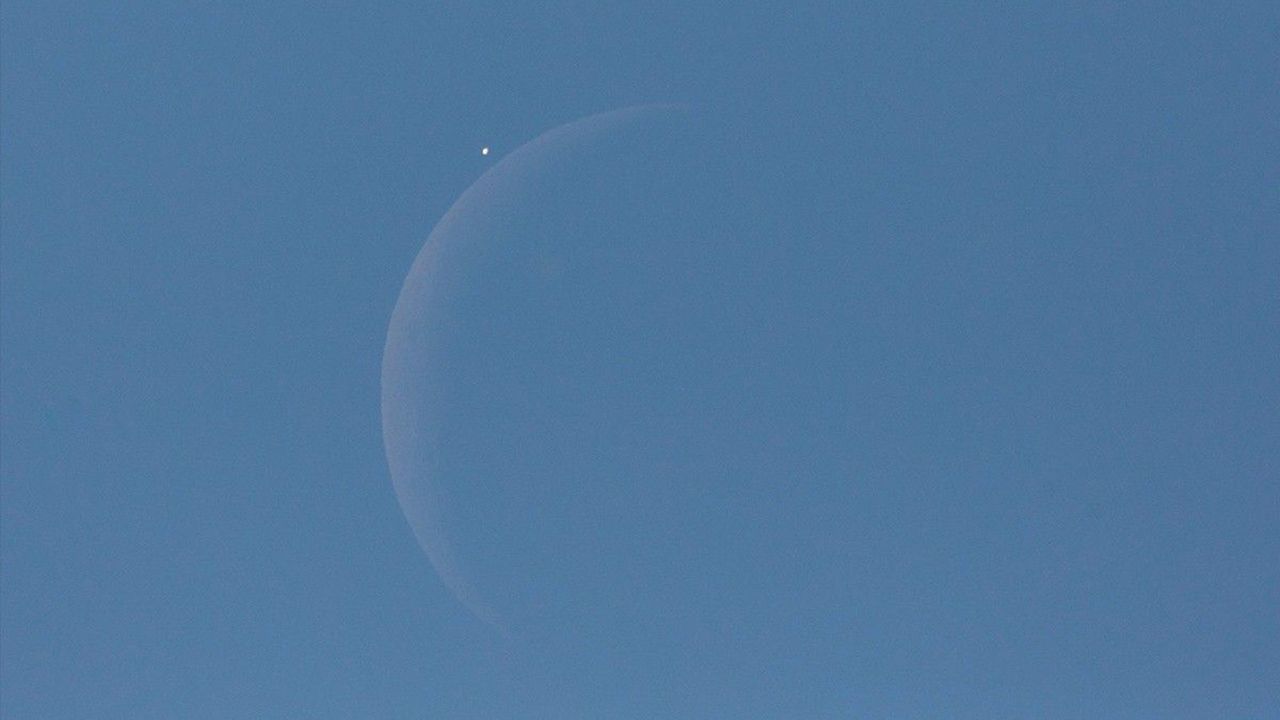
Today (June 17), for the first time in 11 years, people across North America will be able to look up in the daytime sky and see Venus temporarily vanish behind the faint crescent moon.
The rare skywatching spectacle can be viewed with the naked eye and recorded without any special equipment, as long as the weather cooperates — however, using a good pair of binoculars or a backyard telescope will make it much easier to see the faint light of Venus in the daytime sky. No matter how you go about skywatching, you must take great care not to stare directly at the sun while doing so.
During the event, known as a lunar occultation, the moon will briefly pass between Earth and Venus, which has been shining especially bright over the past few weeks while hanging out alongside Jupiter in the evening sky. As a result of the occultation, the hellish planet will appear to blink out of existence, before reappearing around an hour later, allowing for two separate skywatching experiences. The last time this happened was on Dec. 7, 2015, and you will not be able to see it again until 2029.
How to see Venus disappear
The occultation will be visible from the 48 contiguous U.S. states, as well as from large parts of Canada and some countries in the northern half of South America — assuming there are clear skies at the time of the event. (The latest forecast suggests that weather conditions will be most favorable along the West Coast.)
As with most skywatching events, such as solar eclipses, not everyone will see it at the same time. For example, people in San Francisco will observe Venus vanish at around 11:34 a.m. PDT, while those in Miami will watch the planet disappear at about 4:06 p.m. EDT (around 92 minutes later when disregarding time zones).
The duration of the occultation will also vary with location. For example, Venus will reappear after around 58 minutes for viewers in San Antonio, but people in Philadelphia will have to wait roughly 80 minutes to see the planet again.
The best place to watch both the disappearance and reappearance of Venus will be from within the shadow of a large tree or building. Blocking out the sun will not only make it easier to see both the moon and Venus but also reduce the risk of sustaining eye damage by looking directly at the sun.
If you are struggling to see the occultation, try using your phone camera to zoom in on the waxing crescent to better locate and record Venus, Spaceweather.com recommends.
What the June 17 lunar occultation will look like
During the event, around 11% of the moon will be faintly visible in the daytime sky, according to Sky & Telescope. Around three-quarters of Venus will be visible — although it will look like a single spot to the naked eye — so the planet will shine much brighter than the moon. The pair will be collectively located around 38 degrees from the sun in the sky.
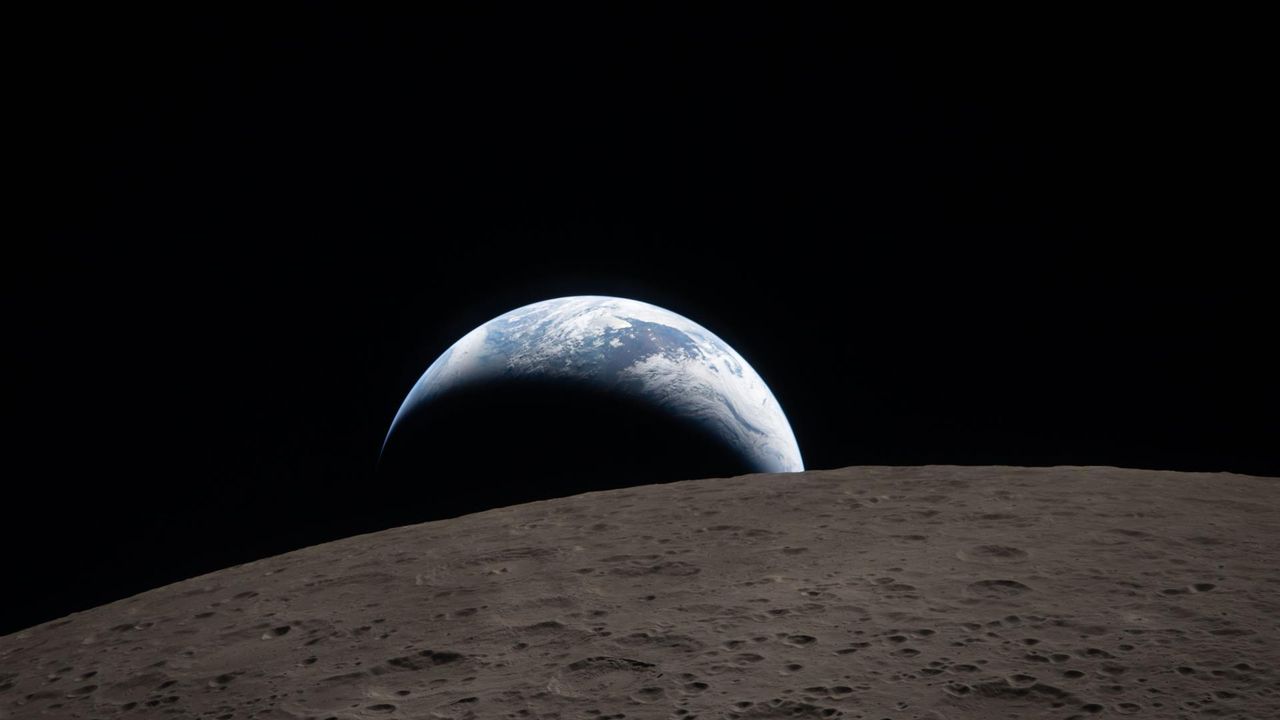
Venus will vanish behind the side of the moon opposite the illuminated crescent and will take around 30 seconds to disappear completely. It will then reappear above the crescent, similar to the iconic "Earthrise" photos taken by lunar astronauts, such as the Artemis II crew. (The exact spot where Venus disappears and reappears will depend on where you are in the world.)
If you miss this occultation or fancy another skywatching spectacle, be sure to head back outside later the same day, around an hour after sunset, when Venus, Jupiter and Mercury will shine alongside the crescent moon as it passes in front of the Beehive Cluster (also called M44).
On June 16, 1963, 26-year-old Soviet cosmonaut Valentina Tereshkova made history by becoming the first woman to travel into space. A former factory seamstress, Tereshkova was an accomplished amateur parachutist with over 100 jumps — a vital skill, since Vostok cosmonauts ejected before landing. Selected from over 400 applicants in 1962, she underwent months ofContinue reading "June 16, 1963: Valentina Tereshkova is the first woman in space"
A major challenge to dark energy, the mysterious force believed to be driving the universe’s accelerating expansion, has been overturned by a new study. Astronomers say a new analysis has reinforced one of the most important discoveries in modern cosmology, finding that the universe is still expanding at an accelerating rate. The result counters a [...]
James Webb has revealed that the sunrise and sunset sides of WASP-121 b have surprisingly different atmospheres. Astronomers using the James Webb Space Telescope (JWST) have discovered striking differences between the morning and evening sides of the atmosphere of WASP-121 b, an ultra-hot gas giant located far beyond our solar system. The findings provide the [...]
NASA's Chandra X-ray spacecraft has detected the supernova wreckage of a dead star that erupted 1,700 years ago and ejected debris at 2 million miles per hour.
A laser system, previously tested on board the International Space Station, helped to stream video directly from the Artemis 2 mission on its way around the moon.
On June 15, 763 B.C.E., a near-total solar eclipse occurred over northern Assyria and was recorded by observers in Nineveh, the capital city. This event is preserved in the Eponym Canon, a list of historical events made by the Assyrians on clay tablets, following a specialized calendar system. The text notes: “Insurrection in the CityContinue reading "June 15, 763 BCE: Assyrians record a solar eclipse"
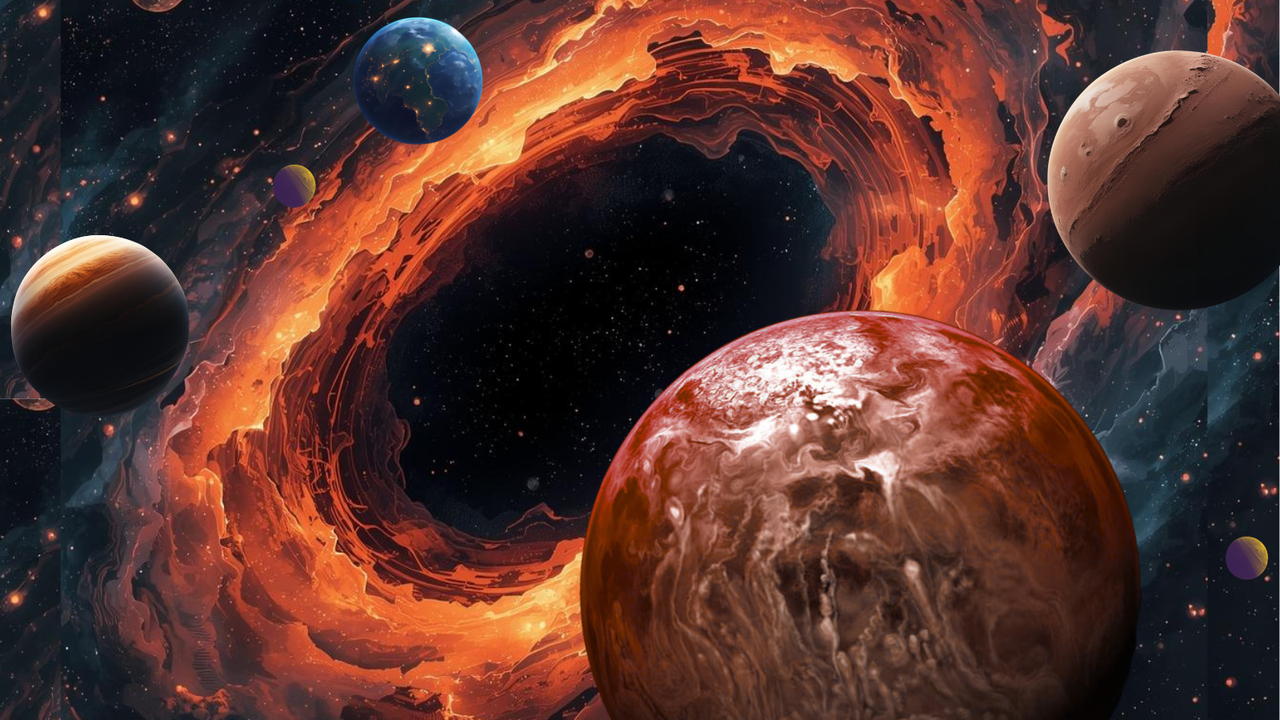
Scientists from Goethe University, Frankfurt, studying alternatives to black holes have suggested a mathematically viable formation mechanism for one proposed alternative called a ‘Gravastar.’
Although the team behind the newly proposed gravastar formation mechanism conceded that black holes still represent the simplest and most natural solution to gravitational collapse, they also suggest that the physics behind the alternative, which doesn’t require a single point where spacetime curves infinitely, called a “singularity,” can make them “easier to accept” than black holes.
If correct, and some or all black holes are, in fact, gravastars that mimic their expected properties, the work would establish a valid formation mechanism that could rewrite decades of accepted science and open a new field of research dedicated to understanding this previously misunderstood phenomenon.
Meet Gravastar: The Black Hole Mimicker without a Singularity
According to standard cosmology theories, black holes form when extremely massive stars stop generating energy, allowing the force of gravity to take over and collapse the remaining matter into a single point, or singularity. Unfortunately, the research team behind the new study notes that “the laws of physics break down” within the singularity, making the formation of the resulting black hole a difficult phenomenon to predict.
“How can spacetime be curved infinitely at that point, the singularity?” asks the team’s statement announcing the new approach. They also note that no information escapes a black hole, including light, making studying its inner workings effectively impossible, and opening up the possibility that “black holes are in fact entirely different objects.”
Some options have been proposed, including ‘horizonless’ black hole mimickers. The team notes that these proposed options are “mathematically consistent alternatives” that also address the physics challenges posed by traditional black holes.
Still, how these alternative objects form has remained largely unclear. The research team said this lack of a formation mechanism constitutes “a significant open problem” since understanding how they form is the “first step” to determining if they truly exist.
New Model Creates a ‘Big Bang’ Inside a ‘Mini-Universe’
In the new formation model, theoretical physicists Daniel Jampolski and Theoretical Astrophysics Professor Luciano Rezzolla from Goethe University showed that the collapse of a dying star may not go far enough that it reaches the point of no return, where “the collapse to a black hole is inevitable.”
Instead, the collapse slows down near a point scientists call the Schwarzschild radius, then stops. The result is what the team termed a “miniature universe” within the collapsing matter, which they compared to the dynamics of the Big Bang, which most theorists agree formed the entire universe.
Since the universe’s expansion was driven by dark energy, the new model proposes that the dark energy within the mini-universe establishes an “equilibrium” with the counteracting force of gravity, therefore halting the collapse of the star “before a black hole can form.”
“The Big Bang of the emerging universe can unfold once the star has already collapsed almost to the point of becoming a black hole,” explained Jampolski, who discovered the black hole alternative gravastar solution in his master’s thesis while under the supervision of Professor Rezzolla.
Maintaining an Unbiased Approach Toward “What We Do Not Know”
When discussing the impact of their proposed black hole alternative formation model, Jampolski said that from a mathematical and physics standpoint, it is “easier to imagine that the Big Bang occurs only at a very late stage, when matter has already been compressed to an extreme degree, thereby giving rise to new effects.” The team also notes that the unresolved behavior of matter in this environment “leaves room for new physics.”
Although the team’s model offers a mathematically sound formation for an alternative to black holes, Rezzolla notes that the search for gravastars or other alternatives “should not suggest a skepticism towards black holes,” which, he adds, “still represent the most natural and simplest solution to the fate of gravitational collapse.”
Instead, the Goethe professor explained, his general role as a scientist and his specific discipline as a theoretical physicist make it essential that he and his colleagues “maintain an unbiased approach towards what we do not know and hence explore both the accepted wisdom and the more exotic interpretations.”
“History teaches us that it is not unusual for the latter to become the former,” the professor added.
Christopher Plain is a Science Fiction and Fantasy novelist and Head Science Writer at The Debrief. Follow and connect with him on X, learn about his books at plainfiction.com, or email him directly at christopher@thedebrief.org.
As NASA prepares for humanity’s return to the Moon, researchers at Texas A&M University are exploring how the same material could become a key building block for the first permanent settlements beyond Earth.
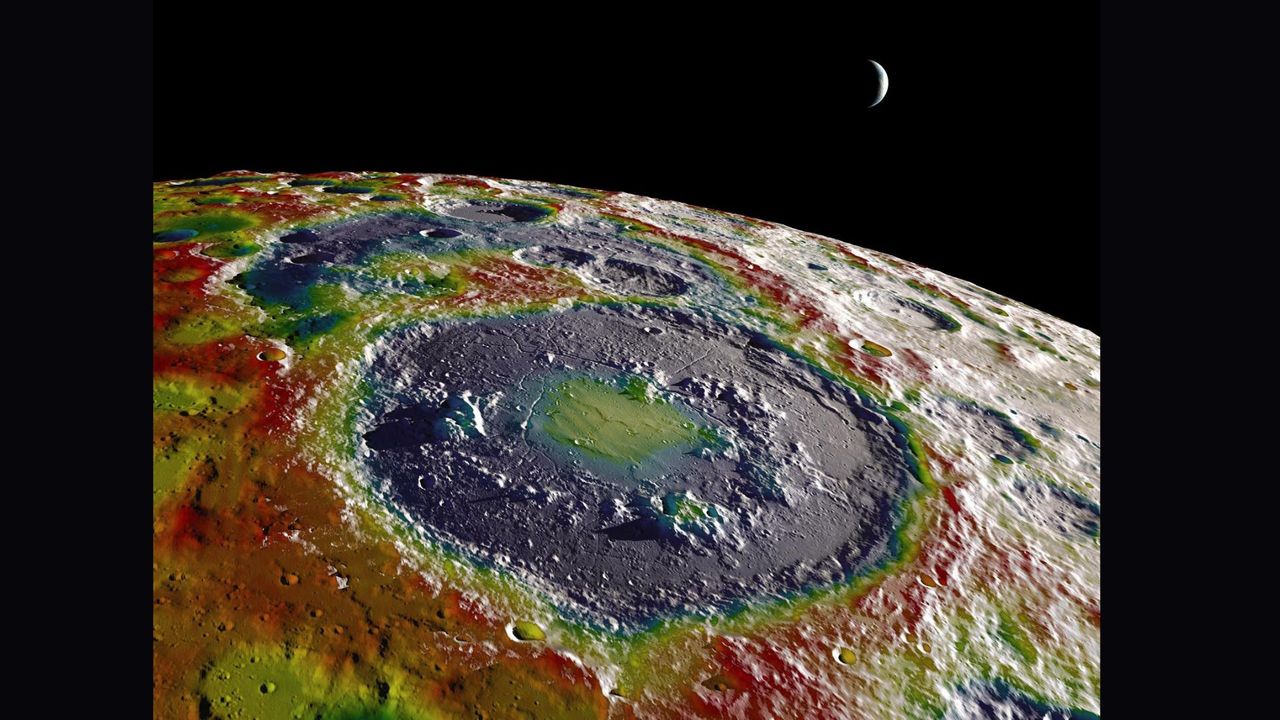
The Moon’s surface is surprisingly unlike anything we would consider soil on Earth. Instead, it is covered by a fine powder of pulverized rock and jagged glass that slips into every gap, grinds through seals and gaskets, and exists in a vacuum exposed to intense radiation and extreme temperature swings capable of bending steel. Yet researchers at Texas A&M University see opportunity rather than obstacles in this harsh environment.
Scientists refer to this material as lunar regolith, and it is considered one of the greatest challenges to long-term human habitation beyond Earth.
As NASA advances plans for a permanent human presence on the Moon through its Lunar Innovation Park initiative, Texas A&M researchers are developing technologies designed to transform the lunar surface into a foundation for future settlements.
“We are moving past the era of ‘flags and footprints,’” said Dr. Patrick Suermann, professor of construction science and retired U.S. Air Force lieutenant colonel in a statement. “We have to stop thinking like explorers and start thinking like settlers.”
Money as a Hurdle
Arguably, the greatest challenge facing lunar construction may not be engineering, but cost. Transporting materials from Earth remains extraordinarily expensive, with estimates ranging from roughly $1 million to $1.3 million per kilogram delivered to the Moon. As a result, researchers are increasingly focused on utilizing resources already available on the lunar surface rather than transporting materials from Earth.
“The future depends on building infrastructure from resources already on the moon,” explained Suermann.
“The high cost of shipping to the moon is the million-dollar problem,” Suermann said. “Every time you can cut the mass of a payload, you save a fortune. That’s why the future depends on building infrastructure from resources already on the moon.”
Helping advance that vision is Dr. Robert Ambrose of the Texas A&M Space Institute, located near NASA’s Johnson Space Center in Houston. The institute has received $200 million in support from the Texas Legislature.
“One of the most exciting features of the 240-acre facility is it’s two-and-a-half acre testing areas: one replicating the surface of the moon, the other Mars,” says Suermann.
These facilities allow researchers to evaluate robotic systems, autonomous vehicles, and construction technologies under conditions similar to those expected during future lunar and Martian missions.
Meanwhile, the university’s Construction Automation, Safety and Education (CASE) Lab is exploring how humans and machines can collaborate in extreme environments. Led by Dr. Gilles Albeaino, the lab focuses on mixed-reality technologies and semi-autonomous robotic systems capable of performing construction tasks on the Moon.
“On the moon, construction operations will depend on semi-autonomous robotic systems,” Suermann said. “The CASE lab is leading research into how humans and machines can work together in environments where humans can’t safely do everything themselves.”
“Every tool matters. Every ounce of material you ship matters,” added Suermann. “So, the question becomes: how do you use the environment itself as your supply chain, and how can you augment machines to become your partner in austere environments?”
Arctic to Afghanistan
Suermann’s experience combines two worlds: military service and construction science. Before joining Texas A&M in 2017, he served in the U.S. Air Force, deploying to remote locations that included Afghanistan, Guam, and Greenland.
Those experiences operating in challenging and isolated environments continue to inform his thinking about future lunar settlements.
“My experiences in serving the U.S. Air Force were formative and transformative,” Suermann said. “It taught me a great deal about construction, and that what can go wrong will go wrong.”
It shows, to me, that lunar regolith isn’t too dissimilar from the terrain we have here on Earth,” Suermann adds. “At the end of the day, construction is construction.”
Should We Develop on the Moon?
The broader question remains whether humanity should be expanding its footprint beyond Earth at all. While plans for lunar settlements continue to advance, critics point out that many environmental, political, and social challenges remain unresolved here at home.
As governments and private companies invest billions into space infrastructure, some argue that humanity must carefully consider how development beyond Earth aligns with priorities on our own planet. Others contend that technologies developed for lunar habitation could ultimately provide benefits back on Earth, helping address challenges ranging from resource management to sustainability.
Early in the 11th century, a young Benedictine monk named Eilmer jumped from the 150-foot tower of his abbey in the small English town of Malmesbury, wearing a pair of crude wings he’d fashioned from willow wood and cloth. Eilmer managed to glide a good 600 feet, passing over the city wall before crash-landing in a small valley near the river Avon. The fall broke both his legs, crippling him. Malmesbury Abbey still boasts a stained-glass window in honor of Brother Eilmer.
This legendary experiment in medieval aviation comes to us via 12th-century historian William of Malmesbury in an account written circa 1125, although William neglected to provide future historians with an exact date for the feat. But William does mention another key episode in Eilmer's life when the monk was "advanced in years": Eilmer witnessed Halley's comet in 1066, commenting, "It is long since I saw you." Some historians have interpreted this to mean that Eilmer saw Halley's comet on an earlier fly-by in 989, when he would have been a young boy.
Assuming Eilmer was at least 5 years old in 989, he would have been born no later than 984. This would make Eilmer in his 80s in 1066, with his attempt at flight—which occurred when he was "in his first youth"—likely falling between 1000 and 1010. However, it's an estimate that is based on a lot of assumptions, according to James Aitcheson of the University of Leicester, who argues in a paper published in the journal Notes and Queries that Eilmer may have seen a different comet altogether in his youth—the comet of 1018. If so, he would have been born much later, and the date of his flight would have occurred between the 1020s and 1040s.
On June 14, 1949, a rhesus monkey named Albert II was launched into space aboard a V-2 rocket from White Sands, New Mexico. Prior to Albert II, animals including fruit flies, mice, and another monkey (Albert I) had been launched in rocket and balloon flights as part of American space biology research, but Albert II’sContinue reading "June 14, 1949: The first mammal in space"
A new detector-based method clarifies how gravitational waves should be measured in an evolving universe. Imagine trying to measure a ripple on the surface of a pond while the pond itself is slowly changing shape. That is the challenge scientists face when they study gravitational waves not as isolated signals from colliding black holes, but [...]
 Login

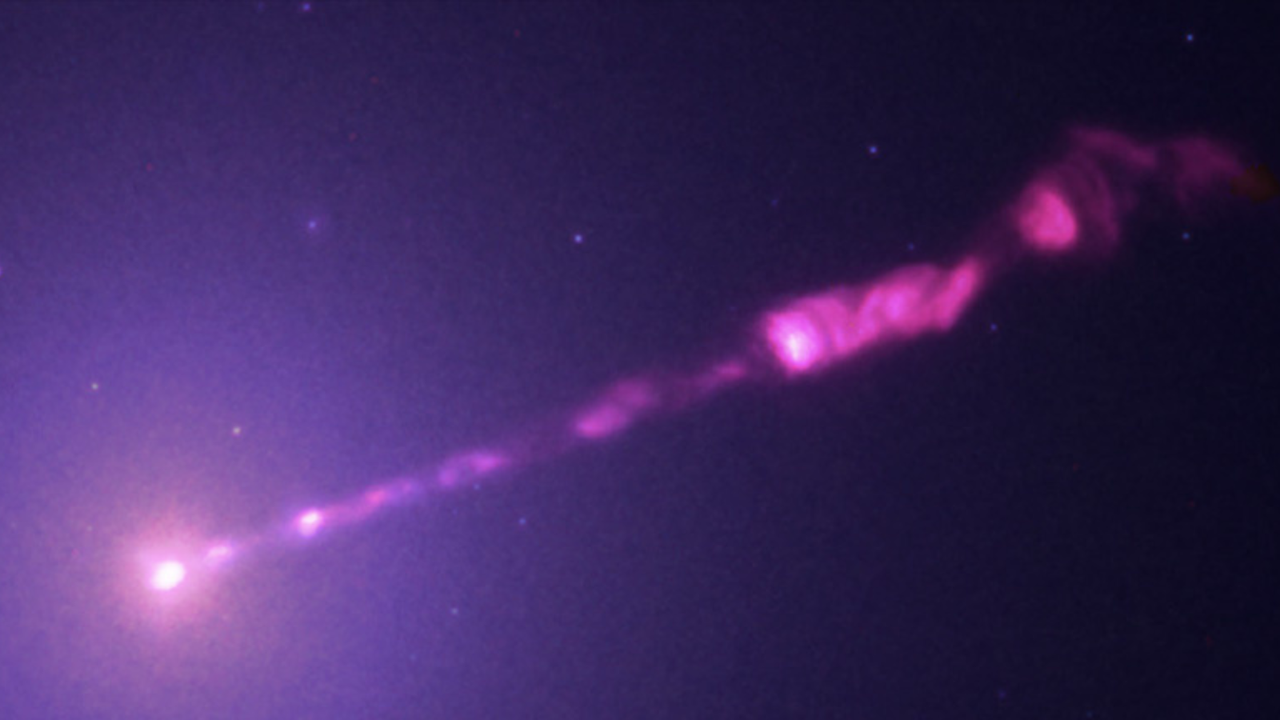

 A major challenge to dark energy, the mysterious force believed to be driving the universe’s accelerating expansion, has been overturned by a new study. Astronomers say a new analysis has reinforced one of the most important discoveries in modern cosmology, finding that the universe is still expanding at an accelerating rate. The result counters a [...]
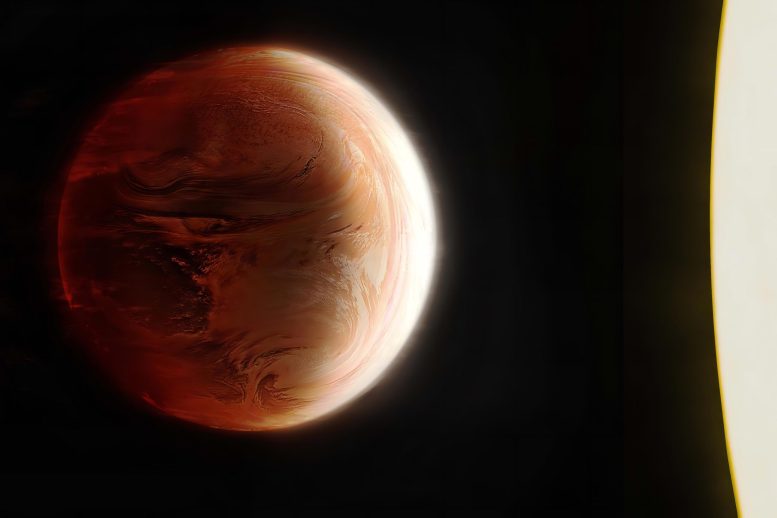 James Webb has revealed that the sunrise and sunset sides of WASP-121 b have surprisingly different atmospheres. Astronomers using the James Webb Space Telescope (JWST) have discovered striking differences between the morning and evening sides of the atmosphere of WASP-121 b, an ultra-hot gas giant located far beyond our solar system. The findings provide the [...]
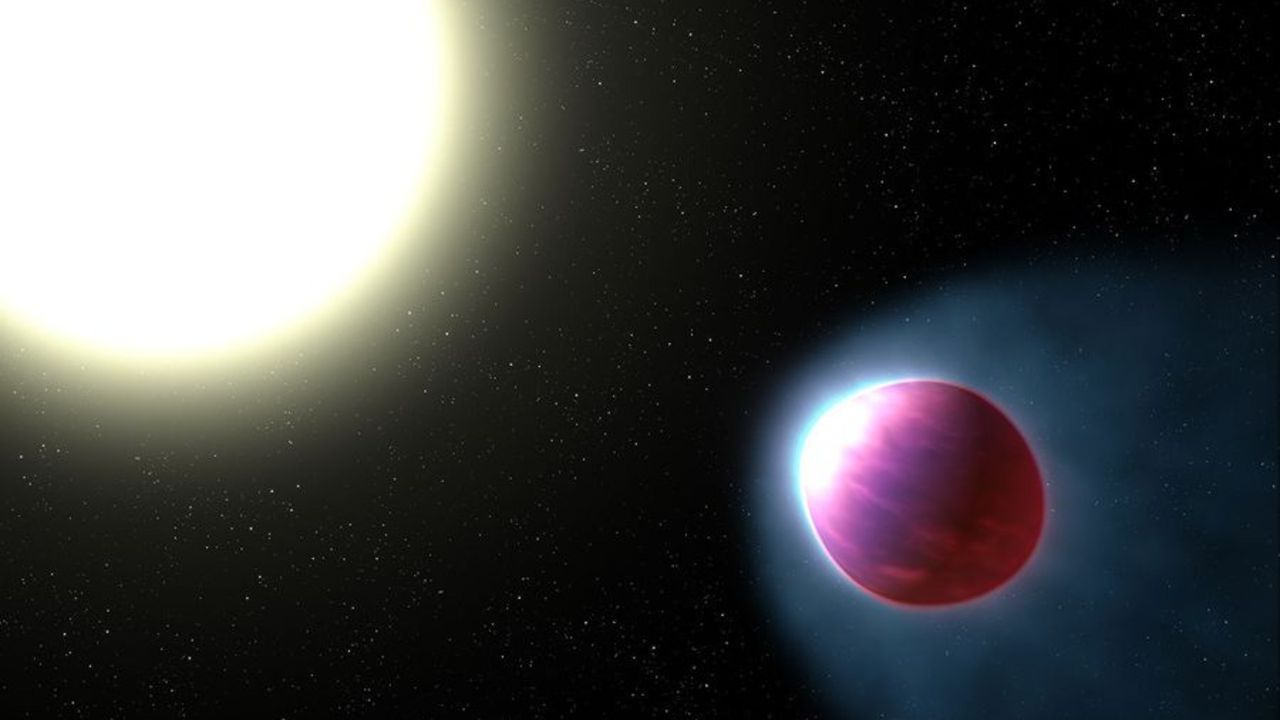

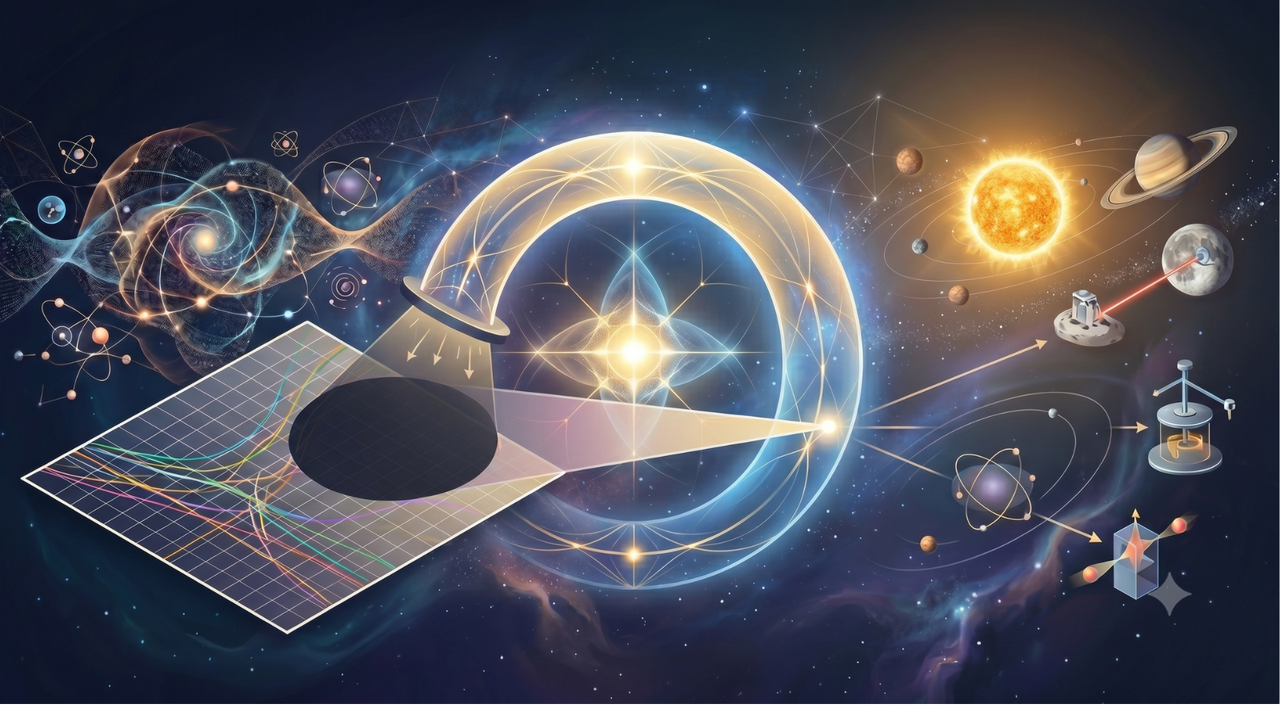


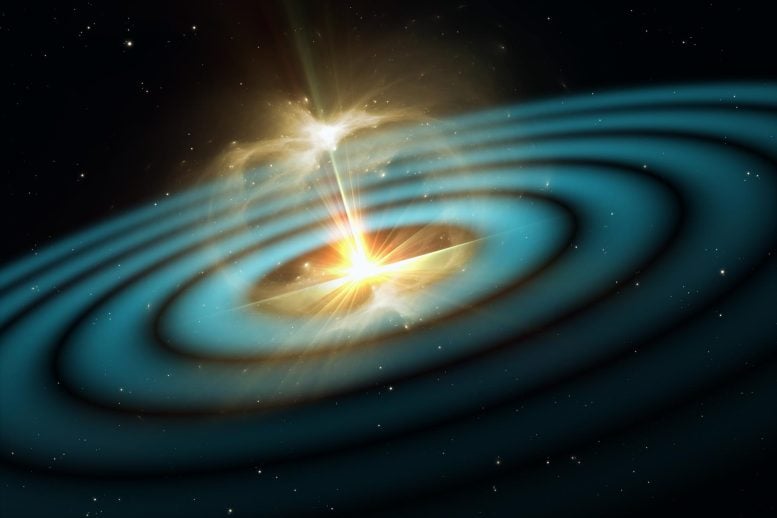 A new detector-based method clarifies how gravitational waves should be measured in an evolving universe. Imagine trying to measure a ripple on the surface of a pond while the pond itself is slowly changing shape. That is the challenge scientists face when they study gravitational waves not as isolated signals from colliding black holes, but [...]
