❌

Reading view

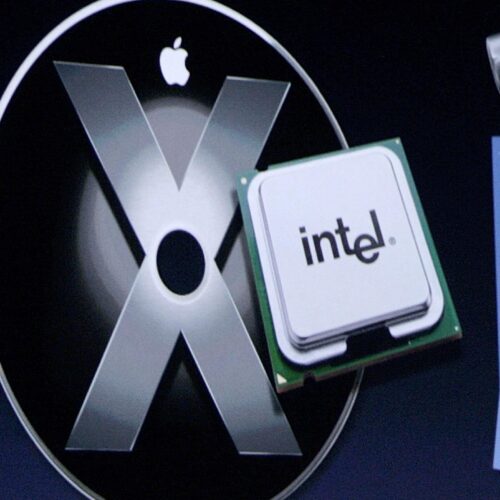
20 years of Intel Macs: Why Apple switched, and why it switched again

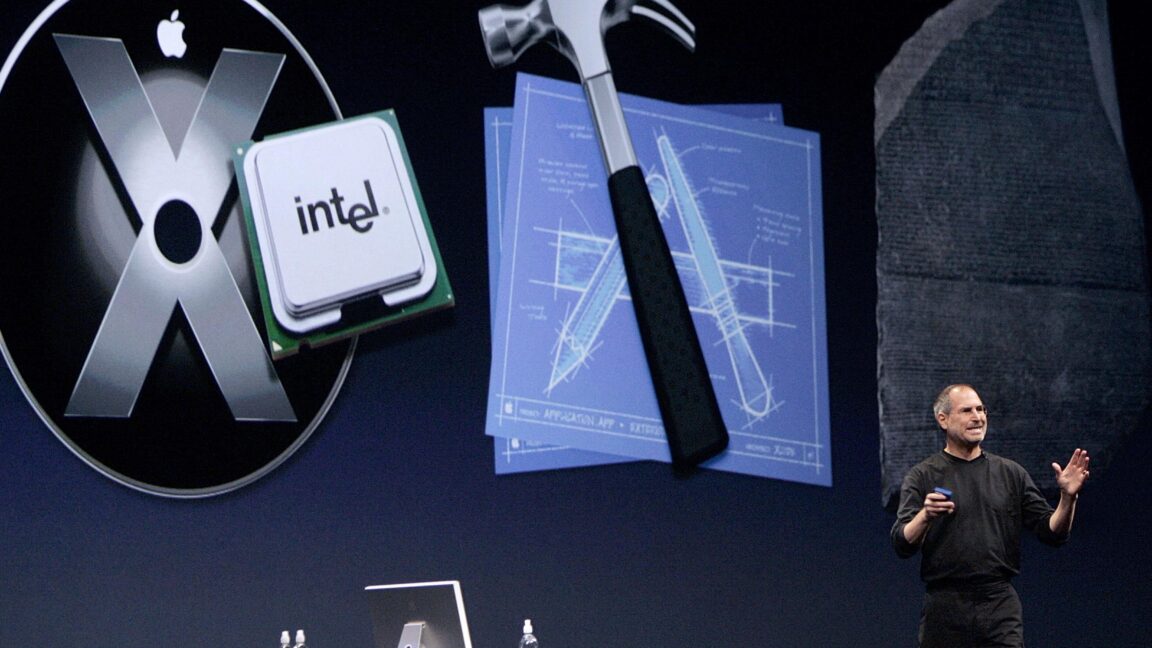
The release of macOS 27 later this fall won't quite close the book on the Intel Mac. The last handful of models that could run macOS 26 Tahoe will be eligible for security and Safari updates for two more years, and elements of the Rosetta compatibility layer for running Intel code on Apple Silicon Macs will be with us in some form for some indeterminate amount of time after that.

But macOS 26 is definitely the last chapter of the Intel Mac story. Anything that happens after this is a coda or an epilogue.

Most of our WWDC coverage has been forward-looking, so indulge us if you will in a look backward at the full history of the Intel Mac, a partnership between two companies that made Macs dramatically better, until it started making them worse.
Read full article

Comments

© David Paul Morris/Getty Images
  •  

Coupe du monde 2026 : l’erreur que beaucoup de fans pourraient payer le lendemain

Nuits courtes en perspective... La Coupe du monde de football 2026 va contraindre de nombreux supporters européens à veiller tard pour suivre les matchs en direct. En raison du décalage horaire avec les États-Unis, le Canada et le Mexique, pays hôtes de la compétition, plusieurs rencontres...

  •  

La photo de la semaine : « Elles dansaient et serpentaient en dessous de nous »… une scène qu’ont vue les astronautes

Des rubans verts qui serpentent dans le ciel polaire, des voiles mouvants qui s’étirent sous la Station spatiale internationale (ISS) : Jessica Meir a partagé, il y a quelques jours, un time-lapse d’aurores australes d’une beauté presque irréelle.

  •  

Les scientifiques alertent sur un changement inquiétant chez les requins : l’Homme serait en train de modifier leur manière de survivre

80 millions : c'est le nombre de requins tués chaque année par la pêche mondiale, selon une étude publiée dans la revue Science. Une pression colossale qui ne reste pas sans réponse de la part de ces prédateurs. Dans le golfe du Mexique, les requins s'adaptent, et pas forcément dans le bon sens.

  •  

« Tout s’emboîte » : les scientifiques pensent avoir trouvé ce qui se cache derrière les « points rouges » du télescope James-Webb

Depuis leur découverte par le télescope James-Webb, les « petits points rouges » défient les astronomes. Une nouvelle observation, presque par hasard, pourrait enfin lever le voile sur leur véritable nature.

  •  

VMO2, Mavenir trial tech for hearing-impaired users

UK operator Virgin Media O2 (VMO2) and Mavenir completed a proof-of-concept trial of technology designed to improve call clarity for customers suffering hearing issues without having to make changes on their phone.

Unlike device-based accessibility features or third-party apps, the service works entirely within the operator’s network. This allows participants to make and receive calls without needing to change their device or how they use it.

In the test participants completed a short, automated hearing test to identify how they perceive different sound frequencies. Personalised hearing profiles were then generated and securely linked to their mobile numbers, enabling the network to adapt how speech is delivered to them during calls in real time.

Following the trial, nearly 90% of participants reported improvements in call clarity, with many noting reduced listening effort, fewer misunderstandings and a more natural calling experience.

Jorge Ribeiro, director of core networks at Virgin Media O2, stated the trial was about using intelligence within the network to improve the experience without asking customers to do anything differently.

“We are encouraged by the early results from this proof-of-concept and are excited to explore how this type of technology could support more accessible services for our customers in future,” he said.

While still at an early stage, O2 said it is encouraged by the results and is exploring how the technology could be developed further to support accessible services at scale.

The post VMO2, Mavenir trial tech for hearing-impaired users appeared first on Mobile World Live.

  •  

Southern Lights Seen From International Space Station

The southern lights, also known as the aurora australis, were captured by the NASA astronaut Jessica Meir from the International Space Station on Saturday.
  •  
  •  

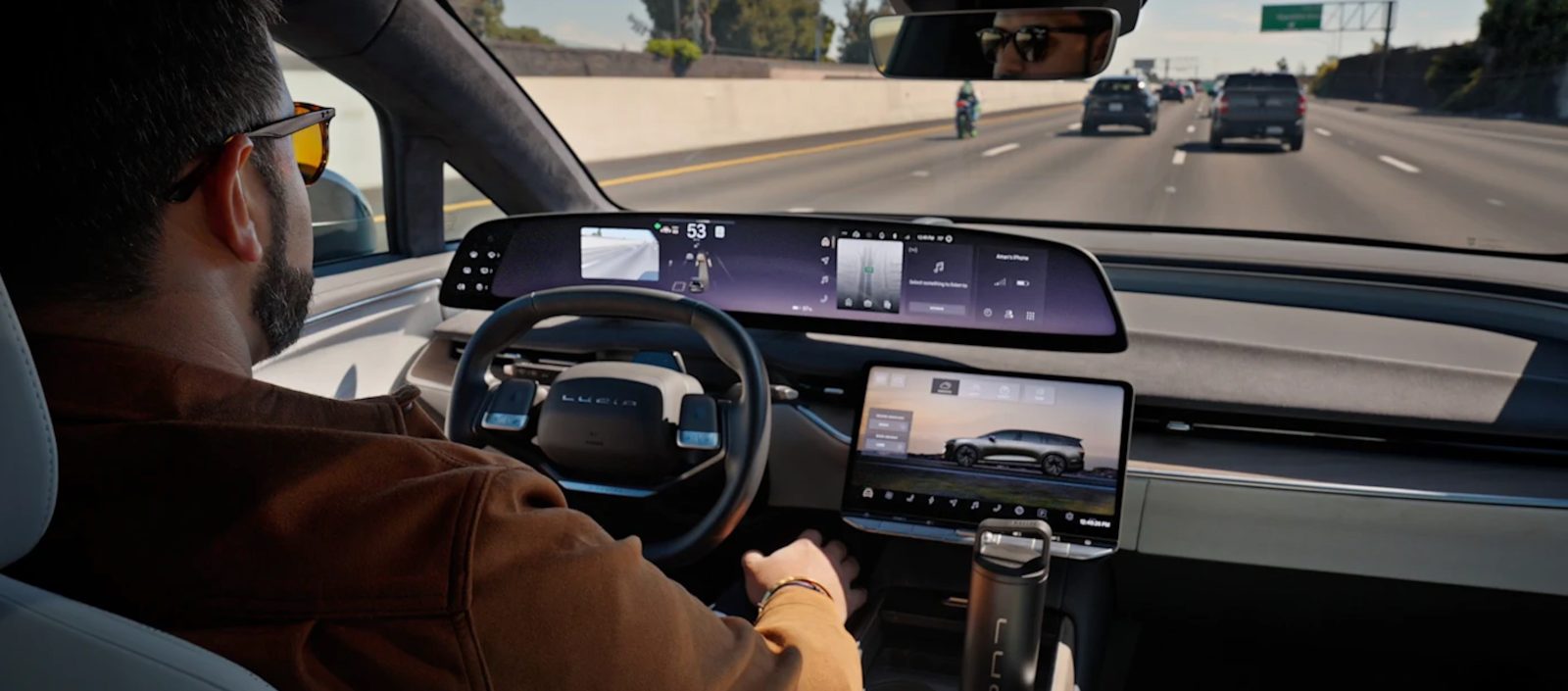
Lucid (LCID) finally adds hands-free driving to the Gravity SUV

Lucid Group (NASDAQ: LCID) announced it has begun rolling out an over-the-air software update that brings hands-free highway driving to the Gravity SUV in North America.

Lucid first promised hands-free driving for its vehicles well over a year ago, but the feature’s actual rollout has been notoriously slow. The Gravity update arrives at a critical time for the EV startup, which is dealing with shareholder lawsuits, a new CEO, and a stock trading near all-time lows.

  •  

L'énigme des vents cosmiques soufflés par le trou noir géant de notre Voie lactée est enfin résolue !

Nous avons bien progressé en ce qui concerne les observations et la théorie des trous noirs supermassifs au cœur des galaxies. Mais celui de notre Voie lactée déroutait les astrophysiciens depuis presque 50 ans en ce qui concerne une énigme avec des vents de matière. L'énigme semble résolue...

  •  

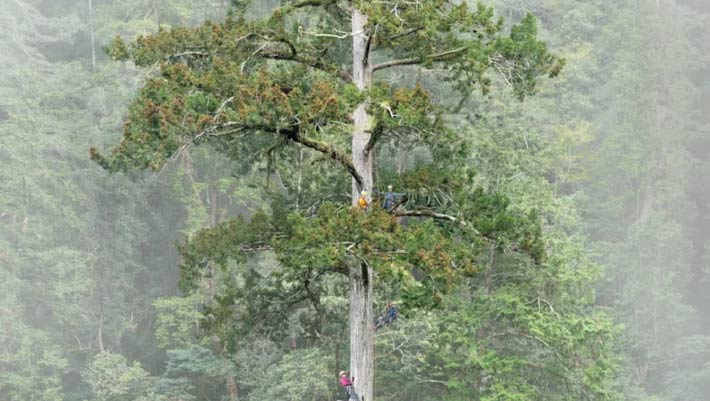
After Decade-Long Hunt, Scientists Find East Asia’s Tallest Tree

The Heaven Sword tree. Image credit: Chia-Chun Hsu et al., doi: 10.3389/ffgc.2026.1746112.

Deep in the mountains of northern Taiwan, a towering Taiwania cryptomerioides -- a large coniferous tree in the cypress family Cupressaceae whose ancestors date back 100 million years -- has been confirmed as the tallest known tree in East Asia.

The post After Decade-Long Hunt, Scientists Find East Asia’s Tallest Tree appeared first on Sci.News: Breaking Science News.

  •  

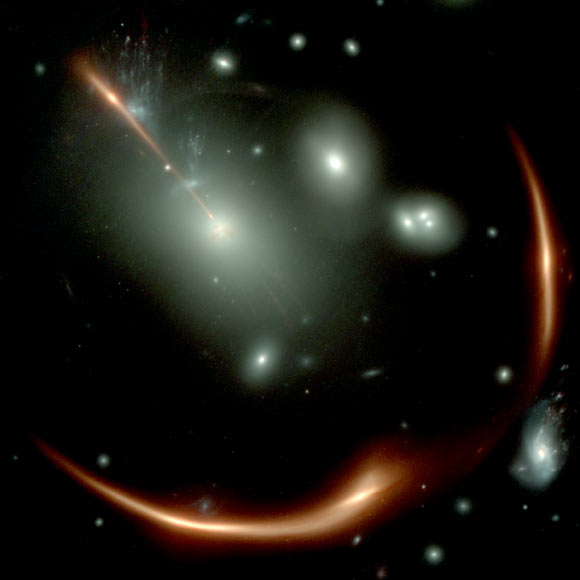
Webb Weighs Most Distant Inactive Black Hole Ever Found

This Webb image shows the highly distorted red galaxy MRG-M0138 seen through a foreground cluster of galaxies (white sources). Image credit: NASA / ESA / CSA / Webb.

A supermassive black hole 6 billion times the mass of the Sun lurks in MRG-M0138, a gravitationally lensed quiescent galaxy seen when the Universe was just 3 billion years old, according to an analysis of data collected by the NIRSpec Integral Field Spectrograph onboard the NASA/ESA/CSA James Webb Space Telescope.

The post Webb Weighs Most Distant Inactive Black Hole Ever Found appeared first on Sci.News: Breaking Science News.

  •  

HASC NDAA markup challenges Space Force on satellite programs

House Armed Services Committee seeks to preserve a missile-warning satellite program the Pentagon wants to cancel. It also criticizes a recent tactical communications satellite procurement and GPS oversight

The post HASC NDAA markup challenges Space Force on satellite programs appeared first on SpaceNews.

  •  

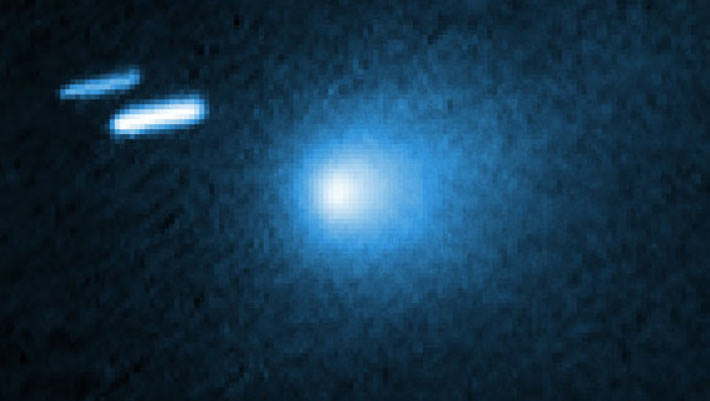
Webb Detects Methane on Interstellar Comet 3I/ATLAS

Hubble captured this image of 3I/ATLAS on July 21, 2025, when the comet was 446 million km (277 million miles) from Earth. Image credit: NASA / ESA / David Jewitt, UCLA / Joseph DePasquale, STScI.

Using the spectral data from the Mid-Infrared Instrument (MIRI) onboard the NASA/ESA/CSA James Webb Space Telescope, astronomers have detected methane on 3I/ATLAS.

The post Webb Detects Methane on Interstellar Comet 3I/ATLAS appeared first on Sci.News: Breaking Science News.

  •  

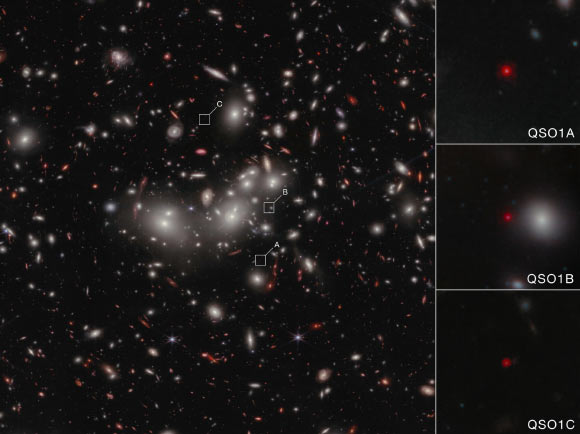
Webb Spots Supermassive Black Hole Older Than Its Home Galaxy

This Webb/NIRCam image shows the little red dot Abell2744-QSO1, magnified and triply imaged by galaxy cluster Abell 2744. Image credit: NASA / ESA / CSA / Lukas Furtak, Ben-Gurion University / Alyssa Pagan, STScI.

Astronomers using the NASA/ESA/CSA James Webb Space Telescope have found an enormous black hole in the early Universe that appears to predate its own host galaxy, raising fresh questions about how the cosmos’ first supermassive monsters were born.

The post Webb Spots Supermassive Black Hole Older Than Its Home Galaxy appeared first on Sci.News: Breaking Science News.

  •  

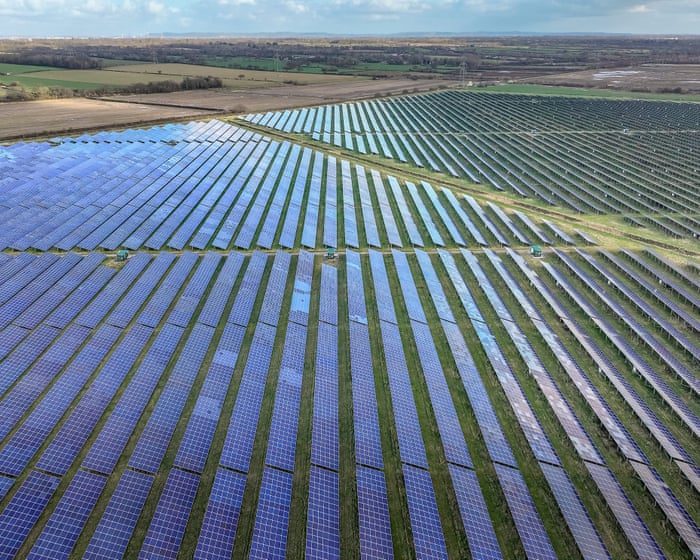
Blair’s fossil fuel ideas ‘bizarre’ in face of energy and climate crises, experts say

Energy specialists say abandoning net zero and increasing oil and gas drilling would cause more instability for Britons

Abandoning net zero and drilling for more oil and gas in the North Sea would be a massive setback for the UK and would not help the economy, leading experts have said in response to claims by the former prime minister Tony Blair.

“This is a bizarre intervention to make during the worst May heatwave on record and when the Iran crisis is providing yet more evidence of the enormous costs of oil and gas,” said Ed Matthew, the UK programme director at the E3G thinktank. “Clean energy is cheaper energy – it protects our bills from prices skyrocketing, its running costs are virtually zero, and it doesn’t cause climate change which threatens economic collapse ... The government should ignore Blair’s ideological nonsense and focus on what works.”

Continue reading...

© Photograph: Christopher Furlong/Getty Images

© Photograph: Christopher Furlong/Getty Images

© Photograph: Christopher Furlong/Getty Images

  •  
❌