❌

Reading view

Voici comment la présence d'un chien aide des enfants en difficulté à reprendre goût à la lecture

Le dispositif Caniscol permet à des enfants en difficulté de lecture de lire en compagnie d’un chien, dans un cadre bienveillant et sans pression, loin des évaluations scolaires. Cette approche les aide à prendre confiance en eux, à mieux gérer leurs émotions et découvrir leur potentiel...

  •  

À Cannes, cette cellule du Masque de Fer est au cœur de l'un des plus fascinants mystères de France

Sur l’île Sainte-Marguerite, écrin de verdure posé sur la Méditerranée face à Cannes, la cellule du Masque de Fer rappelle l’histoire d’un prisonnier dont l’identité reste l’un des plus grands mystères du royaume de France.

  •  

“Her Brain Had Been Intentionally Removed”: An Unsettling Iron Age Burial Practice Has Been Uncovered in Scotland 


Archaeologists say bones unearthed from an Iron Age burial in Scotland are revealing new insights into how human remains were interred in ancient Europe, in a region with scant evidence for mortuary practices in the archeological record.

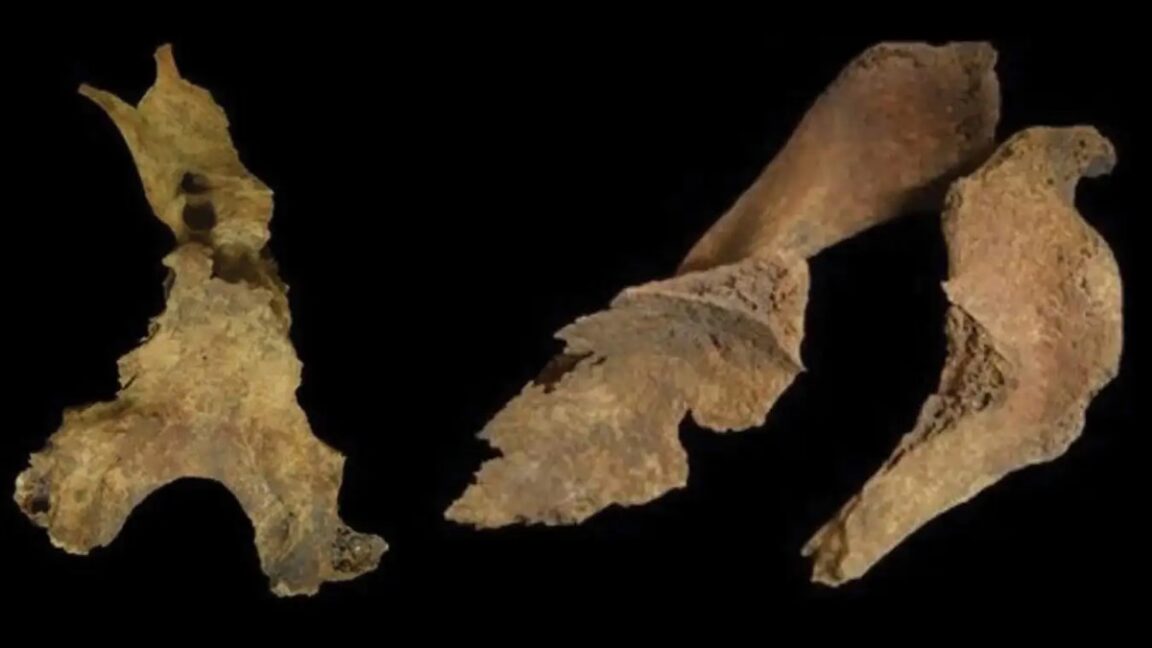
Among the new findings, cuts within the skull of a woman’s 2,000-year-old Iron Age remains suggest the removal of her brain prior to burial, along with other evidence of mortuary processing. 

“Manipulation of one skeleton, including the possible removal of the brain, fashioning of long bones into ‘tools’ and reassembly for burial, suggests complex mortuary processing,” write the authors of a new study published in the journal Antiquity. 

Iron Age Remains

The study’s authors report that the woman’s remains, and those believed to have belonged to a teenage boy buried nearby, both had distant origins, adding to the intrigue. Archaeologists discovered the pair buried in a cairn in Sutherland’s Loch Borralie in northwest Scotland, a rare find in such well-preserved condition. 

Due to Britain’s acidic peat soil, few Iron Age human remains have been recovered, leaving many questions about the inhabitants’ funerary practices. This particular corner of Scotland is an exception, with an environment better suited to preserving bone, offering a rare window into this mysterious period.

“To find bodies of this age so well preserved is rare, but to discover evidence of a funeral ritual we previously knew nothing about was such a surprise and very exciting,” said lead author Dr. Laura Castells Navarro.

Unusual Mortuary Practices

“The adult female displayed incisions on the inside of her cranium, suggesting her brain had been intentionally removed after death,” Castells Navarro continued. “We have no other comparison of this type of practice, but we know that the dead were curated and treated carefully in Iron Age Britain, so our understanding is that this bone modification is within that same tradition of care.”

The sharpened bones, which the archeologists suspected were used as tools, included humeri, ulna, and femur. Why Iron Age Britons would have engaged in such elaborate and unusual manipulation of skeletal remains eludes archaeologists, although they note that the care evident in reassembling her skeleton for burial suggests she commanded the respect and reverence of those who laid her to rest.

Analysis techniques used on the bones include isotope testing and DNA mapping, revealing a close kinship suspected to be that of maternal second cousins.

Iron Age Connections

More intriguing than their relationship is the evidence of the distance they had traveled, as isotopic analysis revealed that the pair had grown up 50 miles to the southeast. Genetics pushed this even further, revealing family connections beyond the mainland, spreading out in opposite directions. To the northeast, they had relatives 108 miles away on the Orkney Islands, while to the southwest, they had kin 140 miles away at Applecross.

Archaeologists interpret this to mean that Iron Age Britons were extremely mobile, traversing water in family groups.

“Our research shows that prehistoric maritime communities periodically moved around the north coast and Northern Isles of Scotland, possibly in small groups,” Dr. Castells Navarro said. “This movement allowed for the spread and maintenance of cultural practices and traditions.”

With individuals of shared kinship spread so far, researchers suggest these complex mortuary practices were likely shared across Iron Age Britain, adding an intriguing new wrinkle to our assessment of these ancient people.

“I think we can assume that the Iron Age dead were not forgotten,” Dr. Castells Navarro concluded, “and still had meaning to the living, with a continued interaction between the living and the dead across time and distance.”

The paper, “Reconnecting the Dead in Iron Age Britain: Funerary Processing and Long-Distance Connectivity at Loch Borralie, Scotland,” appeared in Antiquity on June 10, 2026.

Ryan Whalen covers science and technology for The Debrief. He holds an MA in History and a Master of Library and Information Science with a certificate in Data Science. He can be contacted at ryan@thedebrief.org, and follow him on Twitter @mdntwvlf.

  •  

Près du détroit d’Ormuz, le crash de l’hélicoptère Apache américain a déclenché une opération inédite dans l’histoire

Pour la première fois dans l'histoire, deux membres d'équipage américains d'un hélicoptère AH-64 Apache tombé en mer près des côtes d'Oman ont été secourus par un drone naval de la marine américaine. Une manœuvre qui pourrait bien changer la donne lors d’une opération de combat.

  •  

Did Iron Age Britons remove brains of the dead?

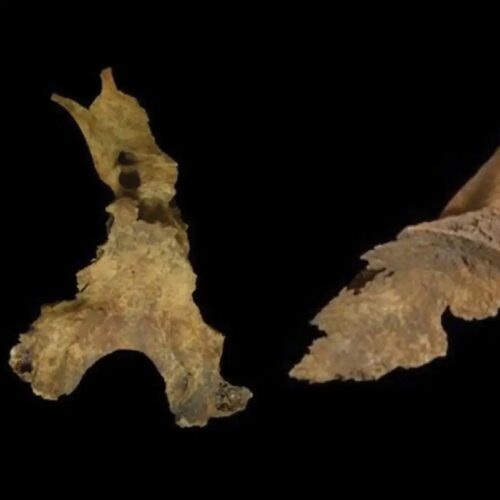
Very little is known about funerary practices in Iron Age Britain, since few human remains have survived. However, the environment in northwest Scotland is more conducive to preserving bone from that period. Archaeologists have previously noted evidence of postmortem manipulation of human remains, such as mummification, and of modifying human bones into tools or decorative artifacts. Now a new paper published in the journal Antiquity describes evidence of postmortem brain removal in remains from that region, as well as sharpened limb bones, possibly for use as tools.

The remains in question were found in 2000 at a burial cairn in Loch Borralie, near the most northwest tip of the Scottish mainland, after erosion revealed a human cranium. The excavated remains belonged to two individuals: one an adult female and the other a juvenile of (at the time) indeterminate sex; the cranium belonged to the latter. The authors of the new paper conducted a fresh osteoarchaeological analysis as well as multi-isotope and ancient DNA analysis. Radiocarbon dating of molar teeth from both sets of remains placed their deaths as occurring between 50 BCE and 70 CE.

In the case of the female individual, the authors noted an unusual break at the base of the cranium that likely occurred near the time of death. It's the kind of fracture that one gets from high-velocity impacts, including vehicular collisions, sporting accidents, falls, assaults, or even long-drop hanging. But the known forensic patterns observed in the aforementioned scenarios don't exactly match the pattern of the Iron Age cranium, leading the authors to conclude that it likely resulted from a targeted impact. They also noted perimortem fractures on both scapulae.

Read full article

Comments

© Rebecca Ellis-Haken

  •  

Scientists turn ordinary water into a powerful energy storage material

Water is one of the most common substances on Earth, but scientists have now discovered that it may have a surprising new use: storing electrical energy. Researchers at the Hamburg University of Technology in Germany have developed a new type of energy storage device that uses pure water as its main working ingredient. The technology […]

The post Scientists turn ordinary water into a powerful energy storage material appeared first on Knowridge Science Report.

  •  

Voici comment des chercheurs français ont réussi à retranscrire 32 000 manuscrits médiévaux grâce à l'IA

Quatre mois. C'est tout ce qu'il a fallu à une intelligence artificielle pour déchiffrer 32 763 manuscrits du Moyen Âge. Un exploit qui sidère les paléographes, habitués à consacrer des années entières à un seul document. Le projet CoMMa vient de réécrire les règles de l'archivage historique. 

  •  

Scientists Find a Smarter Way to Track Cancer and Heart Damage

Modern cancer treatment has entered a new era thanks to immunotherapy. Instead of directly attacking cancer cells with chemicals or radiation, immunotherapy encourages the immune system to do the job itself. This approach has helped many patients live longer and has changed the outlook for several types of cancer. One of the most widely used […]

The post Scientists Find a Smarter Way to Track Cancer and Heart Damage appeared first on Knowridge Science Report.

  •  

Comment l'industrie automobile transforme ses déchets en ressources stratégiques pour la transition écologique

L’image de carcasses de voitures empilées à perte de vue dans des casses à ciel ouvert est en train de changer, grâce une filière en pleine mutation qui permettra à terme de fabriquer les véhicules selon un modèle circulaire.

  •  

Spanish Cave Sanctuary Reveals More Than 11,500 Years of Activity

Sala Keimada, a chamber of Cueva Palomera in Burgos, Spain. Image credit: Ortega-Martínez et al., doi: 10.1016/j.jasrep.2026.105818.

New radiocarbon dates from Sala Keimada, a hard-to-reach chamber of Cueva Palomera in the province of Burgos, northern Spain, suggest that generations of people returned to the sacred space from the end of the Ice Age through the Iron Age, leaving behind art, structures and offerings.

The post Spanish Cave Sanctuary Reveals More Than 11,500 Years of Activity appeared first on Sci.News: Breaking Science News.

  •  

Le trésor caché de l’Estérel, la baie d’Agay offre un spectacle de couleurs inoubliable au coucher du soleil

Au pied du massif de l’Estérel, la baie d’Agay s’ouvre entre mer et roches rouges, dominée par la silhouette du cap Roux. Ici, la Méditerranée semble ralentir son rythme : quelques voiliers glissent sur l’eau tranquille et, chaque soir, le ciel s’embrase au-dessus des collines sombres. Une...

  •  

The Tories Co-Authored The Henry Nowak Tragedy. Can Kemi Badenoch Tear up the Script?

In charge for 14 years at the Home Office and 10 at Hampshire police, the Tories co-authored the Henry Nowak tragedy, says Clive Pinder. But Kemi Badenoch has shown she is determined to do something about it.

The post The Tories Co-Authored The Henry Nowak Tragedy. Can Kemi Badenoch Tear up the Script? appeared first on The Daily Sceptic.

  •  

Un pirate affirme avoir aspiré des centaines de milliers de messages sur la messagerie sécurisée de l’État

Tchap, c’est la messagerie ultra-sécurisée et souveraine du gouvernement. Elle était censée assurer une protection maximale, mais un pirate affirme avoir exfiltré plus de 643 000 messages et les données de 73 000 agents publics. Les faits restent à confirmer, mais l'incident soulève une question...

  •  

Votre terrain déborde ? Cette débroussailleuse Fuxtec n'a jamais été aussi abordable

Avant les beaux jours, remettre son jardin en état devient souvent une priorité. Avec cette débroussailleuse proposée à prix réduit chez Cdiscount, l'entretien des herbes hautes et des zones difficiles d'accès devient bien plus simple. Un allié pratique pour retrouver rapidement un extérieur...

  •  

Museu virtual convida a uma viagem pelos computadores “vintage”

Ainda se lembra de usar a linha de comando, e das cores dos sistemas operativos antigos? No Virtual OS Museum pode recuperar a nostalgia dos antigos mainframes e dos primeiros computadores pessoais, mas também dos sistema para telemóveis.

The post Museu virtual convida a uma viagem pelos computadores “vintage” appeared first on Tek Notícias.

  •  

La plante de la semaine : facile à cultiver, cette plante géante venue des Andes cache un trésor au goût de poire

Les Français sont de vrais « jardinophiles » ! Et vous ? Avec cette chronique, (re)découvrez une plante, un fruit, un légume. Dans la famille des légumes oubliés, on demande la poire de terre. Discrète, celle qui se nomme aussi yacon mériterait pourtant d’être un peu plus présente dans nos...

  •  
❌