❌

Reading view

NASA’s Chandra Finds Unexpected Fireworks in Aftermath of Stellar Explosions
6 Min Read

NASA’s Chandra Finds Unexpected Fireworks in Aftermath of Stellar Explosions

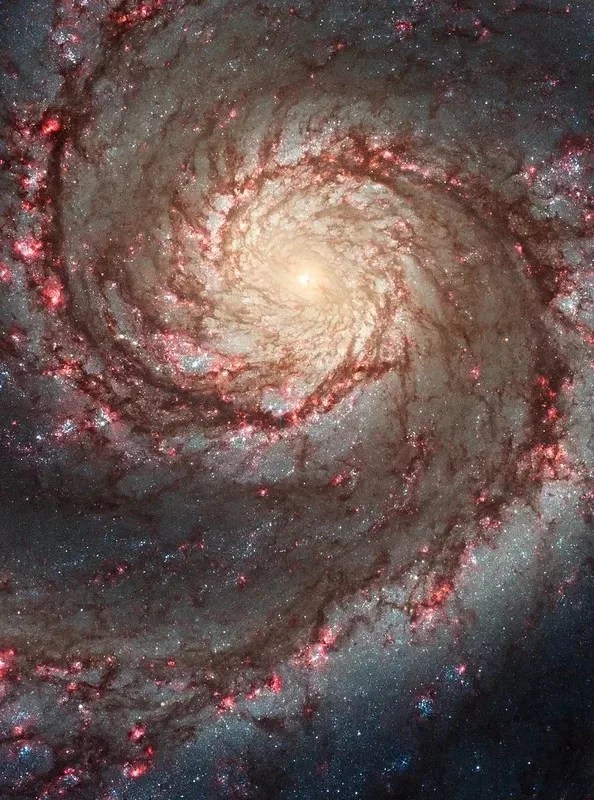
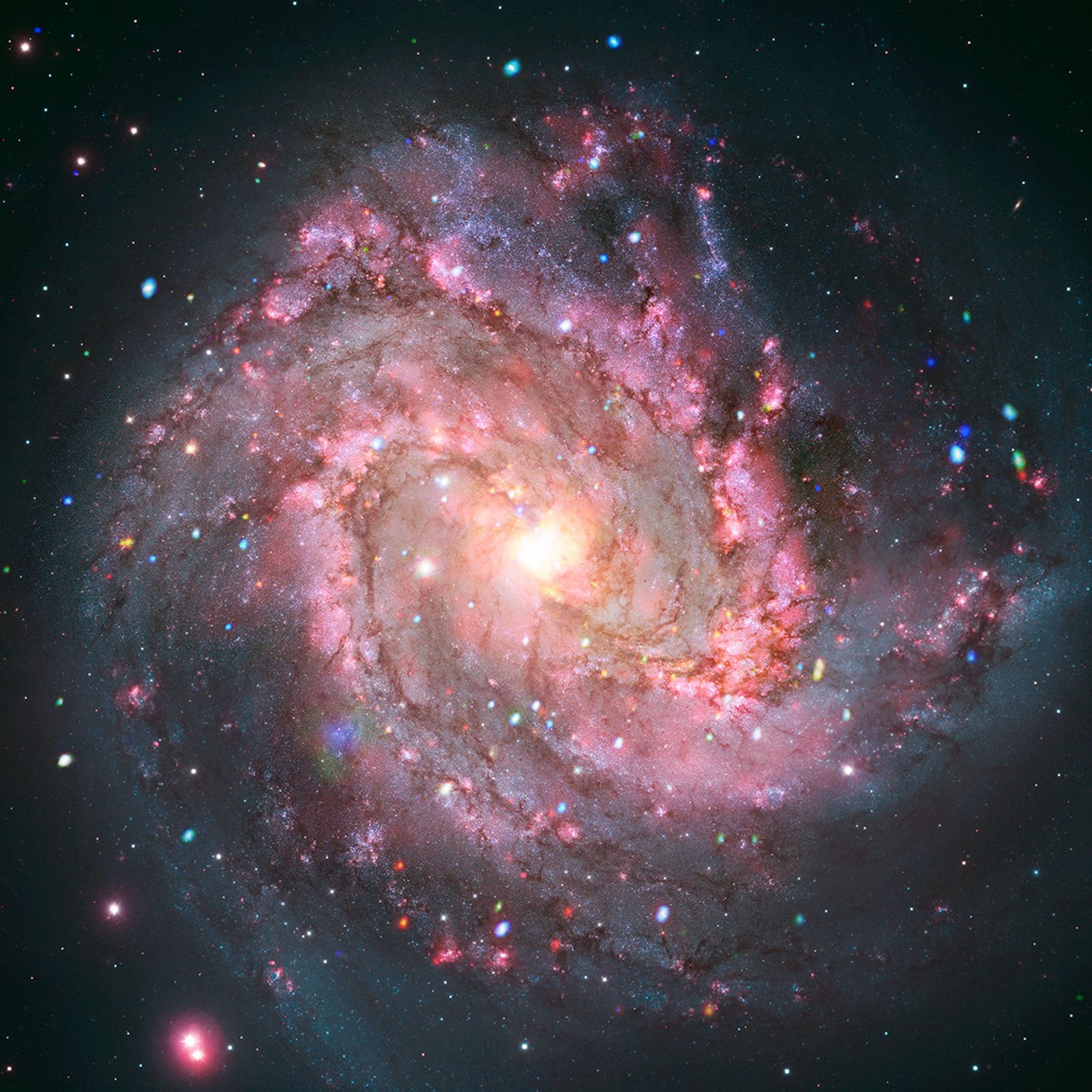
A full field composite image of M83 with X-rays from Chandra (red, green, and blue) and optical light data from Hubble (red, green, and blue).
A composite image of the nearby galaxy Messier 83, and short timelapse videos of two curious supernova remnants hidden inside.
X-ray: NASA/CXC/SAO; Optical: NASA/ESA/AURA/STScI, Hubble Heritage Team, W. Blair (STScI/Johns Hopkins University) and R. O’Connell (University of Virginia); Image Processing: NASA/CXC/SAO/A. Jubett, L. Frattare and P. Edmonds

The aftermath of a supernova, a stellar explosion, is usually a slowly fading cloud of hot gas. So when astronomers pointed NASA’s Chandra X-ray Observatory at the nearby galaxy Messier 83 (M83), they did not expect to find a population of supernova remnants, or the debris from these explosions, showing dramatic changes in their brightness. The new results were presented at the American Astronomical Society meeting in Pasadena, California, and published in The Astrophysical Journal.

The galaxy M83, located about 15 million light-years from Earth, is forming stars at a high rate. Researchers analyzed 14 years of Chandra data of the galaxy, spanning 2000 to 2014.

Using this extensive set of data, the researchers caught surprising variations in the X-ray brightness of sources previously identified as supernova remnants. The researchers expected supernova remnants older than a century or so to fade gradually in X-rays, but not change dramatically in brightness.

The team found that roughly half of the 22 X-ray sources associated with supernova remnants in their sample showed changes in X-ray brightness over the 14-year span of observations — a result that was completely unexpected.

“We knew that individual X-ray sources could vary dramatically,” said Andrea Prestwich, of the Catholic University of America who led the study. “But finding that so many supernova remnants were behaving this way was a real surprise. Something unusual is going on in these objects. Pinpointing the cause remains a challenge, as M83’s distance limits the detail we can observe.”

One of the 22 variable supernova remnants has a straightforward explanation: SN 1957D, the debris from a supernova first observed nearly 70 years ago, is ramming into material surrounding the explosion site, producing the observed X-ray flares. But this cannot explain the rest of the sample. There is no evidence to suggest that all 22 remnants were formed within the last century. Something else must be driving the variability.

The most likely explanation is that the team has uncovered a population of stellar survivors stars that lived through their partner’s destruction in a supernova explosion. In this scenario, each variable X-ray source began as a pair of massive stars orbiting each other. The more massive star collapsed and exploded as a supernova, leaving behind a black hole or ultra-dense neutron star. Its companion survived.

A full field composite image of M83 with X-rays from Chandra (red, green, and blue) and optical light data from Hubble (red, green, and blue).
Galaxy M83 in X-ray and Optical Light.
X-ray: NASA/CXC/SAO; Optical: NASA/ESA/AURA/STScI, Hubble Heritage Team, W. Blair (STScI/Johns Hopkins University) and R. O’Connell (University of Virginia); Image Processing: NASA/CXC/SAO/A. Jubett, L. Frattare and P. Edmonds

“It may be that this galaxy contains a collection of supernova remnants where one massive star survives the supernova and becomes locked into an orbit with a black hole or neutron star,” said co-author Michael McCollough of the Center for Astrophysics | Harvard & Smithsonian (CfA). “The neutron star or black hole can then start pulling material from the massive star’s surface.”

That infalling material is superheated by the intense gravitational pull, producing the X-rays Chandra detects. These types of systems, known as high-mass X-ray binaries (HMXBs), are among the most variable X-ray sources in the universe. Researchers say they may be the cause of the variations seen in M83’s supernova remnants.

Astronomers have known about HMXBs for decades, but the difference with this group in M83 is their connection to supernova remnants. Previously, only a handful of supernova remnants associated with HMXBs had been identified across observations of all galaxies. It is unprecedented to find more than 20 strong candidates in just one galaxy.

The authors found that the variable supernova remnants are in regions with higher concentrations of massive stars than in other parts of the galaxy, increasing the chances of a link between the remnants and HMXBs.

There is another possible explanation: Instead of pulling in material from a companion star, the black hole or neutron star may be recapturing some of the material blasted outward by the original explosion.

“This could be an example of cosmic recycling, where debris from the explosion falls back onto the very object the supernova created,” said co-author Roy Kilgard of Wesleyan University. “And it’s quite possible that both explanations are at play — different sources in our sample may have different origins.”

These results are not unique to M83. A follow-up study of the nearby star-forming galaxy M51 by Zoe Hoiland of Vassar College and Kilgard has uncovered a similar population of variable X-ray sources associated with supernova remnants, suggesting that such systems may be a feature of galaxies undergoing vigorous star formation.
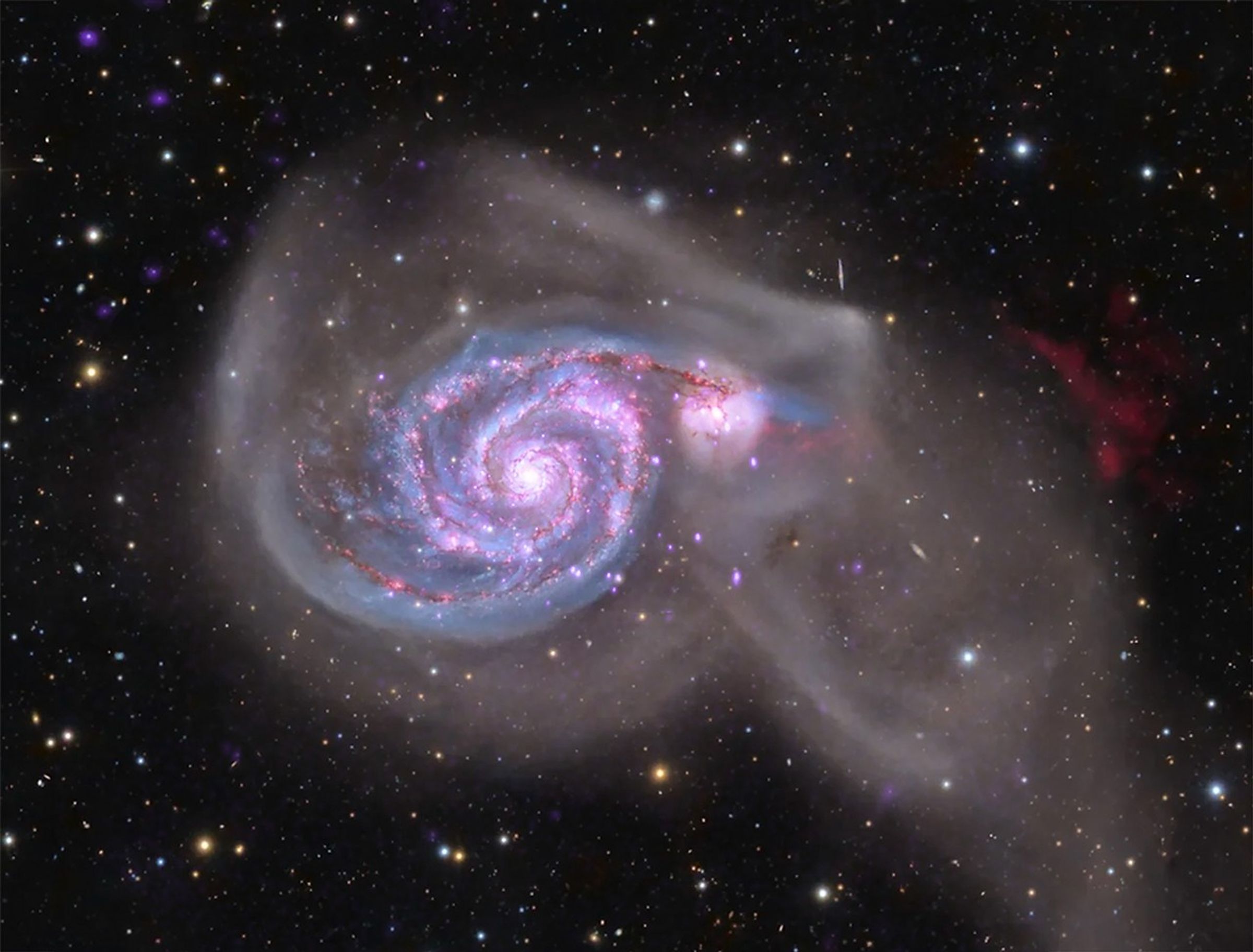
This is a composite image of the galaxy M51 combining data from NASA's Chandra X-ray Observatory (purple) with optical data (red, green and blue) taken with ground-based telescopes by a team of astrophotographers. A surprisingly high number of X-ray sources associated with supernova remnants in M51 show large changes in brightness, similar to the behavior seen in M83.
This is a composite image of the galaxy M51 combining data from NASA’s Chandra X-ray Observatory (purple) with optical data (red, green and blue) taken with ground-based telescopes by a team of astrophotographers. A surprisingly high number of X-ray sources associated with supernova remnants in M51 show large changes in brightness, similar to the behavior seen in M83.
Chandra X-ray Data: NASA/CXC/SAO; Astrobin/Optical Groundbased: C.Björk, T.Bähnck, S.Donoso, J.Gentillon, A. and D.Grelin, S.Guberski, R. Hall, T.Heuberger, J.Jacks, P.Kent, Br.Meyers, W.Ostling, N.Puig, T.Schaeffer, F.Schöfbänker, M.Vasilev

The Chandra data for M83 began with single observations in 2000 and 2001, followed by 10 observations from 2010 to 2011 and another observation in 2014.

NASA’s Marshall Space Flight Center in Huntsville, Alabama, manages the Chandra program. The Smithsonian Astrophysical Observatory’s Chandra X-ray Center controls science operations from Cambridge, Massachusetts, and flight operations from Burlington, Massachusetts.

Visual Description

This release features a composite image of the nearby galaxy Messier 83, and short timelapse videos of two curious supernova remnants hidden inside.

In the composite image, Messier 83, or M83, is shown to have a spiral structure, viewed straight on. At the center is a brilliant white and yellow pool of light. From that light, spiral arms of hot pink cloud corkscrew out in wide, sweeping arches. The galaxy is covered in a faint grey haze, and flecked with red, green, blue, white, and yellow dots.

In an annotated version of the composite image, two tiny dots to our lower right of center are highlighted by white circles. These are two of the supernova remnants being considered by researchers. Each is examined further in a separate timelapse video.

Over a 14-year period from 2000 to 2014, astronomers pointed NASA’s X-ray observatory at the M83 galaxy. They discovered that about half of the X-ray sources believed to be supernova remnants, the aftermath of stellar explosions, were exhibiting dramatic changes in brightness. This result was entirely unexpected.

Those changes in brightness are highlighted in the timelapse videos. In each video, a series of static images flashes by, focused on one of the two X-ray sources once believed to be supernova remnants. In the videos, the X-ray sources appear as bright blue blobs with glowing cores. But in each image, taken months or years apart, the shapes change, as does the intensity of the blue color, and the brightness of the core. By presenting the substantively different images of the same objects one after another in quick succession, short timelapse videos are created.

The most likely explanation for the changes in brightness is that the team has uncovered a population of stellar survivors, stars that lived through an orbiting partner’s destruction in a supernova explosion. Material is being pulled from the surviving star onto the black hole or neutron star that formed in the supernova, a process known to cause rapid changes in X-ray brightness.

Read more from NASA’s Chandra X-ray Observatory

To learn more about NASA’s Chandra mission, visit:

https://science.nasa.gov/chandra

https://chandra.si.edu

News Media Contact

Megan Watzke
Chandra X-ray Center
Cambridge, Mass.
617-496-7998
mwatzke@cfa.harvard.edu

Joel Wallace
Marshall Space Flight Center, Huntsville, Alabama
256-544-0034
joel.w.wallace@nasa.gov

About the Author

Lee Mohon

Share

Details

Last Updated
Jun 16, 2026
Editor
Lee Mohon
Contact
Joel Wallace
Location
Marshall Space Flight Center
  •  

NASA’s Chandra Finds Unexpected Fireworks in Aftermath of Stellar Explosions

6 Min Read

NASA’s Chandra Finds Unexpected Fireworks in Aftermath of Stellar Explosions

A full field composite image of M83 with X-rays from Chandra (red, green, and blue) and optical light data from Hubble (red, green, and blue).
A composite image of the nearby galaxy Messier 83, and short timelapse videos of two curious supernova remnants hidden inside.
X-ray: NASA/CXC/SAO; Optical: NASA/ESA/AURA/STScI, Hubble Heritage Team, W. Blair (STScI/Johns Hopkins University) and R. O'Connell (University of Virginia); Image Processing: NASA/CXC/SAO/A. Jubett, L. Frattare and P. Edmonds

The aftermath of a supernova, a stellar explosion, is usually a slowly fading cloud of hot gas. So when astronomers pointed NASA’s Chandra X-ray Observatory at the nearby galaxy Messier 83 (M83), they did not expect to find a population of supernova remnants, or the debris from these explosions, showing dramatic changes in their brightness. The new results were presented at the American Astronomical Society meeting in Pasadena, California, and published in The Astrophysical Journal.

The galaxy M83, located about 15 million light-years from Earth, is forming stars at a high rate. Researchers analyzed 14 years of Chandra data of the galaxy, spanning 2000 to 2014.

Using this extensive set of data, the researchers caught surprising variations in the X-ray brightness of sources previously identified as supernova remnants. The researchers expected supernova remnants older than a century or so to fade gradually in X-rays, but not change dramatically in brightness.

The team found that roughly half of the 22 X-ray sources associated with supernova remnants in their sample showed changes in X-ray brightness over the 14-year span of observations — a result that was completely unexpected.

“We knew that individual X-ray sources could vary dramatically,” said Andrea Prestwich, of the Catholic University of America who led the study. “But finding that so many supernova remnants were behaving this way was a real surprise. Something unusual is going on in these objects. Pinpointing the cause remains a challenge, as M83’s distance limits the detail we can observe.”

One of the 22 variable supernova remnants has a straightforward explanation: SN 1957D, the debris from a supernova first observed nearly 70 years ago, is ramming into material surrounding the explosion site, producing the observed X-ray flares. But this cannot explain the rest of the sample. There is no evidence to suggest that all 22 remnants were formed within the last century. Something else must be driving the variability.

The most likely explanation is that the team has uncovered a population of stellar survivors stars that lived through their partner’s destruction in a supernova explosion. In this scenario, each variable X-ray source began as a pair of massive stars orbiting each other. The more massive star collapsed and exploded as a supernova, leaving behind a black hole or ultra-dense neutron star. Its companion survived.

A full field composite image of M83 with X-rays from Chandra (red, green, and blue) and optical light data from Hubble (red, green, and blue).
Galaxy M83 in X-ray and Optical Light.
X-ray: NASA/CXC/SAO; Optical: NASA/ESA/AURA/STScI, Hubble Heritage Team, W. Blair (STScI/Johns Hopkins University) and R. O’Connell (University of Virginia); Image Processing: NASA/CXC/SAO/A. Jubett, L. Frattare and P. Edmonds

“It may be that this galaxy contains a collection of supernova remnants where one massive star survives the supernova and becomes locked into an orbit with a black hole or neutron star,” said co-author Michael McCollough of the Center for Astrophysics | Harvard & Smithsonian (CfA). “The neutron star or black hole can then start pulling material from the massive star’s surface.”

That infalling material is superheated by the intense gravitational pull, producing the X-rays Chandra detects. These types of systems, known as high-mass X-ray binaries (HMXBs), are among the most variable X-ray sources in the universe. Researchers say they may be the cause of the variations seen in M83’s supernova remnants.

Astronomers have known about HMXBs for decades, but the difference with this group in M83 is their connection to supernova remnants. Previously, only a handful of supernova remnants associated with HMXBs had been identified across observations of all galaxies. It is unprecedented to find more than 20 strong candidates in just one galaxy.

The authors found that the variable supernova remnants are in regions with higher concentrations of massive stars than in other parts of the galaxy, increasing the chances of a link between the remnants and HMXBs.

There is another possible explanation: Instead of pulling in material from a companion star, the black hole or neutron star may be recapturing some of the material blasted outward by the original explosion.

“This could be an example of cosmic recycling, where debris from the explosion falls back onto the very object the supernova created,” said co-author Roy Kilgard of Wesleyan University. “And it’s quite possible that both explanations are at play — different sources in our sample may have different origins.”

These results are not unique to M83. A follow-up study of the nearby star-forming galaxy M51 by Zoe Hoiland of Vassar College and Kilgard has uncovered a similar population of variable X-ray sources associated with supernova remnants, suggesting that such systems may be a feature of galaxies undergoing vigorous star formation.

This is a composite image of the galaxy M51 combining data from NASA's Chandra X-ray Observatory (purple) with optical data (red, green and blue) taken with ground-based telescopes by a team of astrophotographers. A surprisingly high number of X-ray sources associated with supernova remnants in M51 show large changes in brightness, similar to the behavior seen in M83.
This is a composite image of the galaxy M51 combining data from NASA’s Chandra X-ray Observatory (purple) with optical data (red, green and blue) taken with ground-based telescopes by a team of astrophotographers. A surprisingly high number of X-ray sources associated with supernova remnants in M51 show large changes in brightness, similar to the behavior seen in M83.
Chandra X-ray Data: NASA/CXC/SAO; Astrobin/Optical Groundbased: C.Björk, T.Bähnck, S.Donoso, J.Gentillon, A. and D.Grelin, S.Guberski, R. Hall, T.Heuberger, J.Jacks, P.Kent, Br.Meyers, W.Ostling, N.Puig, T.Schaeffer, F.Schöfbänker, M.Vasilev

The Chandra data for M83 began with single observations in 2000 and 2001, followed by 10 observations from 2010 to 2011 and another observation in 2014.

NASA’s Marshall Space Flight Center in Huntsville, Alabama, manages the Chandra program. The Smithsonian Astrophysical Observatory’s Chandra X-ray Center controls science operations from Cambridge, Massachusetts, and flight operations from Burlington, Massachusetts.

Visual Description

This release features a composite image of the nearby galaxy Messier 83, and short timelapse videos of two curious supernova remnants hidden inside.

In the composite image, Messier 83, or M83, is shown to have a spiral structure, viewed straight on. At the center is a brilliant white and yellow pool of light. From that light, spiral arms of hot pink cloud corkscrew out in wide, sweeping arches. The galaxy is covered in a faint grey haze, and flecked with red, green, blue, white, and yellow dots.

In an annotated version of the composite image, two tiny dots to our lower right of center are highlighted by white circles. These are two of the supernova remnants being considered by researchers. Each is examined further in a separate timelapse video.

Over a 14-year period from 2000 to 2014, astronomers pointed NASA’s X-ray observatory at the M83 galaxy. They discovered that about half of the X-ray sources believed to be supernova remnants, the aftermath of stellar explosions, were exhibiting dramatic changes in brightness. This result was entirely unexpected.

Those changes in brightness are highlighted in the timelapse videos. In each video, a series of static images flashes by, focused on one of the two X-ray sources once believed to be supernova remnants. In the videos, the X-ray sources appear as bright blue blobs with glowing cores. But in each image, taken months or years apart, the shapes change, as does the intensity of the blue color, and the brightness of the core. By presenting the substantively different images of the same objects one after another in quick succession, short timelapse videos are created.

The most likely explanation for the changes in brightness is that the team has uncovered a population of stellar survivors, stars that lived through an orbiting partner’s destruction in a supernova explosion. Material is being pulled from the surviving star onto the black hole or neutron star that formed in the supernova, a process known to cause rapid changes in X-ray brightness.

Read more from NASA’s Chandra X-ray Observatory

To learn more about NASA’s Chandra mission, visit:

https://science.nasa.gov/chandra

https://chandra.si.edu

News Media Contact

Megan Watzke
Chandra X-ray Center
Cambridge, Mass.
617-496-7998
mwatzke@cfa.harvard.edu

Joel Wallace
Marshall Space Flight Center, Huntsville, Alabama
256-544-0034
joel.w.wallace@nasa.gov

About the Author

Lee Mohon

Share

Details

Last Updated
Jun 15, 2026
Editor
Lee Mohon
Contact
Joel Wallace
Location
Marshall Space Flight Center

The post NASA’s Chandra Finds Unexpected Fireworks in Aftermath of Stellar Explosions appeared first on NASA Science.

  •  

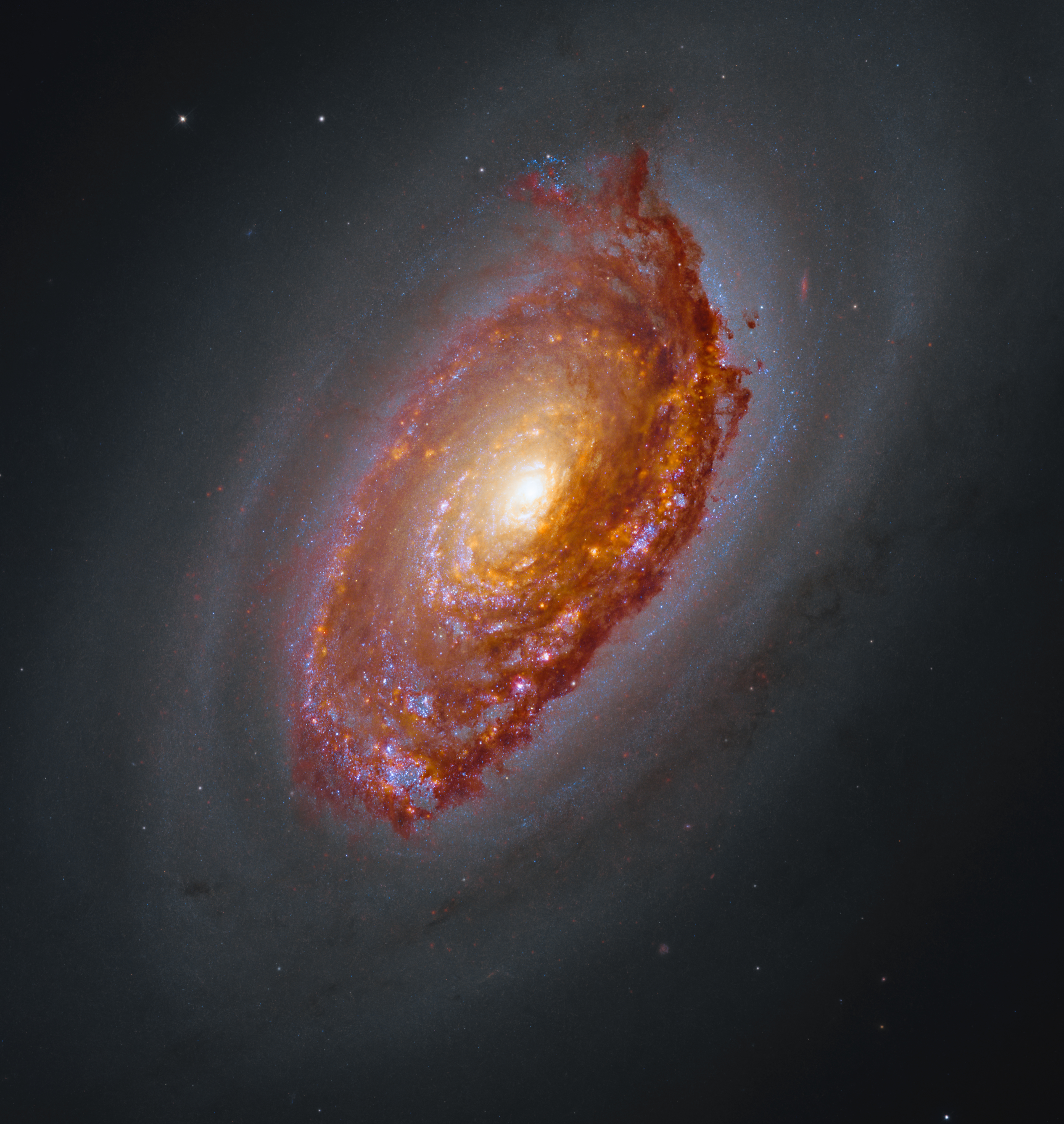
Black Eye Galaxy

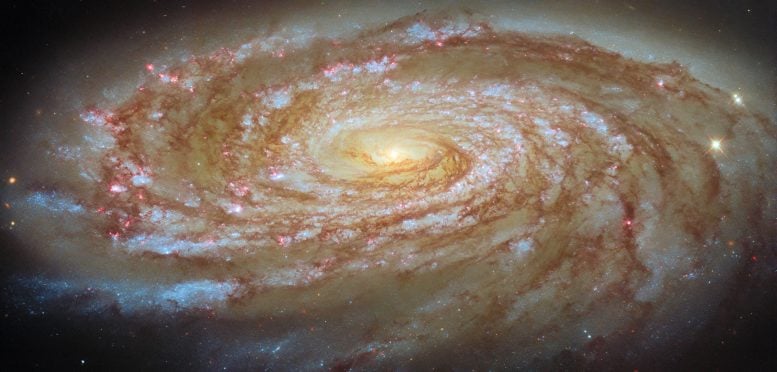
Hubble and Webb image of M64. A massive spiral galaxy glows with a yellow core, surrounded by arms full of orange-brown dust and pink and blue patches of star formation. Framed by a haze of dark dust, the galaxy shines against black space dotted with a few stars.
Easily identified by the spectacular band of dark dust that partially obscures its bright core, Messier 64, or the Black Eye Galaxy, is characterized by its bizarre internal motion.
NASA, CSA, ESA, F. Belfiore (European Southern Observatory – Germany), J. Lee (Space Telescope Science Institute), A. Leroy (The Ohio State University), and D. Thilker (The Johns Hopkins University); Processing: Gladys Kober (NASA/Catholic University of America)

This March 20, 2026, image of Messier 64, or the Black Eye Galaxy, is a composite view from NASA’s Hubble Space Telescope and James Webb Space Telescope. It shows Messier 64 captured at near- and mid-infrared wavelengths by Webb, while Hubble’s image shows the galaxy in ultraviolet, visible, and near-infrared light.

Messier 64 is characterized by its bizarre internal motion. The gas in the outer regions of this spiral galaxy is rotating in the opposite direction from the gas and stars in its inner regions. This strange behavior may be the result of a merger between M64 and a satellite galaxy over a billion years ago.

Image credit: NASA, CSA, ESA, F. Belfiore (European Southern Observatory – Germany), J. Lee (Space Telescope Science Institute), A. Leroy (The Ohio State University), and D. Thilker (The Johns Hopkins University); Processing: Gladys Kober (NASA/Catholic University of America)

The post Black Eye Galaxy appeared first on NASA Science.

  •  

Black Eye Galaxy

Hubble and Webb image of M64. A massive spiral galaxy glows with a yellow core, surrounded by arms full of orange-brown dust and pink and blue patches of star formation. Framed by a haze of dark dust, the galaxy shines against black space dotted with a few stars.
Easily identified by the spectacular band of dark dust that partially obscures its bright core, Messier 64, or the Black Eye Galaxy, is characterized by its bizarre internal motion.
NASA, CSA, ESA, F. Belfiore (European Southern Observatory – Germany), J. Lee (Space Telescope Science Institute), A. Leroy (The Ohio State University), and D. Thilker (The Johns Hopkins University); Processing: Gladys Kober (NASA/Catholic University of America)

This March 20, 2026, image of Messier 64, or the Black Eye Galaxy, is a composite view from NASA’s Hubble Space Telescope and James Webb Space Telescope. It shows Messier 64 captured at near- and mid-infrared wavelengths by Webb, while Hubble’s image shows the galaxy in ultraviolet, visible, and near-infrared light.

Messier 64 is characterized by its bizarre internal motion. The gas in the outer regions of this spiral galaxy is rotating in the opposite direction from the gas and stars in its inner regions. This strange behavior may be the result of a merger between M64 and a satellite galaxy over a billion years ago.

Image credit: NASA, CSA, ESA, F. Belfiore (European Southern Observatory – Germany), J. Lee (Space Telescope Science Institute), A. Leroy (The Ohio State University), and D. Thilker (The Johns Hopkins University); Processing: Gladys Kober (NASA/Catholic University of America)

  •  

Hubble Sees Swarm of Galaxies

2 min read

Hubble Sees Swarm of Galaxies

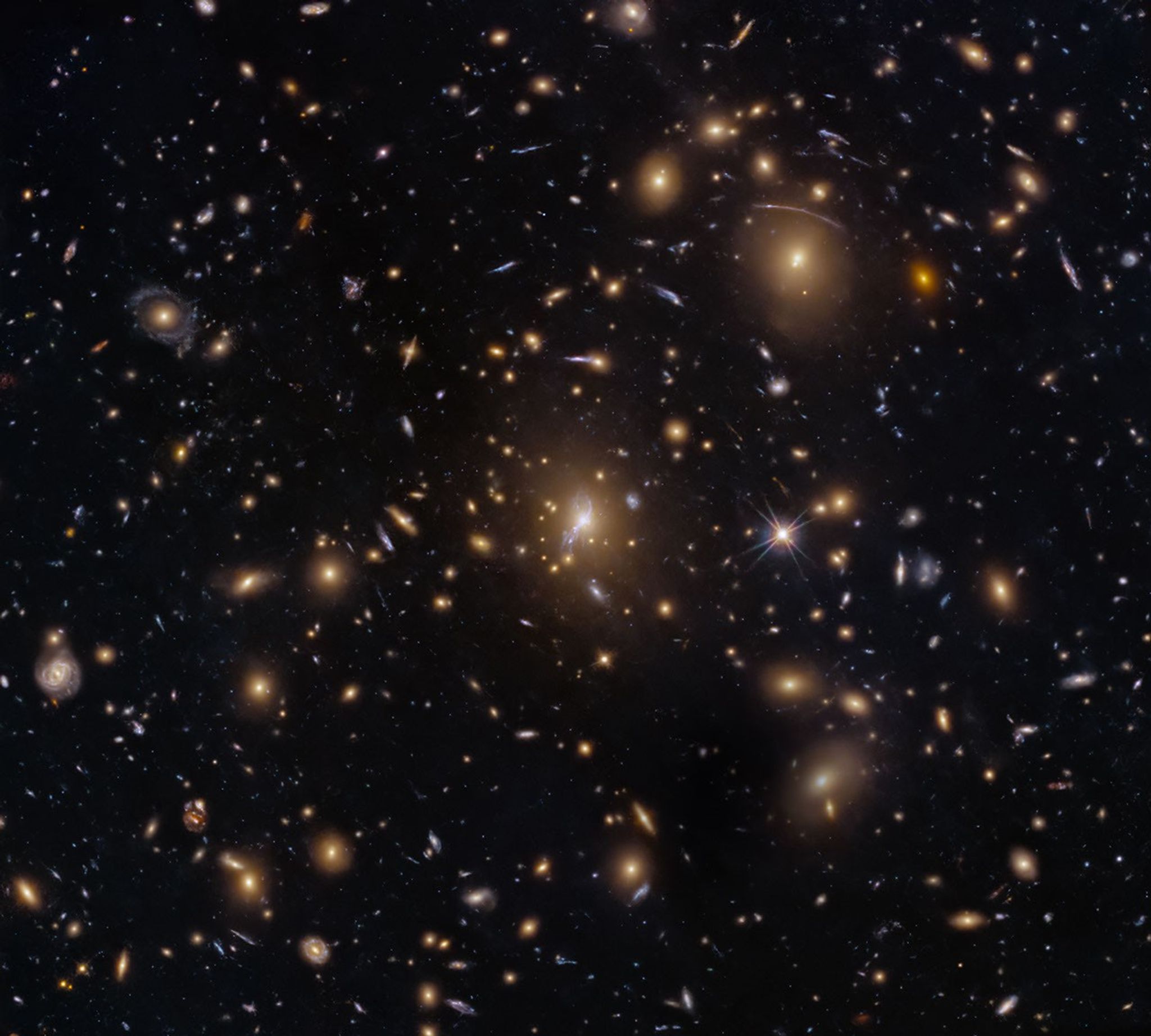
Numerous galaxies dot the scene and appear to cluster around the image center. The view includes large elliptical galaxies along with spiral and lenticular galaxies. Faint arcs of distant galaxies gravitationally lensed by the cluster appear in the upper-right quadrant of the image. A couple of foreground stars are also visible and easily distinguished by their diffraction spikes.
This NASA Hubble Space Telescope image features the galaxy cluster MACS0329-0211.
NASA, ESA, M. Postman (STScI); Image Processing: G. Kober (NASA/Catholic University of America)

Looking somewhat like a swarm of bees returning to their hive, this NASA Hubble Space Telescope image features the galaxy cluster MACS0329-0211. Galaxy clusters like MACS0329-0211 are important signposts in the story of how the structure of the universe evolved, and are the ultimate telescopic lenses, placing gravitationally lensed galaxies from the earliest stages of the universe into our view.

Zoom into this galaxy swarm and you will find large, oval-shaped elliptical galaxies, and thin spiral and lenticular galaxies viewed from the edge. We can also see the full, face-on view of spiral galaxies and their curving spiral arms. The image’s upper-right quadrant holds faint arcs of distant galaxies gravitationally lensed by the cluster’s massive gravity. The largest of these arcs appears above the bright oval shape of a giant elliptical galaxy. Closer inspection of the image’s center reveals several bright-white intersecting curves that appear as a distorted figure eight. This may be another distant galaxy whose light was magnified and distorted by this massive cluster’s gravity.

Hubble looked at MACS0329-0211 as part of an observing program of X-ray bright galaxy clusters. Researchers used Hubble’s two main cameras, the Advanced Camera for Surveys and its Wide Field Camera 3, to gather data visible and infrared light from the cluster. Hubble’s ability to see such a broad spectrum of light makes it a valuable tool in understanding the very nature of these galaxy clusters.

Media Contact:

Claire Andreoli
NASA’s Goddard Space Flight Center, Greenbelt, MD
claire.andreoli@nasa.gov

The post Hubble Sees Swarm of Galaxies appeared first on NASA Science.

  •  

Hubble Captures a Stunning Spiral Galaxy Slowly Being Stripped of Its Future

Spiral Galaxy Messier 88 (M88)A spectacular spiral galaxy known as M88 is traveling toward the crowded heart of the Virgo Cluster, where powerful forces are already beginning to reshape its future. A striking new image from the NASA/ESA Hubble Space Telescope highlights Messier 88 (M88), a spiral galaxy that is in the midst of a cosmic journey spanning hundreds [...]
  •  

Can We See the Apollo Landing Sites from Earth?

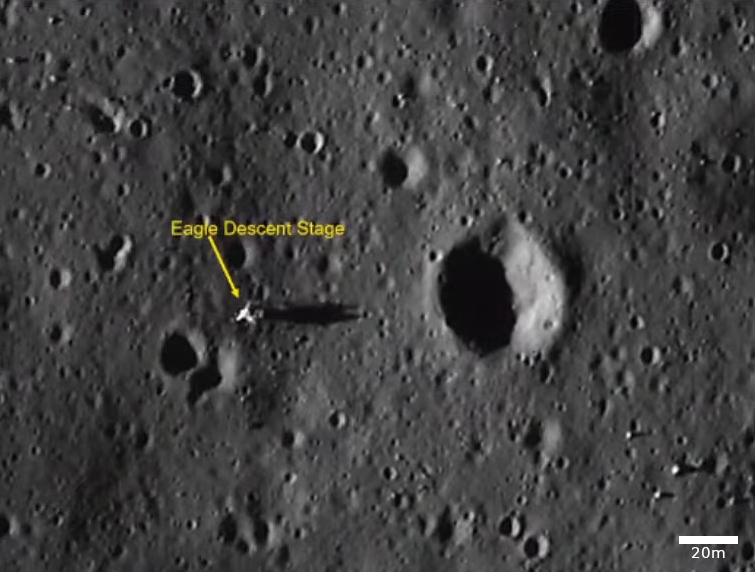
Many "Moon Landing Hoax" proponents dismiss any pictures from NASA which clearly show Apollo Moon landing sites, taken by the lunar orbiter spacecraft. Also we have clear images from India’s ISRO lunar orbiter. But we can’t resolve the Apollo Lunar Module descent stages with Earth-based telescopes because of the limitations of the physics involved.

  •  

Two space shuttle-era spacewalkers enter Astronaut Hall of Fame

Tom Akers and Joe Tanner are finally in the same class.

The two veteran space shuttle crew members were inducted into the US Astronaut Hall of Fame together on May 16. They could also have been in the same NASA astronaut selection group, too, had history played out a little differently.

In 1984, Tanner reported to the Johnson Space Center (JSC) to fly as an instructor pilot and then applied for the next class of astronaut candidates.

Read full article

Comments

© Kennedy Space Center Visitor Complex

  •  
❌