À peine un milliard d'années après le Big Bang, cette galaxie connaît une croissance fulgurante en formant des étoiles à un rythme exceptionnel. Pourtant, les astronomes ont découvert qu'elle expulse simultanément d'immenses quantités de gaz, le combustible indispensable à sa survie. Une...
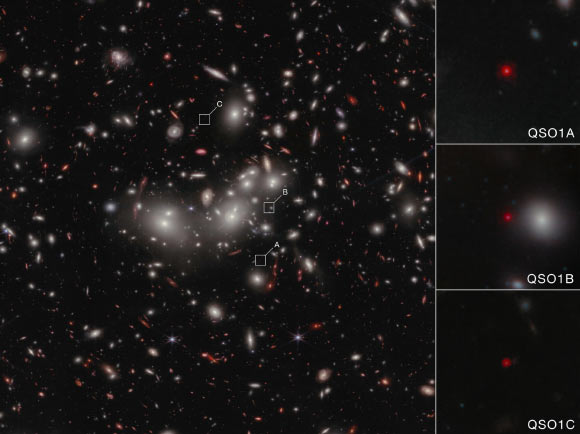
Depuis leur découverte par le télescope James-Webb, les « petits points rouges » défient les astronomes. Une nouvelle observation, presque par hasard, pourrait enfin lever le voile sur leur véritable nature.
Il telescopio spaziale James Webb sta offrendo una visione senza precedenti dell’universo primordiale grazie alla sua capacità di osservare la luce infrarossa proveniente da oggetti estremamente lontani. Tra le sue scoperte più sorprendenti figurano galassie molto luminose e apparentemente mature esistite poche centinaia di milioni di anni dopo il Big Bang. Queste osservazioni hanno acceso un intenso dibattito scientifico, poiché suggeriscono che la crescita delle prime strutture cosmiche potrebbe essere avvenuta più rapidamente del previsto. Sebbene analisi successive abbiano ridimensionato alcune delle stime iniziali, Webb continua a fornire dati che stanno portando gli astronomi a perfezionare le teorie sulla formazione delle galassie, dei buchi neri supermassicci e dell’universo delle origini.
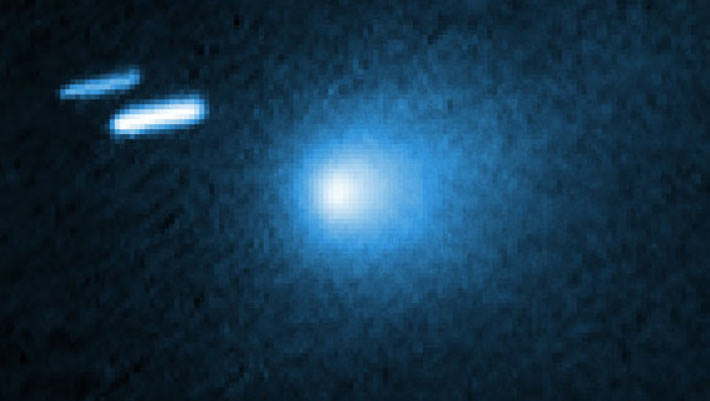
Le télescope spatial James-Webb de la Nasa a recueilli sa première signature chimique infrarouge moyenne d'un objet interstellaire lors d'une récente observation de la comète 3I/Atlas. Les résultats concernant la composition chimique et le comportement de la comète sont étranges.
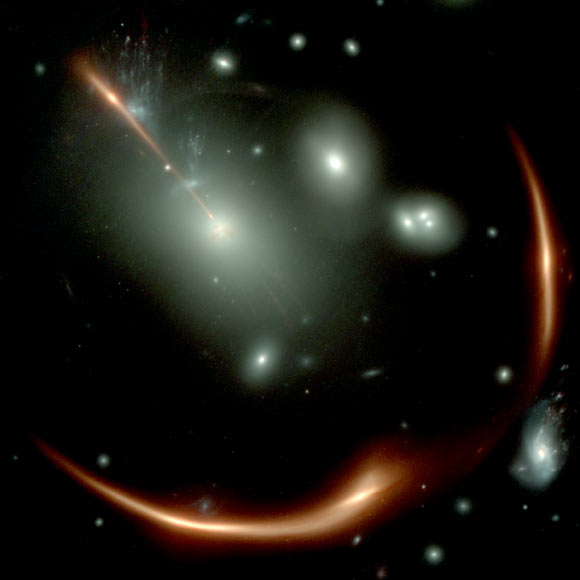
A supermassive black hole 6 billion times the mass of the Sun lurks in MRG-M0138, a gravitationally lensed quiescent galaxy seen when the Universe was just 3 billion years old, according to an analysis of data collected by the NIRSpec Integral Field Spectrograph onboard the NASA/ESA/CSA James Webb Space Telescope.
The Digital ID, promoted by the World Economic Forum, aims to establish total control over society through cashless transactions and total surveillance. The global use of digital IDs coupled with CBDCs will mean the loss of all personal freedom. Resist totalitarianism! Resist all digital IDs! Do not conform!
The Federal Reserve system underpins global currencies, serving as a private banking cartel that perpetuates debt. Critics view this as a scheme that risks public assets during financial crises while privatizing profits. David Rogers Webb’s work warns of potential financial collapses, suggesting banks may again seize deposits, reinforcing a cycle of economic control.
Using the spectral data from the Mid-Infrared Instrument (MIRI) onboard the NASA/ESA/CSA James Webb Space Telescope, astronomers have detected methane on 3I/ATLAS.
Pela primeira vez, há sinais reais de que o Universo terá evoluído de forma muito diferente do que se pensava. A hipótese de os buracos negros gigantes terem surgido antes das galáxias já não parece apenas ficção científica e pode obrigar a reescrever parte da história cósmica.
Astronomers using the NASA/ESA/CSA James Webb Space Telescope have found an enormous black hole in the early Universe that appears to predate its own host galaxy, raising fresh questions about how the cosmos’ first supermassive monsters were born.
Using spectral data from the Near-Infrared Spectrograph (NIRSpec) onboard the NASA/ESA/CSA James Webb Space Telescope, astronomers analyzed the atmosphere of TOI-199b, a distant Saturn-mass world that is neither frozen nor scorching hot.

 Login