❌

Reading view

Mysterious Artificial Islands in Scotland Have Long Perplexed Archaeologists—A New Discovery Reveals Clues to Their Ancient Origins

Thousands of years ago, Scotland’s early inhabitants were building mysterious artificial islands in lakes throughout the region—and now archaeologists have uncovered evidence that reveals these curious aquatic features to be far older than once thought.

Scattered throughout Scotland’s ancient lochs, these curious structures—known as crannogs—have long intrigued archaeologists and historians, partially due to the questions about their age.

Now, artifacts recovered from these human-built islands are pushing back the timescales on their construction, causing researchers to have to reconsider the origins of one of the most enigmatic lacustrine features in the British Isles.

The Crannog Enigma

Crannogs have been known to archaeologists for some time, with some of the earliest extensive explorations of these features undertaken beginning more than a century ago by Odo Blundell, a monk at Fort Augustus Abbey.

crannog
Historical photo of the crannog at Loch an Dùin, on the Inner Hebridean island of Coll (Public Domain).

Constructed mostly from stone and timber, speculations about their creation extend to as early as the Bronze Age, although most scholars believe these curious features were likely to have been an invention of the Iron Age.

However, a surprising recent discovery is now challenging that presumption, revealing that some of these artificial islands date back to more than 5,000 years ago, having been built during Scotland’s Neolithic era.

Older Than Previously Thought

The story began to unfold in 2012 when local diver Chris Murray was exploring a crannog near the Isle of Lewis in Scotland’s Outer Hebrides. There, he discovered fragments of ancient pottery that experts at the National Museum of Scotland later examined, revealing an astonishing discovery: the remains of artifacts unequivocally associated with the Neolithic period.

The implication was obvious: for Neolithic pottery to have been found on this crannog would indicate it must have been constructed thousands of years earlier than the past dating of these artificial islands.

crannog
A crannog at the Loch of Wasdale (Image Credit: Derek Mayes/CC 2.0)

The discovery prompted a deeper look at the region’s ancient artificial islands, which soon revealed additional evidence of their Neolithic provenance. During the research, Stephanie Blankshein, a maritime archaeologist at the University of Southampton, and colleagues discovered that organic materials and artifacts from several sites across Scotland’s Outer Hebrides indicated these crannogs were likely built sometime between 4,000 and 2,500 BCE.

At least 11 crannogs in the region, Blankshein and her colleagues say, were created during the Neolithic period, pushing back the date of their construction to as far back as six thousand years ago.

Rethinking the Lives of the Ancient Scots

One of the most intriguing aspects of the team’s findings involves what it reveals about the ingenuity of the early farming communities in the British Isles, since the new dating of these prehistoric artificial islands indicates that they must have been constructed within just a few centuries of when their ancient builders arrived in the region.

Such findings align well with past genetic studies, which indicate that the region’s Neolithic populations likely descended from farmers who made their way from the Near East through Europe, and eventually settled in the British Isles, where they made their new homes by the sea.

It remains unclear, however, whether the construction of crannogs had been an innovation that occurred after they arrived in Britain, or if this had been a much earlier practice these people brought with them.

Discoveries at the Loch Bhorgastail Crannog

Among the most remarkable crannog sites is one found at Loch Bhorgastail on the Isle of Lewis. This artificial island was initially believed to have been primarily built from stone, with some evidence of timber used as reinforcement.

However, underwater excavations by Blankshein and her colleagues soon uncovered something very surprising hidden below the crannog: a massive timber platform supporting the entire structure.

Crannog at Loch Bhorgastail
Loch Bhorgastail’s crannog (Image Credit: Wikimedia/CC 4.0)

“As excavation advanced, it quickly became apparent that the terrestrial and underwater components formed a single continuous structure spanning both environments and could not be treated separately,” Blankshein and her colleagues write in a recent study detailing their research at the site.

During their underwater surveys, the team discovered that the wooden foundation extended beneath the entire island and dated to between 3500 and 3300 BCE. Measuring approximately 75 feet (23 meters) across, the platform may have originally sat in shallow water or even remained dry during parts of the year.

“Loch Bhorgastail provided a rare opportunity to develop, test, and refine a workflow capable of achieving terrestrial-grade accuracy underwater,” the research team writes. “The site demonstrates the potential of shallow-water archaeology to bridge the land–water interface while elevating the precision and reliability of underwater recording.”

Lingering Questions

A fundamental question that remains about these curious Neolithic constructions has to do with what their purpose was.

One clue may arrive in the form of residues found on the recent pottery discoveries at several of these sites, which indicate they were used to transport food. This may suggest the crannogs were locations where ancient people prepared and consumed meals, possibly during ceremonial gatherings.

However, it is also possible that these ancient structures served multiple purposes, ranging from sites for communal feasting to possible locations for meetings.

Despite the lingering questions about their use by Scotland’s ancient inhabitants, Blankshein and her colleagues saw these marvelous Neolithic structures as an ideal target for high-resolution shallow-water photogrammetry, which became the focus of her team’s recent research.

“Coastal, riverine, and lacustrine environments have played a central role in the development of human societies, yet locating and documenting this record of activity in littoral environments has proven difficult,” the team writes.

As a result of their research, the team’s findings, combined with recent archaeological discoveries from over the last decade or more, help to shed new light on Britain’s ancient past, while advancing the development of new archaeological approaches. This includes groundbreaking methods for creating 3D models of shallow underwater sites, which the team achieved by using paired action cameras.

As investigations continue, Blankshein and her colleagues suspect many more Neolithic crannogs remain hidden beneath the waters of Scotland and Ireland, and with their discovery and investigation, the potential for further advancements in understanding Europe’s earliest farming societies.

The team’s recent paper, “At the Water’s Edge: Photogrammetry in Extreme Shallow-Water Environments,” appeared in Advances in Archaeological Science.

Micah Hanks is the Editor-in-Chief and Co-Founder of The Debrief. A longtime reporter on science, defense, and technology with a focus on space and astronomy, he can be reached at micah@thedebrief.org. Follow him on X @MicahHanks, and at micahhanks.com.

  •  

Astronomers Find Strongest Evidence Yet for Magnetic Fields on Alien Worlds

Artist’s Impression of an Exoplanet With a Magnetic FieldAstronomers studying the atmospheres of several intensely heated exoplanets uncovered an unexpected pattern that may reveal a hidden property of these distant worlds. Astronomers have uncovered the clearest evidence so far that some planets beyond our Solar System possess magnetic fields. By measuring atmospheric winds on seven extremely hot gas giants, researchers found signs that [...]
  •  
  •  

iPad Pro M4 en promo : plus de 600 € de remise sur la tablette la plus avancée d’Apple

Donnez vie à vos projets, échangez, jouez ou profitez de vos contenus multimédias dans d’excellentes conditions grâce à la puissance de l’Apple iPad Pro M4. Lancée en 2024, cette tablette fine et facile à transporter bénéficie actuellement d’une baisse de prix importante chez Rakuten, avec plus...

  •  

Mini Brain Organoids Expose Hidden Biological Differences in Alzheimer’s Disease

Brain Organoid Petri DishTiny lab-grown brain models and the particles they release may reveal hidden differences among Alzheimer’s patients. Personalized treatment remains one of the biggest challenges in Alzheimer’s disease. Two patients can receive the same medication for symptoms such as depression, anxiety, or agitation and experience very different outcomes, leaving doctors with few ways to predict who [...]
  •  

Le HillMiles Mile 1 à moins de 335 € : moteur 250W conforme à la réglementation et 60 km d'autonomie pour un vélo électrique urbain accessible

Le HillMiles Mile 1 va à l'essentiel sans détour superflu, avec son moteur brushless de 250W calibré pour respecter la réglementation française, sa batterie lithium 36V 10,4Ah amovible, son autonomie annoncée jusqu'à 60 km par charge et sa construction conçue pour les trajets urbains du...

  •  

Le vélo électrique Urlife E26 Peak à moins de 535 € : voilà un vélo urbain qui ne fait pas l'impasse sur l'essentiel

L'Urlife E26 Peak coche les cases qu'on attend d'un bon vélo électrique urbain sans tomber dans la surenchère technique. Moteur en pic à 750W pour les démarrages et les côtes, batterie amovible 36V qui se recharge à l'intérieur, dérailleur Shimano 7 vitesses, freins à disque, vitesse maximale de...

  •  

Renewable Groups Ask Courts to End Pentagon’s ‘Total Halt’ of Wind Power

More than 100 planned wind farms in 21 states are now stalled indefinitely as the Pentagon delays military reviews once seen as routine.

© Brandon Thibodeaux for The New York Times

The freeze affects 41 wind projects in Texas, which produces more wind power than any other state in the U.S., as well as projects in Colorado, Illinois, Iowa, Kansas, New Mexico, Oregon and Washington.
  •  

Le soleil cogne ? Le prix de cette pergola autoportante est en chute libre avant les soldes

Avec ses 12 m² de surface couverte, son toit coulissant qui permet de moduler l'ensoleillement à volonté et sa structure en aluminium anthracite adaptée à une utilisation en extérieur, la pergola autoportante Cassis a de solides arguments pour aménager un espace de détente dans le jardin ou sur...

  •  

Avant les soldes, Cdiscount casse le prix de cet aspirateur balai Dyson ultra populaire

Le Dyson V8 Advanced figure parmi les aspirateurs-balais les plus populaires du moment sur Cdiscount. Son tarif de 259 euros le rend particulièrement attractif pour celles et ceux qui recherchent un appareil performant sans dépasser leur budget. Livré avec plusieurs accessoires adaptés à...

  •  

Eyes on Exoplanets Tutorial

Eyes on Exoplanets Tutorial

Video tutorial showing how to use NASA’s 3D interactive tool “Eyes on Exoplanets.”
NASA/JPL-Caltech

Welcome to NASA’s Eyes on Exoplanets! Use this tutorial to start exploring worlds beyond our own. With this 3D interactive tool, you can visit all the stars beyond the Sun where we’ve found other planets, called exoplanets. 

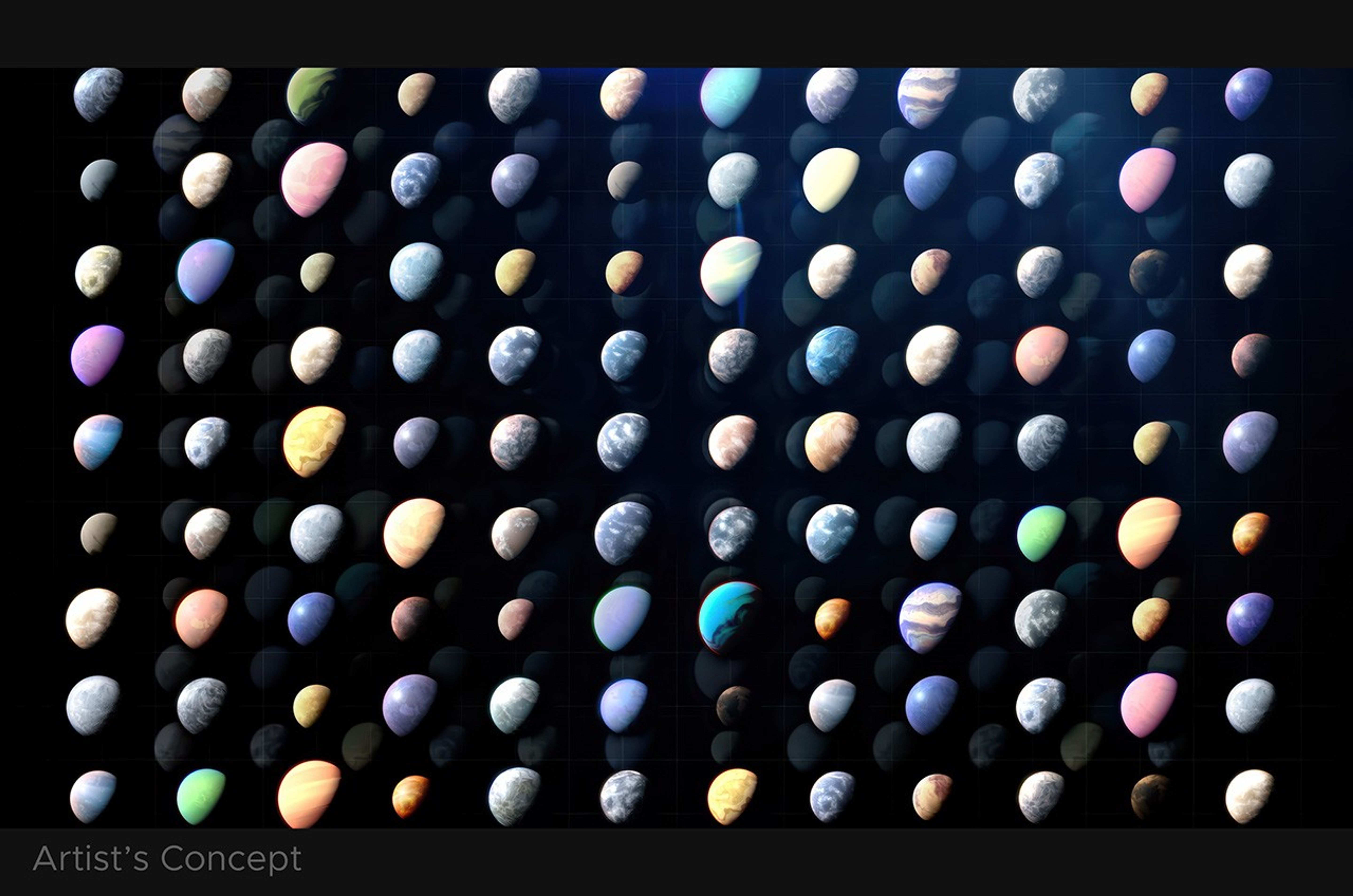
Choose a star or exoplanet and see an artist’s concept of what it might look like. Spin it around to see its sun and planetary system. Learn how long a trip there from Earth would take at light speed — or by jet plane, or family car!

Study the real versions of planets and stars cited in your favorite science fiction. See which planets reside in habitable zones, where liquid water could exist on their surfaces. Or, search “Where We Explore,” stars that future space telescopes will target when looking for Earth-like planets. You can also choose your location on Earth and see what’s in the sky above you right now.

Select any of the stars shown to see how many planets have already been found there. Examine how those star systems compare to the layout of our solar system, or check the sizes of individual planets — are they as small as Earth, or as big as Jupiter? 

See all the different techniques we’ve used to confirm the 6,000+ exoplanets discovered so far — among the billions we believe exist in the galaxy — and the many observatories, on Earth and in space, that have detected them. You can also browse some of our favorite weird worlds, or destinations featured in our Exoplanet Travel Bureau.

Where will you explore?

Transcript

Welcome to NASA’s Eyes on Exoplanets. With this interactive tool, you can explore all of the stars beyond the Sun where we’ve discovered planets known as exoplanets. When you enter the site, the default is this view from space. You can start your exploration here. Or if you know of a specific star or exoplanet you want to visit, enter that in the search bar at upper right. 

You can also select View from Earth. Choose your location and see what’s in the sky above you right now. Click and drag to explore different parts of the sky. In the lower right corner, you can choose different display options. You can see the constellations, view only stars that are visible to the naked eye, or see the stars that are good places for future telescopes to search for planets like Earth. 

These future target stars are shown as filled-in circles. If you click the gear symbol and switch from the star symbol to the circled number, you will see how many exoplanets have already been found around the star shown. 

When you select a star, you have three different view options. Starting in System View, you will see the star and where planets are located around it. The shaded green area marks the habitable zone, the region around a star where a planet could have liquid water on the surface, a key to the search for life beyond Earth. You can also see how this system compares to our solar system by selecting that feature in the lower right. The star view will show a hypothetical view of what the star might look like. 

Click “Learn More” to see basic information about the star, including its history and pop-culture references. You can see how it compares to our Sun and solar system and what we found so far. Under “How to Detect a Planet in the System,” you can learn about the different ways to discover an exoplanet and see how many planets have been found with each technique, as well as the prospects for discovering more. Finally, the planet view allows you to explore each planet in the system. 

For each confirmed exoplanet, you’ll see an artist’s concept of what it might look like and see how it compares to other planets. Planets also have an option to learn more, where you can see how far away it is, how long it would take to get there, how it was discovered, and which observatory found it. 

To see other discoveries made by that observatory, click “Browse Destinations” in the upper right menu. There you can also find curated lists of featured discoveries and truly weird worlds. 

As you can see, there are so many worlds to discover. Where will you explore?

The post Eyes on Exoplanets Tutorial appeared first on NASA Science.

  •  
  •  

SpaceX IPO: How Our Reporters Assess the Sky-High Valuation and Potential Economic Impact

Two Times tech reporters and their editor talk about assessing the sky-high valuation of the rocket and satellite maker, the potential economic impact of its public debut and the role of the world’s richest man in it all.
  •  

Skeptics Question Whether SpaceX Is Worth $1.77 Trillion

Elon Musk’s rocket company is spending big and losing money. That has raised questions about whether it can justify its valuation for its blockbuster initial public offering.
  •  
❌