Login

Strange Walking Experiment Found That Almost Everyone, Alone or in Crowds, Keeps Turning Counterclockwise
 New experiments suggest humans have a hidden counterclockwise bias.
 New experiments suggest humans have a hidden counterclockwise bias.

In the literature related to the powerful entheogen dimethyltriptamine (DMT), it is often reported that individuals claim to have had encounters with what they perceived as non-human entities during their DMT experiences. Descriptions related to these powerful visionary experiences range from what some describe as insect-like forms and machine-like intelligences, to what some describe as conscious entities associated with intricate geometries.
For years, many researchers have regarded these reports purely as hallucinations generated by the human brain while under the influence of the psychedelic compound. However, past studies have never directly tested whether these reported entities could represent something other than internally generated hallucinations.
Now, a recent preprint paper outlines a path toward testing this assumption experimentally.
A collaborative team from the Trace Institute and the nonprofit Noonautics has released a preprint titled Traces of the Other –Are DMT Entities Real? DMT Phenomenology in the Framework of Conscious Realism. The study presents a mathematical framework for understanding the human psychedelic experience and outlines experiments designed to test its primary hypothesis.
The research was led by Professor Emeritus Donald Hoffman, founder of the Trace Institute, and Dr. Andrew Gallimore, a neurobiologist and pharmacologist at the Okinawa Institute of Science and Technology and head of Noonautics. The preprint is currently awaiting peer review.
According to some figures, as many as 45% of the individuals who take a sufficient dose of DMT report experiences involving non-human beings. People describe these entities as intelligent and autonomous, and report similar experiences across different cultures and backgrounds.
Typical hallucinations tend to draw on material from memory, such as familiar faces, animals, or places. By contrast, encounters with other humans appear in less than 5% of DMT encounters.
The authors of the new preprint study argue that these reports are difficult to reconcile with conventional accounts of pure hallucination and that the consistency of reports regardless of culture, location, belief systems, and other factors warrants deeper investigation.
The project draws on Hoffman’s theory of conscious realism, which proposes that interacting conscious agents fundamentally constitute reality. In this framework, the physical world as humans perceive it functions more like a user interface than a direct view of objective reality. According to this theory, conscious agents of varying levels of complexity may exist beyond what humans normally perceive and go unnoticed in everyday life.
The researchers propose that DMT changes the perceptual interface, allowing consciousness to access regions where normal perceptual constraints are absent. In these regions, it may be possible to detect traces of other conscious agents. Hoffman says the project “will provide a new framework for exploring the effects of psychoactive substances such as DMT on the structure and function of spacetime.”
Testing these ideas has become possible due to past work involving technical development by Gallimore and researcher Rick Strassman. Typically, a DMT experience lasts only three to five minutes, which is not long enough for structured experiments. The extended-state DMT protocol, called DMTx, uses a controlled intravenous infusion to maintain a stable experience for up to an hour, allowing researchers to adjust the dosage as required.
That controllable window makes experimentation possible. “With a theoretical foundation for the highly unusual state of consciousness induced by DMT, we can test these theories experimentally,” Gallimore says.
The proposed experiments are designed so that if the external-agent hypothesis is incorrect, the results will be negative. In one protocol, a computer in a sealed room randomly displays either blue or yellow, and a subject under DMTx attempts to learn the hidden color by interacting with an entity. Another experiment involves two isolated subjects under DMTx who try to transmit a random word to each other through a shared entity, a process that would be difficult to explain solely in terms of internal brain mechanisms.
The researchers acknowledge several limitations. Cooperation from entities cannot be guaranteed, results depend on subjective reports, and expectation bias is difficult to rule out. The preprint continues to treat the hallucination model as the default explanation for these entities. What distinguishes this work is that the hypothesis is now formulated in a way that allows for experimental testing.
“This collaboration is a first step to a mathematics of altered states of consciousness and, ultimately, for engineering our perceptual interface to expand our view of reality,” Gallimore says.
Hoffman and Gallimore will discuss the research publicly on Saturday, June 13, 2026, at the Lighthouse Campus at the historic Venice Beach Post Office in Los Angeles, with video to follow on YouTube.
Austin Burgess is a writer and researcher with a background in sales, marketing, and data analytics. He holds an MBA, a Bachelor of Science in Business Administration, and a data analytics certification. His work focuses on breaking scientific developments, with an emphasis on emerging biology, cognitive neuroscience, and archaeological discoveries.

Labubu dolls have become a global sensation, helping to turn blind boxes into a billion-dollar business. The idea seems to go against one of the basic rules of shopping: people usually want to know exactly what they are buying before they pay for it. Yet millions of consumers willingly purchase blind boxes without knowing which […]
The post Why Labubu’s blind box strategy works so well appeared first on Knowridge Science Report.
For years, people around the world have reported being disturbed by a low, persistent droning sound of unknown origin.
Often described as more of a vibration than a specific tone, this sound has become widely known as “The Hum,” a phenomenon that is more frequently reported in certain cities and specific areas than others.
Over time, possible explanations have included industrial ventilation systems, military sonar experiments, and, in some online discussions, extraterrestrial signals, although none of these theories are supported by evidence.
However, in a recent study from the Norwegian University of Science and Technology (NTNU), published in PLOS ONE, researchers now offer evidence that, for most people who experience this phenomenon, the source is probably not external, but instead may actually originate within their own auditory system.
Residents of Bristol, England, first widely reported The Hum in the mid-1970s, when the Bristol Evening Post received several reports from people who claimed they experienced hearing a strange, low sound. People initially thought the industrial fans in an area warehouse were responsible, but the hum persisted after the warehouse shut down.
By the 1990s, reports of a similar phenomenon began surfacing in Taos, New Mexico, where residents described a persistent, diesel engine-like rumble. Both state and federal authorities investigated the sound but could not explain it. The Taos Hum became one of the most studied and widely recognized examples of this phenomenon. Since then, similar reports have come from Canada, Australia, New Zealand, South Africa, and several European countries.
As reports grew, people proposed explanations ranging from ocean-generated infrasound to military sonar and CIA transmitters. Some online discussions have even suggested alien technology as a possible cause. In 2012, Canadian teacher Glen MacPherson, who first experienced The Hum on the west coast of British Columbia, created the World Hum Map and Database Project to document cases worldwide. The project has since collected thousands of entries.
To investigate the phenomenon, Professor Markus Drexl at NTNU recruited 28 people in Germany who all reported hearing a persistent, unexplained humming sound. Clinicians refer to this as a low-frequency sound percept, or LFSP. Most participants described the sound as having a frequency around 50 Hz, about the same as a deep mechanical rumble.
The research team tested two main explanations: whether participants had unusually acute sensitivity to low-frequency sound, or whether some were perceiving sounds generated by their own inner ears.
“We know that there are people who hear low-frequency sounds that can actually be measured, even if other people don’t hear them,” Drexl said. “But it’s not so easy to find the source of these sound waves, because it’s a struggle to localize low-frequency sounds.”
The cochlea, a spiral-shaped structure in the inner ear that converts sound waves into neural signals, also actively amplifies incoming sounds. This amplification produces faint sounds emitted from the ear, known as spontaneous otoacoustic emissions (SOAEs).
Most people are not aware of these emissions. In rare cases, people perceive SOAEs as tinnitus. Drexl’s team investigated whether people who hear the Hum might be detecting a low-frequency version of this phenomenon.
The results did not support this idea. The team found no low-frequency SOAEs in any participant. The hypothesis of unusually acute low-frequency hearing was also not supported; while a few participants had slightly better low-frequency hearing than average, most did not.
“Even though the group we tested was small, it still means that the hypothesis of having especially good hearing for low-frequency sounds does not hold for most people,” Drexl said.
This left a third group: participants who reported hearing something that no external instrument could detect. “Then there are people who hear something that cannot be measured objectively. We believe people in this category have a form of low-frequency tinnitus,” Drexl said.
The Hum differs from typical tinnitus because most people who experience it first believe the sound comes from an external source, sometimes spending years searching for its origin before realizing it is internal. The researchers still have not ruled out external causes completely. In some cases, near industrial sites or coastlines, genuine low-frequency sources may exist. However, researchers identified no external source for most participants in the study.
“Based on our results, although we haven’t ruled out cases of physical external sound sources, we suggest that subjective tinnitus in the low-frequency range is often the cause of hearing pulsations of low-frequency sound perceptions,” Drexl said.
The study also highlights that the low-frequency range of the auditory system remains poorly understood in hearing science.
“What we know about the hearing system is mainly based on how we capture and process sound with higher frequencies. We know less about how the auditory system handles and processes low-frequency sound, or infrasound,” Drexl said.
Although the cause of well-known cases like the Taos Hum remains unresolved, the new findings suggest that many reports of unexplained low-frequency sounds may actually originate from within the auditory system rather than from an external source.
Austin Burgess is a writer and researcher with a background in sales, marketing, and data analytics. He holds an MBA, a Bachelor of Science in Business Administration, and a data analytics certification. His work focuses on breaking scientific developments, with an emphasis on emerging biology, cognitive neuroscience, and archaeological discoveries.
 A wearable lens used the retina to reach mood circuits deep in the brain and reverse depression-like changes in mice.
 A new study challenges the long-held idea that habits form only through slow, gradual repetition. What if your habits don’t form through countless repetitions over months or years? What if the brain can decide, almost instantly, that a behavior is no longer worth thinking about? That possibility is at the center of a new Johns [...]
 Humans are wired to focus on threats, making constant negative news exhausting. Limiting exposure and focusing on what you can control helps reduce news fatigue. During several recent conversations, people have told me that they’ve stopped checking their phones in the morning. Not because nothing was happening, but because everything was. They described the feeling [...]
 The New York Times described the stunning behavior over 100 years ago.
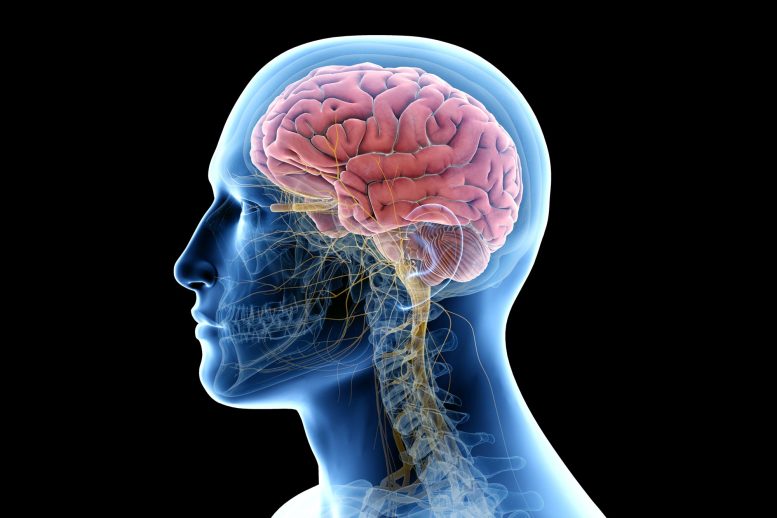 Researchers suggest that old psychoanalytic ideas and modern brain science may be describing the same mental processes from different angles. More than a century after Sigmund Freud developed his influential theories of the mind, some researchers believe modern neuroscience may be arriving at surprisingly similar conclusions. A new paper published in the neurocognitive journal Entropy [...]
 A new study challenges the widely accepted idea that word meanings are organized around emotion. After analyzing billions of words, scientists found that language may be shaped by something more basic: the need for safety. Researchers at the University of Vermont have found a new way to understand language, challenging a major assumption in psychology, [...]
 Parents in rural, low-income households who maintained strong family routines reported fewer behavior problems and ADHD symptoms in their children. Starting elementary school is an important step for children, but the shift can be challenging. Some children experience separation anxiety, while others have difficulty adjusting to classroom rules and daily school structure. A Penn State-led [...]