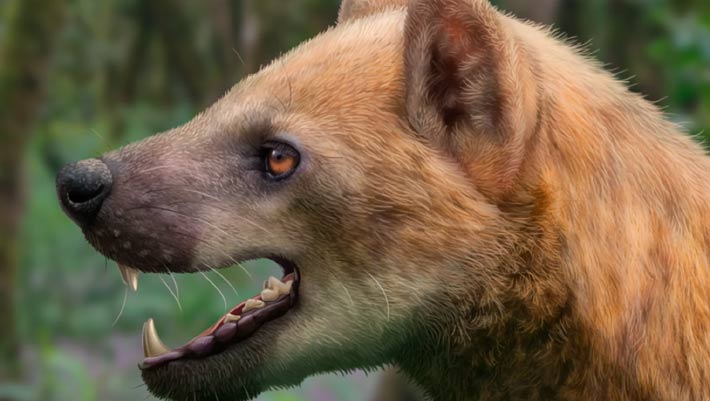
Paleontologists have identified a previously unknown species of amphicyonid -- the extinct family of carnivorous mammals popularly known as bear-dogs -- from two specimens unearthed at a rich fossil site in the Vallès-Penedès Basin near Barcelona, Spain.
Ao TEK Notícias, Montse Ferrer, co-diretora regional do Gabinete do Leste e Sudeste Asiático e do Pacífico da Amnistia Internacional, explica como funcionam as “fábricas” de burlas online no Camboja, onde vítimas são “recrutadas” sob falsas promessas de emprego e forçadas a participar em esquemas de fraude.
The origins and fate of massive compact objects such as black holes, neutron stars, and white dwarfs can only be fully answered by measuring deci-Hertz (dHz) gravitational wave emission. A plethora of innovative mission concepts have been proposed motivated by this need, promising incredible potential sensitivity and requiring substantial technical development. Like COBE rather than Plank, we optimize time to first knowledge over ultimate sensitivity. We describe the highest priority science goals contained in and motivating a dHz observatory, the minimum sensitivity required to make these observations, and the fastest, least-costly mission that meets these minimum requirements. We dub this mission the Deci-hertz Interferometer Space Antenna (DISA).
Elon Musk’s rocket company is spending big and losing money. That has raised questions about whether it can justify its valuation for its blockbuster initial public offering.
Promovido pelo Fraunhofer Portugal AICOS, o concurso quer incentivar jovens talentos das universidades portuguesas a criar soluções inovadoras com impacto económico e social, respondendo a desafios reais através da tecnologia.
As co-chief executive of the start-up Prometheus, the Amazon founder is using A.I. to improve how devices ranging from computers to jet engines are made.
British small satellite specialist Open Cosmos is seeking more time to deploy its proposed sovereign broadband constellation for Europe after running into launch issues.
Em entrevista ao TEK, Peter Windischhofer, cofundador da Refurbed, antecipa um cenário de maior pressão nos preços dos novos equipamentos devido à escassez de chips e deixa um alerta: há milhões de smartphones esquecidos nas gavetas dos portugueses que podem ser a chave para a independência de recursos na Europa.
Apple Intelligence and Siri AI have sucked most of the oxygen out of the room at Apple's Worldwide Developers Conference this year—understandable, maybe, given that the AI-powered Siri delays are all anyone has wanted to ask any Apple executive about for the last two years.
But Apple Intelligence is just one of the three big focus areas Apple outlined during its keynote this week. The second is new parental controls—overdue, but promising-looking, as the parent of a 6-year-old with an iPad that I only begrudgingly connect to the Internet. And the third is "platform improvements," a catch-all for a wide range of fit-and-finish changes aimed at boosting responsiveness and addressing common user complaints.
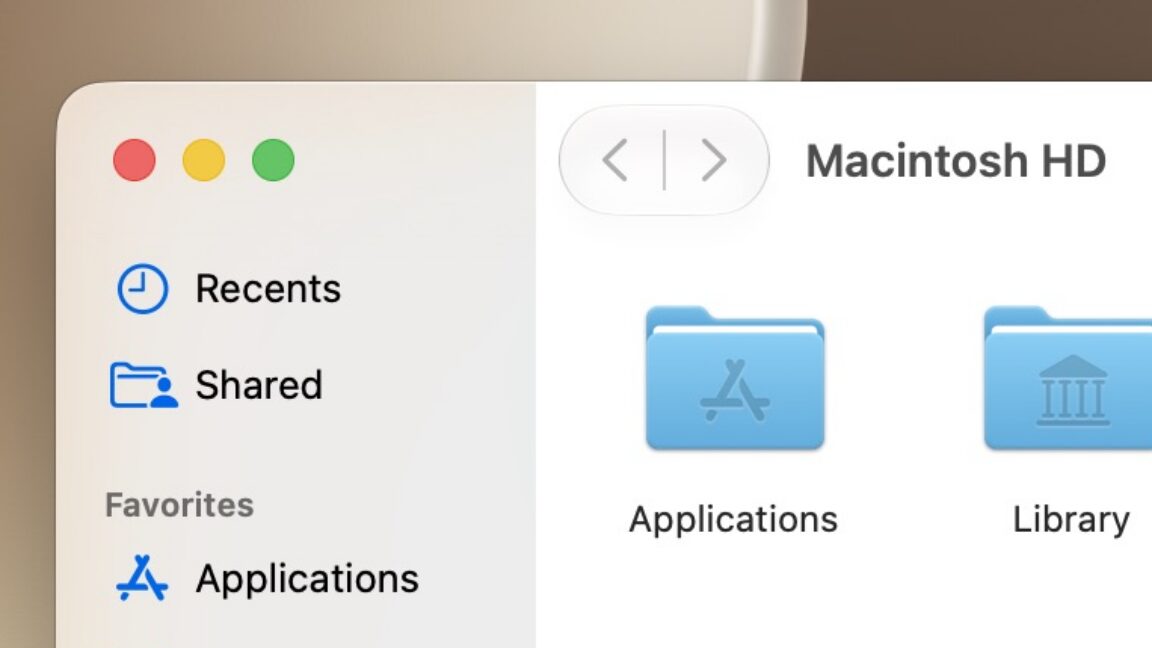
I have the first beta of macOS 27 Golden Gate running on an M1 MacBook Air—the oldest, slowest hardware Apple supports now that Intel compatibility is out the window. With some help from Apple's densely packed wall-of-features slide, here are a few things from the "platform improvements" column I like the most, plus one item I'd still like to see.
O novo Mobi Fold, o primeiro rato dobrável da Logitech, acaba de chegar ao mercado. Juntamente com esta solução, que se desliga automaticamente quando dobrado, chega-nos o Spotlight 2, um controlador de apresentações que vai além dos slides com um sistema háptico inédito nesta categoria.
Segundo Thomas Regnier, porta-voz da Comissão Europeia, não existe nada no Regulamento dos Mercados Digitais que impeça a Apple de lançar novos produtos, acrescentando que a empresa "simplesmente não conseguiu desenvolver soluções de interoperabilidade que cumpram os requisitos essenciais de privacidade e segurança".
A proposta da Record Club é semelhante à de plataformas como a Letterboxd, mas aplicada ao mundo da música, permitindo acompanhar os mais recentes lançamentos e avaliar álbuns, assim como organizar e partilhar descobertas.
Anthropic annonce Claude Fable 5, une version sécurisée de Claude Mythos, son IA jugée trop dangereuse pour être mis entre les mains du public. La firme affirme avoir trouvé le moyen de le rendre accessible sans en réduire les capacités.
Dear Astrophysics Strategic Technology & Research Accelerator (ASTRA) community members-
As we prepare for our Ad ASTRA Community Science workshop, we are writing to share important updates regarding the agenda structure and instructions for abstract submissions.
The Community Science (Ad ASTRA) Workshop is organized by the NASA Astrophysics Division to engage the community in identifying future large, strategic astrophysics missions. Structured over three thematic days—Science, Capabilities and Implementation, and Community Discussion—the workshop provides a comprehensive framework to connect scientific priorities with technological readiness and mission implementation. Across all three days, plenaries, panels, breakout sessions, and poster contributions are designed to maximize community interactions and discussion. The outcomes of the workshop will help NASA prioritize mission concepts and shape a balanced, forward-looking astrophysics portfolio that is consistent with the Astro2020 recommendations and existing and future science gaps.
To best serve the community and facilitate meaningful collaboration, we are splitting the mission concept presentations into two distinct focuses: Science on Day 1, and Capabilities and Implementation on Day 2. We are relying on you—the concept teams and the broader community—to submit abstracts for both days. We are also offering the option to present mission concepts as posters, and will offer the opportunity to present as posters any abstracts for which there is insufficient room in the parallel sessions.
Please review the detailed agenda structure and submission guidelines below:
Day 1: Science Focus
Science Questions: Day 1 will focus on open science priorities and questions from strategic documents (Astro 2020 Decadal Survey, Enduring Quests – Daring Visions from 2014) and more recent science questions that the mission concepts submitted to ASTRA will address.
Abstract Submission: Presentations for Day 1 are not restricted to mission concept team members. We strongly encourage other scientists in the community to submit abstracts presenting important science questions and to use this opportunity to connect with concept teams.
Breakout Sessions: These sessions will be organized by science themes (Compact Objects and Energetic Phenomena, Cosmology, Galaxies, Exoplanets & Astrobiology, Stars and Stellar Populations). Moderators will present a summary of the panel discussions at the end of Day 1.
Day 2: Mission Concepts – Capabilities and Implementation
Focus: Day 2 is focused on implementation, capabilities, and technologies (software and hardware) relevant to the ASTRA submitted mission concepts. A summary of the Innovation for Astrophysics Missions Workshop (May 2026) will inform discussions regarding industry and other capabilities and opportunities that may be leveraged.
Breakout Sessions: These sessions will be organized by capability groups, which will be determined once the submitted mission concept documents are reviewed.
Format & Goals: Breakout sessions will feature a mix of presentations and flexible discussion. The goal is for teams with concepts at varying maturity levels to collaborate, find commonalities, and strengthen their respective capability groups.
Abstract Submission Note: Teams may submit multiple abstracts for these sessions if their concept spans different capabilities (e.g., requiring both UV and X-ray technologies).
Day 3 & Workshop Outcome
A primary goal of this workshop is to refine a draft “science-to-capabilities” matrix, which will be built using inputs from your submitted ASTRA mission concept documents. During the Day 1 and 2 breakout sessions, moderators will capture key discussion points to present during end-of-day summary panels. On Day 3 of the workshop, we will hold a plenary discussion to recap the week and collaboratively revise the “science-to-capabilities” matrix. Together as a community, we will add, refine, and prioritize science questions, mapping them to mission concepts.
Key Upcoming Dates:
24 June 2026: Abstract submission deadline (link). If you have already submitted an abstract and would like to modify it based on the guidelines above, please delete your previous contribution and send another submission.
Desde bolas com sensor de alta precisão a avatares 3D foto realistas gerados por inteligência artificial, conheça as inovações tecnológicas do Mundial de Futebol FIFA 2026, e como é que a tecnologia promete redesenhar o maior evento desportivo da história.
Dévoilé au salon ILA Berlin 2026, le U760 Ravenstorm représente le pari d'Airbus sur un drone de combat européen. Une réponse directe à l'effondrement du programme Scaf et à la montée des tensions géopolitiques.
Microsoft's Office 2019 apps for Mac will stop working next month, because the company isn't renewing a certificate that validates Office licenses. Owners of Office 2019 for Mac are being warned they'll have to purchase Office 2024 or a Microsoft 365 subscription if they want to continue editing documents.
Microsoft previously promised that "all your Office 2019 apps will continue to function," when it announced end of support in 2023. The company then quietly updated that support note last month to remove the mention of apps continuing to function, replacing it with "Rest assured that all your Office 2019 apps won't lose any data."
10 June 2026 12:00pm – 1:00pm ET 9:00am – 10:00am PT
Community
Cosmic Origins
Type
Seminar
The ASTRA Initiative
Speaker
Jessica Gaskin
The ASTRA initiative will promote new strategic mission concepts for astrophysics, see here. We would like to encourage you to think about new strategic mission concepts for the coming decades of astrophysics.
As part of ASTRA, the Community Science (Ad ASTRA) Workshop will take place 1-3 September 2026 in Pasadena. New concept ideas will be discussed at this event.
To join the ASTRA initiative, mission concept template is now available, see here. There are also instructions for submission. Submitted concept ideas will be discussed at the September workshop.

 Login