❌

Reading view

Record Club é uma rede social para quem gosta de descobrir e partilhar música com amigos

A proposta da Record Club é semelhante à de plataformas como a Letterboxd, mas aplicada ao mundo da música, permitindo acompanhar os mais recentes lançamentos e avaliar álbuns, assim como organizar e partilhar descobertas.

The post Record Club é uma rede social para quem gosta de descobrir e partilhar música com amigos appeared first on Tek Notícias.

  •  

Claude Fable 5 bat ses rivaux, mais son lancement déclenche déjà une grosse polémique

Anthropic annonce Claude Fable 5, une version sécurisée de Claude Mythos, son IA jugée trop dangereuse pour être mis entre les mains du public. La firme affirme avoir trouvé le moyen de le rendre accessible sans en réduire les capacités.

  •  

Ad ASTRA Community Science Workshop Announcements

Ad ASTRA Community Science Workshop: Agenda Structure and Abstract Submissions

Dear Astrophysics Strategic Technology & Research Accelerator (ASTRA) community members-

As we prepare for our Ad ASTRA Community Science workshop, we are writing to share important updates regarding the agenda structure and instructions for abstract submissions. 

The Community Science (Ad ASTRA) Workshop is organized by the NASA Astrophysics Division to engage the community in identifying future large, strategic astrophysics missions. Structured over three thematic days—Science, Capabilities and Implementation, and Community Discussion—the workshop provides a comprehensive framework to connect scientific priorities with technological readiness and mission implementation. Across all three days, plenaries, panels, breakout sessions, and poster contributions are designed to maximize community interactions and discussion. The outcomes of the workshop will help NASA prioritize mission concepts and shape a balanced, forward-looking astrophysics portfolio that is consistent with the Astro2020 recommendations and existing and future science gaps.

To best serve the community and facilitate meaningful collaboration, we are splitting the mission concept presentations into two distinct focuses: Science on Day 1, and Capabilities and Implementation on Day 2. We are relying on you—the concept teams and the broader community—to submit abstracts for both days. We are also offering the option to present mission concepts as posters, and will offer the opportunity to present as posters any abstracts for which there is insufficient room in the parallel sessions.

Please review the detailed agenda structure and submission guidelines below:

Day 1: Science Focus

  • Science Questions: Day 1 will focus on open science priorities and questions from strategic documents (Astro 2020 Decadal Survey, Enduring Quests – Daring Visions from 2014) and more recent science questions that the mission concepts submitted to ASTRA will address. 
  • Abstract Submission: Presentations for Day 1 are not restricted to mission concept team members. We strongly encourage other scientists in the community to submit abstracts presenting important science questions and to use this opportunity to connect with concept teams.
  • Breakout Sessions: These sessions will be organized by science themes (Compact Objects and Energetic Phenomena, Cosmology, Galaxies, Exoplanets & Astrobiology, Stars and Stellar Populations). Moderators will present a summary of the panel discussions at the end of Day 1.

Day 2: Mission Concepts – Capabilities and Implementation

  • Focus: Day 2 is focused on implementation, capabilities, and technologies (software and hardware) relevant to the ASTRA submitted mission concepts. A summary of the Innovation for Astrophysics Missions Workshop (May 2026) will inform discussions regarding industry and other capabilities and opportunities that may be leveraged. 
  • Breakout Sessions: These sessions will be organized by capability groups, which will be determined once the submitted mission concept documents are reviewed.
  • Format & Goals: Breakout sessions will feature a mix of presentations and flexible discussion. The goal is for teams with concepts at varying maturity levels to collaborate, find commonalities, and strengthen their respective capability groups.
  • Abstract Submission Note: Teams may submit multiple abstracts for these sessions if their concept spans different capabilities (e.g., requiring both UV and X-ray technologies).

Day 3 & Workshop Outcome

A primary goal of this workshop is to refine a draft “science-to-capabilities” matrix, which will be built using inputs from your submitted ASTRA mission concept documents. During the Day 1 and 2 breakout sessions, moderators will capture key discussion points to present during end-of-day summary panels. On Day 3 of the workshop, we will hold a plenary discussion to recap the week and collaboratively revise the “science-to-capabilities” matrix. Together as a community, we will add, refine, and prioritize science questions, mapping them to mission concepts. 

Key Upcoming Dates:

  • 24 June 2026: Abstract submission deadline (link). If you have already submitted an abstract and would like to modify it based on the guidelines above, please delete your previous contribution and send another submission. 
  • 26 June 2026: Mission Concept Document submission deadline (template, submission portal)
  • 10 July 2026: Contributed abstracts selected for talks and posters 

We look forward to your abstract submissions and to a highly collaborative and productive workshop! 

Best regards,

The Ad ASTRA Workshop Organizing Committee

News Straight to Your Inbox

Subscribe to your community email news list

We will never share your email address.

Privacy Policy

Sign Up
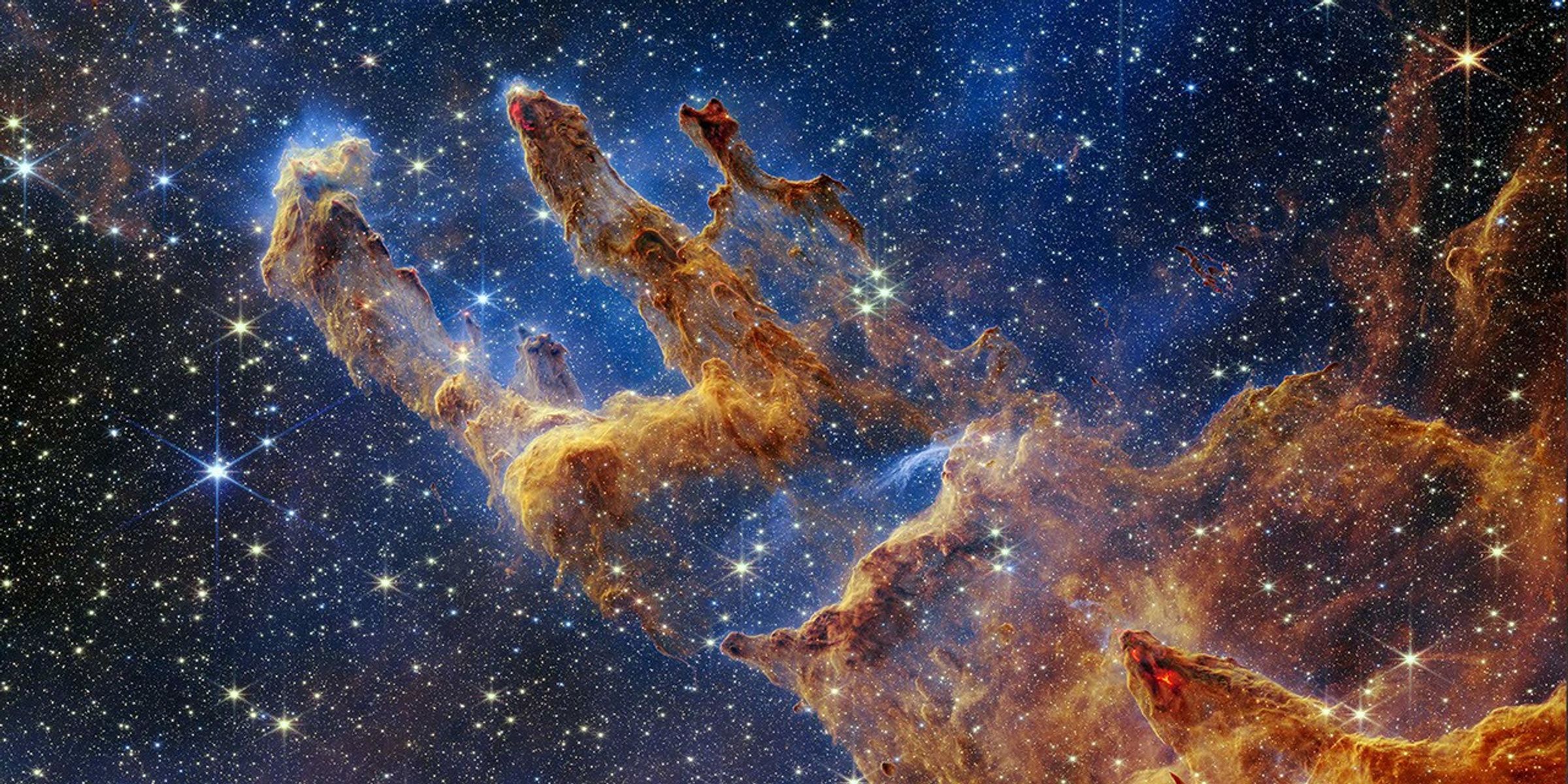
This cropped horizontal image has layers of semi-opaque rusty red colored gas and dust that starts at the bottom right and goes toward the top left. There are three prominent pillars rising toward the top left. The left pillar is the largest and widest. The peaks of the second and third pillars are set off in darker shades of brown and have red outlines.

The post Ad ASTRA Community Science Workshop Announcements appeared first on NASA Science.

  •  

O Mundial FIFA 2026 e a revolução tecnológica no futebol

Desde bolas com sensor de alta precisão a avatares 3D foto realistas gerados por inteligência artificial, conheça as inovações tecnológicas do Mundial de Futebol FIFA 2026, e como é que a tecnologia promete redesenhar o maior evento desportivo da história.

The post O Mundial FIFA 2026 e a revolução tecnológica no futebol appeared first on Tek Notícias.

  •  

Airbus dévoile un drone de combat : ses capacités en disent long sur les guerres de demain

Dévoilé au salon ILA Berlin 2026, le U760 Ravenstorm représente le pari d'Airbus sur un drone de combat européen. Une réponse directe à l'effondrement du programme Scaf et à la montée des tensions géopolitiques.

  •  

Microsoft is disabling Office 2019 for Mac next month

Vector illustration of the Microsoft logo.

Microsoft's Office 2019 apps for Mac will stop working next month, because the company isn't renewing a certificate that validates Office licenses. Owners of Office 2019 for Mac are being warned they'll have to purchase Office 2024 or a Microsoft 365 subscription if they want to continue editing documents.

Microsoft previously promised that "all your Office 2019 apps will continue to function," when it announced end of support in 2023. The company then quietly updated that support note last month to remove the mention of apps continuing to function, replacing it with "Rest assured that all your Office 2019 apps won't lose any data."

Starti …

Read the full story at The Verge.

  •  

Cosmic Origins Seminar, 10 June 2026

Cosmic Origins Seminar

Location

Virtual

Dates

10 June 2026
12:00pm – 1:00pm ET
9:00am – 10:00am PT 

Community

Cosmic Origins

Type

Seminar

The ASTRA Initiative

Speaker

Jessica Gaskin

The ASTRA initiative will promote new strategic mission concepts for astrophysics, see here. We would like to encourage you to think about new strategic mission concepts for the coming decades of astrophysics.

As part of ASTRA, the Community Science (Ad ASTRA) Workshop will take place 1-3 September 2026 in Pasadena. New concept ideas will be discussed at this event.

To join the ASTRA initiative, mission concept template is now available, see here. There are also instructions for submission. Submitted concept ideas will be discussed at the September workshop.

Session Recording

Downloads

Intro to the ASTRA Initiative

Jun 10, 2026

PDF (1.67 MB)

Seminar Connection

Join the Seminar

News Straight to Your Inbox

Subscribe to your community email news list

We will never share your email address.

Privacy Policy

Sign Up
This cropped horizontal image has layers of semi-opaque rusty red colored gas and dust that starts at the bottom right and goes toward the top left. There are three prominent pillars rising toward the top left. The left pillar is the largest and widest. The peaks of the second and third pillars are set off in darker shades of brown and have red outlines.

The post Cosmic Origins Seminar, 10 June 2026 appeared first on NASA Science.

  •  

Canva: conheça a plataforma criativa que transformou o design gráfico numa competência ao alcance de todos

Com milhares de modelos, edição de fotos e vídeos com IA e colaboração em tempo real, o Canva é a plataforma criativa que transformou o design numa competência ao alcance de qualquer pessoa, sem exigir experiência.

The post Canva: conheça a plataforma criativa que transformou o design gráfico numa competência ao alcance de todos appeared first on Tek Notícias.

  •  

Spanish Cave Sanctuary Reveals More Than 11,500 Years of Activity

Sala Keimada, a chamber of Cueva Palomera in Burgos, Spain. Image credit: Ortega-Martínez et al., doi: 10.1016/j.jasrep.2026.105818.

New radiocarbon dates from Sala Keimada, a hard-to-reach chamber of Cueva Palomera in the province of Burgos, northern Spain, suggest that generations of people returned to the sacred space from the end of the Ice Age through the Iron Age, leaving behind art, structures and offerings.

The post Spanish Cave Sanctuary Reveals More Than 11,500 Years of Activity appeared first on Sci.News: Breaking Science News.

  •  

Codfish Game Clinic vai reunir estúdios indie que querem levar os seus jogos ao próximo nível em Óbidos

A próxima edição da iniciativa organizada pela Codfish Academy conta com a participação de Aaron Ludlow, Lead Producer da editora indie Playstack. As candidaturas estão abertas até ao dia 22 de junho.

The post Codfish Game Clinic vai reunir estúdios indie que querem levar os seus jogos ao próximo nível em Óbidos appeared first on Tek Notícias.

  •  

WWDC 2026: As novidades que passaram “despercebidas” e que vão chegar ao iPhone, computadores Mac e Apple Watch

Embora a nova Siri e as novidades do Apple Intelligence tenham ocupado grande parte da apresentação na WWDC 2026, há mais funcionalidades úteis a caminho das versões atualizadas dos sistemas operativos do iPhone, iPad, computadores Mac e relógios inteligentes.

The post WWDC 2026: As novidades que passaram “despercebidas” e que vão chegar ao iPhone, computadores Mac e Apple Watch appeared first on Tek Notícias.

  •  

Análise TEK: Lenovo Legion Go Gen 2 tem um ecrã OLED de sonho numa consola portátil que desafia os limites do peso

A Legion Go Gen 2 é a evolução natural da portátil de gaming da Lenovo, melhorando o ecrã e atualizando o hardware, mas essas melhorias refletem-se no peso (na carteira e nas mãos).

The post Análise TEK: Lenovo Legion Go Gen 2 tem um ecrã OLED de sonho numa consola portátil que desafia os limites do peso appeared first on Tek Notícias.

  •  

Pentágono acrescenta Alibaba, Baidu e BYD à lista de empresas chinesas com ligações ao exército da China

A atualização anual da chamada "lista 1260H" alarga o escrutínio dos EUA a gigantes tecnológicos e industriais chineses não estatais que, em princípio, não teriam qualquer ligação ao setor da defesa. A medida surge menos de um mês após a cimeira de Trump em Pequim. A China prometeu retaliar.

The post Pentágono acrescenta Alibaba, Baidu e BYD à lista de empresas chinesas com ligações ao exército da China appeared first on Tek Notícias.

  •  

Já pode testar o iOS 27 antes do lançamento oficial. Veja como instalar a versão beta para developers

Apesar da confirmação de que a Siri AI não vai chegar para já à Europa, há novas funcionalidades no sistema operativo que certamente vão melhorar a experiência do iPhone. Pode experimentar a beta antes do seu lançamento.

The post Já pode testar o iOS 27 antes do lançamento oficial. Veja como instalar a versão beta para developers appeared first on Tek Notícias.

  •  

AAS Meeting 248, June 2026

The 248th Meeting of the American Astronomical Society

Location

Pasadena, California

Dates

14-18 June 2026

Community

Physics of the Cosmos

Type

Meeting

AAS Meeting 248

Joint AAS with HEAD and Laboratory Astrophysics Divisions Meeting

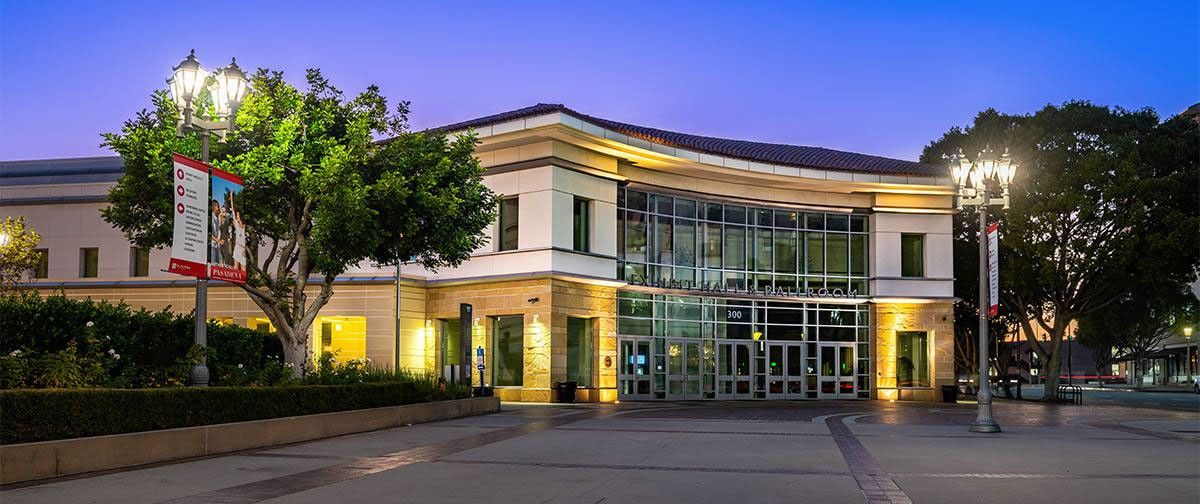
14-18 June 2026 at the Pasadena Convention Center

The meeting will be jam-packed with great scientific content and provide ample opportunity for networking with friends and colleagues.

Meeting Overview about Joint AAS with HEAD and Laboratory Astrophysics Divisions Meeting
Pasadena Convention Center

The 248th AAS meeting (joint with HEAD and Laboratory Astrophysics Divisions) will be held 14-18 June in Pasadena, California.

Join us in the exhibit hall at the NASA booth and attend the NASA sessions.

Monday, 15 June 2026

TimeSessionLocation
10:00am ‑ 11:30am PTNASA’s Future Large Gamma Ray (FLAG) Mission Concepts Working GroupPasadena Convention Center ‑  
Conference Center, 204
SummaryThe Future Large Gamma-ray Mission Concepts working group will hold a hybrid work session to review progress and needed inputs for a technical report on gamma-ray instrumentation. Working group members will present updates and lead discussions to complete gathering of input on gamma-ray capabilities, mission concepts, and technologies. The group will work on identifying and filling gaps in the draft and refining the content of the report.

Wednesday, 17 June 2026

TimeSessionLocation
11:40am ‑ 1:10pm XR SIG Special Session
HEAD: Toward the 2030 Decadal: Science Cases for Potential Future X-ray Mission Concepts
Pasadena Convention Center ‑ 
Conference Center, 211

XR SIG Special Session Agenda

TimeTopicSpeakerPresentation
11:40am ‑ 11:50amIntroductionDave Pooley, Trinity University
Breanna Binder, Cal Poly Pomona
11:50am ‑ 11:56amHigh Angular Resolution X-ray Imager SAG: Updates & Results IKimberly Weaver, NASA/GSFC
11:56am ‑ 12:03pmHigh Angular Resolution X-ray Imager SAG: Updates & Results IIScott Randall, CfA
12:03pm ‑ 12:10pmHigh Angular Resolution X-ray Imager SAG: Updates & Results IIIHerman Marshall, MIT
12:10pm ‑ 12:20pmLynx 2030 SAG: Updates & Results ISteven Ehlert, NASA/MSFC
12:20pm ‑ 12:30pmLynx 2030 SAG: Updates & Results IIFabio Pacucci, CfA
12:30pm ‑ 12:36pmBroad-Band X-ray Observatory SAG: Updates & Results IChien‑Ting Chen, USRA/NASA MSFC
12:36pm ‑ 12:43pmBroad-Band X-ray Observatory SAG: Updates & Results IIKristin Madsen, NASA/GSFC
12:43pm ‑ 12:50pmBroad-Band X-ray Observatory SAG: Updates & Results IIDaniel Stern, JPL
12:50pm ‑ 1:10pmX-ray Timing SAG: Updates & ResultsThomas Maccarone, Texas Tech

Thursday, 18 June 2026

TimeSessionLocation
10:00am ‑ 11:30amSpecial Session: Planning for the Future of Astrophysics and the ASTRA Initiative Pasadena Convention Center ‑ 
Ballroom G

ASTRA Initiative Special Session

TimeTopicSpeakerPresentation
10:00am ‑ 10:10amIntroduction from the NASA Astrophysics Division DirectorShawn Domagal‑Goldman
10:10am ‑ 10:25amThe ASTRA Initiative: Overview & Path ForwardJessica Gaskin, NASA HQ
10:25am ‑ 10:40amInnovation for Astrophysics Workshop: Initial FindingsKendra Short, JPL
10:40am ‑ 10:55amAd ASTRA Community Science WorkshopPeter Kurczynski, NASA/GSFC
10:55am ‑ 11:30amPanel DiscussionFrancesca Civano, NASA/GSFC

DaySession TitleTimeLocations
Sunday, 14 JuneHigh Energy Science Analysis with HEASARC Services10:00a ‑ 12:00nConference Center 102
An Introduction to Fornax: Scalable Data and Compute for Scientific Analysis2:00p ‑ 4:00pConference Center 101
Monday, 15 JuneNASA Update Town Hall12:45p ‑ 1:45pBallroom DE
115 – HEAD: NuSTAR and the future of hard X-ray observations2:00p ‑ 3:30pConference Center 211
118 – Gamma-ray Astrophysics from Fermi to the Future2:00p ‑ 3:30pBallroom F
NSF NOIRLab Open House6:15p ‑ 8:15pConference Center 106
Tuesday, 16 June201 – Warner Plenary Lecture: Kyle Kremer, Globular Clusters: Astronomical factories of gravitational-wave and electromagnetic transients8:00a ‑ 9:00aBallroom DE
NASA’s Big Science, Small Missions1:00a ‑ 11:30aConference Center 204
212 – HEAD Early Career: Carolyn Kierans11:40a ‑ 12:30pBallroom DE
National Science Foundation Update Town Hall12:45p ‑ 1:45pBallroom A
221 – HEAD: Exploring the MeV Gamma-ray Sky with COSI3:40p ‑ 5:10pConference Center 212
222 – HEAD: NewAthena: The Next X-ray Flagship3:40p ‑ 5:10pConference Center 211
Wednesday, 17 June313 – Time Domain and Multi-messenger Astrophysics10:00a ‑ 11:30aConference Center 211
The NASA Astrophysics ROSES Program11:00a ‑ 12:00nConference Center 204
323 – Stellar/Compact Objects 2: HMXBs and Pulsar Phenomena2:00p ‑ 3:30pConference Center 211
325 – HEAD: Chandra: Today and Tomorrow3:40p ‑ 5:10pConference Center 212
Thursday, 18 June401 – Planning for the Future of Astrophysics and the ASTRA Initiative10a ‑ 11:30aBallroom G
402 – Gravitational-Wave Astronomy in the Next-Generation Era10a ‑ 11:30aBallroom F
403 – High Energy Astrophysics10a ‑ 10:40aBallroom C

News Straight to Your Inbox

Subscribe to your community email news list

We will never share your email address.

Privacy Policy

Sign Up
This cropped horizontal image has layers of semi-opaque rusty red colored gas and dust that starts at the bottom right and goes toward the top left. There are three prominent pillars rising toward the top left. The left pillar is the largest and widest. The peaks of the second and third pillars are set off in darker shades of brown and have red outlines.

The post AAS Meeting 248, June 2026 appeared first on NASA Science.

  •  

Fornax Initiative at AAS 248, June 2026

Fornax Initiative at the 248th AAS Meeting

The meeting will be jam-packed with great scientific content and provide ample opportunity for networking with friends and colleagues.

AAS 248 Workshops about Fornax Initiative at the 248th AAS Meeting

Location

Pasadena, California

Dates

14-18 June 2026

Community

Fornax Initiative

Type

Meeting

Sunday, 14 June 2026

Fornax Workshop

TimeSessionLocation
2:00pm ‑ 4:00pmAn Introduction to Fornax: Scalable Data and Compute for Scientific AnalysisPasadena Convention Center – Conference Center, 101

Related Workshops

TimeSessionLocation
10:00am ‑ 12:00pmHigh Energy Science Analysis with HEASARC ServicesPasadena Convention Center – Conference Center, 102
10:00am ‑ 11:30amEuclid Data in the Cloud: Access, Analysis, and Science OpportunitiesPasadena Convention Center – Conference Center, 101

Wednesday, 17 June 2026

TimeSessionTitleSpeakerLocation
10:00am ‑ 11:30amSimulated Universes for Precision CosmologyAccessing and Analyzing OpenUniverse 2024 Simulations through IRSA and FornaxVandana DesaiPasadena Convention Center – Exhibit Halls & Ballrooms, Ballroom F

Thursday, 18 June 2026

TimeSessionTitleSpeakerLocation
2:00pm ‑ 3:30pm40 Years of Community Engagement at IPAC: Lessons LearnedBuilding User Support for Fornax: Community Engagement for Cloud-Based AstrophysicsVandana DesaiPasadena Convention Center – Exhibit Halls & Ballrooms, Ballroom

Related Sessions of Interest

DateSession TitleTimeLocation
Monday, 15 JuneNASA’s Future Large Gamma-ray Mission Concepts Working Group10:00am ‑ 11:30amPasadena Convention Center ‑ Conference Center, 204
Tuesday, 16 JuneNASA’s Big Science, Small Missions10:00am ‑ 11:30amPasadena Convention Center ‑ Conference Center, 204
American Astronomical Society

The 248th Meeting of the AAS

The 248th AAS meeting (joint with the High Energy Astrophysics and the Laboratory Astrophysics Divisions) will be held 14-18 June 2026 in Pasadena, California.

Learn More
Black line art with letters on a white background
American Astronomical Society (AAS)

The Fornax Initiative

NASA Astrophysics is developing the Fornax Initiative, a cloud-based system that brings together data, software, and computing so that researchers can focus on science.

Learn More about The Fornax Initiative
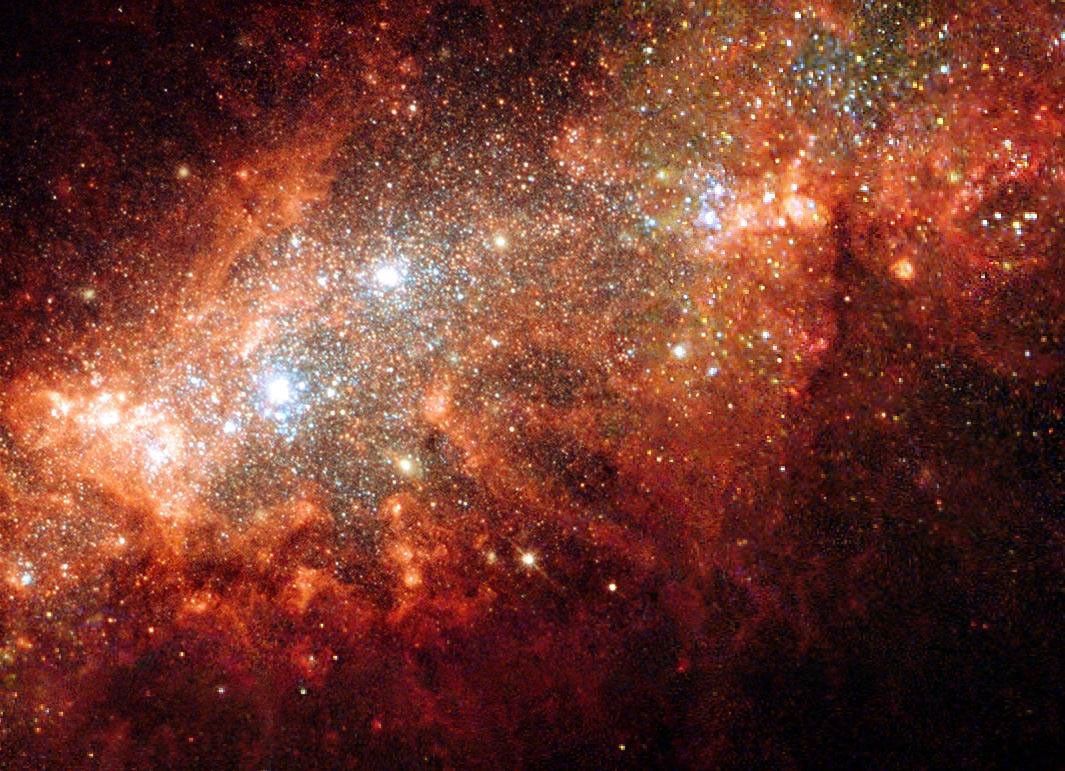
The nearby dwarf galaxy NGC 1569 is a hotbed of vigorous star birth activity, which blows huge bubbles that riddle the galaxy's main body. The image was taken by the WPF2 camera, designed and built by JPL, on NASA's Hubble.

News Straight to Your Inbox

Subscribe to your community email news list

We will never share your email address.

Privacy Policy

Sign Up
This cropped horizontal image has layers of semi-opaque rusty red colored gas and dust that starts at the bottom right and goes toward the top left. There are three prominent pillars rising toward the top left. The left pillar is the largest and widest. The peaks of the second and third pillars are set off in darker shades of brown and have red outlines.

The post Fornax Initiative at AAS 248, June 2026 appeared first on NASA Science.

  •  

CRN SIG Seminar, 17 June 2026

Cosmic Ray and Neutrino SIG Seminar

Cosmic Ray and Neutrino Science Interest Group

CRN SIG about Cosmic Ray and Neutrino SIG Seminar

Location

Virtual

Dates

17 June 2026
2:00pm – 3:00pm ET

Community

CRN SIG

Type

Seminar

Discussion on ASTRA Whitepapers

This webinar will be on the ASTRA initiative, as the deadline for white paper submissions approaches (June 26th). We will present some brief updates about the process and the September Ad ASTRA workshop, as well as hear brief presentations about the science impact of the planned white paper submissions. 

Speakers

John Krizmanic
Pier Simone Marrocchesi 
Stefano Profumo
Toni Venters 
Tsuguo Aramkaki 
Keith McBride
Philip von Doetinchem 
Stephanie Wissel
Priya Ghosh 

Current Agenda

  1. ASTRA-Related Updates
  2. Low-Energy Antinuclei Searches
  3. Lunar Cosmic Ray Observatory
  4. Ultrahigh Energy Cosmic Rays and Neutrinos

Meeting Connection

Join the Meeting

News Straight to Your Inbox

Subscribe to your community email news list

We will never share your email address.

Privacy Policy

Sign Up
This cropped horizontal image has layers of semi-opaque rusty red colored gas and dust that starts at the bottom right and goes toward the top left. There are three prominent pillars rising toward the top left. The left pillar is the largest and widest. The peaks of the second and third pillars are set off in darker shades of brown and have red outlines.

The post CRN SIG Seminar, 17 June 2026 appeared first on NASA Science.

  •  
❌