❌

Reading view

The fastest humans in the galaxy just got a spiffy patch to prove it

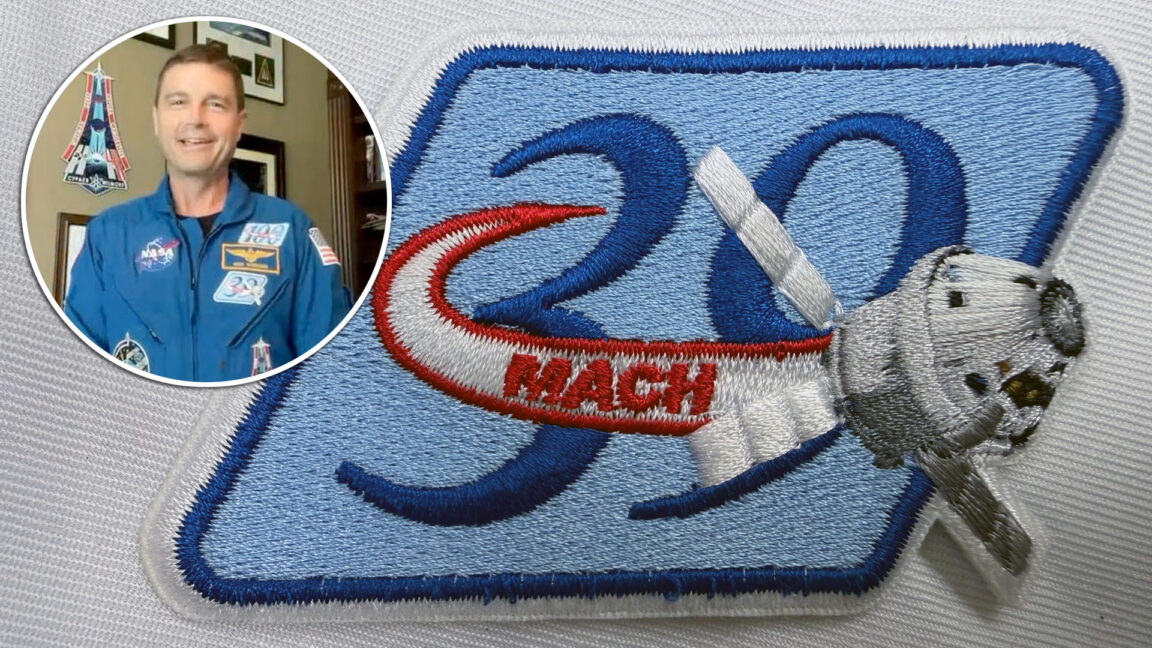
NASA's Artemis II crew are the fastest people alive, and now they have the patch to prove it.

Mission Commander Reid Wiseman, pilot Victor Glover, and mission specialists Christina Koch and Jeremy Hansen (the latter with the Canadian Space Agency) spent 10 days in early April flying by the Moon. Their journey took them farther away from Earth than any humans have gone (52,756 miles [406,771 km]) and then, on the way back on board their Orion spacecraft Integrity, they sped up to about 24,664 miles per hour (39,693 k/ph) reentering the atmosphere.

Only three other people in history have traveled faster. NASA's Apollo 10 astronauts Thomas Stafford, John Young, and Eugene Cernan set the record for the highest speed attained by a crewed vehicle relative to the Earth's surface: 24,791 mph (39,897 kph) on May 26, 1969.
Read full article

Comments

© Reid Wiseman/A-B Emblem/collectSPACE

  •  

Astronomers Finally Find Milky Way’s Missing Black Hole Wind

This image shows the evidence for the wind blowing away from Sagittarius A*: the white dot in the center of the image shows the supermassive black hole; in orange is data from ALMA, mapping the location of cold gas composed of carbon monoxide in the image; in blue is X-ray data from Chandra; a large cone-shaped cavity, visible as an absence of cold gas in the ALMA data, is filled by hot X-ray-emitting gas in the Chandra data. Image credit: NASA / CXC / UMass / Wang et al. / ALMA / ESO / NAOJ / NRAO / Longmore et al. / Minniti et al.

After a 50-year search, astronomers have uncovered evidence that Sagittarius A* -- the 4.3-million-solar-mass black hole that resides at the center of our Milky Way Galaxy -- is blowing a hot cosmic wind into its surroundings, carving out a giant cavity near the Galaxy’s heart.

The post Astronomers Finally Find Milky Way’s Missing Black Hole Wind appeared first on Sci.News: Breaking Science News.

  •  

Fatos espaciais da missão Artemis IV vão ter uma nova camada de proteção para os astronautas na Lua

O Liquid Cooling and Ventilation Garment (LCVG) serve como uma camada adicional de proteção para os astronautas da Artemis IV e foi desenhado para regular a temperatura corporal e assegurar a ventilação durante as caminhadas na Lua.

The post Fatos espaciais da missão Artemis IV vão ter uma nova camada de proteção para os astronautas na Lua appeared first on Tek Notícias.

  •  

NASA’s New Technology Lets Spacecraft Switch Between Networks

Polylingual Experimental Terminal (PExT)NASA just demonstrated a technology that lets spacecraft communicate across multiple networks, paving the way for a more flexible and reliable space internet. NASA’s experimental Polylingual Experimental Terminal (PExT) has successfully completed its primary technology demonstration, marking an important step toward more flexible communications in space. Because the project met its original goals and continues [...]
  •  

NASA’s Latest Update on International Space Station Leak

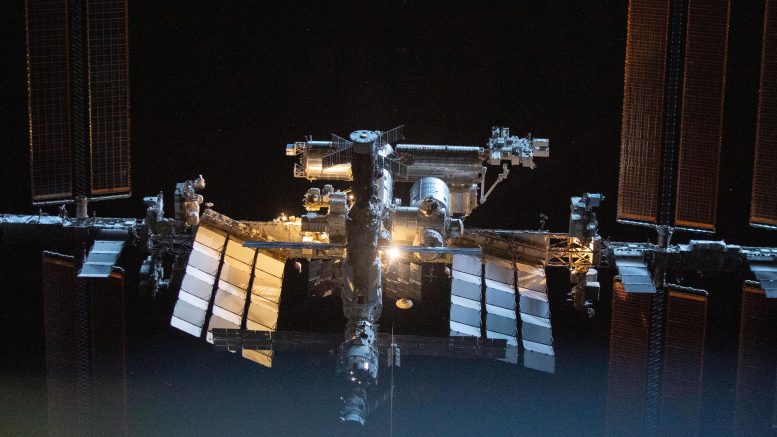
Space Station Pictured From SpaceX Crew Dragon CropNASA has released a new update on a long-running air leak aboard the International Space Station, detailing recent developments involving a troubled section of the orbiting laboratory and precautionary measures taken to protect the crew. The issue involves the PrK transfer tunnel inside Russia’s Zvezda service module, where cracks have been causing small atmosphere leaks [...]
  •  

Interstellar Comet 3I/ATLAS Reveals Strange Chemistry Beyond Our Solar System

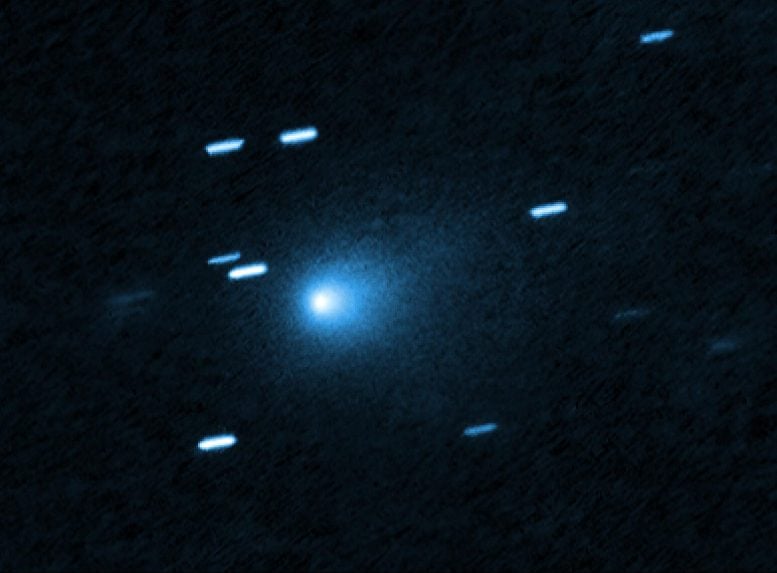
Interstellar Comet 3I ATLASAn interstellar comet just revealed hidden methane and chemical clues from another star system. NASA’s James Webb Space Telescope has achieved another milestone by capturing the first mid-infrared chemical fingerprint of an interstellar object. The observations focused on comet 3I/ATLAS, a rare visitor from beyond our solar system, and the findings have been published in [...]
  •  

Jupiter Accelerates Electrons to Near-Light Speed, Offering Clues to Cosmic Ray Origins

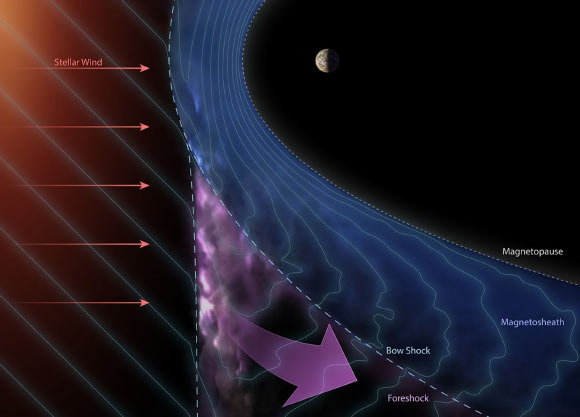
As planets and stars travel through the streams of charged particles flowing across space, their magnetic fields act like obstacles; incoming particles are slowed and deflected, forming a boundary called the bow shock; just ahead of this boundary lies the foreshock, a variable region where magnetic conditions can accelerate some particles to nearly the speed of light. Image credit: Ben C. Smith, Johns Hopkins Applied Physics Laboratory.

The giant planet’s bow shock isn’t just deflecting the solar wind, it’s acting as a powerful particle accelerator, firing electrons to relativistic energies of at least 1 MeV, according to a new analysis of data from NASA’s Juno spacecraft.

The post Jupiter Accelerates Electrons to Near-Light Speed, Offering Clues to Cosmic Ray Origins appeared first on Sci.News: Breaking Science News.

  •  

NASA Captures Typhoon Jangmi’s Massive Eye in Stunning Nighttime Image

Typhoon Jangmi May 30Typhoon Jangmi dazzled from space with a giant swirling eye while drenching parts of Japan with heavy rain. From late May into early June 2026, Typhoon Jangmi slowly tracked north-northwest across the Philippine Sea on a path toward southern Japan. Although the storm moved at a relatively slow pace, it spread intense rainfall across a [...]
  •  

Super Typhoon Sinlaku Was So Powerful It Made the Sky Ripple With Gravity Waves

Super Typhoon Sinlaku Atmospheric Gravity WavesA rapidly intensifying super typhoon sent giant atmospheric ripples skyward, revealing a hidden connection between extreme weather and near-space. In April 2026, Super Typhoon Sinlaku swept across the North Pacific, bringing torrential rain and flooding to parts of the Mariana Islands. The storm intensified into a “violent typhoon,” the highest category used by the Japan [...]
  •  

ISS crew back to normal after emergency shelter order

NASA has told crew aboard the International Space Station (ISS) to resume normal operations, ending a roughly two-hour period in which five astronauts sheltered inside a docked SpaceX capsule. The shelter order came Friday morning as a precautionary measure to protect crew while Russian cosmonauts attempted a fix on the Zvezda service module’s transfer tunnelContinue reading "ISS crew back to normal after emergency shelter order"

The post ISS crew back to normal after emergency shelter order appeared first on Astronomy Magazine.

  •  

How NASA plans to build a Moon Base

NASA announced new contracts for the rovers and landers that will lay the groundwork for the agency’s proposed $30-billion Moon Base — some of which they plan to launch as soon as this fall — during a May 26 press conference. The announcement offered the most detailed look yet into the Moon Base plan NASAContinue reading "How NASA plans to build a Moon Base"

The post How NASA plans to build a Moon Base appeared first on Astronomy Magazine.

  •  

Webb Weighs Most Distant Inactive Black Hole Ever Found

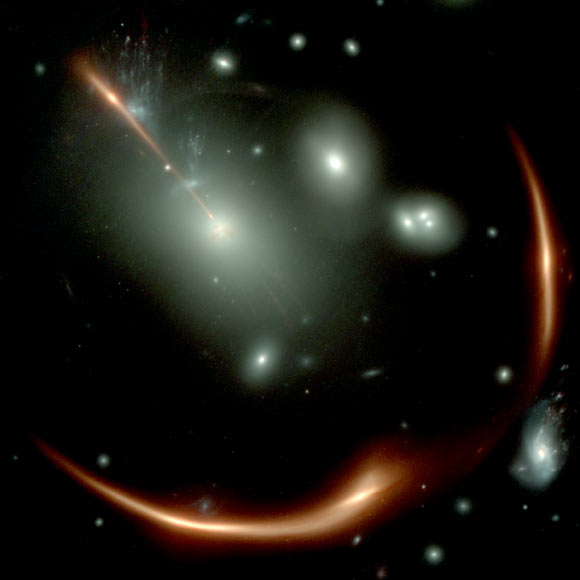
This Webb image shows the highly distorted red galaxy MRG-M0138 seen through a foreground cluster of galaxies (white sources). Image credit: NASA / ESA / CSA / Webb.

A supermassive black hole 6 billion times the mass of the Sun lurks in MRG-M0138, a gravitationally lensed quiescent galaxy seen when the Universe was just 3 billion years old, according to an analysis of data collected by the NIRSpec Integral Field Spectrograph onboard the NASA/ESA/CSA James Webb Space Telescope.

The post Webb Weighs Most Distant Inactive Black Hole Ever Found appeared first on Sci.News: Breaking Science News.

  •  

Alarme na Estação Espacial ultrapassado: NASA cancela evacuação de astronautas devido a fuga de oxigénio

Os quatro astronautas da missão Crew-12 foram instruídos pela NASA a vestir os fatos espaciais e a refugiarem-se na cápsula Dragon, enquanto cosmonautas russos tentam uma reparação mais extensa no módulo Zvezda.

The post Alarme na Estação Espacial ultrapassado: NASA cancela evacuação de astronautas devido a fuga de oxigénio appeared first on Tek Notícias.

  •  

Let’s build the moon base, but not lose sight of Mars

Illustration representing NASA's moon-to-Mars ambitions. Credit: NASA

These are heady days for NASA and the space industry. The Artemis 2 crew flew around the moon, traveling farther into space than any humans previously had; NASA announced an […]

The post Let’s build the moon base, but not lose sight of Mars appeared first on SpaceNews.

  •  

Don’t Miss: Venus Is About To Disappear Behind the Moon

Venus Moon Occultation 2023A disappearing Venus, a planet parade, and the start of summer make June a must-see month for skywatchers. June brings several notable skywatching events, including a close meeting between Venus and Jupiter, a rare occasion when the Moon moves in front of Venus, the arrival of astronomical summer, and the return of favorite deep-sky sights. [...]
  •  
❌