Silphium was an extinct Libyan plant renowned for contraception, medicine, and trade. Its disappearance remains a historical mystery, and scientists continue searching for surviving descendants. Roman leader Julius Caesar is said to have kept a stock of it in the treasury. Ancient writer Pliny the Elder says Rome’s Emperor Nero owned the last stalk of [...]
Strange green stones, evidence of repeated ancient expeditions, hidden burials, and other discoveries have been made in a remote cave high in the Pyrenees mountains.
The findings were made in a cave located more than 7,300 feet above sea level, revealing evidence that ancient visitors repeatedly endured the hardships of climbing to such altitudes for a period spanning 2,000 years. The question for archaeologists had been why this cave seems to have held such importance.
Now, discoveries at the remote site could potentially alter our understanding of ancient European uses of mountain landscapes in prehistoric times. Of key importance, archaeologists have uncovered ancient hearths that contain small samples of green minerals, which point to ancient mining activities that likely supported ancient metallurgy in the region.
Two Millennia of Human Interest
For more than 2,000 years, ancient Europeans repeatedly traveled to this remote cave, leaving behind evidence of their visits that includes ancient hearths and even a child’s tooth, suggesting the possibility that there may even be hidden graves at the site.
Professor Carlos Tornero, a researcher with the Catalan Institute of Human Paleoecology and Social Evolution, says these discoveries are surprising, since past research suggested such areas would only have been occasionally traversed by humans during periods of migration, rather than becoming destinations.
The entrance to Cave 338 (Image Credit: Tornero, et al, Front. Environ. Archaeology/doi: 10.3389/fearc.2026.1811493)
“For a long time, high-mountain environments were seen as marginal, places prehistoric communities passed through occasionally,” said Tornero, who is the lead author of a new study detailing the findings.
That wasn’t the case with this Cave 338, as archaeologists now call it, which turned out to be a far more unique site.
“We found a really rich archaeological sequence, including multiple combustion structures and a very large number of green mineral fragments,” Tornero recently said. “We can’t say exactly how long people stayed each time, but the repeated use of the space and the density of remains suggest occupations that were short to medium in duration, but happening again and again over long periods of time.”
Evidence of an Ancient Copper Mining Industry
At Cave 338, initial excavations began with a small area spanning six square meters near the cave’s entrance. There, Tornero and the team uncovered evidence of human activity temporally associated with four distinctive layers.
In the most recent layer of human occupation, artifacts from historical periods were found, although in smaller numbers, which suggested that the cave’s use had likely decreased gradually with time. Similar limited use was evidenced in the cave’s deepest layers, where charcoal fragments were discovered with dates indicating human activity as far back as 6,000 years ago.
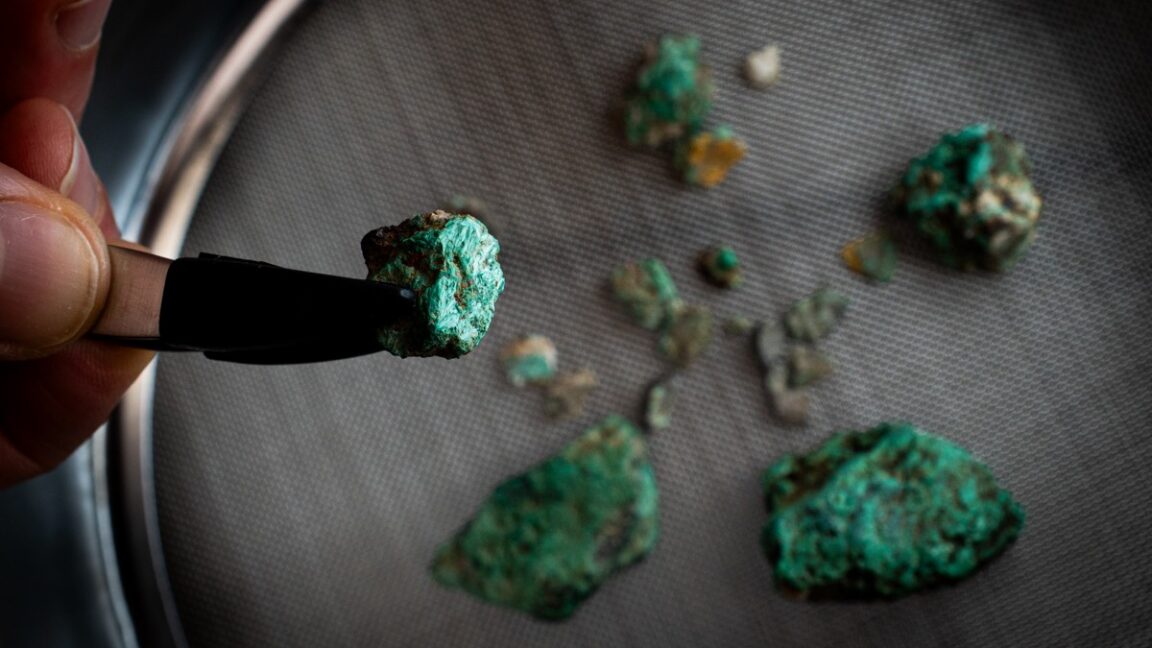
Within layers two and three, significantly more activity was discernible. Discoveries within these layers included nearly two-dozen hearths, many of which contained burned fragments of a green mineral that researchers believe may be malachite.
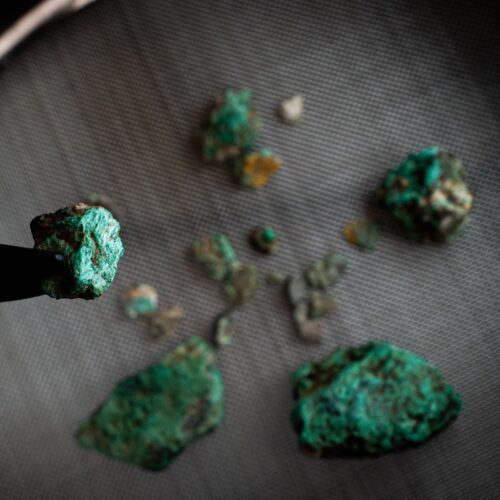
Possible malachite fragments from Cave 338 (Image Credit: Maria D. Guillén / IPHES-CERCA).
If confirmed, this is significant, since malachite is rich in copper and can be processed to extract the metal, meaning that ancient visitors to the cave may have visited the site specifically to mine this unique green mineral. Cave 338 would therefore represent a very high-altitude mining camp, which ancient Europeans somehow discovered and repeatedly visited.
When Fire Heats the Green Stone
Based on radiocarbon dating, hearths located in the site’s second layer are approximately 3,000 years old, while those in the layer directly beneath it date to between 4,000 and 5,000 years ago.
Dr. Julia Montes-Landa of the University of Granada, who was a co-author of the new paper, says that evidence suggests many of the fragments were thermally altered—in other words, they were intentionally exposed to fire—while some of the samples found at the site were not.
This, she argues, “clearly suggests that fire played an important role in their processing and that there was a deliberate intention behind it.”
“They weren’t burned by accident,” Montes-Landa says.
Another indication of ancient industrial activity at the site involves the placement of the hearths in layers two and three, many of which overlap, which strongly suggests reuse. However, more than one area containing overlapping hearths is present, which also suggests that while reuse occurred, it took place in successive periods of visitation throughout time.
Hidden Burials and Prehistoric Artifacts
In addition to ancient evidence of mining and thermal alteration of stone, within the site’s third layer, a small amount of human remains—an ancient baby tooth and a finger bone believed to have belonged to a child—were found.
Such scant remains do not provide context for the cause of death or whether the remains came from the same individual. However, it does point to the possibility of hidden burials that may exist in other portions of the cave.
In addition to human remains, prehistoric artifacts were found at the site, which date to the second millennium BC, including a shell pendant and another made from a bear’s tooth.
“The shell pendant is interesting because it has parallels in other sites in Catalonia, which suggests shared traditions or connections between different communities,” Tornero said. “The bear tooth pendant is much less common.”
“That might point to something more specific or symbolic, possibly linked to the local environment,” Tornero suggests.
Lingering Questions
Obviously, 338 held significance to ancient inhabitants of the region, since, despite the daunting trek reaching it would have required, humans clearly returned there over and over again for a period of at least two thousand years, although evidence of human presence at the location extends to as much as double that amount of time.
Going forward, Tornero, Montes-Landa, and their colleagues hope that future excavations may reveal additional clues about who had been coming here for so long, and what specifically attracted them to the cave.
Of key significance will also be confirmation that the mineral contains copper.
“The identification of the green mineral as malachite is still preliminary,” Tornero says, adding that ongoing research “will provide final answers shortly.”
Much work remains to be done at the site, and Tornero and his team plan to resume excavations there later this year.
“The excavation hasn’t yet reached the full depth of the site,” Tornero said, “so the sequence is not completely documented.”
“This summer we will continue the archaeological work,” Tornero added.
For now, Cave 338 already shows that even some of the most remote areas of the Pyrenees could have played significant roles in the way ancient humans utilized the land and its resources.
“As such, the site provides a key reference framework for understanding high-mountain occupation, resource exploitation and mobility dynamics in the Pyrenees during later prehistory,” the authors write in their recent paper.
Micah Hanks is the Editor-in-Chief and Co-Founder of The Debrief. A longtime reporter on science, defense, and technology with a focus on space and astronomy, he can be reached atmicah@thedebrief.org. Follow him on X @MicahHanks, and at micahhanks.com.
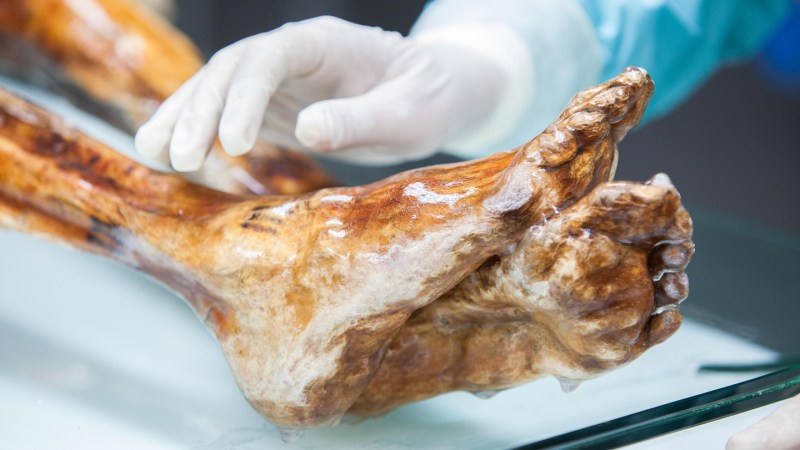
Ötzi the Iceman, Europe’s most famous mummy, is crawling with microbes, some long dead, some still eking out a living after thousands of years, and some very modern.
After he died in the Ötztal Alps, the Copper Age man now known as Ötzi lay alone and forgotten for 5,300 years, until a group of hikers stumbled on his freeze-dried remains in 1991. Since then, he’s received a lot of attention from scientists, who have sequenced his DNA, pored over his last meal and the remains of his gut microbes, and examined his clothes and his broken tools. Today, Ötzi lies in a high-tech resting place at the South Tyrol Museum of Archaeology in Italy, where, it turns out, his body is still home to a handful of cold-adapted yeast species that have probably been with him since just after he died.
Slightly morbid souvenirs from the Alps
Microbiologist Mohamed S. Sarhan (of the Institute of Mummy Studies at the private Eurac Research center) and his colleagues recently sampled material from Ötzi’s stomach and meltwater from inside his body, swabbed his skin, and even sampled airborne microbes from his frozen storage room and the lab outside it. They also took samples from a block of frozen alpine soil taken from next to Ötzi’s body back in 1991.
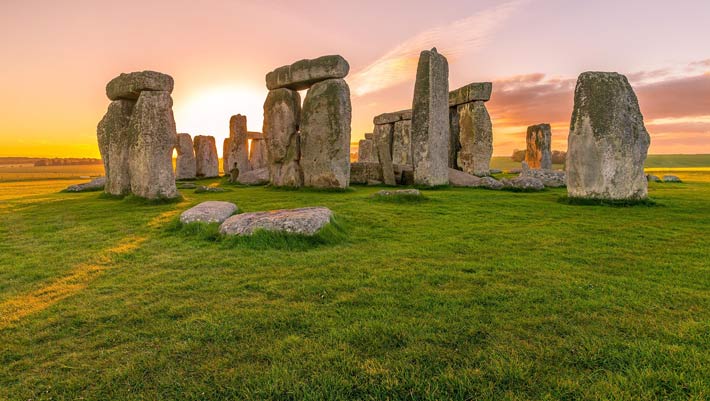
Neolithic people, not glaciers, moved the Altar Stone -- the six-ton central sandstone megalith at Stonehenge -- from northeast Scotland to Salisbury Plain, according to a new study led by archaeologists from Curtin University and Sheffield Hallam University.
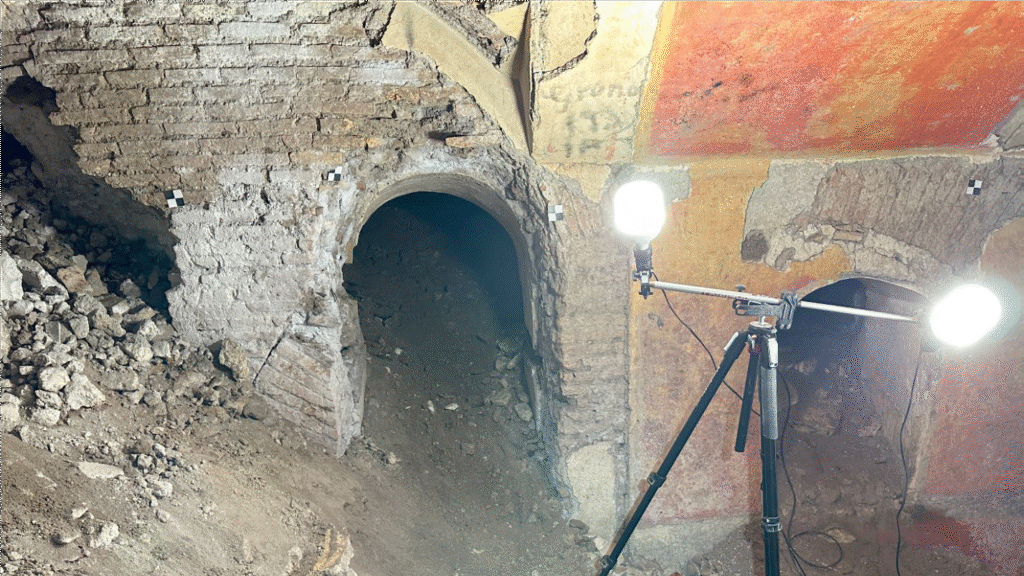
After being notified by mischievous high school students, archaeologists uncovered a large and luxurious second-century Roman house near the Colosseum.
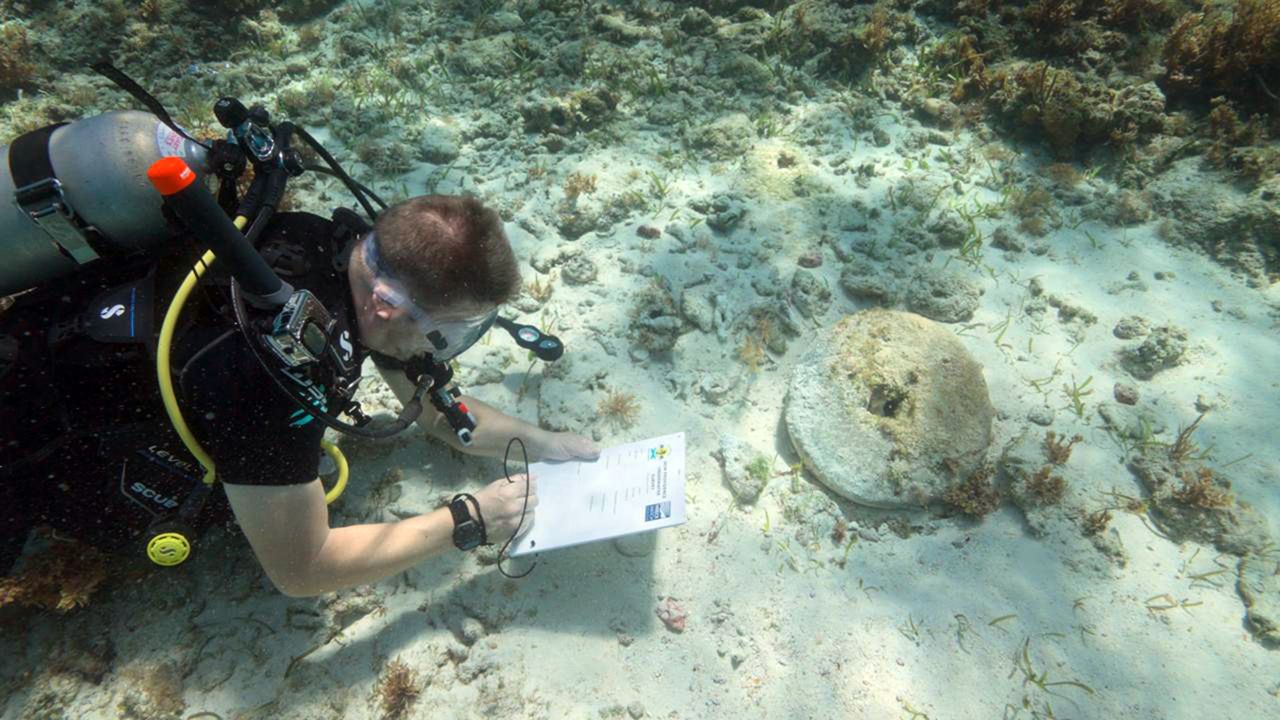
In a first, underwater archaeologists in the Bahamas have discovered three shipwrecks associated with the Golden Age of Piracy off the coast of Nassau.
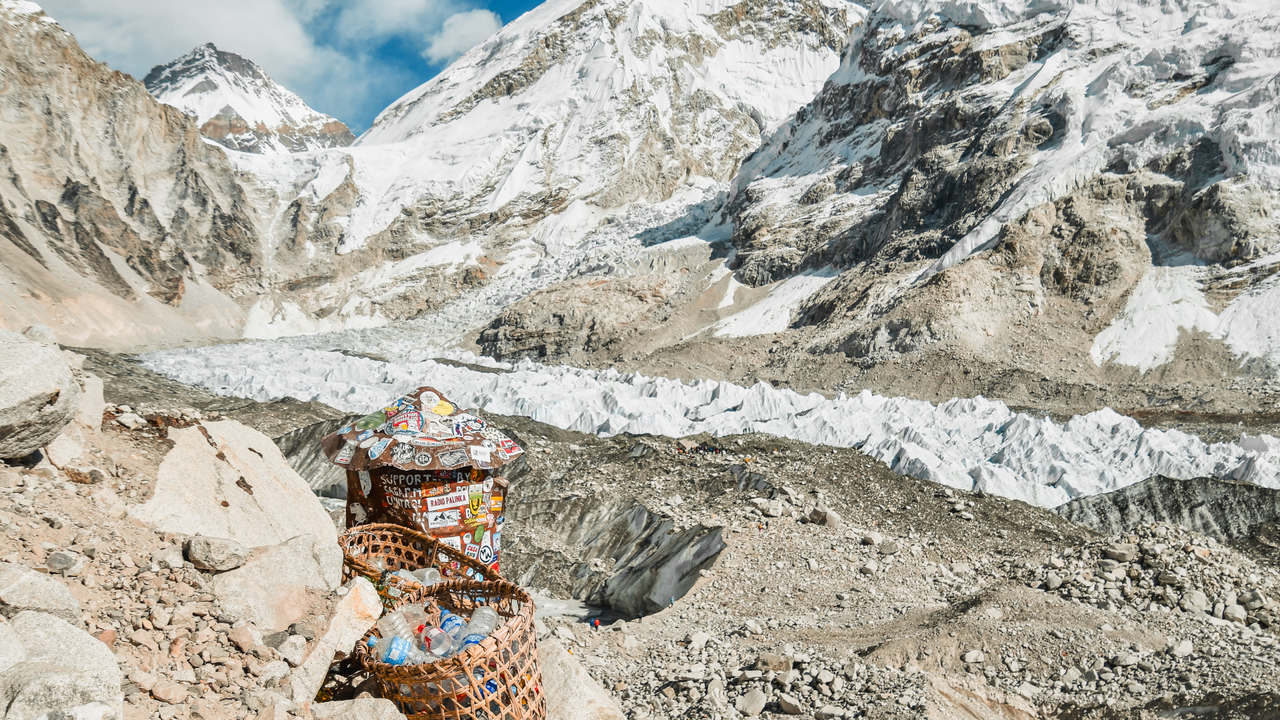
Archaeologists are turning their attention and research skills to far-flung places on the Earth and beyond, discovering new information about how humans survive in extreme environments.
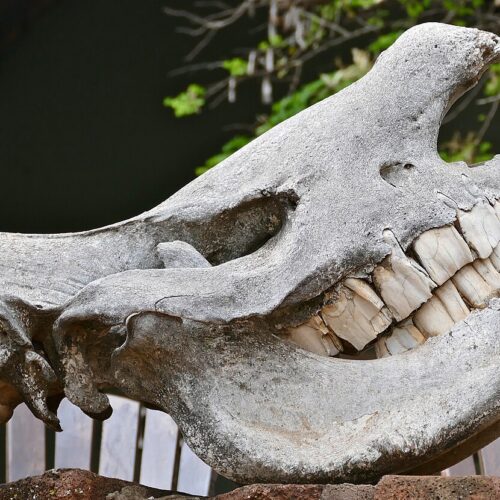
One way archaeologists learn how ancient people, including Neanderthals, did things is to attempt to do those things themselves, a process called experimental archaeology. Normally, that involves making stone tools, butchering deer, or distilling birch tar. But in a new study, it meant doing very destructive things to teeth from one of the world’s most carefully protected animals.
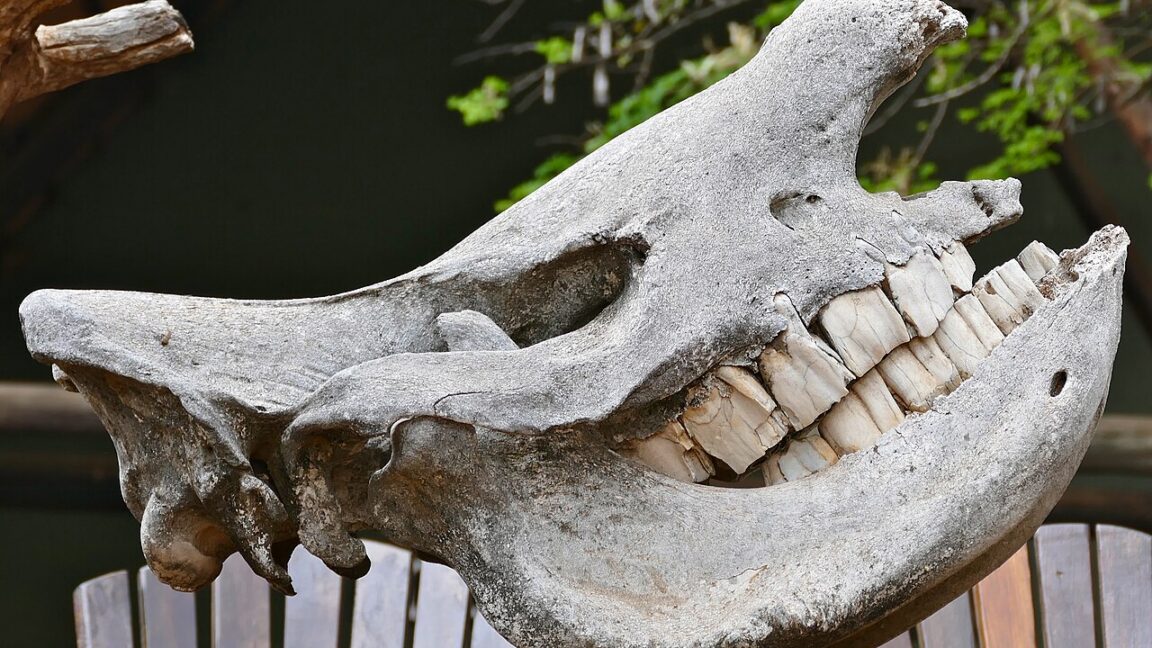
That's because the archeologists suspected that Neanderthals once used rhino teeth as tools. By using the teeth to make stone tools, the researchers demonstrated that Neanderthals probably did the same thing, adding to what we know about the wide range of items in their toolkits.
We need to hit some rhino teeth with rocks for science
Some Neanderthal archaeological sites in Europe and Asia seem to have many more rhinoceros teeth lying around than you’d expect. We know Neanderthals hunted a now-extinct species of rhinoceros in Europe and eastern Asia, but the people who had inhabited these sites looked like they had been collecting rhino teeth for some reason.
An Iliad fragment discovered inside an Egyptian mummy shows how Homer’s influence extended across Roman culture, from imperial identity and education to everyday life in Roman Egypt. Archaeologists have found something unexpected inside a 1,600-year-old Roman-era Egyptian mummy: a fragment of Homer’s Iliad. It wasn’t placed beside the body but inside the mummy’s abdomen. But [...]
It’s a regrettable reality that there is never enough time to cover all the interesting scientific stories we come across. So every month, we highlight a handful of the best stories that nearly slipped through the cracks. May's list includes the discovery of a possible prehistoric mining site in the Pyrenees; a new species of tiny blue octopus; why cats seem to prefer silver vine to catnip; and why political polarization might behave like a phase transition, among other noteworthy stories.
Prehistoric mining in the Pyrenees
Credit:
IPHES-CERCA
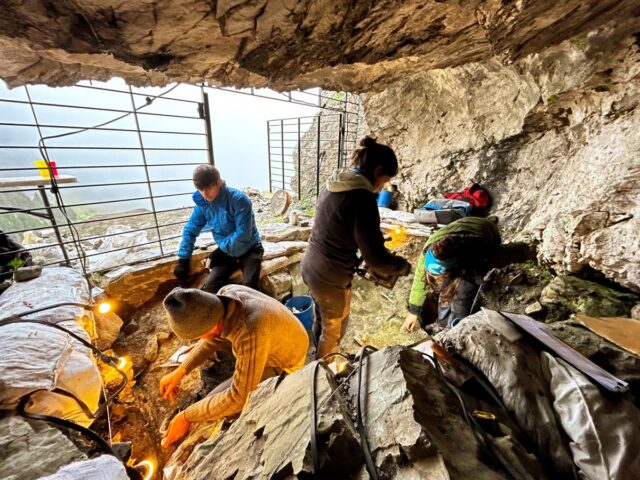
High in the eastern Pyrenees is a prehistoric cave, excavated between 2021 and 2023. Based on analysis of artifacts uncovered at the site, a team of Spanish archaeologists believes this may have served as an ancient copper smelting spot, with far more frequent occupation by humans than previously thought. The researchers described these preliminary findings in a paper published in the journal Frontiers in Environmental Archaeology.
Ancient cultures across the globe have been playing games of chance — using dice — far, far longer than historians had ever realized, a new study finds. Researchers turned up these gaming pieces from as far back as 12,000 years ago. That makes them the oldest known dice.
These came from western North America. Until their discovery, the oldest known dice were from Mesopotamia, an ancient region in what is now Iraq. The oldest of those were only about 5,500 years old.
Many Native American cultures have a rich history of dice games and still play them today.
Such games could have helped foster social connection, says archaeologist Robert Weiner, who was not part of the new study. If you meet strangers, “how are you going to interact?” he asks. Dice games could have offered one way for strangers to bond. Weiner works at Dartmouth College in Hanover, N.H.
But until now, the roots of early American dice games had been fuzzy. Robert Madden hoped to track down those origins. In the April 2 American Antiquity, he describes the search for the earliest dice in what is now the mainland United States.
Dice defined
Madden, too, is an archaeologist. He works at Colorado State University in Fort Collins. He started his search by sifting through records of Native American artifacts. He was scouting for objects that might be dice.
He set rules for sorting out possible dice. Most Native American dice are two-sided with at least one side marked. So that’s what Madden looked for. He rejected objects with holes. These might have been part of jewelry. Any die candidates also had to be small enough to fit in one’s hand.
In all, 565 objects met all those criteria. An additional 94 objects were probably dice but would need more details to be sure.
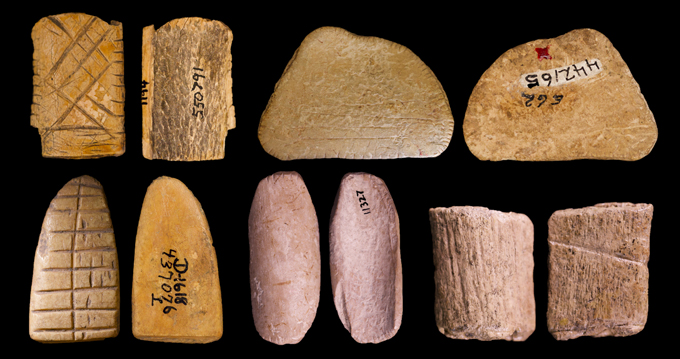
The items came from 57 archaeological sites across 12 U.S. states in the Great Plains and American West. Most of the promising objects were 450 to 2,000 years old. About 31 were 2,000 to 8,000 years old. And at least 14 artifacts dated as far back as 12,000 years ago. Those oldest ones came from Wyoming, Colorado and New Mexico.
Holding deep history
Madden then traveled to examine the oldest of these artifacts in person. He found some objects that had not yet been described or linked to gaming.
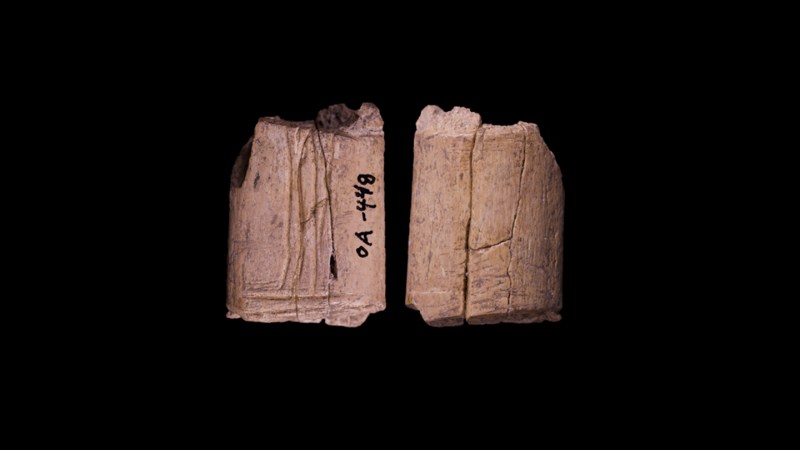
“It was amazing to hold these pieces of deep history in my hand,” Madden says. In-person inspections confirmed to him that these ancient objects were in fact dice. Each was made of bone, worn smooth by use and time. Lines had been carefully etched on one side. Some had faint traces of red pigment to mark the different sides.
Especially notable: They looked much like more modern Native American dice.
“If you took dice from 2,000 years ago and the prehistoric ones and put them in a bag and shook it up, it would be really hard to tell the difference between them,” Madden says. “They look very similar.”
Weiner agrees. “I don’t think there’s a compelling alternative explanation for many of these objects,” he says.
The new study likely understates the true diversity, in space and time, of dice in Native American cultures. After colonial contact, settlers documented 18 tribes in the eastern U.S. that played dice games. Yet Madden’s search turned up no dice from there. Future research should explore that region, he says.
Finding the oldest dice also pushes back when people first seem to have been experimenting with the concept of probability. It highlights Native American contributions to early intellectual developments, Madden says. That Native Americans used dice to generate randomness this long ago, he says, “is a very exciting connection to make.”

 Login

 Silphium was an extinct Libyan plant renowned for contraception, medicine, and trade. Its disappearance remains a historical mystery, and scientists continue searching for surviving descendants. Roman leader Julius Caesar is said to have kept a stock of it in the treasury. Ancient writer Pliny the Elder says Rome’s Emperor Nero owned the last stalk of [...]









 Credit:
IPHES-CERCA