❌

Reading view

Giant Scorpions Ruled Ancient Britain during Devonian Period

Praearcturus gigas. Image credit: Franz Anthony.

Paleontologists have confirmed that Praearcturus gigas, a creature that prowled shallow waters during the Devonian period, 415 million years ago, is the largest scorpion ever found.

The post Giant Scorpions Ruled Ancient Britain during Devonian Period appeared first on Sci.News: Breaking Science News.

  •  

Scientists Finally Uncover How a “Forever Chemical” Causes Birth Defects

Water Drops PFAS Forever ChemicalsPFDA, a PFAS “forever chemical,” can cause craniofacial birth defects by disrupting retinoic acid regulation during fetal development, revealing the first clear molecular mechanism behind the link. Researchers have long linked perfluoroalkyl and polyfluoroalkyl substances (PFAS), often called “forever chemicals,” to serious birth defects. However, scientists have struggled to explain exactly how these pollutants affect [...]
  •  

T-Mobile US expands globally with India tech hub

T-Mobile US officially opened a global capability centre (GCC) in Hyderabad, India, with plans to hire around 1,000 staff by 2027, its first such facility outside of its home market.

The Indian government stated T-Mobile, through its TMUS Global Solutions Technology subsidiary, opened a site spanning 250,000 square feet in the city, which is situated in the state of Telangana.

It will operate as a strategic innovation hub within its global network, focusing on software engineering, DevOps, product development, cloud technologies, AI, data analytics, cybersecurity and next-generation digital solutions.

Posting on X, minister for IT Sridhar Duddilla said T-Mobile’s GCC represented another significant milestone in Telangana’s growth as a technology and innovation destination.

“The decision by T-Mobile to expand its presence here reflects the confidence that global companies have in Telangana’s talent, business-friendly environment, and strong digital infrastructure.”

Chandra Gupta, VP IT operations at TMUS Global Solutions, added the company decided to locate the facility in Hyderabad as it offers “a combination of technology talent and an established innovation ecosystem aligned with the company’s long-term goals”.

The Economic Times of India reported the company has already onboarded more than 500 people at the facility,

According to Reuters, India’s GCCs have evolved from low-cost outsourcing hubs to offices for global companies, supporting parent companies in several functions.

The post T-Mobile US expands globally with India tech hub appeared first on Mobile World Live.

  •  

Using bacteria to fight fungal brown rot

Brown rot is a common fungal disease in the Southeastern United States that affects stone fruits like peaches, cherries, and plums. Monilinia fructicola is a tan, fuzzy fungus that grows on tree flowers, twigs, and fruit, and is the most common cause of brown rot. Once brown rot infects a tree, the damage is irreversible, causing significant crop losses in commercial orchards. Farmers try to control the spread of M. fructicola by applying chemical sprays, called fungicides, to fruit trees in the spring.

In M. fructicola, a biosynthesis gene named MfCYP51 encodes a major protein critical to the fungi’s survival. Certain fungicides, called demethylation inhibitor (DMI) fungicides, stop M. fructicola from growing by targeting this protein. Over the last 20 years, DMI fungicides have become less effective against brown rot as M. fructicola becomes more resistant. 

Living microorganisms and their metabolites can control fungal diseases as an alternative to chemical fungicides, known as biofungicides. Many bacteria produce compounds like hydrogen cyanide and pyrrolnitrin that damage fungal cells. However, scientists have not found a biofungicide suitable for commercial production.​ A group of researchers at Clemson University in the USA and Huazhong Agricultural University in China set out to test whether the soil bacteria Pseudomonas chlororaphis and Bacillus subtilis could be effective biofungicides against brown rot. 

The researchers performed an incubation experiment to analyze how the fungal cells make their critical protein from the MfCYP51 gene, a process called gene expression, under different fungicide treatments. They used 3 M. fructicola strains sensitive to traditional DMI fungicides and 3 resistant strains. They tested these with 5 different fungicide treatments: a DMI fungicide, a mixture of P. chlororaphis metabolites, a mixture of living B. subtilis cells, a DMI fungicide + P. chlororaphis metabolites, and a DMI fungicide +  B. subtilis cells. They also set up a control treatment with sterile water instead of fungicide.  

After 6 hours, the researchers extracted the molecule that measures gene expression, called RNA, from the fungi. They found that both the P. chlororaphis treatment and the DMI fungicide + P. chlororaphis treatment substantially reduced MfCYP51 expression in both the sensitive and resistant isolates compared to the controls. In contrast, the DMI fungicide, B. subtilis, and DMI fungicide + B. subtilis treatments increased MfCYP51 expression in the resistant isolates. The researchers concluded that P. chlororaphis has a unique ability to reduce gene expression, unlike other biofungicides.

​To further investigate how the biofungicide treatments work, the team tested whether P. chlororaphis and B. subtilis produced the anti-fungal metabolite pyrrolnitrin. They added 1 milliliter of each treatment to a machine that separates and identifies liquid compounds using high pressure, called a high-performance liquid chromatograph. They found that the P. chlororaphis treatment contained pyrrolnitrin, so they hypothesized that it was responsible for reducing gene expression.

Additionally, the researchers tested their 5 treatments on brown rot in fruit. For each treatment, they took 10 Gala apples, washed and sterilized their surfaces, and sprayed them with the fungicides. After 24 hours, they poked holes in the apples with toothpicks and added 20 microliters of liquid containing M. fructicola cells to the poked holes. They placed the apples in a humid chamber for 5 days and measured the number and size of brown rot spots that developed on their surfaces. 

Despite decreasing MfCYP51 expression, ​the researchers found that P. chlororaphis treatment alone didn’t reduce brown rot disease compared to the control, but the DMI fungicide and B. subtilis treatments did. The mixed treatments of DMI fungicide + P. chlororaphis and DMI fungicide + B. subtilis both reduced brown rot disease compared to the control, but only the DMI fungicide + P. chlororaphis treatment prevented it. 

​The researchers concluded that although biofungicides may not be fully effective on their own, commercializing them could allow farmers to use less DMI fungicide. They explained that scaling back the use of DMI fungicides would slow M. fructicola resistance. Finally, they proposed that future researchers test biofungicide mixtures containing pyrrolnitrin in the field to observe real-world effects on stone fruit trees.

The post Using bacteria to fight fungal brown rot appeared first on Sciworthy.

  •  

Former DT exec migrates to US rival Verizon

Ex-Deutsche Telekom executive Abdu Mudesir resurfaced at US rival Verizon as EVP and president of the operator’s global networks, platforms and technology (GN&T).

The move to Verizon pits Mudesir in direct competition with T-Mobile US, which is majority owned by Deutsche Telekom.
Mudesir will succeed 30-year veteran Joe Russo, who is retiring over the coming months. He will sit on an 11-member leadership team reporting directly to CEO Dan Schulman.

Russo is currently EVP and president of global networks and technology.

A representative for Verizon told Mobile World Live (MWL) the company hired Mudesir following a thorough global search.

“He has a brilliant track record in building 5G capabilities, scaling fibre architecture, and is a recognised pioneer in Open RAN, cloud infrastructure, and AI-driven network automation,” the representative stated.

Mudesir, who served as Deutsche Telekom’s head of product and technology, left the company abruptly in late March 2026 after eight years in various roles.

Verizon noted it is still finalising the exact dates for the transition, but stated Russo remains fully in charge of GN&T for now and will be staying through Q1 2027 to ensure a seamless transition.

“Abdu is obsessed with the customer experience and network excellence,” Schulman said in an internal announcement to employees. “He will help drive the convergence of Network, Platforms, Technology, Products and AI, using our unrivaled connectivity and the transformative power of AI to define what comes next for our business and the customers we serve.”

The post Former DT exec migrates to US rival Verizon appeared first on Mobile World Live.

  •  

Jesus of Palestine | What’s in a Name?

JD Hall discusses the name of Jesus, asserting that He was named Ἰησοῦς in Greek, not Yeshua in Hebrew. The Gospel of Matthew records His name in Greek, supporting the idea that He was known by this name in a multilingual first-century Palestine.

  •  

Confirmed | Icy Worlds Expected from Biblical Creation Model

My biblical creation model of the solar system expects the presence of icy materials forming the outer planets and celestial bodies. Recent findings of water and ice in bodies like Ceres, and moons of Jupiter and Saturn support this theory, confirming the Genesis account of creation.

  •  

Healing Skin Cancer with Milkweed | God’s Provision Against the Curse

God cursed the creation which led to the emergence of diseases like cancer. But He also provided treatments for some of those diseases. Euphorbia peplus is such a plant, which is traditionally used to treat skin cancers. It is one natural remedy available from the weeds of the cursed creation.

  •  

FIRST VISIBLE LIGHT IMAGES OF VENUS’ SURFACE FROM SPACE CAPTURED BY PARKER SOLAR PROBE

NASA’s Parker Solar Probe captured the first visible light images of Venus from space. The images, taken during two recent flybys, show a faint glow from the surface, revealing features like continents, plains, and plateaus. The images could help scientists learn about Venus’s geology and mineral make-up and understand why it became inhospitable while Earth […]

The post FIRST VISIBLE LIGHT IMAGES OF VENUS’ SURFACE FROM SPACE CAPTURED BY PARKER SOLAR PROBE appeared first on Science Bulletin.

  •  

Asus quer tornar IA mais prática, pessoal e acessível com nova geração de PCs para linha empresarial e consumo

A Asus trouxe para a Computex 2026 uma linha completa de equipamentos focados na aceleração da implementação de IA nas empresas e também na linha de consumo. entre NUC, Mini PCs e novos computadores pessoais, o objetivo é garantir a experiência para a produtividade e entretenimento.

The post Asus quer tornar IA mais prática, pessoal e acessível com nova geração de PCs para linha empresarial e consumo appeared first on Tek Notícias.

  •  

Hubble Captures Active Spiral Galaxy: Messier 88

This image, taken with the Wide Field Camera 3 (WFC3) instrument aboard the NASA/ESA Hubble Space Telescope, shows the spiral galaxy Messier 88. Image credit: NASA / ESA / Hubble / D. Thilker / MAUVE-HST Team.

A newly-released Hubble image shows Messier 88, a black hole-powered spiral galaxy that is gradually plunging toward the crowded heart of the Virgo Cluster.

The post Hubble Captures Active Spiral Galaxy: Messier 88 appeared first on Sci.News: Breaking Science News.

  •  

Hackers do grupo Lazarus criam malware “invisível” que se esconde na memória do PC

Os investigadores da Fox-IT identificaram um novo malware do grupo Lazarus que opera quase exclusivamente na memória dos equipamentos infetados, recorrendo a técnicas avançadas de evasão para dificultar a deteção e análise.

The post Hackers do grupo Lazarus criam malware “invisível” que se esconde na memória do PC appeared first on Tek Notícias.

  •  

Snapdragon C é a nova aposta da Qualcomm para dinamizar os portáteis Windows na gama de entrada

Cristiano Amon, CEO da Qualcomm, subiu ao palco da Computex para apresentar a visão da marca para um mundo onde o agente de IA não está preso a um dispositivo. Trouxe consigo chips para todos os bolsos, desde portáteis de baixo custo à robótica.

The post Snapdragon C é a nova aposta da Qualcomm para dinamizar os portáteis Windows na gama de entrada appeared first on Tek Notícias.

  •  

ROG Edition 20 junta a história com a inovação numa nova experiência “artilhada” para gamers

A festa dos 20 anos da Asus Republic of Gamers (ROG) traz novidades para os gamers com uma seleção especial de produtos numa edição limitada para builds gamer de elevado desempenho. Do desktop ROG G1000 a motherboards, ecrãs, periféricos e cadeiras, a nova linha traz uma gama completa de produtos com design único.

The post ROG Edition 20 junta a história com a inovação numa nova experiência “artilhada” para gamers appeared first on Tek Notícias.

  •  

Earth May Be Seeding Venus With Life, According to New Research

Venus Cloud Layers in UltravioletModels suggest that impact-ejected material from Earth could reach Venus’ clouds and potentially survive there briefly. Panspermia is the idea that life, or the ingredients needed for life, can move through space on asteroids, comets, and other objects. If life’s building blocks appear on one planet, a powerful impact could blast material from its surface [...]
  •  

A Tiny Bright-Blue Octopus Found in the Galápagos Is Completely New to Science

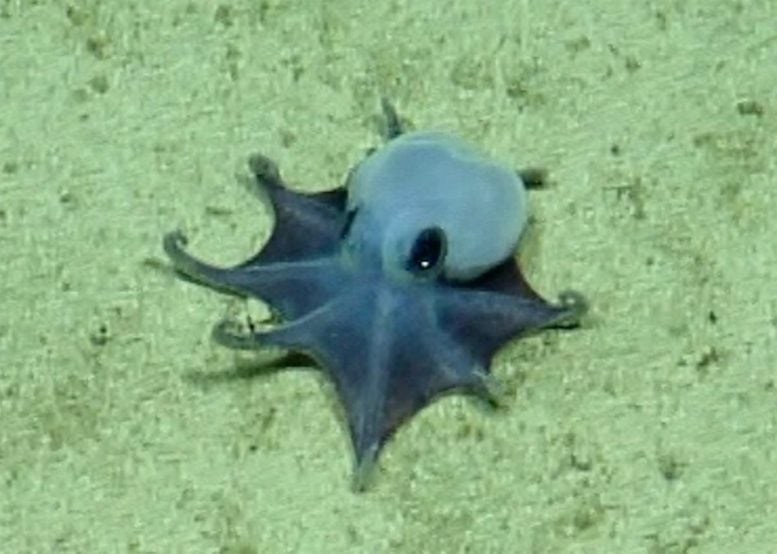
Blue Octopus Galápagos IslandsA newly discovered tiny blue octopus from the Galápagos is a striking reminder that the deep ocean still holds countless secrets. The Galápagos Islands, located off the coast of Ecuador, are famous for their remarkable wildlife. More than a thousand species of plants and animals found there exist nowhere else on Earth, including giant tortoises [...]
  •  

New Dinosaur Species from Argentina May Have Specialized in Catching Fish

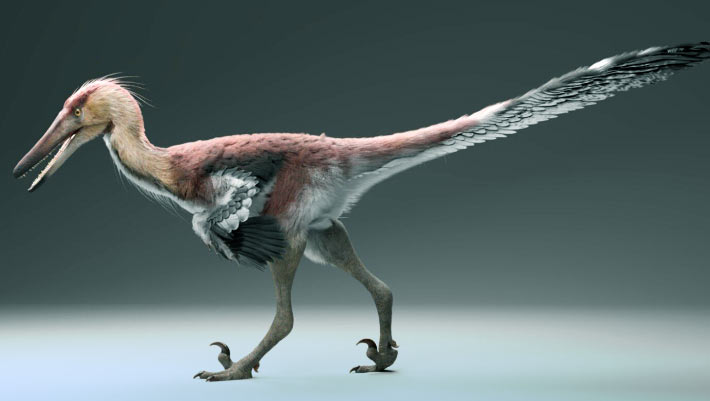
Life reconstruction of Kank australis. Image credit: Gabriel Díaz Yantén.

Paleontologists in Argentina have identified a previously unknown species of unenlagiid dinosaur that stalked freshwater wetlands during the Late Cretaceous epoch, adding to evidence that some dinosaurs specialized in catching fish.

The post New Dinosaur Species from Argentina May Have Specialized in Catching Fish appeared first on Sci.News: Breaking Science News.

  •  
❌