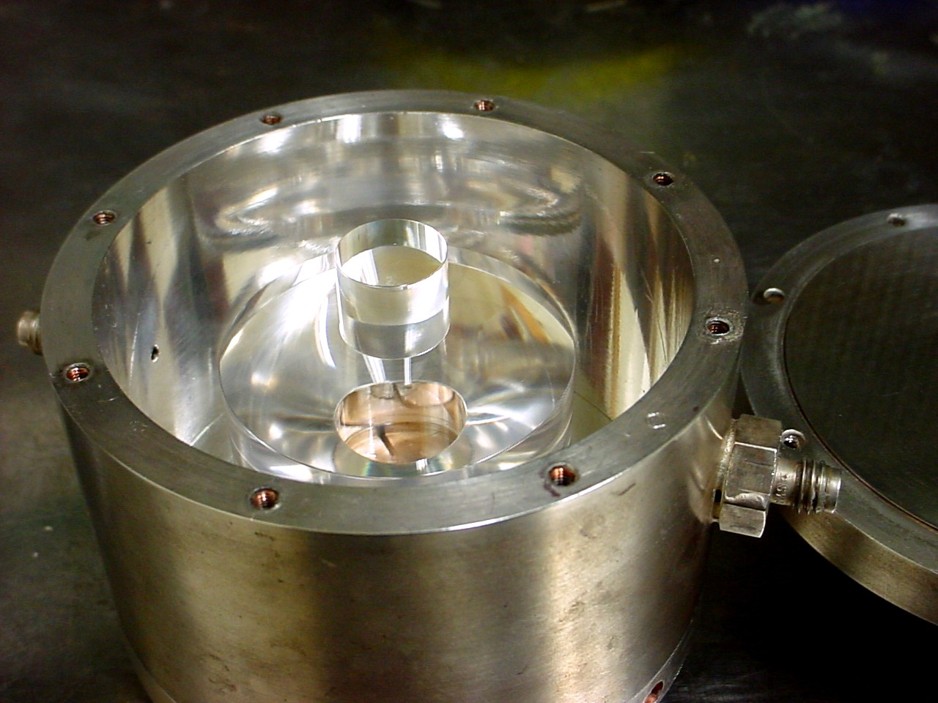
A newly engineered catalyst overcomes key obstacles that have long limited ammonia as a clean fuel for heavy industry. A newly developed single-atom platinum catalyst can ignite ammonia at about 200°C (392°F) and sustain stable combustion at 1,100°C (2,012°F) while producing very little NOx. The breakthrough could provide carbon-free, high-grade heat for industries such as [...]
Residents in Monterey Park, California, became the first in the US to vote on a permanent ban on datacenters on Tuesday, and early results indicate a resounding victory for the prohibition.
While many cities and counties have already passed temporary or indefinite moratoriums via their local governments, Monterey Park would be the first to do so through a ballot initiative.
Last week, as the war in Iran continued to choke global oil supplies, the UK government announced a 13% increase in the cap on energy prices. But it was another related story on the other side of the world that caught my eye.
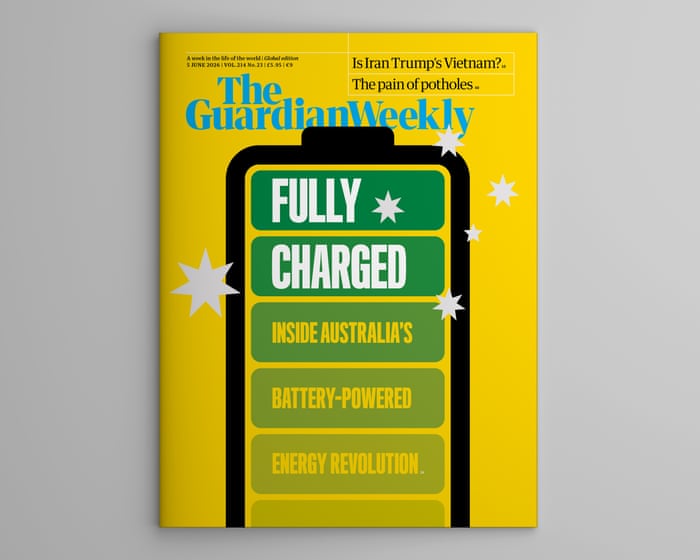
In Australia, the energy minister announced a fall of up to 10% in the benchmark electricity price in parts of the country, driven by record levels of renewables and batteries in the power grid.
I premiere my 2013 video lecture "8 Reasons Why Evolution is Foolish" on YouTube. I present 8 reasons why evolution is impossible. I cover questions on cosmogony, the origin of the universe, the stars and galaxies, the Earth, and the origin of life.
Maxwell Chikumbutso's claim of a "free energy" vehicle powered by radio frequency energy, contradicts established physics, particularly the laws of thermodynamics. All forms of energy involve costs. Chikumbutso provides no evidence to support his "free energy" from radio-waves claim. It is foolish to believe in unverified revolutionary energy solutions.
The generation and evolution of electricity is discussed, highlighting significant milestones from early static electricity experiments to modern AC power generation techniques. Dirty electricity, characterized by high-frequency electrical noise, can lead to health issues. There is a strong need for more research on this electromagnetic pollution and its health impacts.
The exploration of time measurement emphasizes the Earth's rotation as a historical clock, defining the 24-hour day. The development of mechanical clocks, notably John Harrison's marine chronometers, advanced navigation. Time's definition evolved from an Earth-centric model to atomic standards, although fundamental concepts of time remain abstract and intrinsic to the universe's creation.
I presented on the subject of problems for the big bang on the YouTube channel Standing for Truth Ministries. I discussed the most common problems the big bang theory has, the contradictions, fudge factors and failures.
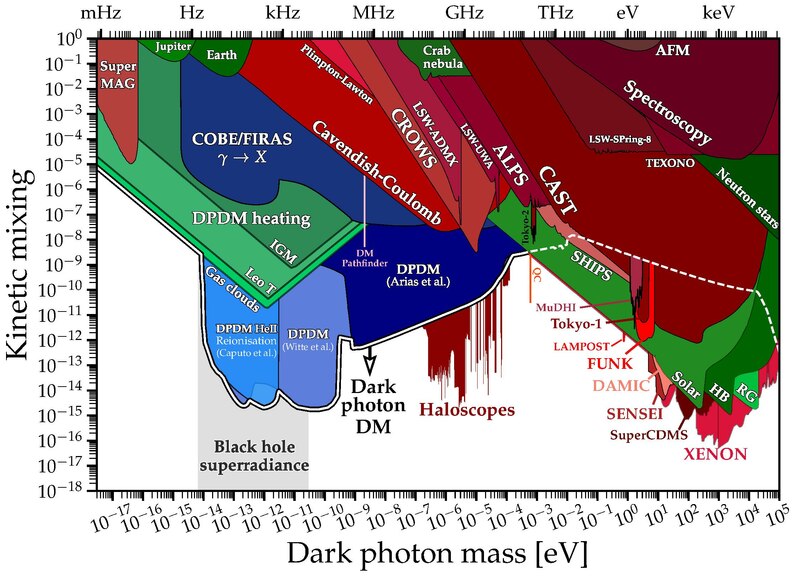
Since 2015, black holes have gained attention in astronomy, particularly regarding their potential role in discovering elusive dark matter particles like dark photons. Superradiance, a theoretical process, could theoretically boost these particles' energies near black holes. However, the absence of observed superradiance raises questions about dark matter's complexity and the validity of existing cosmological theories.
Dark matter is equated to the metaphor of the Emperor's new clothes. Dark photons and other hypothetical particles are fictitious constructs used to explain phenomena without concrete evidence, underlining that current astrophysical models are flawed and nonsensical.
I question the acceptance of Dark Matter and Dark Energy by biblical creationists, suggesting they are problematic placeholders for undiscovered physics. The arguments for their existence are challenged by alternative cosmological models and criticisms of observational methodologies, calling for a re-evaluation of accepted astrophysical tenets.
How much of cosmology is fiction? What are the fudge factors. How much is being fudged. Are there insurmountable problems with our current model of big bang cosmology?
Big bang cosmology faces unresolved problems with the standard ΛCDM model needing unknown fudge factors. A new timescape cosmology, where time passes faster or slower in voids and filaments of the cosmic web, may resolve the Dark Energy problem, but it indicates a need to rethink the foundations of cosmology.
Fortescue Metals Group is scaling back its green hydrogen ambitions due to high electricity prices, reflecting challenges faced by companies like Woodside and Origin Energy. Despite job cuts and economic feasibility concerns, chairman Andrew Forrest persists in promoting green hydrogen, advocating for ambitious production goals, in spite of the underlying physics.
Investigation reveals regulator let firms off the hook on cleanup bonds despite backlog that will take decades to clear
When Christiaan van Woudenberg moved to Erie, Colorado, in 2007, he never imagined he would become an anti-fracking activist. He simply thought he was buying his dream home – a four-bedroom with a panoramic mountain view, 30 minutes north of downtown Denver.
Then, in 2014, the drilling started. Oil and gas rigs sprang up, some just 800ft (240m) from his bedroom window. The dream turned to nightmare: loud noises rumbled all night long, and the air stank like exhaust. Neighbors started getting headaches and nosebleeds, and Van Woudenberg developed new respiratory issues. He kept his windows shut and worried about his daughters going outside.
Nour Haydar speaks with Christopher Knaus about the BHP files – the cache of internal documents leaked to the Guardian and the ABC’s Four Corners – which show that the world’s biggest miner has war-gamed ways to massively delay decarbonisation
Additional audio in this episode was sourced by Financial Times Live
Exclusive: Mining giant says technology is not yet advanced enough to run a fully electrified fleet but experts say it is hooked on federal fuel tax credits
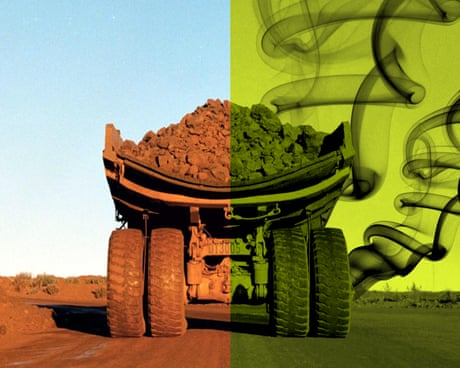
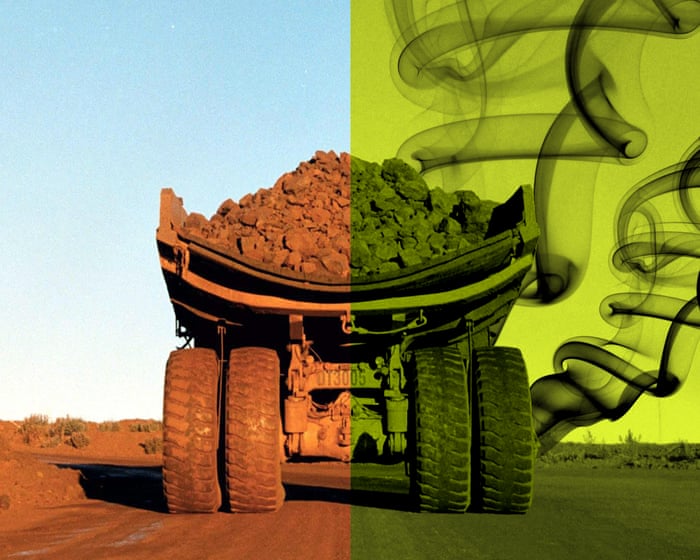
BHP has continued to spend hundreds of millions of dollars buying diesel trucks in the Pilbara despite internal documents suggesting it would increase emissions and be “misaligned” with its decarbonisation goals.
The mining giant is Australia’s biggest consumer of diesel and trucks are its biggest single source of diesel emissions. Replacing the fleet with battery-electric trucks is considered a critical step in the multinational’s efforts to decarbonise.
Cllr Lucy Shaw says councils could take up many policies to help, including more support for rooftop solar installations
Your editorial is right that the government could be doing more to help with the cost of living (The Guardian view on Britain’s coming energy shock: mini-measures won’t suffice, 22 May). That extends to local government, too. Renewable energy projects, from the industrial scale right down to rooftops, can be scuppered locally even if there is national support. The wealthiest borough in the entire country, Kensington and Chelsea, has the nation’s lowest rooftop solar installation rate, at just 0.6% of households according to the MCS installer database. This is despite touting groundbreaking policies to make it easier to build solar in conservation areas.
There are so many local policies that would help. Coordinating solar installations by street could lead to material cost savings, as would simpler permitting rules, and installations on council-owned rooftops. When 80% of cars in the borough are parked on the street, cost-effective public charging is essential to ensure that drivers can make the switch, like offering discounted charging when grid power is cheapest. Partnering with housing associations, charities, and energy suppliers to help people access energy efficiency services and government capital grants, or negotiate payment plans for their bills could go a long way to making people feel more secure.
While Westminster’s attention is focused on Andy Burnham and Makerfield, another pivotal byelection is taking place in Scotland’s north-east
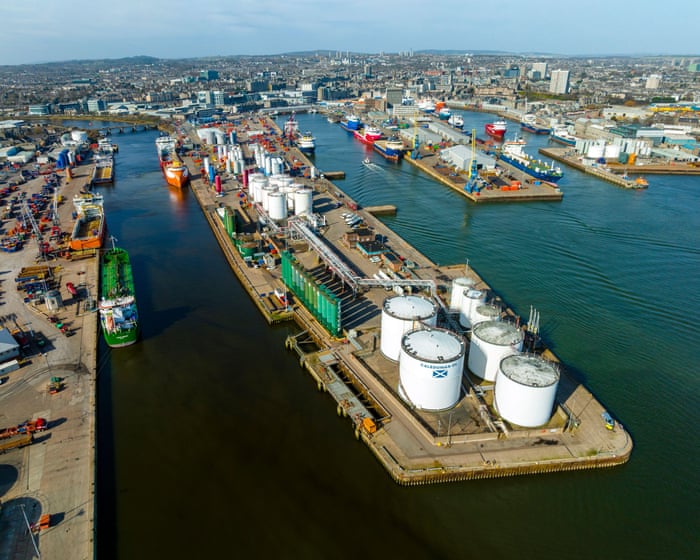
The coming byelection in Makerfield, from where Andy Burnham aspires to make rapid progress towards Downing Street, is perhaps the most consequential in British political history. But the decision by the Scottish National party’s former Westminster leader, Stephen Flynn, to relocate to Holyrood means that another pivotal contest is taking place more than 350 miles to the north. If Makerfield is a test case for Mr Burnham and Labour’s ability to see off Reform UK, Mr Flynn’s old constituency of Aberdeen South is on the frontline of the increasingly fraught politics of North Sea oil.
Labour, despite finishing second in the 2024 general election thanks largely to anti-Tory tactical voting, will not be expecting much this time round. The ramifications of Donald Trump’s reckless war in Iran have exposed Britain’s ongoing vulnerability to fossil-fuel-related energy shocks, highlighting the practical benefits of moving to a green economy. But the knock-on effects of the closure of the strait of Hormuz have also been a gift for the Scottish Conservatives and Reform, who are framing the byelection as a local referendum on reviving oil and gas production beyond Westminster-imposed limits.

 Login

 A newly engineered catalyst overcomes key obstacles that have long limited ammonia as a clean fuel for heavy industry. A newly developed single-atom platinum catalyst can ignite ammonia at about 200°C (392°F) and sustain stable combustion at 1,100°C (2,012°F) while producing very little NOx. The breakthrough could provide carbon-free, high-grade heat for industries such as [...]