❌

Reading view

200 hours in, Fire Emblem: Fortune’s Weave is my favorite Nintendo Switch 2 game ever — here’s why

Every now and then, a game comes along that doesn’t just entertain and engage me — it totally enraptures me. It stands as a pure work of art that reminds me of exactly why I love this medium and captures the essence of a book you just can’t put down. For me, that’s exactly what Fire Emblem: Fortune’s Weave is — an engrossing experience that I simply can’t get enough of.

Review info

Platform reviewed: Nintendo Switch 2
Available on: Nintendo Switch 2
Release date: September 17, 2026

This Nintendo Switch 2-exclusive tactical JRPG offers a combination of excellent turn-based combat and rewarding exploration, alongside captivating storytelling and a great cast of characters. And its sheer scale cannot be understated — I’ve spent north of 200 hours in Fortune’s Weave, and there’s still so much more I have to see.

I’ve played through each of the four Flame Lords’ paths and taken the battle to the demonic god Balor, and I’ve got a number of thoughts about gameplay, visuals, and narrative to share. So, without further ado, let’s take a look at why Fire Emblem: Fortune’s Weave is one of the best Nintendo Switch 2 games you can play right now.

Four paths converge

Dietrich, Theodora, and Cai have dinner in Fire Emblem: Fortune's Weave

(Image credit: Nintendo)

I won’t get into the weeds of the premise in Fortune’s Weave, but to sum up, you’re able to play as four heroes, known as the Flame Lords, as they compete in a grand arena event known as the Heroic Games. The champion of the Games will be granted a wish of their choosing by Divine Sovereign, Solel, who rules over the land of Dagda and its capital, Dagsion.

After completing the brief prologue — which acts as a solid tutorial for newcomers — you can select any of the Flame Lords’ paths and play through them in any order you like from a central hub area. This approach works nicely, as you don’t have to replay the prologue each time you start a new journey, and you’re able to dip in and out of each story as you please.

This makes up Part I of the game, which was probably my favorite overall. Although some cutscenes and quests are the same across the four stories, they still feel distinct and gripping in their own right. Each pathway has a distinct tone and feeling to it, with each Flame Lord having a deeply personal ambition and a unique set of close allies. For instance, the vengeful and skilful Leda is joined by the womanizing bard Sirocco and protective warrior Buccar, whereas Dietrich is partnered with the excitable Esmeralda and bizarre and eccentric missionary, Fabio.

The core cast of characters is truly excellent, but you’ll also be able to recruit more allies as you progress the story, including foes you face in the Heroic Games and parties of interest across Dagsion. Many of these units can be recruited across all four stories, though their recruitment requirements often vary, which encouraged me to experiment with different characters across different stories.

Best bit

Dietrich and Fabio converse in Fire Emblem: Fortune's Weave

(Image credit: Nintendo)

Anything with Dietrich and Fabio. They're an unlikely yet incredible duo, with Dietrich's bloodlust and Fabio's eccentricity somehow combining to create some of the most hilarious — and sometimes emotive — dialogue in the series.

What makes the multi-path system click is that you’ll uncover revelations in one story that answer questions — or even pose new ones — about events in one of the other paths. There are plenty of twists and turns — some perhaps more obvious than others — which change the way you perceive certain characters and add substantial depth to units that may seem less significant on some paths than others.

This cross-path storytelling is done really well, and the narrative is strong, more generally. I won’t spoil anything, but it’s got its fair share of shock instances, touching moments, and character development that help it to hit — and if not, exceed — the standards that the series has set thus far.

Gameplay-wise, things are kept pretty fresh too. Each Flame Lord has specific abilities that they can make use of on the world map and beyond, with Deitrich able to battle warriors and learn their combat arts, Leda capable of holding performances to unlock unique materials, Theodora able to recruit warriors to assign battalions, and Cai skilled enough to wrangle mounts for himself and his allies.

And luckily, all of this comes together nicely in the latter parts of the game. While Part I is more individually tailored to each Flame Lord and their journey through the Heroic Games, paths begin to converge in Part II, known as the War Arc. Again, I won’t spoil anything here, but Part II offers far less variation across each pathway, but there are still some interesting differences in dialogue, and the way you approach battles will likely change considerably.

I loved how the enormity of Fortune’s Weave came together in Part III, though. Here, you’ll be able to unite all of the Flame Lords beside the game’s true protagonist, you. It’s awesome that you’re able to make use of all of the heroes’ unique abilities and even re-recruit old units for the final battle against the demonic lord, Balor.

Being able to bring all of your units, inventory, and abilities into a singular, epic finale is incredibly rewarding and makes building the ultimate army even more enjoyable.

I see grids in my sleep

Mu battles a soldier in Fire Emblem: Fortune's Weave

(Image credit: Nintendo)

Let’s delve a bit more deeply into gameplay, which, as you’d expect, is outstanding in Fortune’s Weave.

For the most part, you’ll be battling on classic grid-based battlefields. Honestly, I’ve fought on these so many times I’m starting to see them in my dreams. It's that classic turn-based Fire Emblem that you know and love, with some returning features, like Combat Arts (which provide benefits in exchange for weapon durability) and gambits (in Theodora’s path), for instance.

But there are new mechanics too, like Blaze Arts, which are unique to specific units. By sacrificing HP, Blaze Arts enable you to deal more damage, move further, buff allies, and more. The health trade-off means they don’t feel like a cheat code, and they also fill a blaze gauge, which will burst at a certain point, forcing you to work with reduced HP for the rest of the map.

Clash Battle in Fire Emblem: Fortune's Weave

(Image credit: Nintendo)

Standard battles feel brilliantly balanced, and I never felt that difficulty spikes were too severe or that I had to grind much to push past my opponent. When you do want to grind, though, you can enter into a skirmish against foes on the world map, or try your luck in a dungeon.

Dungeons work a bit differently, and you’ll move around a 3D area to face foes in Clash Battles. These are a bit different and combine light action segments with more traditional turn-based JRPG combat rather than tactical grid-based battles. I think that they’re a great option if you want a break from the usual maps and want a faster-paced method for gaining experience or class proficiency for your units.

That’s not to say that the standard maps aren’t engaging though; quite the opposite. There’s some excellent map variety, and some battles will ask more of you than just routing the enemy. In some cases, I had to defeat more giants than my opponents, rescue defenseless citizens from a huge serpent, or even collect missing cargo before thieves made off with it. Battlefields are also delightfully diverse throughout the heroic games, and become even grander as the stakes rise towards the back end of the game.

If at any point you’re struggling, you can make use of Blessings, enabling you to rewind to a previous turn, increase your strength, or reduce the cost of Combat Arts, for example. I kept usage of these to a minimum, as I was playing on the slightly more gracious Normal/Casual difficulty. But there’s also a Hard mode, and you can play Classic (where units are permanently lost when they fall in battle), where Blessings will likely feel a bit more necessary.

All in all, combat is incredibly addictive, varied, and offers impressive depth. Building a squad with the right balance in terms of classes and weapons is massively satisfying, and breaking things up with a bit of dungeon crawling keeps the experience feeling fluid and fun for the game’s full runtime. And given that we’re talking about a title that will take you well over 100, if not 200, hours to finish, that’s an impressive feat in itself.

Beyond the battlefield

Leda in Dagsion in Fire Emblem: Fortune's Weave

(Image credit: Nintendo)

Before I wrap up, I want to touch on my experience with Fortune’s Weave outside of battle. There’s quite a bit to do, both within the capital, Dagsion, and in the land of Dagda more broadly.

Dagsion has all of the stuff you’d expect. A training ground to boost your aptitude with specific weapons, a shopping district, an inn for viewing support conversations and restoring motivation (which is used for training and increasing your Blessings level), and an area where you can take an exam for whatever class you want to be.

A lot of your time in Fortune’s Weave will be spent using these facilities to increase your weapon levels, boost support with your allies, and acquire better equipment.

If I were to nitpick, I’d argue that the support grind can become a little tiresome for some units. If you want to recruit a new ally who requires a high support level, it can take quite some time to fill the gauge and add them to your team, though some are easier to add to your roster than others.

There are more things to do, though, like going to the Theater, taking a bath at the Thermae spa, and accepting subquests from distressed townsfolk. Perhaps the most unusual option, however, is Bird Time.

Here, you can feed the Pale Raven (the main protagonist in bird form) to increase your support level for later in the game. Is it a bit goofy? Yeah. Does it get a bit repetitive? Sure. But I kinda love the feeling of getting that sweet ‘perfect bird time’ message when you have a successful interaction with your ally.

Outside of Dagsion, you can enter the aforementioned dungeons, search for materials, enter into some smaller hub areas, and speak with wandering merchants. The world map is easy to navigate, but you’ll only have a set amount of time to explore before the day of the Main Quest arrives. This helps the game to maintain good pacing throughout, and while there’s a ton to explore, it’s broken up with main story goodness in healthy intervals, in my view.

Theodora in a rage in Fire Emblem: Fortune's Weave

(Image credit: Nintendo)

On a technical level, Fire Emblem: Fortune’s Weave is pretty solid too. It keeps a lot of the enticing visual style seen in Fire Emblem: Three Houses, but being a Nintendo Switch 2 exclusive, there’s a clear step-up in terms of resolution, and character models look excellent too. Be it Fortuna, whose vibrant hair pops with eye-catching yellow, or the striking, rich reds of Bertrand, the White-Maned Demon’s clothing, I found myself impressed by the visuals pretty consistently.

Some background textures do look a bit basic, however, and while the game runs smoothly, it’s not targeting a silky 60fps (but this never bothered me, personally).

I also want to shout out the game’s excellent soundtrack, which is more eclectic than you may think. There’s the classic orchestral-style stuff, which creates a real sense of grandeur and high stakes, but there are also spacey, synth-led tunes in the temples, which create ambience and intrigue, as well as electronic music with pumping bass in some mysterious hidden areas.

On the topic of sound, the voice acting is exceptional in Fortune’s Weave. You feel each character’s unmistakable personality through just about every performance, and this only makes you feel more attached to your units. The perfect example is Fabio, whose voice acting is just as outlandish and unusual as you’d hope for the character, though he also has some authentic, impassioned emotional scenes that stole the show. Great stuff all round.

To conclude, then, Fire Emblem: Fortune’s Weave is a masterful tactical JRPG that has it all. Addictive, depth-filled combat, fresh mechanics, a well-paced, multi-layered story, and a likeable cast of characters. It hypnotized me from minute one, all the way to the end, and its careful balance of tight turn-based gameplay and exploration really worked for me. As things stand, I consider Fortune’s Weave to not only be among the best Fire Emblem games in recent memory, but also the best game on the Nintendo Switch 2 thus far.

Whatever you do, don’t skip this one.

Should you play Fire Emblem Fortune’s Weave?

Leda and her crew in Fire Emblem: Fortune's Weave

(Image credit: Nintendo)

Play it if…

You want to sink your teeth into an epic RPG
Fire Emblem: Fortune’s Weave is a huge game that will easily take you north of 100 hours to finish if you want to complete each Flame Lord’s path and clear every subquest. If you’re looking for a true epic to get your money’s worth out of, this is the game for you.

You’re a fan of character-driven narratives
Yes, Fortune’s Weave features a very high-stakes story, but the narrative is largely centered around the four Flame Lords, and their personal ambitions in the Heroic Games. Watching each story unfurl, and seeing how each hero develops is a joy, so if you’re into more character-driven stories, then you’ll likely enjoy this.

Don’t play it if…

You’re not a big fan of tactical combat
There are some light action segments and swifter turn-based dungeon battles in Fortune’s Weave, but a lot of the time will be spent commanding your units on a grid. If you’re not into the more strategic style of other Fire Emblem games, then you may not have the best time with this one either.

You need top-tier performance from your games
While Fortune’s Weave looks pretty solid, it’s by no means pushing boundaries as far as visuals go. It’s very stable, in terms of performance, but it’s also not going to give you the buttery smoothness of other Switch 2 games, like Metroid Prime 4: Beyond, say, which can even run at 120fps in handheld mode.

Accessibility features

There are a handful of ways to customize your experience in Fire Emblem: Fortune’s Weave. You can make UI adjustments, like altering the size of the battle minimap, toggling the grid display on and off, you can personalize camera controls and sensitivity, and choose from a number of different subtitle languages.

There’s even an Enemy Masking mode that changes the appearances of insectile enemies if you have arachnophobia or entomophobia. There is no colorblind mode, or similar.

Leda dancing in Fire Emblem: Fortune's Weave

(Image credit: Nintendo)

How I reviewed Fire Emblem: Fortune's Weave

I spent just over 200 hours with Fire Emblem: Fortune’s Weave, during which time I played through the main story (including each of the Flame Lords’ individual paths), completed just about every subquest, and recruited countless allies.

For the most part, I played in docked mode, with my Nintendo Switch 2 connected to my Sky Glass Gen 2 TV and Marshall Heston 120 soundbar. However, I did dip into handheld mode now and then, and usually had my Sennheiser CX 80U wired earbuds connected when playing on the go.

More generally, I’ve spent years reviewing gaming software, hardware, and accessories here at TechRadar, where I serve as a Senior Reviews Writer. I’ve covered all sorts of titles, from Switch 2 exclusives like Kirby Air Riders and Yoshi and the Mysterious Book to RPGs such as Dragon Quest I & II HD-2D Remake and Final Fantasy Tactics: The Ivalice Chronicles.

I've also played a number of Fire Emblem titles, including Awakening, The Blazing Blade, and Three Houses.

  •  

Xiaomi is aiming right at JBL with this dishy yet durable Bluetooth speaker — but after hours of testing, I need more depth from the sound

Xiaomi Sound Play review

It turns out that major mobile manufacturer Xiaomi also makes Bluetooth speakers, and its latest model, the Xiaomi Sound Play, is aiming to deliver “immersive, powerful sound” as well as a “stylish and versatile” design.

But that’s not all. The tech giant is doing all of this while keeping its speaker nice and cheap. It comes in at just £49.90 (about $67 / AU$95) — which is refreshingly affordable for an 18W model with features such as smart lighting, Auracast, and IP68 waterproofing.

So can the Xiaomi Sound Play compete with some of the very best Bluetooth speakers around? The answer is a little more complicated than a simple yes or no.

Let’s start by looking at the areas in which the Sound Play excels, and there are a fair few of these. I alluded to some a moment ago — its waterproofing and LED lights, for example. That IP68 rating means that the speaker is fully dustproof, but can also survive a dunking under a meter and a half of water for as long as 30 minutes, so you really can take it anywhere without fear of damage.

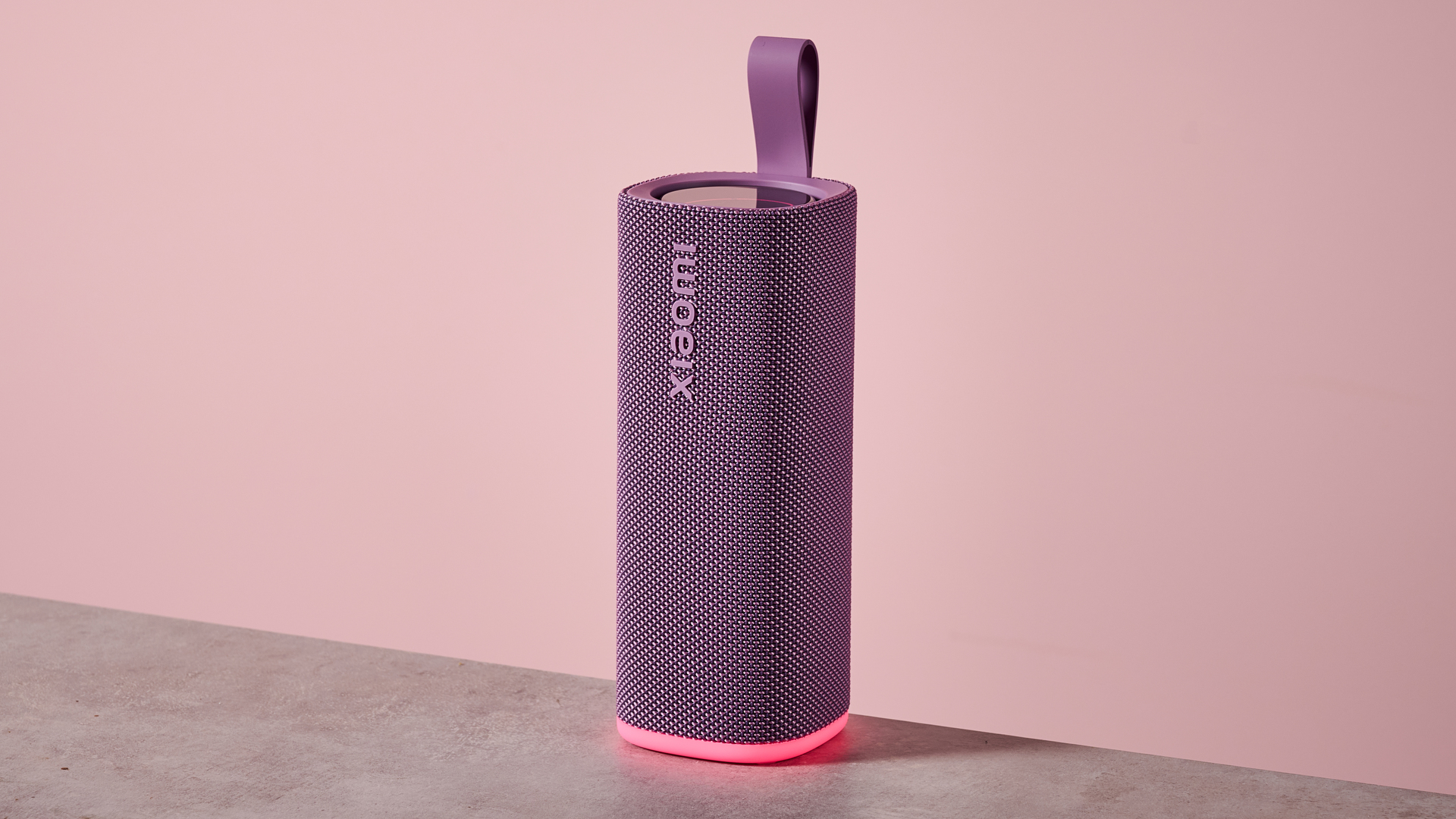
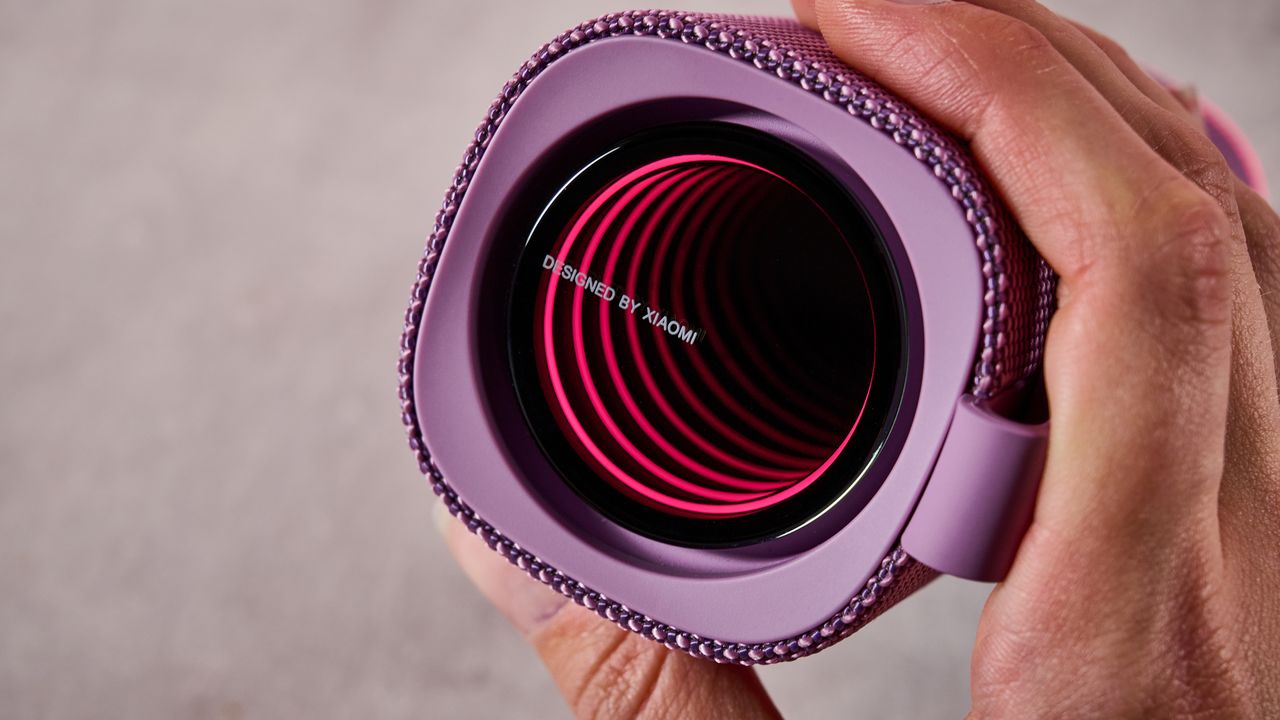
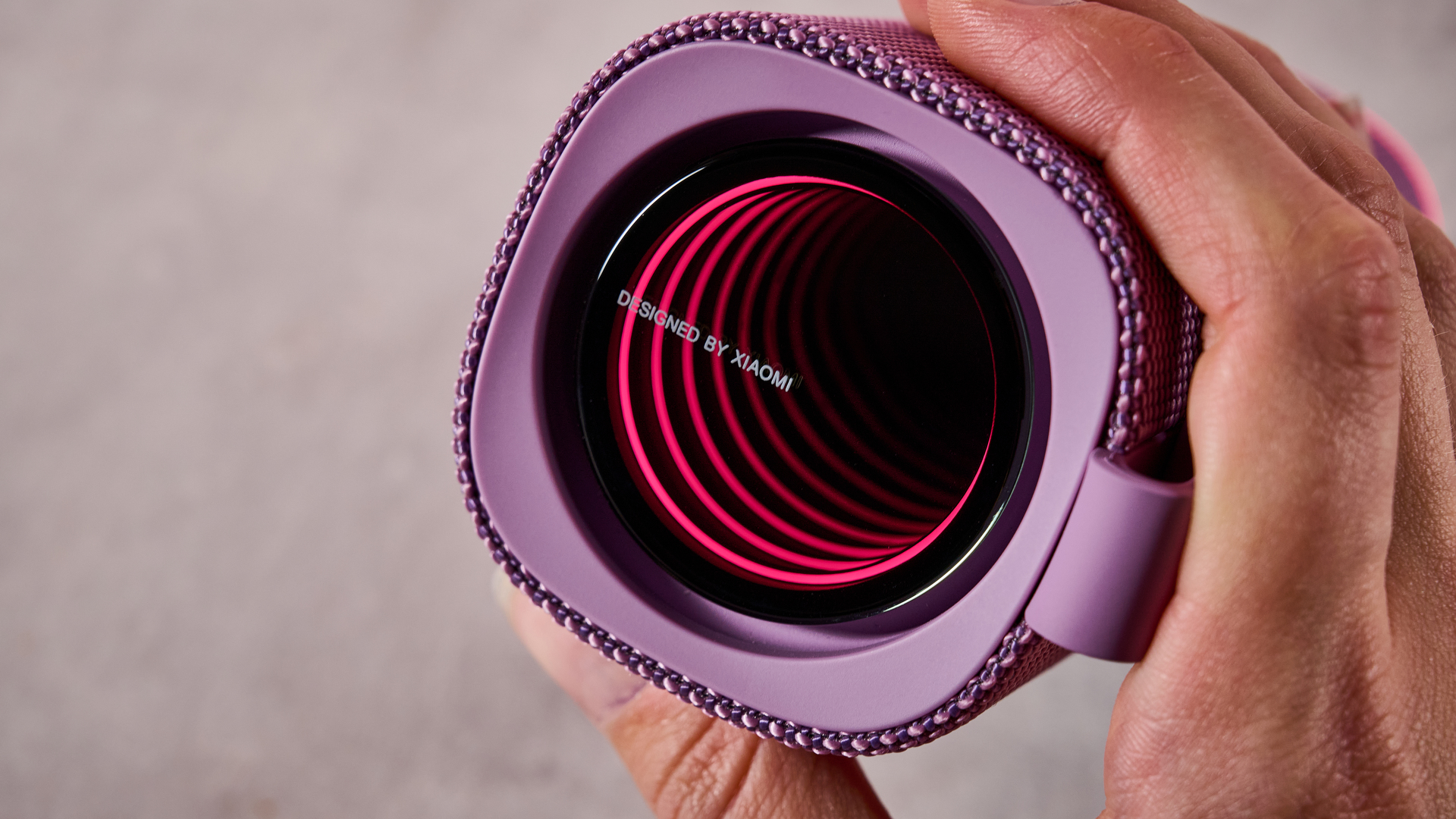
The lighting — a key selling point of this speaker — is pretty neat too. Lights sit on the base of the speaker and beneath a panel on the top side, which resembles an infinity mirror. And the rings of lighting really help to make your listening sessions more immersive, especially in lower-lit conditions. You can customize the color and pattern of the lights too, and one setting also syncs up to bass output. That level of customizability is spectacular to see on a speaker in this price category.

More generally, I’m quite a big fan of how the Sound Play looks. It comes in four very stylish colors — the Purple variant I tried is quite the looker, as is the Green version. It is reminiscent of the JBL Flip 7 in terms of look and feel, with a neat fabric exterior and psuedo-cylindrical build. The inclusion of the infinity mirror light and handy rubber strap also make it a real stand-out, looks wise.

Another welcome inclusion is a built-in mic, for speakerphone duties. This is something you don't often see these days and it does add value, on paper. However, I made a phone call and although my voice sounded clear on the other end, I noticed a high-pitched chime whenever the other person wasn’t speaking. It wasn’t a dealbreaker (my discussion was still easy to navigate), but it's my job to notice these things.

Other highlights include a JBL Grip-rivalling 14-hour battery life — which is excellent for a speaker of this size — as well as Bluetooth 6.0 connectivity, and true wireless stereo playback for anyone with multiple Sound Play models at their disposal.

Something that the Sound Play omits, however, is companion app support. For me, this is a bigger miss — an app could’ve opened up EQ adjustment, remote light alteration, and precise battery life tracking. The speaker’s nominal price doesn’t quite excuse this either. There are a number of budget-friendly rivals from the likes of Earfun, Edifier, and Tribit that do come with app support.

Infinity mirror on the Xiaomi Sound Play

(Image credit: Future)

By now you must be wondering how Xiaomi’s speaker sounds. In honesty, it’s a bit of a mixed bag. It’s a steady performer in some areas, but in need of improvement in others.

In general, the Sound Play delivers fairly clear audio. In Yes I Know My Way by Pino Daniele, vocals had good presence in the mix, and even had a decent sense of separation from other instruments in the mid-range. OK, higher-pitched drums weren’t the most expressive or articulate, but they didn’t sound tinny at mid-volume, and bass was weighted relatively well too.

With more energetic tracks, such as Trip by Ruze, the cracks started to show. There was a slightly compressed quality to the track, and the pumping bass just didn’t come through with the command or depth of similarly sized rivals, including the JBL Grip, which I directly tested against the Sound Play.

During this comparison, the Grip just delivered a more fun performance, with enhanced directionality and low-end punch. But that’s not to say Xiaomi’s speaker was blown out of the water — it still held its own with commendable clarity in the mid-range and fairly agile bass.

In House tracks, bass drops didn’t always have the impact or dynamism I was listening out for, and vibrant drums could occasionally sound on the blunt side. But then again, the Xiaomi didn’t succumb to a boomy, super-muddy sound that a lot of its budget rivals do — it puts up a fairly controlled performance overall.

As a smaller speaker, the Sound Play can’t get super loud, and bass will thin out substantially at top volume levels. It also won’t deliver the most detailed or open sound ever — again, I found a few tracks sounded a little compressed and narrow, which isn’t helped by the lack of higher-res codecs like LDAC or aptX.

Volume controls on the Xiaomi Sound Play

(Image credit: Future)

All in all, I think the Sound Play sounds good enough for the price you pay. Sure, it’s not the most dynamic or revealing-sounding model on the market, but you get typically clear, decently balanced sound without having to shell out all too much cash.

So, looking at the Xiaomi Sound Play as a whole, would I consider it worth buying? Well that depends. If you’re on a tight budget, and you want a speaker for less than £50, then I think the Sound Play is an option worth considering. It doesn’t sound amazing, but it gets the job done, and I’m a big fan of its durable yet eye-catching design.

However, if you’ve got a little more money to play with, then I’d suggest picking up the JBL Flip 7. That model can produce truly seismic bass, incredibly clean audio, and has a top-class companion app to boot. The JBL Grip is another neat alternative, especially if you can grab it on sale.

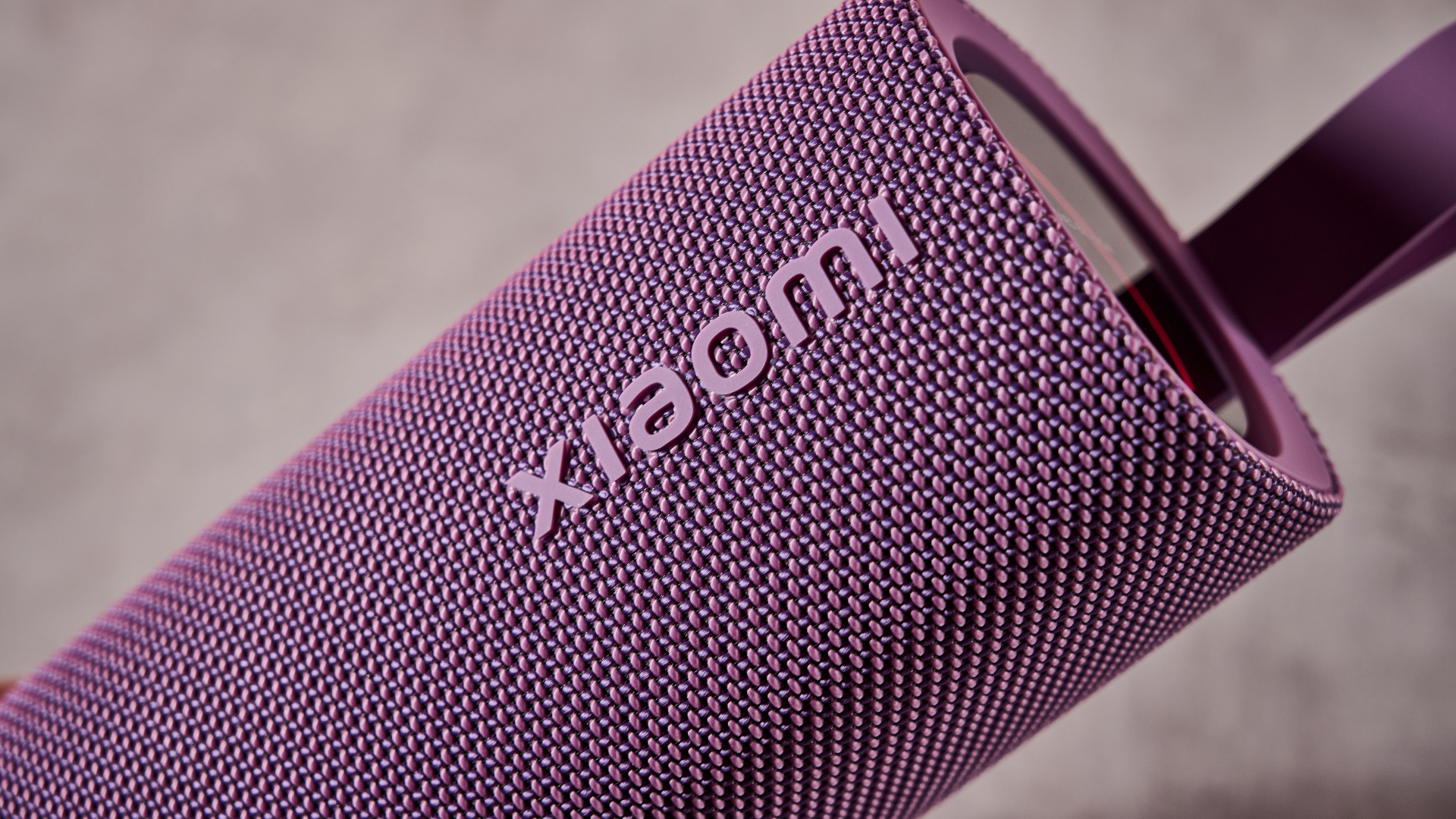
Xiaomi logo on the Xiaomi Sound Play

(Image credit: Future)

Xiaomi Sound Play review: price & release date

  • Priced at £49.90 (about $67 / AU$95)
  • Launched in May 2026
  • Scheduled to release in Australia in August 2026

The Xiaomi Sound Play was launched in May 2026, at the same time as its recently released 17T series. The speaker is available for £49.90 (about $67 / AU$95) in the UK, although Xiaomi told me that there are no plans for a US release, and the speaker won’t be available in Australia until August 2026. It can be purchased in one of four colors — Black, Green, Purple, or White — via Xiaomi’s digital store.

Xiaomi Sound Play review: specs

Weight

0.9lbs / 415g

Dimensions

2.5 x 2.7 x 7.9 inches / 63.4 x 69.5 x 201.1mm

Connectivity

Bluetooth 6.0

Battery life

14 hours

Speaker drivers

1x 18W full-range

Waterproofing

IP68

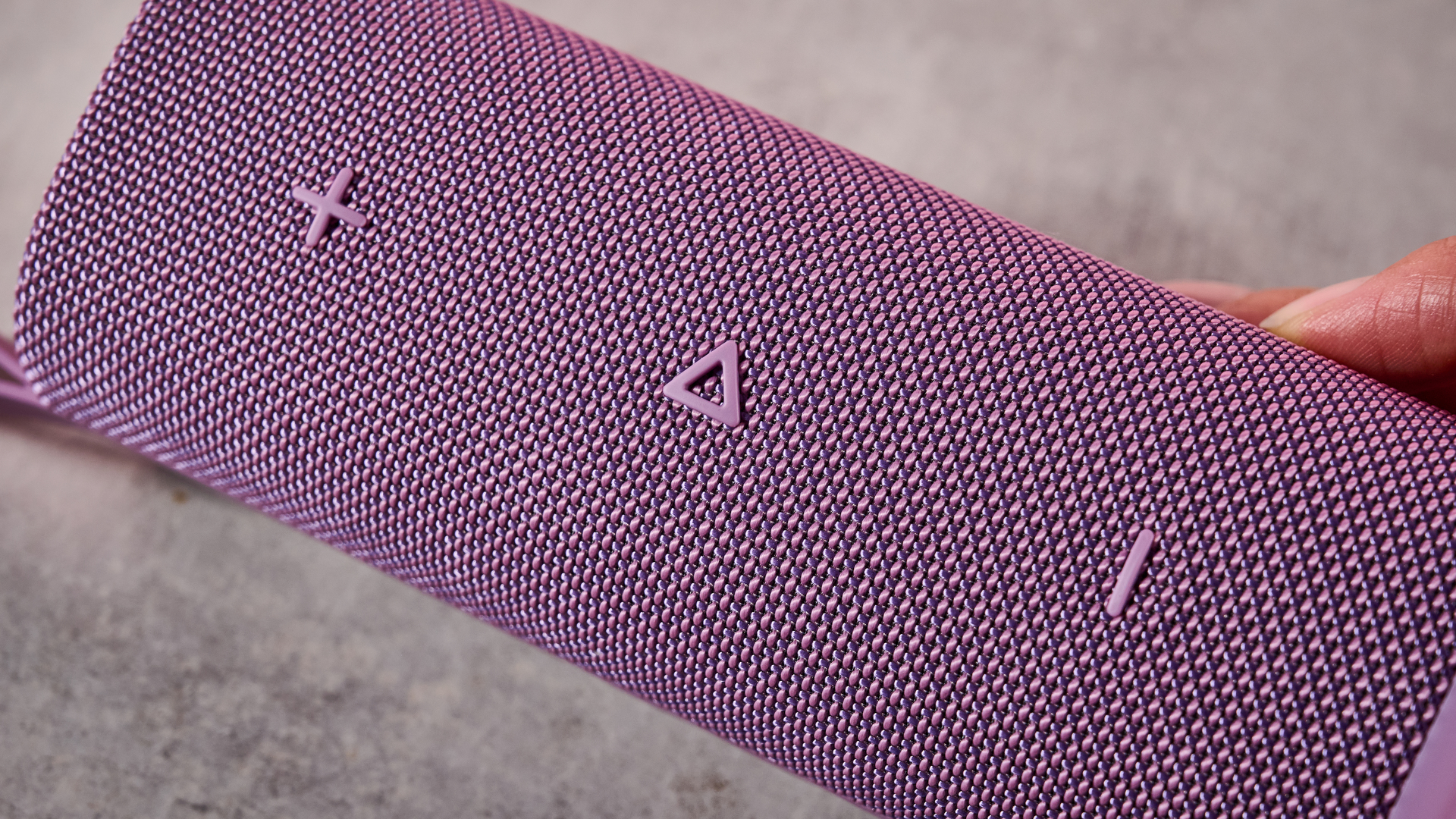
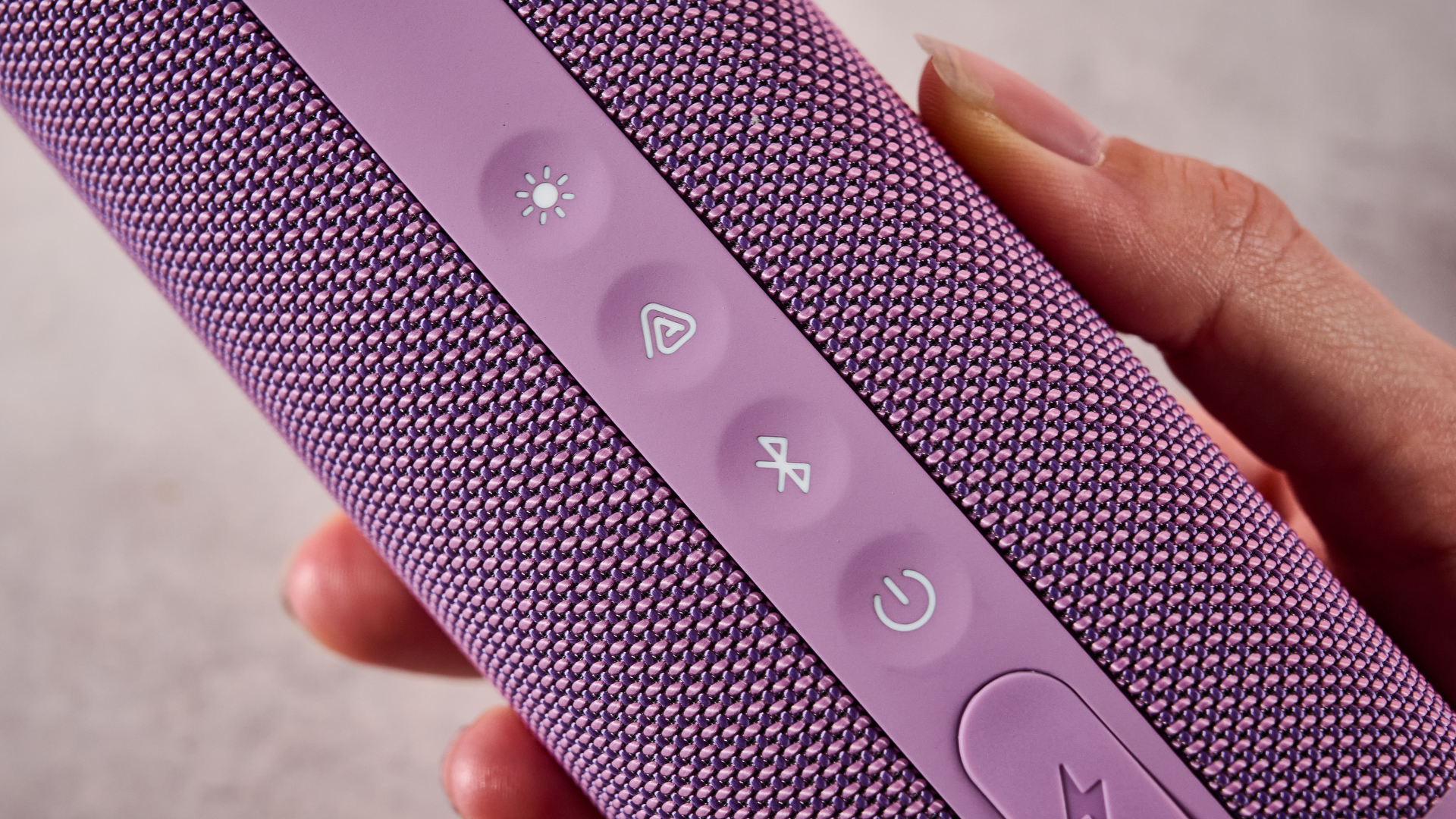
Button controls on the Xiaomi Sound Play

(Image credit: Future)

Should I buy the Xiaomi Sound Play?

Attribute

Notes

Score

Features

Adjustable lighting, good battery life, but lack of app is a shame.

3.5/5

Performance

Decently balanced audio with clear vocals, but lacks the depth and dynamism of some rivals.

3.5/5

Design

Infinity mirror and lights look great, neat color options, well protected against the elements.

4.5/5

Value

Decent enough audio and great design at a very affordable price point.

4/5

Buy it if…

You want something stylish
I’m a big fan of the way Xiaomi’s Sound Play speaker looks. It comes in a funky range of colors, has personalizable lighting, and the infinity mirror feels like the cherry on top.

You’re on a tighter budget
Something the Sound Play has over rivals from the likes of JBL and Bose, is that it’s available at an exceedingly low price. At £49.90 (about $67 / AU$95), it’s highly affordable, and although it could sound a little better, I think it easily earns its price.

Don’t buy it if…

You want the best-sounding speaker
Although the Sound Play is a steady enough performer, offering relatively balanced audio output with clear vocals, it’s no sonic marvel. It lacks the extension and authority of similarly powered (and sized) rivals like the JBL Grip and JBL Flip 7 — so if you want truly great audio, it may not be your best option.

You’re looking for a speaker with remote controls
Perhaps the biggest shame here is that the Sound Play omits a companion app. This would’ve enabled remote control of lighting, EQ, and more, and it’s something that a huge proportion of Xiaomi’s competitors can deliver.

Xiaomi Sound Play review: also consider

Xiaomi Sound Play

Ultimate Ears Wonderboom 4

JBL Go 5

Price

£49.90 (about $67 / AU$95)

$99.99 / £89.99 / AU$149

$54.95 / £39.99 (about AU$75)

Weight

0.9lbs / 415g

0.9lbs / 420g

0.5lbs / 230g

Dimensions

2.5 x 2.7 x 7.9 inches / 63.4 x 69.5 x 201.1mm

4.1 x 3.8 x 3.8 inches / 104 x 95.3 x 95.3mm

4 x 3.1 x 1.7 inches / 101 x 77.4 x 43mm

Connectivity

Bluetooth 6.0

Bluetooth 5.2

Bluetooth 6.0, USB-C

Battery life

14 hours

14 hours

10 hours (with PlayTime Boost)

Speaker drivers

1x 18W full-range

2 x 40mm active drivers, 2 x 46.1x65.2mm passive radiators

1x 45mm full range

Waterproofing

IP68

IP67

IP68

Ultimate Ears Wonderboom 4
Ah, the UE Wonderboom 4 — I just can’t get enough of this little Bluetooth speaker. For such a small model, it produces an awful lot of bass, but its compact form makes it ideal for taking just about anywhere you go. It’s also highly waterproof, offers solid battery life, and can be bought at a discount fairly regularly. Pretty good, right? Read our full Ultimate Ears Wonderboom 4 review.

JBL Go 5
The tiny JBL Go 5 recently earned a glowing five-star review from yours truly, and for good reason. Not only is it extremely affordable, but it's equipped with a sensational feature-set, is incredibly durable, and produces far better sound than its predecessor. Read my full JBL Go 5 review.

How I tested the Xiaomi Sound Play

Xiaomi Sound Play with red LED light active

(Image credit: Future)
  • I spent multiple days testing
  • Mainly streamed tunes via Tidal
  • Reviewed by someone who’s tested more than 50 Bluetooth speakers

I spent multiple days testing out the Xiaomi Sound Play, during which time I listened to countless tunes, exhausted its various features, and compared it against various rivals.

When listening to music I mainly streamed tracks over Tidal, but I dipped into Spotify from time to time as well. As always, I started out by sifting through the TechRadar reference playlist, which features songs from a wide variety of genres. I also listened to a ton of tunes from my personal library as well, though.

More generally, I’ve spent years reviewing audio gear here at TechRadar, and have tested a whole lot of Bluetooth speakers — more than 50 in fact. I’ve tried out everything from pocket-sized audio companions like the Bose SoundLink Micro Gen 2 through to luxurious large-sized alternatives like the Marshall Bromley 750, as well as Xiaomi Sound Play rivals like the JBL Grip, so I know exactly what it takes for a speaker to stand out in this highly competitive market.

  •  

Dynaudio's wild soundbar with moving 'kinetic fins' is one of the most impressive I've ever seen — I spoke to the company's CCO about building a luxe soundbar for giant TVs and its impressive 24-driver design

Recently, I had the chance to attend High End Vienna, where I bore witness to an incredible array of audio gear. Whether it was new flagship loudspeakers from Bowers & Wilkins, futuristic looking headphones, or innovative portable DACs, there was a lot to get excited about. But one product really caught my attention.

As I walked through the Austria Center Vienna, I could hear the sounds of birds singing and crickets chirping. I followed the sound through and discovered a tropical-rainforest-themed room, and within it, sat the Dynaudio Opus One — a large, premium soundbar with mechanized wooden fins. It really was unlike anything I’d seen before.

I got the chance to check out the soundbar for myself, I attended a listening demo, and I even got to speak with Dynaudio Chief Commercial Officer, Julien Bergere, about the one-of-a-kind product ahead of its launch.

Opus One: an introduction

Side profile of the Dynaudio Opus One in forest showroom

(Image credit: Future / Harry Padoan)

So what is the Dynaudio Opus One? Bergere describes it as “a new, immersive sound product for the home” for both movies and music. It's the first product in the company’s Symphony line of products that are expected to connect together to create a home ecosystem — in a similar vein to Sonos’ multi-speaker array systems, for example.

Something that’s instantly striking about the Opus One is its grand width — it measures 73.4 inches / 1864mm across. Larger TVs have become a lot more popular in recent years, and I asked Bergere if this had influenced the decision to make the Opus One so large. “Absolutely,” he said. “More premium soundbars are usually the size of a 55-inch TV, but there is no solution if you have a bigger TV or a bigger room, and this one is bringing a new dimension in terms of, you know, bass and immersive rendering”.

Opus One specs at a glance

Price: €13,000 (about $15,000 / £11,000)
Drivers: 24 precision speaker drivers (6x soft-dome tweeters, 14x mid/bass drivers, 4x dual-diaphragm force-cancelling subwoofers)
Amplification: 1,500W digital amplification
Weight: 99.2lbs / 45kg
Dimensions: 73.4 x 9.3 x 8.1 inches / 1864 x 236 x 207mm

On the topic of immersion, I was curious as to whether the Opus One would support formats such as Dolby Atmos and DTS:X. Bergere responded: “It will support all the major audio formats including immersive audio, but we're not done yet with the certification.” In addition, the soundbar makes use of spatial sound algorithms designed in Denmark, where Dynaudio is based.

But it’s not all about immersive movie watching. “It can also be used as a stereo device,” said Bergere. “If you have stereo in, you can also play in pure stereo with only the left section and the right section activated to play in a really pure stereo rendering.” You’re able to take the center channel out of the equation entirely, he said, and I’ve personally seen quite a few premium soundbars skip on such a feature, resulting in weaker left and right channel separation. The soundbar can also upmix some stereo content into a more immersive format, but the option for a more purist stereo experience is certainly captivating.

There are a number of ways to experience the Opus One. You can connect to your TV via HDMI ARC, stream music over Wi-Fi or Bluetooth, or make use of an AUX port. There’s also an Ethernet port on the soundbar, enabling you to access more stable connectivity. The Opus one also features a massive array of drivers — 24 to be exact — with six soft-dome tweeters, 14 mid/bass drivers, and four dual-diaphragm force-cancelling subwoofers. They come with 1500W of digital amplification, enabling the Opus One to deliver roaring power.

Wooden fins made in Japan bring serious style

Kinetic fins moving on the Dynaudio Opus One

(Image credit: Future / Harry Padoan)

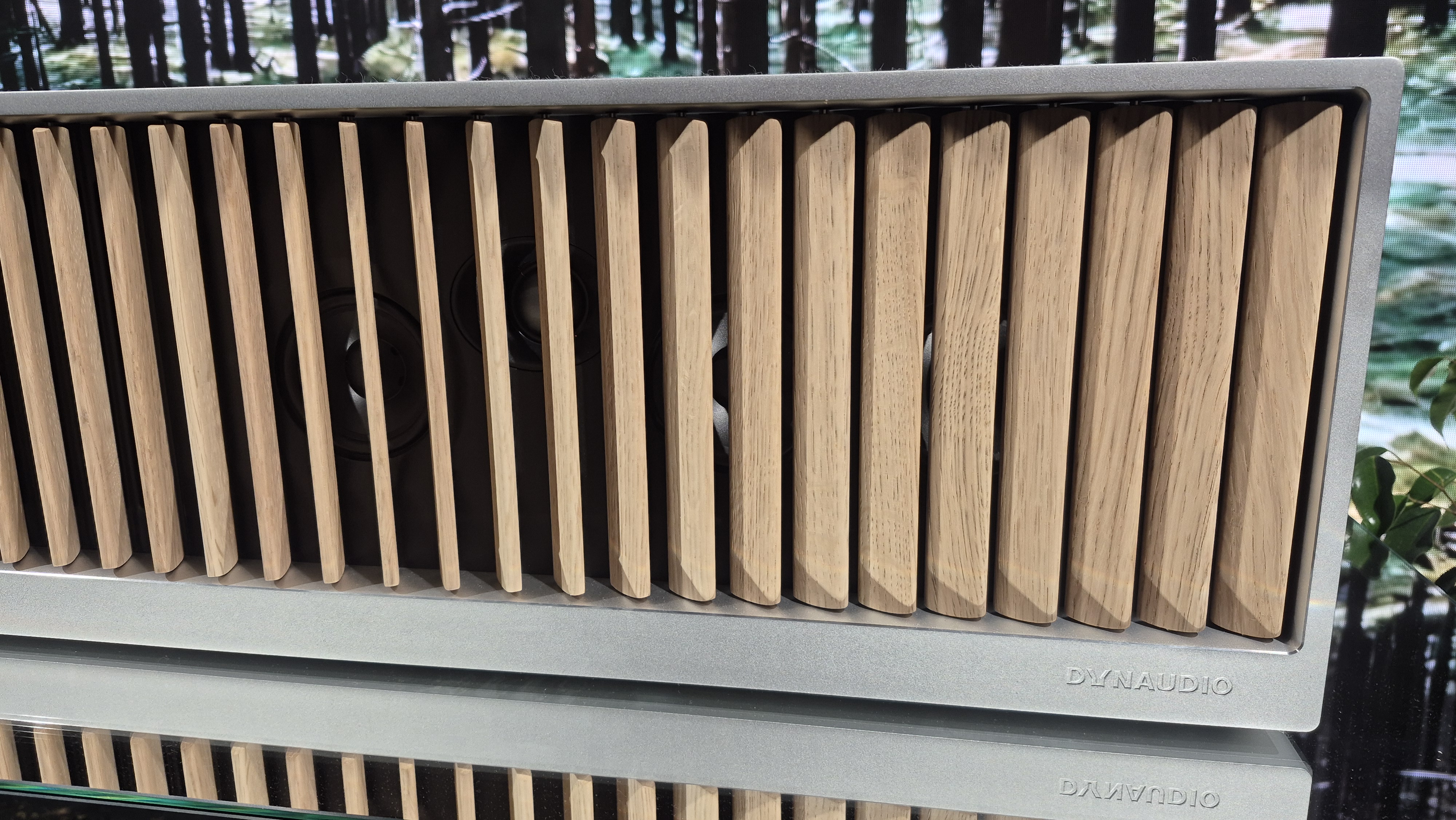
As well as its impressive connectivity, power, and size, the Opus One is a joy to look at. It only seems natural to begin with the mechanized wooden fins, which move as you watch a movie or listen to music. “We call them kinetic fins,” said Bergere.

There are 72 mechanized fins on each unit of the Opus One, all of which are handmade, and personify Dynaudio’s ambition to forge a premium audio and visual product.

“[The fins] are actually made in a white oak from Hokkaido by Karimoku,” he said, noting that Karimoku is one of the largest furniture makers in Japan. “We are trying to mix technology and lifestyle… trying to hide the technology [in] beautiful objects but also bring a touch of magic, in this case, with the fact that the fins are moving and can be used to create surprise.”

Bergere confirmed that the wooden fins have no sonic benefit, but did note one functional benefit. “When the product is off, they’re [the fins] actually sealed, so they’re hiding the speaker drivers and protecting them at the same time," he said. He also pointed to acoustically transparent fabric, used on the top and side of the Opus One, which is just as stylish as it is practical.

It's a very new concept for us, you know. Dynaudio is more known as a maker of more traditional audio systems, mostly passive stereo speakers — studio speakers as well, active ones and some wireless stereo speakers — and this one is really a new direction for us, more into lifestyle, luxury lifestyle

Julien Bergere, CCO, Dynaudio

As you’d expect, the fusion of designer-grade materials with such a premium, 24-driver model, means that the Opus One is pretty pricey. Specifically, the Opus One comes in at €13,000 (about $15,000 / £11,000) — a lot more than premium bars you’d see from the likes of Samsung, JBL, and Sonos. In addition, Bergere told me that accessories, such as stands and mounting gear, will cost between €500 and €5,000. “So together with a good quality screen, it’s around €20,000 for a complete setup with the floor stand,” he said.

Sound check: raw power and impressive imaging combine

Dynaudio Opus One under TV in demo room

(Image credit: Future / Harry Padoan)

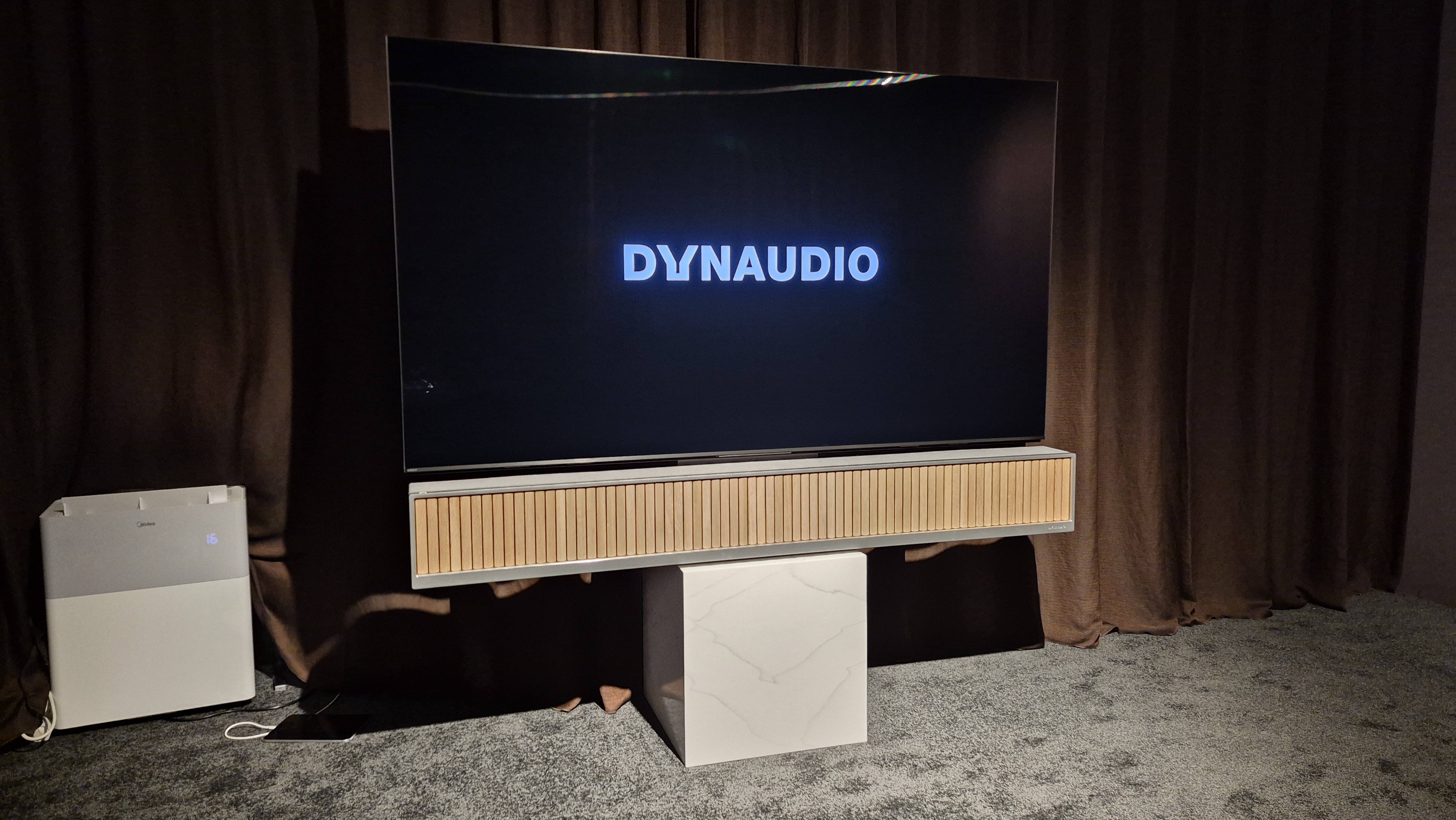
With a price like this, you’re going to expect stellar sound from this soundbar to match its undoubtedly gorgeous look. And luckily, I got the chance to hear the Opus One for myself in a demo room. And yeah, it’s fair to say I was pretty impressed.

In 2025’s F1, I was astonished by the thunderous bass output that the Opus One conjured up — the roar of cars whizzing by was palpable, showing off the model’s 1,500W amplification to full effect.

Did you know TechRadar now has membership?

Various tech product cutouts next to the words 'Insider TechRadar Learn More'

(Image credit: Future)

Become a TechRadar Insider by simply clicking 'Join Now' at the top of this page. Have a question? Please email membership@techradar.com

Something else that struck me was the effectiveness of spatial audio effects. Whether it was vehicles zooming across the screen or fireworks blasting into the sky, the Opus One tracked each movement with precision and care.

We listened to some music too, including a stereo mix of Eric Clapton’s Tears In Heaven, where vocals were beautifully defined, subtle strings came through with great clarity, and warm bass came through cleanly.

With Atmos music, I felt similar — vocal-led tracks were beautifully detailed, instruments were well separated, and percussion in the treble range was articulate and expressive. Individual sounds also dispersed across the listening space to create an expansive, immersive experience.

The Opus One officially launched in June, but availability is still relatively limited. To begin with, Dynaudio has opted to release the soundbar in its home market, Denmark, as well as China — though Bergere said Dynaudio plans to launch the product across “more markets in 2027”. It’s available in two different finishes: one with White Oak fins, and another with Appalachian Walnut.

  •  

I wanted to love this weird foldable mouse from Logitech, but its underwhelming ergonomics and performance left me feeling disappointed

Logitech Mobi Fold review

The Logitech Mobi Fold is, without question, the weirdest mouse I have ever used in my life.

This tiny, foldable travel mouse is focused on one thing above all: portability. Just like a clamshell phone from the noughties, it can fold in half, allowing you to easily slip it into your pocket if you’re working on the go. But even though the Logitech Mobi Fold’s exceptional portability is its clear USP, I have to ask… is it actually that necessary?

After all, a lot of mice are already highly compact, and if you’re working on the go, you’ve probably got a bag to hold your laptop or tablet, right? I’d bet that your bag can fit a laptop and a mouse, so arguably, the thing that makes this mouse so special isn’t actually that game-changing.

Still, the Mobi Fold has a few interesting features to run through, and you’re surely curious as to how such a strange model feels in use. So, after using the Logitech Mobi Fold as my main mouse for a few days, here’s how I’d rate it — and whether I think it can compete with the best mice around.

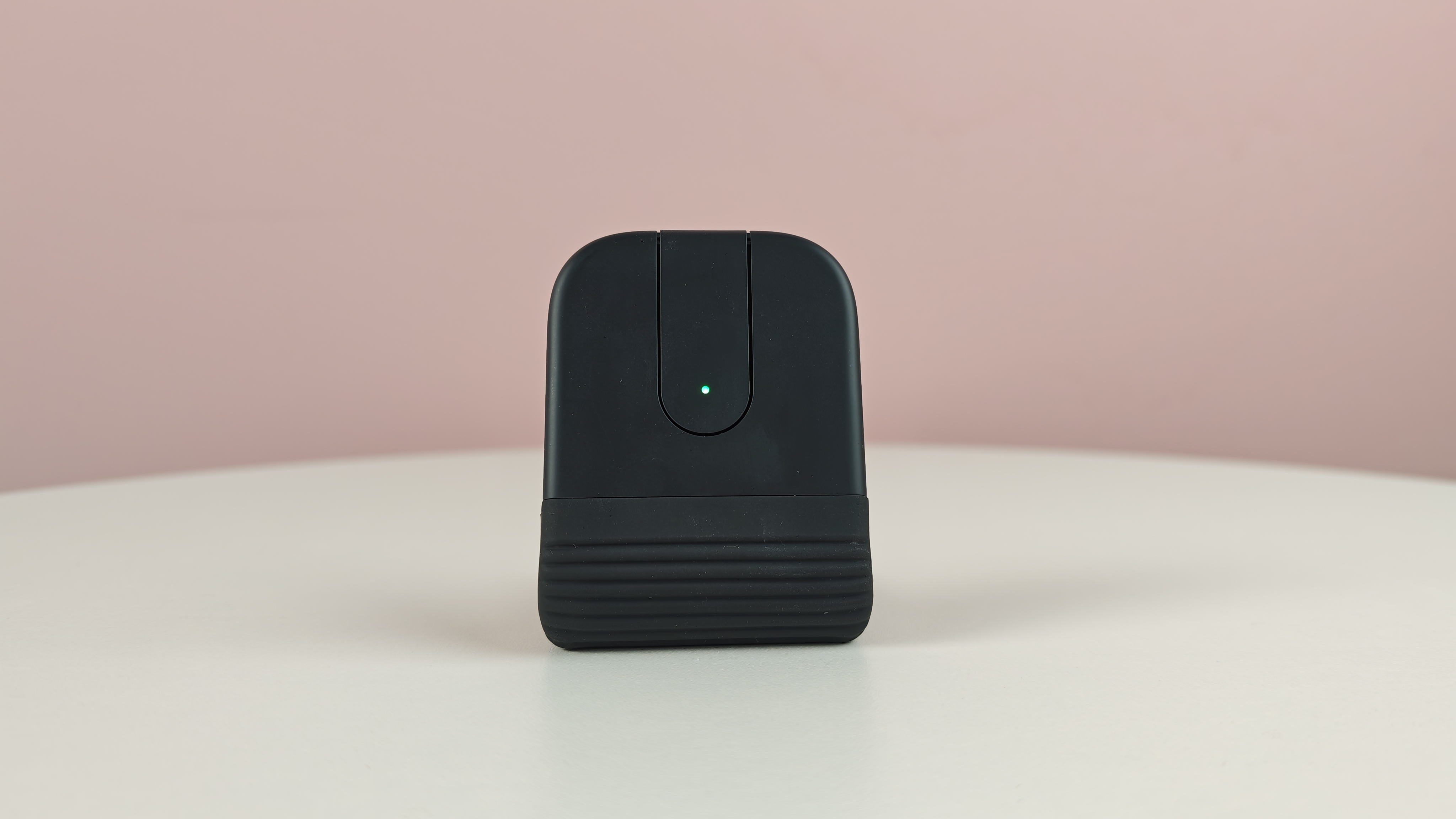
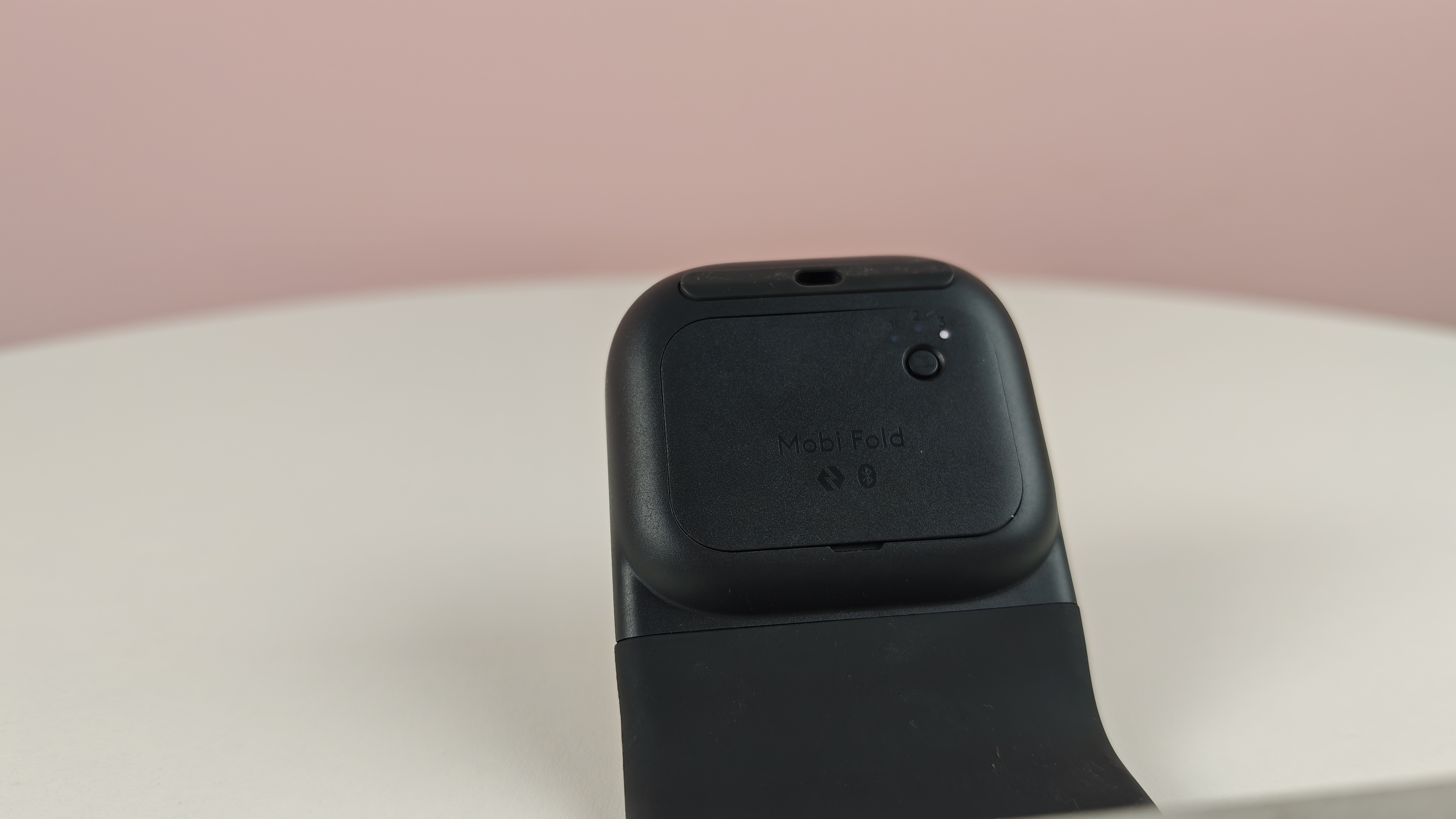
First things first, the Mobi Fold is incredibly easy to get set up. There’s a sync button on it that makes linking up to a windows laptop, Mac, or Android device incredibly seamless. There’s also an easy switch feature, making it incredibly speedy to flick between a range of devices.

But after I got set up with the Mobi Fold, and started using it to get some work done I have to say… it wasn’t amazing.

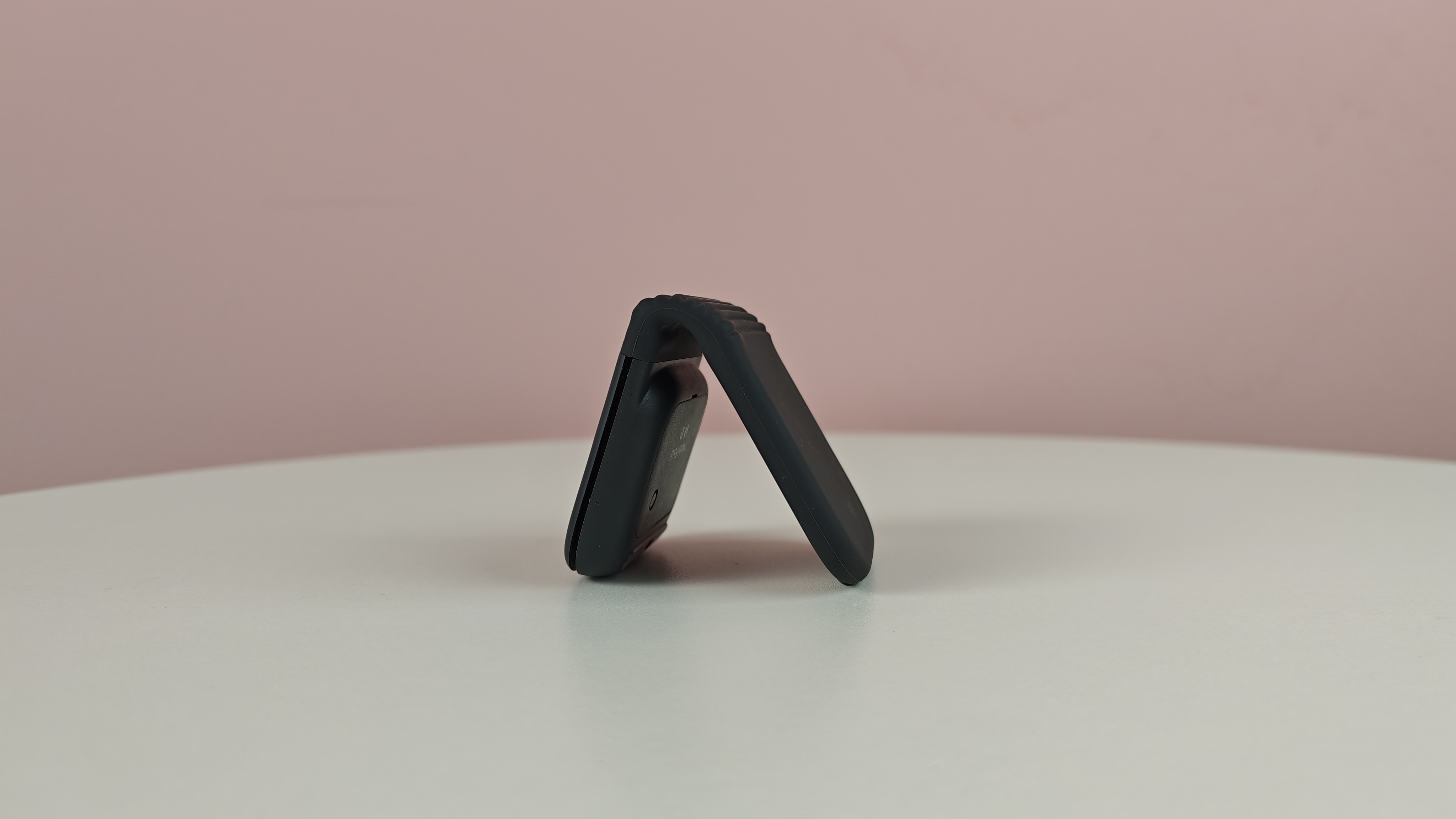
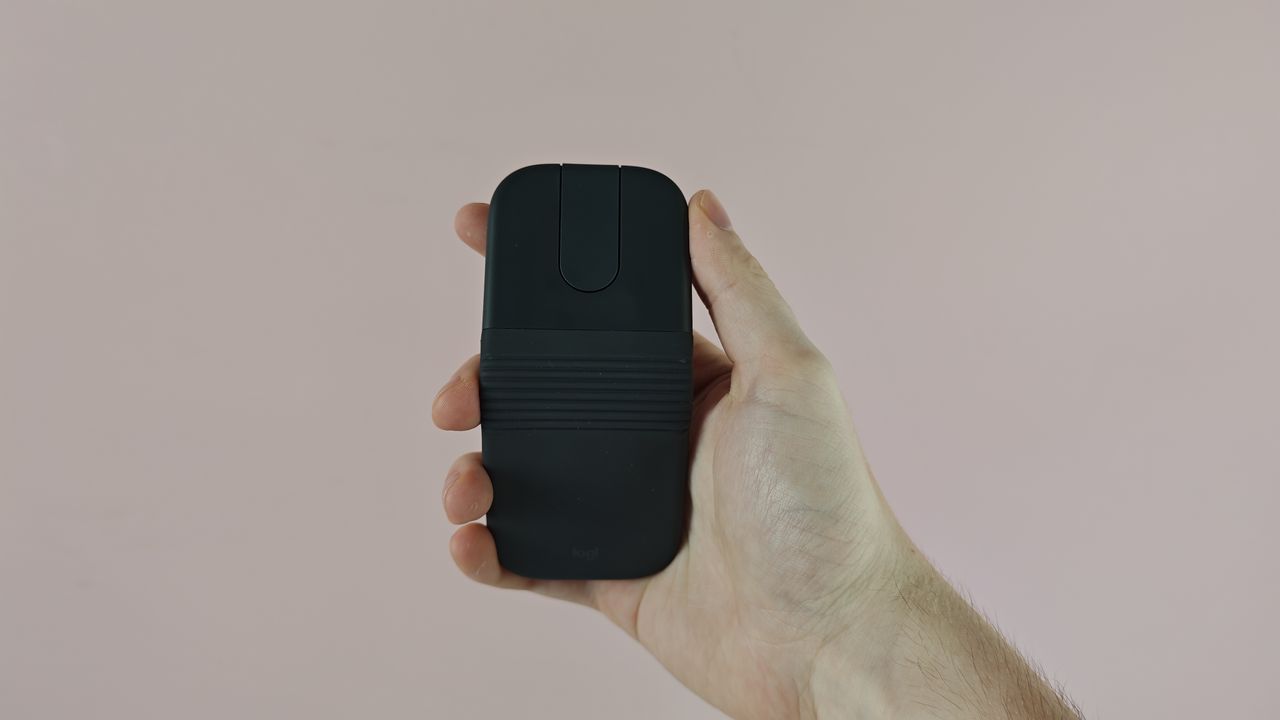
The Mobi Fold exhibits a few key issues that make it feel inferior to a standard compact or productivity mouse. First of all, it has a slightly bizarre build. Its V-shape form makes it feel awkward to grip, and when using it for extended periods, this caused me to feel some discomfort in my hand. It lacks the ergonomics of my everyday mouse, the Razer Viper V3 Pro, and even lacked its fluidity, meaning moving it across my desk felt clunky.

In addition, the touch-controlled scrolling is a bit inconsistent. It doesn’t provide the same tight control of a traditional mechanical scroll wheel, and again feels a bit lacking in terms of fluidity. Don’t get me wrong: it’s totally functional, but if you want the smooth, precise scrolling of a traditional mouse, the Mobi Fold may leave you wanting more.

My final critique is on the feel of the left and right buttons. While these are serviceable, they felt more stiff than I expected them to, especially towards the back and middle of the model. I did appreciate the muted sound of clicking the left and right buttons, but I wish they felt a bit more sensitive.

Logitech Mobi Fold half folded

(Image credit: Future)

Despite all of this, there are some clear positives worth pointing out. First of all, the mouse offers great battery life. It supplies about 22 hours of continuous use, which easily got me through the work week, meaning I didn’t need to charge it at all during the testing period. Having said that, Logitech says that you can get an extra three hours of use from just one minute of charging, making it exceptionally practical for someone like me who often forgets to juice up their devices.

In addition, the Mobi Fold features customizable button controls through the Logi Options+ app. This enables you to adapt pointer speed, set the central touch panel to different functions (like paste, volume controls, or a keyboard shortcut), and more.

In terms of design, I’m also a fan of the rubbery texture of the mouse, which is very pleasant to the touch. It’s also worth noting that 36% of the plastics used in the Graphite colorway of the mouse I used are made from recycled materials. It’s 29% for the Lilac and Off-White variants, which look pretty stylish in my opinion.

Look, the Logitech Mobi Fold does well to stand out from the crowd. Its lightweight and foldable design undoubtedly makes it easy to travel with — even though I’d argue that standard mice are probably portable enough as they are. In addition, the customizable buttons, long battery life, and satisfying feel of the mouse are clear positives.

But for $79.99 / £69.99 / AU$129.95, the Mobi Fold ends up feeling like a relatively poor value for money option. Really, that comes down to one thing: its lackluster performance. With underwhelming ergonomics, as well as slightly stiff scrolling and buttons, the Mobi Fold feels like an idea that’s far more impressive in concept than it is in practice.

Logitech Mobi Fold half folded on table

(Image credit: Future)

Logitech Mobi Fold review: price & release date

  • $79.99 / £69.99 / AU$129.95
  • Released in June 2026
  • Available in four colors

The Logitech Mobi Fold released in June 2026, carrying a list price of $79.99 / £69.99 / AU$129.95. That price means it’s competing in the same price bracket as great models we’ve tested, such as the Keychron M6 8K, but a lot more than our favorite ultra-compact mouse, the Logitech Pop Mouse. It's available in four colors, including Graphite, Off-White, Lilac, and Sand.

Logitech Mobi Fold review: specs

Interface

Bluetooth 5.1 LE

Battery life

22 hours (continuous use)

Buttons

4

DPI

4,000

Switches

Not stated

Weight

2.8oz / 79g

Pairing button on the Logitech Mobi Fold

(Image credit: Future)

Should I buy the Logitech Mobi Fold?

Attribute

Notes

Score

Design

Lightweight and foldable for travel, nice material and color options, but poor ergonomics.

3/5

Performance

Functional, though clicking feels a bit stiff, touch scroll panel isn’t most precise, and uncomfortable for longer usage sessions.

2.5/5

Value

Simply too expensive for the quality on offer.

2.5/5

Buy it if…

You want something ultra-portable
Perhaps the main attraction of the Mobi Fold is its ultra-compact form factor. If you want something you can slide into your pocket for on-the-go use, it doesn’t get much more convenient than this.

You want a stylish mouse
One thing I won’t deny about the Mobi Fold is that it's pretty stylish. Its foldable design, its enticing color options, and its appealing silicone exterior all work in its favor.

Don’t buy it if…

You want top-tier ergonomics
The slightly odd shape of the Mobi Fold can make it a little awkward to grip and use for longer periods, meaning it's not the best option if you value great ergonomics and comfort.

You’re looking for precise performance
The Mobi Fold uses a touch sensor for scrolling, and it just doesn’t feel as precise as a typical mechanical scroll wheel. Pair that with slightly stiff left and right buttons and its unorthodox feel, and it falls short of some major competitors in its price range.

Logitech Mobi Fold review: also consider

Logitech Pop Mouse
Logitech knocked it out of the park with the Pop Mouse, which is one of our favorite compact models you can buy. With satisfying clicks, good customization options, and easy switching, it's a certified hit — especially when you consider its modest asking price.

Keychron M6 8K
This one’s a little different, but if you have the budget to grab the Mobi Fold, then you may want to consider a model like the Keychron M6 8K instead. It boasts a lightweight feel, 8K polling, fantastic ergonomics, and a feature-rich companion app, making it a brilliant all-rounder.

How I tested the Logitech Mobi Fold

  • Spent days using it as my main mouse
  • Tried out its various features
  • Took on the go to test its travel credentials

I spent multiple days testing the Logitech Mobi Fold, using it as my main mouse in the office and when working from home.

During my time with the Mobi Fold, I used it for general productivity, exhausted its various features, and even took it on the go to assess its on-the-go credentials. I typically had the mouse connected to my Windows PC, but I also tried it out with an Android phone.

More generally, I’ve spent years testing gadgets here at TechRadar, where I serve as an in-house Senior Reviews Writer. I’ve tried out a wide array of computing accessories, such as the Turtle Beach Command Series KB7 keyboard, as well as gaming gear, premium wireless headphones, power banks, and more.

  •  

I conducted a blindfolded Bluetooth speaker test with 4 colleagues and no, JBL didn’t win — here’s which portable speaker got the most votes based on their ears only

I’ve tested more than 50 Bluetooth speakers, and whenever I review a new model, there are a number of factors to consider. Do its features rival the competition? Can its design merge beauty with practicality? Is it actually worth the asking price? But one question is more important than any other: does it genuinely sound good?

This raised a deep curiosity within me. What if a Bluetooth speaker was judged on sound alone, with elements such as pricing, brand reputation, and looks holding no influence on people’s perception of quality? Well, I decided to find out for myself, and blindfolded four of my colleagues for a blind speaker test.

I played a 30-second snippet of a track, asked listeners to make notes, and when each speaker had been tested, I got my participants to rank each speaker from 1 to 5 (with 1 being the best, and 5 the worst). We repeated this process across five different tracks, each spanning a range of genres, in order to determine which sounded the best.

Did you know TechRadar now has membership?

Various tech product cutouts next to the words 'Insider TechRadar Learn More'

(Image credit: Future)

Become a TechRadar Insider by simply clicking 'Join Now' at the top of this page. Have a question? Please email membership@techradar.com

A few things to run through before we get into the results, though. The volume of the speakers were all equalized, but I ensured not to push them above 80% volume, in order to limit distortion and compression. Each speaker was also set to its default EQ, and tracks were streamed from a single source device over Spotify. Also, my listeners had no prior knowledge of the speakers involved in the test, so as to cancel out any prejudices or prior experiences they may potentially hold.

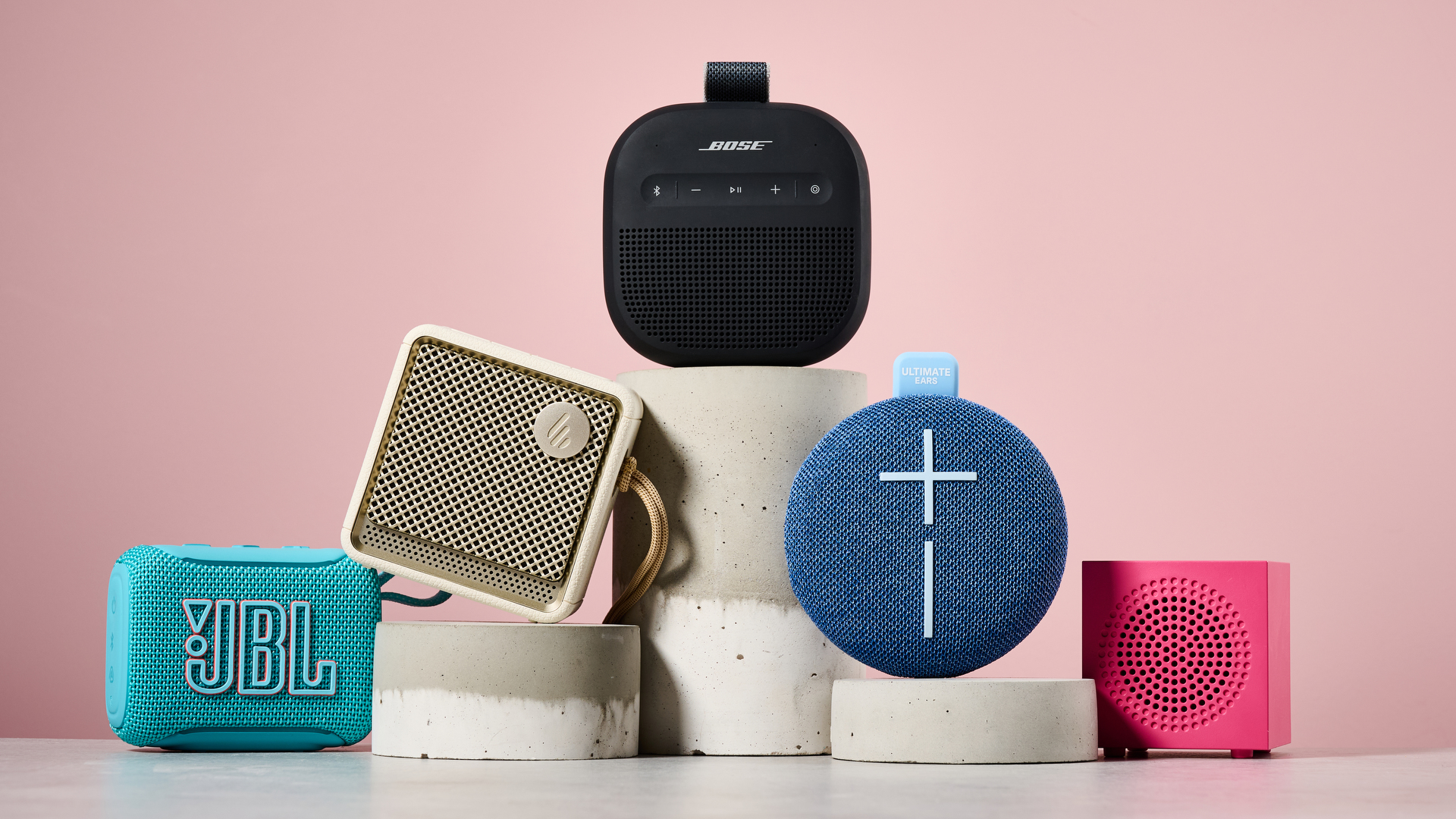
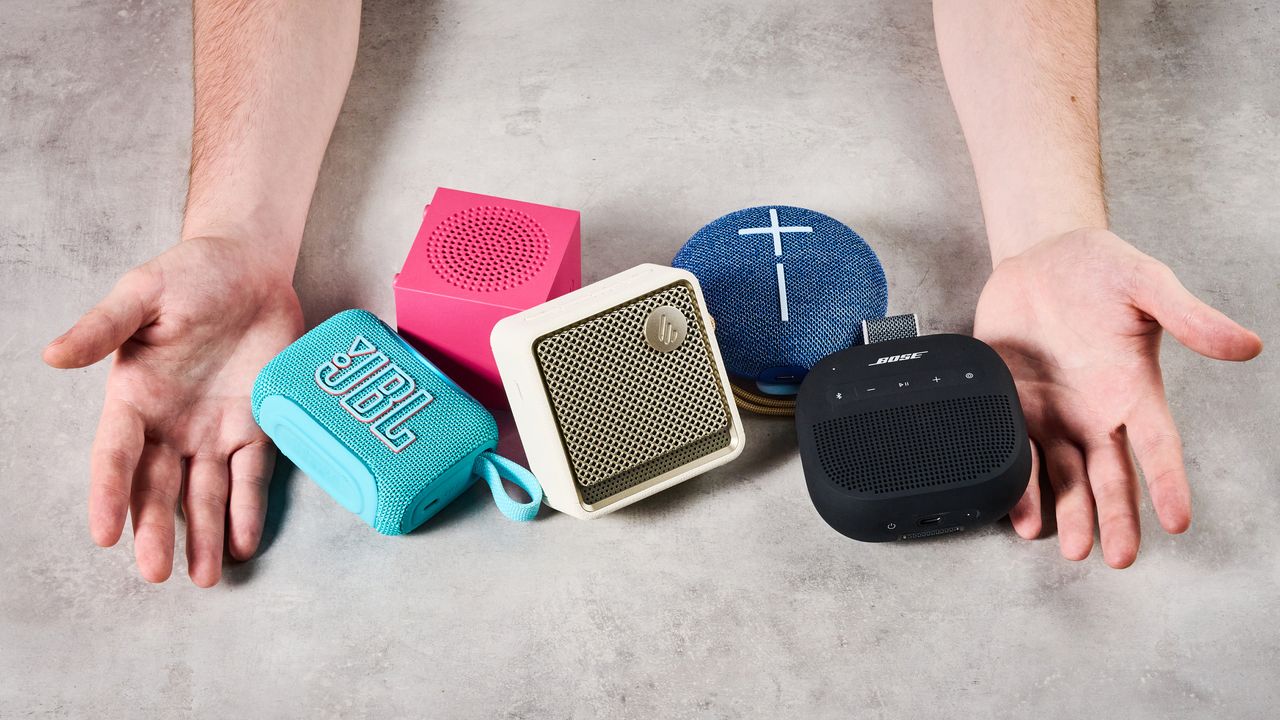
I decided to use five speakers in a very similar size category: the JBL Go 5, the IKEA Kallsup, the Bose SoundLink Micro Gen 2, the Edifier ES20, and the Ultimate Ears Miniroll. Some have a higher power output than others and some are considerably cheaper (or pricier) than others. And some sit in our guide to the best Bluetooth speakers, while others have fallen short. But interestingly, rankings varied quite a fair bit depending on the track and listener involved.

Curious to find out who came out on top? Here’s how our listeners ranked each speaker across each track, as well as the final scores.

Track 1: Fascinator by Max Dean

I started with a house track, Fascinator by Max Dean. I asked participants to listen to a short lead up to some sub-bass, and while I emphasized that the small models wouldn’t produce roaring power, I asked them to assess how well the speakers manage it. When the drop came in, I also asked them to judge how controlled and precise drums sounded in the treble range.

The results were pretty interesting here. Our cheapest option, the $10 / £5 IKEA Kallsup was the clear loser, with one listener, Caspar, noting ‘tinny’ highs and underwhelming bass — a sentiment generally shared across the board. It was quite close between JBL and Edifier here, with some listeners noting a slight lack in low-end impact, but improved mid-range performance and tighter treble.

However, the clear winner was Bose, which ranked 1st with all of our participants — and spoiler alert, this was the only instance of a unanimous verdict across the entire experiment. One listener, Ashley, noted how the track sounded ‘balanced with no distortion’ with others including Josh and Erin highlighting meatier bass and a pleasingly warm tone.

Track 1: rank (by listener)

Josh

Caspar

Ashley

Erin

JBL Go 5

4

5

4

2

IKEA Kallsup

5

4

5

5

Bose SoundLink Micro Gen 2

1

1

1

1

Edifier ES20

2

3

3

4

UE Miniroll

3

2

2

3

Track 1: overall rank

Speaker

Rank

JBL Go 5

4th (15pts)

IKEA Kallsup

5th (19pts)

Bose SoundLink Micro Gen 2

1st (4pts)

Edifier ES20

3rd (12pts)

UE Miniroll

2nd (10pts)

Track 2: Orphans by Cero

I changed up the vibe for Track 2, and played a snippet from the jazz-infused indie pop track Orphans by Japanese band Cero. Vocals are meant to be slightly forward, so I asked listeners to determine how well the speakers captured this, while also prompting them to judge how well-balanced percussion and guitars were in the mix.

The Kallsup unfortunately finished in last place once more, with Josh highlighting ‘rolled off’ vocals and unclear guitars in the mid-range. However, the JBL Go 5 wasn’t far in front, with Erin noting ‘lifeless guitars’.

The Edifier ES20 and UE Miniroll performed well, though, with participants highlighting better balance across the frequency range, warmer and more prominent vocals, and cleaner bass. The SoundLink Micro Gen 2 took the win once more, though, with an emphasis on clearer, more tonally accurate guitars, well-defined vocals, and more articulate percussion.

Track 2: rank (by listener)

Josh

Caspar

Ashley

Erin

JBL Go 5

3

5

5

4

IKEA Kallsup

5

4

4

5

Bose SoundLink Micro Gen 2

2

1

2

1

Edifier ES20

1

2

3

3

UE Miniroll

4

3

1

2

Track 2: overall rank

Speaker

Rank

JBL Go 5

4th (17pts)

IKEA Kallsup

5th (18pts)

Bose SoundLink Micro Gen 2

1st (6pts)

Edifier ES20

2nd (9pts)

UE Miniroll

3rd (10pts)

Track 3: The Girl From Ipanema by Stan Getz

I wanted to try out something softer next, so I went for the legendary Bossa Nova track, The Girl From Ipanema by Stan Getz. I requested my blindfolded colleagues to tune into the separation between guitars and vocals, the subtlety and texture of vocals and percussion, and control of the double bass. And this is where things got really interesting.

Surprisingly, Bose, which had been bossing it so far, finished in a lowly 4th place here, with listeners generally expressing disappointment with the speaker’s overemphasized bass and slightly unrefined treble response.

However, one thing remained the same, as the IKEA Kallsup came in 5th place. In fact, this was the only occasion in which every listener decided the Kallsup was the worst performer, with Erin writing: ‘No. What? What is this? It sounds like there’s a horde of bees trying to escape.’ Ouch.

Our champion this time out was the Edifier ES20, a speaker which I’ve often championed for its supreme mid-range clarity. Listeners appreciated this model’s beautifully balanced presentation, textured and controlled double bass, and detailed vocals. The UE Miniroll and JBL Go 5 finished 2nd and 3rd respectively, with our participants widely noting their relatively expansive interpretation of the track, and talking up their crisp, textured handling of vocals.

Track 3: rank (by listener)

Josh

Caspar

Ashley

Erin

JBL Go 5

2

4

4

1

IKEA Kallsup

5

5

5

5

Bose SoundLink Micro Gen 2

4

1

3

4

Edifier ES20

1

2

2

2

UE Miniroll

3

3

1

3

Track 3: overall rank

Speaker

Rank

JBL Go 5

3rd (11pts)

IKEA Kallsup

5th (20pts)

Bose SoundLink Micro Gen 2

4th (12pts)

Edifier ES20

1st (7pts)

UE Miniroll

2nd (10pts)

Track 4: Come On, Come Over by Jaco Pastorius

But how did the speaker manage a busier, more chaotic mix? I threw on Come On, Come Over by Jaco Pastorius, a funky, high-octane track that has it all. Participants were told to listen for the aggressiveness and clarity of horns, the quality of the track’s mid-bass punch, and how the speakers manage the swathe of instruments and vocals.

And it seemed that in this test, order was restored to how it had been up until Track 3. Bose came out on top, with Ashley praising the speaker’s balanced approach and Caspar highlighting the SoundLink Micro Gen 2’s impactful low end and enhanced vocal clarity. However, the Edifier ES20 and UE Miniroll did run Bose very close indeed. Participants enjoyed the tonality of the vocals, the decently open soundstage, and solid separation on offer.

IKEA’s Kallsup fell to last place, however, largely due to its unregimented bass and tinny mids. Meanwhile, listeners also felt that the JBL Go 5 struggled with the business of the tune, though some did highlight solid clarity in the treble range.

Track 4: rank (by listener)

Josh

Caspar

Ashley

Erin

JBL Go 5

5

4

4

4

IKEA Kallsup

4

5

5

5

Bose SoundLink Micro Gen 2

3

1

2

1

Edifier ES20

1

2

3

2

UE Miniroll

2

3

1

3

Track 4: overall rank

Speaker

Rank

JBL Go 5

4th (17pts)

IKEA Kallsup

5th (19pts)

Bose SoundLink Micro Gen 2

1st (7pts)

Edifier ES20

2nd (8pts)

UE Miniroll

3rd (9pts)

Track 5: Black Eye by Allie X

With Track 5, I wanted to assess the portable speakers’ handling of dynamics, so I went with an electronic song from TechRadar’s reference playlist, Black Eye by Allie X. Colleagues were asked to hone in on the attack of strings in the beginning of the snippet, and assess the control and dynamism of the bass and its impact, as well as the breathiness and detailing in the vocals.

And this was an incredibly close battle between Bose, Edifier, and Ultimate Ears. Bose just about managed to top the podium, with Erin delighted with the ‘dramatic strings’ and ‘expansive vocals,’ and Caspar highlighting dynamic bass and ‘nice balance between vocals and instruments’.

Josh’s favorite was the ES20, stating that vocals were ‘wonderfully conveyed’ and that bass was ‘punchy yet controlled’. Ashley, however, liked the UE Miniroll the most, arguing that it offered the cleanest low-end and most articulate vocals of the bunch.

But the poor Kallsup finished in 5th once more. Muted synths, a lack of texture and kick in the low-end, and recessed vocals left our listeners wanting more.

Track 5: rank (by listener)

Josh

Caspar

Ashley

Erin

JBL Go 5

4

5

4

4

IKEA Kallsup

5

4

5

5

Bose SoundLink Micro Gen 2

2

1

3

1

Edifier ES20

1

2

2

3

UE Miniroll

3

3

1

2

Track 5: overall rank

Speaker

Rank

JBL Go 5

4th (17pts)

IKEA Kallsup

5th (19pts)

Bose SoundLink Micro Gen 2

1st (7pts)

Edifier ES20

2nd (8pts)

UE Miniroll

3rd (9pts)

Final results: and the winner is…

Range of Bluetooth speakers on podium and table

(Image credit: Future)

So, the experiment drew to a close. Our listeners handed over their final scores, and I totaled them up to discover which speaker was king on sound alone. And the winner was… the Bose SoundLink Micro Gen 2!

Was I surprised by the result? Well, not entirely. I personally think this is a great-sounding small speaker, and its ability to produce meatier bass than much of the competition, alongside more precision in the treble range and clearer separation was all it needed to scoop up top spot.

What’s important to recognize, though, is that Bose’s small speaker is far pricier than all of the competition. It has a list price of $129 / £119.95, and while it certainly produces the goods in terms of sound, that’s an awfully high price tag given that you can nab larger, meatier, and more feature-rich models at that cost — the JBL Flip 7 is probably the first that comes to mind.

I was surprised, however, that the Edifier ES20 did so well. Josh selected the ES20 as his overall favorite, and it continually competed closely with Bose throughout, even topping the table in Track 3. In the UK, it’s less than half the price of the Bose SoundLink Micro Gen 2, but you really wouldn’t think so. Its composure and clarity in the mid-range is exceptional, and it has enough warm bass and controlled treble to keep more energetic tracks sounding as they should. If you want value for money, I think this model is absolutely worth checking out.

Another standout was the UE Miniroll, which Ashley picked out as her personal favorite. It continued to plate up clear mids and bass throughout, and I think it earns its relatively modest price.

Some may be surprised to see the JBL Go 5 a bit off the pace in 4th, but I still think it produced a solid performance across the experiment considering its limitations. It has a weaker power output than the top 3 speakers, which limits its ability to provide the drive and low-end might that others can. And although it could’ve offered slightly better separation, it's still a great small speaker given its low asking price of $54.95 / £39.99.

I felt very sorry for the IKEA Kallsup, which was regularly placed last by each of our participants. However, in the IKEA speaker's defense, not only does it have the lowest power output of the bunch (at just 3W), but it’s just $9.99 / £5. Yes, it's extremely cheap, and so the fact that it occasionally squeaked 4th place here and there is impressive in itself.

Check out the final table below, where you can see the final scores and rankings for each speaker, as well as their typical asking price. Were the results as you expected? Let me know in the comments!

Final ranking

Speaker

Overall rank

List price

JBL Go 5

4th (77pts)

$54.95 / £39.99

IKEA Kallsup

5th (95pts)

$9.99 / £5

Bose SoundLink Micro Gen 2

1st (36pts)

$129 / £119.95

Edifier ES20

2nd (42pts)

$89.99 / £49.99

UE Miniroll

3rd (48pts)

$79 / £69

  •  

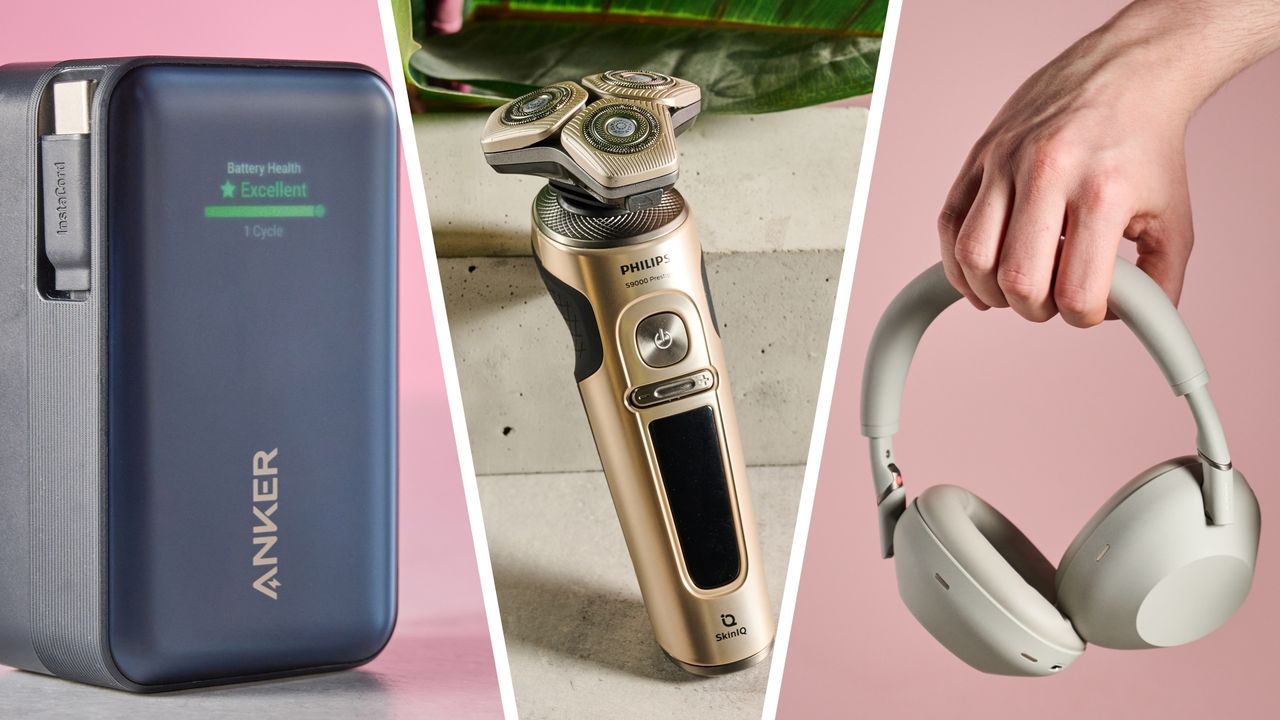
I review tech for a living, and these are the 7 essential tech buys I'd recommend for your summer travels

We're in the midst of (a very hot) summer, and I'm sure many of you out there are raring to go on your travels this season. But if you're about to jet off on your vacation, then it's best to be as prepared as possible. And you know what you need to make your travels as seamless and enjoyable as possible? Some top-tier tech.

I'm a Senior Reviews Writer here at TechRadar, and have tested hundreds of gadgets over the years, from premium noise-cancelling headphones through to power banks and misting fans. So, I've got the lowdown on all the travel tech essentials you need to make this summer one to remember — for all the right reasons, of course.

I've included seven must-haves, with a small speaker, travel chargers, and even a compact clothes steamer on the list. Everything here has either been tested by me, or someone on the TechRadar team, so I'm confident that each item will serve you well on your adventures this summer and beyond. So, without further ado, let's dive right into my top picks!

1. Noise cancelling headphones: Sony WH-1000XM6

Man using the Sony WH-1000XM6

Oh look, it's me wearing the Sony WH-1000XM6! (Image credit: Future)

Ah, Sony WH-1000XM6, my beloved. These are, in my view — and the view of many at TechRadar — the best headphones you can buy right now.

The XM6 have it all. Class-leading active noise cancellation works great, even on flights with jet rumbles and screaming children. They sound incredible, with brilliant balance across the frequency range, as well as plenty of low-end punch and excitement to make energetic tunes sound their best. And they're foldable too, making them incredibly compact when you're on the move.

These come with a handy magnetic carry case, 30 hours of battery life, and excellent touch controls. Sony's Sound Connect app also makes it easy to tailor sound to your liking and make any subtle changes you need. They're simply the best, but I'll let you find that out for yourself.

2. Small speaker: JBL Go 5

Person holding the JBL Go 5 by its strap

This small speaker is ideal for getting ready or listening to tunes by the beach (Image credit: Future)

The JBL Go 5 launched recently, and when I reviewed it, the speaker genuinely took my breath away.

It's exactly how to do an upgrade right, offering better sound, a more flashy design, and even better durability than its already impressive predecessor, the JBL Go 4. I love its edge lighting, its well-balanced sound with clean bass and rich mids, and also its broad feature set, which includes EQ options and multi-speaker pairing.

Despite improving on what its predecessor had to offer, the Go 5 is available at a very similar price, typically coming in at around the $55 / £40 mark, and if you need excellent sound, solid battery life, and high level (IP68) waterproofing on a budget, then it's the best small Bluetooth speaker to buy right now.

3. Power bank: Anker Nano Power Bank 10K 45W

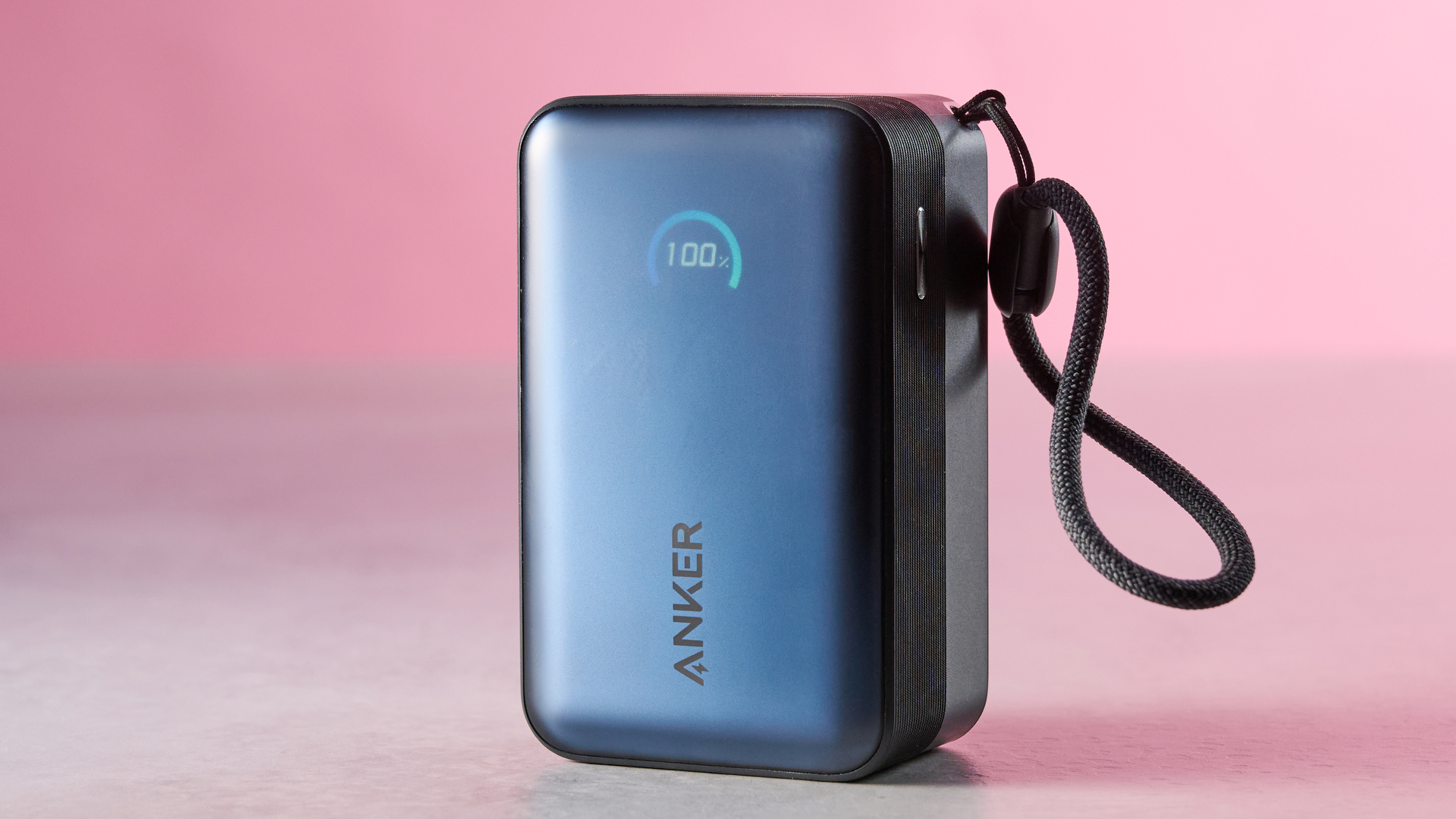
Anker Nano Power Bank 10K 45W Built-In Retractable USB-C Cable against pink background

With an integrated cable and speedy charging, this power bank is ideal for on-the-go use (Image credit: Future)

I genuinely bring this Anker power bank with me everywhere. It's the definitive portable battery for travel for a few key reasons.

The first is its size. This model is absolutely tiny and can easily slip into a pocket or small bag, no problem. Second, it's incredibly practical. There's an integrated USB-C cable, making charging on the go totally seamless. And finally, it's a fantastic performer. That 45W max wattage means fast-charging is easily accessible on even some of the best phones.

A 10,000mAh capacity should also mean it can charge a pair of wireless headphones as well as your handset, so if you want an ultra-practical, lightweight power bank to bring on the go, the Anker Nano Power Bank 10K 45W is my number one recommendation.

4. Travel charger: Anker Nano Charger 45W with USB-C Cable

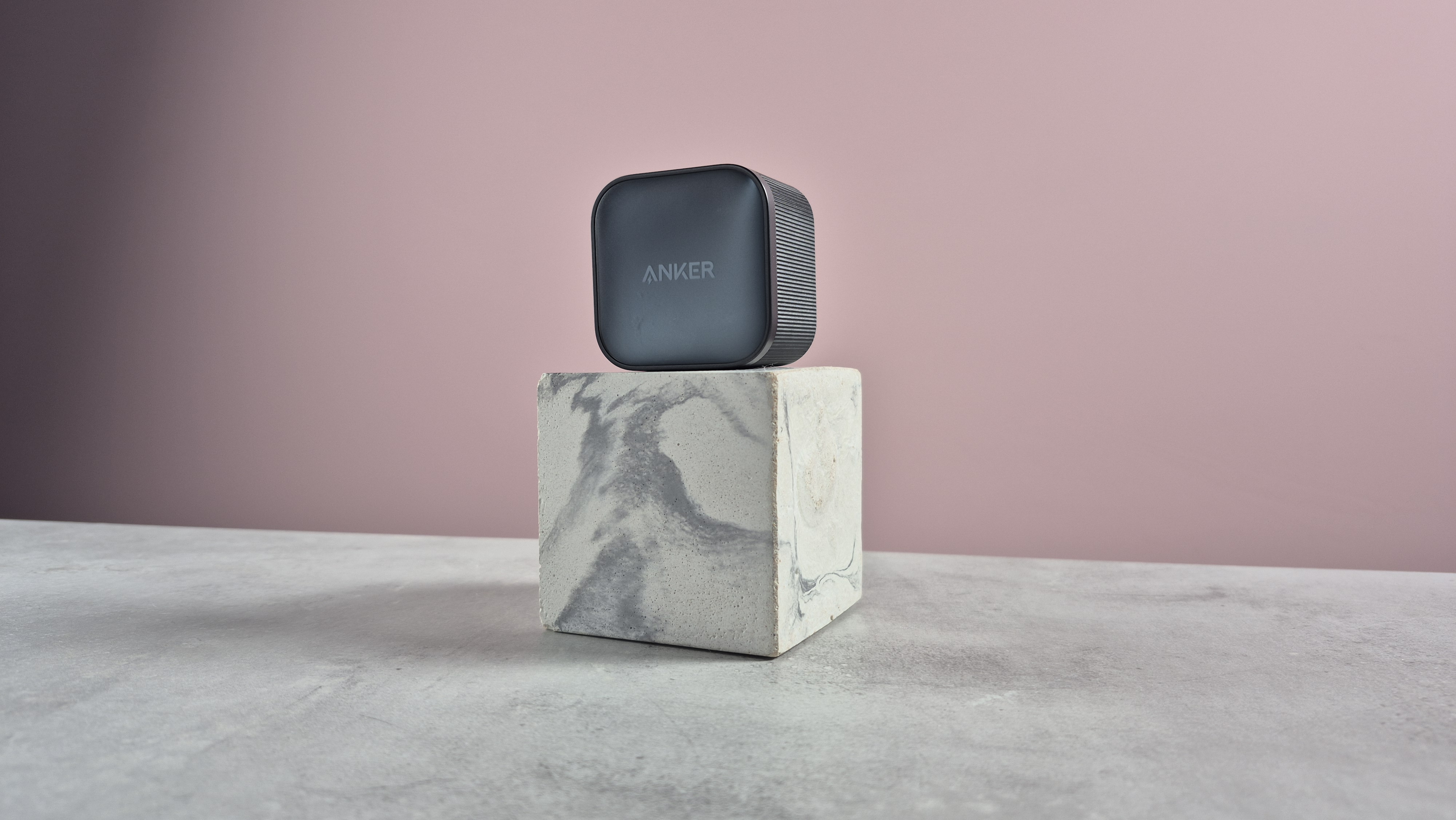
Anker Nano Charger 45W with USB-C Cable balanced on top of block

It's compact, high-performing, and even comes with a USB-C cable (Image credit: Future)

If you need a travel charger for your phone, tablets, and wireless earbuds, then look no further than the Anker Nano Charger 45W, which comes with a USB-C cable in the box — a nice touch!

I've used this one a lot myself, and it's great for travel. Why? Well, it's incredibly compact and packs in quite a bit of power, meaning you can make use of fast charging without lugging a massive brick around. If you're using a travel adapter, the model's low weight also means it won't awkwardly get weighed down or stick out, which is a huge plus.

This charger is well-built, foldable — helping it to slide into your pocket — and highly affordable. It really has it all, so if you're still using a slow charger, then take things up a notch with this awesome Anker alternative.

5. Portable fan: Shark ChillPill

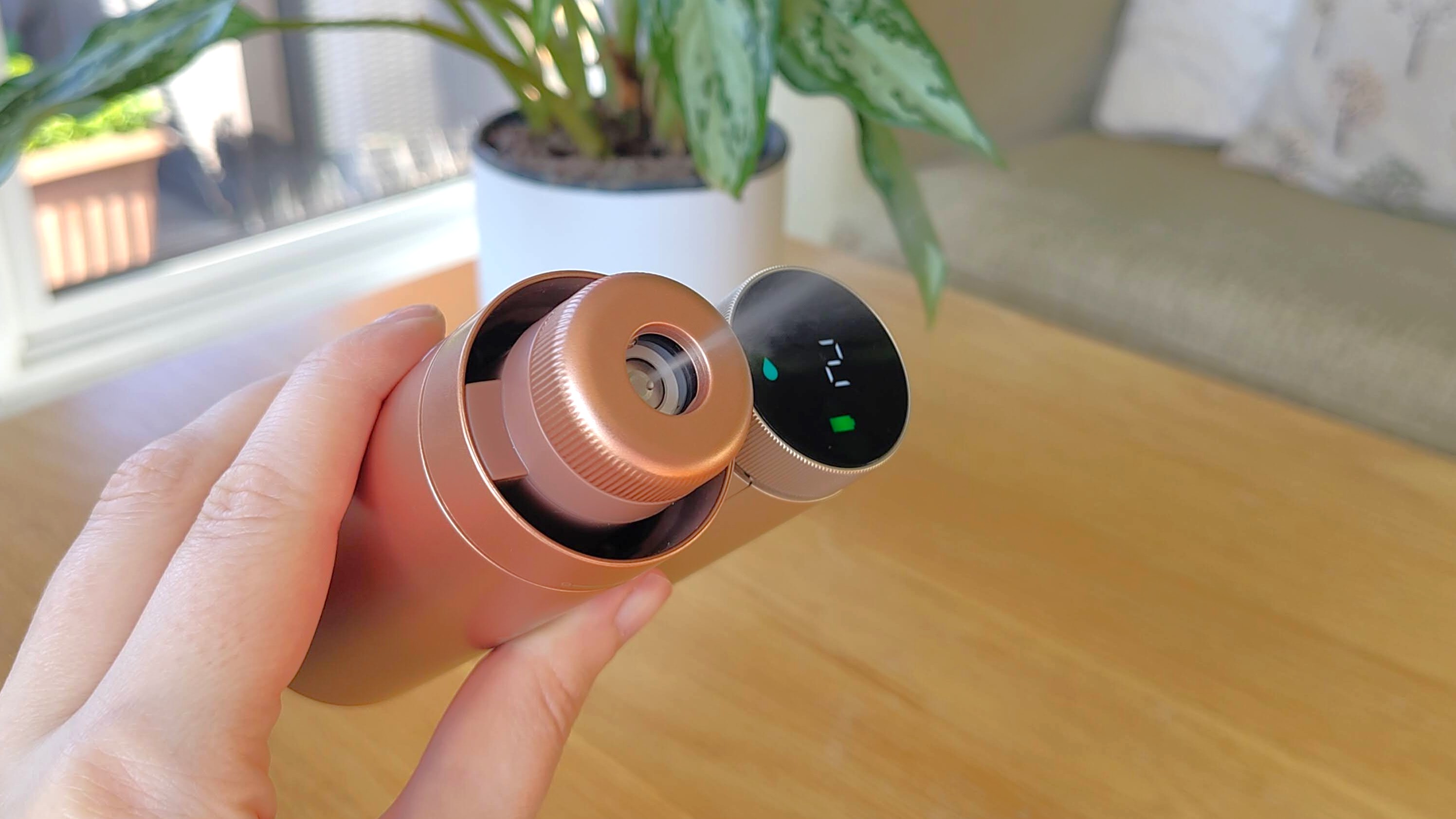
Woman's hand holding Shark ChillPill personal fan with misting attachment

Take a ChillPill with this awesome portable fan (Image credit: Future)

In the UK, it's absolutely scorching right now. It feels like I'm fighting for my life here with the combination of high humidity and near record-breaking temperature. And when you're on your summer travels, I'd wager that it will be similarly blazing in a number of countries. What you need, then, is a portable fan.

We're big... fans... of the Shark ChillPill here at TechRadar, and awarded it a 4.5 star review recently. It has good battery life, is filled with a range of cooling options, and even has a mister for when you need a healthy blast of cold.

The build and design quality is strong here too, and the straightforward controls make it a joy to use. Yes, it's a little expensive, but we've seen it pop up on sale from time to time, so if you want to stay chilled on the move, then I'd strongly suggest picking this lil' gadget up.

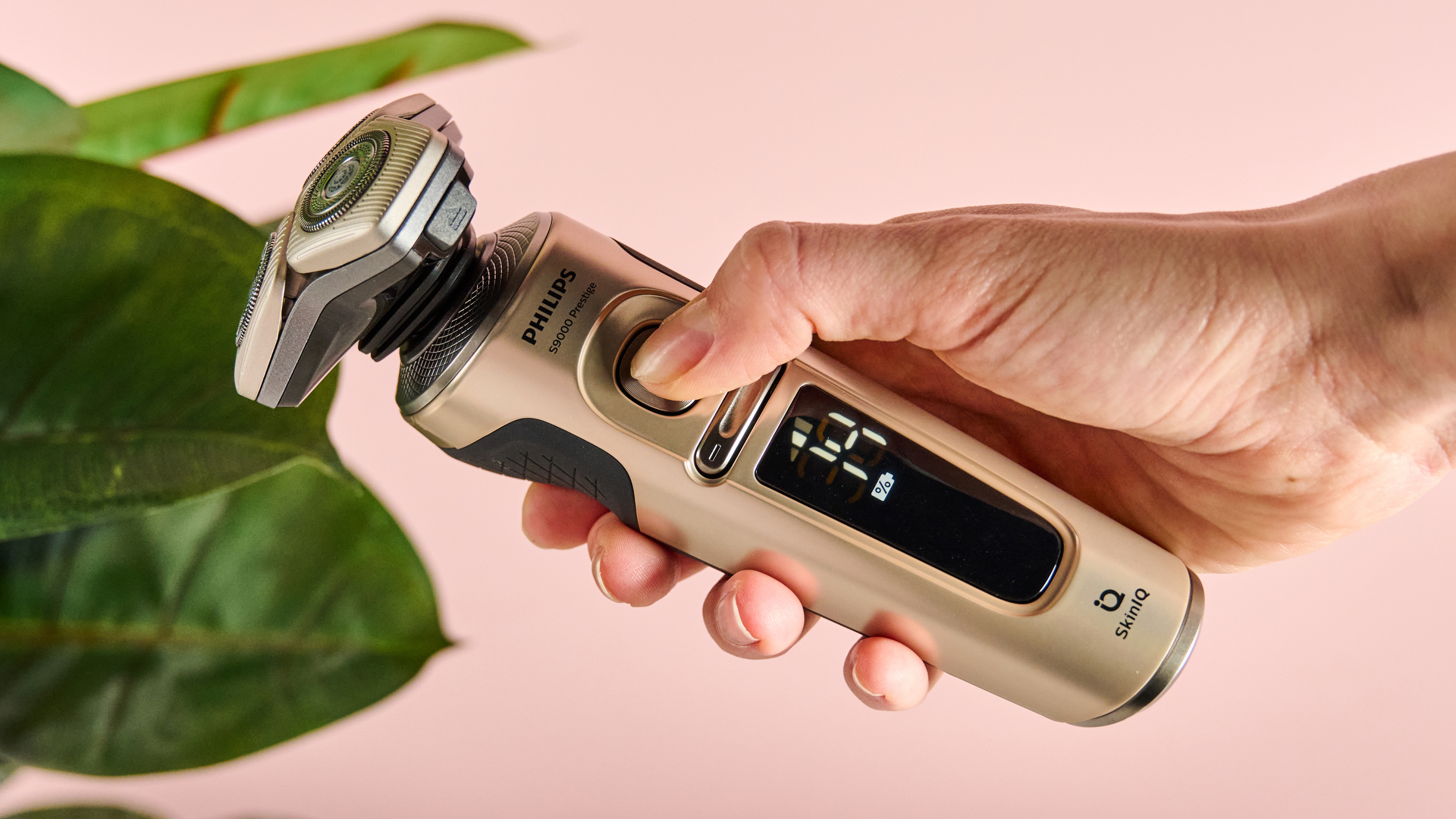
6. Philips Shaver S9000 Prestige

Person turning on the Philips Shaver S9000 Prestige

(Image credit: Future)

OK, so not everyone will need this, but if, like me, your facial hair seems to grow back in the blink of an eye, the Philips Shaver S9000 Prestige will be a great addition to your travel tech arsenal.

With multiple speed settings to suit your desired sensitivity, wet and dry shaving versatility, interchangeable heads (including a beard trimmer), and spectacular handling, the S9000 Prestige is a true all-rounder.

This model also has solid battery life and I rarely need to juice it up. But it comes with a wireless charging pad for when you're running low on power. There's also a cleaning device thrown in the box, and a carry case for whenever you're on the move.

I've found that the S9000 Prestige is kind on my skin, which is pretty prone to razor burn, and its flexible foil shaver is great at getting into those hard to reach areas around the nose, for instance. It launched at a fairly high price, but you can regularly swipe it up on sale now, so why not give it a go?

7. Clothes steamer: various options

OK, in all honesty, I've not actually got a travel clothes steamer, but when some colleagues of mine heard that I was writing this piece, they were clear that it's a must have.

After all, how many times have you been on holiday or out on a business trip and realized that our garments look a little creased? For me, it's a few times too many. With a compact clothes steamer, you can wave goodbye to pesky creases and wrinkles in a flash.

So, I have a few recommendations from the team that I'm here to share with you. For our US readers, Managing Editor of News & Deals, Jacob Krol, suggests the Conair Handheld Garment Steamer. This affordable model boasts "turbo steam power," comes with a 3-in-1 attachment, and has a water tank that's good for 20 minutes of steaming. Not bad, eh?

Over the pond, our Managing Editor of Social & Engagement, Josephine Watson, had a couple of recommendations. The first, the Tefal Pure Pop Slim Handheld, is cheap, comes in a range of funky colors, and heats up in just 15 seconds for super speedy action. Josephine told me that her bridesmaid friend bought this model in order to save a wedding dress disaster — and luckily, it worked. Talk about coming in clutch.

Josephine also recommended the Russell Hobbs Steam Genie 2in1 Handheld, even claiming she would trade her firstborn for it. Pretty high praise. This model has a 150ml water tank, can heat up nice and swiftly, and claims to kill up to 99.9% of bacteria within 60 seconds.

  •  
❌