Scientists have uncovered two surprising forces that help guide how the human brain forms before birth. Before birth, the human brain is shaped in large part by an unusual class of stem cells known as radial glia. These cells help determine which brain cells are produced, when they appear, and how the cerebral cortex, the [...]
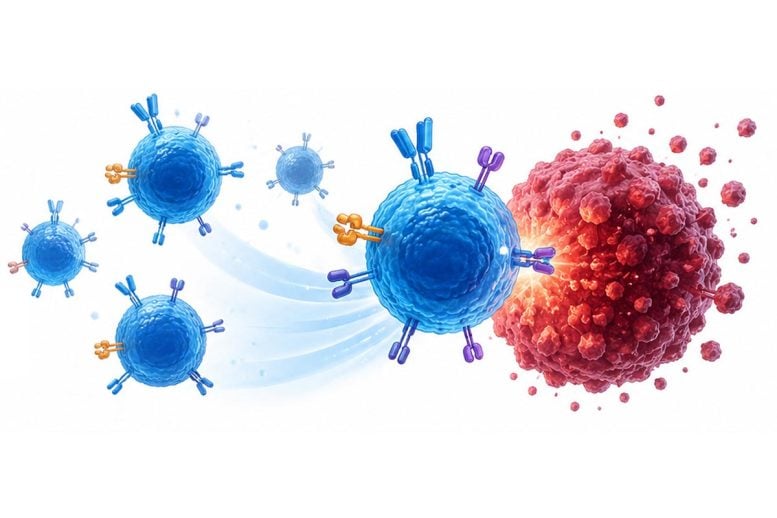
UCLA scientists engineered ready-made T cells from cord blood stem cells that can hunt solid tumors even when cancer cells hide their main target. T cell receptor therapy, commonly called TCR therapy, is a form of cancer treatment that genetically modifies immune cells known as T cells so they can recognize and attack cancer more [...]
Bats’ remarkable ability to withstand decades of strenuous flight while keeping infections, inflammation, and cancer in check may offer new clues to healthier human aging Bats are unusually long-lived for animals of their size. Small mammals generally burn energy quickly and die relatively young, yet some bats survive for several decades. Brandt’s myotis, Myotis brandtii, [...]
A provocative new paper suggests consciousness may not be unique to Earth and could arise in alien life forms far stranger than we can imagine. A new philosophical paper argues that consciousness may not be exclusive to life as we know it. According to Eric Schwitzgebel, a distinguished professor of philosophy at the University of [...]
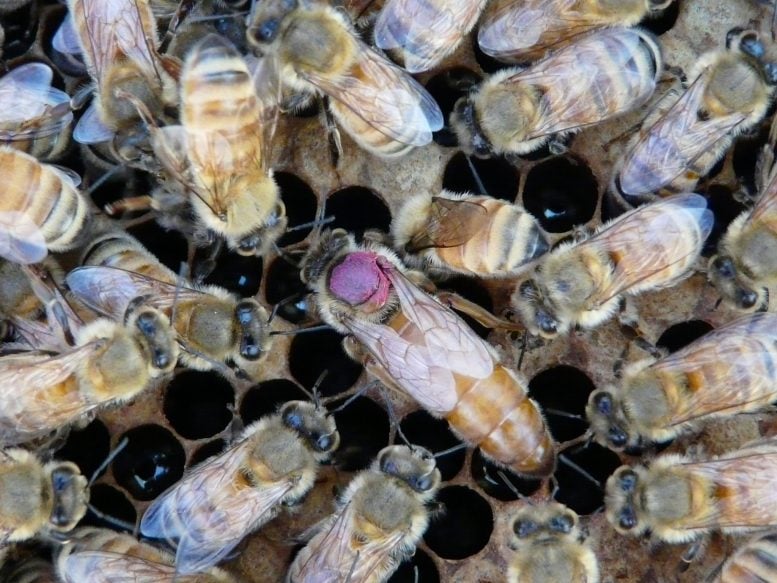
Study reveals how contamination can increase within colonies. Inside a honeybee colony, worker bees act as living filters. They intercept much of the pesticide contamination entering the hive, helping shield the queen and the developing young she produces. But when exposure continues and that protective system begins to fail, the queen may redirect the chemical [...]
Reaching 90 without dementia may feel like clearing the final hurdle. But the risk does not necessarily end there. Dementia risk does not disappear after age 90. Even among people who reach their 10th decade without cognitive symptoms, the likelihood of developing the condition can vary substantially by sex, race, ethnicity, and genetics, according to [...]
Changing what you eat may begin reshaping how your genes behave in as little as a few weeks, even though your DNA itself remains unchanged. In a randomized clinical trial, researchers found that healthy adults who followed a vegan diet for one month developed changes in chemical markers attached to their DNA. Compared with participants [...]
A battery-free sweat sensor could make levodopa monitoring faster and more personalized for people with Parkinson’s disease. For people with Parkinson’s disease, the effect of a levodopa dose can fade abruptly, allowing movement problems to return before the next scheduled dose. Engineers and neuroscientists at the University of California San Diego have developed a soft [...]
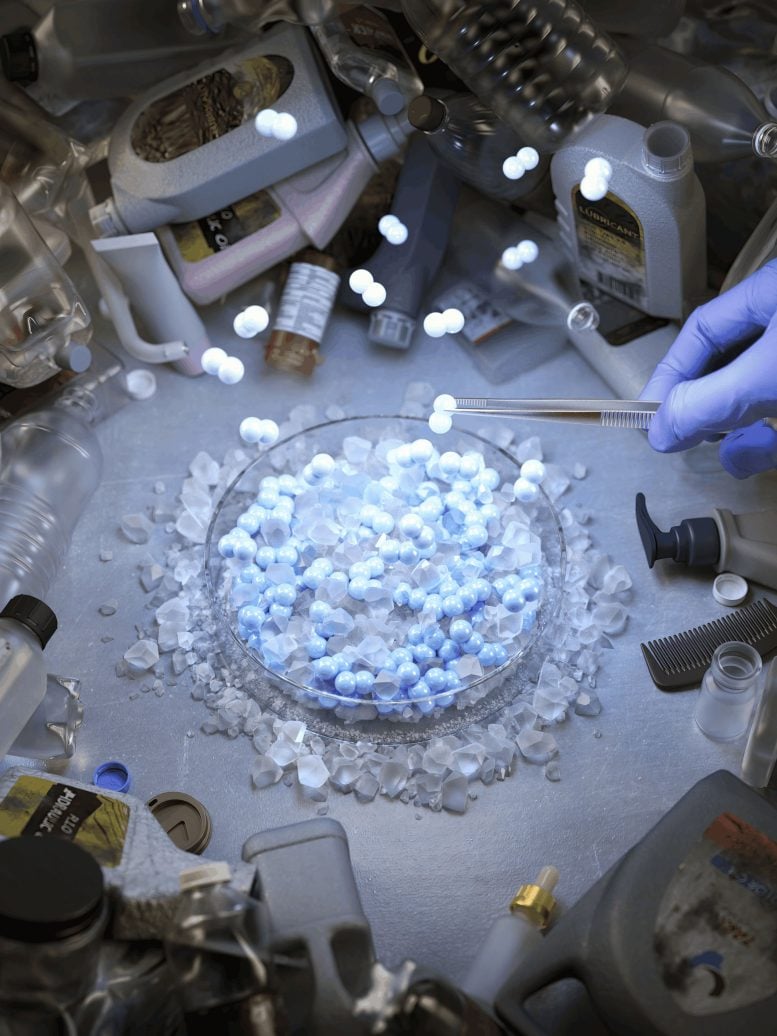
The advance could provide a scalable route to clean energy while making plastic recycling more effective. A discarded bottle, shopping bag or car part can remain in the waste stream long after its useful life ends. Although plastic is everywhere in modern society, recycling it remains difficult because most systems require different types to be [...]
New research calls for aquatic deoxygenation to be recognized as a critical planetary process under threat. Oxygen is declining across oceans, coastal waters, rivers, lakes and streams, threatening the organisms and chemical processes that depend on it. A review led by researchers at UC San Diego’s Scripps Institution of Oceanography warns that this widespread deoxygenation [...]
A new study shows how changes in ocean circulation could reshape global rainfall patterns. A storm reaching California can begin with changes thousands of miles away in the Atlantic Ocean. Climate modeling suggests that as one of the planet’s major ocean circulation systems weakens, more moisture could be directed toward the West Coast while snowfall [...]
Breast cancer patterns are shifting rapidly in several Asian American communities. Breast cancer has long been considered less common among Asian American women than among white women in the United States. A new UC San Francisco-led study suggests that this pattern is changing quickly, especially among younger women and in some aggressive forms of the [...]
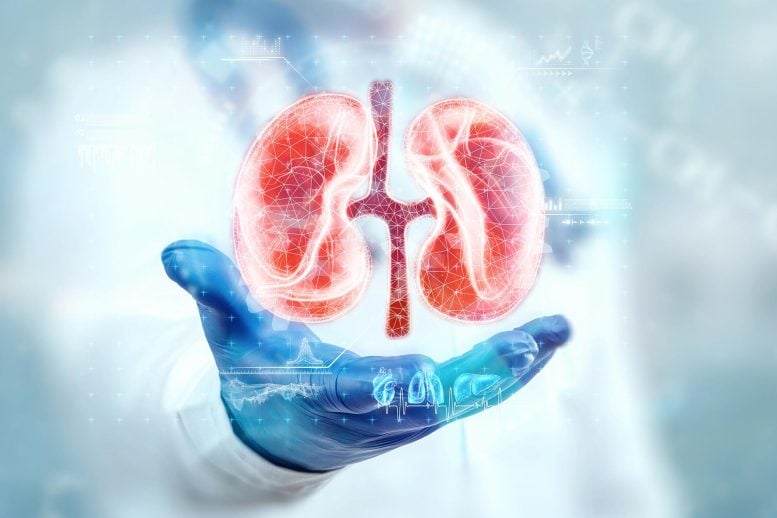
Researchers have uncovered a molecular pathway that appears to block kidney regeneration after injury. The body’s ability to repair damaged organs is surprisingly limited, especially after serious injuries to the heart or kidneys. Now, UCLA researchers have found that a drug originally developed to help heart tissue regenerate after a heart attack may also accelerate [...]
The Caspian Sea, the largest inland body of water on Earth, is shrinking. Not fluctuating, not entering another natural cycle, but shrinking.
For decades, scientists and policymakers treated changes in the Caspian as part of the basin’s natural variability. Water levels in the sea have always risen and fallen.
But our new study shows something far more troubling: the current decline is increasingly driven by human decisions to dam and divert rivers, and by fragmented decision-making across five countries that border this body of water.
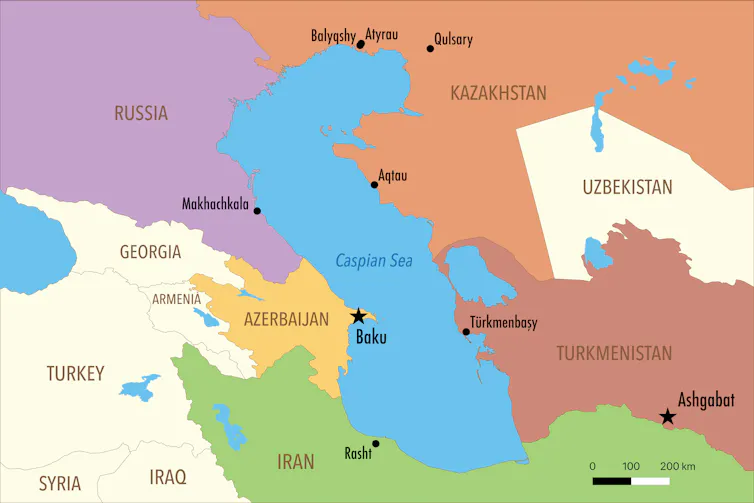
Using satellite observations together with ground-based hydrological records from rivers across all five shoreline states (Iran, Russia, Turkmenistan, Azerbaijan and Kazakhstan), we found that flow into the Caspian Sea has declined sharply over the past three decades.
The main reason is not declining rainfall. In fact, rain over the Volga Basin, which supplies roughly 80% of the Caspian’s inflow, has slightly increased. That finding matters because it overturns one of the most common assumptions surrounding the Caspian crisis. The common narrative has been straightforward: climate change increases evaporation, rainfall declines, and the sea shrinks.
Climate change certainly plays a role: our analysis confirms that evaporation across the Caspian has increased significantly as regional temperatures rise. But evaporation alone explains only about 40% of the observed water loss since the mid-1990s.
The remaining decline points overwhelmingly toward human activity. The Volga River has been heavily engineered for decades. Dams, reservoirs, use for irrigation, industrial consumption and navigation systems have fundamentally altered the hydrology of the basin).
Water that once flowed naturally into the Caspian is increasingly intercepted upstream. One critical but rarely discussed example is the Volga–Don canal system, which links the Caspian basin to the Black Sea through Russia’s internal waterways. Geopolitically and economically, the canal is strategically valuable. But it diverts water away from the Caspian system.
The cumulative effect is now visible from space. Since the mid-1990s, the Caspian Sea has lost roughly 24,000km² of surface area, an area approaching the size of Sicily. Water levels have fallen by about two metres.
The shallow northern Caspian, ecologically one of the most productive parts of the sea, is drying particularly rapidly. This matters because the northern Caspian is not empty water. It is a critical ecological zone supporting fisheries, wetlands, migratory birds and spawning grounds for sturgeon, the ancient fish species that produce most of the world’s caviar.
Threats to shipping
As water retreats, ecological stress intensifies. Our study also detected a long-term rise in chlorophyll-a concentrations in the northern Caspian, a key indicator of algal activity and declining water quality. In plain terms, the sea is becoming warmer, shallower and increasingly nutrient-rich: ideal conditions for harmful algal blooms.
This is not merely an environmental story. The Caspian region sits at the centre of major energy and trade corridors linking Europe and Asia). Russia’s north-south transport routes and China’s international development plan, the Belt and Road Initiative, plus offshore oil infrastructure and regional shipping networks all depend on the Caspian remaining navigable and stable.
Falling water levels threaten ports, shipping lanes and coastal infrastructure. Declining depths reduce cargo capacity and increase transport costs. What appears initially as an environmental issue gradually becomes an economic constraint.
Then there is the political dimension. Unlike oceans, inland seas cannot rely on global circulation to buffer local mismanagement. Their survival depends directly on the behaviour of neighbouring states. And the Caspian is surrounded by countries with competing strategic interests, uneven governance systems and limited transparency over their water use.
That fragmentation has become one of the greatest risks facing the sea. Although regional agreements exist, including the 2018 Aktau Convention (formally the Convention on the Legal Status of the Caspian Sea), there is still no comprehensive and enforceable system governing water allocation, hydrological monitoring or ecological protection across the basin. Data sharing remains limited. Water withdrawals are often opaque. Environmental management is fragmented.
This resembles a pattern seen repeatedly across modern environmental crises: governments prefer to discuss climate change because it externalises responsibility. It allows leaders to portray ecological decline as an unavoidable planetary process.
But the Caspian story is more uncomfortable than that. It is also a story about political choices. Rivers were dammed. Water was diverted. Wetlands were degraded. Pollution controls remained weak. Oil and gas development expanded while ecological safeguards lagged behind. Economic growth consistently outranked hydrological sustainability.
The danger is not simply that the Caspian shrinks, but that ecological thresholds may be crossed – beyond which, recovery becomes extraordinarily difficult.
The Aral Sea, the world’s fourth largest lake, demonstrated how quickly collapse can accelerate once a chain reaction begins. Exposed lakebeds generate dust storms. Fisheries collapse. Salinity rises. Biodiversity crashes. Local climates shift. Economic systems unravel around the drying basin.
The Caspian has not yet reached that stage – but the warning signs are becoming increasingly visible.
There is still time to slow the trajectory. However, doing so would require something historically rare in the region: long-term coordination that prioritises hydrological stability – safeguarding the sea’s natural water balance and keeping water levels from dropping past a dangerous point of ecological collapse – over short-term extraction and geopolitical competition.
This would mean transparent water accounting – the open tracking and sharing of data on exactly how much water each nation is pulling from the feeding rivers for agriculture and industry. It would mean negotiated environmental flow releases from upstream reservoirs, and recognition that the Caspian is not simply an energy corridor or a shipping route, but a fragile water system.
Nature eventually imposes consequences on societies that ignore those limits. The Caspian Sea is beginning to deliver that message.
Nima Shokri is affiliated with Hamburg University of Technology.
Amir AghaKouchak is affiliated with the University of California Irvine, and the United Nations University Institute for Water, Environment and Health.
A major study found that common dementia risks may have a much stronger impact on women’s brains than previously recognized. Women may not only experience some dementia risk factors more often than men, but those risk factors may also have a stronger effect on their cognitive health, according to new research from the University of [...]
A new soft ultrasound patch is designed to provide long-term, hands-free monitoring of fetal health in real time. Engineers at the University of California, San Diego, have developed a soft, wearable ultrasound patch that can continuously monitor a fetus for hours at a time while maintaining reliable performance even as the fetus and umbilical cord [...]
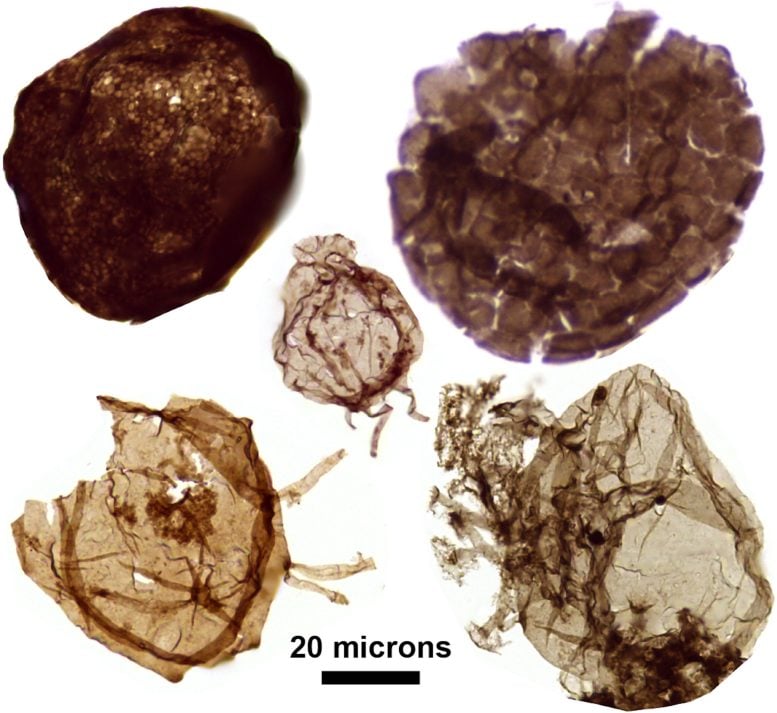
Ancient Australian fossils indicate that the earliest eukaryotes depended on oxygen, providing new evidence that oxygen helped enable the evolution of complex life. Stored in an open-air warehouse in tropical Darwin, Australia, are dozens of trays containing cylindrical cores of rock. They are from drill holes bored hundreds of meters below the surface by mineral [...]
New research shows that wildlife reacts differently to human presence than to human-made landscapes. For centuries, people have transformed landscapes, forcing wildlife to adjust to a rapidly changing world. New research suggests that animals are not only responding to altered habitats, but also to the direct presence of humans. Researchers from UC Santa Barbara, the [...]
A new study has uncovered an unexpected vulnerability in some of the deadliest cancers. Researchers at UCLA have identified a previously hidden weakness in some of the most aggressive cancers, pointing to a possible new way to attack tumors that have remained difficult to treat. Small cell neuroendocrine cancers can develop in the lungs, prostate, [...]
A widely prescribed class of weight-loss and diabetes medications may be doing more than improving metabolic health. Drugs such as Ozempic and Wegovy have transformed the treatment of obesity and type 2 diabetes, helping millions lose weight and improve metabolic health. But scientists are increasingly uncovering effects that extend far beyond the scale. Research has [...]

 Login

 Scientists have uncovered two surprising forces that help guide how the human brain forms before birth. Before birth, the human brain is shaped in large part by an unusual class of stem cells known as radial glia. These cells help determine which brain cells are produced, when they appear, and how the cerebral cortex, the [...]