❌

Reading view

NASA Answers President’s Call to Establish United States Space Academy

President Donald Trump presents an executive order establishing the United States Space Academy during an event to award the Congressional Space Medal of Honor to the Artemis II crew as Michael Kratsios, director of the Office of Science and Technology Policy, left; Kevin Hassett, director of the National Economic Council, third from left; and NASA Administrator Jared Isaacman, right, applaud, Friday, Aug. 28, 2026, at NASA’s Johnson Space Center in Houston.
Credit: NASA/John Kraus

Less than two weeks after an Executive Order was signed to create the first United States Space Academy, NASA-led work is in full swing to make the academy a reality and shape the future of America’s aerospace workforce and leadership.

NASA Administrator Jared Isaacman chaired the first Presidential Commission on the United States Space Academy meeting on Sept. 9. Following that meeting, NASA published a Request for Information Thursday seeking input from governors or their designees interested in hosting and sponsoring the up-and-coming academy in their state.

“Our first Commission meeting made clear how much talent and commitment we have behind President Trump’s vision for the U.S. Space Academy,” said NASA Administrator Jared Isaacman. “I’m grateful to our partners across government for getting right to work. Now, with the RFI underway, states across the country have an opportunity to help us shape a legacy institution built for America’s future in space.”

Isaacman and Deputy Administrator Matt Anderson welcomed key commission members from multiple agencies and organizations to NASA Headquarters in Washington for a collaborative Commission discussion. Participants included U.S. Secretary of War Pete Hegseth, Director of the National Economic Council Kevin Hassett, Secretary of the United States Air Force Troy Meink, and U.S. Chief Technology Officer Ethan Klein, representing Director of Office and Technology Policy Michael Kratsios, along with representatives from the U.S. Office of Management and Budget, the National Security Council, and the White House.

During the meeting, commission members began working through the structure and priorities of the proposed U.S. Space Academy, including its governance, curriculum, service commitments, partnerships, and implementation.

“The location of the U.S. Space Academy is foundational to its success,” said Anderson. “We’re asking states to bring their strongest vision — the infrastructure, the partnerships, and the community that can compete with the elite options this caliber of student will have and match the boundless ambition of our future space leaders.”

The commission’s 120-day mandate to develop recommendations for President Trump on how to establish the academy and build the technical talent and leadership pipeline needed to support America’s long-term goals in space began when the President signed the Executive Order on Aug. 28.

Responses to the RFI will help inform the commission’s path forward to selecting a location for the institution and are due by 6 p.m. EDT on Monday, Oct. 26. An ambitious timeline is outlined in the request, calling for a groundbreaking no later than 2027, temporarily hosting the first 300 students in 2028, and a permanent location in operation by 2031.

Each state is allowed one submission to the Announcement via its governor’s designee. In addition to details about resources available to support the academy, input sought on the potential campus includes:

  • Location information
  • Site readiness
  • Environmental and regulatory considerations
  • Proximity and supporting ecosystems

A fact sheet on the U.S. Space Academy is available on The White House website.

-end-

George Alderman / Cheryl Warner
Headquarters, Washington
202-358-1600
george.a.alderman@nasa.gov / cheryl.m.warner@nasa.gov
Share

Details

Last Updated
Sep 10, 2026

Related Terms

  •  

NASA Calls for Proposals to Accelerate Lunar Surface Technologies 

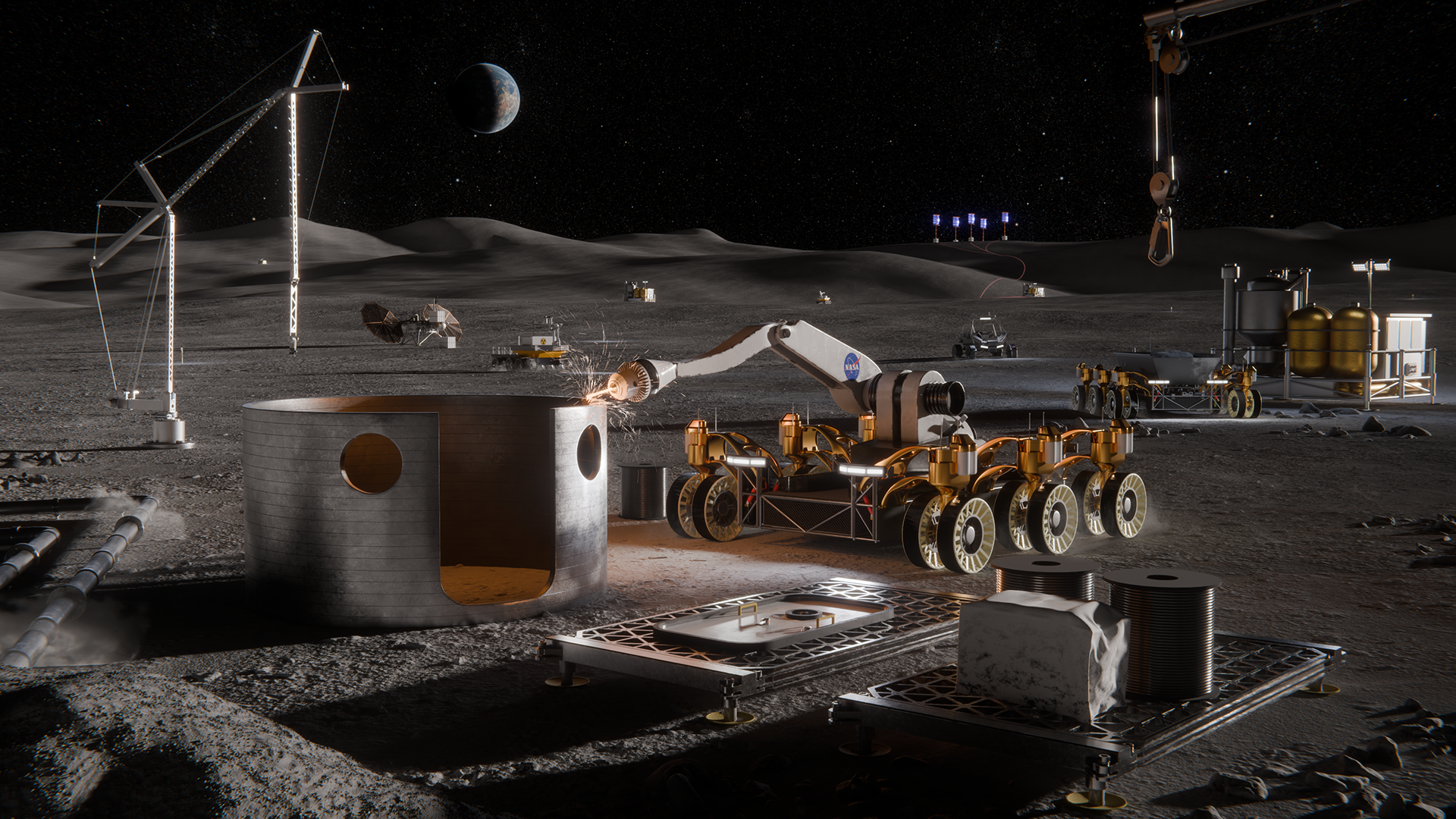
Artistic concept of lunar surface technologies and infrastructure capabilities, including in-situ resource utilization oxygen production systems, surface power systems, in-space manufacturing tools, and advanced nanomaterials production.
Credit: NASA

NASA is seeking proposals to advance the technology and infrastructure needed to explore the Moon and establish a Moon Base in the lunar South Pole region.

Announced on Tuesday, Sept. 8, the solicitation targets capability gaps, including power generation, oxygen extraction, and producing materials on the Moon required for construction and operations. These technologies are essential to making humanity’s next great leap in lunar exploration.

“NASA is accelerating the development of key technologies and closing critical gaps needed for long-term human exploration at the Moon,” said Greg Stover, director of NASA’s Advanced Research and Technology Division. “Partnering with industry will strengthen the U.S. industrial base as we mature the capabilities and infrastructure needed for a sustainable lunar presence.”

The NextSTEP-3 Broad Agency Announcement Appendix A: Lunar Enabling Infrastructure Accelerator solicitation aims to mature and demonstrate capabilities in five areas:

  • Vertical solar array technology that can provide consistent power generation, management, distribution, and energy storage.
  • In-situ resource utilization oxygen from regolith production to extract usable oxygen molecularly bonded to rock and dust covering the Moon’s surface.
  • Radioisotope Stirling generator, a type of nuclear energy technology that uses heat from fissile materials to produce electric power for operating spacecraft systems in the darkest, dustiest, and most remote places.
  • In-space advanced manufacturing to reduce reliance on resupply missions from Earth and to optimize mission flexibility and resilience on the Moon.
  • Innovative nanomaterials production to advance the commercial availability and quality of nanomaterials that can be used in lunar exploration.

The solicitation intends to cultivate U.S.-led capabilities while maintaining full and open competition among private industry, academic institutions, and not‑for‑profit entities, as well as international partners participating through U.S.-led teams. 

NASA may apply insights gained from the resulting contracts of this solicitation, such as technical data, and demonstration results, to shape future acquisition strategies.  

To learn more about NextSTEP-3, visit:

https://go.nasa.gov/4x20o3t

-end-

Rob Margetta
Headquarters, Washington
202-358-0918
robert.j.margetta@nasa.gov

Share

Details

Last Updated
Sep 08, 2026
  •  

NASA Astronaut Mike Fincke Leaves NASA, Career Includes 4 Spaceflights

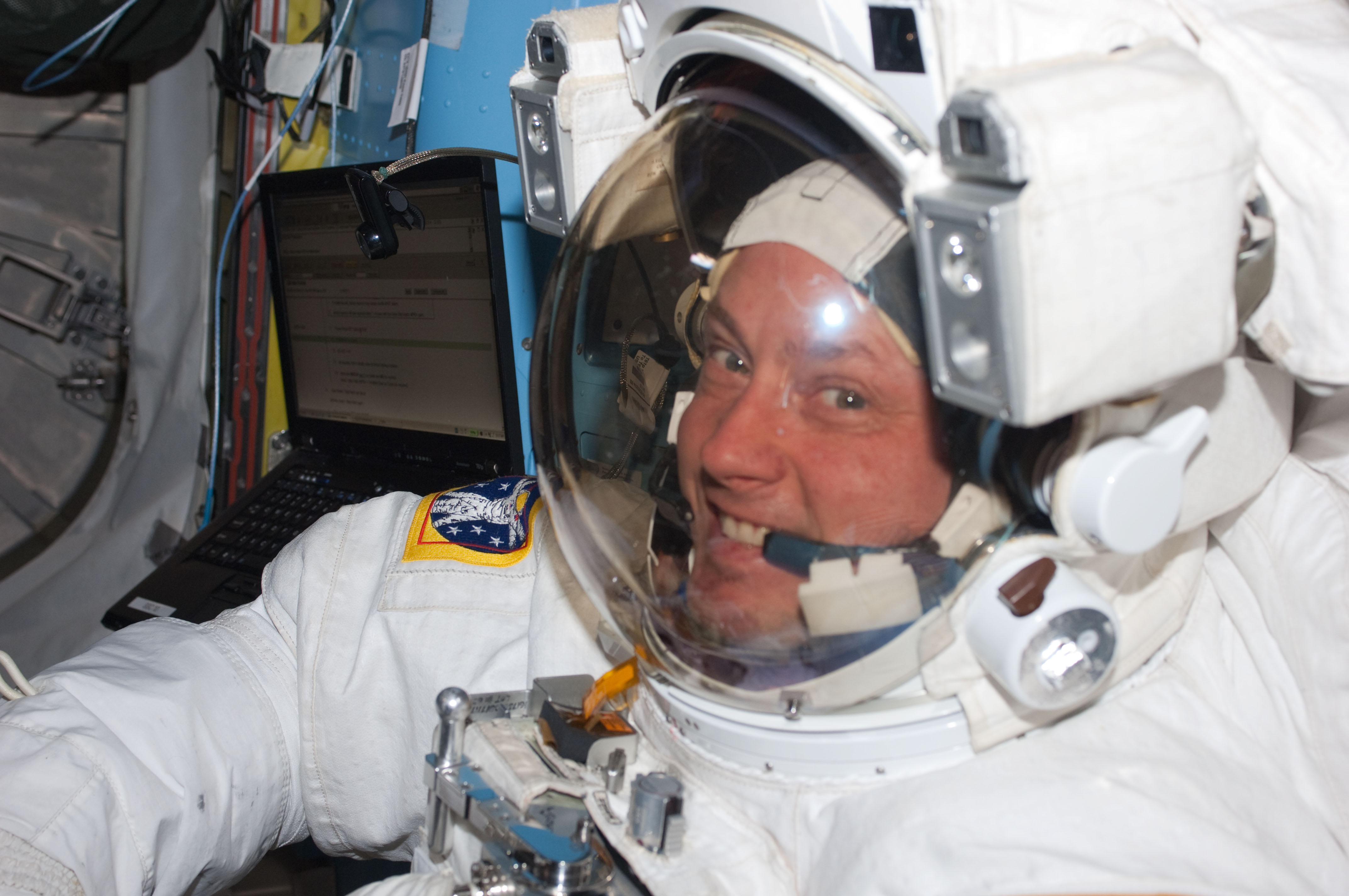
NASA astronaut Mike Fincke is pictured inside the International Space Station’s Quest airlock prior to the start of the third spacewalk for the STS-134 mission.
Credit: NASA

NASA astronaut Mike Fincke is departing the agency on Wednesday after 30 years of service. Throughout his career, he flew four missions, spent 549 days in space, and completed nine spacewalks in support of the International Space Station.

“Few people have had the opportunity to shape as many chapters of NASA’s history as Mike Fincke,” said NASA Administrator Jared Isaacman. “Over a remarkable career, Mike served our nation as a pilot, engineer, astronaut, and mentor. From long-duration missions aboard the International Space Station to helping prepare the Artemis generation, his contributions have helped position NASA for what comes next. The success we’re building on today is possible because of people like Mike, who dedicated their careers to moving our space program forward and preparing the next generation to carry the mission even further. I’d like to congratulate Mike on an incredible career and thank him for his decades of service to NASA, our nation, and the countless people who had the opportunity to learn from and fly alongside him.”

He ranks fourth among NASA astronauts in accumulated time in space, and his spacewalks total 48 hours and 37 minutes. Most recently, Fincke piloted NASA’s SpaceX Crew‑11 mission, which launched in August 2025 and returned in January. During the mission, he served as a flight engineer for International Space Station Expedition 73 and commander of Expedition 74.

Fincke joined NASA’s 16th astronaut class in 1996 and first flew to space in 2004 aboard Soyuz TMA‑4 in support of the space station’s Expedition 9. Serving as a science officer and flight engineer, he helped maintain station systems and performed four spacewalks. He returned to space in 2008 on Soyuz TMA‑13 as commander of Expedition 18, preparing the space station for its transition to six‑person crews at the time and completing two more spacewalks.

In 2011, Fincke flew on STS‑134, the final flight of space shuttle Endeavour. As mission specialist and robotic arm operator, he completed three spacewalks and helped deliver and install the Alpha Magnetic Spectrometer.

“Mike’s remarkable career reflects three decades of dedication to NASA’s mission and the advancement of human spaceflight,” said Vanessa Wyche, director of NASA’s Johnson Space Center in Houston. “From his time aboard the International Space Station to his commitment to mentoring the next generation, Mike has made an immense impact across our agency. His legacy of service, mentorship, and dedication to exploration will continue to inspire the generations to come.”

Throughout his career, Fincke bridged spacecraft development, flight testing, and mission operations. Early in the International Space Station Program, he helped test and integrate several of the station’s initial modules before launch. His flight experience spanned multiple generations of human spacecraft, including two missions aboard Soyuz, one aboard the space shuttle, and later piloting the SpaceX Dragon.

Fincke was a foundational contributor to NASA’s Commercial Crew Program. As chief of the Astronaut Office’s Commercial Crew Branch, he worked to ensure astronaut needs, crew safety, and human spaceflight experience informed development of the nation’s next generation of crewed spacecraft. He spent five years supporting Boeing’s Crew Flight Test program training as a crew member and backup pilot, contributing to flight software, systems integration, integrated testing, and spacecraft interfaces.

Fincke also supported station operations from the ground as a crew test support team member in Russia, a capsule communicator, or capcom, and crew procedures team lead. He helped translate complex engineering and operational requirements into clear instructions for crews working in orbit. His continuity across development, integration, mission support, and long‑duration flight gave him an end‑to‑end perspective on space station assembly and operation.

“Mike approached every assignment with experience, humility, and an unwavering focus on the mission,” said Scott Tingle, chief of the Astronaut Office at NASA Johnson. “Whether flying aboard the station, supporting crews from the ground, or helping shape the spacecraft that future crews will rely on, he consistently strengthened our team. His legacy is woven into the way we fly today.”

A native of Emsworth, Pennsylvania, Fincke holds bachelor’s degrees in aeronautics and astronautics and in Earth, atmospheric, and planetary sciences from the Massachusetts Institute of Technology, where he also studied in the Soviet Union through an exchange program with the Moscow Aviation Institute. He earned master’s degrees in aeronautics and astronautics from Stanford University and in planetary geology from the University of Houston, Clear Lake.

Fincke is a retired U.S. Air Force colonel and distinguished graduate of the U.S. Air Force Test Pilot School. He served as a space systems engineer and flight test engineer at Edwards and Eglin Air Force Bases and later as the U.S. flight test liaison to the Japanese‑U.S. XF‑2 fighter program at Gifu Air Base in Japan. He accumulated more than 2,000 flight hours in more than 30 aircraft types.

“After exactly 30 years, I am departing NASA, but I remain deeply committed to the work of exploration.” Fincke said. “NASA gave me the extraordinary privilege of serving alongside remarkable people, flying and helping develop spacecraft, and contributing to the International Space Station from its earliest days through command in orbit. I am profoundly grateful to my crewmates, the teams on the ground, our international partners, and the families who make this work possible. I am excited to carry those lessons forward and help prepare the next generation of engineers, explorers, and leaders. Together, we will return humanity to the Moon, travel to Mars, journey outward to the planets and moons beyond Earth, and someday reach for the stars – all while caring for Earth, the most beautiful planet in our solar system.”

To learn more about NASA’s astronauts and space exploration, visit:

https://www.nasa.gov/astronauts

-end-

Jimi Russell
Headquarters, Washington
202-358-1100
james.j.russell@nasa.gov

Anna Schneider
Johnson Space Center, Houston
281-483-5111
anna.c.schneider@nasa.gov

Share

Details

Last Updated
Aug 12, 2026
  •  

NASA+ Debuts on discovery+, Coming Soon to HBO Max

Credit: NASA

As NASA+ continues its expansion across multiple streaming platforms to bring space closer to home, NASA announced Monday programming is next heading to discovery+ and HBO Max. A continuous live feed of NASA+ programming is streaming on discovery+ live channels, while HBO Max will stream NASA’s special events, including the Artemis III mission in 2027.

Viewers on those platforms can stream NASA+ content in Dolby Vision on supported devices, which will bring space exploration to life with vivid colors, sharper contrast, brighter imagery, and richer detail. This enhanced streaming experience will help viewers experience space coverage in a uniquely immersive way.

Future programming may include science mission launches, a test flight for rendezvous and docking with human landing systems, robotic lunar deliveries, the first crewed mission to the Moon under Artemis, and more. As always, NASA+ also remains available for free, with no ads, through the NASA app and on the agency’s website.

“The National Aeronautics and Space Act of 1958 calls on us to share our story of space exploration with the broadest possible audience and we continue to honor that commitment,” said Rebecca Sirmons, general manager of NASA+ at the agency’s Headquarters in Washington. “Artemis II captured the hearts and minds of viewers globally, inspiring the Artemis generation. As we return to the Moon to stay, our goal is to provide transparent, engaging content coverage every step of the way.”

Earlier this year during its Ignition event, NASA shared plans for a bold path forward for the agency, including increasing its cadence of Artemis missions to the lunar surface, and building the first Moon Base, among other agency priorities. These continuous streaming agreements strengthen NASA’s promise to public engagement, making the agency’s mission and educational content available on multiple devices for viewers on their preferred channels

For more about NASA’s missions, visit:

https://www.nasa.gov

-end-

Jennifer Dooren / Lauren Low
Headquarters, Washington
202-358-1600
jennifer.m.dooren@nasa.gov / lauren.e.low@nasa.gov

Share

Details

Last Updated
Aug 10, 2026
  •  

NASA to Host Florida Event Celebrating American Air, Space Leadership

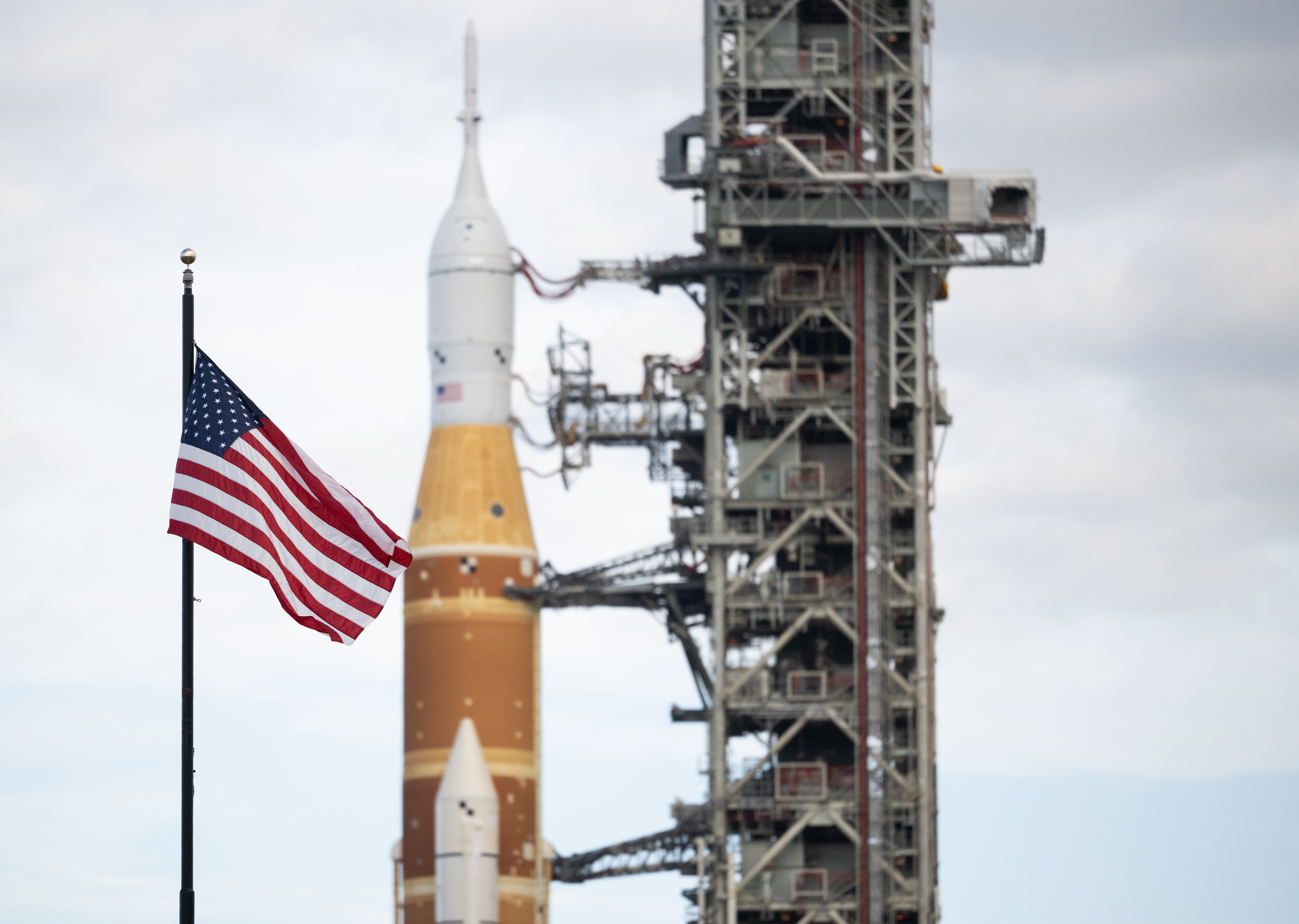
An American flag is seen in front of NASA’s SLS (Space Launch System) rocket and Orion spacecraft at NASA’s Kennedy Space Center in Florida on Jan. 17, 2026, ahead of the historic Artemis II test flight. NASA will host a news conference at NASA Kennedy on Friday, Aug. 14, to highlight American leadership in space and aviation.
Credit: NASA/Joel Kowsky

NASA will hold a news conference at 2:30 p.m. EDT, Friday, Aug. 14, live from the agency’s Kennedy Space Center in Florida, and media and digital creators are invited to attend in person.

The announcement, held in the XLV Hangar at the Shuttle Landing Facility, will preview a new event at NASA Kennedy later this year tied to America’s 250th anniversary, showcasing American leadership in aviation, space exploration, and emerging technologies while bringing together the public, industry leaders, innovators, and the next generation of explorers.

Participants include:

  • NASA Administrator Jared Isaacman
  • NASA leadership
  • Members of Congress

The agency will stream this news conference live through a variety of platforms:

https://www.nasa.gov/live

This event is open to U.S. media and digital creators. The request to attend must be received no later than 12 p.m. on Thursday, Aug. 6, to the Kennedy newsroom at: https://media.ksc.nasa.gov. NASA’s media accreditation policy is available online.

For more information about NASA’s missions, visit:

https://www.nasa.gov

-end-

George Alderman / Cheryl Warner
Headquarters, Washington
202-358-1600
george.a.alderman@nasa.gov / cheryl.m.warner@nasa.gov
Danielle Sempsrott
Kennedy Space Center, Fla.
321-298-8990
danielle.c.sempsrott@nasa.gov

Share

Details

Last Updated
Jul 31, 2026
  •  

NASA to Cover Three US Spacewalks, Host Preview News Conference

006B6348.NEF
NASA astronaut Jessica Meir works inside the International Space Station’s Quest airlock in March, her reflection visible in a spacesuit helmet visor as she installs leg and arm components and swaps parts between suits.
Credit: NASA/Jack Hathaway

Editor’s note: This media advisory was updated July 27, 2026 to reflect an updated start time for the spacewalk on Thursday, Aug. 6.

NASA will provide coverage as astronauts venture outside the International Space Station during three spacewalks in August to continue upgrading solar arrays, replace a communications antenna, and connect power and data cables in support of space station operations.

Experts will preview the upcoming spacewalks during a news conference at 2 p.m. EDT, Thursday, July 30, from NASA’s Johnson Space Center in Houston.

NASA will stream these events through a variety of platforms. Learn where to watch online:

https://www.nasa.gov/live

NASA participants in the news conference include:

  • Bill Spetch, deputy manager of Commercial, Low Earth Orbit Program
  • Chris Dobbins, spacewalk flight director
  • Chloe Mehring, spacewalk flight director

United States-based media interested in attending in person must contact the Johnson newsroom no later than 3 p.m., Wednesday, July 29, at jsccommu@mail.nasa.gov. Media joining by phone should request dial-in details by the same deadline. To ask a question, media must dial in no later than 15 minutes before the start of the news conference.

Thursday, Aug. 6

NASA astronauts Jessica Meir and Anil Menon will exit the Quest airlock to install hardware that will modify the station’s 3B power channel and prepare it for the future installation of an International Space Station Roll-Out Solar Array (IROSA). The solar array, scheduled for delivery later this year, will be the seventh IROSA and will provide additional power to support critical station operations, including its safe and controlled deorbit.

Watch NASA’s live coverage of U.S. spacewalk 96 beginning at 7 a.m. The spacewalk is expected to start at 8:35 a.m. and last about six and a half hours.

This spacewalk will be the sixth for Meir and the first for Menon. Meir will serve as spacewalk crew member 1 and will wear a suit with red stripes. Menon will serve as crew member 2 and will wear an unmarked suit.

Thursday, Aug. 13

During U.S. spacewalk 97, two astronauts will replace a Space-to-Ground antenna on the orbital complex. The antenna is a critical communication system NASA uses to transmit data and high‑speed communication between the Mission Control Center in Houston and the space station.

Tuesday, Aug. 25

The U.S. spacewalk 98 crew members will connect power channel cables and data relay systems as part of ongoing maintenance, including preparations for the space station’s future deorbit. The astronauts also will replace a navigational aid used for spacecraft docking on the Harmony module’s forward port.

NASA will share additional details about U.S. spacewalks 97 and 98, including timing, assigned crew members, and coverage information, closer to each operation.

The spacewalks will be the 281st, 282nd, and 283rd conducted in support of space station assembly, maintenance, and upgrades.

To learn more about International Space Station research, operations, and its crews, visit:

https://www.nasa.gov/station

-end-

Joshua Finch / Jimi Russell
Headquarters, Washington
202-358-1100
joshua.a.finch@nasa.gov / james.j.russell@nasa.gov

Sandra Jones / Anna Schneider 
Johnson Space Center, Houston 
281-483-5111 
sandra.p.jones@nasa.gov / anna.c.schneider@nasa.gov

Share

Details

Last Updated
Jul 27, 2026
Editor
Jennifer M. Dooren
  •  

NASA to Support Blue Origin New Glenn Rocket Testing, Advance Artemis

An image shows the B-1 and B-2 test stands at NASA’s Stennis Space Center near Bay St. Louis, Mississippi, on July 7, 2026. The test stand features dual, vertical firing positions built in the 1960s to test Saturn V rocket stages that carried humans to the Moon during the Apollo Program. The B-1 position, right, is equipped for single engine tests, while the B-2 position is designed to test full rocket stages. NASA announced an agreement with Blue Origin on July 24, 2026, to use the B-2 test stand for engine testing to advance rocket development for future missions to the Moon under the Artemis program.
Credit: NASA/Danny Nowlin

NASA and Blue Origin announced Friday they recently agreed to conduct second stage hot fire testing for the company’s New Glenn rocket on the B-2 test stand at the agency’s Stennis Space Center near Bay St. Louis, Mississippi.

The annex to a reimbursable Space Act Agreement signed earlier this month highlights NASA’s commitment to working alongside commercial partners toward Artemis missions in 2027 and beyond.

“Stennis continues to be a hub for the commercial space industry,” said Sen. Roger Wicker. “Mississippi warmly welcomes Blue Origin’s return to the coast and to our legendary rocket testing facilities.”

“The success of Artemis II has roots at NASA Stennis, and I’m excited about the prospect of Blue Origin establishing a rigorous test program in Mississippi as part of future American crewed missions to the Moon and beyond. I hope its use of B-2 test stand becomes a long-term arrangement that broadens our state’s contribution to space exploration. I will certainly do what I can to make that a reality,” said Sen. Cindy Hyde-Smith.

“Mississippi continues to play a vital role in America’s space program, and this agreement between NASA and Blue Origin is another major win for Stennis Space Center. The world-class capabilities at the B-2 test stand will help advance the next generation of rocket propulsion while supporting high-skilled jobs and strengthening our nation’s leadership in space exploration. I look forward to seeing the innovation that comes from this partnership,” said Rep. Mike Ezell.

Testing, targeted to begin this fall, directly supports NASA’s work to achieve the national goal of landing American astronauts on the surface of the Moon and building a Moon Base near the lunar South Pole. These efforts aim to strengthen American leadership in space, unlock scientific discovery, drive innovation with industry, and prepare for human missions to Mars.

 “Winning the new space race means moving faster and working alongside a strong commercial industry. Supporting Blue Origin at NASA’s Stennis Space Center puts world-class American infrastructure to work advancing the capabilities needed to return astronauts to the Moon, establish a sustained lunar presence, and prepare for Mars. Partnerships like this strengthen our industrial base and help ensure the United States remains the world’s leader in space,” said NASA Administrator Jared Isaacman.

Building on the successful Artemis II flight from April, Artemis III is a highly choreographed, multi-launch campaign that will require four astronauts to test rendezvous and docking capabilities of NASA’s Orion spacecraft with commercial human landing systems from Blue Origin and SpaceX in low Earth orbit.

In addition, Blue Origin’s New Glenn will be used to launch missions that will land on the Moon.

“We are proud to partner with NASA and build on our shared commitment to returning America to the Moon and our broader mission to build a road to space for the benefit of Earth,” said Blue Origin CEO Dave Limp. “Stennis helped take Americans to the Moon, and through this partnership, it will help take us back.”

In May, NASA announced the first three Moon Base missions to begin building sustained operations, including an award to Blue Origin to launch a robotic mission this fall. The company’s Blue Moon Mark 1 Endurance lander will deliver NASA payloads to the lunar South Pole’s Shackleton Connecting Ridge, demonstrating capabilities that reduce risk for astronauts to land on the Moon during Artemis IV and V in 2028.

To support upcoming testing at Stennis, NASA will provide the engineers, equipment, and building services needed to design, build, and install parts that will prepare the B-2 for second stage testing of the rocket named in honor of the late NASA astronaut John Glenn, the first American to orbit Earth. The rocket’s second stage is powered by two BE‑3 engines that use liquid oxygen and liquid hydrogen propellants, with each engine generating 200,000 pounds of thrust in vacuum.

In addition to providing hands‑on technical support, NASA also will assist Blue Origin’s test operations by providing dedicated workspace and sharing agency expertise and lessons learned from propulsion testing conducted at the test stand.

Blue Origin will work toward second stage rocket testing on a stand with a history of testing rocket stages for Moon missions dating back to the 1960s. The agency constructed the stand to test the Saturn V rocket stages that carried humans to the Moon during the Apollo Program. More recently, NASA conducted a Green Run test series of the SLS core stage on the stand before the Artemis I test flight.

For more information about NASA’s Artemis program, visit:

https://www.nasa.gov/artemis

-end-

Camille Gallo / Cheryl Warner
Headquarters, Washington
202-358-1600
camille.m.gallo@nasa.gov / cheryl.m.warner@nasa.gov
Sallie Bilbo
Stennis Space Center, Bay St. Louis, Mississippi
228-342-6512
sallie.n.bilbo@nasa.gov

Share

Details

Last Updated
Jul 24, 2026
  •  

NASA Mission to Study Space Weather Impacts of Earth’s Atmosphere

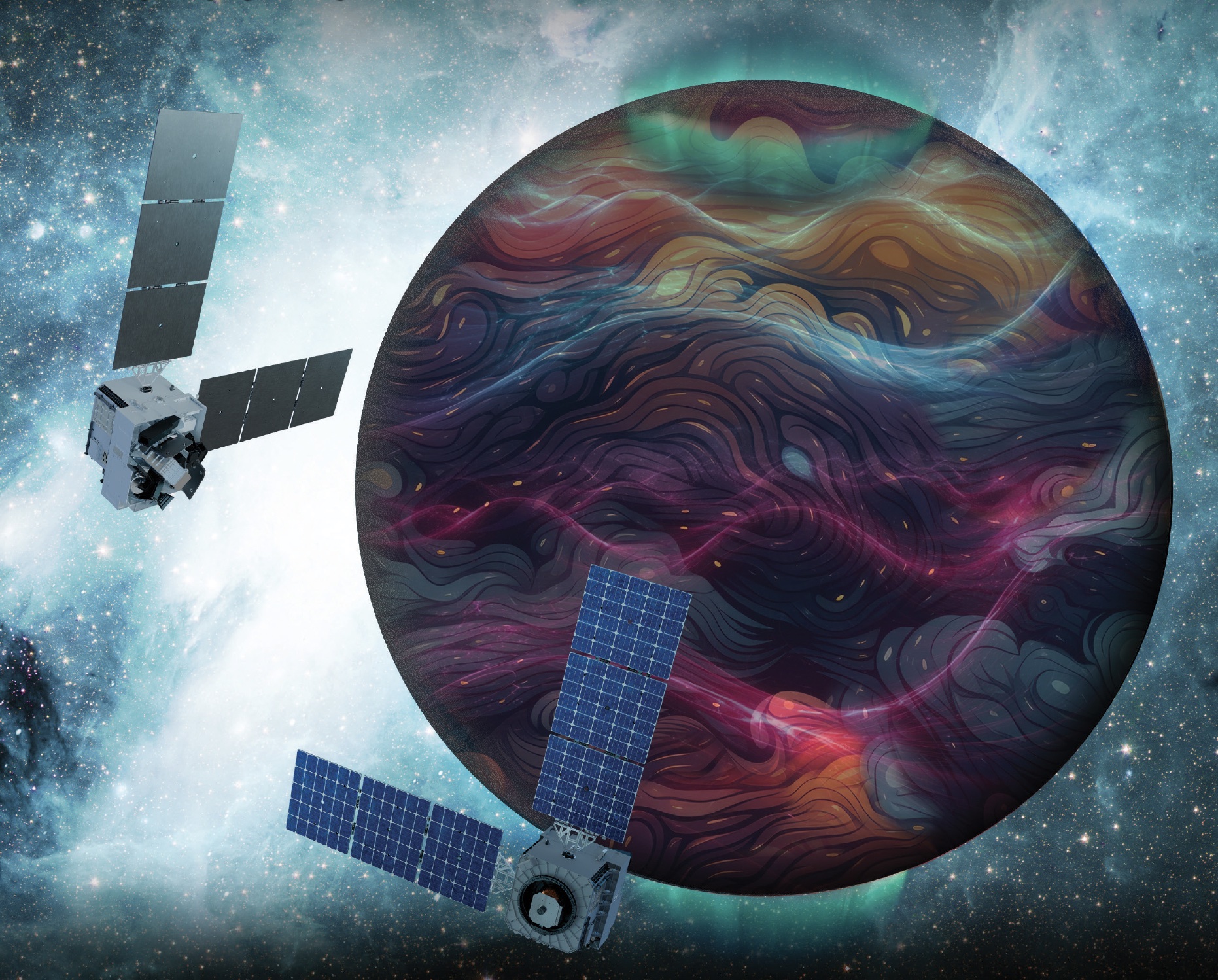
Artist’s rendition of the DAPHNE (Dynamic Atmosphere-Ionosphere Explorer) mission concept.
Artist’s rendition of the DAPHNE (Dynamic Atmosphere-Ionosphere Explorer) mission concept. The coloring represents auroras and atmospheric waves in Earth’s atmosphere.
Credit: Laboratory for Atmospheric and Space Physics/Mary Tostanoski

NASA selected a mission concept to research how space weather and dynamics within Earth’s atmosphere influence the space environment and help improve prediction capabilities for impacts on crucial technology, such as GPS and low Earth orbit satellites, as well as astronauts in space.

The DAPHNE (Dynamic Atmosphere-Ionosphere Explorer) mission will enter Phase B of development, which includes planning and design for flight and mission operations. It will use identical twin satellites to study how changes in Earth’s lower atmosphere influence our planet’s upper atmosphere, where space weather is manifested.

“NASA is advancing the United States’ leadership as a space weather-ready nation, and by providing new insights into Earth’s atmosphere we can better predict and prepare for impacts in our daily lives on Earth and in space,” said Nicky Fox, associate administrator, Science Mission Directorate, NASA Headquarters in Washington. “As NASA sends astronauts beyond Earth’s magnetic protection to the Moon, Mars, and beyond, DAPHNE will join the NASA science fleet strategically located across the solar system to provide data that will help mission planners predict and mitigate the effects of space weather for the benefit of all.”

The DAPHNE mission’s low-risk high-return concept will provide coordinated, multi-point measurements of neutral winds, temperature, and composition in the thermosphere. The ionosphere and thermosphere regions are where Earth’s neutral atmosphere transitions into the ionized plasma of space. In this thin shell that surrounds the planet, the atmosphere is in constant motion, shaped by the influence of solar activity and changes in the lower atmosphere and in near-Earth space.

Fundamental observations and physical insights from the DAPHNE mission will incorporate lower-atmospheric energy data to advance space weather predictive capabilities. The mission is led by Aimee Merkel from the Laboratory for Atmospheric and Space Physics at the University of Colorado, Boulder.

The mission will be subject to a confirmation review in 2027, which will assess the progress of the mission and the availability of funds. If confirmed, the total estimated cost of the mission, excluding launch, will not exceed $250 million in fiscal year 2023 dollars, with a mission launch date of no earlier than 2029.

The DAPHNE mission was proposed as a concept study in response to the DYNAMIC (Dynamical Neutral Atmosphere-Ionosphere Coupling) mission announcement of opportunity. Funding and management oversight for this mission is provided by the Solar Terrestrial Probes program at NASA’s Goddard Space Flight Center in Greenbelt, Maryland.

For more information on NASA’s heliophysics missions, visit:

https://science.nasa.gov/heliophysics

-end-

Abbey Interrante / Karen Fox
Headquarters, Washington
202-358-1600
abbey.a.interrante@nasa.gov / karen.c.fox@nasa.gov

Share

Details

Last Updated
Jun 18, 2026
  •  
❌